
Jinshanling Great Wall
I. Introduction
Jinshanling Great Wall Scenic Area, located in Luanping County, Chengde City, Hebei Province, is adjacent to Miyun County, Beijing. It is situated 130 kilometers from Beijing, 90 kilometers from Chengde, and 240 kilometers from the Mulan Paddock Bashang Grassland.
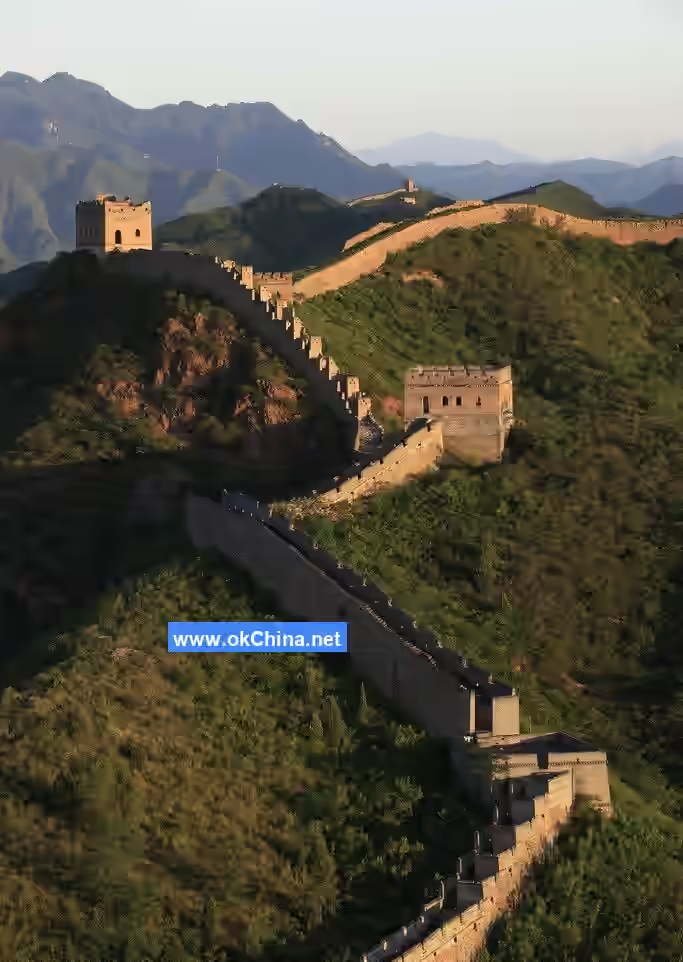
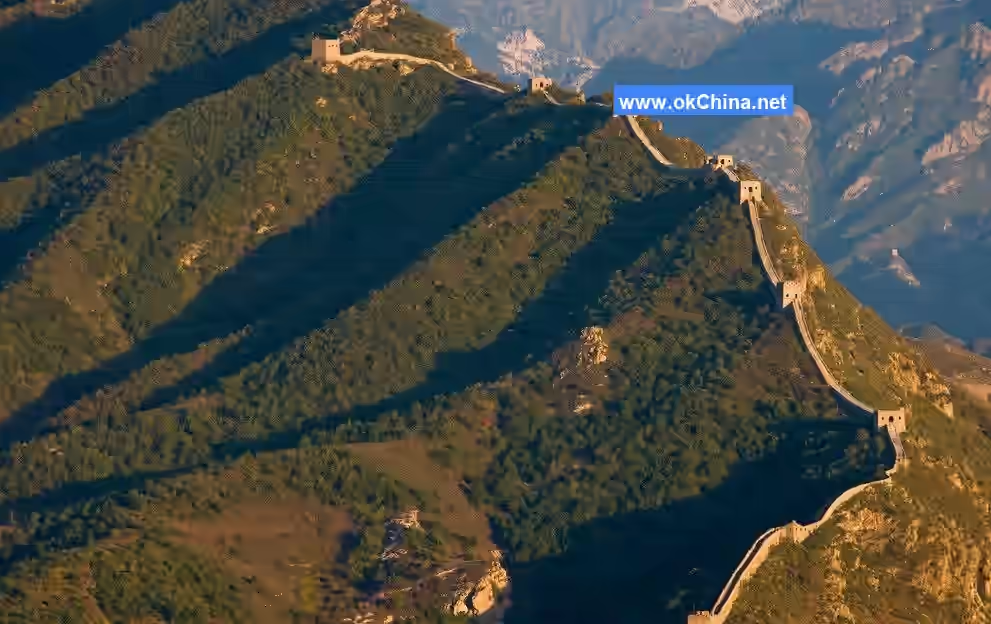
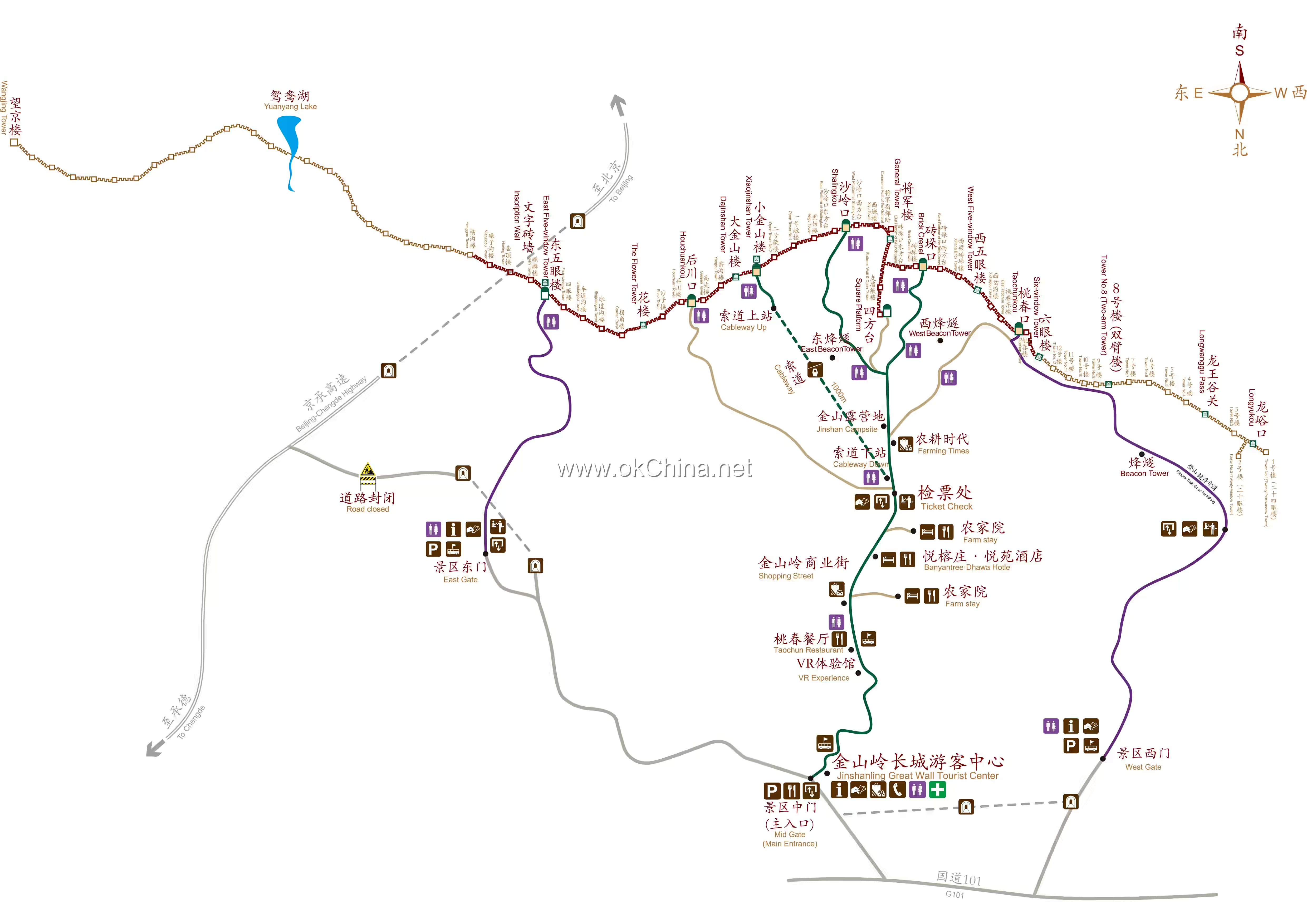
Built under the supervision of the Ming Dynasty patriotic general Qi Jiguang during his tenure as the commander of the Ji Garrison (1567–1582), Jinshanling Great Wall represents the finest section of the Great Wall. It is renowned for its expansive views, dense distribution of watchtowers, unique landscapes, exquisite architectural artistry, well-preserved military defense system, and exceptional state of preservation. Known as the "Crown Jewel of the Great Wall," it is considered the pinnacle of Great Wall construction. Stretching from Longyukou in the west to Wangjing Tower in the east, it spans 10.5 kilometers and includes 5 passes, 67 watchtowers, and 3 beacon towers. Its horse-blocking walls, barrier walls, inscribed brick walls, Qilin screen walls, and storehouse towers are unparalleled along the entire Great Wall.
II. Historical Development
In the early Ming Dynasty, Xu Da oversaw the construction of the Great Wall.
In the first year of the Longqing era (1567), Qi Jiguang was stationed in the northern frontier and continued to build numerous watchtowers and battle platforms, making Jinshanling Great Wall the most complex and densely fortified section of the Great Wall.
In 1980, the Hebei Provincial Cultural Relics Team discovered this section of the Great Wall during a survey of its preservation status.
In June 2021, conservation and restoration work began.
In January 2022, the restoration of Jinshanling Great Wall in Chengde, Hebei, was completed after six months of construction.
III. Architectural Layout
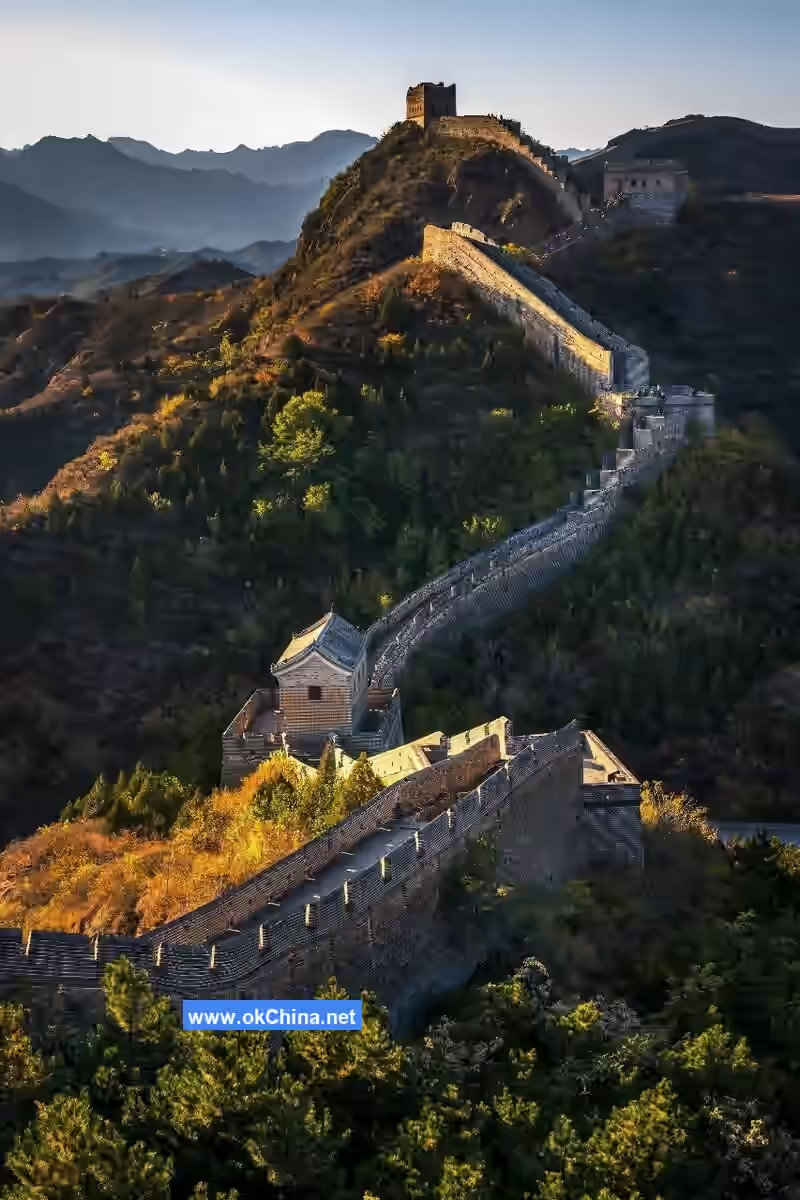
Jinshanling Great Wall extends from Wangjing Tower in the east to Longyukou in the west, covering approximately 15 kilometers. The walls are generally about 7 meters high, 6 meters wide at the base, and 5 meters wide at the top, allowing five horses to ride abreast. Along this section, watchtowers, battle platforms, and barracks are densely distributed, with a total of 158 watchtowers and battle platforms. The distance between two towers ranges from 50 to 100 meters. The watchtowers are uniquely designed, varying in form according to the terrain, with diverse layouts, ingenious designs, exquisite craftsmanship, and rich decorations. In terms of shape, they include square, rectangular, flat, circular, and corner-shaped towers, with single, double, or triple-story structures. Inside, the towers feature flat, boat-shaped, or vaulted ceilings, as well as four-corner or eight-corner藻井 ceilings. Functionally, they include combat towers, storehouse towers, and barracks towers. These diverse architectural forms are unmatched in other sections of the Great Wall.
IV. Architectural Features
Jinshanling Great Wall boasts distinctive architectural forms. The watchtowers are constructed from brick and wood or brick and stone. Their designs vary with the terrain, with each tower having its own unique style. The towers come in square, circular, or flat shapes, with roofs resembling boat canopies, vaults, four-cornered, or eight-cornered尖顶 structures. Additionally, there are multi-window lookout towers and storehouse towers, which are rare in other sections of the Great Wall. These towers, varying in height and arrangement, form a comprehensive defense system.
V. Recommended Attractions
Wangjing Tower
Wangjing Tower stands atop Tiger Mountain at the eastern end of Jinshanling Great Wall. It is the highest and most perilous watchtower in the area, with an elevation of 988 meters, providing an advantageous position for observing enemy movements to the north.
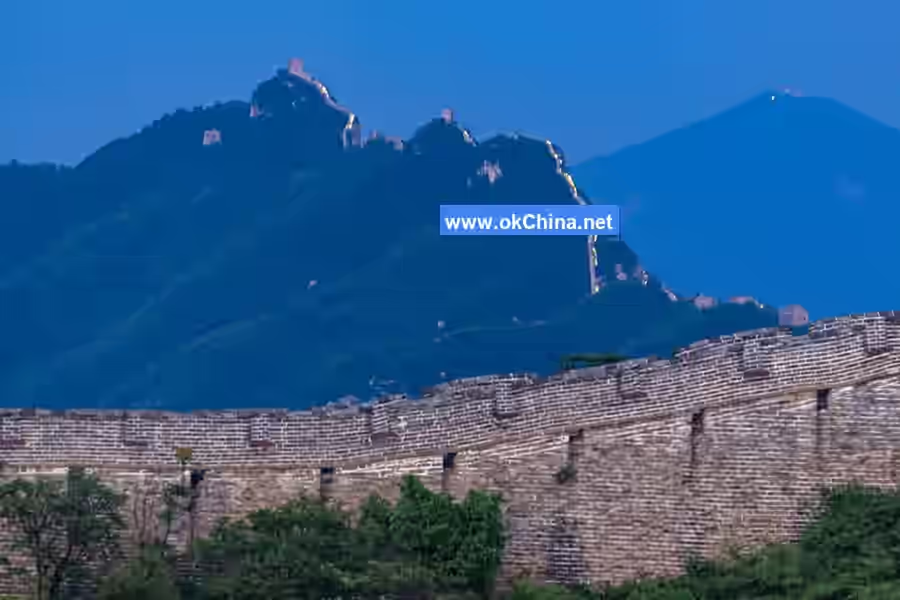
Highlight: It is said that from Wangjing Tower, one can see the lights of Beijing at night, hence its name, which means "Tower for Viewing the Capital."
Houchuan Tower
Looking down from Gaojian Tower, the unassuming watchtower below is Houchuan Tower. The pass beneath it, Houchuan Pass, was built in 1368 and served as a crucial gateway between the inside and outside of the Great Wall. It was heavily guarded, and a military command post was located 40 meters inside the pass on the ridge, of which only ruins remain today.
Shaling Pass
After passing Xiyu Tower, one reaches Shaling Pass. On either side of the pass are the ruins of Western Platform and Eastern Platform. Built during the Hongwu era of the Ming Dynasty, Shaling Pass is one of the five passes of Jinshanling Great Wall. It is named after Shalingzi, where the pass was constructed, and was under the jurisdiction of Gubeikou Road, serving as an important component of the Gubeikou Pass system.
Taochun Pass
Legend has it that in a village at the foot of Jinshanling, a beautiful girl traveled far to fetch mountain spring water for the soldiers, continuing for 49 days without rest despite exhaustion. One day, she collapsed from fatigue. When the soldiers found her body at the foot of a cliff, still clutching the water bucket, they were moved to tears. To commemorate Taochun, they buried her in a valley at the western end of Jinshanling Great Wall, planted it full of peach trees, and named it Taochun Valley. After the Great Wall was completed, they named a watchtower on the slope above the valley Taochun Tower and the nearby important pass Taochun Pass.
Longyukou
Jinshanling Great Wall stretches from Longyukou in the west to Wangjing Tower in the east, covering 10.5 kilometers. The surrounding mountains are steep and perilous, with the Great Wall winding like a soaring dragon amidst clouds and mist, creating a spectacular view.
East Five-Eye Tower
Built in 1579, this brick and stone structure features an arched passage on the east-west side of the first floor and a boat-shaped roof. The second floor originally had barracks, which are now ruined. The floors were connected by wooden ladders, of which only the footings remain. It is named for the five arrow windows on its north and south sides. From the tower, one can enjoy a panoramic view of the branch walls, General Tower, and other Great Wall structures in the distance, making it an ideal spot for sightseeing and photography.
East Six Tower
Originally a two-story brick and wood structure connected by wooden ladders, this tower has now collapsed. It is named for the six windows on its rear side.
Brick Battlements Pass
Built in 1368 and renovated in 1569, Brick Battlements Pass is a crucial gateway of Jinshanling Great Wall and an important passage between the inside and outside of the Great Wall. It was heavily guarded, with comprehensive defensive facilities, including Brick Battlements Tower adjacent to the pass, two watchtowers on the slopes nearby, and a military command post 40 meters inside the pass on the ridge, of which ruins remain.
General Tower
Built in 1569 and restored in 1985, General Tower stands at an elevation of 475 meters. To its north, beacon towers, branch walls, horse-blocking walls, crescent walls, and barrier walls on both sides of the tower form a rigorous military defense system. Beacon towers were used for early detection and transmission of military intelligence; branch walls protected General Tower and defended Brick Battlements Pass and Shaling Pass; horse-blocking walls prevented enemy cavalry from approaching the Great Wall; crescent walls defended against direct attacks on General Tower; and barrier walls protected against enemies who breached the Great Wall’s horse path.
Highlight: General Tower represents the essence of the Great Wall’s military defense system and is considered a masterpiece of the Great Wall.
Great Jinshan Tower
Built in 1569, this brick and stone structure features a boat-shaped interior and stairs connecting its floors. The upper floor originally had a barracks with brick imitations of wooden architectural components, such as eaves, purlins, and beams, crafted with exquisite detail. The roof tiles were repaired in 1987. Legend has it that soldiers from Jiangsu and Zhejiang built this tower and named it after Jinshan Island in Zhenjiang, their hometown, to express their longing for home.
VI. Value and Significance
Jinshanling Great Wall is an integral part of the Ming Dynasty Great Wall and represents its most complex and densely fortified section. As the best-preserved segment of the Ming Great Wall, it holds profound archaeological value and is of great significance for studying the history of the Ming Dynasty and the life of General Qi Jiguang.
Comments
Post a Comment