Jinji Lake Tourist Area
1. Introduction
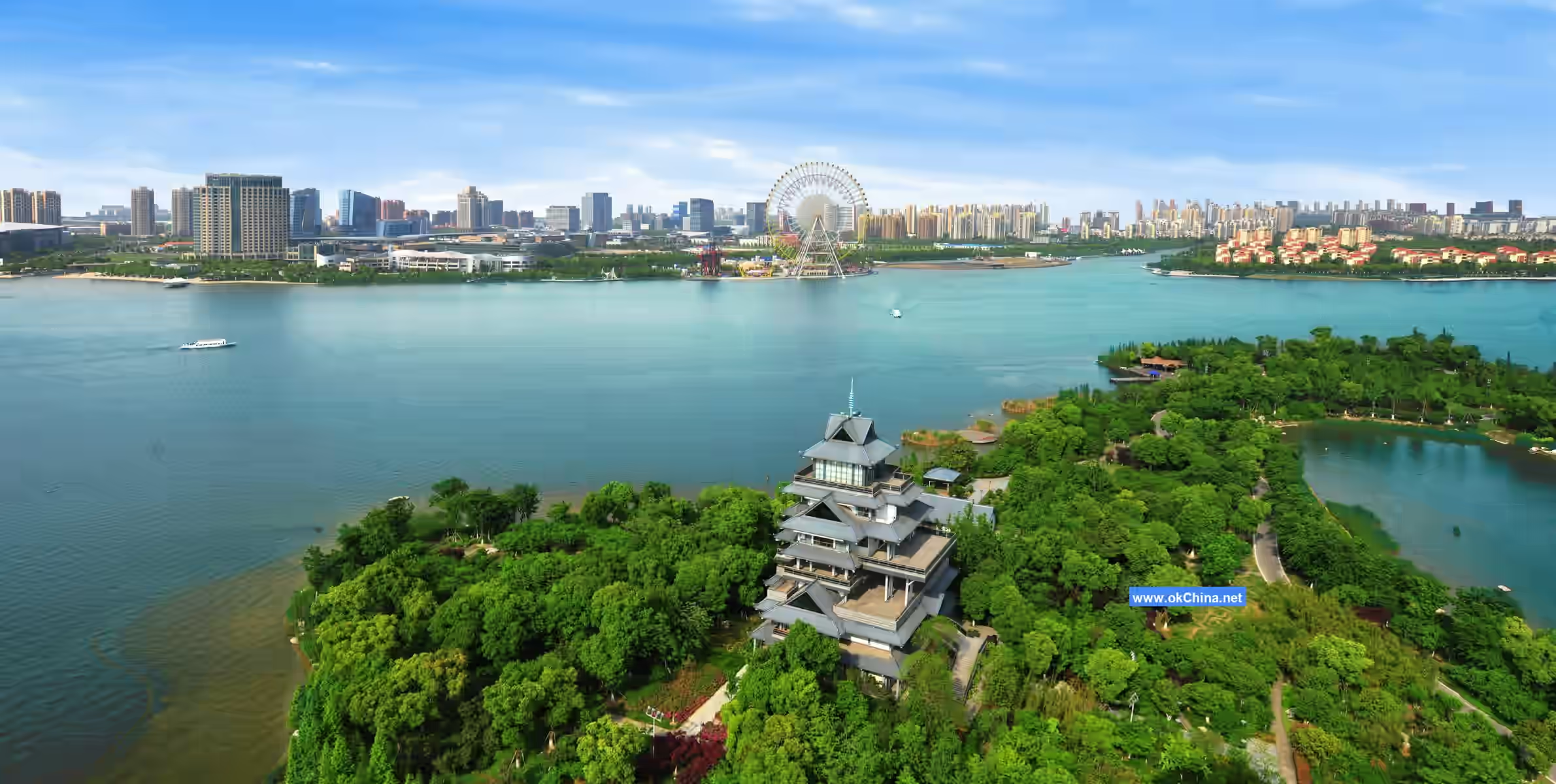
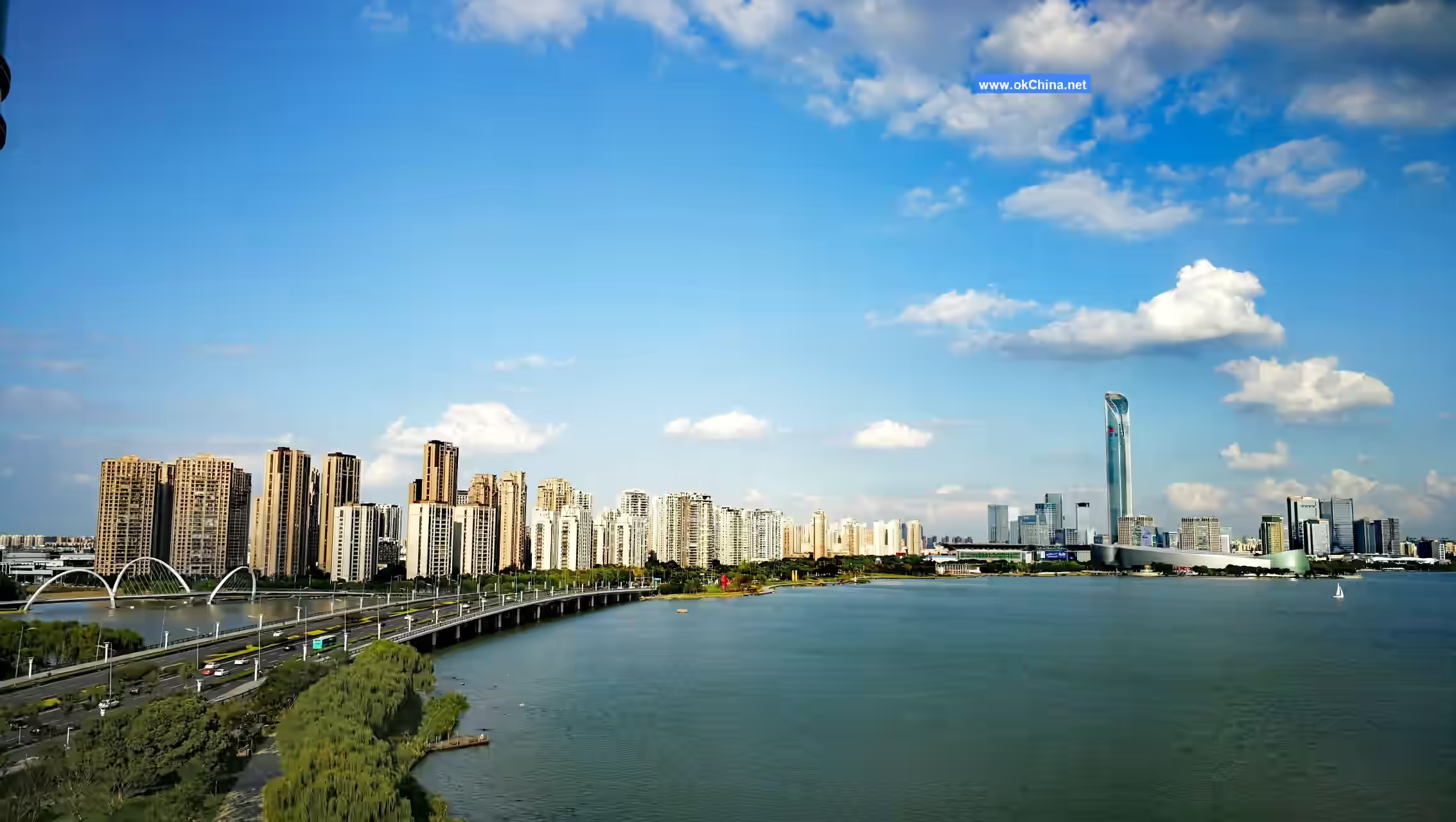
The Jinji Lake Tourist Area of Suzhou City, abbreviated as Jinji Lake Tourist Area or Jinji Lake Scenic Area, is a tourist attraction located within the Suzhou Industrial Park in Jiangsu Province, China. The total area of the scenic area is 11.5 square kilometers, including a water area of 7.4 square kilometers. It is an open-style tourist attraction.
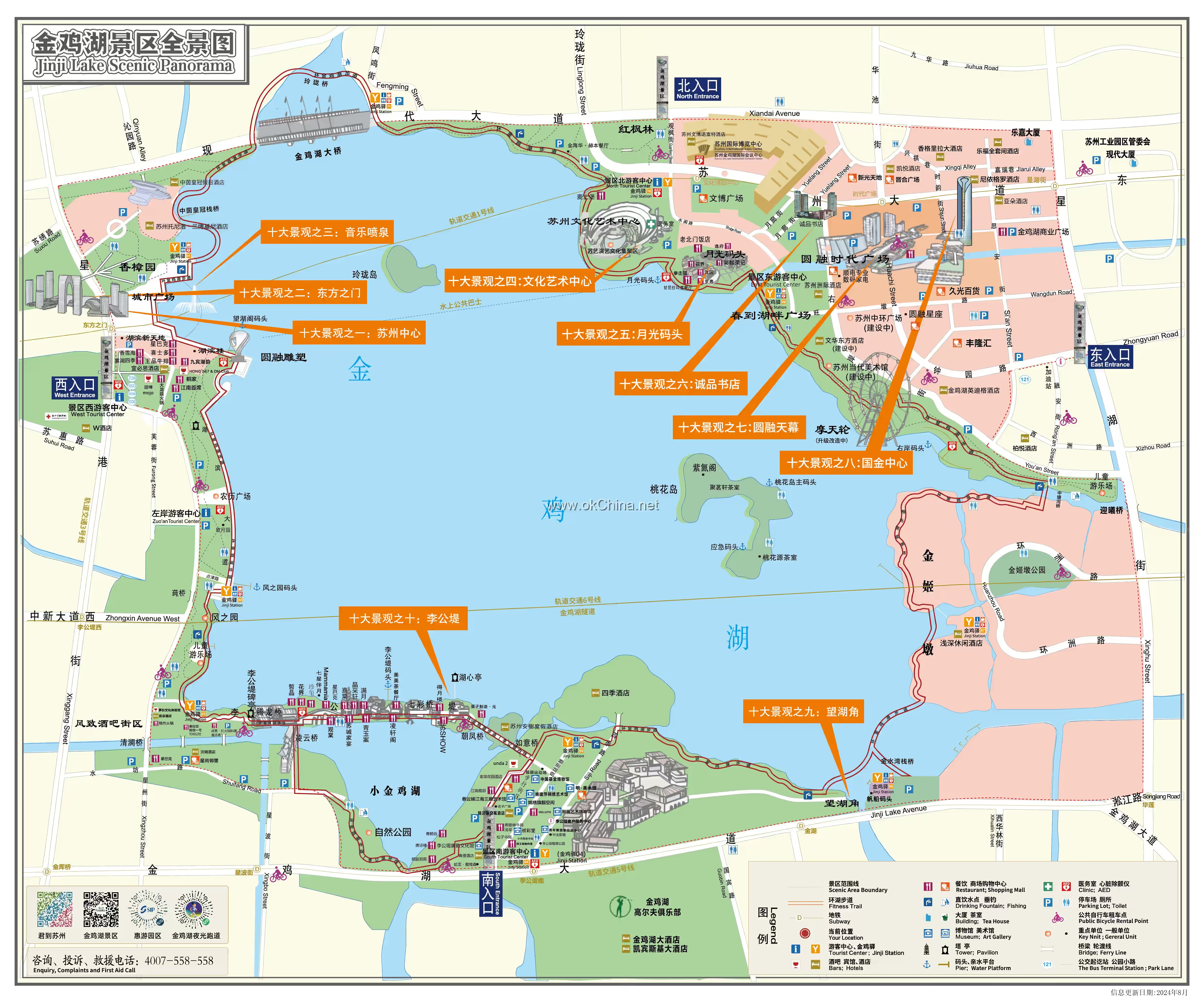
The Suzhou Culture and Arts Center within the Jinji Lake Scenic Area serves as the permanent judging base for the Golden Rooster Awards. The scenic area boasts ten major landscape attractions: "Suzhou Center," "The Gate of the Orient," "Music Fountain," "Culture and Arts Center," "Moonlight Wharf," "Eslite Bookstore," "Harmony Sky Screen," "International Finance Center," "Wanghu Corner (Lake View Corner)," and "Ligong Causeway." It also hosts regular festival events such as the Jinji Lake International Half Marathon, Jinji Lake Dragon Boat Race, Jinji Lake Sailing Race, China-Italy Cultural Exchange Festival, Jinji Lake Peach Blossom Festival, and Jinji Lake Biennale. It serves as the concentrated exhibition zone and core area of the "Suzhou Industrial Park," a National Business Tourism Demonstration Zone in China.
On July 2, 2012, the Jinji Lake Scenic Area of Suzhou was announced by the National Tourism Administration of the People's Republic of China as a National 5A-level Tourist Attraction, becoming the fourth such attraction in Suzhou City.
2. Historical Development
2.1 1990s
The planning and construction of the Suzhou Industrial Park began, with Jinji Lake also included in the scope of development and management.
2.2 1997
The Suzhou Industrial Park successively relocated over 20 polluting factories near Jinji Lake, closed aquaculture sites, initiated dredging and greening work, and hired world-renowned design companies to create an overall plan, aiming to develop an open urban landscape park centered around Jinji Lake.
2.3 1998
- September: The "Jinji Lake Landscape Design Master Plan," commissioned by the Suzhou Industrial Park and prepared by the American EDAW (Hong Kong) Landscape Design Company, was approved. The plan proposed setting up eight characteristic functional zones, including a city square, around Jinji Lake.
- November: The National Development Planning Commission approved the Jinji Lake Environmental Improvement Project.
2.4 1999
- February: The Suzhou Industrial Park established the Jinji Lake Environmental Improvement Leading Group and formed the Suzhou Industrial Park Jinji Lake Environmental Improvement and Development Co., Ltd. the following month, specifically responsible for the environmental improvement of Jinji Lake and the development of the surrounding lakeside area.
- March: Construction began on the first lakeside landscape project, the Lakeside Boulevard, which was completed and opened in early 2000.
2.5 2001
May: The feasibility study report for the Jinji Lake Environmental Improvement Project was approved by the National Development Planning Commission. The land-based environmental improvement included seven projects: lakeshore landscape greening, lakeside revetment, shoreline correction, Ligong Causeway, Boxing Island (Wave Heart Island), lakeside pedestrian walkways, and lakeside land greening. The comprehensive water environment improvement included four projects: water diversion, pollution interception control, dredging, and ecological management. From that year onward, the release of fish fry into Jinji Lake was stopped.
2.6 2003
- May: The Suzhou Industrial Park commissioned geological and water resources departments to conduct geological surveys and sediment sampling of Jinji Lake and formulate a dredging implementation plan. Ultimately, the "dry lake dredging" method was chosen to preserve part of the original aquatic flora and fauna habitat.
- August 15: The Jinji Lake dredging project commenced.
- November 28: Dredging at Jinji Lake began producing excavated soil. Simultaneously, construction started on projects including lakeside revetment, basic pipeline networks, landscaping, and ecological water management. By the end of the year, 15 kilometers of lakeside revetment were completed, and 800,000 square meters of lakeside afforestation were established.
2.7 2004
- January: The Jinji Lake Bridge opened to traffic.
- June: The second phase of the Jinji Lake dredging project commenced.
- September 25: The second phase of dredging at Jinji Lake began producing excavated soil. By the end of the month, the first phase of dredging was completed, removing approximately 380,000 cubic meters of silt and excavating about 6 million cubic meters of earth.
2.8 2005
- January 20: The second phase of Jinji Lake dredging concluded, removing approximately 400,000 cubic meters of silt and excavating about 3.5 million cubic meters of earth. The earth-filling and construction of two artificial islands, A and B, were also completed.
- March 11: The Jinji Lake dredging project was completed, and the dam was opened to allow water inflow.
2.9 2006
The landscape of the Suzhou Jinji Lake Scenic Area was fully completed. In December of the same year, the renovated Ligong Causeway on Jinji Lake opened to the public.
2.10 2007
- The Suzhou Science and Culture Center (Suzhou Culture and Arts Center) on the eastern shore of Jinji Lake was completed.
- The Golden Rooster Awards judging base was permanently established at the Suzhou Culture and Arts Center within the Jinji Lake Scenic Area.
2.11 2009
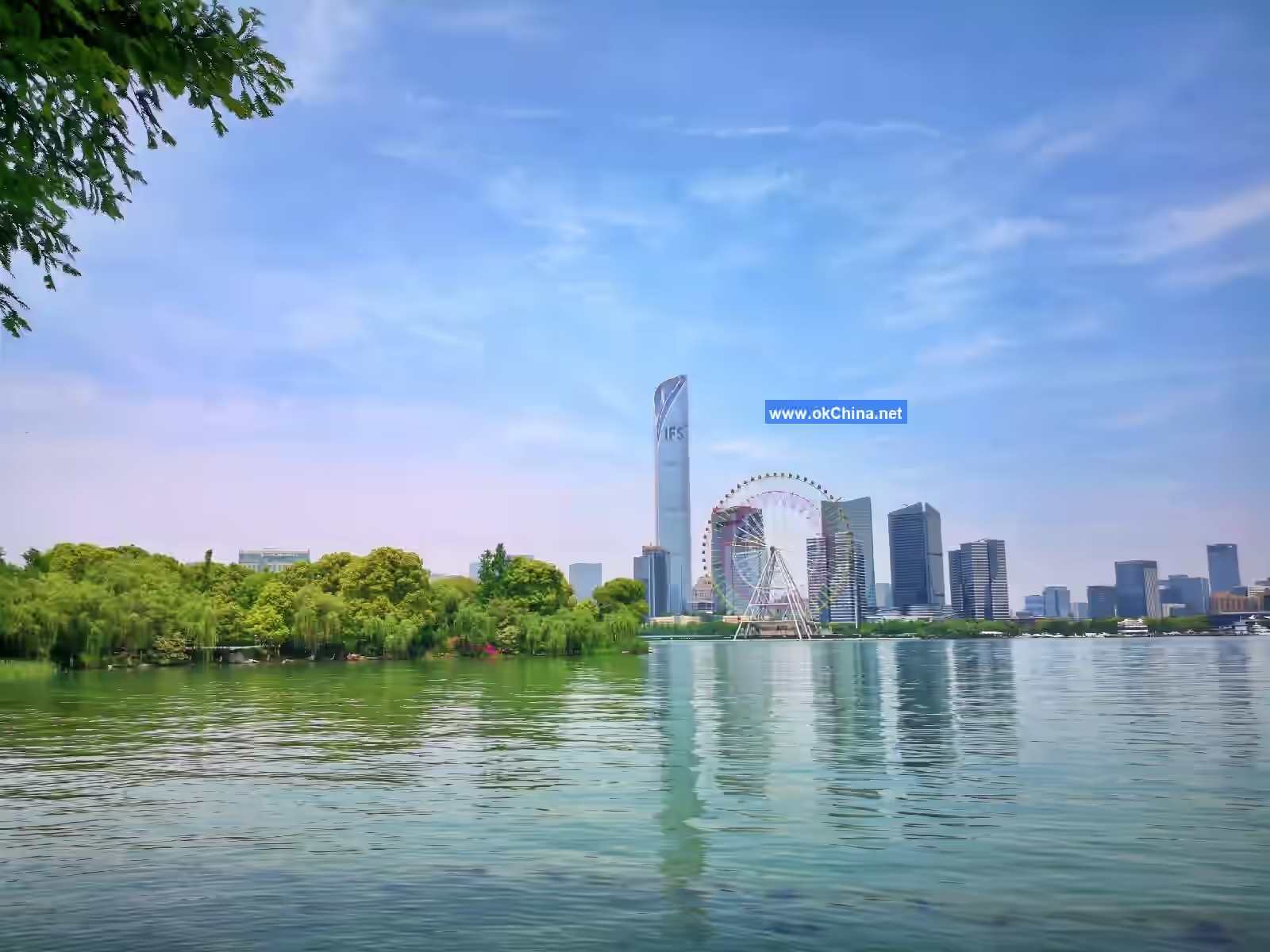
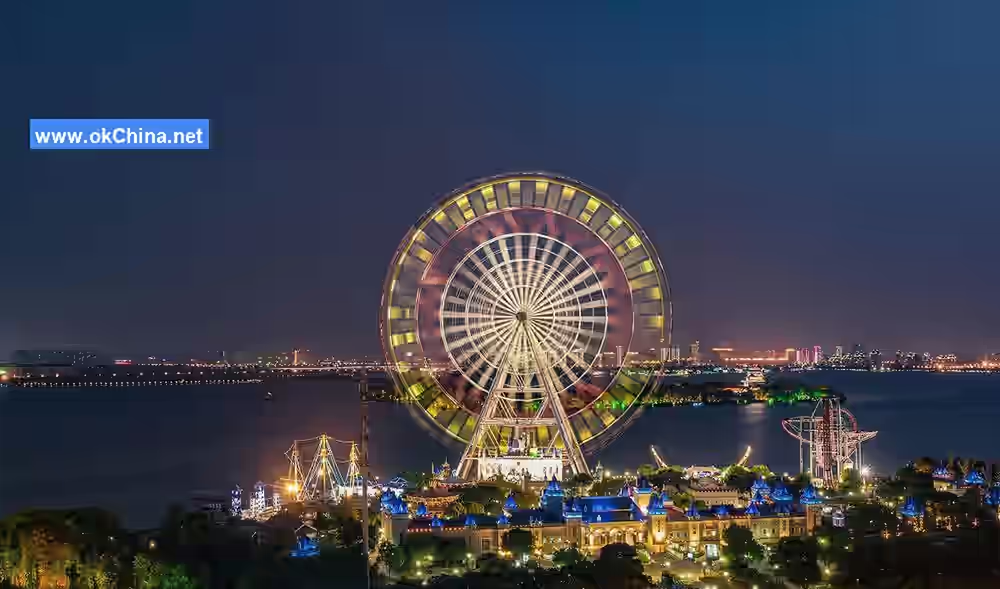
The Jinji Lake Scenic Area Ferris Wheel Amusement Park was completed.
2.12 2014
December: The tourism industry standard "Construction and Management Specifications for National Business Tourism Demonstration Zones," compiled by the Jinji Lake Scenic Area Management Center, was reviewed and released by the National Tourism Administration, becoming China's first national industry standard for business tourism.
2.13 2017
November: The Jinji Lake Slow-moving Greenway Project commenced. Its purpose is to create new landscape nodes by renovating and upgrading existing facilities, establishing a multifunctional system around the Jinji Lake waterfront focused on leisure and sightseeing walks, while also accommodating jogging and cycling.
2.14 2019
February 14: The Jinji Lake Tunnel Project officially commenced construction.
2.15 2022
December 29: The Jinji Lake Tunnel Project passed the final acceptance inspection.
2.16 2023
July: The comprehensive enhancement and renovation project for the Right Bank Area of Jinji Lake commenced construction. This area's enhancement was listed as a key cultural and tourism industry project in Jiangsu Province for 2023.
3. Geographical Environment
3.1 Location and Area
The Jinji Lake Scenic Area is located in the Jinji Lake Business District of the Suzhou Industrial Park in Suzhou City, Jiangsu Province. The total area of the scenic area is 11.5 square kilometers, including a water area of 7.4 square kilometers.
3.2 Topography
The area surrounding Jinji Lake belongs to the lake-and-water-network plain, part of the low-lying Yangcheng Lake region. The average elevation is 3.46 meters (Wusong benchmark). Cultivated land elevation is above the warning water level of 3.7 meters. It is an area with a dense water network.
3.3 Hydrological Characteristics
Jinji Lake has a storage capacity of 13 million cubic meters, with an average water depth of about 1.8 meters. The lakebed is relatively flat, featuring a north-south deep trench, with the deepest point reaching 5 meters. Boats navigate along this trench, forming a shipping lane. There is one deep pool each on the eastern and western sides of the lake, with the western pool depth reaching 5 meters. The average water level of Jinji Lake is 2.90 meters, with a historical high of 4.43 meters and a historical low of 2.10 meters.
3.4 Climate Features
Jinji Lake is located in a subtropical humid monsoon climate zone, characterized by warmth, ample rainfall, distinct monsoons, and four distinct seasons with long winters and summers and short springs and autumns. The annual average temperature is 15.7°C, and the annual average precipitation is 1063 mm. The prevailing wind direction throughout the year is southeast wind (summer), followed by northwest wind (winter).
4. Main Attractions
4.1 Ligong Causeway
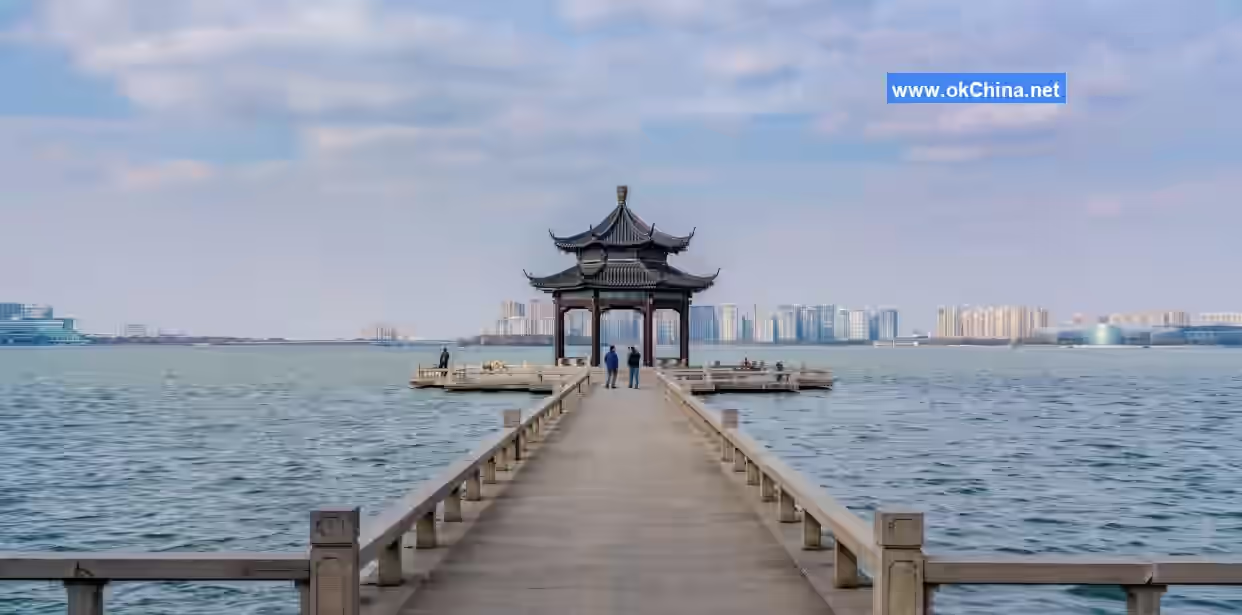
Ligong Causeway was built during the Guangxu reign of the Qing Dynasty by Li Chaoqiong, the county magistrate of Yuanhe. It is a long causeway within Jinji Lake. The Ligong Causeway features the Ligong Causeway Tourism and Leisure Block. This block centers around the lakeside causeway, waterfront shores, and a peninsula in the lake, with bridges connecting its various components. Within the block, representative cultural venues include Laozi Square, Young Sculptors Exchange Center, Yao Jianping Embroidery Art Museum, Ming·Art Museum, and Cai Yundi Jiangnan Three Carvings Art Museum. Simultaneously, the block gathers cuisine from around the world. It is a famous waterfront leisure and commercial street integrating dining, entertainment, leisure, tourism, and cultural creativity.
4.2 Wanghu Corner (Lake View Corner)
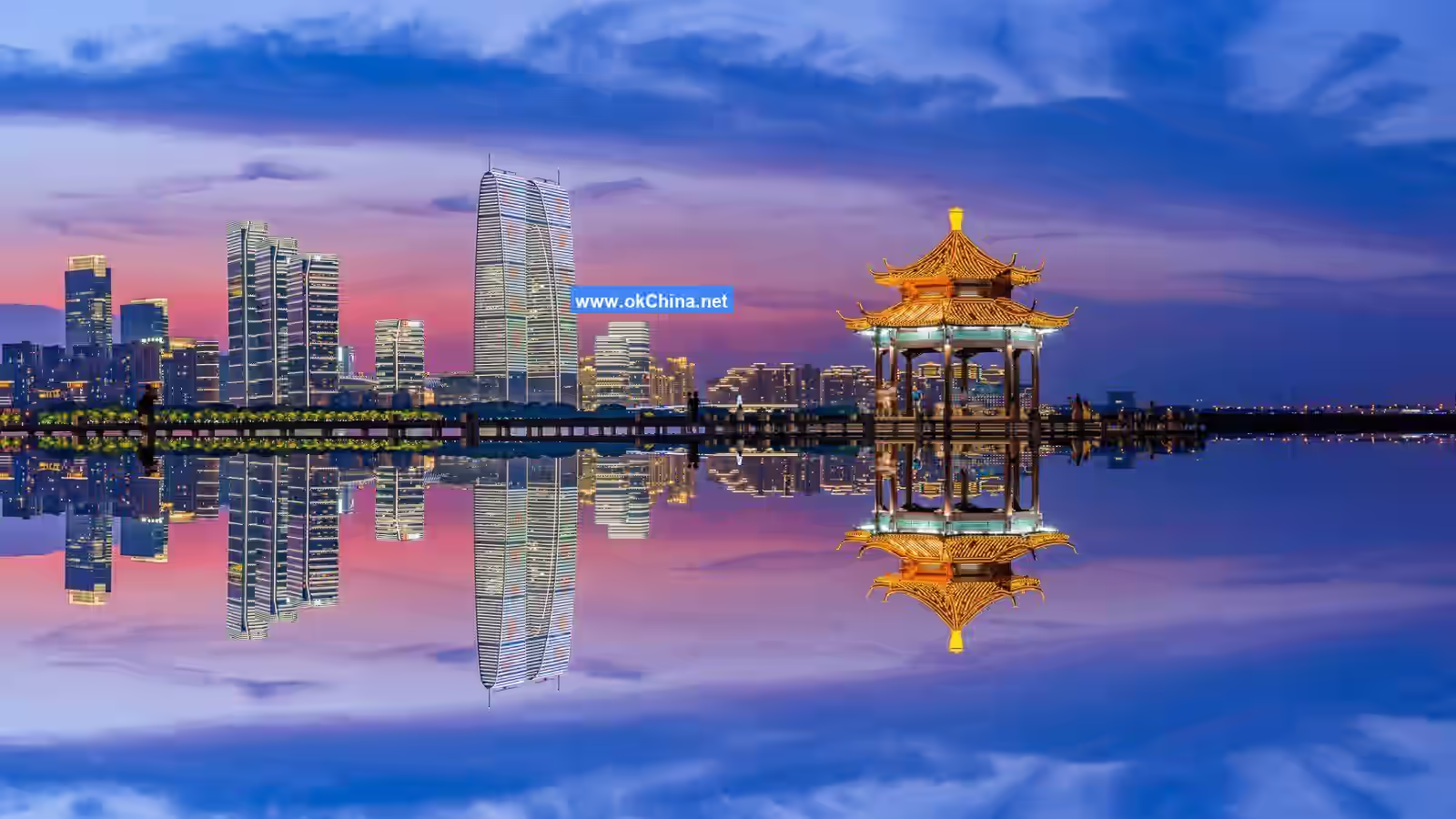
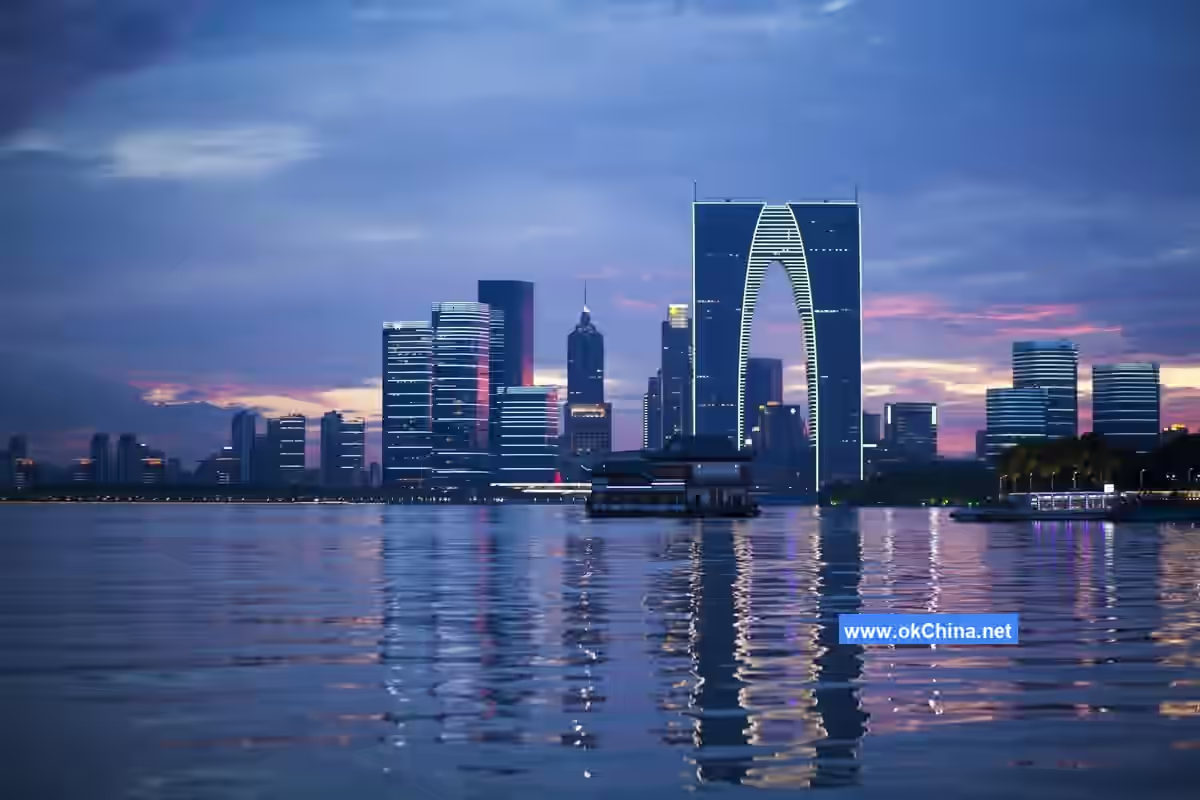
Wanghu Corner is located at the southeastern corner of Jinji Lake, featuring the most iconic Jinshuiwan Boardwalk, named after its proximity to Jinshui Bay. The bridge is 883 meters long and is a large-span overwater bridge. Viewed from above, it resembles the Chinese character for "person" (人). It is an important part of the Jinji Lake circular walking path, winding and curving like a rainbow across the lake surface. From the Jinshui Boardwalk, one can see the bustling scenes of The Gate of the Orient and Suzhou Center on the western shore, as well as the views of the International Finance Center and the Ferris Wheel on the eastern shore.
4.3 Suzhou Center
Suzhou Center officially commenced construction in May 2012 and was completed in November 2017. It covers a total area of 16.7 hectares, with a total floor area of 1.13 million square meters and a total investment of approximately 13 billion yuan. It includes seven high-rise towers, one large commercial building, and surrounding municipal supporting projects. The roof design of Suzhou Center is grand yet dynamic, seamlessly connected by 6,947 pieces of colored irregular glass, covering an area of 36,000 square meters. Whether under sunlight or artificial light, the glass roof remains transparent and refracts light, earning it the name "Wings of the Future." Suzhou Center integrates various formats such as commerce, offices, apartments, and hotels, and is one of China's first batch of super-large "station-city integration" urban symbiotic complexes.
4.4 The Gate of the Orient
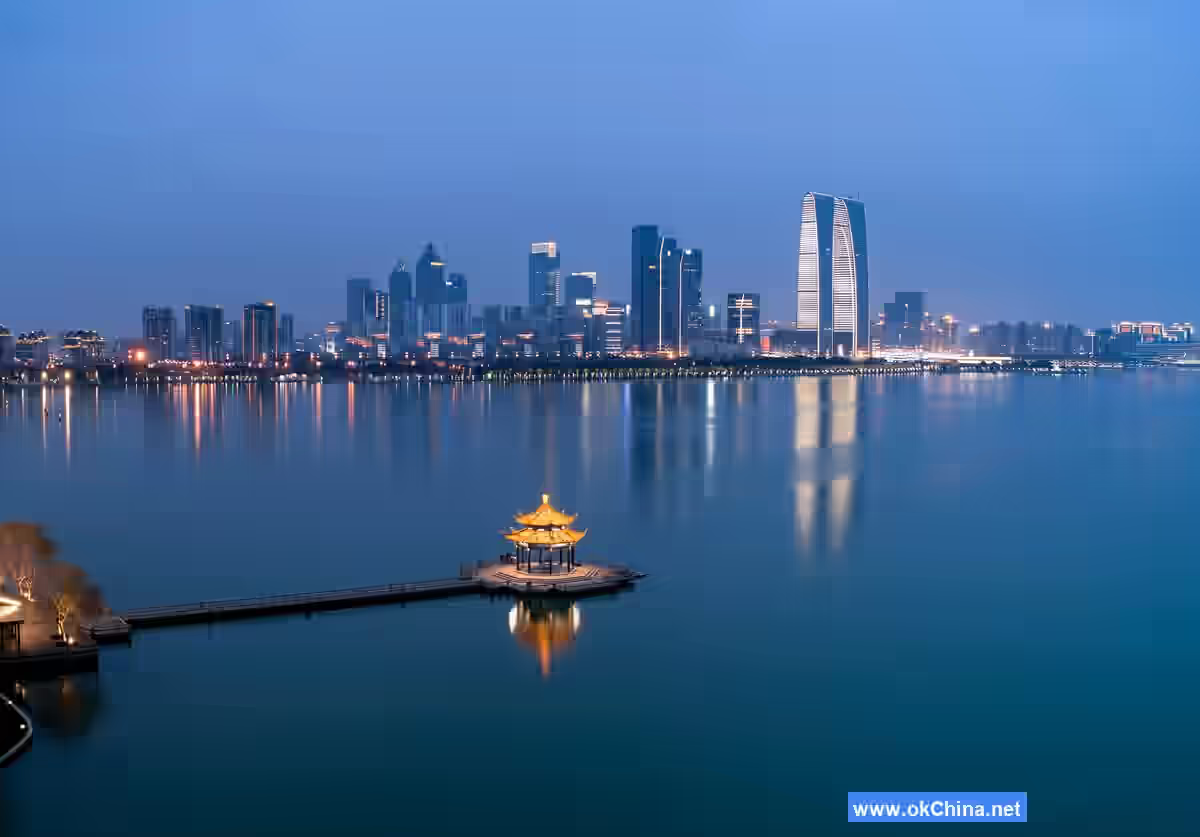
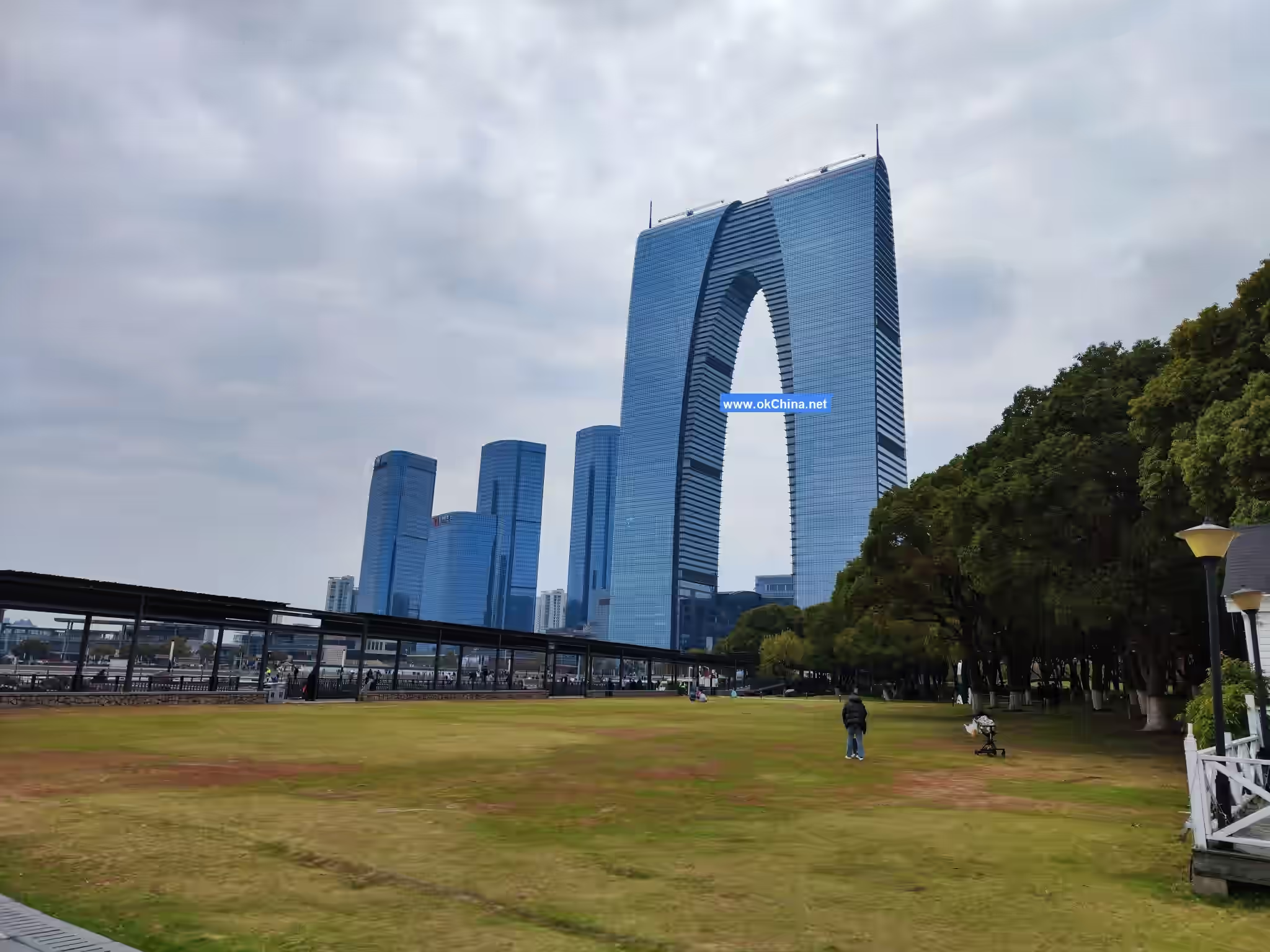
The Gate of the Orient is a skyscraper on the western shore of Jinji Lake. The entire building consists of twin towers that merge at the top to form the shape of a gate. The height of The Gate of the Orient reaches 301.8 meters, comparable to the main peak of Suzhou's highest mountain, Qionglong Mountain. The gate opening is 246 meters high with a span of 68 meters, approximately the size of six Arc de Triomphe in Paris. It is the world's largest gate-shaped building and is hailed as the "World's First Gate."### 4.5 Music Fountain The Jinji Lake Music Fountain is one of the water feature projects in China with the highest technological content and comprehensive artistic level. With the theme of "Water Ballet," it spans 200 meters from north to south and 140 meters from east to west, equipped with 5,180 lights, 490 valves, nearly 3,000 underwater cables, and 2,214 nozzles. The maximum spray height reaches approximately 60 meters. The planar composition features arcs, circles, and dots, with chevron arcs tangent to four sets of circles of different diameters forming dynamic streamlines. Its layout shares similarities with the world's two most famous fountains—the Las Vegas Fountain and the Dubai Fountain.
4.6 Culture and Arts Centre
The Culture and Arts Centre was designed by Mr. Paul Andreu, the architect of the National Centre for the Performing Arts in Beijing, with a total floor area of 150,000 square meters. Its exterior wall resembles a large metal-woven bird's nest resting quietly by Jinji Lake. Due to its appearance, which easily reminds people of the "Bird's Nest," the main stadium of the Beijing Olympics, it is also known as Suzhou's "Little Bird's Nest." The centre consists of two main buildings shaped like a crescent moon and a pearl, symbolizing a luminous pearl nestled within the soft curves of a mother-of-pearl shell. Inside, it includes a 1,200-seat proscenium theater, a 500-seat VIP performance hall, seven distinctive five-star luxury cinema halls, one IMAX giant panoramic cinema hall, and 25,000 square meters of commercial space.
4.7 Harmony Times Square Sky Screen
The Harmony Times Square Sky Screen is currently the longest, largest in display area, most innovative in design, and most structurally complex sky screen architecture in Asia, earning the title of "World's First Sky Screen." After its renewal and relighting, the sky screen features a pioneering naked-eye 3D screen that immersively presents themes such as the Prosperous Gusu Scroll, interstellar exploration, an aerial gallery, and the Riverside Scene at Qingming Festival—a Yao Jianping embroidery artwork.
4.8 Moonlight Wharf
Moonlight Wharf is one of Suzhou's top ten most beautiful nightscape spots. Adopting a European-style town architectural design, it resembles a crescent moon elegantly moored on the northeastern shore of Jinji Lake, forming a semi-circular ring. With a 270-degree lake view, it offers one of the best waterfront areas along Jinji Lake.
4.9 Eslite Bookstore
Eslite Bookstore is the first flagship store in mainland China, opening on November 29, 2015. The bookstore spans four floors: the basement level features light meals, the first floor showcases creative products, and the bookstore is mainly concentrated on the third floor. Beyond book sales on the third floor, more space is occupied by 200 brands in dining, fashion, and lifestyle, with retail and dining accounting for 65% of the area. The first floor's "Eslite Life Gathering × Suzhou" brings together numerous traditional and unique handmade artworks. Eslite Bookstore is one of the popular check-in spots for visitors to the Jinji Lake Scenic Area.
4.10 International Finance Centre (IFC)
Located on the eastern shore of Jinji Lake, the International Finance Centre is the "Tallest Building in Jiangsu Province," standing at 450 meters. The site covers an area of 21,300 square meters, with a total floor area of 393,200 square meters. It includes a 92-story, 450-meter-tall main tower, along with a podium and a wave-shaped plaza. The design draws inspiration from water, a significant element in Suzhou's history and urban impression. The overall theme symbolizes "a carp leaping over the dragon gate," with the "fish" motif facing Jinji Lake, making it one of Suzhou's iconic urban landmarks.
5. Cultural Resources
5.1 Historical Culture
In 2005, archaeological excavations by the Suzhou Museum confirmed that the Qiongji Mound on the southeastern shore of Jinji Lake was an earthen altar used by prehistoric humans for worshiping the heavens. That same year, comprehensive rescue archaeological surveys preliminarily identified it as an artificially constructed earthen platform from the Neolithic period, specifically the Liangzhu to Songze cultural periods (approximately 5,000–5,500 years ago). No artifacts from the legendary periods of King Wu or Zhang Shicheng were discovered. This indicates that human activity or settlement in the Jinji Lake area dates back at least five millennia.
5.2 Origin of the Lake's Name
According to local records, the name Jinji Lake likely originated from a river or village called "Jinjing," which later evolved into "Jinji." This is supported by Fan Chengda's "Wu Jun Zhi" (Records of Wu Prefecture) from the Southern Song Dynasty, which mentions "Jinjing Yan" as one of the terms for large bodies of standing water in the Wu region. The Ming Dynasty's "Gusu Zhi" (Records of Gusu) also notes: "Fengxi Bridge extends six li from Xitang to the mouth of Jinjing Yan." Although the exact meaning is unclear, it confirms that Jinji Lake was still called "Jinjing Yan" in the mid-Ming Dynasty. Literally, "yan" means "submerged," suggesting that Jinjing Yan could refer to a water surface formed by the submersion of the Jinjing River or named after the river's confluence with the lake. The "Yuanhe County Annals" from the Qianlong era of the Qing Dynasty states: "Jinjing Yan is also called Jinjing Lake or Jinji Lake." According to the "Cihai" dictionary, "yan" is synonymous with "淹" (submerged). Thus, "Jinjing Yan" corresponds to the earlier "Jinjing Yan." Based on the compilation date of the "Yuanhe County Annals," the name "Jinji Lake" has been in use for at least over 200 years.
5.3 Related Legends
Legend has it that during the Spring and Autumn period, after the defeat of the Yue State, King Goujian of Yue presented the beauty Xi Shi to King Fuchai of Wu. Qiong Ji, Fuchai's daughter, repeatedly advised her father to beware of Goujian's ulterior motives, but Fuchai ignored her and banished her to a desolate island in the large lake east of Suzhou City to "reflect on her mistakes by the lake." After the rise of the Yue State, King Goujian launched an attack on Wu. Fuchai planned to offer Qiong Ji to Goujian as a plea for mercy and peace. Upon hearing this news, Qiong Ji drowned herself in the lake, sacrificing her life for her country. To commemorate her, people named the lake (Jinji Lake) "Qiong Ji Lake."
Comments
Post a Comment