
Jingyuetan
1. Introduction
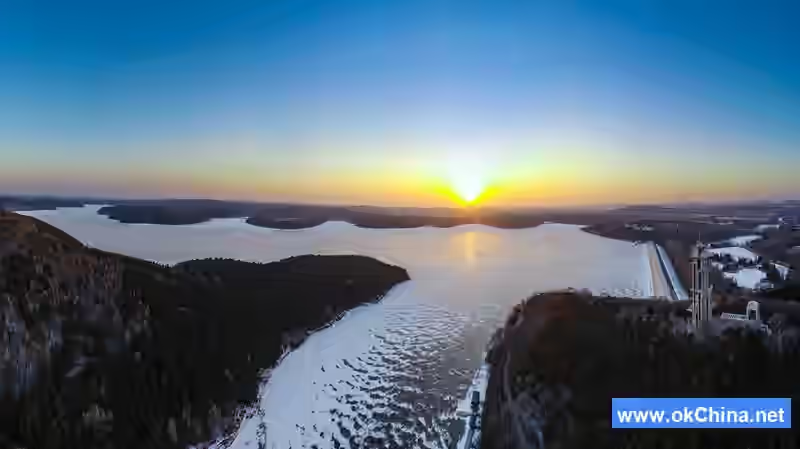
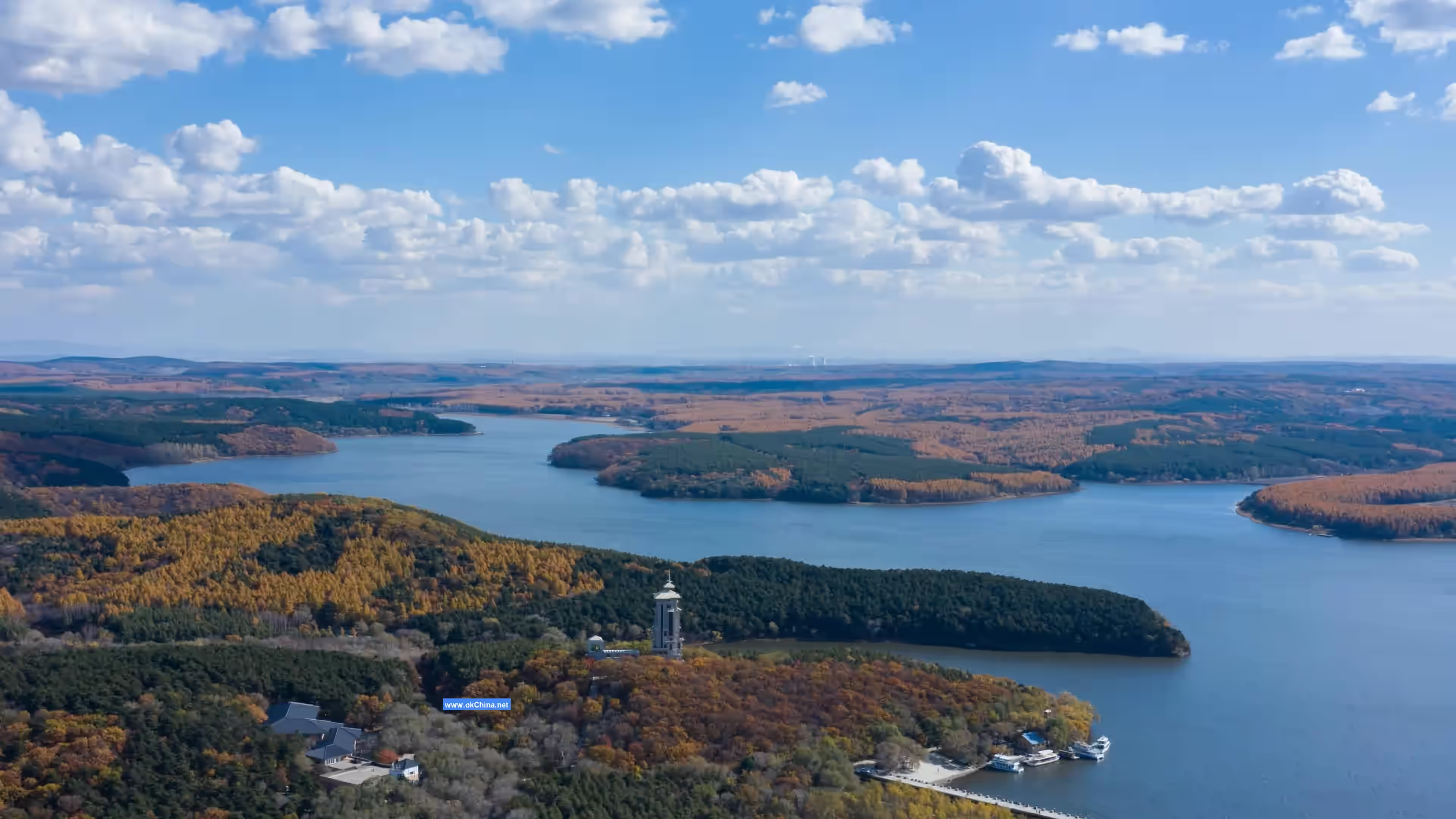
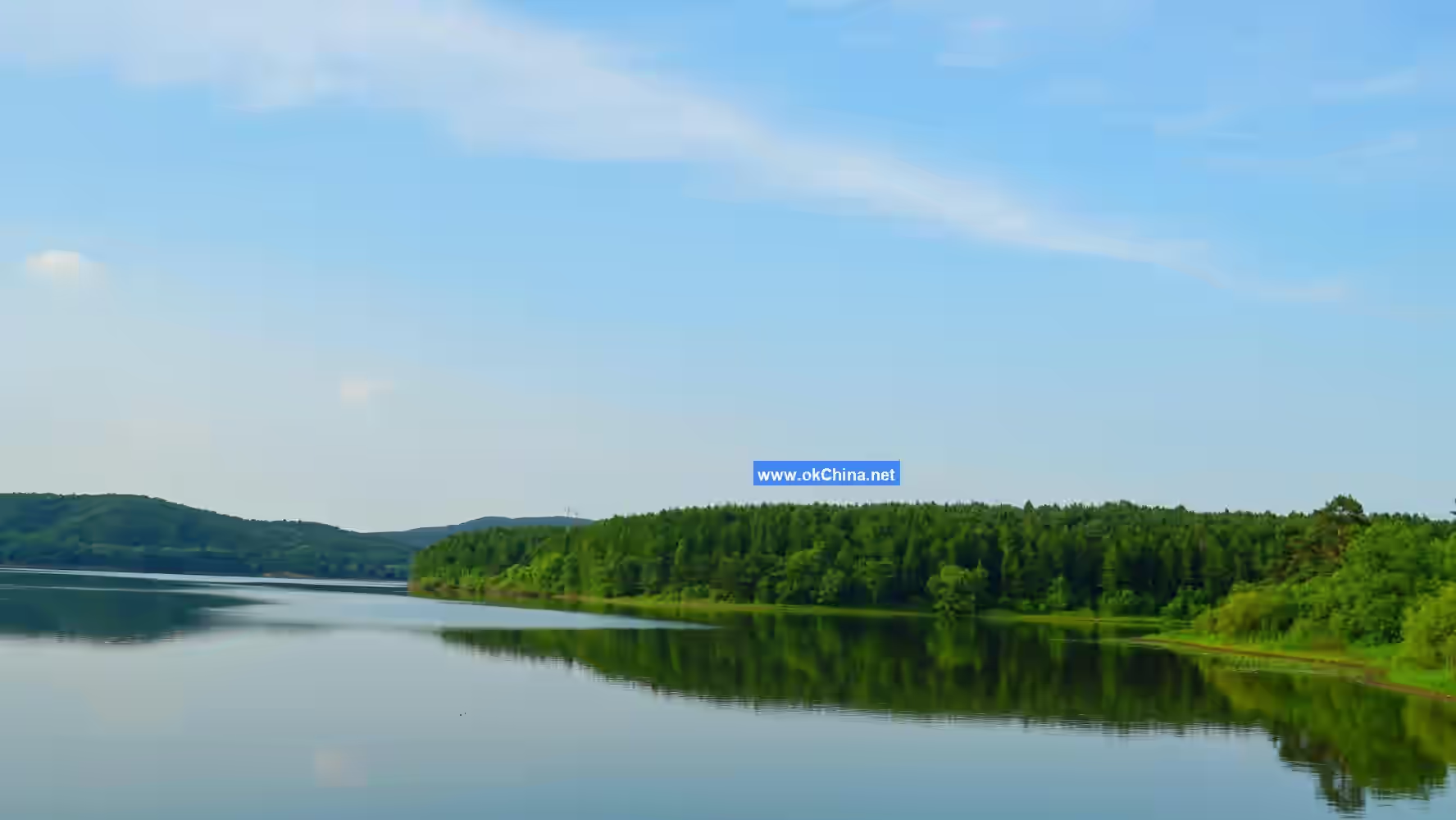
Jingyuetan Scenic Area in Changchun is located within the Changchun Jingyue High-Tech Industrial Development Zone in the southeast of Changchun City, Jilin Province, 18 kilometers from the city center's People's Square. The scenic area covers 96.38 square kilometers, with a water area of 5.3 square kilometers and a forest coverage rate of 96%.
Jingyuetan Scenic Area lies in the transitional zone from the eastern mountains to the western grasslands of Jilin Province, belonging to the low hills of the Changbai Mountain range, with elevations ranging from 220 to 406 meters. The area experiences distinct seasonal changes and is characterized by a typical temperate semi-arid to semi-humid climate, rich in monsoon variations and continental climate influences, perennially affected by the Changbai Mountains. The annual average maximum temperature is 27.3°C, and the annual average minimum temperature is -21.2°C.
In 1988, Jingyuetan Scenic Area was approved by the State Council as a National Key Scenic Area. In 1989, it was designated as a National Forest Park by the Ministry of Forestry. On January 14, 2011, it was officially awarded the title of "National AAAAA Tourist Attraction" by the National Tourism Administration.
2. Development History
In 1932, after the Japanese invading army gained control of the "Manchurian Railway Concession" in Changchun, they discovered that the Fengtian warlord government tightly controlled the city's water sources, causing a persistent water shortage in the concession. After the establishment of the puppet state of Manchukuo, the puppet capital construction bureau, with the assistance of the Manchurian Railway, immediately conducted a survey of Changchun's water sources and discovered deep groundwater at a depth of about 100 meters.
Below Xinlicheng, the terrain is hilly, and the largest river in the region is the Yitong River. This section of the Yitong River has no high mountains on either bank, making it unsuitable for reservoir construction. All tributaries are narrow and shallow, with only the Xiaoheyanzi River flowing year-round. In 1934, after comparing water quality, quantity, and costs, the puppet capital construction bureau decided to build a dam at a place called "Yaozhan," 12 kilometers southeast of Changchun, to intercept the waters of the Xiaoheyanzi River.
Construction of this water storage project began in May 1934, and water supply started in January 1936. This reservoir had a daily water supply capacity of 40,000 cubic meters, exceeding the 20,000 cubic meter capacity of the Nanling Water Purification Plant. This reservoir, with a surface area of 4.6 square kilometers, was later named "Jingyuetan Scenic Area of Changchun."
However, due to the limited flow of the Xiaoheyanzi River, the water supply for the puppet capital became critical after five years, forcing the use of the Huanglong Park Reservoir (which intercepted three upstream tributaries of the Xihegou, a branch of the Yitong River, now Changchun's South Lake) as an alternative water source. In the final two years of the puppet state, the main water supply came from the Yitong River intercepted by the Xiaobanqiao sluice gate of the Nanling Water Plant.
In 1995, the Changchun Jingyuetan Tourism Economic Development Zone Management Committee was established, positioning Jingyuetan National Forest Park as an urban forest eco-tourism destination and enhancing the construction of infrastructure within the scenic area.
In 1958, with the completion of the Xinlicheng Reservoir, the Yitong River, regulated by the reservoir, began supplying water to the Nanling Water Plant, and Jingyuetan Scenic Area was converted into a backup water source for Changchun City.
3. Geographical Environment
3.1 Location and Territory
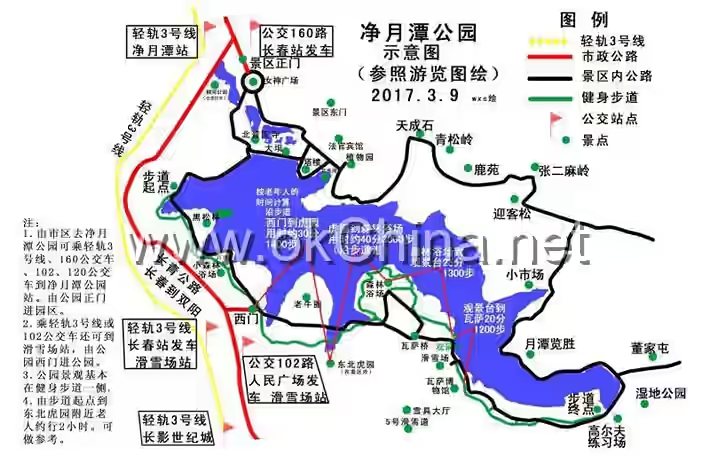
Jingyuetan Scenic Area is located within the Changchun Jingyue High-Tech Industrial Development Zone in the southeast of Changchun City, Jilin Province, 9 kilometers from the city center. It is bordered by the Changchun-Jilin and Harbin-Dalian expressways, offering good accessibility. The planned area of the scenic spot is 96.38 square kilometers.
3.2 Topography and Landforms
Jingyuetan Scenic Area lies in the transitional zone from the eastern mountains to the western grasslands of Jilin Province, belonging to the low hills of the Changbai Mountain range, with elevations ranging from 220 to 406 meters.
3.3 Climate Characteristics
Located within Changchun City, Jilin Province, Jingyuetan Scenic Area experiences distinct seasonal changes and is characterized by a typical temperate semi-arid to semi-humid climate, rich in monsoon variations and continental climate influences, perennially affected by the Changbai Mountains. The annual average maximum temperature is 27.3°C, and the annual average minimum temperature is -21.2°C.
3.4 Soil
Jingyuetan Scenic Area is situated in the alluvial plain zone of the Changbai Mountain range, formed by the alluvial influences of the Dahei Mountain and the Yitong River. The soil layer primarily consists of sandy loam, clay loam, and gravel layers. Originally formed from volcanic ash accumulation and later developing into an alluvial plain, the soil quality is good, with high fertility and strength. Soil thickness generally ranges from 17 to 52 centimeters. Some soil layers contain large amounts of basalt, an essential raw material for construction.
4. Main Attractions
4.1 Forest Bathing Ground
Since opening to the public in 1999, the Forest Bathing Ground has welcomed numerous domestic and international visitors. The pathway is paved with ice-split stones sourced from Benxi, Liaoning, which are fossils containing fern plants. The Forest Bathing Ground features 40,000 square meters of Mongolian pine forest. Mongolian pines are characterized by gray-black trunks at the base and reddish-brown upper sections, with an aesthetically pleasing appearance similar to the Beauty Pine of Changbai Mountain. They are evergreen trees that can reach up to 30 meters in height, with strong cold resistance and adaptability.
4.2 Reservoir Dam
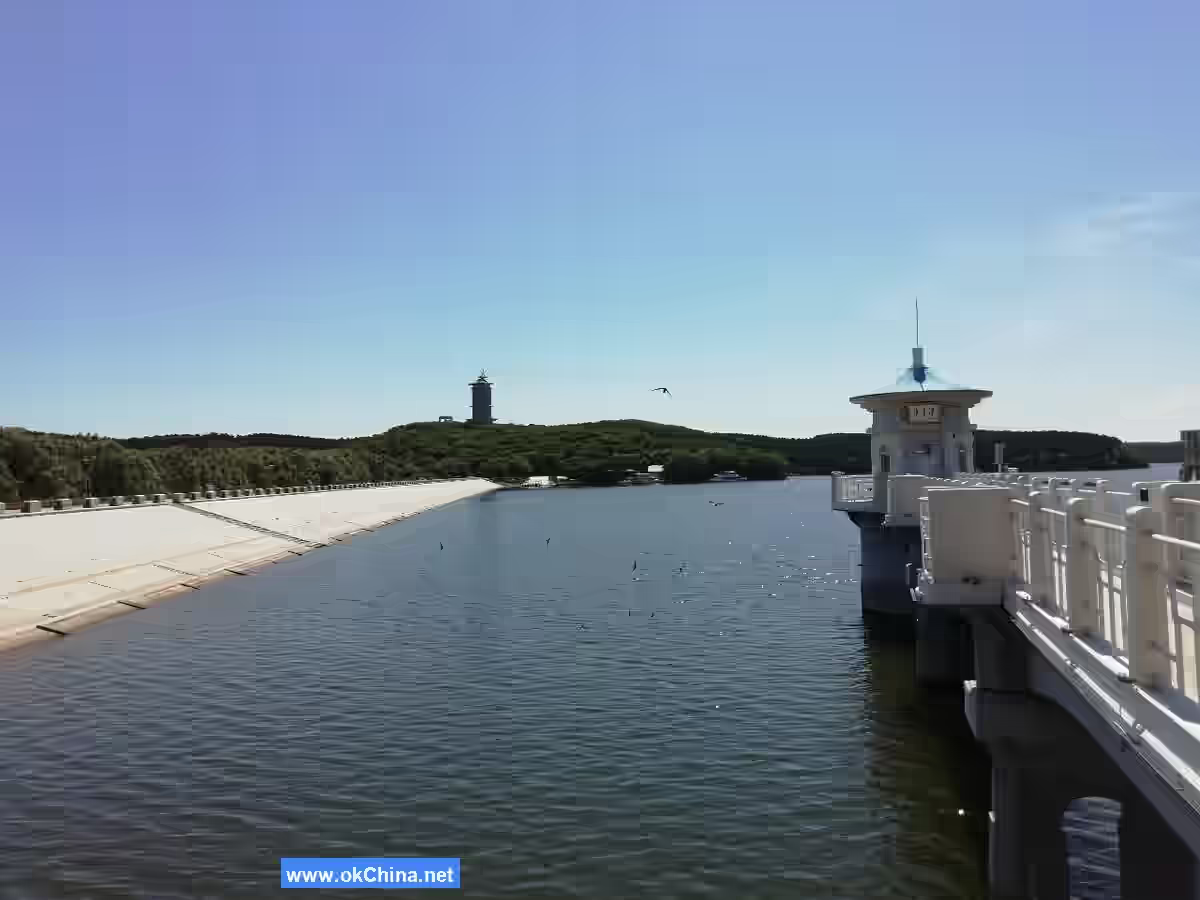
Jingyuetan Scenic Area is surrounded by mountains on three sides, with an artificially constructed reservoir dam on one side. The reservoir dam resembles a winding dragon vein, lying beside Jingyuetan and spanning between Guantan Mountain and West Mountain. The dam is 555 meters long and 19 meters high.
4.3 Wangtan Bridge Square
Located north of the ski resort, Wangtan Bridge Square is novel and uniquely designed, with a winding bridge structure. From the bridge, visitors can enjoy distant mountains and close waters, making it the best spot to appreciate the scenery of Jingyuetan. The ceremony for the integration of waters between Jingyuetan and Sun Moon Lake was held here. The Shiyang Shihu Mountain Ancient Tomb is situated in the woods west of Wangtan Square, on the southern slope in the middle of the Jingyuetan Reservoir area, facing south. It is named after the stone carvings of sheep, tigers, and human figures in front of the tomb.
4.4 Vasaloppet Museum
The Vasaloppet Museum in Jingyuetan Scenic Area is China's first museum dedicated to Vasaloppet cross-country skiing. With its expansive sloping roof design and robust,质朴 architectural style, it延续了 the Nordic classical architectural style of Sweden, the birthplace of Vasaloppet skiing. The rough stone walls, well-arranged solid wood exteriors, and elegant eaves and beams blend seamlessly with the natural environment of Jingyuetan.
4.5 Wetland Park
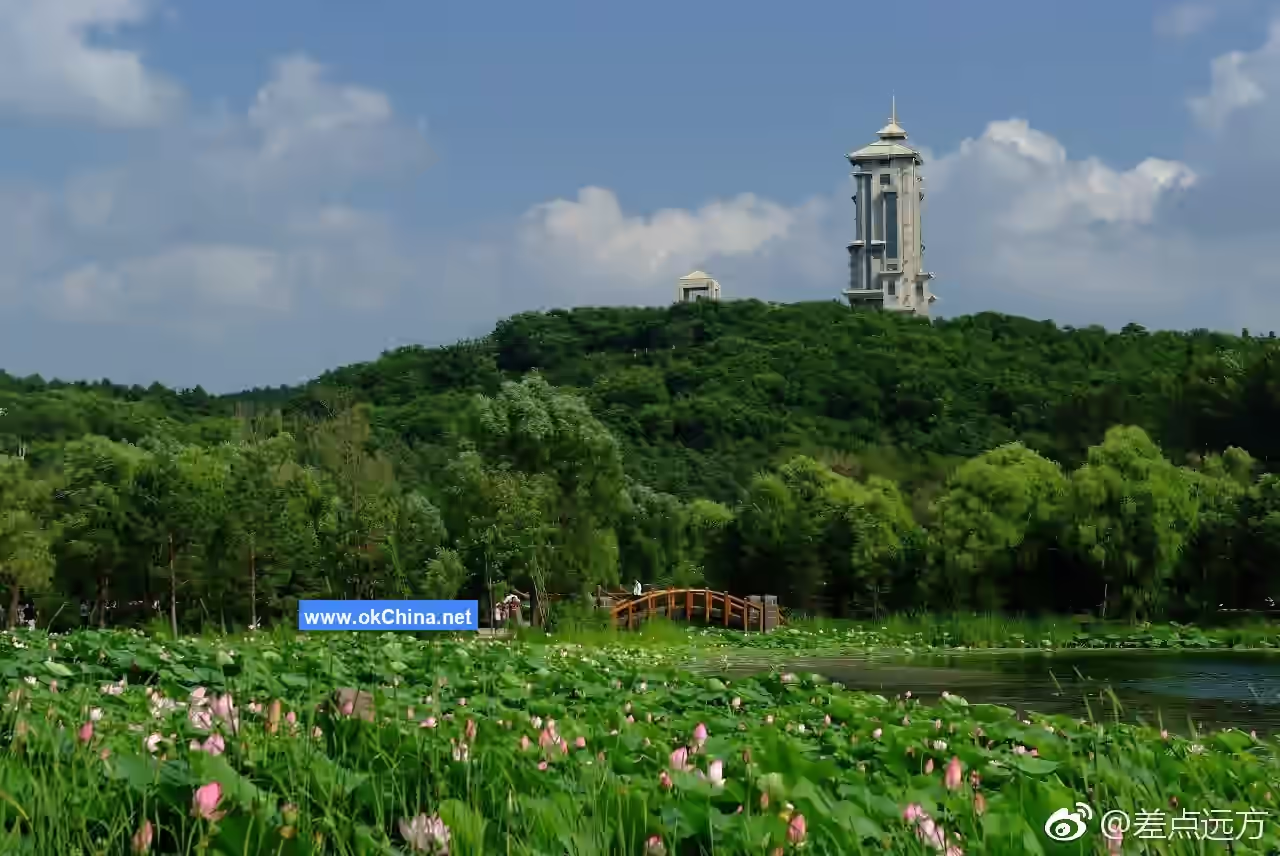
The Wetland Park in Jingyuetan Scenic Area is located between Xiliu Bridge and Heyan Bridge, covering approximately 1 square kilometer. It includes wetlands, overflow dams, landscaping, and boat docks, and is home to Changchun's largest lotus pond.
4.6 Lotus and Willow Garden
Completed in 2004 and located north of the reservoir dam, the Lotus and Willow Garden covers about 0.12 square kilometers. Its landscape design fully considers the original topography, employing traditional Chinese gardening techniques to organically integrate water features and plant scenery according to local conditions. The garden is a place for self-cultivation and relaxation. The graceful lotuses in the lake and the elegant willows on the banks complement each other, creating a unique charm.
4.7 Bisong Jingyue Tower
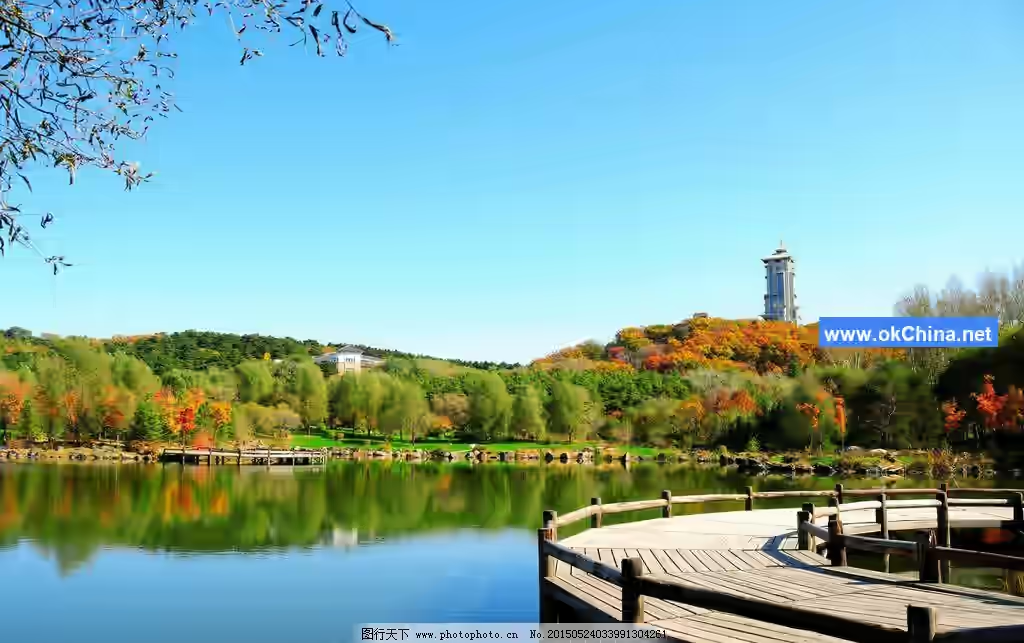
Bisong Jingyue Tower is a landmark structure of Jingyuetan Scenic Area and even Changchun City, designed by renowned Chinese architect Qi Kang, with its shape inspired by pine and cypress trees. The tower stands on Guantan Mountain and opened to the public in 2000 to commemorate Changchun's 200th anniversary. Ascending its 195 steps symbolizes lasting prosperity. The 11-story tower is 50.2 meters high, with "50" representing the 50th anniversary of the founding of the People's Republic of China and "2" representing Changchun's 200th anniversary.
4.8 Taiping Bell Tower
Taiping Bell Tower was built to commemorate Jilin Province's decade (1981-1990) without major forest fires. The tower is 17 meters high, with a large alloy bell hanging on the top floor. The bell is 2.5 meters high, 1.8 meters in diameter, and weighs 3.3 tons. Visitors can climb the tower and ring the bell, producing deep and melodious sounds to pray for peace.
4.9 Water Release Tower
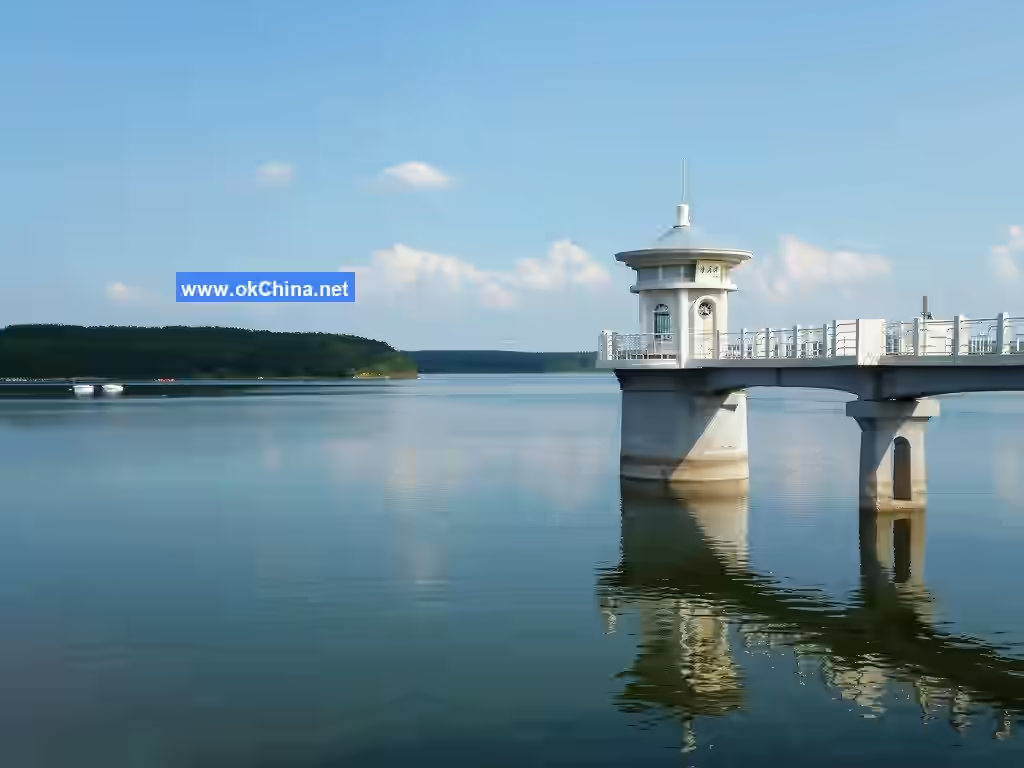
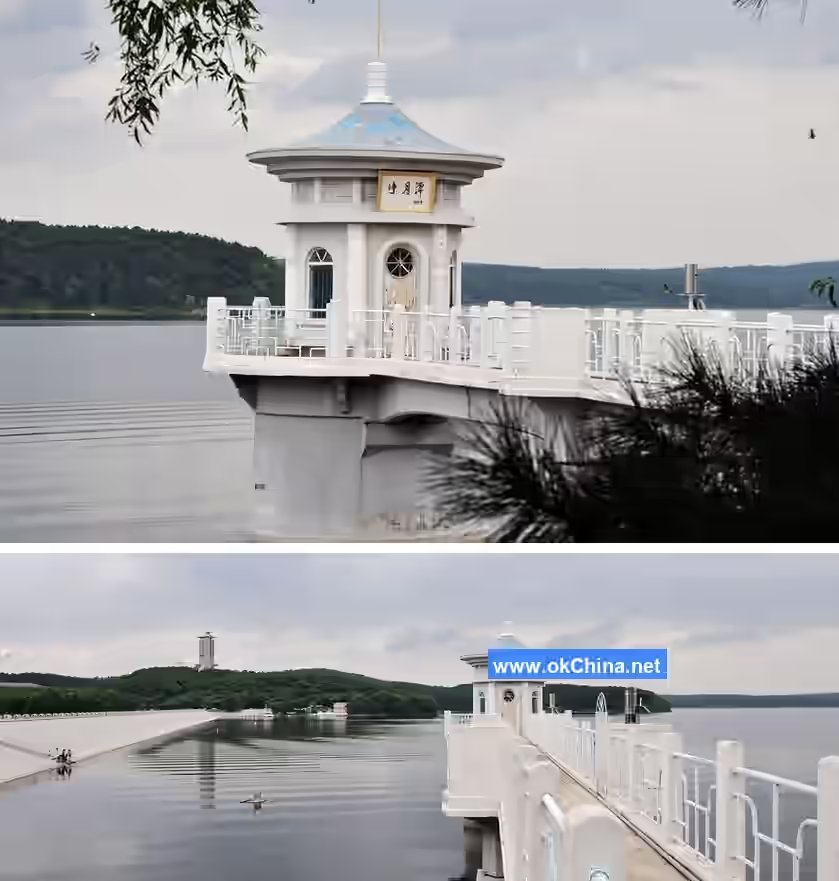
The Water Release Tower, a blue-roofed pavilion-style structure, is an important hydraulic building used for layered water intake. As a contemporary structure built with the scenic area, it witnesses the 90-year historical changes of Jingyuetan Scenic Area.
4.10 Wooden Boardwalk
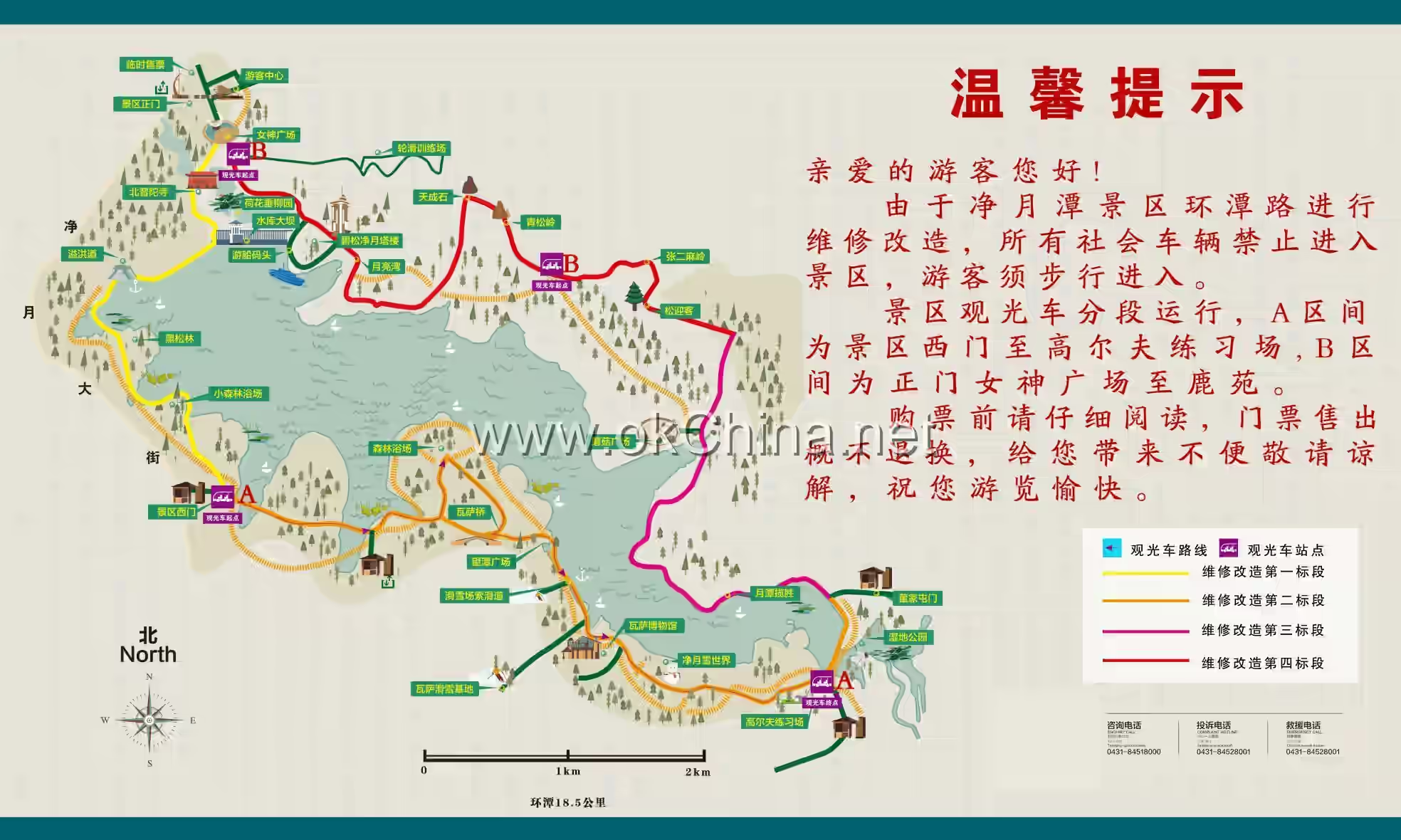
The wooden boardwalk in Jingyuetan Scenic Area includes the West Loop, starting from Guantan Bridge and ending at Jingyue Wetland, and the East Loop, starting from Tannan Square and ending at Bishu Villa, with a total length of 14 kilometers. It is a significant scenic feature. The boardwalk winds through forests and over water, embodying the concept of "a winding path leading to seclusion."
4.11 Ski Resort
Jingyuetan Ski Resort is known as the "urban tourist ski resort." Located in hills with elevations between 200 and 400 meters, the gentle slopes have been developed into five ski runs: beginner, intermediate, and cross-country. There are three beginner runs, 580 meters, 470 meters, and 300 meters long, with an average slope of 9 degrees, suitable for novice skiers. One cross-country run is 1,500 meters long, 30 meters wide, with a 12-degree slope, suitable for cross-country skiing competitions. One intermediate run is 800 meters long, with an average width of 45 meters and an average slope of 18 degrees, catering to professional skiing enthusiasts.
4.12 Jingyue Snow World
Jingyue Snow World is a large experiential snow sculpture park in Jingyuetan Scenic Area, themed around European style. It focuses on snow and beauty as its guiding principles.In 2016, the Jingyue Snow World was planned and constructed across five zones, covering a total area of 560,000 square meters with over 150,000 cubic meters of snow used. It featured more than 200 snow sculptures of various sizes, making it the largest in Jilin Province in terms of scale, investment, snow volume, and creative team. While continuing the previous European style, Jingyue Snow World innovatively incorporated Chinese elements, expanded visitor interaction segments, and enriched the overall product offerings.
4.13 Golf Course
The golf driving range in Changchun's Jingyue Lake Scenic Area was meticulously designed by the American golf course design firm JMP and constructed by the Malaysian Gaoben Construction Company. It is the first outdoor golf driving range in Changchun. Covering an area of 55,000 square meters and stretching 300 yards in length, the range features 36 standard hitting bays, four target greens, obstacle ponds, practice greens, sand traps, and night lighting facilities. It fully meets the practice needs of citizens and tourists, making it one of the best choices for leisure and fitness in the city.
4.14 Boat Dock
The boat dock in Changchun's Jingyue Lake Scenic Area combines water tours with transportation. Located on the east side of the dam, it houses over 80 boats of various sizes. The Riyuetan No. 1 is a standard two-deck tourist vessel, measuring 21 meters in length, 5 meters in width, and 7.5 meters in height, with a maximum passenger capacity of 60 people. Aboard the Riyuetan No. 1, visitors can enjoy the scenic beauty of Jingyue Lake's waters and mountains, while the upper deck offers an excellent vantage point for panoramic views of the lake. Cable Car Starting from June 1, 2023, the cableway and slide in Changchun's Jingyue Lake Scenic Area was officially renamed the "Starry Sky Cable Car · Time Slide." It is the first suspended night-glow starry sky cable car in the country, with a total length of 1,321 meters.
5. Related Culture
5.1 Vasa International Ski Festival
The "Changchun Jingyue Lake Scenic Area Vasa International Ski Festival" is the only Chinese member of "Worldloppet," an international organization for long-distance cross-country skiing events that includes top competitions from 20 different countries.
5.2 Jingyue Lake Dragon Boat Race
The dragon boat race in Changchun's Jingyue Lake Scenic Area is the only water-based dragon boat racing event in Changchun. Since its inception in 2011, it has been successfully held five times, becoming a cultural tourism highlight of Changchun and an important part of the city's public fitness activities.
5.3 Mythological Legend
Legend has it that one year, the seven daughters of the Queen Mother of Heaven came down to the mortal world to play. The seventh daughter, also known as the Seventh Fairy, saw a young man carrying a tattered umbrella, wiping tears as he walked. She transformed into a village girl, and the two fell in love at first sight, eventually living together. Upon learning of this, the Queen Mother of Heaven was furious and decided to send heavenly soldiers to capture the Seventh Fairy. On that day, the sky suddenly darkened with clouds, and a fierce gust of wind swept the Seventh Fairy back into the heavens. As she gazed at the cottage where she had lived with her beloved, she couldn't hold back two streams of tears. One drop fell in the south, forming Taiwan's Sun Moon Lake, and the other fell in the north, forming Changchun's Jingyue Lake.
Comments
Post a Comment