

Jingpo Lake
1. Introduction
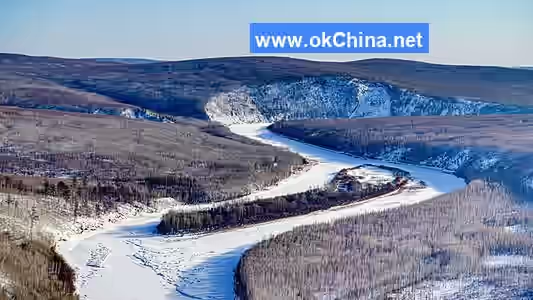
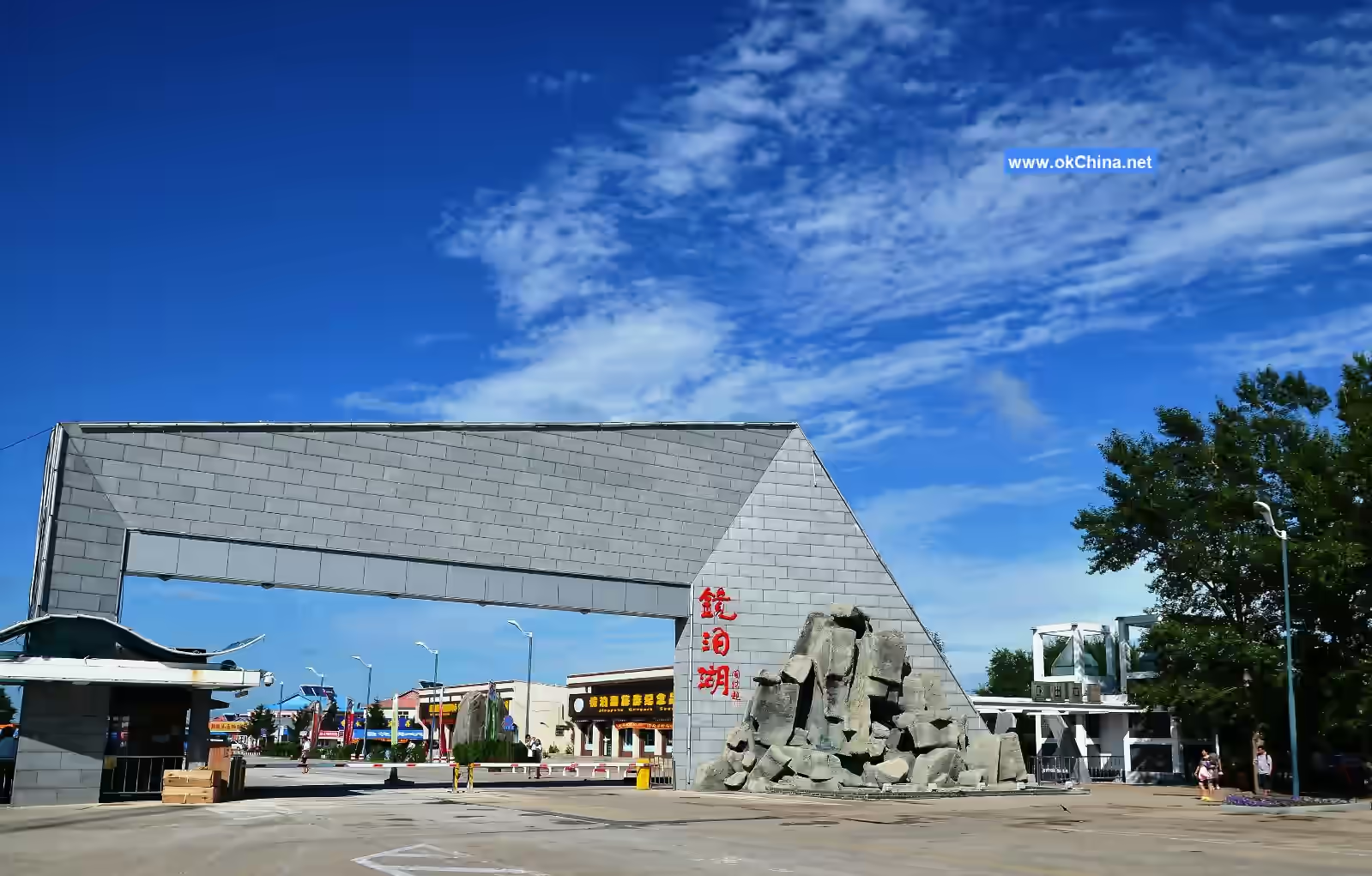
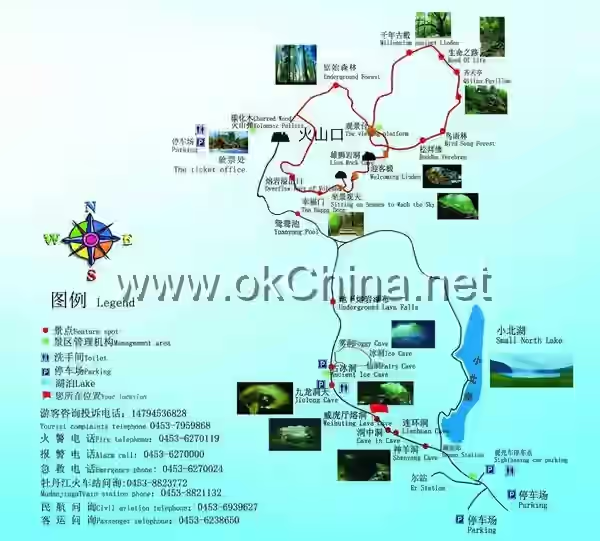
Jingpo Lake National Scenic Area is located between the Zhangguangcai Range and the Laoye Range in the southeast of Mudanjiang City, Heilongjiang Province. It lies 60 kilometers southwest of Ning'an City and 90 kilometers from downtown Mudanjiang. With a total planned area of 1,726 square kilometers, the scenic area consists of three main parts: the Hundred-Mile Long Lake, the Primeval Forest in Volcanic Craters, and the Site of the Shangjing Longquanfu of the Bohai Kingdom. It is comparable to the Thousand Island Lake, featuring sandstone sculptures and the charm of Tu'er Ridge. Jingpo Lake is primarily known for its lake and mountain scenery, complemented by geological wonders such as the underground primeval forest in volcanic craters and underground lava tunnels, as well as historical and cultural landscapes represented by the Tang Dynasty Bohai Kingdom ruins. It is a comprehensive scenic area suitable for scientific research, summer retreats, sightseeing, tourism, vacations, and cultural exchange activities. Jingpo Lake is like a dazzling pearl embedded in the northern frontier of the motherland, renowned worldwide for its unique and unadorned natural beauty, attracting an increasing number of domestic and international visitors. The park's landscape resources include lakes, rivers, waterfalls, wetlands, volcanoes, lava plateaus, underground lava tunnels, primeval forests, wildlife habitats, ancient city ruins, and ethnic folk customs. It integrates history, culture, flora and fauna, archaeology, geology, aesthetic value, and biodiversity, making it rare in China. There are 72 scenic resource points in Jingpo Lake, including 48 natural landscapes (67%) and 24 cultural landscapes (33%).
2. Geographical Environment
2.1 Geographical Location
Jingpo Lake Global Geopark and Jingpo Lake National Scenic Area (hereinafter referred to as Jingpo Lake Scenic Area) are located in Ning'an City, in the southeast of Heilongjiang Province and the southwest of Mudanjiang City (east longitude 120°30′–129°30′, north latitude 43°46′–44°18′). It serves as the endpoint of the Harbin–Yuquan–Yabuli–Dahailin China Snow Town–Jingpo Lake tourist route and is an important tourist destination in Heilongjiang Province. From a broader perspective, Mudanjiang–Jingpo Lake is at the center of the Northeast Asia tourism circle. To the southeast is the Russian port city of Vladivostok; to the south and southwest are the Changbai Mountain Tianchi Tourist Area in Jilin Province and the Songhua Lake Tourist Area at the source of the Songhua River; to the west lie famous scenic spots and cities such as Dahailin China Snow Town, Yabuli Ski Resort, Yuquan Hunting Ground, Harbin, and Wudalianchi. These constitute Jingpo Lake's uniquely advantageous geographical environment. Jingpo Lake is located on the main stream of the Mudan River, about 80 kilometers north of Mudanjiang City. It is about 130 kilometers east of Suifenhe, borders Dunhua City of Jilin Province to the south, and is 250 kilometers from Changbai Mountain. To the west lies Hailin City. Jingpo Lake stretches 45 kilometers from north to south, with a maximum width of 6 kilometers from east to west and a minimum width of 300 meters. Its water area covers 80 square kilometers, with a storage capacity of 1.6 billion cubic meters, and a forest coverage rate of over 68%.
2.2 Climate Characteristics
Heilongjiang Jingpo Lake National Geopark features a temperate continental monsoon climate with four distinct seasons: dry and windy springs; warm and rainy summers; short, sunny autumns; and long, cold winters. The annual average temperature is 3.6°C, with a maximum of 36.2°C and a minimum of -36.7°C. The average annual rainfall is 506.4 mm, with the longest continuous rainfall lasting 7–8 days. There are about 100 rainy days per year, concentrated in July and August. The average frost period in the area is from October 19 to April 28 of the following year, with an average of 172.7 snowy days per year. Early frost appears in late September, and late frost ends in early May, with a frost-free period of about 150 days. The area experiences frequent southwest winds in spring and northwest winds in winter. The prevailing wind direction throughout the year is southwest, with a calm wind frequency of 30.3%. The strongest winds generally occur in March and April, while the weakest winds are in June and July. The annual average wind speed is 2.9 m/s. The average lake freezing period begins on December 10, and the average lake thawing period is on April 20. The average ice thickness on the lake is 0.83 meters, and the average soil freezing depth is 1.42 meters. From May to September each year, the average temperature ranges from 10°C to 20°C.
2.3 Geological Features
The Jingpo Lake mountain range is located in the transitional area between the Zhangguangcai Range and the Laoye Range of Changbai Mountain, characterized by low mountain and hilly terrain. The mountains west of the lake have significant undulations, while those to the east and south are relatively gentle. North of the lake is a lava plateau with flat terrain. The northern part of the Jingpo Lake Scenic Area features complex topography, with 12 volcanic craters of varying sizes distributed across the area. The highest peak in the range is 1,260.7 meters above sea level (Laobei Mountain west of Luyuan Island), and the lowest elevation is 339.17 meters (the lowest water level elevation). The geological structure of Jingpo Lake mainly consists of granite, perlite, and basalt. The volcanic group in the northwest of the park has been erupting continuously for one million years, forming a basalt plateau over a hundred miles long. Around 4,800 years ago, the last volcanic eruption blocked the Mudan River channel with lava, creating the world's largest volcanic lava-dammed lake—Jingpo Lake—as well as a series of other lakes such as Xiaobeihu Lake, Zhuanxin Lake, and Yuanyang Pool.
2.4 Hydrological Features
The Jingpo Lake water system includes about 30 rivers, which converge into the lake in a centripetal pattern. Most of these rivers are mountain streams with rapid flow, high runoff concentration and dispersion rates, low sediment content, large annual runoff, significant seasonal flow variations, and long ice periods. Jingpo Lake is 45 kilometers long from north to south, with a maximum width of 6,000 meters from east to west and a minimum width of 300 meters. The general width ranges from 500 to 1,000 meters, with a maximum depth of 70 meters (in the northern waters of Jingpo Lake). The water surface area is 79.3 square kilometers, with a storage capacity of approximately 1.6 billion cubic meters. The second-largest lake, Xiaobeihu Lake, is about 6,000 meters long and covers a water area of 3.80 square kilometers. The intra-annual water level variation characteristics of Jingpo Lake are as follows: the highest water level usually occurs from August to September, and the lowest water level from March to April. The multi-year average water level is 347.95 meters, with the highest recorded at 354.43 meters and the lowest at 339.17 meters. Jingpo Lake's water originates from the Mudan River, which originates from the Mudan Ridge of Changbai Mountain in Jilin Province. The river has a steep gradient, and Jingpo Lake is about 300 kilometers from the source of the Mudan River, with a drop of approximately 750 meters.
3. Main Attractions
3.1 Volcanic Geological Landscapes
Within a 40-kilometer radius in the northwest of the Jingpo Lake Scenic Area, 12 volcanic craters of varying sizes are distributed. The diameters of these craters range from 70 to 550 meters, with depths between 30 and 132 meters. The volcanic group has been erupting continuously for one million years until the last eruption around 4,800 years ago. The lava rivers and lava plateaus outside the Jingpo Lake volcanic cones are mainly composed of black basalt. The plateaus are home to large-scale lava tunnels, rare in China, with similar internal structures and peculiar shapes. The longest lava cave can extend up to 10,000 meters, making it the largest and most complete lava tunnel discovered in China to date. Even in midsummer, ice scenes can be seen inside the caves, with a chilling cold. Some caves are shrouded in mist, deep and mysterious, holding significant scientific research value. No systematic investigation and research have been conducted by experts so far. The lava plateaus also feature various unique volcanic lava landscapes, such as lava bridges. Due to the ancient and varied volcanic eruptions, combined with Jingpo Lake's superior geographical environment, the volcanic craters are now covered with dense primeval mixed coniferous and broad-leaved forests and pure Korean pine forests, also known as "underground forests." The peculiarity of the landscape and the grandeur of the scenery are rare in China.
3.2 Diaoshuilou Waterfall
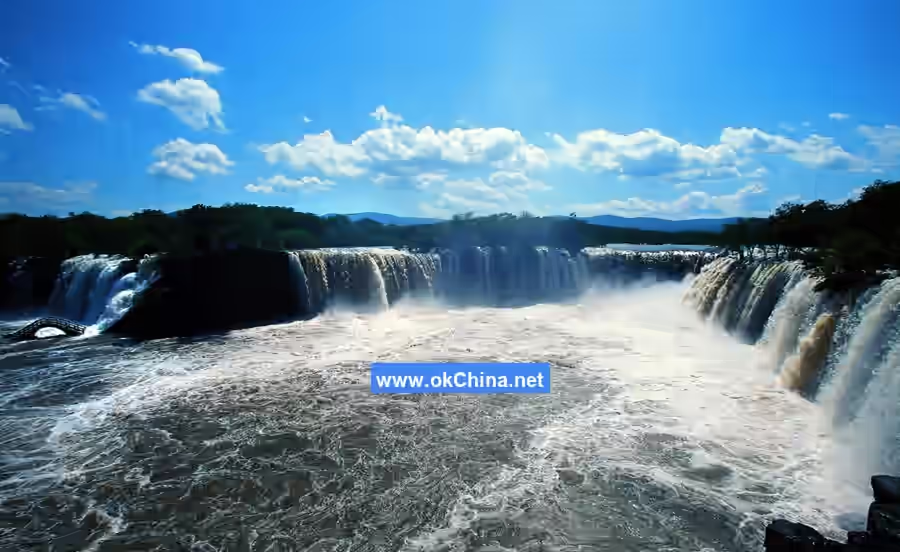
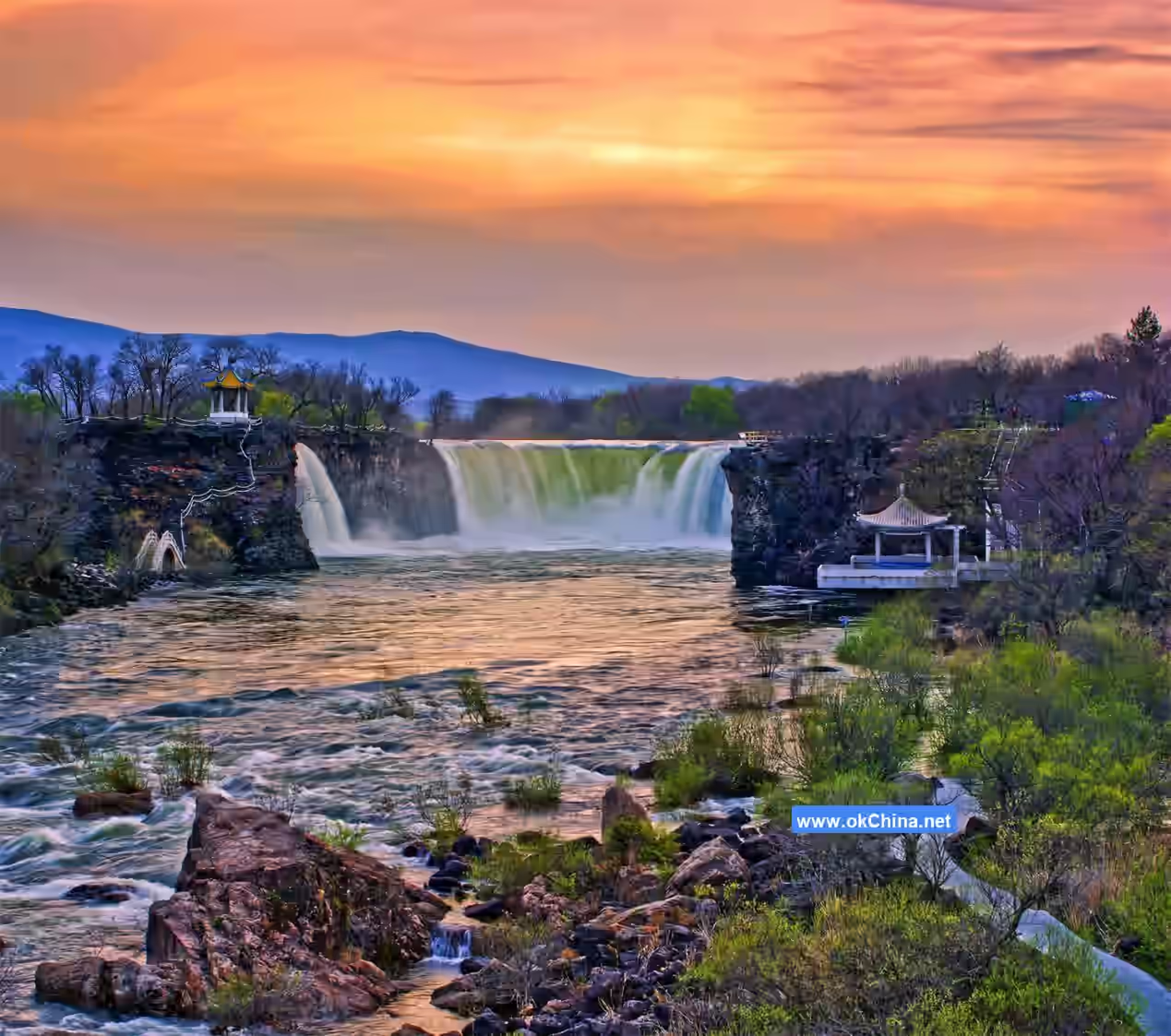
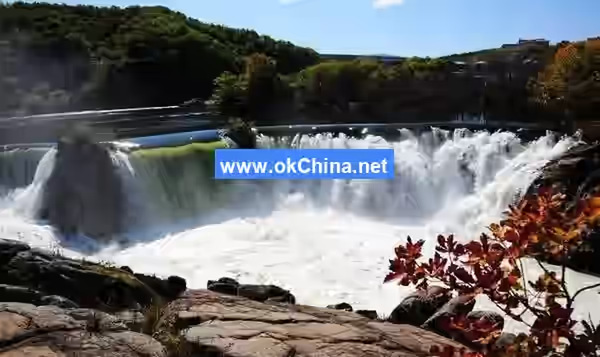
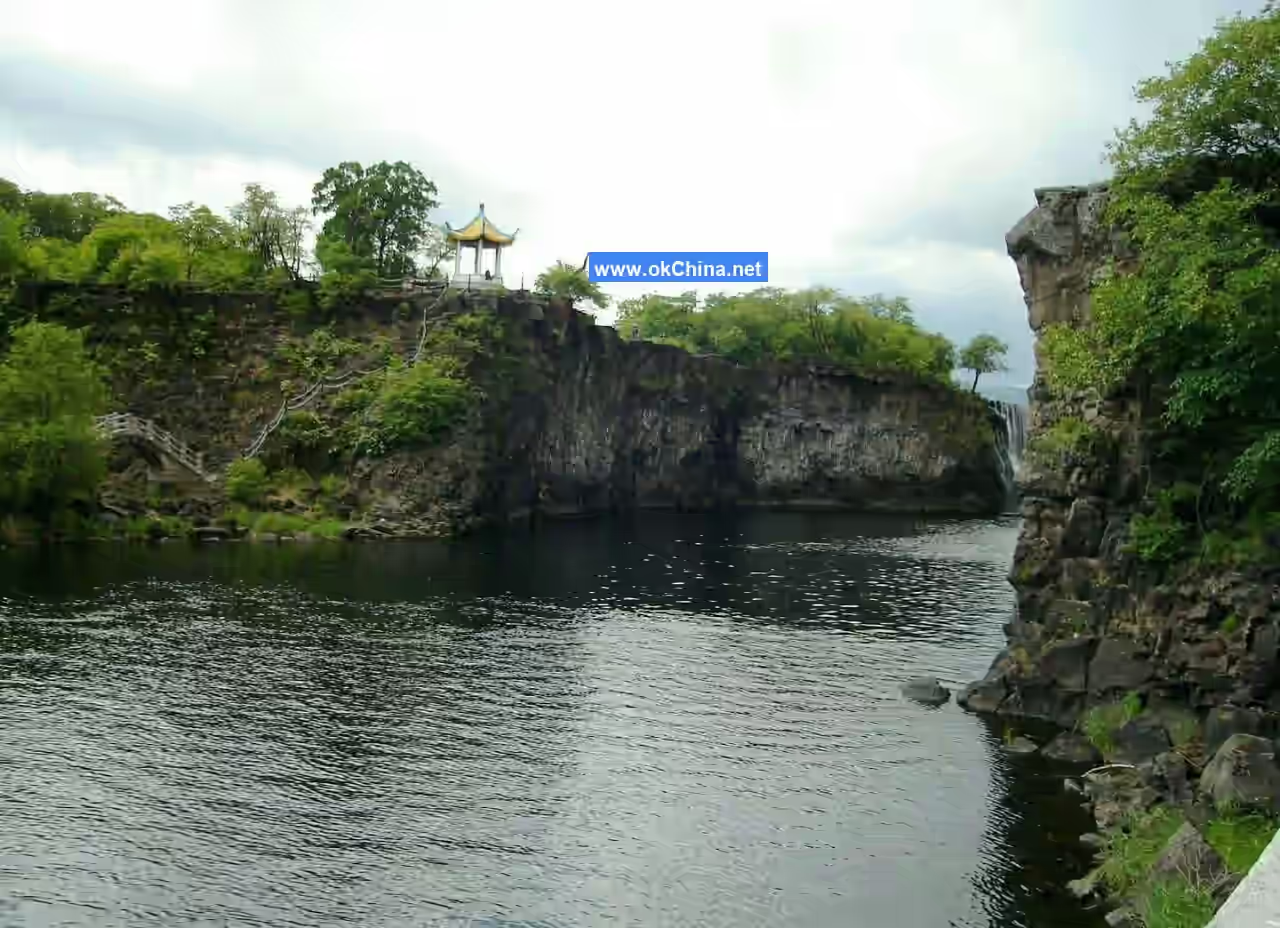
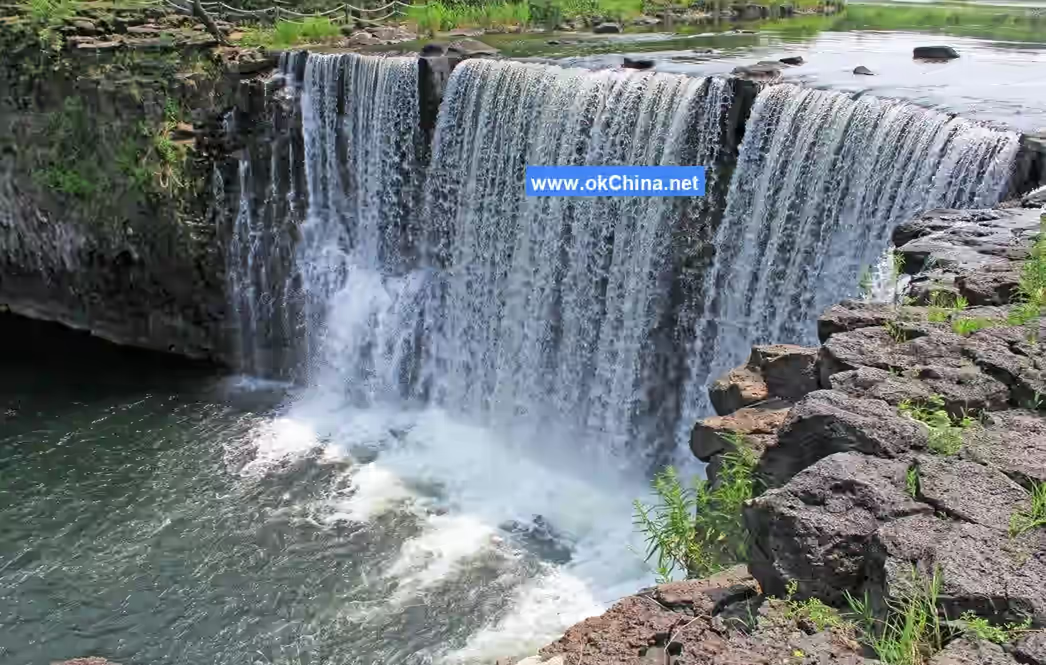
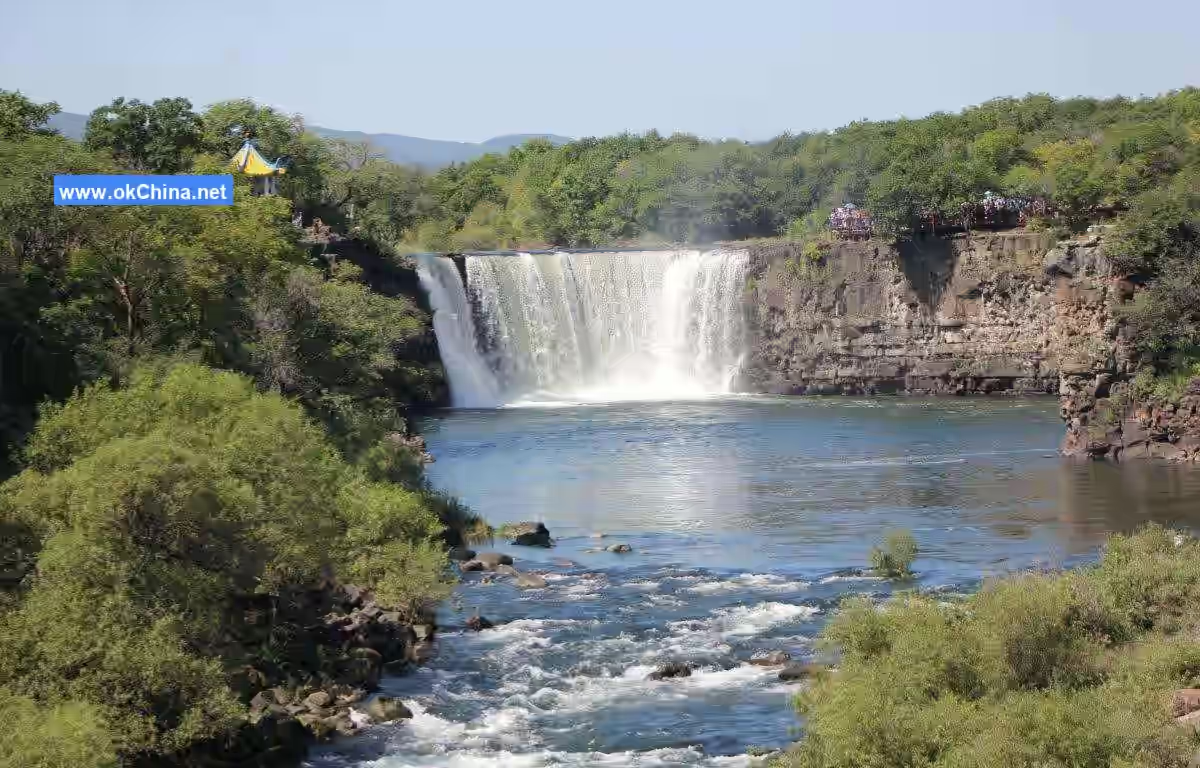
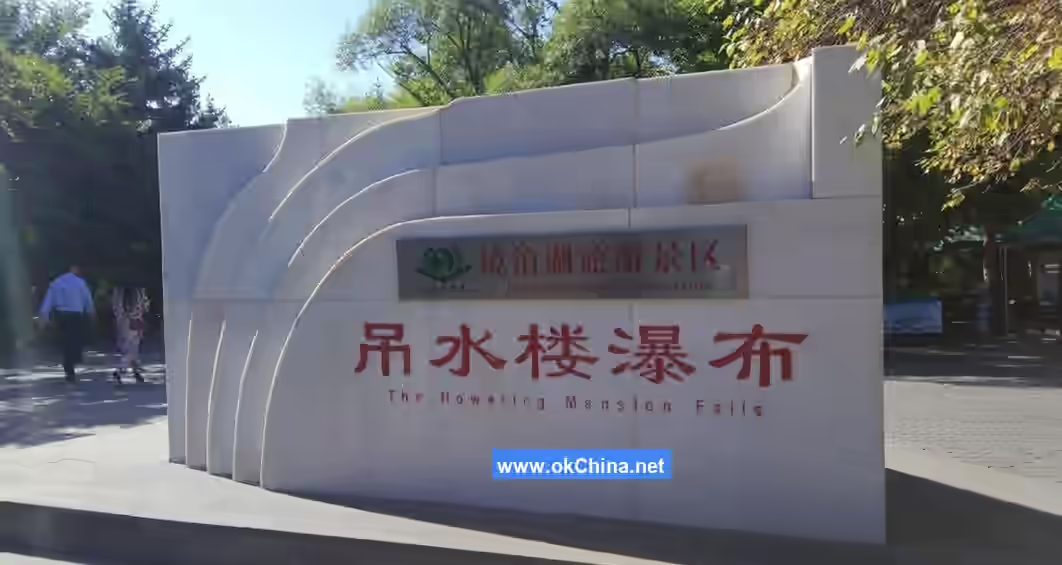
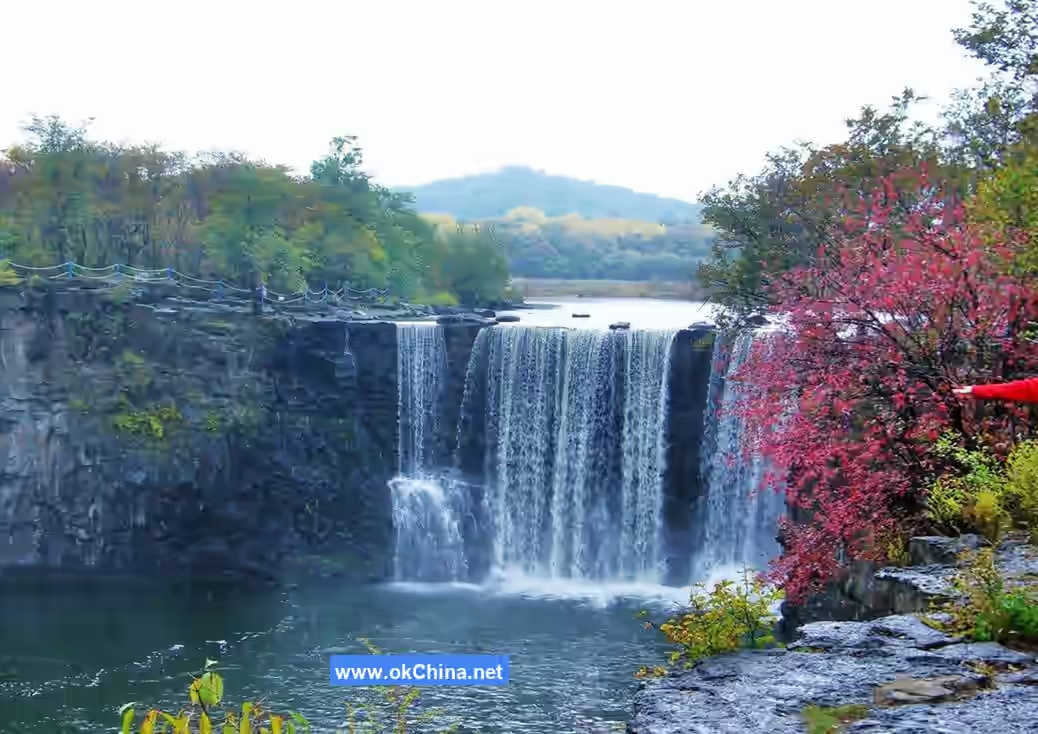
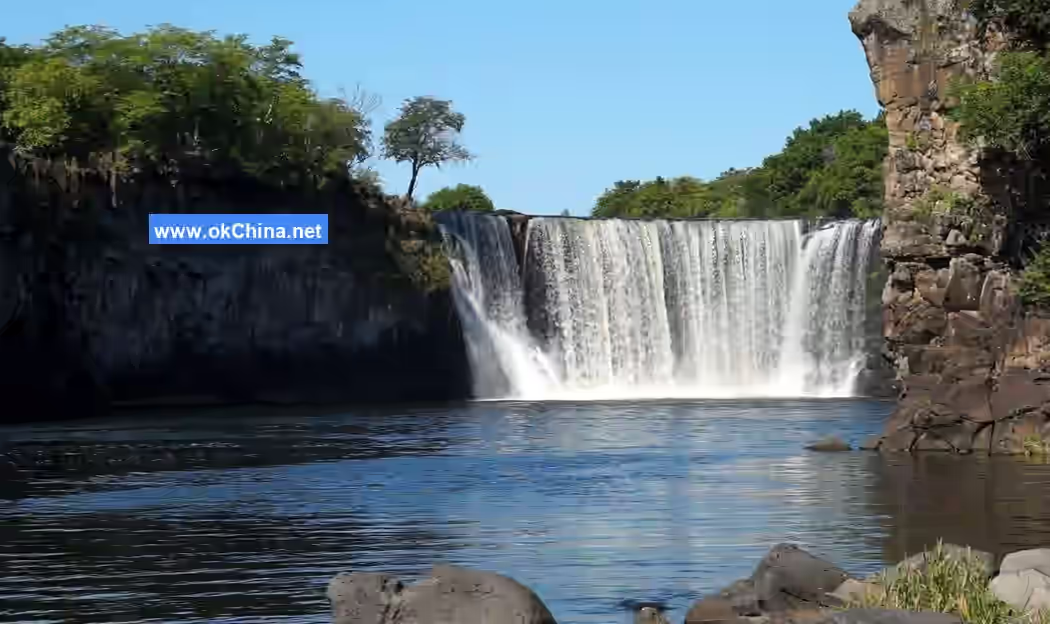
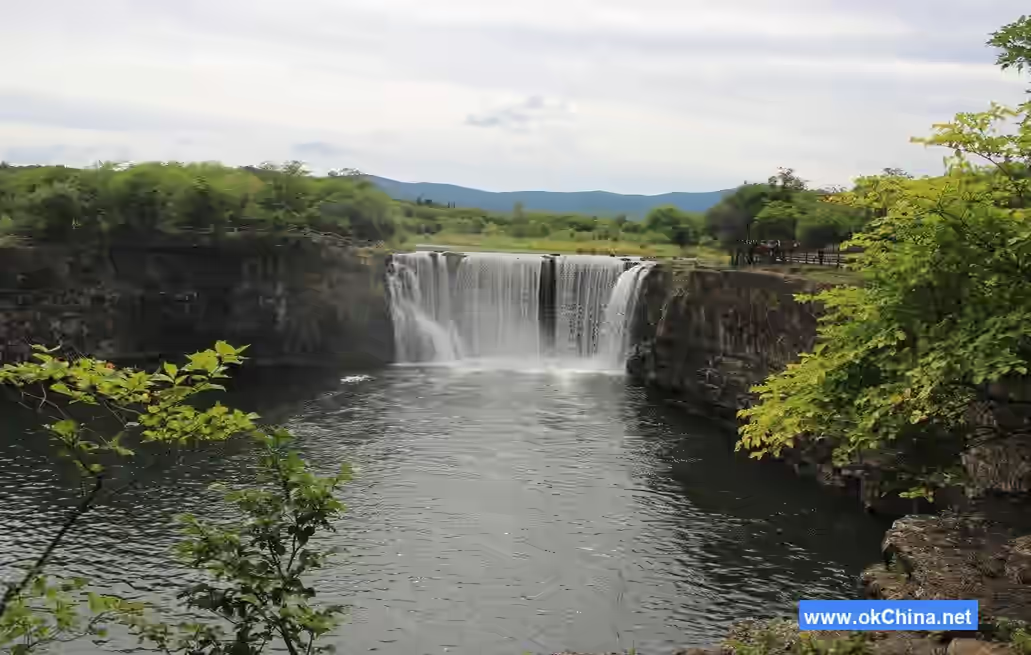
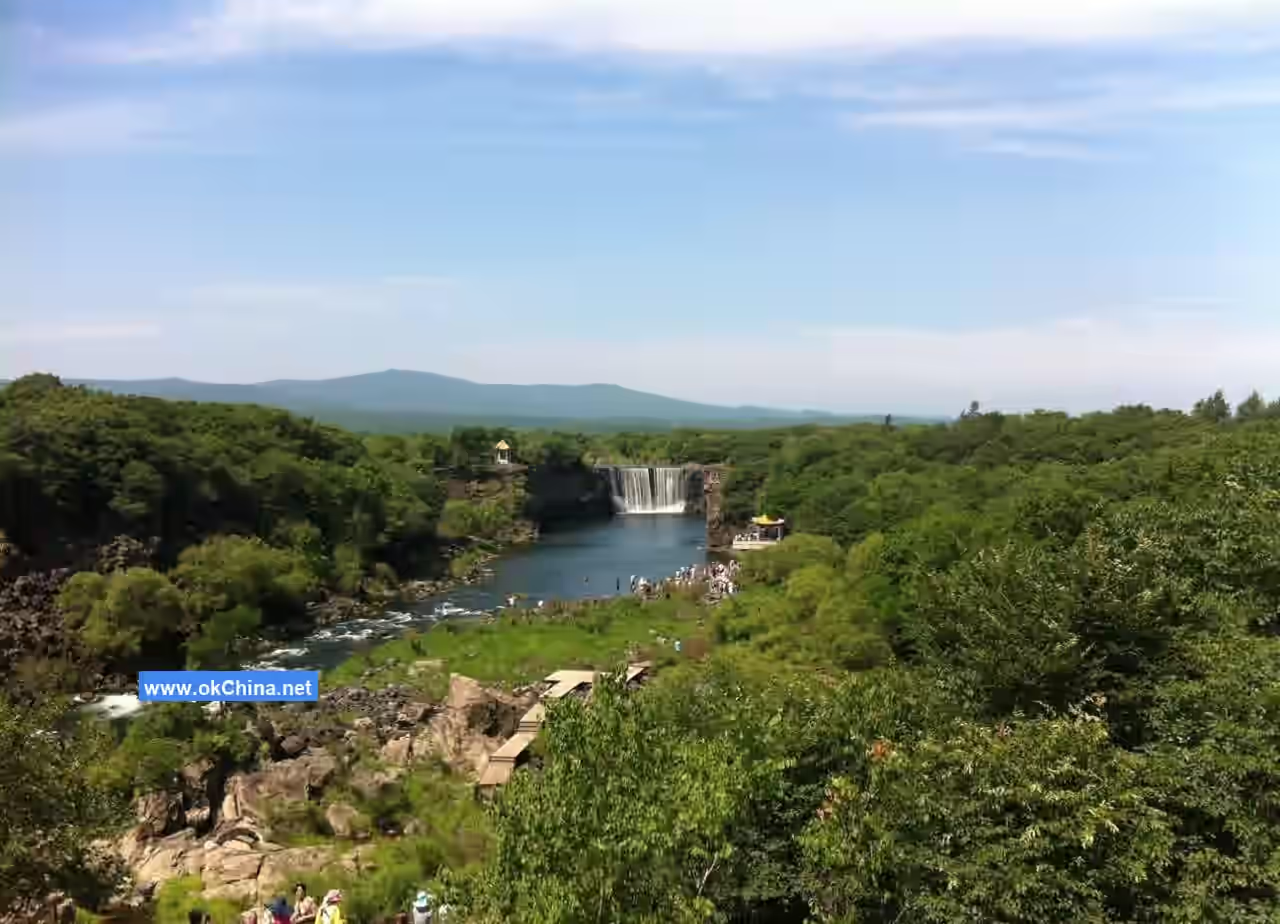
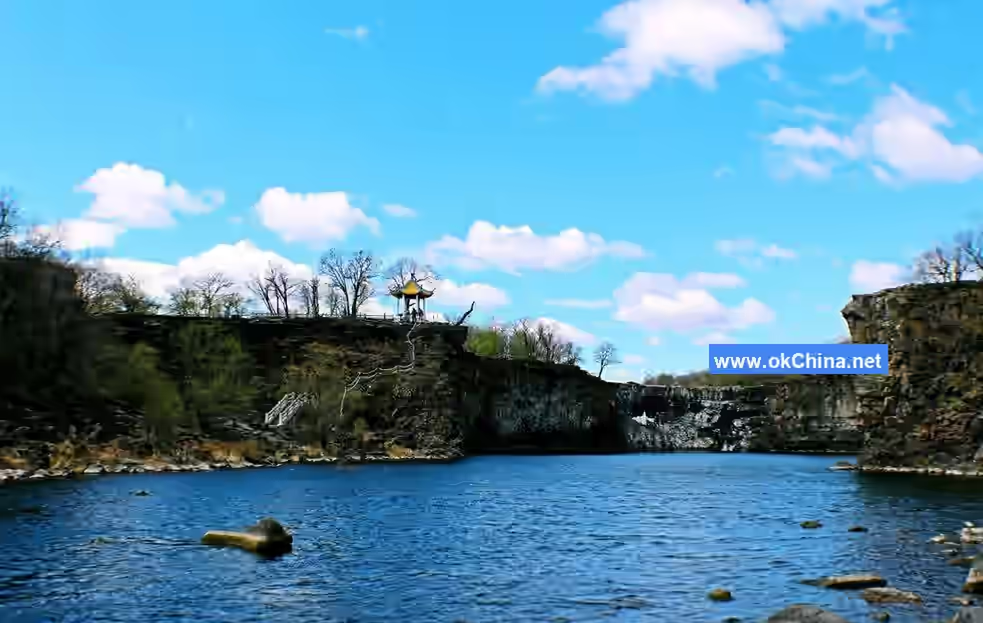
Diaoshuilou Waterfall is located at the northern end of Jingpo Lake. It is a special-grade natural scenic resource (world-class) in the scenic area, resembling the world-famous Niagara Falls. During normal water periods, the waterfall is generally 50–60 meters wide with a drop of 12 meters. However, during flood seasons, the maximum drop is only over ten meters, while the maximum width can exceed 400 meters. The waterfall cascades into the Heilongtan (Black Dragon Pool) from the southern, western, and northern directions with an overwhelming force, resembling piled-up clouds and snow, with white mist splashing everywhere. Water droplets can be felt over a hundred meters away. It also looks like a hanging Milky Way or a colorful ribbon on a cliff, roaring and thundering. It is known as one of China's six famous waterfalls, alongside Huangguoshu Waterfall in Guizhou, Hukou Waterfall of the Yellow River, Nuorilang Waterfall in Jiuzhaigou, Wenlong Waterfall in Taiwan, and Sandie Spring Waterfall in Lushan.
3.3 Hundred-Mile Long Lake
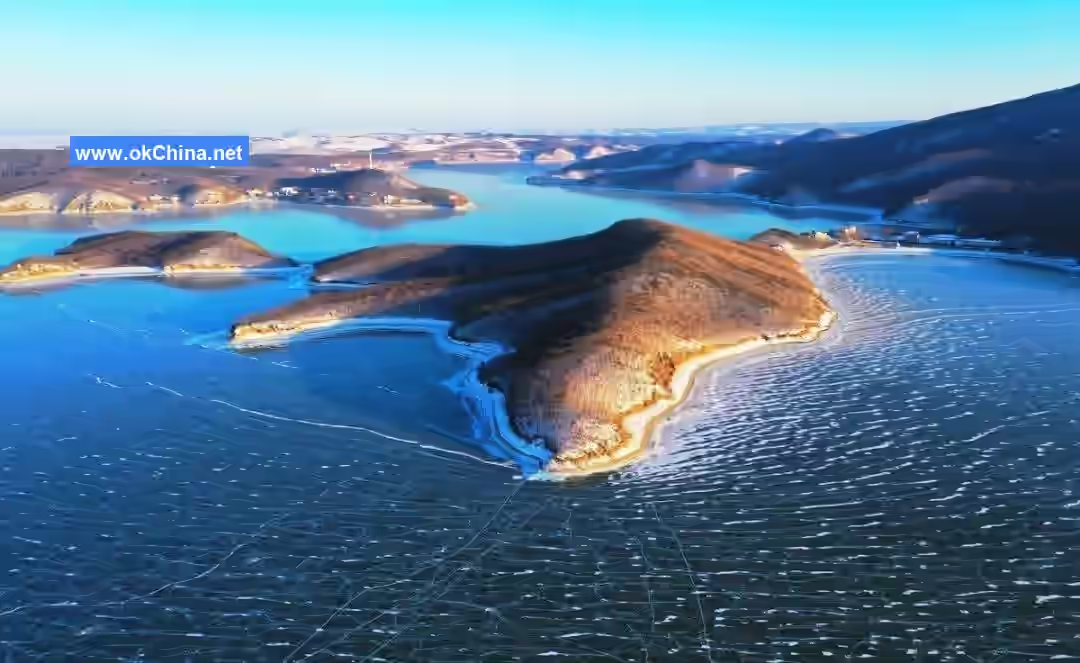
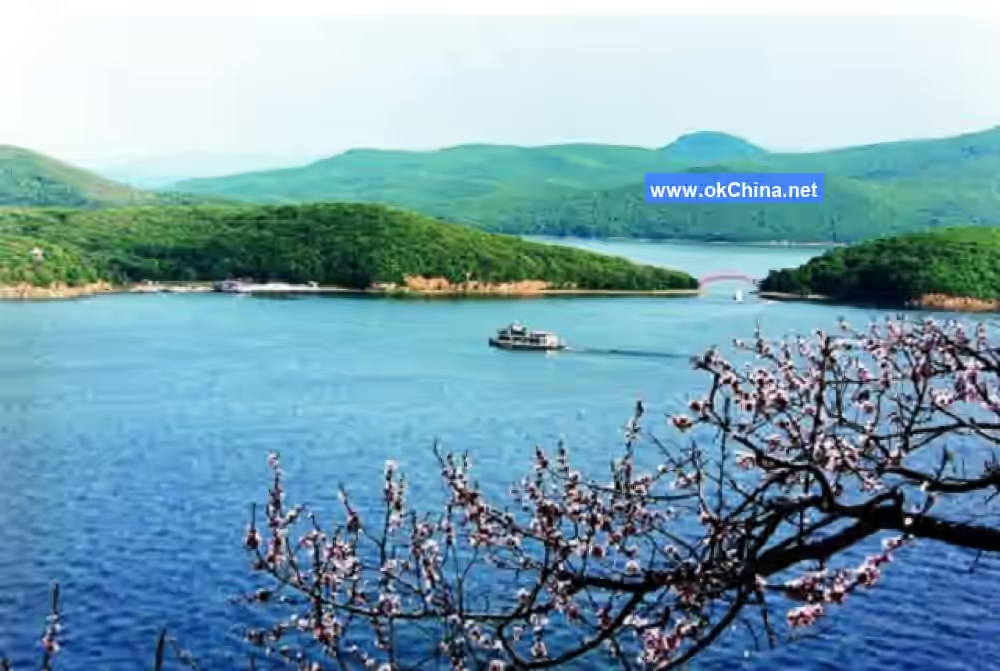
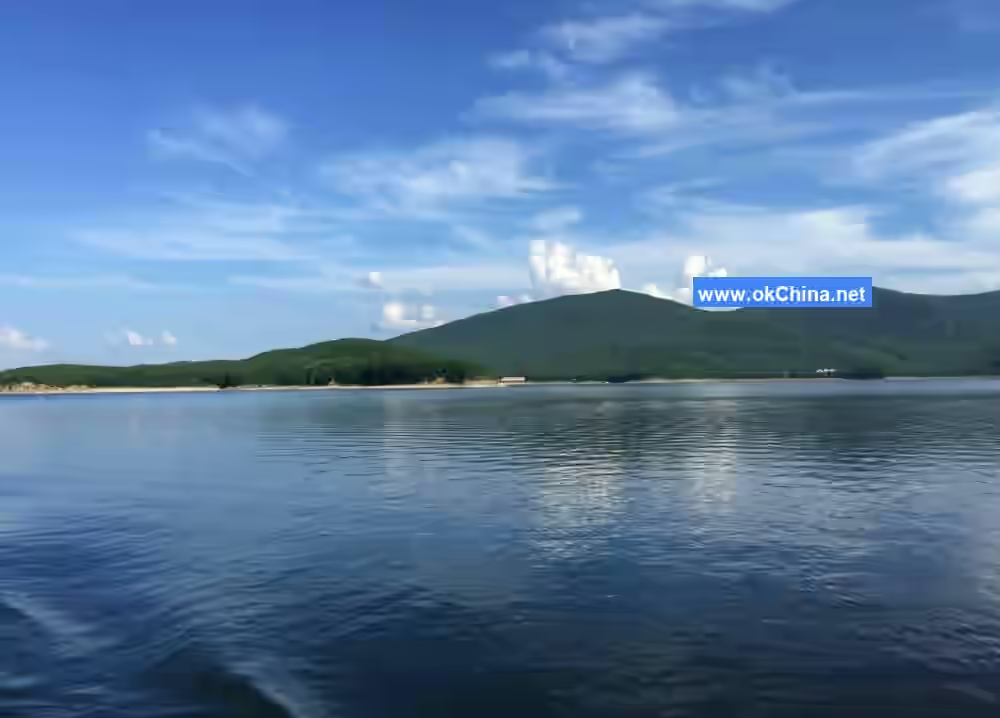
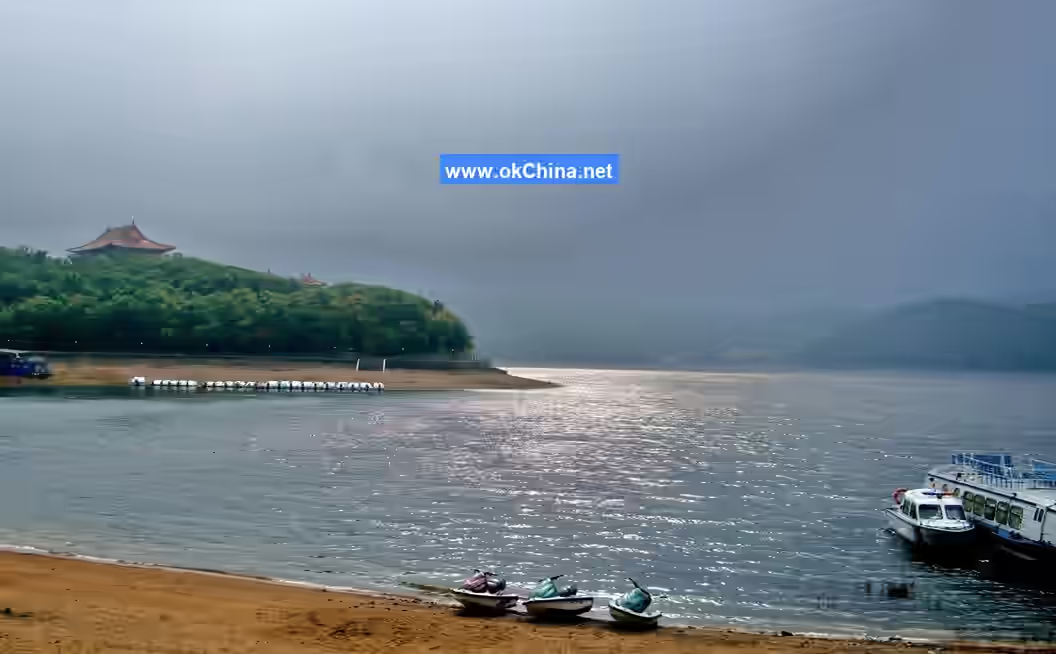
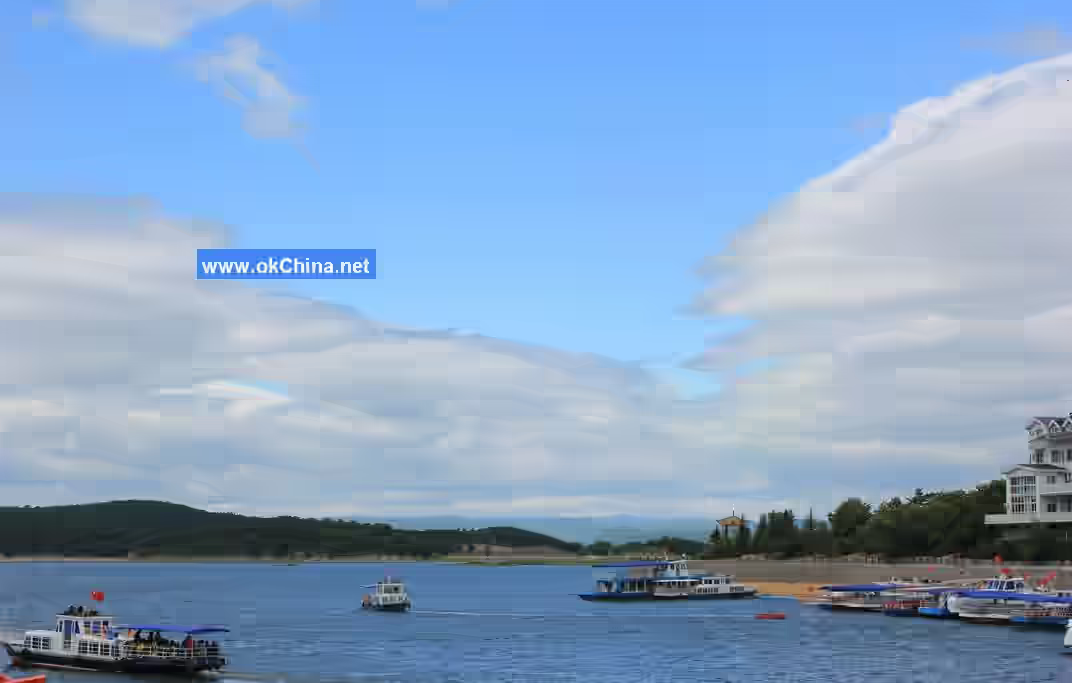
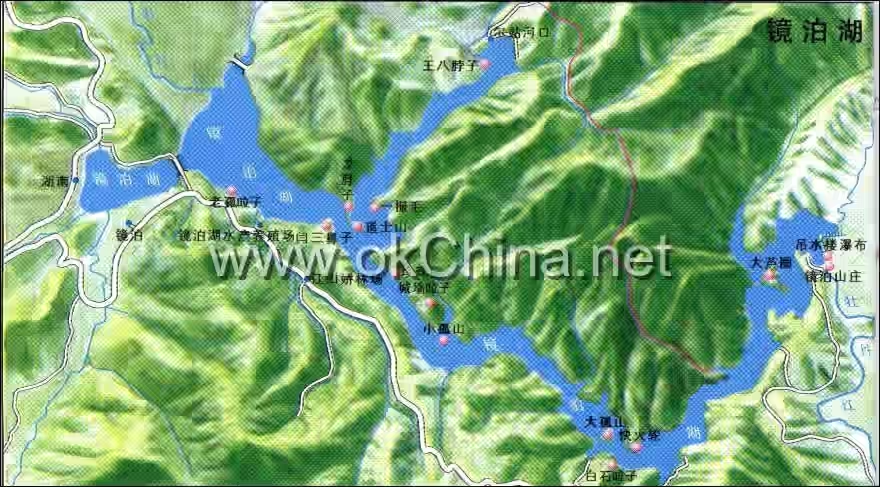
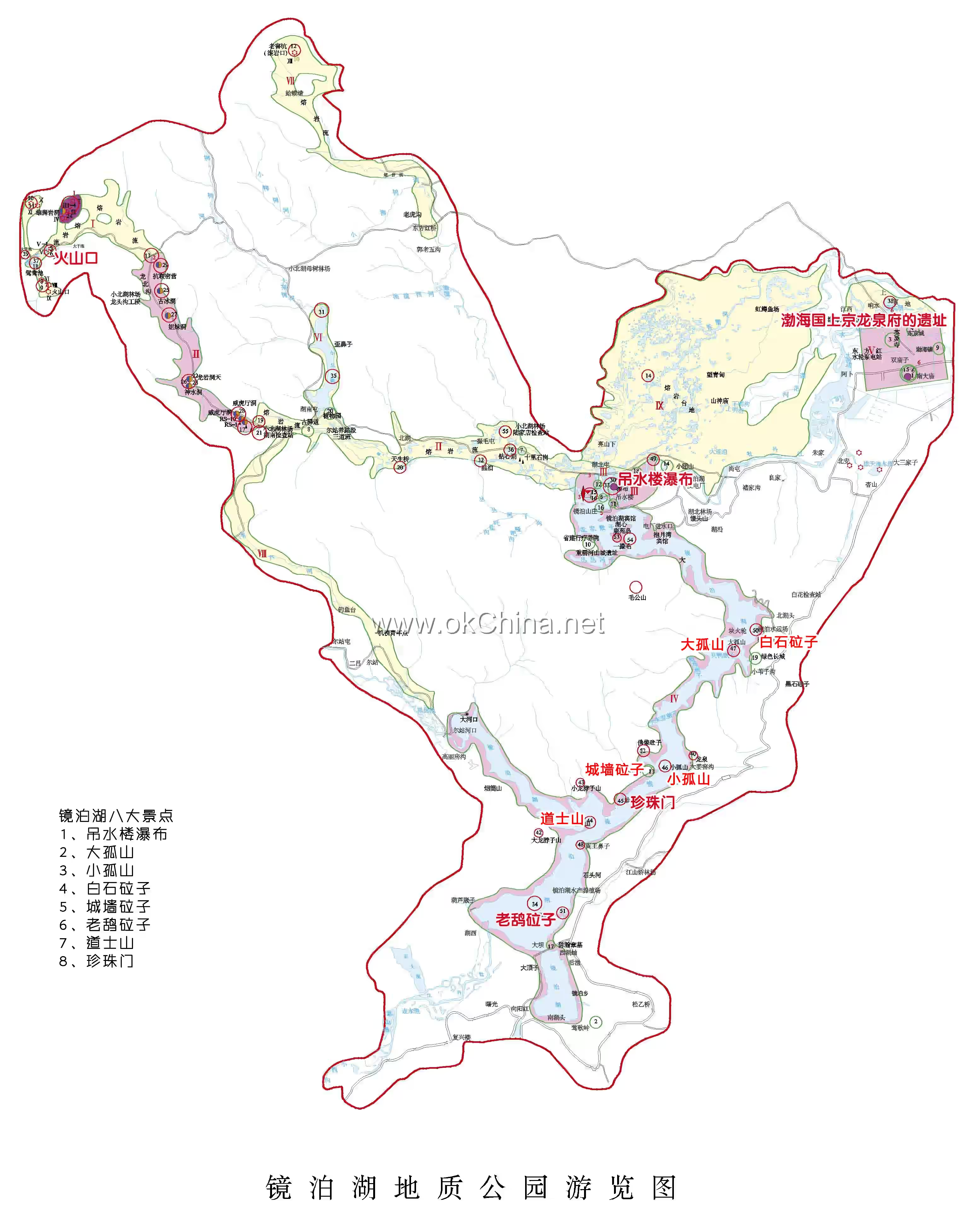
The Hundred-Mile Long Lake is one of the three core scenic areas of Jingpo Lake Scenic Area. It winds in an "S" shape and is divided into four parts: North Lake, Middle Lake, South Lake, and Upper Lake. Stretching 45 kilometers (about 100 Chinese miles) in length, it is called the Hundred-Mile Long Lake. The water area of Jingpo Lake is 79 square kilometers, expanding to 90.3 square kilometers during the high-water season, with a total storage capacity of 1.62 billion cubic meters. It is the world's largest volcanic lava-dammed lake. Around 10,000 years ago, after five volcanic eruptions, lava blocked the ancient Mudan River channel, forming a natural lava dam and creating the early Jingpo Lake. Around 70,000 years ago, at the end of the Late Pleistocene, another large-scale volcanic eruption occurred, forging an even wider lava dam and gradually forming the world's largest volcanic lava-dammed lake. It is a special-grade natural scenic resource (world-class) in the scenic area. The lake features numerous first-grade (national-level) natural scenic resources on the water, such as Baishilazi, Big Solitary Island, Small Solitary Island, Huzhou City, Pearl Gate, Taoist Mountain, and Laogualazi.
3.4 Mao Gong Mountain
Mao Gong Mountain is located on the east side of Laobei Mountain, facing the Leader's Building of Jingpo Lake Villa across the lake. It is a first-grade natural scenic resource (national-level) in the Jingpo Lake Scenic Area. This landscape is formed by the overlapping of two mountain ranges, resembling Comrade Mao Zedong lying on his back as depicted in the "Memorial Hall." The figure is 4 kilometers long, with clear facial features and well-proportioned body parts.### 3.5 Huzhou City Huzhou City, also known as Chengqiang Lazi, is located in the central-southern part of the Hundred-Mile Long Lake. It is a first-class cultural landscape resource (national level) within the scenic area. This landscape consists of three large, terraced peaks, with the highest peak reaching an altitude of 524 meters. Surrounded by the lake on three sides, it is essentially a large peninsula. The ridge of this landscape winds and coils like a screen, featuring towering cliffs, rugged rocks, a gathering of spectacular peaks, a thousand cliffs vying in splendor, sheer precipices forming a natural barrier that is easy to defend but hard to attack. Over 1300 years ago, between 698 and 926 AD during the Bohai Kingdom period, an ancient city was built on this mountain to defend against invasions by the Khitan people.
3.6 Xinglong Temple
Xinglong Temple, also known as Nandamiao (Great Southern Temple), is located in the northeastern part of Jingpo Lake. It was an important architectural structure of the Shangjing Capital of the Bohai Kingdom during the Tang Dynasty and is a first-class cultural landscape resource (national level) within the scenic area. Xinglong Temple has a long history and preserves many valuable cultural relics, such as the Stone Lantern Stupa and the Large Stone Buddha. The most famous is the Stone Lantern Stupa, renowned both domestically and internationally, making it a world-class cultural landscape resource. The Stone Lantern Stupa is a famous Buddhist stone carving artifact from the Bohai Kingdom period, embodying both the typical carving and architectural artistic styles of the Tang Dynasty and the characteristics of Bohai stone carving art. It represents one of the achievements of the spread of the prosperous Tang Dynasty's stone carving art to the northeastern region. It is not only a representative work of Bohai Kingdom period stone carving art but also a typical representative piece of ancient Chinese stone carving art.
3.7 Glazed World
Glazed World, commonly known as Buddha Cliff or also called Thousand Buddha Cliff, is located on the north side of the Chengqiang Lazi Gully entrance in the middle lake of Jingpo Lake, about 1000 meters away from Chengqiang Lazi. The cliff has an altitude of 423.7 meters, is over 130 meters wide, and is pyramid-shaped. Its northern side consists of continuous mountain ranges covered with forests, extending deep and far. The southern side (front) of Glazed World was recognized by Venerable Shi Yicheng, President of the Buddhist Association of China, as the "Eastern Pure Glazed World." Glazed World is the natural sacred site of the Seven Medicine Buddha Masters (Bhaisajyaguru). Among numerous Buddhist mountains, it holds an unshakable leading position.
4. Cultural Resources
4.1 Historical Culture
In the "Book of Han · Treatise on Geography," Jingpo Lake was referred to as the Meituo River. In the second year of the Yonghui era of Emperor Gaozong of Tang (652 AD), it was called the Abu River (also known as Abu Long Lake) and later referred to as Hurhaijin. In the first year of the Kaiyuan era of Emperor Xuanzong of Tang (713 AD), it was called Huhanhai. Records from the Ming Dynasty began calling it Jingpo Lake; the Qing Dynasty called it Bier Teng Lake; today it is still called Jingpo Lake. In 755 AD, the Bohai Kingdom moved its capital from within present-day Jilin Province to today's Bohai Town, establishing its capital "Shangjing Longquan Fu." In 928 AD, the Bohai Kingdom was destroyed by the Khitan, and its capital was ruined.
Historically, the residents around Jingpo Lake were primarily the Sushen people and their descendants. According to Chinese historical records: "In the 15th year of King Wu of Zhou (1666 BC) and the 9th year of King Cheng of Zhou (1654 BC), the Sushen people came to court to offer tribute." The Yilou of the Western Han, the Wuji of the Northern Wei, the Mohe of the Sui and Tang dynasties, the Jurchen of the Song and Yuan dynasties, and the Manchu are all descendants and branches of the Sushen people. During the War of Resistance against Japan, the Japanese conducted several surveys around Jingpo Lake, engaged in logging, excavated cultural relics and historical sites, and built a power plant. Anti-Japanese allied heroes were also active in this area. After liberation, the main residents here have been Han Chinese, Koreans, and Manchus.
4.2 Cultural Relic Resources
Within the Jingpo Lake scenic area, there are sites from the Neolithic Age, such as the Yinggeling Culture (located at Yinggeling. Sushen people lived here; there are cave dwelling sites and unearthed artifacts) and the Pearl Gate Site (located at Pearl Gate. Sushen people lived here; there are semi-underground cave dwellings). There are also sites from the Tang Dynasty Bohai Kingdom's Shangjing Longquan Fu (located in Bohai Town. Built by the Tang Bohai Kingdom, modeled after the Chang'an capital, with outer, inner, and palace cities and five layers of halls, grand in scale. The original city layout and architectural ruins can still be seen, along with cultural relics like the Stone Lantern Stupa and Stone Buddha). Other sites include the Chongchunhe Mountain City Site (located at Chongchunhe. Built by the Bohai Kingdom for defense against Khitan invasions; existing city wall architectural ruins remain), the Huzhou Mountain City Site (located on the west bank of Xiaogushan, also known as Chengqiang Lazi. Built by the Bohai Kingdom for defense against Khitan invasions; existing granite city wall remnants, architectural ruins, ancient well site, and training ground site), the Xihuzuizi Mountain City Site (located in South Lake), the Xiaochengzi Mountain City Site (located at South Lake Head), the Chujia Mountain City Site (located at Chujia, South Lake Head), the Small City Wall Site (located at Jiangshanjiao Forest Farm. Built by the Bohai Kingdom for defense against Khitan invasions), and the Jingpo Border Wall Site (located at the Aquaculture Farm). There is also the Dongxia Kingdom's Chengzihou Mountain City Site from the Song Dynasty (located downstream of the waterfall. The only Dongxia Kingdom relic in the province; only the city wall architectural ruins and an abandoned well remain). From the Qing Dynasty, there are Xinglong Temple (located in Bohai Town. Built on the site of a Bohai Kingdom temple; five-hall wooden structure, well-preserved, now used as a cultural relic exhibition hall) and Sanqing Temple (located on Daoshi Mountain. The site is well-preserved).
4.3 Folk Legends
The first legend dates back to ancient times. One year on the third day of the third lunar month, the Queen Mother of the West held a Peach Banquet. Deities from all directions attended, and the lively festivities lasted for 33 days. The goddesses washed and adorned themselves, and the rouge water they poured into the Heavenly River kept increasing. As a result, the Heavenly River swelled and flowed into the lofty mountains and steep ridges upstream of the Mudan River, converging into a large lake that seemed to flow with gold and silver. While the immortals were washing their faces, one deity accidentally knocked over a precious mirror, which fell into the lake with its mirror surface facing upwards. It sparkled on the vast, misty lake, and no matter how strong the wind blew, there were no waves on the lake. When the Queen Mother of the West learned of the loss of the precious mirror, she was furious and urgently ordered the Thunder God and Thunder Goddess to search for it. With flashes of lightning and peals of thunder, they finally found the mirror in Jingpo Lake near Ning'an County. The Queen Mother descended to the lakeside and, captivated by the green mountains, clear waters, and serene environment, decided to leave the precious mirror there.
The second legend tells that Jingpo Lake is said to have been formed from the precious mirror of the Red Silk Maiden. The Red Silk Maiden was a beautiful maiden from antiquity who often used the divine light of her precious mirror to avert disasters and bring benefits to the people. Later, this precious mirror was seized by the Queen Mother of the West. While the Red Silk Maiden ascended to heaven to contend for it, she accidentally dropped the mirror onto the mortal world. It then transformed into the splendidly scenic Jingpo Lake volcano. The actual cause of the Jingpo Lake volcano is naturally not as romantically enchanting as the mythologized version. But it is indeed a magical landscape!
Comments
Post a Comment