Jinggangshan
1. Introduction
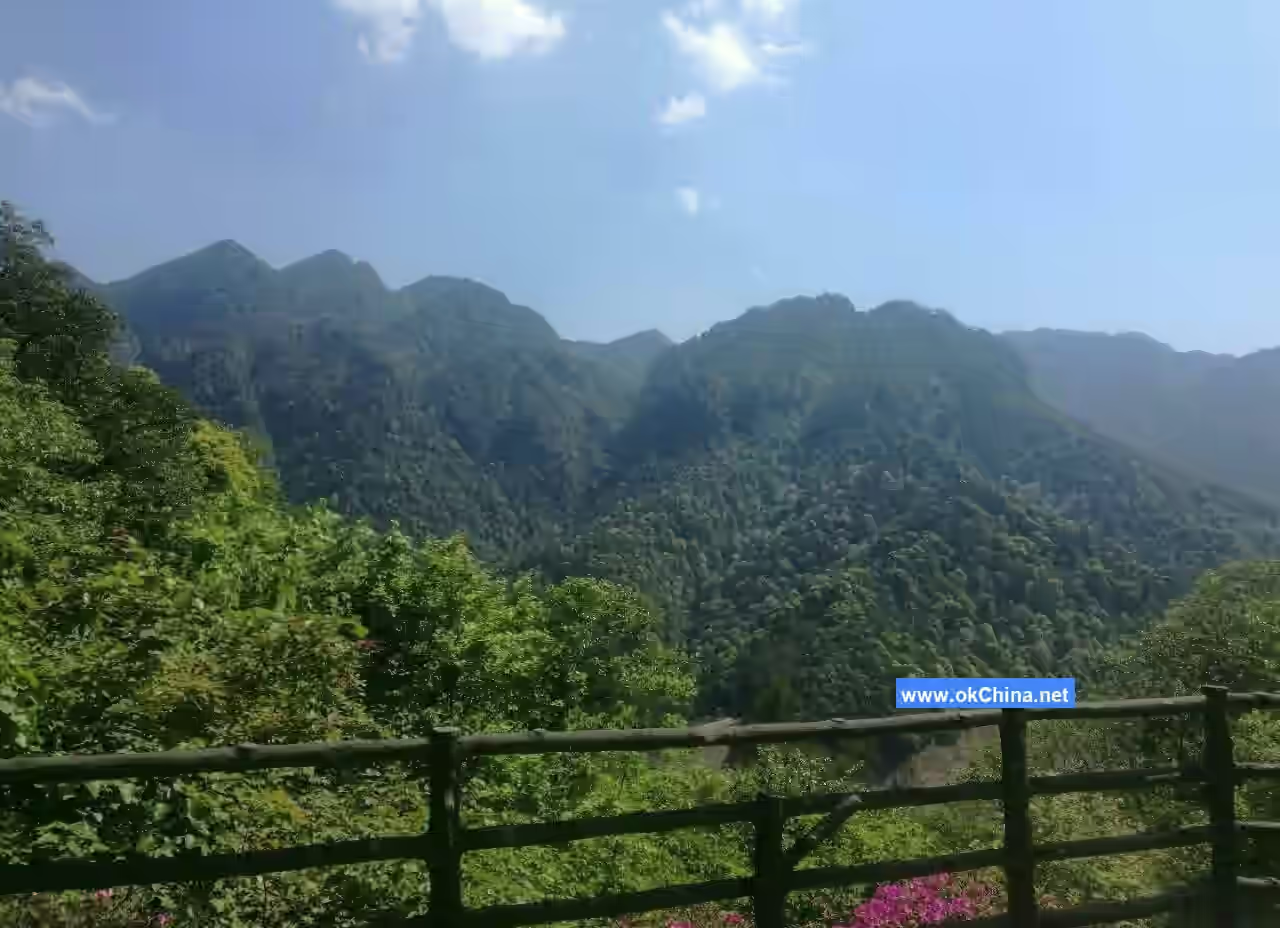
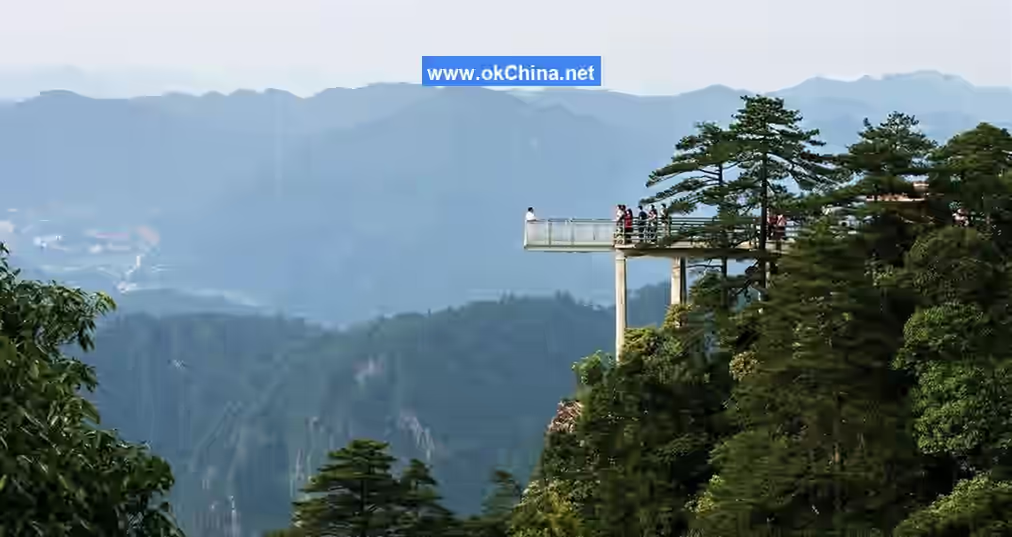
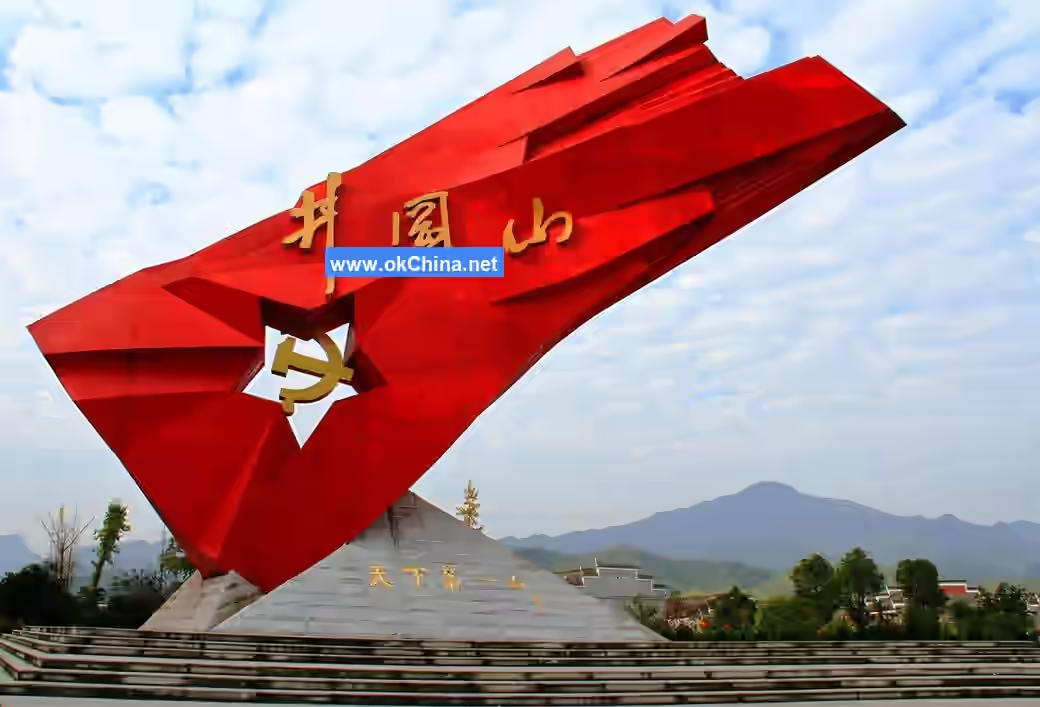
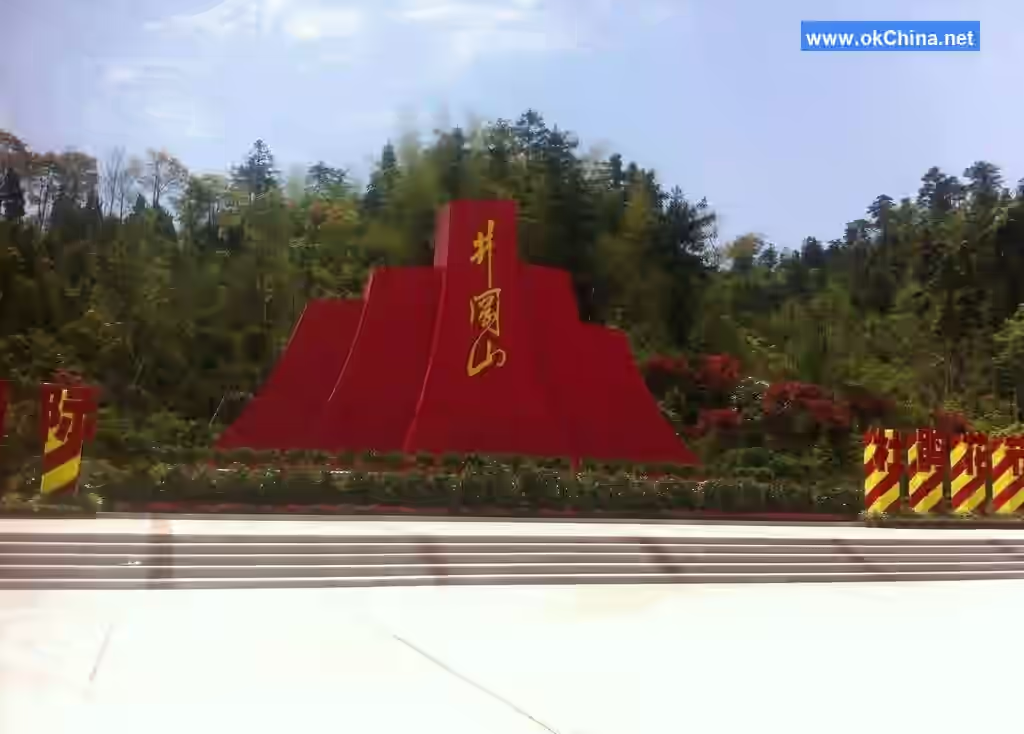
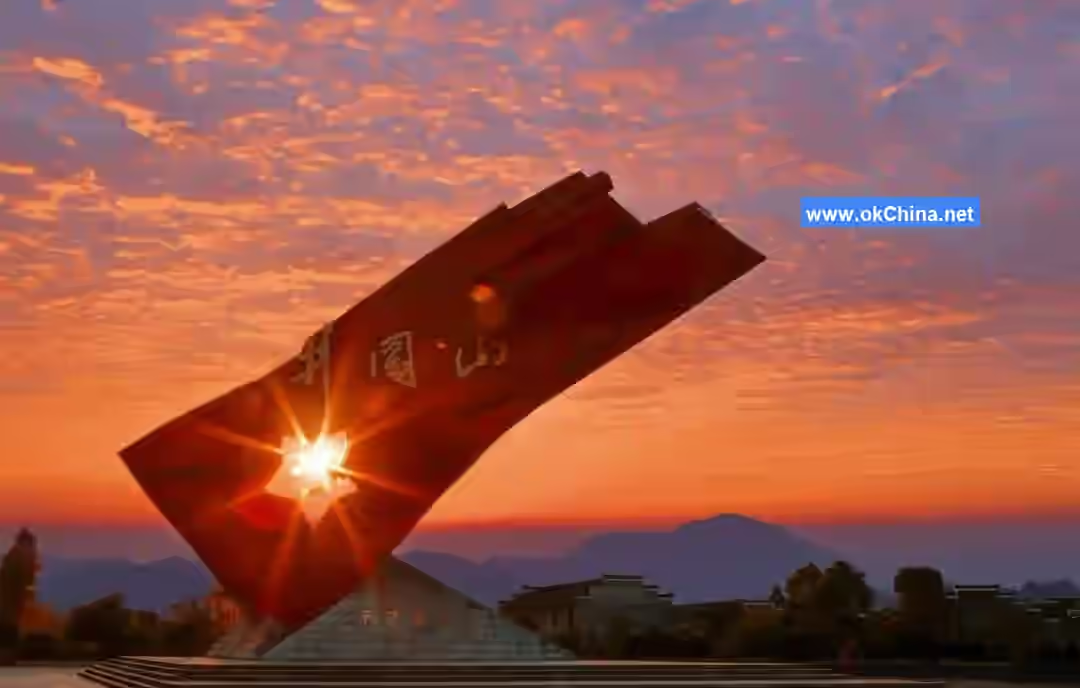
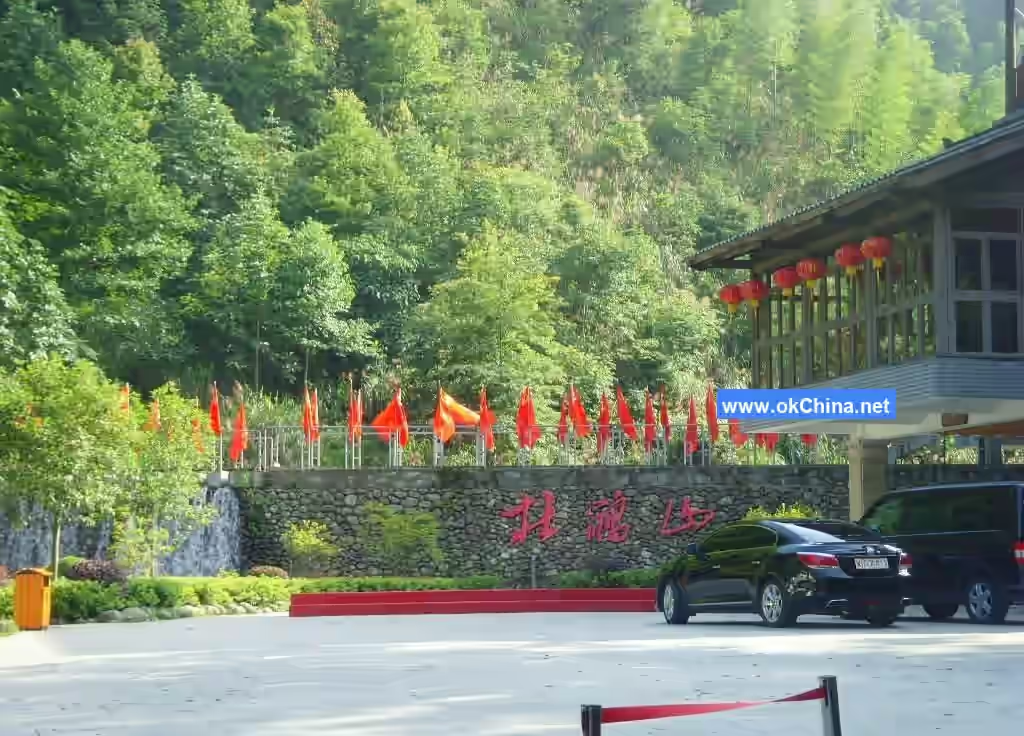
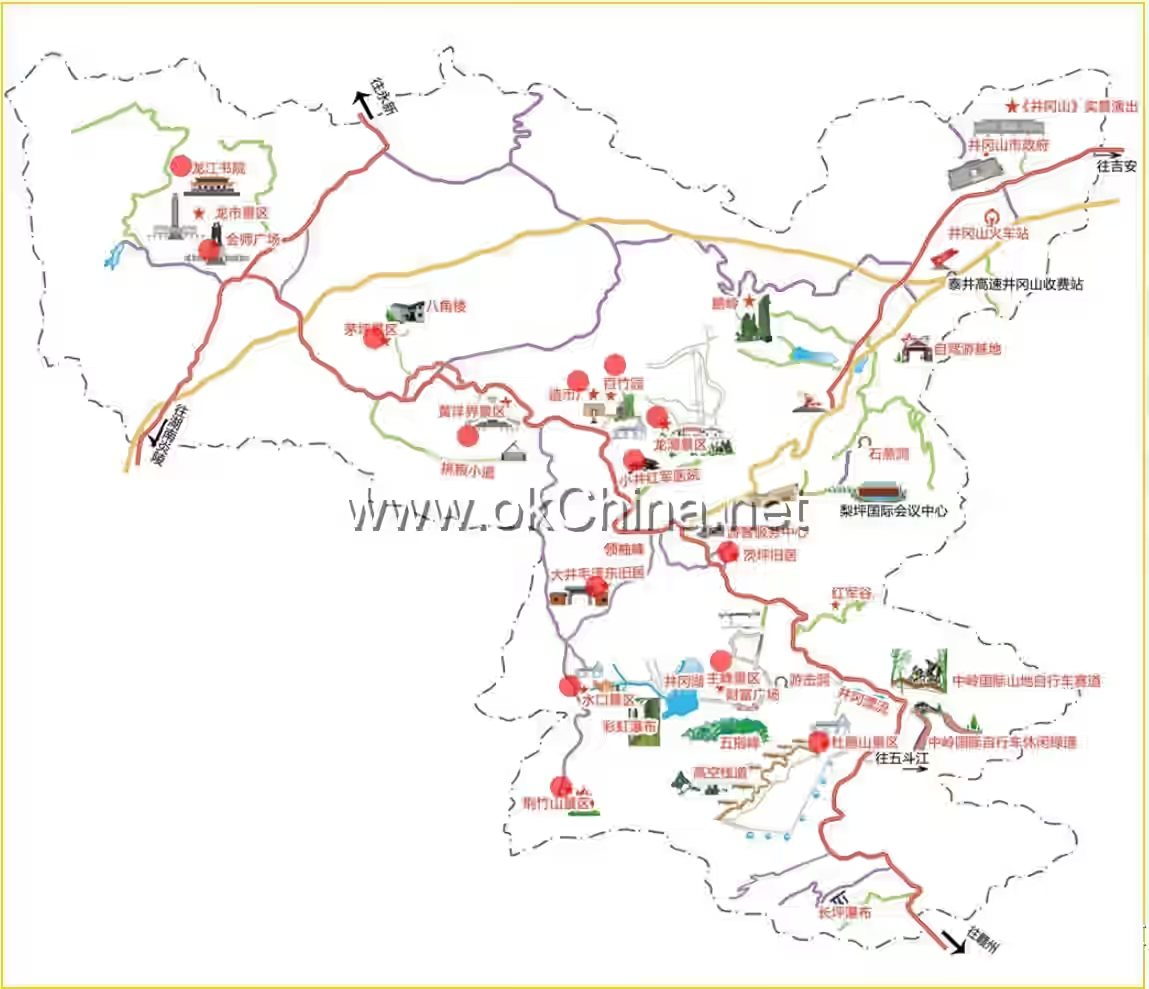
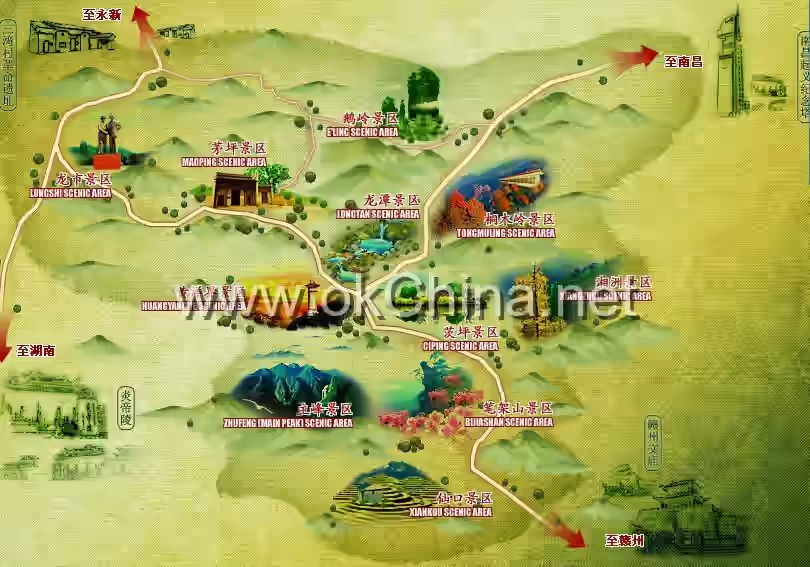
Jinggangshan boasts a glorious revolutionary history and splendid natural scenery, where the "red" revolutionary heritage and "green" natural beauty complement each other. It is a National 5A Tourist Attraction, a National Nature Reserve, a National Red Tourism Scenic Area, and a UNESCO World Biosphere Reserve. Located in the southwest of Jiangxi Province, Jinggangshan lies in the middle section of the Luoxiao Mountains at the border of Hunan and Jiangxi provinces. Historically, it was known as "the heart of the thousand-mile Luoxiao range at the junction of Chenzhou, Hengyang, Hunan, and Jiangxi." After the founding of the People's Republic, under the care of the Party Central Committee and the State Council, the Jinggangshan Special District was established in 1950. The provincial Jinggangshan Administration was formed in 1959, replaced by a county in 1981, and then upgraded to a city in 1984. In May 2000, the former Jinggangshan City merged with the former Ninggang County to form the new Jinggangshan City. The Jinggangshan Administration was established in July 2005. Jinggangshan City administers 21 townships, towns, farms, and sub-district offices, with 106 villagers' committees. It has a population of 163,000 and a land area of 1,297.5 square kilometers, including 152,600 mu of arable land and 1.68 million mu of forest land. The scenic area covers 333 square kilometers, comprising 11 major scenic zones, 76 scenic spots, and over 460 landscape features. Thousands of peaks compete in beauty, myriad ravines race with flowing streams, vast forests stretch like an ocean, and waterfalls and springs cascade. It integrates grandeur, peril, seclusion, wonder, and elegance, featuring peaks, rocks, waterfalls, karst caves, hot springs, rare flora and fauna, and high-mountain pastoral scenery. It boasts magnificent seas of clouds, uniquely wonderful waterfalls, splendid and dazzling sunrises, the world-renowned Ten-Mile Azalea Corridor, the globally famous Huangyangjie and Maoping Octagonal Tower, the Jinggangshan Main Peak featured on the background of the fourth series 100-yuan RMB banknote, 7,000 hectares of the world's most well-preserved secondary primeval forest at the same latitude, and an evergreen broad-leaved forest praised by the United Nations Environment Programme as unique in the world. Jinggangshan has a beautiful environment, picturesque scenery, and fresh air, with negative oxygen ion counts exceeding 80,000 per cubic centimeter, earning it the title "Natural Oxygen Bar." Its forest coverage rate reaches 86%, and its ecological environment is excellent, exceeding national first-class standards, making it an ideal destination for tourism, summer retreats, and recuperation.
2. Geographical Environment
2.1 Location and Territory
The Jinggangshan Scenic Tourist Area in Ji'an City is situated at the border of eastern Hunan and western Jiangxi, in the middle section of the Luoxiao Mountains, the northern branch of the Nanling Range. It is about 130 kilometers from the central urban area of Ji'an City (Jizhou District) and 35 kilometers from the new urban area of Jinggangshan City (Hongxing Sub-district). Its geographic coordinates range from 113°49' to 114°23' east longitude and 26°27' to 26°49' north latitude.
2.2 Climate
Jinggangshan has a subtropical monsoon climate with distinct seasons and abundant rainfall. The annual average temperature is 14.2°C. January is the coldest month with an average temperature of 3.2°C, while July is the hottest month with an average temperature of only 23.9°C; the extreme maximum temperature is 34.8°C. The annual average precipitation is 1856.3 mm, with an average of 213 rainy days per year. The annual average sunshine duration is 1511 hours, and the average number of foggy days is 96. Due to its altitude and surrounding mountains, Ciping experiences long winters, short summers, early autumns, and late springs.
2.3 Topography
The main landform types in Jinggangshan are tectonically eroded mid-low mountains, tectonically denuded hills, accumulated river valley basins, and fluvial terraces. Among them, the tectonically eroded mid-low mountains are mainly concentrated in the central-southwestern part of Jinggangshan City, with elevations mostly above 1200 meters, significant cutting, steep cliffs, overlapping ridges, and majestic, perilous terrain. The tectonically denuded hills are mainly distributed at the base of mountain slopes bordering basins and valleys, with relative heights of 50-80 meters and slopes between 15° and 30°. Areas such as Longshi, Gucheng, Xincheng, Maoping, Getian, Mucun in the west, Nashan to Xiaping in the northeast, and Huang'ao, Xiaqi in the southeast mostly belong to this type. Accumulated river valley basins and fluvial terraces are distributed between the eroded mid-low mountains and hills. The intermountain basins are mainly located in Ciping, Caoping, Baiyinhu, Big and Small Wujing, Tuling, Xiazhuang, Xingzhou, etc. The river valley basins are mainly concentrated in Huang'ao, Shangqi, Xiaqi, Nashan, Longshi, Gucheng, Xincheng, Eling, Getian, etc. The first terrace is about 3-5 meters above the riverbed, and the second terrace is about 10-25 meters above the riverbed. The first terrace is composed mainly of fluvial alluvium, with farmland near the riverbanks having light soil texture and high sand content. The second terrace is composed mainly of slope wash and diluvium, often developing clayey red soil.
3. Main Attractions
3.1 Huangyangjie
Huangyangjie, also known as "Wangyangjie," is one of the five famous outposts of Jinggangshan. Located northwest of Big and Small Wujing in Jinggangshan, about 17 kilometers from Ciping, the summit of Huangyangjie is 1343 meters above sea level. It guards the vital transportation route at the border of Hunan and Jiangxi provinces, surrounded by lofty mountains and towering peaks, steep and impregnable, serving as the northern gate of the Jinggangshan Revolutionary Base Area.
3.2 Longtan (Dragon Pool)
Longtan, also called Wulongtan (Five Dragon Pools), gets its name from the Wushen River, which leaps over cliffs five times within less than two kilometers, forming five cascading waterfalls and deep pools. It is famous for its numerous waterfalls, large drops, and beautiful forms, making it the area with the most concentrated waterfalls in Jinggangshan. Located 7 kilometers northwest of Ciping, it consists of the Wulongtan and Jinshimian scenic areas, combining natural and cultural landscapes, often called the "Five Pools and Eighteen Waterfalls." The area features deep gorges, perilous peaks, lush forests, fragrant flowers, and groups of cascading waterfalls.
3.3 Azalea Mountain (Dujuan Mountain)
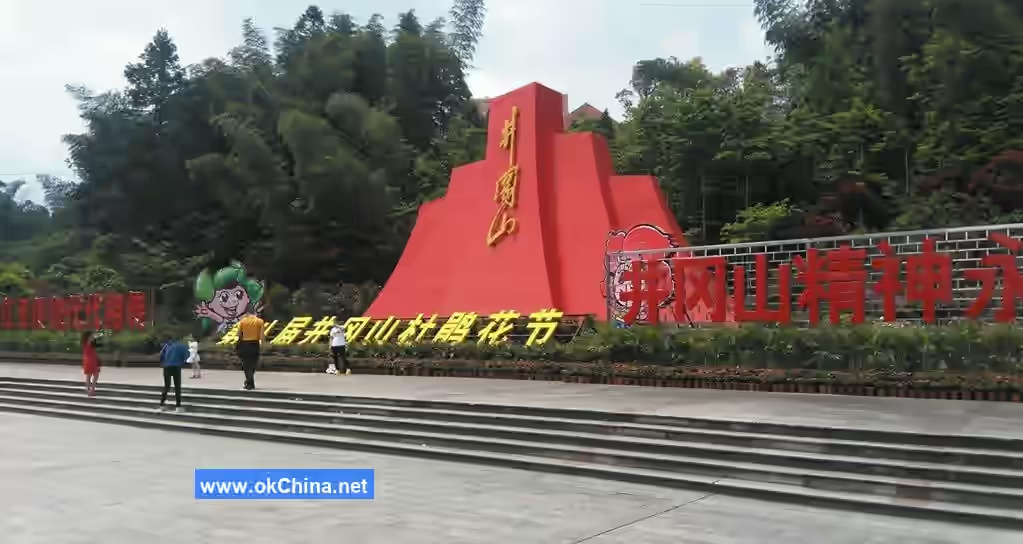
Azalea Mountain, also known as "Bijia Mountain" (Pen Rack Mountain), is located southeast of Ciping, 13 kilometers away, serving as the southern gate of the Jinggangshan scenic area. Primarily focused on natural scenery while integrating revolutionary cultural landscapes, it covers a total area of 17.2 square kilometers, making it the largest ecological scenic area in Jinggangshan. It is world-renowned for its "Ten-Mile Azalea Corridor" and is hailed as the "Number One Azalea Mountain in the World."
3.4 Main Peak
The Main Peak is named "Wuzhi Feng" (Five Finger Peak) because five peaks stand side by side like five fingers, resembling the knuckles of a clenched fist from a distance. Located southwest of Ciping, about 4.2 kilometers away, it is one of the larger scenic areas in Jinggangshan. The background pattern of the 1980 fourth series 100-yuan RMB banknote issued in China was selected from the Jinggangshan Main Peak, hence it is called "China's Most Valuable Mountain" and the "Mountain of Wealth."
3.5 Big and Small Wujing
Jinggangshan has "Wujing" (Five Wells), referring to five village basins surrounded by mountains, resembling wells: Dajing (Big Well), Xiaojing (Small Well), Zhongjing (Middle Well), Shangjing (Upper Well), and Xiajing (Lower Well). Dajing is the largest among them.
3.6 Dajing Former Residence
Dajing, 7 kilometers from Ciping, is where Comrade Mao Zedong first settled after arriving in the Wujing mountainous area of Jinggangshan and one of the important locations where Mao Zedong and the Red Army carried out revolutionary activities. Later, Zhu De, Chen Yi, Peng Dehuai, Teng Daiyuan, and others also lived and worked here. Today, Dajing contains revolutionary sites such as Mao Zedong's former residence and the former residences of Zhu De and Chen Yi.
3.7 Shuikou
Shuikou is located to the left of the Main Peak, 9 kilometers from Ciping. The scenery here is extremely beautiful, especially known for its winding streams, secluded valleys, emerald pools, peaks, and azalea forests. Rainbow Waterfall is one of the important attractions in Shuikou.
3.8 Red Army Mint
The Shangjing Red Army Mint in Jinggangshan is the first mint established by the Red Army. Its former site is located in Shangjing Village north of Ciping. Above the simple, old gate hangs a red plaque inscribed with "Jinggangshan Shangjing Red Army Mint" in large characters, written by General Xiao Ke, an old Red Army veteran who participated in the Jinggangshan revolutionary struggle. This was the first mint founded under the leadership of the Communist Party of China.
3.9 Hundred-Bamboo Garden
The Hundred-Bamboo Garden is located in Shangjing Village, Jinggangshan, 6 kilometers from Ciping, covering an area of about 200 mu (approximately 13 hectares). It contains over 120 species of bamboo. The beauty of Jinggangshan lies in its bamboo. Across the vast 500-li area, emerald bamboo stretches boundlessly, covering mountain peaks, ridges, steep cliffs, and rock crevices, flourishing everywhere. The bamboo forests covering the mountains have become a beautiful scenic highlight of Jinggangshan.
3.10 Xiaojing Red Army Hospital
The Xiaojing Red Army Hospital, also known as the Chinese Red Fourth Army Hospital, is located in Xiaojing Village, 5 kilometers northwest of Ciping. This was the first formal hospital of the Red Army, covering an area of about 920 square meters. The hospital is a fully wooden structure with fir bark roofing, comprising two floors with a total of 32 rooms. It was burned down by the enemy in February 1929 and restored to its original appearance in 1967. In 2006, the State Council designated the former site of the Xiaojing Red Army Hospital as a National Key Cultural Relics Protection Unit.
3.11 Ciping Former Residence
Comrade Mao Zedong's former residence in Ciping is a rammed-earth, wood-and-soil structure civilian house. The house faces west, covers an area of 798 square meters, and overlooks the shimmering Yicui Lake. On October 27, 1927, after Mao Zedong led the Autumn Harvest Uprising troops to Ciping, the landlord Li Lichang vacated half of the ground floor for Mao Zedong and the Front Committee organs to live in. From October 27, 1927, to January 1929, Mao Zedong lived here, also sharing life and work with He Zizhen.
3.12 Forest of Steles
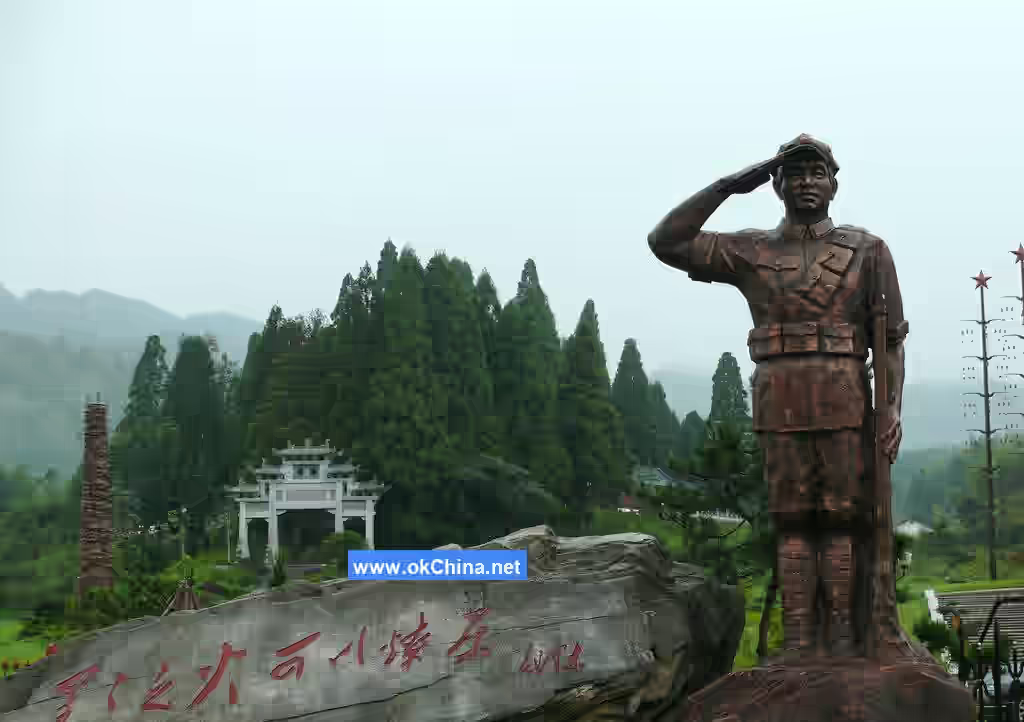
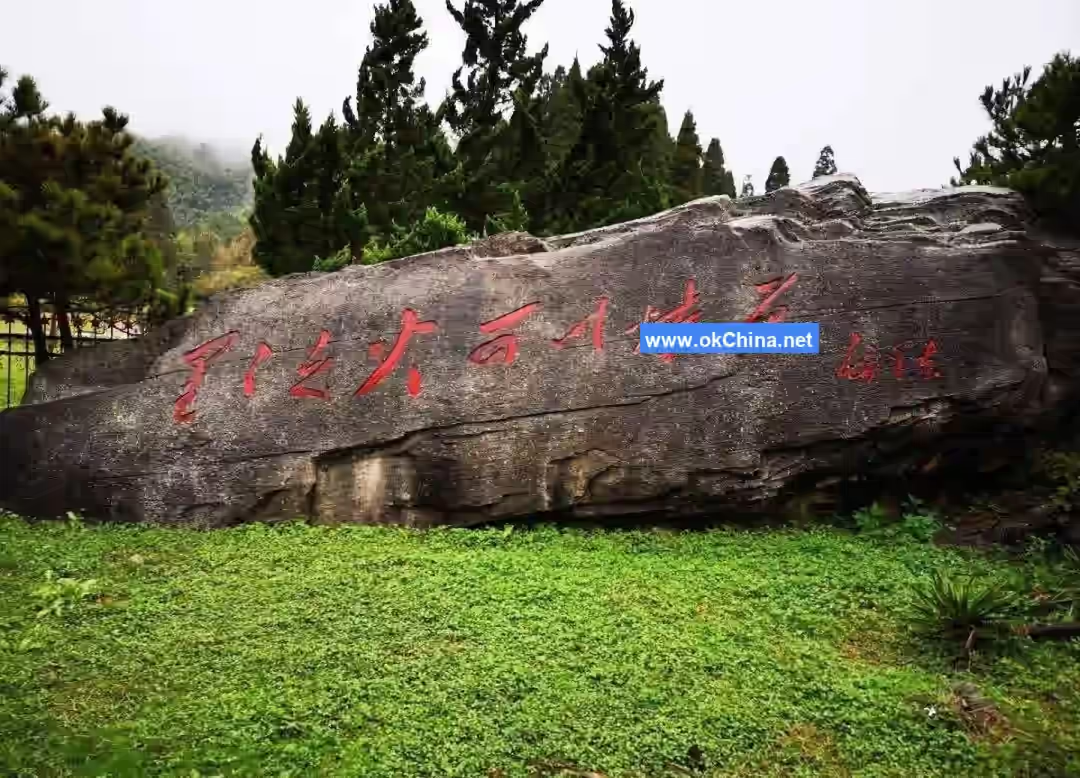
The Forest of Steles was built in July 1987 and opened to the public starting from the Qingming Festival in 1989. It consists of stele pavilions, stele corridors, and natural stele forms. The inscription "Jinggangshan Forest of Steles" was written by calligrapher Shu Tong.### 3.13 Octagonal Tower The Octagonal Tower, the former residence of Comrade Mao Zedong, is located in Maoping Village, Maoping Township. Situated in the northwest of Jinggangshan, it is 36 kilometers away from Ciping. At that time, Mao Zedong lived upstairs in the fourth room on the left. The building features an octagonal skylight, hence the name "Octagonal Tower." Here, Mao Zedong wrote famous works such as Why Can China's Red Political Power Exist? and The Struggle in Jinggangshan.
3.14 Maoping Red Army Hospital
The Maoping Red Army Hospital (the former site of the Front Committee and Special Committee of the Hunan-Jiangxi Border Area) is located in Maoping, housed within the "Panlong Academy." It was established on October 7, 1927, when Mao Zedong led the Workers' and Peasants' Revolutionary Army into Maoping. At the time, the hospital suffered from a severe shortage of medical supplies and had rudimentary equipment. However, by mobilizing the masses, relying on self-reliance, using local materials, crafting instruments from bamboo and wood, gathering herbs, and preparing traditional Chinese medicines, they overcame difficulties and enabled many wounded soldiers to return to the battlefield. The establishment of this hospital played a significant role in maintaining the Red Army's combat effectiveness and consolidating the base area. The Red Army Hospital was relocated from here to the Dajing and Xiaojing areas in the autumn and winter of 1928.
3.15 Longjiang Academy
The Longjiang Academy is not only the site of the first meeting between Mao Zedong and Zhu De and the venue for the First Party Congress of the Fourth Red Army but also the former site of the Officer Training Corps of the Chinese Workers' and Peasants' Revolutionary Army. Tracing its origins, it is also the site of the first military and political academy of our army.
3.16 Huishi Square
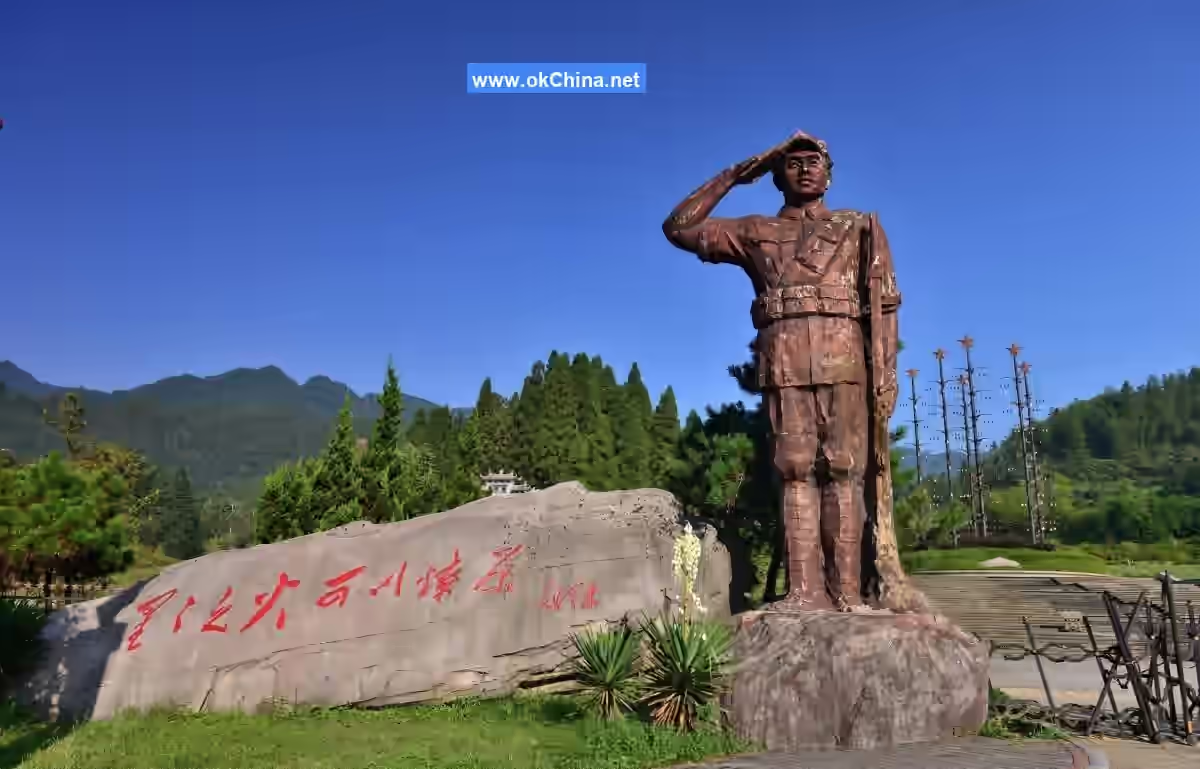
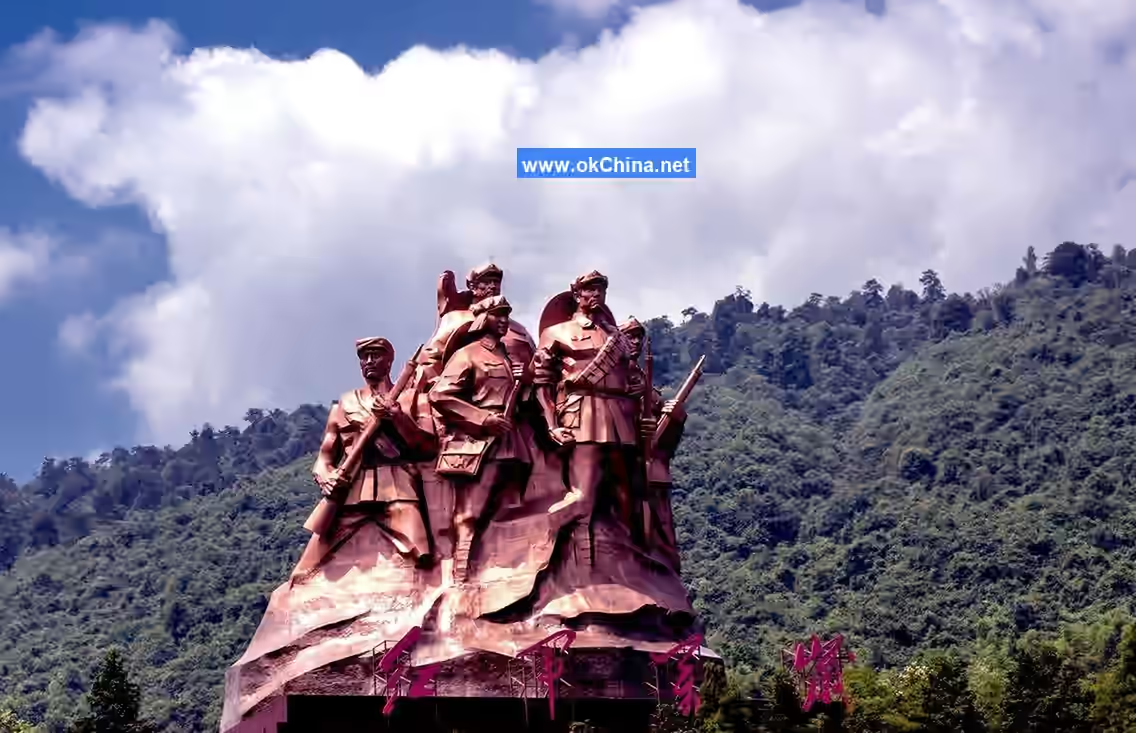
Huishi Square, also known as the Fourth Red Army Founding Square, is located on the east bank of the Longjiang River. Built to commemorate the 80th anniversary of the meeting between Zhu De and Mao Zedong, it is divided into areas such as the bronze statue platform, flagpole platform, and main assembly area.
3.17 Buyunshan Red Army Training Ground
The Buyunshan Training Ground is situated in a valley at the western foot of Buyunshan in Yangqiaohu, Maoping Township. The terrain here is open and flat, suitable for stationing and training troops. It was initially the site where Yuan Wencai's Peasant Self-Defense Corps conducted training and later became a famous Red Army training ground during the Jinggangshan struggle period, as well as a place for Red Army policy organs to strategize.
3.18 Xiangshan Nunnery
Xiangshan Nunnery is located at the northern foot of Bangang Mountain in Maoping and is named after the mountain behind it, called Xiangshan. The nunnery was first built in the Guisi year of the Kangxi reign of the Qing Dynasty (1713). Initially, it contained three main halls: the Great Buddha Hall, the Bodhidharma Patriarch Hall, and the Thousand-Fast Hall. Because Mao Zedong and He Zizhen became revolutionary partners at Xiangshan Nunnery, it has become the most romantically significant "red" site within the Jinggangshan revolutionary base area.
3.19 Leader Peak
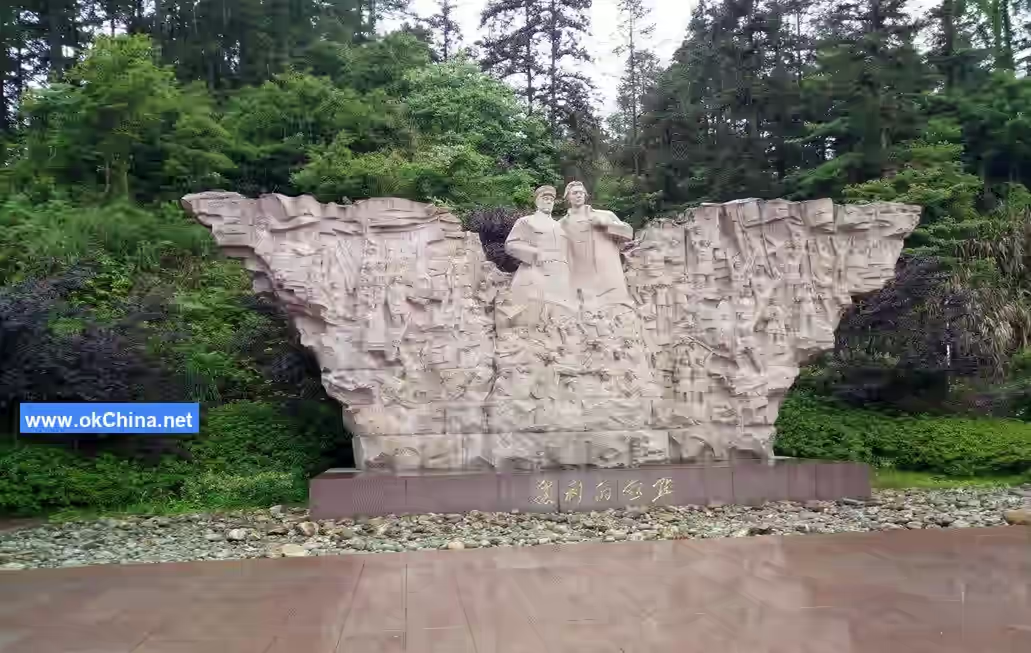
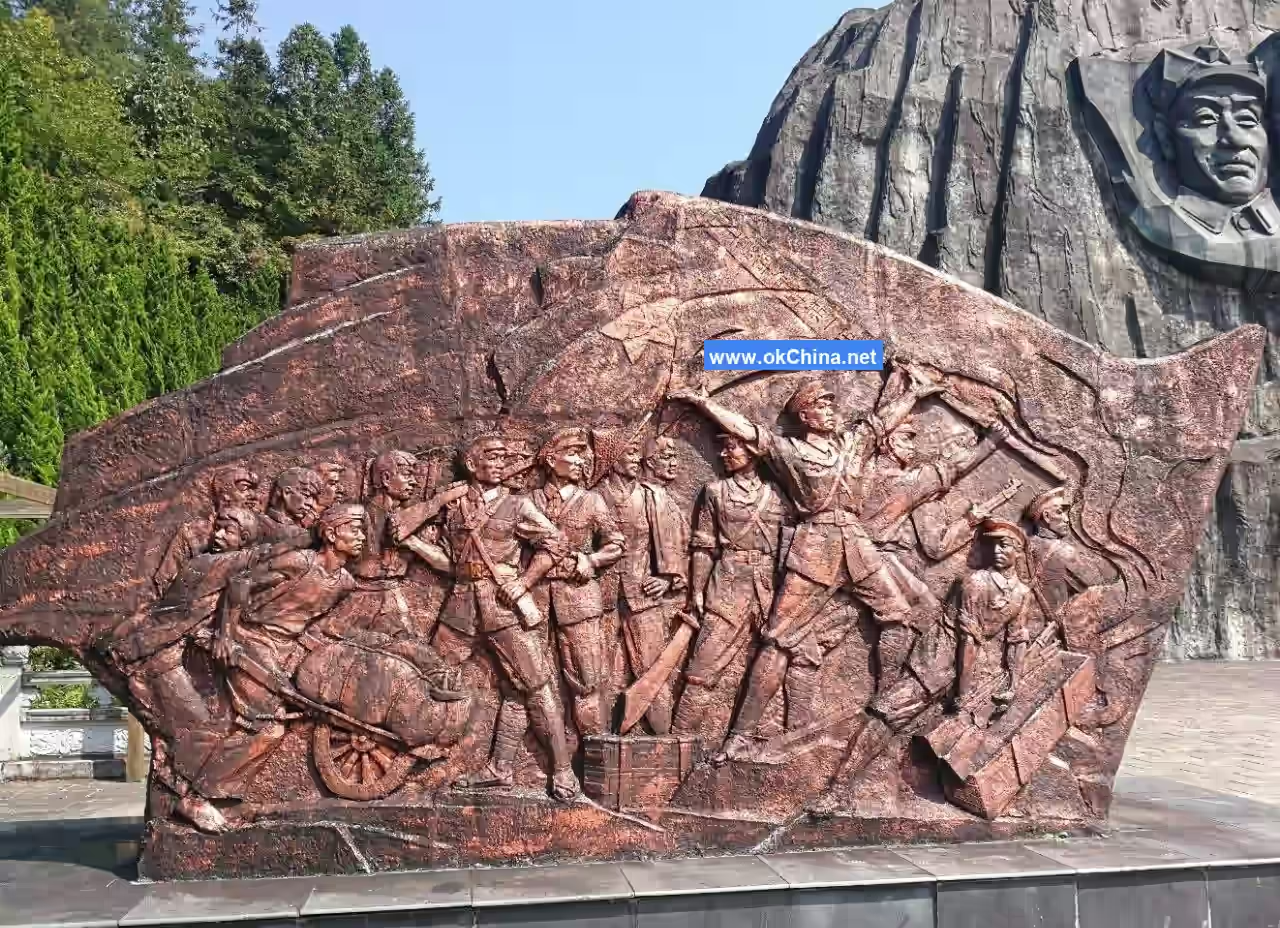
Leader Peak is located in Dajing, 7 kilometers from Ciping, and is the only large-scale comprehensive scenic spot in Jinggangshan. The majestic Leader Peak features the largest national leader busts (Mao Zedong and Zhu De) in the country and is one of Jinggangshan's iconic attractions. Standing at the Leader Peak Square, one can overlook the main peak of Jinggangshan—Wuzhi Peak—which is depicted on the back of the fourth series 100-yuan RMB note.
3.20 Jingzhu Mountain
Jingzhu Mountain is located southwest of Jinggangshan, 12 kilometers from Ciping. It integrates splendid cultural landscapes, beautiful natural scenery, and the simple Hakka culture, covering a total area of 12 square kilometers. Known for its beautiful natural scenery, it is hailed as a "Shangri-La on Jinggangshan" and a "paradise on earth." The original site where Comrade Mao Zedong announced the "Three Main Rules of Discipline"—Leidashi—and the ruins of the Zou Residence, known as the "First Household of Jinggangshan," are both located on Jingzhu Mountain.
3.21 Nanshan Park
Nanshan Park is the first park in Jinggangshan, also known as the Red Army Park. Located at the southern end of Ciping in Jinggangshan, it was built in 1968 and connects to Yicui Lake. Standing at the "Torch Square" on the mountaintop and looking down at Ciping, one can see the town nestled among mountains under blue skies and white clouds, adorned with lush greenery and buildings in red and white interspersed among the trees. Yicui Lake lies like a pearl quietly at the center of Ciping.
3.22 Jinggangshan Museum
The Jinggangshan Revolutionary Museum was established to commemorate the first rural revolutionary base area created by the Communist Party of China—the Jinggangshan Revolutionary Base Area. It is the first local revolutionary history museum in China and one of the first 83 national first-grade museums. Located on South Red Army Road in Ciping, it covers an area of 1.782 hectares, nestled against mountains and facing water, and overlooks the Ciping Revolutionary Sites across the lake. The main building has four floors: the first floor houses a parking lot and an auditorium; the second floor contains artifact storage and office spaces; the third and fourth floors are exhibition halls. The total construction area is 20,030 square meters, with an exhibition area of 8,436 square meters, displaying over 800 cultural relics and more than 2,000 photographs. The museum houses a large collection of precious historical artifacts: the oil lamp and inkstone used by Mao Zedong when writing Why Can China's Red Political Power Exist? and The Struggle in Jinggangshan; the carrying pole used by Zhu De for transporting grain in Jinggangshan; video materials of Mao Zedong, Zhu De, and other veteran Red Army soldiers returning to Jinggangshan; photos and inscriptions of Party and state leaders such as Mao Zedong, Zhu De, Deng Xiaoping, Jiang Zemin, and Hu Jintao during their inspections of Jinggangshan; and authentic calligraphy and paintings by renowned figures from various sectors of society. Moreover, the new museum makes full use of high-tech means to comprehensively and systematically present the history of the revolutionary struggle in Jinggangshan. The exhibits are thematically distinct, rich in content, historically accurate, and clearly structured, vividly and accurately introducing the audience to the history of the first rural revolutionary base area created by the Communist Party of China. It is divided into six sections: the Introduction Hall, the Establishment of the Jinggangshan Revolutionary Base Area, the Development of the Jinggangshan Revolutionary Base Area, the Restoration and Persistence of the Jinggangshan Revolutionary Base Area, the Struggle in Jinggangshan, and Carrying Forward the Jinggangshan Spirit.
4. History and Culture
4.1 Origin of the Name
The term "Jinggang" was mentioned as early as the Ming Dynasty in local documents of Jiangxi. Ancient people saw small basins scattered among towering mountains, which resembled wells, so they named the villages in these basins with "jing" (well), such as Dajing and Xiaojing. Originally, there was a mountain village at the foot of Wuzhi Peak, located by the "Jingjiang" stream flowing from Dajing and Xiaojing, called "Jingjiangshan." Later, according to Hakka pronunciation, it evolved into "Jinggangshan," becoming the local people's customary name for the surrounding mountain range with Wuzhi Peak as the main peak. Around the 17th year of the Republic of China (1928), the term "Jinggangshan" began to appear in documents of the Communist Party of China, which may be its earliest recorded mention in literature.
4.2 Red Culture
In October of the 16th year of the Republic of China (1927), veteran proletarian revolutionaries such as Mao Zedong, Zhu De, Chen Yi, Peng Dehuai, and Teng Daiyuan led the Chinese Workers' and Peasants' Red Army to Ninggang Jinggangshan, establishing China's first rural revolutionary base area centered on Ninggang County—the Jinggangshan Revolutionary Base Area—and founding Lanhuaping. They pioneered the revolutionary path with Chinese characteristics of "encircling the cities from the countryside and seizing power by armed force." From then on, the little-known Jinggangshan was inscribed in the glorious annals of Chinese revolutionary history. The struggle in Jinggangshan lasted from October 1927 to February 1930, a total of two years and four months. Although brief, it blazed a successful path for China and left a precious spiritual legacy for future generations—the Jinggangshan Spirit. Its essence includes: first, unwavering ideals and convictions; second, the ideological line of seeking truth from facts; third, the fundamental principle of the Party commanding the armed forces; fourth, the flesh-and-blood relationship between cadres and the masses; and fifth, the entrepreneurial spirit of hard work and struggle. Jinggangshan has over 100 well-preserved revolutionary sites and relics, of which 26 are listed as national key cultural relics protection units, 6 as provincial key cultural relics protection units, and 35 as municipal cultural relics protection units. It is hailed as the "Cradle of the Chinese Revolution" and the "Cornerstone of the People's Republic of China," serving as the eternal spiritual home of the Communist Party of China.
4.3 Arts and Literature
4.3.1 Xijiang Moon · Jinggangshan — Mao Zedong, Autumn 1928
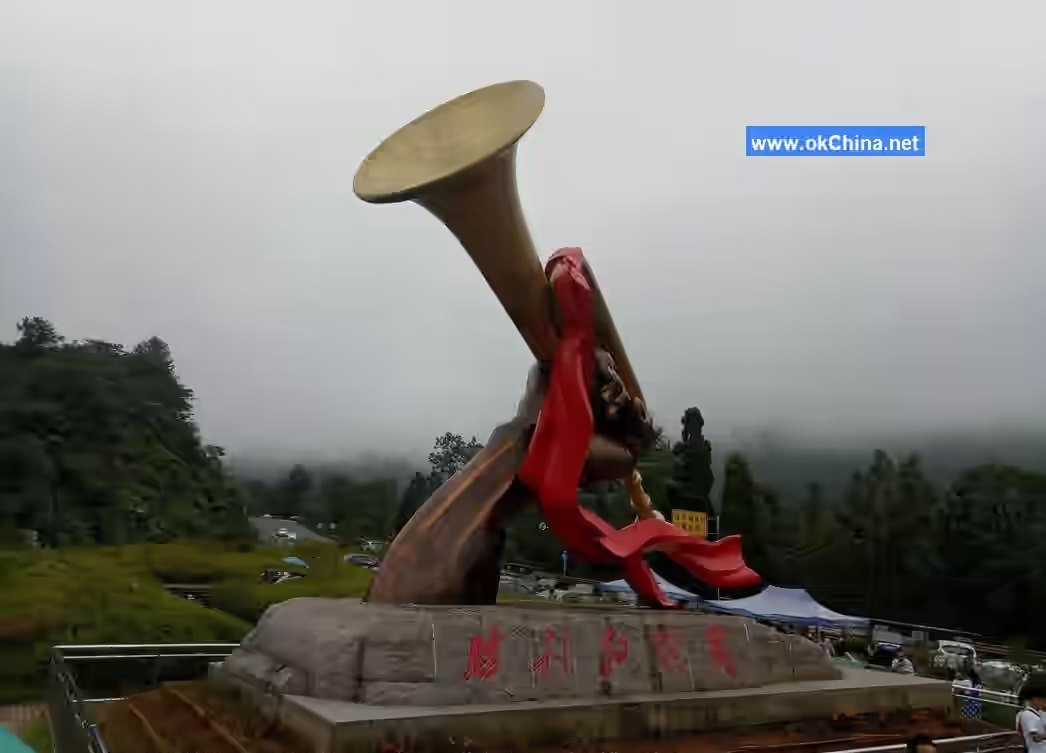
Below the hills fly our banners and flags, Above the hilltops sound our bugles and drums. The foe encircles us thousands strong, Steadfastly we stand our ground. Already our defense is iron-clad, Now our wills unite like a fortress. From Huangyangjie roars the thunder of guns, Word comes the enemy has fled into the night.
4.3.2 Prelude to the Melody of Water · Reascending Jinggangshan — Mao Zedong, May 1965
I have long aspired to reach for the clouds, Again I come from afar To climb Jinggangshan, our old haunt. Past scenes are transformed, Orchards fill the air with birdsong, And brooks babble, While the highway mounts skyward. Once Huangyangjie is passed No other perilous place calls for a glance. Wind and thunder are stirring, Flags and banners are flying Wherever men live. Thirty-eight years are fled With a mere snap of the fingers. We can clasp the moon in the Ninth Heaven And seize turtles deep down in the Five Seas: We'll return amid triumphant song and laughter. Nothing is hard in this world If you dare to scale the heights.
Comments
Post a Comment