

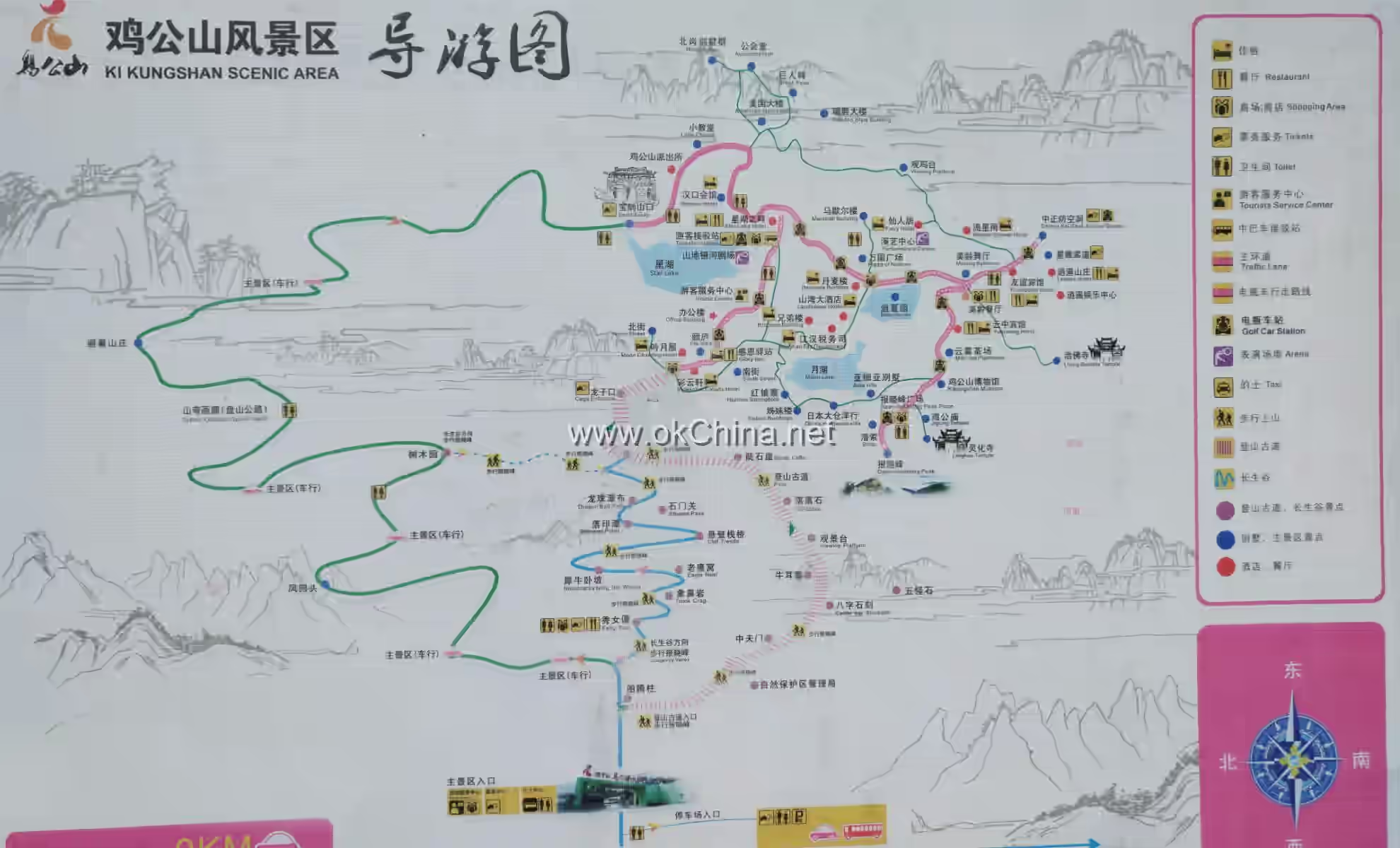
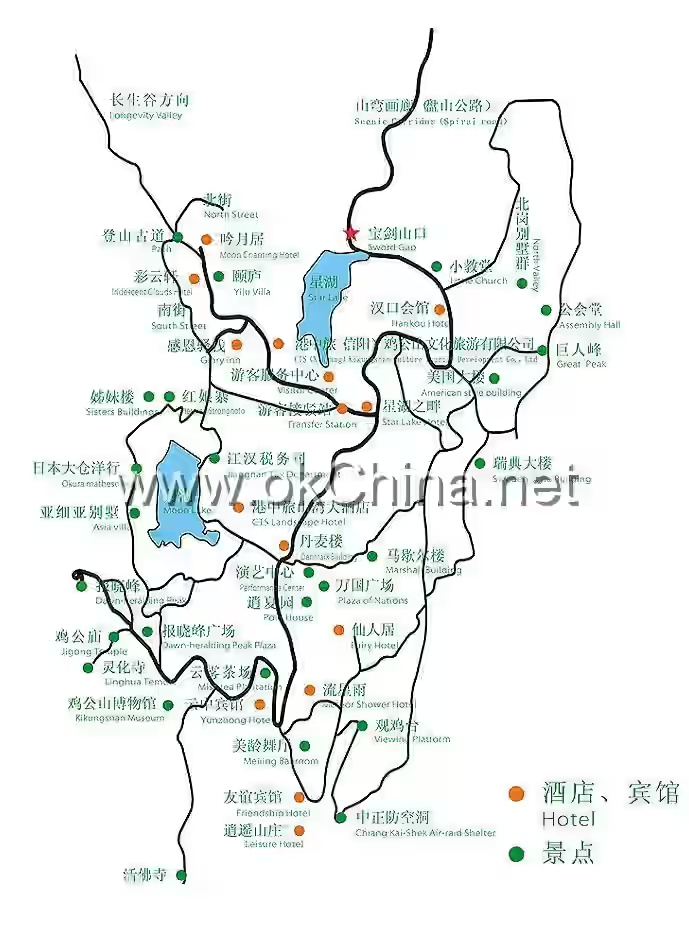
Jigong Mountain
1. Introduction
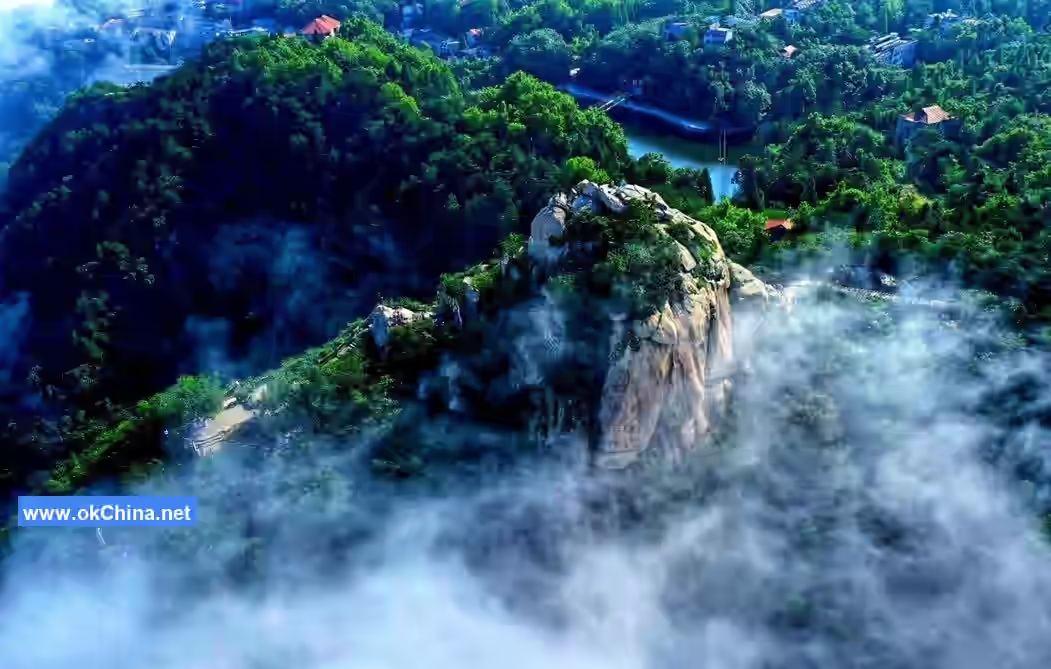
Jigong Mountain, located in Xinyang City, Henan Province, east of the Tongbai Mountains and at the westernmost end of the Dabie Mountains, is one of China's four major summer resorts. It was also among the first eight scenic spots in China opened to the public after the founding of the People's Republic and one of the first 44 national key scenic spots. Jigong Mountain is a national nature reserve, featuring dense forests and rich biological resources, including nationally protected species such as the giant salamander, long-tailed pheasant, and fragrant tangerine tree. It serves as a teaching and research base for Henan's agricultural, forestry, normal, and medical universities.
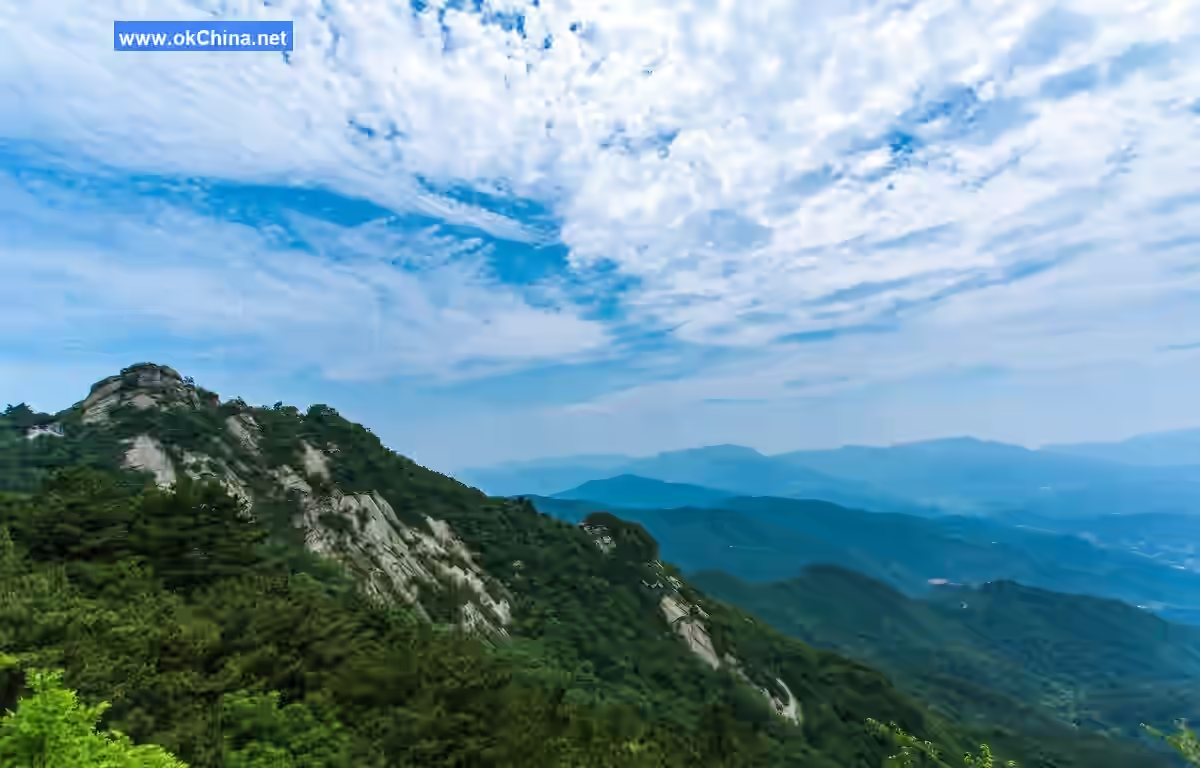
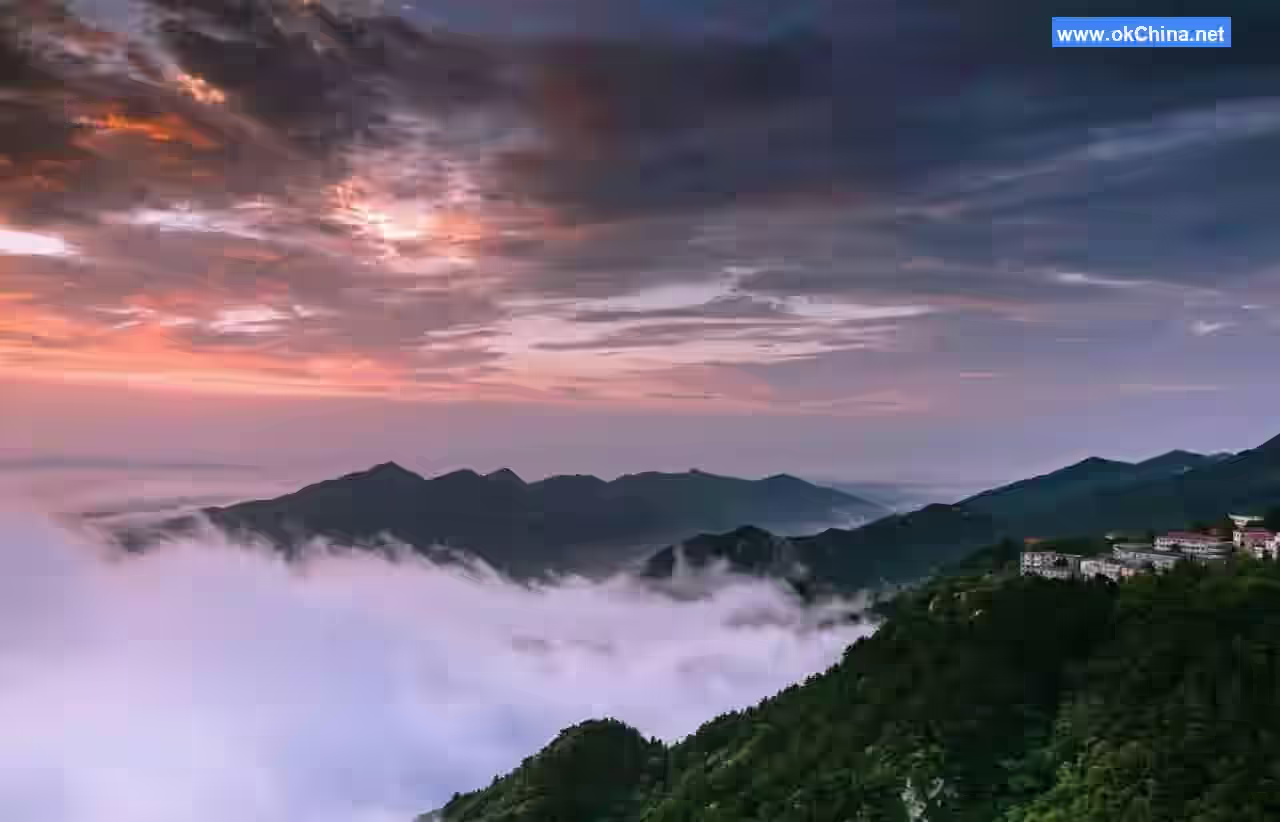
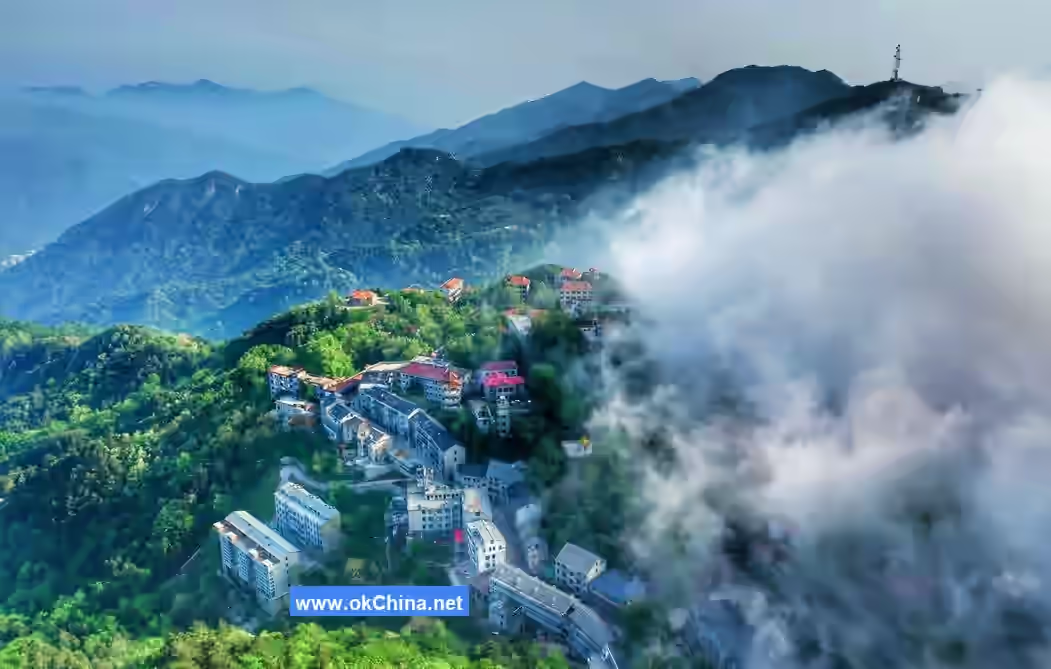
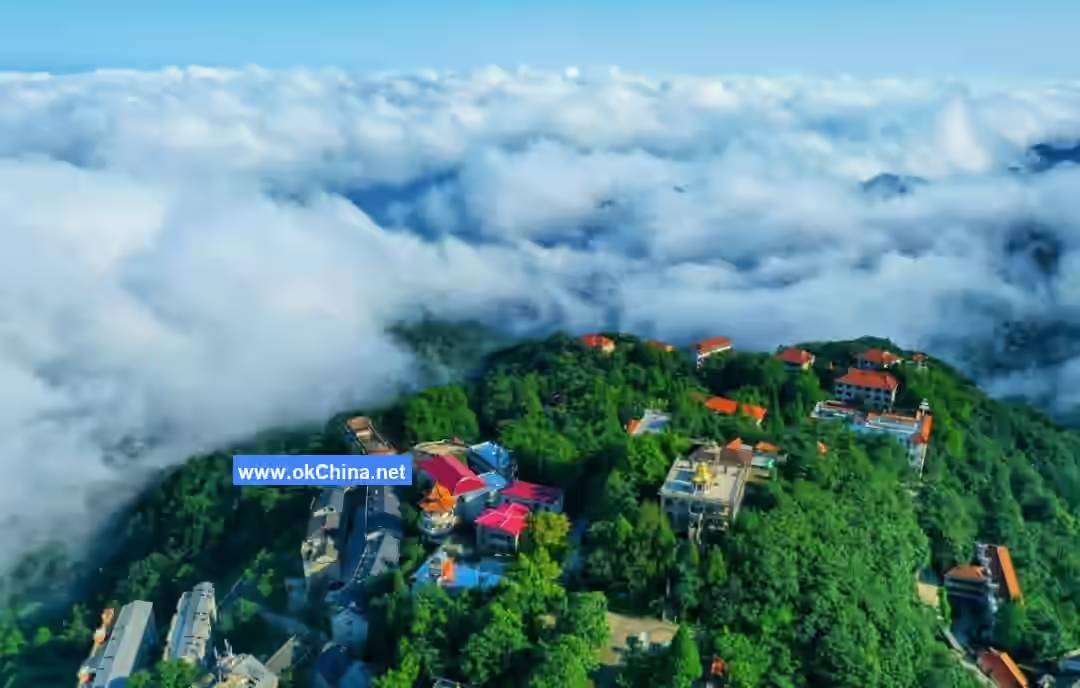
Jigong Mountain is renowned as the "Boundary of Henan and Hubei, Hub of Three Rivers." Its eight natural landscapes are known as "Buddha's Halo, Sea of Clouds, Rime, Glaze Ice, Sunlight Glow, Exotic Flowers and Plants, Peculiar Peaks and Strange Rocks, and Waterfalls and Springs." The mountain boasts architectural complexes from the late Qing Dynasty and early Republic of China periods, featuring various nationalities and styles, earning it the title "Museum of International Architecture." It was also the first international settlement in Chinese history.
2. Geographical Environment
2.1 Location
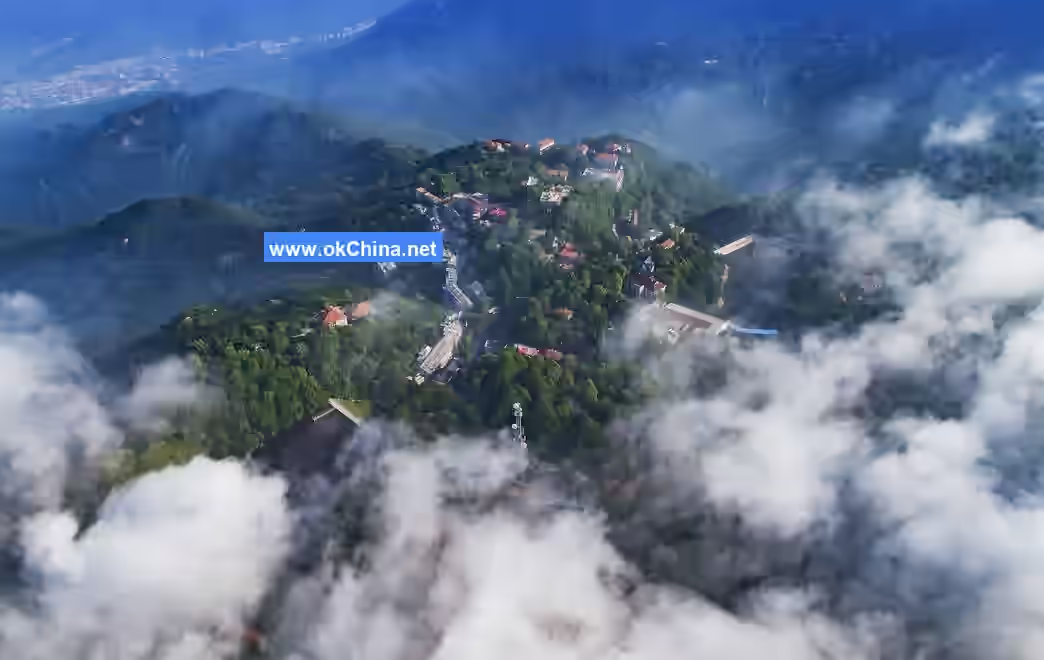
Jigong Mountain National Nature Reserve is located 38 kilometers south of Xinyang City, Henan Province, between 114°01′-114°06′ east longitude and 31°46′-31°52′ north latitude, covering an area of 2,917 hectares. It neighbors the Tongbai Mountains to the east and west and the Dabie Mountains, with interconnected landscapes, forming a transitional zone from subtropical to warm temperate regions. Situated at the watershed of northern and southern China, its main protection targets are subtropical forest vegetation transition types and rare wildlife. The Jigong Mountain Scenic Area, famous as the "Park in the Clouds," is one of China's four major summer resorts. The international architectural villa complex on the mountain is known as a world architectural collection and a museum of international architecture.
2.2 Climate
The Jigong Mountain Reserve is located at the edge of the northern subtropical zone, in the shallow mountainous area at the western end of the Dabie Mountains in Huainan. Influenced by the East Asian monsoon climate, it features transitional monsoon and mountain climate characteristics from northern subtropical to warm temperate zones. The four seasons are distinct, with light, heat, and water occurring simultaneously. Spring sees large temperature fluctuations, summer is hot with abundant rainfall, autumn is clear and cool with small temperature differences, and winter is long, cold, with sparse rain and snow. Based on average climatic temperatures, winter and summer last 125 and 115 days respectively, while spring and autumn last 65 and 60 days respectively. The annual average solar radiation at Jigong Mountain is 4,928.70 MJ/cm², with a total sunshine duration of 2,063.3 hours and a sunshine percentage of 47%. The annual average temperature is 15.2°C, with extreme highs of 40.9°C and extreme lows of -20.0°C. The accumulated temperature for days with an average temperature ≥10°C is 4,881.0°C. The frost-free period is 220 days. The annual average precipitation is 1,118.7 mm, with an air dryness index of 0.84, classifying it as a northern subtropical humid climate zone.
2.3 Hydrology
The main mountain range of Jigong Mountain extends nearly east-west or northwest, with the terrain generally higher in the south and lower in the north. The main mountain range serves as the watershed between the Yangtze River and Huai River basins. The Dongshuang River and Jiudu River north of the range flow into the Shi River and then into the Huai River, while the Huan River and Dawu River south of the range flow into the Han River and then into the Yangtze River. Jigong Mountain has abundant rainfall, numerous springs, and rich water sources, as the saying goes, "A shower in the mountain, a hundred springs flow in the forest."
3. Scenic Spots
3.1 Moon Lake
Moon Lake was completed in December 1983, primarily to solve water supply issues on the mountain and beautify the environment. The lake covers an area of 0.23 square kilometers, with a catchment length of 680 meters, a surface area of approximately 30,000 square meters, and a total capacity of 100,000 cubic meters.
3.2 South Street
In the 1920s and 1930s, Jigong Mountain's South Street was very prosperous and was known as "Little Shanghai." At that time, there were numerous shops, including banks, silk shops, woolen fabric stores, cloth stores, sundry shops, porcelain shops, food stores, fruit shops, milk shops, shoe stores, tailor shops, seasonal clothing stores, restaurants, and inns.
3.3 Chiang Kai-shek Air-Raid Shelter
The entire air-raid shelter is made of reinforced concrete and consists of two layers. The outer layer has corridors, skylights, and front and rear doors, while the inner layer includes a conference room, study, and bathroom. The total length of the shelter is 63.3 meters, with a secret passage at the back leading directly to the basement of the HSBC building to the southeast.
3.4 Mountain Summer Resort
The Mountain Summer Resort is located halfway up the southern slope of Lion Peak (also known as Ma'an Peak). It was built between 1919 and 1925 by Xiao Yaonan, Yu Huaiyuan, Zhang Housheng, Du Jieyi, Zhou Jitai, and others. At the time, it was called the Xindian Mountain Summer Resort. They planned to build 48 groups of villas, with surveying and staking completed from Lion Ridge to Beigang. However, due to political changes and the start of the Northern Expedition, the project was halted.
The resort currently has ten groups of villas comprising 20 buildings covering 7,800 square meters. Plans are underway for gradual restoration. Well-preserved villas include the Xiao Family Building, Huancui Tower, Songqing Pavilion, Wohu Tower, and Cuiyun Tower.
3.5 Rooster Crow Peak Scenic Area
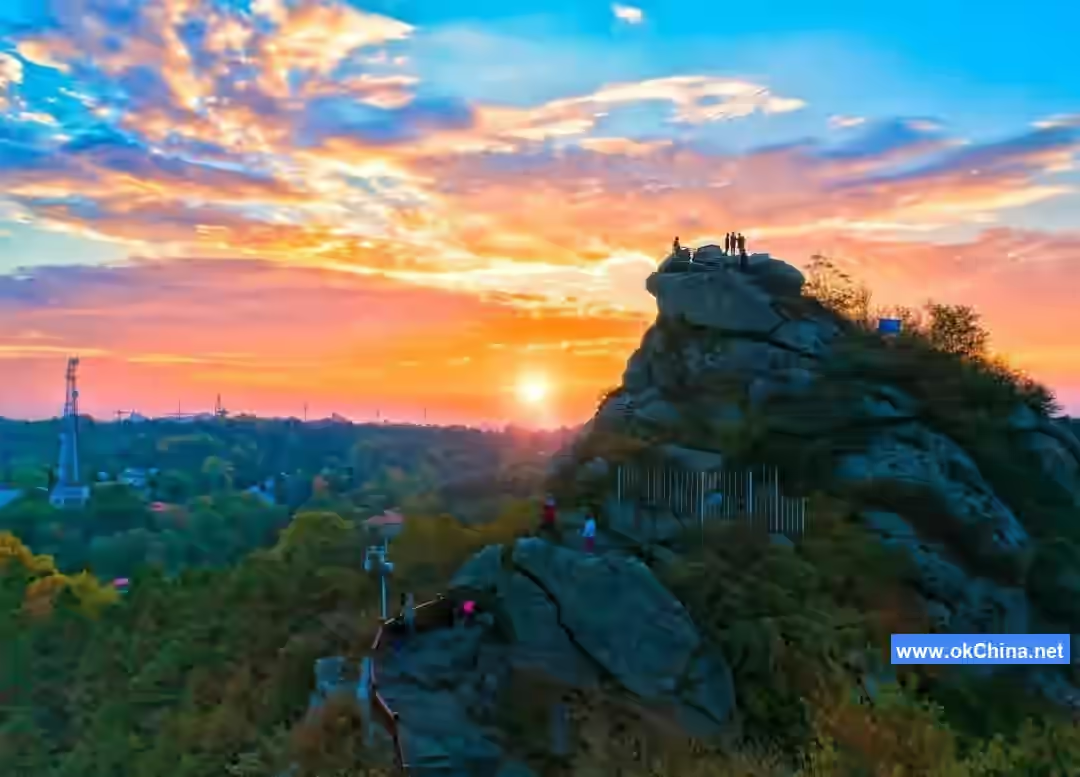
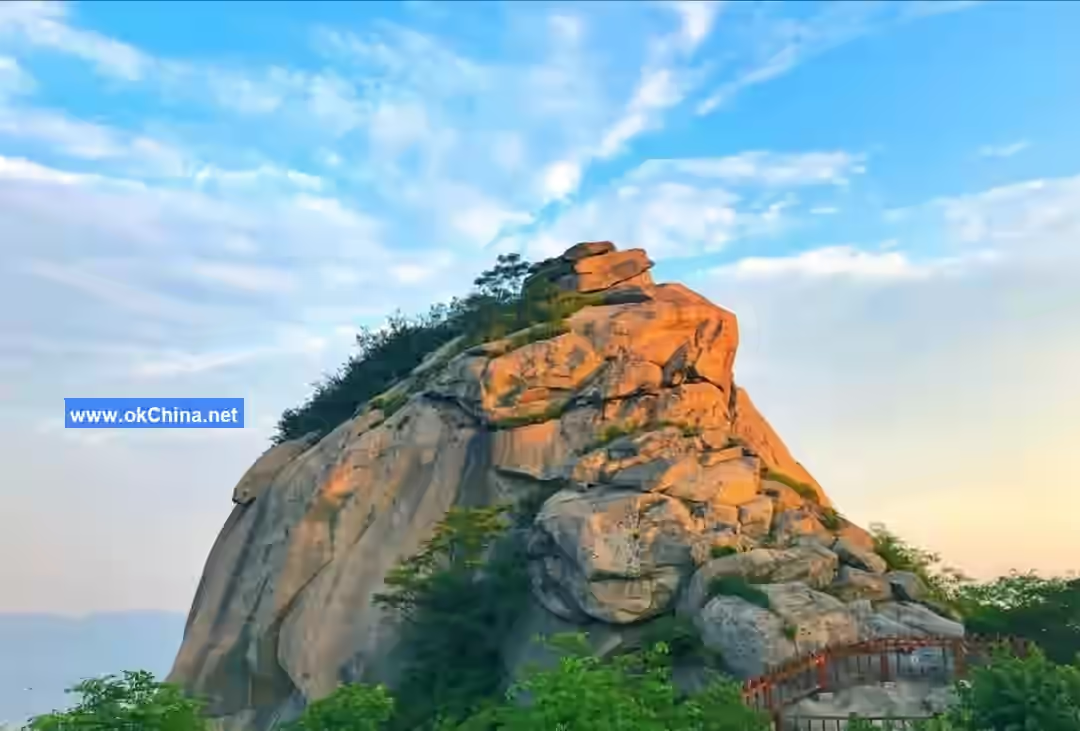
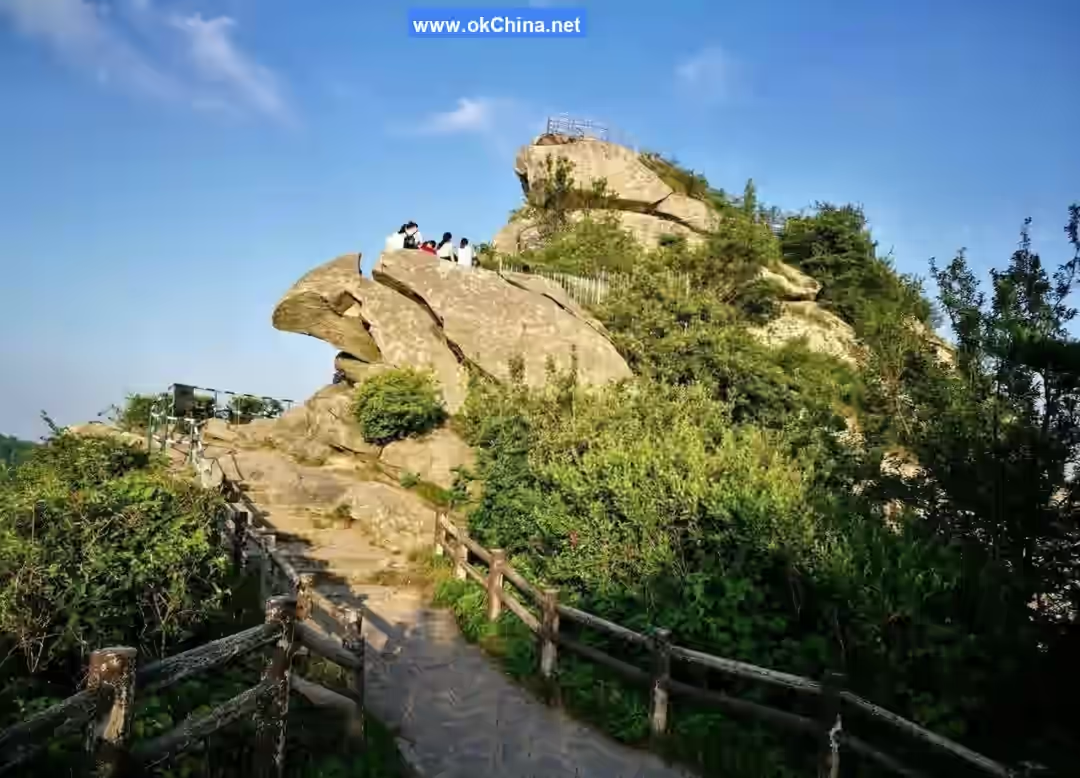
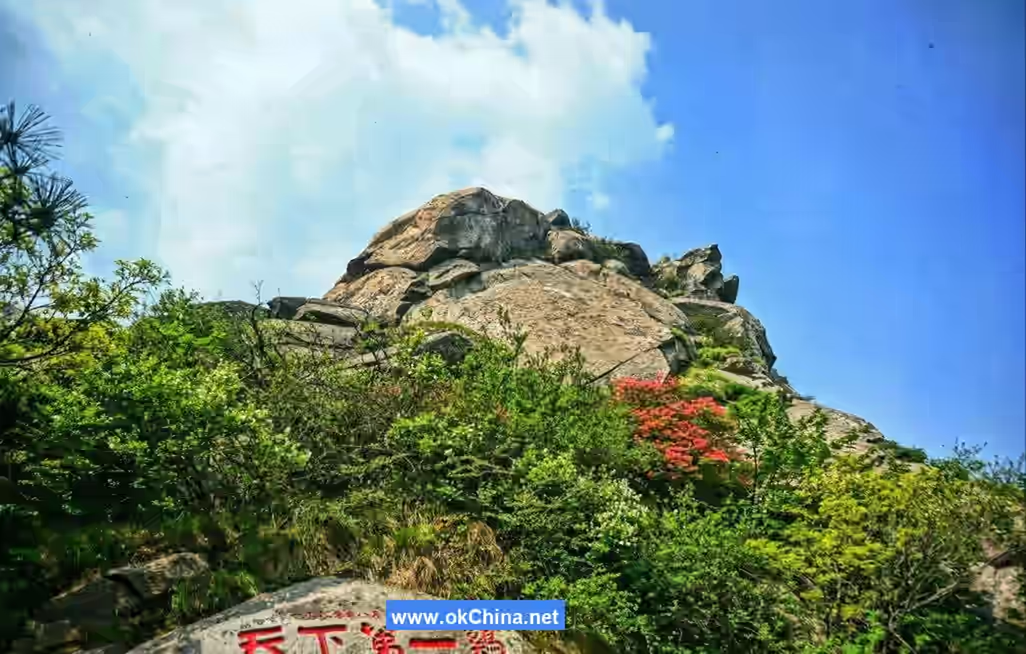
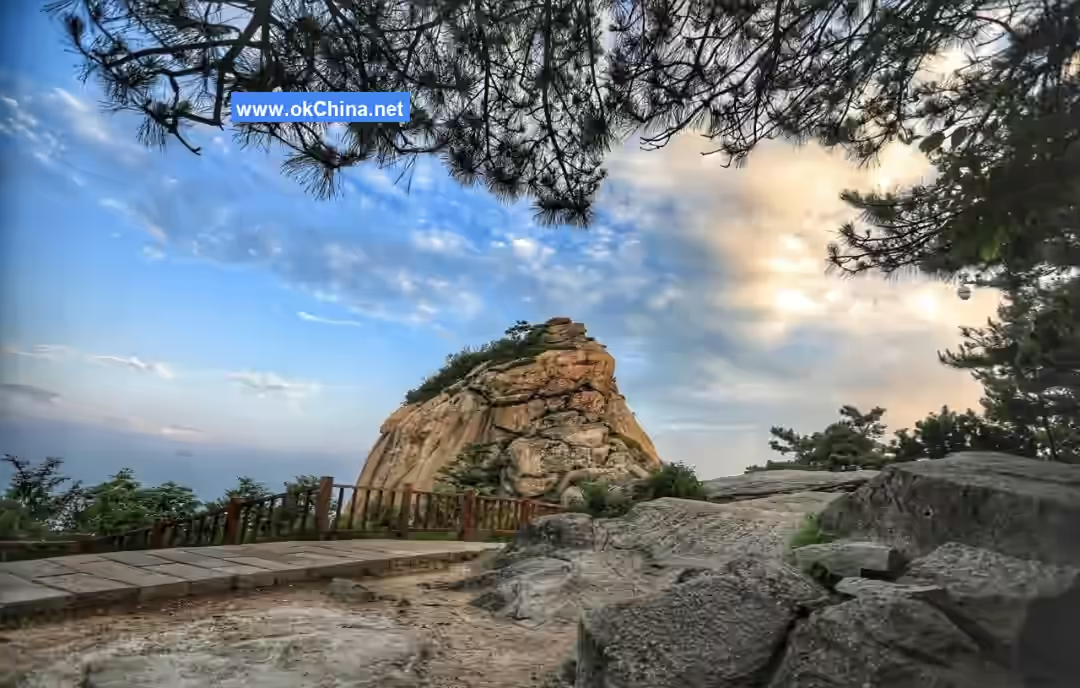
Also known as Rooster Head or Rooster Head Stone, with an altitude of 765 meters. Climbing to the peak offers a panoramic view of the entire mountain. A poem inscribed at the foot of the peak reads: "Slowly ascend Jigong Mountain, quickly climb Rooster Crow Peak; the scenery here is splendid, with autumn breezes even in summer." Jigong Mountain derives its name from this peak, and Rooster Crow Peak is its symbol.
3.6 Beigang Scenic Area
Located 8 kilometers up the mountain, a towering villa visible from afar is the Lan Yun She Yue Tower in Beigang.
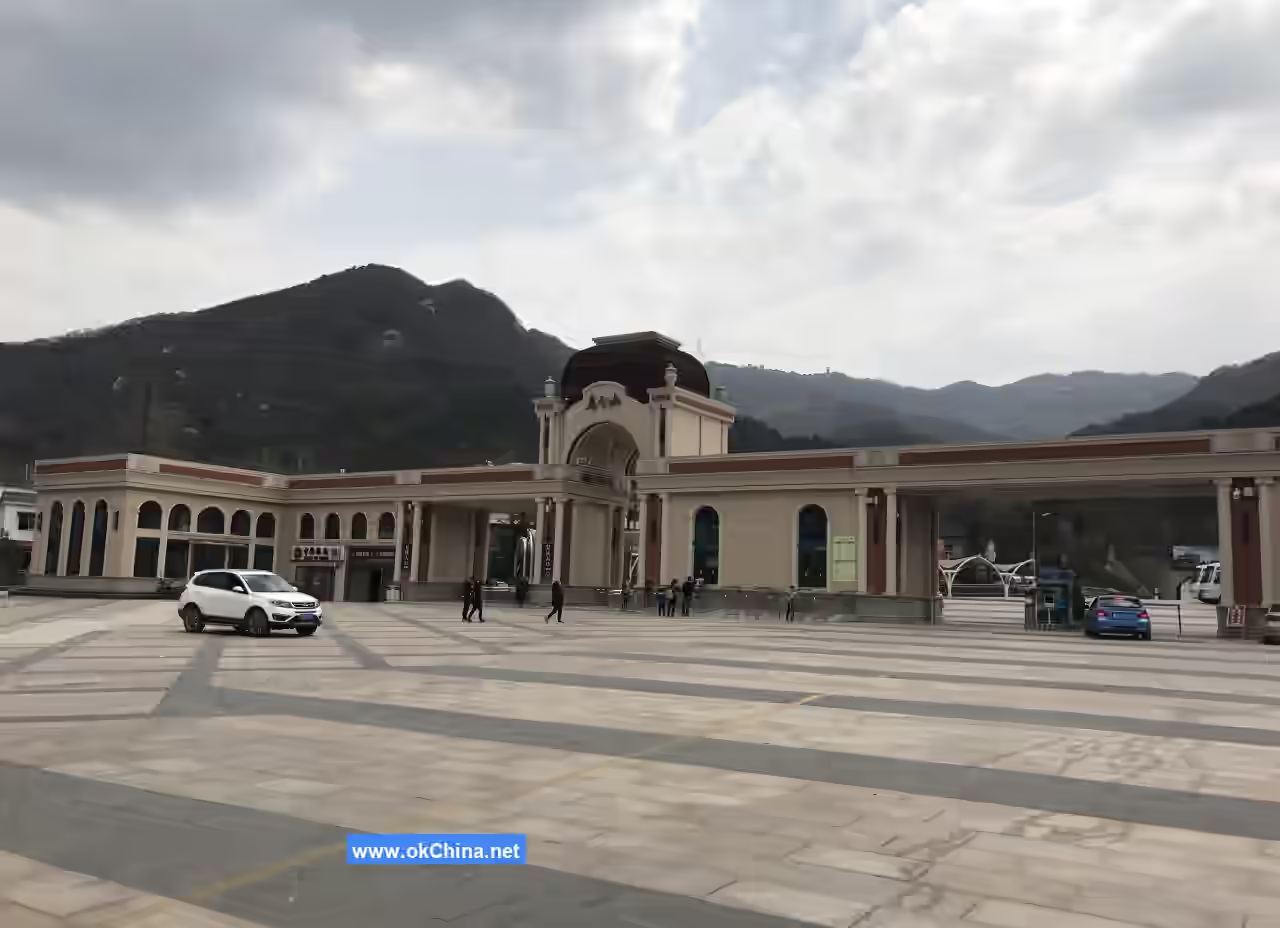
The entrance to Jigong Mountain, the ticket checkpoint—Baojian Mountain Pass—is named after a legend. It is said that during the late Ming Dynasty, the rebel general Zhang Xianzhong was defeated at Jigong Mountain and thrust his sword into the ground here, vowing not to retrieve it until he avenged his defeat. Years later, the sword shot into the sky, and the place was named Baojian Mountain.
Fifty meters up from Baojian Mountain Pass is a small church, built in 1907. It served as the center for Christian activities on Jigong Mountain at the time and later became a church district for Lutheran and other religious services. "People stream from east ridge to west stream, murmuring praises to Jehovah." With various Christian denominations on Jigong Mountain, the "Jigong Mountain Beigou Christian Association" was established for unity. The American Building (the management office), built in 1914, originally housed the American School on Jigong Mountain. It was renovated into the "New Building" in 1920 and continued to serve as the school's premises.
3.7 Changsheng Valley Scenic Area
The totem poles at the entrance of Changsheng Valley are carved with many animal and plant patterns, exquisitely crafted and richly varied, representing humanity's most primitive totems and showcasing the harmony of nature. The pillars stand as a testament, hoping people respect science, cherish nature, and value life... Changsheng Valley is a recently developed scenic spot on Jigong Mountain, known as the "Little Jiuzhaigou." It is a scenic corridor with excellent natural landscapes and a strong primitive charm.
3.8 Dadong Gully Scenic Area
The Donggou Scenic Area is famous for its water features and primitive forests. Jigong Mountain's Dadong Gully has over 20 waterfalls, with Songlinwan Waterfall, Gaofeng Waterfall, and the large and small Dripping Waterfalls being the most famous. The two most renowned waterfalls are Songlinwan Waterfall and Gaofeng Waterfall. Previously, there was only a narrow path from the central area to the Donggou Waterfall Group, making transportation very inconvenient. In 1992, the Scenic Area Management Bureau and Singapore's Xingya Investment Company jointly built an aerial cableway. The cableway is 1,026 meters long, taking about 20 minutes from the upper station to the lower station.
3.9 Ancient Hiking Trail Scenic Area
The Ancient Hiking Trail is another route up the mountain, approximately 3 kilometers long with 1,221 stone steps. It was the main path for ascending the mountain before the winding mountain road was built, constructed in the late Qing Dynasty and serving as the primary trail for hiking and sightseeing.
It was renovated in the winter of 1984. This is the first rest point for hikers, offering views of pastoral scenery, Niu'er Zhai, the "Eight-Character Stone Carvings," Yaoyao Stone, Leilei Stone, Ganlu Pool, and more.
Niu'er Zhai is located between the first and second gates of the hiking trail, nestled between the southern and northern ridges. From the top of Ganquan Peak, it extends south along the Wuguai Ridge, north along the trail's northern side, and west to Ganlu Pool, winding down. The fortress walls are dry-stacked with stone slabs along the ridge. The fortress's interior is a deep valley, approximately 1,200 meters long from east to west and 300 meters wide in the middle. The fortress is narrow in the east and wide in the west, shaped like an ox's ear, hence its name.
Standing on the trail between the first and second gates (near the second gate) and looking southwest, the ridge across the valley is Wuguai Ridge, named after the five strange rocks on its ridge.
3.10 Lijiazhai Scenic Area
Lijiazhai Town in the Jigong Mountain Management Area was historically known as "Jinjia Store." Lijiazhai, a famous town in central China, is the largest, most functional, and most influential chestnut wholesale market in central and southern China, with an annual throughput of over 12 million jin of chestnuts. Lijiazhai Town is also the original birthplace of Xinyang Maojian tea, with remnants of Tang and Song Dynasty tea trees still found in Dachagou. The town is known as the "Jiangnan of the North" and the "Northern Country of the South." Historically, the town was mainly inhabited by the Li family, and with two mountains facing each other and a river flowing through, the terrain is strategically important. This naming method is common for many place names in China.
3.11 Yilu Scenic Area
Yilu was started in 1921 and completed in 1923. It covers a construction area of 1,274 square meters and is a four-story mixed Chinese-Western style structure. Jin Yun'e, whose courtesy name was "Yishu," named it "Yilu" after the first character of his name, with "lu" meaning thatched cottage. However, Yilu also has another name: "Zhiqi Lou" (Ambition Building). It is located on a steep cliff between the northern and southern Tianjie streets, facing Rooster Crow Peak to the south and north, standing out among the many villas.
4. Historical Evolution
4.1 Ancient TimesIn ancient times, the two emperors Yan and Huang once joined forces to pursue Chi You, the leader of the Jiuli tribe, at the foot of Jigong Mountain, an event that dates back over 4,600 years. During the Spring and Autumn period, renowned Wu generals such as Sun Wu and Wu Zixu led a large army from east to west, capturing the "Three Passes of Yiyang" around Jigong Mountain—Jiuli Pass, Wusheng Pass, and Pingjing Pass—before turning south to occupy Ying, the capital of the Chu state.
In the ancient Chinese geographical classic Shui Jing Zhu: Huai Shui Kao by Li Daoyuan of the Northern Wei Dynasty, Jigong Mountain is recorded as follows: "The water originates from Jichi Mountain, where streams and ravines meander, winding through nine bends, much like the Jiudu River of Lingyang, hence it is also called Jiudu." Jichi Mountain refers to Jigong Mountain, and the Jiudu River is the Jiuqu River, located on the western foothills of Jigong Mountain, flowing northwest into the Huai River.
In 638 AD, Emperor Li Shimin led the imperial family and officials on a tour of Jiangnan. Passing through Lijiazhai (at the foot of Jigong Mountain), a princess fell ill and unfortunately passed away, leaving her burial site there, along with the ruins of the Imperial Aunt Tomb. Additionally, Lijiazhai boasts numerous revolutionary sites, such as slogans of the Red Ninth Army, the hospital of the New Fifth Division, and the旧址 of an arsenal. Between 876 and 880 AD, Wang Xianzhi and Huang Chao's forces twice crossed the Three Passes to capture Yiyang. In May 1134, the national hero Yue Fei captured the Three Passes of Yiyang and stationed his general Niu Gao to guard them.
Zhu Yuanzhang, the founding emperor of the Ming Dynasty, once retreated and regrouped his troops in the dense forests of Jigong Mountain's Shannangou after a military defeat, leaving behind遗迹 of tethering posts. Li Shizhen of the Ming Dynasty also visited Jigong Mountain to gather herbs.
In 1643, Li Zicheng crossed the Three Passes to capture Yiyang, forcing the Ming general Zuo Liangyu to withdraw. In Jigong Mountain's Dadonggou, the "Flagpole Stone" used for flag planting and military reviews and the "General Stone" used for commanding reviews remain.
4.2 Modern Era
1890
American missionary Daniel Nelson arrived in Hankou, Hubei, from the United States and began missionary work in China. His arrival set the stage for the discovery and development of Jigong Mountain. Initially active in Hankou and Wuchang, Nelson studied Chinese and explored the surrounding areas, gradually developing a strong interest in China's nature and culture.
1902
The section of the Jinghan Railway from Xiaogan to Xinyang opened. Daniel Nelson and Knut Sorensen Stokke made their first visit to Jigong Mountain. Climbing along narrow paths, they found the terrain gentle and the climate cool, making it suitable as a summer retreat. In her biography, Nelson's daughter Mary recorded that he was determined to find a summer retreat after his young son fell ill with a fever, bringing Jigong Mountain into his view. This visit laid the foundation for its subsequent development.
1903
Daniel Nelson and Knut Sorensen Stokke bribed the Xinyang magistrate to purchase a mountainous area of Jigong Mountain, approximately 1.5 kilometers long and 1 kilometer wide, and began constructing villas. That autumn, they and Martinson attempted to build houses in Beigou, initially using adobe for simple huts, which collapsed due to heavy rain. They later switched to brick-making for construction. Nelson's first brick house was completed in 1904, marking the official start of Jigong Mountain's villa cluster construction.
1904
Daniel Nelson's first brick house was completed, and Martinson and Knut Sorensen Stokke also built villas. Jigong Mountain gradually became a summer resort for foreigners, attracting more missionaries and merchants to build houses. These villas were mostly constructed with local granite, combining texture with exotic charm.
1905
By this time, 27 foreign houses from countries such as Britain, the United States, France, Russia, and Japan had been built on Jigong Mountain. Upon discovering that foreigners had built villas on Jigong Mountain without approval, the Qing government was furious and ordered a strict investigation. Ultimately, the Qing government redeemed and leased the land and buildings of Jigong Mountain at an appraised value. The mountainous land purchased by missionaries was designated as a "missionary zone," enjoying extraterritorial rights. Thus, Jigong Mountain became China's first "international settlement" in history.
1915
To address the educational needs of American missionary children from Henan and Hubei provinces, the Jigong Mountain American School was established. The school adopted an eight-year education system, emphasizing Chinese history and geography, and trained thousands of students. The establishment of the American School added cultural and educational functions to Jigong Mountain, transforming it from merely a summer resort into a center for cultural exchange.
1918
British merchant Biern constructed the Huagi Building, which was later sold to the American Huagi Bank in Hankou. The Huagi Building became a landmark on Jigong Mountain. On the eve of the Battle of Wuhan in 1937, Chiang Kai-shek established a temporary headquarters here. The design of the Huagi Building blended European architectural styles, with cliffs in front, steep rock faces behind, and towering ancient trees surrounding it, offering pleasant scenery.
1921
Zhili warlord Jin Yun'e constructed the Yilu, known as the "Ambition Building" due to its grand architectural style. The construction of Yilu symbolized the Chinese people's unwillingness to endure humiliation, making it a landmark on Jigong Mountain. The building stands over 20 meters tall with four floors. Its walls are built with neatly arranged stone slabs, and each floor features interconnected corridors with circular openings between pillars, blending Western architectural精华 with traditional Chinese "dignified and upright" characteristics.
1924
After the Zhili-Fengtian War, Wu Peifu, defeated and displaced, took refuge on Jigong Mountain, staying in Jin Yun'e's Yilu. During his time on Jigong Mountain, Wu Peifu was despondent, unable to appreciate the mountain's beauty, and preoccupied with concerns about the current situation. He spent a difficult period in Yilu, making Jigong Mountain an important witness to the history of the Zhili warlords.
1925
The villa cluster on Jigong Mountain had taken shape, forming a unique "international village"风貌. The villas showcased diverse styles, blending European architecture with Chinese elements, earning Jigong Mountain the nickname "Museum of International Architecture." These villas not only displayed architectural arts from various countries but also reflected the繁荣景象 of cultural exchange between China and foreign nations at the time.
1935
In the summer, over 2,000 foreigners visited Jigong Mountain to escape the heat, making it a thriving "international village." The mountain featured streets, foreign commercial districts, hospitals, schools, sports fields, post offices, telegraph offices, police stations, and other facilities, forming a complete living community. Jigong Mountain's prosperity peaked, becoming one of China's most famous summer resorts at the time.
1937
On the eve of the Battle of Wuhan, Chiang Kai-shek and his wife Soong Mei-ling established a temporary headquarters in the Huagi Building on Jigong Mountain and presided over the "Central Plains Conference" to部署 the defense against Japan on the outskirts of Wuhan. The Huagi Building became an important historical witness to the War of Resistance Against Japan. During his stay on Jigong Mountain, Chiang Kai-shek not only focused on the war but also enjoyed a brief period of tranquility.
1938
Jigong Mountain was occupied by Japanese forces, and many villas were damaged. After the victory in the War of Resistance, some buildings were restored, but others fell into disrepair and were abandoned. The prosperity of Jigong Mountain came to an abrupt halt due to the war, and the fate of the villa cluster underwent significant changes.
1946
U.S. Presidential Envoy George Marshall planned to visit Jigong Mountain, and the villa prepared for him was named the "Marshall Building." Although Marshall ultimately did not make the trip, the villa retained his name, becoming an important historical building on Jigong Mountain. The Marshall Building featured a unique design with arched doors and windows,扇形 corridors, fireplaces inside, and chimneys on the roof, exuding an exotic ambiance.
4.3 Contemporary Era
1952
The Jigong Mountain American School disbanded in Hong Kong, and its archives were donated to the Yale University Library. Over its 41-year history, the school trained thousands of students, and many alumni and their descendants held deep affection for Jigong Mountain. The disbandment of the American School marked the official end of Jigong Mountain's era as an international cultural exchange center.
1982
After restoration, the Meiling Dance Hall opened to the public as a tourist attraction in 1985. Named after Soong Mei-ling, who once danced there, the building became a popular tourist spot on Jigong Mountain. The design of the Meiling Dance Hall is both dignified and Westernized, with mountains behind and cliffs in front. The surrounding封闭回廊 offers excellent lighting, allowing visitors to观云海, listen to the sound of pine trees, and沐清风.
1994
The National Cultural Heritage Administration required the近代建筑群 of Jigong Mountain to apply for inclusion in the fourth batch of "National Key Cultural Relics Protection Units," but the application was not approved. The protection efforts for Jigong Mountain一度陷入困境, with many old villas at risk of collapse due to disrepair.
2006
The近代建筑群 of Jigong Mountain became a "Provincial Key Cultural Relics Protection Unit," and保护工作 gradually gained attention. Relevant departments began restoring and protecting the old villas, and the historical value of Jigong Mountain was gradually重新认识.
2009
Henan Provincial Party Secretary Xu Guangchun conducted research on Jigong Mountain, emphasizing the importance of protecting the old villas and prohibiting unauthorized demolition or renovation. The protection efforts for Jigong Mountain entered a new stage,彻底改变 the fate of the old villas.
2013
The近代建筑群 of Jigong Mountain was入选 the seventh batch of "National Key Cultural Relics Protection Units," gaining official recognition for its historical and cultural value. As a microcosm of China's modern and contemporary history, the old villa cluster of Jigong Mountain officially became a national-level cultural relics protection unit.
Current Status
Currently, over a hundred well-preserved old villas remain on Jigong Mountain, with the Marshall Building, Meiling Dance Hall, Huagi Building, and others open to the public, serving as important windows for visitors to understand the history of Jigong Mountain. The old villa cluster of Jigong Mountain is not only a microcosm of China's modern and contemporary history but also a witness to cultural exchange between China and foreign countries, holding significant historical, cultural, and artistic value. The management department of Jigong Mountain is actively promoting the protection and development of the old villas, aiming to transform the area into a comprehensive景区 integrating history, culture, and tourism.
Comments
Post a Comment