Jiayuguan Cultural Relics Scenic Area, Jiayuguan City
I. Introduction
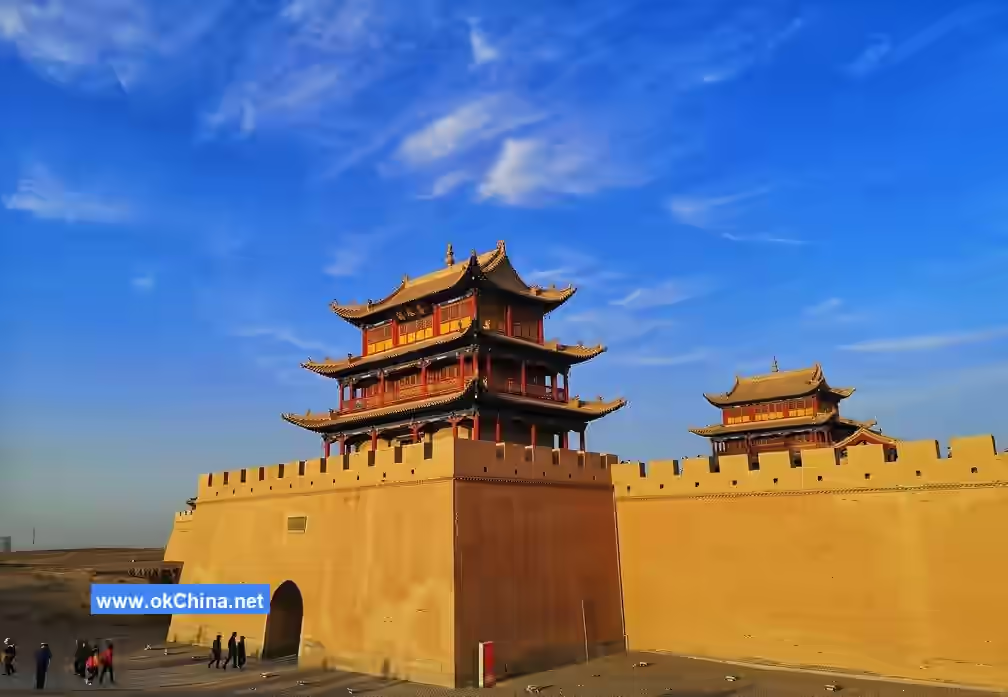
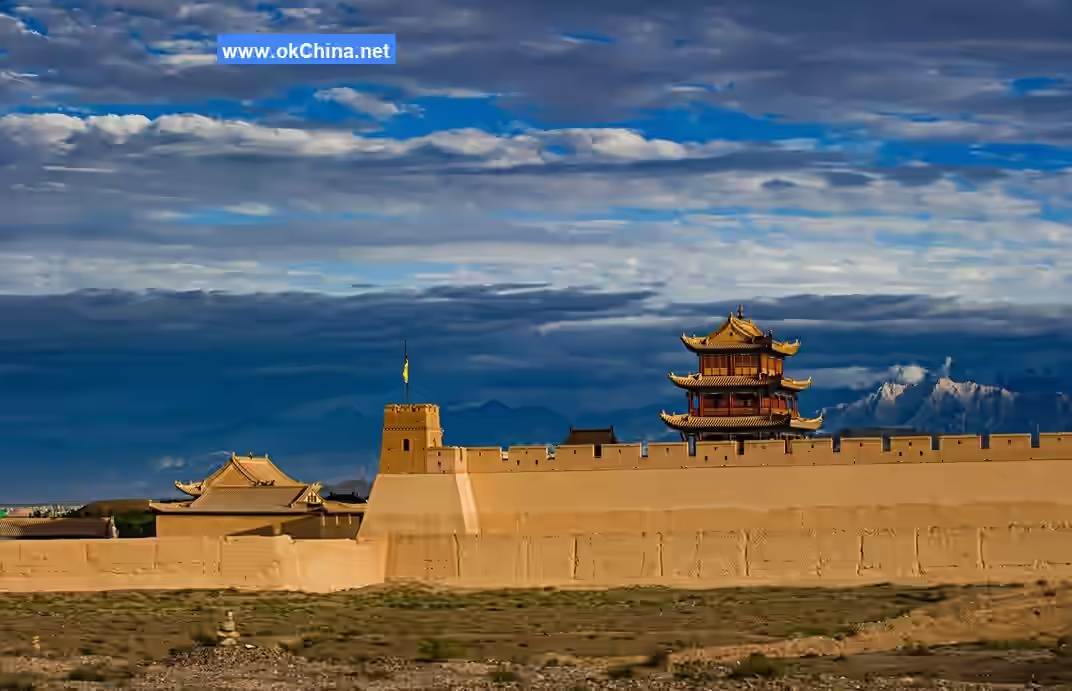
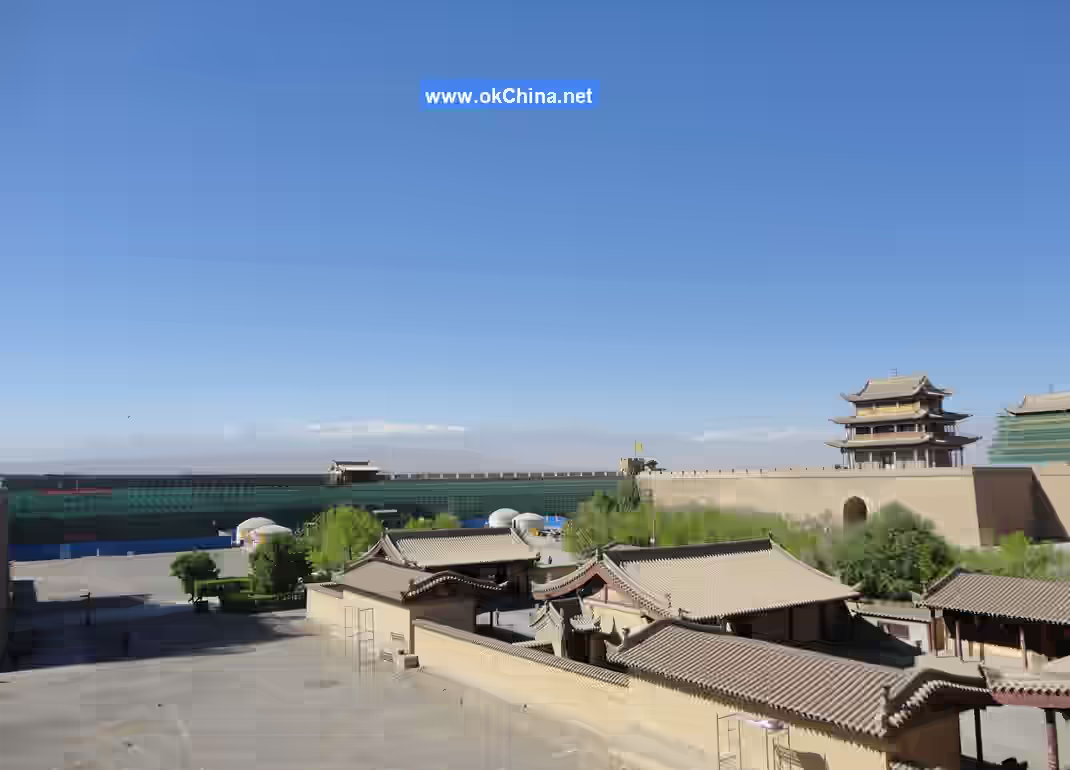
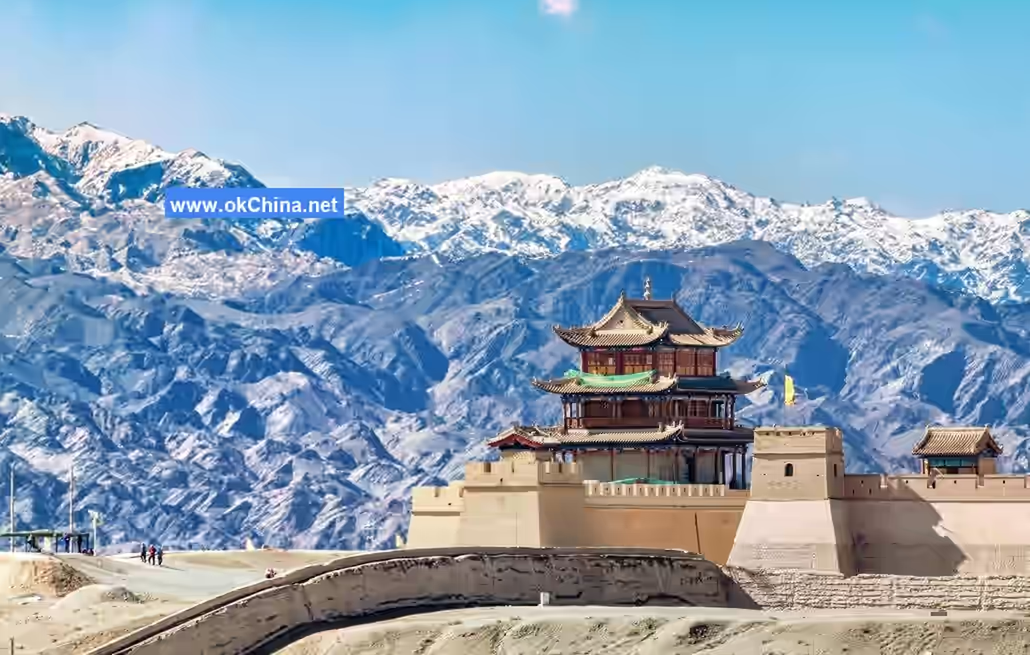
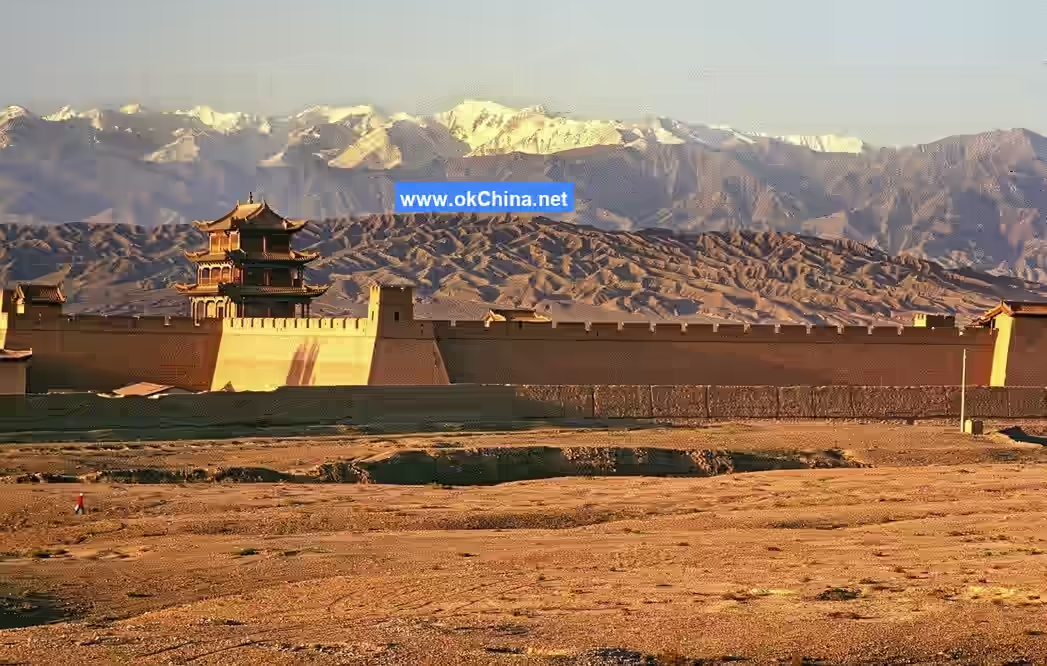
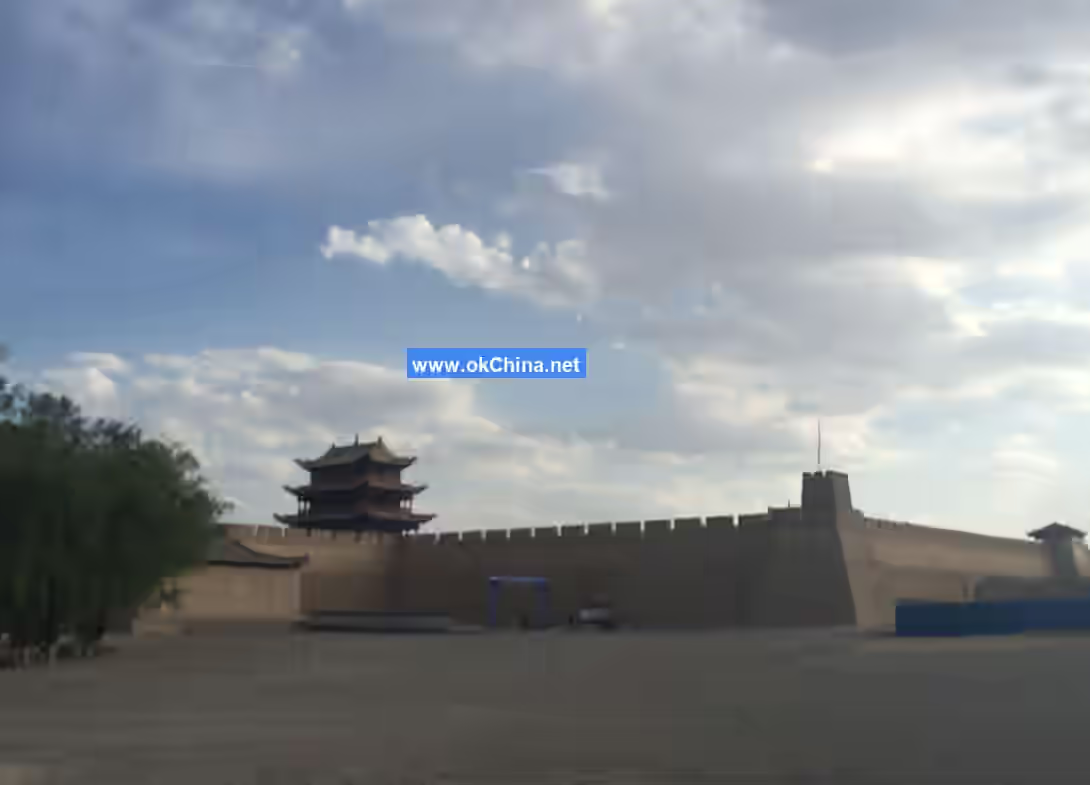
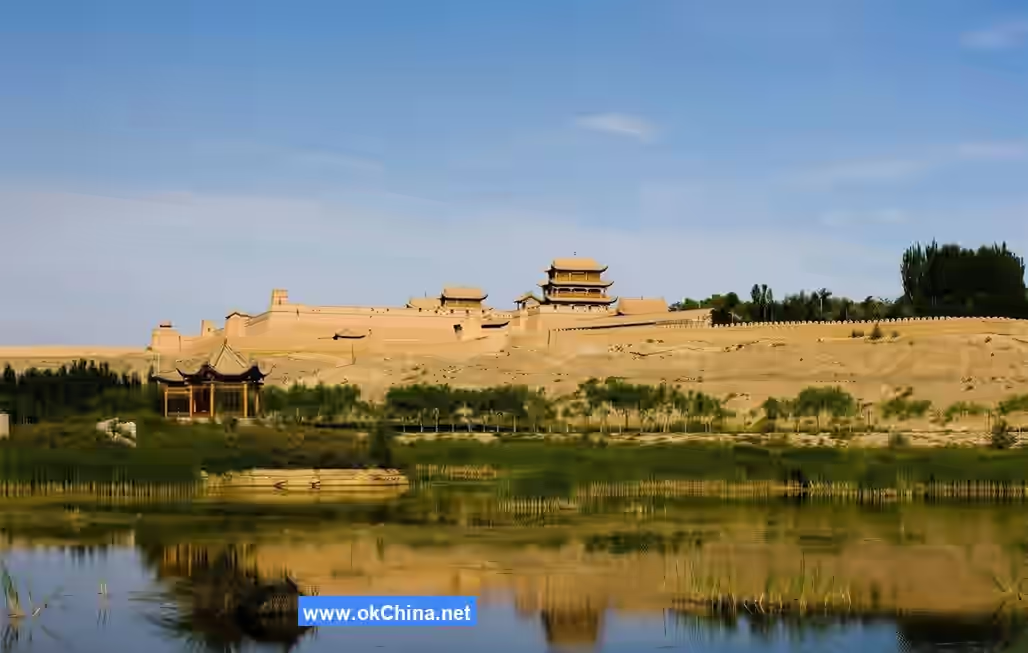
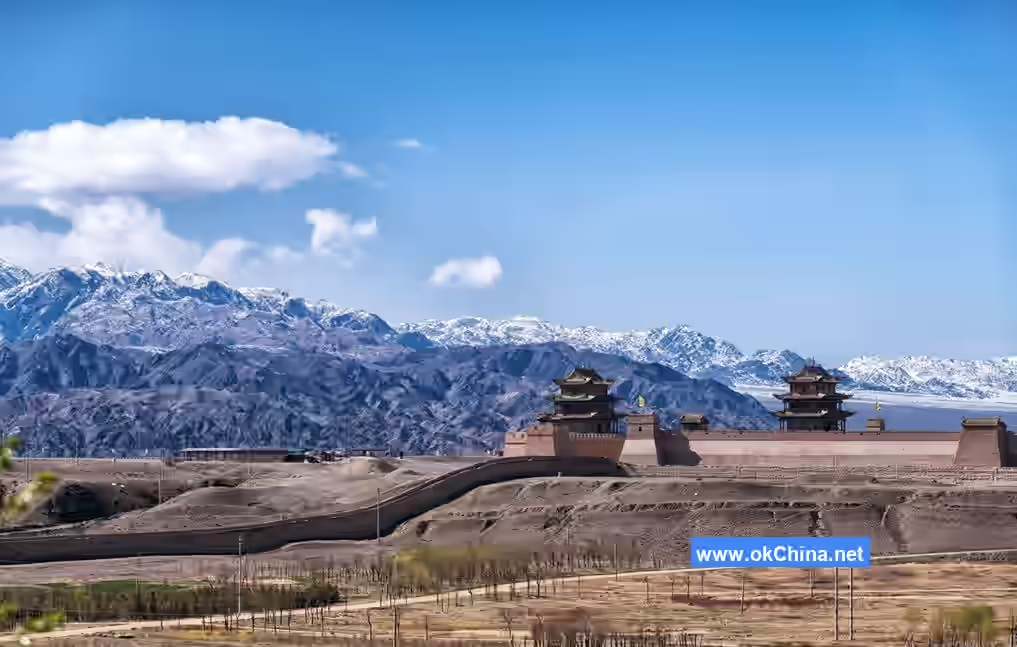
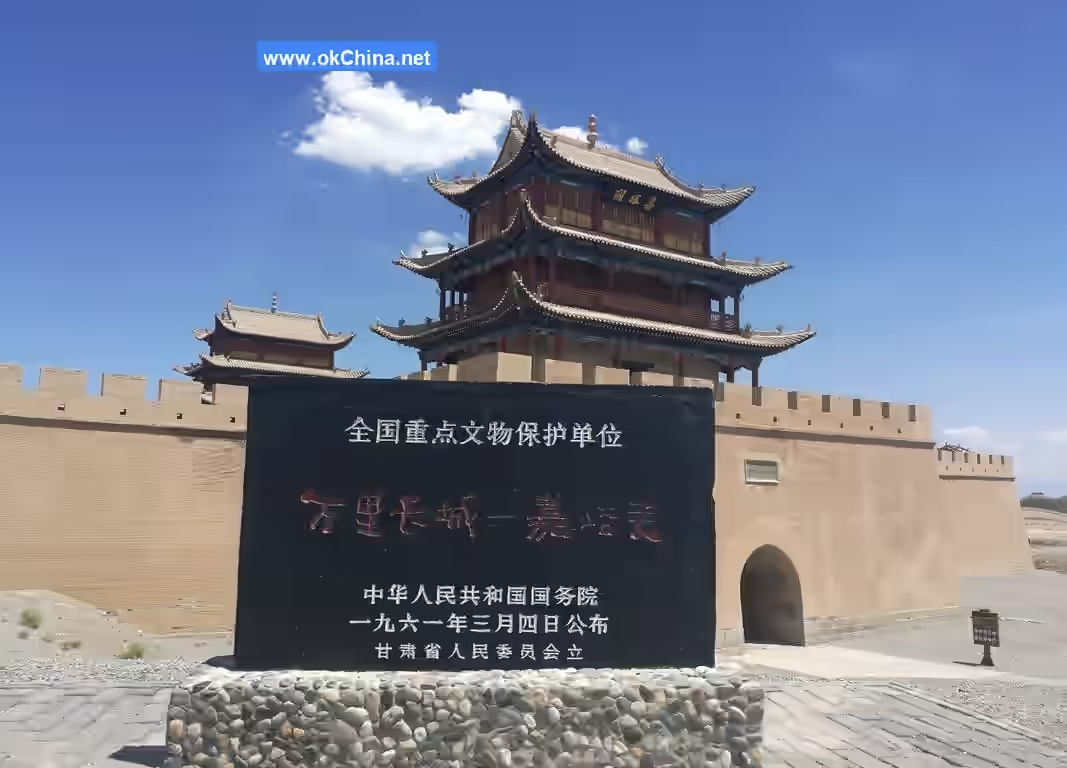
Jiayuguan, known as the "First and Greatest Pass under Heaven," is situated in the narrowest part of the valley, about 5 kilometers west of Jiayuguan City, Gansu Province. The walls on either side of the pass traverse the desert and Gobi, connecting to the Heishan Suspended Wall Great Wall in the north and the First Beacon Tower of the Great Wall in the south. As the westernmost pass of the Ming Dynasty Great Wall, it was historically referred to as the "Throat of the Hexi Corridor." Due to its strategic location and magnificent architecture, it earned the title "Key Fortress Linking the Frontiers." Jiayuguan was a vital transportation hub on the ancient Silk Road and one of the three wonders of the Chinese Great Wall (Shanhaiguan in the east, Zhenbeitai in the center, and Jiayuguan in the west).
Construction of Jiayuguan began in the fifth year of the Hongwu reign of the Ming Dynasty (1372 AD). It consists of an inner city, outer city, barbican, enceinte, moat, and the Great Wall extending to the north and south wings, with a total length of approximately 60 kilometers. Beacon towers, watchtowers, and fortresses are scattered throughout the area. The defensive system comprises three overlapping lines of defense—the inner city, outer city, and moat—forming a comprehensive network with beacon towers every five li, watchtowers every ten li, fortresses every thirty li, and a major fortress every hundred li.
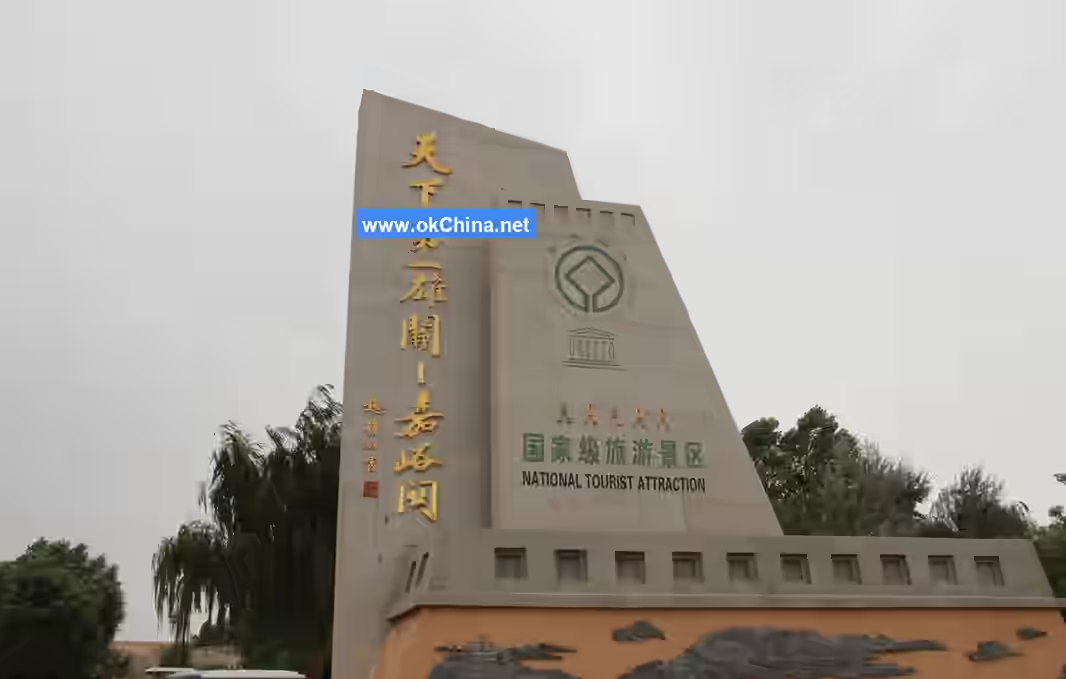
Jiayuguan is a UNESCO World Heritage Site, a National AAAAA Tourist Attraction, a Major Historical and Cultural Site Protected at the National Level, and a National Patriotic Education Demonstration Base. Its main attractions include the Jiayuguan Pass Fortress, Suspended Wall Great Wall, First Beacon Tower of the Great Wall, Wei-Jin Dynasty Tombs, Heishan Rock Carvings, Mulan City, the "July 1st" Glacier, and the Gliding Base.
II. Historical Evolution
Jiayuguan was built in the fifth year of the Hongwu reign of the Ming Dynasty (1372 AD), nine years earlier than Shanhaiguan. It is the largest existing pass on the Great Wall and the largest in scale in China.
Before the Song and Yuan dynasties, the Jiayu area had checkpoints but no fortified city, serving only to inspect travelers.
During the Ming Dynasty, to strengthen northwestern border defense, Duke Song Guo, Feng Sheng, decided to build a fortress here. Soon, a rammed-earth city rose from the flat ground in the Jiuyanquan area, with a circumference of 220 zhang, a height of two zhang, and a width of one zhang. This was the earliest prototype of the formidable Jiayuguan. As the Turpan region in the west grew stronger during the Ming Dynasty, it frequently invaded cities along the Hexi Corridor, with the Jiayu Mountain Pass being the only route. After its completion, Jiayuguan became a key national defense stronghold in the west, playing a crucial role in safeguarding the Hexi region.
Later, during the reign of Emperor Xiaozong of Ming, the gate tower was constructed. During the Zhengde period, the eastern and western towers—Guanghua Tower and Rouyuan Tower—were built. In the Jiajing period, existing structures were reinforced, and the Great Wall wings on both sides of the pass were extended, with watchtowers erected every five li. From the initial rammed-earth city in the fifth year of Hongwu (1372 AD) to the reinforcement of the pass and construction of the wing walls by Minister Zhai Luan in the eighteenth year of Jiajing (1539 AD), Jiayuguan was intermittently constructed over 168 years, becoming a relatively complete defensive fortress.
Before the Yuan and Ming dynasties, envoys from the Western Regions paid tribute via the Yumen Pass. With the construction of Jiayuguan during the Ming Dynasty, Yumen Pass was gradually abandoned. Jiayuguan became the only official route for tribute missions from the Western Regions, entering the Hexi Corridor from Hami and proceeding to the central plains of the Ming Dynasty. Tributary missions from Central Asia typically occurred every three to five years, with each delegation limited to ten members. However, due to the frequent arrival of large delegations numbering dozens or even hundreds at Jiayuguan, Emperor Xianzong issued an edict in the ninth year of Chenghua (1473 AD): "Only one person per ten is permitted to proceed with the tribute." The remaining members were to wait in place. Tributary envoys would depart at cockcrow, receive entry permits, carry locally selected rare specialties as tribute, and proceed to the capital for an audience with the emperor to receive rewards. The Ming emperors' rewards were exceedingly generous, often exceeding the value of the tribute by several times or even dozens of times. The treatment of tributary envoys was unprecedented: not only were their food and lodging along the way after entering the pass fully covered, but local governors also dispatched military and civilian escorts for their round trip. Opening the pass for tribute was a diplomatic gesture, while closing it was a means for the Ming Dynasty to intimidate neighboring regions. Emperor Xiaozong once used this method to pressure Turpan.
During the Qing Dynasty, an important trade route from the central plains to Xinjiang started from Xi'an, passing through Lanzhou, Jiayuguan, Yumen, and Hami. Cotton and grapes from Turpan, sheep, horses, camels, antelope horns from Zungaria, and jade from southern Xinjiang were transported inland via this route. Tea, silk, cotton cloth, porcelain, and medicinal herbs from inland China were also transported through Jiayuguan to Xinjiang and Central Asia.
During the Jiaqing period of the Qing Dynasty, tribute trade points were established in various parts of Xinjiang, diminishing Jiayuguan's previous role in centrally controlling tribute trade. Instead, it began levying tariffs on the increasing number of merchants and travelers, gradually becoming a key checkpoint for trade control.
In the 1830s, the amount of opium imported into Xinjiang from Central Asia increased significantly, also entering inland China via Hami and Jiayuguan. In the late Qing Dynasty, with the signing of the Sino-Russian Treaty of Ili, Russian merchants were permitted to trade at Jiayuguan, transforming it into a commercial port on the Silk Road. The Qing government levied taxes here, making it a "foreign customs" post for the Qing.
During the Tongzhi reign of the Qing Dynasty, large-scale Hui rebellions broke out in the northwest, with the Hexi region being the most affected. Before the turmoil, Jiayuguan was a necessary stop for merchants, with about a thousand shops, teahouses, and inns, and several thousand military and civilian households. After the turmoil, only a dozen or so buildings remained. Today, Jiayuguan is more a place for reflecting on history and ancient relics. This ancient military fortress, symbolizing the border, has appeared in many films and television dramas, shedding the various functions it served over the past few centuries. The so-called "great pass" now exists only in people's hearts.
In 1999, Jiayuguan City comprehensively launched the construction of the Pass Fortress Cultural Relics Scenic Area.
In 2005, Jiayuguan City raised over 200 million yuan through various channels to establish a cultural relics scenic area centered on the Pass Fortress, supplemented by the First Beacon Tower of the Great Wall, Suspended Wall Great Wall, and Wei-Jin Dynasty Tombs. This effort created the golden brand "First and Greatest Pass under Heaven—Jiayuguan," driving the development of the city's cultural and tourism industry.
III. Architectural Layout
Overview
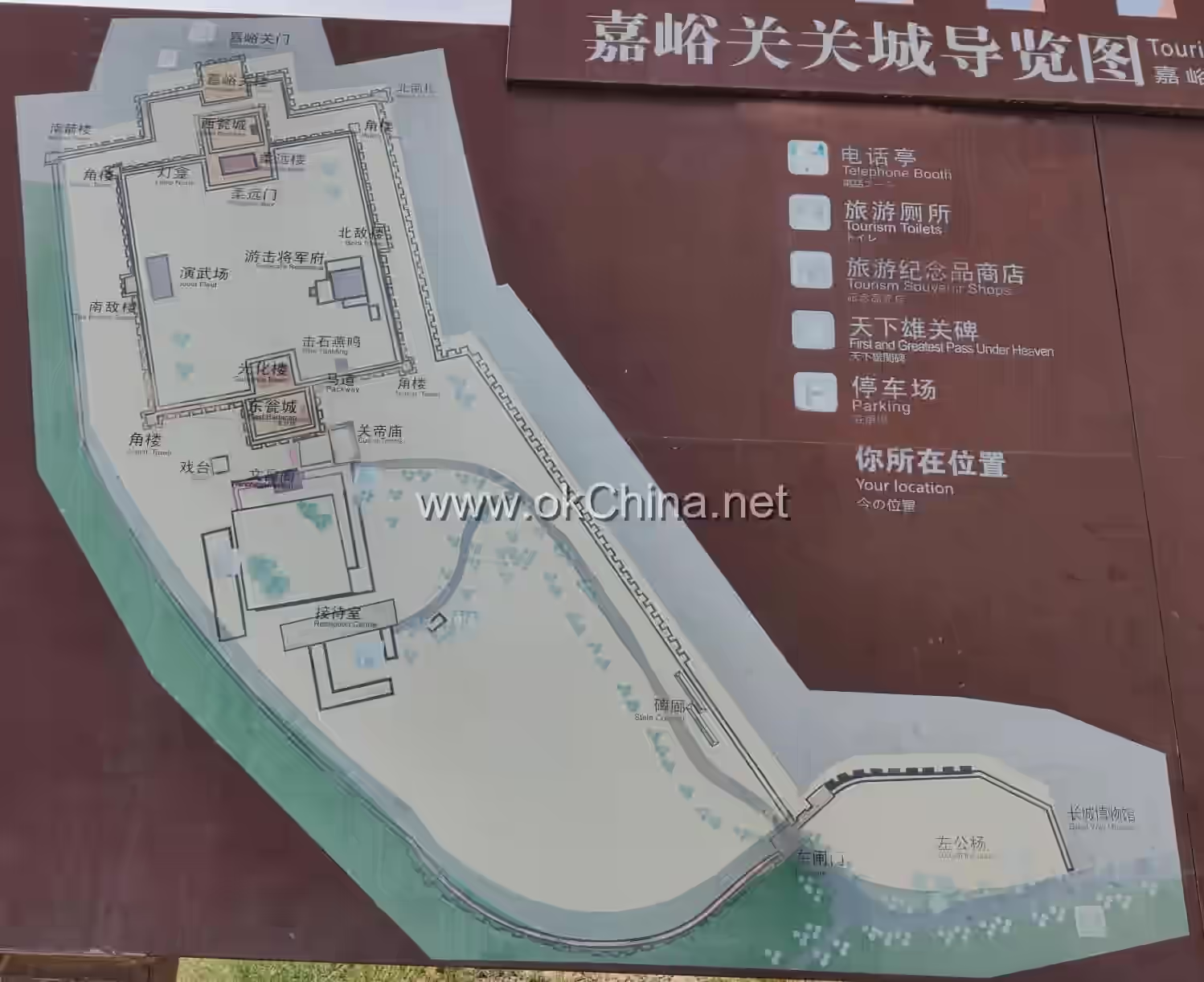
Jiayuguan features three overlapping lines of defense—the inner city, outer city, and moat—creating a formidable and tightly guarded structure. Integrated with the Great Wall, it forms a military defense system with beacon towers every five li, watchtowers every ten li, fortresses every thirty li, and a major fortress every hundred li. Initially, Jiayuguan was a 6-meter-high earthen city covering 2,500 square meters. The existing pass fortress covers over 33,500 square meters and consists of the outer city, inner city, and enceinte. The inner city walls are equipped with fourteen structures, including arrow towers, watchtowers, corner towers, pavilions, and sluice gates. Inside the pass, there are the游击将军府 (Youji Jiangjun Fu, a military office), a well pavilion, and the Wenchang Pavilion. Outside the east gate, there are the Guandi Temple, a memorial archway, and an opera stage.
Inner City
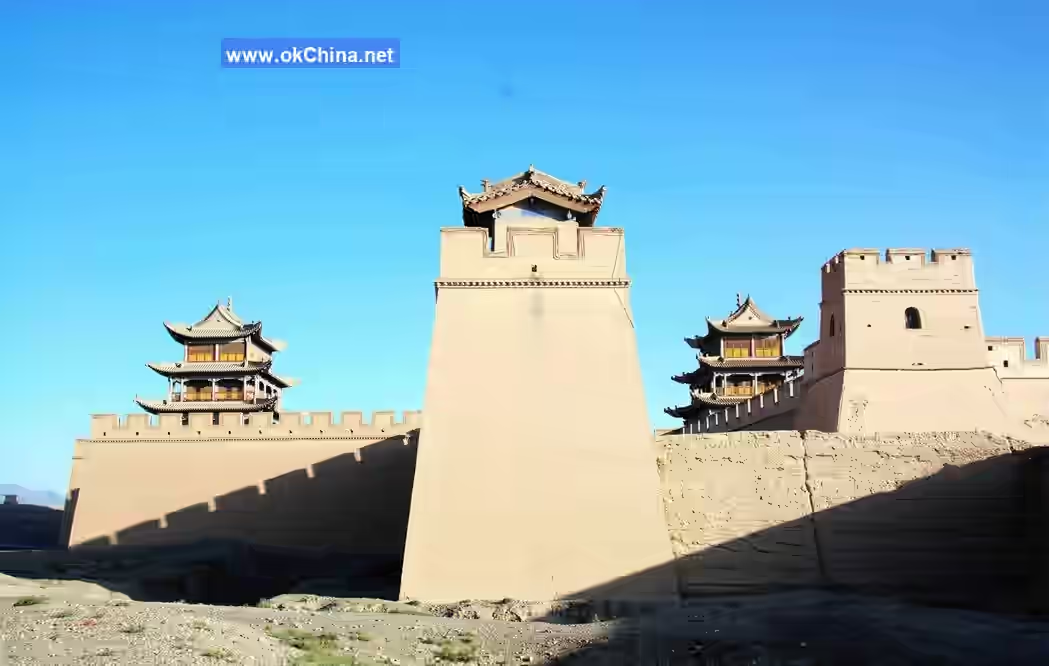
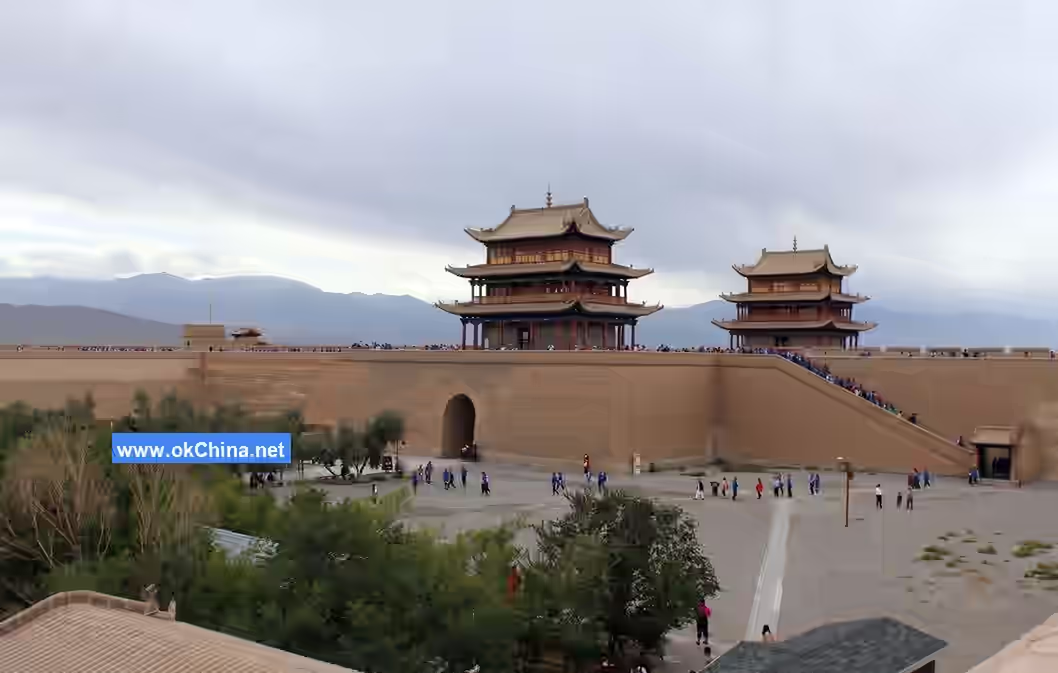
The inner city is wider in the west and narrower in the east, roughly trapezoidal in shape, with walls 9 meters high. It has two gates: the "Guanghua Gate" on the east and the "Rouyuan Gate" on the west. Each gate is protected by an enceinte. The gate towers are symmetrical, three-story, three-eaved, five-bay structures with corridors and single-eaved hip-and-gable roofs, standing 17 meters high. There are corner towers at the four corners of the city and watchtowers at the midpoints of the southern and northern walls, each a single-story, three-bay structure with a front corridor. Ramps on the north side inside both gates lead to the top of the walls.
Pass Fortress
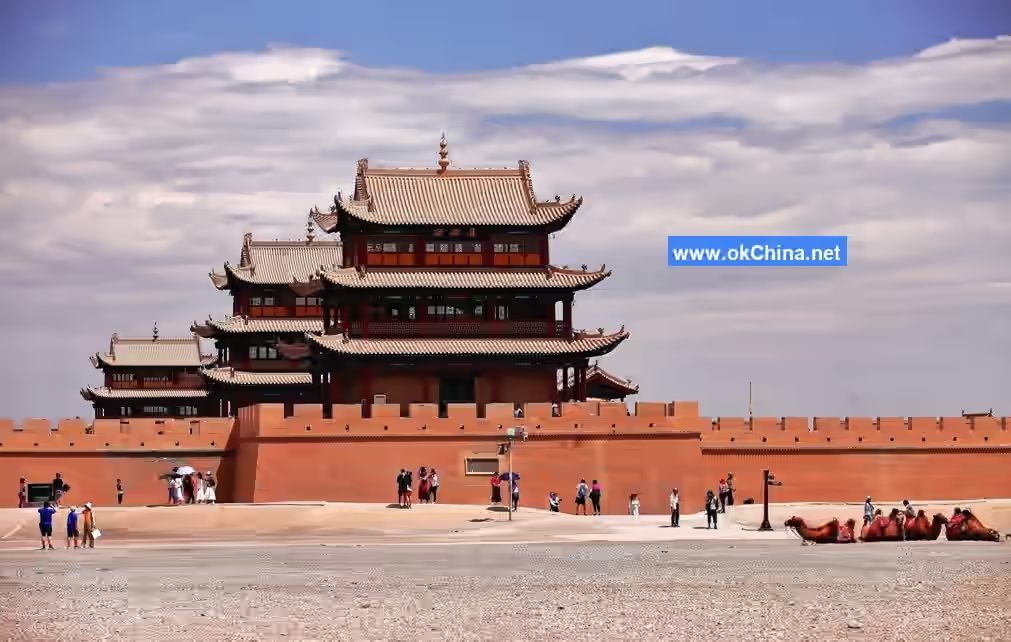
The pass fortress has a circumference of 733 meters. In the center of the fortress, there was an official well with a pavilion, now in ruins. Outside the west gate, a convex-shaped wall forms a barbican, which is the outer city. The outer city is 2.7 meters higher than the inner city. The main gate of the outer city bears the inscription "Jiayuguan" in large characters. Originally, there was a gate tower on top, identical in form to the eastern and western towers, with all three aligned east-west. This tower was destroyed in the thirteenth year of the Republic of China (1924). The western barbican is built of brick, while the eastern, southern, and northern sides have earthen walls connecting to the Great Wall. The structure features walls outside walls and multiple gates, creating a layered defense. Outside the east enceinte are the Wenchang Pavilion, Guandi Temple, and opera stage. Inside the fortress, near the north, is the游击衙门府 (Youji Yamen Fu, a Qing-era military office). Since the founding of the People's Republic of China, the pass fortress has undergone multiple repairs and reinforcements and remains well-preserved.
The pass fortress is centered on the inner city, which has a circumference of 640 meters, covers an area of 25,000 square meters, and stands 10.7 meters high. It is constructed of rammed earth, with the western side reinforced with brick, making it majestic and sturdy. The inner city has two gates: the east "Guanghua Gate" and the west "Rouyuan Gate," meaning "to pacify distant regions through gentle policies and bring stability to the western frontier." The gate platforms support three-story hip-and-gable roofed buildings. Each gate has an enceinte for protection. Outside the west gate is a barbican connected to the north and south walls of the outer city, with the "Jiayuguan" gate leading outside the pass, topped by the Jiayuguan Tower.
Defense System
Jiayuguan Pass Fortress is strategically located by mountains and rivers, guarding a canyon about 15 kilometers wide from north to south. The Taolai River Valley in the southern part of the canyon forms a natural defensive barrier. Around Jiayuguan, beacon towers and watchtowers are intricately arranged, with a total of 66 watchtowers along the eastern, western, southern, northern, and northeastern routes. The terrain of Jiayuguan is naturally advantageous for defense.
IV. Main Attractions
Opera Stage
The Jiayuguan Opera Stage was built in the fifty-seventh year of the Qianlong reign of the Qing Dynasty (1792 AD) under the supervision of General Daishiyi, the garrison commander of Jiayuguan. It served as an entertainment venue for the garrison troops, local residents, and passing merchants. Its design is typical of traditional Chinese classical opera stages. A wooden screen separates the front and back stages. The center of the screen is painted with eight figures, depicting the well-known "Eight Immortals." The ceiling features the traditional Chinese "Bagua Diagram" (Eight Trigrams), which reflects ancient Chinese thought, culture, and science. On both sides are a set of genre paintings depicting monks from temples, nuns from nunneries, and their pets—subjects rarely seen on other opera stages. Couplets on either side of the stage read: "Partings and reunions, joys and sorrows enact past events; Folly and wisdom, loyalty and treachery are recognized on this stage," summarizing the evolution of human affairs throughout history and the function of theatrical performance venues.
Rouyuan Gate
The west gate of the inner city, inscribed with "Rouyuan" (Pacify Distant Regions), signifies the Ming Dynasty's policy of "appeasement" towards the nomadic tribes beyond the frontier, aiming to pacify remote areas and achieve long-term stability.
Guanghua Gate
The east gate of the inner city, inscribed with "Guanghua Gate," faces east, symbolizing the rising sun and auspicious light shining upon the land. The gate passage is paved with stone slabs quarried from Heishan.Built in the first year of the Zhengde era of the Ming Dynasty (1506), it was constructed under the supervision of Li Duancheng, the Deputy Military Commissioner of Suzhou at the time. The Guanghua Tower is a three-story, three-eave structure with a hip-and-gable roof, standing 17 meters tall. It is exquisitely carved and decorated with vibrant colors. The first floor of the tower is made of brick and wood, while the second and third floors are constructed using traditional wooden mortise-and-tenon joints. Despite enduring nearly five centuries of wind, rain, earthquakes, and other natural disasters, it still stands majestically atop the fortress.
Wenchang Pavilion
The Wenchang Pavilion was originally built during the Ming Dynasty and reconstructed in the second year of the Daoguang era of the Qing Dynasty (1822). The pavilion is a two-story, two-eave structure with a hip-and-gable roof. The ground floor features single-room shops on both sides, surrounded by 18 bright red lacquered columns forming a corridor. Inside, there is an official hall with a width of three bays and a depth of two bays. The pavilion is adorned with lattice doors and windows on all sides, and the upper sections are decorated with over 80 colorful paintings depicting landscapes and figures. During the Ming and Qing dynasties, this pavilion served as a gathering place for scholars, poets, and artists to socialize, compose poetry, paint, and study. By the late Qing Dynasty, it had become an office for civil officials.
Guandi Temple
The Guandi Temple was relocated from the inner city to its current location during the late Ming and early Qing dynasties. Originally, the temple complex included a main hall, two side halls, as well as a weapon room, a passage hall, a stable, and a memorial archway, covering a total area of 720 square meters. The temple underwent multiple expansions, with the last major renovation overseen by Xiong Minqian, the游击将军 (mobile corps commander) of Jiayuguan. In 1998, the Jiayuguan Fortress Cultural Relics Management Office raised 700,000 yuan to restore the Guandi Temple, repainting the memorial archway and restoring the temple to its Ming and Qing-era splendor.
"First Pass Under Heaven" Stele
About a hundred meters outside the western gate of the fortress stands the "First Pass Under Heaven" stele, erected during the Qing Dynasty. In the 14th year of the Jiaqing era (1809), Li Tingchen, the Regional Commander of Suzhou, inspected the defenses of Jiayuguan. Impressed by the majestic scenery—with the Qilian Mountains to the south and the Heishan Mountains to the north—he inscribed the four characters "天下雄关" (First Pass Under Heaven) and had them carved into a stone stele.
Luocheng and Arrow Towers
Luocheng was initially built in the eighth year of the Hongzhi era of the Ming Dynasty (1495) under the supervision of Li Duancheng, the Military Commissioner of Suzhou. Luocheng served as the front line of defense, with its "凸"-shaped walls entirely brick-clad for exceptional strength. Arrow towers were constructed at the northern and southern ends of Luocheng to observe beacon fires from the west, south, and north of the fortress. These towers connected to the outer walls, which in turn linked to the Great Wall extending north and south from the fortress.
Corner Towers and Watchtowers
At the four corners of the inner city are corner towers, also known as garrison towers, which resemble blockhouses and served as lookout posts for soldiers. Watchtowers were built along the northern and southern walls to store weapons. From here, looking back, one can see the three grand structures—Guanghua Tower, Rouyuan Tower, and Jiayuguan Tower—aligned along a central axis. This architectural style, featuring tunnel-like gates and elevated towers, represents the continuation and development of thousands of years of Chinese architectural history and forms.
East and West Barbicans
The east and west barbicans of Jiayuguan are meticulously designed. The lintel of the east barbican gate is inscribed with the characters "朝宗," signifying that officials passing through, though traveling to the "remote frontier," remained loyal to the imperial court and the emperor. In contrast, the west barbican gate bears the inscription "会极," meaning that nobles, officials, merchants, and travelers from the Western Regions would gather here amicably, pass through, and pay tribute to the central plains dynasty. The west barbican gate also faces south, not directly aligned with the inner city gate, adding to the fortress's solemnity and depth while serving as an additional line of defense for the inner city.
Mobile Corps Commander's Residence
The Mobile Corps Commander's Residence at Jiayuguan, also known as the游击衙门 (mobile corps yamen), was originally built during the Longqing era of the Ming Dynasty. It later served as the office for the mobile corps commanders responsible for defending Jiayuguan during the Ming and Qing dynasties. The current structure was restored in 1987 based on the original design, featuring a two-courtyard, three-hall layout typical of a traditional Chinese siheyuan (courtyard house). It covers an area of 1,755 square meters, with a built-up area of 808 square meters.
In the ancient military history of Jiayuguan, the Mobile Corps Commander's Residence was not only the command center of the Jiayuguan Great Wall defense system but also a pivotal institution for the imperial court to govern the region, inspect merchants and envoys, and maintain connections with the Western Regions, Central Asia, and various ethnic minorities.
The restored exhibition at the Mobile Corps Commander's Residence is based on historical records, framed within the existing architecture, and primarily features hyper-realistic sculptures (polymer simulation sculptures) to depict the life and legacy of the Jiayuguan mobile corps commanders.
The First Beacon Tower of the Great Wall
The First Beacon Tower of the Great Wall, also known as the Taolai River Beacon Tower, was constructed in the 18th year of the Jiajing era of the Ming Dynasty (1539) under the supervision of Li Han, the Military Commissioner of Suzhou. It is the first beacon tower of the Ming Dynasty Great Wall from west to east, marking the western starting point of the Ming Great Wall and serving as a crucial component of the Jiayuguan defense system. Located 7.5 kilometers north of the fortress, the tower stands atop an approximately 80-meter-high cliff by the Taolai River.
During the Ming Dynasty, Jiayuguan oversaw 39 beacon towers categorized as "腹里" (inner), "沿边" (border), and "境外" (beyond the border). The beacon towers within the fortress were densely distributed, interconnected, and mutually visible, facilitating the exchange of military intelligence. The First Beacon Tower was the most important tower in the southern region, responsible for relaying military information from the southern passes and the Qilian Mountain passes. It was equipped with facilities such as barracks, post horses, camels, lodging, and fuel supplies, and was manned by a contingent of guards. As a key military stronghold of Jiayuguan, the First Beacon Tower has witnessed many legendary tales alongside the majestic fortress. A poem describes it: "The clear Taolai River flows by the perilous cliff, the mighty Qilian Mountains cut through the aura of war. Armor and icy rivers echo with the sounds of battle, banners dance in the morning sun like giant rocs."
The First Beacon Tower scenic area covers approximately 3.22 square kilometers. It includes the First Beacon Tower, a comprehensive service area, the Taolai River zip line, Taolai Inn, the perilous suspension bridge, the "Drunk on the Battlefield" sculpture group, and the "Chinese Dragon Forest."
Overhanging Great Wall
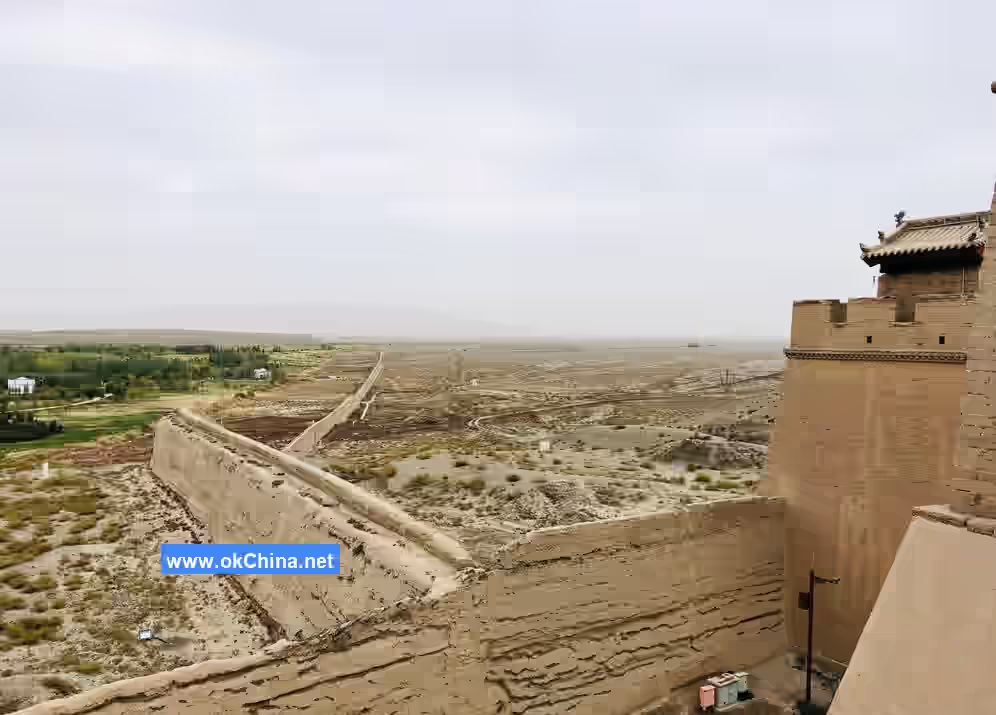
Shiguan Gorge, also known as Shuiguan Gorge, lies between the snow-capped Qilian Mountains to the south and the towering Heishan Mountains to the north. The Broken Wall Great Wall and the Overhanging Great Wall are significant components of the western Great Wall of Jiayuguan, constructed in the 19th year of the Jiajing era of the Ming Dynasty (1540) under the supervision of Li Han, the Military Commissioner of Suzhou. The Broken Wall Great Wall is located south of the Heishan Gorge entrance, running east-west. The Overhanging Great Wall is situated north of the gorge, running north-south. Its steep, straight, and imposing walls hang like suspended arms, earning it the nickname "Western Badaling." These two sections of the Great Wall form a defensive arc, jointly guarding the Heishan Gorge entrance.
The Overhanging Great Wall cultural relics scenic area is located 14 kilometers northwest of Jiayuguan City, 8.4 kilometers from the Jiayuguan Fortress. The theme of the scenic area revolves around the ancient Silk Road culture and Great Wall culture. Key attractions include the Overhanging Great Wall, which embodies Great Wall culture, the "Silk Road" sculpture group representing ancient Silk Road culture, and the Jiayuguan Ancient Weapons Exhibition.
The ancient Silk Road cultural corridor runs through the entire scenic area, featuring the "Silk Road" sculpture group. The Overhanging Great Wall military defense system area includes the Overhanging Great Wall, the water gate, and the ancient weapons exhibition. The newly built section of the Great Wall, between the Overhanging Great Wall and the water gate, spans 158 meters and is constructed using rammed earth mixed with stone chips and sand.
Comments
Post a Comment