Jianmen Pass
1. Introduction
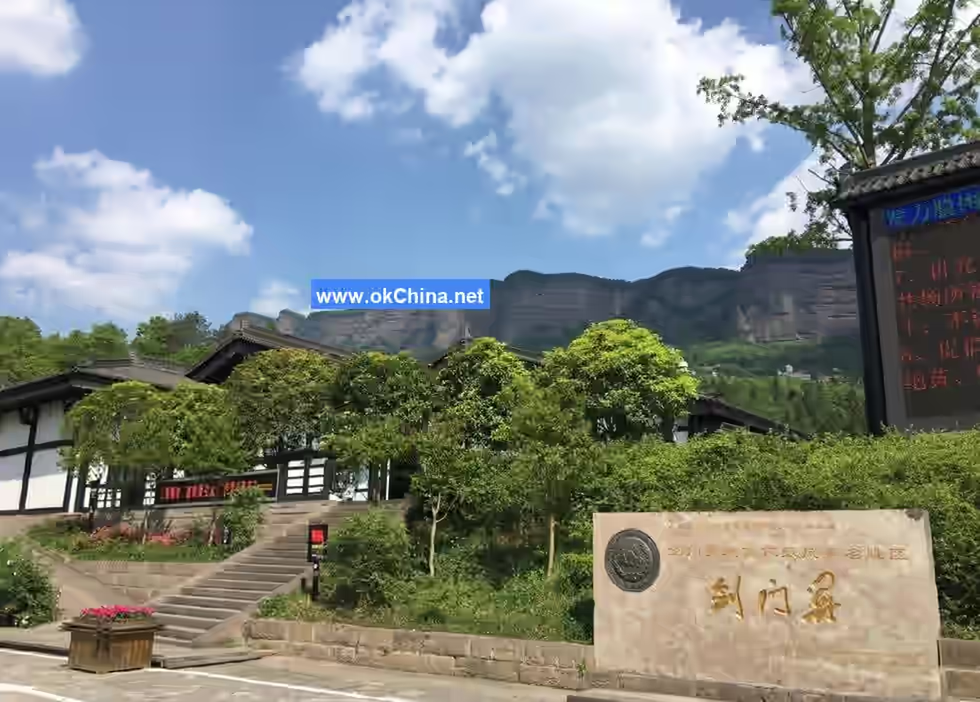
The Jianmen Pass Scenic Area of the Jianmen Shu Road in Guangyuan City is located in the northern part of Jiange County, Guangyuan City, Sichuan Province. It consists of two adjacent scenic areas: Jianmen Pass and Cuiyun Corridor. It is a National Scenic Area, a National Red Classic Tourist Attraction, a National Dual Heritage site (Natural and Cultural), and is included in the Tentative List for World Cultural Heritage in China. The Jianmen Pass scenic area covers 84 square kilometers, with a core area of 6 square kilometers.
The terrain of the scenic area is high in the northwest and low in the southeast, featuring primarily peak cluster Danxia landforms and the world-rare wall-like conglomerate cliff landscape. Its geomorphological characteristics can be summarized as "majestic, perilous, steep, and peculiar." The area has a subtropical humid monsoon climate with distinct seasons, abundant rainfall, frequent semi-cloudy and semi-foggy conditions, and significant daily temperature variations. The rivers in the scenic area belong to the Jialing River system, with the Jianxi River cutting through the mountains, and numerous waterfalls and valleys. The area is part of the Sichuan Pine-Oak Forest sub-region, with forest coverage exceeding 92%.
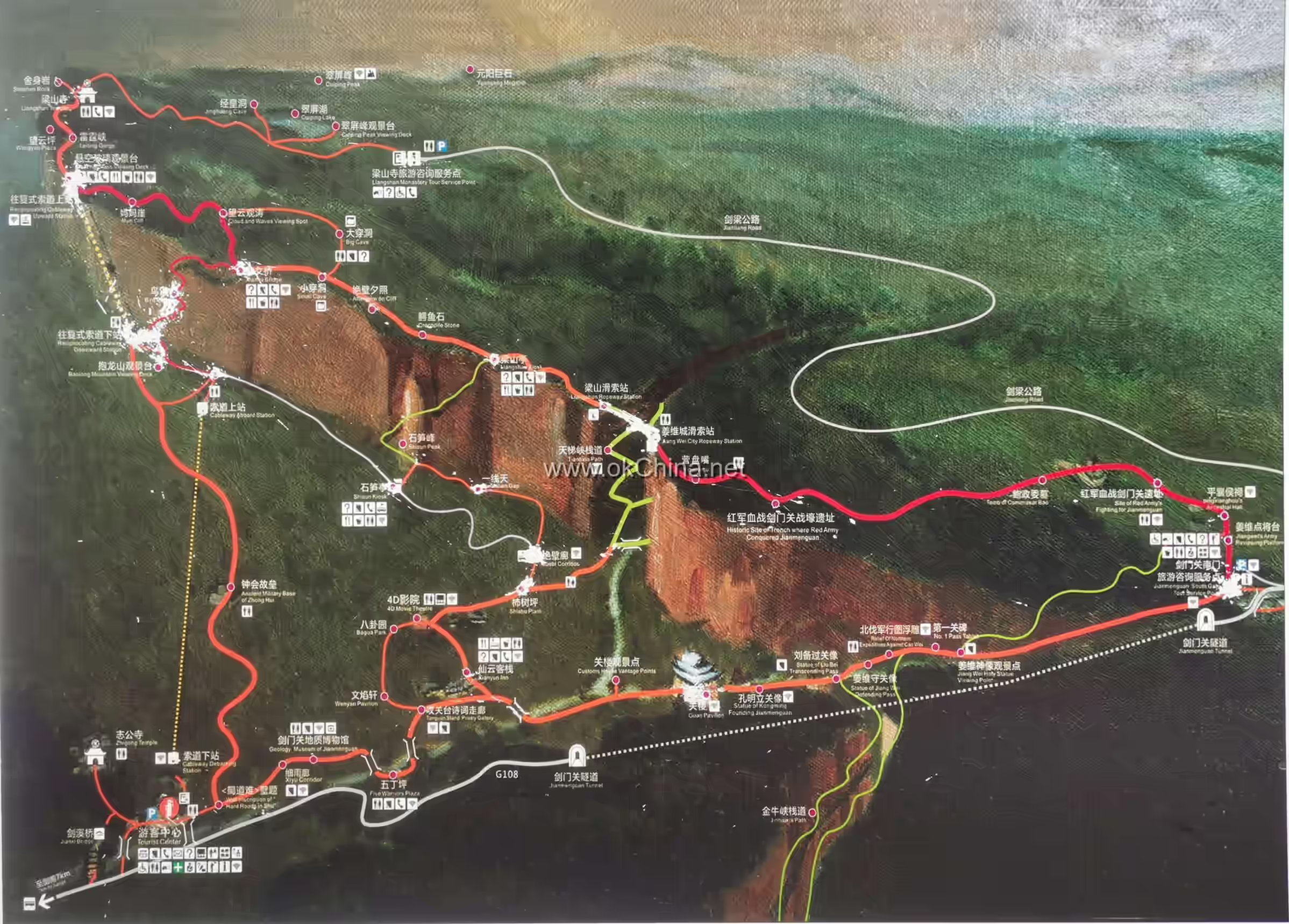
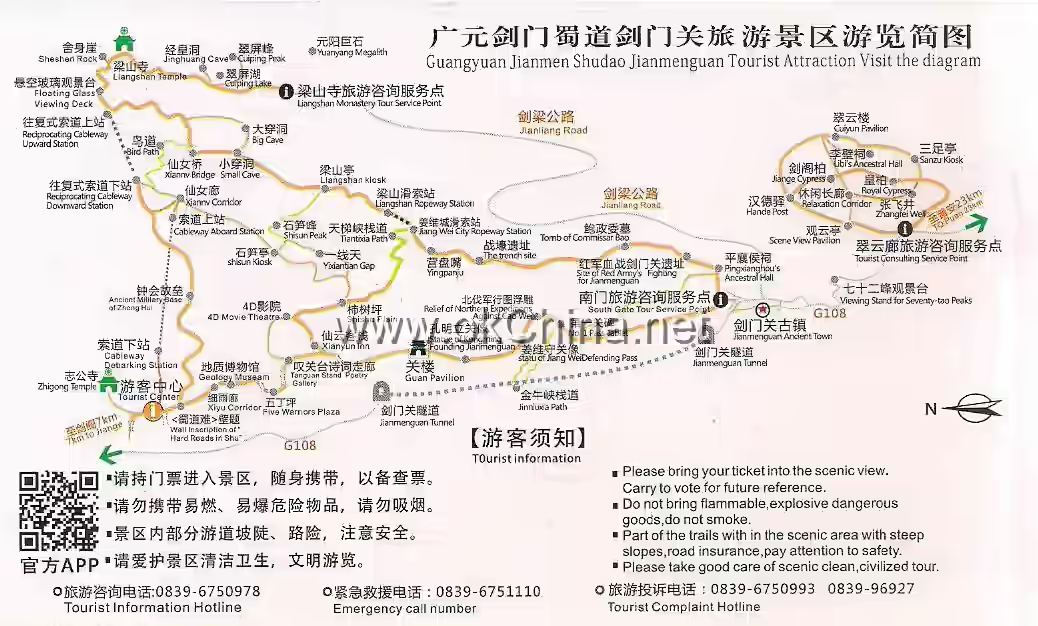
During the Three Kingdoms period, Zhuge Liang built a gate between the cliffs of the Dajian Mountain by piling stones against the precipice, established a guard post, and set up defenses, turning it into a strategic military pass. After the Tang Dynasty, it began to be called Jianmen Pass. The scenic area integrates Shu Road culture, Three Kingdoms culture, pass culture, and red culture. It was a contested strategic point for military strategists throughout history and boasts over 300 viewing spots, including the Jianmen Pass Tower, Seventy-Two Peaks, Jiang Wei's Tomb, Jinniu Road (Golden Ox Road), Liangshan Temple, Bird's Path, and the Glass Viewing Platform.
The scenic area is a National AAAAA Tourist Attraction. Its ancient Jinniu Shu Road is known as the "living fossil of world land transportation" and is one of the earliest preserved large-scale transportation relics of humanity. The Jianmen Pass itself is hailed as the "Most Impregnable Pass Under Heaven" and the "Number One Pass Under Heaven." It was never breached by frontal assault in the era of cold weapons and is considered the world's foremost natural strategic pass. The area is also a National Key Cultural Relics Protection Unit, a National Forest Park, a Sichuan Provincial Nature Reserve, and a Sichuan Provincial Geological Park.
2. Geographical Environment
2.1 Location and Area
The Jianmen Pass Scenic Area is located at No. 64 Hedong Street, Jiange County, Guangyuan City, Sichuan Province. Its geographical coordinates are 32°08'10''-32°16'35''N, 105°26'40''-105°37'54''E. It covers an area of 84 square kilometers, with a core area of 6 square kilometers.
The Jianmen Pass Scenic Area is approximately 480 kilometers north of the ancient capital Xi'an, 150 kilometers south of Langzhong, about 400 kilometers south of Chongqing, about 250 kilometers southwest of Chengdu, and about 350 kilometers northwest of Jiuzhaigou. It is an important node on the Sichuan Great Jiuzhaigou Ring Road and a supporting center for the Shu Road Three Kingdoms Culture Boutique Tourism Route. The scenic area is only 21 kilometers from Guangyuan Airport. The Beijing-Kunming Expressway, Baoji-Chengdu Railway, and Xi'an-Chengdu High-Speed Railway pass through the area, while the Lanzhou-Haikou Expressway and Lanzhou-Chongqing Railway run nearby.
2.2 Topography and Landforms
The Jianmen Pass scenic area belongs to the monoclinic medium-low mountain narrow valley region in northern Jiange County. The Dajian Mountain it resides in is part of the Jianmen Mountain Range, a branch of the Longmen Mountains. The terrain is high in the northwest and low in the southeast, roughly elliptical in plane, dominated by low mountain landforms, with an average elevation of 1,069 meters. The area features a monoclinic mountain with a steep northern slope and a gentle southern slope. Where conglomerate rock is exposed, it often forms sheer cliffs and precipices. The mountains are high and perilous, with deep ravines and narrow valleys. The relative height difference is about 300-600 meters, with the maximum difference at Sheshen Cliff near Liangshan Temple. Its geomorphological characteristics can be summarized as "majestic, perilous, steep, and peculiar": towering ridges and dangerous cliffs stretch for hundreds of li; its conglomerate rock walls rise sheer from the ground, with perilous peaks, cliffs, treacherous paths, and deep gorges; the conglomerate rock paths are steep, winding, and strewn with jagged rocks.
The main combination form of the Danxia landform in Jianmen Pass is the peak cluster type, characterized by upright Danxia peak clusters with connected bases, featuring flat tops, steep bodies, and gentle foothills. Other Danxia landscape features within the area include cliffs like the Jianmen Precipice, Dadi Cliff, and Sheshen Cliff; gorges like Jianmen Pass, Houguanmen, and Jinniu Gorge; stone pillars like the Jiang Wei Statue, Stone Bamboo Shoot Peak, and Small Stone Bamboo Shoot Peak; caves like Shuangchuan Cave and Dakeng Cave; and a small portion of karst landforms. Influenced by neotectonic movements, the Danxia peak clusters formed near-vertical precipices like the Jianmen Precipice and high mountain gorges, composing a unique wall-like conglomerate cliff landscape. These individual features connect to form continuous stretches with varied forms, each constituting its own scenic view. Among them, the Xiaojian Mountain and Dajian Mountain are chain-like pyramidal conglomerate peak clusters, representing the most majestic and perilous conglomerate Danxia landform in China, with the highest vertical drop of the precipices reaching 500 meters.
2.3 Geology
2.3.1 Strata and Lithology
The Jianmen Pass scenic area widely distributes variegated terrigenous clastic rocks formed under hot and humid climatic conditions during the Early Cretaceous and Late Jurassic periods. The exposed strata from bottom to top include the Middle Jurassic Shaximiao Formation, the Upper Jurassic Lianhuakou Formation and Suining Formation, and the Lower Cretaceous Jianmenguan Formation.
The Jianmenguan Formation of the Chengqiangyan Group (also known as the Cangxi Formation), also called Jianmenguan Conglomerate, has lithology divided into upper and lower sections. The lower section consists of interbedded massive conglomerate, pebbly sandstone, and brick-red silty mudstone. The upper section consists of light gray thick-bedded sandstone interbedded with brick-red siltstone and mudstone. The lithological combination characteristics of the Jianmenguan Formation are: first, from bottom to top, the conglomerate layers decrease, the grain size of the conglomerate becomes smaller, and sandstone and mudstone gradually increase; second, the strata form an unevenly southeast-dipping monocline structure, with a steep northern slope and a gradually gentler southern slope.
2.3.2 Geological Structure
The Jianmen Pass scenic area is situated at the northern apex of the Yanshan Fold Zone within the Sichuan Central Depression. It is a Jurassic-Cretaceous monocline structural area, located on the northern margin of the Yangtze Platform and the southeastern side of the Longmen Mountain Thrust Nappe Structural Belt. During the Sinian period, under cyclic movements, the Sichuan Basin subsided in the Middle Triassic, forming a marine sedimentary basin. Later, through the Indosinian movement, the Longmen Mountain island chain rose, forming a continental sedimentary basin. During the Quaternary period, the Himalayan orogeny and the uplift of the Qinghai-Tibet Plateau intensified successively. Coupled with movements of the Longmen Mountain structural belt, the present-day Jianmen Pass scenic area gradually formed.
The material carrier for the development of Danxia landforms is red beds, which are basically composed of terrigenous clastics. The Danxia landform in the Jianmen Pass scenic area is in a transitional stage from juvenile to youthful Danxia. The material basis for its formation is the rock debris accumulated due to the thrust nappe tectonic movements of the Longmen Mountains. The reasons for the formation of the Danxia landform in Jianmen Pass include multiple phases of tectonic movement, fluvial erosion, weathering, and gravity.
2.4 Climate
The Jianmen Pass scenic area has a subtropical humid monsoon climate with abundant rainfall, distinct seasons, frequent semi-cloudy and semi-foggy conditions year-round, significant daily temperature variations, ample sunshine, and a long frost-free period. The multi-year average temperature is 14.0°C, and the average annual precipitation is 1,100 mm. The rainy season is from May to October, accounting for 87.4% of the annual rainfall. The frost-free period is 275 days. Snowfall is concentrated in January and February, with more snow accumulation in areas above 800 meters elevation. Cloudy and foggy weather is more common in autumn and winter, making it difficult for sunlight to reach the ground. The relative humidity is 74%, and the prevailing wind direction is northeast.
2.5 Hydrology
The Jianxi River cuts through the Jianmen Mountains. The cliffs and precipices in the scenic area often feature valley waterfalls, and there are numerous gullies. The streams are short, with tributary gullies arranged obliquely on both sides of the main valley, forming a feather-like drainage pattern.
The rivers within the scenic area belong to the Jialing River system. Among them, the Jianxi River is a major tributary of the Qingjiang River. Its upper reaches have a large natural drop, small catchment area, and low flow, while the lower reaches have higher flow, with abundant water sources during the flood season. Due to the hydrogeological characteristics of the "red beds," the water-bearing capacity of the land in the scenic area is not strong, and groundwater resources are relatively scarce. Groundwater types include pore water in the accumulation layers along river banks, weathered fissure water, clastic rock fissure water, and interlayer fissure water, with weathered fissure water being the most common. The groundwater has shallow burial depth, short runoff, and is mainly recharged by precipitation.
2.6 Biodiversity
The Jianmen Pass scenic area is a National Forest Park, National Scenic Area, National Natural Heritage site, and a Sichuan Provincial Nature Reserve. It is located in the subtropical evergreen broad-leaved forest region, specifically the Sichuan Pine-Oak Forest sub-region. The forest is composed of evergreen conifers like cypress and pine, deciduous broad-leaved trees like alder and oak, and a small number of miscellaneous trees such as poplar, tung, maple, and elm. The forest coverage exceeds 92%.
2.6.1 Plants
The soil in the crevices and caves of the Jianmen Pass scenic area is fertile, free from industrial pollution, and water resources are abundant, making it highly conducive to the growth of plant communities. The scenic area has approximately over 500 species of woody plants and over ten species of herbaceous plants. Among them are Grade II protected trees like the ginkgo, Grade III protected trees like the Jiange cypress and red sandalwood, as well as rare plants like ancient cypresses (generally 400-1000 years old), lacebark pine, Chinese horse chestnut, camphor tree, dove tree, and Jianmen orchid.
2.6.2 Animals
The Jianmen scenic area has 224 species of wild animals, including 47 species of mammals, 84 species of birds, 12 species of reptiles, 6 species of amphibians, and 75 species of fish. There are 25 species of wild animals under national key protection, including the leopard, golden pheasant, macaque, musk deer, red panda, turtle, and Jianmen hwamei (a type of babbler). Other animals include loaches, eels, turtles, softshell turtles, and great tits.
3. Important Attractions
3.1 Jinniu Road (Golden Ox Road)
Jinniu Road, also known as Shiniu Road or the Pre-Qin State Road, is one of the southern sections of the ancient Qin-Shu roads. Built during the Pre-Qin period, it got its name from the story of the Qin king attacking Shu, involving stone oxen excreting gold and five strongmen opening the road. It is the most important road in the Sichuan-Shaanxi region and the first road in ancient Shu history recorded in historical texts. Approximately 600 kilometers long, it is known as the "living fossil of world land transportation" and is one of the earliest preserved large-scale transportation relics of humanity, dating back over 3,000 years. Jinniu Road was the main artery of the Northern Tea Horse Road crossing the Qinling and Bashan mountains. Primarily government-operated, it carried the political missions of enriching the state and strengthening the military, conducting foreign affairs, and fostering ethnic unity.
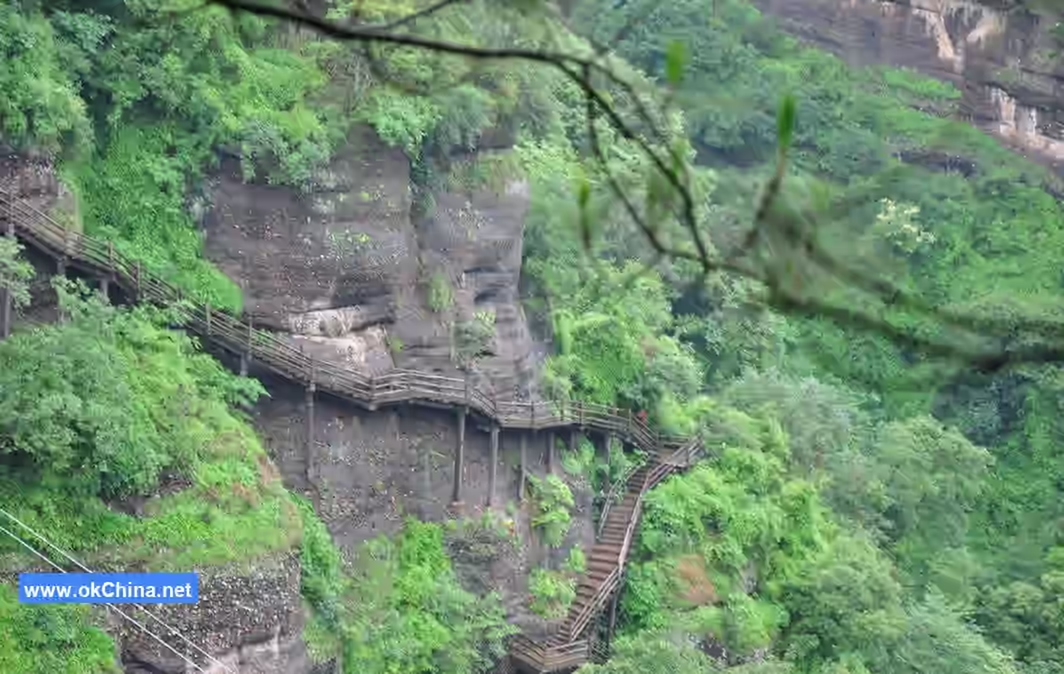
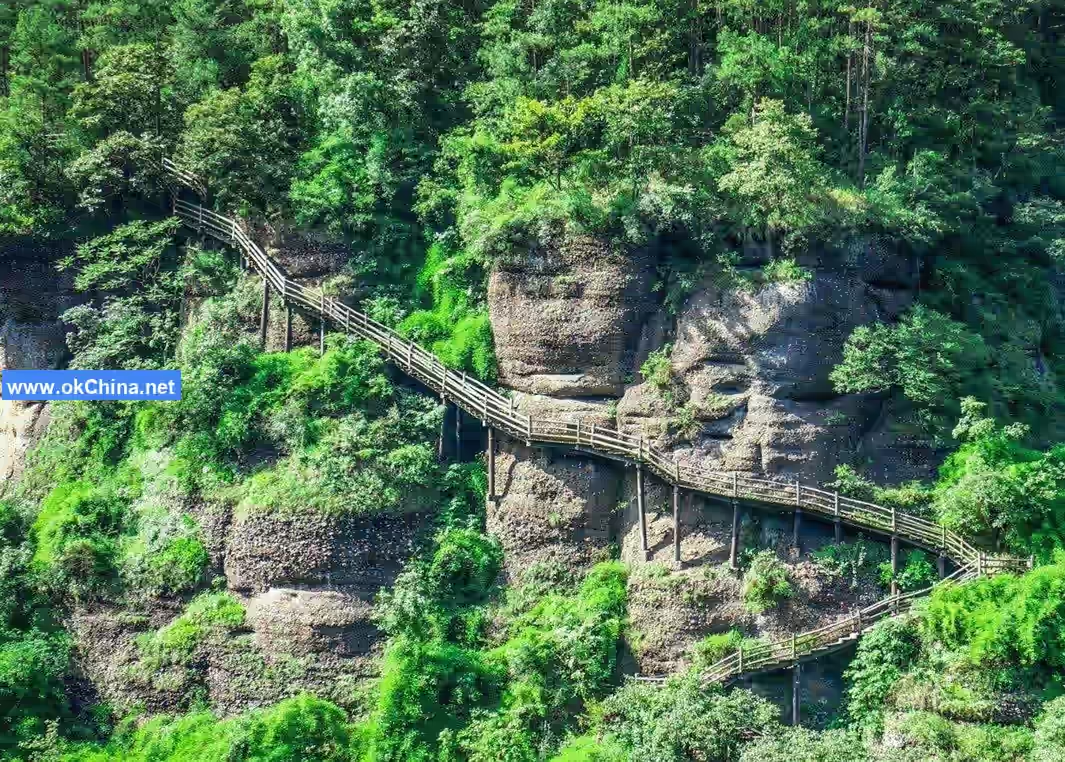
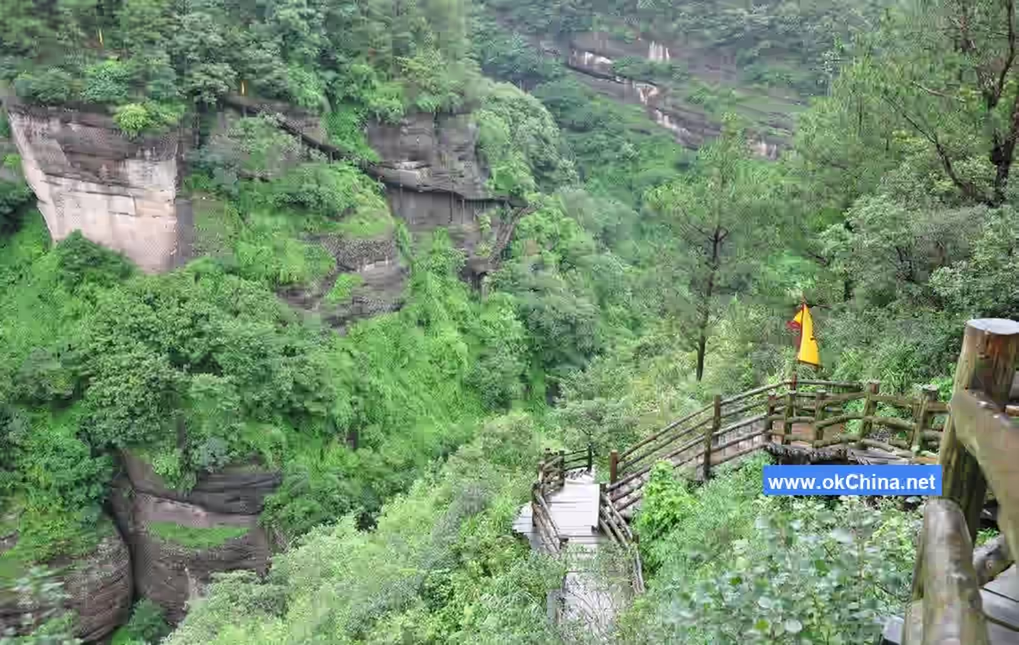
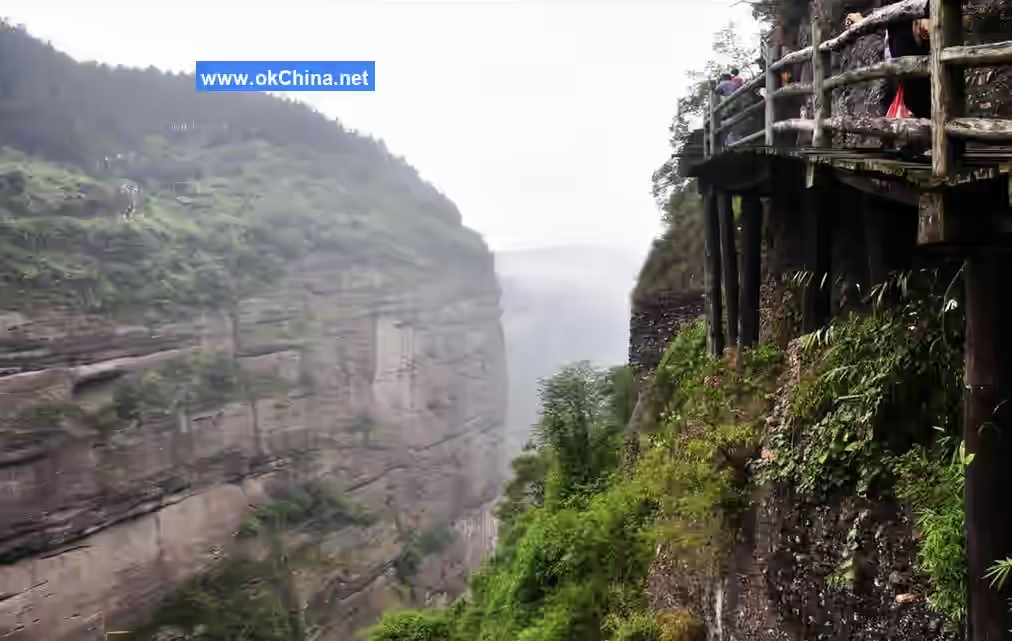
Jianmen Pass guards the throat of Jinniu Road. The section of Jinniu Road within the scenic area is called the Jinniu Plank Road, with wooden guardrails and decking. The narrowest parts are less than two feet wide.### 3.2 Cuiyun Corridor
Cuiyun Corridor, initially constructed during the Qin and Han Dynasties and completed in the Ming Dynasty, connects present-day Jiange County and Zitong County. It is part of the Jinniu Road and boasts the most well-preserved, largest in area, and most numerous ancient artificial roadside tree grove in China to date. The oldest cypress trees in Cuiyun Corridor are over 2,300 years old, and there are more than 7,000 such millennia-old cypress trees within Jiange County alone. Known as the "Soul of the Shu Roads," Cuiyun Corridor is thus celebrated as a "Wonder of the Shu Roads" and a "Living Fossil Forest."
3.3 Marquis Pingxiang Shrine
Also known as the Jiang Wei Shrine, the Marquis Pingxiang Shrine consists of a front courtyard housing the Wusheng Palace and a rear courtyard containing the Zhongqin Shrine. The Jiang Wei Tomb within is a cenotaph built by later generations. Its original construction date is unknown. Originally built with stone, it measures 2.8 meters long, 2 meters wide, and 1.5 meters high. It is a key cultural relic protection unit of Guangyuan City.
3.4 Red Star Square
Completed in 2009, the Jianmen Pass Red Star Square includes the Red Army's Capture of Jianmen Pass Monument, the Red Army's Capture of Jianmen Pass Memorial Hall, sculptures of generals and commanders, and stone-carved slogans. Among these, the site of the Red Army's Fierce Battle at Jianmen Pass is a national patriotic education base and one of the 100 red tourism scenic spots.
The Red Army's Capture of Jianmen Pass Monument features a group of vividly realistic and high-spirited bronze statues of Red Army soldiers as its main sculpture. The base of the monument is inlaid with eight relief carvings depicting major battles of the Red Army in the Jianmen mountainous area and the establishment of political power. Below these eight reliefs are inscribed the names of over 1,200 Red Army martyrs who sacrificed their lives in the battlefields to establish the Jiange Soviet Area. The base is also adorned with eight white marble reliefs illustrating scenes such as the Red Army's Forced Crossing of the Jialing River, the Bloody Battle at Huoshao Temple, Female Red Army Soldiers at Jianmen, the Fierce Battle at Jianmen Pass, the Fish-Water Relationship Between the Army and the People, the Great Victory at Jianmen Pass, the Jiange Conference, and the Soviet Regime.
3.5 Jianmen Pass Tower
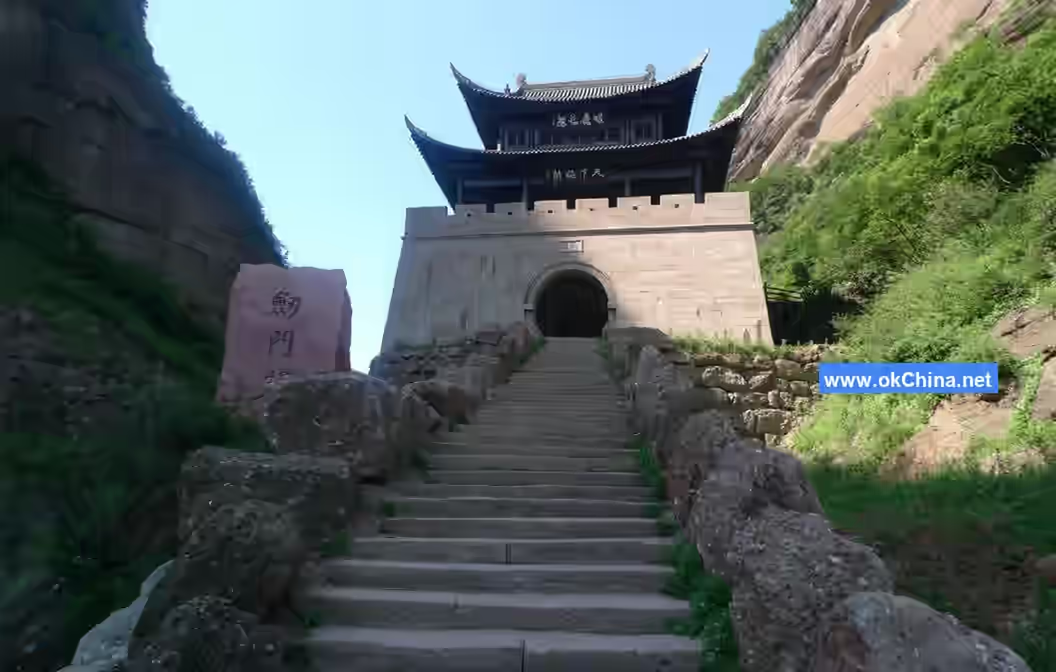
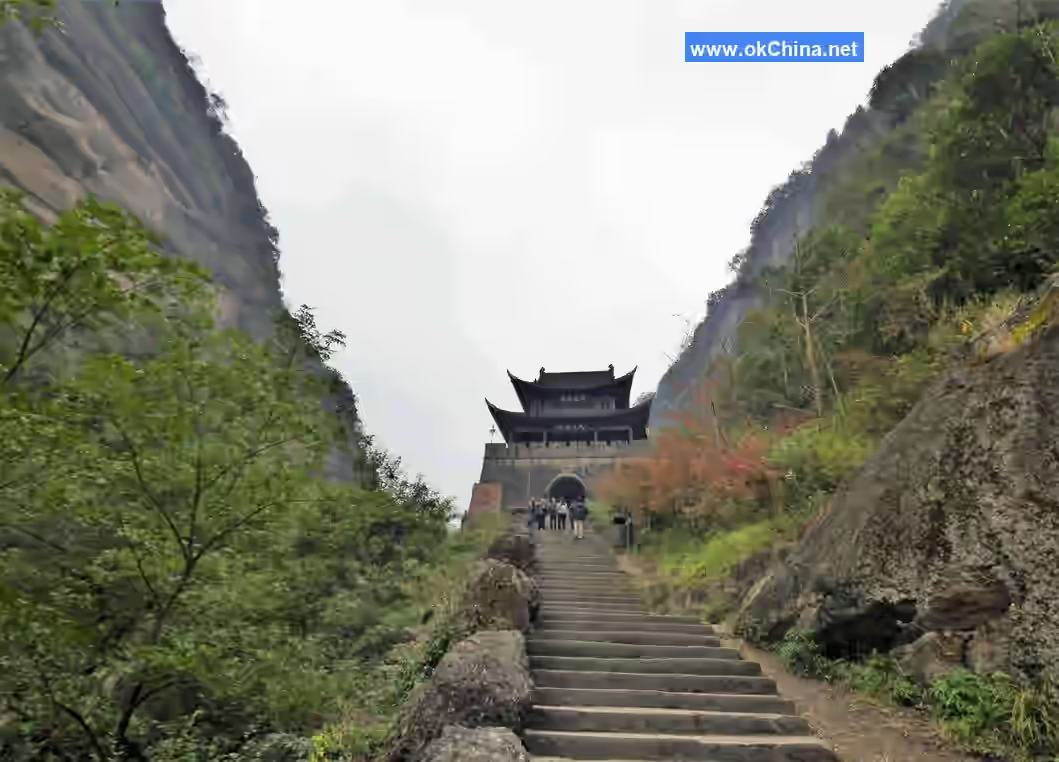
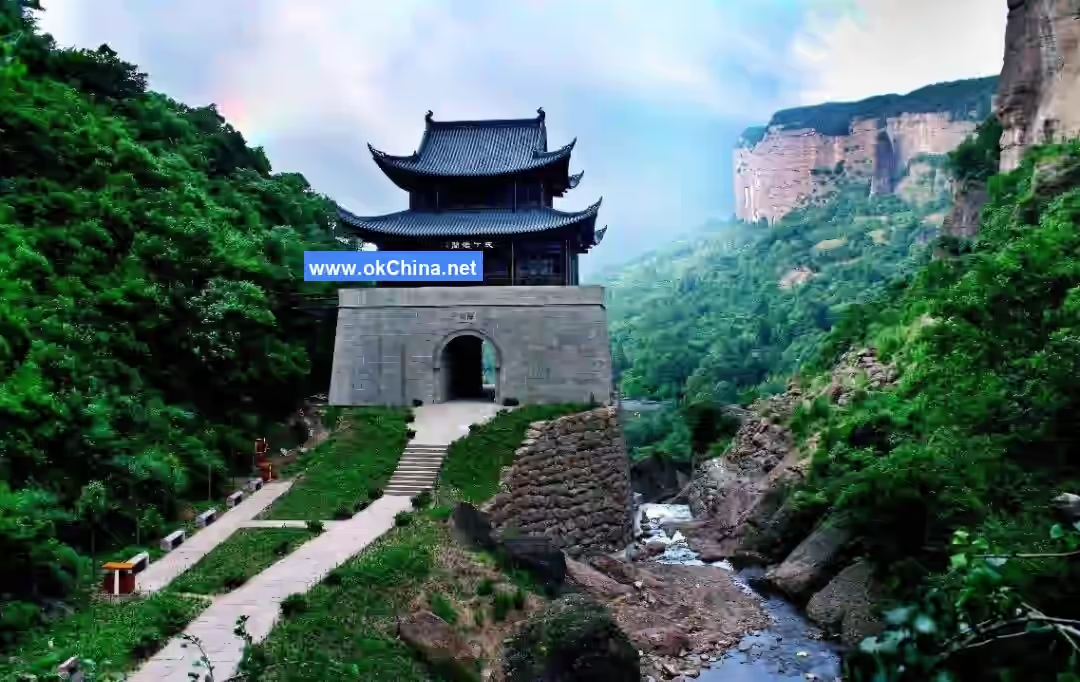
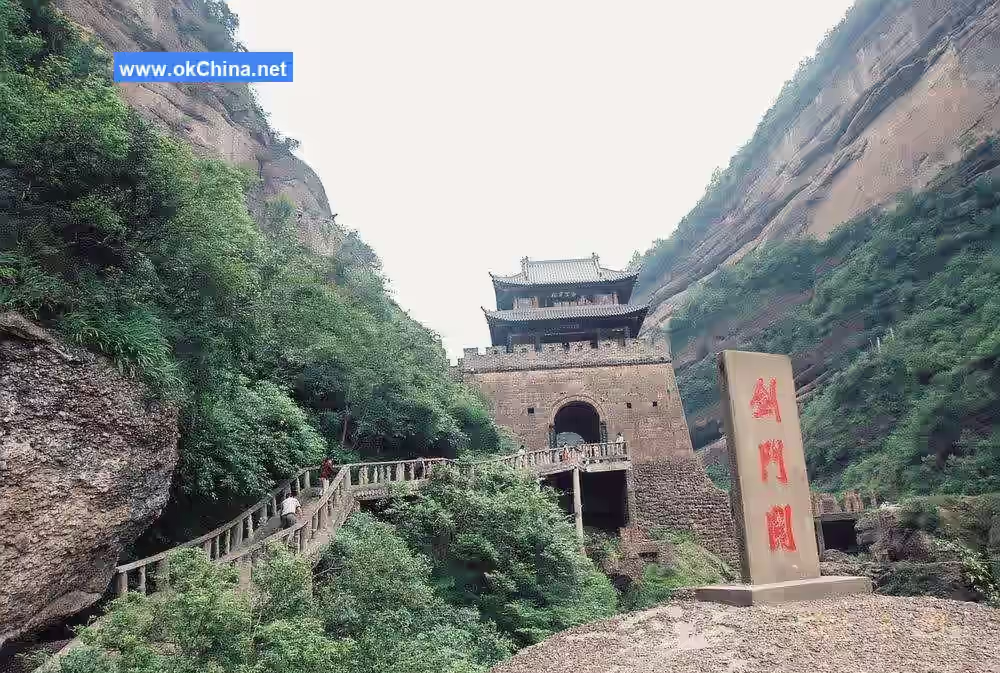
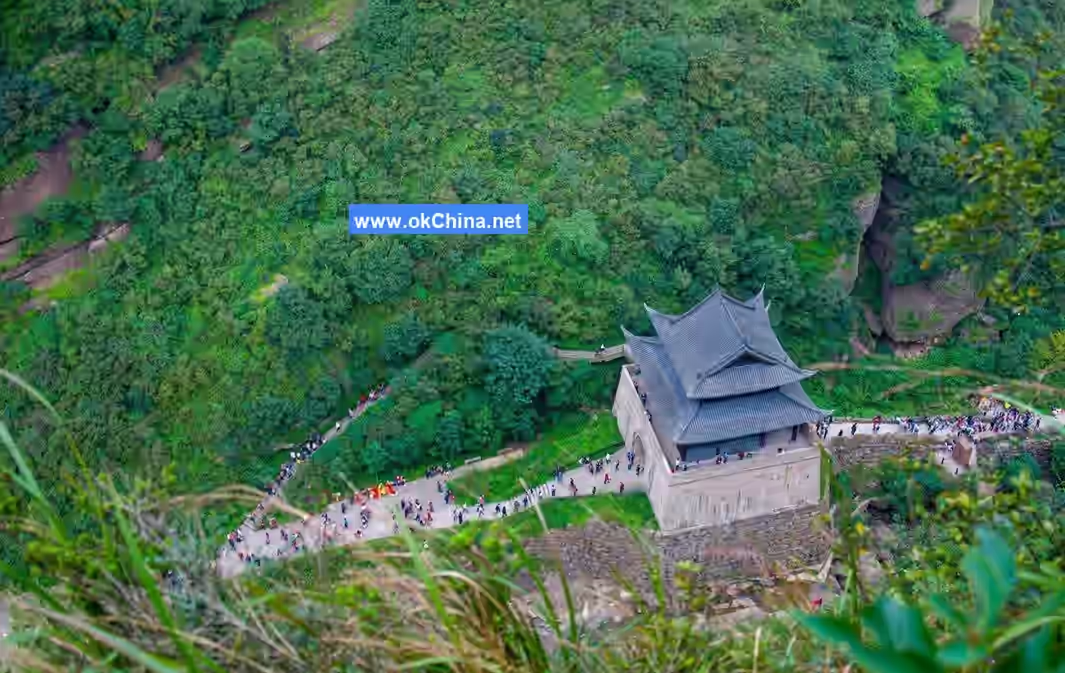
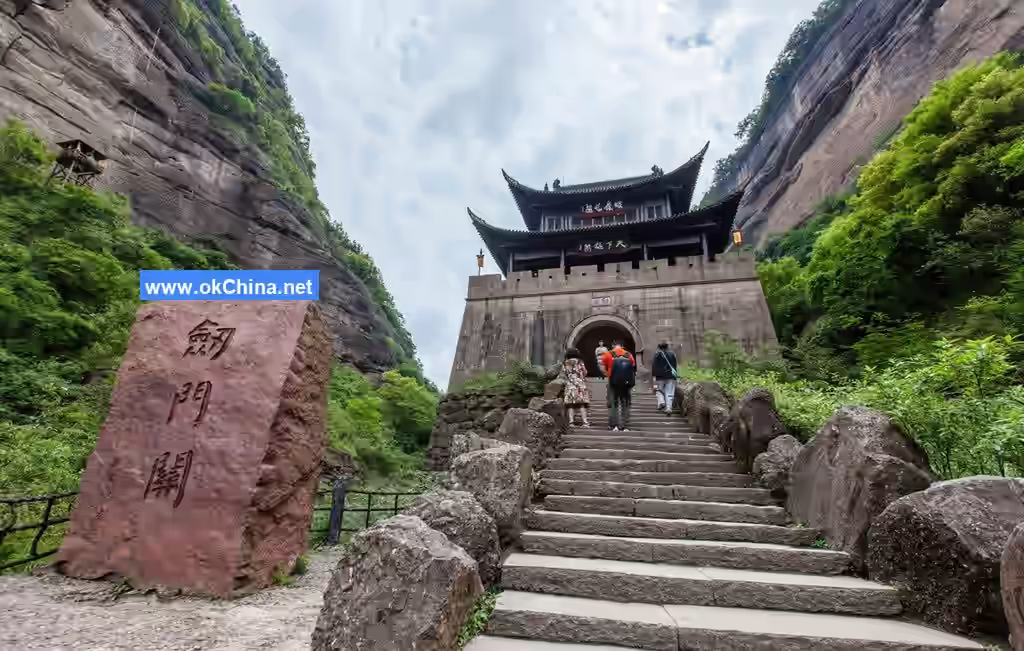
For over 1,700 years, the Jianmen Pass Tower has been repeatedly built and destroyed, only to be rebuilt again. The last reconstruction during the early Republic of China era, overseen by County Magistrate Zhang Zheng, was demolished in 1935 during the construction of the Sichuan-Shaanxi Highway. The tower built in early 1992 was destroyed during the 2008 Wenchuan Earthquake. The current tower is a restoration and reconstruction on the original site of the Qing Dynasty tower, completely modeled after the architectural style of the Ming Dynasty tower. The restored tower consists of three levels: the bottom level is an arched gateway passage built with brick and stone, paved with bluestone, with the characters "剑阁" (Jiange) embedded in the center of the lintel, allowing several people to enter side-by-side. The second level is an arrow tower, with a plaque inscribed "天下雄关" (The World's Most Strategic Pass) hanging on the lintel. The arrow tower is surrounded by accessible walkways for patrolling, guarding, and shooting, equipped with lookout ports and shooting holes. The top level is a watchtower, with a plaque inscribed "眼底长安" (Chang'an in Sight) hanging above the north gate.
3.6 Yuannao Path and Bird Path
Since ancient times, the Yuannao Path and Bird Path have served as routes for monkeys climbing cliffs and mountains and as convenient paths for local people in the Jianmen Pass mountainous area to gather herbs. Today, they have become popular check-in spots within the Jianmen Pass Scenic Area for experiencing the perilous charm of the Shu Roads.
Li Bai: "To the west of Taibai Mountain lies a bird path, / By which one can cross to the summit of Emei Peak." The Bird Path is built along the sheer cliff face, with a vertical height difference of over 110 meters. It is 900 meters long, only 30 centimeters wide, narrowing to about 15 centimeters at its tightest points. With solid rock walls on the left and a cliff over a hundred meters high on the right, it is characterized by its danger, steepness, and uniqueness.
3.7 Glass Viewing Platform
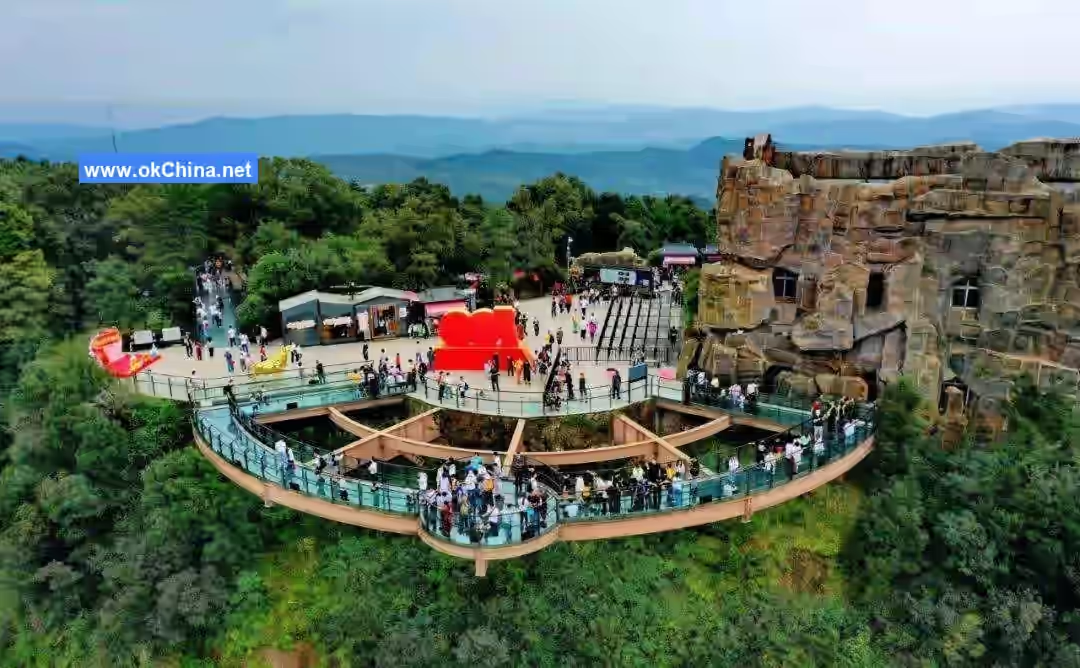
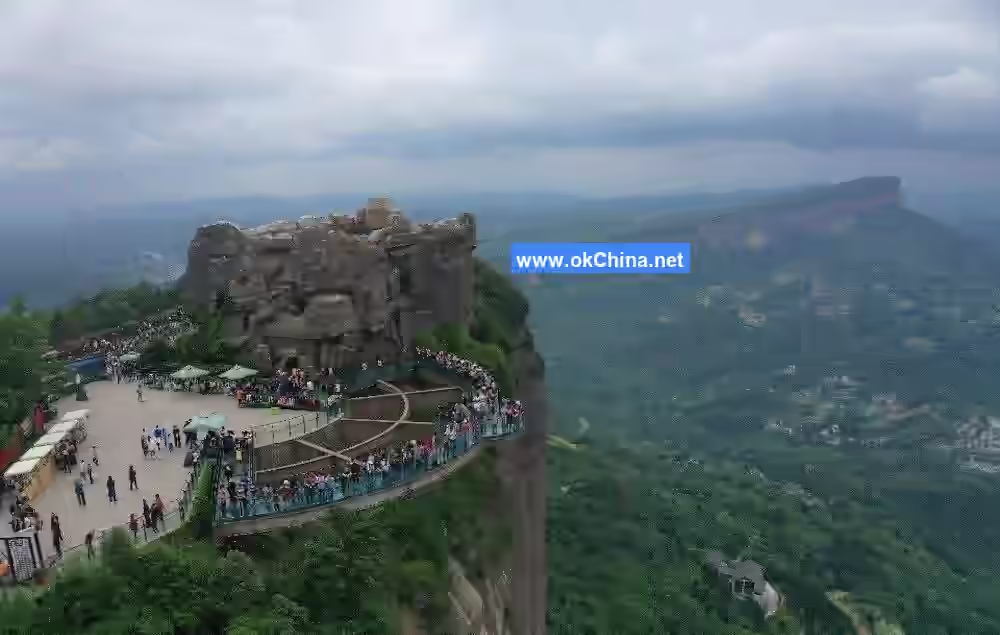
Jianmen Pass boasts the world's second-largest and Asia's largest suspended glass viewing platform. It is approximately 150 meters above the cliff base, at an elevation of 1,163.8 meters. It consists of a 60-meter-long, 2-meter-wide semi-arc-shaped glass walkway suspended on the cliff face and a 24-meter-long, 3-meter-wide glass bridge spanning two peaks. Located at the mountaintop of the millennia-old Liangshan Temple, the highest point of the scenic area, the suspended glass viewing platform features various AI-powered 5D special effects like "Cracking" and "A Hundred Flowers Blooming," offering breathtaking views from the cloud peaks.
3.8 Liangshan Temple
Liangshan Temple is situated at the summit of Dajian Mountain in Jianmen Pass, Jiange County. Perched on the "Sheshen Cliff" between Taohua Peak and Xiaoyao Peak, part of the 72 Peaks of Jianmen at an altitude of 1,180 meters, it was first built during the Tang Dynasty, underwent repairs through successive dynasties, and was expanded into a two-courtyard quadrangle during the Qing Dynasty, covering a floor area of 947 square meters. Facing south, the temple features black lacquered and gilded couplets on the pillars beside its main gate. The main hall is the Mahavira Hall. To the right of the Mahavira Hall is the "Scripture Repository." Additionally, there are the Guanyin Hall, monks' quarters, kitchen, dining hall, administrative office, tea hall, and more.
3.9 Jiang Wei Fortress
Also known as "Yingpanzui" (Camp Mouth), Jiang Wei Fortress is a mountain peak east of Jianmen Pass and south of Tianti Gorge, featuring the "Jiang Wei Fortress Pavilion." In 263 AD, upon hearing of the fall of Hanzhong, Shu Kingdom's General Jiang Wei immediately led an 80,000-strong army to retreat and defend Jianmen Pass. He set up camp here and suspended countless rolling logs and stones along the cliff edge.
3.10 The 72 Peaks of Jianmen
The Greater and Lesser Jian Mountains are also called the 72 Peaks of Jianmen, though there are actually 74 peaks. These peaks are jagged and interconnected, resting against the Jialing River to the east and reaching the Fu River to the west. Each peak resembles a sword, with elevations over a thousand meters. The mountain range stretches for 300 li, encompassing hundreds of peaks, forming a natural barrier locking down the Ba-Shu region.
3.11 Stone Bamboo Shoot Peak
In the middle of the sheer cliff face of Jianmen Pass stands a huge rock, standing alone like a golden rooster on the edge of the precipice. Locals named it "Bamboo Shoot Peak" or "Stone Bamboo Shoot Peak" based on its naturally formed shape. The peak is dozens of zhang high, with not a single blade of grass or tree growing on its body. However, on its very tip grows a lush clump of shrubs.
3.12 Surrounding Attractions
3.12.1 Lanma Wall (Horse-Barring Wall)
Within the ancient Shu Roads of Cuiyun Corridor, the Lanma Wall section is the most unique and best-preserved in its original state, with a history of over 2,300 years. The Lanma Wall Scenic Area has now been established here.
The Lanma Wall was a traffic facility on the Jinniu Road, a wall built with bluestone or earth and stone to prevent horses from falling off cliffs and ensure the safety of riders, similar to guardrails on modern highways. The scenic area is fully equipped with ancient traffic facilities such as anti-slip lines, hitching posts, watering troughs, and the Lanma Wall itself. It is a rare surviving physical prototype of ancient land transportation, hailed as a "Living Fossil of Shu Road Transportation."
3.12.2 Jueyuan Temple
First built during the Zhenguan period of the Tang Dynasty, Jueyuan Temple integrates Buddhism, architecture, murals, painted sculptures, wood carvings, and stone carving art. It is a national key cultural relic protection unit. Among its treasures, the Ming Dynasty Buddhist narrative murals are the only and most complete set of Buddhist story murals in China, praised as a "National Treasure."
3.12.3 Heming Mountain Taoist Grottoes
Heming Mountain is a sacred land of Taoism, one of the "Four Famous Taoist Mountains in China." It boasts three unique stone carvings: the Heming Mountain Taoist Statues, the Heming Mountain Stele Records, and the Cliffside Inscriptions. The Taoist statues at Heming Mountain, whose carving began in the late Northern Wei Dynasty, are unparalleled in China's Taoist stone carving field in terms of scale, quantity, and carving skill. The Heming Mountain Stele Records include the "Jianzhou Chongyang Pavilion Inscription" stele composed by the late Tang poet Li Shangyin and the ancient Chongyang Pavilion. The Cliffside Inscriptions refer to the cliff stele of "Ode to the Great Tang Revival" by the mid-Tang literary figure Yuan Jie, which is a re-engraving of the calligraphy by Yan Zhenqing.
4. Cultural Resources
4.1 Naming
Jianmen Pass is located at the interruption of Dajian Mountain, where sheer cliffs on both sides soar into the clouds. The peaks lean against the sky like swords, with a broken, sheer cliff creating two opposing walls that resemble a gate, hence the name "Jianmen" (Sword Gate).
Zhuge Liang, the Chancellor of Shu Han, expanded the existing plank road into the "Jiange Road" according to the mountainous terrain. At the point where the cliffs of Dajian Mountain face each other across an interruption, he built a stone gate against the cliff, stationed a gatekeeper, and set up garrison defenses, establishing it as a crucial military pass. Ancient people often abbreviated "Jiange Road" to "Jiange." After the Sui Dynasty, the plank road from Lesser Jian to the Greater Jian Pass gradually fell into disuse, and the name "Jiange" evolved from the abbreviation of Jiange Road to become an alternative name for Jianmen Pass.
After the Tang Dynasty, the Jianmen Pass Tower began to be called Jianmen Pass. Jianmen Pass guards the throat of the Jinniu Road, which was the most convenient ancient route from Hanzhong south to Ba-Shu, leading directly to Chengdu. Therefore, it rightfully served as the northern gateway to the Shu region and was a strategic location contested by military strategists throughout history. It was never breached head-on during the era of cold weapons, earning it the reputation of "The World's Most Strategic Pass" and "The World's First Pass."
4.2 Historical Evolution
The present-day Jianmen Pass under the jurisdiction of Jiange County belonged to Liangzhou during the Xia and Shang Dynasties, to Yongzhou during the Western Zhou Dynasty, to the Shu Kingdom during the Spring and Autumn and Warring States periods, and later became part of the Qin territory. In the 22nd year of the Jian'an era of the Eastern Han Dynasty (217 AD), after Liu Bei occupied Shu, his chancellor Zhuge Liang noted that Hande County had "a thirty-li road from Dajian to Xiaojian, narrow and constrained, with continuous mountains and extreme danger." Here, he "chiseled rocks and built aerial plank roads to facilitate travelers." Furthermore, at the point where the cliffs of Dajian Mountain face each other across an interruption, he built a stone gate against the cliff, stationed a gatekeeper, and set up garrison defenses, making it a crucial military pass.
During the Tang Dynasty, Dajian Town and Xiaojian Garrison were established within Jiange County, and Jianmen Pass was officially re-established as one of the world's strategic passes. Subsequently, the Jianmen Pass Tower began to be called Jianmen Pass. For over 1,700 years, the Jianmen Pass Tower has been repeatedly built and destroyed, only to be rebuilt again. In the early years of the Republic of China, County Magistrate Zhang Zheng rebuilt Jianmen Pass and established barracks inside the pass. In 1935, when the Republican government was constructing the Sichuan-Shaanxi Highway, the pass tower was demolished.
In 1992, the Jianmen Pass Tower was built at the cliff base east of the Sichuan-Shaanxi Highway at the pass.
In 2008, the 5.12 Wenchuan Earthquake caused severe damage to the scenic area. Jiange County integrated and raised 3.5 billion yuan to carry out restoration and reconstruction according to national 4A-level scenic area standards. Eight major projects were implemented: planning, demolition of disorderly structures, repairing the pass, building roads, cultural development, supporting facilities, greening, and pollution control.
4.3 Related Culture
4.3.1 Legend of the Five Strongmen Opening the Mountains
During the Spring and Autumn and Warring States periods, it is said that the Qin State, aiming for hegemony, wanted to annex Ba and Shu. However, the roads from Guanzhong into Shu were virtually non-existent. Qin deceived the King of Shu, promising to send him five golden manure stone oxen. Blinded by the prospect of gold, the King of Shu ordered five strongmen to open a road into Shu. This road became the famous Jinniu Road among the Shu Roads.
4.3.2 Warfare and Pass CultureHistorically, Jianmen Pass has been a strategic military stronghold and one of China's "Ten Famous Passes," witnessing over a hundred battles of varying scales. However, during the era of cold weapons, it was never breached from the front. With the advent of hot weapons, the Red Army's capture of Jianmen Pass became the only battle in which the formidable natural barrier was successfully stormed head-on. This engagement is recognized as one of the five classic campaigns of the Fourth Front Army of the Red Army in the Sichuan-Shaanxi Revolutionary Base Area.
Events such as Zhuge Liang establishing the pass, Jiang Wei defending Jianmen, Deng Ai's surprise attack, Liang He's breach of Jianmen, Wang Qian's death in Chengdu, Emperor Xuanzong's flight to Shu, Shi Jingtang's two assaults on Jiange, Meng Zhixiang's three-sided ambush, the protracted war between the Song and Mongols, and the Wei-Liang conflict all took place at Jianmen Pass. Yet, none of these involved a frontal breakthrough. Most strategies involved bypassing the pass by taking the Yinping Trail to the west or the Jialing River route to the east, or attacking from the rear. Even during the early Ming Dynasty, Fu Youde entered Sichuan not via the Jinniu Road but by detouring around Jianmen through the Yinping Trail, directly threatening Chengdu.
4.3.3 Red Culture
The Red Army's bloody battle at Jianmen Pass is a famous campaign in Red Army history. The Jianmen mountainous area served as a red revolutionary base established by the Fourth Front Army of the Red Army. The Red Army once held the Jiange Conference here, and battle sites such as Yingpanzui remain today.
4.3.4 Poetry Culture
Jianmen Pass has inspired over a thousand poems by renowned figures from the Jin, Tang, Song, Ming, and Qing dynasties, including masterpieces such as Li Bai's "The Hard Road to Shu," Du Fu's "Poem of Jianmen," and Lu You's "Encountering a Light Rain on the Road to Jianmen." Modern contributions include Chairman Mao Zedong's handwritten line: "At dawn ascending Jiange, clouds follow the horse; at night crossing the Ba River, rain washes the soldiers." Guo Moruo's poem "Passing Jianmen" reads: "All peaks, teeth-like, turn black; myriad stones, in color, are red."
Li Bai, in "The Hard Road to Shu," wrote: "Jianmen's peaks tower steep and high; One man could guard this pass, and ten thousand could not get by."
Du Fu, in "Yellow Grass": "Boats west of Yellow Grass Gorge do not return; Few travelers pass beneath Red Armor Mountain. No news comes from Qin's couriers on their way; On the road to Shu, war brings both right and wrong."
Du Fu also wrote: "Only Heaven could create such a peril; Jianmen's grandeur is unmatched under the sky" and "Suddenly from beyond Jianmen comes news of recapturing Jibei; At first hearing, my clothes are soaked with tears of joy!"
Xiao Gang, in "The Hard Road to Shu": "Seven hundred li of Witch Mountain, three bends of Ba River. The flute's notes fall and rise again; the ape's cries break and then resume."
Qiao Bo, a Qing Dynasty magistrate of Jianzhou, wrote: "The road to Jianmen, rugged and uneven, is a path of stone. Who planted these two rows of ancient cypresses? Three hundred li long, with a hundred thousand trees. The Green Cloud Corridor, veiled in mist, guards the way; Mossy flowers, shaded by rain, dampen the clothes; Twisting branches and drooping leaves bring a cool breeze."
Comments
Post a Comment