Jiangwan Scenic Area
1. Introduction
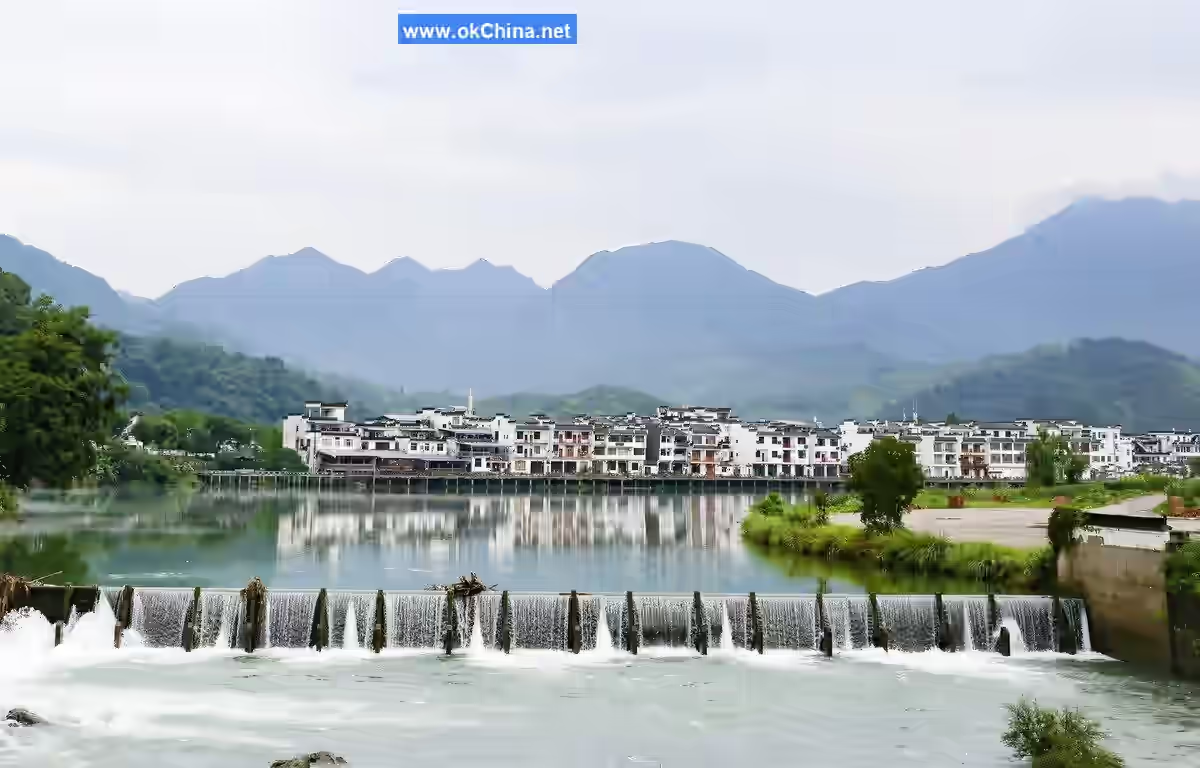
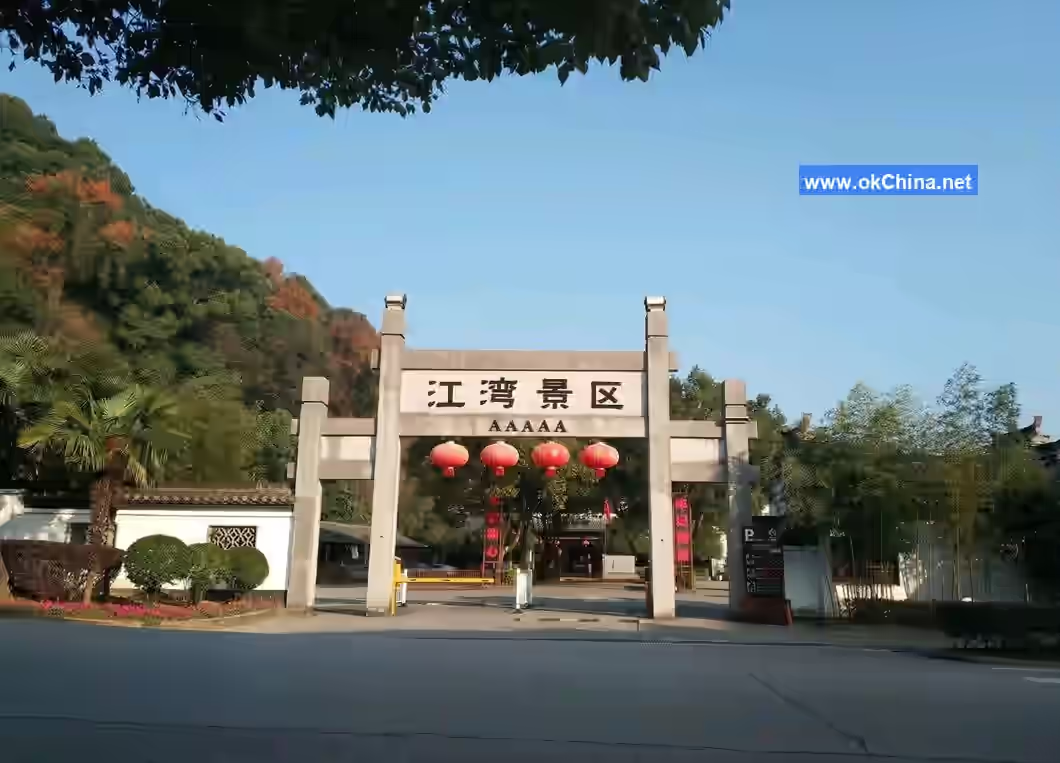
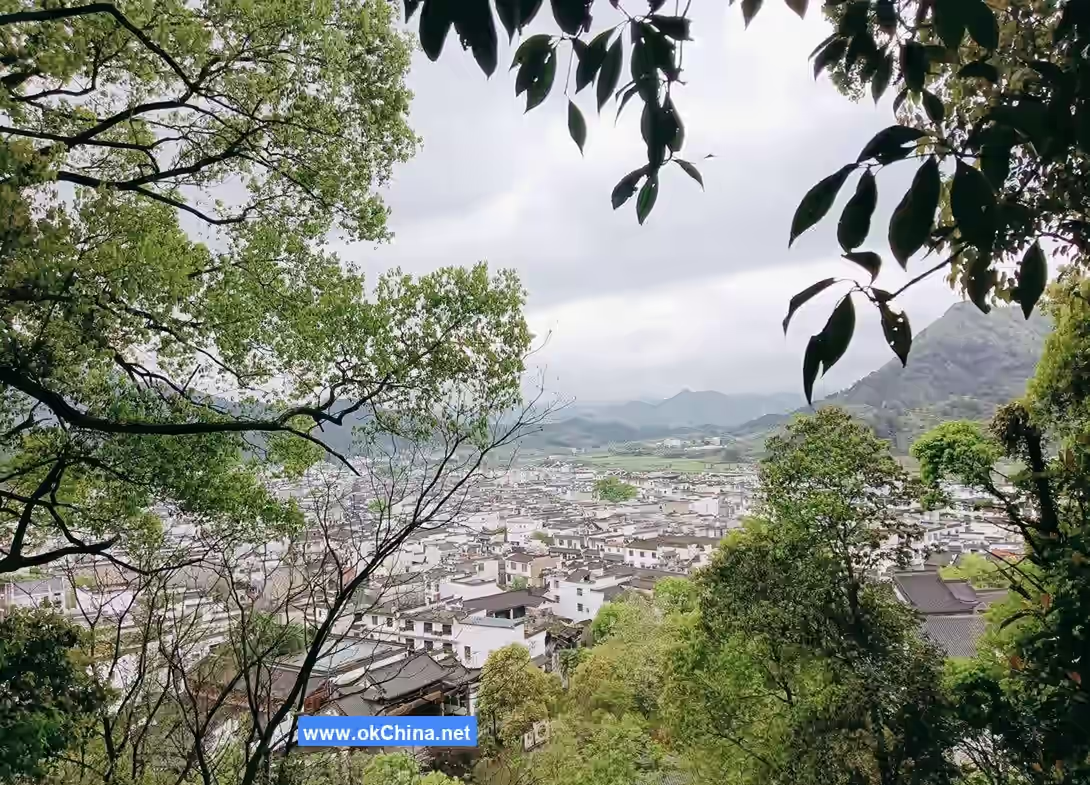
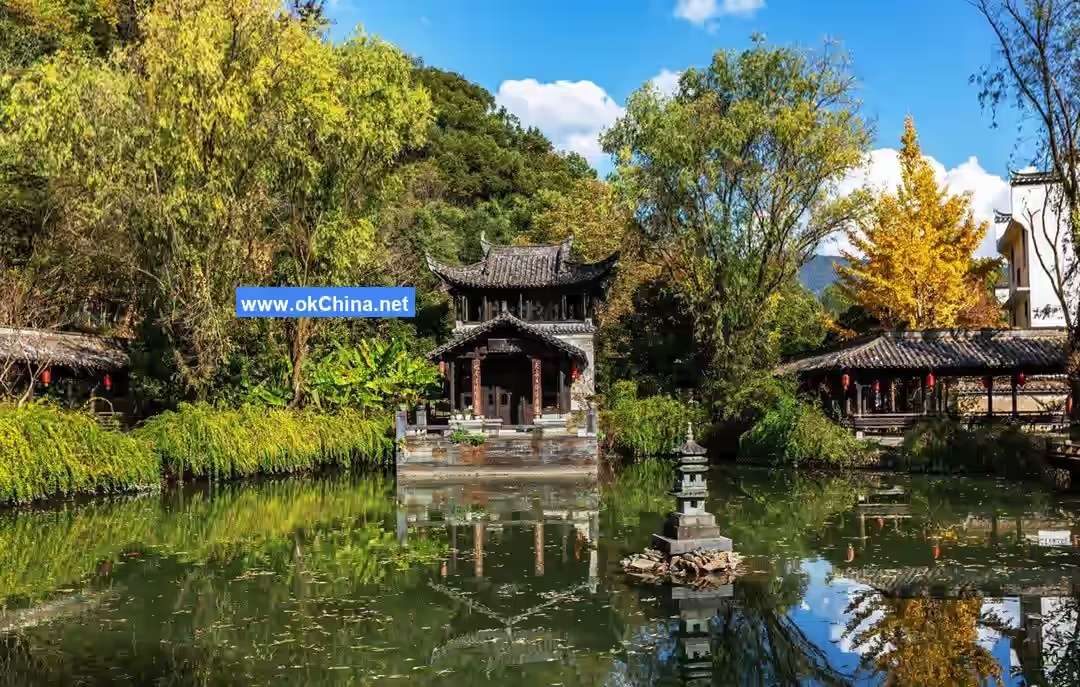
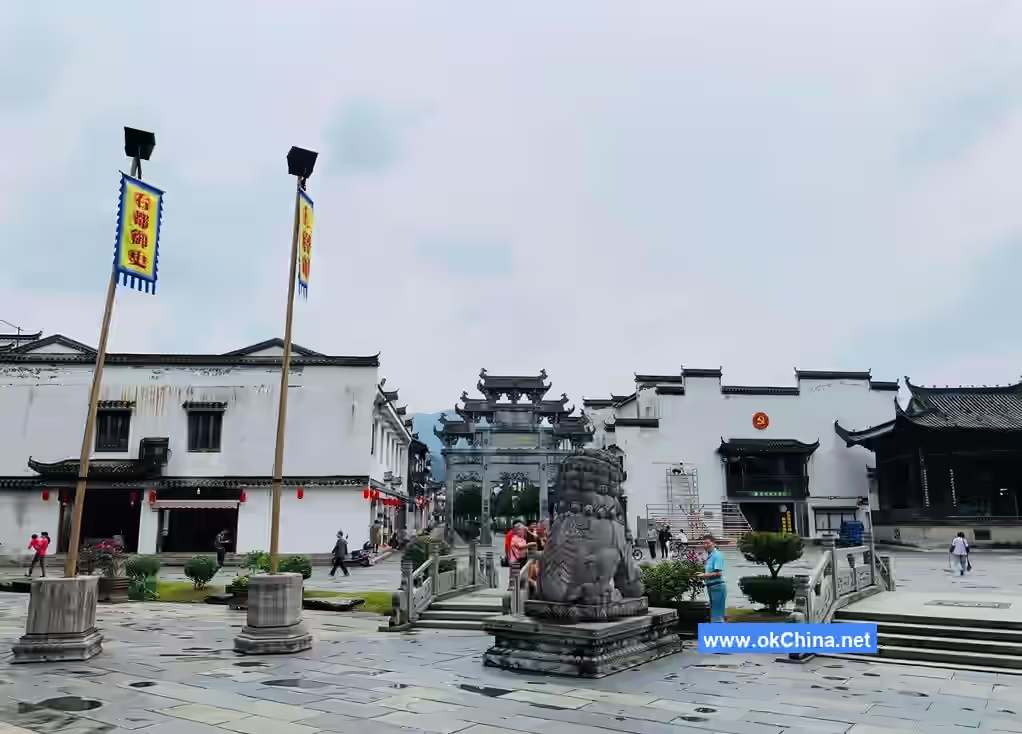
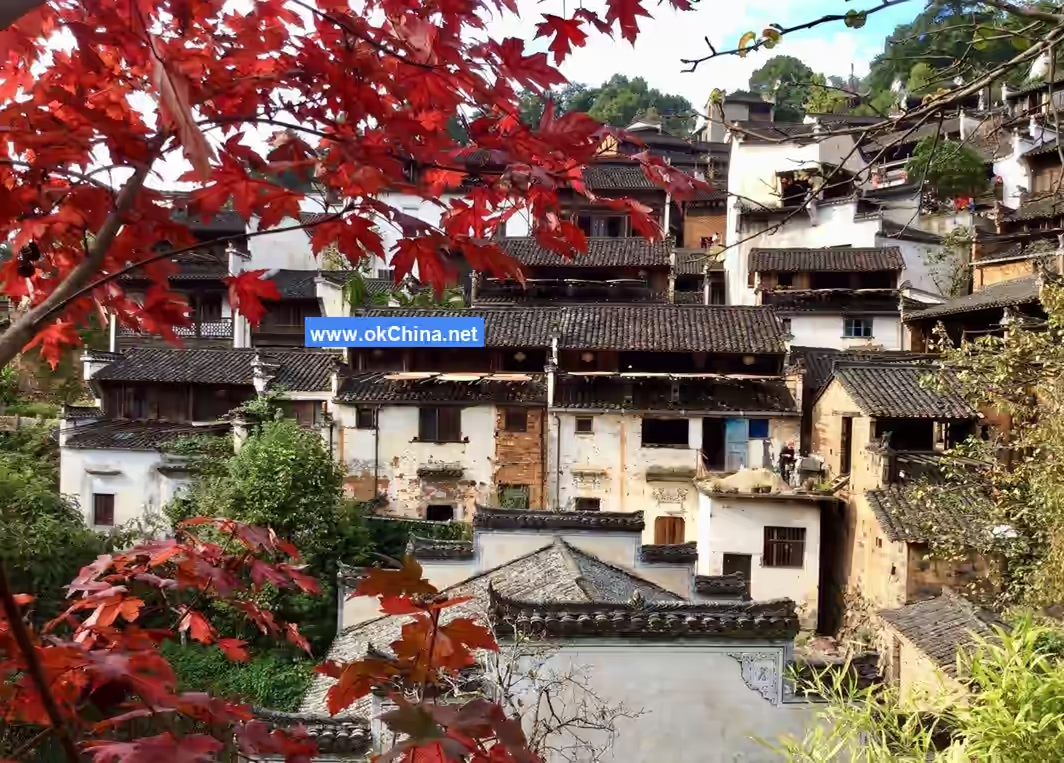
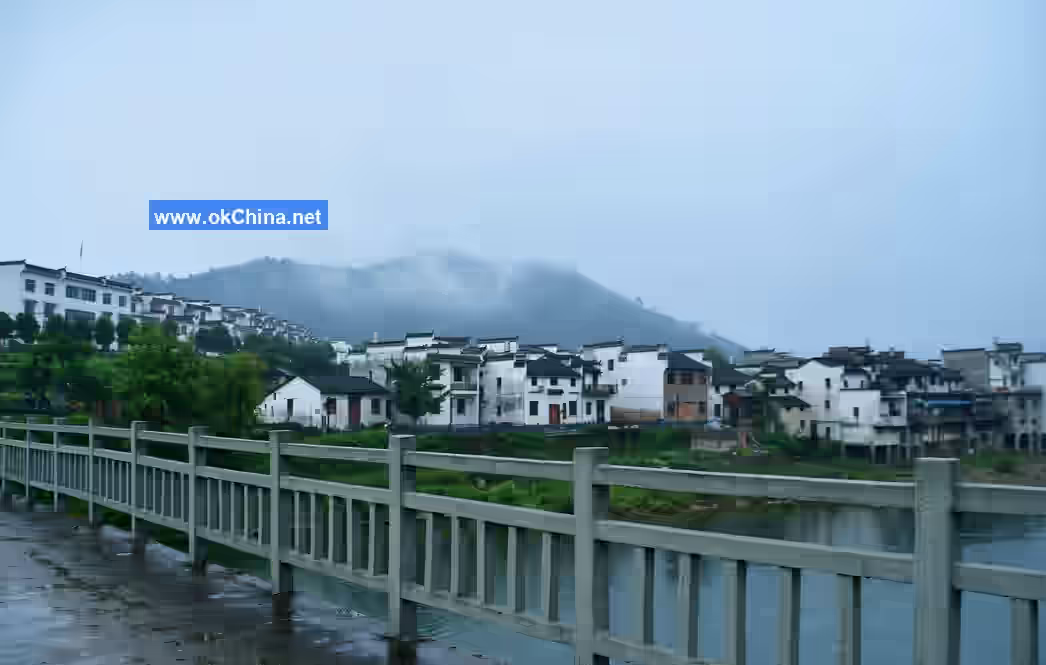
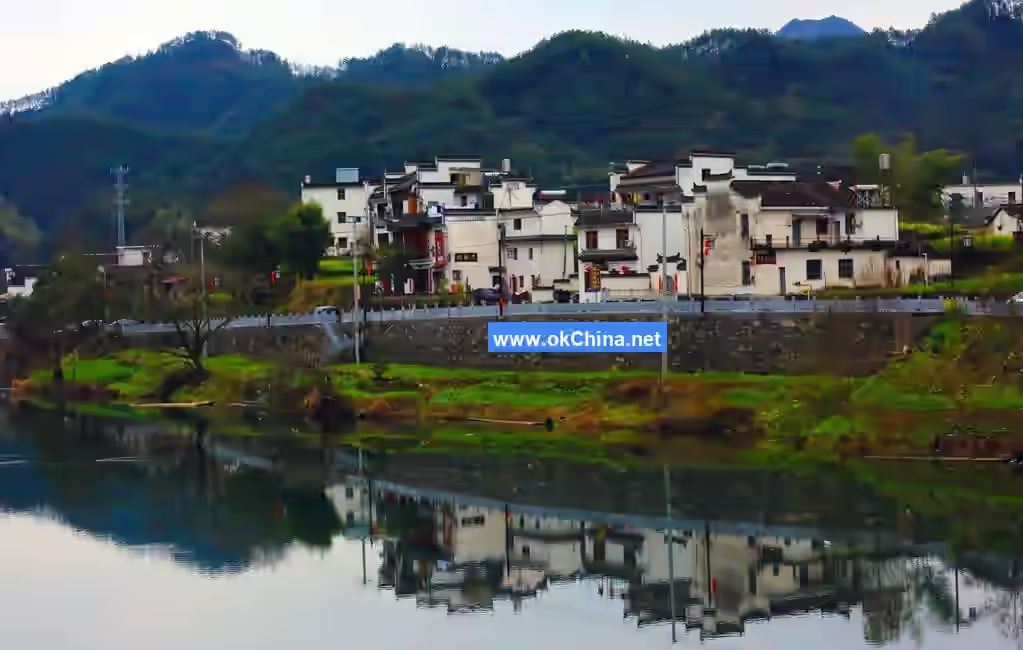
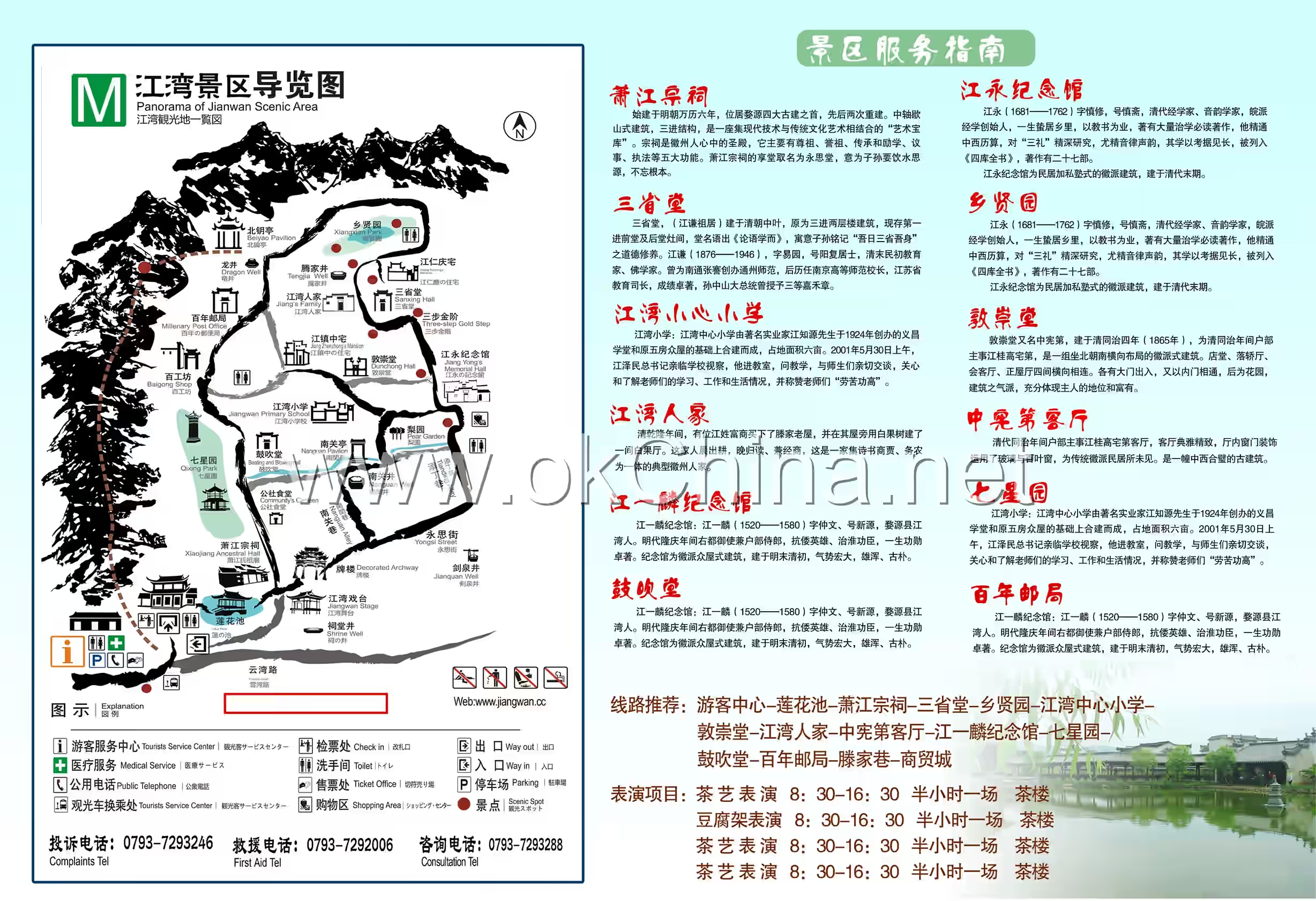
The Jiangwan Scenic Area is located in the northeastern part of Wuyuan County, Shangrao City, Jiangxi Province. Covering an area of 27.4 square kilometers, it opened to the public on June 20, 2001. It is situated 28 kilometers from Wuyuan County town, 96 kilometers from the scenic Mount Huangshan, and 1 kilometer from the exit of the Jing-Wu-Huang Expressway. Jiangwan is an ancient village rich in Huizhou cultural heritage. It preserves a large number of Huizhou-style ancient buildings such as Sanxing Hall, Dunchong Hall, Peixin Hall, and the Old Teng House, as well as attractions like the Xiaojiang Ancestral Hall, Jiang Yong Memorial Hall, Nanguan Pavilion, and the Big Dipper Seven-Star Well. To showcase Wuyuan's cultural characteristics, the Jiangwan Scenic Area has newly built attractions including the Hundred Crafts Workshop, Guchui Hall, and Commune Canteen. These allow visitors to experience the traditional skills of old-time artisans and enjoy traditional performances like Huiju opera and Wuyuan folk songs, offering both historical and aesthetic value. The Jiangwan Scenic Area is a national-level cultural and ecological tourism area and a Jiangxi Provincial Patriotic Education Base. On January 16, 2013, it was officially awarded the title of "National 5A-Level Tourist Attraction."
2. Geographical Environment
2.1 Geographical Location
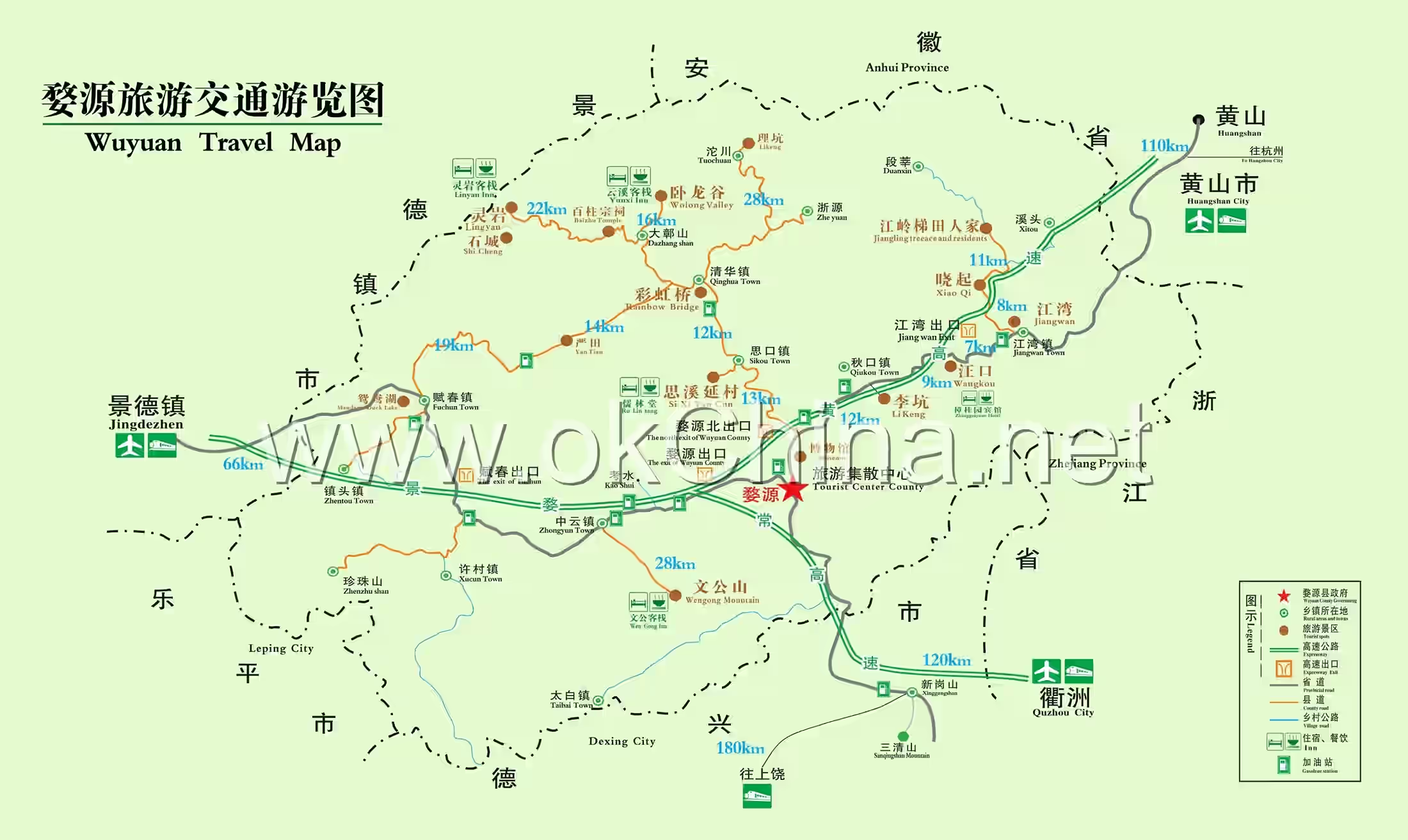
The Jiangwan Scenic Area is located in Jiangwan Town, Wuyuan County, Shangrao City, Jiangxi Province, in the northeastern part of Wuyuan County. It is 28 kilometers from Wuyuan County town and 96 kilometers from the scenic Mount Huangshan.
2.2 Climatic Characteristics
Wuyuan County is situated in the central subtropical zone, characterized by the East Asian monsoon climate. It features mild temperatures, abundant rainfall, a relatively short frost period, and four distinct seasons. The historical average annual temperature is 16.8°C, with the highest recorded at 17.9°C in 1998 and 2006, and the lowest at 16.3°C in 1965, 1976, and 1980. The hottest month is July, with an average monthly temperature of 28.0°C. The extreme maximum temperature of 41.0°C occurred on August 28, 1967; the extreme minimum temperature of -11.0°C occurred on January 16, 1967. The historical average total annual precipitation is 1962.3 mm. Precipitation shows an increasing trend from January to June and a decreasing trend from July to December. The first half of the year accounts for 69% of the 2011 precipitation. April to June is the distinct rainy season, known as the flood season, with average monthly rainfall exceeding 200-300 mm, accounting for 47.9% of the 2011 precipitation. The maximum annual precipitation was 3036.8 mm, recorded in 1998. The maximum monthly precipitation was 970.4 mm, recorded in July 1998. Rainfall distribution is higher in the surrounding areas and lower in the center; higher in the northeast and lower in the southwest. The prevailing wind direction throughout the year is northeast. The historical average wind speed is 1.5 m/s. The extreme maximum instantaneous wind speed exceeded 40 m/s, occurring on August 13, 1965, and August 19, 1978.
3. Main Attractions
3.1 Jiangwan Memorial Archway
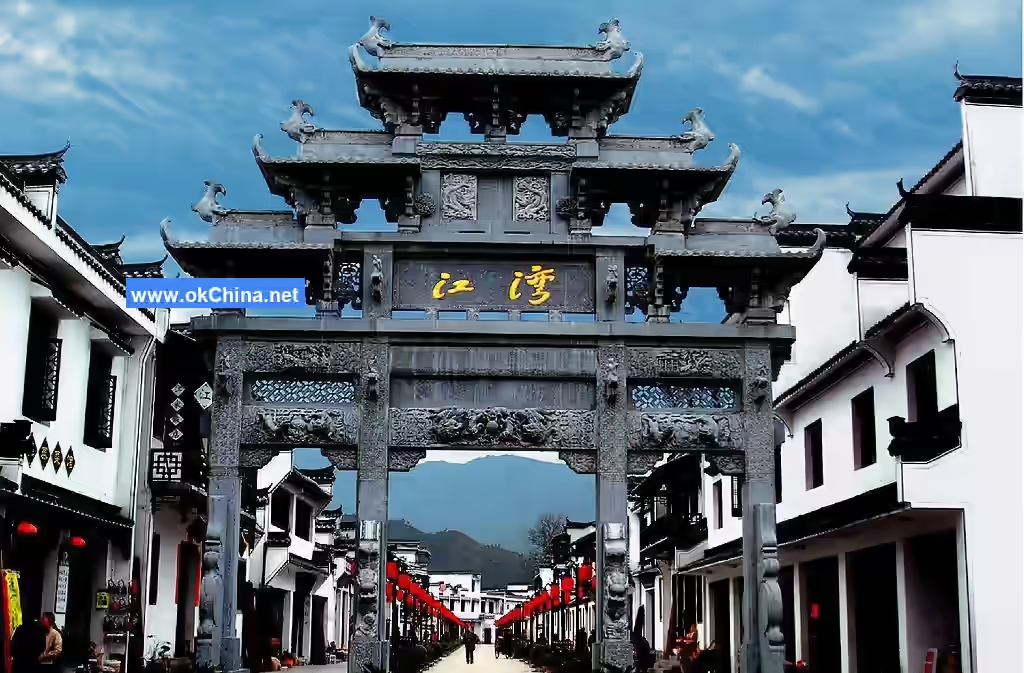
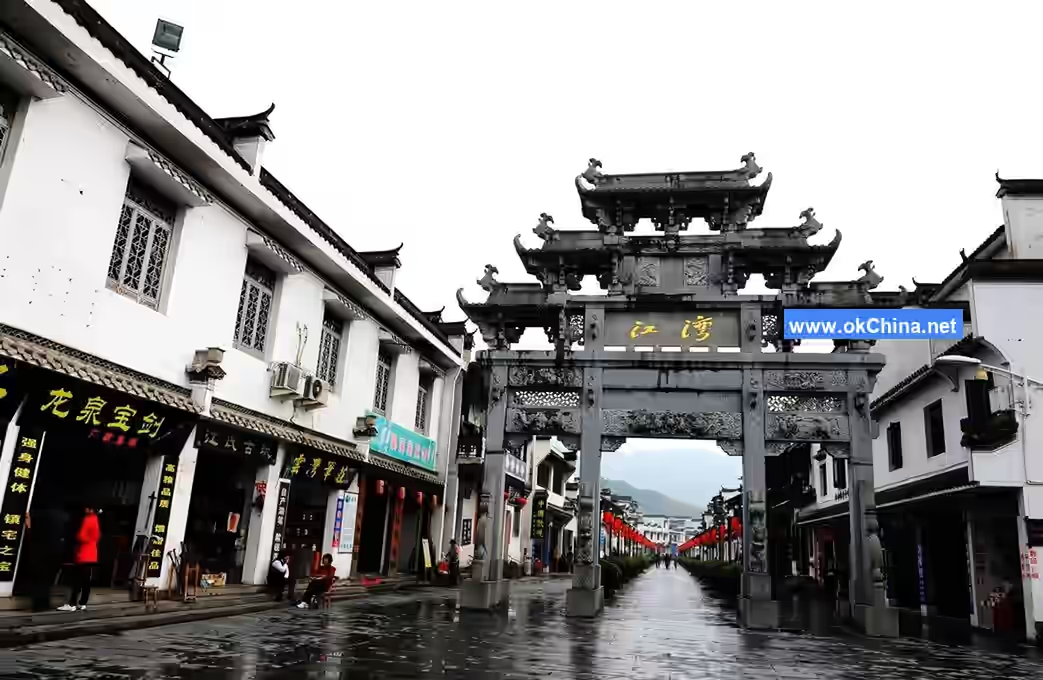
The Jiangwan Memorial Archway employs relief and openwork carving techniques, featuring traditional patterns such as "Kylins Playing," "Tigers and Leopards Presenting Auspiciousness," "Deer and Crane Sharing Spring," and "Five Lions Playing with a Pearl," all symbolizing good fortune and multiple blessings. The images of "Civil Officials and Military Generals" and "The Eight Immortals Crossing the Sea" on both sides are said to express the hope that the descendants of the Xiaojiang clan would either study to become officials, rise as generals and ministers, or, like the Eight Immortals, each demonstrate their unique abilities.
3.2 Guchui Hall
Guchui Hall is the fixed venue for "Traditional Folk Performances" within the Jiangwan Scenic Area and also serves as the wedding hall for Jiangwan marriage customs. The scenic area has meticulously designed and arranged everything from the characteristics of the dishes and cuisine, the design of the decorative style, and the application of multimedia technologies like LED screens to interactive elements like panoramic VR and cultural performances. Through vivid and figurative presentations, it allows tourists to understand the humanistic customs of Wuyuan Jiangwan.
3.3 Lizi Lane
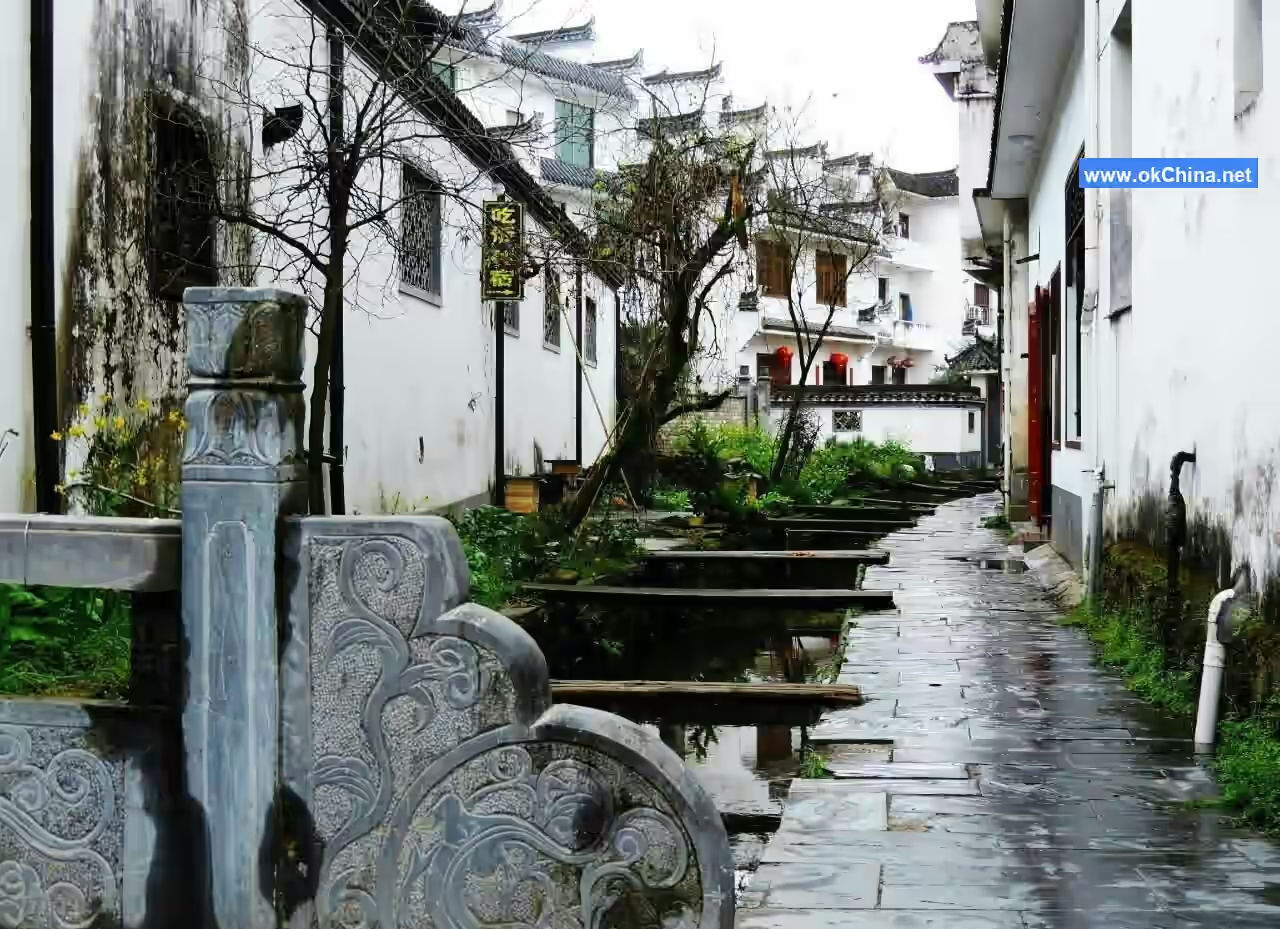
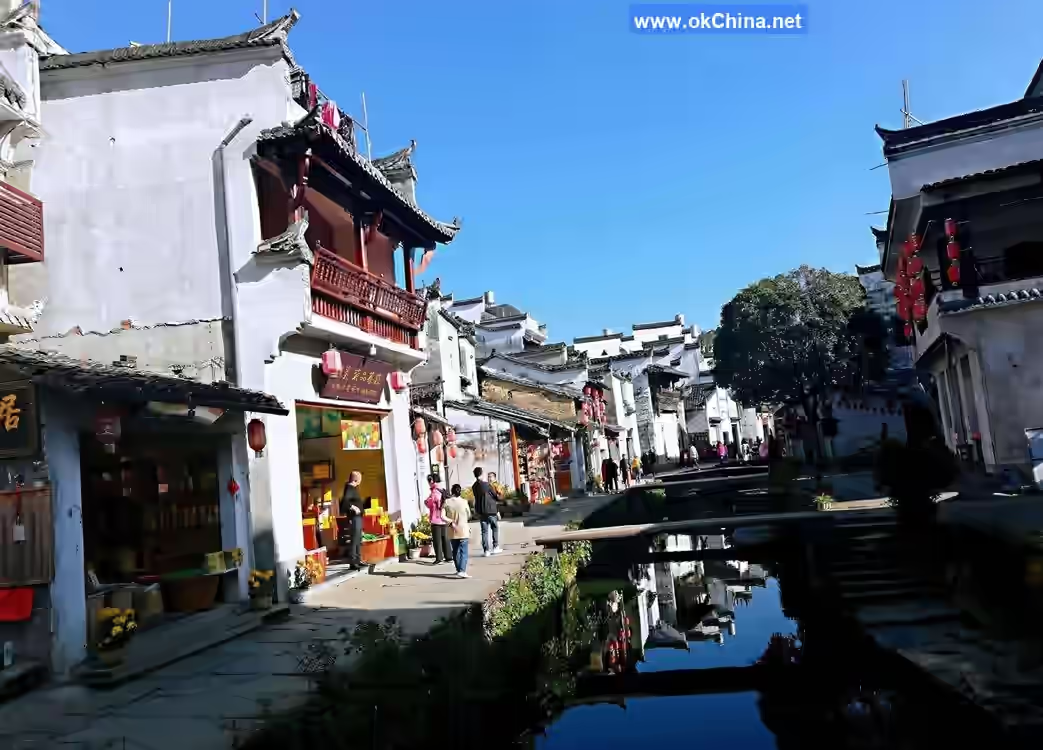
Jiangwan's Lizi Lane is a Huizhou-style antique and nostalgic old street with diversified business formats. It is named after the "white" (Jiangwan Snow Pear) among Wuyuan's four characteristic products known as "red, green, black, and white." Each shop along the entire Lizi Lane is different, truly embodying "one shop, one product, one scene." The shop styles are arranged and displayed in the forms of the 1960s, 1970s, and 1980s. The business formats are mainly divided into four functional areas: Intangible Cultural Heritage Product Area, Food Experience and Dining Entertainment Area, and Characteristic Homestay Area.
3.4 Intangible Cultural Heritage Exhibition Hall
The exhibition theme of the Jiangwan Intangible Cultural Heritage Hall is "Living Memory." It features 6 national-level, 7 provincial-level, 4 municipal-level, and 17 county-level intangible cultural heritage items. There are 9 exhibition halls displaying projects such as: Wuyuan Green Tea Making Techniques, Wuyuan Three Carvings (wood, stone, brick), Wuyuan Nuo Dance, Wuyuan Lantern Art, Wuyuan Taige and Tofu Frame, Wuyuan Snacks, Jialu Paper Umbrella Making Techniques, etc. The intangible cultural heritage thematic resources are rich and distinctive, allowing visitors to appreciate the splendid history and unique, eternal charm of Wuyuan's intangible cultural heritage.
3.5 Folk Customs Museum
In ancient Wuyuan, with the rise and prosperity of Huizhou merchants, the concepts of revering culture, pursuing goodness and beauty, and emphasizing quality gradually permeated people's daily lives, thereby leaving a deep imprint on the local customs, lifestyle, food, clothing, housing, and daily necessities here.
3.6 Jiangwan Household: The Old Teng House
The Old Teng House (Jiangwan Household) has a history of three to four hundred years. The golden bricks paved in front of the hall, the reed walls between the beams and lintels, the exposed roof framework, and the simple checkered window lattices all continue the construction methods of the Ming Dynasty.
3.7 Lotus Pond and Xi'an Gate
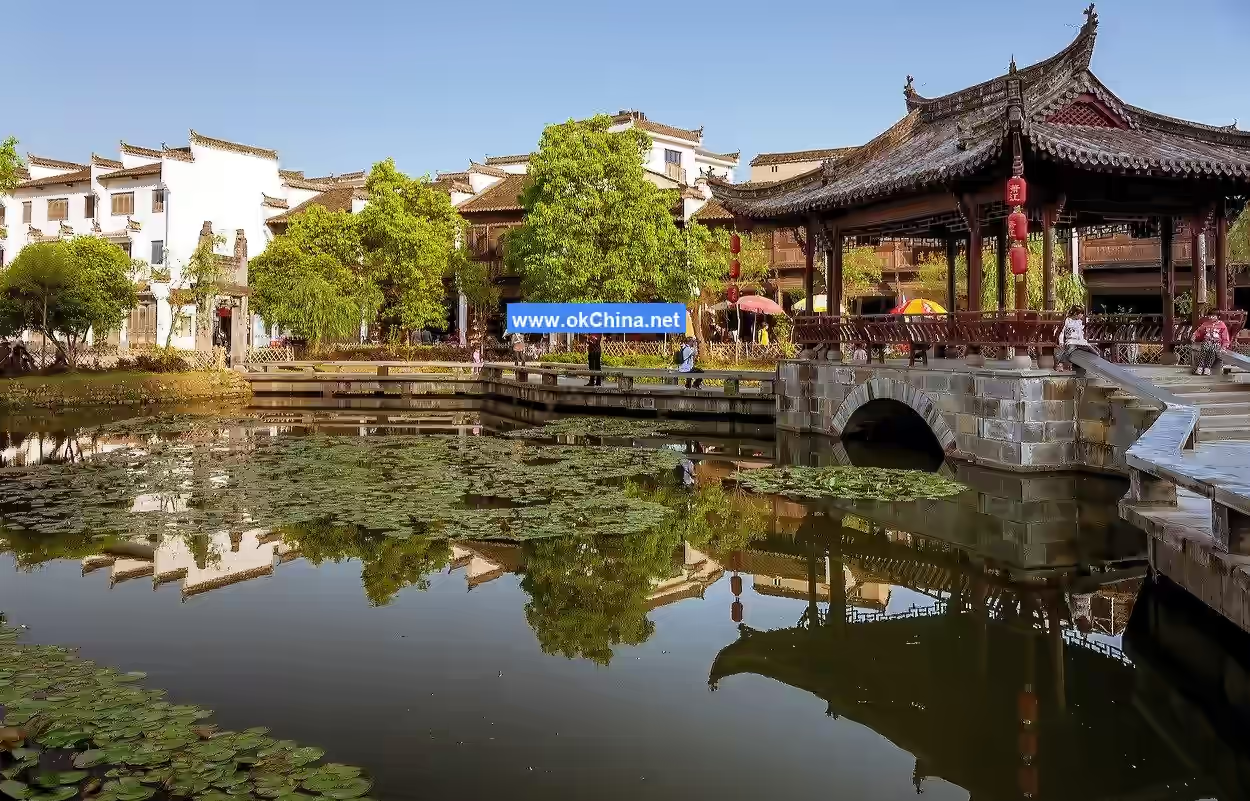
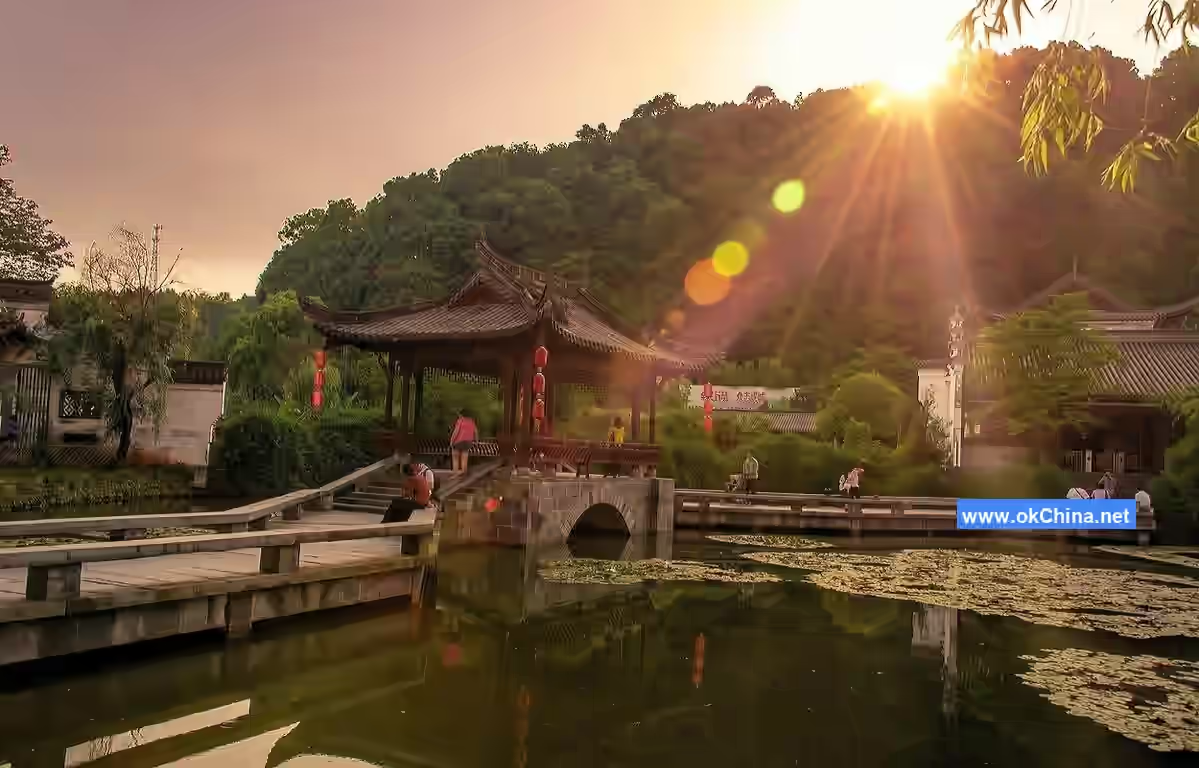
The Lotus Pond is called "Dragon Pond." It is one of the feng shui acupuncture points of Jiangwan and also the lowest dot of the three dots in the water system shaped like the Chinese character for "river" (江). In front is the Xi'an Gate. During the Qing Dynasty, a local virtuous elder wrote a couplet for it. The first line is: "Water pastes lotus coins, buying ten thousand acres of lake light"; the second line is: "Mountains hang wooden brushes, sketching two or three parts of spring scenery."
3.8 Pear Orchard
The pear trees in this Pear Orchard produce the famous Jiangwan Snow Pears. They are large, thin-skinned, crisp-fleshed, and juicy, making them a superior gift during the Mid-Autumn Festival. When these pears first grow to the size of a button, they are covered with paper bags to protect them from wind and sun, resulting naturally in white skin and tender flesh, hence the name "snow pear." But actually, this only tells half the story; the other half of the meaning can only be truly understood after eating them.
3.9 Village Worthy Garden
The Village Worthy Garden was newly built by present-day people on the site of the original "Rear Peach Garden" to commemorate the virtuous elders of Jiangwan throughout history. Jiangwan has produced many officials over the generations, with over 30 reaching the seventh rank or higher, as well as dozens of scholars, famous doctors, and calligraphers/painters. It is indeed a land endowed with spiritual energy, and the Xiaojiang clan is truly a renowned and prestigious family.
3.10 Jiang Yilin Memorial Hall
Jiang Yilin was a famous patriotic minister of the Ming Dynasty. He died of illness at the worksite where he was managing the Yellow River, at the age of only 61. He served as an official for 27 years in his lifetime, was honest and self-disciplined, diligent in governance, and deeply loved by the people. After his death from illness, the emperor granted permission for his burial in his hometown and even dispatched the prefect of Huizhou Prefecture specifically to Jiangwan to offer condolences.
3.11 Xiaojiang Ancestral Hall
The Xiaojiang Ancestral Hall, also known as Yongsi Ancestral Hall, is located in Zhankeng Village, Jiangwan Town, Wuyuan County, about 32 kilometers from Wuyuan County town and approximately 2 kilometers from Jiangwan. It was first built in the sixth year of the Wanli era of the Ming Dynasty (1587 AD) and was later destroyed during the Taiping Rebellion. It was rebuilt in 1924 (the 13th year of the Republic of China) and was dismantled again during the Cultural Revolution. The Xiaojiang Ancestral Hall was once praised as "the best ancestral hall" among the seventy famous ancestral halls south of the Yangtze River and ranked first among Wuyuan's four ancient structures. It was rebuilt for the third time in September 2003. This ancestral hall fully displays royal grandeur, covering an area of 2,400 square meters and divided into four sections: front courtyard, front hall, central hall, and rear hall. The front courtyard is a spacious garden with bluestone railings and a crescent-shaped lotus pond, raising various fish such as red carp, grass carp, and military fish. The front hall features a Five-Phoenix Tower, nine-ridged roof, Wuchao Gate, and Moon Tower, with beams, lintels, eaves, and rafters exquisitely carved with vivid and lifelike scenes. The central hall has thick beams and large pillars, drum-shaped stone pedestals, and distinctive stone steps, stone railings, and a moon platform. The inscribed boards and couplets feature elegant wording with profound meanings. The rear hall is higher than the front hall and has a pavilion housing spirit tablets.
3.12 Jiang Yong Memorial Hall
The Jiang Yong Memorial Hall is located at No. 58 Jiangwan North Gate Street, Jiangwan Town, Wuyuan County. After renovation, it opened to the public in May 2002. The hall is divided into four parts: the central hall, the reception hall (Shoujing Hall), Longwan Study, and the front hall area. These sections respectively display Jiang Yong's life story, his main works, and achievements through exhibition cabinets, display boards, and physical objects. The Jiang Yong Memorial Hall became the first township-level historical and cultural celebrity memorial hall in Jiangxi Province. To commemorate Jiang Yong, a generation's erudite scholar from Jiangwan, the Jiangwan Town Government spent a large sum to purchase the Huizhou-style building combining a residence and a private school — Deqing Hall. This building belongs to the same Qing Dynasty period as Jiang Yong's former residence. Externally, it appears as two completely identical adjacent residences, but it is actually one household. In front of the house, a courtyard wall encloses a small courtyard, whose ground is paved with green pebbles forming a chart. The front door hoods of both houses are inlaid with antique brick-carved components. The window lattices of the inner halls and side rooms, as well as the sparrow braces and bracket sets in the east and west residences, are all inlaid with exquisite wood carvings. The three-bay west unit was once used by the owner as a private school, inviting teachers to educate the children. Precisely because of its private school room structure, it was ultimately selected to become the Jiang Yong Memorial Hall.
3.13 Sanxing Hall
Sanxing Hall is located within the Jiangwan Scenic Area on Yunwan Road, Jiangwan Town, Wuyuan County, Shangrao City, Jiangxi Province. It is the ancestral home of Jiang Qian, an educator and Buddhist scholar of the late Qing and early Republic period. The hall's name originates from The Analects of Confucius, Xue Er,寓意子孙铭记“吾曰三省吾身”之道德修养。 (寓意子孙铭记“吾曰三省吾身”之道德修养。 - This part is a direct quote from the source text explaining the meaning. Since the instruction is to translate the text, this explanatory phrase should also be translated. It means: "implying that descendants should remember the moral cultivation of 'I daily examine myself on three points.'") Jiang Qian (1876-1946), courtesy name Yiyuan, style name Yangfu Jushi, was an educator and Buddhist scholar of the late Qing and early Republic period. He helped Zhang Jian of Nantong establish Tongzhou Normal School and later served as President of Nanjing Higher Normal School and Director of the Jiangsu Provincial Education Department. He achieved outstanding results, and Sun Yat-sen awarded him the Third Class Jiahe Medal.### 3.14 The Big Dipper Wells The Big Dipper Wells are located within the Jiangwan Scenic Area in Jiangwan Town, Wuyuan County, Shangrao City, Jiangxi Province. These wells embody the highest principle of Chinese Feng Shui: the "unity of heaven, earth, and humanity." To the south, the Liyuan River forms an "S" shape resembling the Taiji diagram. In the early years of the Northern Song Dynasty, He Lingtong, the state preceptor of the Southern Tang Dynasty, was demoted and came to live in seclusion in the Lingshan area of Jiangwan. He developed a close friendship with Jiang Wencai, the sixth-generation ancestor of the Xiaojiang clan. He then guided the Xiaojiang clan to relocate from Zhankeng to the geomantically auspicious site of Yunwan (now Jiangwan). Under his guidance, the Xiaojiang ancestors utilized the highest principles of Feng Shui to transform Jiangwan's water systems, architectural layout, street orientations, and mountain ranges. After the clan moved to Yunwan, their population flourished, and scholarly achievements and imperial examination successes multiplied. The Big Dipper Wells within the village are a prime example of the state preceptor's application of Feng Shui. The four cardinal directions in ancient China were "Vermilion Bird in front, Black Tortoise behind; Azure Dragon on the left, White Tiger on the right." In Jiangwan, the terrain featured a low Black Tortoise (Houlong Mountain) and a high Vermilion Bird (You Mountain opposite). The Vermilion Bird is associated with fire, meaning the southern fire element was overly strong, creating a relatively unfavorable topography. At that time, He Lingtong conceived the idea of digging seven wells in the village, arranged in the pattern of the Big Dipper, using the water from these wells to suppress the fire energy of You Mountain. The Big Dipper constellation is shaped like a ladle. From then on, the village not only had ample water sources but also a "ladle" to scoop the water, naturally suppressing the fire of You Mountain.
4. Cultural Resources
4.1 Historical Evolution
Jiangwan was initially established between the late Sui and early Tang dynasties. Originally, families with surnames like Teng, Ye, Bao, and Dai settled in the river bend area, naming it "Yunwan." In the second year of the Yuanfeng era of Emperor Shenzong of the Northern Song Dynasty (1079 AD), Jiang Di, the eighth-generation ancestor of the Xiaojiang clan, moved to Jiangwan. His descendants gradually multiplied into a large clan, and the name was later changed to Jiangwan. From the Song to the Qing dynasties, Jiangwan nurtured 38 individuals who achieved the titles of Zhuangyuan (top imperial examinee), Jinshi (imperial scholar), or served as officials. Additionally, there were 19 literary scholars, leaving behind 92 literary works, with 15 works in 16 volumes selected for inclusion in the Siku Quanshu.
4.2 Cultural Activities
4.2.1 Jiangwan (Wuyuan) Tofu Frame
The intangible cultural heritage of the Jiangwan Tofu Frame is a product of agrarian culture. It originated as a folk activity where local people used it to exorcise demons, ward off epidemics, invite good fortune, and pray for favorable weather. It later evolved into a display to enhance festive atmospheres during traditional celebrations. During major festive occasions, villagers spontaneously organize to create Tofu Frames depicting various theatrical themes, parading them through streets and villages, gradually solidifying into a custom. As early as the fifth year of the Xuanhe era in the Northern Song Dynasty, folk records about the Tofu Frame appeared in Jiangwan shop couplets: "Frames with loach dishes and tofu ladles, stage swings floating on the palm." This refers precisely to the Jiangwan Tofu Frame. The Wuyuan Jiangwan Tofu Frame bears traces of Guangdong's folk "Piaose" (floating colors) art and retains the ancient charm of Jiangxi's "Taige" (carried pavilion) performances. Based on performance form, it can be categorized into solo, duo, and group sculptures. It uses a mobile three-dimensional stage—the "frame for making tofu"—as a platform. The frame is decorated with colorful silks and fabrics. Children aged seven to twelve act as the sculpted figures, portraying characters from operas, made up according to the facial makeup styles of Kunqu, Hui, or Beijing opera. The themes for these child actor tableaux are mostly drawn from historical allusions and legendary theatrical characters, with each carried frame representing a typical story character. The sculpted figures do not act or sing, but the procession features banners, colored lanterns, drum music leading the way, and dragon dances bringing up the rear.
4.2.2 Wuyuan Nuo Dance
Wuyuan Nuo Dance, commonly known as "Ghost Dance," is a type of Nuo dance in Jiangxi. It originated in the Tang Dynasty, continued through the Song and Yuan dynasties, and flourished in the early Ming Dynasty. The Wu Family Genealogy from Mingzhou Village, Duanxin Township, Wuyuan County records: "In the 14th year of the Zhengtong era of the Ming Dynasty, the village head collected rice and goods to reward the Nuo performers, hence it was called the 'Incense Wrestling Play'." At its peak, Wuyuan Ghost Dance troupes were widespread throughout the county, historically earning the reputation of "thirty-six Nuo troupes, seventy-two lion troupes." Lion troupes performed both lion dances and Nuo dances, performing together, also called "Lion-Nuo Troupes," commonly referred to as "Dancing Huihui." The Ghost Dance (Nuo Dance) repertoire originally included over sixty pieces. There were performances for welcoming deities and expelling ghosts like Chasing the King and Setting Up the Frame; pieces reflecting myths like The Sun Shoots the Moon, Houyi Shoots the Suns, Monk Tang Fetches the Scriptures, Pangu, and Hehe; pieces based on historical legends like The Prime Minister Drills Troops, Guan Gong Sharpens His Blade, Zhang Fei Sacrifices His Spear, The Six Lords, and Meng Jiangnu; pieces mimicking animals at play like Dancing Immortal Crane, Two Monkeys Catching Lice, and Single Monkey Carrying Water; and还有一些武术对打的 pieces involving martial arts sparring like Double Clubs, Stick Fighting, and Dancing Little Ghosts. Performance forms include solo, duet, trio, and group dances. Artistically, it retains a unique style characterized by simplicity, ruggedness, conciseness, exaggeration, vivid imagery, and expressiveness.
4.2.3 Wuyuan Board Dragon Lantern
The Wuyuan Board Dragon Lantern, also known as the Board Bridge Lantern, is a large-scale, mobile ornamental lantern spectacle. With a long history and diverse forms, it is distributed across major towns and natural mountain villages in the county. The custom of welcoming lanterns and dragon dancing is observed every Spring Festival period. The Board Dragon Lantern is connected from four parts: the dragon head, dragon body, dragon tail, and lantern supports. The full dragon varies in length, with shorter ones having fifty to sixty boards and longer ones exceeding one hundred boards, reaching about 200 meters. Accompanying the dragon lantern are附属彩灯 such as head plaques, canopy lanterns, parasols, lions playing with balls, Journey to the West scenes, running horse lanterns, and fish lanterns. The dragon lantern originated in the Tang Dynasty and flourished during the Ming and Qing dynasties. Wuyuan follows tradition, lighting the lanterns on the 13th day of the first lunar month, celebrating on the 15th for the Lantern Festival, and concluding on the 18th. In the Duanxin area, there are sayings like "Comb your hair, put on a hairpin, go to Qingyuan to see the thirteenth" and "After the eighteenth, everyone goes to find their livelihood." Dragon head designs vary, including Wooden Fish Nose, Jiangji Head (dragonfly), Duck-billed Dragon, etc. The dragon body is divided into Floral Basket Lanterns and Lantern-type lights. The dragon tail comes in several types like dragon, tiger, and fish. Accompanied by the "Shifan" gong and drum music, with the dragon tail drum bringing up the rear and the dragon pearl leading the way, the procession dances as it moves. Main movements include: Dragon Plays with Pearl, Jolting the Lantern, Twisting the Lantern, Dragging and Pulling, Weaving Through Formations and Spinning, Turning the Snake Skin, Fish and Dragon Frolic, Dragon and Tiger Fight, etc.
4.2.4 Wuyuan Huangju (Imperial Chrysanthemum) Tea Culture Festival
On November 11, 2017, the first China Wuyuan Huangju Tea Culture Festival and the fourth Xiaoqi Huangju Culture Festival officially opened in Jiangwan, Wuyuan. Welcoming guests with chrysanthemums and meeting friends over tea, the festival showcased the joy of the Wuyuan Huangju harvest, promoted the integration of tea and tourism, and boosted the new development of Wuyuan's all-for-one tourism. During the festival, activities such as the Huangju Forum, Tea Culture Forum, and Huangju Picking Competition were held to deeply explore the tea culture of Wuyuan Huangju, discuss the current status and development of the Huangju industry, and display the chrysanthemum culture and charm of Wuyuan, "China's Most Beautiful Countryside."
Comments
Post a Comment