

Jianglang Mountain · Nianbadu Tourist Area in Quzhou
1. Introduction
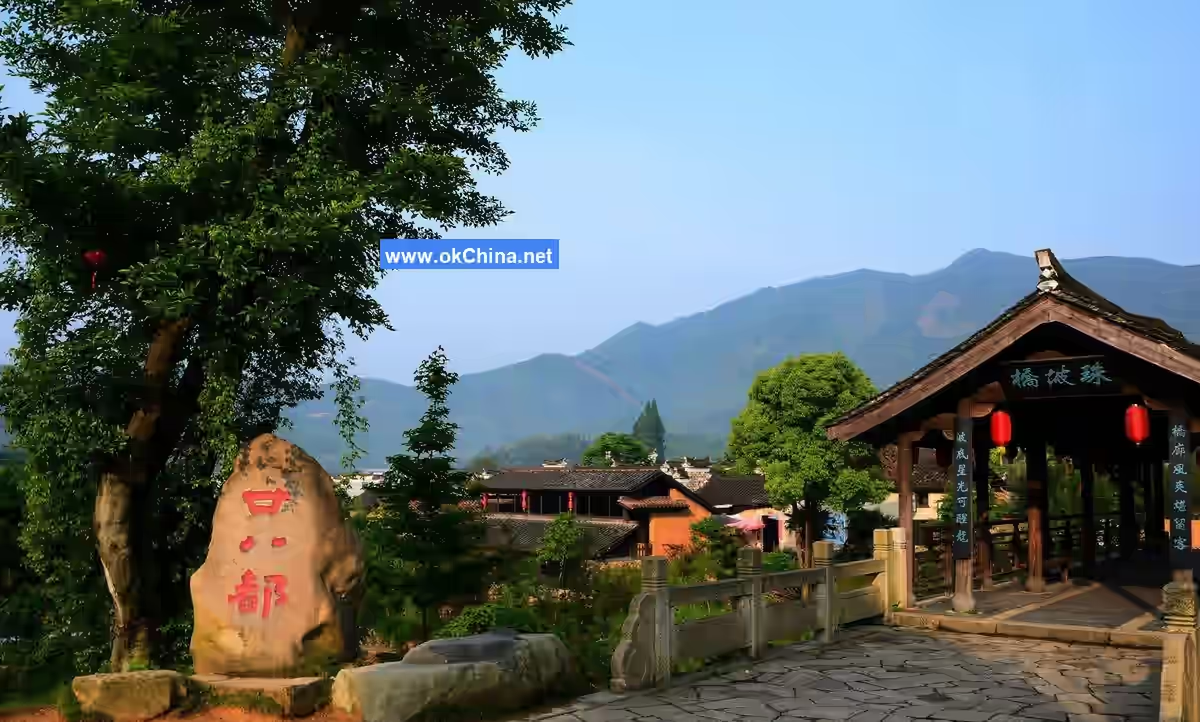
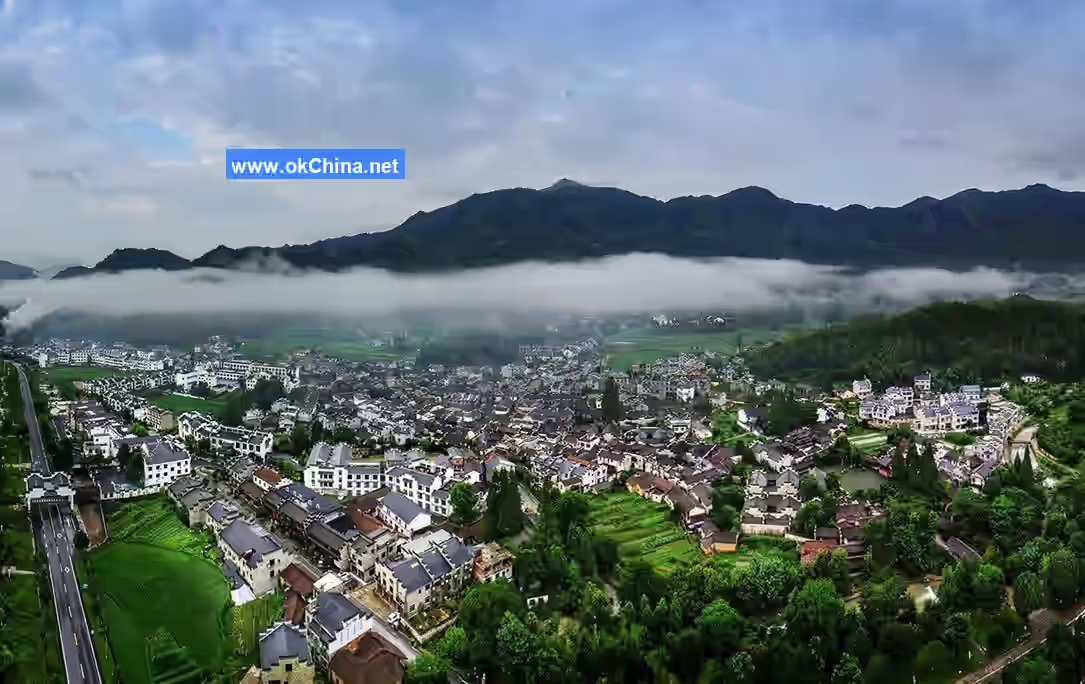
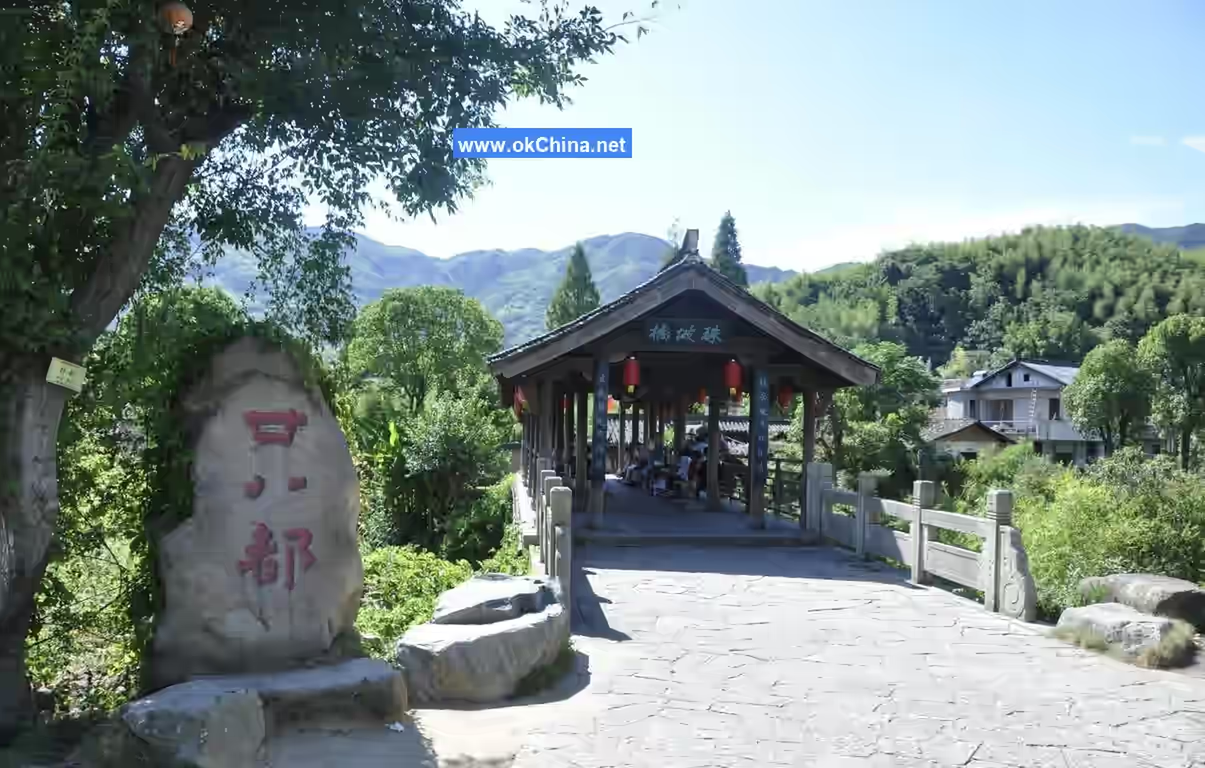
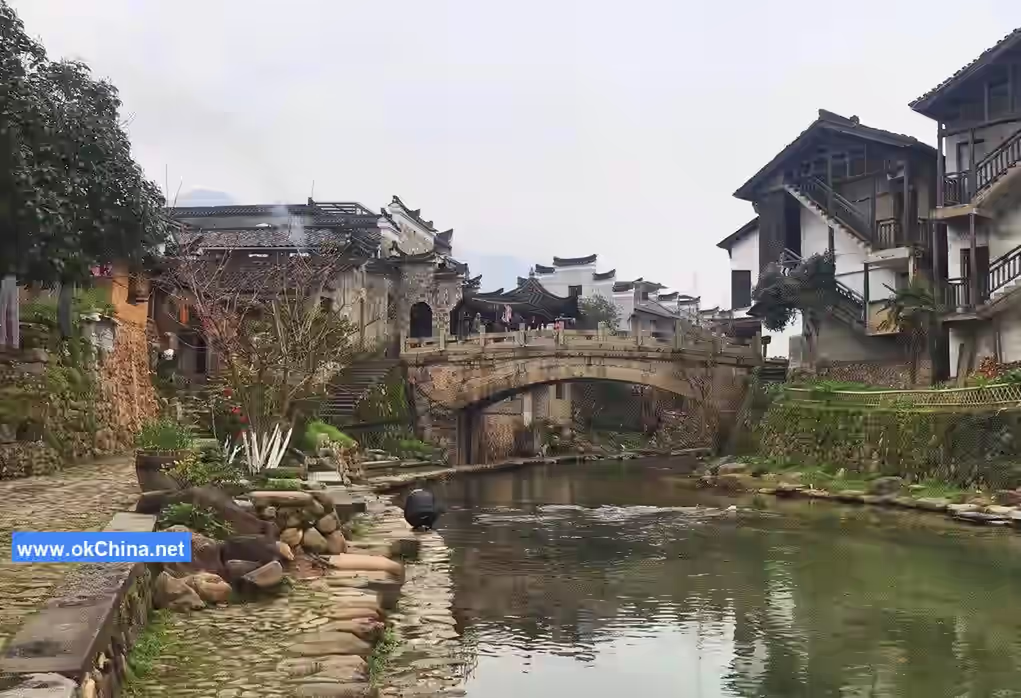
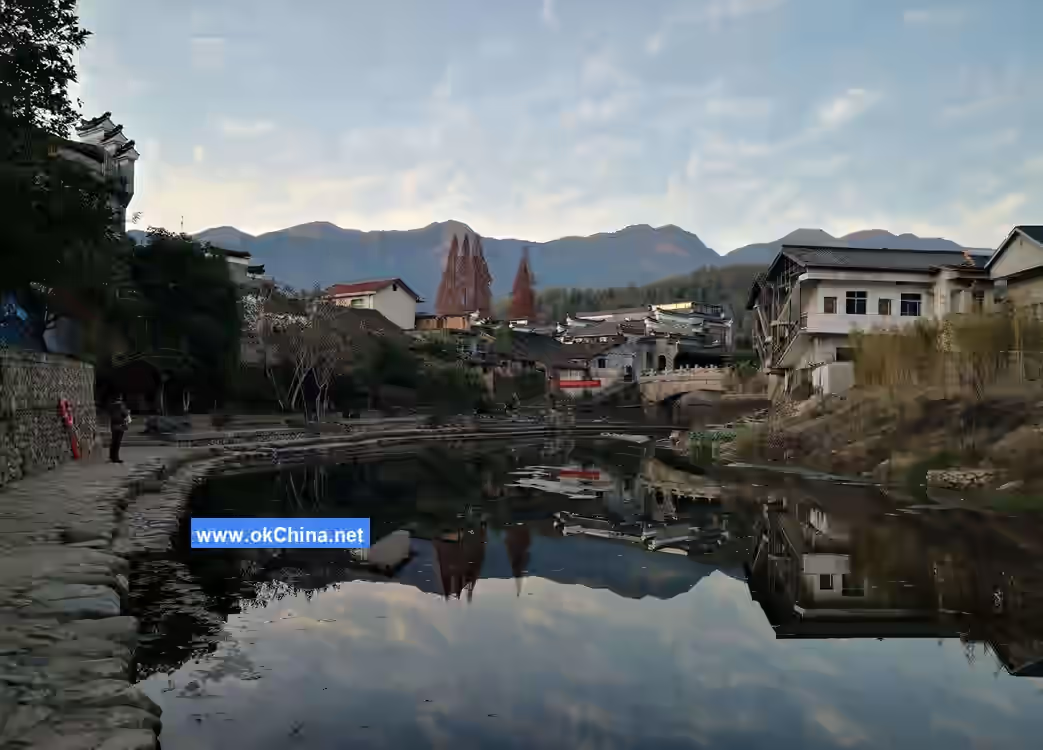
The Jianglang Mountain · Nianbadu Tourist Area in Quzhou City, abbreviated as the Jianglang Mountain · Nianbadu Tourist Area, is a scenic spot located within Jiangshan City, Quzhou City, Zhejiang Province. It comprises three scenic areas: Jianglang Mountain, Qingyang, and Nianbadu. The core scenic area covers 17.98 square kilometers. The Jianglang Mountain · Nianbadu Tourist Area is rich in resources, integrating Danxia landforms, ancient residential architecture, and Mao clan culture. Jianglang Mountain was historically known as Yulang Mountain and Jinchun Mountain. In August 2010, it was inscribed on the UNESCO World Natural Heritage List as one of the series nominations for "China Danxia." The Jianglang Mountain Scenic Area consists of Sanpan Stone, Shiba Qu, Ta Mountain, Niubi Peak, Xunü Lake (formerly Qinglong Lake), Xianju Temple, and other parts, covering an area of 11.86 square kilometers. The ancient town of Nianbadu is situated in the westernmost part of Zhejiang Province. Today, it serves as the strategic gateway into Fujian on the Huangshan-Quzhou-Nanping Expressway, located at the tri-province border junction of Zhejiang, Fujian, and Jiangxi. The ancient town has a long history. Since the end of the Tang Dynasty when the Huang Chao Rebellion army hacked their way through seven hundred li to open up the Xianxia Ancient Road, this small village, known as 'Daocheng' before the Song Dynasty, nestled within surrounding mountains, became a garrison site and a strategically contested location throughout successive dynasties. Qingyang Village belongs to Shimen Town and is an ancient town with a long history. Human activities have been present here since the Neolithic Age, and numerous Shang and Zhou Dynasty stamped pottery artifacts have been unearthed at the Huangnigang site. A majestic thousand-year-old camphor tree stands at the village entrance. About 200 meters east of the village lies the ancient Qingyang Pagoda. A "文"-shaped Wenchuan Stream flows through the village. The village is filled with simple, ancient buildings exuding historical gravitas, including attractions such as the Qingyang Ancestral House, Qingyang Ancestral Hall, Mao Clan Celebrity Hall, and Mao Zishui's Former Residence. Qingyang Village also preserves a plaque inscribed "Qingyang Ancient Residence," personally written by Hu Shi. In 2017, the Jianglang Mountain · Nianbadu Tourist Area in Quzhou City, Zhejiang Province, was designated as a National AAAAA Tourist Attraction by the National Tourism Administration of the People's Republic of China.
2. Geographical Environment
2.1 Location and Territory
The Jianglang Mountain · Nianbadu Tourist Area is located in Shimen Town and Nianbadu Town, Jiangshan City, Quzhou City, Zhejiang Province. The core scenic area covers 17.98 square kilometers.
2.2 Topography and Landforms
The characteristic Danxia landform of Jianglang Mountain features a 300-meter-high conglomerate solitary peak, split into three parts, towering atop low, gentle hills at an elevation of around 500 meters. This solitary peak is the only one remaining within the surrounding hundreds of square kilometers of red bed region, with an erosion rate exceeding 95%. The remaining solitary peak and the low hill plains together form a strongly contrasting geomorphological combination, a macroscopic form unique among China's Danxia landforms. The relative heights of the three rock slabs are 319 meters, 271 meters, and 268 meters respectively, while their respective geographical areas are less than 83,600 square meters, 4,500 square meters, and 17,500 square meters. On this tower-peak scale, the three rock slabs are the tallest among China's Danxia landform scenic areas, and so far, no taller ones have been found globally.
3. Main Scenic Areas
3.1 Jianglang Mountain Scenic Area
The Jianglang Mountain Scenic Area, covering 11.86 square kilometers, consists of six parts: the Three Stone Peaks, Shiba Qu, Ta Mountain, Xunü Lake, Xianju Temple, and the entrance area. It is characterized by "peculiar peaks and red cliffs" and is a typical Danxia landform scenic area. The main peak of Jianglang Mountain within the area has an altitude of 819.1 meters. The three giant rocks at the mountain summit have a relative height of 369.1 meters with slopes exceeding 88°, earning it the title "The Most Peculiar Peak of Danxia in China." The three peaks of Jianglang are arranged in a "川" character pattern, changing shape with every step and transforming with the clouds. Jianglang Mountain boasts three unique features: "Sanpan Stone," "Yixiantian (Thread of Sky)," and "Weiren Peak (Great Man Peak)." Weiren Peak is a natural formation remarkably resembling the profile of the great man Deng Xiaoping, capturing both spirit and form vividly. Particularly, the canyon between Ling Peak and Ya Peak is 312 meters high, 298 meters long, and less than 4 meters at its widest point, recognized as "the finest Yixiantian in China." The Jianglang Mountain Scenic Area has been famous since ancient times, attracting numerous literati and celebrities throughout history to climb and compose poems, leaving behind many timeless masterpieces. Ancient masters such as Zhang Jiuling, Bai Juyi, Wang Anshi, Lu You, Xin Qiji, and Xu Xiake all wrote poems or prose about Jianglang Mountain.
3.1.1 Sanpan Stone (Three Rock Slabs)
"Sanpan Stone" is the essence of the Jianglang Mountain Scenic Area. Three massive rock-wall-like stone peaks (Lang Peak, Ya Peak, Ling Peak) are arranged in a "川" character pattern from north to south, resembling stone bamboo shoots or heavenly pillars, shaped as if chopped by axes, rising abruptly from the mountaintop at around 500 meters, and then towering as three rock peaks of about 300 meters each. The average height of the "Sanpan Stone" is more than twice that of the famously renowned "World's Number One Stone" — the Dinghu Peak in Jinyun, Zhejiang, which is 170 meters high. The tallest, Lang Peak, enjoys the reputation of "The Most Peculiar Peak of Danxia in China." Lang Peak features gullies, gorges, caves, crevices, peaks, ridges, and ranges. It wasn't until 1991 that local craftsmen built a mountain path along the edge of the cliff, allowing people to ascend the incredibly perilous Lang Peak. The path, following the mountain's contours, is carved in a zigzag "之" shape with over 1,500 steps. The winding path has vertical cliffs on the right and a bottomless abyss on the left. The widest sections can accommodate two people, while the narrowest allow only one person to pass sideways. Climbing it truly tests one's courage and strength.
3.1.2 Yixiantian (Thread of Sky)
Yixiantian is naturally formed by the clamping of Lang Peak and Ya Peak, commonly known as Xiaonong Gorge. It is 312 meters high, 298 meters long, 4 meters at its widest, and 3.5 meters at its narrowest, certified by experts as "the finest Yixiantian in China." The left and right walls of "Yixiantian" are as distinct as two separate worlds, yin and yang. From different angles, one can see different views of "Yixiantian." From the outside, it looks like the Arabic numeral "1"; entering Xiaonong Gorge, it becomes the Chinese character "一"; sometimes it appears as a half-circle. Every year around late spring and early summer, when heavy rain pours, a light water curtain cascades down the outer side of Ya Peak's cliff, hence called "Heaven's Descending Curtain." In the depths of winter, thousands of晶莹 (jīngyíng - crystal-clear) icicles hang from the rock top, creating the "Hanging Ice Prickles"景观 (jǐngguān - scenery).
3.1.3 Kaiming Chan Temple
The predecessor of Kaiming Chan Temple, Jianglang Temple, was initially built in the second year of the Yuanxi era of the Northern Song Dynasty (1018 AD). It was later renamed "Kaiming Chan Temple" and has endured for a millennium. Emperors throughout history also inscribed plaques for the temple on several occasions. Kaiming Chan Temple was repeatedly built and destroyed. The temple seen today was rebuilt in 1990. On the yellow wall of the temple gate hangs the calligraphy of Master Hongyi — "Namo Amitabha Buddha." The side hall of the temple is called the Guanyin Hall, displaying a plaque inscribed by Zhao Puchu. The front hall of the main temple houses statues of Maitreya Buddha, Skanda, and the Four Heavenly Kings. The rear hall stands statues of Tathagata and Sangharama Buddha, with Manjusri and Samantabhadra on either side. Eighteen Arhats stand along both sides of the main hall. The back wall of the rear hall features relief carvings of Guanyin and various immortals from the Southern Sea island nations. The temple contains over 120 statues of Bodhisattvas and Buddhas, with thriving incense offerings.
3.2 Nianbadu Ancient Town Scenic Area
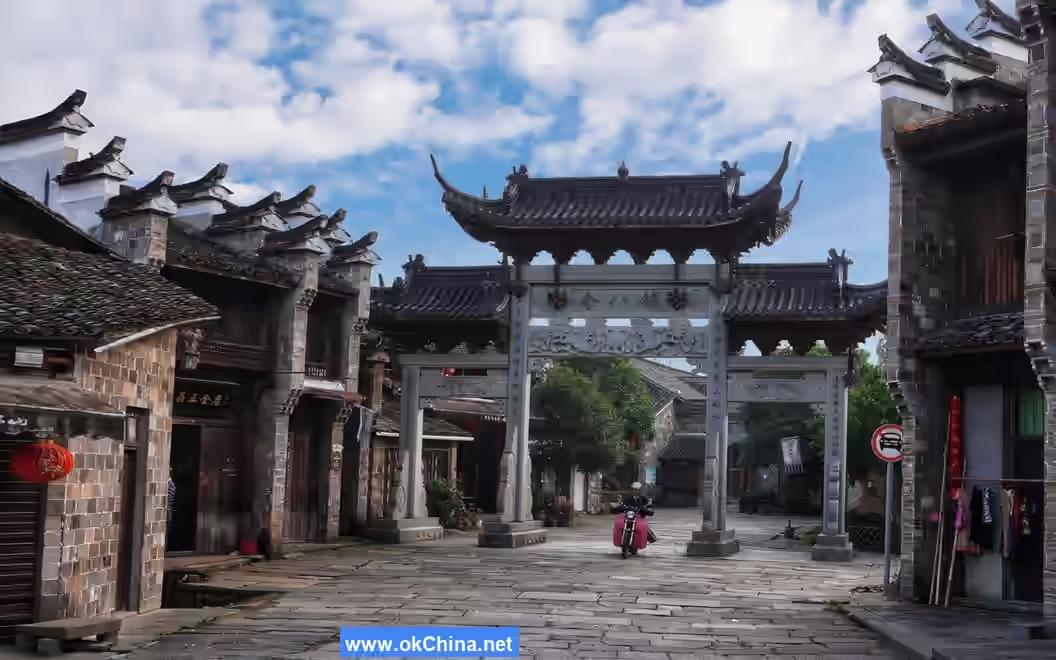
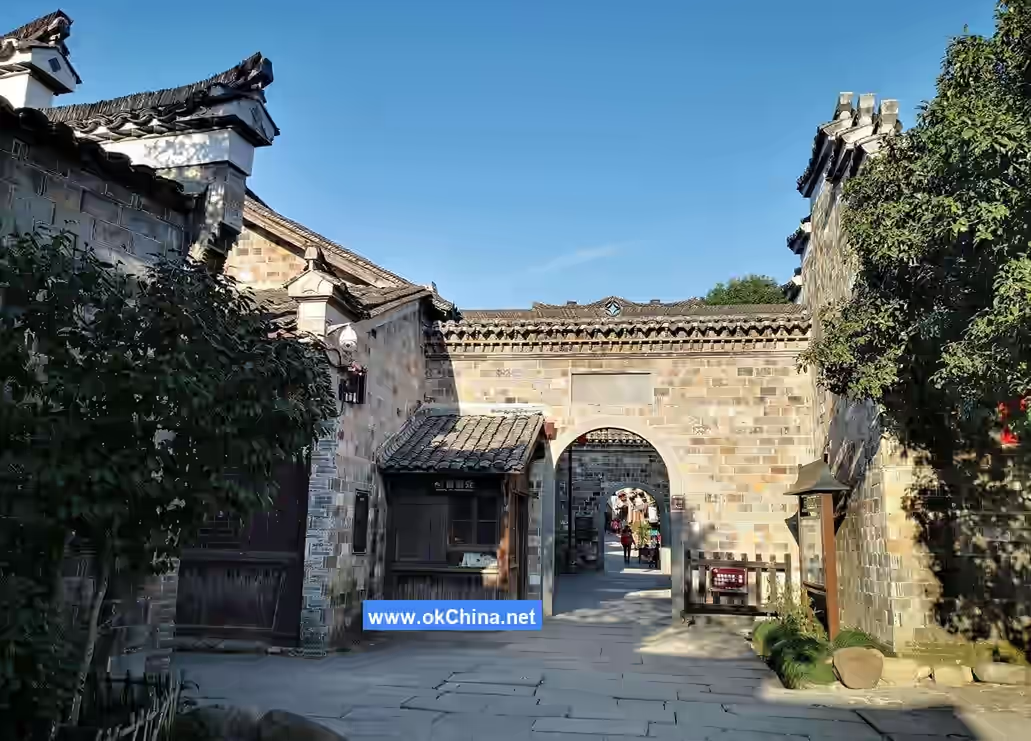
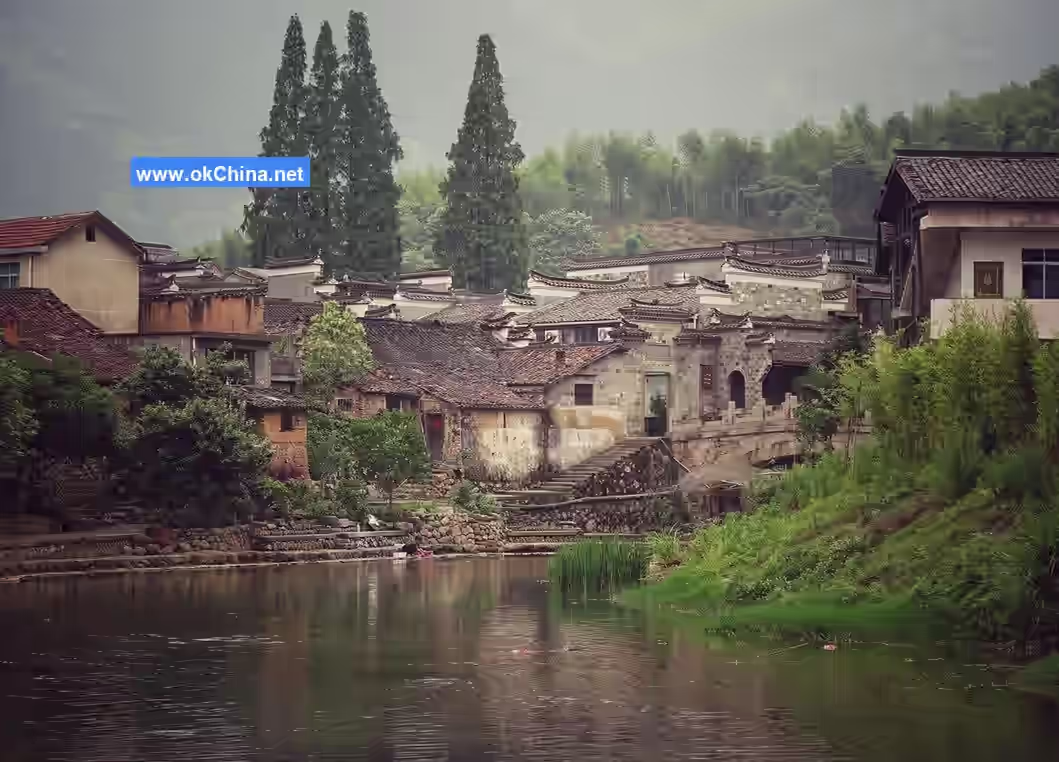
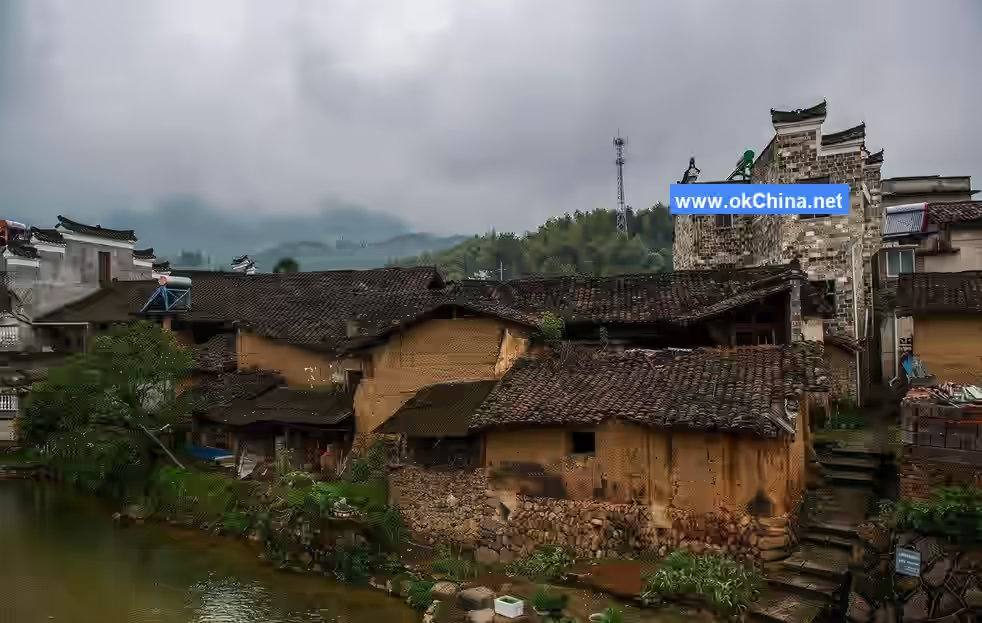
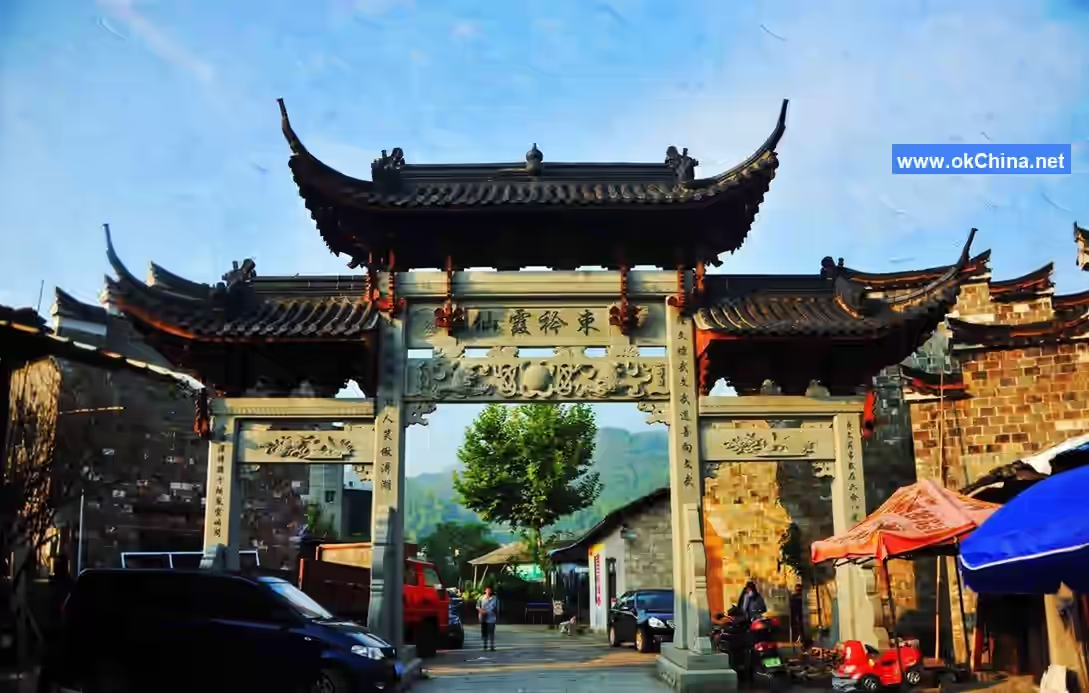
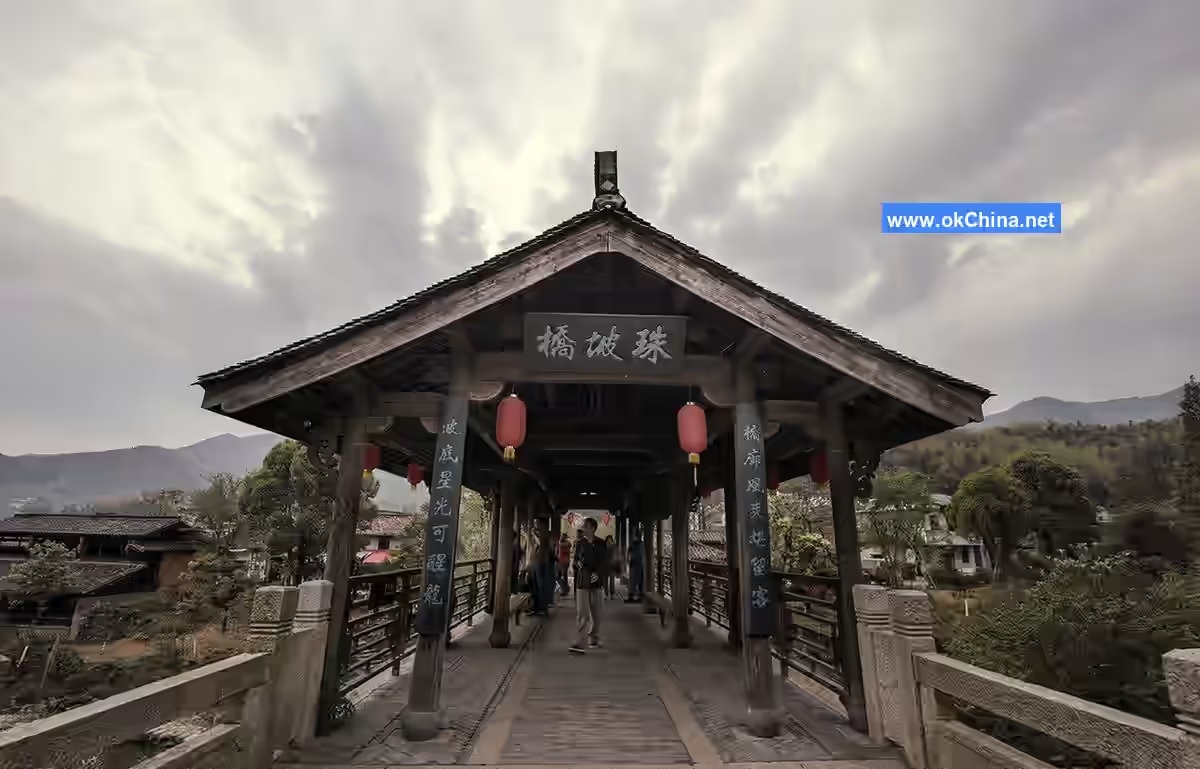
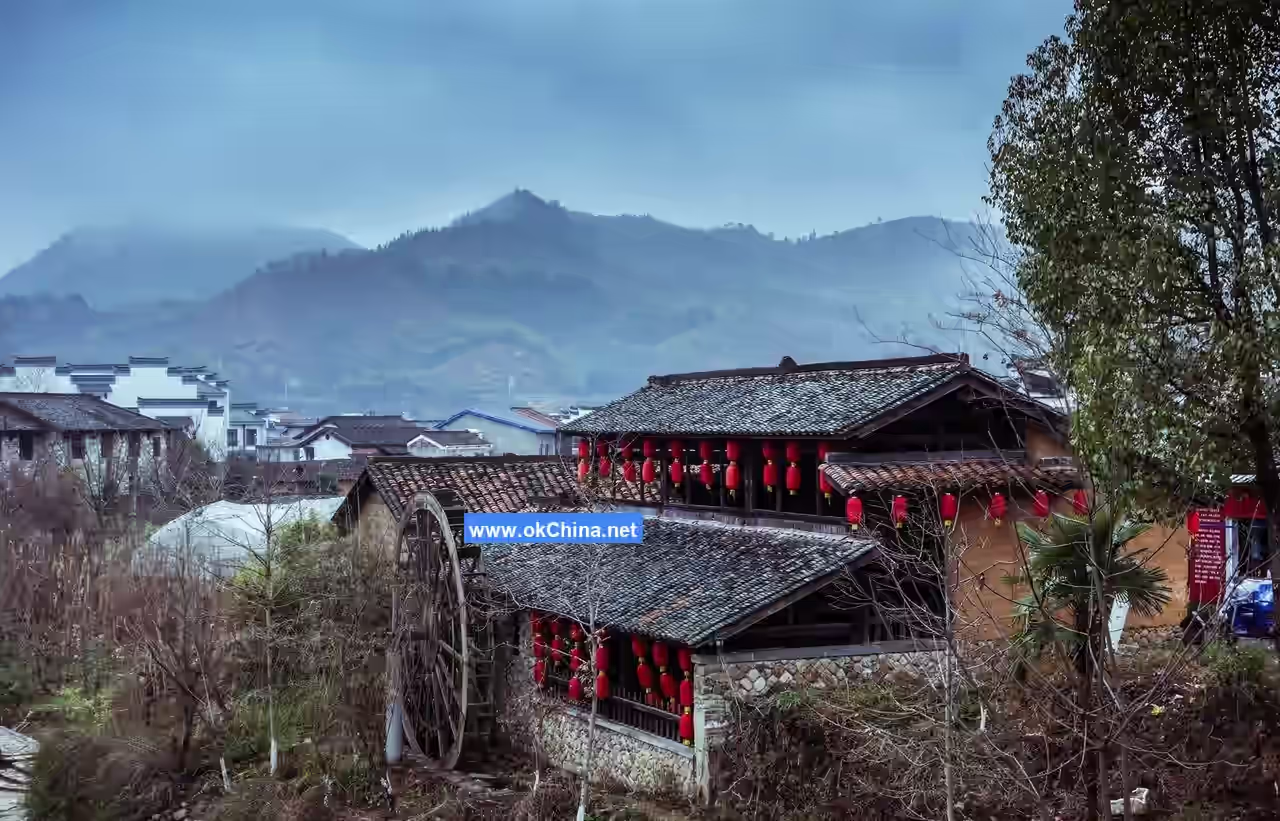
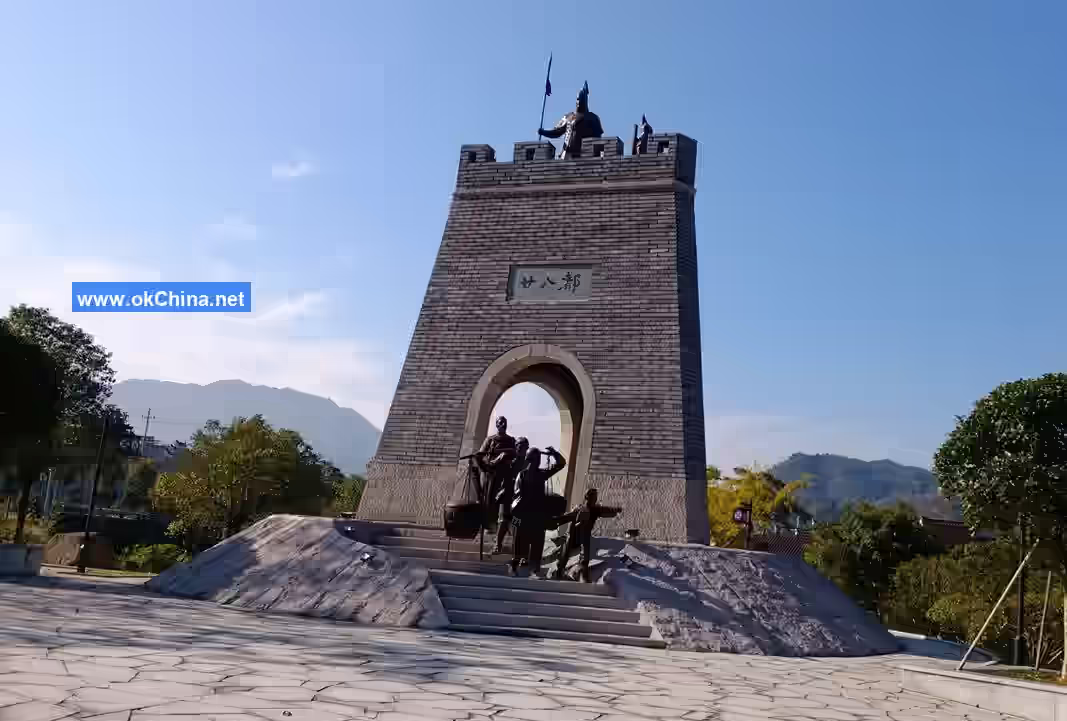
The Nianbadu Ancient Town Scenic Area is an important component of the National 5A Tourist Attraction, the Jianglang Mountain · Nianbadu Tourist Area. The ancient town has a history of over a thousand years. Its geographical location is exceptionally unique; it was the first town when entering Zhejiang from Fujian in ancient times and a strategically contested location for military strategists throughout history, long known as the "Key of Fengxi." The town preserves 36 relatively large and intact ancient residential buildings and halls, along with 11 public buildings including the Confucius Temple, Dawang Temple, Wanshou Palace, and Wenchang Pavilion. The architectural styles are diverse, blending Zhejiang, Anhui, Fujian, Hakka, and Western styles, featuring exquisite carvings, painted beams, and soaring pavilions. The town's residents preserve the unique folk arts passed down by their ancestors, such as antiphonal singing, folk dancing, land boat racing, lantern festivals, paper cutting, puppet shows, stilt walking, and stone sliding. The town currently has a population of over ten thousand people, with 142 surnames and 13 dialects in use. It preserves a large-scale and relatively complete ancient street, ancient residences, and ancient architectural complex from the Ming and Qing dynasties. The architectural style integrates Zhejiang, Anhui, Jiangxi, Northern Fujian Hakka, and Western styles. The folk customs are peculiar, and the cultural heritage is profound.
3.2.1 Bingshu Foreign Goods Store
The Bingshu Foreign Goods Store is the former residence of local merchant Jiang Bingshu, originally named the "Asia Petroleum Company." The entire mansion was initially built in the late Qing Dynasty, covering an area of 800 square meters, featuring a three-section, four-courtyard layout. The store contains typewriters, table clocks, telephones, record players, various foreign canned goods, foreign wines, matches, lighters, kerosene lamps, gasoline lamps, opium lamps, sewing machines, and toys like cars, airplanes, and motorcycles — everything one could imagine. There are also foreign perfumes from brands like Burberry and Dior that continue to this day. These items were all extremely fashionable at the time. Under the eaves and beams are wooden carvings of "Attracting Wealth," "Bringing in Treasure," and the "Eight Immortals." The courtyards have no open drainage ditches, which is actually a distinctive feature of Nianbadu's courtyards. They are designed with hidden drainage channels; accumulated water flows through these hidden channels into water troughs in the shop's courtyard, which can be used for firefighting during droughts. The hidden drain openings are fitted with coin-shaped stone carvings. The courtyards are paved with pebbles in coin patterns. The design subtly implies "wealth gathers internally, fertile water does not flow outward," making it the owner's "wealth-gathering" treasure ground.
3.2.2 Zhejiang-Fujian Fengling Battalion Commander's OfficeIn the 11th year of the Shunzhi reign of the Qing Dynasty (1654), to consolidate the border situation, the Qing court jointly established the Zhejiang-Fujian Fengling Battalion Headquarters in Zhejiang and Fujian provinces to manage border military affairs. Due to the strategic importance of Nianbadu in military terms, it gradually formed the "Throat of Zhejiang and Fujian," centered on Fengling Pass. After the exceptional establishment of the "Zhejiang-Fujian Fengling Battalion," its organization included one third-rank guerrilla officer, one sixth-rank qianzong military officer, two seventh-rank bazong military officers, and over a thousand soldiers. It was commonly known as the "Third-Rank Guerrilla Yamen." The Guerrilla Yamen was commanded by one guerrilla officer and was subject to the joint control of both provinces. Within the Jiangshan territory, it oversaw 11 military posts, including the Qinghu Town Post and Lixian Town Post, as well as 4 posts and 18 stations, such as the Wudun Post, with each station guarded by six soldiers and equipped with one beacon tower. The Guerrilla Yamen covered an area of 900 square meters and was divided into the main courtyard, the winter annex, and the guardhouse and storerooms on the west side. The development of Xunli Village originated from the location of the Fengling Battalion, and the garrisoned troops spurred local development at the time. Today, the Zhejiang-Fujian Fengling Battalion Headquarters has become a museum witnessing the military history of Nianbadu. Its interior is divided into five exhibition areas. The first exhibition hall, "Garrison Step by Step, Defense at Every Turn," displays the ten passes along the Xianxia Ancient Road. The second exhibition hall focuses on garrison culture, the third showcases the military history of Nianbadu, the fourth exhibits the fortress ruins of Nianbadu, and the fifth is the Zheng Chenggong Exhibition Hall.
3.3 Qingyang Scenic Area
The Qingyang Scenic Area, also known as Qingyang Village, is an important component of the national 5A-level tourist attraction, the Jianglang Mountain-Nianbadu Tourist Area. The Xianxia Ancient Road, an overland extension of the Maritime Silk Road, passes by the village. Qingyang Village is the birthplace of the Mao clan in Jiangnan and the ancestral home of Mao Zedong. Mao Zedong is the 56th-generation direct descendant of the Qingyang Mao clan. Four Jiangshan Mao Clan Cultural Tourism Festivals have been held here, and Mao Xinyu and other Mao clan relatives have visited multiple times to trace their roots. Qingyang Village is a place of outstanding people and spiritual energy, having produced eight ministers and eighty-three imperial scholars in history. Notable figures include the great Song Dynasty poet Mao Pang and the renowned Taiwanese master of Chinese studies, Mao Zishui.
4. Cultural Resources
4.1 Origin of Names
4.1.1 Jianglang Mountain
Jianglang Mountain has had many ancient names, including Jinchun Mountain, Xulang Mountain, and Yulang Mountain. Arranged from south to north in a "川" shape, they are Lang Peak, Ya Peak, and Ling Peak, locally known as the "Three Slabs of Stone." Legend has it that in ancient times, Jianglang Mountain was a seaport connected to the East Sea Dragon Palace. The youngest daughter of the East Sea Dragon King, Xunü, played here and met the three Jiang brothers, who gathered herbs and firewood locally. All three brothers fell in love with Xunü, but due to the distinction between humans and immortals, Xunü was eventually forced to return to the East Sea Dragon Palace. The devoted Jiang brothers climbed the mountain, gazing at Xunü's receding figure, longing and watching tirelessly until they finally turned into three massive rocks. Ancient texts also record the naming of Jianglang Mountain. The Wensi Boyao, compiled by Gao Shilian and others in the Tang Dynasty, mentions: "Three brothers of the Jiang family ascended the peak and turned into stone, hence it is also called Jianglang Mountain."
4.1.2 Nianbadu
In the fourth year of the Xining reign of the Northern Song Dynasty (1071), Jiangshan established forty-four administrative units called "du." This area ranked twenty-eighth, hence the name Nianbadu (Twenty-Eighth Du). It later became an important town with strategically arranged passes: Anmin Pass to the east, Fengling Pass to the south, Liushi Pass to the west, and Xianxia Pass to the north. Each pass was steep and easily defensible.
4.2 Cultural History
4.2.1 History of Jianglang Mountain
Jianglang Mountain is a UNESCO World Natural Heritage site with a long history and rich cultural heritage. It features the Jianglang Xunü Sculpture, Tang Pagoda, the millennium-old Kaiming Temple, the millennium-old Jianglang Academy, Jianglang Temple, ancient poems about Jianglang, the largest cliff inscription in China of Mao Zedong's calligraphy "The Land So Rich in Beauty," the Ming Dynasty Neo-Confucian scholar's inscription "Cliff Standing Ten Thousand Ren" on Lang Peak, Xiake Pavilion, Yanxia Pavilion, and other scenic spots. It also includes structures like the Hanging Temple, Guanyin Pavilion, and Wentian Pavilion, as well as cultural relics within the scenic area such as the Qingyang Mao Clan Cultural Village, Dai Li's Former Residence, the Xianxia Ancient Road, and the historic town of Nianbadu. The Xianxia Ancient Road was the only overland route from the capital to the coastal areas of Fujian in ancient times, known as the "Poetry Road of the Southern Song." Southern Song literati like Xin Qiji, Lu You, Yang Wanli, and Zhu Xi left over 2,000 poems along the ancient road. The historical figure Xu Xiake visited Jianglang Mountain and the Xianxia Ancient Road three times and wrote about them in The Travel Diaries of Xu Xiake. The Xianxia Ancient Road also preserves relics such as Xianxia Pass, the ancient town of Nianbadu, and the Huang Chao Memorial Hall "Chongtian Yuan." The ancient town of Nianbadu retains a large number of Ming and Qing dynasty ancient buildings, including 36 residential houses and 11 larger public buildings. It is home to 118 surnames and 13 dialects, with rich folk customs.
4.2.2 History of Nianbadu
In 878 AD, Huang Chao's rebel army attacked Fujian but was blocked by the Xianxia Ridge on the Zhejiang-Fujian border. They "cut through seven hundred mountains to reach Jianzhou," opening the Xianxia Ancient Road through the rugged mountains, which brought historical records to the nearby town. During the Northern Song Dynasty, 44 "du" were established in southern Zhejiang, and this town ranked 28th, locally called "Nianbadu." People have long described Nianbadu as the "Southeastern Lock and Throat of Fujian," not only because it is located at the junction of Fujian, Zhejiang, and Jiangxi provinces but also because of its four passes—Anmin, Fengling, Liushi, and Xianxia—which are easily defensible and made it famous. Historically a strategic military location, Nianbadu, under Jiangshan City in Zhejiang Province, prospered because of the Xianxia Ancient Road. Before the highway was built in 1932, the Xianxia Ancient Road was the passage between Fujian and Zhejiang. Fugai Mountain to the south of the town is the Fujian entry point of the Xianxia Ancient Road, described in The Travel Diaries of Xu Xiake as "strange rocks grasping clouds, flying mists carving emerald." In the late Ming Dynasty, Zheng Chenggong's father retreated to Fujian and later to Taiwan via this ancient road. Later, the Qing government recruited 1,500 soldiers from across the country to garrison the Fengling Pass south of Nianbadu to guard against Ming army counterattacks. The garrison naturally spurred commercial development, and Nianbadu gradually evolved into an immigrant town. Chinese culture has traditionally thrived on clan lineages, and in many regions of China, a village often shares a single surname, like Zhangjia Village, Lijia Village, or Wangjia Village. However, the small ancient town of Nianbadu, which began in the Tang Dynasty and flourished during the Ming and Qing dynasties, has a population of just 10,000 but boasts 142 surnames and 13 dialects. Thus, Nianbadu is also known as the "Kingdom of Dialects" and the "Town of a Hundred Surnames."
4.3 Folk Culture
4.3.1 Folk Culture
The villages around Jianglang Mountain have rich and diverse village song culture and folk customs. The village song culture of Dachen Township has been performed multiple times in the Great Hall of the People and township cultural halls and was selected as a "national gift" for the G20 Hangzhou Summit. Villagers have also integrated village song culture into folk customs such as the Jiangshan Old Buddha Festival, Jiangshan Mochi Festival, Qingyang Mao Clan Genealogy Culture, City God Temple Fair, Lixian Temple Fair, Lantern Festival, beam-raising customs, Qiban customs, couplet-hanging customs, finger-guessing games, and dragon dances. Cultural festivals and events like the Mao Clan Cultural Festival, Jianglang Mountain Cultural Festival, and Green Peony Tea Cultural Festival are also held. The area around Jianglang Mountain is rich in intangible cultural heritage. Puppetry (Nianbadu Puppetry) is listed as a national-level intangible cultural heritage, alongside provincial, municipal, and county-level heritage items such as Xujiang Ancient Music, Nianbadu Puppets, and legends of Jianglang Mountain.
4.3.2 Culinary Culture
Jiangshan's traditional cuisine belongs to Zhejiang cuisine, one of China's top ten culinary traditions. It features "Jiangshan's Ten Gold Medal Dishes," as well as traditional delicacies like Jiangshan white goose, black-bone chicken, Nianbadu's "Eight Bowls and Two Snacks," Daqiao's loach, Xiakou's Lixia Geng, and snow lotus root noodles.
Comments
Post a Comment