Jade Dragon Snow Mountain
1. Introduction
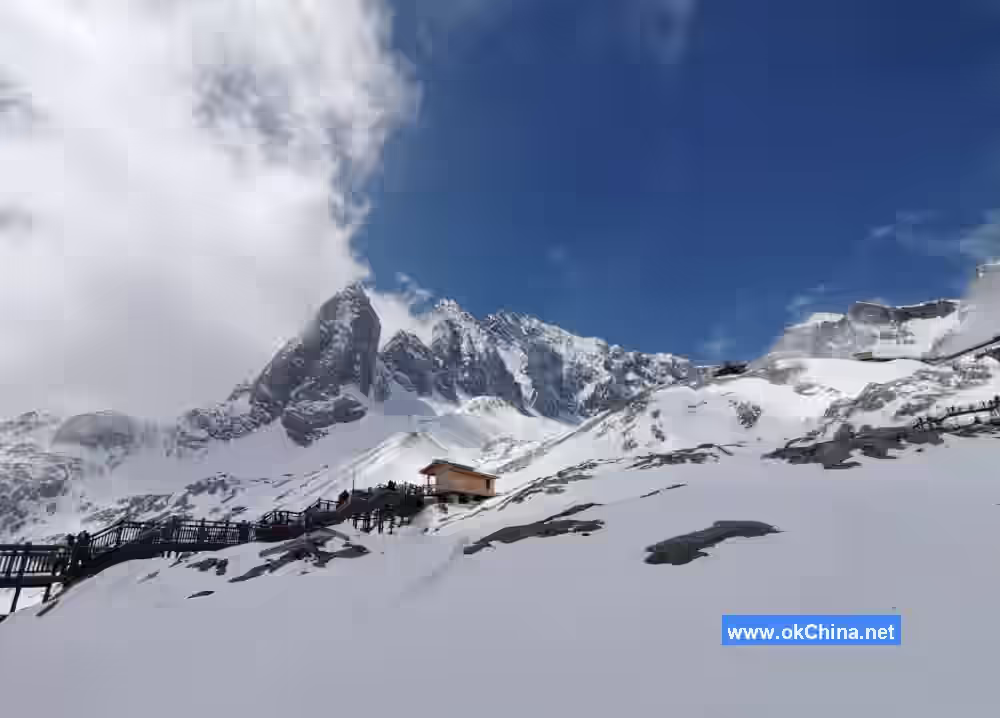
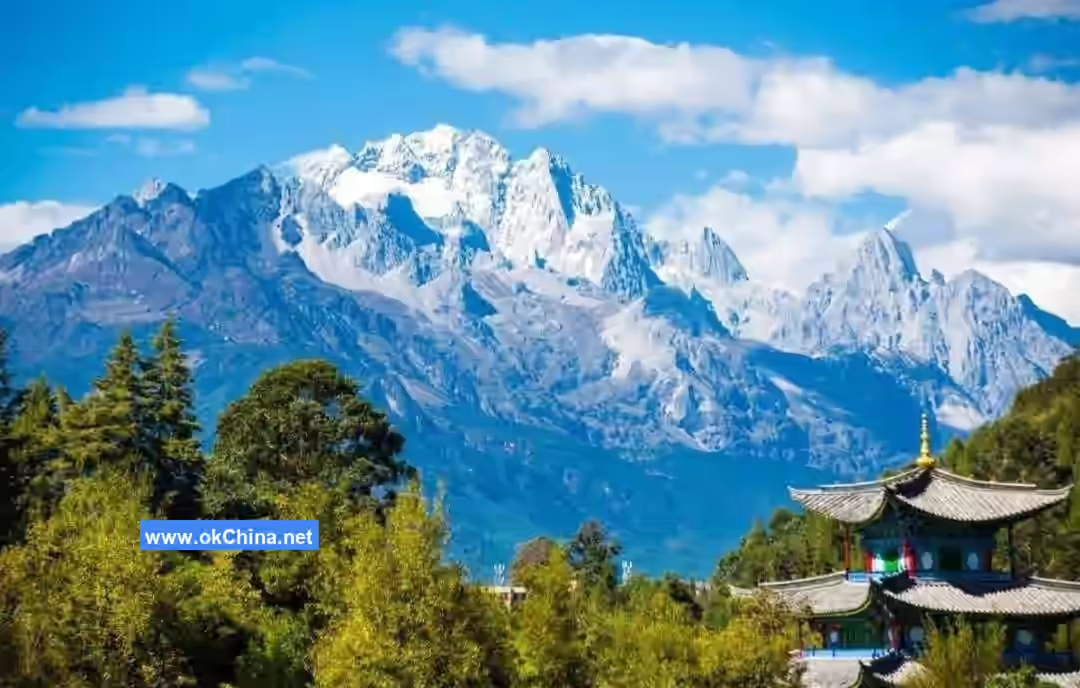
The Jade Dragon Snow Mountain Scenic Area in Lijiang City is the southernmost major snow mountain in the Northern Hemisphere. Located within Yulong Naxi Autonomous County, it is a 5A-level national scenic area officially approved by the National Tourism Administration. Stretching 35 kilometers from north to south and 13 kilometers from east to west, it covers an area of 960 square kilometers. Its main peak, Shanzidou, stands at an altitude of 5,596 meters. The alpine snow scenery is situated above 4,000 meters, featuring perilous, wondrous, beautiful, and elegant landscapes. The Jade Dragon Snow Mountain Scenic Area is rich in natural tourism resources. Its landscapes can be broadly categorized into snowfield and glacier landscapes, alpine meadow landscapes, primeval forest landscapes, and snowy mountain water landscapes. The main peak, Shanzidou, at 5,596 meters, is the peak with the lowest latitude and highest altitude in the Northern Hemisphere. In the Naxi language, Jade Dragon Snow Mountain is called "Oulu," meaning "silver rock." Its snow-covered peaks, thirteen in a continuous range, resemble a "giant dragon" soaring and dancing, hence the name "Jade Dragon."
2. Geographical Environment
2.1 Location
Jade Dragon Snow Mountain is located within Yulong Naxi Autonomous County, between 100°4′2″E to 100°16′30″E and 27°3′2″N to 27°18′57″N. It is the southernmost major snow mountain in the Northern Hemisphere, stretching 35 kilometers from north to south and 13 kilometers from east to west, covering an area of 960 square kilometers. The alpine snow scenery is situated above 4,000 meters, with the scenic area itself covering 415 square kilometers.
2.2 Topography and Geology
Jade Dragon Snow Mountain is a fault-block fold mountain formed by significant uplift during the Quaternary period. The mountain mass is primarily composed of Devonian and Carboniferous carbonate rocks, with a thickness exceeding 3,000 meters, some of which have metamorphosed into marble. The main peak, Shanzidou, is composed of Carboniferous Yulong limestone. The southern part of the mountain mass features interbedded Carboniferous and Permian basalt and limestone. At the eastern foothills of Jade Dragon Snow Mountain lie the wonders of the Baishui (White Water) River and Heishui (Black Water) River. One riverbed developed in limestone layers, while the other developed in basalt. The former has a riverbed entirely of white gravel with clear water; the latter is the opposite, with black and yellow gravel. The two rivers, one white and one black, create a unique landscape. Jade Dragon Snow Mountain is also the most remote mountain within the Tibetan Plateau region to have maritime glaciers. The climatic snowline is around 5,000 meters, while the topographic snowline is approximately 4,000–4,500 meters. The main peak, Shanzidou, features hanging glaciers. Cirque glaciers are distributed at altitudes around 4,500–5,000 meters. Currently, there are 19 glaciers in total, covering an area of 11.61 square kilometers, among which "Baishui No. 1" is the most suitable for tourism. Additionally, Jade Dragon Snow Mountain has numerous traces of ancient glaciers, including the Ganheba (Dry River Dam) below the main peak Shanzidou. The Ganheba valley floor is at 3,300 meters, with its mouth facing southwest. The valley is 300 meters wide, with limestone cliffs on both sides having a relative height difference of over 1,000 meters and valley slopes of 65–70 degrees, making it a typical large-scale Alpine-style glacial valley.
2.3 Climate and Hydrology
Jade Dragon Snow Mountain has an annual average temperature of 11.3°C, with the coldest month averaging 3.0°C and the hottest month averaging 17°C. The annual rainfall at Lijiang Jade Dragon Snow Mountain is about 1,000–1,200 mm, concentrated mainly from June to October, which accounts for 80% of the total rainfall. Rainfall is scarce from November to April of the following year.
3. Major Attractions
3.1 Shanzidou
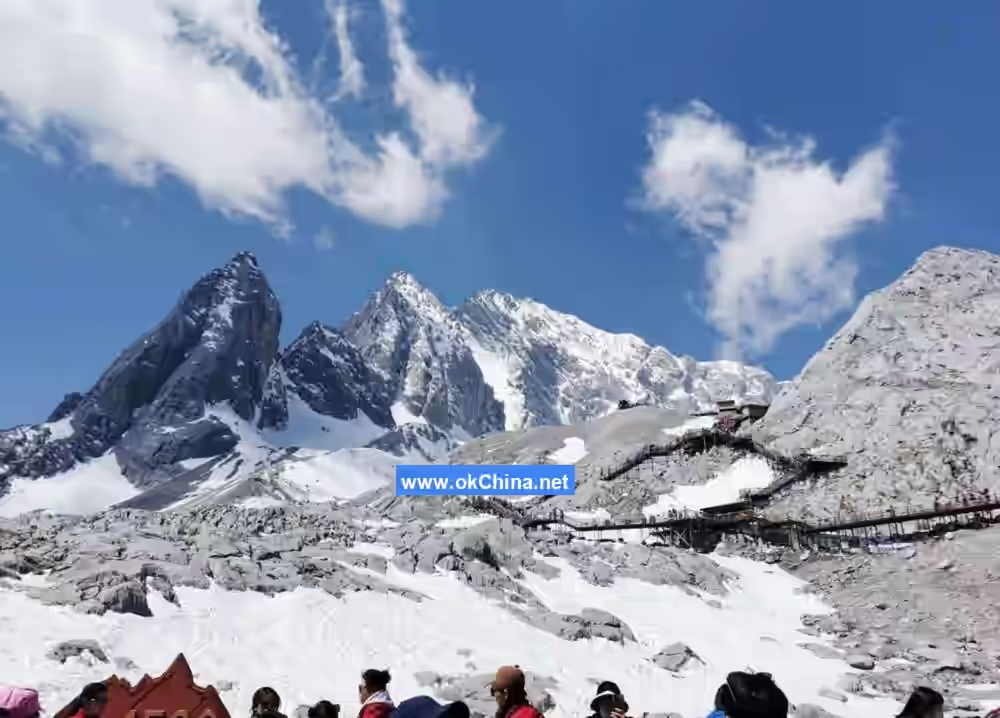
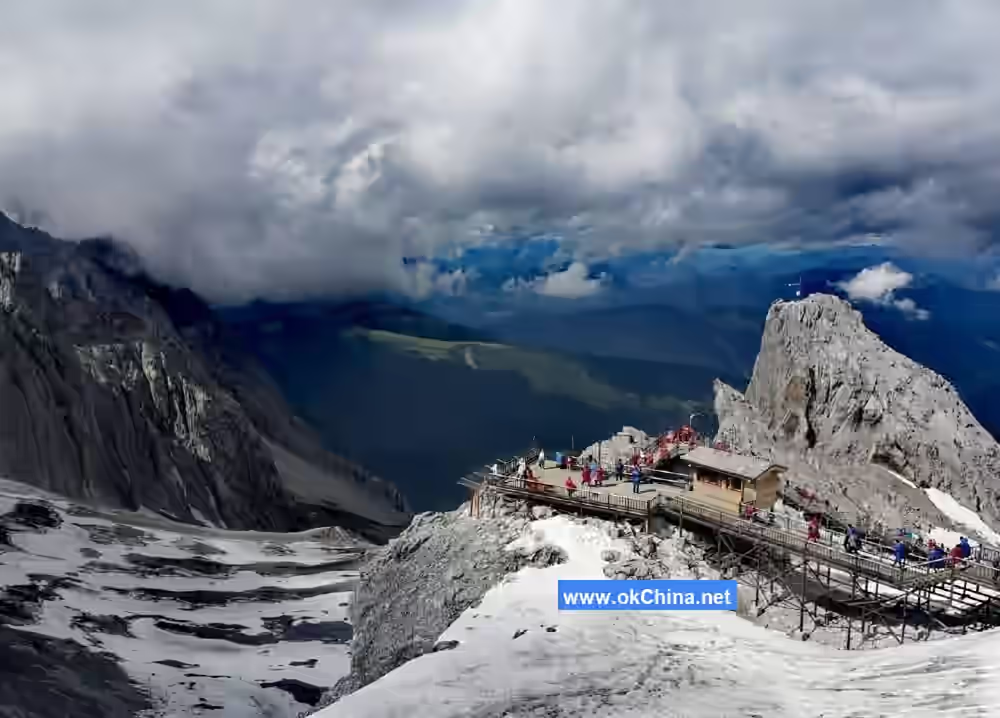
Shanzidou Peak is located 15 kilometers north of Lijiang City, Yunnan Province, at an altitude of 5,596 meters. It belongs to the Jade Dragon Snow Mountain range. It is the peak with the lowest latitude and highest altitude in the Northern Hemisphere. Located northwest of Lijiang, Yunnan, China, it runs north-south, about 13 kilometers wide east-west and 35 kilometers long north-south. It faces the Haba Snow Mountain, with the Jinsha River rushing between them.
3.2 Ganhaizi
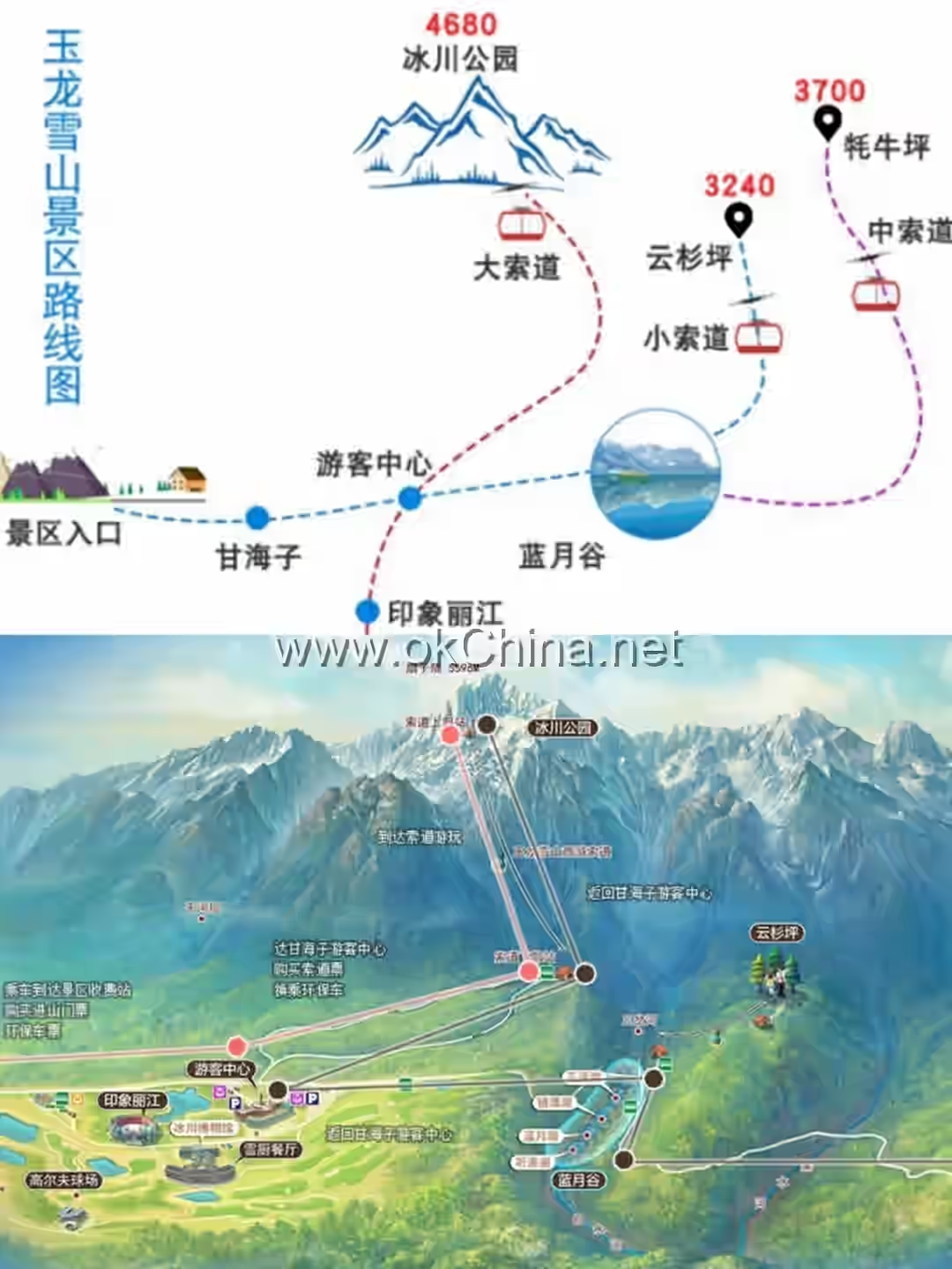
Ganhaizi is located at the eastern foothills of Jade Dragon Snow Mountain. Originally a high-altitude glacial erosion lake, it later dried up due to rising snowlines and reduced water accumulation, earning the name "Dry Sea." Ganhaizi is a highland meadow surrounded by mountains on three sides, offering a panoramic view of Jade Dragon Snow Mountain. The entire large meadow is about 4 kilometers long and 1.5 kilometers wide, covered with lush pasture grass and low shrub forests. Ganhaizi serves as the tourist distribution center for the Jade Dragon Snow Mountain tourism area, providing services such as food, accommodation, tours, transportation, entertainment, and shopping. It is home to the world's longest golf course, the highest altitude golf course in Asia, and the only golf course at the foot of a snow-capped mountain.
3.3 Impression Lijiang
The Impression Lijiang theater is located at Ganhaizi, Jade Dragon Snow Mountain, at an altitude of 3,100 meters, with the majestic peaks of Jade Dragon Snow Mountain as its natural backdrop. Impression Lijiang is an original ecological daytime live performance directed by Zhang Yimou, Wang Chaoge, and Fan Yue. The entire performance is divided into six parts: "Ancient Tea-Horse Road Caravan," "Toasting the Snow Mountain," "Heaven on Earth," "Dancing and Singing," "Drum Dance Sacrifice to Heaven," and "Prayer Ceremony."
3.4 Yunshanping (Spruce Meadow)
Yunshanping, also known as the "Third Kingdom of Love-suicide," is an alpine meadow on the mountainside of the main peak Shanzidou of Jade Dragon Snow Mountain. It covers about 0.5 square kilometers at an altitude of 3,240 meters. In the local language, it is called "Youwuge," meaning "the place of love-suicide." Located in a mountain valley at the eastern foothills of Jade Dragon Snow Mountain, to the lower right of the main peak, it is a sacred place in the hearts of the Naxi people. In the Naxi language, Yunshanping is called "Wulu Youcuige," meaning "the love-suicide place in Jade Dragon Mountain." Legend has it that this is where young men and women from the "Third Kingdom of Jade Dragon" in Naxi mythology committed love-suicide.
3.5 Glacier Park
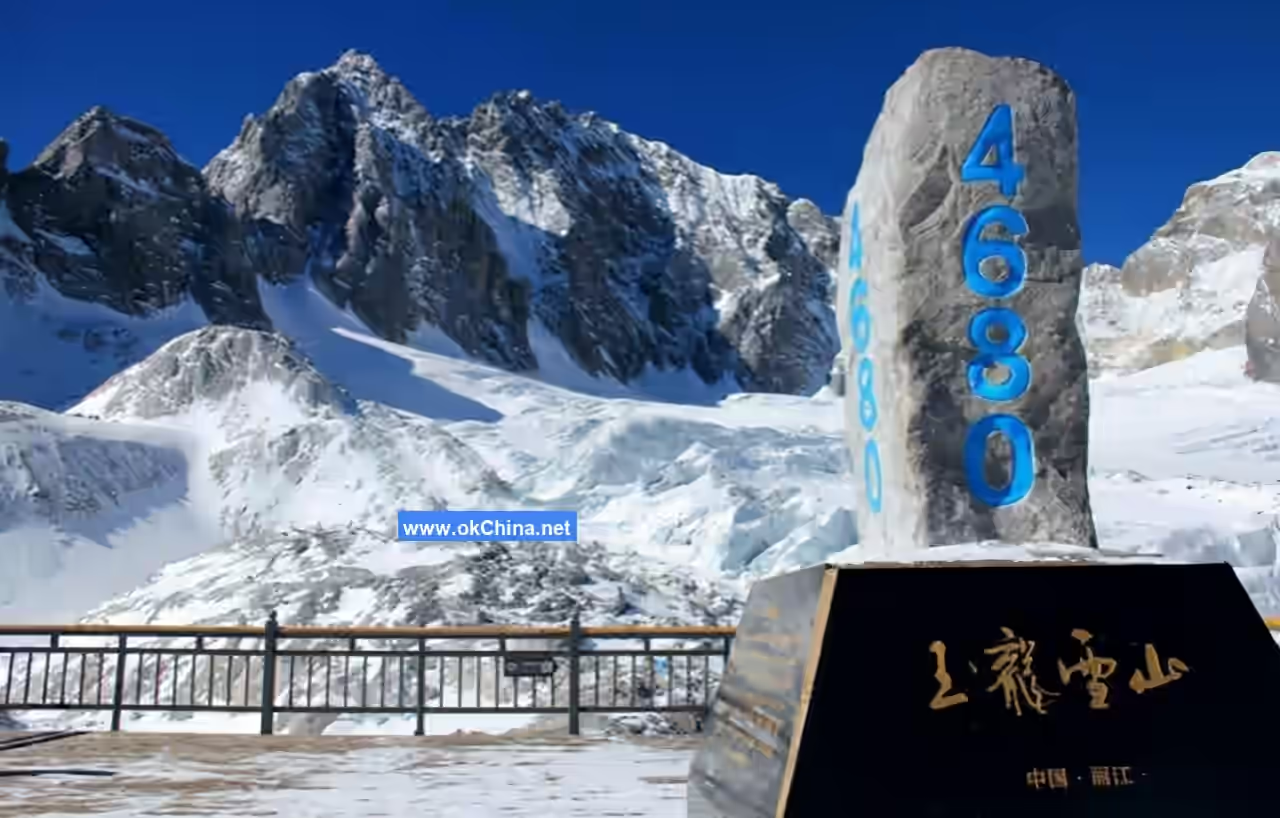
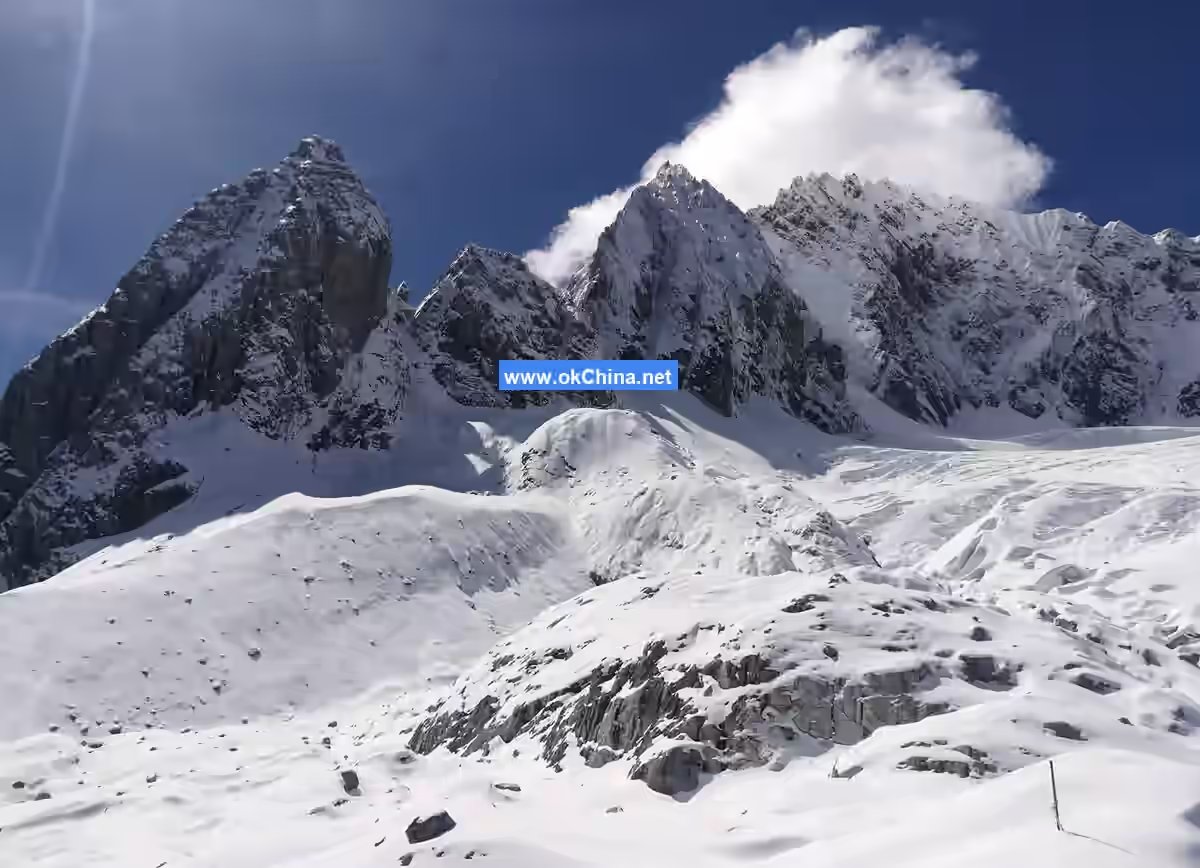
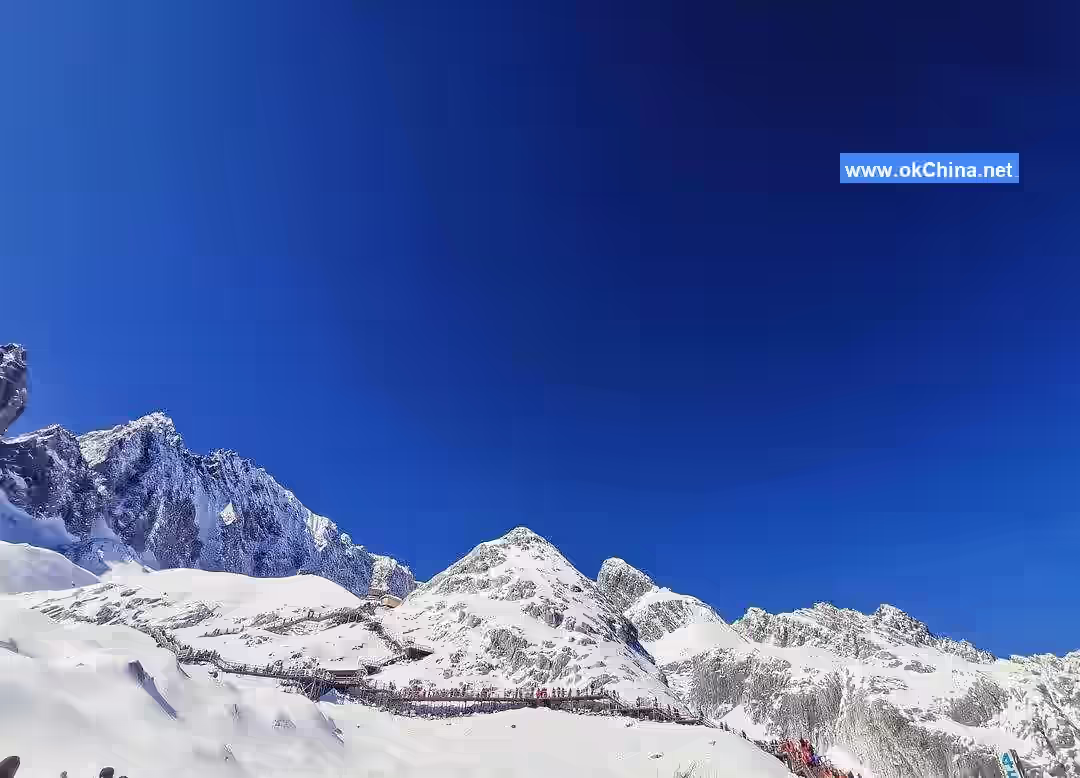
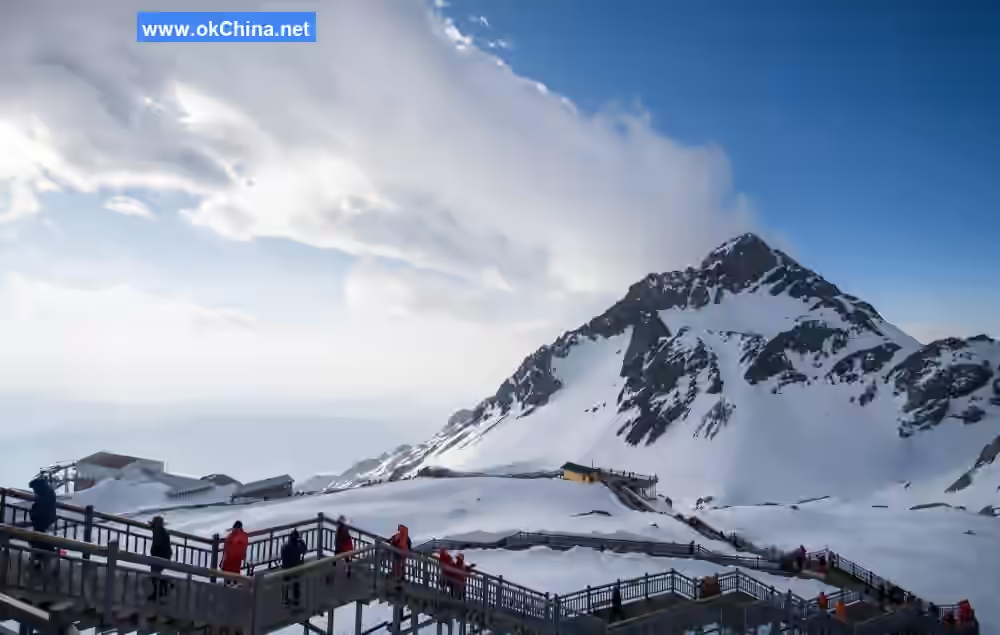
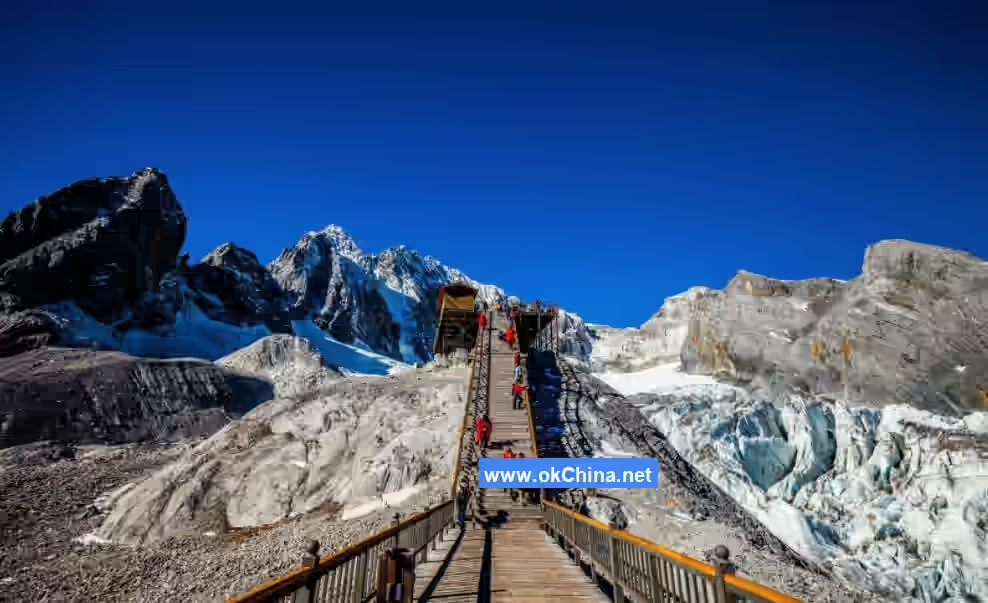
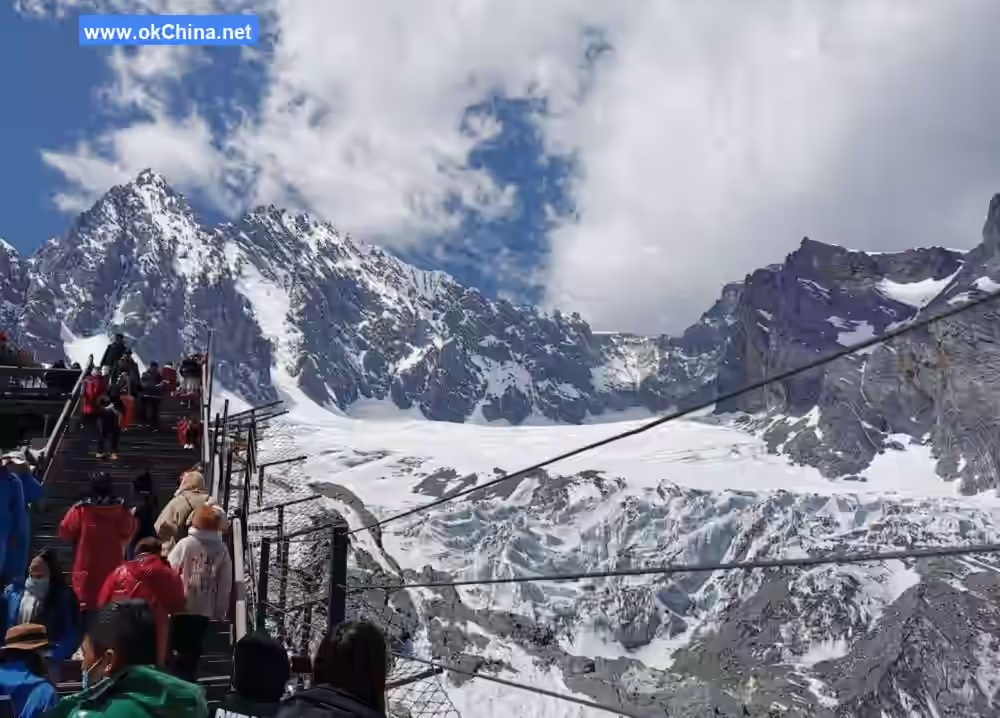
The glaciers of Jade Dragon Snow Mountain are temperate maritime glaciers. Influenced by maritime monsoons, they are characterized by large accumulation and ablation volumes, relatively high ice temperatures, significant basal sliding, rapid movement, and high sensitivity to climate change. Jade Dragon Snow Mountain has developed 19 modern glaciers in total. The largest glacier, "Baishui No. 1" Glacier (i.e., Glacier Park), is located directly below the main peak Shanzidou, with a total length of 2.9 kilometers. The glacier terminus features diverse ice towers and forests, which appear blue-green due to sunlight refraction, earning the name "Green Snow Wonder Peak." Glacier Park is at an altitude of 4,680 meters, accessible by cable car. Taking the fully enclosed cable car, you can enjoy the vertical distribution of mountain plants. Starting from the meadows at 3,000 meters, you pass through tall, straight pine and fir forests. As the cable car ascends, the forests gradually recede, giving way to shrubs and clusters of rhododendron forests. Above 4,000 meters, only mosses clinging to rocks are visible, and finally, there is the vast expanse of white snow. Upon reaching the upper cable car station and exiting the station building, you step into the Jade Dragon Snow Mountain Glacier Park. Jade Dragon Snow Mountain is the snow-capped mountain with the lowest latitude in Eurasia to have modern glaciers. At its eastern foothills, within the Glacier Park area spanning 15–16 kilometers north-south and 4–5 kilometers east-west, there are traces of four periods of Pleistocene glacial activity. In such a relatively urban-proximate area, there exists a compact yet remarkably diverse collection of modern glaciers and ancient glacial remains, essentially condensing the main essence of mid-to-low latitude mountain glaciers globally. This is quite rare in China and holds extremely important significance for glacier research, ecological environmental protection, tourism, and scientific investigation.
3.6 Blue Moon Valley
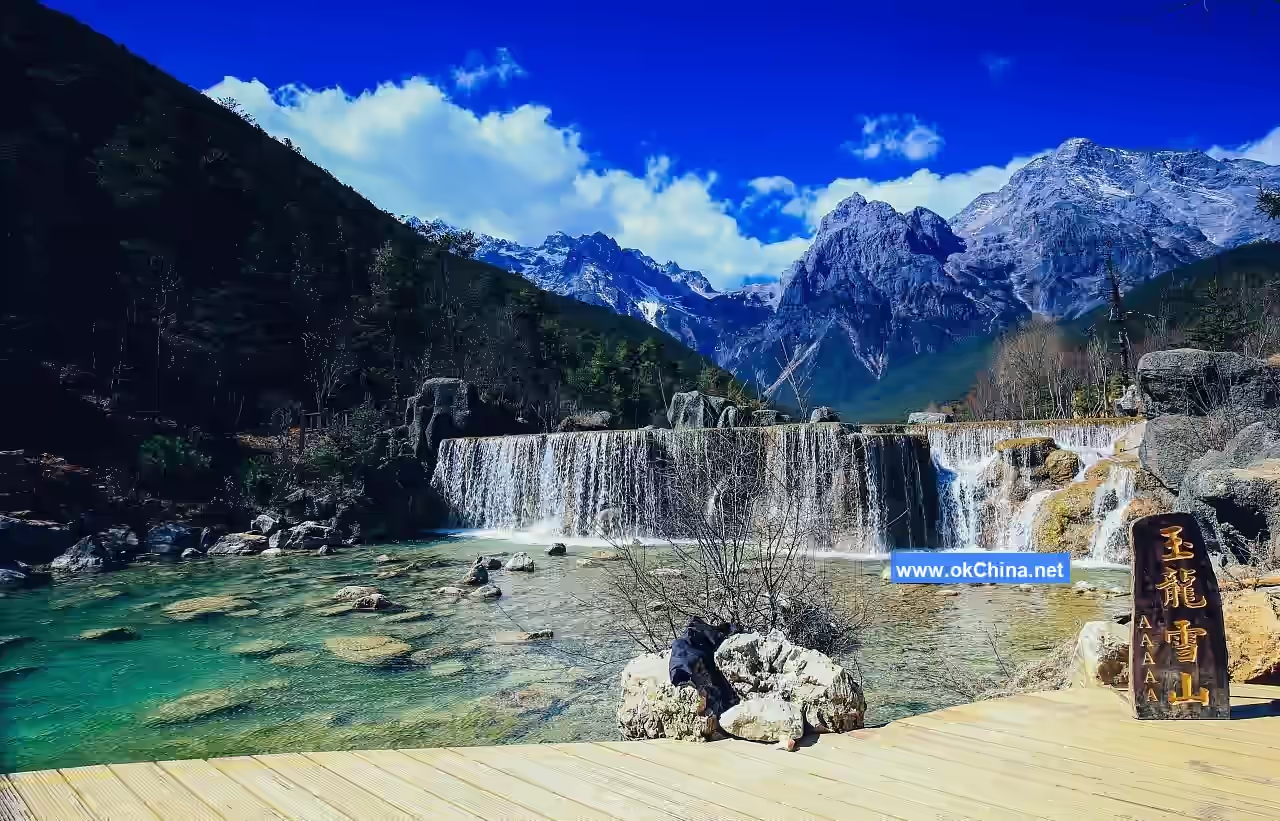
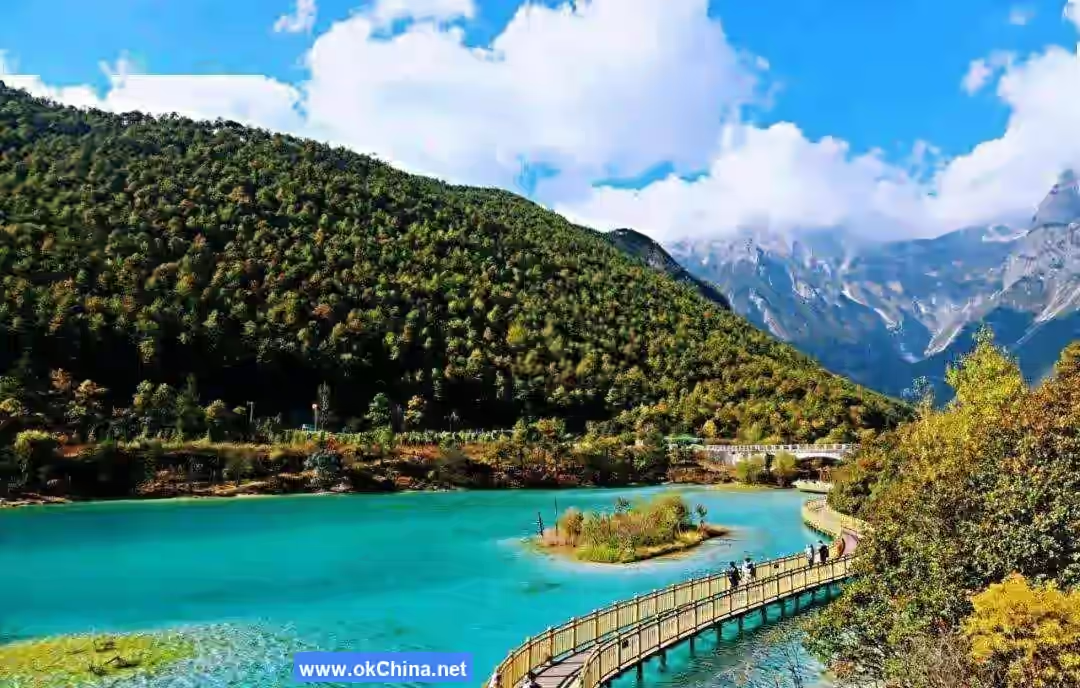
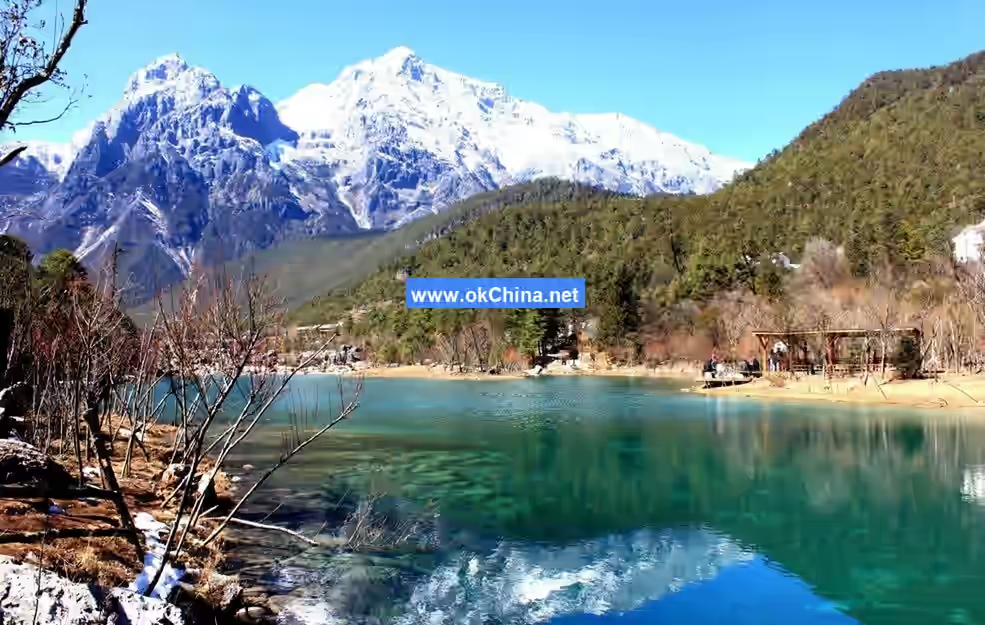
The Blue Moon Valley Scenic Area was formerly known as the "Baishui River" scenic area. It is located in a valley north of Ganhaizi and south of Yunshanping at the eastern foothills of Jade Dragon Snow Mountain. Meltwater from ancient glaciers flows down cliffs, gathering into mountain streams and brooks, eventually forming a crystal-clear, incredibly sweet river in the deep valley upstream of Blue Moon Valley. Because the riverbed is composed of white limestone, the entire river appears white and exceptionally pure, hence the name "Baishui River" (White Water River). It is called "Blue Moon Valley" because on sunny days, the water color is blue, and the valley is crescent-shaped, resembling a blue moon embedded at the foot of Jade Dragon Snow Mountain from a distance.
3.6.1 Jade Liquid Lake
Jade Liquid Lake is located upstream in Blue Moon Valley. The water is crystal clear, and the lake's color appears jade-blue due to a higher content of copper ions. The water transparency is extremely high, even allowing visibility of the white mud at the bottom, resembling a pot of clear wine. Occasionally, fish can be seen swimming in the lake, like gems embedded in the valley. Jade Liquid Lake reflects the distant snow-capped mountains, creating a picturesque scene and is a popular spot for wedding photography.
3.6.2 Mirror Pool Lake
Mirror Pool Lake is a small, delicate lake in the center of Blue Moon Valley. The water is clear and transparent, like a mirror. On sunny days, the lake surface is calm as a mirror, reflecting the blue sky, white clouds, and distant snow-capped mountains, creating a dreamlike scene. Due to its elegant, tranquil, and serene scenery, Mirror Pool Lake is often compared to a "mini Jiuzhaigou" and is a paradise for photography enthusiasts.
3.6.3 Blue Moon Lake
Blue Moon Lake is located in the central area of Blue Moon Valley. The lake water presents a mysterious blue under sunlight, like a sapphire embedded in the valley. The water is clear to the bottom, revealing white sand and green aquatic plants. When the wind is calm, the lake surface is mirror-like, reflecting the sky and clouds; when a breeze stirs, it shimmers beautifully.
3.6.4 Listening to Waves Lake
Listening to Waves Lake gets its name from the significant water level drop. Streams and waterfalls cascade by the lakeside, with the sound of flowing water resembling nature's symphony. The waterfalls here create a spectacular scene, and standing by the lake, one can hear the sound of waves.### 3.7 Yak Meadow
Yak Meadow is located at the northern end of the Jade Dragon Snow Mountain scenic area in Lijiang and is an important part of the Jade Dragon Snow Mountain scenic area. It stretches east to the Liming Highway, south to the Black Water River, west to the eastern foothills of Jade Dragon Snow Mountain, and north to the upper part of Xuehua Village, covering an area of 16.6 square kilometers. The villagers make a living from animal husbandry, and the local customs are simple and ancient, with a relatively strong ethnic cultural atmosphere, making it a typical meadow pasture.
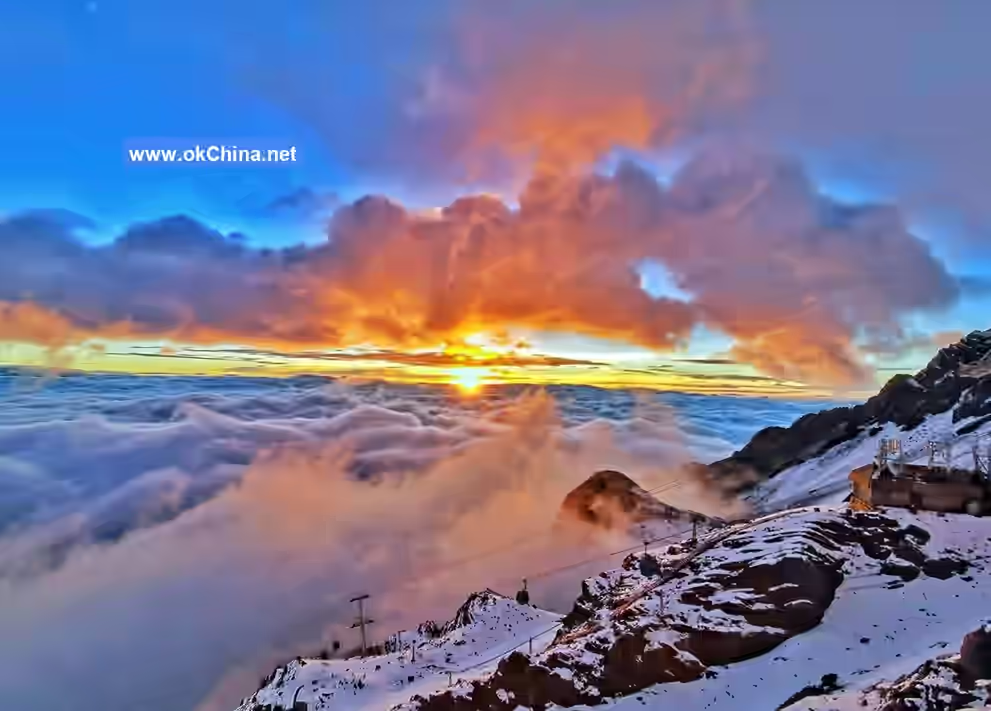
The altitude here is higher than that of Spruce Meadow. At Yak Meadow, one can clearly see the peaks of Jade Dragon Snow Mountain standing like swords. In the small shops at the scenic spot, you can also drink barley wine and butter tea, and taste roasted yak meat. This is also the best place to view the thirteen peaks of Jade Dragon Snow Mountain (and also a great place to photograph Jade Dragon Snow Mountain, especially during sunrise and sunset in the early morning and evening, though fog is common). In the Naxi language, it is called "Ban Long Guo," meaning beautiful snow mountain meadow. Unlike Spruce Meadow, Yak Meadow's terrain is not flat and varies greatly with the undulating mountain slopes. A Black Water River also meanders through here. Therefore, if Spruce Meadow is a beautiful watercolor painting, then Yak Meadow is an oil painting with strong layers.
4. Cultural Resources
4.1 Naming
Throughout the long river of history, the name of Jade Dragon Snow Mountain has also changed. During the Tang Dynasty, in the fourth year of Zhenyuan (779 AD), King Yimouxun of Nanzhao conferred the title "Northern Mountain" upon the Lijiang Snow Mountain. In 1253, during Kublai Khan's southern expedition, he granted the Lijiang Snow Mountain the title "Snow Stone Northern Mountain, Emperor of Peace and Prosperity." The Unified Annals of the Yuan Dynasty - Lijiang also records: "Mai Cong, a Mosuo person, whose ancestors lived under the Divine Outer Dragon Mountain..." This is a record from the Yuan Dynasty referring to the Lijiang Snow Mountain as "Dragon Mountain."
In the poetry collection Snow Mountain's First Sounds by the local chieftain Mu Gong of the Mu clan, there is a poem titled Two Poems Sent from the Hall of Reclusive Folly to Yu Guang which says: "In May, Jade Dragon Mountain's colors shine bright, The wooden gate closes late under the pale moonlight. A simple bowl holds golden tea, so light, A small pot sprays fragrance of cypress soup, a delight. In the woods, drinking freely as I please, Drunk, I write poems with even greater ease. Ten years not expecting a world-transcending guest, Ten days often spent sitting on a reed bed, at rest." The first line of the poem mentions "Jade Dragon Mountain's colors shine bright," which is the name "Jade Dragon Mountain." The naming of Jade Dragon Snow Mountain is evidenced by the writings and poems of Chieftain Mu Gong, dating back approximately 500 years.
4.2 Historical Legends
Legend has it that among the Naxi people, a magical story is passed down: Jade Dragon Snow Mountain and Haba Snow Mountain are twin brothers who fought a great battle with a demon. The younger brother, Haba, had his head cut off by the demon and became the headless Haba Snow Mountain. To prevent the demon from invading again, the elder brother, Jade Dragon, held high thirteen swords day and night, which later turned into thirteen snow peaks. His sweat from the battle turned into the Black Water and White Water rivers.
Another legend says: The Jinsha River, Nu River, Lancang River, Jade Dragon Mountain, and Haba Mountain were originally five siblings. The three sisters grew up and agreed to go out to choose husbands. Their parents ordered Jade Dragon and Haba to chase after them. Jade Dragon carried thirteen swords, and Haba carried twelve bows. They took a shortcut to Lijiang and sat facing each other, taking turns keeping watch. They also made a rule: whoever let the three sisters pass would be beheaded. Younger brother Haba let his sisters pass and was beheaded. The elder brother wept bitterly, and his two streams of tears turned into the White Water and Black Water rivers. Haba's twelve bows became the twenty-four bends on both sides of the Tiger Leaping Gorge, and Haba's head fell into the river and became the Tiger Leaping Stone.
4.3 Food Culture
4.3.1 Lijiang Baba
Lijiang Baba is a distinctive flavor food of the Naxi people with a long history. Its main ingredient is local refined wheat flour. In Sifang Street of the ancient town, there are many shops specializing in Lijiang Baba, mostly operated by adult women.
4.3.2 Chickpea Jelly
Chickpea jelly is a signature food of Lijiang and a traditional food beloved by the Naxi people. Chickpea is a unique type of bean in Lijiang, produced in the Lijiang Basin. It belongs to the soybean family and is named because its shape resembles the eye on a chicken's head. Jelly made from chickpeas is called chickpea jelly. Chickpea jelly can be eaten cold or hot. It is mostly eaten cold in summer and hot in colder seasons. It is prepared with different flavors according to taste and is a delicacy on the Naxi dining table.
4.3.3 Fried Potato Cake
Fried potato cake is a street snack in Lijiang, known for its fragrant and crispy taste. It can also be sprinkled with dried chili powder. The preparation process involves cutting potatoes into strips, soaking them in starch water, and then placing them into a frying mold. A round potato cake can be ready in less than five minutes.
Comments
Post a Comment