Huzhu Tu Ethnic Homeland Park Tourist Area
I. Introduction
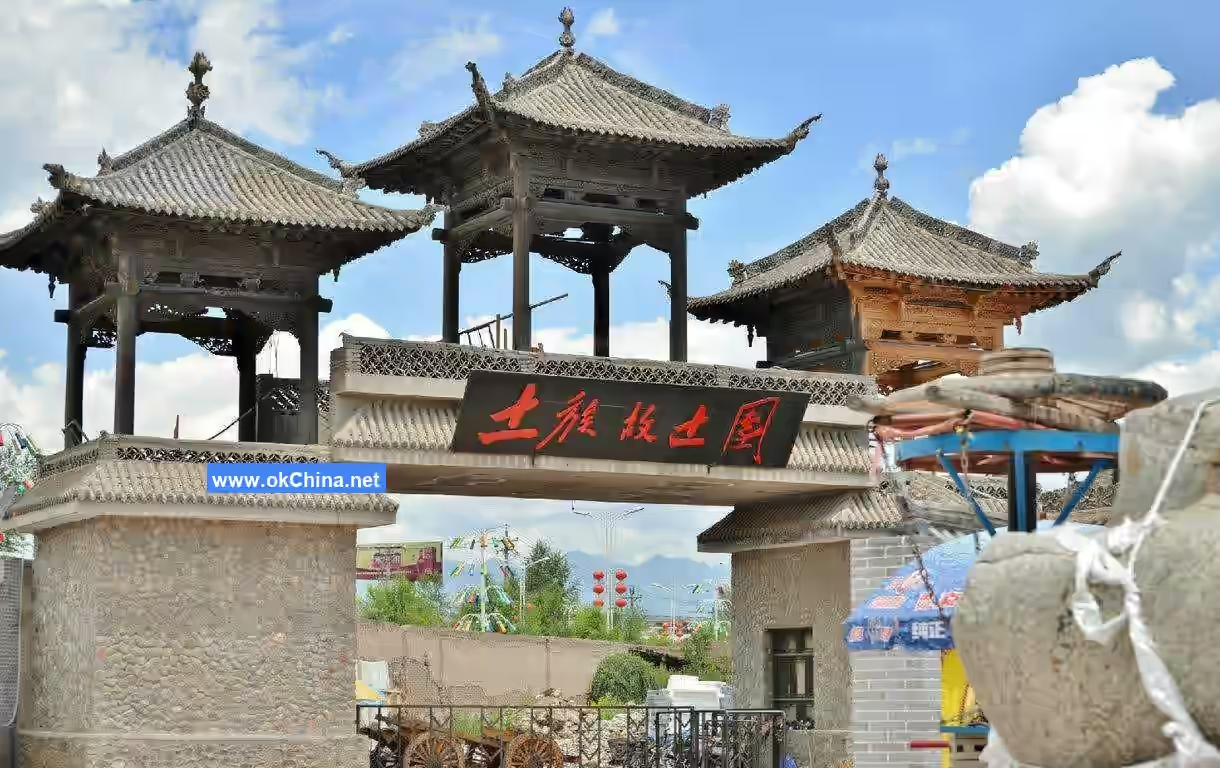
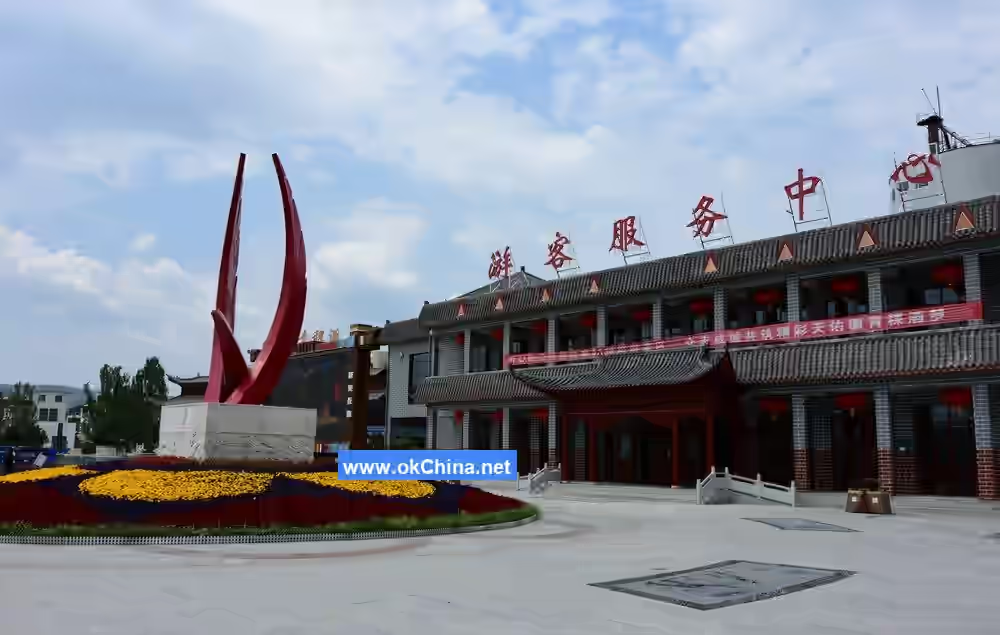
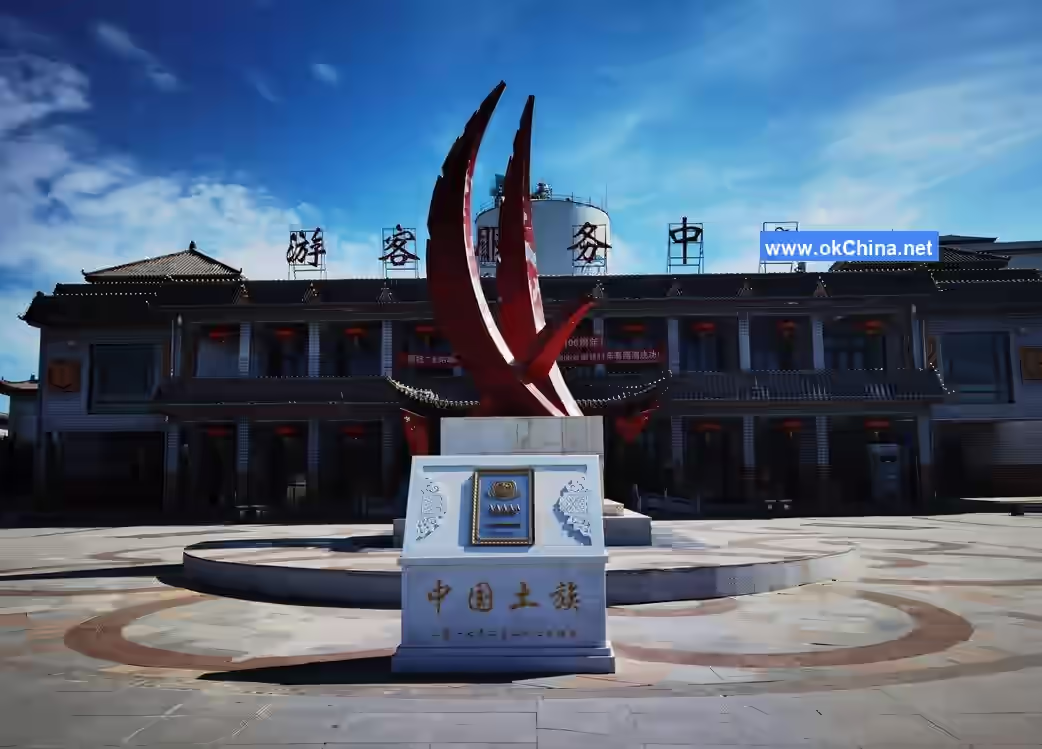
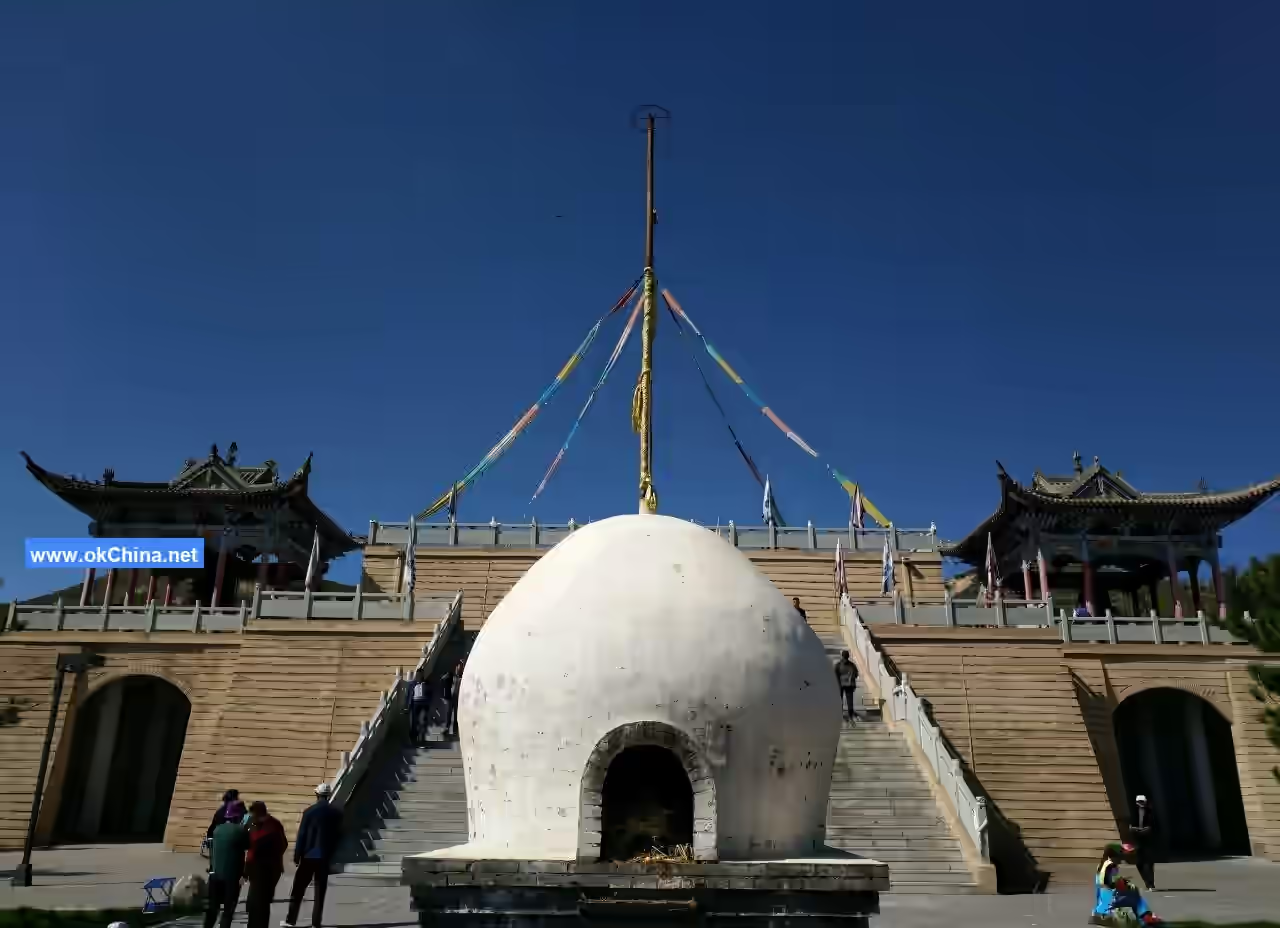
Huzhu Tu Ethnic Homeland Park is located in Weiyuan Town, Huzhu Tu Autonomous County, Haidong City, Qinghai Province. It is 31 kilometers away from Xining, the provincial capital of Qinghai, with a total planned area of 6.81 square kilometers, of which the core scenic area covers 3.25 square kilometers.
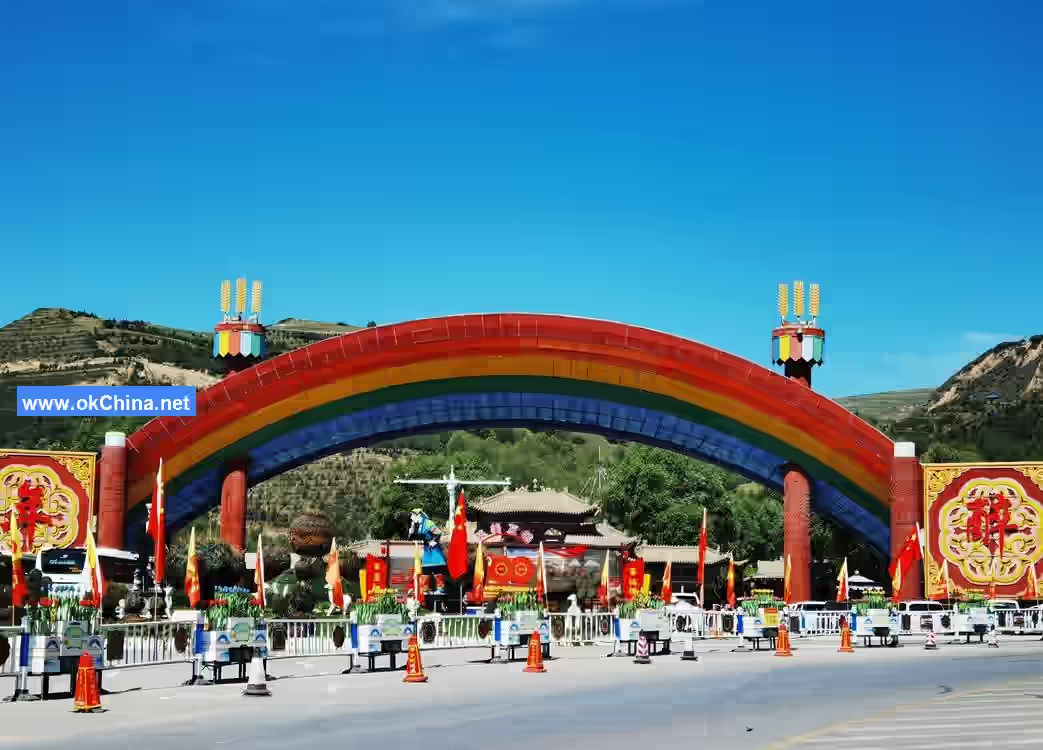
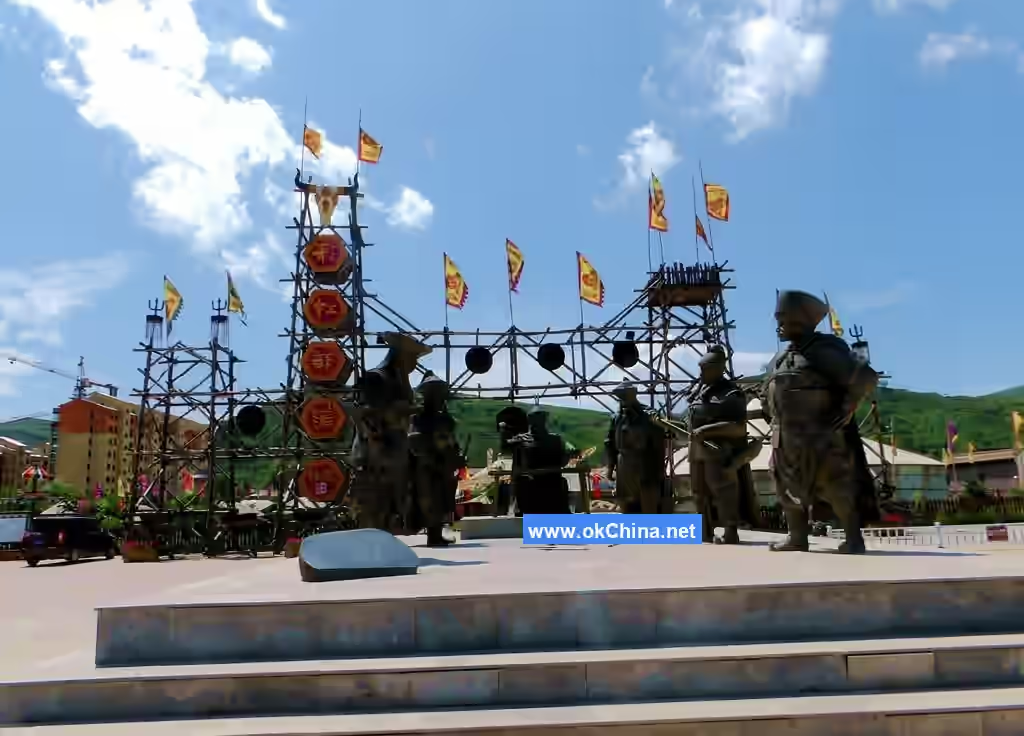
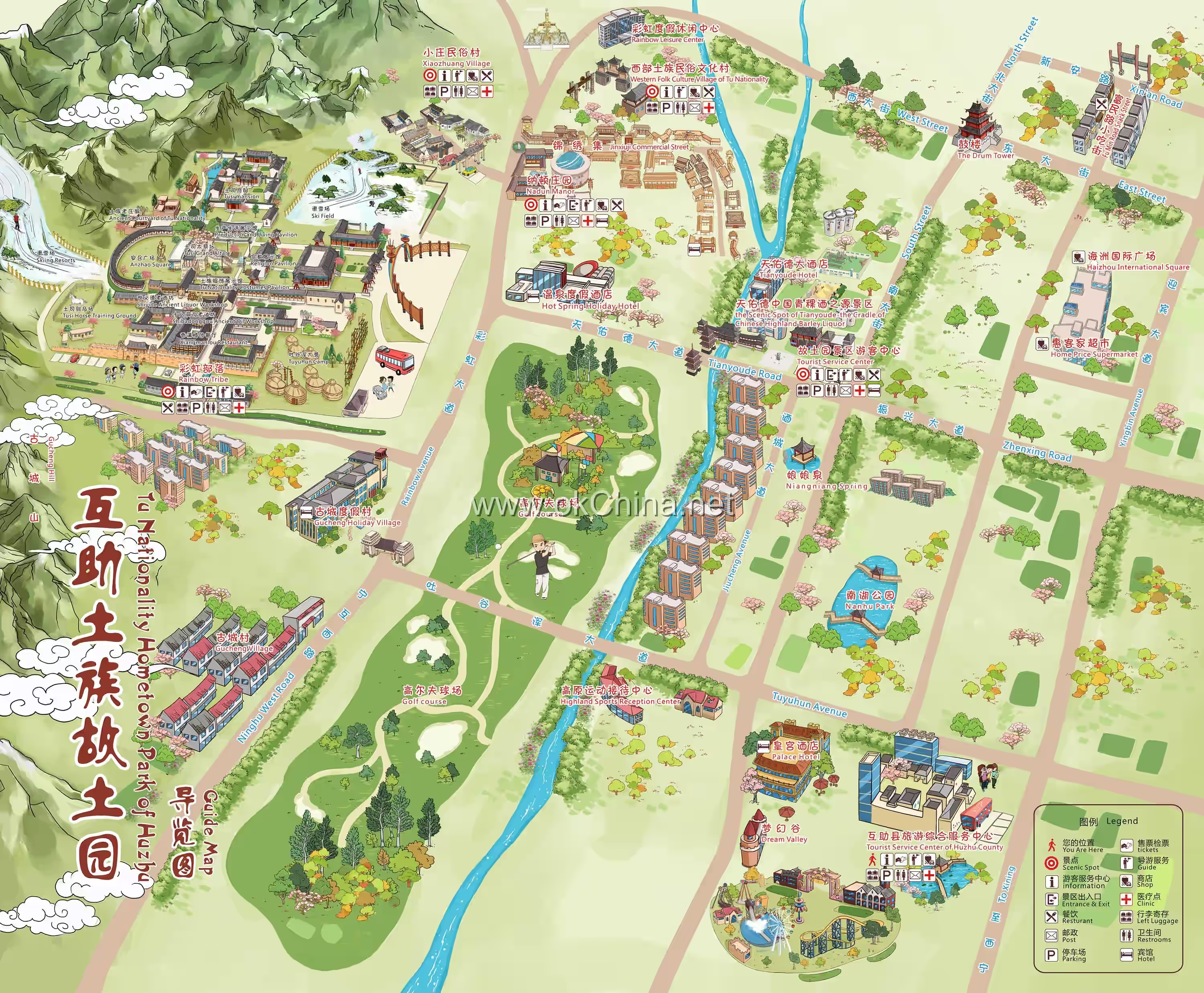
The park includes five core attractions: Tianyoude—the Origin of Chinese Highland Barley Wine, Rainbow Tribe Tu Ethnic Garden, Nádùn Manor, Western Tu Ethnic Folk Culture Village, and Xiaozhuang Tu Ethnic Folk Culture Village. These sites respectively showcase the Tu ethnic group's vibrant folk culture, the long-standing highland barley wine culture, the aged and fragrant Mǐngliú wine culture, the ancient and pure architectural culture, the unique residential culture, and the simple yet mysterious religious culture. It is the world's most comprehensive, authentic, and genuine comprehensive tourist area themed on "Tu Ethnic Culture," integrating sightseeing, leisure vacations, folk experience, and religious pilgrimage.
II. Park Characteristics
As a National 5A-level Tourist Attraction located in northeastern Qinghai Province, it is 50 kilometers from Xining Airport. The Qinghai-Tibet Railway and Lanxi Expressway pass through Gaozhai Town, while Pingda Highway, Weibei Highway, and Ninghu Highway connect the main scenic spots within the area. Situated 31 kilometers from Xining, the provincial capital of Qinghai, it is a comprehensive tourist area that combines sightseeing, leisure vacations, folk experience, and religious pilgrimage.
Developed gradually since the 1990s, Huzhu County is the only autonomous county in China with the Tu ethnic group as the main ethnic group, known as the "Hometown of the Tu Ethnic Group." In the general perception, the "Hometown of the Tu Ethnic Group" refers to Huzhu County. The Tu ethnic folk customs are among Qinghai Province's most attractive ethnic cultural tourism resources, hence the entire tourist area of Huzhu is collectively referred to as Huzhu Tu Ethnic Homeland Park.
The park features primitive and simple natural environments, uniquely majestic ecological settings, ancient and mysterious cultural relics, and diverse ethnic customs, all of which possess strong appeal and competitiveness. The distinctive Tu ethnic culture, well-developed plateau ecosystem, long-standing religious culture, and highland barley wine culture constitute the four major brands of Huzhu tourism. The Tu ethnic group is one of the ancient ethnic groups residing in Qinghai. The Tu ethnic culture and art of Qinghai, formed under unique human and natural conditions, gain an aura of mystery due to the distinctiveness of its culture, history, language, folklore, art, religious beliefs, and other factors. Additionally, traditional folk festivals such as the "February 2nd Arena Festival," "June 6th Flower Festival," and "Danma Festival," as well as scripture-viewing ceremonies and temple fairs, attract a large number of tourists.
III. Main Attractions
Rainbow Tribe Tu Ethnic Garden
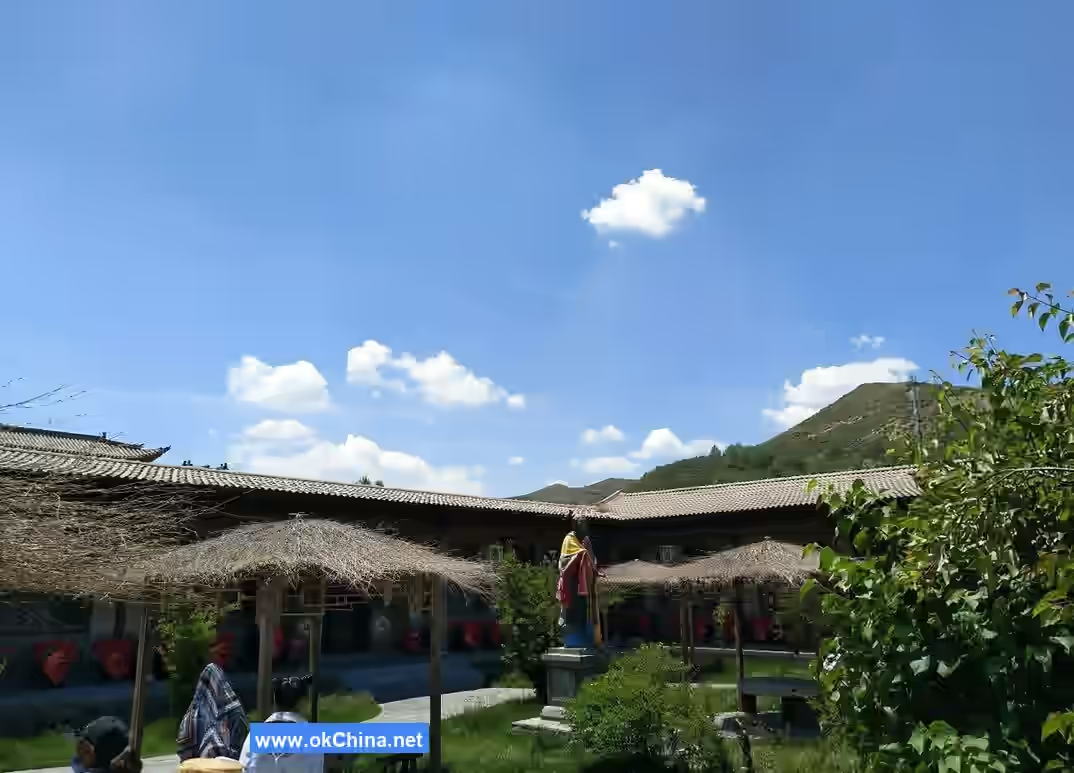
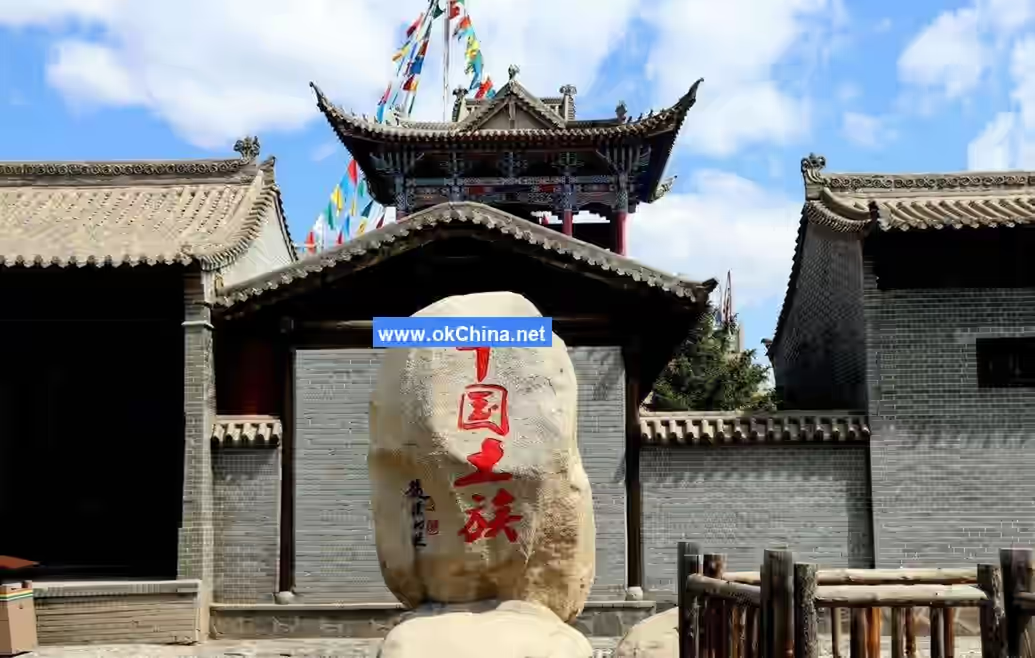
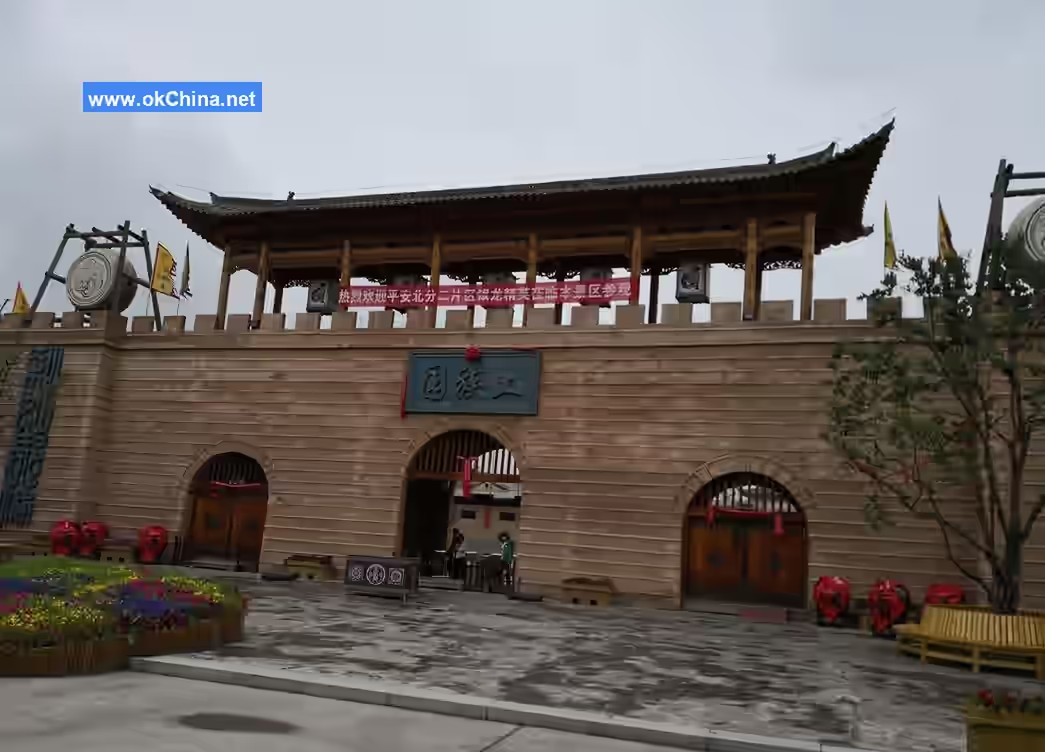
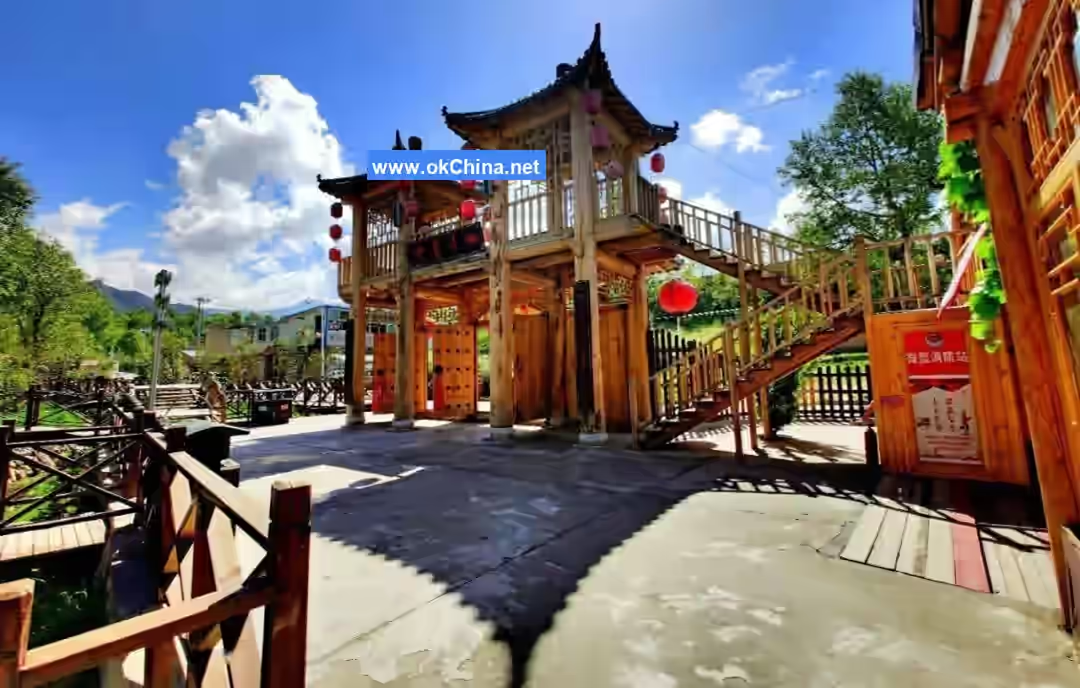
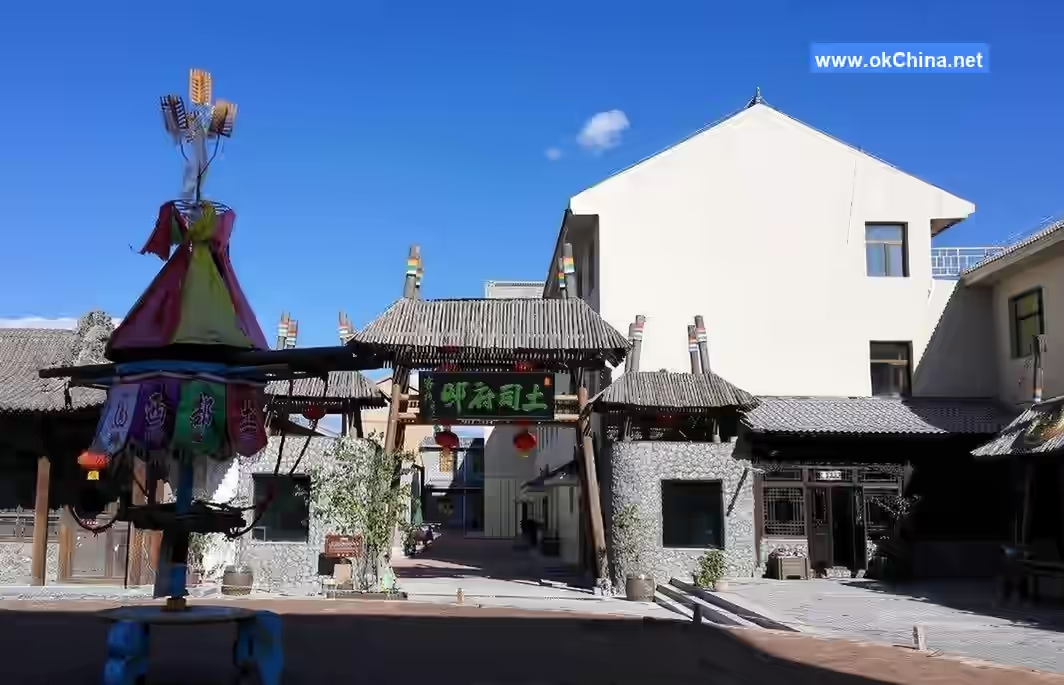
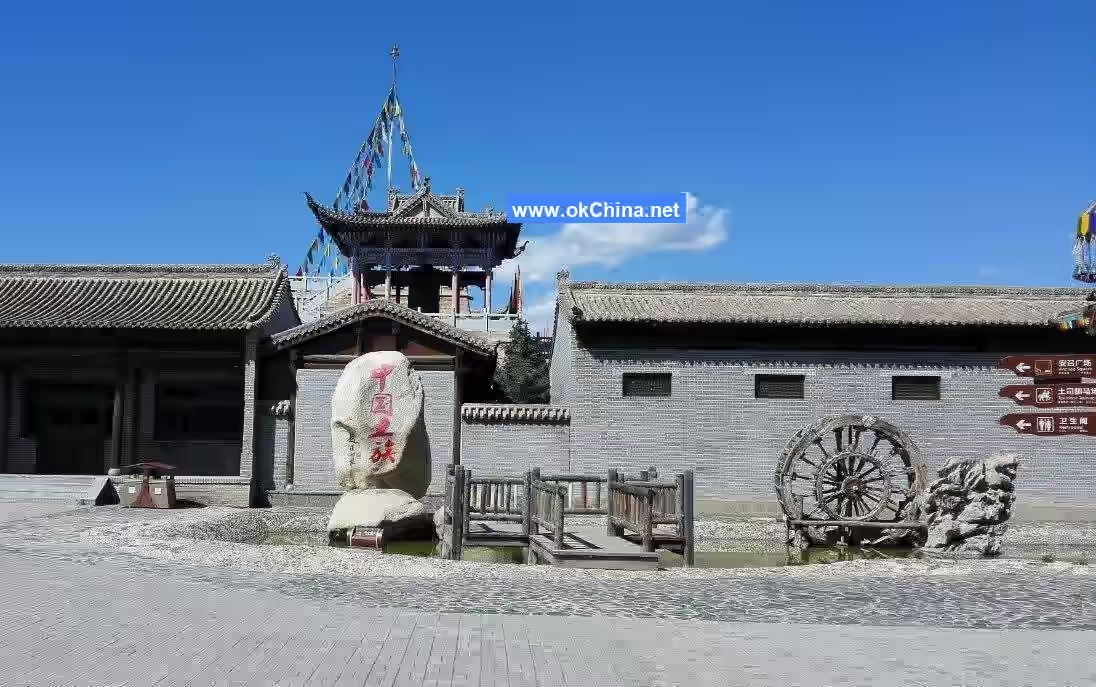
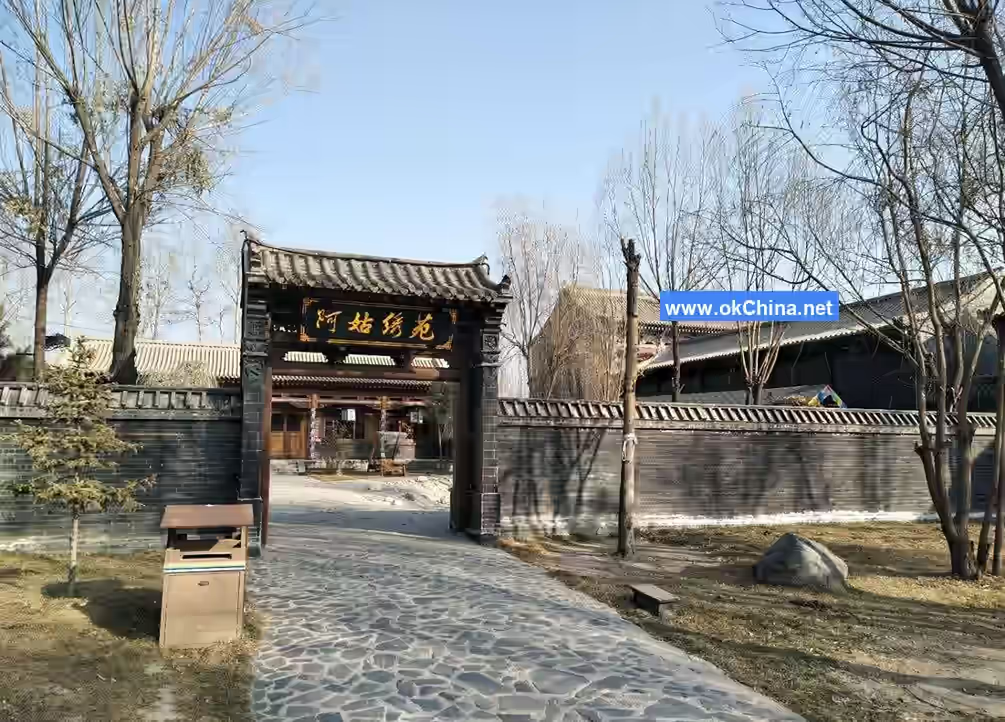
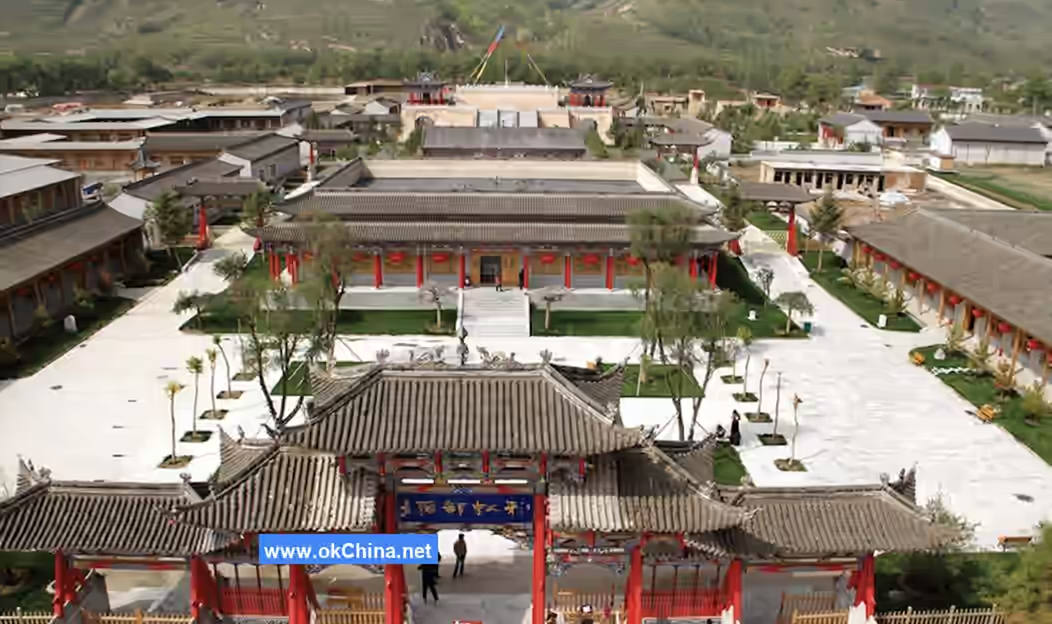
Rainbow Tribe Tu Ethnic Garden is a large-scale Tu ethnic folk culture theme park invested and constructed by Rainbow Tribe Cultural Tourism Development Co., Ltd. It is one of the key attractions of the Huzhu Tu Ethnic Homeland Park National AAAAA-level Tourist Area and an important site within the tourism circuit around Xining, the summer capital. Located in the southwest of Weiyuan Town, 30 kilometers from the provincial capital Xining, it covers an area of 120,000 square meters, with a building area of 13,000 square meters. It is a large-scale ancient architectural complex of Tu ethnic folk culture constructed entirely with blue bricks and tiles, raw earth adobe, brick carvings, and wood carvings.
The park features large ancient Tu ethnic folk cultural architectural complexes such as the Shibadonggou Old Oil Mill, Living Buddha Courtyard, Ānzhào Square, Tusi Mansion, Zhuāngkuò Courtyard, and Intangible Cultural Heritage Inheritance and Protection Center. These collectively showcase the history, folk culture, intangible cultural heritage, ancient residential architecture, and production and lifestyle customs of the Tu ethnic group to visitors. A series of tourism projects related to Tu ethnic folk customs and Tu hometown culture have been developed.
Nádùn Manor
Nádùn Manor is located in the core area of Huzhu Tu Ethnic Homeland Park, covering nearly 50 acres. Construction began in August 2005, and it is one of the AAAAA-level tourist attractions within the Huzhu Tu Ethnic Homeland Park, with an area of over 30,000 square meters, making it one of the core scenic spots. The manor primarily focuses on showcasing Tu ethnic folk customs and highland barley wine culture. It houses the Highland Barley Mǐngliú Wine Culture Museum, which highlights the millennia-old wine culture of the Qinghai-Tibet Plateau, reproducing the over 1,300-year history of brewing and inheritance of highland barley wine, and comprehensively presenting the past and present of Mǐngliú wine, the originator of highland barley wine. The underground cellar displaying the century-old burial history of Weiyuan Highland Barley Mǐngliú wine is grand and culturally rich, recreating the charm of the "Land of Wine." The Golden Flower Performing Arts Center primarily showcases Tu ethnic national intangible cultural heritage items such as "Huā'er" (folk songs), costumes, Tu ethnic weddings, and coiled embroidery.
Western Folk Culture Village
Located in Weiyuan Town, Huzhu Tu Autonomous County, Qinghai Province, this large-scale ethnic tourism cultural area integrates Tu ethnic architectural culture, costume culture, culinary culture, song and dance culture, and folk culture. It is 30 kilometers from the provincial capital Xining, covering an area of 20,000 square meters, and features the "Circle Banquet," which reflects the oldest traditional banquet culture of the Tu ethnic group.
Xiaozhuang Folk Culture Village
Xiaozhuang Tu Ethnic Folk Culture Village in Weiyuan Town is one of the "Ten Traditional Villages" of Huzhu County. The Tu ethnic population accounts for 98.3% of the total village population, with 90 rural tourism reception households. It has been recognized as a National Rural Tourism Demonstration Site, Qinghai's Most Beautiful Village, and one of the first batches of China's Rural Tourism Entrepreneur Demonstration Bases by relevant national, provincial, and municipal departments. Originally a natural village of Gucheng Village in Weiyuan Town, since engaging in tourism operations in 1997, Xiaozhuang Village's folk tourism has developed rapidly. In 2004, it was rated as one of the first National Agricultural Tourism Demonstration Sites, becoming a typical folk cultural tourism reception village supported by tourism. To further develop folk tourism, in 2007, the county separated Xiaozhuang Village from Gucheng Village and established it as an administrative village dedicated to developing folk tourism. Currently, there are 157 households with 596 people, including 560 Tu ethnic people, accounting for 99% of the total village population. Over 95% of the village's labor force is engaged in tourism, with 40 households operating folk tourism businesses. This year, the village's comprehensive income reached 2.66 million yuan, with tourism income at 1.58 million yuan, and per capita income reaching 4,210 yuan.
Tianyoude—the Origin of Chinese Highland Barley Wine
Tianyoude—the Origin of Chinese Highland Barley Wine is the largest highland barley wine production base and protected origin base for highland barley wine in China. Huzhu highland barley wine originated in the Yuan Dynasty, flourished during the Ming and Qing Dynasties, developed in modern times, and shines today. In 1952, the Huzhu County People's Government established the state-owned Huzhu County Winery based on eight workshops, including "Tianyoude" and "Yongqinghe." In December 2011, a joint-stock company was formed and listed on the Shenzhen Stock Exchange, with the stock abbreviation: Qingqing Barley Wine. Currently, the company has a registered capital of 450 million yuan, total assets of 1.8 billion yuan, covers an area of 300,000 square meters, employs over 1,800 people, and has an annual production capacity of 15,000 tons of raw highland barley wine. The company produces over 100 varieties of highland barley wine under four major series: "Huzhu," "Tianyoude," "Eight Workshops," and "Yongqinghe."
Shibadonggou Oil Press
The Shibadonggou Oil Press was relocated from Shibadonggou, a Tu ethnic village in Songduo Township, Huzhu County, and is the most completely preserved old oil press in Huzhu. The oil press reproduces the traditional oil extraction process. Plateau residents mainly consume rapeseed oil, which is produced in oil presses. Oil presses are generally built next to or near water mills because before pressing, the oil seeds must be ground into powder in the water mill, then steamed in the oil press's stove, wrapped with Mālián and river willow ropes, and pushed under thick round wooden beams to extract fragrant clear oil. The leftover rapeseed residue after pressing is called "mázhā," which is excellent feed for livestock. The person skilled in oil pressing technology in the oil press is called the "Oil Doctor."
Ānzhào Square
Ānzhào Square has a diameter of 80 meters and a building area of 2,240 square meters. Tea seats are set up along the circular corridor, and a large stage is located on the east side of the square, with a backdrop featuring Tu ethnic characteristics.
Tusi Mansion
The Tusi Mansion is the residence of the Tusi chieftain. It is a four-courtyard mansion restored based on the architectural style of the mansion of Li Wen Tusi, which existed in the Huzhu area of Qinghai during the Tianshun period of the Ming Dynasty. The first courtyard is the Tusi chieftain's office area, displaying the Tusi's main seat, weapon racks, and prison torture instruments. The second courtyard has the Tusi Mansion's advisor's room and steward's room on the east and west sides. The east room is the advisor's room, with a built-in kang (heated bed), wooden moon gate, study, reception room, and main hall; the west room is the steward's room, with a layout similar to the advisor's room. The third courtyard is the Tusi chieftain's residence. The two-story building facing south is the Tusi Tower. The entire structure is quite exquisite, beautiful, luxurious, and noble, with vivid carvings, reflecting the esteemed social status of the Tusi chieftain within his jurisdiction at that time. The fourth courtyard is the back garden of the Tusi Mansion. The north room is the guest room for visiting local officials or relatives and friends to rest, and the west room was originally the storage place for the Tusi chieftain's transportation and horse gear, now evolved into an exhibition room. Beside the back door, there are mounting stones and hitching posts.
【Folk Projects】
Wheel Swings (Lúnzi Qiū)
A traditional Tu ethnic sports activity, symbolizing the bravery, wisdom, and unity of the Tu people. It is a recreational and sports activity invented by Tu ancestors in their long-term production and daily life, evolving from playing on wooden ladders tied to large cart wheels. On June 7, 2008, the Tu Ethnic Wheel Swings were approved by the State Council and included in the second batch of National Intangible Cultural Heritage List.
Ānzhào DanceIt is a form of folk dance, a collective song and dance tradition passed down through generations among the Tu ethnic group. Widely popular in Huzhu Tu Autonomous County, it is called "Qianjiao Ri" in the Tu language, meaning "curved" or "circling." It is an unaccompanied circular song and dance performed by the Tu people to celebrate the prosperity of both people and livestock, abundant harvests, and to wish for good fortune and auspiciousness. The number of participants can range from a few to several hundred, and people of all ages and genders can join. Typically, one or two "Du Ri Jin" lead the singing, while the others follow in chorus. Participants form a circle in the order of men in front and women behind, moving clockwise while singing, dancing, and turning, hence it is also known as "Zhuan An Zhao."
Hua'er
A type of folk song, also known as "Shaonian" (Youth). The lyrics of "Hua'er" are mostly improvised, and it can be performed either as a duet or a solo, with rich and diverse content. There is a beautiful legend about "Hua'er." It is said that long ago, there were five beautiful Tu sisters, each with a voice as clear as silver bells. Whenever they sang "Hua'er," all living things would be enchanted. Many handsome young men came to sing duets with them, but after three days and nights, the young men were defeated one by one. On the morning of the fourth day, five colorful clouds drifted from where the sun rises and took the five sisters away. Later, people said that the five sisters were enshrined as "Hua'er Fairies," singing "Hua'er" for the Jade Emperor every day. To commemorate them, people hold an annual "Hua'er Festival."
【Folk Customs】
Traditional Festivals
The important traditional festivals of the Tu people mainly include the Youning Temple Scripture Viewing Festival on the 14th day of the first lunar month, the Weiyuan Town Martial Arts Competition on the second day of the second lunar month, temple fairs on the third day of the third lunar month and the eighth day of the fourth lunar month, the Danma Opera Festival on the 11th day of the sixth lunar month, the "Shaonian" Festival on the 13th and 29th days of the sixth lunar month, and the "Nadun" (Harvest Celebration) in the Minhe Sanchuan area from the 23rd day of the seventh lunar month to the ninth lunar month. Among these, the Martial Arts Competition, Danma Opera Festival, and "Nadun Festival" are the most distinctive. During these festivals, in addition to traditional entertainment activities such as horse racing, wrestling, martial arts, and singing "Hua'er," trade fairs are also held. Furthermore, like the Han people, the Tu also celebrate traditional festivals such as the Spring Festival and the Dragon Boat Festival.
Customs and Habits
The Tu people place great emphasis on etiquette. When people meet, they greet each other and exchange well-wishes. During traditional festivals such as the Spring Festival and the Dragon Boat Festival, relatives and friends visit each other, bringing homemade food like baked cakes, oil cakes, and "pansan" (a type of pastry). For joyous occasions such as building a house, constructing a new home, installing a main gate, a child's full-month celebration, a daughter's marriage, or welcoming a daughter-in-law, relatives and friends are invited to celebrate and offer gifts. On festivals or when guests visit, Tu people often say, "A guest brings fortune," and warmly treat guests with good tea and food. Before guests enter the house, the host offers three cups of wine, called the "Three Cups of Wine at the Door." The guests are then invited to sit cross-legged on the heated kang (a traditional heated bed) in the main room, arranged by age or seniority. The host offers three more cups of wine, called the "Three Cups of Wine for Good Fortune and Auspiciousness." Guests who cannot drink alcohol may dip their ring finger into the wine and flick it into the air three times. Meanwhile, the hostess respectfully serves homemade dishes on a wooden tray, urging the guests to enjoy the meal. When guests are about to leave, the host offers three more cups of wine at the doorstep, called the "Three Cups of Wine for the Journey," wishing the guests a smooth and safe trip. Additionally, the Tu people are loyal and trustworthy to friends and have a fine tradition of respecting elders. For example, when meeting an elder on the road, they dismount to greet them.
Religious Beliefs
The Tu people originally believed in polytheism, and some also followed Taoism. After the Yuan and Ming dynasties, Lamaism became widespread, but folk beliefs still persisted. There are over 40 Lamaist temples in Tu areas, with famous ones including Youning Temple, Quezang Temple, and Guanghui Temple. Youning Temple, known as the "Mother of Temples North of the Huangshui River," produced many renowned monks, such as Zhangjia, Tuguan, and Songbu Living Buddhas, who had significant influence across Tibetan and Mongolian regions. Before liberation, temples owned large amounts of land, with 15 temples in the county occupying up to 69,200 mu of land. Temples were the cultural centers of the Tu people and made significant contributions to the development and dissemination of Buddhist culture. The ancestors of the Tu people, the Tuyuhun, believed in Shamanism when they were in Liaodong. Traces of Shamanism can still be seen in the lives of the Tu people today, with main religious activities including worshiping oboos, offering sacrifices to the White Tiger, and selecting sacred sheep. Bon religion was introduced to Tu areas in the 8th century but declined by the 14th century. Today, only a small number of Bon religious practitioners remain in some Tu villages in areas like Huzhu.
Residential Architecture
The Tu people often live in clusters, forming their own villages. Tu villages are mostly located at the foot of mountains, near water sources. Typically, each household has a courtyard, called "Rima" (or "Zhuangkuo") in the Tu language. The position of the house is determined based on the orientation of the main gate and principles such as Yin-Yang and the Five Elements. Generally, within the courtyard walls, two or three sides are built with earth-wood structured houses. Wealthier families build main houses with five purlins on the main ridge and seven purlins in the frame, along with front halls with extended purlins. The wooden components of the houses are often painted and carved. In the center of the courtyard, there is a round post for tethering livestock, with a Mani flagpole erected in the middle. The Tu people prefer sleeping on heated kangs or fire kangs. Except in summer, they heat the kang with firewood before sleeping. Kangs are divided into plank kangs and mud kangs. Close relatives of the Tu people generally live in the same area. When brothers divide the family property, the eldest son inherits the old house, while the other sons move to new homes. Parents usually live with the youngest son.
【Clothing and Attire】
Tu Ethnic Attire
Tu ethnic attire has a unique national style. Young and middle-aged men wear felt hats with brocade edges, sometimes "eagle-beak" felt hats. They wear long robes with small collars, diagonal openings, black-edged sleeves, and a four-inch square colorful pattern on the chest. They also wear embroidered high-collared white short jackets, black or purple-red vests, embroidered long belts, wide-legged trousers, embroidered long waistbands, and embroidered belly wraps. Their legs are wrapped with black and white leg bindings, and they wear embroidered cloud-patterned shoes. Elderly men generally wear black rolled-edge felt hats, long robes with small collars and diagonal openings, black vests, black belts, white socks, and black shoes. According to the "Datong County Annals," women wear hats, braid their hair with red cotton thread strung with bronze coins hanging behind their heads, wear large earrings made of silver or copper, and wear waist socks. Their clothes, whether made of silk or cloth, are mixed with five colors and tied with a large belt. They wear long robes with small collars and diagonal openings, with sleeves made of five-colored cloth circles (red, yellow, blue, purple, and black), bright and eye-catching, elegant and generous, rich in ethnic characteristics. Over the long robes, they wear black, purple-red, or blue-edged vests and tie colorful belts. The ends of the belts are embroidered or threaded with patterns of flowers, birds, bees, butterflies, and colorful clouds. They wear crimson pleated skirts with edges, trousers with leg coverings below the knees (called "Tiewan" in Tu language), and embroidered shoes. Elderly women do not wear five-colored sleeve shirts or embroidered colorful belts. Unmarried girls braid two small braids at the temples and one large braid in the middle, combining the three braids at the back and tying them tightly with crimson hair strings, adorned with a conch-shaped ornament. Their trousers have red leg coverings below the knees. Differences in hairstyle and leg covering colors distinguish married women from unmarried girls. In the Minhe Sanchuan area, Tu women wear phoenix crowns adorned with pearls and jade, green lined jackets, red pleated skirts, embroidered belly wraps, and embroidered shoes with upturned tips. Tu women refer to their headdresses as "Niuda." In the past, there were eight or nine types of "Niuda," such as "Tuhun Niuda" (also called "Banbanqie Niuda," shaped like a round cake), "Naren Niuda" (also called "Three-Pronged Head," shaped like three arrows), "Shige Niuda" (also called "Winnowing Basket Head," shaped like a winnowing basket), "Jiasi Niuda" (also called "Plowshare Head"), "Xuegulang Niuda" (shaped like a concave groove), "Jiamu Niuda," and "Suobudou Niuda," with variations in different regions. Among these, the "Tuhun Niuda" is said to be the oldest and most noble. Tu women gather their hair into a high bun at the back of the head, called "Shangtu" in Tu language, and wear headdresses over it. After 1938, due to the forced changes in Tu attire by Qinghai warlord Ma Bufang, this headdress was lost. Since then, Tu women in Huzhu often braid their hair into two long braids tied together at the back and wear felt hats or formal hats adorned with silk brocade.
Tu Pan Embroidery
The most important embroidery technique in Chinese Tu ethnic embroidery, it belongs to silk thread embroidery. It uses seven colors of embroidery threads: red, yellow, green, blue, orange-red, purple, and white. Generally, all seven colors are used in embroidery, with coordinated color matching, making it bright and eye-catching. According to archaeological discoveries, Pan embroidery techniques originated around the 4th century AD. Over more than a thousand years of inheritance, Tu embroidery has developed a strong ethnic character, with a wide range of themes, rich content, and diverse techniques, forming the most distinctive clothing culture of the Tu people, as well as values in folklore, aesthetics, and more. For a Tu woman, embroidery is a lifelong必修功课. Before marriage, a Tu woman must first hold a personal exhibition of Tu embroidery at her parents' home, displaying the clothes, accessories, shoes, and socks she has embroidered to her family. Then, during the wedding celebration at her husband's home, she showcases her embroidery to her in-laws, neighbors, and relatives, and gifts her handmade embroidered items to her husband's family. After having children, a Tu woman spends over a decade carefully passing on her embroidery skills to her daughter. This tradition has continued for thousands of years, forming the unique "temperament" of Tu embroidery. On May 20, 2006, Tu Pan embroidery was approved by the State Council and included in the first batch of national intangible cultural heritage lists.
【Local Snacks】
Scalded Water PancakesDietary Habits of the Tu Ethnic Group in Minhe and Sanchuan. For ordinary guests, baked bread, oil pancakes, and cold noodles are the most common offerings. For esteemed guests, scalded-water pancakes and meat rice are served first. Scalded-water pancakes, commonly known as "snake-shed skin," are made by scalding flour with boiling water, rolling it into thin sheets, sprinkling with fenugreek powder and rapeseed oil, then coiling and flattening it again. The pancakes are cooked in a hot pan greased with rapeseed oil. This is followed by meat rice, where meat is cut into chunks and stir-fried with other vegetables before water is added and brought to a boil. Thinly rolled dough is cut into squares or strips and pinched into the pot by hand. When meat is unavailable, eggs are cracked into the pot as a substitute.
Puzhuozuo
A Tu ethnic term referring to deep-fried bread. It is one of the staple wheat-based foods during the Spring Festival. The method involves mixing and kneading fermented dough, shaping it into curved strips, brushing the surface with rapeseed oil, then cutting it into thin strips about one centimeter wide with five prongs. The prongs are evenly spread apart in the middle, and the ends are pinched to make the prongs protrude before frying in oil until golden, crispy, and fragrant, resulting in an aesthetically pleasing and unique appearance.
Mooncakes
On the day of the Mid-Autumn Festival, the Tu people in Minhe and Sanchuan make mooncakes. There are two methods: one involves layering a large steamed cake with honey, walnut kernels, turmeric, fenugreek powder, rapeseed oil, and other ingredients. The surface is decorated with two coiled dough snakes, with peppercorns used for eyes, and raised scales for a lifelike appearance. The surrounding space is adorned with intricate dough flowers. When steamed and removed from the steamer, the various spices inside the mooncake seep through the cracks, resembling blooming flowers and filling the air with fragrance. The other method involves mixing dough with rapeseed oil and egg whites, filling it with a mixture of walnut kernels, honey, and rapeseed oil, pressing it into wooden molds carved with floral patterns, and then baking it in a pan until golden brown. On the night of the Mid-Autumn Festival, after the moon rises, every household places mooncakes and other fruits on the rooftop as an offering to the moon. Only after the offering are they brought back for consumption. Mooncakes are also a premium gift for entertaining guests or presenting to relatives and friends.
Youhua
A wheat-based food made by the Tu people in Huzhu and Sanchuan using coarse grains such as bean flour and barley flour. Fermented dough made from barley or bean flour is rolled with fenugreek powder or roasted flaxseed powder and steamed before consumption.
Guota
Fermented dough made from barley or bean flour is rolled with fenugreek powder or flaxseed powder, shaped into oval balls, and stuck to the sides of a pot. A small amount of water is poured into the bottom of the pot, and the lid is tightly covered with a cloth. The pot is brought to a boil over high heat, then simmered over low heat without flipping, allowing the bottom of the guota to turn golden brown while the surface remains soft, resulting in a crispy and delicious texture.
Cornmeal Dumplings
Cornmeal is mixed with boiling water, cut into large pieces, boiled, and then scooped into a bowl. The dumplings are pierced with chopsticks, drizzled with hot oil and salt, and eaten while stirring.
Rice Flour Bowls
Rice flour is scalded with boiling water and mixed evenly. After cooling, it is shaped into concave round bowls and steamed. First, it is steamed over low heat, then removed to cool. After a night, the sugar content develops. The next day, it is steamed again over high heat until soft and sweet.
Maisiru
A Tu ethnic term. Semi-ripe barley heads are harvested, tied into bundles, boiled in a pot, and while still hot, placed in a winnowing basket to rub off the husks. They are then crushed with a stone tool, stir-fried with meat or rapeseed oil, and simmered with water into a porridge, creating a unique flavor.
Tahumu
A Tu ethnic term. A baked wheat-based food in areas like Huzhu. Dough is made with rapeseed oil, salt, and water, rolled into round cakes, and first baked in a pan. Once one side hardens slightly, it is removed and placed in the stove to continue baking over low heat until fully cooked. It is delicious and flavorful.
Dumplings
Filled with "hailiu" (oil-fried flour), the dumplings are sealed and pinched into a fish shape. On the evening of the first day of the tenth lunar month, they are first offered to ancestors before being shared by the whole family.
Ximairi
A Tu ethnic term. A ceremonial offering consisting of a painted round container filled with fried flour, decorated with butter sculptures, and topped with a sun and moon motif, symbolizing harmony with the sun and moon, auspiciousness, and completeness. To show respect and add solemnity when entertaining guests or welcoming distinguished visitors, the Tu people in Huzhu place a tray of dates and "Ximairi" at the entrance. During family banquets, "Ximairi" is placed on the table, and at weddings or funerals, large-scale "circle feasts" also feature "Ximairi" as a prestigious ceremonial offering.
Halihai
A Tu ethnic term meaning nettle. A food made from nettles in areas like Datong and Huzhu.
Hailiu
A Tu ethnic term meaning oil-fried flour. To prepare, seasonings such as Sichuan pepper powder and salt are added to an appropriate amount of water, followed by rapeseed oil. Barley flour or wheat flour is evenly sprinkled over it, maintaining a water-to-oil-to-flour ratio of 2:1:4. A few holes are poked in the mixture with chopsticks, and it is simmered over low heat until cooked. When eating, scallions and spices are added and mixed thoroughly. Adding pea flour paste enhances the flavor, making it fragrant, delicious, and rich but not greasy.
Mahafangzi
A Tu ethnic term. "Maha" means meat, and "fangzi" means square or chunk. During festivals or other grand celebrations, the Tu people serve large chunks of pork to guests. A whole piece of pork, typically weighing 2 to 5 kilograms, is cut to fit a wooden tray, served without any seasoning, and accompanied by a five-inch knife for guests to slice and eat themselves. Hence, it is commonly referred to as hand-grabbed pork. Additionally, during weddings, the groom's family presents "Mahafangzi" to the bride's elders and guests to symbolize the two families becoming flesh-and-blood relatives.
Dapinghuo
Typically, eight or nine people pool money to buy a sheep and slaughter it at one person's home.
Barley Wine
The Tu people often entertain guests with wine, taking pleasure in seeing them thoroughly intoxicated.
Alkaline Water
Called "Hunisifuzu" in the Tu language. Buckwheat stalks, wormwood, and walnut skins (the outer green layer) are burned to ash, placed in a porcelain jar with a small hole at the bottom, and plugged with wheat straw. Water is added to filter through, producing a yellow liquid that is mixed into fermented dough, serving as a culinary alkali.
Comments
Post a Comment