Hutou Tourist Attraction in Jixi City
1. Introduction
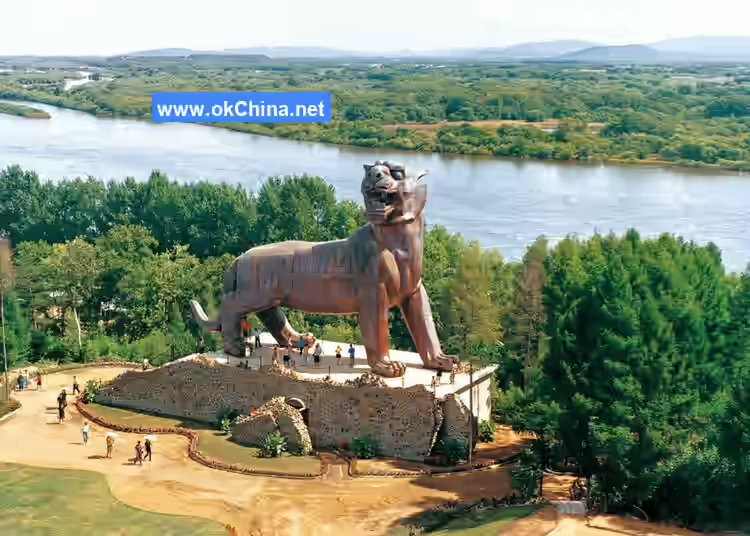
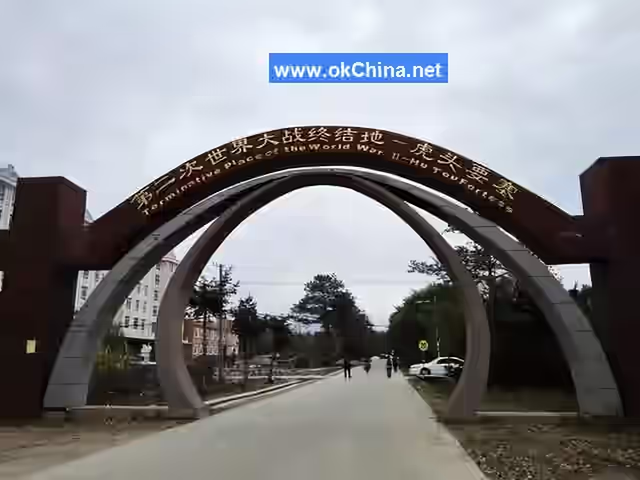
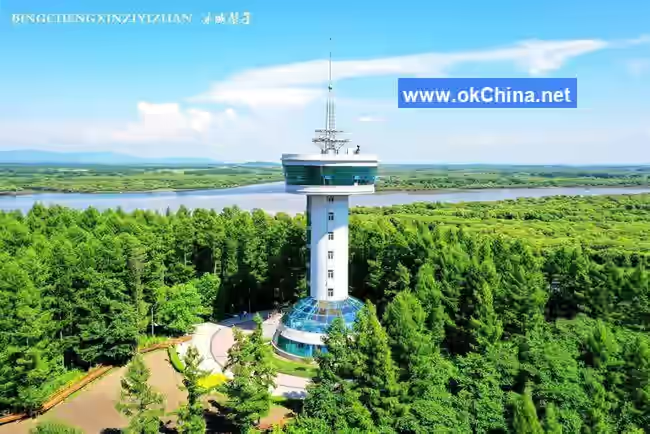
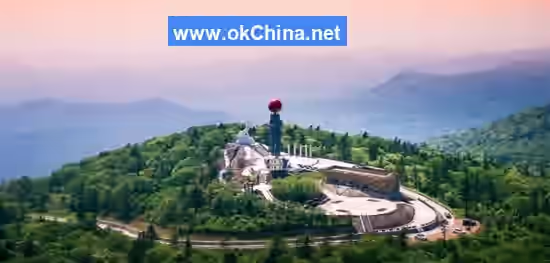
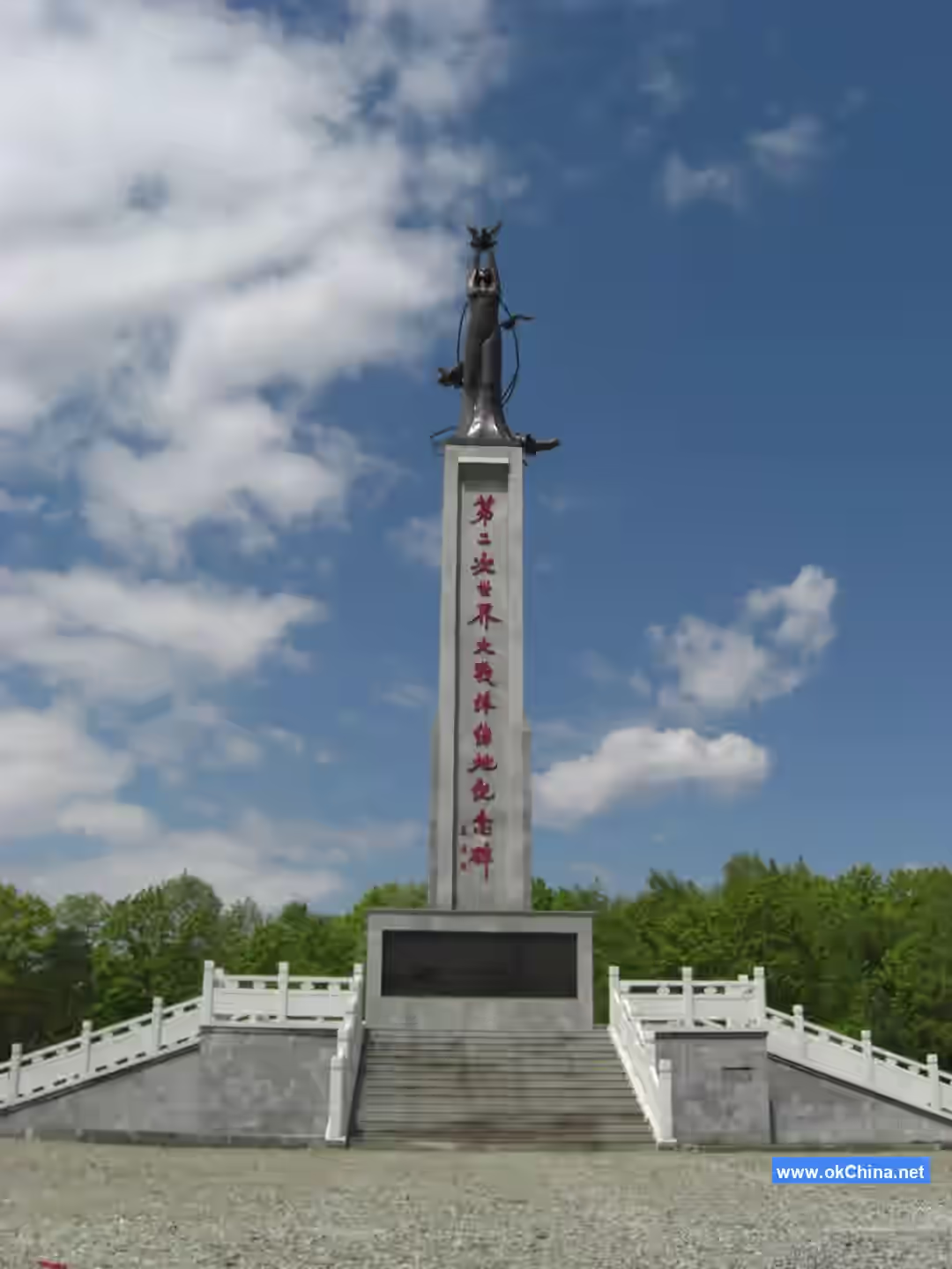
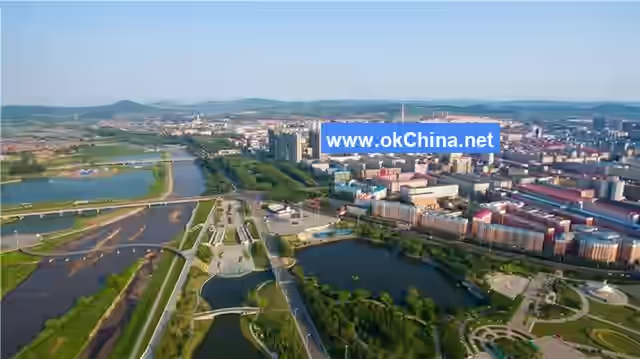
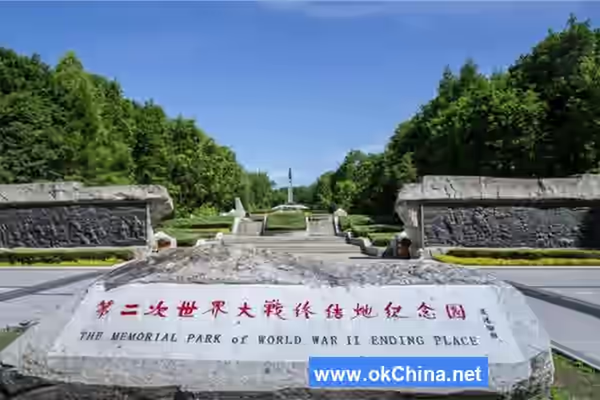
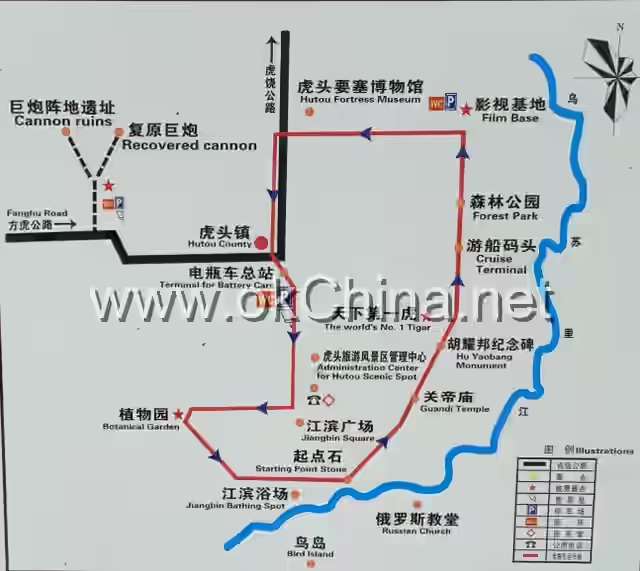
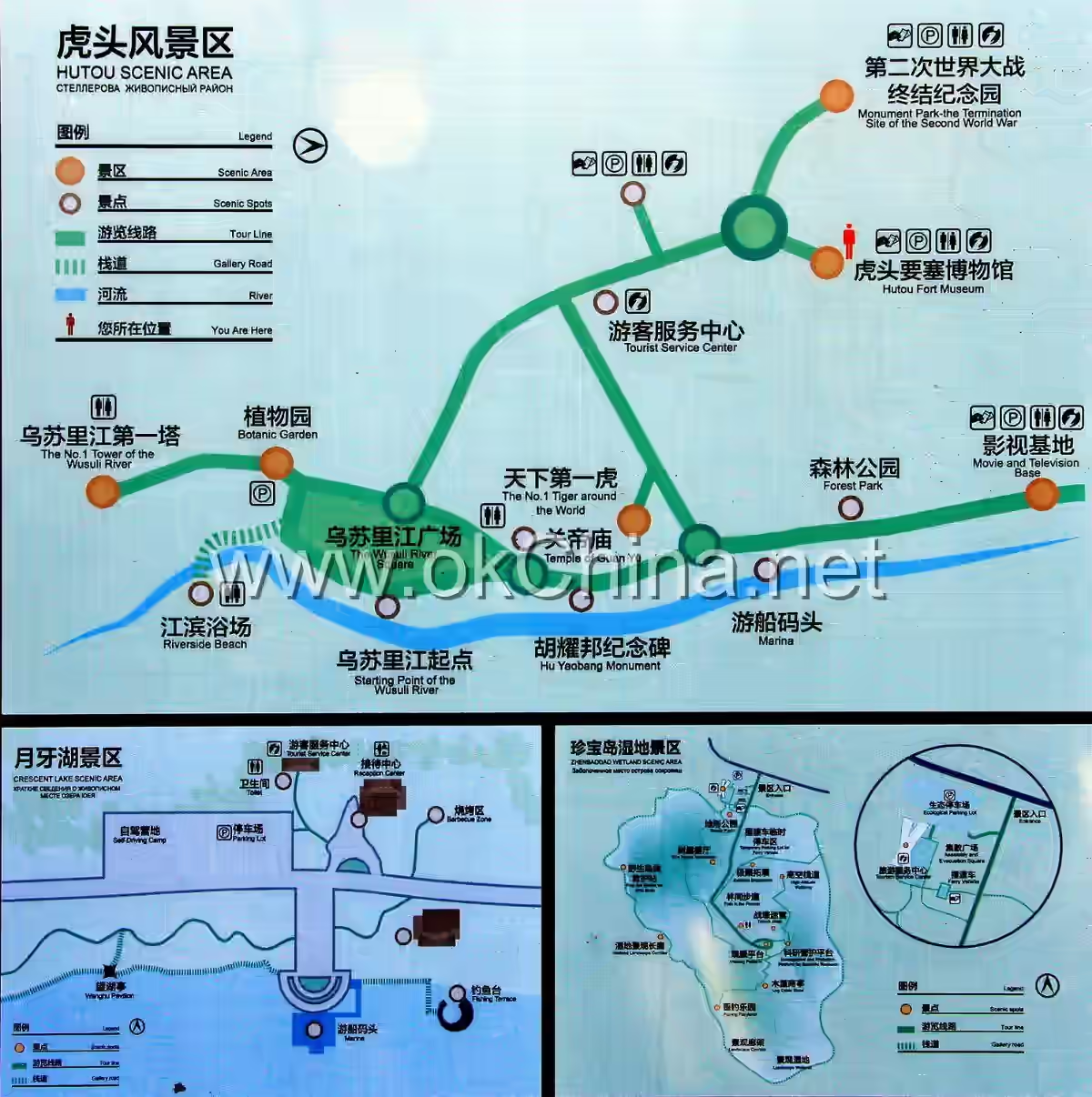
Hutou Tourist Attraction is located in Hutou Town, Hulin City, Jixi City, Heilongjiang Province. The Hutou Tourist Attraction in Jixi City boasts exceptionally rich ecological and historical-cultural resources. It is designated as a National Patriotic Education Demonstration Base, a National Defense Education Base, and serves as the core area of a National Ecological Civilization Construction Demonstration Zone. Through continuous enhancement and development, the attraction's reputation and prestige have increased year by year, earning it the status of a National 5A-level Tourist Attraction in 2019. Hutou Town, where it is located, has been successively named a National Characteristic Landscape Tourism Town, one of China's Top 100 Summer Resort Towns, a National-level Ecological Township, and a China Beautiful Leisure Village. The Hutou Tourist Area possesses abundant and unique tourism resources, holding prominent advantages for developing red tourism, ecotourism, folk-custom tourism, and ice-snow tourism. The Hutou Tourist Area comprises three main scenic zones: the World War II Termination Memorial Park Scenic Zone, the Hutou Fortress Scenic Zone, and the Riverside Tourism Scenic Zone. Among these, the site of the Underground Military Fortress built by the Japanese invading army is a National Cultural Relics Protection Unit. The entire area also features distinctive attractions such as the "World's Largest Tiger" (recorded in the Shanghai Guinness Book of Records), the "First Tower on the Ussuri River," and the "Easternmost Guandi Temple."
2. Geographical Location
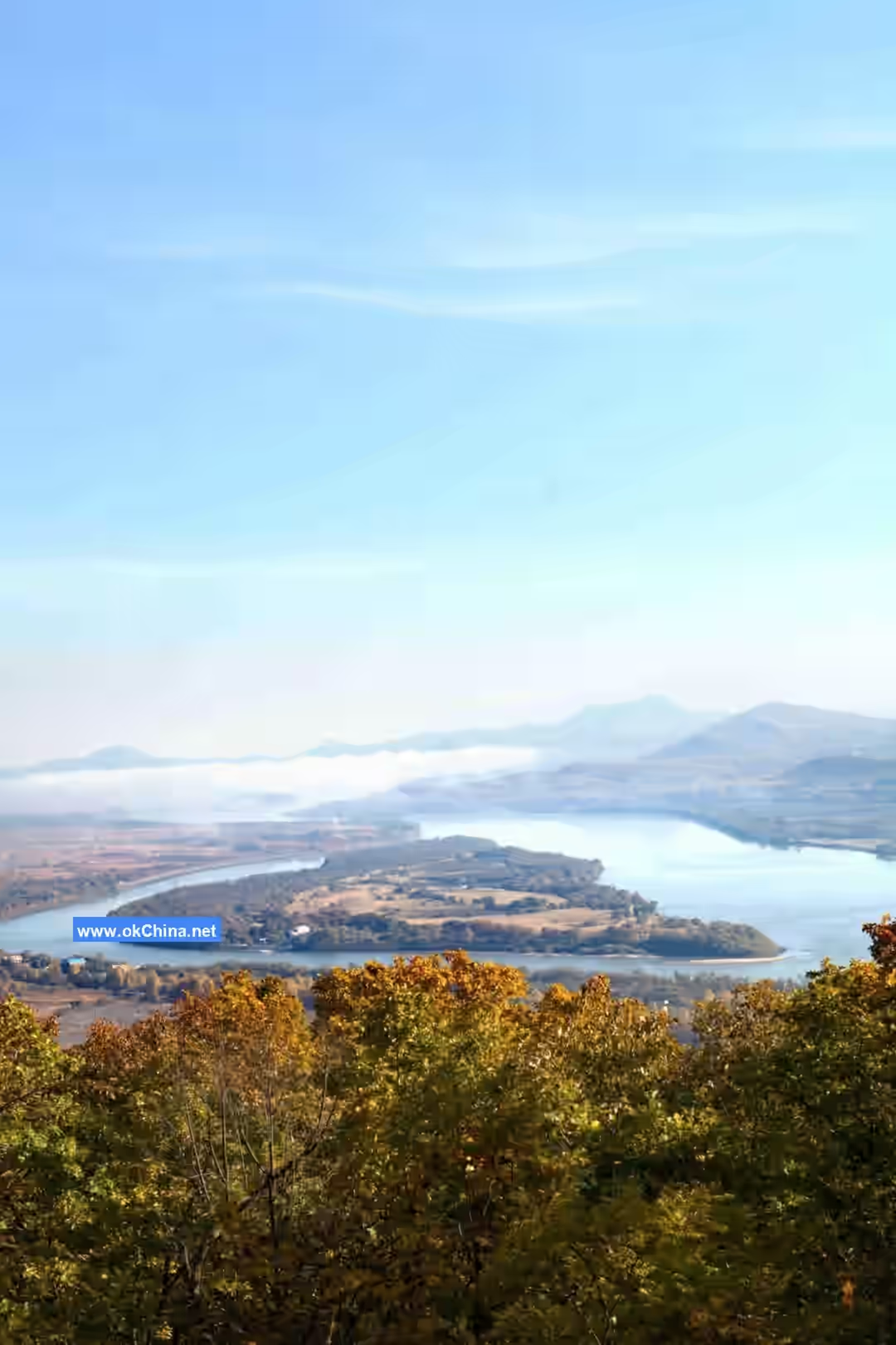
Located in Hutou Town on the banks of the Ussuri River in eastern Hulin City, Heilongjiang Province. It faces the Russian city of Dalnerechensk across the river. Provincial highways Fang(zheng)-Hu(lin) and Hu(lin)-Rao(he) traverse the scenic area, and waterway connections via the Ussuri River provide access to Harbin. It is 65 kilometers from the urban area of Hulin City. It is a comprehensive scenic area integrating border river landscapes, war relics, wetland exploration, and historical culture. The Hutou Fortress stretches from Huoshi Mountain in the west to the Ussuri River in the east (facing the Russian city of Iman across the river), and from Bianlianzi Mountain in the south to Hubei Mountain in the north. The central area is 12 kilometers wide and 30 kilometers deep. Within this area spanning dozens of square kilometers, there are over ten fortresses of varying sizes, composed of five positions: Menghu Mountain, Hubei Mountain, Hudong Mountain, Huxi Mountain, and Huxiao Mountain. Among them, Menghu Mountain is the main position, with Hudong Mountain and Hubei Mountain forming its forward flanks in a pincer-shaped defensive formation along north and south lines. The Huxi Mountain and Huxiao Mountain positions are located west of the main Menghu Mountain position, serving as the second-line rear positions.
3. Historical Background
The Hutou Fortress is the site where World War II ended. During the War of Resistance against Japanese Aggression, the Japanese army constructed the Hutou Fortress, a project notable for its massive scale, long duration, and extensive use of labor. The over 100,000 laborers used were all Chinese, including some captured from within the Shanhaiguan Pass and Northeast China, and others who were captured Chinese soldiers and officers. Under the threat of Japanese guns and swords, these people endured inhumane labor, with their ultimate fate being death from exhaustion, starvation, or mass execution. Upon completion of the fortress construction, the Japanese army held a celebration banquet. They gathered several hundred captive laborers in a depression in Menghu Valley, deceiving them with wine and food under the pretense of rewarding their labor. At the climax of the event, heavy machine guns opened fire, instantly turning the venue into a bloody slaughterhouse, with corpses piled high enough to fill the depression. Moreover, instances of lethal injections and throwing people into the river were rampant. The Hutou Fortress front was 12 kilometers wide and 30 kilometers deep, consisting of five mountain positions. The underground communication trenches connecting the various fortresses extended for dozens of kilometers, allowing interconnection between all positions. To build it into a fortress capable of independent combat for six months without being breached, the Japanese army invested hundreds of millions of yen, with the entire project lasting approximately six years. Inside the tunnels, there were command rooms, soldiers' rest areas, kitchens, baths, granaries, ammunition depots, power stations, telephone switchboard rooms, and more. Around the fortress perimeter, field fortifications and an airfield were constructed, each forming facilities capable of independent offensive and defensive operations. In 1987, the Hulin County People's Government partially restored the underground works at Hudong Mountain and organized exhibitions of photographs and artifacts for visitors. This fortress is massive in scale, complex in structure, and fully equipped. It consists of above-ground and underground sections. Existing above-ground military facility sites mainly include the Huoshi Mountain railway gun position, 40 cm caliber artillery positions, and positions for cannons, howitzers, and field guns, as well as combat bunkers and over 10 kilometers of winding communication trenches connecting various important works. Preserved remains of underground military facilities include command posts, power stations, ammunition depots, granaries, fuel depots, barracks, officers' quarters, hospitals, kitchens, baths, toilets, water supply and drainage systems, and wells. From the underground facilities to the surface, there were observation posts, pillboxes, vertical shafts, counterattack openings, chimneys, and ventilation shafts. At strategic points of entry and exit passages, traps and firing ports were installed. The Japanese Kwantung Army once boasted that the Hutou Fortress was the largest underground military facility in East Asia at the time, an impregnable permanent fortress, the "Oriental Maginot Line." On August 9, 1945, the Soviet First Far Eastern Front Army launched an attack on the Hutou Fortress. The Japanese garrison, relying on the strong fortifications, put up a desperate resistance. After fierce fighting until the 26th, the Soviet forces finally captured the Hutou Fortress. Out of 1,400 Japanese soldiers and several hundred Japanese settlers and military dependents in the surrounding area, only 53 managed to escape; the rest ultimately became casualties of the unjust war. Currently, on the eastern side of the Hutou Fortress site by the Ussuri River, there is a park and monument jointly funded by the Japan National Hutou Association and the Hulin County People's Government, commemorating that painful period of war history.
4. Attraction Introduction
4.1 The World's Largest Tiger
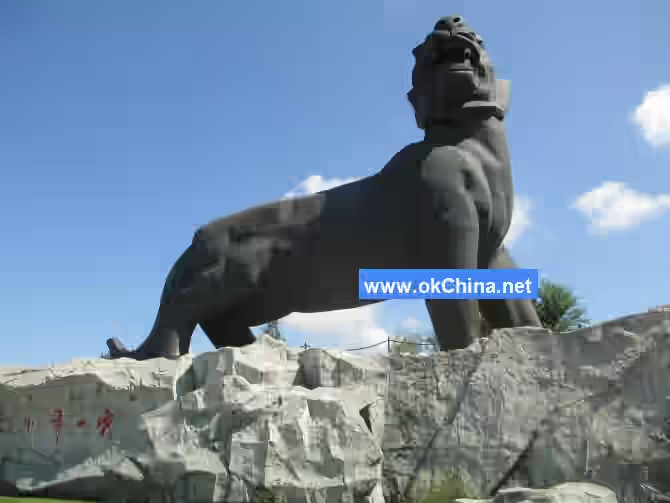
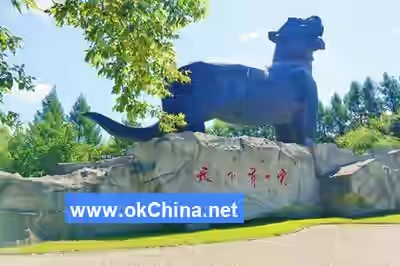
Located on Hutou Mountain peak by the Ussuri River within the scenic area, it is 25 meters long, 16 meters high, and weighs 30.4 tons. It has been recorded in the Shanghai Great World Guinness Book of Records and is hailed as the "World's Largest Tiger."
4.2 Hutou Fortress
Located within five mountains of varying elevations (around 100 meters) in the scenic area, it was the core of the fourteen fortress complexes built by the Japanese invading army along the Sino-Soviet border. The project was vast and the facilities comprehensive. As Soviet forces fought for 11 days to capture it after Japan's surrender, it is recognized by historians as the site where World War II ended.
The Hutou Fortress site is the earliest discovered and protected large-scale evidential site of Japanese army "fortified regions" on China's eastern border. It is widely distributed, grand in scale, and retains its original appearance despite destruction. The Hutou Fortress site is divided into four locations:
4.2.1 Hudong Mountain Fortress
This site is located 1.2 km north of Hutou Town, on an independent hill with an elevation of 100.7 m, 0.85 km from the Ussuri River. At the eastern entrance stands a marker stone indicating "Provincial-level Cultural Relics Protection Unit." About 50 meters west of the entrance is the "Hutou Liberation Memorial Tower" built by the Soviet Red Army in August 1945. The preservation and protection status of the Hudong Mountain Fortress site is relatively good. In 1977, the Hulin County Government allocated special funds to clear and reinforce the north-south passages for public opening. In 1995, the Hulin City Cultural Relics Management Office conducted detailed surveys and clearing, uncovering 400 meters of passages and excavating over 300 war relics. The Hudong Mountain Fortress has a complex structure and complete equipment. Notably, its cooking and heating were fully electrified, unique among all fortress positions. The main passage runs north-south, 164.3 m long and 1.8 m wide. Except for the intersection of the main passage, which has a flat ceiling, the rest have arched ceilings. The floor is polished concrete. Both main and branch passages have drainage ditches running down the center, covered with concrete slabs. Each section of the ditch connects to a sump, forming a complete and orderly drainage system for the entire underground works. Four branch passages extend from the main passage, totaling 85.0 m in length and ranging from 8.8 m to 1.2 m in width, leading to bunkers, gun emplacements, counterattack openings, etc. Hooks for hanging hammocks and wooden bricks for wiring are embedded in the concrete walls on both sides of the passages, and wooden bricks for ceiling lights are also预留预留预留预留预留预留预留预留预留预留预留预留预留预留预留预留预留预留预留预留预留预留预留预留预留预留预留预留预留预留预留预留预留预留预留预留预留预留预留预留预留预留预留预留预留预留预留预留预留预留预留预留预留预留预留预留预留预留预留预留预留预留预留预留预留预留预留预留预留预留预留预留预留预留预留预留预留预留预留预留预留预留预留预留预留预留预留预留预留预留预留预留预留预留预留预留预留预留预留预留预留预留预留预留预留预留预留预留预留预留预留预留预留预留预留预留预留预留预留预留预留预留预留预留预留预留预留预留预留预留预留预留预留预留预留预留预留预留预留预留预留预留预留预留预留预留预留预留预留预留预留预留预留预留预留预留预留预留预留预留预留预留预留预留预留预留预留预留预留预留预留预留预留预留预留预留预留预留预留预留预留预留预留预留预留预留预留预留预留预留预留预留预留预留预留预留预留预留预留预留预留预留预留预留预留预留预留预留预留预留预留预留预留预留预留预留预留预留预留预留预留预留预留预留预留预留预留预留预留预留预留预留预留预留预留预留预留预留预留预留预留预留预留预留预留预留预留预留预留预留预留预留预留预留预留预留预留预留预留预留预留预留预留预留预留预留预留预留预留预留预留预留预留预留预留预留预留预留预留预留预留预留预留预留预留预留预留预留预留预留预留预留预留预留预留预留预留预留预留预留预留预留预留预留预留预留预留预留预留预留预留预留预留预留预留预留预留预留预留预留预留预留预留预留预留预留预留预留预留预留预留预留预留预留预留预留预留预留预留预留预留预留预留预留预留预留预留预留预留预留预留预留预留预留预留预留预留预留预留预留预留预留预留预留预留预留预留预留预留预留预留预留预留预留预留预留预留预留预留预留预留预留预留预留预留预留预留预留预留预留预留预留预留预留预留预留预留预留预留预留预留预留预留预留预留预留预留预留预留预留预留预留预留预留预留预留预留预留预留预留预留预留预留预留预留预留预留预留预留预留预留预留预留预留预留预留预留预留预留预留预留预留预留预留预留预留预留预留预留预留预留预留预留预留预留预留预留预留预留预留预留预留预留预留预留预留预留预留预留预留预留预留预留预留预留预留预留预留预留预留预留预留预留预留预留预留预留预留预留预留预留预留预留预留预留预留预留预留预留预留预留预留预留预留预留预留预留预留预留预留预留预留预留预留预留预留预留预留预留预留预留预留预留预留预留预留预留预留预留预留预留预留预留预留预留预留预留预留预留预留预留预留预留预留预留预留预留预留预留预留预留预留预留预留预留预留预留预留预留预留预留预留预留预留预留预留预留预留预留预留预留预留预留预留预留预留预留预留预留预留预留预留预留预留预留预留预留预留预留预留预留预留预留预留预留预留预留预留预留预留预留预留预留预留预留预留预留预留预留预留预留预留预留预留预留预留预留预留预留预留预留预留预留预留预留预留预留预留预留预留预留预留预留预留预留预留预留预留预留预留预留预留预留预留预留预留预留预留预留预留预留预留预留预留预留预留预留预留预留预留预留预留预留预留预留预留预留预留预留预留预留预留预留预留预留预留预留预留预留预留预留预留预留预留预留预留预留预留预留预留预留预留预留预留预留预留预留预留预留预留预留预留预留预留预留预留预留预留预留预留预留预留预留预留预留预留预留预留预留预留预留预留预留预留预留预留预留预留预留预留预留预留预留预留预留预留预留预留预留预留预留预留预留预留预留预留预留预留预留预留预留预留预留预留预留预留预留预留预留预留预留预留预留预留预留预留预留预留预留预留预留预留预留预留预留预留预留预留预留预留预留预留预留预留预留预留预留预留预留预留预留预留预留预留预留预留预留预留预留预留预留预留预留预留预留预留预留预留预留预留预留预留预留预留预留预留预留预留预留预留预留预留预留预留预留预留预留预留预留预留预留预留预留预留预留预留预留预留预留预留预留预留预留预留预留预留预留预留预留预留预留预留预留预留预留预留预留预留预留预留预留预留预留预留预留预留预留预留预留预留预留预留预留预留预留预留预留预留预留预留预留预留预留预留预留预留预留预留预留预留预留预留预留预留预留预留预留预留预留预留预留预留预留预留预留预留预留预留预留预留预留预留预留预留预留预留预留预留预留预留预留预留预留预留预留预留预留预留预留预留预留预留预留预留预留预留预留预留预留预留预留预留预留预留预留预留预留预留预留预留预留预留预留预留预留预留预留预留预留预留预留预留预留预留预留预留预留预留预留预留预留预留预留预留预留预留预留预留预留预留预留预留预留预留预留预留预留预留预留预留预留预留预留预留预留预留预留预留预留预留预留预留预留预留预留预留预留预留预留预留预留预留预留预留预留预留预留预留预留预留预留预留预留预留预留预留预留预留预留预留预留预留预留预留预留预留预留预留预留预留预留预留预留预留预留预留预留预留预留预留预留预留预留预留预留预留预留预留预留预留预留预留预留预留预留预留预留预留预留预留预留预留预留预留预留预留预留预留预留预留预留预留预留预留预留预留预留预留预留预留预留预留预留预留预留预留预留预留预留预留预留预留预留预留预留预留预留预留预留预留预留预留预留预留预留预留预留预留预留预留预留预留预留预留预留预留预留预留预留预留预留预留预留预留预留预留预留预留预留预留预留预留预留预留预留预留预留预留预留预留预留预留预留预留预留预留预留预留预留预留预留预留预留预留预留预留预留预留预留预留预留预留预留预留预留预留预留预留预留预留预留预留预留预留预留预留预留预留预留预留预留预留预留预留预留预留预留预留预留预留预留预留预留预留预留预留预留预留预留预留预留预留预留预留预留预留预留预留预留预留预留预留预留预留预留预留预留预留预留预留预留预留预留预留预留预留预留预留预留预留预留预留预留预留预留预留预留预留预留预留预留预留预留预留预留预留预留预留预留预留预留预留预留预留预留预留预留预留预留预留预留预留预留预留预留预留预留预留预留预留预留预留预留预留预留预留预留预留预留预留预留预留预留预留预留预留预留预留预留预留预留预留预留预留预留预留预留预留预留预留预留预留预留预留预留预留预留预留预留预留预留预留预留预留预留预留预留预留预留预留预留预留预留预留预留预留预留预留预留预留预留预留预留预留预留预留预留预留预留预留预留预留预留预留预留预留预留预留预留预留预留预留预留预留预留预留预留预留预留预留预留预留预留预留预留预留预留预留预留预留预留预留预留预留预留预留预留预留预留预留预留预留预留预留预留预留预留预留预留预留预留预留预留预留预留预留预留预留预留预留预留预留预留预留预留预留预留预留预留预留预留预留预留预留预留预留预留预留预留预留预留预留预留预留预留预留预留预留预留预留预留预留预留预留预留预留预留预留预留预留预留预留预留预留预留预留预留预留预留预留预留预留预留预留预留预留预留预留预留预留预留预留预留预留预留预留预留预留预留预留预留预留预留预留预留预留预留预留预留预留预留预留预留预留预留预留预留预留预留预留预留预留预留预留预留预留预留预留预留预留预留预留预留预留预留预留预留预留预留预留预留预留预留预留预留预留预留预留预留预留预留预留预留预留预留预留预留预留预留预留预留预留预留预留预留预留预留预留预留预留预留预留预留预留预留预留预留预留预留预留预留预留预留预留预留预留预留预留预留预留预留预留预留预留预留预留预留预留预留预留预留预留预留预留预留预留预留预留预留预留预留预留预留预留预留预留预留预留预留预留预留预留预留预留预留预留预留预留预留预留预留预留预留预留预留预留预留预留预留预留预留预留预留预留预留预留预留预留预留预留预留预留预留预留预留预留预留预留预留预留预留预留预留预留预留预留预留预留预留预留预留预留预留预留预留预留预留预留预留预留预留预留预留预留预留预留预留预留预留预留预留预留预留预留预留预留预留预留预留预留预留预留预留预留预留预留预留预留预留预留预留预留预留预留预留预留预留预留预留预留预留预留预留预留预留预留预留预留预留预留预留预留预留预留预留预留预留预留预留预留预留预留预留预留预留预留预留预留预留预留预留预留预留预留预留预留预留预留预留预留预留预留预留预留预留预留预留预留预留预留预留预留预留预留预留预留预留预留预留预留预留预留预留预留预留预留预留预留预留预留预留预留预留预留预留预留预留预留预留预留预留预留预留预留预留预留预留预留预留预留预留预留预留预留预留预留预留预留预留预留预留预留预留预留预留预留预留预留预留预留预留预留预留预留预留预留预留预留预留预留预留预留预留预留预留预留预留预留预留预留预留预留预留预留预留预留预留预留预留预留预留预留预留预留预留预留预留预留预留预留预留预留预留预留预留预留预留预留预留预留预留预留预留预留预留预留预留预留预留预留预留预留预留预留预留预留预留预留预留预留预留预留预留预留预留预留预留预留预留预留预留预留预留预留预留预留预留预留预留预留预留预留预留预留预留预留预留预留预留预留预留预留预留预留预留预留预留预留预留预留预留预留预留预留预留预留预留预留预留预留预留预留预留预留预留预留预留预留预留预留预留预留预留预留预留预留预留预留预留预留预留预留预留预留预留预留预留预留预留预留预留预留预留预留预留预留预留预留预留预留预留预留预留预留预留预留预留预留预留预留预留预留预留预留预留预留预留预留预留预留预留预留预留预留预留预留预留预留预留预留预留预留预留预留预留预留预留预留预留预留预留预留预留预留预留预留预留预留预留预留预留预留预留预留预留预留预留预留预留预留预留预留预留预留预留预留预留预留预留预留预留预留预留预留预留预留预留预留预留预留预留预留预留预留预留预留预留预留预留预留预留预留预留预留预留预留预留预留预留预留预留预留预留预留预留预留预留预留#### 4.2.2 Fierce Tiger Mountain This site is located 2.2 km north of Hutou Town. It features three commanding heights, respectively named East, West, and Central Fierce Tiger Mountain, with an elevation of 114.8 m. This location served as the headquarters of the main Japanese garrison force and was the nerve center of the entire Hutou Fortress. Central Fierce Tiger Mountain is the highest point among them, with straight-line distances of 350 m and 300 m to the eastern and western commanding heights respectively, and 2000 m from the Ussuri River. The accessible tunnel at Central Fierce Tiger Mountain is 342 m long, containing 8 rooms. The two largest rooms are a 156 m² dressing station and a 150 m² ammunition depot.
A marker stone designating it as a provincial-level cultural relics protection unit stands at the ruined cliff entrance of the site. During the war, extensive bombardment dislodged rocks and earth, nearly completely blocking the entrance, forcing entry only by crawling on one's stomach. The underground tunnel is 1.0 m wide and 1.80 m high, with accumulated water over a foot deep on the floor. The rooms are dark and damp, with an average temperature of 8°C. The concrete walls of the tunnel ceiling bear markings such as "Ammunition," "Drain Water," "Oil Filling Port," and "Ventilation Device," allowing inference of each room's function and purpose. Remains of facilities like stoves and urinal troughs from rooms such as "Latrine" and "Kitchen" are also present. Scattered human bones were found amidst collapsed earth and rocks in the large "T"-shaped room of the "Dressing Station." In a double-story structured room, an iron ladder was discovered connecting to the lower level or extending elsewhere. According to recollections of surviving Japanese soldiers, the fortress tunnels of Central Fierce Tiger Mountain should have connected to the underground fortresses of East and West Fierce Tiger Mountain. However, due to water seepage, collapses, and blockages, further investigation into their planar relationships was later impossible.
Approximately 400 m southwest of the aforementioned entrance, a western entrance dug into the mountainside was discovered. After proceeding 50 m into the tunnel, it branches left and right, but was later almost completely sealed by collapsed earth and rocks. The westward tunnel connects to an observation shaft leading to the surface. The shaft is 15 m high and is not vertically aligned, a design intended to avoid attacks from the shaft opening. The observation post walls bear inscriptions like "Exhibition" and "Underground Entrance/Exit," indicating the facility's purpose. The tunnel has severe collapses, and the concrete ceiling was blasted apart and displaced by Soviet forces.
4.2.3 Howitzer Position
This site is located at the foothills of West Fierce Tiger Mountain, 200 m from its commanding height, at an elevation of 82.5 m, and was destroyed by wartime artillery fire. According to historical records, this position was originally garrisoned by the 14th Artillery Squadron of the Japanese Kwantung Army's Hutou 4th Border Garrison. In July 1945, it was downsized to the 4th Platoon, 1st Artillery Squadron, Hutou 15th Border Garrison. The gun barrel was approximately 20 m long with a diameter of 1 m, and a maximum range of 20 km. The shells were 4 m long with a warhead diameter of 40 cm and a maximum charge of 1000 kg. Among Japanese Army equipment at the time, this was the largest-caliber land-based heavy artillery piece. It specifically targeted the Iman Railway Bridge on the Siberian Railway within the Soviet Union, aiming to cut Soviet supply lines and disrupt their logistical support during combat. After the liberation of Hutou, it was taken as war booty by Soviet forces and transported back to the Soviet Union. [5] The gun emplacement site has a circular structure with a domed roof. The annular foundation wall has an outer diameter of 35 m and an inner diameter of 17.6 m, with an internal clear height of about 10 m. The outer reinforced concrete wall foundation is up to 20 m thick, with a frontal wall thickness of 4 m. The gun port inner opening is 2 m wide, the outer opening 3 m wide, and the port faces southeast. The communication trench and tunnel to the gun turret are 19.3 m long and 2.4 m wide. On the north side of the passage is a power station room whose condition is indeterminable due to collapse. On the north side of the annular foundation is a collapsed ammunition depot with a width of 2.0 m; on the south side are two curved rooms measuring 11×2.5 m, one being a shelter and the other a supply storage.
4.2.4 Tiger's Roar Mountain Fortress
This site is located 5.3 km northwest of Hutou Town, at an elevation of 108.1 m. Four fortress sites have been discovered: Flat Top Mountain site, Tiger's Roar Mountain site, Great Tiger's Roar Mountain site, and the "Ten-Inch Howitzer" fortress site. Approximately 6000 m of main tunnels have been discovered.
Flat Top Mountain is 6.4 km from the Ussuri River, with a straight-line distance of about 600 m to the commanding height of Tiger's Roar Mountain, and an elevation of 89.1 m. The measured total length of this fortress site is 165 m, containing 4 rooms. Entering 10 m from the discovered entrance leads to a large room measuring 11.4×? m. Directly ahead is a soldiers' quarters measuring 14.9×3 m, inside of which are two officers' quarters measuring 3×2 m each. Proceeding west along the east-west main tunnel leads to a double-story kitchen measuring 7×3 m, with its lower level being a storage room; opposite is a room measuring 8×2 m, its purpose unknown. Heading east and turning south leads to a connecting shaft to the surface; continuing east about 10 m is blocked by collapsed earth and rocks.
Tiger's Roar Mountain is located 5.4 km northwest of Hutou Town, at an elevation of 108.1 m. The measured total length of accessible tunnels in the underground fortress is 69.25 m, with 4 rooms. Proceeding 20 m from the north entrance leads to the main tunnel. Directly ahead is a small square room of 2×2 m; not far west is a shaft leading to the surface. Heading east on a gentle slope for several meters, the first room on the left (south side) is an underground command post measuring 5.6×3 m. A few meters further is a dry bread storage room measuring 10×3 m, directly opposite a westward passage that is blocked. Further ahead is an artillery squad quarters measuring approximately 7×3 m (area about 10 m²).
At the southeastern foothills of Flat Top Mountain is a 10 cm caliber howitzer fortress. The main tunnel runs north-south, with three parallel branch tunnels opening eastward, spaced about 30 m apart. The site's scale is second only to Central Fierce Tiger Mountain, with a measurable length of 243.4 m. According to records, during the Japanese-Soviet Battle of Hutou, about 200 Japanese people took refuge here. Entering about 10 m from the central opening, the main tunnel extends north and south. Going north about 10 m leads to an ammunition depot measuring 20×5 m; about 10 m ahead is a small 2×2 m warehouse facing the northern opening. Another 10 m north, a shaft leads directly to the mountaintop. On the west side of the southward passage are 4 rooms. The first is a large room measuring 20×3 m, said to be where wartime refugees were concentrated. A few meters from this room are two small rooms measuring 5×2 m each. About 10 m further is a large room of 60 square meters, containing two indoor pools of unknown purpose. The measurable length of this fortress is about 243.4 m.
Comments
Post a Comment