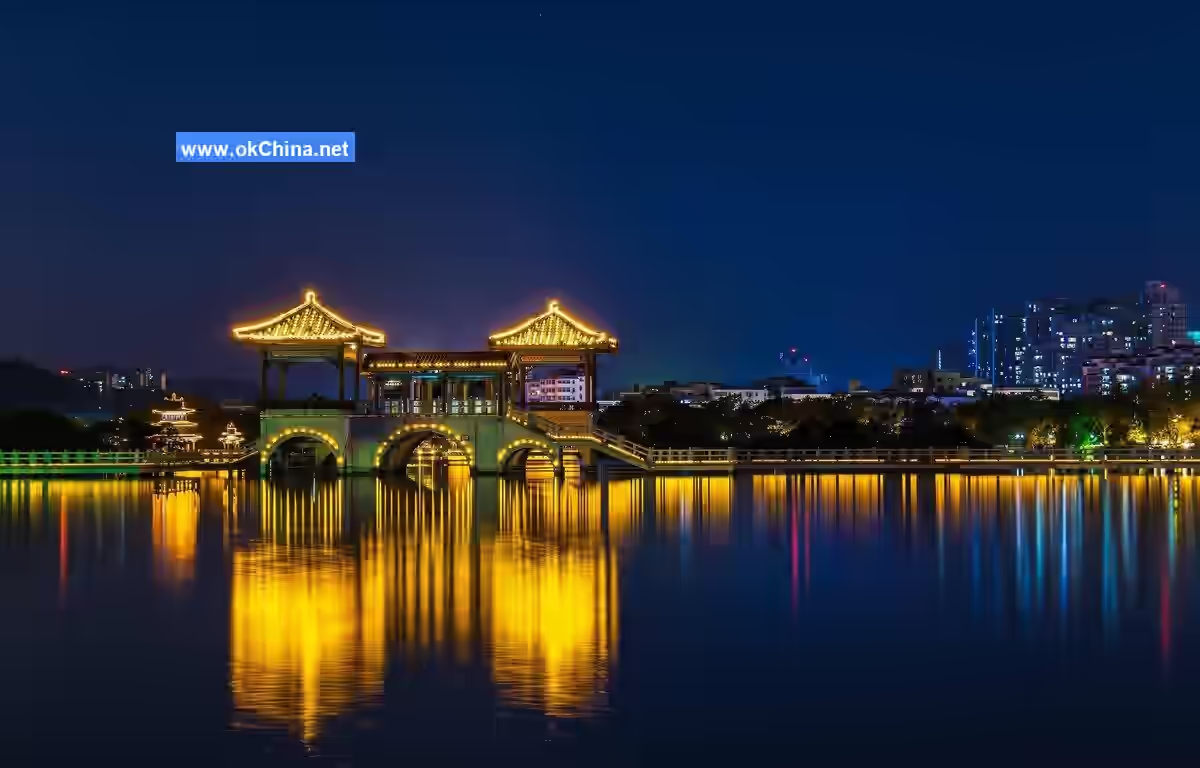
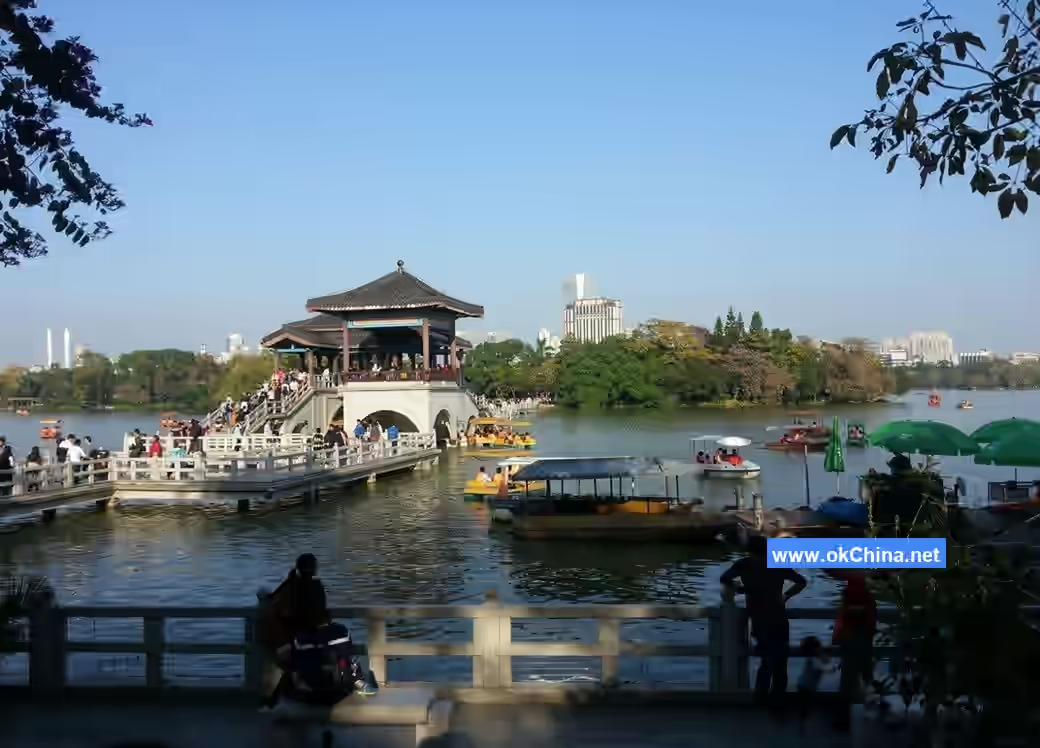
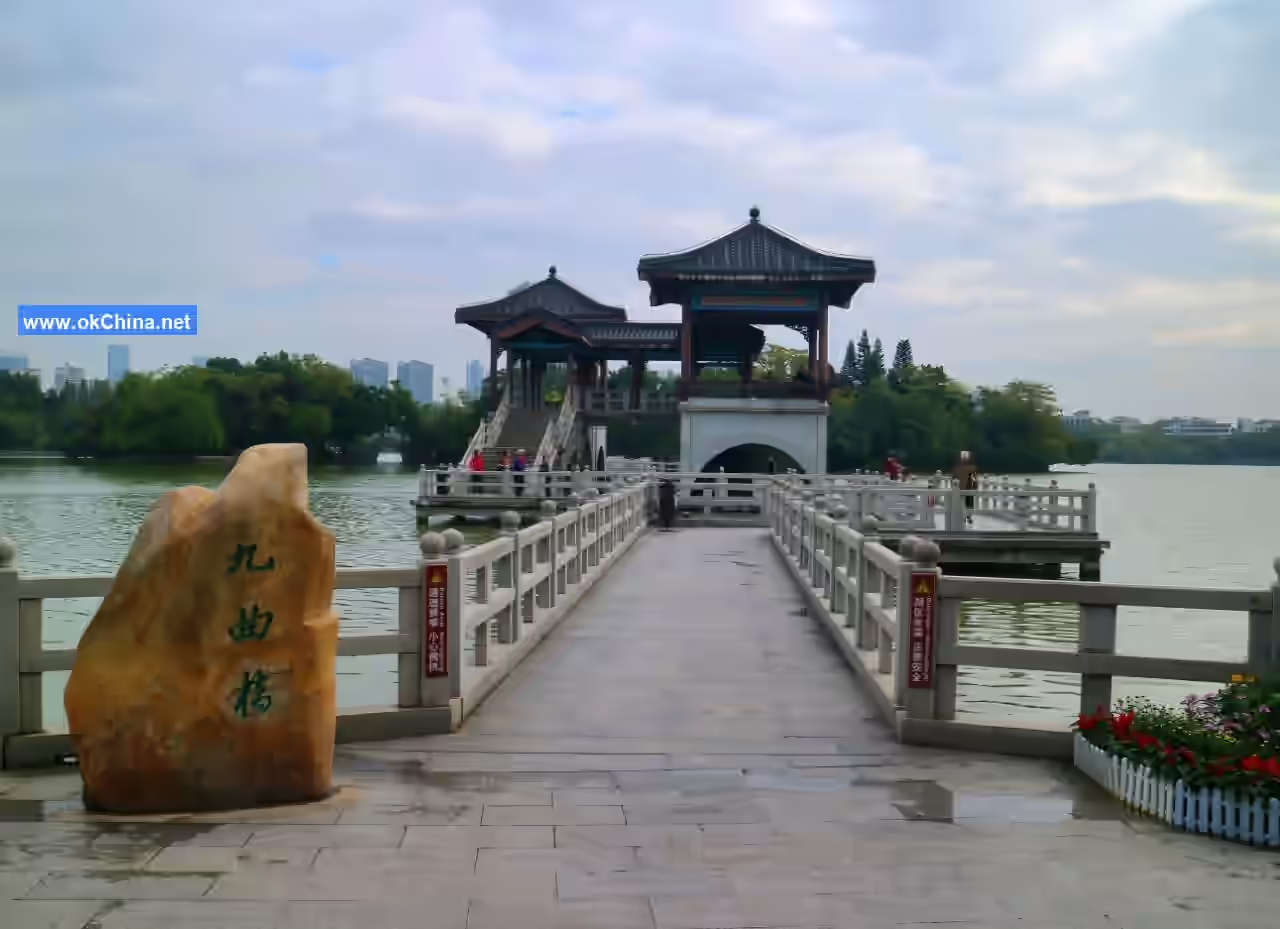
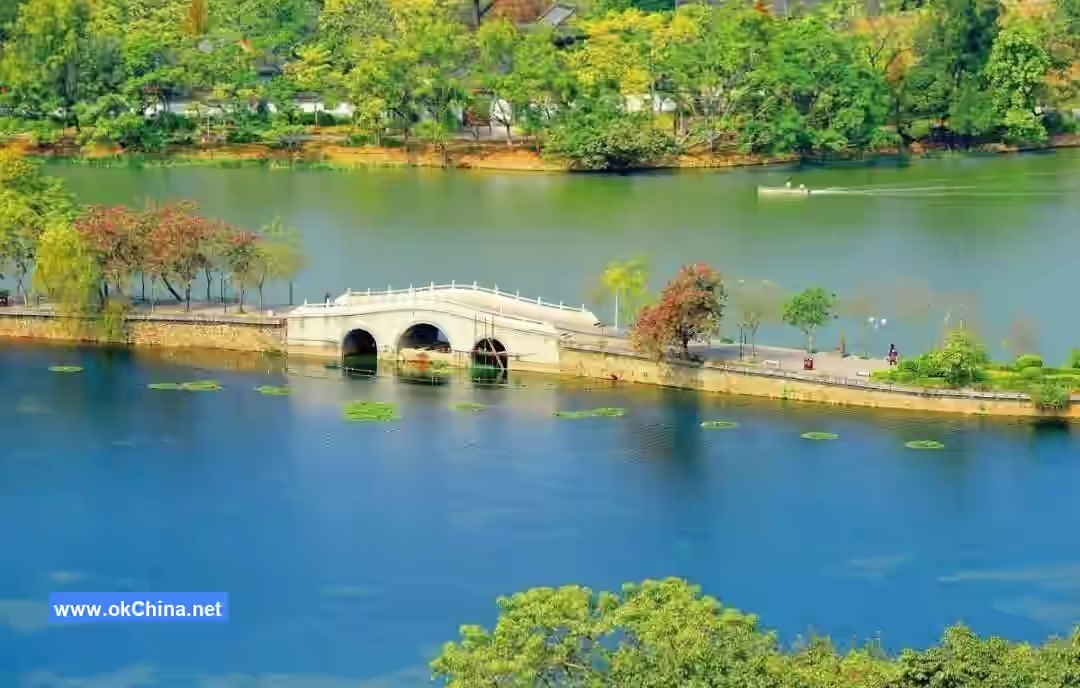
Huizhou West Lake Scenic Area in Huizhou City
1. Introduction
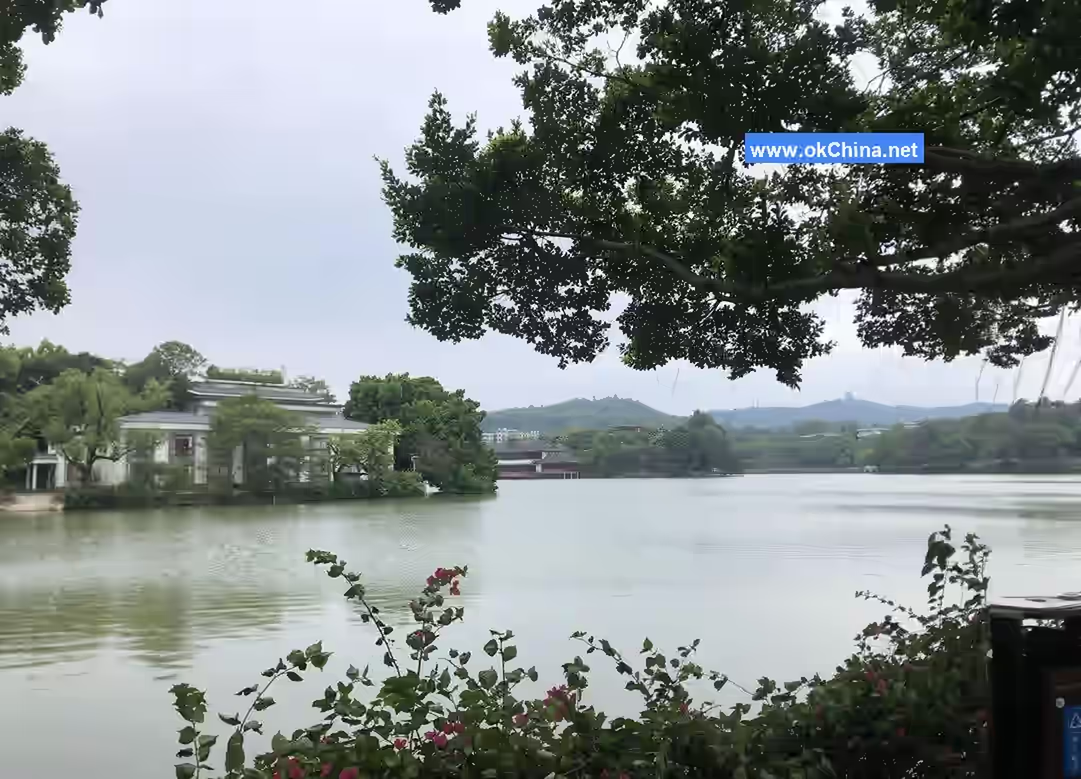
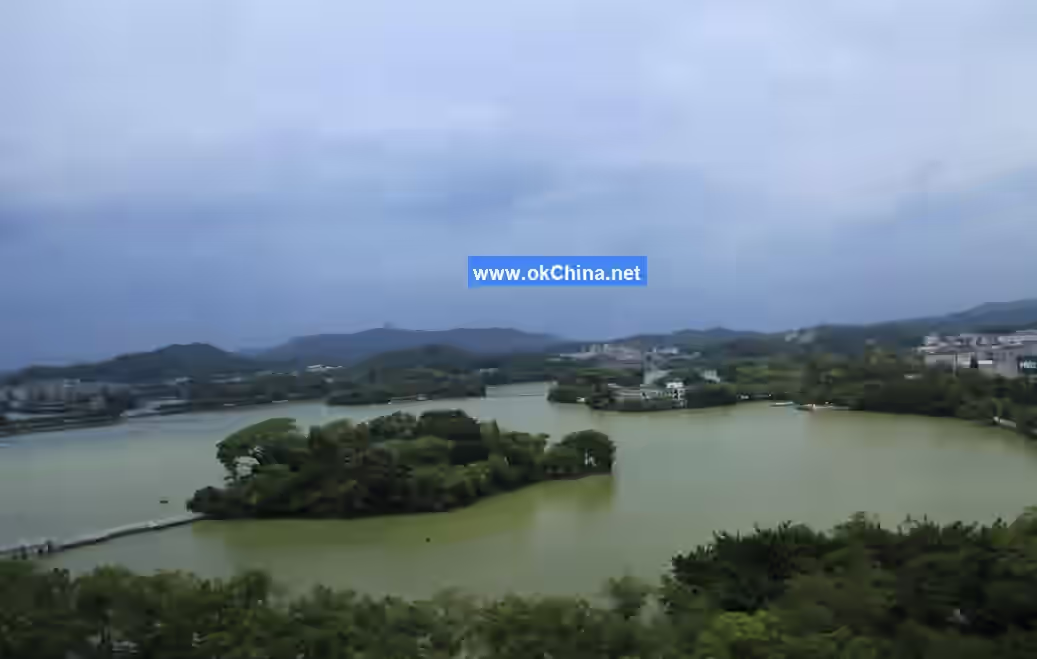
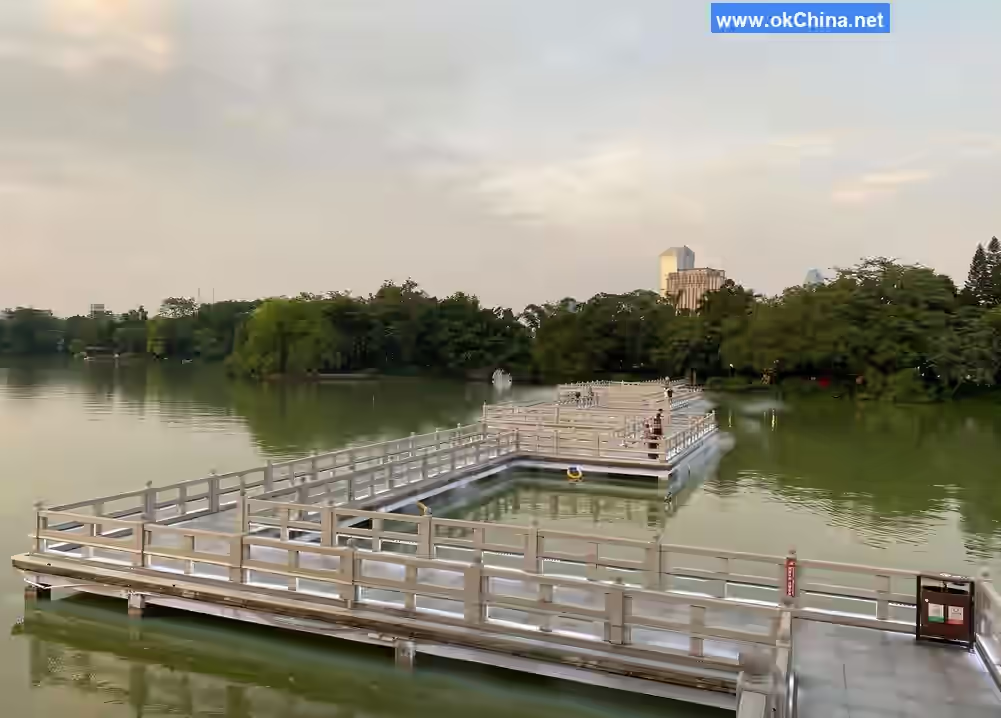
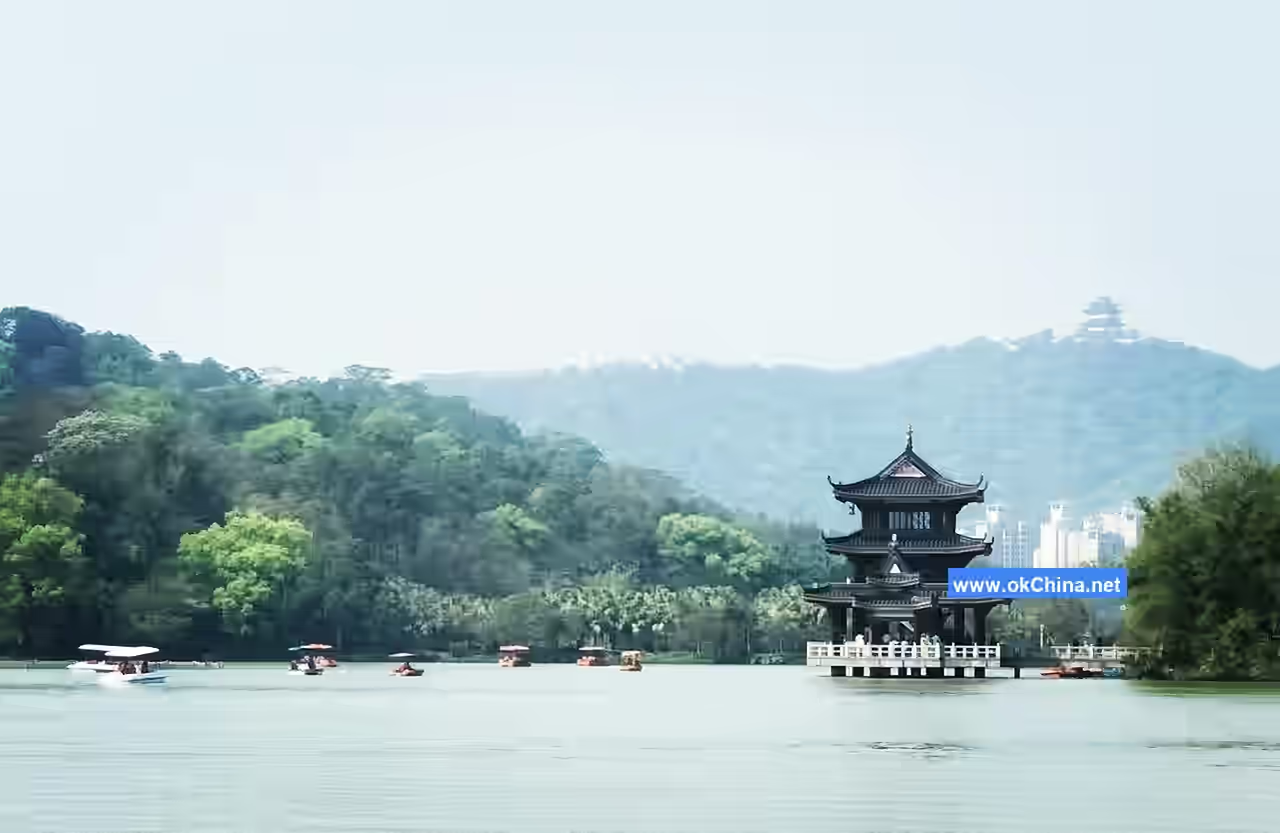
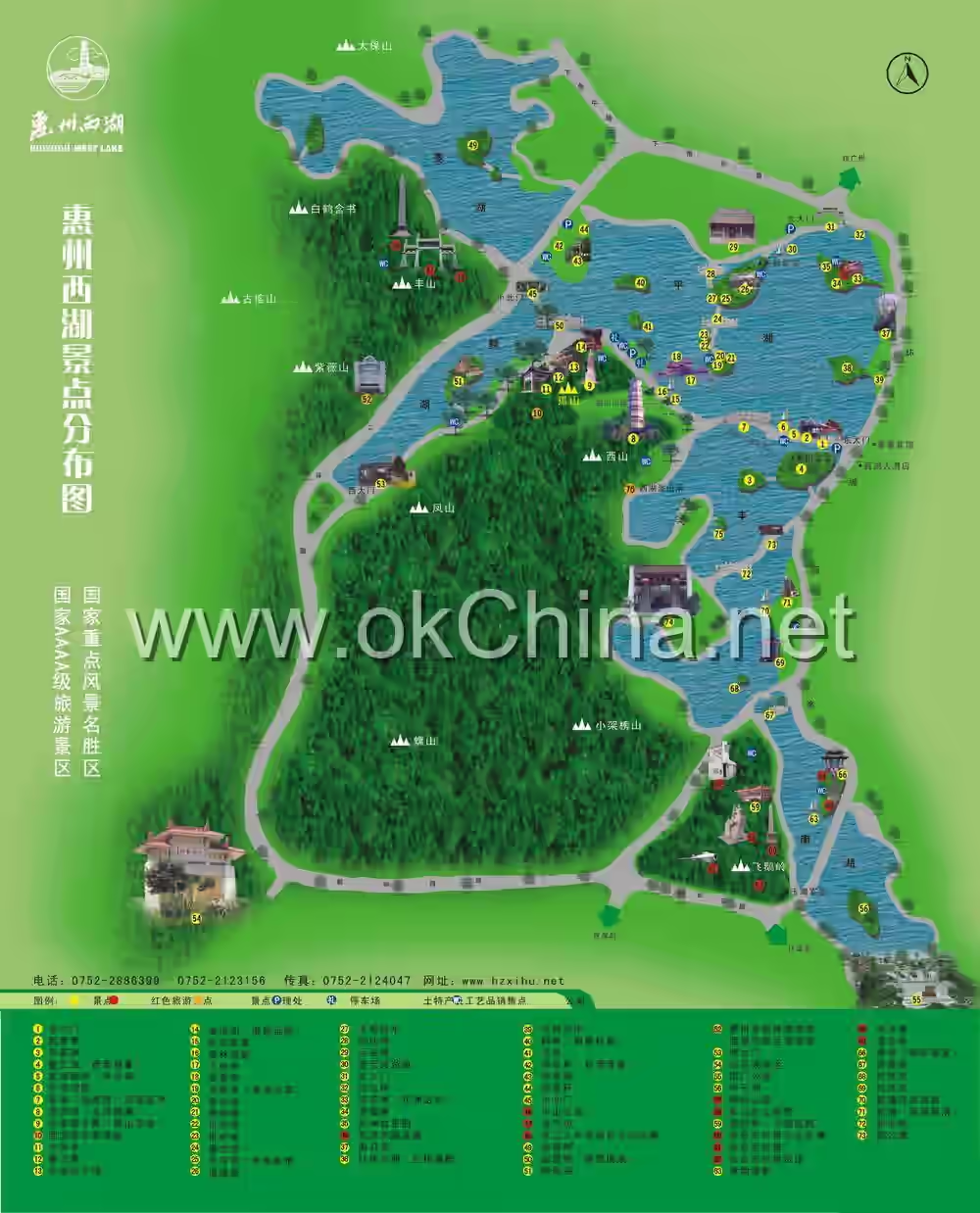
Huizhou West Lake Scenic Area in Huizhou City, also known as the West Lake Scenic and Historic Interest Area of Huizhou City, is located in Huicheng District, Huizhou City, Guangdong Province. It consists of the West Lake Scenic Area and the Honghua Lake Scenic Area, with a total area of 20.91 square kilometers, of which the water area is 3.13 square kilometers.
Huizhou West Lake Scenic Area is a national-level scenic and historic interest area characterized by its landscape, with leisure and sightseeing as its main functions. It is renowned for its Six Lakes, Nine Bridges, and Eighteen Scenes. On October 22, 2009, attractions such as Xiangyun Guabang (Gaobang Mountain), Yuta Weilang (Sizhou Pagoda), West Lake Suji (Dongpo Garden · Su Causeway), Fengzhu Xiaogan (Fengzhu Garden), Bihu Shuxiang (Feng Lake Academy), and Liudan Diancui (Diancui Islet) were selected as the "Top Ten Scenic Spots of Huizhou." The Feng Lake Academy within the scenic area was relocated to its current site during the Kangxi period of the Qing Dynasty. For over 750 years, it has been the most important educational institution in Huizhou, leaving behind many relics of famous figures.
2. Geographical Environment
2.1 Location and Territory
Huizhou West Lake Scenic Area is located in the central district of Huicheng, Huizhou City, in the southeastern part of Guangdong Province. It covers a total area of 20.91 square kilometers, with a water area of 3.13 square kilometers. Its central position lies between 114°19′40″E to 114°24′00″E and 23°02′40″N to 23°06′35″N.
2.2 Climate
Huizhou West Lake Scenic Area experiences a South Asian tropical maritime monsoon climate, with an average annual temperature ranging from 19.5°C to 22.5°C and an average annual rainfall of 1731 mm.
2.3 Topography and Landforms
Huizhou West Lake Scenic Area features low hilly valley terrain. The Honghualing Scenic Area in the northwest has undulating hills, but the slopes are gentle, with elevations mostly between 50 and 80 meters. The highest peak is Gaobang Mountain, with an elevation of 227 meters.
2.4 Natural Resources
2.4.1 Plant Resources
Huizhou West Lake Scenic Area is home to 150 species of garden trees from 61 families, 109 ancient and famous trees, and 38 ancient trees over a hundred years old. Nationally protected first-class plants include species such as yew, Chinese swamp cypress, dawn redwood, ginkgo, and cycad.
2.4.2 Animal Resources
Among the 18 islets in Huizhou West Lake Scenic Area, five bird islands host over ten thousand birds, including egrets, herons, and cormorants.
3. Main Attractions
3.1 Xixin Bridge
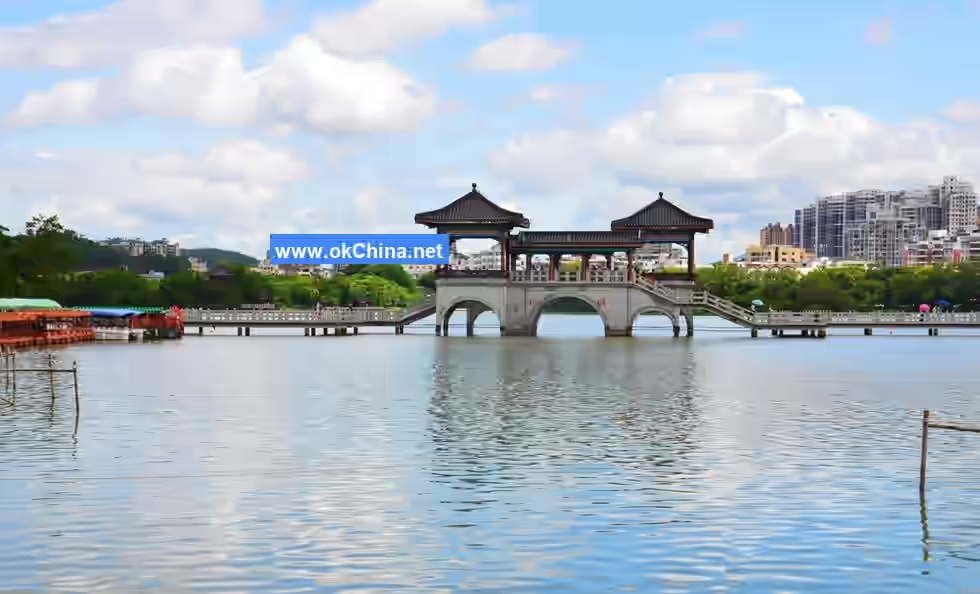
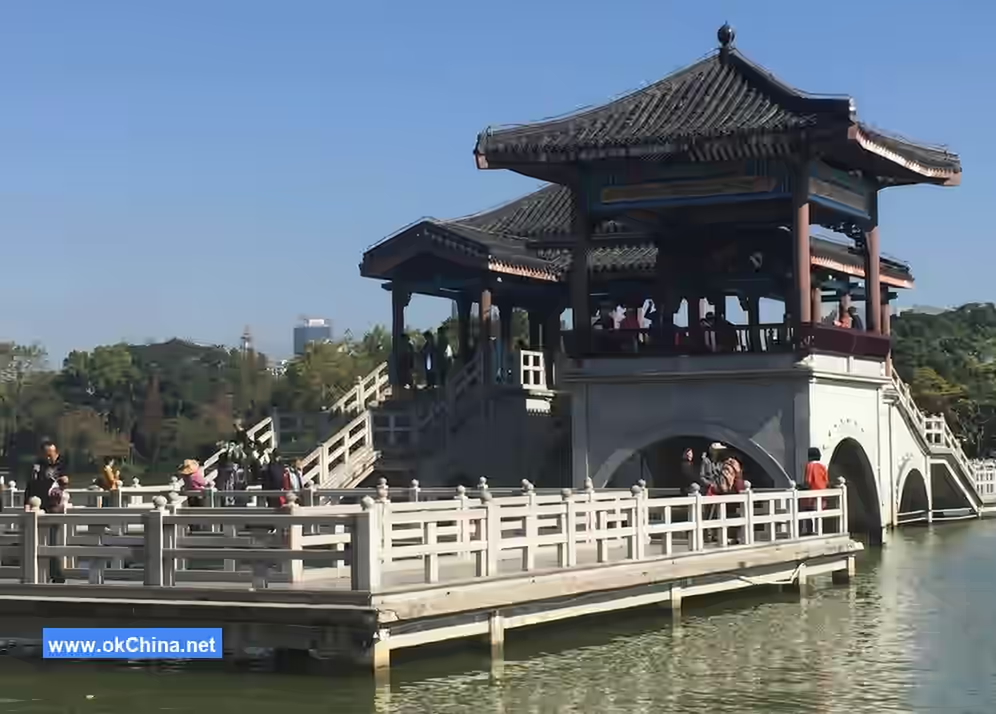
Xixin Bridge is located on the Su Causeway and is the first of the six famous bridges in the Huizhou West Lake Scenic Area. Both the Su Causeway and Xixin Bridge were funded by Su Dongpo and were initially built in the second year of the Zhaosheng era of the Song Dynasty (1095 AD). Therefore, Xixin Bridge is also known as "Sugong Bridge." At that time, the bridge was constructed using teak wood, making it as hard as iron and stone, with nine pavilions on the bridge. It has been renovated multiple times since. The current bridge reflects its appearance after the 1983 renovation.
3.2 Gongbei Bridge
Gongbei Bridge is the second of the six famous bridges in the Huizhou West Lake Scenic Area, located between Pinghu Lake and the Dongjiang River. It was initially built during the Northern Song Dynasty when Prefect Chen Cheng of Huizhou enclosed the lake to construct a causeway, and it has been renovated in subsequent dynasties. Its original function was to discharge water from West Lake into the Dongjiang River when the lake was full. Later, the bridge surface was also used for traffic. Due to the surrounding mountains of Huizhou, the abundant rainfall in West Lake within the city, and the poor water conservancy at the time, this bridge played a role in flood discharge and protecting West Lake on its northern shore, hence the name Gongbei Bridge.
3.3 Yanxia Bridge
Yanxia Bridge faces the Crocodile Islet from afar. When Su Dongpo was exiled to Huizhou, he created a release pond in Ehu Lake and built the Yanxia Causeway. At that time, there was no bridge on the causeway. Yanxia Bridge was later added to the causeway by later generations, with records dating back to the mid-Ming Dynasty. The current bridge was rebuilt in 1992. Yanxia Bridge is the third of the six bridges in the Huizhou West Lake Scenic Area and, together with Yongfu Temple, once constituted one of the ancient Eight Scenes of West Lake, "Wild Temple in Misty Haze."
3.4 Yingxian Bridge
Yingxian Bridge connects Fanghua Islet and Yuanmiao Taoist Temple. It was initially built during the Song Dynasty, fell into disrepair during the Qing Dynasty, and is the fourth of the six famous bridges in the Huizhou West Lake Scenic Area. It was rebuilt in 1986. Legend has it that crossing this bridge to Yuanmiao Temple to welcome deities and immortals could fulfill one's wishes, hence the name Yingxian Bridge (Welcoming Immortals Bridge).
3.5 Mingsheng Bridge
Mingsheng Bridge, also known as Huangtang Bridge, is located within Chen Gong Causeway and is the fifth of the six famous bridges in the Huizhou West Lake Scenic Area. It was built simultaneously with the causeway by Prefect Chen Cheng during the Northern Song Dynasty. Initially a stone and wood bridge, it was converted into a stone bridge by Prefect Li Jisi of the Ming Dynasty. During the Republic of China era, the bridge arches were raised to allow passage for yachts. After the founding of the People's Republic of China, the government renovated it twice. It is now a flat concrete bridge that allows both vehicle traffic above and boat passage below.
3.6 Yuantong Bridge
Yuantong Bridge is the sixth of the six famous bridges in the Huizhou West Lake Scenic Area. It was initially built by Prefect Gan Gongliang of Huizhou during the Zhengde period of the Ming Dynasty. It marks the boundary between Nanhu Lake and Fenghu Lake and has undergone several periods of construction and abandonment throughout history. After the founding of the People's Republic of China, it was renovated in 1969 and 1983. Currently, in addition to the original old bridge, a new bridge has been built on the eastern side of the lake, together forming the Yuantong Twin Bridges.
3.7 Fenghu Lake
Fenghu Lake was a general term for Huizhou West Lake during the Northern Song Dynasty. Later, the Pinghu Lake area referred to the water area and related mountainous boundaries south of Pinghu Lake and north of Nanhu Lake after the formation of the Five Lakes. It covers a total area of 0.9 square kilometers, with a water area of 0.29 square kilometers. The western edge is called Xiaohuangtang. Within the lake lies Chen Gong Causeway, created by Chen Cheng of the Northern Song Dynasty, with Mingsheng Bridge spanning across it and connecting to the urban area. The eastern edge faces the urban area, with deep courtyards and mansions along the lakeshore offering views of the lake. To the south, Yuantong Bridge marks the boundary with Nanhu Lake, while to the north, it is separated by the Su Causeway.
3.8 Ehu Lake
Ehu Lake is located northwest of Pinghu Lake, extending east to Yanxia Causeway, west to Xincun Guanbang Bridge, south to Fengshan Mountain, and north to Baihe Hanshu. It covers an area of approximately 0.4 square kilometers and includes areas such as Xiaoxincun Ridge, Ziwei Mountain, and Fengshan Mountain. Ehu Lake is the only one of the Five Lakes of West Lake named after an animal, as it is said that crocodiles once appeared here in earlier times. Although the name Ehu Lake remains, crocodiles have long since disappeared.
3.9 Pinghu Lake
Pinghu Lake is located in the northern part of West Lake. To the north, Gongbei Bridge connects it to the Dongjiang River; to the south, the Su Causeway serves as the boundary between Pinghu and Fenghu Lakes; to the west, it reaches Gushan Mountain and Zhunti Pavilion; to the northwest, it extends to Taohua Stream; and to the east, it connects to the urban area. The lake perimeter is 3.6 kilometers, with an area of approximately 1.063 square kilometers, of which the water area is 0.57 square kilometers.
3.10 Linghu Lake
Linghu Lake is located north of Pinghu Lake, covering an area of about 0.6 square kilometers, with a water area of approximately 0.26 square kilometers. The largest water source of West Lake, Hengcuo Stream, flows from Banjing and Youtang through the northwest of Youlong Mountain into Linghu Lake. Visitors boating upstream along the lake can navigate its winding bays to reach Dutian and Banjing.
3.11 Nanhu Lake
Nanhu Lake was once much larger and connected to Fenghu Lake, with hills and islets interwoven since ancient times. Currently, the lake area extends north to the vicinity of Yuantong Bridge and Huizhou No.1 Middle School, east to Changshou Road, and west to Fei'e Ridge, covering an area of about 0.37 square kilometers, with a water area of 0.17 square kilometers.
3.12 Dongpo Garden
Dongpo Garden covers an area of 32,000 square meters, with Gushan Mountain at its center. It features newly added attractions and buildings such as Chaoyun's Tomb, Liuru Pavilion, Dongpo Memorial Hall, Jingxian Ancestral Hall, Guizui Pavilion, Lianyan Pavilion, Danli Pavilion, Xiaopuwuweixuan, and Xiangyi Residence. Stone carvings of Dongpo's poems are placed along corridors and pavilions for recitation and appreciation. Six sculptures, including "Dongpo Jushi" and "Zao Fu," are displayed to showcase Dongpo's life in Huizhou.
3.12.1 Chaoyun's Tomb
This is a fragrant tomb with a history of over nine hundred years. The tombstone is inscribed with "Tomb of Wang Chaoyun, Concubine of Su Wenzhong Gong." The term "concubine" indicates that even until her death, the tomb owner's status remained low, reflecting the characteristics of the era.
Coincidentally, all three women who accompanied Su Dongpo throughout his life were surnamed Wang. His first wife, Wang Fu, passed away from illness before the age of thirty and became immortalized because Su Dongpo wrote the poem "Jiangchengzi" for her: "Ten years parted, one living, one dead; Not thinking, Yet never forgetting." His second wife, Wang Runzhi, was Wang Fu's cousin, accompanied Dongpo for twenty-five years, and was his virtuous helpmate. Wang Chaoyun, styled Zixia, was from Hangzhou, Zhejiang, and was originally a songstress, intelligent and beautiful. She was taken as a maid by Su Dongpo when he served as Tongpan in Hangzhou at the age of twelve and became his concubine at the age of nineteen in Huangzhou. Chaoyun remained a "concubine" until her death, yet she harbored no regrets. Throughout Su Dongpo's life, from his promotions to Mizhou, Xuzhou, and Huzhou, to the "Wutai Poetry Case," his subsequent demotion to Deputy Envoy of Huangzhou, and his late-life exile to Huizhou, Wang Chaoyun consistently accompanied Su Dongpo, sharing a life of displacement and becoming his greatest spiritual comfort during hardships. As Su Dongpo wrote in "Recommendation for Chaoyun," Chaoyun was "toiling all her life, following him for ten thousand miles."
After Chaoyun's passing, Su Dongpo buried her in the pine forest below Qichan Temple, facing the Dasheng Pagoda, according to her wishes. "Looking ahead to Dasheng Pagoda, hearing daily the bells and chants" (Su). To remember Chaoyun, Dongpo completed his new residence at Baihe Peak and continued planting plum trees and building bridges at West Lake, expressing his grief for Chaoyun from afar.
Dongpo personally composed "Epitaph for Chaoyun" and "Poem Mourning Chaoyun." The full text of the epitaph is as follows: "The concubine of Dongpo Xiansheng is named Chaoyun, styled Zixia, surnamed Wang, from Qiantang. Intelligent and fond of righteousness, she served the master for twenty-three years, loyal and respectful as one. She passed away in Huizhou on the Renchen day of the seventh month in the third year of Shaosheng, at the age of thirty-four. On the Gengshen day of the eighth month, she was buried southeast of Qichan Mountain Temple above Fenghu Lake. She gave birth to a son, Dun, who died before reaching one year. She once studied Buddhism under the nun Yichong and had a rough understanding of its main principles. As she was dying, she recited the four-line verse from the Diamond Sutra before passing away. The inscription reads: Gazing upon the pagoda, relying on the monastery. As was your lifelong wish, returning only to Buddha."On the seventh day after Chaoyun's burial, Dongpo paid his respects and composed the "Huizhou Memorial for Chaoyun," praying for the Buddha and saints to guide Chaoyun's soul to the pure land of heaven, expressing his devotion to Buddhism and deep affection for Chaoyun. Chaoyun's death was a heavy blow to Dongpo, who wrote in a poem: "This year is a dreadful year, lying stiff like tangled hemp. Though I am still healthy at this gathering, a fierce wind sweeps away the morning clouds. It leaves me like a frosty moon, a solitary light hanging at the horizon. I do not wish to go to West Lake, where evening trees cry with cold crows." He felt that bringing Chaoyun to the wild lands of Lingnan had caused her to die far from home, "I owe you, with tears on the pillow, countless drops and lines" (Su). Shortly after Chaoyun's burial, monks from the Qichan Temple on Gushan built a memorial pavilion in front of her tomb. As Chaoyun had studied Buddhism during her lifetime and recited the verse from the Diamond Sutra on her deathbed: "All conditioned phenomena are like dreams, illusions, bubbles, shadows, like dew and like lightning; thus should they be contemplated." This means that everything in the world is predestined, life is like a dream, illusion, bubble, or shadow, like dew and lightning, fleeting and transient, and should not be taken too seriously. She hoped Dongpo would also understand the world in this way, which was not only the Zen insight she gained after studying Buddhism but also her endless concern and care for Su Dongpo, both in life and at death.
3.12.2 Six-Likeness Pavilion
The memorial pavilion in front of Chaoyun's tomb is named the "Six-Likeness Pavilion," derived from the Diamond Sutra verse: "All conditioned phenomena are like dreams, illusions, bubbles, shadows, like dew and like lightning; thus should they be contemplated." In the early years of the Daoguang era of the Qing Dynasty, the scholar Lin Zhaolong composed a couplet engraved on the pavilion's pillars: "Like dreams, like illusions, like bubbles, like shadows, like dew, like lightning; neither born nor extinguished, neither defiled nor pure, neither increasing nor decreasing." The "six likenesses" are expressed more clearly here.
Chaoyun's tomb and the Six-Likeness Pavilion have been repaired throughout the dynasties. The four-pillar, four-corner brick-tile pavilion was rebuilt in the 35th year of the Republic of China (1946) and repaired in 1984. At the same time, Chaoyun's tomb was also restored in the style of a Song Dynasty tomb. The existing inscription on Chaoyun's tombstone, "Tomb of Wang Chaoyun, Concubine of Su Wenzhong Gong," was written by Yi Bingshou, the prefect of Huizhou, during the tomb's restoration in the 7th year of the Jiaqing era of the Qing Dynasty (1801). Beside the Six-Likeness Pavilion, there are three stone inscriptions: one is the "Epitaph of Wang Chaoyun," composed by Su Dongpo and written by Yi Bingshou; the second is the "Portrait of Wang Chaoyun," drawn in 1984 by the famous Guangzhou sculptor Tang Daxi, with calligraphy by the female calligrapher Su Hua; the third is "Passing by the Six-Likeness Pavilion by Boat," a painting by the early Qing Dynasty famous painter Monk Shitao (secular name Zhu Ruoji, also known as Monk Bitter Gourd), with an inscription by the contemporary famous painter Liu Lun (a native of Huizhou), then director of the Guangzhou Painting Academy. Monk Shitao also composed a poem at the time, depicting the appearance of Chaoyun's tomb three hundred years ago: "Feng Lake's water is blue, grass lush and green, jade buried, fragrance hidden for five hundred years. Travelers stop their oars to visit the remains, mourning the beauty by the Six-Likeness Pavilion."
Chaoyun was born in Hangzhou and buried in Huizhou. Her life and soul are closely connected to West Lake. Only such a fine woman is worthy of the spiritual mountains and beautiful waters of West Lake. Whether under sunlight or moonlight, in light rain or misty fog, Chaoyun's tomb and the Six-Likeness Pavilion always appear profoundly beautiful. "In what year did the clouds and rain scatter over Wuyang? Miasma buried the jade bones cold. Plant three hundred plum trees to guard the lingering fragrance by the Six-Likeness Pavilion."
In the tenth month of the third year of Yuanfu (1100), after Dongpo's entire family returned north, Chaoyun's tomb was left without relatives to care for it. However, later records show: In the second year of Shaoxing (1132), bandits attacked and captured Huizhou, burning civilian houses and official residences, but they spared Baiheju and paid respects at Chaoyun's tomb, an act known as "bandits respecting Dongpo." In the fourth year of Chunxi (1240), the famous Southern Song poet Liu Kezhuang traveled to Guangdong to serve as a judicial commissioner. Passing through Huizhou, he visited Chaoyun's tomb and found it desolate. Moved, he wrote two seven-character quatrains, saying: "It is fitting to restore the Six-Likeness stele." It is said that the Huizhou prefect at the time read them and immediately restored Chaoyun's tomb and the Six-Likeness Pavilion. During the Yuan and Ming periods, there were thousands of plum and pine trees around Chaoyun's tomb, with over a hundred households guarding it. Later dynasties continued repairs, and the four-pillar, four-corner brick-tile pavilion was built in the 35th year of the Republic of China (1946). The Huizhou Municipal Government listed Chaoyun's tomb as a cultural relic protection unit and conducted a comprehensive restoration in 2008.
A poem by He Jiang from the late Ming and early Qing Dynasties says: "Try offering cassia wine on the hilltop, Chaoyun's beautiful bones still emit fragrance. The tombs of the Song Dynasty have all fallen into ruin, but marrying a literary man surpasses marrying an emperor."
3.12.3 Dongpo Memorial Hall
Located on Gushan, it is divided into Hall One and Hall Two. Hall One was built in 1983, a mixed-structure, hip-and-gable double-eave tile imitation ancient building, elegant and majestic in appearance, dignified and generous. Hall Two was built in 1986, a two-story modern frame structure. To harmonize with Hall One in form, symmetrical square pointed-top glazed tile decorative pavilions were built at the north and south ends of the top floor. Inside the Dongpo Memorial Hall, there are over a hundred items, including pictures, texts, photos, and artifacts reflecting Su Dongpo's life, for visitors to pay homage and remember.
3.13 Fenghu Academy
Fenghu Academy is located on the west bank of Fenghu Lake, first built by Liu Kegang, the prefect of Huizhou during the Southern Song Dynasty. Education in Huizhou began in the Sui Dynasty. The "Book of Sui" records that the prefect Liu Dan established schools, "greatly changing the customs." Fenghu Academy experienced periods of prosperity and decline through the Yuan, Ming, and Qing Dynasties. During the Kangxi era of the Qing Dynasty, it was moved to its current location, where it has remained for over 750 years as Huizhou's primary institution of learning, leaving behind many relics of famous figures. In 2009, it was rebuilt into a comprehensive garden, becoming an important part of the contemporary West Lake scenic area, selected as one of the "Ten Scenes of Echeng" for its "Blue Lake and Scholarly Fragrance."
3.14 Mid-Lake Pavilion
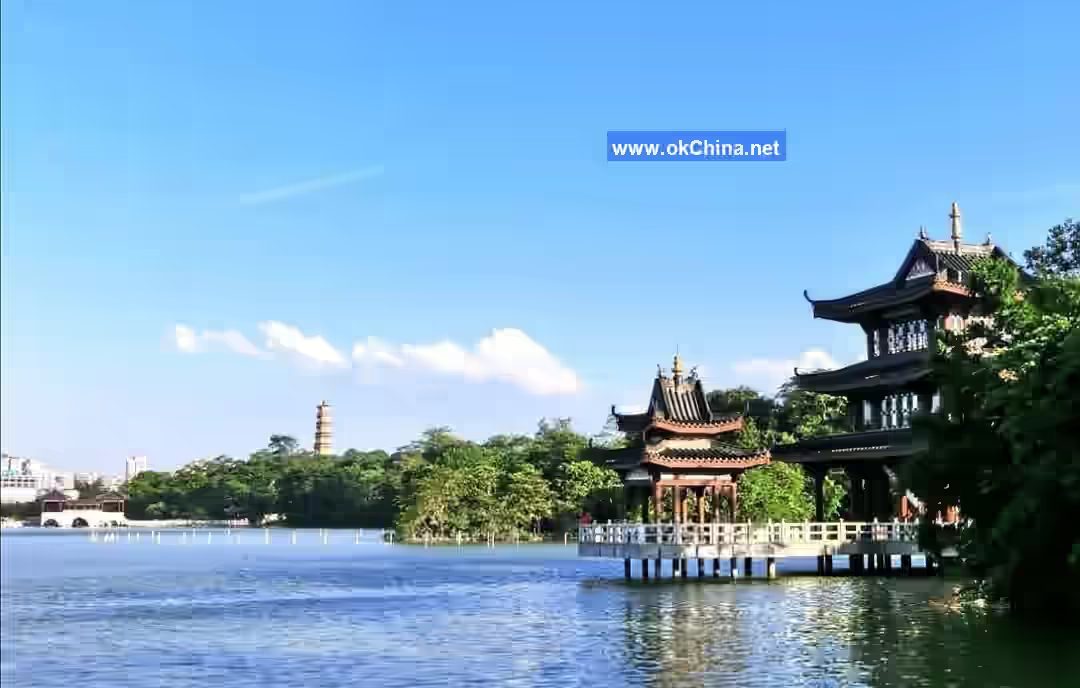
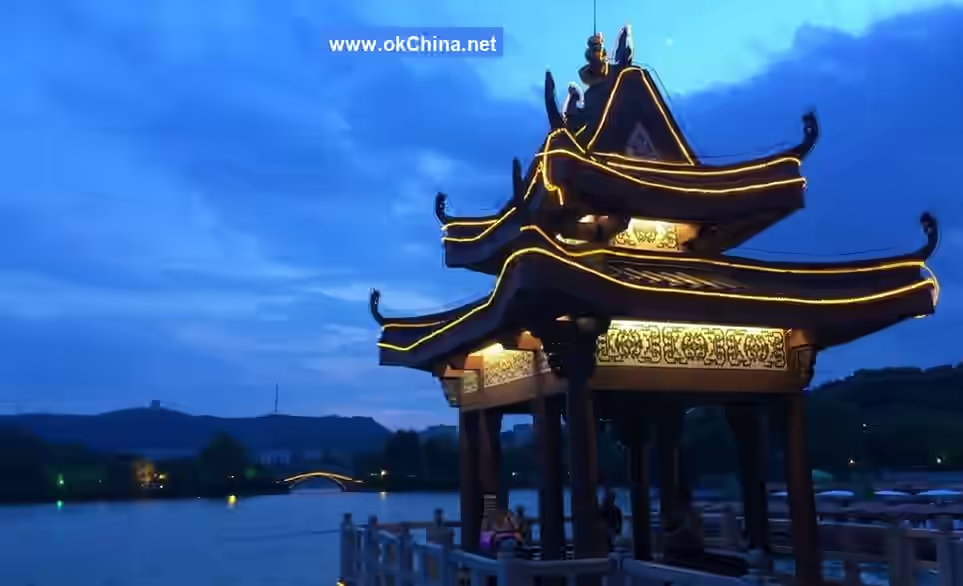
The Mid-Lake Pavilion is located on Fenghu Lake in West Lake. As the pavilion is built in the middle of the lake, surrounded by water on all sides, it is named accordingly. In the 61st year of the Kangxi era of the Qing Dynasty (1722), it was proposed by the prefect Wu Qian, with donations from Huizhou's civil and military officials for its repair. The pavilion is hexagonal, made of stone and wood, covered with green tiles, and stands 3.5 meters high. From the pavilion, one can see the Su Causeway lying across the lake and the Jade Pagoda standing atop the western hill.
3.15 Flying Goose Ridge
Flying Goose Ridge is located between the South Lake and Fenghu Lake of West Lake today, named for its shape resembling a flying goose lying between the two lakes. Flying Goose Ridge also served as a strategic southern stronghold of Huizhou, a contested military site, leaving memorial ruins in several historical periods, including the "Recovery of Huizhou in the 1911 Revolution," "The Two Eastern Expeditions of the National Revolutionary Army," and the "War of Resistance Against Japan."
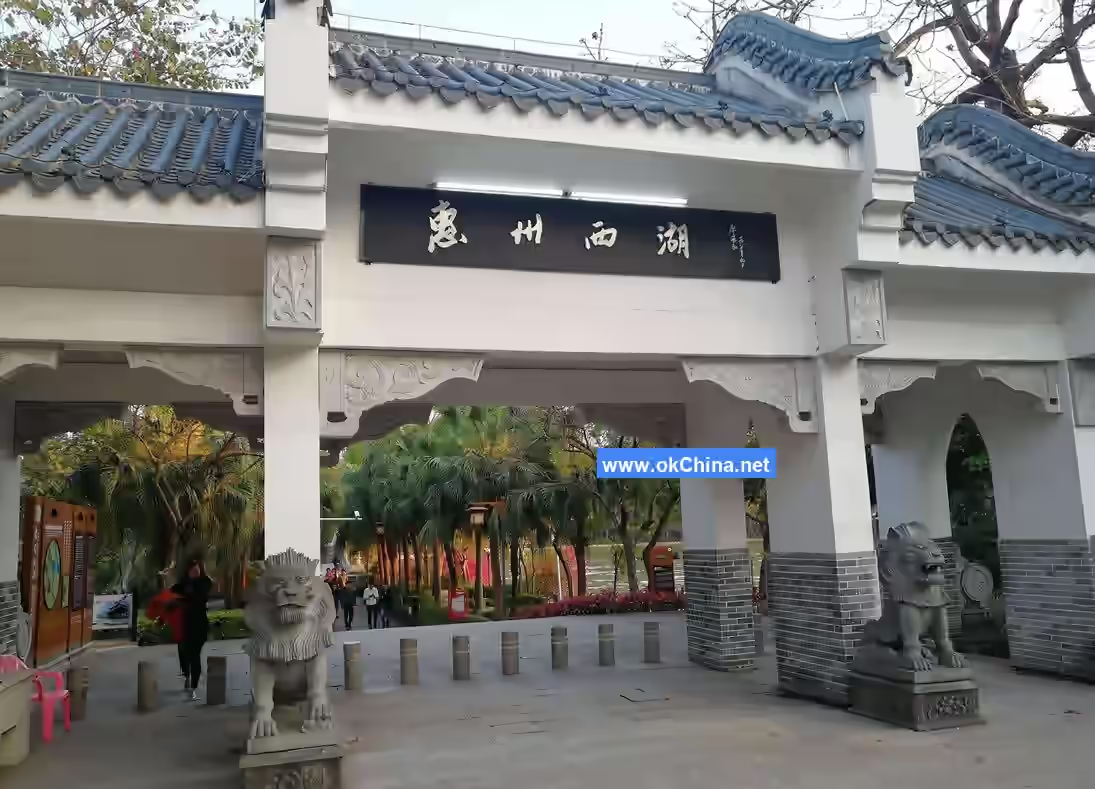
3.16 Pinghu Gate
The east gate of West Lake, because it is in the Pinghu area among the five lakes, is also called Pinghu Gate by the people of Huizhou. The archway at the east gate was built in 2001, an imitation ancient archway. The front side bears the inscription "Huizhou West Lake" in the calligraphy of Liao Chengzhi, while the back side bears "Shan Shui Xiu Sui" (Majestic and Profound Landscape) in characters collected from Su Dongpo's writings.
3.17 Guabang Pavilion
Guabang Pavilion is located on the summit of Gaobang Mountain in the Honghua Lake scenic area. The planned area is 6,000 square meters, with a building height of 7 stories, 39.99 meters, and a floor area of 4,600 square meters. It is designed in the official architectural style of the Ming and Qing Dynasties, with granite walls and black glazed tiles. The main building's eaves corners hang gilded wind chimes. Gaobang Mountain was originally named Guabang Mountain, meaning "to have one's name on the gold list and top the rankings," hence the name Guabang Pavilion.
3.18 Hometown Garden
Hometown Garden is located in the center of the Honghua Lake scenic area, covering an area of 32,000 square meters, divided into an entrance area, memorial square area, and elegy stele area. On September 27, 2008, a memorial activity for the 100th anniversary of Comrade Liao Chengzhi's birth was held at Hometown Garden, and his ashes were moved from the Babaoshan Revolutionary Cemetery in Beijing to be buried in the cemetery at Hometown Garden. The memorial square area in Hometown Garden features a bronze bust of Liao Chengzhi. Two black granite steles are inscribed with the "Elegy for Vice Chairman Liao Chengzhi" and "Remembering Comrade Chengzhi," written in 1983 by Mr. Zhao Puchu, then Chairman of the Chinese Buddhist Association.
3.19 Lychee Grove Breeze
The northern part of the Lychee Grove Breeze scenic spot is themed around the historical concept of "Lychee Grove Breeze," featuring Lingnan-style structures such as Lifeng Pavilion, Qingguang Pavilion, Xiaozuo Pavilion, Lixiang Pavilion, Zhaoyue Pavilion, Yuexie, and Lingtai. The southern part is themed around "Commemorating Mr. Deng Zhongyuan" for patriotic education, featuring garden elements like Jideng Villa, Zhongyuan Pavilion, General's Corridor, and the commemorative "Ode to Zhongyuan" relief wall, along with a Deng Zhongyuan historical materials exhibition room.
3.20 Yongfu Temple
Yongfu Temple was first built during the Zhenguan era of the Tang Dynasty and is one of the oldest and most famous temples in Huizhou West Lake. The original temple site was at the southern foot of Fengshan Mountain by West Lake, built facing the lake, but it was destroyed during the War of Resistance Against Japan. In December 2000, Yongfu Temple was relocated and rebuilt at the foot of Gaobang Mountain in the Honghua Lake scenic area, covering an area of 56,400 square meters with a floor area of 7,328 square meters. It was consecrated on December 11, 2011. The design concept for the new Yongfu Temple was derived from the "Illustration of the Infinite Life Sutra" in Cave 17 of the Dunhuang Grottoes.
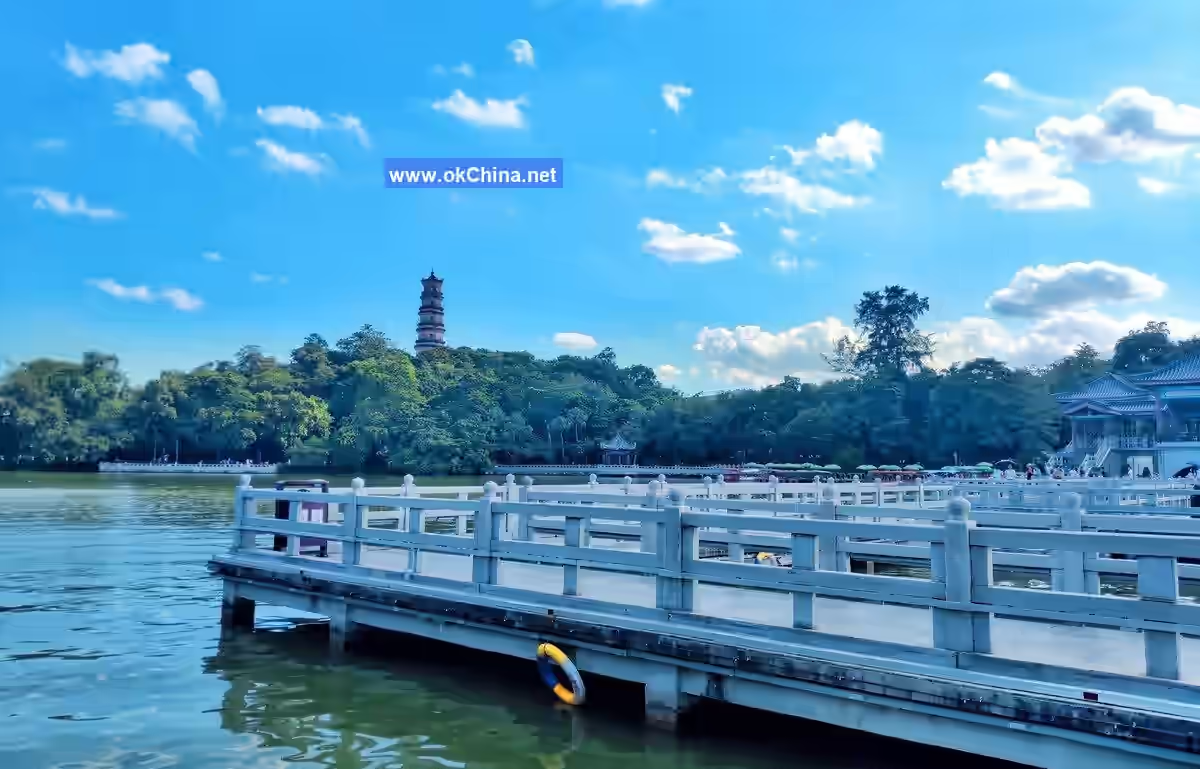
3.21 Sizhou Pagoda
Sizhou Pagoda was first built in the Tang Dynasty to commemorate the great monk Sengjia of Sizhou, hence later generations called it Sizhou Pagoda.
Historical records indicate that Sizhou Pagoda collapsed in the 43rd year of the Jiajing era of the Ming Dynasty (1564). It was converted into a pavilion in the early Wanli era, rebuilt into a pagoda in the 46th year of Wanli (1618 under the order of Governor Wang Mingxuan by Wen Guoqi, and completed in the 3rd year of Tianqi (1623) by Huizhou judge Jin Ruhe. In the early Guangxu era of the Qing Dynasty, lightning damaged one corner of the pagoda's top.
The pagoda is a seven-story brick pagoda in the pavilion style, 37.7 meters high, with an octagonal plan, a base covering 64 square meters, each side 33.56 meters long, and walls 2.78 meters thick. The pagoda door faces east, with each of the eight wall surfaces on each floor having a door. The windows are 1.67 meters high and 0.59 meters wide, with a pointed top. At the intersections of the eight wall surfaces, protruding pilasters are present. There are seven layers of eaves; except for the seventh layer, which has a single eave, layers one to six have double eaves, constructed with considerable delicacy. The height of each pagoda layer decreases from top to bottom, and the width tapers layer by layer, forming four inward parabolic curves on the outer wall contour, making the pagoda's height-to-width ratio very harmonious and appearing dignified and elegant. Inside, the first and second floors each have six niches. For the convenience of visitors climbing to enjoy the view, wooden stairs are installed, spiraling up to the seventh floor. The top of the pagoda has a base with an inverted bowl, supporting the mast and precious pearl.## 4. Historical Evolution
During the Eastern Han Dynasty, Huizhou West Lake was a wilderness area. In the Eastern Jin Dynasty, the Longxing Temple was built by the lake. It was renamed Kaiyuan Temple in the Tang Dynasty. During the reign of Emperor Zhongzong of Tang, the Sizhou Pagoda on the Western Hill was completed.
In the third year of the Zhiping era of the Northern Song Dynasty (1066 AD), Chen Cheng, the prefect of Huizhou, undertook management of the West Lake. He constructed the Pinghu Dyke, Gongbei Bridge, as well as structures like the Guyu Pavilion and Huguang Pavilion on Diancui Islet. He also introduced fish farming and irrigation for the fields, leading to bountiful harvests for the local people. Consequently, the lake became known as Feng Lake (Lake of Abundance).
In the first year of the Shaosheng era of the Northern Song Dynasty (1094 AD), Su Shi (Su Dongpo) was demoted and exiled to Huizhou by the imperial court. Accompanied by his concubine Wang Zhaoyun and son Su Guo, he spent three years in Huizhou. During this time, he frequently visited the West Lake and composed numerous poems celebrating its landscapes.
In the sixth month of the third year of the Shaosheng era (1096 AD), the dyke and Xixin Bridge were completed. Later generations named the dyke "Su Causeway" in commemoration of Su Shi.
In the fourth year of the Chunyou era of the Southern Song Dynasty (1244 AD), the Juxian Hall was established in Huizhou, later renamed Feng Lake Academy. Initially, the Feng Lake Academy was located on Yingang Hill.
In the 33rd year of the Kangxi era of the Qing Dynasty (1695 AD), the Feng Lake Academy was relocated to the Feng Lake Peninsula on the West Lake. During both the Ming and Qing dynasties, the Feng Lake Academy served as the highest institution of learning in Huizhou.
In the first year of the Republic of China (1912 AD), Ye Ju stationed troops in Huizhou and dispatched his secretary Li Chunfang to dredge the lake, creating a network of waterways for boat passage.
In the fifth year of the Republic of China (1916 AD), the West Lake Management Bureau was established, headquartered at the Cangsheng Temple, primarily responsible for managing the West Lake and its surrounding gardens and greenery.
In the sixth year of the Republic of China (1917 AD), a board of directors was formed, and the West Lake Management Bureau was renamed the West Lake Reorganization Committee.
On January 16th, the twentieth year of the Republic of China (1931 AD), the Huizhou West Lake Administration was established, comprising two departments. In September of the same year, due to severe funding shortages, the administration was approved to be changed to the West Lake Management Committee.
In the twenty-sixth year of the Republic of China (1937 AD), the West Lake Reorganization Committee was established.
5. Historical Culture
5.1 Origin of the Name
In Su Shi's poem "To Tan Xiu," he referred to Feng Lake as West Lake, which is the earliest known source of the name "West Lake."
According to legend, during the Longshuo era of the Tang Dynasty, the eminent monk Senggie (Master Sengjia) from the Western Regions came to China and later passed away in Chang'an. Emperor Zhongzong of Tang built a pagoda for him in Sizhou. Subsequently, various regions imitated this by building Senggie Pagodas, hence the name Sizhou Pagoda. Senggie, also known as the Great Sage of Sizhou, was from Heguo in the Western Regions (located in present-day Al-Bishim, Kyrgyzstan) during the early Tang Dynasty. He arrived in Linhuai County, Sizhou (originally Sizhou City, now within Jiangsu province, which sank into Hongze Lake during the Kangxi era of the Qing Dynasty) in the first year of the Longshuo era of Emperor Gaozong of Tang (661 AD) and established the Puzhaowang Temple to preach Buddhist teachings. Renowned for his profound spiritual attainment, he was highly revered, receiving honors akin to those for the Buddha himself, with temples even built in his honor. In 708 AD, Senggie was summoned to Chang'an and passed away on March 2nd, 710 AD, at the age of 83. Emperor Zhongzong of Tang had his body lacquered and returned to Linhuai, Sizhou, where a pagoda was erected for his remains, honoring him as the "Great Sage of Sizhou." Later, the temple and pagoda were destroyed by fire, damaging Senggie's body, which was then cremated, yielding relics. In Buddhist texts, Senggie is regarded as an incarnation of Guanyin (Avalokitesvara). During the Tang Dynasty, images of Guanyin were modeled after Senggie's appearance, hence often depicted as male, evolving into female representations later.
When Su Dongpo lived in exile in Huizhou during the Song Dynasty, he referred to this pagoda as the Great Sage Pagoda or the Jade Pagoda, as in his verse: "The first watch, the mountain spits forth the moon; the jade pagoda reclines on gentle ripples." When the bright moon rises in the east, with thin evening mists and a gentle breeze ruffling the waves, the pagoda's shadow lies upon them—this scene is called "Jade Pagoda on Gentle Ripples." At sunset, "the inverted shadow enters the lake, the pagoda's shadow grows long; the lake's shimmering light stirs in the slanting sun. Who knows since the pagoda first rose, how many times the golden crow has descended and soared again?" This scene is named "Wild Goose Pagoda in Slanting Sunlight."
In the early years of the Guangxu era, lightning damaged a corner of the pagoda's top, where a banyan tree grew. Qiu Fengjia wrote in a poem: "Travelers wishing to ask for Zhaoyun's tomb, look at the graceful banyan atop the pagoda."
Comments
Post a Comment