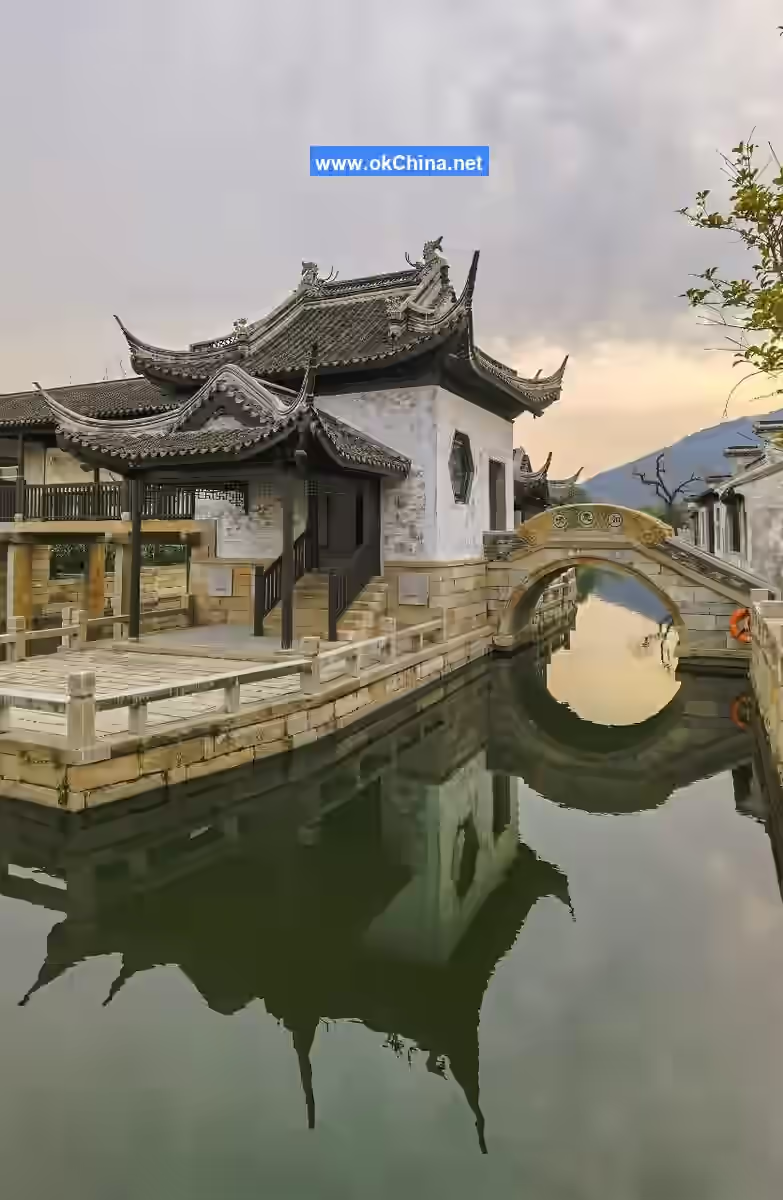
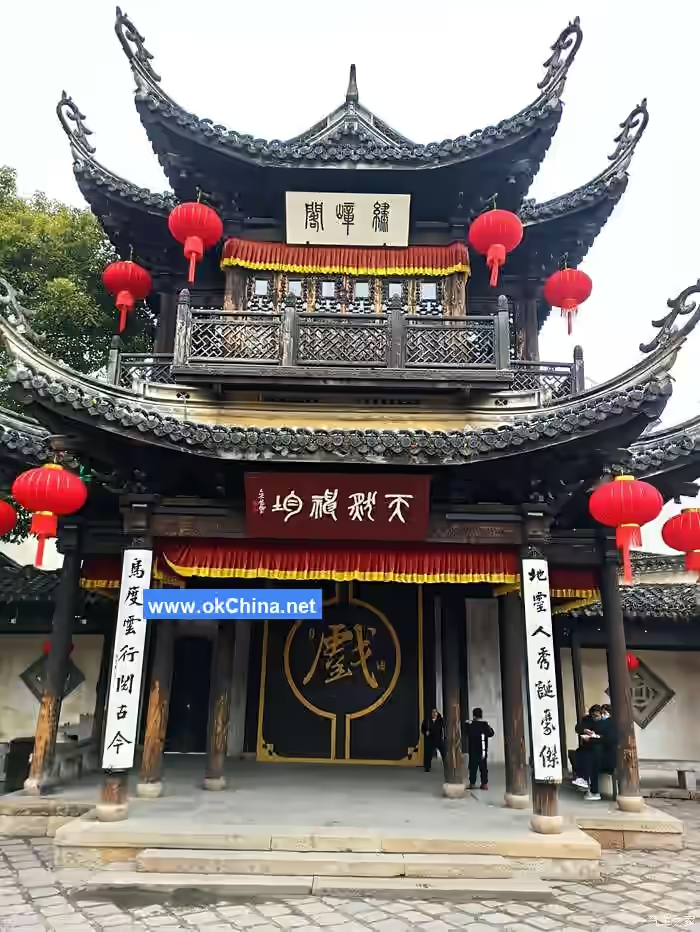
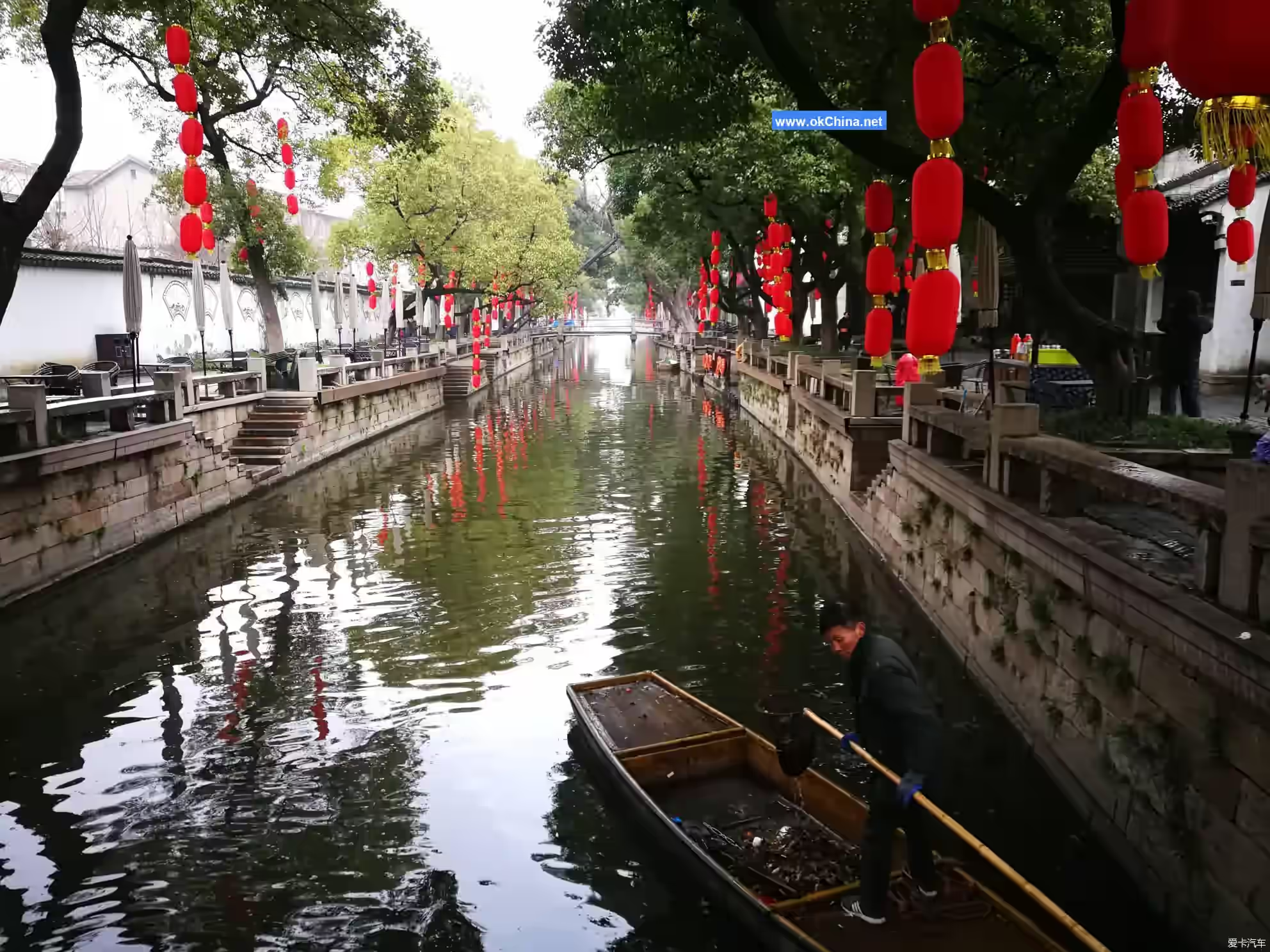
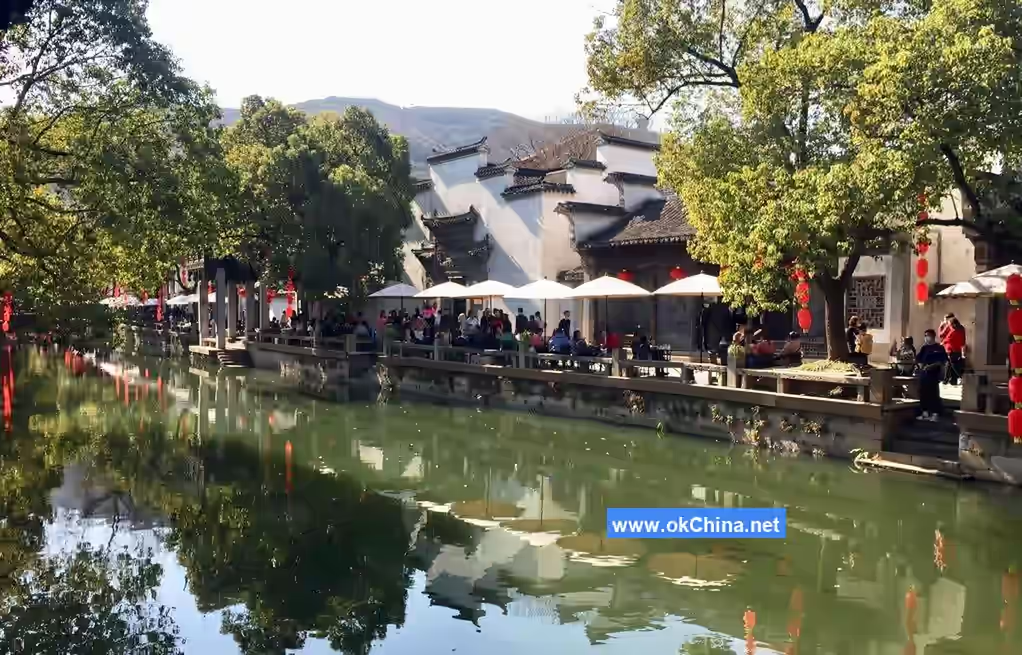
Huishan Ancient Town Scenic Area in Wuxi City
1. Introduction
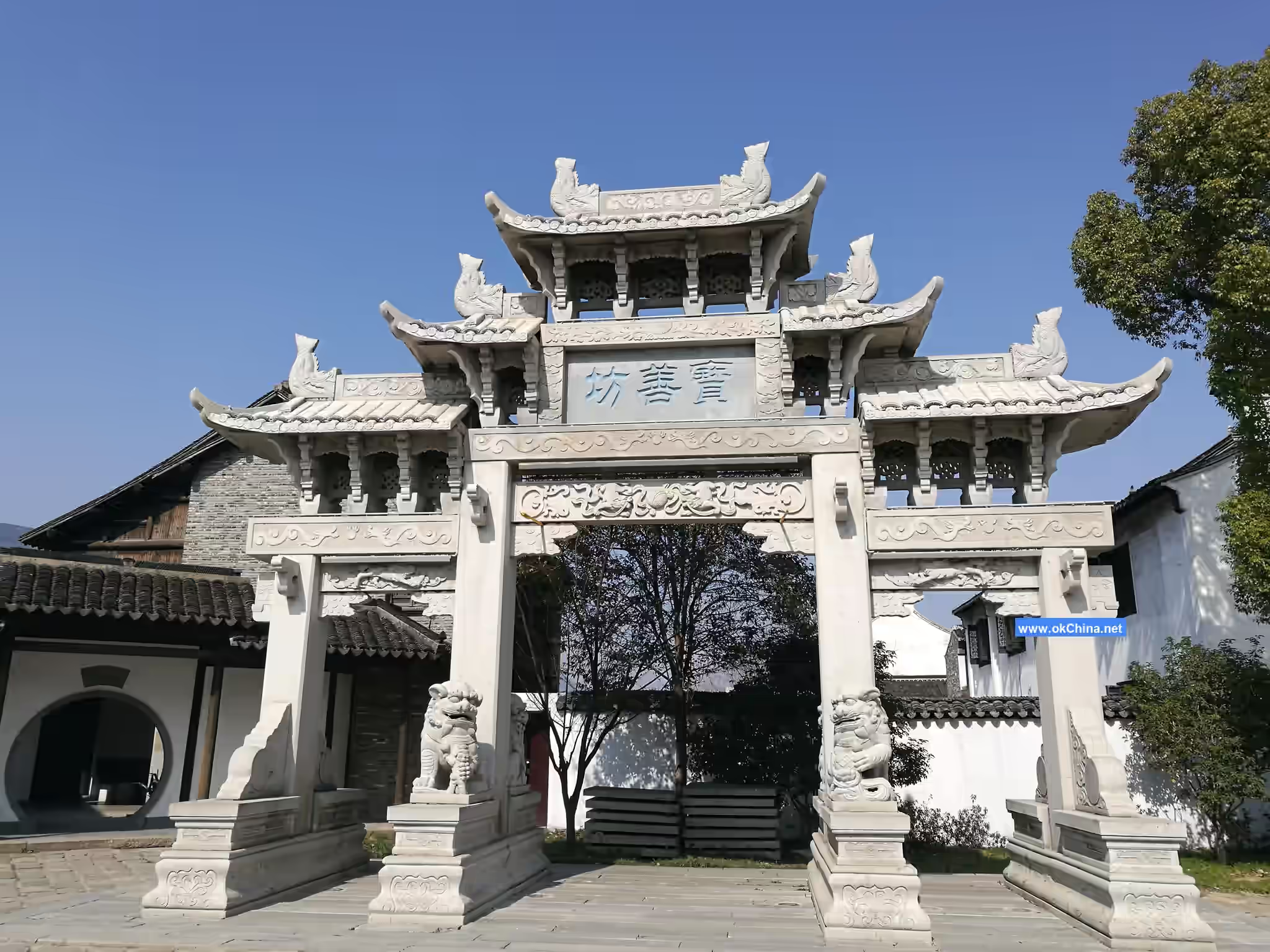
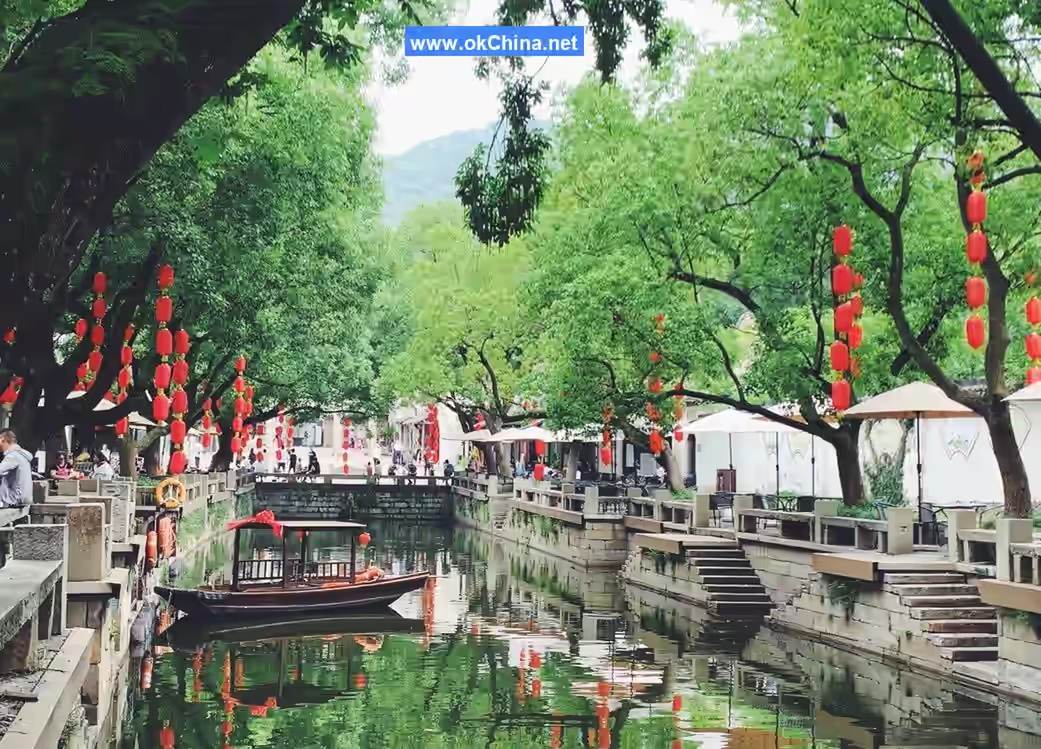
The Huishan Ancient Town Scenic Area in Wuxi City is located at No. 53-1 Tingsongfang, Liangxi District, Wuxi City, Jiangsu Province, China. It covers an area of 3.5 square kilometers, with a core area of 1.09 square kilometers. It was originally the Xihui Park and Huishan Old Street of Wuxi City. In 2017, Xihui Park and Huishan Old Street were merged to form the Huishan Ancient Town Scenic Area in Wuxi City.
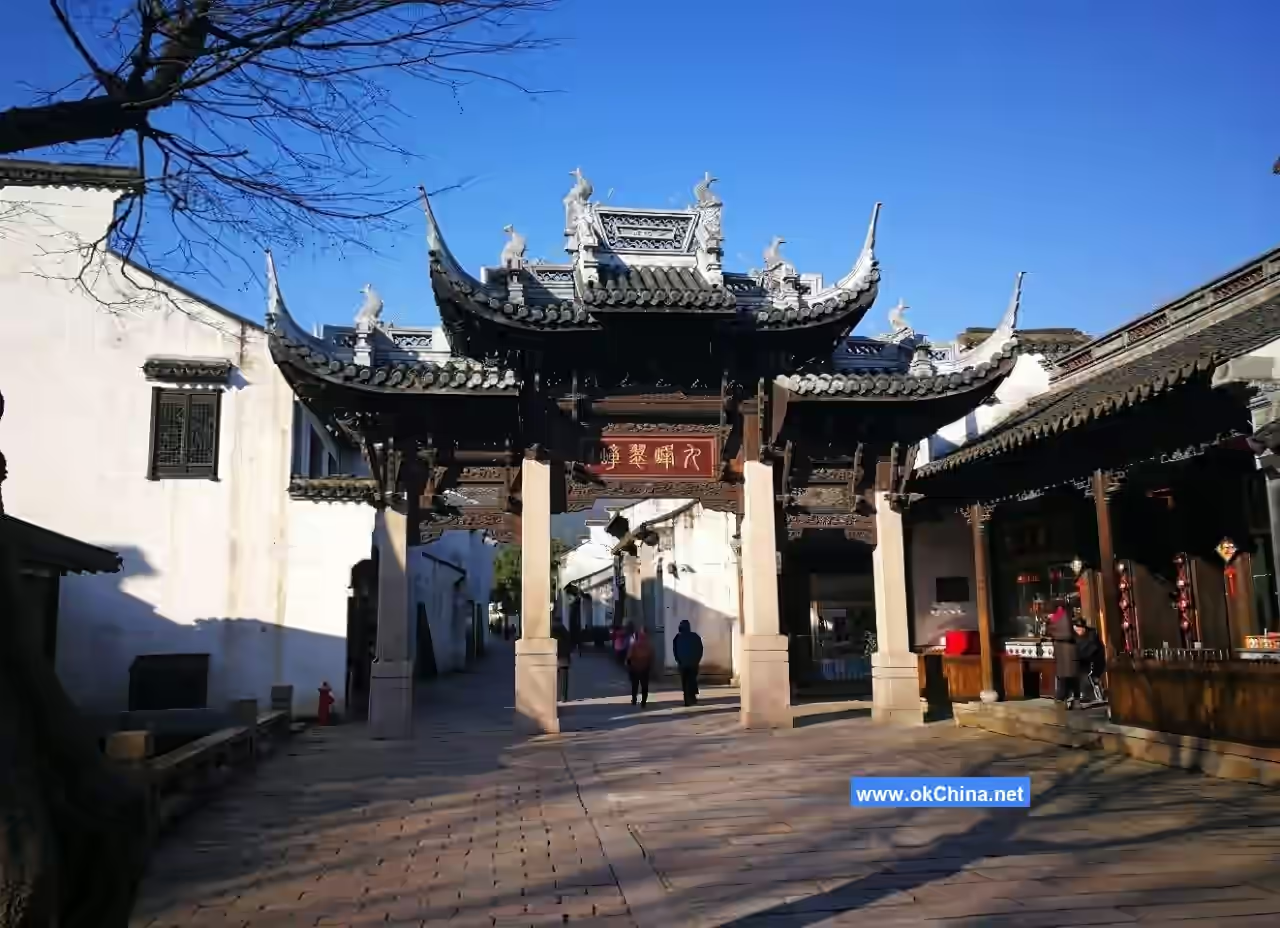
Functionally, the Huishan Ancient Town Scenic Area is divided into four tour zones: the Cultural Relics and Historic Sites Zone, the Xihui Scenic Zone (Xihui Park), the Historical and Cultural Block Zone (Huishan Old Street), and the Mountain Forest Conservation Zone (Huishan Mountain). The history of the Cultural Relics and Historic Sites Zone can be traced back to the Huishan Temple built during the Northern and Southern Dynasties. During the Tang, Ming, and Qing dynasties, gardens and ancestral halls were built beside the temple, forming the ancient town of Huishan. After the founding of the People's Republic of China, Xihui Park was developed and constructed. Nestled against mountains and beside water, the Huishan Ancient Town Scenic Area integrates ancestral hall culture, garden art, clay figurine culture, canal culture, religious culture, and Jiangnan culinary culture.
On January 7, 2020, the Huishan Ancient Town Scenic Area in Wuxi City, Jiangsu Province, was announced by the Ministry of Culture and Tourism of the People's Republic of China as a National 5A-level Tourist Attraction. As of January 2022, the scenic area contains four Major Historical and Cultural Sites Protected at the National Level: the Jichang Garden, the Huishan Town Ancestral Halls, the Courtyard and Stone Carvings of the "Second Spring Under Heaven," and the Buddhist Stone Pillars of Huishan Temple. It also includes four Jiangsu Provincial Protected Cultural Relic Sites, such as the Erquan Academy, and 13 Wuxi Municipal Protected Cultural Relic Sites, including the Longguang Pagoda.
2. Development History
During the Neolithic Age, the Huishan area was inhabited by the ancestors of Wuxi, who built gardens and parks.
During the Warring States period (476–221 BC), Wuxi became the fief of Lord Chunshen, Huang Xie, a noble of the Chu state. Lord Chunshen often watered his horses at the mountain stream of Huishan (now Chunshen Stream).
During the Northern and Southern Dynasties (420–589 AD), Zhan Ting, the Right Chief Clerk of the Minister of Education under the Liu Song dynasty, lived in seclusion at Huishan (then called Lishan) and built the "Lishan Thatched Cottage." After Zhan Ting's death, the Southern Qi poet Jiang Yan specially visited this cottage to mourn him and wrote poems. Later generations displayed the poems of Zhan Ting, Liu Shuo, and Jiang Yan on the walls, making it a famous gathering place for literati.
In the first year of the Jingping era (423 AD), Buddhist monks converted the Lishan Thatched Cottage into a Buddhist site, renaming it the "Huashan Hermitage."
In the third year of the Datong era of the Liang dynasty (537 AD), the "Datong Hall" was newly built at the "Huashan Hermitage," and its name was changed to "Fayun Chan Monastery."
In the late Dali era of the Tang dynasty (779 AD), Jing Cheng, the then magistrate of Wuxi County, oversaw the construction of the Huishan Spring beside the Fayun Chan Monastery.
During the Huichang era of the Tang dynasty (841–846 AD), Emperor Wuzong of Tang decreed the destruction of Buddhist temples, and the Fayun Chan Monastery was destroyed.
During the Dazhong and Xiantong eras of the Tang dynasty (847–874 AD), the temple was rebuilt and renamed "Huishan Temple."
In the second year of the Zhidao era of the Northern Song dynasty (996 AD), Emperor Taizong of Song bestowed upon Huishan Temple the plaque "Puli Monastery."
During the Jingkang era of the Northern Song dynasty (1126–1127 AD), Puli Monastery was granted to Prime Minister Li Gang as a "Merit Monastery."
In the early Shaoxing era of the Southern Song dynasty (around 1131 AD), the Merit Monastery was granted to Prince Meng Zhonghou of Xin'an Commandery to honor Empress Dowager Meng, and its name was changed to "Jingzhong Jianfu Chan Monastery."
In the late Yuan dynasty (1360–1368 AD), the Jingzhong Jianfu Chan Monastery was destroyed.
During the Ming dynasty (1368–1644 AD), places like Yugong Valley, Huilu Xiaoyin, and Wang Garden were built in the Huishan area.
In the first year of the Hongwu era of the Ming dynasty (1368 AD), the monk Pu Zhen rebuilt the monastery.
In the 15th year of the Zhengde era of the Ming dynasty (1520 AD), Qin Jin, former Minister of War and Minister of Revenue in Nanjing, retired to his hometown and built the Jichang Garden beside Huishan Temple.
During the Qing dynasty (1644–1911 AD), Qianlu and a large number of other ancestral hall gardens were built beside Huishan Temple.
During the Xianfeng to Tongzhi eras of the Qing dynasty (1851–1875 AD), Huishan Temple was destroyed during the Taiping Rebellion. Li Hongzhang, then Governor of Jiangsu, built the Zhaozhong Temple on the ruins of Huishan Temple, transforming the main hall of Huishan into a Qing-dynasty ancestral hall building.
3. Main Attractions
3.1 Scenic Area Layout
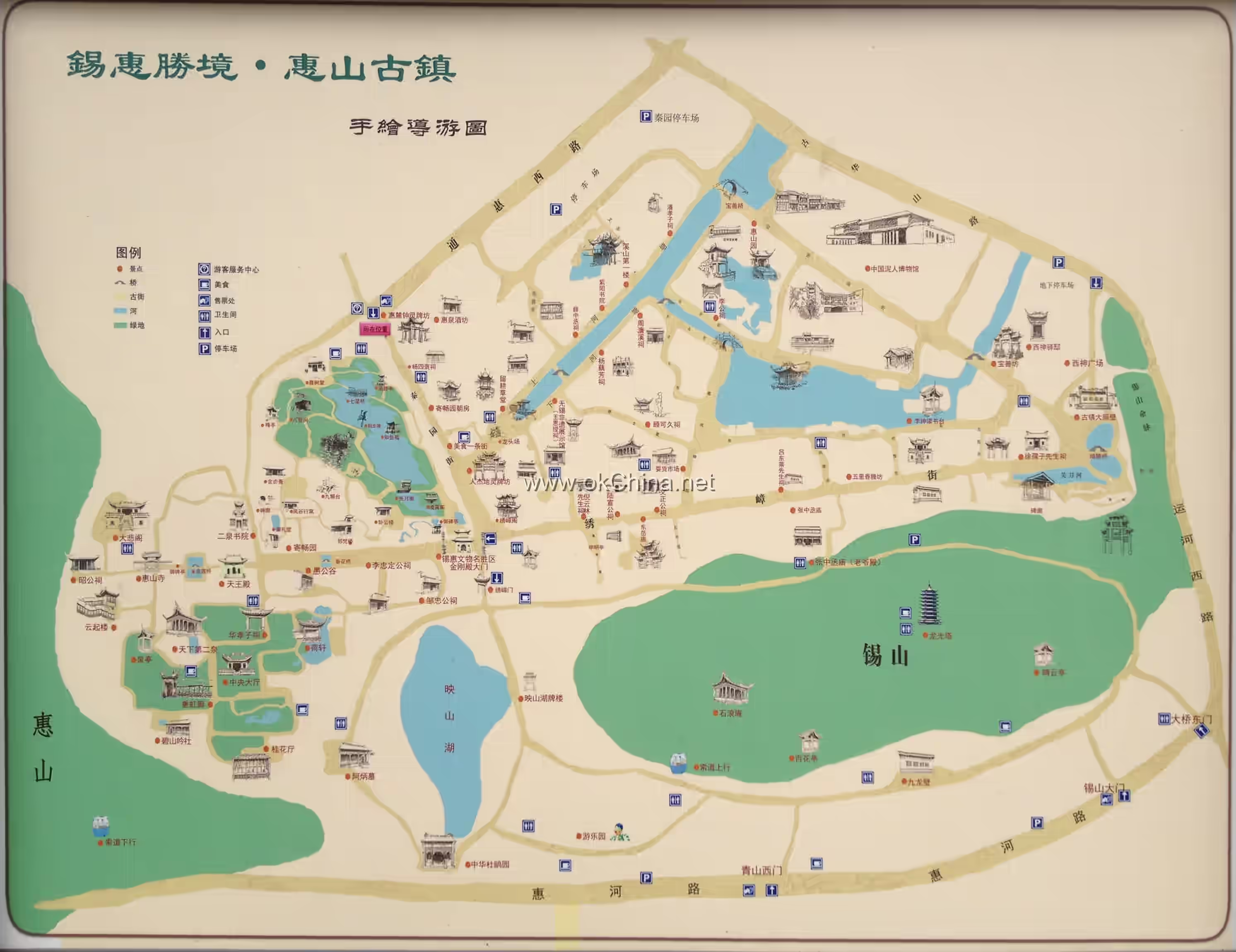
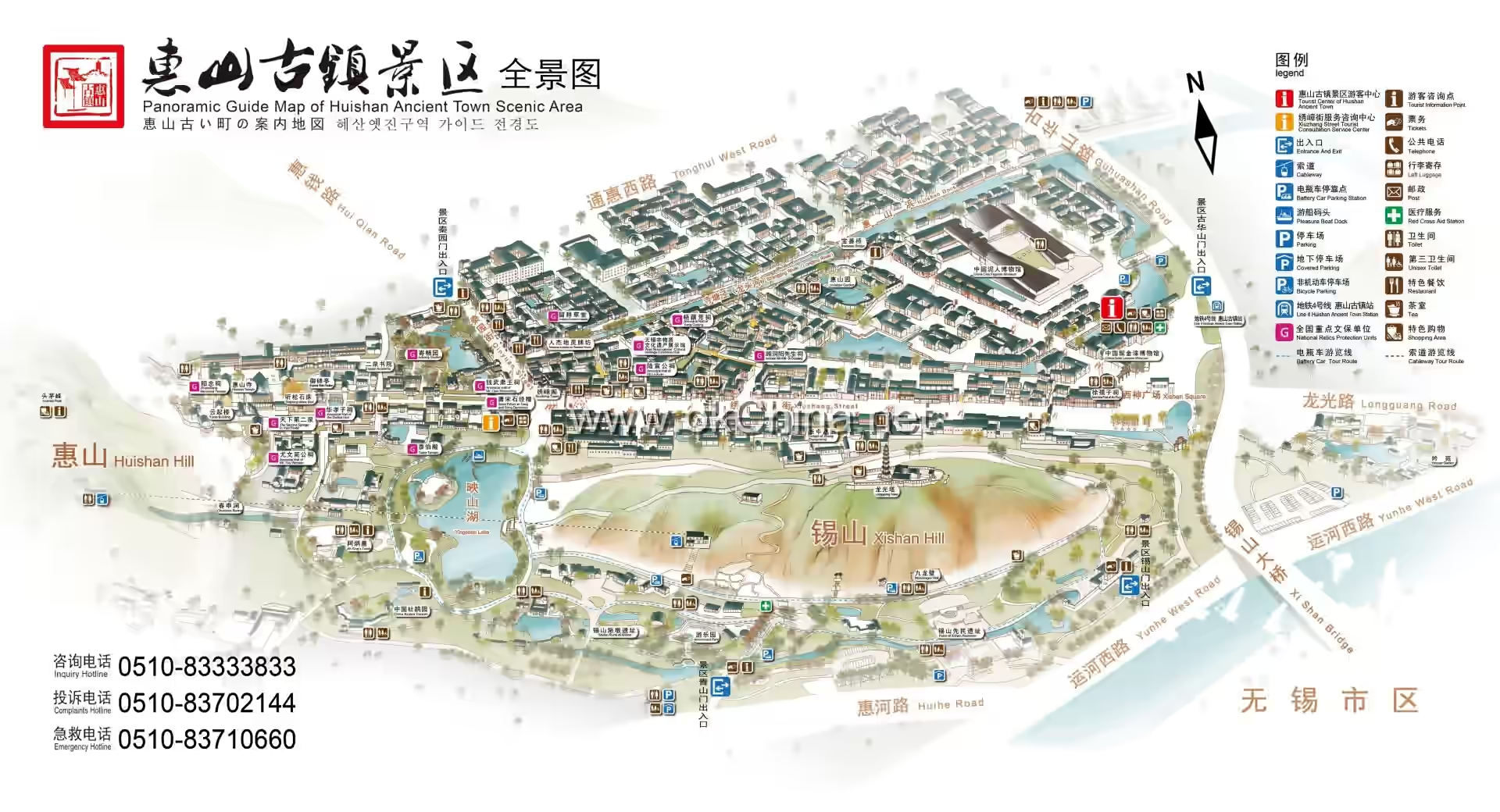
The Huishan Ancient Town Scenic Area in Wuxi City is divided into four major zones: the Historical and Cultural Block Zone, the Xihui Scenic Zone, the Cultural Relics and Historic Sites Zone, and the Mountain Forest Conservation Zone.
Historical and Cultural Block Zone
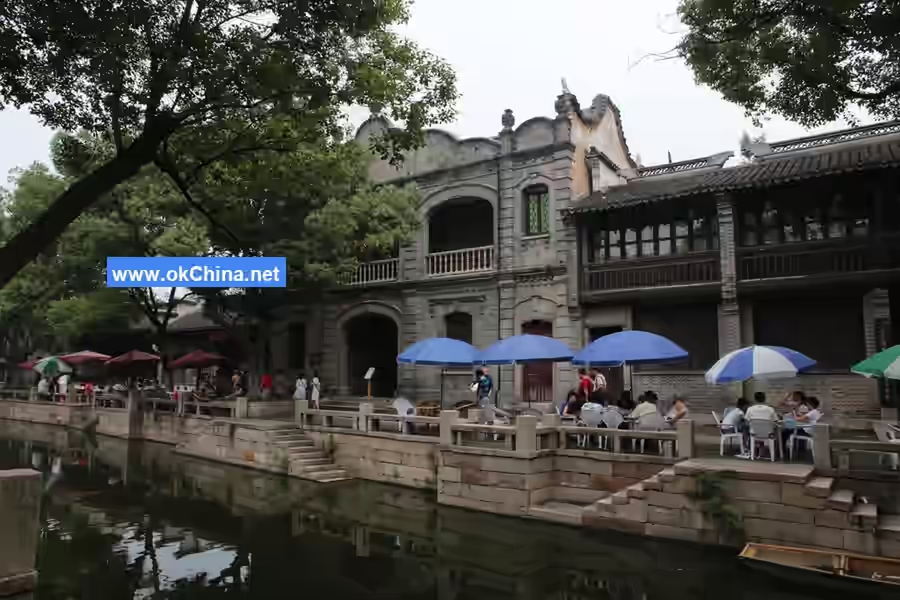
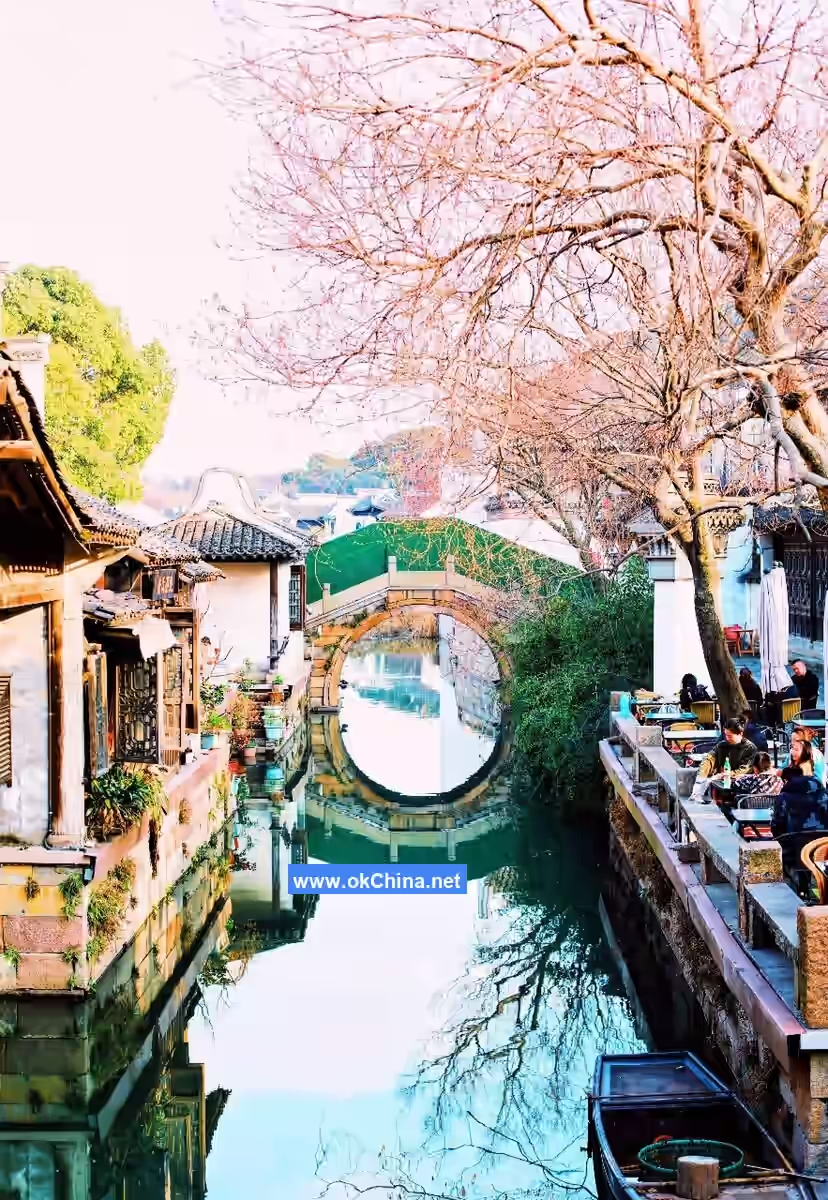
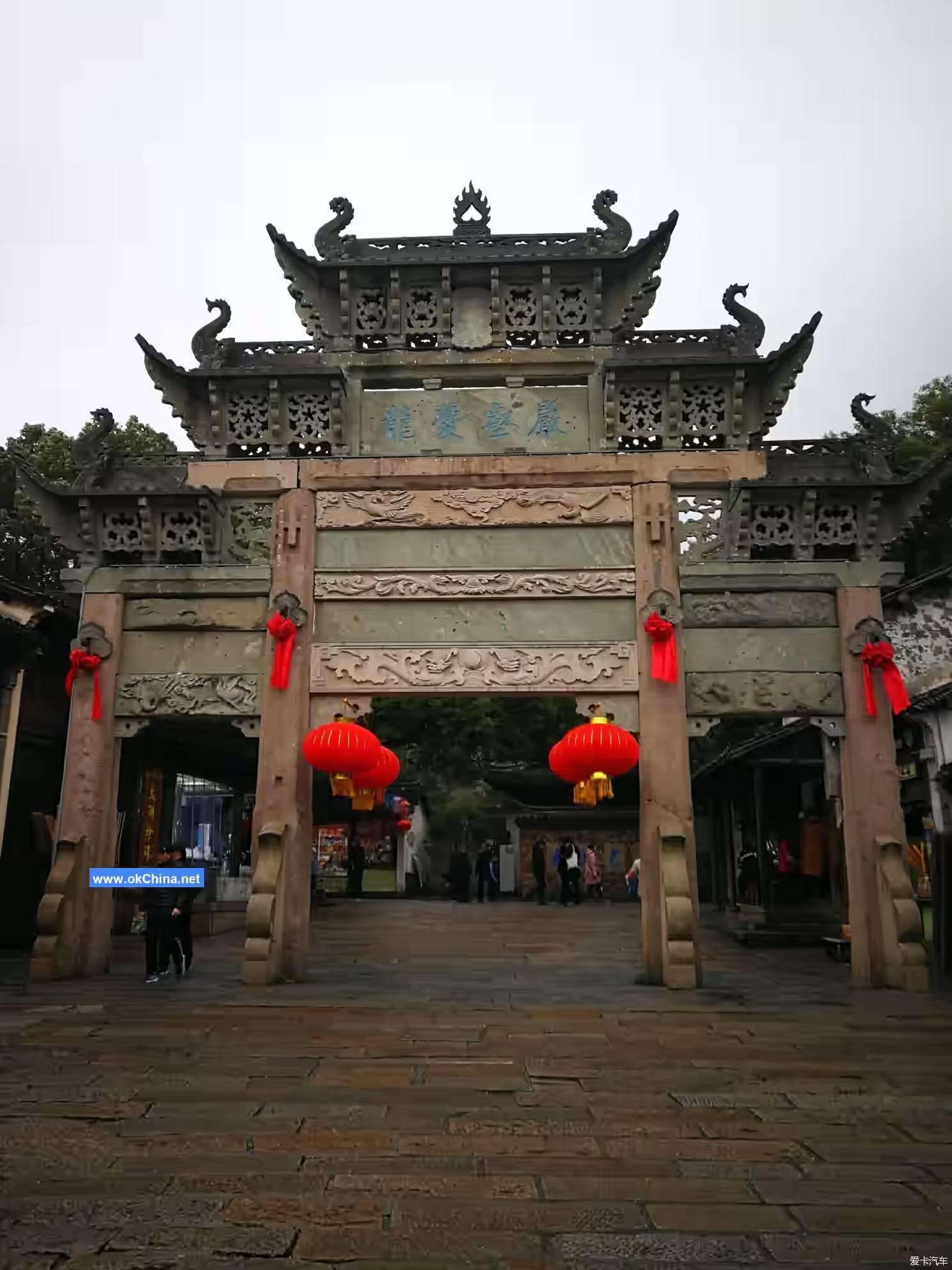
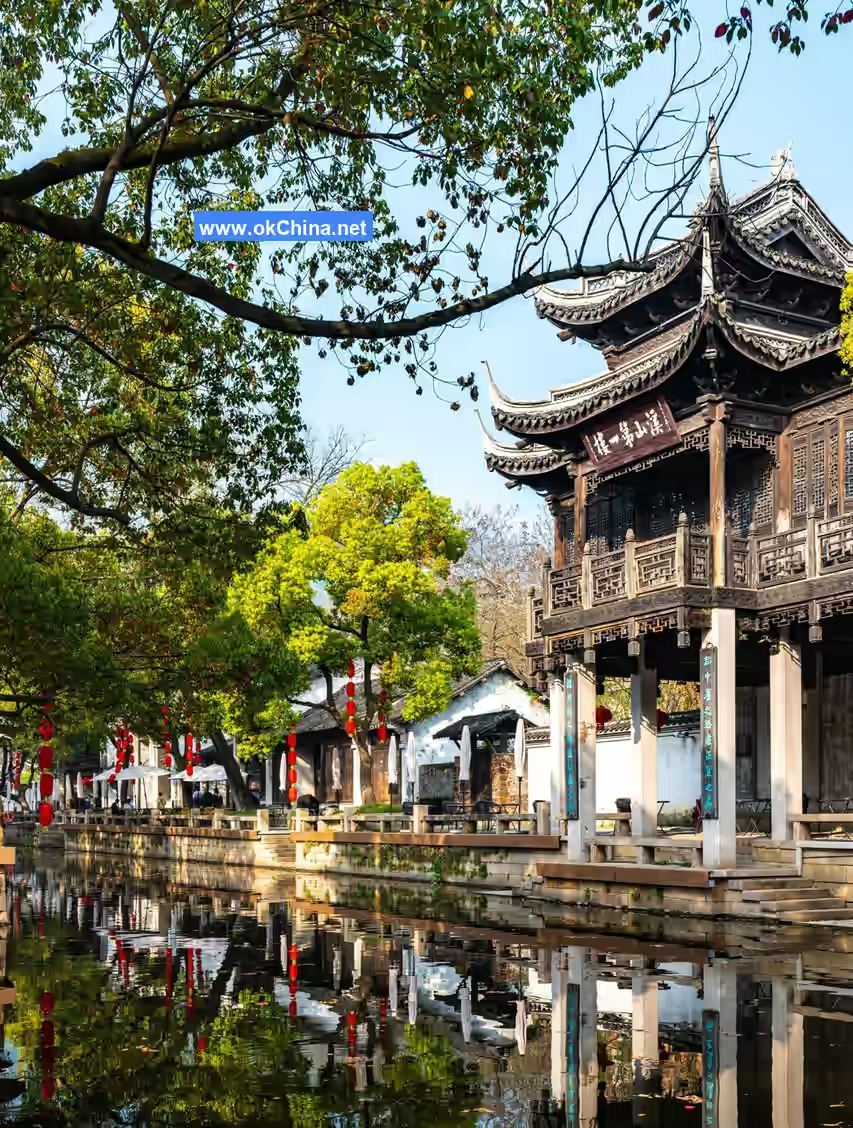
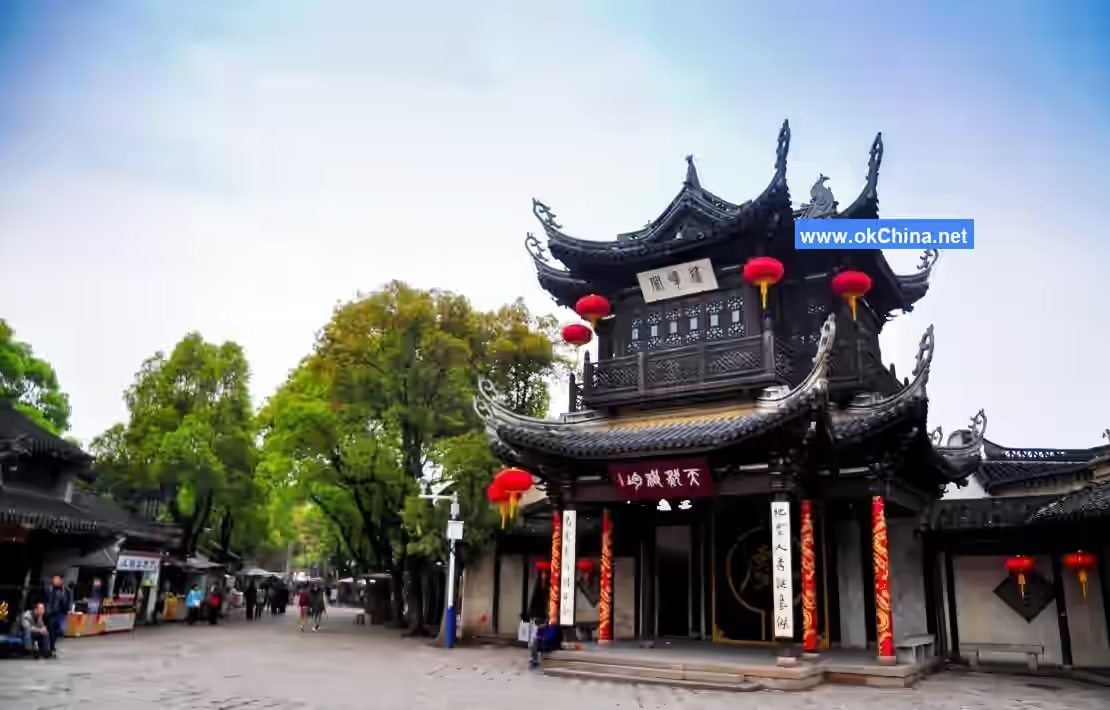
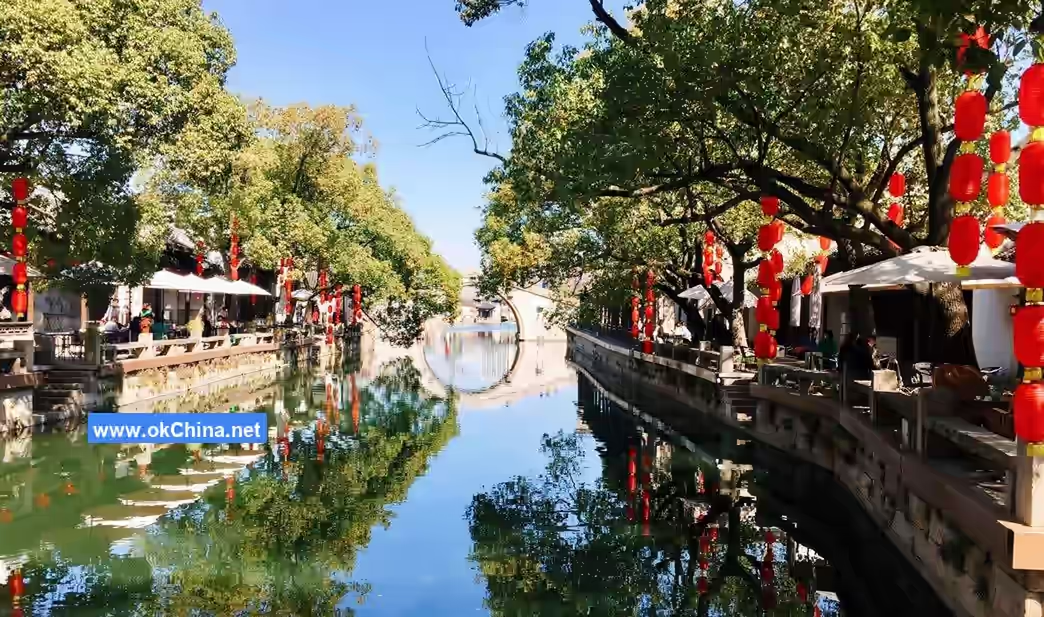
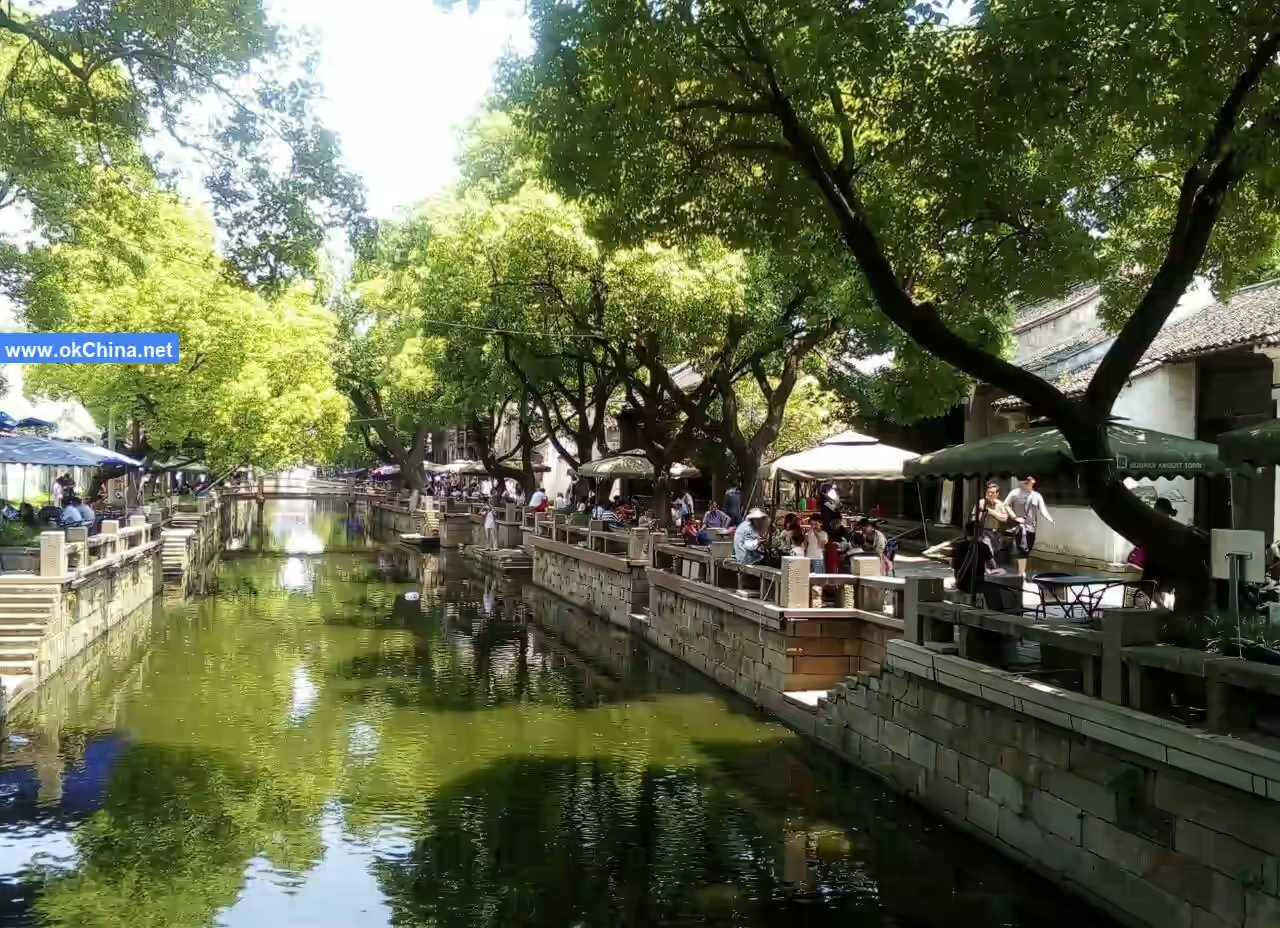
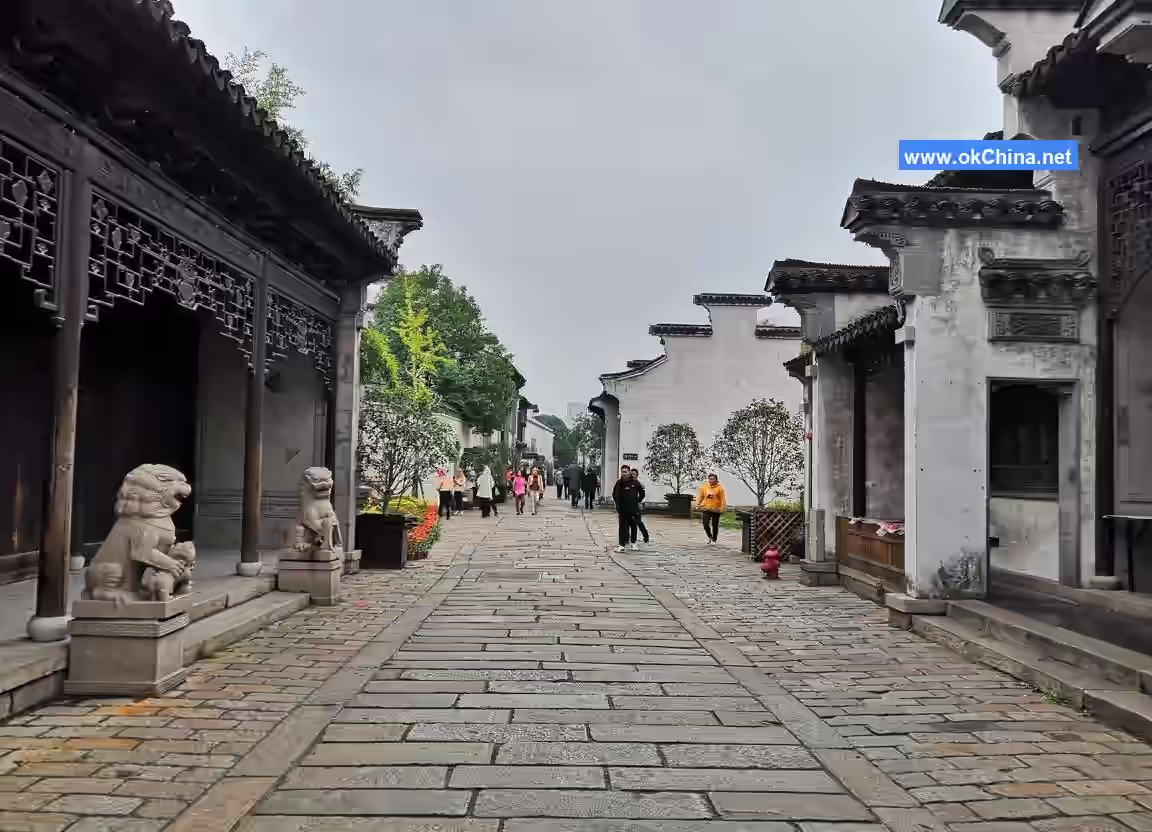
The Historical and Cultural Block Zone is located in the northeastern part of the Huishan Ancient Town Scenic Area. Main attractions include the Huishan Town Ancestral Hall Cluster, the China Clay Figurine Museum, Guandao River, Dongyue Traveling Temple, Sitangjing, Baoshan Bridge, etc.
Xihui Scenic Zone
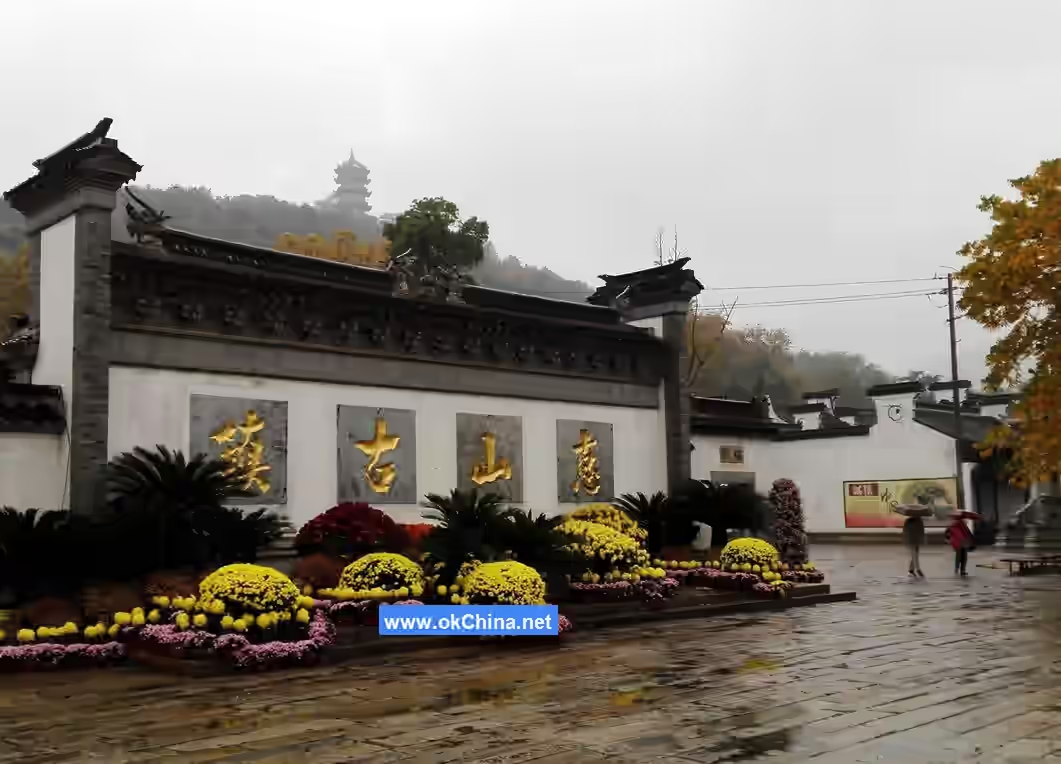
The Xihui Scenic Zone, also known as Xihui Park, is located in the southern part of the Huishan Ancient Town Scenic Area. Main attractions include Yingshan Lake, Abing's Tomb, Xishan Hill, Longguang Pagoda, China Rhododendron Garden, Nine-Dragon Wall, etc.
Cultural Relics and Historic Sites Zone
The Cultural Relics and Historic Sites Zone is located in the northwestern part of the Huishan Ancient Town Scenic Area. Main attractions include Jichang Garden, Huishan Temple, the "Second Spring Under Heaven," the Ruins of Yugong Valley, Erquan Academy, Yunqi Tower, Tingsong Stone Bed, etc.
Mountain Forest Conservation Zone
The Mountain Forest Conservation Zone, located on the eastern foothills of Huishan's Toumao Peak, is situated in the western part of the Huishan Ancient Town Scenic Area. Main attractions include Huishan's Toumao Peak, Chunshen Stream, etc. It connects westward to Jiangsu Huishan National Forest Park and Qingshan Park (Ermao Peak, Sanmao Peak).
3.2 Jichang Garden
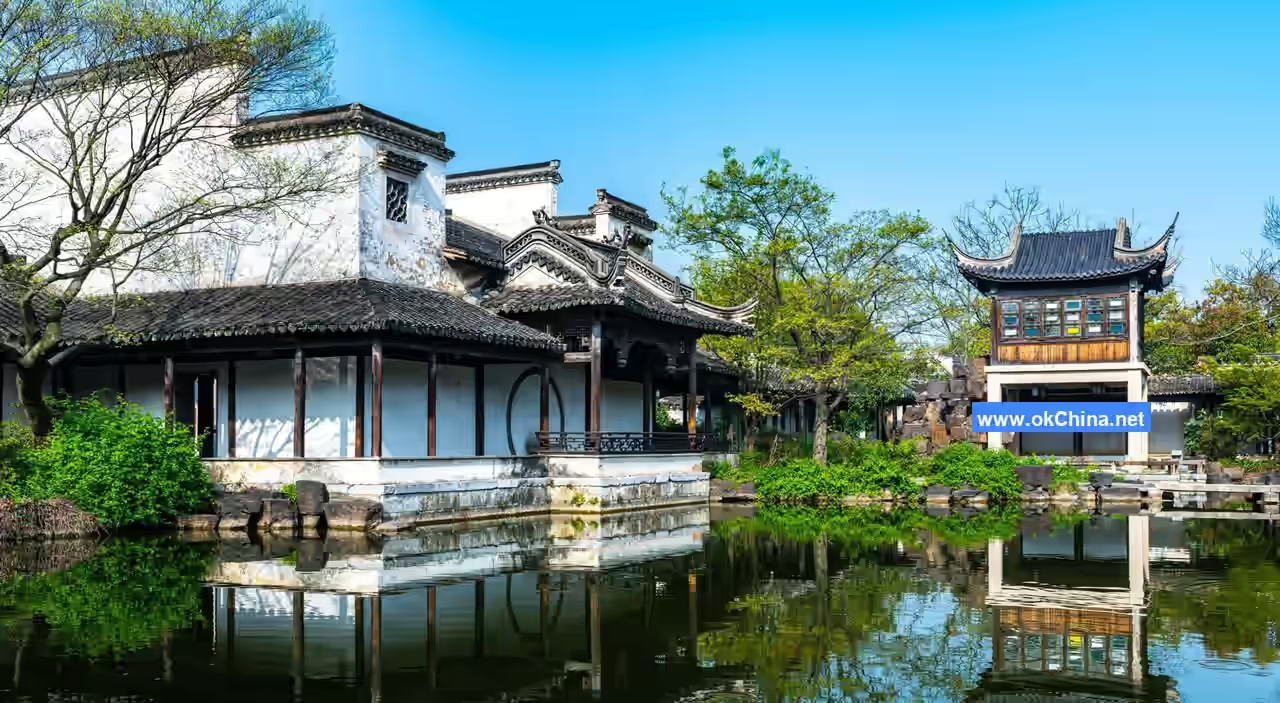
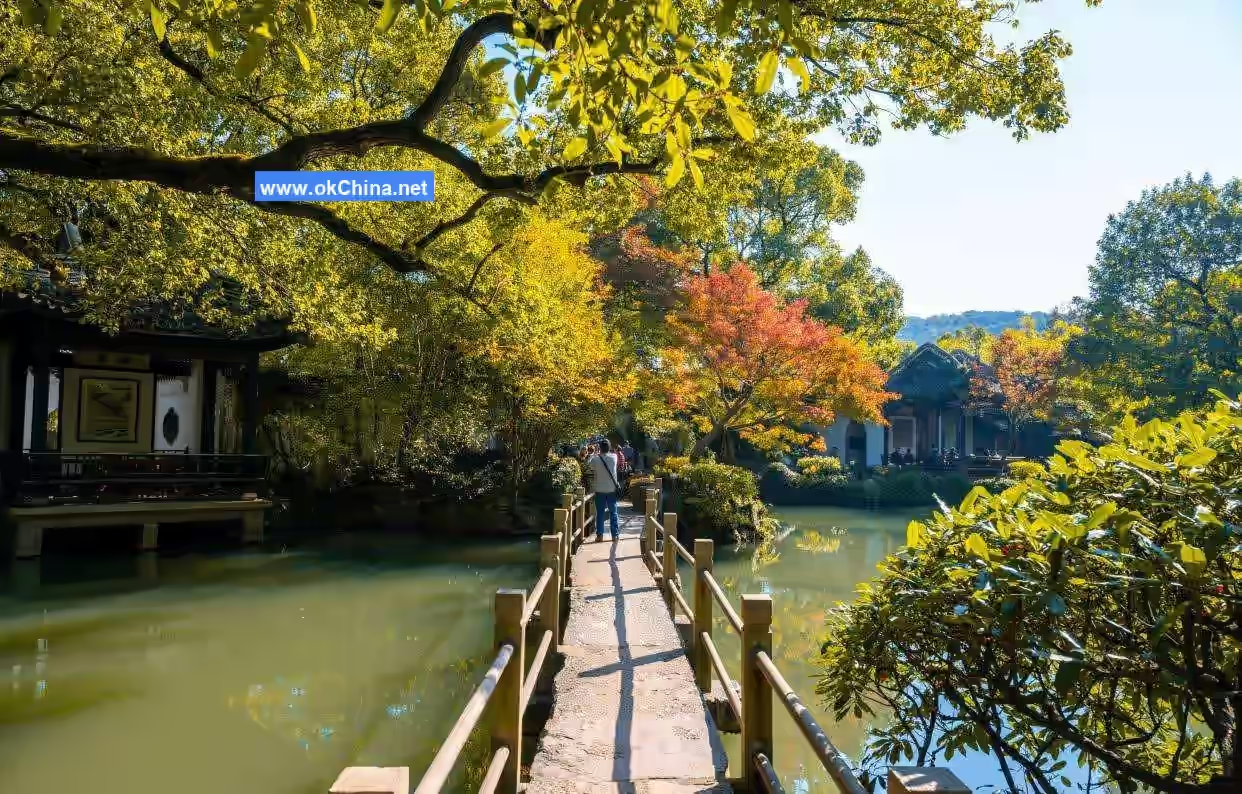
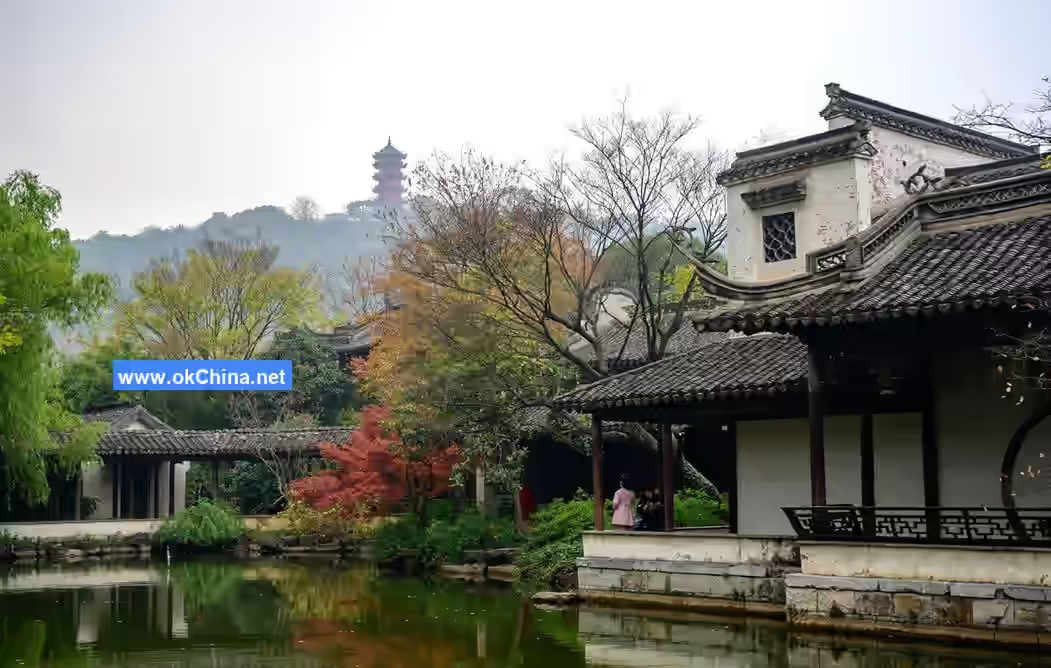
Jichang Garden is located in the Cultural Relics and Historic Sites Zone of the Huishan Ancient Town Scenic Area. It was initially built in the 15th year of the Zhengde era of the Ming dynasty (1520 AD) and flourished from the Wanli era of the Ming to the Kangxi and Qianlong eras of the Qing dynasty. It is a hillside villa-style classical garden from the Ming dynasty. Initially named "Fenggu Xingwo" (Wind Valley Traveling Lodge), it was later renamed "Jichang Garden" (Garden for Ease of Mind), also known as "Qin Garden," based on the poetic line by Wang Xizhi: "Seeking joy in benevolence and wisdom, entrusting ease to the shade of mountains and waters." The garden employs techniques such as borrowed scenery, piled hills, and water management to create a natural, harmonious, and lively atmosphere of wild mountain forest charm.
During a span of 100 years from the 23rd year of the Kangxi era (1684 AD) to the 49th year of the Qianlong era (1784 AD), Emperors Kangxi and Qianlong of the Qing dynasty visited Huishan seven times in total. Emperor Qianlong visited Jichang Garden (Qin Garden) eight times, remarking that "among all the famous scenic spots south of the Yangtze River, only the Qin Garden of Huishan is the most ancient." Emperor Qianlong also had a replica of Jichang Garden built in the Summer Palace in Beijing, known as the Garden of Harmonious Interests (Xiequ Yuan).
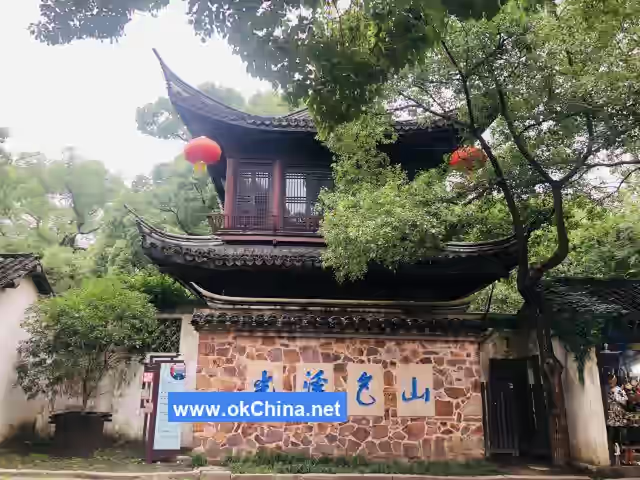
Jichang Garden currently features 28 scenic spots, including the Entrance Hall; the Stele Corridor with imperial inscriptions by Kangxi ("Mountain Colors and Stream Light") and Qianlong ("Jade Clinking and Gold Chiming"); Fenggu Xingwo; Bingli Hall and its courtyard; the Stele Wall; Hanzhen Studio; Nine-Lion Terrace; Eight-Tones Ravine; Andun; Plum Pavilion; Jiashu Hall; Big Stone Mountain Studio; Qingyao; Hanbi Pavilion; Seven-Star Bridge; Qingxiang; Jinhui Pond; Crane-Step Beach; Zhiyu Pavilion; Fantasy Stones; Yupan and the Viewing Corridor; Lingxu Pavilion; Xianyue Pavilion and Corridor; Woyun Hall; Beauty Stone; Mirror Pond; Jieru Peak Carved Stone and Stele Pavilion; Linfan Pavilion, etc. It houses 244 stone inscriptions and 12 registered ancient and famous trees over a hundred years old.
3.3 The Second Spring Under Heaven
The "Second Spring Under Heaven" is located in the Cultural Relics and Historic Sites Zone of the Huishan Ancient Town Scenic Area. Its original name is Huishan Spring, also formerly known as Yilan Spring. The spring water originates from Huishan Mountain, filtering through crevices in Wutong sandstone. Rich in minerals, the water is clear, pure, cool, and delicious. Lu Yu, the Tea Sage of the Tang dynasty, considered "Kangwang Spring of Lushan Mountain the first, and Huishan Stone Spring the second," hence Huishan Spring gained the name "Second Spring Under Heaven." The "Erquan" spring water flows from west to east following the mountain terrain, divided into upper, middle, and lower pools. The lower pool is the largest among the three. In the center of the western pool wall, there is a stone chi (a mythical hornless dragon) head, creating the scenic view of "Chi Kissing Flying Spring."
The Tang poet Li Shen praised the spring water as "the divine liquid of the mortal world," leading the then Prime Minister Li Deyu to order relay stations to deliver Erquan water for his enjoyment. During the Song dynasty, Emperor Huizong listed Erquan water as a tribute item. Su Dongpo, drawn by its fame, tasted the spring and chanted the famous line: "Alone, I bring a small cake of moon from heaven, to try the second spring of the mortal world." The folk musician Abing also composed the piece "Erquan Yingyue" (The Moon Reflected in the Second Spring).
3.4 Huishan Temple
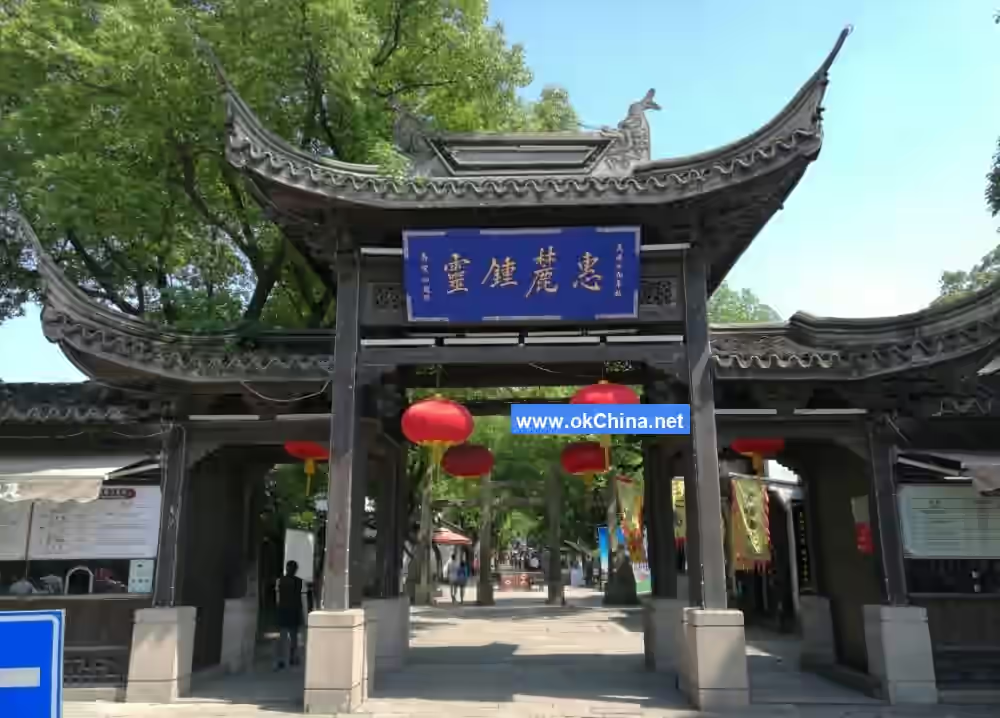
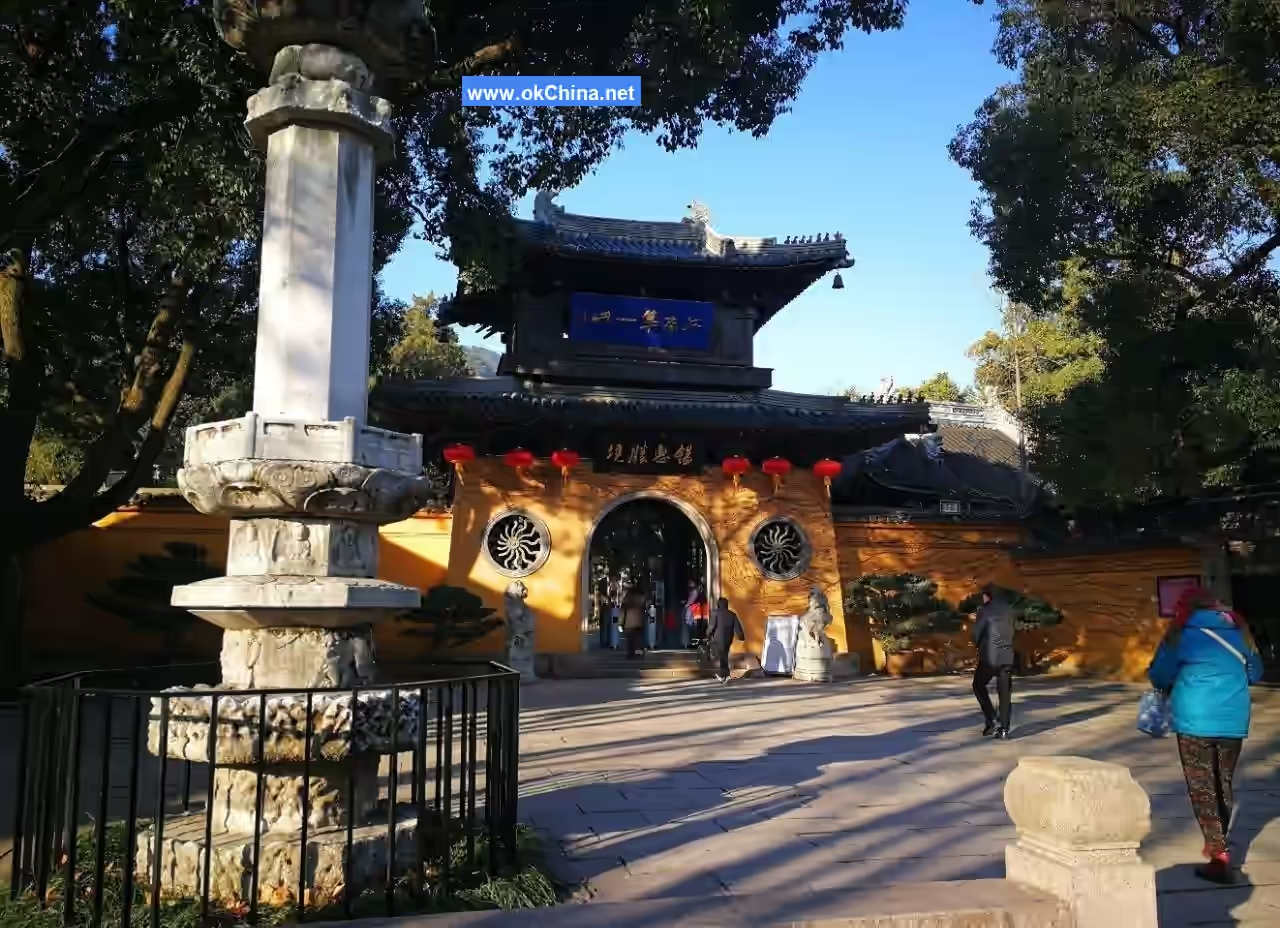
Huishan Temple is located in the Cultural Relics and Historic Sites Zone of the Huishan Ancient Town Scenic Area, situated on the eastern foothills of Huishan Mountain, south of the "Second Spring Under Heaven" and Hua Xiaozi Ancestral Hall, and north of Jichang Garden and Erquan Academy. Huishan Temple is the foremost among the ten major Buddhist monasteries in Wuxi. It contains cultural relics including the Huishan Temple Stone Sutra Pillars, the Song-dynasty Golden Lotus Bridge, the ancient Ginkgo tree from the Hongwu era of the Ming dynasty, the Tang-dynasty Tingsong Stone Bed, the Imperial Stele Pavilion, Bamboo Stove Mountain Studio, Longyan Spring, Songquan Spring, Bilu Spring, etc.
Buddhist worship at Huishan Temple began over 1500 years ago during the Southern Dynasties, making it the oldest existing Buddhist temple in Wuxi.
3.5 China Clay Figurine Museum
The China Clay Figurine Museum is located in the Historical and Cultural Block Zone of the Huishan Ancient Town Scenic Area. It is a theme museum focusing on the unique art of clay figurines as its main exhibition. The building's exterior was designed by Japanese architect Kengo Kuma. The entire structure features a large slanted roof covered with black tiles, and from an aerial view, it resembles a horizontally written "U" character. The museum covers an area of 12,000 square meters, with an exhibition area of 8,000 square meters. The building has one underground floor and two above-ground floors.
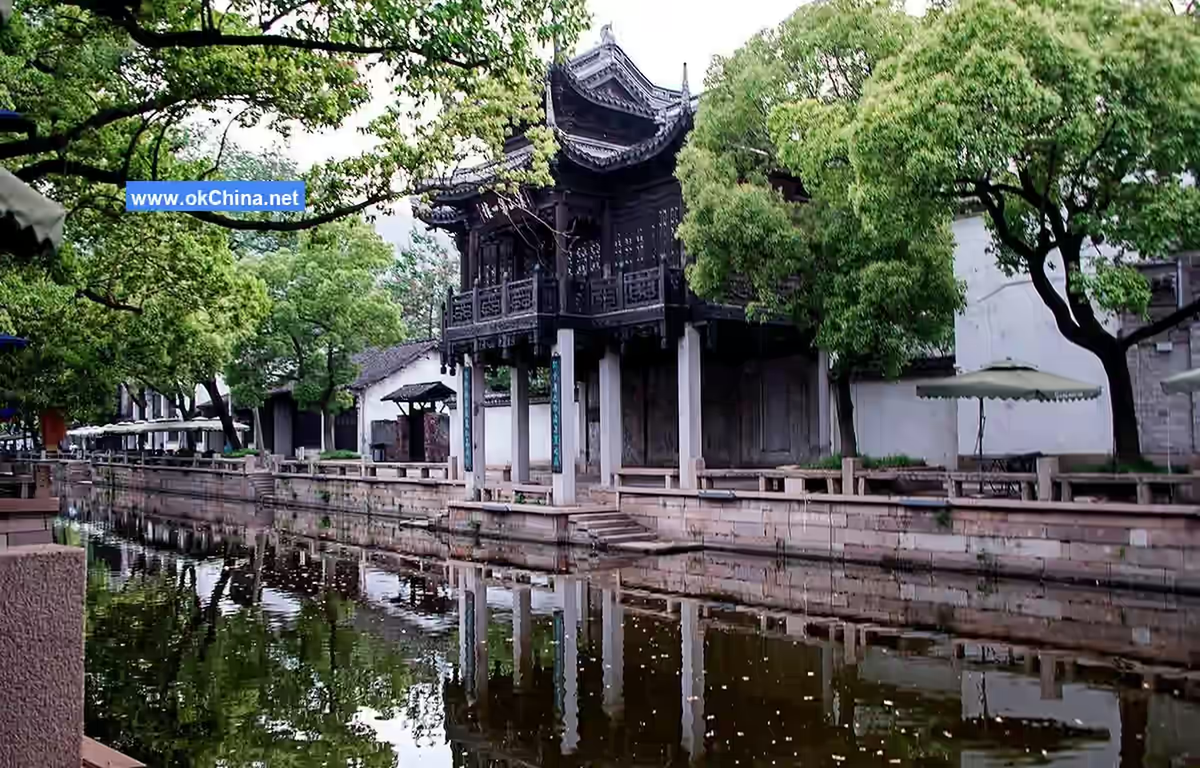
The China Clay Figurine Museum is divided into more than ten spaces, including the Preface Hall, the Huishan Clay Figurine Exhibition Hall, the Exhibition Hall for Various Chinese Clay Figurine Schools, the World Clay Figurine Culture Exhibition Hall, and Clay Figurine Masters' Studios. It displays nearly 5,000 clay figurine works from Beijing, Tianjin, Hebei, Henan, Shaanxi, Guangdong, Wuxi, and other places, including the Wuxi specialty "Big Afu." Furthermore, the China Clay Figurine Museum also showcases the creative and production process of clay figurines on-site and serves functions such as teaching, training, creative research, and scientific activities.### 3.6 Huishan Ancestral Halls The Huishan Ancestral Halls are primarily distributed within the historical and cultural district of the ancient Huishan Town scenic area. This ancient complex of ancestral halls, centered around the 5th-century Southern Dynasty Huishan Ancient Temple and the Tang Dynasty "Second Spring Under Heaven," developed continuously along the ancient canal Huishan Bang, Qinyuan Street, and Xiuzhang Street market area. These 108 ancient ancestral halls and some sites, combined with the Jiangnan landscape and famous spring scenic spots, form an ancient ancestral hall community with strong regional characteristics of the Wu area. The total built-up area of the hall complex is 47,000 square meters, with the majority of the hall buildings serving as residential dwellings, accounting for 71% of the total residential area in the district. Among these halls, there are over 50 relatively well-preserved main halls, about 40 partially renovated halls, and more than 10 important hall sites verified by reliable historical materials such as ancient hall maps.
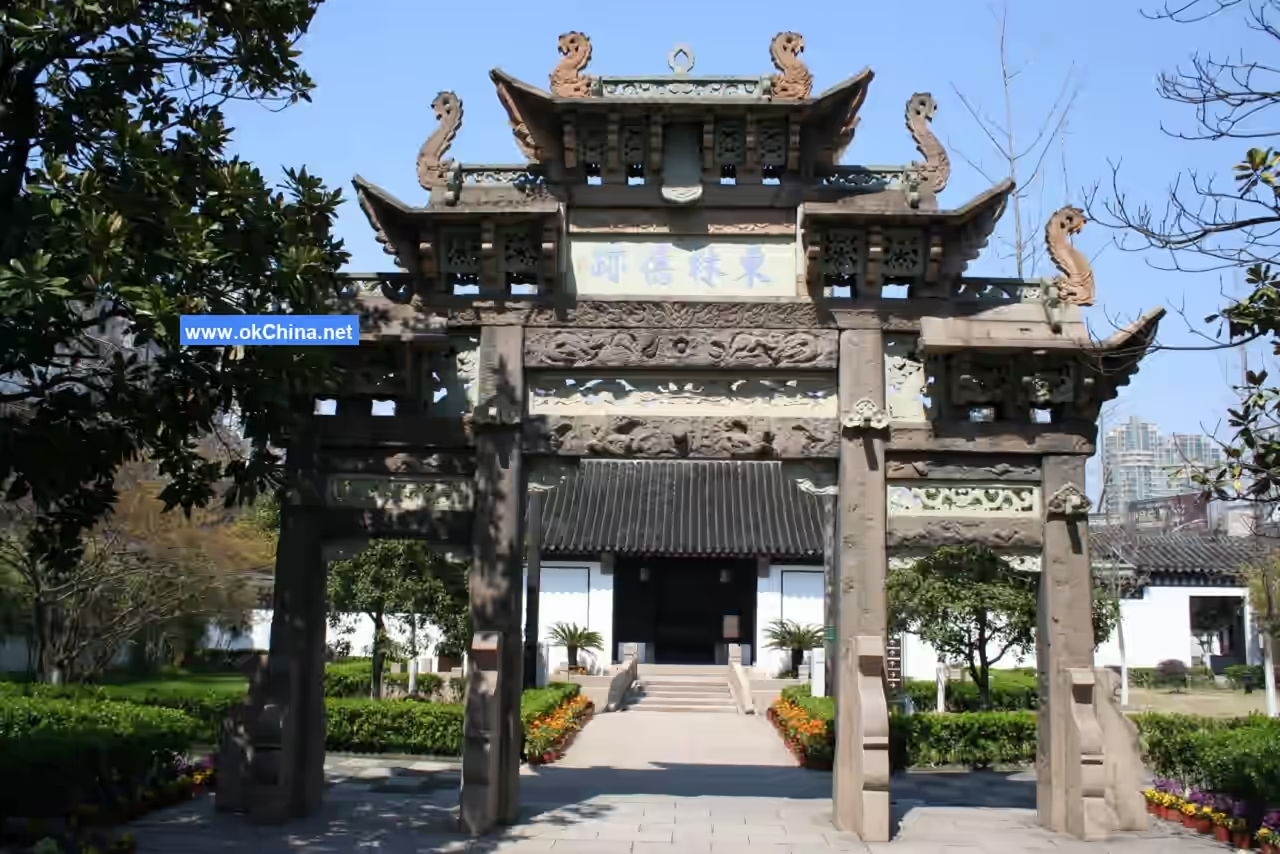
The architectural style of the ancestral halls is predominantly the flush gable roof style common in Jiangnan residential architecture, featuring whitewashed walls and black tiles with minimal carving. There are also some higher-standard halls with hip-and-gable roofs, constructed from brick and wood. The construction periods of these halls mainly span the Ming, Qing, and Republican eras.
3.7 Huishan Mountain
Huishan Mountain, with its eastern foothills located within the forest conservation area of the ancient Huishan Town scenic area, was anciently called Lishan Mountain and is an extension of the Tianmu Mountain range in Zhejiang. According to the Lixi Notes, during the Jin Dynasty, the pioneering Chan master and Western Region monk Huizhao came here to spread Buddhism. Later, people named the mountain after Huizhao, calling it Huishan (慧山). As the characters 慧 (huì) and 惠 (huì) are interchangeable, it became known as Huishan (惠山), earning the reputation as the "First Mountain of Jiangnan."
4. Cultural Activities
4.1 Literature and Arts
Literati and statesmen, including Su Shi, Qin Guan, Huang Tingjian, Xu Youzhen, and Aisin Gioro Hongli (Emperor Qianlong), visited the ancient Huishan Town and composed numerous poems and essays.
Related Figures
4.1.1 Li Shen
Li Shen, a Tang Dynasty chancellor, moved from Meili in Wuxi to study at Huishan Temple at the age of 15. Due to poverty, he used the backs of sutra papers from the temple for his compositions. While he suffered bullying from some monks, he also gained sympathy and support from monks like Jian Yuan, forming deep friendships. In the sixth year of the Yuanhe era (811 AD), Li Shen passed the imperial examination, becoming the first jinshi (advanced scholar) in Wuxi's history. During his studies at Huishan Temple, deeply aware of the hardships of farmers, he wrote the poem "Sympathy for the Farmers": "Who knows that on the plate, each grain comes from toil?" This timeless line has been passed down through generations, teaching people the fundamental value of cherishing food.
4.1.2 Lu Yu
Lu Yu, the Tea Sage of the Tang Dynasty, visited famous mountains in search of springs. He evaluated twenty famous springs under heaven and ranked Huishan Stone Spring as the second best, thereby making Huishan Spring renowned. He also wrote the travelogue Record of Huishan Temple, which is the first celebrity travelogue about Huishan.
4.1.3 Su Shi
The Northern Song poet Su Shi served as an official in places like Hangzhou and Huzhou during his early years, visiting Huishan multiple times. During the Xining era (1068–1077 AD), he came to Wuxi, tasted the Second Spring, climbed Huishan, and wrote Visiting Taoist Qian at Huishan, Brewing Small Dragon Tea Cake, Ascending the Summit to Gaze at Taihu Lake. In the second year of the Yuanfeng era (1079 AD), Su Shi wrote in a poem, "In the past, when I was an assistant in Qiantang, I never failed to visit Huishan whenever I traveled to and from Wuxi."
4.1.4 Wen Zhengming
The Ming Dynasty talent Wen Zhengming, during the Qingming Festival in the 13th year of the Zhengde era (1518 AD), toured Wuxi's Huishan with friends Cai Yu, Wang Shou, Wang Chong, and Tang Zhen. Beneath the Erquan Pavilion of the "Second Spring Under Heaven," they "poured spring water into the Wang family's tripod, boiled it three times and drank it three times." They enjoyed tea, conversed freely, and composed poems in response to each other. Afterwards, Wen Zhengming painted Gathering for Tea at Huishan.
4.1.5 Shao Bao
Shao Bao (1460–1527 AD), styled Guoxian and known as the Hermit of the Second Spring, was a native of Wuxi who served as Minister of Rites in Nanjing during the Ming Dynasty. In the 11th year of the Zhengde era (1516 AD), he founded the Erquan Academy within what is now the ancient Huishan Town scenic area. After his death, his disciples converted the academy into the Shao Wenzhuang Gong Memorial Hall.
Shao Bao was an upright person. In the Wuxi Qianqiao area, there was a local tyrant named Qian Baiwan. Shao Bao rid the people of this scourge by imprisoning Qian Baiwan inside the Stone Gate of Huishan Mountain, after which he himself is said to have ascended to immortality. When Qian Baiwan's family heard the news and rushed to the Stone Gate, they wept and wailed. The villagers said, "If you want the Stone Gate to open, you must wait for Shao Bao to come." Consequently, a children's rhyme related to this saying became popular in the Wuxi area.
4.2 Activity Development
On April 11, 2009, the "Huishan Folk Culture Temple Fair and Wu Region Intangible Cultural Heritage Exhibition" opened at the Nine Dragon Wall Square in Xihui Park, with approximately 250,000 participants on the opening day.
On October 23, 2009, the "Third China Chrysanthemum Elite Expo" was held at Xihui Park. Wuxi Gardens won the Best Cultivation Award and the Best Arrangement Award.
From September 20 to November 30, 2012, Xihui Park hosted the "2012 Golden Autumn Huishan Chrysanthemum Fair and Seven-City Chrysanthemum Competition (Beijing, Tianjin, Tangshan, Nantong, Nanjing, Changzhou, Wuxi)."
On September 28, 2014, the themed event "Ten Thousand Embroider the Five-Star Red Flag, Jointly Build a Civilized Wuxi City" was held at the Nine Dragon Wall Square in Xihui Park.
From April 22 to May 10, 2015, the ancient Huishan Town scenic area hosted the "Wuxi City 'May Day' Bonsai Competition."
From April 1 to May 29, 2016, the ancient Huishan Town scenic area held the "Thirteenth China Azalea Exhibition," featuring 20 outdoor scenic spots, 12 indoor exhibition halls, 22 exhibition rooms, 26 special flower display stands, and one new variety hall, showcasing over 500 varieties of azaleas.
Comments
Post a Comment