
Huaqing Palace
1. Introduction
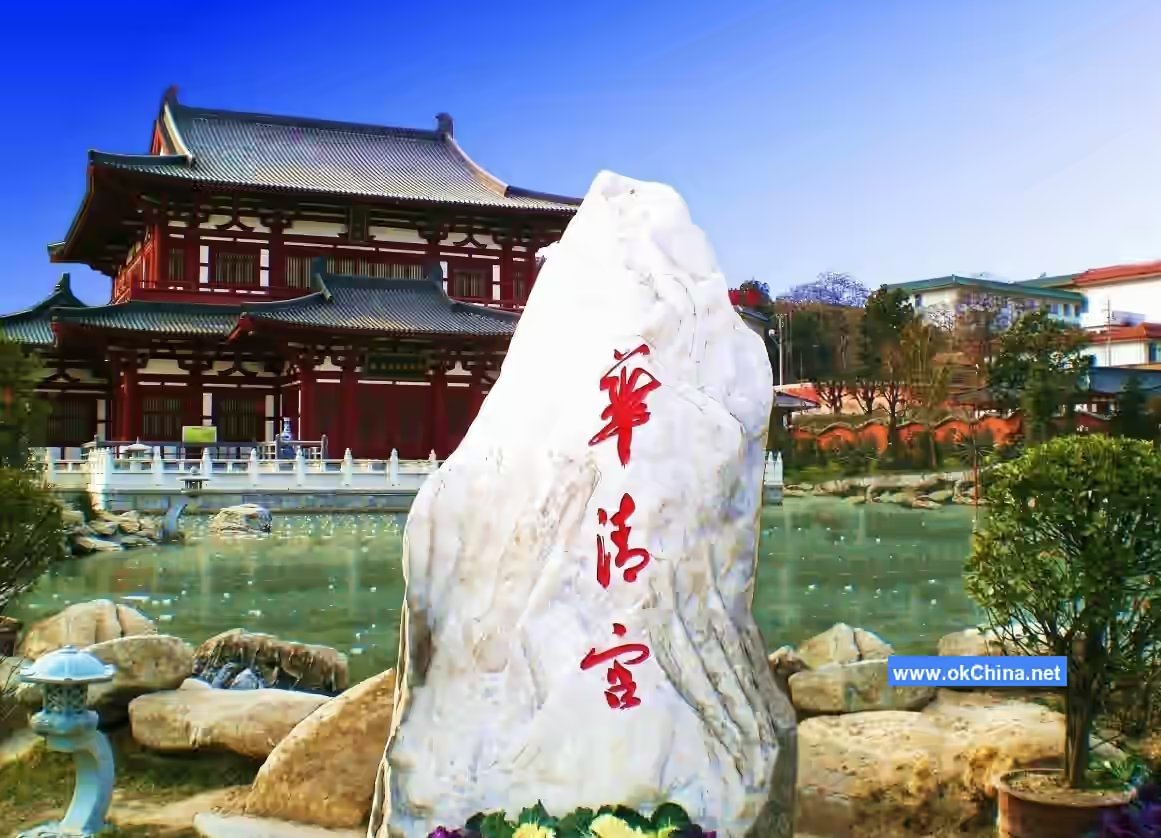
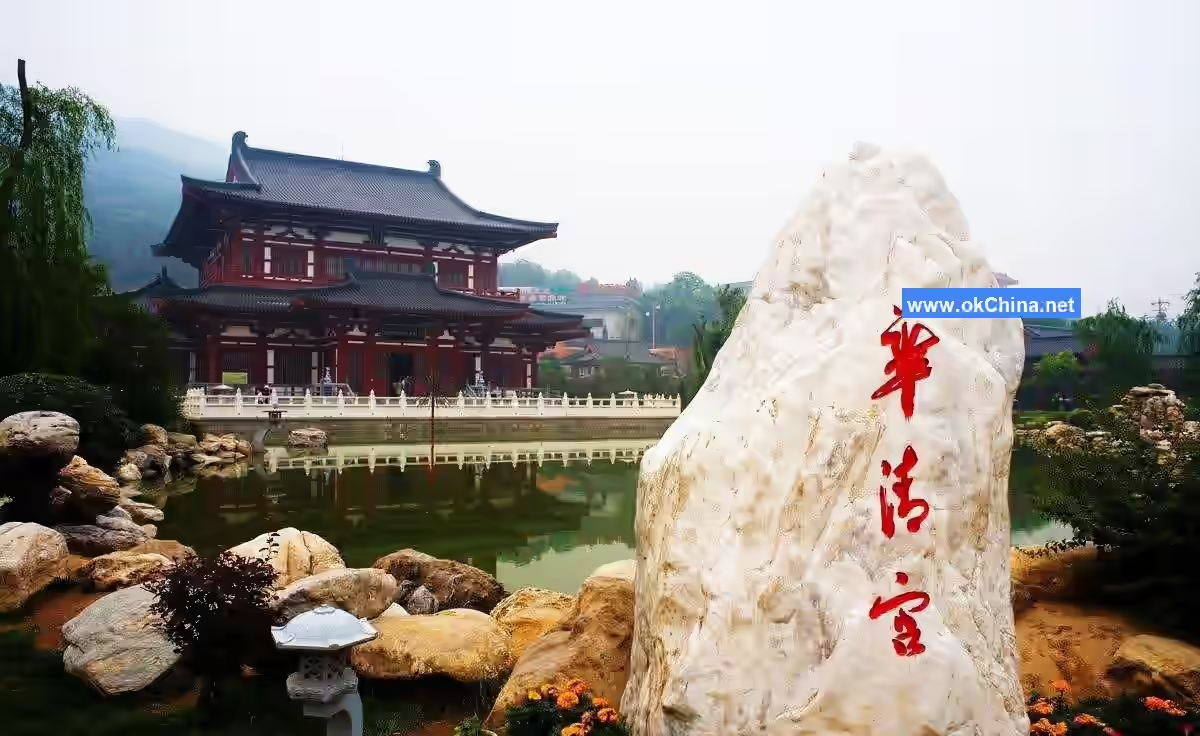
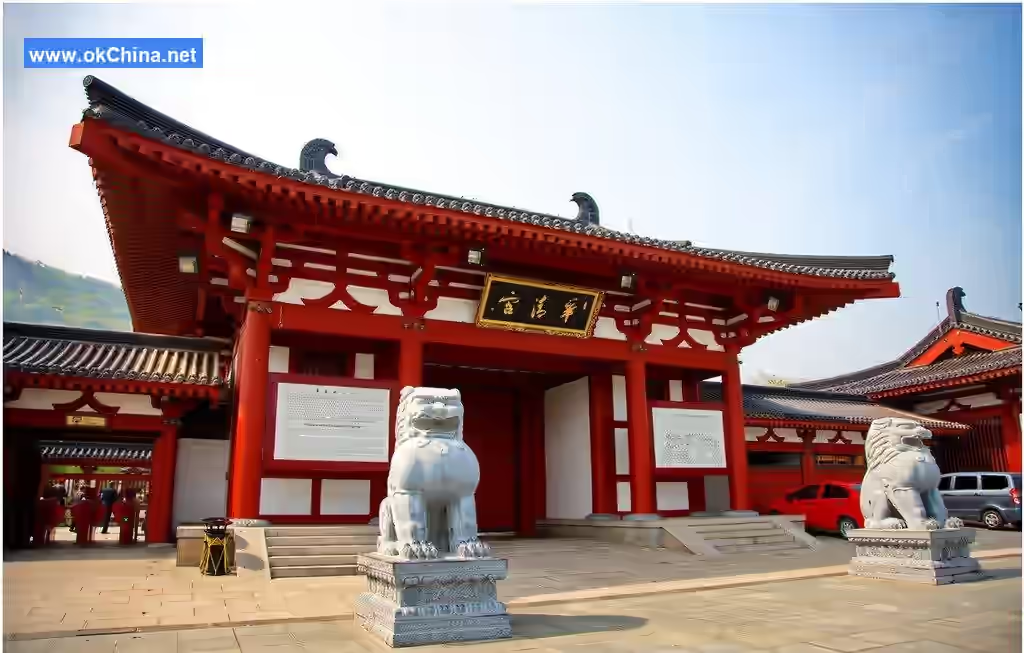
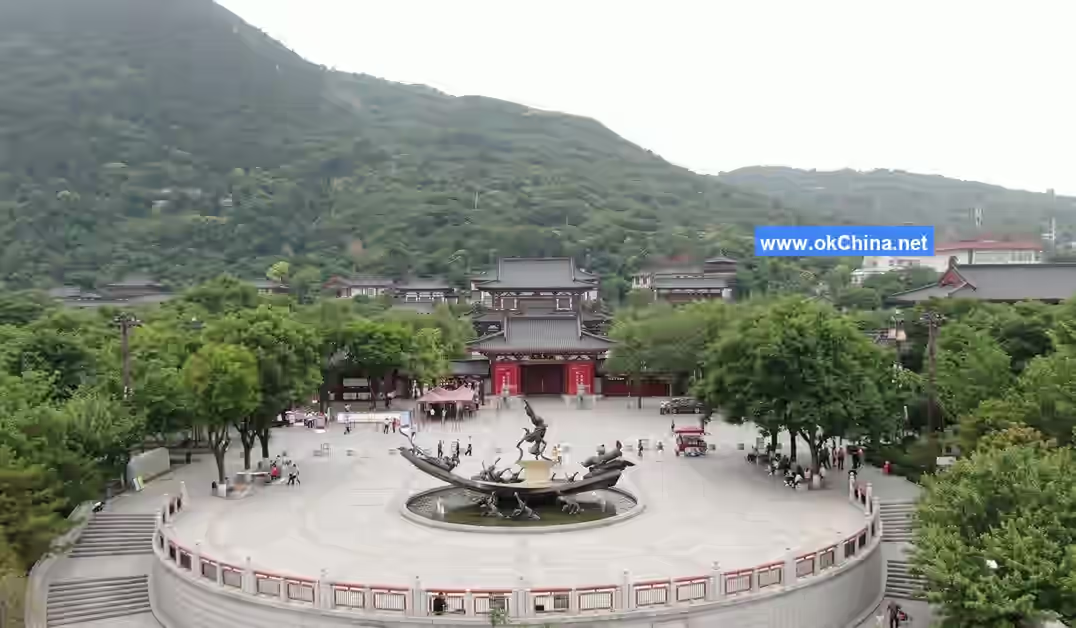
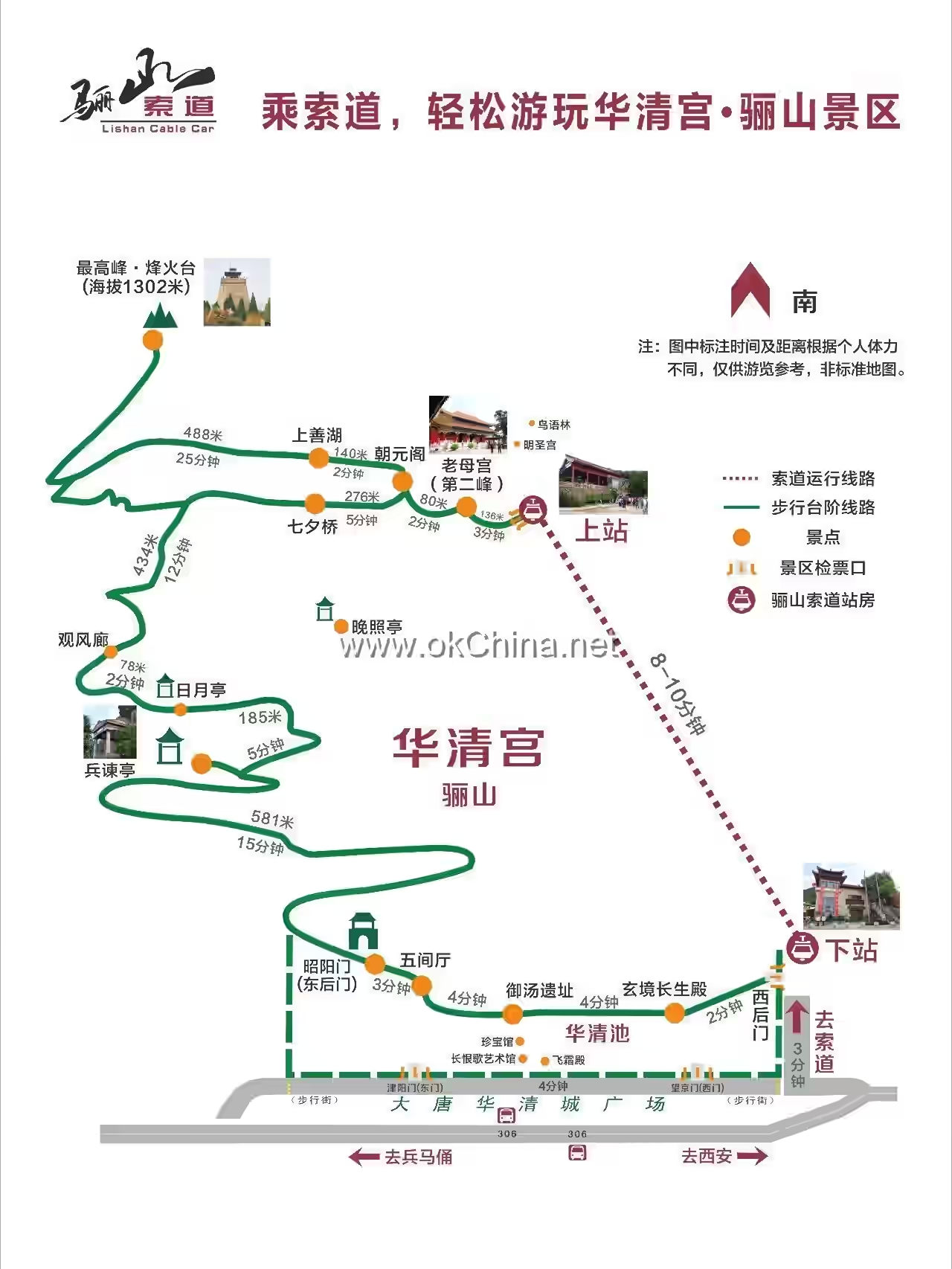
The Huaqing Palace Scenic Area in Xi'an City, commonly referred to as the Huaqing Palace Scenic Area, is a tourist attraction located within the Lintong District of Xi'an City, Shaanxi Province. Constructed on the site of the Tang Dynasty Huaqing Palace, it has become a landmark site for Tang Dynasty palace culture tourism in China. As far back as the Zhou Dynasty, the site featured open-air hot spring pools. During the reign of Emperor Xuanzong of Tang, the area was developed with "the hot spring well turned into pools, and palaces built around the mountains," leading to the creation of "Huaqing Palace." It is renowned both domestically and internationally for its timeless hot spring resources, the historical典故 of the Beacon Fire戏诸侯 (using beacon fires to fool the feudal lords), the love story between Emperor Tang Minghuang (Xuanzong) and Consort Yang Guifei, and as the site of the "Xi'an Incident," making it a landmark for Tang culture tourism in China. Huaqing Palace集中 houses cultural areas such as the Tang Imperial Hot Spring Ruins Museum, the Xi'an Incident Historic Site—Five-Room Hall, the Jiulong Lake and Furong Lake Scenic Areas, and the Tang Liyuan (Pear Garden) Ruins Museum, along with landmark architectural complexes like the Feishuang Hall, Wanshou Hall, Changsheng Hall, Huanyuan Garden, and Yuwang Hall. Mount Li stands at an altitude of 1302 meters, dotted with attractions such as the Laomu Hall, Laojun Hall, Beacon Tower, Bingjian Pavilion, Shiweng Temple, and Yuxian Bridge. "The Evening Glow of Mount Li" is one of the famous "Eight Views of Guanzhong."
2. Geographical Environment
2.1 Location and Territory
The Huaqing Palace Scenic Area is located in Lintong District, Xi'an City, Shaanxi Province, leaning against Mount Li to the south and facing the Wei River to the north. Huaqing Pool covers an area of 85,560 square meters, with a building area of 26,640 square meters.
2.2 Climatic Characteristics
Lintong District, where the Huaqing Palace Scenic Area is located, boasts优越 natural conditions, characterized by a continental warm temperate monsoon climate with distinct seasonal冷暖 and干湿 variations, and abundant light, heat, and water resources. The annual average temperature is 13.5°C, with a frost-free period of 219 days and an annual rainfall of 591.8 mm.
3. Main Attractions
3.1 Tang Huaqing Palace Imperial Hot Spring Ruins Museum
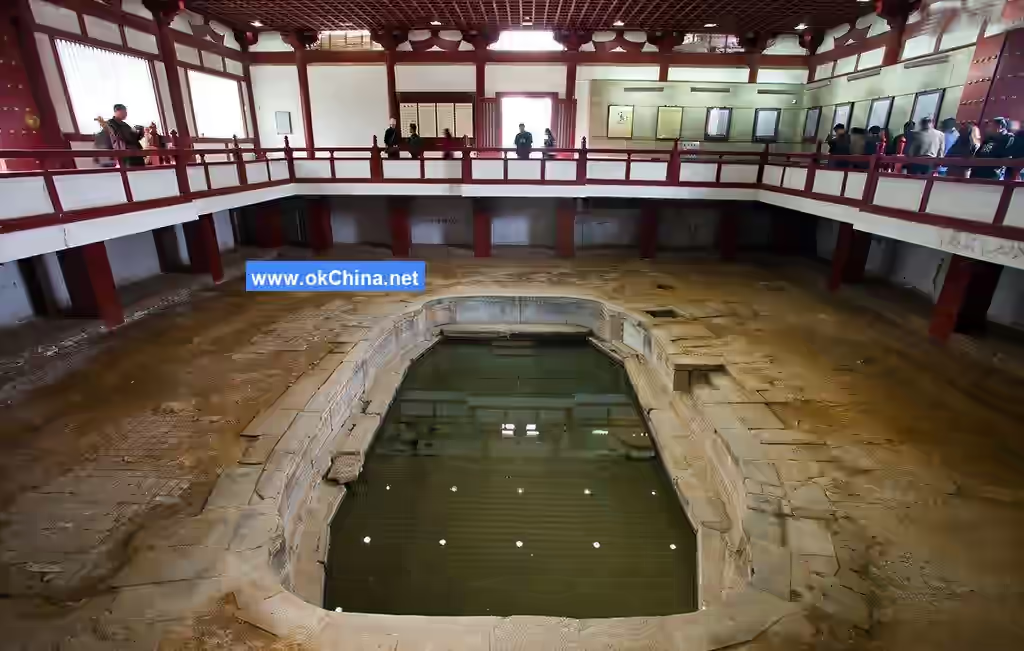
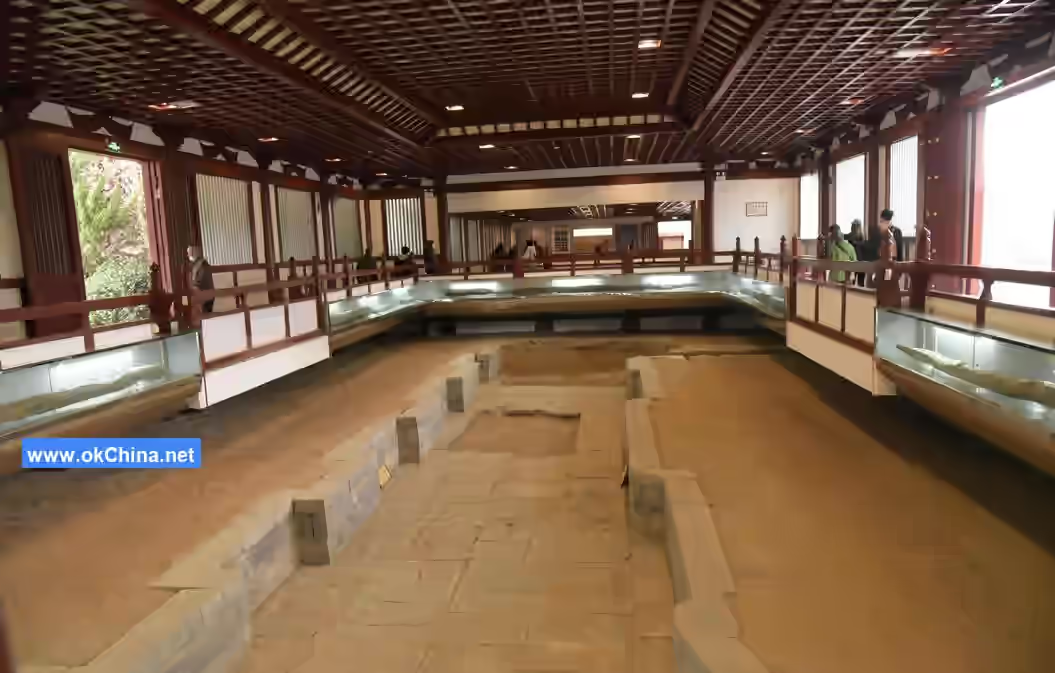
The Tang Huaqing Palace Imperial Hot Spring Ruins Museum stands in the southwest part of Huaqing Palace and is the only museum in China dedicated to displaying the imperial hot spring pools of the Tang Dynasty. The Tang Imperial Hot Spring Ruins were discovered in April 1982. After over three years of excavation, within a 4,600-square-meter excavation area, five imperial hot spring pool ruins were uncovered, including the "Lotus Flower Pool" and "Begonia Pool" where Emperor Xuanzong and Consort Yang Guifei bathed, the "Star Pool" where Emperor Taizong of Tang bathed, as well as the "Crown Prince Pool" and "Shangshi Pool." Over 3,000 cultural relics were also unearthed, including tricolor ridge beasts, lotus-patterned bricks, and artifacts from the Neolithic, Qin, and Han periods. The discovery of the Imperial Hot Spring Ruins represents another significant achievement in Chinese Sui and Tang archaeology, providing precious physical historical materials for the study of Chinese bathing history, feudal hierarchy systems, and Tang Dynasty palace architecture. The museum opened to the public in September 1990. In October 1996, the Tang Huaqing Palace Ruins were announced by the State Council as part of the "Fourth Batch of National Key Cultural Relics Protection Units." To better display the historical artifacts of Huaqing Palace, the museum's attached Treasure Hall was completed and opened on September 30, 2014. It is the first精品文物展览馆 (fine cultural relics exhibition hall) in the history of the Huaqing Palace Scenic Area, presenting a general history exhibition reflecting the thousands of years of Huaqing Palace's history. In addition to displaying精品文物 unearthed from the Huaqing Palace Ruins, the second floor is dedicated to a special exhibition on the Xi'an Incident, showcasing a large number of precious historical materials and artifacts related to the event.
3.2 Huanyuan Garden
The Huanyuan Garden of Huaqing Pool covers an area of approximately 4,730 square meters. It does not follow a symmetrical layout along a central axis. Due to its complex and sloped terrain, a dispersed and free layout is employed, with buildings placed to create scenery, and winding paths connecting various attractions. The garden layout adopts a "front garden, rear寝 (living quarters)" arrangement, which was a major innovation in the garden design of Huaqing Pool's Huanyuan Garden. The landscape of Huanyuan Garden has undergone several changes with不同程度的修缮 and additions, but it largely retains the layout established during the late Qing Dynasty. The garden is mainly divided into three areas: the Lotus Pond Scenic Area, the Residential Area, and the Mountain游览 Area.
3.2.1 Lotus Pond Scenic Area
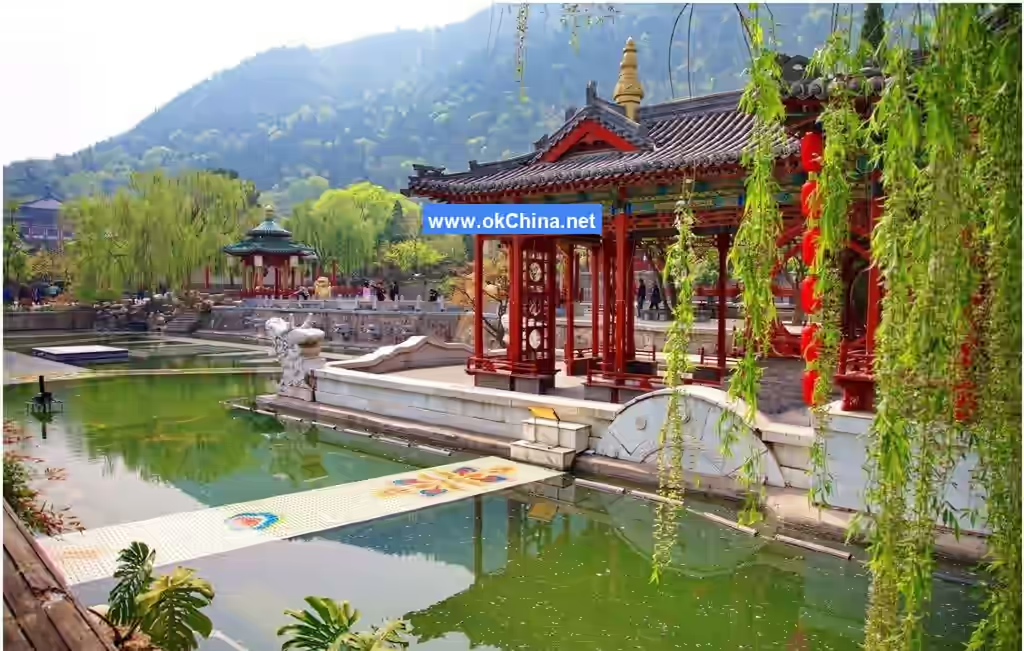
The Lotus Pond Scenic Area is located in the northern part of the garden, also the lowest point. The main gate of Huanyuan Garden is called the Wanghu Tower, built in the fourth year of the Guangxu reign of the Qing Dynasty (1878). It features a pavilion-style arch gate with a single-eave hip-and-gable roof covered in gray筒瓦, three bays wide, and three arches forming three doorways, exquisitely crafted and imposing. It connects eastward to the Efang Long Corridor, which encircles the garden, further enhancing its grandeur. When the Efang Long Corridor was built in the late Qing Dynasty, corridors were constructed on the walls, creating varying heights and forming enclosed spaces. In the center lies a lotus pond, with two structures built on it: the White Lotus Pavilion to the east and the Lotus Flower Pavilion to the west. The White Lotus Pavilion has a single-eave hip-and-gable roof. Originally, wooden bridges connected its north and south sides, called the "Zhi-character Bridge," but they were later destroyed. The Lotus Flower Pavilion resembles a boat in form. A single-arch brick bridge connects its central part to the White Lotus Pavilion, while its west side connects to the shore, creating a unique architectural layout of connected pavilion and boat on the lake, also继承 the late Qing garden style of "small pond, large pavilion." To the west of the lake are the Guifei Pool and Feixia Pavilion,供达官贵人沐浴 (for high-ranking officials and nobles to bathe).
3.2.2 Residential Area
The Residential Area is situated on the high platform at the southernmost end of the garden. The Five-Room Hall is the main building of Huanyuan Garden and an important living space. The Five-Room Hall features a single-eave hip-and-gable roof with gray筒瓦, has five bays, and is supported by thick red pillars under the front corridor eaves, hence its name. It was built in the 26th year of the Guangxu reign of the Qing Dynasty (1900). To the east, it connects to the Tongyin Pavilion, built in the fourth year of the Guangxu reign (1878), facing the Lotus Flower Pavilion. In front, there is an L-shaped long corridor built in the ninth year of the Republic of China (1920). An inscription records: "A small courtyard in the southeast, quiet and free from喧闹, twin paulownia trees cast shade, cool in summer and warm in winter, thus named: Tongyin Pavilion." To the west of the Five-Room Hall is the Three-Room Hall, and to the southwest is the Feixia Pavilion, forming a courtyard enclosed on three sides. The front of the courtyard offers an open视野, overlooking the entire garden.
3.2.3 Mountain游览 Area
The Mountain游览 Area is located on the eastern hillside. It connects to the Five-Room Hall to the east and the Efang Long Corridor to the northeast. The layout follows the natural mountain contours, with pavilions placed along the ridges and rocks left by the water's edge. There are over twenty坡路 (sloping paths), interconnected and arranged in an orderly yet varied manner, resembling a garden maze. A platform features the Feihong Bridge, with a base of three arches (large in the middle, small on the sides) and a single-eave flush gable roof,内部设有栏杆,供人栖息游览, leading to another scenic spot. On the mountain are built the Four-Corner Pavilion, Wanghe Pavilion, Chess Pavilion, and Stele Pavilion. A gate called Zhaoyang Gate is located to the east, connecting to the paths of Mount Li.
3.3 Xi'an Incident Historic Site—Five-Room Hall
The Xi'an Incident Historic Site is located within the Huaqing Pool Scenic Area, named after five connected single-room halls. Built in the late Qing Dynasty, Empress Dowager Cixi stayed here during her westward flight in the 26th year of the Guangxu reign (1900). It was renovated in the 23rd year of the Republic of China (1934), becoming a place for high-ranking officials to visit and rest. In October and December of the 25th year of the Republic of China (1936), Chiang Kai-shek visited Shaanxi twice, using Huaqing Pool as his "field headquarters" and staying in the Five-Room Hall, where he部署剿共计划, triggering the world-shocking "Xi'an Incident." To this day, the glass windows and walls of the Five-Room Hall旧址保留 bullet marks from the intense fighting during the incident's兵谏. The tables, chairs, beds, sofas, tea sets, stoves, carpets, telephones, etc., used in the offices of each room are displayed according to their original arrangements. On the mountainside behind the Five-Room Hall stands the "Bingjian Pavilion." This was where Chiang Kai-shek hid while fleeing to higher ground on Mount Li to avoid capture during the incident's attack on Huaqing Pool. He was later discovered by搜索部队, assisted下山, and sent to Xi'an. In 1982, the Xi'an Incident Historic Site Five-Room Hall was listed among the second batch of National Key Cultural Relics Protection Units.
3.4 Jiulong Lake Scenic Area
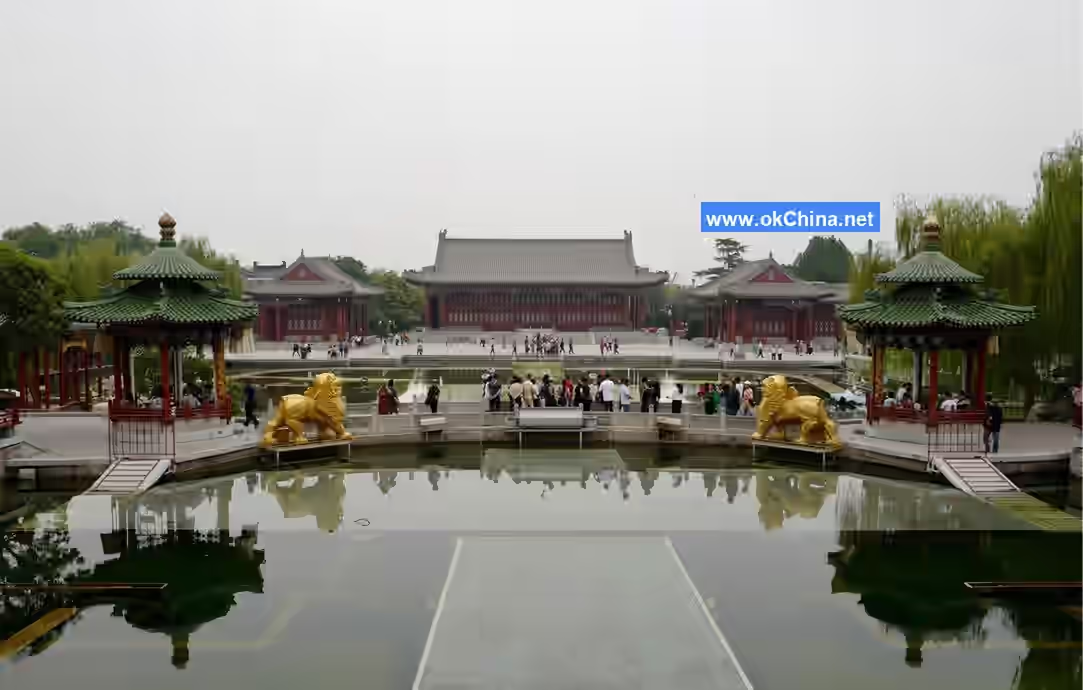
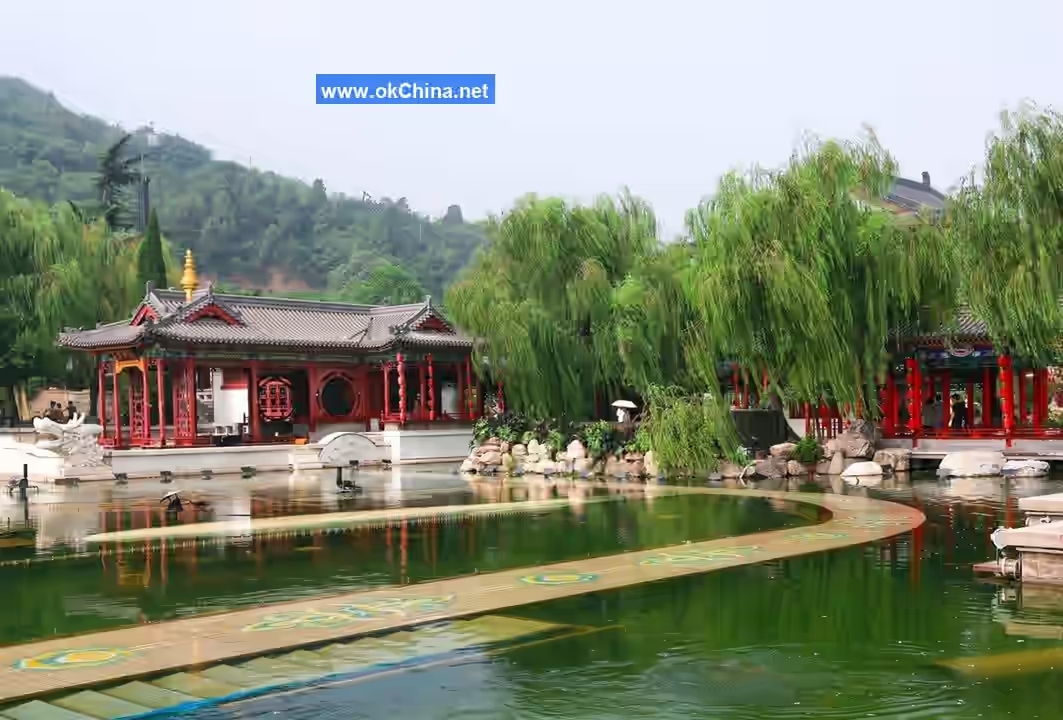
Jiulong Lake is located within the Huaqing Palace Scenic Area, adjacent to the Furong Lake Scenic Area. It is an artificial lake built in 1959—the Jiulong Lake Scenic Area. Covering an area of 530 square meters, Jiulong Lake is divided into upper and lower lakes, with a long causeway (Jiulong Bridge) running east-west across the middle. On the causeway, the Chenxu Pavilion is to the west and the Wanxia Pavilion to the east, corresponding to each other and complementing the Longyin Pavilion on the south bank of the upper lake. A large dragon head extends from beneath the Longyin Pavilion, with spring water gurgling from the dragon's mouth year-round, hence the name Longyin Pavilion. On the Jiulong Bridge, eight dragons spout water, which together with the large dragon head under the Longyin Pavilion make nine dragons, giving the area its name. Along the south and east banks of Jiulong Lake,仿唐宫殿 such as Chenxiang Hall, Feishuang Hall, Yichun Hall, and Yichun Pavilion are依次 built, primarily in red tones, complemented by green pines and cypresses,垂柳草坪. The shimmering碧波 of Jiulong Lake resembles a fairyland.对称殿宇 surround the lake, with蜿蜒廊庑, the dragon bridge横亘, and willow shade匝岸, creating a delightful scene. Emperor Xuanzong and Consort Yang Guifei regarded Huaqing Palace as their second imperial palace. The Tang-style building with upturned eaves, red walls, and green tiles—Feishuang Hall—was their爱巢寝殿. Every year from October to the end of the year, Emperor Xuanzong would accompany Consort Yang Guifei to bathe in Huaqing Pool, staying in this mysterious Feishuang Hall. It is said that in winter,漫天飞雪 was common here, but due to the underground hot springs at Huaqing Palace, the ground temperature was较高, causing rising heat to melt the snow into霜, hence the name "Feishuang Hall" (Flying Frost Hall).
3.5 Furong Garden Scenic Area
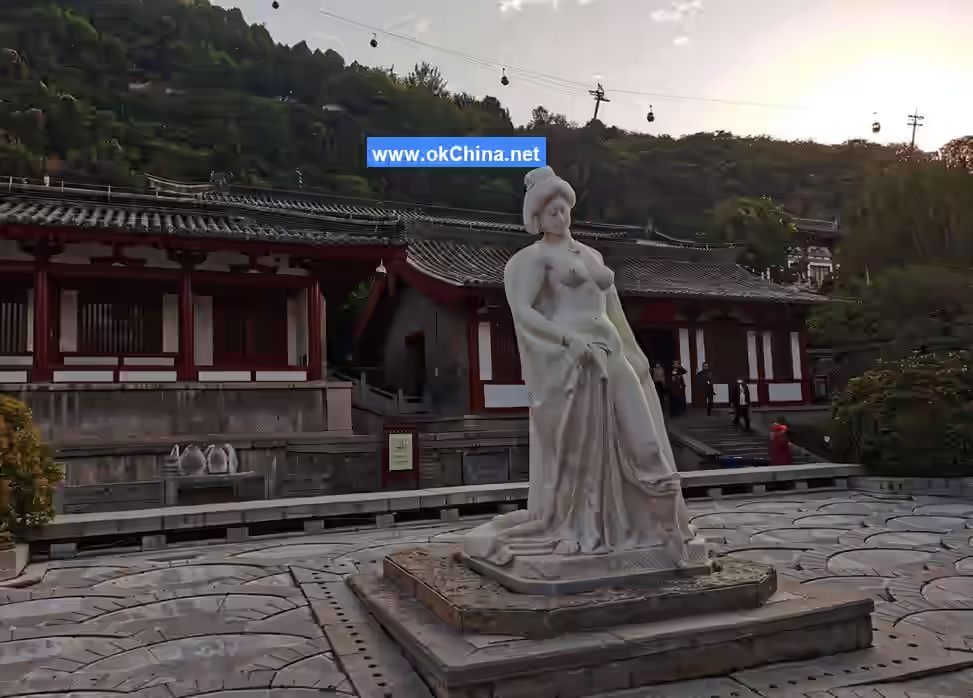
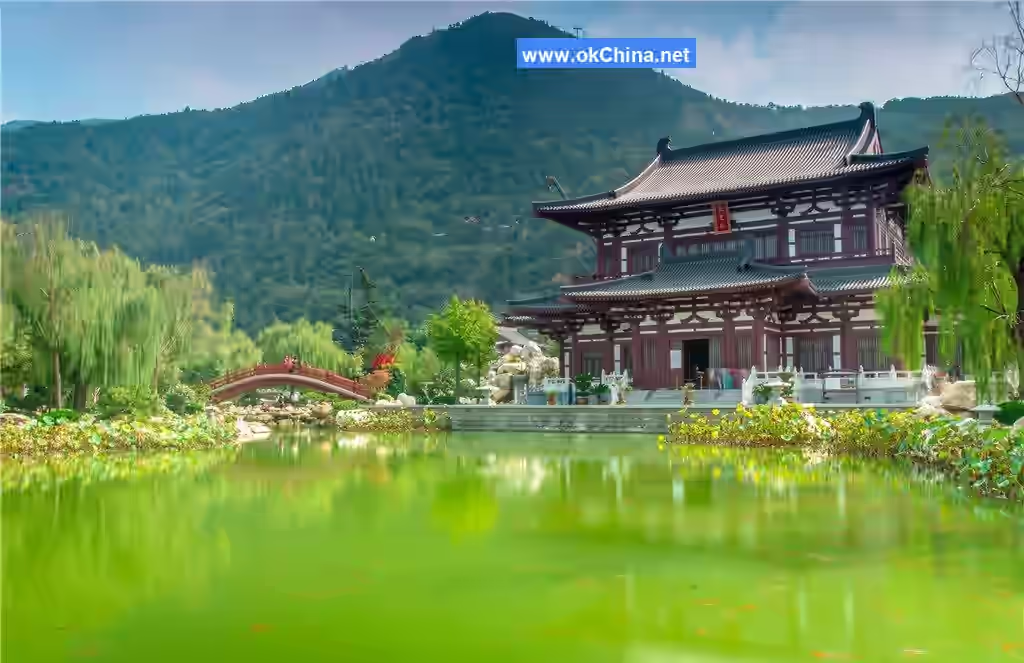
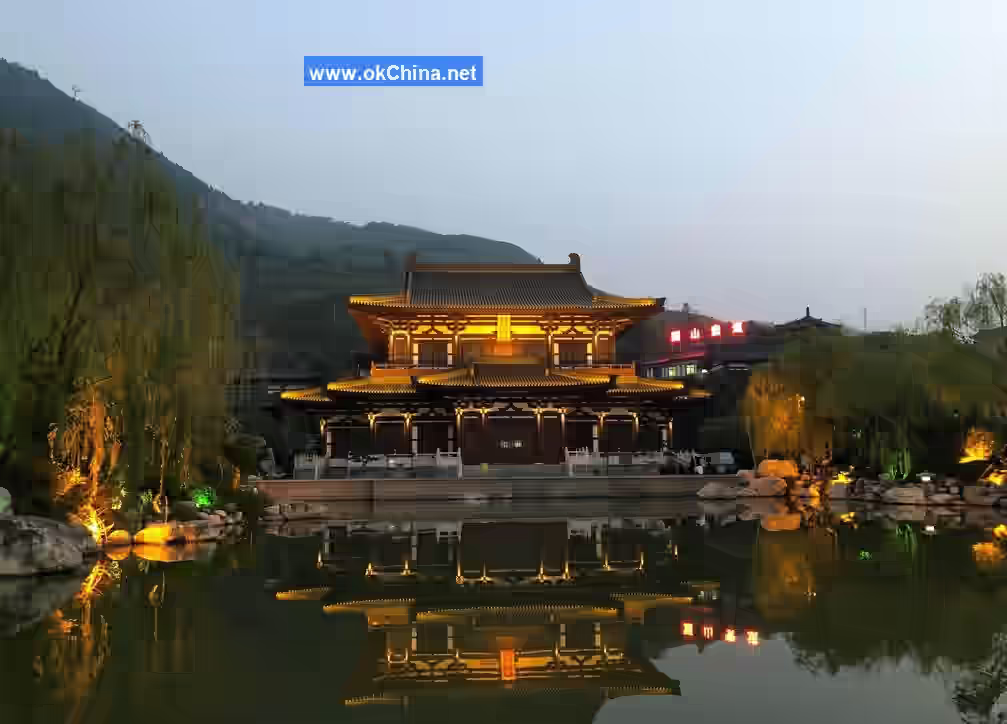
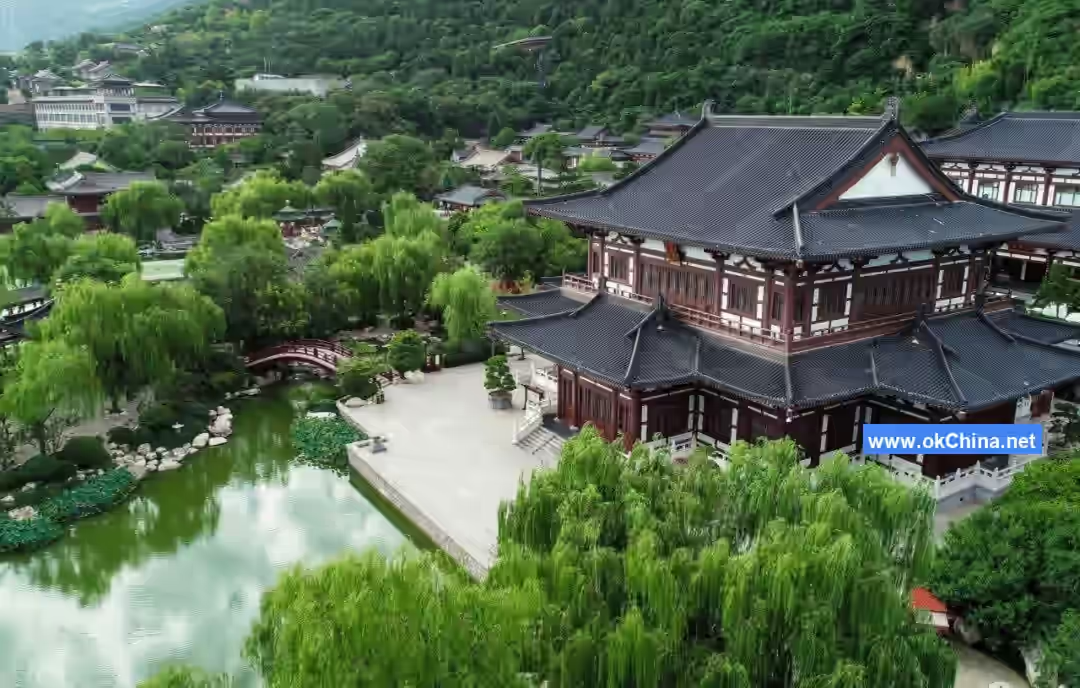
The Furong Garden restoration project at the Huaqing Palace Ruins is a key hot spring tourism project in Shaanxi Province. It was approved in 2000, and the first phase of construction officially began in June 2003. The project was divided into two phases. The first phase规划总占地面积32亩, with a total investment of nearly one billion yuan. On September 27, 2005, it was completed and officially opened to tourists, presenting a皇家园林区 rich in Tang Dynasty style and charm, primarily for "static" sightseeing. It added over ten new景观, including the "Changsheng Hall" associated with Emperor Xuanzong and Consort Yang Guifei's "七夕盟誓" (vows on the Double Seventh Festival), the Hot Spring Goddess Pavilion, Furong Lake, Debao Tower, Guolao Medicine Hall, Yuming Pavilion, and others.### 3.6 Tang Dynasty Pear Garden Ruins Museum During infrastructure construction in the Huaqing Pool scenic area in 1994, ruins of Tang Dynasty architecture were discovered. After more than two years of excavation by archaeological experts, it was confirmed to be the site of the Pear Garden of the Tang Dynasty Huaqing Palace, which served as the performance and lodging quarters for the emperor's accompanying imperial disciples. Over 800 cultural relics were unearthed from the site. The Pear Garden Ruins Museum was completed and officially opened to the public in 1996. After renovations in 2004 and 2017, it has become the only thematic ruins museum in China dedicated to the culture of the "Tang Pear Garden." The museum primarily presents the "Huaqing Pear Garden" of documented historical culture in a tangible, three-dimensional, and historically comprehensive manner, showcasing the small hot spring site of the Tang Huaqing Palace Pear Garden, the overall panorama of the ruins, and the unearthed artifacts.
3.7 Old Mother Hall
According to Han Chinese folklore, the Old Mother of Mount Li once refined stones here to mend the sky. During the reign of Emperor Xuanzong of Tang, she imparted the secret meanings of the Yinfu Jing to Li Quan at the foot of this mountain. After the Old Mother's ascension to immortality, people buried her on the southern side of Mount Li and built a Nüwa Temple on the second peak of Mount Li's Western Embroidered Ridge in her memory. Later generations gradually renamed it the Old Mother Hall.
3.8 Beacon Tower
The Beacon Tower is located on the first peak of Mount Li's Western Embroidered Ridge, the highest point of Mount Li and one of the highlights of the entire Mount Li scenic area, offering an excellent vantage point for enjoying the scenery. It is here that the historical story of King You of Zhou "playing with the beacon fires to amuse the nobles, losing the kingdom for a smile" took place. Legend has it that King You of Zhou was captivated by the unparalleled beauty Bao Si. After entering the palace, Bao Si never smiled. Finding this a flaw in her perfection, King You, to win a smile from his beloved, heeded treacherous advice and played with the beacon fires to summon the nobles. King You's actions enraged the Marquis of Shen, who allied with the Quanrong tribe to besiege the capital from three sides. When King You then ordered the beacon fires to be lit again on Mount Li, the nobles, thinking the Son of Heaven was joking once more, refused to mobilize their troops. Consequently, the Zhou kingdom fell.
4. Cultural Background
4.1 Legends
As far back as three thousand years ago during the Western Zhou period, the area around Huaqing Palace had already become a favored excursion site for the Zhou Son of Heaven. The hot spring at that time was named "Star Pond." Records of the Three Qin states: "During the early reign of the First Emperor, stones were laid and buildings erected, naming it the Mount Li Hot Spring. Emperor Wu of Han later enhanced its adornment."
4.2 Historical Evolution
In the fourth year of the Tianhe era of Emperor Wu of Northern Zhou (569 AD), the Grand Steward Yuwen Hu was ordered to construct the Imperial Hot Spring Stone Well. In the third year of the Kaihuang era of Emperor Wen of Sui (583 AD), a thousand pines and cypresses were planted in rows, and buildings were constructed. By the Tang Dynasty, it had gradually developed into a large-scale complex. In the eighteenth year of the Zhenguan era of Emperor Taizong of Tang (644 AD), General Jiang Xingben of the Left Guard and Chief Architect Yan Lide were ordered to build palaces and pavilions, which were bestowed the name "Hot Spring Palace." The Imperial Encyclopedia records: "On the Wuxu day of the first month in the twenty-second year of Zhenguan (648 AD), the Emperor visited the hot spring. On the Guimao day, he personally composed a stele inscription to show his ministers." In the second year of the Xianheng era of Emperor Gaozong of Tang (671 AD), it was renamed the "Warm Spring Palace." Huaqing Palace, located on Mount Li, was also called Mount Li Palace or Li Palace. Bai Juyi's poem "The Lofty Li Palace" states: "The Li Palace is lofty, reaching into the clouds." Mount Li is as splendid as brocade and embroidery, also known as Embroidered Ridge. The palace, named after the mountain, was also called Embroidered Ridge Palace. Tang poets such as Cui Tu, Li Shangyin, and Cui Daorong, when writing poems about Huaqing Palace, all used "Embroidered Ridge Palace" as the title.
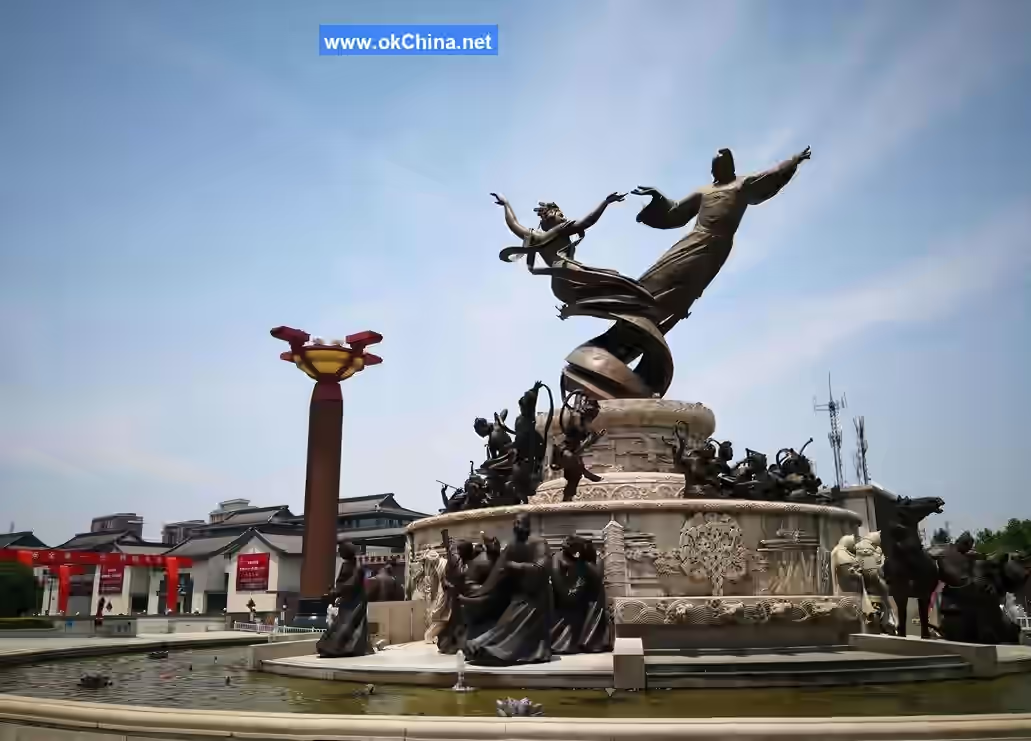
Huaqing Palace reached its peak after Emperor Xuanzong of Tang ascended the throne. Emperor Xuanzong devoted great effort to building such a grand detached palace and visited here almost every October, not returning to Chang'an until the end of the year. Hence the famous line: "On the first day of the tenth month, the Son of Heaven arrives; the imperial road with green ropes is free of dust." According to the Qianlong edition of the Lintong County Annals, over the 40 years from the second year of Kaiyuan (714 AD) to the fourteenth year of Tianbao (755 AD), he visited Huaqing Palace 36 times, sometimes twice a year, with countless unofficial excursions in between. The scale of these visits was immense: "Thousands of chariots and myriad banners covered the plains; clouds, mist, grass, and trees shone upon each other." "Eighty-one carriages and thousands of riders; feasts in the morning and gifts in the evening." This effectively moved the government offices of Chang'an to Mount Li, forming a new city centered around Huaqing Palace. After the An Lushan Rebellion, the political situation changed drastically, and Emperor Xuanzong finally fell from the imperial throne. The royal visits to Huaqing Palace rapidly declined, and emperors of subsequent dynasties after the Tang seldom visited.
During the Tianfu era of Emperor Gaozu of Later Jin, the damaged Huaqing Palace was "renamed Lingquan Taoist Temple" and bestowed upon Taoist priests. During the Song Dynasty, "the halls and pavilions of the hot spring site became overgrown with thick grass," and the buildings were in great disrepair. Song people could only "carve a map of the old palace on stone" based on the remains of Huaqing Palace, allowing later generations to know of its former glory during the Tang Dynasty. Before the second year of the Zhongtong era of Emperor Shizu of Yuan (1261 AD), people like Zhao Zhigu organized folk efforts to renovate Huaqing Palace over 15 years, constructing eight main halls including the Sanqing Hall, the Chaoyuan and Chongming Pavilions, and hot spring pools like the Nine Dragons and Hibiscus (according to the Qianlong edition of the Lintong County Annals). It later gradually fell into decline again. In the winter of the forty-second year of the Kangxi era of Emperor Shengzu of Qing (1702 AD, eleventh month), during his western tour, he also renovated Huaqing Pool (the original Huaqing Palace) and "stayed at the hot spring." During the Republican period, there were several renovations, but the ancient architecture preserved at Huaqing Pool and Mount Li largely retained the layout from the early Qing reconstruction. By the time before liberation, the hot spring pools were desolate, the palaces sparse, presenting a scene of decay.
After liberation, the People's Government undertook large-scale expansions starting in 1959, opening hot spring pools, repairing palace buildings, constructing guesthouses, and creating gardens, rejuvenating the ancient Huaqing Palace and transforming it into a recreational site for the people.
Comments
Post a Comment