Huangyao Ancient Town
1. Introduction
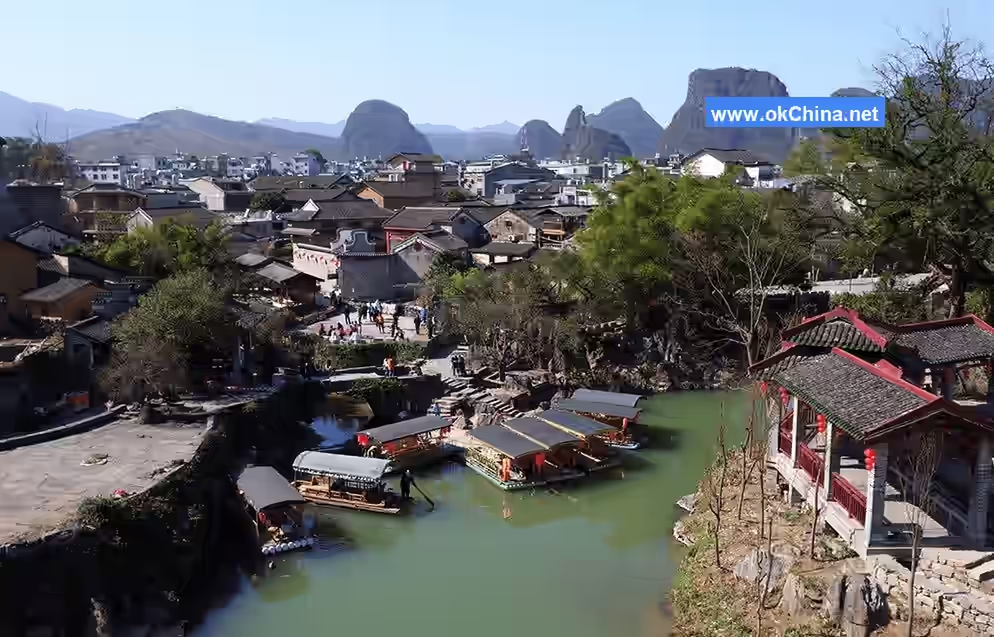
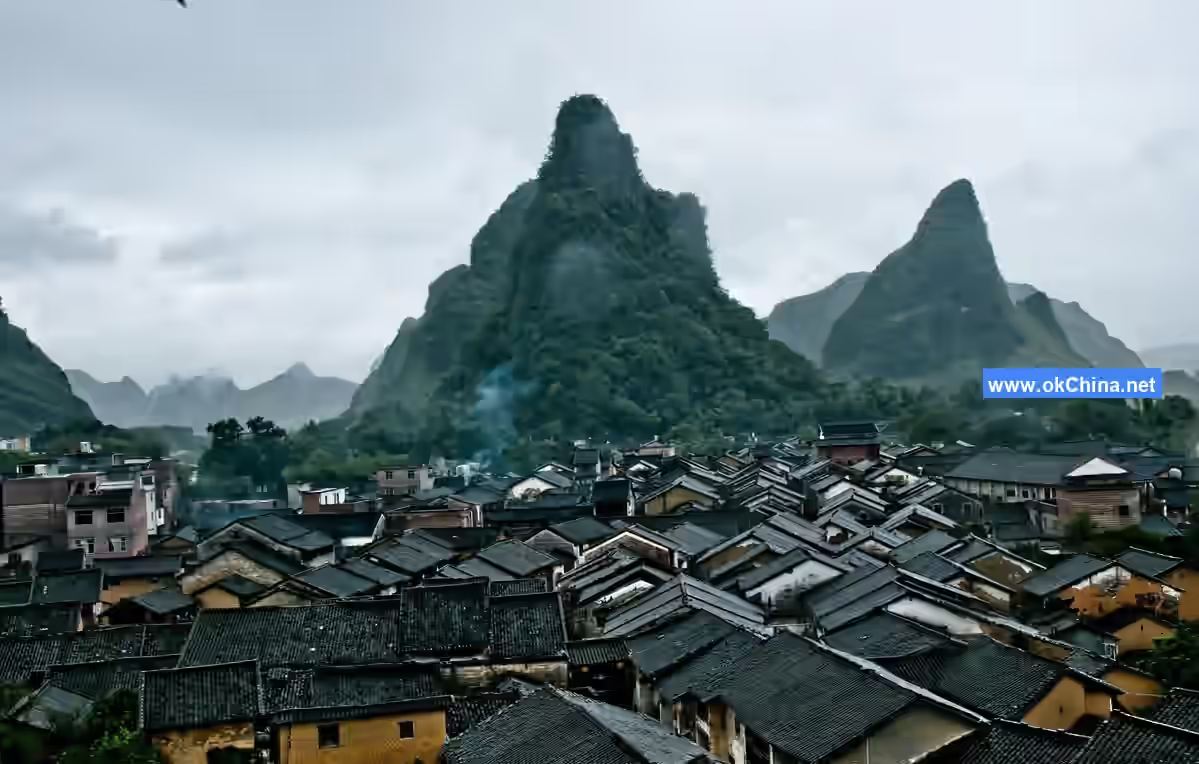
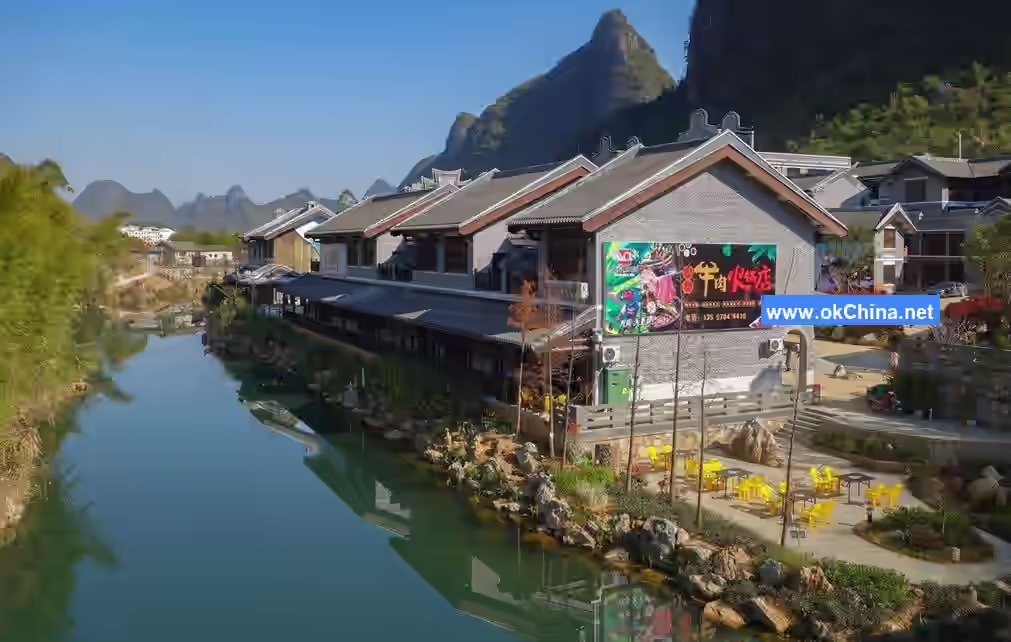
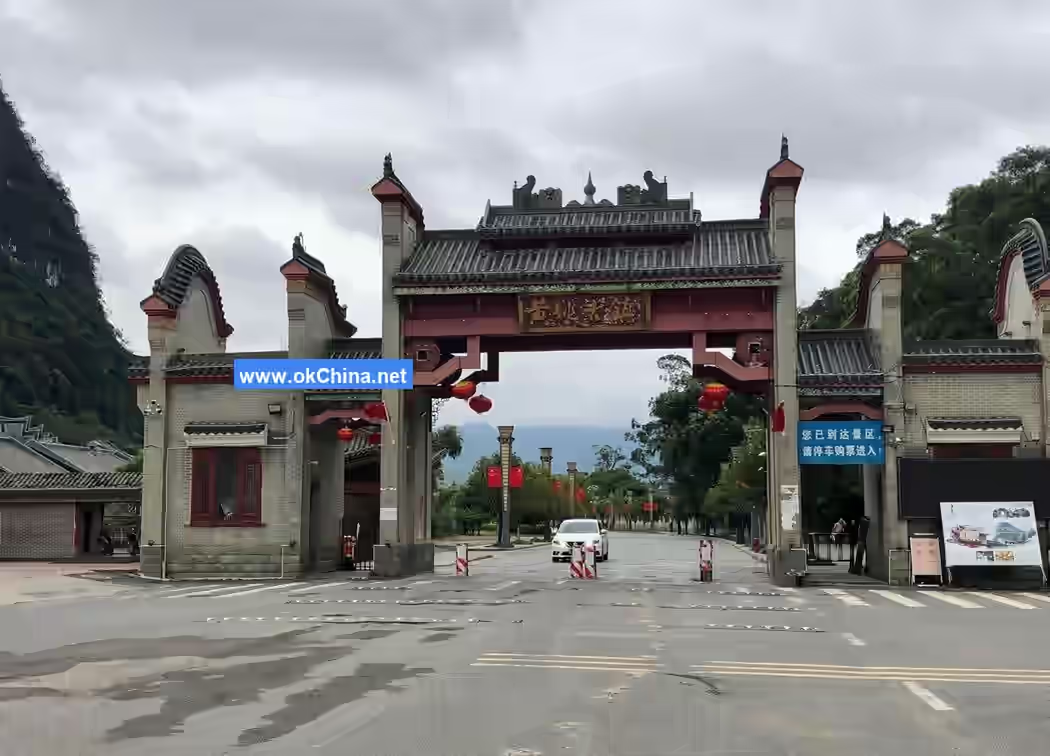
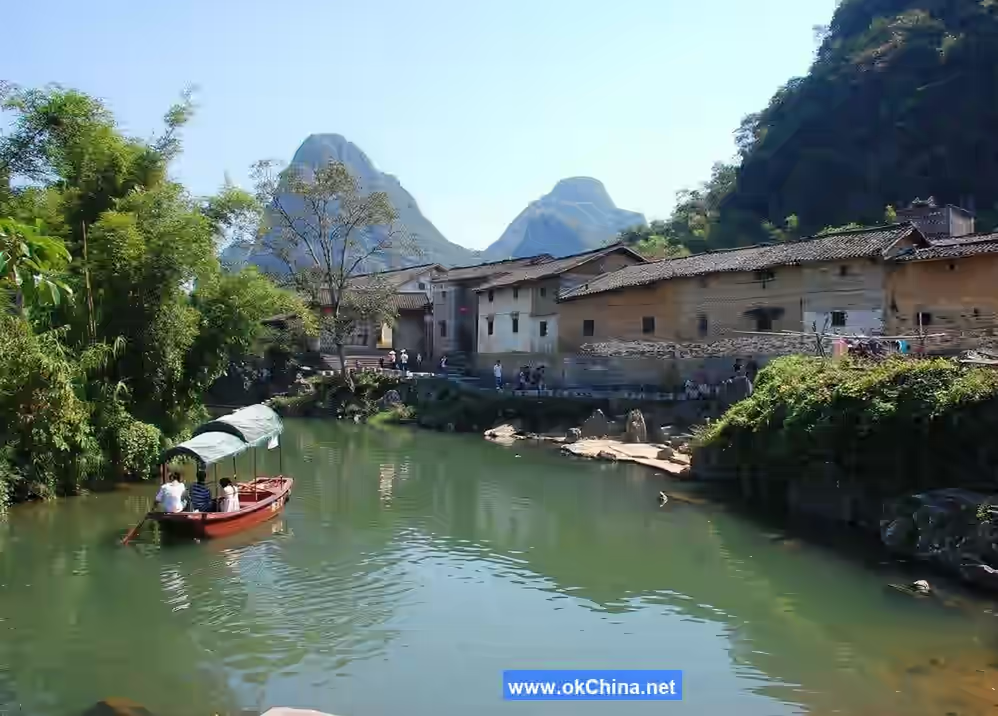
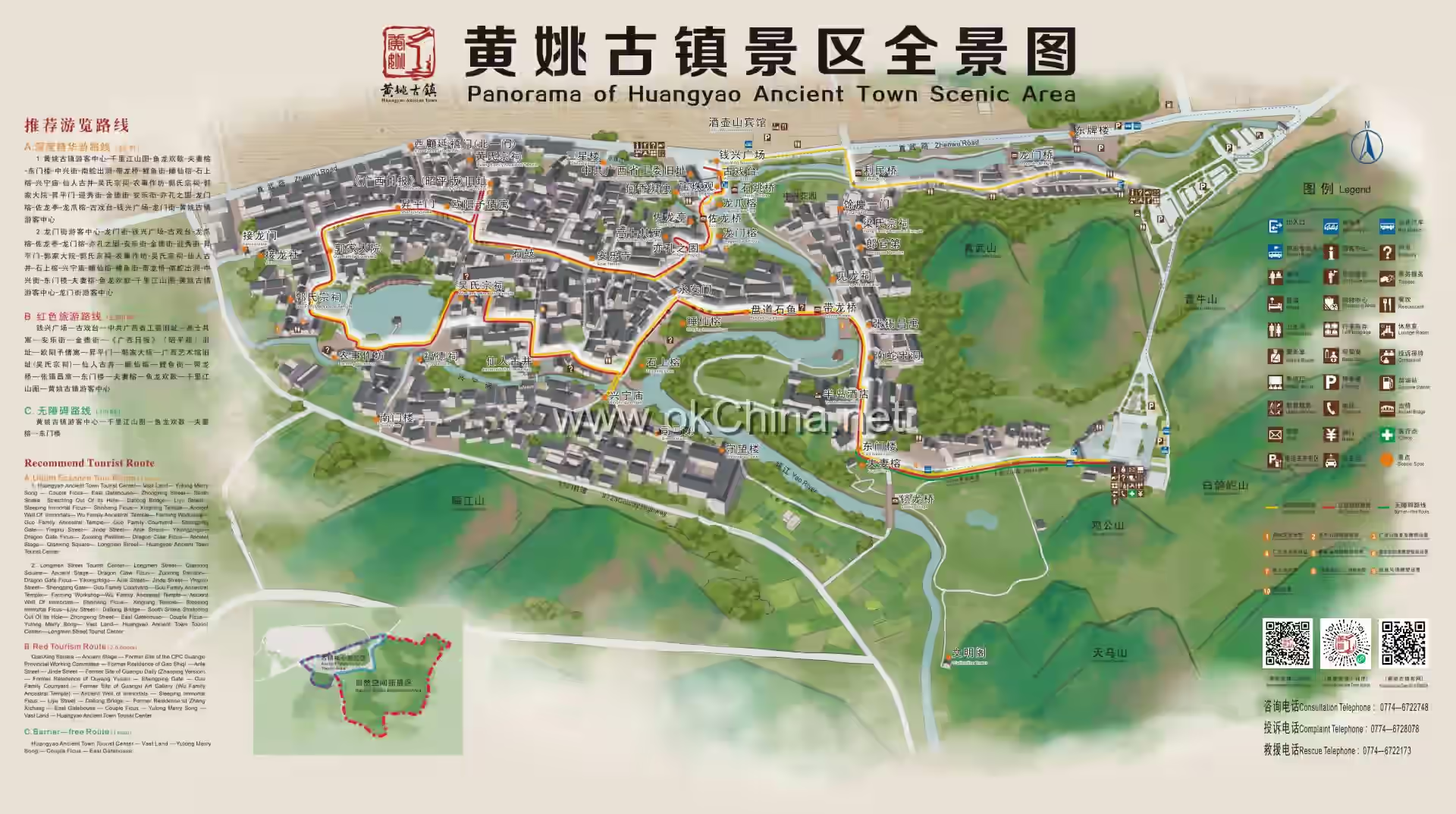
The Huangyao Ancient Town scenic area is located in the northeastern part of Zhaoping County, Hezhou City, Guangxi Zhuang Autonomous Region, approximately 60 kilometers from downtown Hezhou. Covering an area of 3.2 square kilometers, it is a millennium-old town that perfectly blends Lingnan culture with karst mountain and water landscapes. The town originated during the Kaibao era of the Song Dynasty, underwent construction during the Ming Dynasty, flourished in the Qing Dynasty, and later became the revolutionary command center of Guangxi and the birthplace of the Guangxi Democratic League during the late Anti-Japanese War period.
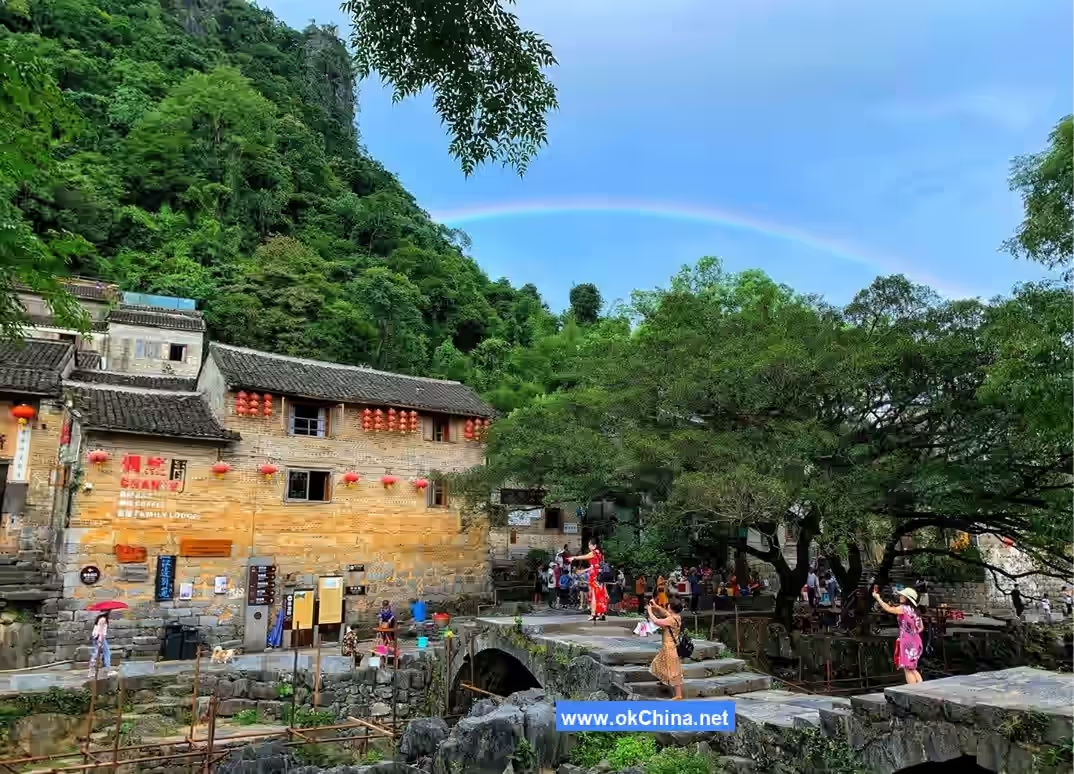
The ancient town is renowned worldwide for its typical karst landscapes, mysterious dragon worship culture, exquisite Ming and Qing architecture, authentic Guangfu folk customs, and glorious revolutionary historical sites. The small bridges over flowing water, towering ancient banyan trees, bluestone ancient streets, and inscribed couplet plaques are known as the "Four Wonders of Huangyao," hailed as a model of the integration of culture and natural scenery. It has successively earned titles such as "China's Most Valuable Ancient Town for Tourism," "China's Famous Historical and Cultural Town," "National Characteristic Landscape Tourism Town," and "China's Ancient Town of Couplet Culture."
2. Main Attractions
2.1 Dailong Bridge
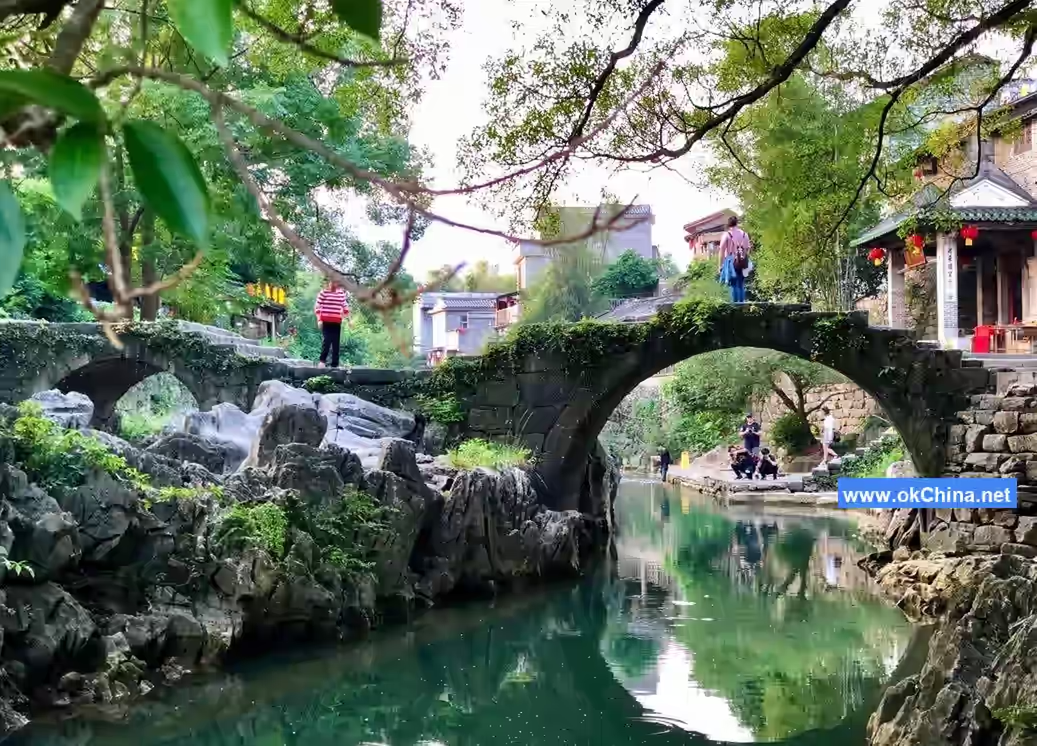
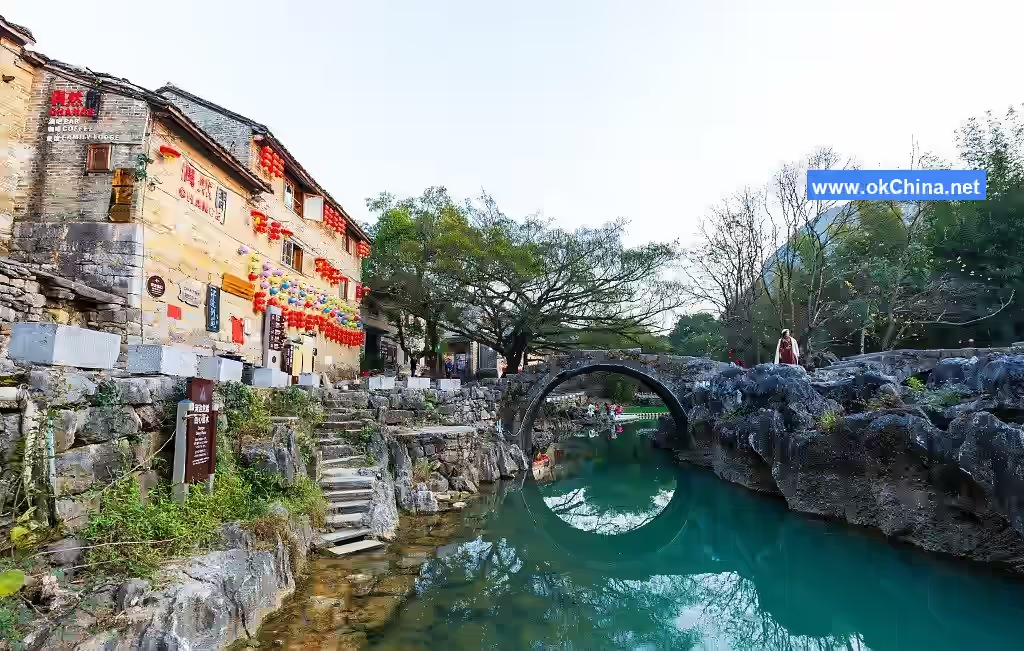
Dailong Bridge, first built in the fourth year of the Wanli era of the Ming Dynasty, is the largest stepped stone arch bridge in the ancient town, connecting Liyu Street and Zhongxing Street. Its construction technique using iron-riveted stone beams and its flood discharge design with two openings (for both high and low water levels) make the bridge both scientifically sound and aesthetically pleasing. Legend has it that the bridge was built by the local people to channel the dragon energy from Zhenwu Mountain to Liyu Street, hence the name "Dailong" (Bringing the Dragon).
2.2 Zuolong Bridge and Zuolong Pavilion
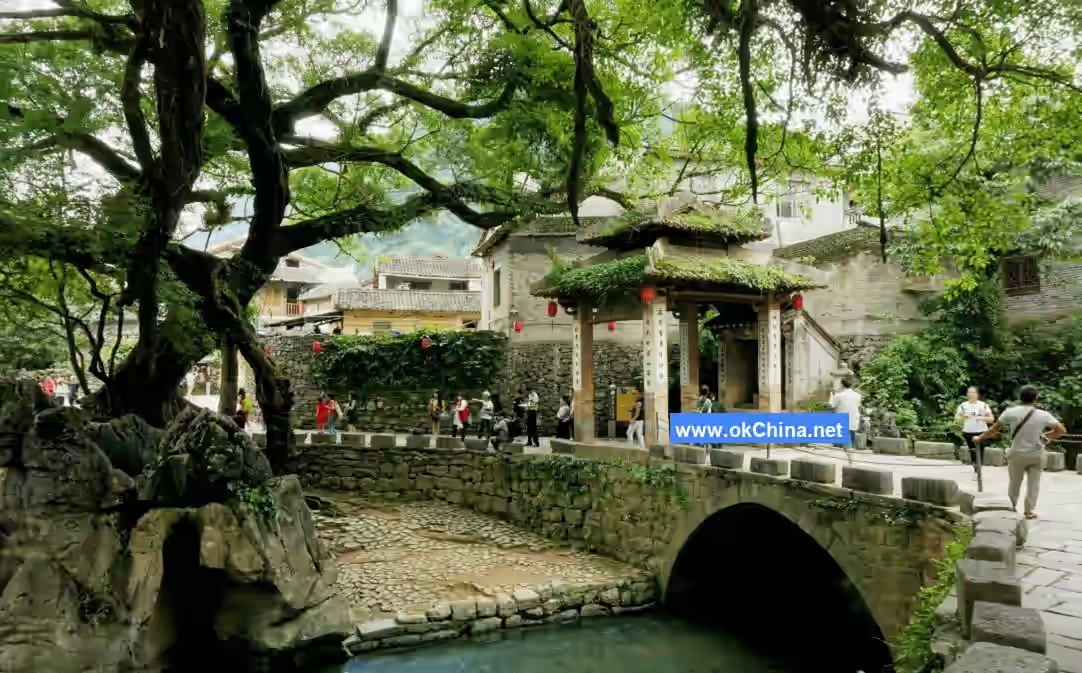
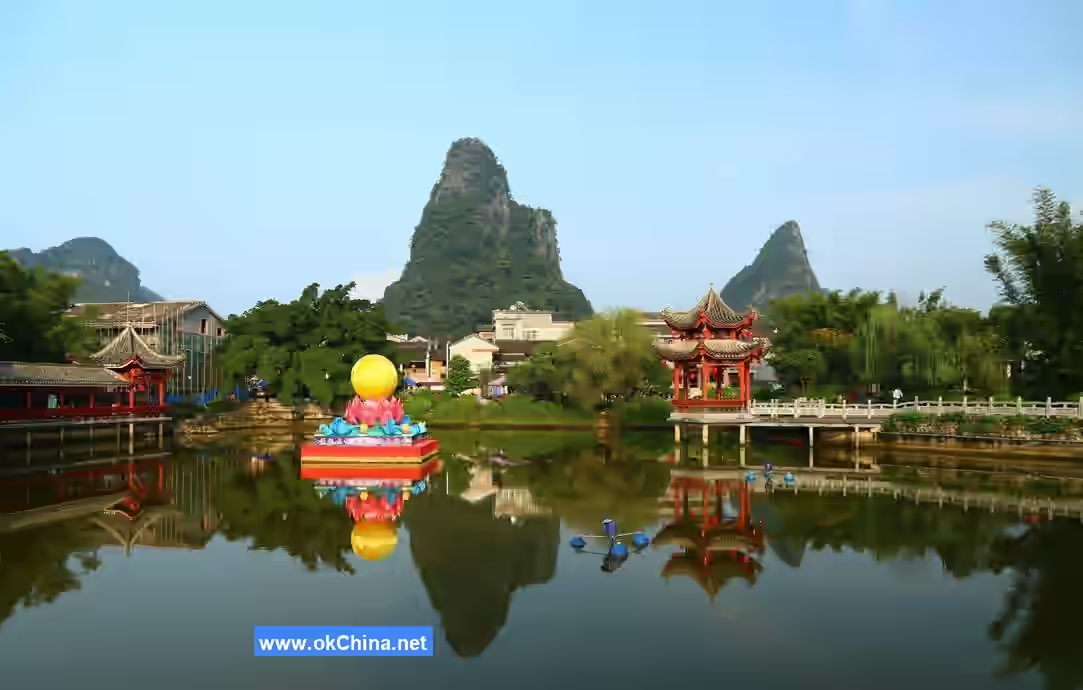
Both Zuolong Bridge and Zuolong Pavilion were first built in the second year of the Qianlong era of the Qing Dynasty (1737). The Zuolong Pavilion, a square pavilion with double eaves, stands right at the head of Zuolong Bridge. Its inscribed plaque reads "Wei Er You Shen" (Only You Are Divine), a phrase originating from the Book of Documents. The pavilion's ceiling is decorated with four patterns symbolizing "Blessings from All Directions." Behind the pavilion, the Zuolong Shrine venerates the Earth God and Earth Goddess.
2.3 Stone Jumping Bridge
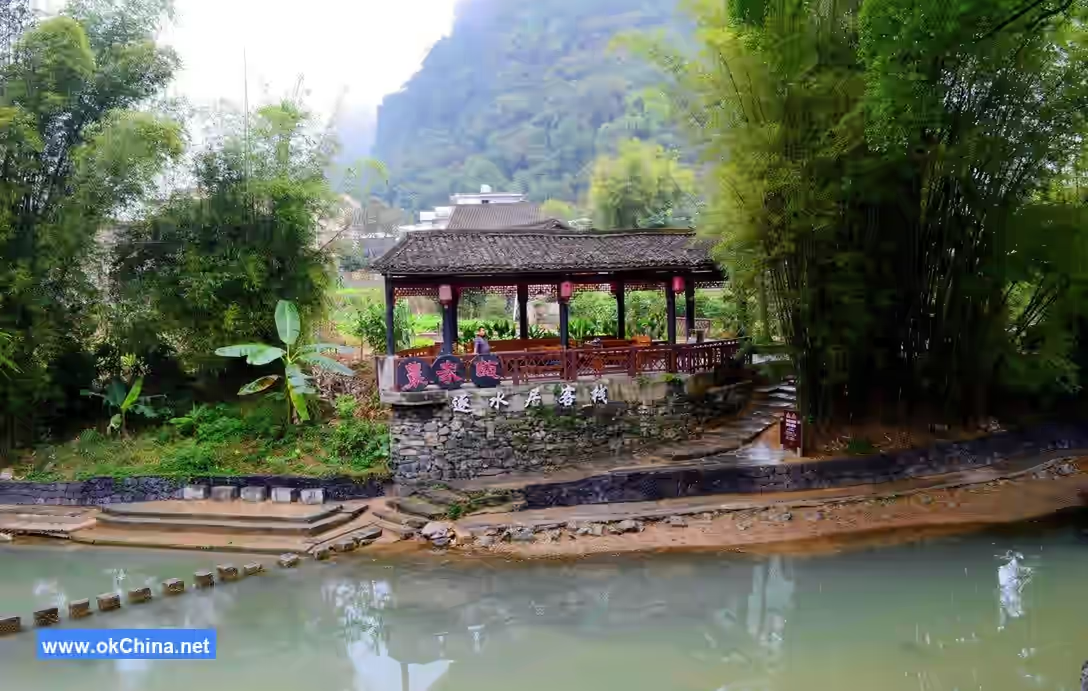
The Stone Jumping Bridge, also known as the "Dingbu Bridge," gets its name because pedestrians need to lightly jump across its piers. Built in the 16th year of the Jiaqing era of the Qing Dynasty (1811), it is 19 meters long with 31 stepping piers, facilitating pedestrian crossing without hindering flood discharge.
2.4 Suolong Bridge
Suolong Bridge, with "Suolong" meaning "locking the dragon," symbolizes locking in dragon energy and wealth. The ancestors of Huangyao believed that the Yao River channel was the passage for the divine dragon to enter and exit the town. To prevent the auspicious energy brought by the dragon from dispersing after entering the town via the Bao Zhu River at the foot of Zhenwu Mountain, they built Suolong Bridge at the southern exit of the Yao River to lock in the dragon energy and protect the local people.
2.5 Special Stamp "Ancient Towns of China (Second Series)"
On May 19, 2016, China Post issued the special stamp series "Ancient Towns of China (Second Series)," which included Huangyao Ancient Town for its long history and beautiful scenery. The stamp design is based on real scenery, employing pen-and-ink outlines with light coloring. The delicate engraved lines depict representative landscapes of Huangyao, fully reflecting the town's profound history, cultural heritage, and picturesque scenery.
2.6 Dragon Gate Banyan
The Dragon Gate Banyan, over 800 years old, is named for its gnarled and intertwined branches forming an archway-like shape and its location beside Zuolong Bridge. Under the tree lies a peculiar stone resembling a leaping carp, which together with the banyan creates the natural spectacle of "A Carp Leaping Over the Dragon Gate," a sight that amazes visitors.
2.7 Dragon Claw Banyan
The Dragon Claw Banyan, over 850 years old, is one of the oldest banyan trees in the ancient town. Its name comes from its branches hanging down from mid-air, resembling a dragon's claw extended from the heavens. The drooping branches, which look like a dragon's claw, have long withered and hang down due to the entanglement of aerial roots and vines, while the main trunk remains vibrant, having witnessed the rise and fall of the entire ancient town.
2.8 Sleeping Immortal Banyan
The Sleeping Immortal Banyan is over 500 years old. Legend has it that when the "Eight Immortals" traveled here, they were so captivated by the extraordinary mountains and waters that they indulged in drinking and became thoroughly intoxicated. Among them, Lü Dongbin fell asleep on this tree. When he awoke, the tree had grown into a reclining shape matching his sleeping posture, hence the name.
2.9 Rock Banyan
Located on the west bank of the Yao River, the Rock Banyan is nearly a century old and gets its name from taking root directly on a rock. Its remarkable vitality makes it a wonder in Huangyao Ancient Town. Because its roots are entangled on the rock, making nutrient absorption difficult, the tree remains small and delicate in form.
2.10 Couple Banyan
Located in front of the East Gate Tower, the Couple Banyan is over 300 years old. It appears to be a single large tree but is actually two banyan trees growing together, closely entwined like a loving couple, hence the name. It is also a rare "color-changing banyan"; during severe droughts or floods, its leaves turn yellow in spring. By observing the color change of the leaves, locals could predict the weather for the year and take preventive measures in advance.
2.11 Bluestone Ancient Streets
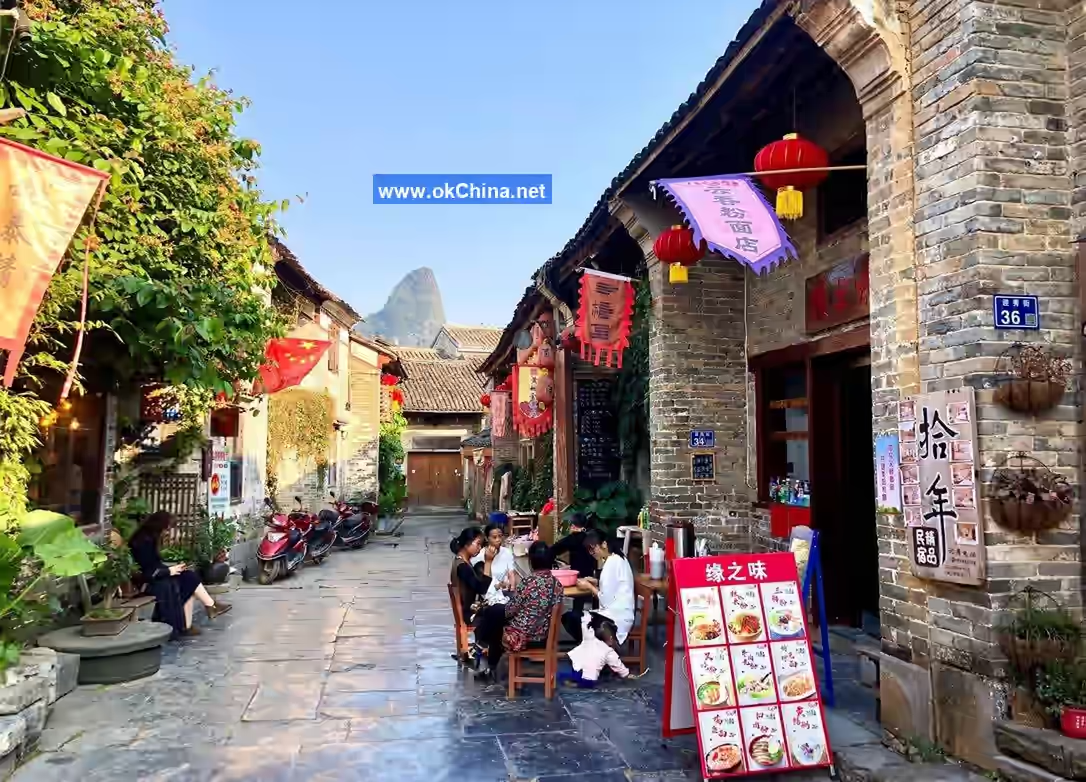
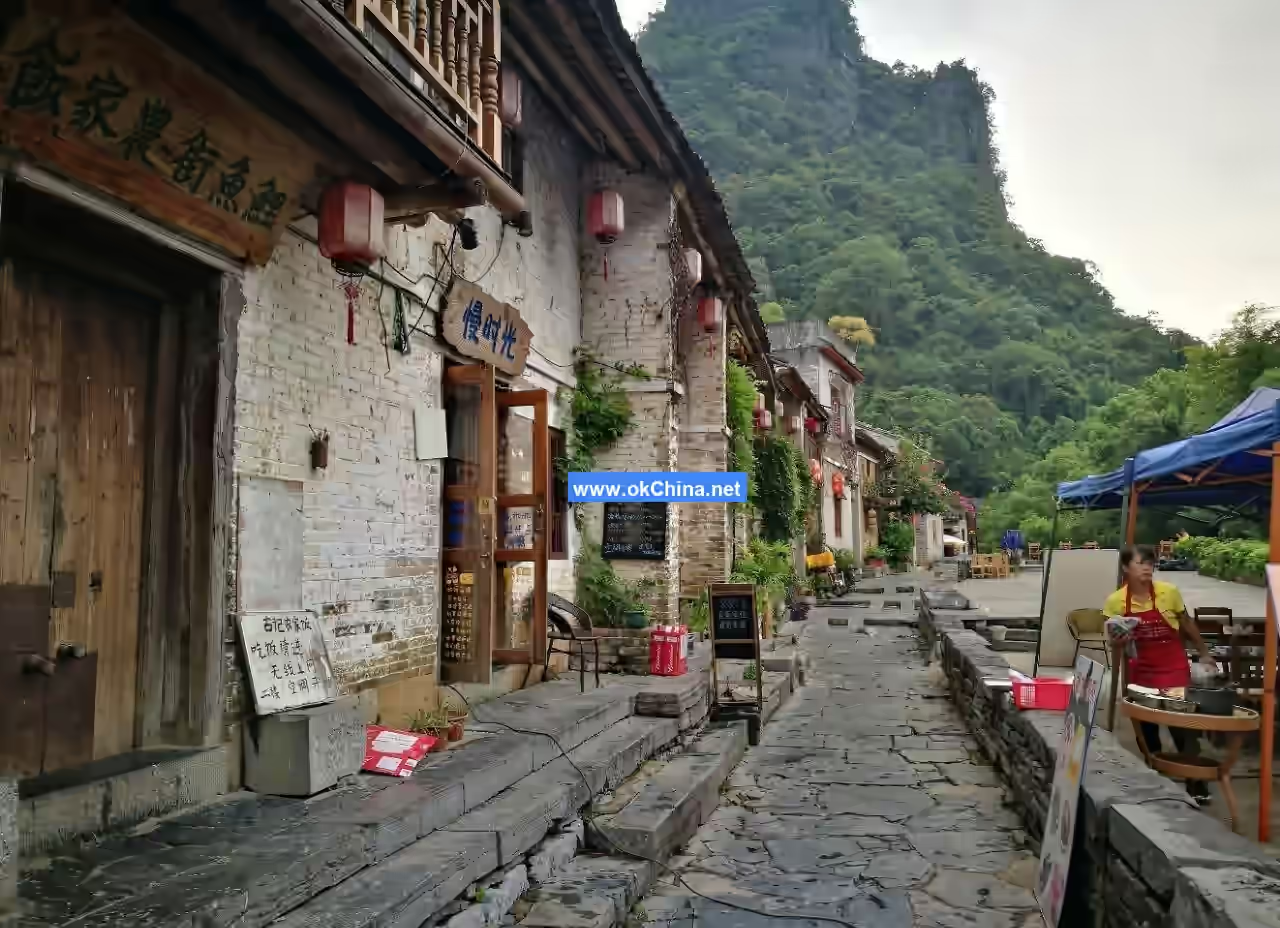
The bluestone ancient streets were paved during the Shunzhi era of the Qing Dynasty. The town has eight main streets totaling about 3 kilometers in length. The stone slabs are fitted together tightly without any adhesive, relying solely on precise sizing. Beneath each street are interconnected drainage channels that carry rainwater out of the town. The streets intersect at T-junctions, symbolizing prosperity in both family and wealth. The construction craftsmanship of the bluestone streets fully demonstrates the ingenuity and wisdom of the artisans and is hailed as one of Huangyao's wonders.
2.12 Anle Street
Anle Street, located in the central part of the ancient town, is named after the Anle Temple, implying peaceful living and prosperous work. Its prosperity began in the first year of the Jiaqing era of the Qing Dynasty (1796). It is one of the town's main commercial districts, lined with shops and bustling with activity.
2.13 Jinde Street
Jinde Street, located in the central part of the ancient town, connects to Anle Street. During the prosperous Ming and Qing periods, Huangyao was a gathering place for merchants with numerous shops. The merchants treated people with honesty and sought wealth through virtue, hence the name "Jinde" (Gold Virtue). The spirit of "Jinde" became a reflection of the Huangyao spirit. Currently, it is the best-preserved ancient street of Ming and Qing architecture in the town. Many films and TV dramas have been shot here, such as New Heroic Tiger's Courage, Beautiful South, and Back to Field.
2.14 Yingxiu Street
Yingxiu Street, located in the middle section of Huangyao Street, is the widest street in the ancient town, with the widest point reaching 5 meters. Historically, those coming to Huangyao from Zhaoping County would enter the town via the West Gate Tower and this street. Legend has it that when the street was completed, someone who had just passed the imperial examination at the county level (xiucai) returned from the county town, so the street was named "Yingxiu" (Welcoming the Scholar).
2.15 Tianran Street
Tianran Street is named for its proximity to Jielong Gate to the west and its closeness to Tianran Bridge. The street layout within the ancient town is a typical "comb structure," meaning there is a main street in the central part of the town, with other streets and alleys of various sizes connecting to it, much like the teeth of a comb. This main street, from west to east, consists of Tianran Street, Yingxiu Street, Jinde Street, Anle Street, and Liyu Street.
2.16 Liyu Street
Liyu Street (Carp Street) is one of the main streets in the central part of the ancient town. It is named after a protruding stone in the street resembling a carp about two feet long. Remarkably, neither the elderly nor children have ever tripped or sprained their ankles on it, earning it the name "Pandao Shiyu" (Coiled Path Stone Carp).
2.17 Longpan Street
Longpan Street derives its name from the local people's traditional belief in dragons. They believed that the high Zhenwu Mountain was the dragon's lair, and the river channel at its foot was the passage for the divine dragon. This road built along the bank of the Yao River is thus called Longpan Street (Dragon Bank Street). According to statistics, there were once as many as 13 scenic spots with "dragon" in their names in the ancient town, and eight of these historical sites remain preserved today.
2.18 Ancient Stage
The Ancient Stage, first built in the third year of the Jiajing era of the Ming Dynasty (1524), is a single-eave, hip-and-gable roof stage with eight pillars in a pavilion style. It is also the only ancient stage in Huangyao Ancient Town. The stage consists of a front stage and a backstage area, forming a "凸"-shaped plan. It is exquisitely decorated with elegant couplets inscribed by famous scholars, making it a representative historical building in Huangyao. Traditional operas performed here include Guiju (Guangxi Opera) and Caidiao. During the Anti-Japanese War period, the famous Chinese dramatist Ouyang Yuqian performed on this stage.
2.19 Baozhu Temple
Baozhu Temple, first built in the third year of the Jiajing era of the Ming Dynasty (1524), is a representative ancient building of Huangyao Ancient Town. It is named for its location at the foot of Baozhu Mountain. The temple has been renovated multiple times throughout history and currently covers an area of about 2 mu. Its main structure is a three-bay, two-courtyard complex consisting of a front hall, main hall, courtyard, corridors, and other buildings. The temple venerates both the "Northern Emperor Lord" — Zhenwu the Great — as well as Sakyamuni Buddha and Guanyin Bodhisattva, making it a temple that combines Buddhism and Taoism. It is also the main venue for Huangyao's traditional March 3rd sacrificial activities.
2.20 Jianlong Shrine
Jianlong Shrine is located northwest of Dailong Bridge, backed by Zhenwu Mountain and facing the Yao River. It consists of a shrine and a square pavilion, venerating the Earth God and Earth Goddess for protection and peace. The couplet at the shrine, "Sitting long, one does not notice the red sun's arrival; Idle, one smiles at the white clouds' busyness," captures a glimpse of the leisurely life of Huangyao's people.
2.21 Xingning Temple
Xingning Temple was first built during the Wanli era of the Ming Dynasty and renovated in the 20th year of the Qianlong era of the Qing Dynasty (1755). It is located at the confluence of the Yao River and the Xingning River. The temple primarily venerates Zhenwu the Great, the Northern Emperor. In front of the temple stands a pavilion. The plaque directly above it, reading "Qie Zuo Chi Cha" (Sit and Have Tea), was inscribed by the local provincial graduate Lin Zuojin during the Qianlong period. It is a true portrayal of the leisurely life at that time and has been included in the book Famous Plaques of China. The overall layout embodies the characteristic of Huangyao's ancient architecture: "Where there is a mountain, there must be water; where there is water, there must be a bridge; where there is a bridge, there must be a pavilion; where there is a pavilion, there must be a couplet; where there is a couplet, there must be a plaque."### 2.22 Sima Mansion Sima Mansion is a representative work of official residences in Huangyao Ancient Town. Its owner, Mo Airan, served as the Assistant Prefect of Zhili Province during the Qing Dynasty and was known as "Mo Sima," hence the name "Sima Mansion" for this Mo family house. It is a three-bay, three-courtyard style building, with its foundation nearly one meter above ground level, truly deserving the name "high gate and grand household." The main hall in the rear section is about 70 centimeters higher than the front section, symbolizing the official family's wish for "continuous promotion and success."
2.23 Anle Temple
Anle Temple is a temple dedicated to Li Daoqing, the first chieftain who opened up Huangyao. In the 26th year of the Wanli era of the Ming Dynasty (1598), a local rebellion broke out. Li Daoqing led troops to quell the rebellion and reclaimed wasteland for cultivation in Huangyao, achieving remarkable feats. During the Shunzhi era of the Qing Dynasty, the people of Huangyao built this temple to commemorate him and named it Anle Temple.
2.24 Yikongzhigu
Yikongzhigu is one of the important gate towers in the ancient town. Built in the early Qing Dynasty, its name is derived from the Book of Songs: "Heaven protects and secures you, making it extremely firm." It means that heaven blesses the stability here, making it naturally very secure. This gate tower is a two-story structure, with the upper floor serving as a lookout post and the lower floor as a passage gate. In the ancient town, gate towers of this structure are often placed at the outer exits of main streets, providing strong defensive functions.
2.25 East Gate Tower
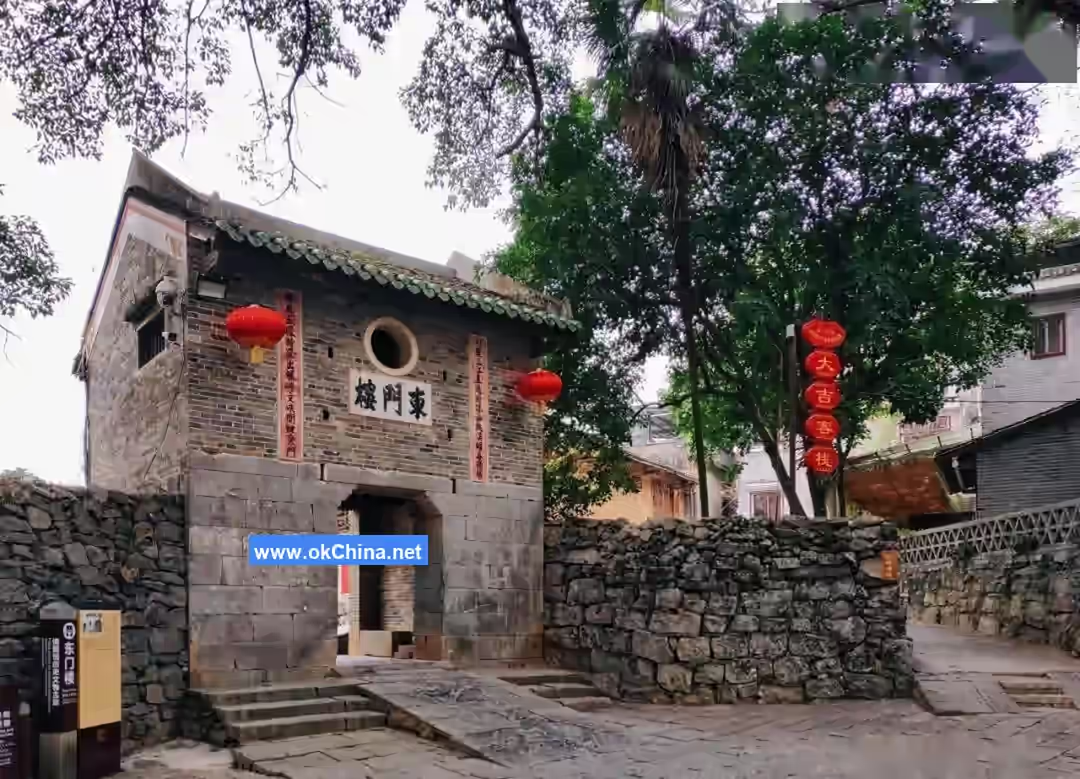
The East Gate Tower was first built in the early Qing Dynasty and renovated in the second year of the Qianlong era (1737). It is one of the important gate towers in the ancient town. It served as the gate for people living on the north bank of the Yao River to enter and exit the ancient town from the east. The gate tower connects to the city wall of Zhenwu Mountain in the north, uses the Yao River as a moat in the south, and links with the walls of houses and alleys in the west, forming an enclosed fort. It is the gate tower with the strongest defensive function and the best preservation.
2.26 Watchtower
The Watchtower is the gate for people living on the south bank of the Yao River to enter and exit the ancient town from the east. The gate tower has a square planar structure, equipped with lookout holes, gun ports, railings, and other facilities. Before the Republic of China era, dedicated personnel were arranged in the town to keep watch and patrol on this gate tower, guarding the peace and tranquility of the ancient town.
2.27 Jielong Gate
Jielong Gate is located at the western exit of Tianran Street, serving as the main western entrance and exit in the central part of the ancient town. It is named after its proximity to the Jielong Society. The gate tower features a square planar layout, a two-story brick-and-wood structure, and a flush gable roof with tiles. The ground floor serves as a passage, while the second floor has lookout openings and elongated gun ports on the front. A railing gate is installed outside the main door.
2.28 Shengping Gate
Shengping Gate was built during the Qing Dynasty and was originally named Taiping Gate. The Qing Dynasty scholar Kang Youwei believed that society develops according to the pattern of "Age of Disorder - Age of Approaching Peace - Age of Great Peace." Therefore, the name Shengping Gate better reflects people's hope for a thriving life. The couplet on the gate, "Shengheng has signs of a heavenly street's prosperity, Pingzheng without bias the path follows," references the Book of Songs: "Like the moon constant, like the sun rising." It generally means that the street ahead will be more beautiful, and the path underfoot will be exceptionally smooth.
2.29 Wu Clan Ancestral Hall
The Wu Clan Ancestral Hall was first built in the late Ming and early Qing dynasties and is one of the earliest ancestral halls constructed in Huangyao. The hall faces west and is built in a two-courtyard, two-corridor, one-skywell, and three-bay entrance style. It preserves a large number of Republic of China era murals, making it one of the buildings with the most murals in the ancient town. It combines the simplicity and refinement of Lingnan architecture with the grandeur of the Central Plains, representing a perfect blend of Lingnan and Central Plains cultures. In 1944, the Guangxi Art Museum relocated to Huangyao, held classes to train the masses, and carried out anti-Japanese propaganda here. It was later named the "Former Site of the Guangxi Art Museum."
2.30 Guo Clan Ancestral Hall
The Guo Clan Ancestral Hall was first built in the fourth year of the Qianlong era of the Qing Dynasty (1739). It is a three-bay, two-courtyard style building composed of a front hall, main hall, side rooms, etc., featuring the "huo'er" (cauldron-ear) hip-and-gable roof architectural style. The gable walls curve and rise like an official's hat, representing the most distinctive ancient architectural form in the Lingnan region, symbolizing the blessing for descendants to succeed in studies and official careers, achieving fame and success. The hall contains a large color painting, Dragon Entering the East Sea, and the Guo family motto: "Only studying is esteemed."
2.31 Southern Snake Emerging from the Cave
"Nanshe" is a common name for a python. The strange rock resembles a spiritual snake peeking its head out, facing the divine turtle on the opposite bank from afar. The turtle and snake rocks are located at the foot of Zhenwu Mountain. Legend has it that the Emperor Zhenwu achieved enlightenment and became an immortal here by stepping on the turtle and snake, protecting the people of Huangyao.
2.32 Immortal Ancient Well
The Immortal Ancient Well was first built during the Wanli era of the Ming Dynasty and is one of the representative scenic spots in the ancient town. Since ancient times, there has been a legend of the "Seven Immortals" playing by the well, hence its name. The ancient well is divided into inner and outer parts, totaling five pools. The inner pool is used for drinking and washing vegetables, while the outer pools are for washing clothes, hands, and farm tools. The well water is clear and never dries up even during prolonged droughts. Every year on the seventh day of the seventh lunar month, the ancient town holds its unique folk custom, the "Water Fetching Festival," where every household comes to fetch water.
2.33 Guo Family Compound
The Guo Family Compound was first built during the Daoguang era of the Qing Dynasty. It is a typical flatland courtyard-style building in Huangyao Ancient Town, covering an area of over 500 square meters. It consists of a front hall, courtyard, main hall, and side rooms. The layout within the compound is exquisite and rich in meaning, even featuring clever anti-theft mechanisms. It remains one of the most luxurious private residential compounds in the ancient town. The house preserves a plaque awarded by the imperial court during the Daoguang era, "Xiling Ju'an" (Harmony in Advanced Age), to commend its harmonious family tradition.
2.34 Stone Drums
The stone drums are located in front of the ancient Gu family residence. They were erected because Gu Zhihan, a descendant of the Gu family, passed the military imperial examination during the Qianlong era of the Qing Dynasty. They are the only pair of stone drums on Jinde Street, symbolizing the status of a family with meritorious achievements. Furthermore, during the Tongzhi era of the Qing Dynasty, this family also produced a tribute scholar named Gu Yibo, making it a family accomplished in both literary and military arts, a family of orchids and osmanthus (symbolizing noble descendants).
2.35 Qian Xing Martyr Square
Qian Xing (1909-1948), a member of the Chinese Communist Party, was born in Huaiji County, Guangdong Province. In 1940, he served as the Secretary of the Guangxi Provincial Working Committee of the Chinese Communist Party. From 1942 to 1945, despite losing contact with higher-level organizations, he persisted in the struggle and led the revolution in Guangxi. In August 1945, the Guangxi Provincial Working Committee organ, led by Qian Xing, relocated to Huangyao and continued revolutionary work here. He died in a battle in Huaiji in November 1948. To commemorate the martyr, the people built this 4.6-meter-high statue in 1986 and named the square Qian Xing Martyr Square.
2.36 Former Site of the Guangxi Provincial Working Committee of the Chinese Communist Party
The Guangxi Provincial Working Committee of the Chinese Communist Party, abbreviated as the Guangxi Provincial Working Committee, was established in November 1936. It was the local leading organ of the Chinese Communist Party in Guangxi during the War of Resistance Against Japan. In August 1945, the Guangxi Provincial Working Committee moved to Baozhu Temple, leading the revolutionary work in Guangxi. In 1986, the Guangxi Zhuang Autonomous Region Party Committee designated Baozhu Temple as the former site of the Guangxi Provincial Working Committee. It is a key cultural relic protection unit in Guangxi Zhuang Autonomous Region and an important patriotic education base.
2.37 Gao Shiqi's Residence
Gao Shiqi (1905-1988), born in Fuzhou, Fujian, was a member of the Chinese Communist Party and a famous popular science writer. In 1944, Gao Shiqi moved to Huangyao and lived here, continuing his revolutionary work. During his time in Huangyao, he wrote the popular science book Wonderful Numbers and the popular science article The Delicious Huangyao Fermented Black Beans Owe Credit to Mold. Upon departure, he also left a heartfelt poem for Huangyao: Farewell, Huangyao.
2.38 Ouyang Yuqian's Residence
Ouyang Yuqian (1889-1962), born in Liuyang, Hunan, was a member of the Chinese Communist Party, a renowned Chinese dramatist, drama educator, and film artist, hailed as the "Father of Chinese Modern Drama." During the War of Resistance Against Japan, Ouyang Yuqian founded the Guangxi Art Museum and served as its director. In 1944, he relocated the Guangxi Art Museum to Huangyao and lived here. He disseminated revolutionary ideas and inspired soldiers and civilians to resist Japan through drama. After the founding of the People's Republic, he served as the first president of the Central Academy of Drama.
2.39 Former Site of Guangxi Daily (Zhaoping Edition)
Guangxi Daily was originally the official newspaper of the Nationalist Government. After the fall of Guilin in 1944, it disbanded, followed by the emergence of the Yishan, Baise, and Zhaoping editions of Guangxi Daily. Among them, the Zhaoping Edition was a progressive newspaper founded by the Guangxi underground party organization of the Chinese Communist Party through united front efforts to unite various forces. The newspaper's office relocated to the Mai Family Manor on Yingxiu Street in Huangyao Ancient Town on January 27, 1945.
2.40 Zhang Xichang's Residence
Zhang Xichang (1902-1980), born in Wuxi, Jiangsu, was a member of the Chinese Communist Party and one of the leaders of the Southern Bureau of the Chinese Communist Party. In 1944, after the Japanese army occupied Guilin, Zhang Xichang presided over the publication of Guangxi Daily (Zhaoping Edition) as the newspaper's manager. In 1945, when the office of Guangxi Daily (Zhaoping Edition) moved to Huangyao Town, Zhang Xichang lived here.
3. History and Culture
3.1 Historical Evolution
Huangyao Ancient Town is located in the northeast of Zhaoping County, Hezhou City, Guangxi. It is an ancient town with a history of nearly a thousand years. Based on various pieces of evidence, Huangyao Ancient Town originated during the Kaibao era of the Song Dynasty (968-976 AD) and gradually developed until the Wanli era of the Ming Dynasty (1573-1620). It reached its peak during the Qianlong era of the Qing Dynasty (1736-1795). During the Republic of China period, the ancient town gradually declined, but in the later stages of the War of Resistance Against Japan, it became the command center of the Guangxi revolution and the birthplace of the Guangxi Democratic League.
Huangyao Ancient Town gets its name from the predominance of the Huang and Yao surnames in the town. Its architectural layout follows the pattern of the Nine Palaces and Eight Trigrams formation, integrating with the surrounding landscape to form a unique Lingnan-style architecture. The ancient town preserves a large number of ancient buildings from the Ming and Qing dynasties, including pavilions, towers, temples, ancestral halls, bridges, couplets, and plaques. Most of these ancient buildings feature blue bricks, gray tiles, and upturned eaves, showcasing the architectural characteristics of Lingnan and southern Hunan.
3.2 Intangible Cultural Heritage#### 3.2.1 Huangyao Fermented Black Bean Processing Technique
Huangyao has a long history of producing fermented black beans, and its products are widely renowned. The "Zhaoping County Annals" compiled in the 24th year of Emperor Qianlong's reign in the Qing Dynasty records: "Fermented black beans are a specialty of Huangyao, famous far and wide; those produced elsewhere are far inferior." The production of fermented black beans involves over ten processes such as steaming beans, soaking beans, and fermentation, which are complex and highly demanding.
3.2.2 Huangyao Floating Lantern Festival
The Huangyao Floating Lantern Festival is a traditional folk activity of the residents of Huangyao Ancient Town to worship the river god. With a long history, it began during the Qianlong period of the Qing Dynasty. Every year on the evening of the 14th day of the seventh lunar month, river lanterns made from pomelos are floated on the Yao River. The pomelo's stem is carved out, and incense and candles are inserted. Several pomelos are connected and floated down the river together, as their leaves are believed to have the function of warding off evil and purifying impurities.
3.2.3 Xianhui Yao Ethnic Group's Tiao Ma
Xianhui Yao Ethnic Group's Tiao Ma is a traditional Yao folk dance popular in Xianhui Yao Ethnic Township, Zhaoping County, Hezhou City. It is often performed during major festive occasions by Yao compatriots to celebrate bountiful harvests, national prosperity, and people's peace. Tiao Ma evolved from its original function of scaring away tigers into a traditional custom praying for "favorable weather and good harvests" and "national prosperity and people's peace."
3.2.4 Zhaoping Danjia Five Generals Temple Cannon Festival
The Five Generals Temple is built on Xiling in Xiping Village, Zouma Township, Zhaoping County, Hezhou City. The temple is constructed against the mountain, facing west. It houses five deity statues (seated figures), each about 100 cm tall, and also enshrines the five divine generals with the surnames Jin, Yin, Mei, Liu, and Chai. On the third day of the ninth lunar month in the first year of the Kaixi era of the Song Dynasty (1205), the emperor bestowed a seal and an edict, conferring upon five individuals the titles of divine generals with the surnames Jin, Yin, Mei, Liu, and Chai.
3.2.5 Zhaoping Puppet Show
Zhaoping Puppet Show is also known as Fuyu Puppet Show because most of its performers are from Fuyu Town, Zhaoping County. A puppet show requires only 2 to 3 folk artists, and all props can be carried by just two people, making it very convenient. Zhaoping Puppet Show has a long history. It was introduced from neighboring Pingnan County in the early 20th century. Due to its flexible performance style and low cost, it became very popular among the people and subsequently spread along the Guijiang River area.
3.2.6 Hakka Three Mountain Kings Temple Fair
The "Three Mountain Kings" refer to the Kings of Jinshan, Mingshan, and Dushan enshrined in Lintian, Jiexi County, Guangdong. A temple was built in Lintian Town during the Song Dynasty (1033 AD) for their worship. The Hakka people regard the "Three Mountain Kings" as their protective deities. In the 17th year of the Daoguang reign of the Qing Dynasty, Bei Tingxiang, a disciple of the Bei family in Huangyao, brought the deity statues to Zhaoping. People donated funds to build the "Three Kings Temple" on Xiangbi Mountain in Zhongdong Village to enshrine the "Three Mountain Kings."
3.2.7 Wampee Candy Processing Technique
The Wampee Candy processing technique is practiced in Zhaoping County, Hezhou City. Wampee fruit is one of the main local fruit tree varieties. Ripe wampee fruit is sweet with a slight sourness, and the peel has a mildly pungent taste. Traditional Chinese medicine believes that wampee fruit has the functions of stimulating appetite, resolving phlegm, and removing stasis, making it highly favored by local residents.
3.2.8 Yao Ethnic Group's Turtle-Catching Dance
The "Yao Ethnic Group's Turtle-Catching Dance" circulates in Yao ethnic areas such as Xianhui Yao Ethnic Township and Fuluo Town in Zhaoping County. With a long history, it is performed during the annual Yao Panwang Festival folk activities on the 16th day of the tenth lunar month. It is performed by five Yao Taoist priests without musical accompaniment or lyrics. The performers only beat gongs or cymbals in their hands according to the rhythm. The dance has a strong sense of rhythm, neat steps, and considerable expressive power.
3.2.9 Yao Ethnic Group's Butterfly Dance
The Yao Ethnic Group's Butterfly Dance originated in Qichong Village, Wenzhu Town, Zhaoping County, Hezhou City, and has a history of over a hundred years. This dance originates from a folk tale. Legend has it that over a hundred years ago, the daughter of a Yao king turned eighteen. She was as beautiful as a fairy, often did good deeds for the Yao people, and was deeply loved by the masses.
3.2.10 Zhaoping Yao Folk Song Antiphonal Singing
Fuluo is located in the southeast of Zhaoping County, 80 kilometers from the county seat. It is a remote, mountainous, and hilly area where Yao people live in concentrated communities. The town is mountainous with relatively developed forestry. Its jurisdiction covers an area of 333 square kilometers with a total population of over 27,000 people. Besides the Han ethnic group, Yao and Zhuang compatriots also live here. Generally, monophonic singing is more common, while polyphonic Yao folk song antiphonal singing is mainly distributed in Yaoshan and Niujiao villages. It began to be sung around the beginning of the Qing Dynasty, dating back over four hundred years, and has been passed down orally from generation to generation to this day.
3.2.11 Xiangqi Mountain Tea Processing Technique
A tea culture center and production platform have been built near the county seat, where the entire tea-making process can be observed. Xiangqi Mountain Cloud Mist Tea has tightly rolled, slightly curved leaves with a glossy emerald green color. It boasts a rich, high aroma accompanied by honey and floral notes. The taste is fresh, delicious, and sweet with a lingering aftertaste. The brewed leaves are tender green and bright. Drinking it leaves a fragrant aftertaste, refreshes the heart and spleen, relieves summer heat and inflammation, strengthens the body, and promotes longevity, embodying the distinctive characteristics of high-mountain cloud mist tea.
Comments
Post a Comment