Huangshan Scenic Area, Huangshan City
1. Introduction
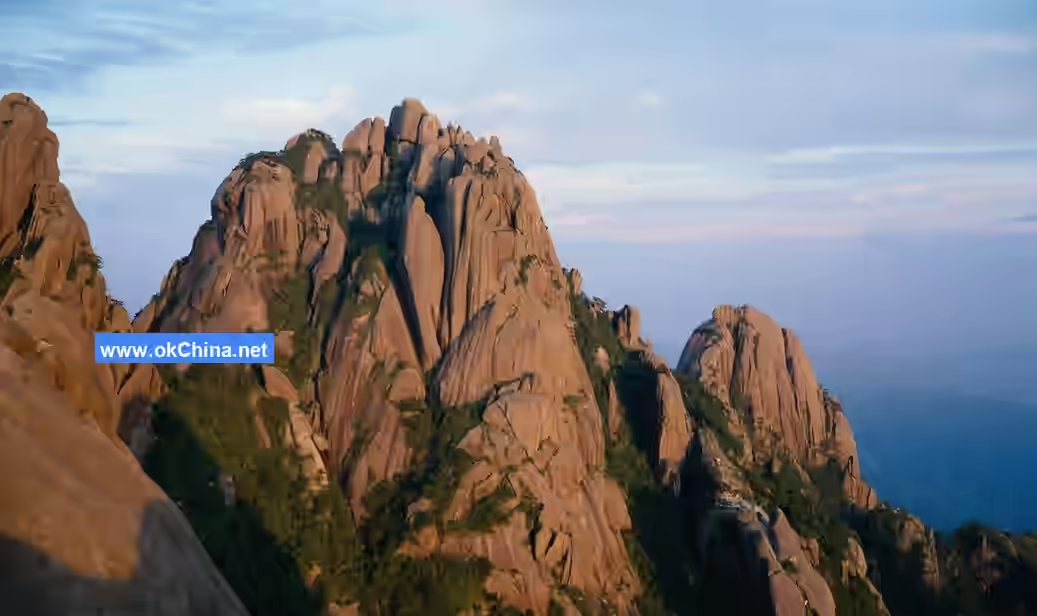
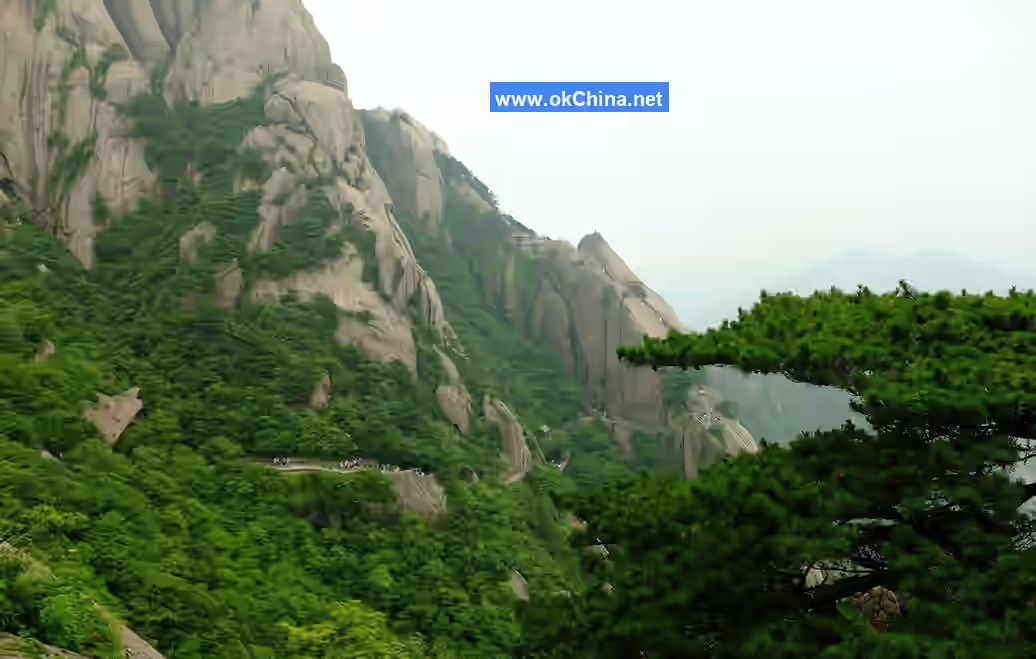
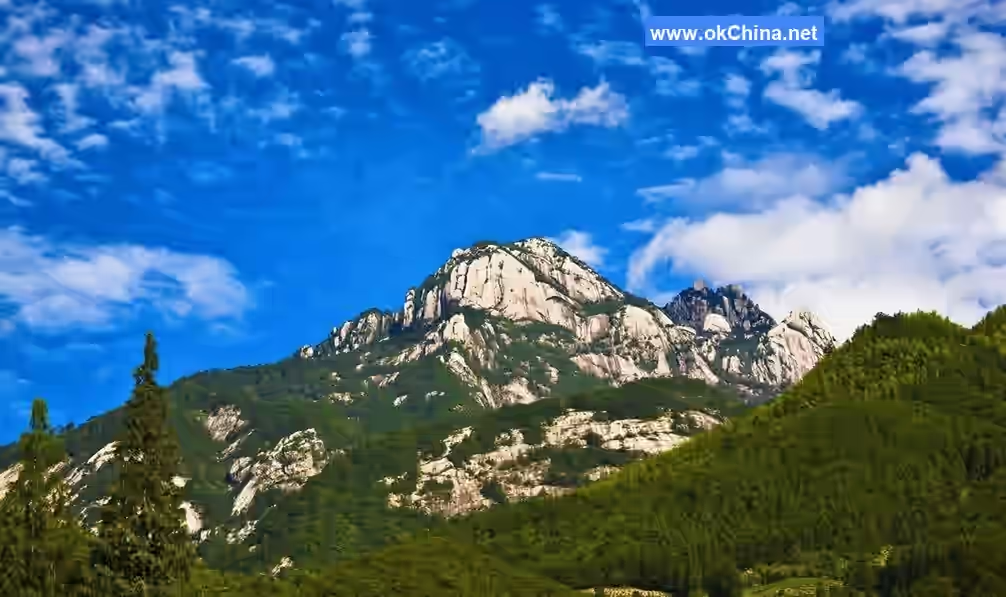
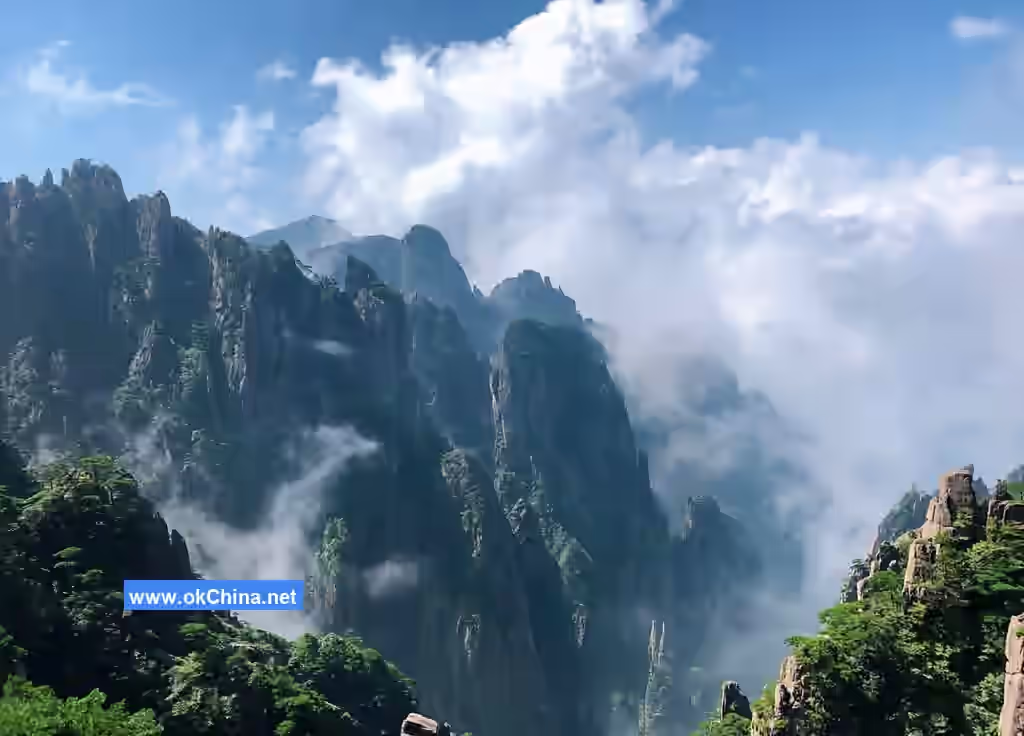
Huangshan, historically known as Yishan, is located within Huangshan City, Anhui Province. Situated in the southern part of Anhui and the northern part of Huangshan City, it spans across She County, Xiuning County, Yi County, Huangshan District, and Huizhou District. It stretches from Huangshiling in the east to Xiaolingjiao in the west, and from Erlongqiao in the north to Tangkou Town in the south, covering approximately 118°01′ to 118°17′ east longitude and 30°01′ to 30°18′ north latitude. The mountain area is about 40 kilometers long from north to south and 30 kilometers wide from east to west, with a total area of around 1,200 square kilometers. It features a subtropical monsoon climate. Huangshan is renowned worldwide for its "Five Wonders"—strangely-shaped pines, grotesque rocks, sea of clouds, hot springs, and winter snow—as well as its "Five Treasures"—historical relics, paintings and calligraphy, literature, legends, and notable figures. It is acclaimed as the "Most Spectacular Mountain Under Heaven," "A Painting Created by Heaven," and "A Sea of Pines and Clouds."
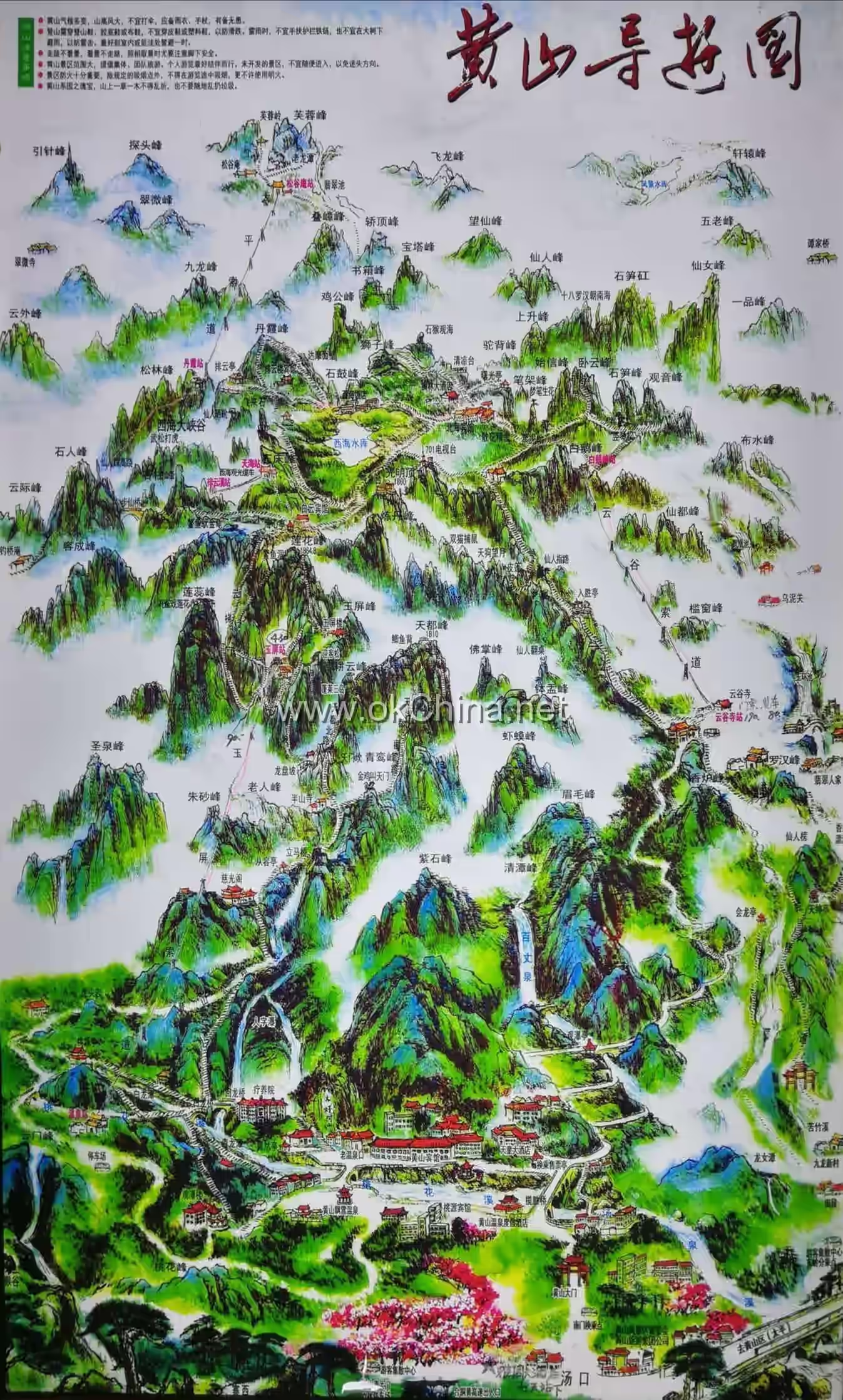
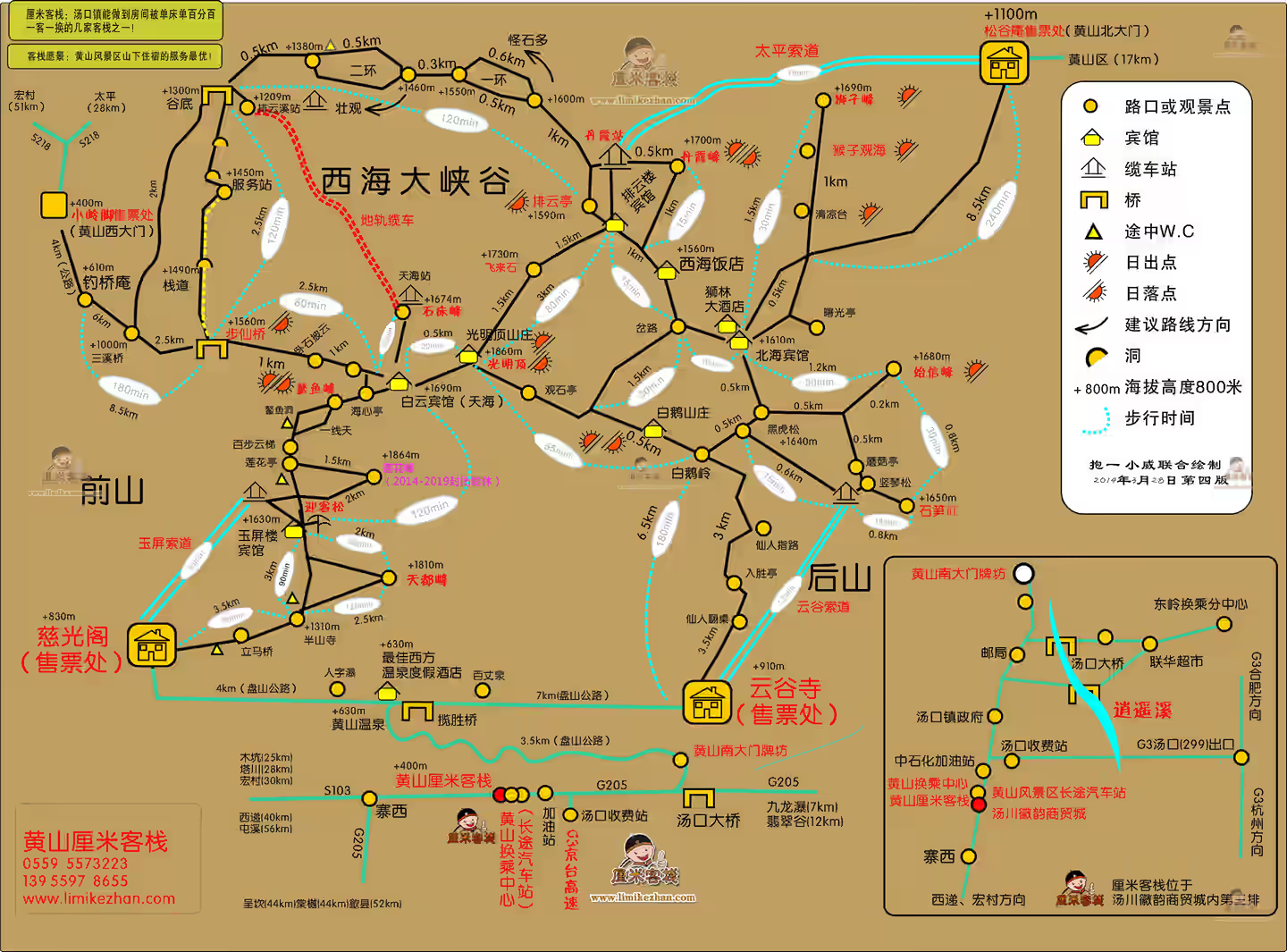
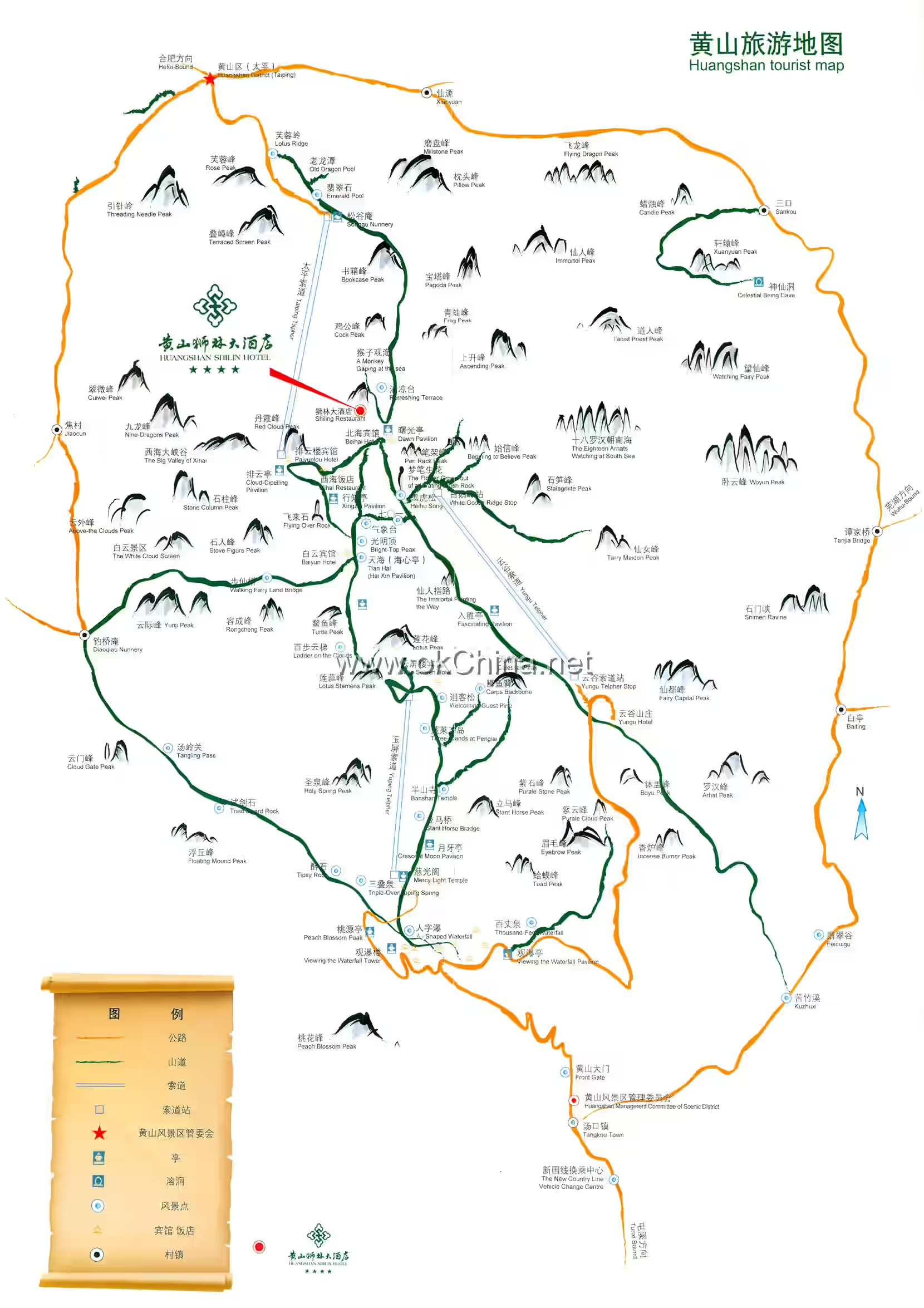
The Huangshan area is divided into nine management zones: Hot Spring, Yungu, Yuping, Beihai, Songgu, Diaoqiao, Fuxi, Yanghu, and Fugu. It boasts 88 peaks exceeding 1,000 meters in height, among which "Lotus Peak," "Bright Summit," and "Celestial Capital Peak" are the three main peaks, all surpassing 1,800 meters in altitude. Huangshan contains a wealth of cultural relics, such as ancient stone steps, couplets, bridges, pavilions, temples, and pagodas, along with over 300 existing cliff inscriptions. It gave birth to the "Huangshan School" of Chinese landscape painting. The area is rich in flora and fauna, with forest coverage reaching 84.7% and vegetation coverage at 93.6%. It is home to more than 300 known vertebrate species and over 170 bird species. A famous saying goes, "After visiting the Five Great Mountains, one finds no other mountains worth seeing; after returning from Huangshan, one finds the Five Great Mountains unworthy of a visit."
2. Historical Development
During the Qin and Han dynasties, the only recorded hermit in Huangshan was Chen Ye, the Governor of Kuaiji, who was known for his "pure conduct and seclusion in this mountain."
In the Yuanjia period of the Southern Song Dynasty (Liu Song), a monk from Dongguo (present-day Korea) built the Xinluo Nunnery at the foot of Boyu Peak in Huangshan, marking the introduction of Buddhism to the area.
During the Sui and Tang dynasties, Taoist temples such as Fuqiu Temple, the imperially commissioned Jiulong Temple, and Fuqiu Altar were first constructed at the foot of Fuqiu Peak in the southwestern part of Huangshan.
In the 18th year of the Kaiyuan era of the Tang Dynasty (731 AD), Buddhist Master Zhiman built a monastery beside the Bailong Pond in Huangshan, which was later granted the name Xiangfu Temple during the Northern Song Dynasty.
In the 6th year of the Tianbao era of the Tang Dynasty (747 AD), Buddhist Master Mulun built the Xuanyuan Ancient Temple at the foot of Xuanyuan Peak in Huangshan, which was renamed Fugu Temple during the Qing Dynasty.
In the 2nd year of the Zhonghe era of the Tang Dynasty (882 AD), the Indian monk Master Mayi built the Cuiwei Temple at the foot of Cuiwei Peak in Huangshan.
In the 8th year of the Jiayou era of the Northern Song Dynasty (1063 AD), Huangshan Temple (Shengzhen Temple) was built beside Caishi Peak in Huangshan.
During the Jiading period of the Southern Song Dynasty, Huangshan Hall (Chengshan Temple) was first constructed at the foot of Cuiwei Peak in Huangshan, and the Xiantan Palace was located in front of Liandan Peak.
In the late Southern Song Dynasty, Taoist Master Zhang Yinpu of the Quanzhen Taoist sect built the Songgu Temple.
During the Yuan Dynasty, the Xiandu Temple was built at the foot of Xiandu Peak, and the Xuanyuan Palace was constructed at the foot of Zishi Peak. The words "Xuanyuan Xinggong" (Xuanyuan Traveling Palace) were carved on the cliff of the hot spring area, and the Xuanyuan Stele stood in front of the Water Curtain Cave.
During the Jiajing era of the Ming Dynasty, the Zhusha Nunnery was built in Huangshan, later renamed Fahai Chan Temple and Huguo Ciguang Temple.
In the 34th year of the Wanli era of the Ming Dynasty (1606 AD), Master Pumen came to the mountain and founded the Fahai Chan Temple, which was later expanded under imperial decree into the "Huguo Ciguang Temple." He also built the Wenshu Temple in front of Yuping Peak and the Dabei Temple on Bright Summit.
In the 38th year of the Wanli era of the Ming Dynasty (1610 AD), Buddhist Master Yu'an raised funds to build the Zhibei Chan Temple, later granted the name Yungu Temple.
During the late Ming and early Qing dynasties, Taoism gradually declined. Some Taoist temples fell into ruin, while others were converted into Buddhist temples or nunneries, with only a few Taoist priests scattered among the remaining temples. Buddhism flourished, and the number of monastic dwellings nearly rivaled those of the sacred sites of Wutai and Putuo.
In the late Qing and early Republican period, most Buddhist temples were destroyed due to insufficient incense offerings and long-term disrepair.
In 1932, Xu Shiying, Premier of the Nationalist Government, prepared to establish the Huangshan Construction Committee.
In 1943, the Huangshan Management Bureau was officially established, subordinate to the Anhui Provincial Government.
In 1947, the Anhui Provincial Government reported to the Ministry of the Interior of the Executive Yuan to further clarify the jurisdiction of Huangshan.
On April 27, 1949, Huangshan was liberated. In June of the same year, the Southern Anhui Administrative Office dispatched personnel to take over Huangshan. In July, the Huangshan People's Management Office was officially established as a section-level organization. Taoist activities within the Huangshan area ceased.
3. Origin of the Name
Huangshan was anciently called the "Capital of the Celestial Emperor" because of its majestic beauty and mysterious nature, believed to be the dwelling place of gods and immortals. By the Qin Dynasty, people began to call it "Yishan" based on its dark-colored rocks. Legend has it that the name originated from the Yellow Emperor (Huang Di), who was said to have concocted elixirs here.
The Yellow Emperor, also known as Xuanyuan, was a tribal alliance leader. Seeking immortality to better serve his people, he sent Lord Fuqiu to find a suitable place for elixir-making. After three years, Lord Fuqiu returned and reported, "South of the Yangtze River, there is a range of high mountains. Because the mountains are mostly composed of black stones, they are called Yishan. That is where you can concoct the elixir."
The Yellow Emperor, accompanied by Lord Fuqiu, Lord Rongcheng, and some servants, arrived at Yishan. They built stone houses and furnaces for elixir-making, then gathered the necessary medicinal herbs. They also dug a well to access the clear, sweet mountain spring water before beginning the elixir process. Three years passed, and the prepared firewood was nearly exhausted, yet the elixir was not complete. The Yellow Emperor then thrust his own leg into the furnace as fuel, finally succeeding in creating the elixir. After consuming it, the three men shed their mortal forms and ascended as immortals.
Because Yishan was the place where the Yellow Emperor concocted the elixir, people began to call it "Huangshan" (Yellow Mountain). Among Huangshan's 72 peaks, three are named after these immortals: Xuanyuan Peak, Fuqiu Peak, and Rongcheng Peak. In the Peach Blossom Stream, one can still find the Dan Well and Medicine Mortar they used during their elixir-making.
4. Main Attractions
4.1 Yuping Scenic Area
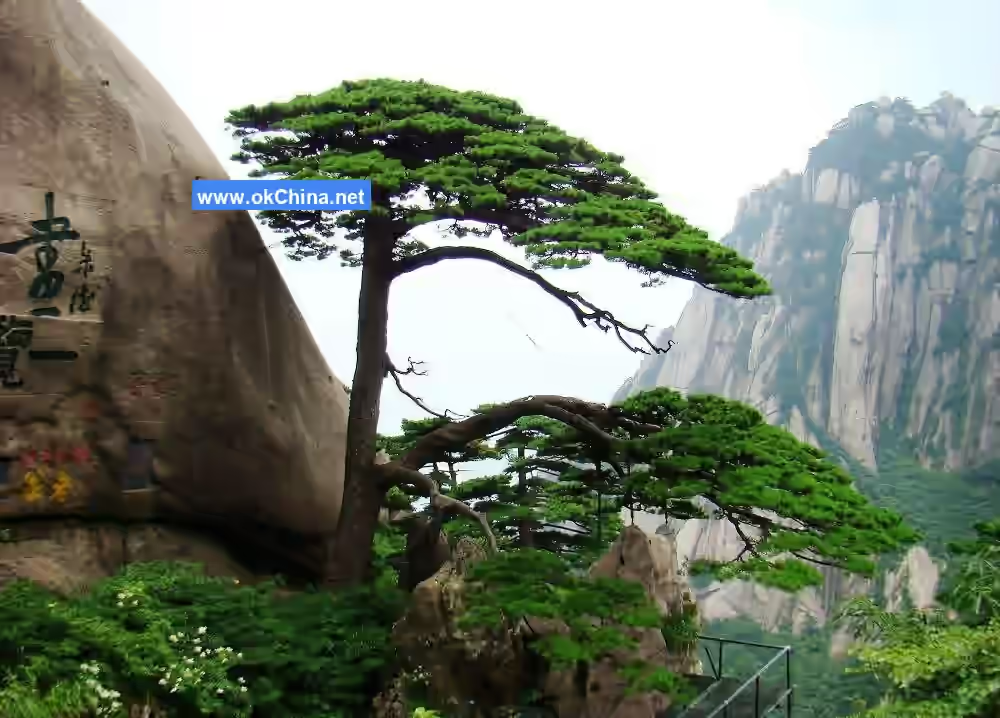
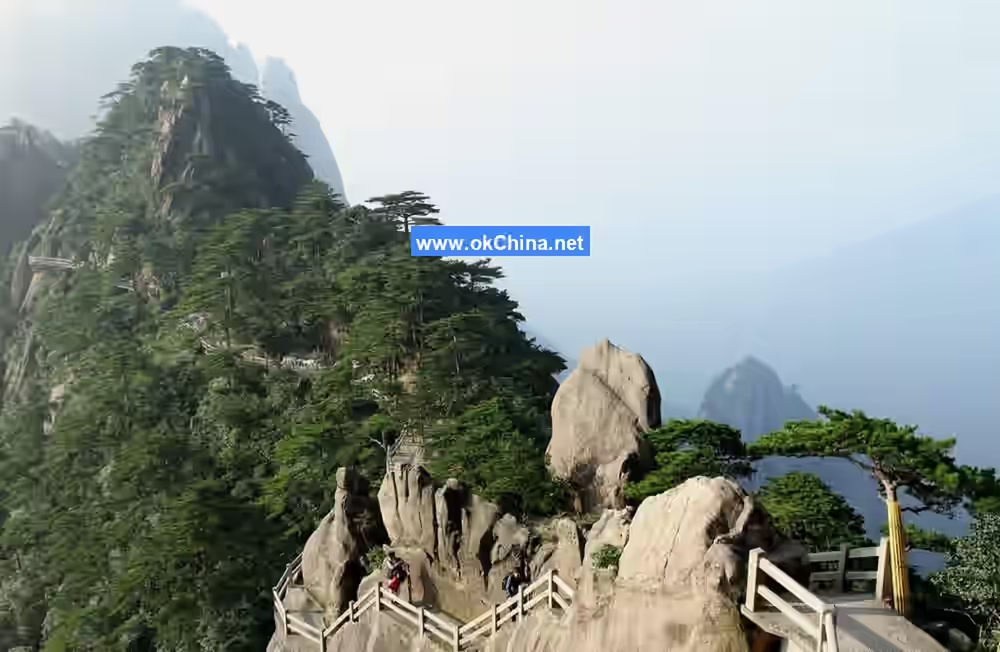
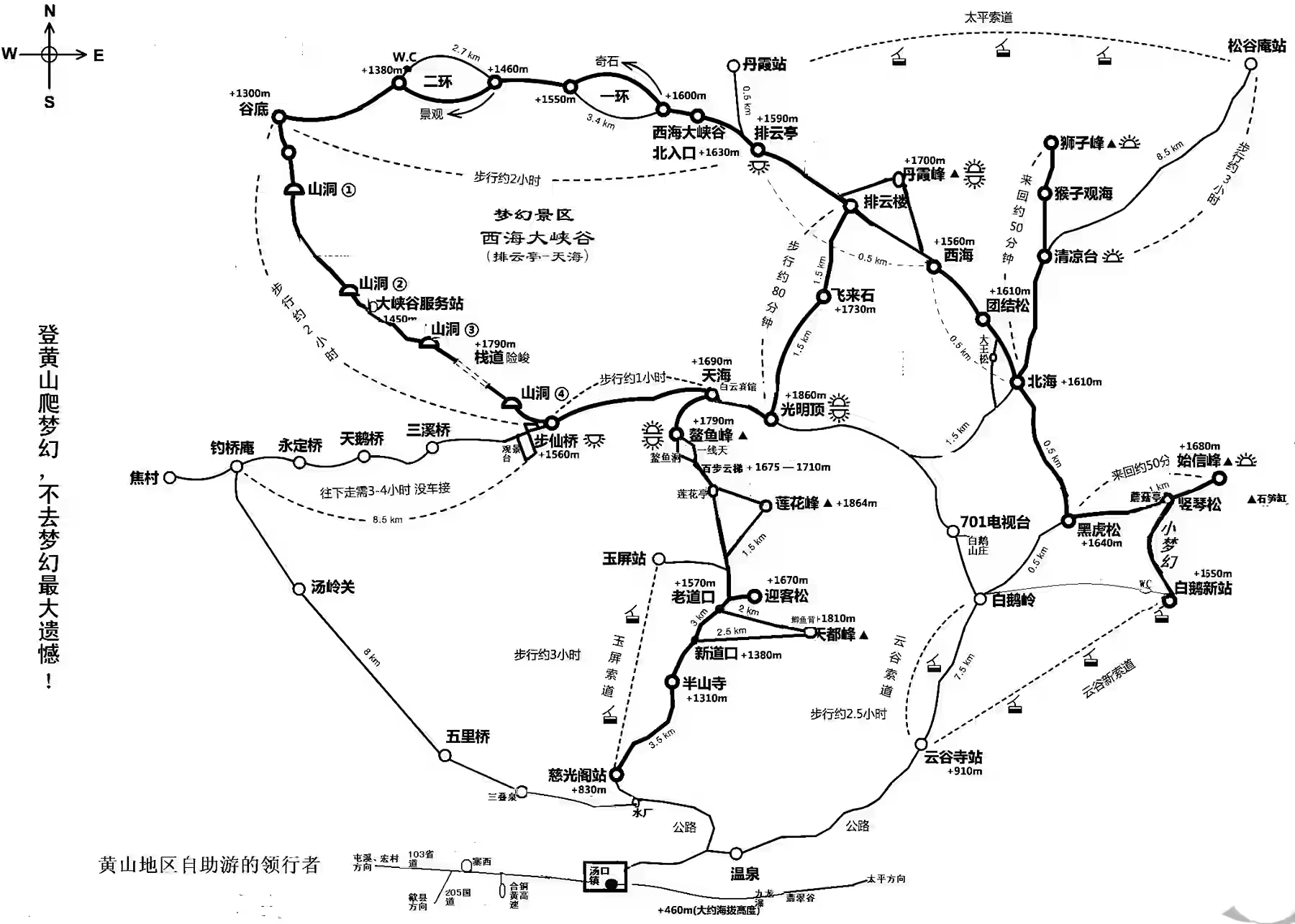
Centered around Yuping Tower, the Yuping Scenic Area of Huangshan includes the two main peaks, Lotus Peak and Celestial Capital Peak. The area's landscape is characterized by majestic mountains, grotesque rocks, uniquely-shaped pines, perilous ravines, ancient cliff inscriptions, and seas of clouds and mist. Notable sights include the Welcoming Guest Pine, Farewell Guest Pine, Squirrel Jumping to Celestial Capital, Peacock Playing with Lotus, Jiang Taigong Fishing, Immortal Floating on the Sea, and Rhinoceros Watching the Moon.
Celestial Capital Peak, located in the southeast of Huangshan, faces Lotus Peak to the west and connects to Boyu Peak to the east, about 1 kilometer from Yuping Peak. As one of Huangshan's three main peaks and among the 36 major peaks, it stands at 1,810 meters above sea level. Historically called the "Gathering Place of Immortals," meaning the capital of heaven, it was thus named "Celestial Capital Peak." This peak, along with Lotus Peak and Bright Summit, constitutes Huangshan's three main peaks.
Lotus Peak, at 1,864.8 meters above sea level, is Huangshan's highest peak and the third highest peak in East China. Xu Xiake noted in his travelogue that Lotus Peak "stands in the center of Huangshan, towering above all other peaks" and "even Celestial Capital Peak bows its head." The peak is steep and towering, with the main peak rising abruptly, surrounded by smaller peaks resembling a newly bloomed lotus, hence the name "Lotus Peak."
Hundred-Step Cloud Ladder consists of 200 steps. From the viewing platform below, one can see sights such as "Zhu Bajie Writing a Love Letter" (Old Monk in Meditation), "Turtle Fish Eating a Snail," and "Mouse Stealing Oil."
Turtle Fish Peak is the foremost among Huangshan's 36 minor peaks. It features the scene of "Turtle Fish Carrying a Golden Turtle." On the way to Lotus Peak, there are two paths: left leads to "Thread of Sky," and right leads to "Turtle Fish Cave."
Heavenly Sea is the center of Huangshan, home to Huangshan's Four Wonders: uniquely-shaped pines, grotesque rocks, sea of clouds, and hot springs. As the sea of clouds is considered the foremost wonder, Huangshan is also known as the "Yellow Sea."
Bright Summit, Huangshan's second-highest peak at 1,860 meters, is 4 meters lower than the highest peak, Lotus Peak (1,864 meters). Lotus Peak is tall, Bright Summit is flat, and Celestial Capital Peak is perilous.
4.2 White Cloud Scenic Area
Also known as White Cloud Stream Scenic Area or Diaoqiao Scenic Area, the White Cloud Scenic Area is located among the peaks of the Western Sea, surrounded by Bright Summit and peaks such as Turtle Fish, Sacred Lotus, Cloud Horizon, and Stone Bed. Stretching from Haixin Pavilion in the east to Paiyun Pavilion in the west, the area covers approximately 16.5 square kilometers with a height difference of nearly 1,000 meters. It is regarded by visitors as the "mysterious western world of Huangshan."
Centered around Diaoqiao Nunnery, which is situated at the foot of Shiren Peak at the confluence of the White Cloud and White Gate streams at an altitude of 610 meters, the scenic area features Diaoqiao Nunnery, also known as White Cloud Nunnery. Originally a Taoist temple before the Ming Dynasty, it was converted into a Buddhist nunnery during the Kangxi era of the Qing Dynasty and has retained its place name since.
4.3 Western Sea Scenic Area
The Western Sea Scenic Area of Huangshan is an excellent location for viewing Huangshan's sea of clouds and sunset. It is one of the more beautiful and profound parts of Huangshan's scenery, featuring attractions such as Danxia Peak.
4.4 Northern Sea Scenic Area
The Northern Sea Scenic Area is the hinterland of Huangshan, commonly referred to as the back mountain, and is one of Huangshan's central scenic areas. The Northern Sea is like a sea of trees, home to many famous pines. Notable pines include Black Tiger Pine, Dragon Claw Pine, Double Dragon Pine, Crouching Dragon Pine, Guiding Pine, Joined Pines, Kylin Pine, King Pine, Unity Pine, Gatehouse Pine, Peacock Pine, Chessboard Pine, and Fan Pine.
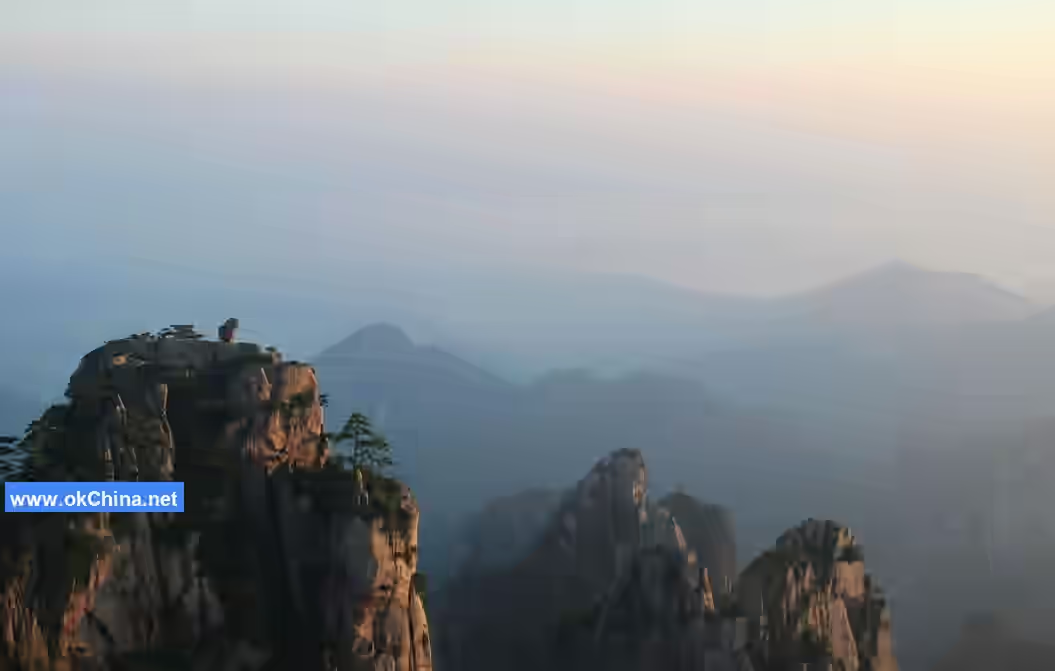
Lion Peak features attractions such as Dawn Pavilion and Cool Terrace. From Cool Terrace, one can see "Eighteen Arhats Paying Homage to the South Sea," "Immortals Playing Chess," and "Minister Watching Chess." From the peak, one can view sights like "Monkey Watching the Sea." On a flat-topped peak north of Lion Peak, there is a cleverly shaped rock resembling a crouching monkey, calmly observing the undulating sea of clouds, known as "Monkey Watching the Sea."
Beginning-to-Believe Peak: Entering from Black Tiger Pine, one encounters Black Tiger Pine, Joined Pines, and Dragon Claw Pine in sequence. In front of the viewing platform stands Stone Bamboo Shoot Peak, from which one can see "Guanyin Floating on the Sea" in the distance. To the left of the viewing platform is Lying Cloud Peak, home to Sea-Exploring Pine and Crouching Dragon Pine. Ten meters to the right of the viewing platform is Harp Pine (Gatehouse Pine). To the left of the viewing platform, on the way to the summit of Beginning-to-Believe Peak, is Guiding Pine. At the summit of Beginning-to-Believe Peak stands Sound-Gathering Pine.
White Goose Ridge is the upper station of the back mountain cable car. Going left leads directly to Bright Summit, while going right leads to attractions in the Northern Sea and Western Sea. From the White Goose Ridge viewing platform facing south, one can see Lotus Peak, Celestial Capital Peak, Incense Burner Peak, and Buddha's Palm Peak. Looking down and ahead, one can see "Flying Drum," and looking up to the right, one can see "Carp Leaping over the Dragon Gate." At White Goose Ridge, on the right side of the lower path, there are seven rocks of varying sizes, naturally stacked together in harmonious and interesting formations, hence the name "Seven Ingenious Rocks."Flying Stone, among the peaks at the western end of Pingtian Gang, there stands a massive rock on a rocky platform. The rock is 12 meters high, 7.5 meters long, and 2.5 meters wide. The rocky platform beneath it measures 12 to 15 meters in length and 8 to 10 meters in width. The contact surface between the two large rocks is very small, and the upper rock appears as if it flew in from beyond the sky, hence the name "Flying Stone." It is pointed at the top and round at the bottom, resembling a celestial peach, so it is also called "Peach Peak." The Ming Dynasty poet Cheng Yuheng wrote: "With a staff, I wander to this peak, afraid to climb to its highest point. Knowing you flew here, I fear you might fly away again." The Flying Stone is located on the path from Paiyun Tower to Guangming Peak, weighing approximately 544 tons, and is the stone featured in the opening credits of the TV series "Dream of the Red Chamber." There are two other Flying Stones: one beside Cuwei Peak and another on a small peak in front of the ancient Yinglin Temple.
4.5 Hot Spring Scenic Area
The Huangshan Hot Spring Scenic Area, anciently known as the Peach Blossom Wonderland, is located between peaks and valleys at an altitude of 600–700 meters. It is the first scenic area encountered upon entering from the South Gate of Huangshan. The area extends from the South Gate in the south to Banshan Temple in the north, and from Ma’an Mountain in the east to Tangling Pass in the west. There are over 50 scenic spots within the area, 28 of which are accessible.
The Hot Spring Scenic Area was anciently called the Peach Blossom Wonderland because the Peach Blossom Peak in the area once had thousands of peach trees and wild cherry blossoms covering the mountain. Every March, when the cherry blossoms bloomed and their petals fell, they would fill the streams with red, hence the name. Later, because "the sun hides beneath the Purple Stone Peak," hot springs emerged, and it was renamed the Hot Spring Scenic Area. It is the first scenic area for visitors entering from the South Gate of Huangshan and the earliest developed area of Huangshan.
Ciguang Pavilion, originally Ciguang Temple, was anciently called Zhusha Nunnery. It was first built during the Jiajing period of the Ming Dynasty. During the Wanli period, the monk Pumen renamed it Fahai Chan Temple. Its reputation gradually grew, reaching the imperial court, and in the 38th year of Wanli, it was bestowed the name "Huguo Ciguang Temple" by imperial decree. It is now the starting point for climbing the front mountain of Huangshan and the entrance to the Yuping Cableway.
4.6 Pine Valley Scenic Area
The Huangshan Pine Valley Scenic Area is situated on the northwestern edge of the Huangshan rock mass. In the outer area near Furong Ridge, medium-grained monzonitic granite from early intrusions is exposed. This rock weathers relatively easily, forming relatively low and gentle mountain ridges. In the inner area, coarse-grained porphyritic granite from the main intrusive period is exposed. Along the scenic route from Beihai Qingliang Terrace to Songgu Temple, steep and towering peaks and naturally formed exquisite rocks are found. North of Furong Ridge, extensive hilly basins are the result of weathering and erosion of the Taiping granodiorite mass.
The Huangshan Pine Valley Scenic Area is the collective name for the valleys between Lion Peak, Camel Peak, Bookcase Peak, and Pagoda Peak. Hiking up from Furong Ridge requires climbing over 6,500 stone steps, with an elevation difference of 1,100 meters. Visiting the Pine Valley Scenic Area allows one to admire peaks such as Furong Peak, Danxia Peak, Pine Forest Peak, and Double Bamboo Shoot Peak; peculiar rocks like Immortal Viewing the Sea, Immortal Paving the Road, Tiger Carrying a Goat, Guan Gong Blocking Cao Cao, and Crouching Tiger Rock; water features such as Emerald Pool and Five Dragon Pond; and ancient structures like Furong Residence and Pine Valley Zen Forest.
4.7 Cloud Valley Scenic Area
The Cloud Valley Scenic Area is located in the eastern part of the Huangshan Scenic Area, with its central area at Cloud Valley Temple. The main attractions of Cloud Valley include Cloud Valley Temple, ancient trees, peculiar rocks, "Nine Dragon Waterfall," and "Hundred Zhang Spring."
Cloud Valley Temple is situated between Luohan Peak and Xianglu Peak, at an altitude of about 890 meters. It serves both as a midway station for descending from Beihai to the Hot Spring and as the starting point for climbing the back mountain or taking the cable car to Beihai. During the Ming Dynasty, the scholar Fu Yan wandered here and, at the request of a monk, wrote the characters "Yun Gu" (Cloud Valley). The temple was later renamed Cloud Valley Temple.
Emerald Pool, located 1 kilometer at the foot of Furong Peak, is a famous water feature in Huangshan. The pool is 15 meters long, 8 meters wide, and 10 meters deep, naturally formed with rocks surrounding it. The Songgu Stream flows directly into the pool. Beside the pool, there is a large rock inscribed with a 3-meter-diameter character "Buddha," as well as cliff carvings of "Fortune," "Longevity," and "Namo Amitabha."
Sea of Clouds and Buddha's Light
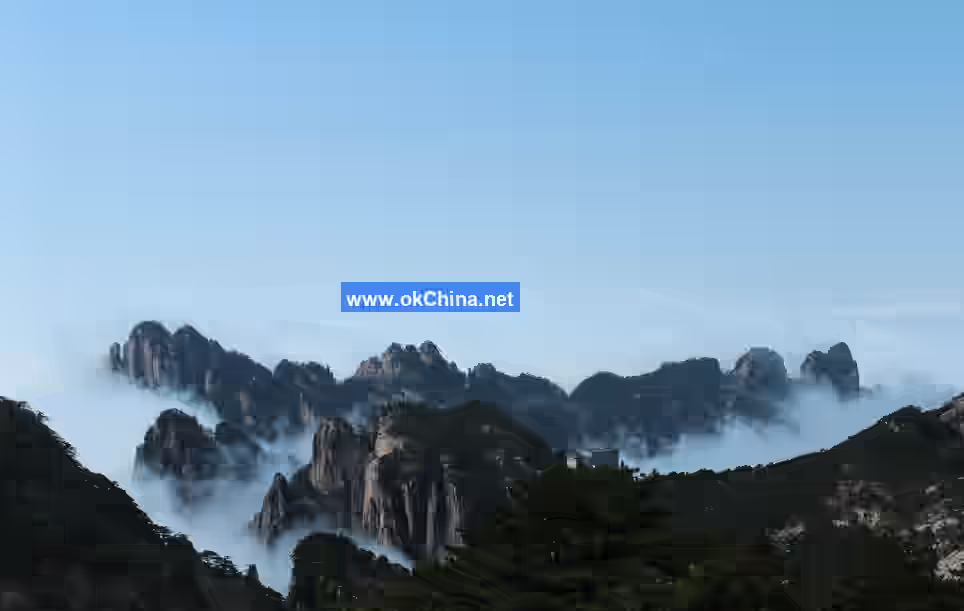
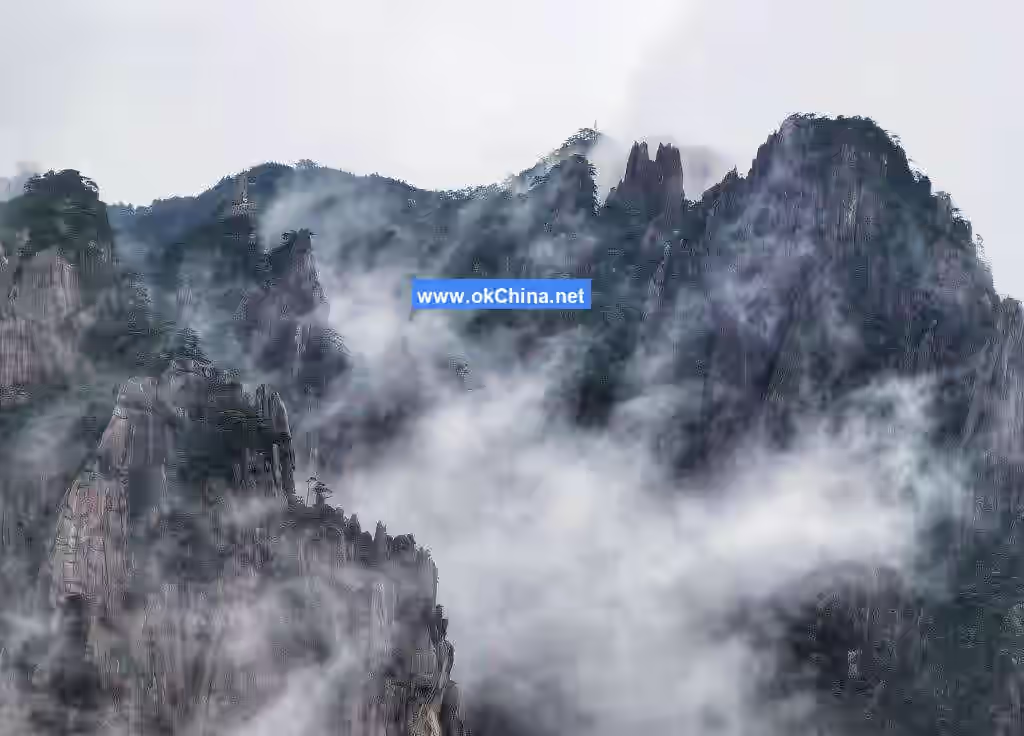
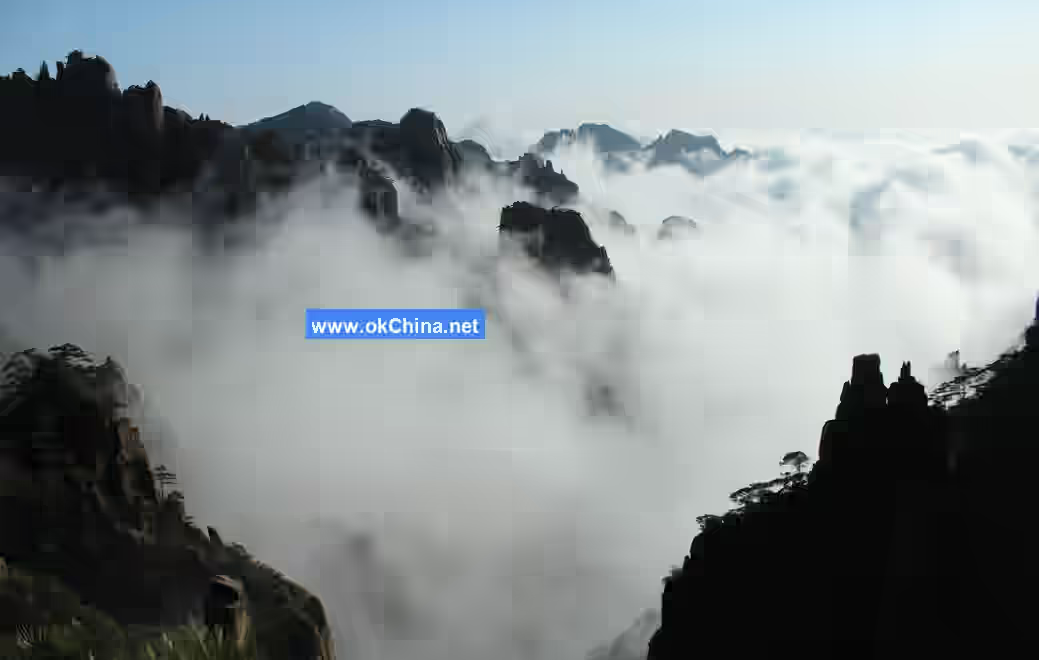
On August 21, 2018, the Huangshan Scenic Area in Anhui presented the wonders of a sea of clouds and Buddha's light. The pine trees, rocks, and peaks of Huangshan, under the blue sky, appeared faintly visible amidst the drifting clouds and mist, resembling an elegant and dynamic Chinese painting.
4.8 Five Wonders and Three Waterfalls
4.8.1 Unique Pines
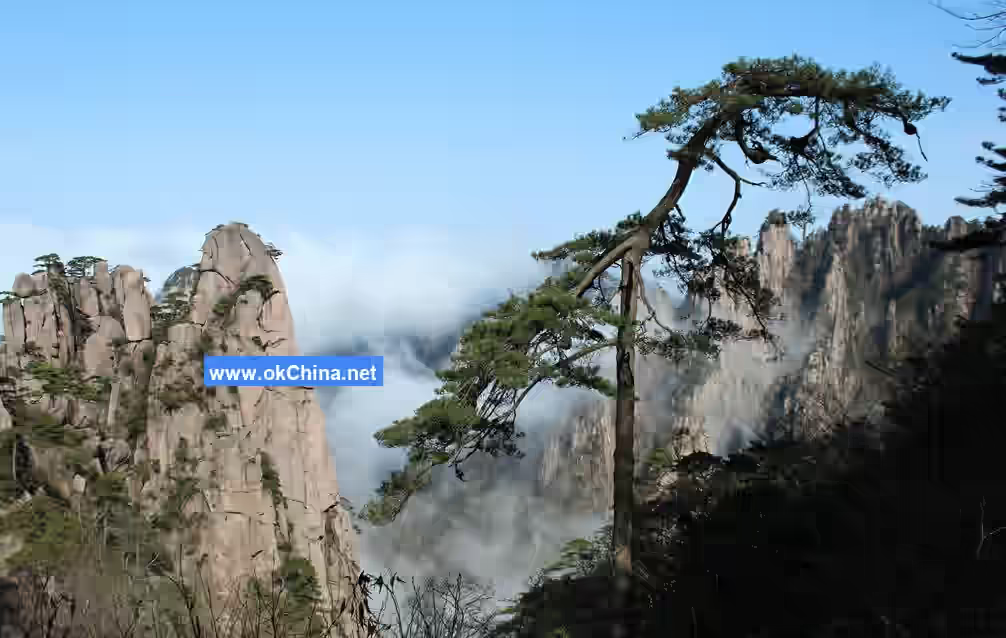
Unique pines refer to pine trees with peculiar shapes. The more famous ones are Huangshan's Ten Great Pines: Welcoming Guest Pine, Farewell Guest Pine, Cushion Pine, Harp Pine, Kylin Pine, Sea-Exploring Pine, Guiding Pine, Twin-Trunk Pine, Black Tiger Pine, and Dragon Claw Pine.
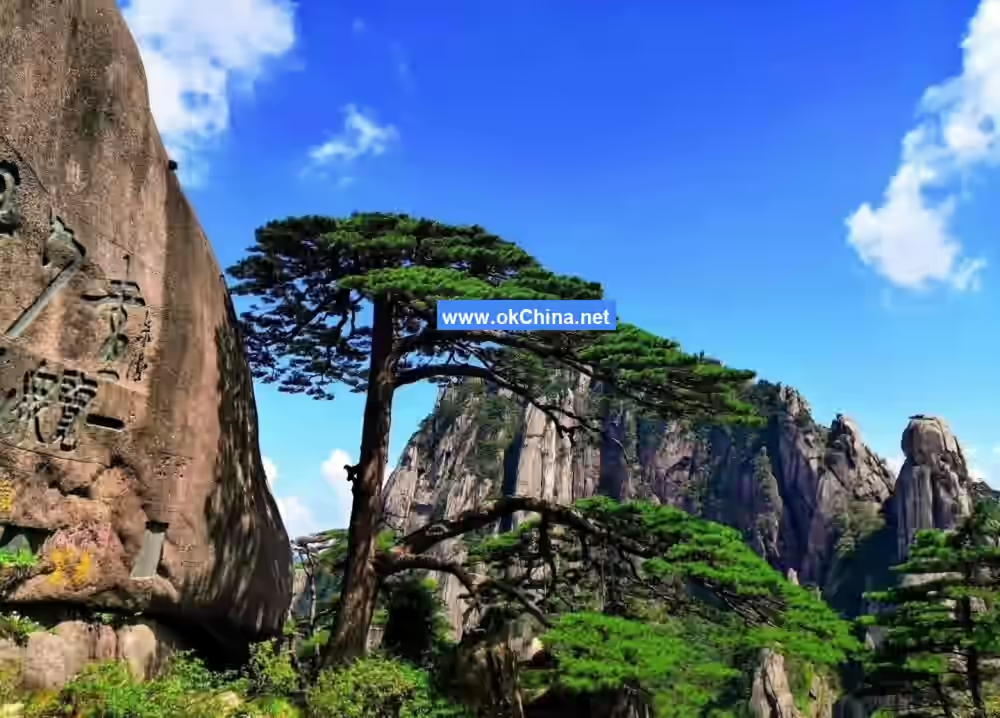
Welcoming Guest Pine: Located east of Yuping Tower, it is the symbol of Huangshan. The tree is about 10 meters tall, with a breast-height diameter of 64 cm, ground diameter of 75 cm, and a branch-free height of 2.5 meters. Two large lateral branches extend 7.6 meters from the middle of the trunk, reaching forward.
Farewell Guest Pine: Located to the right of Yuping Tower. It withered in the winter of 2005. A substitute pine tree was later found on the right wing of Yuping Tower.
Cushion Pine: Located in Lotus Flower Stream Valley.
Harp Pine: Located on the northern slope of Woyun Peak.
Kylin Pine: Located at Qingliang Terrace.
Sea-Exploring Pine: Located beside the Carp's Back of Tiandu Peak.
Guiding Pine: Located on Shixin Peak.
Twin-Trunk Pine: Located between Sanhua Wu and Shixin Peak.
Black Tiger Pine: Located at the fork from Beihai to Shixin Peak.
Dragon Claw Pine: Located on Shixin Peak.
In the West Sea Scenic Area, there is also the Unity Pine, named by Ho Chi Minh.
4.8.2 Peculiar Rocks
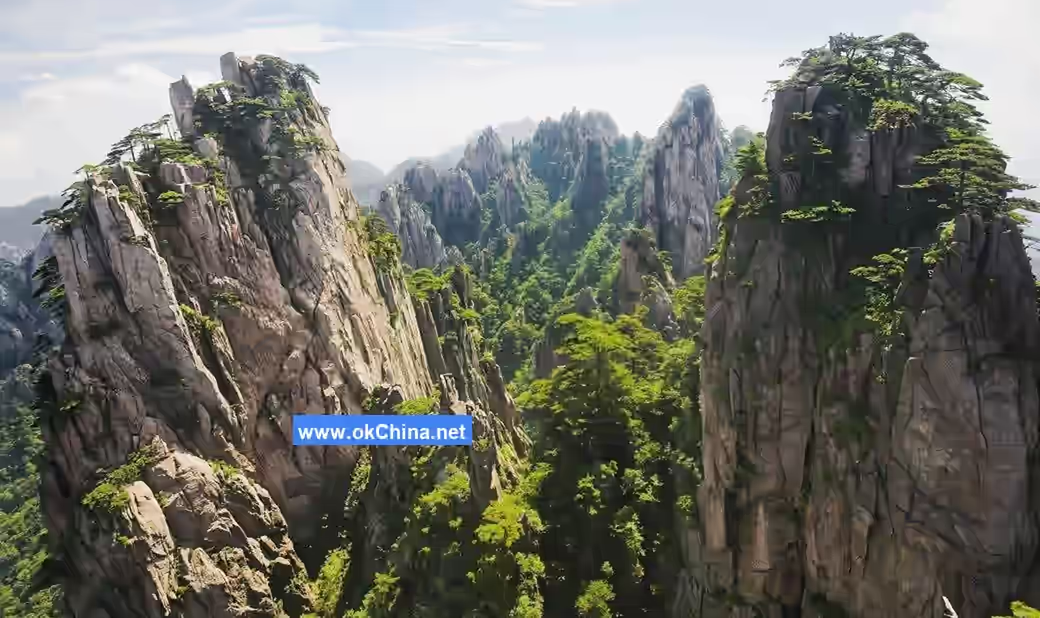
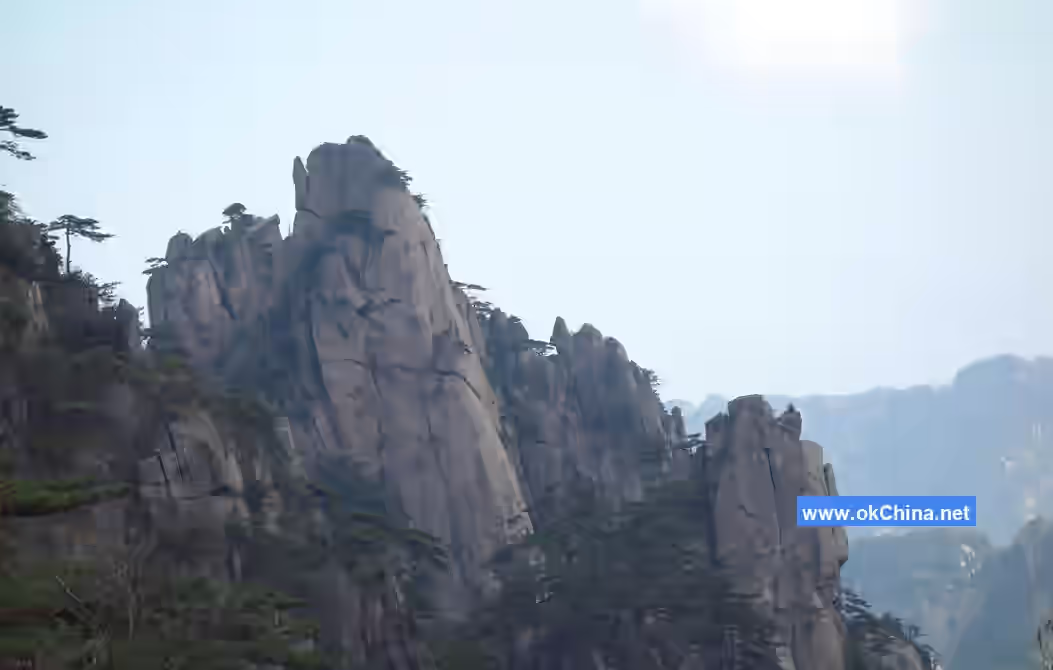
Huangshan is dotted with perilous peaks and abrupt cliffs, with peak bases dropping straight into the valleys. Granite stone forests and stone pillars are widely distributed on mountaintops, mountainsides, and in valleys, with over 120 named ones, including Squirrel Jumping to Tiandu and Monkey Gazing at Taiping (Monkey Watching the Sea).
4.8.3 Sea of Clouds
"Since ancient times, Huangshan's clouds have formed a sea." Huangshan is the home of clouds and mist, with peaks as its body and clouds as its clothing. Its magnificent and diverse "sea of clouds" is renowned for its beauty, grandeur, uniqueness, and illusion, especially after rain or snow, during sunrise or sunset, when the "sea of rosy clouds" is particularly spectacular. Peculiar rocks, unique pines, and peak forests float in the sea of clouds, allowing one to experience the realm of "where the sea ends, the sky is the shore; when climbing the mountain's peak, I am the summit."
Based on the distribution direction of the sea of clouds, the mountain has the East Sea, South Sea, West Sea, North Sea, and Heavenly Sea.
4.8.4 Hot Springs
Huangshan Hot Spring, anciently known as "Spiritual Spring," "Hot Spring," or "Cinnabar Spring," gushes out from beneath Ziyun Peak and faces Peach Blossom Peak across the stream. Legend has it that the Yellow Emperor bathed in the Huangshan Hot Spring for forty-nine days before ascending to heaven as an immortal. The Tang Dynasty poet Jia Dao once lamented, "Alas, the wise man is gone; this water is truly my teacher."
The Huangshan Hot Spring originates from beneath Ziyun Peak at an altitude of 850 meters. It faces Peach Blossom Peak across the stream and is the first stop after entering Huangshan through the main gate. The hot spring discharges about 400 tons of water daily, flowing incessantly year-round, with a constant temperature of around 42°C, making it a high-mountain hot spring.
4.8.5 Three Waterfalls
Huangshan has 36 sources, 24 streams, 20 deep pools, 17 secluded springs, 3 flying waterfalls, 2 lakes, and 1 pond. Besides the hot springs, Huangshan's waters include flying waterfalls, clear springs, emerald pools, and clear streams. The more famous ones are the "Character '人' Waterfall," "Hundred Zhang Spring," and "Nine Dragon Waterfall," collectively known as Huangshan's Three Great Waterfalls.
Character '人' Waterfall, anciently named Flying Rain Spring, flows between Purple Stone and Cinnabar Peaks. The clear spring splits left and right, cascading down the cliffs to form a "人"-shaped waterfall. The best viewing location is the "Waterfall Viewing Tower" in the Hot Spring Area.
Nine Dragon Waterfall originates from Tiandu, Yuping, Alchemy, and Immortal Palm Peaks. It cascades down in nine tiers between Luohan Peak and Xianglu Peak, with a pool at each tier, called the Nine Dragon Pools. An ancient poet praised it: "The flying spring rivals the Kuanglu Waterfall; the steep cliffs prop up the sky, hanging nine dragons." It is one of Huangshan's more magnificent waterfalls.
Hundred Zhang Waterfall is located between Huangshan's Green Pool and Ziyun Peak, descending along a thousand-foot cliff to form a hundred-zhang waterfall. Nearby is the Hundred Zhang Terrace, with a waterfall-viewing pavilion built in front of it.
5. Cultural Significance
5.1 Cultural Heritage
Huangshan is not only a beautiful natural mountain but also a rich treasure trove of art. Since ancient times, people have visited Huangshan, developed it, and praised it, leaving behind a rich cultural heritage, which can be summarized as relics, calligraphy and painting, literature, legends, and celebrities—the "Five Excellences."
Huangshan currently has over 100 ancient structures such as towers, pavilions, and bridges, most in the Hui style, with upturned eaves and a simple, elegant design. Among them, Tingtao Residence, located in front of the Character '人' Waterfall and on the side of Ziyun Rock, was once the place where General Zhang Xueliang was held under house arrest. Huangshan has nearly 300 cliff inscriptions from various dynasties, featuring seal, clerical, running, regular, and cursive scripts, as well as styles from Yan, Liu, Ou, and Zhao. Scholars and literati throughout history left numerous literary works while admiring the scenery, with over 20,000 pieces (poems) passed down.
The Tang Dynasty poet Li Bai, while visiting Huangshan, left the verse: "Huangshan rises four thousand ren, with thirty-two lotus peaks. Red cliffs clasp stone pillars, lotus blooms like golden hibiscus." Huangshan gave birth to the "Huangshan School of Painting," which established a landscape painting school focusing on Huangshan as its main subject, standing out uniquely and exerting far-reaching influence in Chinese painting. The contemporary master artist Liu Haisu visited Huangshan ten times in his lifetime, employing a unique splashed-ink technique to create numerous artistic masterpieces with Huangshan as the theme.
5.2 Folk Customs
5.2.1 Festival Customs
Laba Festival: The eighth day of the twelfth lunar month is the Laba Festival. After "Laba," the Spring Festival approaches. From this day, every household begins to clean their homes of dust, and on that day, they eat Laba porridge. In Yi County and the northern countryside of Xiuning County, dried tofu is also sun-dried, called "Laba tofu."
China Huangshan International Tourism Festival: Held annually in Huangshan City. Main activities include: Huangshan Scenery Tour, Huangshan Ancient Dwellings Tour, Tour of She County—a Famous Historical and Cultural City of China, Tour of Qiyun Mountain—a Sacred Taoist Site, Tour of Taiping Lake–Thousand Island Lake Scenic Waters, as well as performances of Huizhou folk customs, Huangshan Calligraphy and Painting Exhibition, Huangshan Tourism Photography Exhibition, and a grand exhibition of Anhui's famous, high-quality, local specialty, and tourism products.
5.2.2 Tea Culture CustomsThe people of Huangshan drink tea throughout the year, but there are three particularly established customs: "morning tea," "afternoon tea," and "evening tea." There is a saying that goes, "One may skip breakfast, but one must not skip morning tea." Therefore, morning tea is all about savoring it slowly. After lunch, a strong cup of tea aids digestion and promotes stomach health. Afternoon tea differs from morning tea, as it emphasizes richness and strength.
5.2.3 Carrying Pavilion
Carrying Pavilion is a folk entertainment popular in Xiuning and Tunxi, also known as "Carrying Horn." The pavilion is divided into three levels: upper, middle, and lower. Attractive children are dressed up as characters from various stories and placed on these three levels, while the base is carried by four to eight burly men.
The pavilion is decorated with colorful lanterns made of paper in the shapes of dragons, phoenixes, cranes, auspicious clouds, and water flowers. During parades, candles are lit inside the lanterns, illuminating the brightly dressed children and creating a distant view reminiscent of celestial beings descending to earth. The characters on the pavilion do not sing or perform, but the procession is accompanied by drum music leading the way and gongs and cymbals bringing up the rear, making it quite lively. Today, the Longfu area in Tunxi still frequently organizes carrying pavilion teams to parade through the streets, creating performances such as "Dai Zhen Returns Home" to commemorate the great master.
Comments
Post a Comment