Huangguoshu Waterfall
1. Introduction
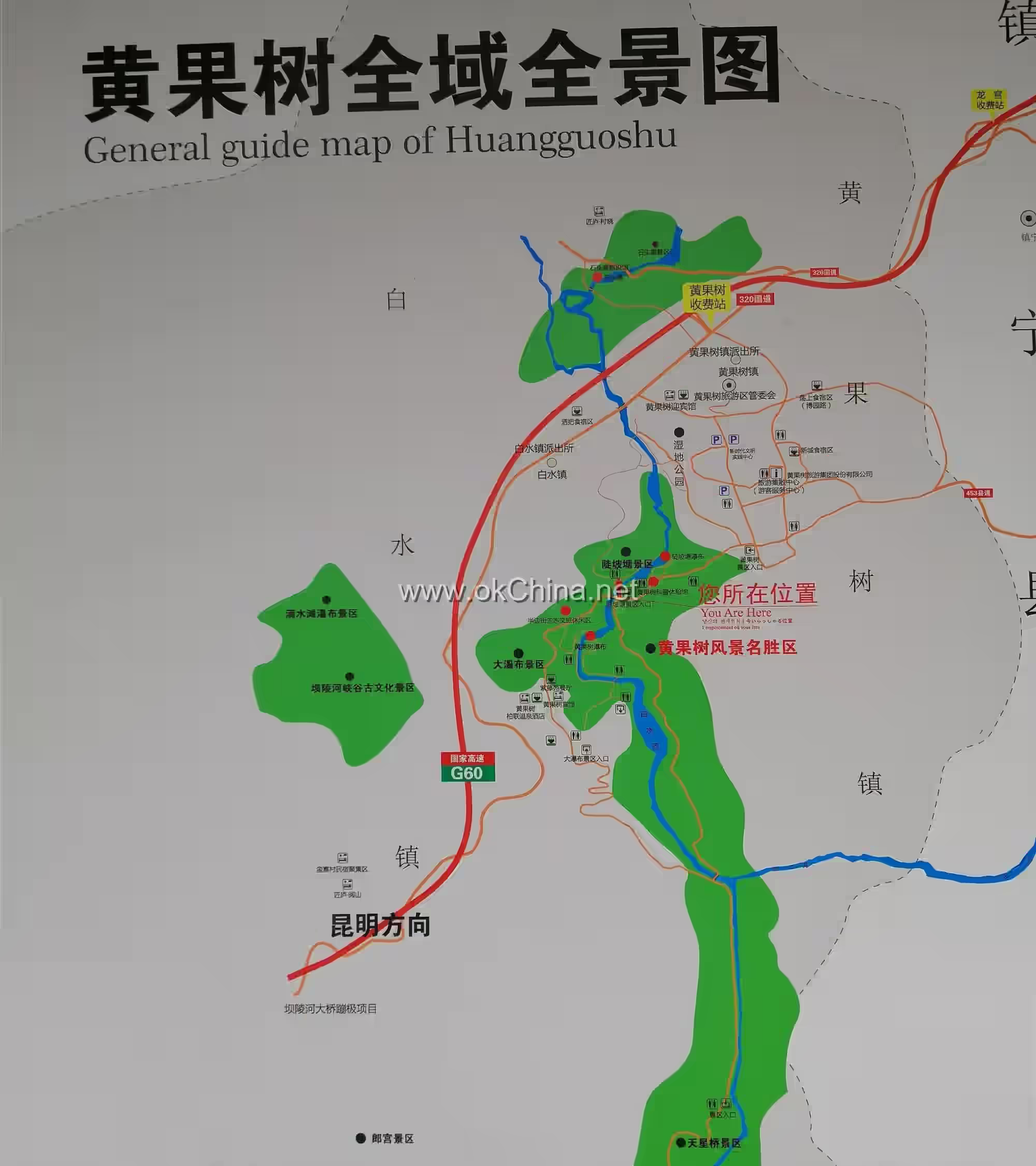
The Huangguoshu Waterfall Scenic Area in Anshun City, abbreviated as Huangguoshu Waterfall Scenic Area, is a tourist attraction located within Zhenning Buyei and Miao Autonomous County, Anshun City, Guizhou Province. It is also the core scenic area of the Huangguoshu Scenic and Historic Interest Area, covering approximately 8.5 square kilometers.
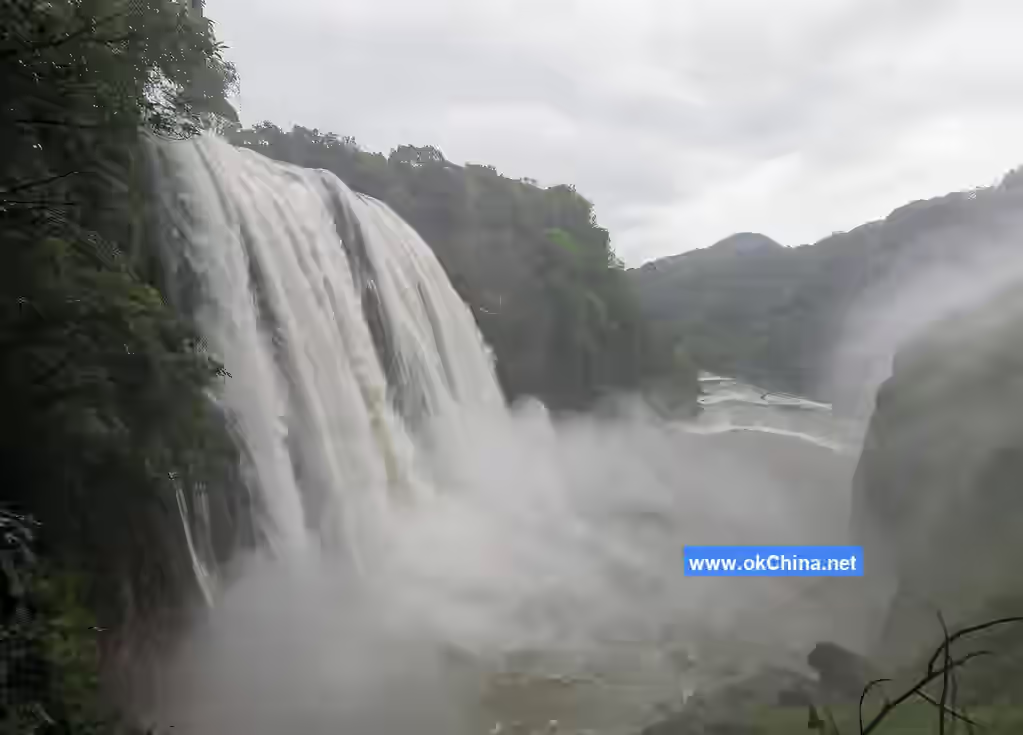
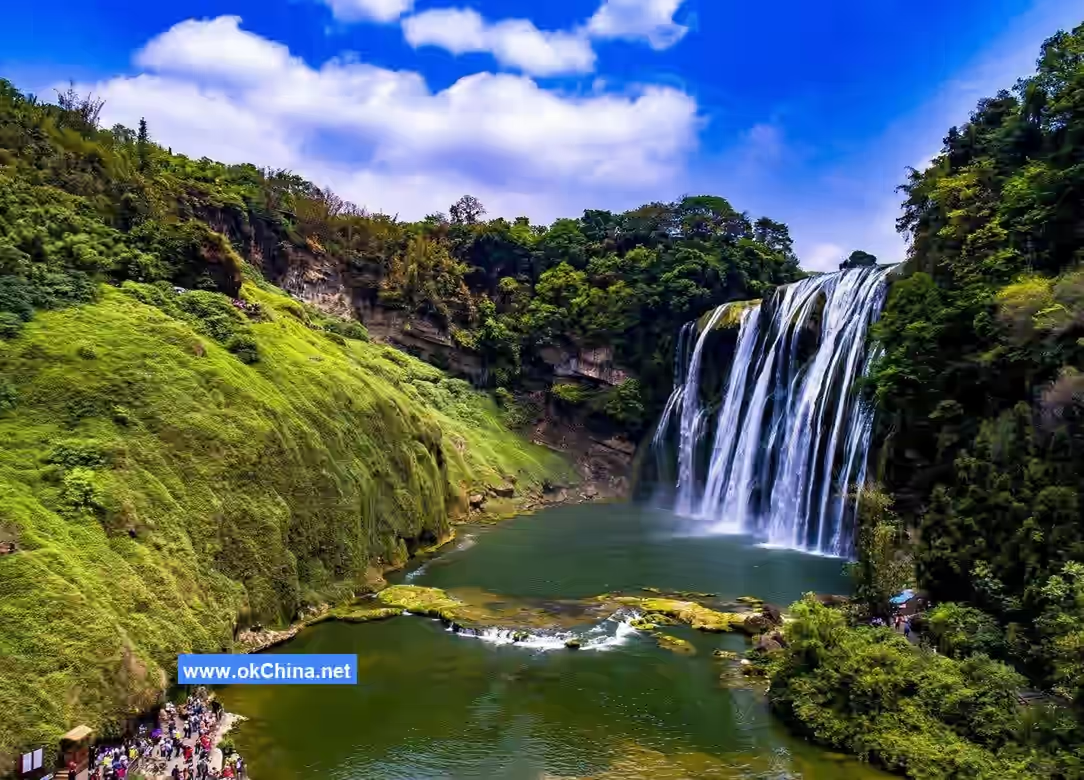
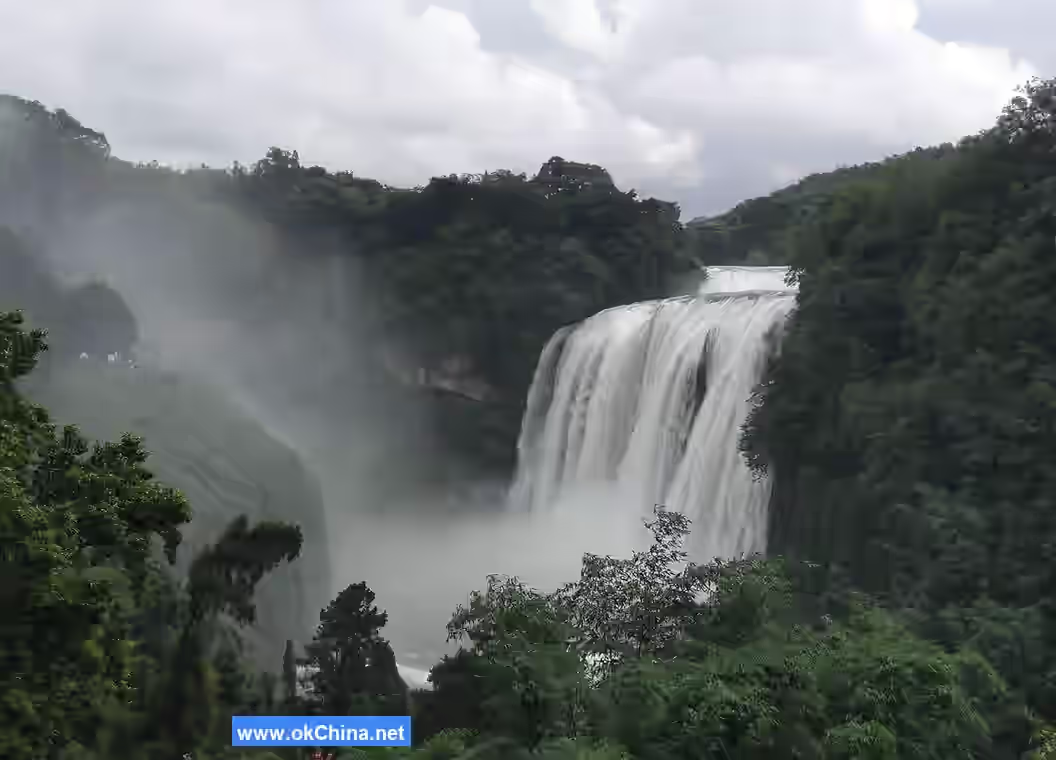
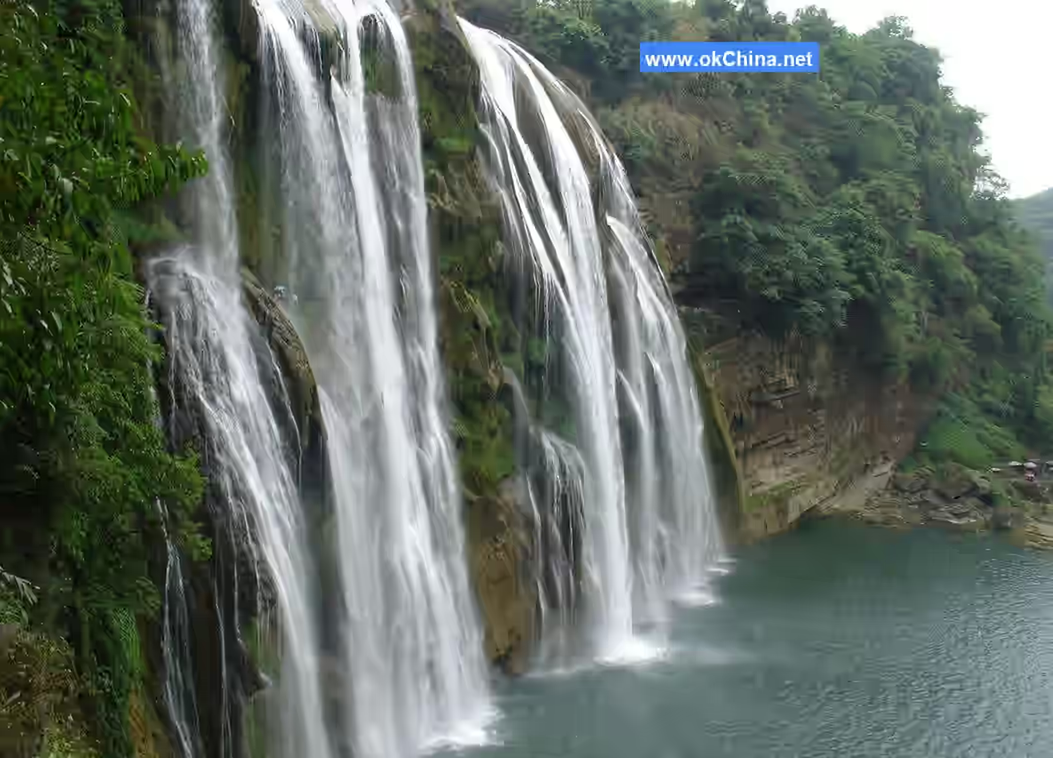
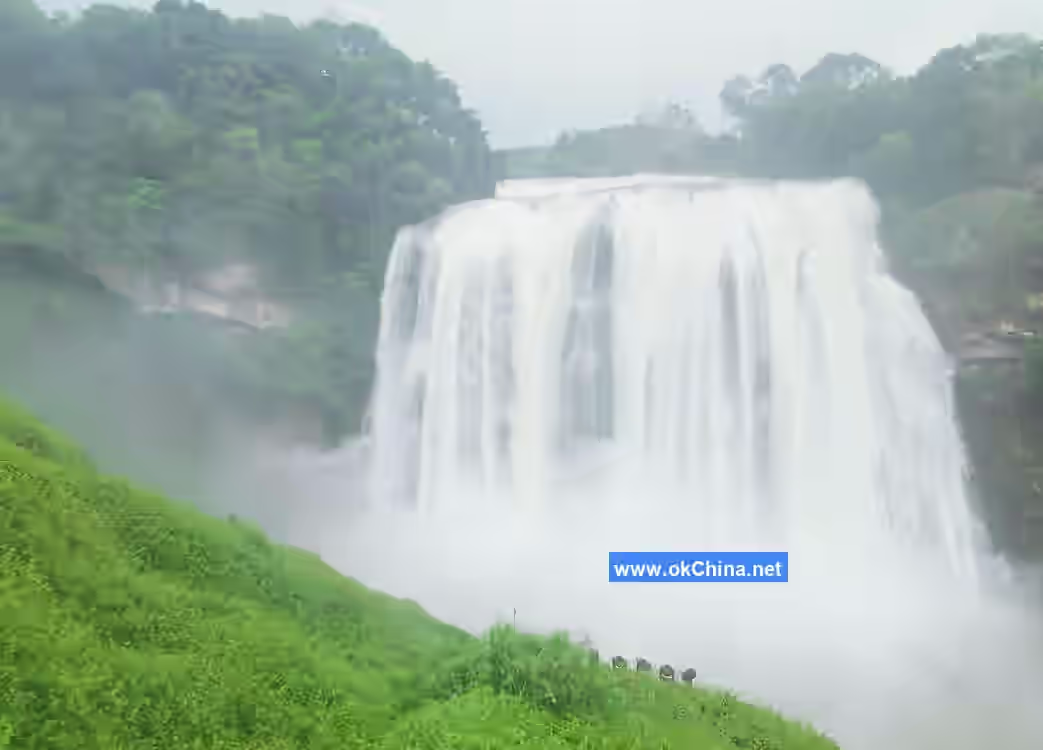
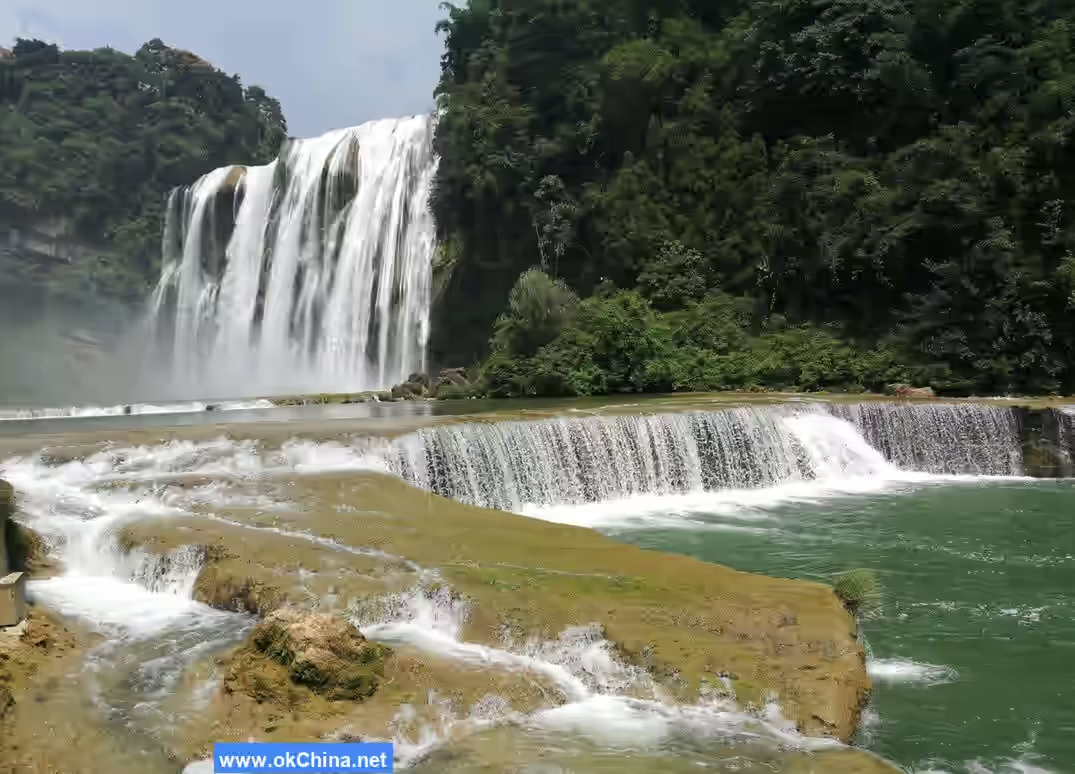
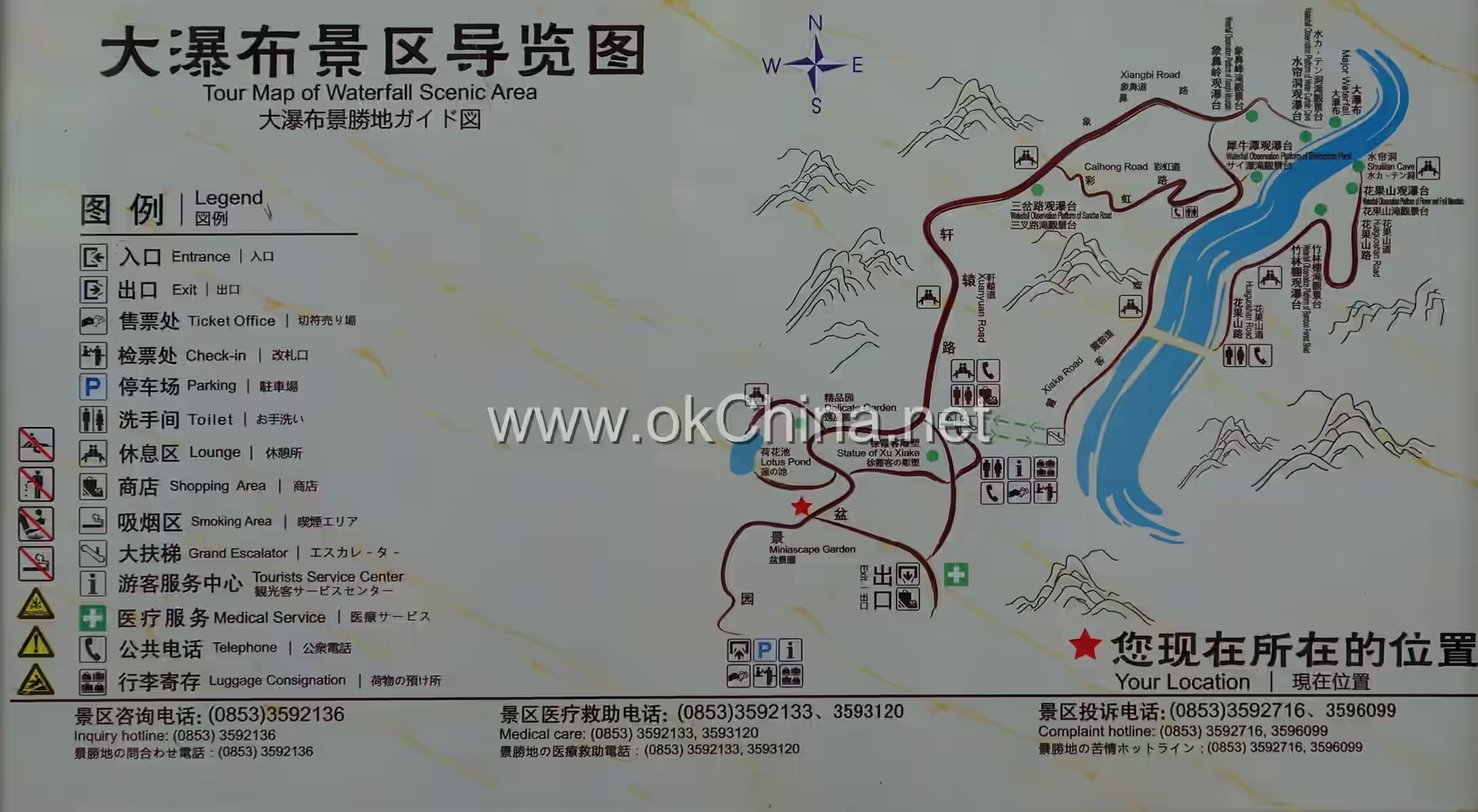
The Huangguoshu Waterfall Scenic Area in Anshun City features attractions such as the Huangguoshu Grand Waterfall, Bonsai Garden, Water Curtain Cave, Rhinoceros Pool, and Horseshoe Pool. The Huangguoshu Waterfall is 77.8 meters high and 101 meters wide. Its water source mainly comes from the Baishui River. As the river flows through this area, it encounters faults and cliffs, forming this spectacular waterfall landscape. The Rhinoceros Pool below the waterfall is about 17 meters deep. The cascading waterfall fills the Rhinoceros Pool with vitality and energy. The Water Curtain Cave is located behind the Huangguoshu Waterfall, stretching 134 meters long like a giant dragon lying behind the great waterfall. It contains a total of 6 cave windows, 5 cave halls, 3 cave springs, and 6 passageways.
2. Geographical Environment
2.1 Location and Territory
The Huangguoshu Waterfall Scenic Area in Anshun City is located in Zhenning Buyei and Miao Autonomous County, Anshun City, Guizhou Province. It is 128 kilometers from the provincial capital Guiyang City and 45 kilometers from Anshun City.
2.2 Topography and Geomorphology
The Huangguoshu area is situated on the southern slope of the watershed between the Yangtze River Basin and the Pearl River Basin, belonging to the central subtropical climate zone. The elevation ranges from 700 to 1400 meters, with a general north-high, south-low terrain trend. Carbonate rocks are widely distributed and thick.
2.3 Climatic Characteristics
The Huangguoshu Waterfall Scenic Area in Anshun City has a central subtropical climate, influenced by the Indian Ocean's southwest monsoon and the Pacific Ocean's southeast monsoon. The climate is mild year-round, with warm winters, cool summers, abundant rainfall, high humidity, and limited sunshine. The multi-year average temperature is 15.6°C. The average temperature in the hottest month, July, is 23.2°C, while the average in the coldest month, January, is 5.9°C, resulting in an annual temperature range of 17.3°C. The extreme maximum temperature is 35.3°C, and the extreme minimum is -8.5°C. Precipitation is concentrated mainly in May, June, July, and August. The multi-year average precipitation is 1307 mm, with 1175 mm falling from April to October, accounting for 89.9% of the annual total. The multi-year average frost days are 7.3, with a frost-free period of up to 290 days. The annual relative humidity is around 80%, and the sunshine percentage is 30%.
2.4 Hydrological Features
The Huangguoshu Waterfall is located on the Baishui River, a tributary of the Dabang River. It is formed by the confluence of the upstream Kebu River and Guijia River. After merging with the Wang'er River downstream, it is called the Sancha River. The basin area is 720 square kilometers. Carbonate rocks are widespread within the basin, and the landform types are complex. The upper reaches of the Baishui River feature peak forest valleys and peak cluster depressions, while the area around Huangguoshu Waterfall and its downstream is characterized by peak cluster gorges. Within the area, peak forests, peak clusters, karst caves, depressions, sinkholes, ponors, natural bridges, underground streams, and springs are commonly seen. The gorges feature numerous cliffs, rapids, steep shoals, and waterfalls, making the hydrology relatively complex.
3. Main Attractions
3.1 Doupotang Waterfall
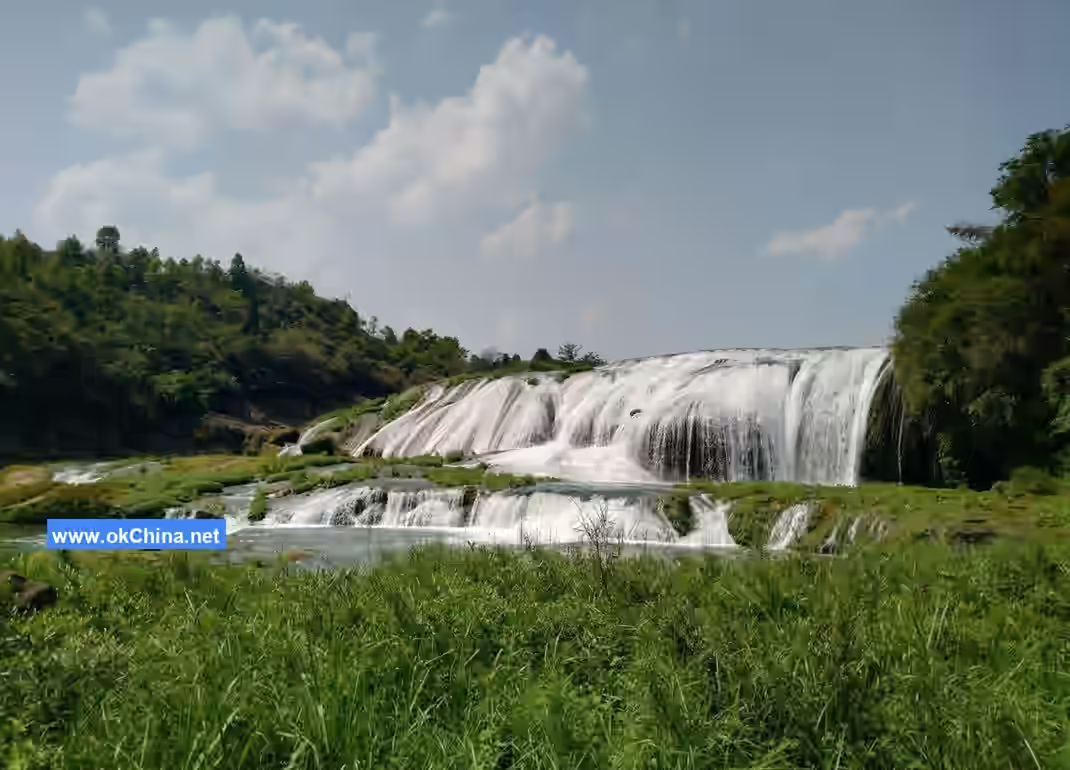
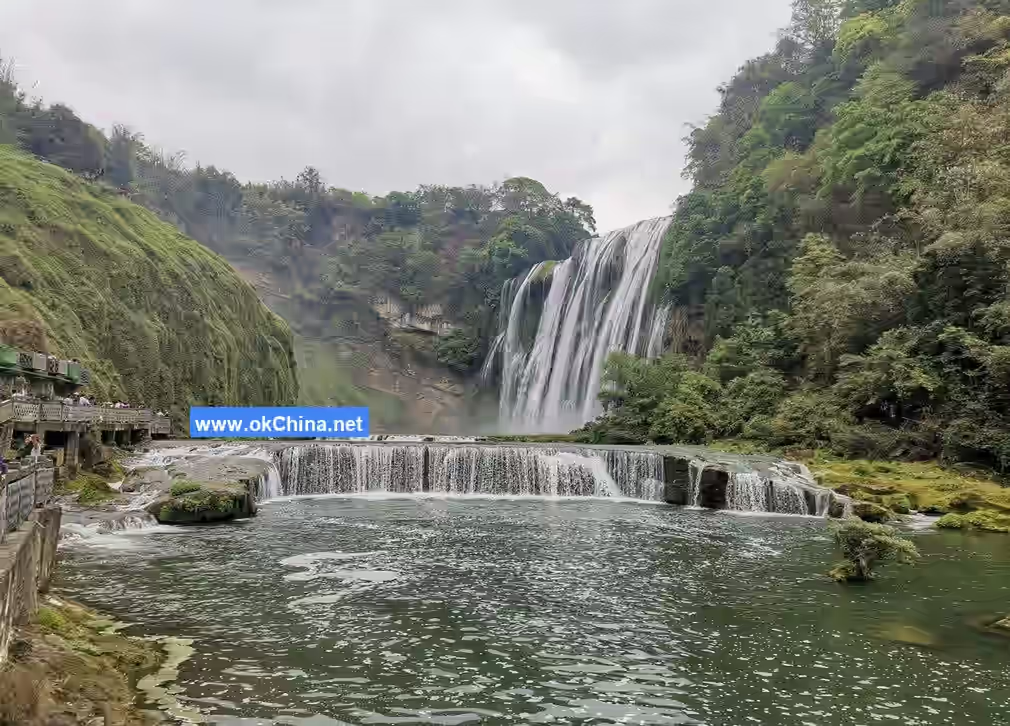
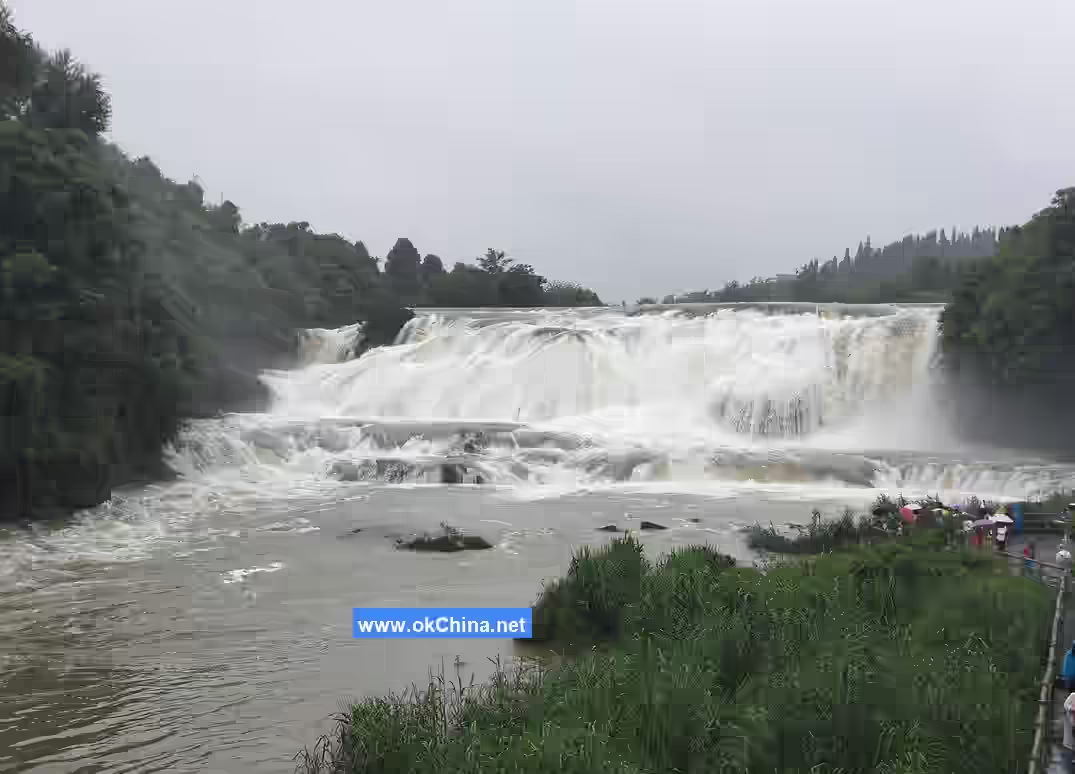
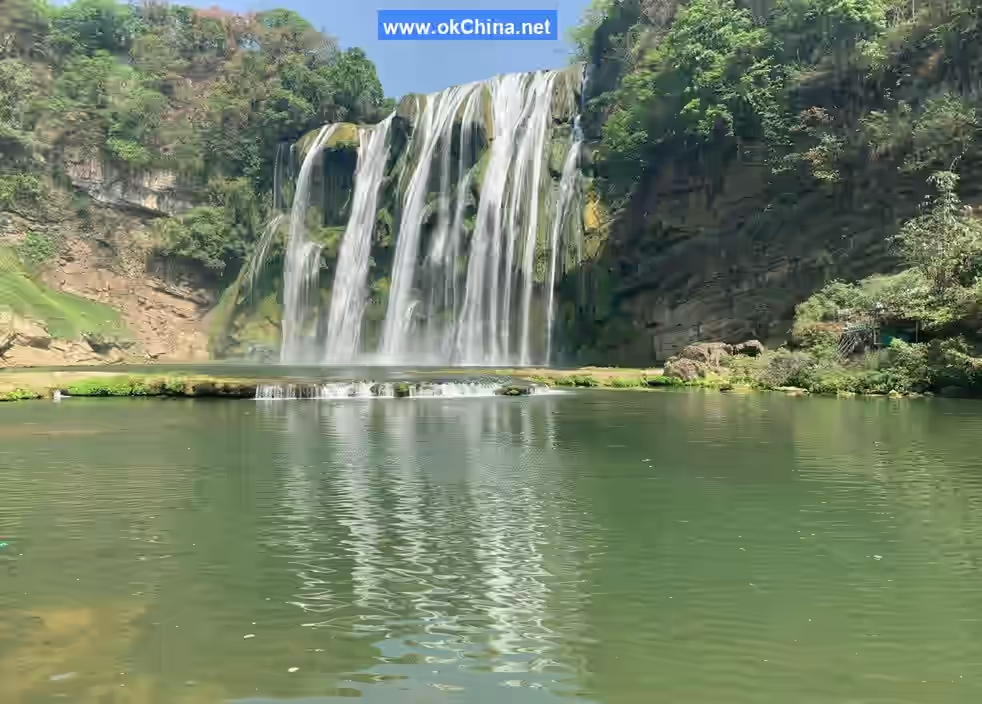
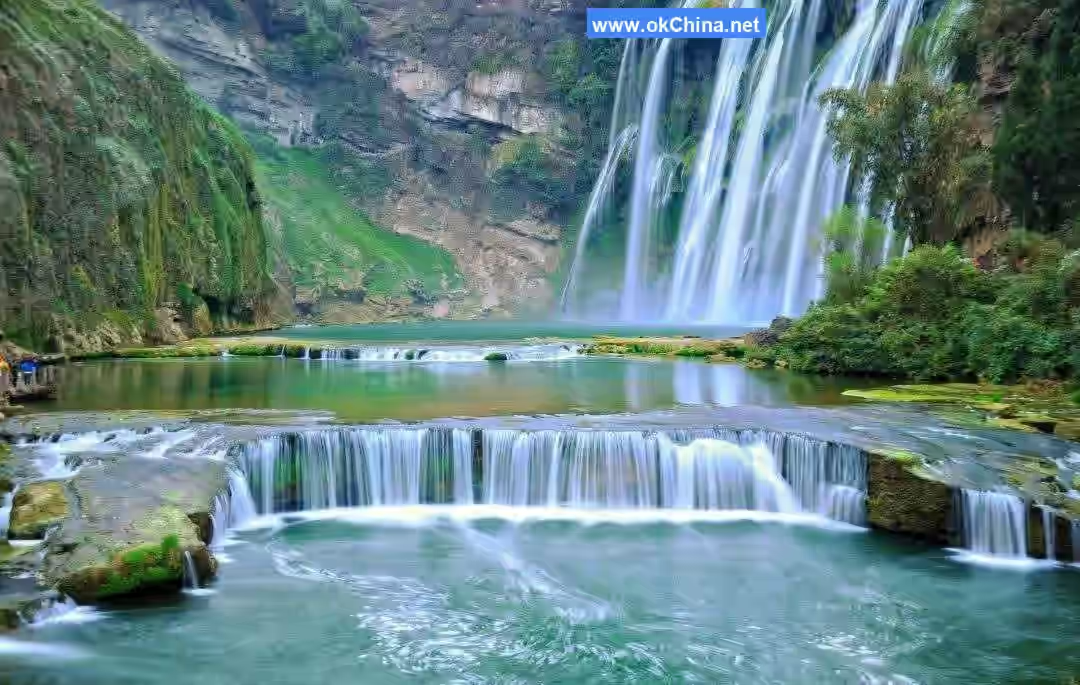
The Doupotang Waterfall is located in Zhenning Buyei and Miao Autonomous County, Anshun City, Guizhou Province, about 1 kilometer upstream from the Huangguoshu Waterfall. The waterfall is 105 meters wide and 21 meters high, making it the widest natural dam-type waterfall in the Huangguoshu Waterfall group. The Ming Dynasty geographer Xu Xiake vividly described the Doupotang Waterfall in his travel notes: "From afar, I heard the roaring sound of water. Looking north through a gap in the ridge, I suddenly saw water pouring down from the northeastern mountain flank into a deep abyss. I could only see the upper part, several zhang wide, churning in the air like snow, but not the lower section, as it was blocked by the opposite cliff." This description vividly portrays the magnificent scene of the waterfall.
The Doupotang Waterfall presents distinctly different appearances in different seasons. During the high-water season, the waterfall is abundant with water, rushing down like untamed horses, directly impacting the calcified accumulation caves below, producing a deafening roar, hence its nickname "Roaring Waterfall." During the normal water season, the flow appears gentle and clear. The waterfall resembles a thin veil lightly spread over the travertine shoal, shimmering with silver light under the sun, earning it another name, "Bridal Veil."
A flat shoal has developed below the waterfall, dotted with dozens of small, clear pools of varying sizes. The water in these pools is crystal clear, with depths ranging from tens of centimeters to several meters. Fish and shrimp are active in the pools, and egrets often come to forage, adding a touch of lively natural atmosphere to the waterfall.
3.2 Water Curtain Cave
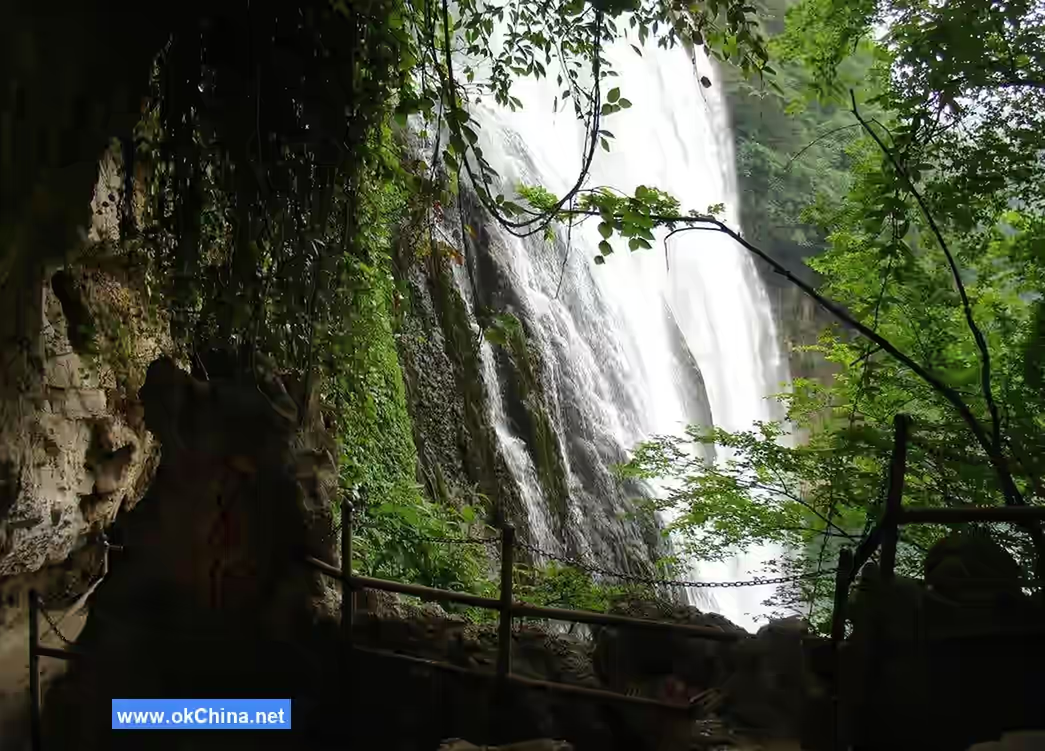
The Water Curtain Cave is located behind the Huangguoshu Waterfall and is a major wonder of the Huangguoshu Waterfall Scenic Area. Vines cling to the outside of the cave, and water flows down like beaded curtains, hence the name "Water Curtain Cave." The cave is 134 meters long and consists of 6 cave windows, 5 cave halls, 3 cave springs, and 6 passageways. This makes Huangguoshu Waterfall the only waterfall in the world that can be viewed from six directions: front, back, left, right, above, and below. It is also the only site where one can closely touch and listen to a waterfall.
The first three cave windows inside the Water Curtain Cave are particularly famous. The first cave window is at the lowest part of the waterfall, about ten meters wide. When the water is high, the waterfall forms a continuous curtain; when the water is low, it partially reveals the scenery like a woman lifting a sedan curtain. The second cave window is called the "Crystal Palace." Inside, stalactites hang, clear springs flow, and the cave walls are densely covered with stone curtains and draperies, resembling a fairyland. The third cave window extends into a terrace where visitors can touch the waterfall and feel the impact of the water flow, hence it is called the "Waterfall Touching Terrace."
3.3 Huangguoshu Waterfall
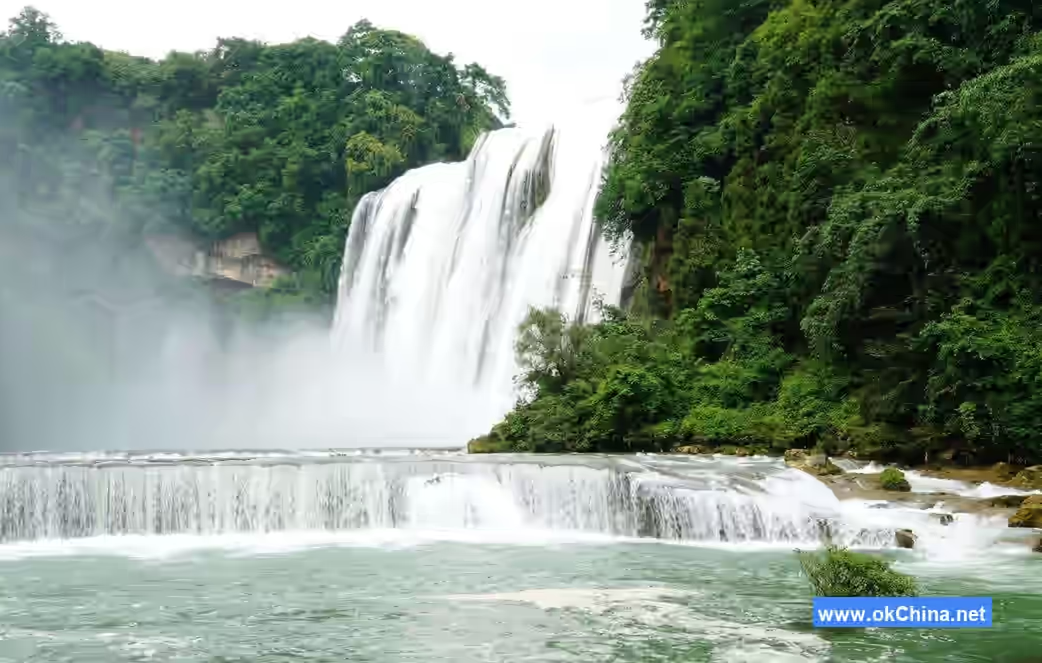
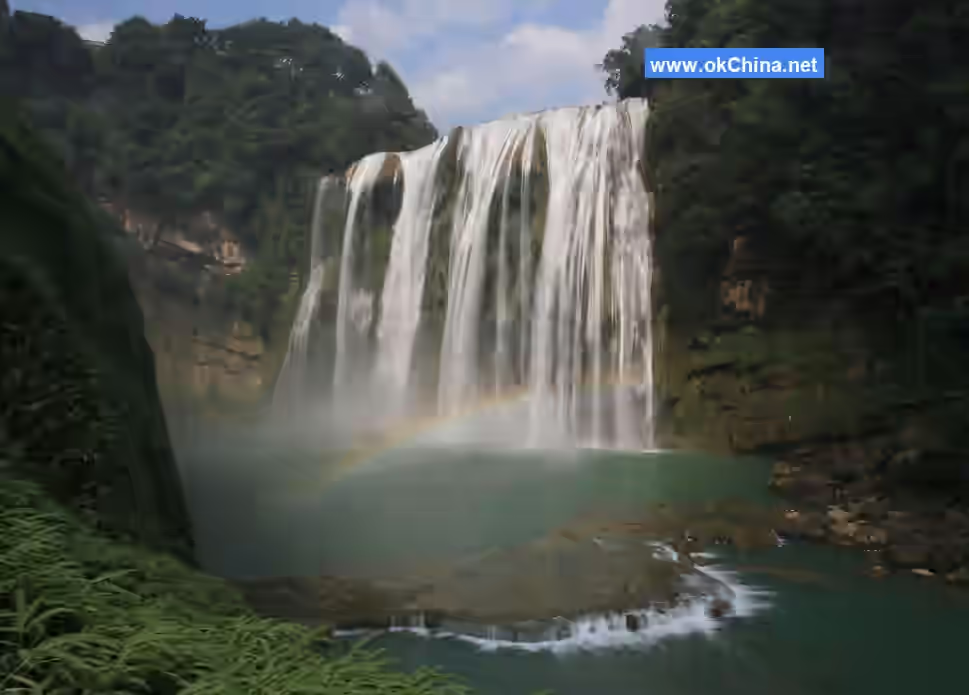
The Huangguoshu Grand Waterfall, anciently known as the Baishui River Waterfall, also called the "Huanggeshu" or "Huangge Tree" Waterfall, is 77.8 meters high and 101.0 meters wide. It is the largest waterfall in Asia and the third largest in the world. Huangguoshu Waterfall is renowned worldwide for its unique six-direction viewing perspective and the natural penetration of the Water Curtain Cave. Over three hundred years ago, the famous Chinese geographer and traveler Xu Xiake described it: "The water flows over the rocks from the stream, like smoke and mist soaring into the sky, its momentum fierce and powerful. Descriptions like 'a bead curtain that cannot be rolled up' or 'a bolt of white silk hanging from a distant peak' are insufficient to depict its form." The rushing river water plummets over a 70-plus-meter-high cliff into the Rhinoceros Pool, producing a thunderous sound. Huangguoshu Waterfall also has distinctions for high water, medium water, and low water periods. The perennial medium water flow is about 20 cubic meters per second, lasting nine to ten months. The landscape varies with different flow rates. During high water, the flow can reach 1500 cubic meters per second. The water droplets stirred up by the waterfall sprinkle down on the Huangguoshu Street above, so even on sunny days, one needs to hold an umbrella, hence its reputation as "Silver Rain Sprinkling on Golden Street." During medium water, the waterfall splits into four branches, each with its own shape and character. From left to right: the first branch has the smallest water volume and spreads out; the second branch has the greatest water volume, uniform from top to bottom; the third branch has the second greatest water volume, larger at the top and smaller at the bottom; the fourth branch has the third greatest water volume, narrower at the top and wider at the bottom.
During the winter and spring seasons when the water volume is lower, the waterfall divides into several streams cascading from the cliff top, resembling dancing silk ribbons, light and graceful. During the high-water season, the water of the Baishui River rushes down like a mighty army, directly impacting the Rhinoceros Pool. Water droplets splash over a hundred meters away, and the roar of the waterfall can be heard clearly from several li away, presenting a majestic and awe-inspiring spectacle.
3.4 Rhinoceros Pool
The Rhinoceros Pool is located below the Huangguoshu Grand Waterfall, formed by the perennial impact of the great waterfall. It is over a hundred meters wide and about 17 meters deep. Whenever the sun sets in the west, the mist rising from the great waterfall refracts the sunlight, creating two seven-colored rainbows reflected on the waterfall. The refracted light rings sway in the air across the great waterfall, hence the Rhinoceros Pool also has the beautiful name "Snow Reflecting River Glow." There is another story about the origin of its name. In ancient times, people believed that rainbows were formed by a mythical rhinoceros hiding underwater and spitting mist. Since rainbows frequently arched across this place, they thought a mythical rhinoceros must reside underwater, hence naming it Rhinoceros Pool.
3.5 Birthday Stepping Stones
The Birthday Stepping Stones are located in the Tianxingqiao Scenic Area. It is a pathway composed of 365 stones, each representing a day of the year, engraved with the date and the names of famous people born on that day. The path is surrounded by mountains and water, with stone forests and water scenes complementing each other like a fairyland. Visitors can find their birthday stone here, symbolizing cherishing time and living each day well.
3.6 Sideways Rock
The Sideways Rock is a narrow passage naturally formed by two huge rocks. Visitors need to pass through sideways, testing their agility. This unique natural landscape adds fun for visitors and is a highlight of the Tianxingqiao Scenic Area.
3.7 Beauty Banyan
The Beauty Banyan is a famous root-embracing-rock landscape within the Tianxingqiao Scenic Area. The banyan tree roots and the giant rock are intertwined, forming shapes resembling a flying beauty or a diving woman, with myriad images that are breathtaking. Visitors can appreciate this natural wonder from different angles, feeling the uncanny craftsmanship of nature.
3.8 Tianxing Lake
Tianxing Lake is an attraction within the Tianxingqiao Scenic Area that combines artificial and natural elements. The lake surface is like a mirror, with fountains on the water. Visitors can rest here, replenish energy, and enjoy a moment of tranquility.
3.9 Tianxing Cave
Tianxing Cave is a typical representative of Guizhou's karst landforms. Inside the cave, stalactites, stalagmites, stone columns, and other landscapes are bizarre and varied in form. Scenes like "Carp Leaping over the Dragon Gate" and "Eight Immortals Crossing the Sea" are vivid and highly观赏价值. Visitors should note that the cave interior is relatively dark and need to proceed carefully and slowly during the tour.
3.10 Yinlianzhuitan Waterfall (Silver Chain Falling Pool Waterfall)
The Yinlianzhuitan Waterfall is located in the Tianxingqiao Scenic Area, famous for its unique form and gentle瀑声. The waterfall is over ten meters high. The water flow slowly falls into the solution pool like thousands of silver chains, presenting an elegant form that makes visitors linger.
3.11 Bonsai GardenThe Bonsai Garden is situated at the main entrance of the Great Waterfall scenic area, covering an area of approximately 40 acres. It houses over 3,000 bonsai plants of various forms and more than 30 different tree species. Within the garden, pavilions soar into the sky, and small bridges span flowing streams, blending the charm of Suzhou-style gardens with the plateau's unique character. Here, one can see succulents such as cacti, Michelia champaca, and Magnolia denudata, as well as southern specialties like the goldenrain tree and Aglaia odorata.
4. Historical and Cultural Significance
Huangguoshu Waterfall, historically known as the Baishui River Waterfall, also called the "Huanggeshu" or "Huangjueshu" Waterfall, derives its name from the widespread distribution of "Huanggerong" (Ficus virens) trees in the area. As one of China's most famous waterfalls, Huangguoshu has long been hailed as the "foremost among China's waterfalls" and is listed among the "world's most spectacular waterfalls." Its magnificent natural landscape and profound cultural heritage have attracted countless literati, geographers, and tourists to admire and praise it.
The earliest written record of Huangguoshu Waterfall appears in the Guizhou Tujing Xinzhi from the Hongzhi era of the Ming Dynasty. It was later described in detail in the Guizhou Tongzhi, Guizhou Shanquan Zhi, and Guizhou Mingsheng Zhi during the Jiajing era of the Ming Dynasty. In 1638 (the 11th year of the Chongzhen era of the Ming Dynasty), the renowned Ming Dynasty geographer and traveler Xu Xiake passed through the area and vividly depicted Huangguoshu Waterfall: "Looking south through the gaps in the ridges, a stream on the left side of the road hangs and pounds, like ten thousand ribbons flying in the air. The rocks in the stream resemble lotus leaves covering the water, with three gates carved in the middle. The water flows over the top of the leaves and cascades down, like countless sheets of mermaid silk, horizontally veiling the gates. The vertical drop is immeasurable in feet, with pearls splashing and jade crumbling, flying spray surging back like mist and smoke soaring into the sky, its force exceedingly fierce and majestic." Xu Xiake's description not only captures the waterfall's majestic grandeur but also leaves a precious historical record for future generations.
Throughout history, literati and poets have ceaselessly praised Huangguoshu Waterfall. Xie Sanxiu, a poet from the late Ming Dynasty, described its beauty with the lines: "A pure shadow drifts in the air like a bolt of silk, cold sounds fall from the heavens like the Milky Way." Tian Wen, a Qing Dynasty governor of Guizhou, marveled: "The waterfalls of Mount Lu are famed as wondrous and peerless under heaven, yet how do they compare to the Baishui River pouring into the Rhinoceros Pool? The Silver River tilts upside down, cascading in three folds, while a jade dragon drinks from the ravine, its depth of ten thousand zhang unfathomable." The great Qing Dynasty poet Zheng Ziyin depicted the extraordinary scenery of Huangguoshu Waterfall with imagery such as "nine dragons bathing the Buddha," "five swords hanging on the cliff," "beauty's milky flowers," and "goddess's girdle," proclaiming it to "dominate the landscape of Guizhou's mountains and waters."
In modern and contemporary times, Huangguoshu Waterfall's fame has spread far and wide, attracting numerous celebrities who visited and left inscriptions. The renowned master photographer Wu Yinxian wrote: "A cascade of ten thousand zhang, a magnificent wonder." The aesthetician Wang Chaowen inscribed: "Descended from the heavens." The Guizhou-born calligraphy master Xiao Xian wrote: "Wonder of the Baishui River." Liao Hansheng, former Vice Chairman of the National People's Congress, inscribed: "Huangguoshu is yellow, the Baishui River is white; yellow and white interwoven, a peerless wonder under heaven." The traditional Chinese painter Wu Zuoren wrote: "Fantastic realm." The economist Yu Guangyuan, from the perspective of tourism resource development, proposed that the Huangguoshu Scenic Area should become a world-class tourist destination.
Furthermore, Huangguoshu Waterfall has received high praise from international scholars. Professor D.C. Ford, the first Vice Chairman of the International Speleological Association, praised the Water Curtain Cave as "the world's most beautiful cave," stating that he had "never seen such a fine cave." Party and state leaders such as Hu Jintao, Jiang Zemin, Zhu Rongji, and Wen Jiabao have also inspected and visited Huangguoshu Waterfall, offering high evaluations of its natural landscape and cultural value.
Huangguoshu Waterfall is not only a natural wonder but also a cultural symbol. The great poet Ai Qing passionately called out before the waterfall: "Huangguoshu is very beautiful; let everyone write poems for Huangguoshu!" This appeal not only expressed love for Huangguoshu Waterfall but also inspired future generations to continue inheriting and promoting this treasure of nature and culture.
In summary, with its majestic landscape, profound historical and cultural heritage, and extensive international influence, Huangguoshu Waterfall has become a shining pearl among China's and even the world's natural heritage sites. It is not only a masterpiece of nature but also a symbol of the harmonious coexistence of human culture and the natural world.
Comments
Post a Comment