
Huaminglou Scenic Area in Changsha
1. Introduction
The Huaminglou Scenic Area in Changsha, abbreviated as Huaminglou Scenic Area, is a tourist attraction located in Huaminglou Town, Ningxiang City, Changsha, Hunan Province. The scenic area covers an area of over 690 acres. It primarily includes memorial sites such as Liu Shaoqi's Former Residence, the Liu Shaoqi Hometown Gate Tower Square, the Bronze Statue Square, the Life and Achievements Exhibition Hall, the Liu Shaoqi Labor Movement History Special Hall, the Liu Shaoqi Cultural Relics Protection Center, and the former site of Tanzichong School. It also features tourist landscapes such as Huaminglou Tower, the Cultivation Pavilion, the Wande Ding (Tripod of Ten Thousand Virtues), Liu Shaoqi's Special Aircraft, Yiyi Lake, Liuye Lake, and Huaming Garden. The Huaminglou Scenic Area is located 30 kilometers east of the provincial capital Changsha, 30 kilometers west of Mao Zedong's hometown in Shaoshan, and 60 kilometers south of Peng Dehuai's hometown in Wushi, Xiangtan. It has become a crucial central connecting point for the "Changsha-Huaminglou-Shaoshan-Zhangjiajie" famous city and celebrity hometown tour, which is a key tourism route promoted by Hunan Province.
2. Geographical Environment
2.1 Location
The Huaminglou Scenic Area is located in Tanzichong Village, Huaminglou Town, Ningxiang City, Changsha, Hunan Province, covering an area of over 690 acres. The geographical coordinates of Ningxiang City, where the scenic area is situated, range from 27°55' to 28°29' north latitude and 111°53' to 112°46' east longitude.
2.2 Topography and Landforms
The Huaminglou Scenic Area is predominantly characterized by denuded hills and fluvial accumulation landforms. The elevation generally ranges between 50 and 220 meters, with relatively small height differences, typically not exceeding 100 meters.
2.3 Climate Characteristics
Ningxiang City, where the Huaminglou Scenic Area is located, features a subtropical monsoon humid climate with distinct seasons, abundant rainfall, and moderate sunshine. The highest recorded temperature within the year was 38.5°C (on July 21, 2023), and the lowest was -4.1°C (on January 30, 2023). The annual precipitation is 1,384.9 millimeters.
3. Main Attractions
3.1 Liu Shaoqi Hometown Gate Tower
The "Liu Shaoqi Hometown" archway was constructed in 1998 to commemorate the centenary of Comrade Liu Shaoqi's birth. The gate tower is 12.4 meters high and 15 meters wide, featuring exposed gable walls in a style reminiscent of ancient Jiangnan architecture. The five powerful characters for "Liu Shaoqi Hometown" were inscribed by Mr. Shen Peng, then Chairman of the Chinese Calligraphers Association.
3.2 Bronze Statue Square
The bronze statue of Comrade Liu Shaoqi was unveiled in 1988 on the 90th anniversary of his birth, with then-President Yang Shangkun personally presiding over the unveiling ceremony. The square covers an area of over 8,000 square meters (including steps). Green pines stand proudly on the hillsides on both sides, interspersed with flowering trees. A verdant, creeping dragon-shaped design extends straight along the central stone steps. The square offers a broad view, with rolling hills stretching into the distance. At the front of the square, neatly arranged small cypress trees surround a solemn and dignified platform. At the center of this platform stands the imposing bronze statue of Comrade Liu Shaoqi. The statue was donated by the All-China Federation of Trade Unions and meticulously crafted by the renowned master sculptor Liu Kaiqu and his distinguished student Cheng Yunxian. The statue, including its base, stands 7.1 meters tall (the statue itself is 3.0 meters, and the base is 4.1 meters).
3.3 Comrade Liu Shaoqi Memorial Hall
The Comrade Liu Shaoqi Memorial Hall is the only specialized biographical museum in China that systematically and comprehensively introduces the life and achievements of Comrade Liu Shaoqi. It opened on November 24, 1988, covering an area of over 2,700 square meters. Built in the style of a Jiangnan garden, the plaque "Comrade Liu Shaoqi Memorial Hall" hanging above the main entrance was inscribed by Comrade Deng Xiaoping in 1987.
On the occasion of the 120th anniversary of Comrade Liu Shaoqi's birth in 2018, the main exhibition hall underwent quality improvement, renovation, and a complete re-curation of the exhibition on Liu Shaoqi's life and achievements. The theme of the new exhibition is "Liu Shaoqi, Chairman of the Republic," using his life as the main thread and combining biographical narrative with thematic sections to reflect his glorious and great life, showcasing his brilliant ideas and monumental contributions.
The exhibition is divided into nine parts: Part 1: Embarking on the Revolutionary Path; Part 2: A Renowned Leader of the Workers' Movement; Part 3: Representative of the Party's Correct Line in White Area Work; Part 4: A Principal Founder of Anti-Japanese Bases in North and Central China; Part 5: In Leadership Positions within the Party Central Committee; Part 6: Participating in Establishing New China's Political and Economic Systems; Part 7: Exploring a Development Path Suited to China's National Conditions; Part 8: A Recognized Party Theorist on Party Building within the Party; Part 9: The Beloved Chairman of the Republic. The exhibition route spans 497 meters, displaying over 400 photographs, 94 cultural relics and artifacts, 182 replica artifacts, 2 white marble theme sculptures, 8 oil paintings, 14 artistic sculptures, and 9 multimedia scenes.
3.4 Liu Shaoqi Labor Movement History Special Hall
The Liu Shaoqi Labor Movement History Special Hall is divided into six exhibition areas. Following the course of Comrade Liu Shaoqi's leadership in the Chinese workers' movement and trade union work, it utilizes nearly 200 precious historical photographs, over 100 pieces/sets of cultural relics and documents, and employs various forms such as sculptures, charts, and artistic installations to showcase Comrade Liu Shaoqi's outstanding contributions and great demeanor as a pioneer, founder, innovator, and theoretical synthesizer of the Chinese workers' movement and trade union cause, and as an outstanding leader of the Chinese workers' movement.
3.5 Liu Shaoqi's Former Residence
Liu Shaoqi's Former Residence is an ordinary Jiangnan-style quadrangle courtyard with a timber and earth structure. It covers an area of over 1,300 square meters, with a building area of 460 square meters. It contains a total of 21.5 rooms, including 16.5 tile-roofed rooms and 5 thatched huts.
Liu Shaoqi's Former Residence was designated as a provincial-level key cultural relics protection unit and opened to the public in 1959 by the Hunan Provincial People's Government. In 1988, it was listed by the State Council as a third batch national key cultural relics protection unit. During the "Cultural Revolution," the residence suffered severe damage, and nearly all the cultural relics and exhibits housed there were lost. In February 1980, after Comrade Liu Shaoqi was politically rehabilitated, the Liu Shaoqi Hometown Administration Bureau, adhering to the cultural relics work policy of "preservation first, rescue foremost" and the principle of "restoring the old to its original state," conducted a comprehensive renovation and restoration of the residence. It was essentially restored to its condition in 1961 when Comrade Liu Shaoqi stayed there during his investigation visit to his hometown, and reopened to the public on March 5, 1980. The residence displays over 200 exhibits, vividly recreating the ambiance of a Hunan farmhouse and some scenes of Comrade Liu Shaoqi's study and activities there.
3.6 Liu Shaoqi Cultural Relics Protection Center
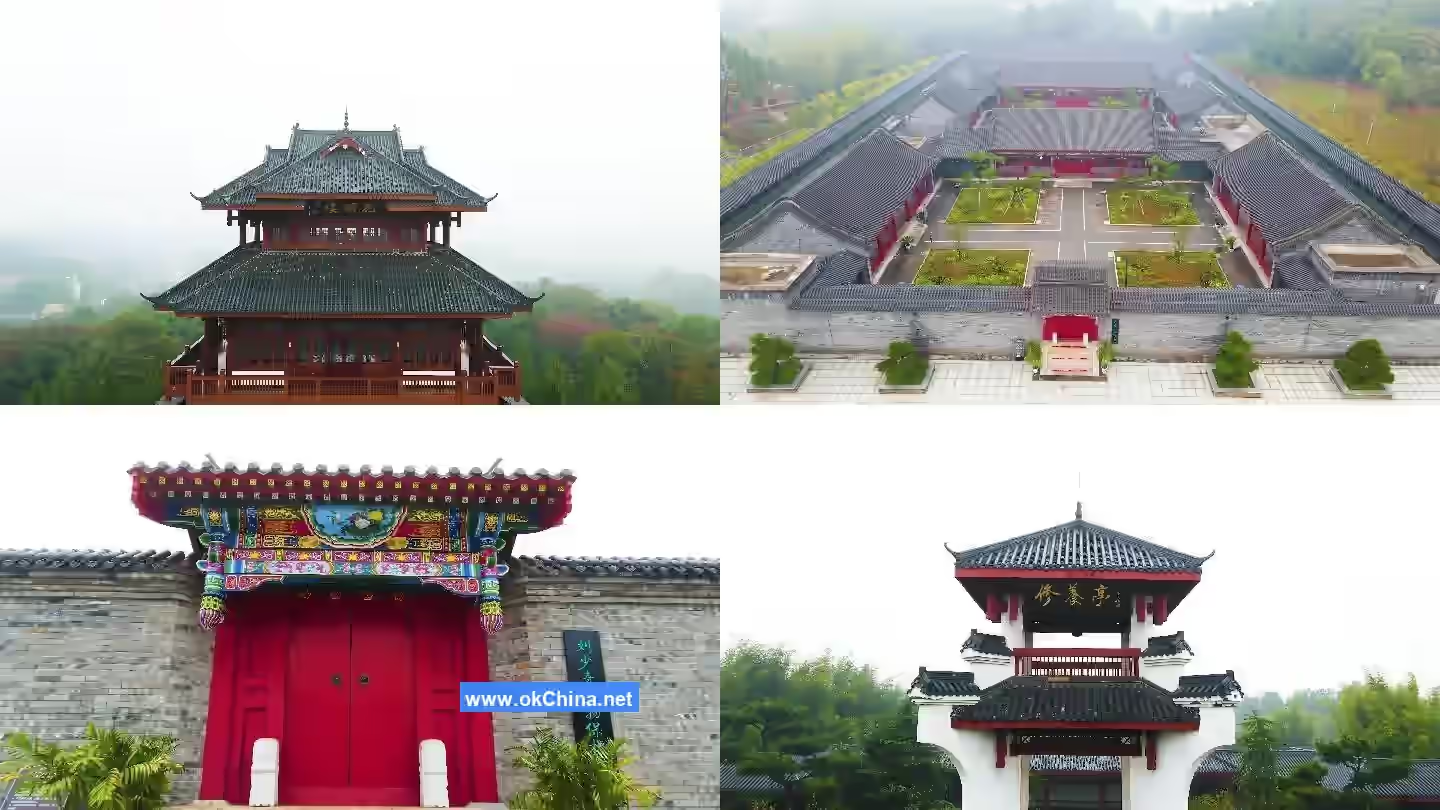
The Liu Shaoqi Cultural Relics Protection Center is a three-courtyard quadrangle-style building restored to the original proportions of the Fuluju residence in Zhongnanhai, Beijing, with decorations restored to the style of the Qing Dynasty. Between 1963 and 1967, then-President Liu Shaoqi worked here as arranged by the CPC Central Committee, overseeing the busy daily work of the central leadership and important state affairs. He dedicated himself heart and soul to building a prosperous and strong socialist country, making outstanding contributions. During Liu Shaoqi's tenure here, the building was relatively old, in disrepair, and its decorations were extremely simple and plain.
The Liu Shaoqi Cultural Relics Protection Center also includes additional functional areas such as a cultural relics storage room and a calligraphy stele corridor featuring "On the Cultivation of Communist Party Members." It integrates exhibition display, cultural relics protection, research, and publicity, with a total building area of 4,216 square meters.
3.7 Huaming Garden
3.7.1 Overview
Huaming Garden is guided by Comrade Jiang Zemin's strategic thought of "Governing the Country by Virtue" and the "Outline for the Implementation of Civic Moral Construction." Set against the backdrop of Huxiang culture, it takes promoting the traditional virtues of the Chinese nation as its theme, with a focus on Comrade Liu Shaoqi's "On the Cultivation of Communist Party Members." It employs an educational-through-tourism approach to provide ideological and moral education, revolutionary tradition education, and patriotism education to tourists, especially the youth. Main attractions include Huaminglou Tower, the Cultivation Pavilion, the aircraft used by Comrade Liu Shaoqi, the Cultural Square, and Yiyi Lake.
3.7.2 Huaminglou Tower
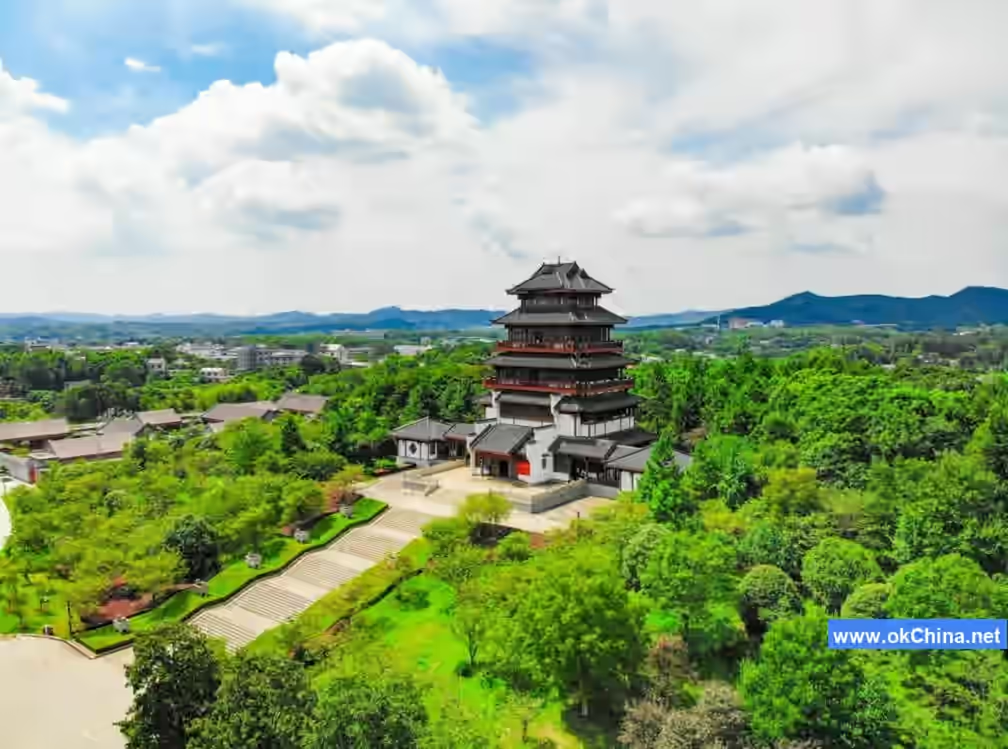
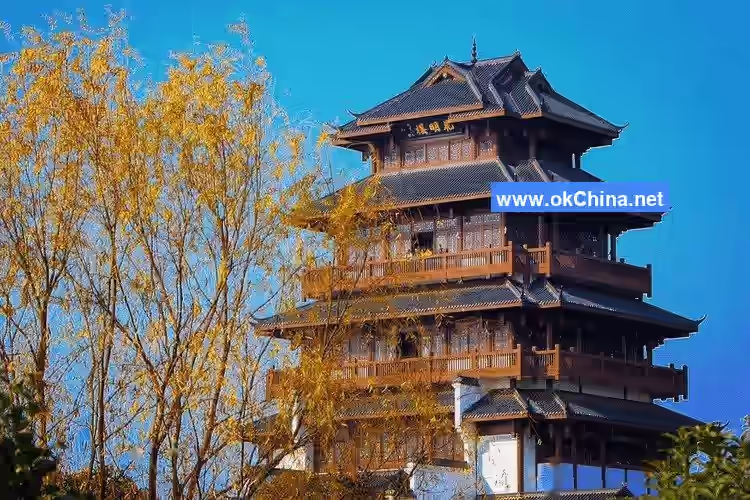
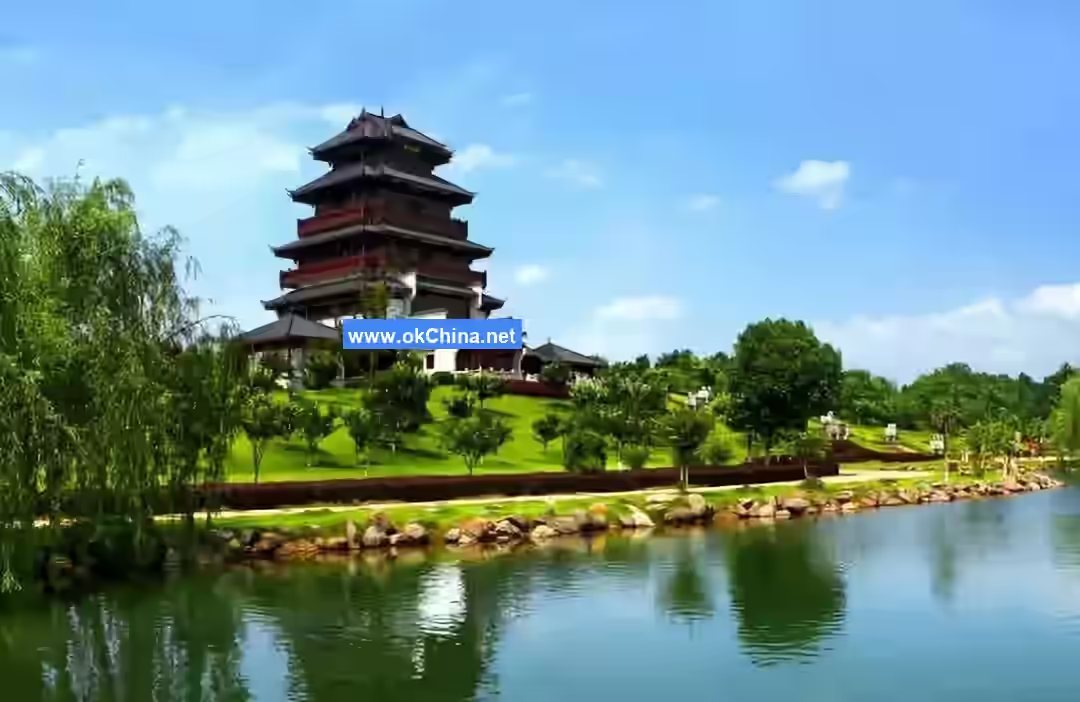
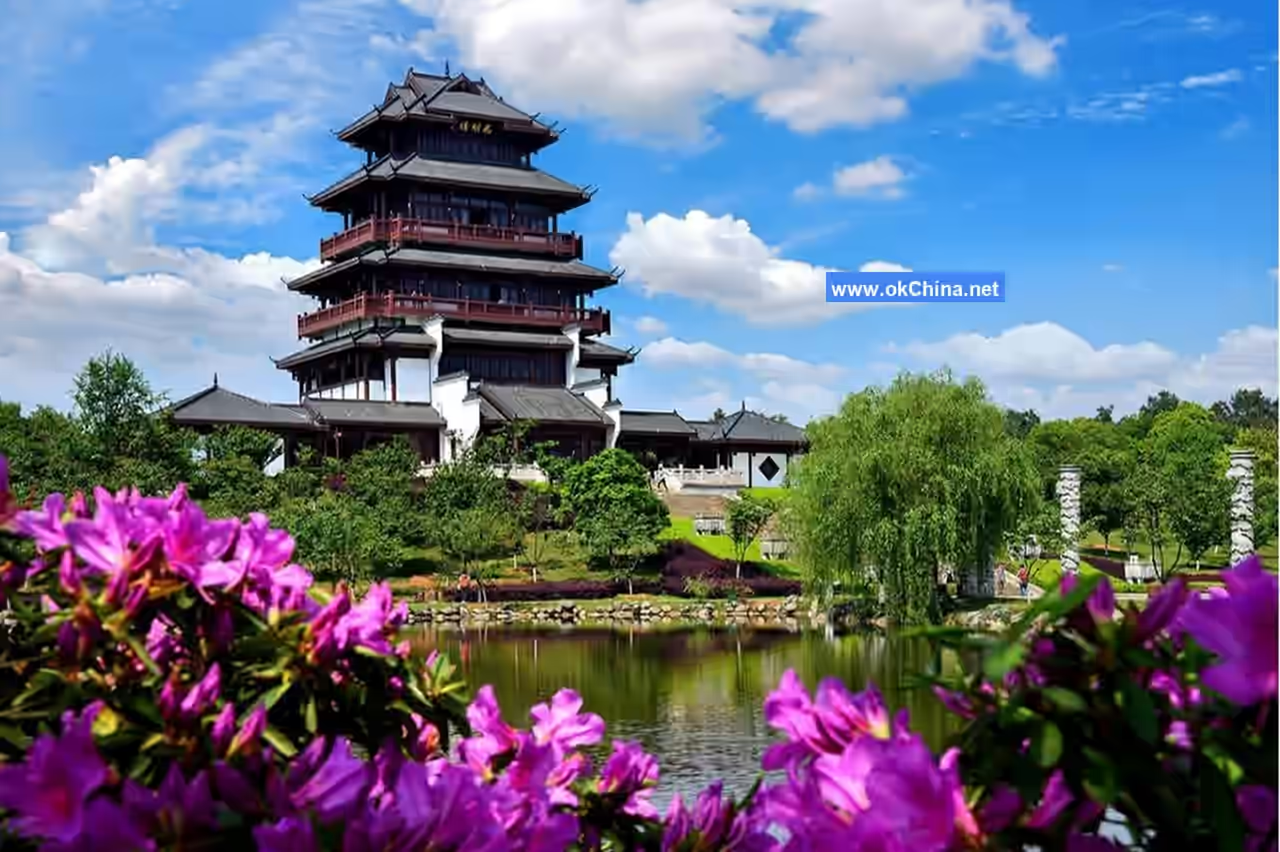
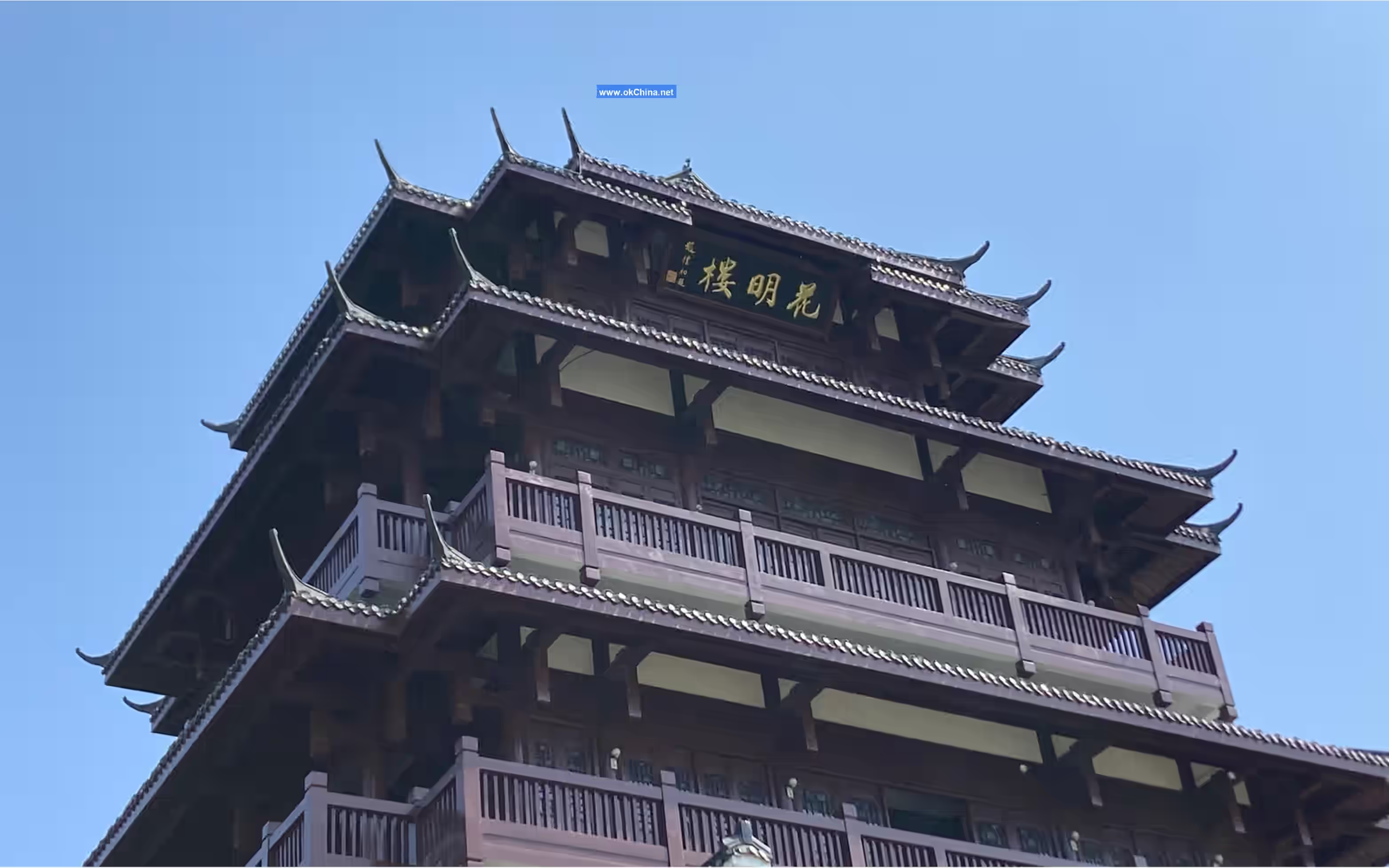
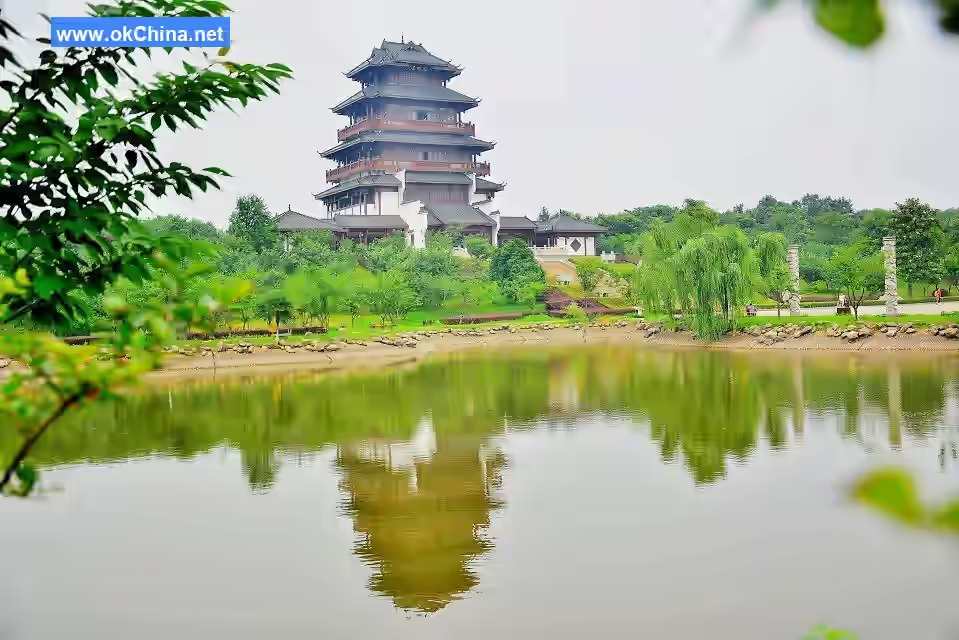
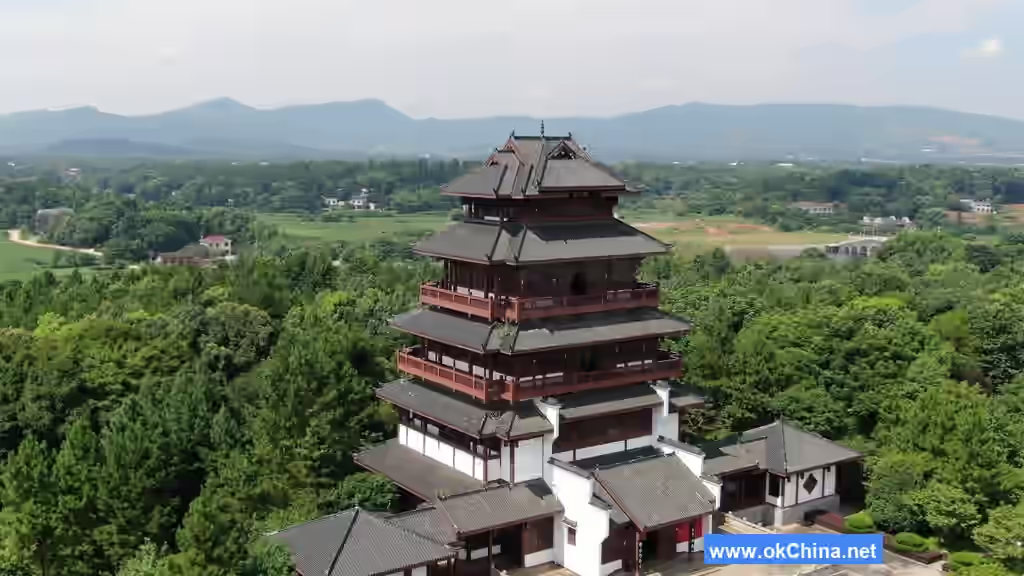
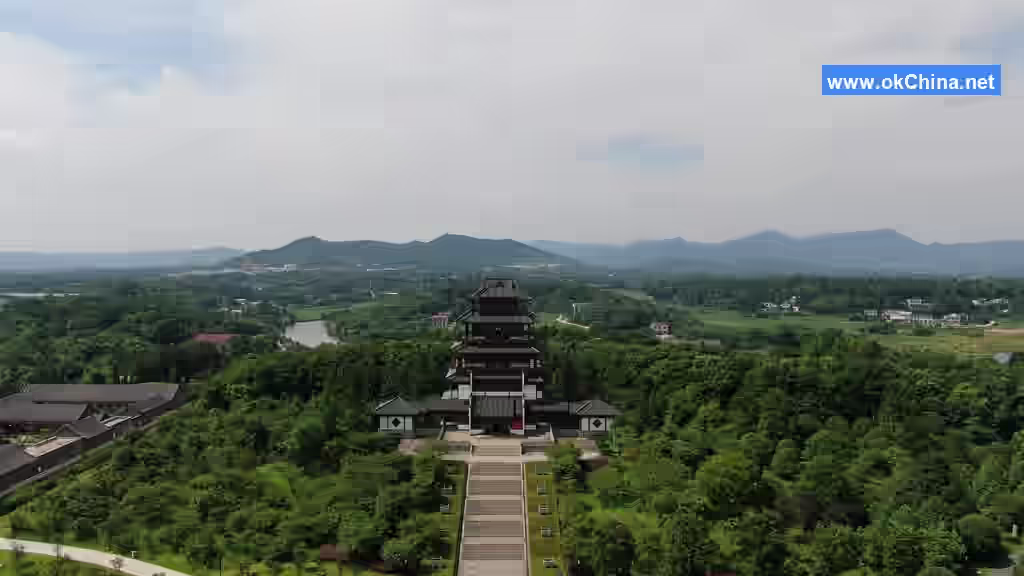
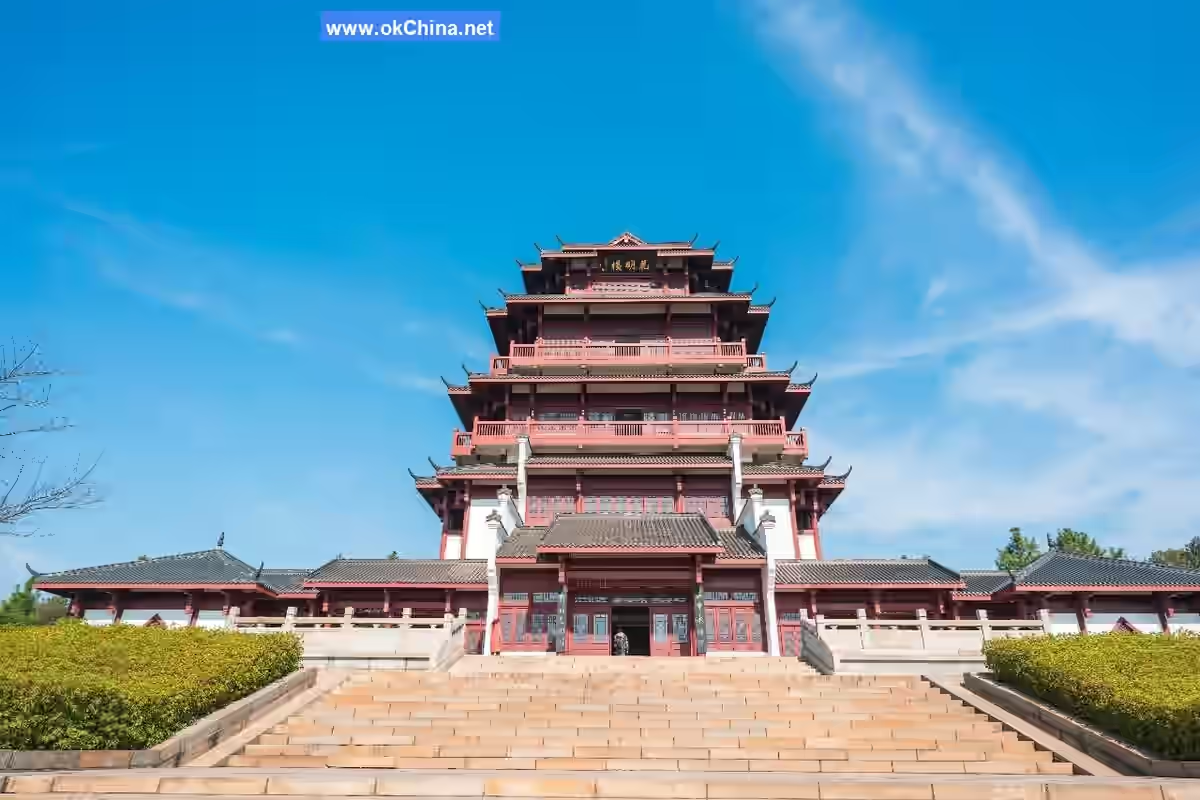
Huaminglou Tower derives its name from the famous line, "Beyond the hills and streams there seems no road, / Amid the dark willows and bright flowers another village appears." The tower is 33.02 meters high with five stories, covering an area of nearly 5,000 square meters and a building area of over 2,000 square meters. Its plan adopts a centralized layout, tapering upwards floor by floor. The "Huaminglou" plaque was personally inscribed by the late Mr. Zhao Puchu, former Vice Chairman of the National Committee of the Chinese People's Political Consultative Conference. Inside the tower, exhibits include the Ten Scenic Spots of Ningxiang, bronze artifacts unearthed in Ningxiang, sculptures of Huxiang cultural celebrities and the young Liu Shaoqi, showcasing to visitors Ningxiang's beautiful scenery, abundant natural resources, and culturally rich environment that nurtures outstanding talent.
3.7.3 Cultivation Pavilion
The Cultivation Pavilion was built to commemorate Comrade Liu Shaoqi's brilliant work, "On the Cultivation of Communist Party Members." Covering an area of 6,000 square meters with a building area of over 1,200 square meters, it consists of two courtyards (front and back) and a small assembly square. It is a complex of antique-style garden buildings constructed using traditional Chinese gardening techniques based on local residential forms, characterized by simplicity, elegance, and solemnity. The "Cultivation Pavilion" name plaque was inscribed by Li Duo, a member of the National Committee of the CPPCC and Vice Chairman of the Chinese Calligraphers Association. It displays the handwritten outline of "On the Cultivation of Communist Party Members," discussions on cultivation by famous figures throughout history, evaluations of "On the Cultivation of Communist Party Members" by three generations of Chinese leaders, and calligraphy and painting works by renowned artists praising the work.
3.7.4 Yiyi Lake
Yiyi Lake is an artificial lake covering an area of over 6,000 square meters. Its name is inspired by a poem by Zheng Banqiao: "In my official chamber I lie listening to the rustling bamboos, / Suspecting it to be the moaning of the people in distress. / For us petty officials of the district, / Every twig and leaf should stir our concern." This reflects Comrade Liu Shaoqi's noble character of constantly caring for the people. The lake is surrounded by stone arch bridges, rockeries, pavilions, willow trees, and crape myrtles, making the entire garden area appear clean, bright, and full of vitality.The Huaming Moral Education Garden is designed with great affinity, using extensive plant landscapes to create a vibrant array of colors, welcoming guests from all directions. It allows visitors to experience the sentiments of great figures in a relaxed and lively atmosphere, savoring the unique cultural ambiance as the scenery changes with every step.
3.7.5 The Aircraft Flown by Comrade Liu Shaoqi
The aircraft flown by Comrade Liu Shaoqi is the only surviving plane from the first batch of five Il-18 aircraft purchased by China from the Soviet Union in 1959. It is relatively well-preserved, with the original seats inside the cabin and the military beds and bed sheets in the rest compartment. As the dedicated aircraft for top leaders of the Party and the state at the time, it was used by Liu Shaoqi, Zhou Enlai, Peng Zhen, Chen Yi, and others. It accompanied Comrade Liu Shaoqi on numerous diplomatic activities. In December 2002, the National Cultural Heritage Administration issued Document No. 1160, proposing to collect the aircraft flown by Comrade Liu Shaoqi. The Il-18-240 was authenticated by the captain and mechanic who piloted it at the time, confirming its authenticity and high historical value.
3.8 The Former Site of Tanzichong School
Tanzichong School was originally built in the 14th year of the Guangxu reign of the Qing Dynasty (1888) as the Zhu Family Ancestral Hall, which housed a private school for the education of the clan’s children. In the 32nd year of the Guangxu reign (1906), Liu Shaoqi began his early education here and adopted the school name “Weihuang.” The building faces south, covering an area of 1,200 square meters. It features a courtyard architectural style with 17 rooms, constructed from blue bricks and topped with small blue tiles in a hard hill roof design. After the founding of the People’s Republic of China, the Zhu Family Ancestral Hall was renamed Tanzichong School and used as an educational facility. In 2011, the former site of Tanzichong School was designated as a provincial-level cultural heritage protection unit by the People’s Government of Hunan Province.
The former site of Tanzichong School houses the "Aspire to Study" exhibition and serves as a venue for research and learning activities.
4. Development History
1959: Liu Shaoqi’s Former Residence was designated as a provincial-level key cultural heritage protection unit by the People’s Government of Hunan Province and opened to the public in August of the same year.
1966: With the onset of the "Cultural Revolution," Liu Shaoqi’s Former Residence was impacted and severely damaged, forcing its closure on October 31.
February 1980: After the Fifth Plenary Session of the 11th Central Committee of the Communist Party of China completely rehabilitated Liu Shaoqi, his former residence was renovated in accordance with the directives of the Central Committee and the decision of the Hunan Provincial Committee. It reopened to the public on March 5 of the same year.
November 24, 1983: Senior officials including Wang Shoudao, a member of the Standing Committee of the Central Advisory Commission, He Changgong and Tan Qilong, members of the Central Advisory Commission, Mao Zhiyong, Secretary of the Hunan Provincial Committee, and leaders from the Changsha Municipal Committee and Ningxiang County Committee visited Liu Shaoqi’s Former Residence to attend the "Symposium Commemorating the 85th Anniversary of Comrade Liu Shaoqi’s Birth." After hearing reports from the Changsha Municipal Committee and Ningxiang County Committee on the three years since the residence reopened, they decided to build the Comrade Liu Shaoqi Memorial Hall at Huaminglou.
1988: The Comrade Liu Shaoqi Memorial Hall was completed. On November 24 of the same year, it was inaugurated with a ribbon-cutting ceremony by President Yang Shangkun.
June 1997: The Comrade Liu Shaoqi Memorial Hall was designated as one of the first national patriotic education demonstration bases.
1998: To commemorate the centenary of Liu Shaoqi’s birth, the people of Ningxiang integrated the revolutionary memorial site with a tourist scenic area, developing Huaming Garden based on the memorial hall and constructing the "Huaminglou."
June 26, 2004: Document No. 24 issued by the Changsha Municipal Committee approved the addition of the Liu Shaoqi Hometown Administration Bureau to the Comrade Liu Shaoqi Memorial Hall, adopting a management model of "two names, one team."
March 18, 2008: The Comrade Liu Shaoqi Memorial Hall officially opened to the public free of charge. In the same year, it was rated as a "National First-Class Museum."
Comments
Post a Comment