Huaguo Mountain
1. Introduction
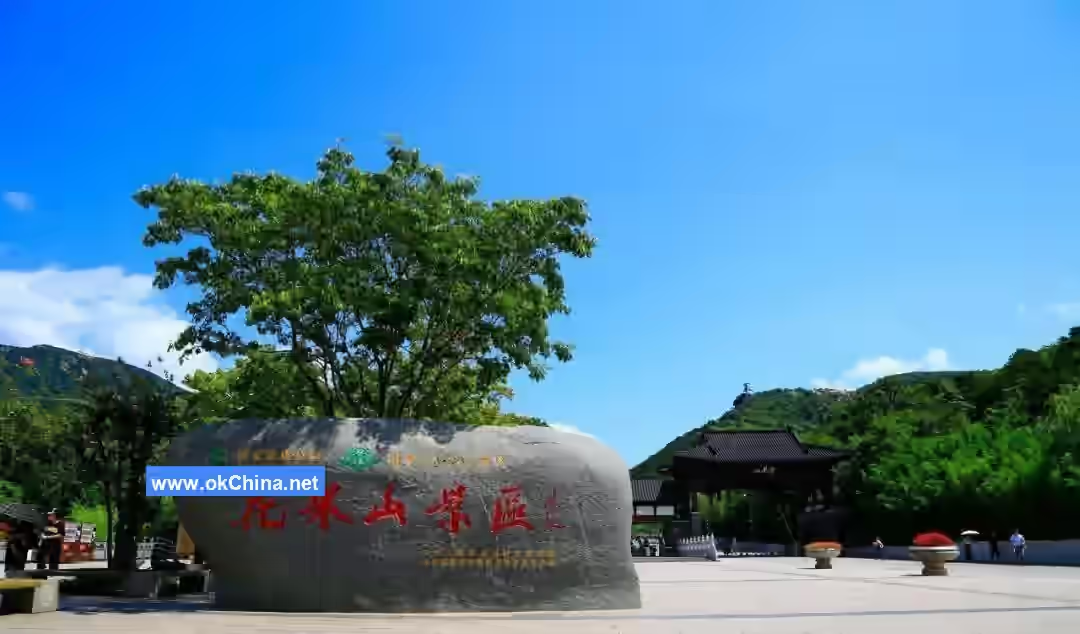
Huaguo Mountain Scenic Area is a National Key Scenic Area, a National AAAAA Tourist Attraction, a National Geopark, a National Model Site for Civilized Scenic Tourism, a National Advanced Unit in the Creation of Civilized Scenic Tourism Areas, a National Youth Civilization Post, a National Advanced Unit in Comprehensive Improvement of Key Scenic Areas, one of China's Top Ten Tourist Attractions, a Gold Award winner among "50 Places in China Most Worth Visiting for Foreigners", a National "Golden Week" Tourism Direct Reporting Point, and a National Air Quality Forecast System Station.
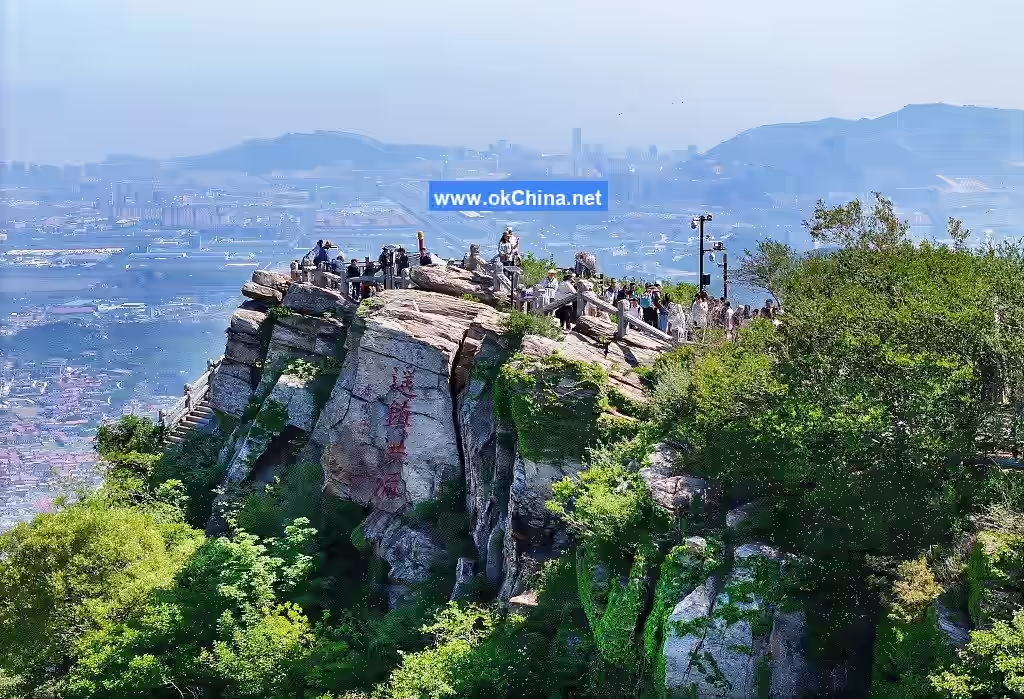
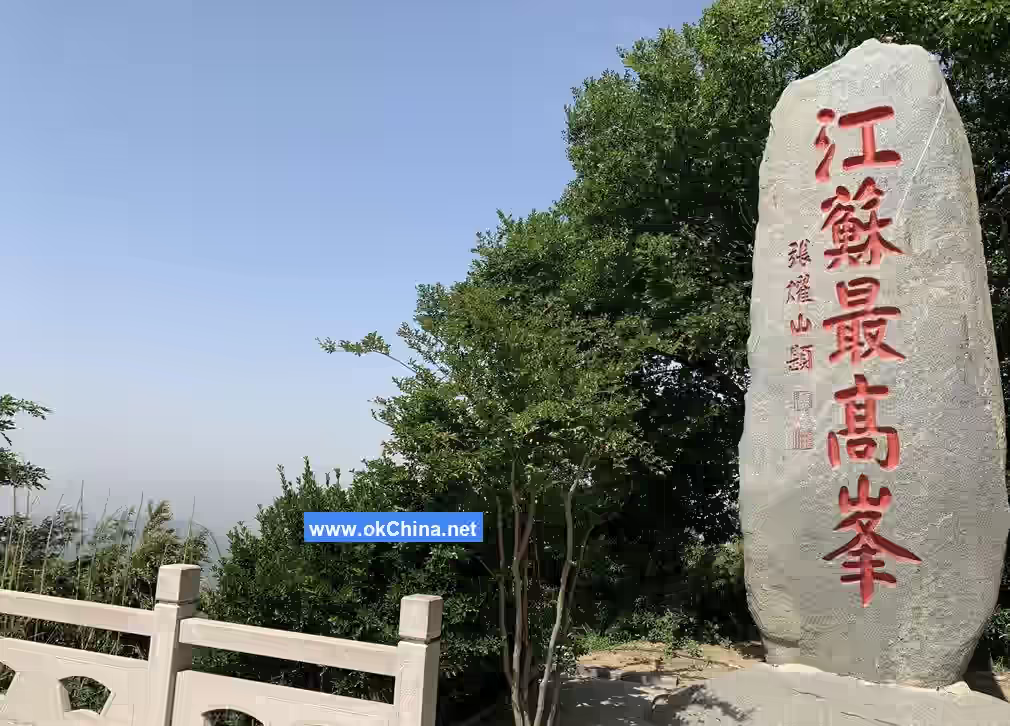
Lianyungang City, where Huaguo Mountain Scenic Area is located, lies in the central part of China's vast coastline, in the northeastern part of Jiangsu Province. It borders the Yellow Sea to the east, connects to the Central Plains to the west, holds the gateway to Qilu (Shandong) to the north, reaches the Jianghuai region to the south, and faces Japan and the Korean Peninsula across the sea. The scenic area covers 75.39 square kilometers with 136 overlapping peaks. Among them, the Yunu Peak (Jade Maiden Peak) of Huaguo Mountain is the highest peak in Jiangsu Province, standing at 624.4 meters above sea level with sheer cliffs and majestic grandeur.
2. Historical Development
2.1 Construction Through Dynasties
During the Tang, Song, Yuan, Ming, and Qing dynasties, temples and pagodas were successively built on Huaguo Mountain, making it a thriving Buddhist sanctuary. Ancient architecture, historical sites, stone carvings, and traces of visits by literati and scholars over thousands of years are scattered throughout the mountain. In the 30th year of the Wanli era of the Ming Dynasty (1602), Emperor Zhu Yijun issued an imperial decree designating the Sanyuan Palace on Huaguo Mountain as a famous mountain temple of the realm. During the Kangxi period of the Qing Dynasty, Emperor Kangxi inscribed the four characters "Yao Zhen Hong Liu" (Remotely Guarding the Mighty Flow) on the main peak, Yunu Peak, to express reverence for the mountain's deities.
2.2 Scenic Area Development
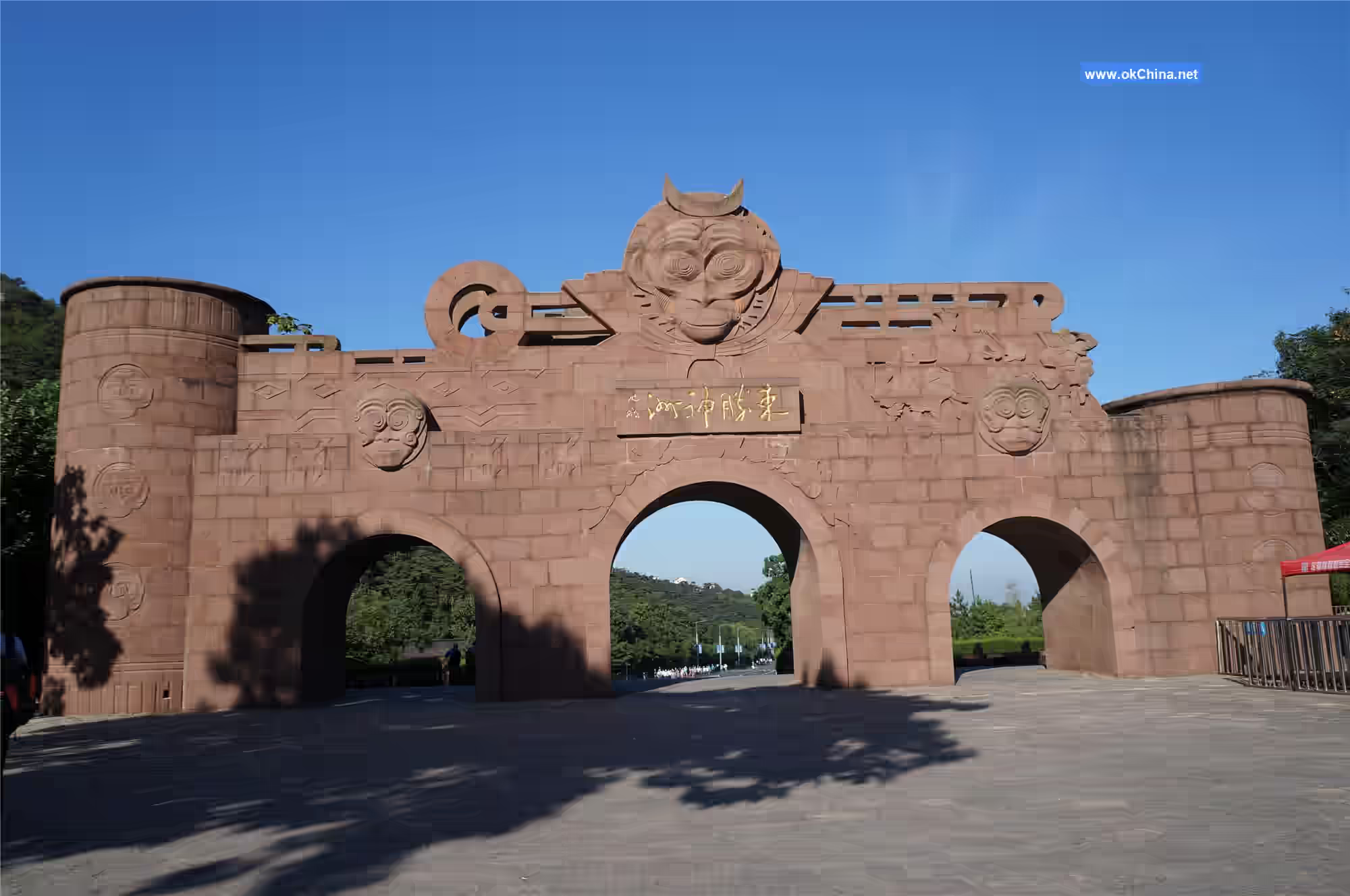
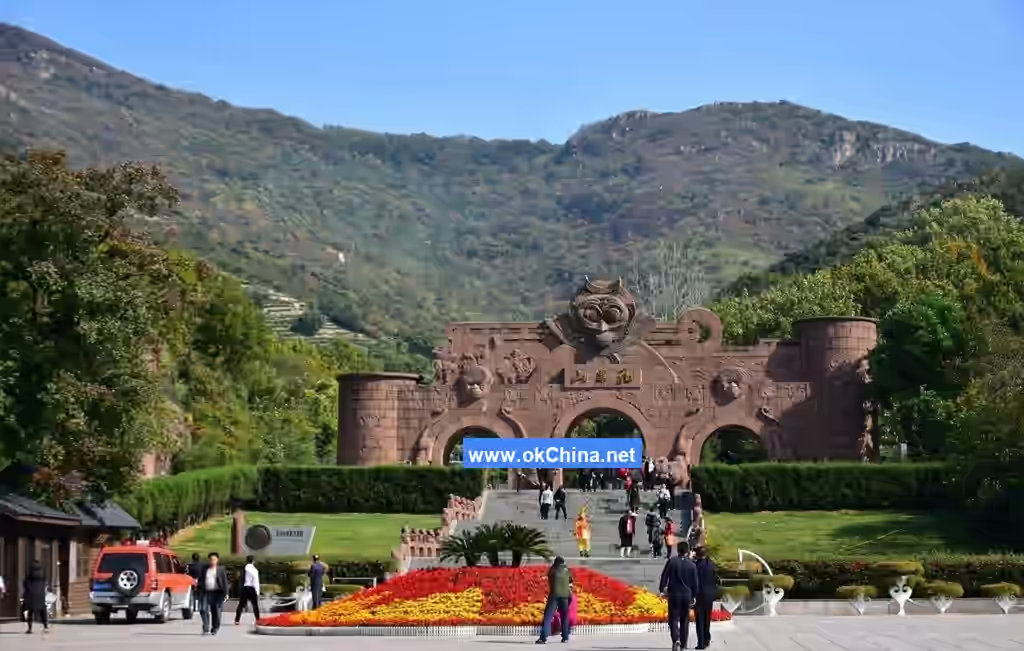
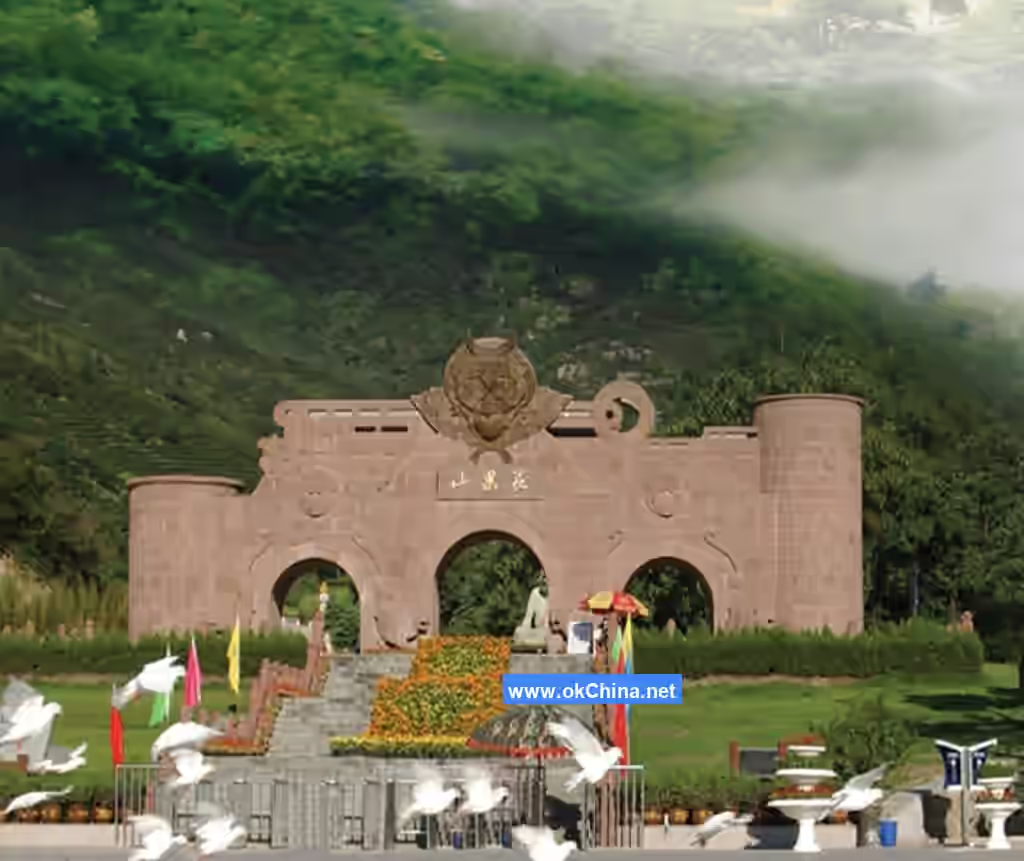
In 1936, Lianyungang cultural and geological expert Xu Shaoqu listed the name "Huaguo Mountain" in his work A Glimpse of Lianyun. In 1958, a cliffside stele inscribed with "Huaguo Mountain" was erected on the mountain, and from then on, the name "Huaguo Mountain" became widely known among the people. Starting May 1, 1985, Huaguo Mountain Scenic Area was officially opened to the public and began selling admission tickets. In August 1994, the pagoda was rebuilt on Huaguo Mountain. In 1992, the Righteous Monk Pavilion was constructed to commemorate the patriotic anti-Japanese spirit of the monks of Sanyuan Palace. On July 1, 1996, the Mountain Gate of Huaguo Mountain was completed. Visitors to Huaguo Mountain have since entered the area through this gate. In 2016, an 11-kilometer Journey to the West vehicular road and a 30-kilometer ecological walking trail were completed on Huaguo Mountain.
3. Geographical Environment
3.1 Geographic Location
Huaguo Mountain Scenic Area of Lianyungang City is located on the middle slopes of the Yuntai Mountains in the southern part of Lianyungang City, Jiangsu Province. It is situated in the northeastern part of Jiangsu, bordering the Yellow Sea to the east, connecting to the Central Plains to the west, holding the gateway to Qilu to the north, reaching the Jianghuai region to the south, and facing Japan and the Korean Peninsula across the sea. Its coordinates are approximately 34.6310° N, 119.1229° E. The Yunu Peak of Huaguo Mountain is the highest peak in Jiangsu Province, with an elevation of 624.4 meters and featuring sheer cliffs.
3.2 Geology and Geomorphology
Huaguo Mountain within the Lianyungang Huaguo Mountain Scenic Area is situated on the Subei-Jiaonan Anticline of the Dabie-Sujiao Fold Belt, which belongs to the Qinling Fold System, a first-order tectonic unit in China. The lithology consists of metamorphic rocks exhibiting well-developed schistosity and gneissosity. The metamorphic rocks in the Huaguo Mountain area are primarily leptynite, dating from the Meso-Neoproterozoic era (1.1 to 0.8 billion years ago), interspersed with numerous basic dikes, collectively named the "Yuntai Rock Group." The geological features of migmatites and metamorphic rocks in the Yuntai Mountains are very typical and relatively complete in type development. The marine erosion caves on Huaguo Mountain serve as a natural classroom and testing ground for studying global sea-level changes. This type of geological heritage is rare along the circum-Pacific coast and provides crucial evidence for researching crustal uplift/subsidence and sea-level variations. Additionally, due to the steep terrain, well-developed rock joints, and multiple earthquakes, several collapse geological heritage sites have formed, creating a rare landscape of collapse-accumulated peculiar rocks in China.
3.3 Climate
Huaguo Mountain Scenic Area of Lianyungang City experiences a temperate monsoon climate. It exhibits characteristics of a warm temperate zone, a transitional zone between northern and southern climates, and a transitional zone from ocean to inland. The general features are distinct seasons, mild climate, ample sunshine, moderate rainfall, and concurrent rain and heat. The annual average temperature is around 14°C, with an annual average maximum of 19°C and an annual average minimum of 10°C, meaning neither severe cold nor intense heat. Furthermore, the average annual total precipitation is over 920 mm, representing a humid rainfall pattern; the average annual relative humidity is 70%.
4. Main Attractions
4.1 Main Attractions of Huaguo Mountain
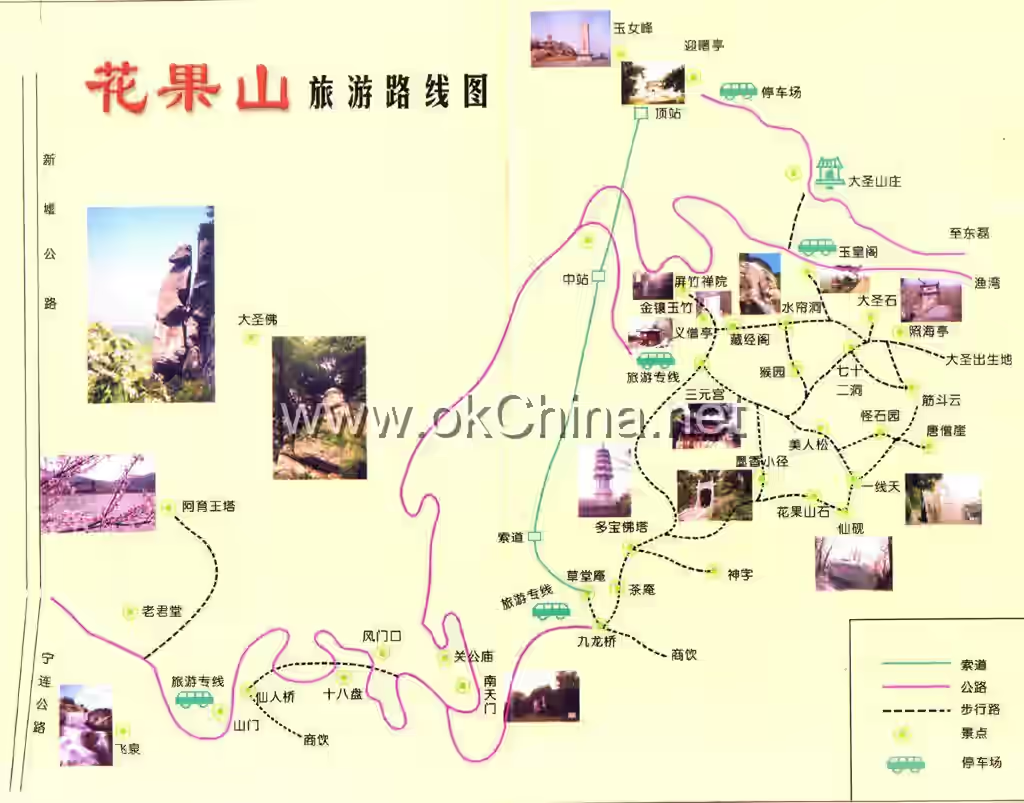
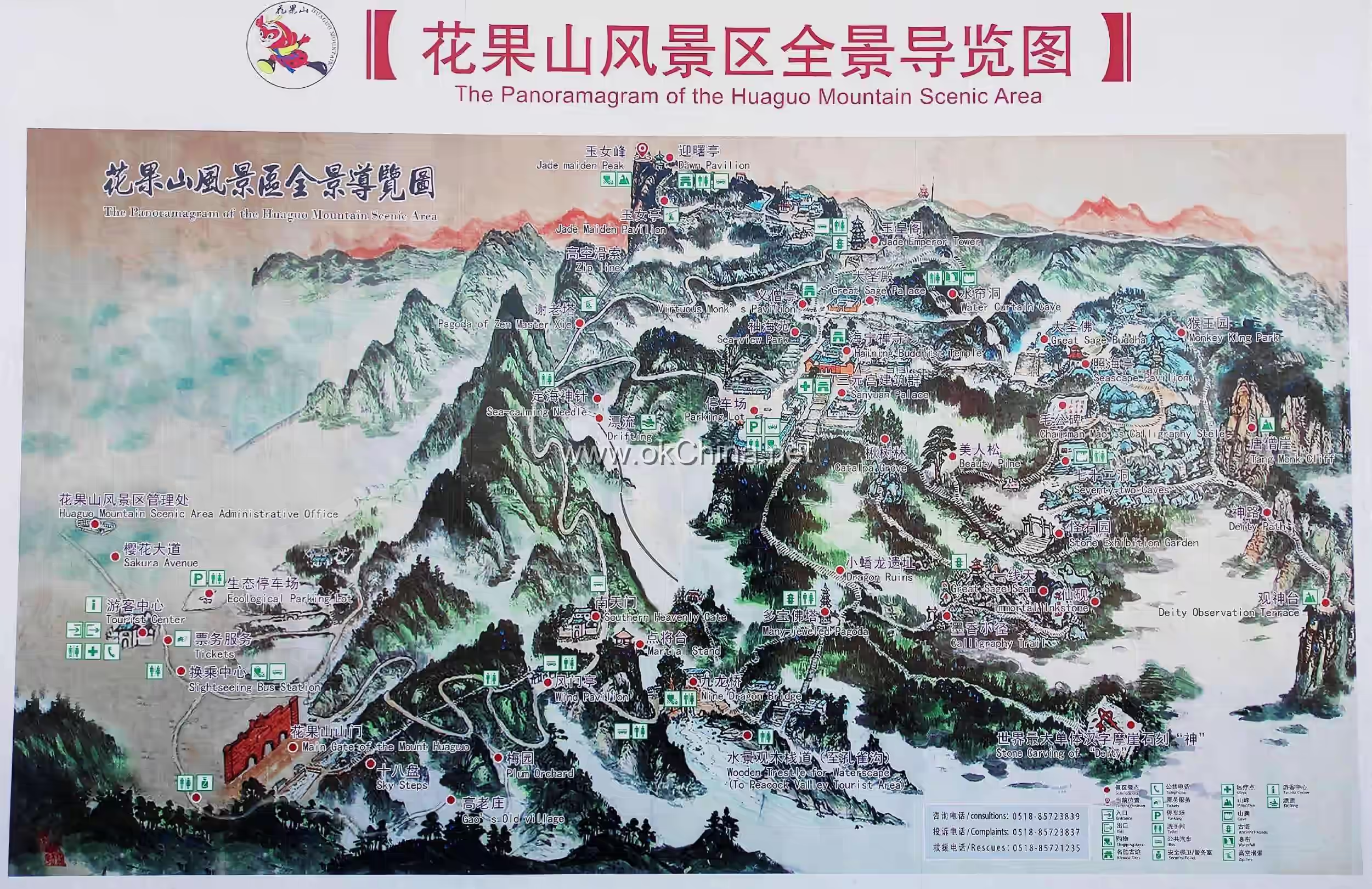
The main attractions of Huaguo Mountain include Yunu Peak, Water Curtain Cave, South Heavenly Gate, Eighteen Bends, Nine Dragons Bridge, Sanyuan Palace, Jade Emperor Pavilion, Seventy-Two Caves, Strange Stone Garden, Mao Gong Stele, Ashoka Pagoda, Peacock Gully, Donglei, Yanfu Temple, and others, totaling 136 main sites.
4.2 Huaguo Mountain Gate
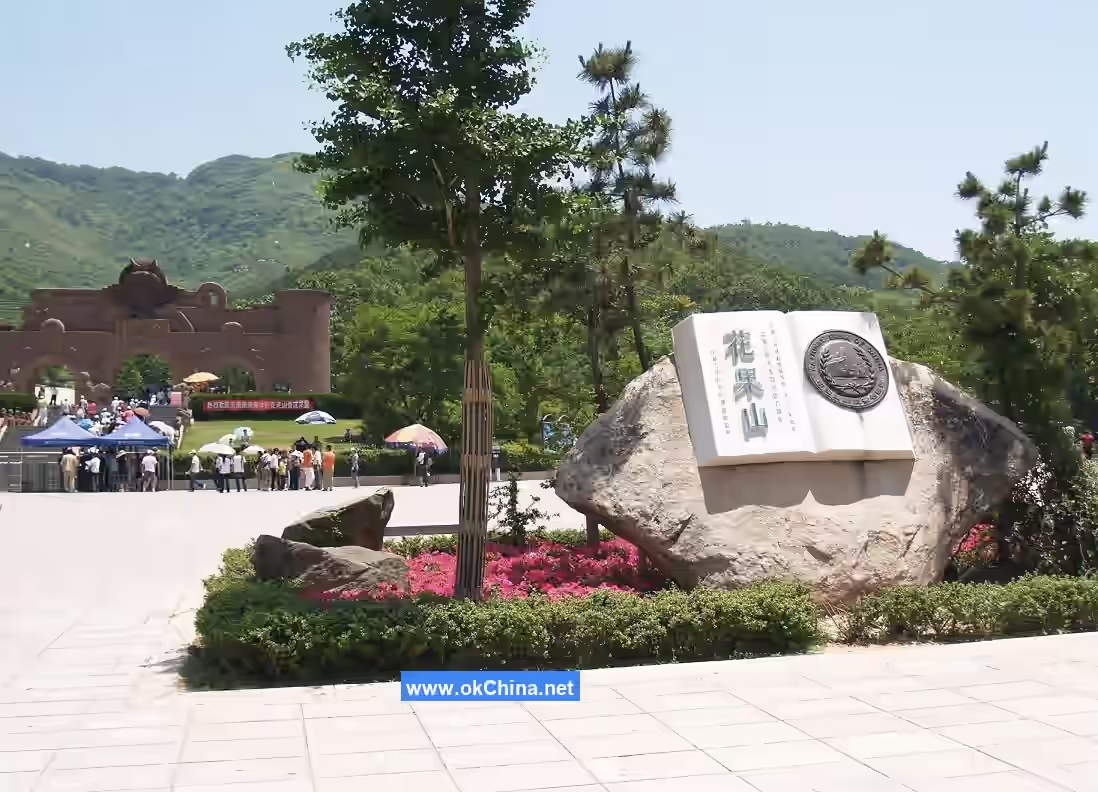
The Huaguo Mountain Gate is guarded by four stone-carved lions, reflecting the characteristic of Huaguo Mountain: "In the absence of tigers on the mountain, the monkey proclaims himself king." The stone monkeys surrounding the square are the welcoming monkeys of Huaguo Mountain. Originally numbering 108, they allude to the 36 Heavenly Spirits and 72 Earthly Fiends. The plaque on the back of the mountain gate bears the inscription "Land of the East, Continent of Superior Holiness" (Dongsheng Shenzhou), calligraphed by Mr. Shen Peng, then Acting Chairman of the Chinese Calligraphers Association.
4.3 Water Curtain Cave
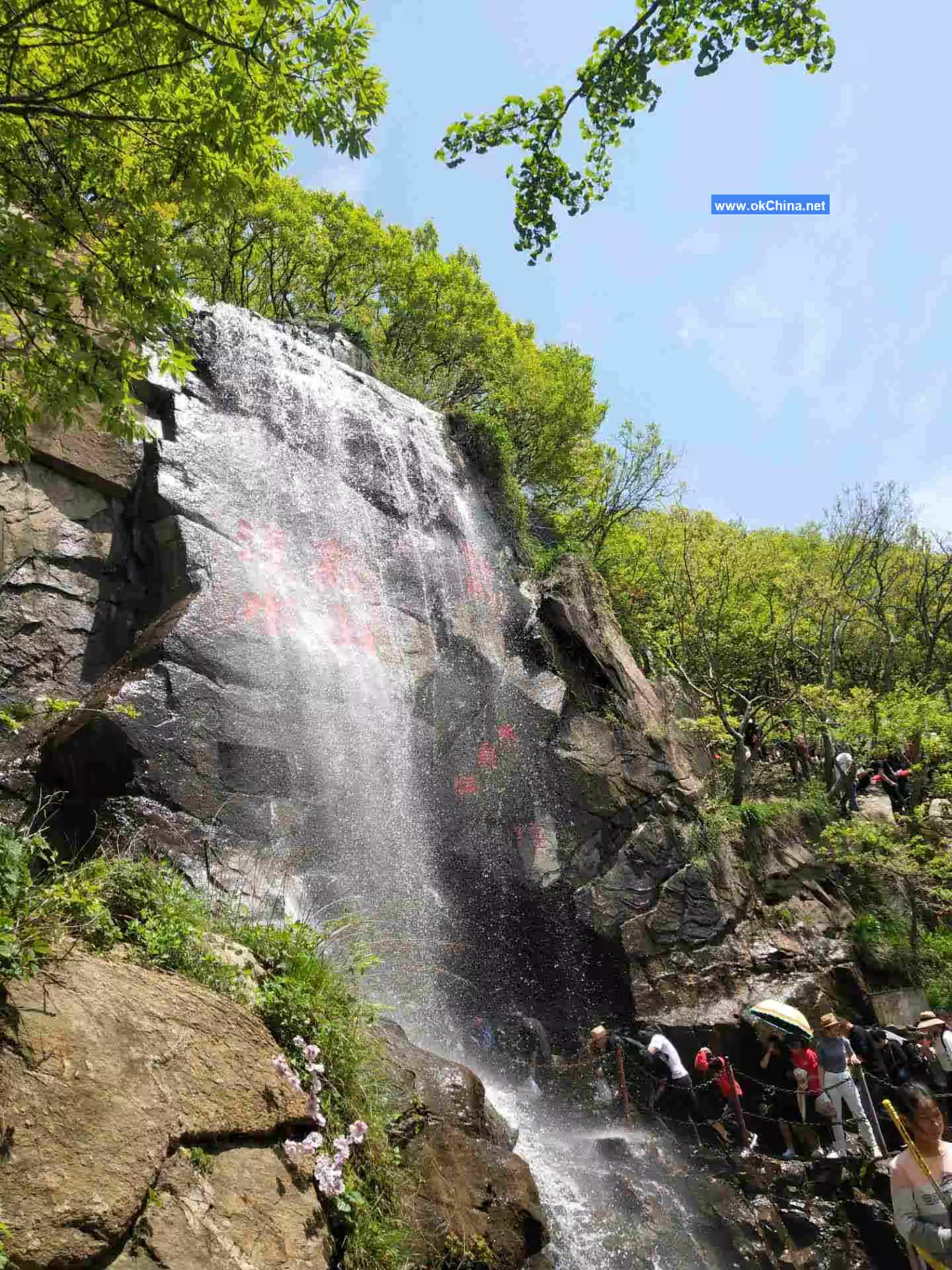
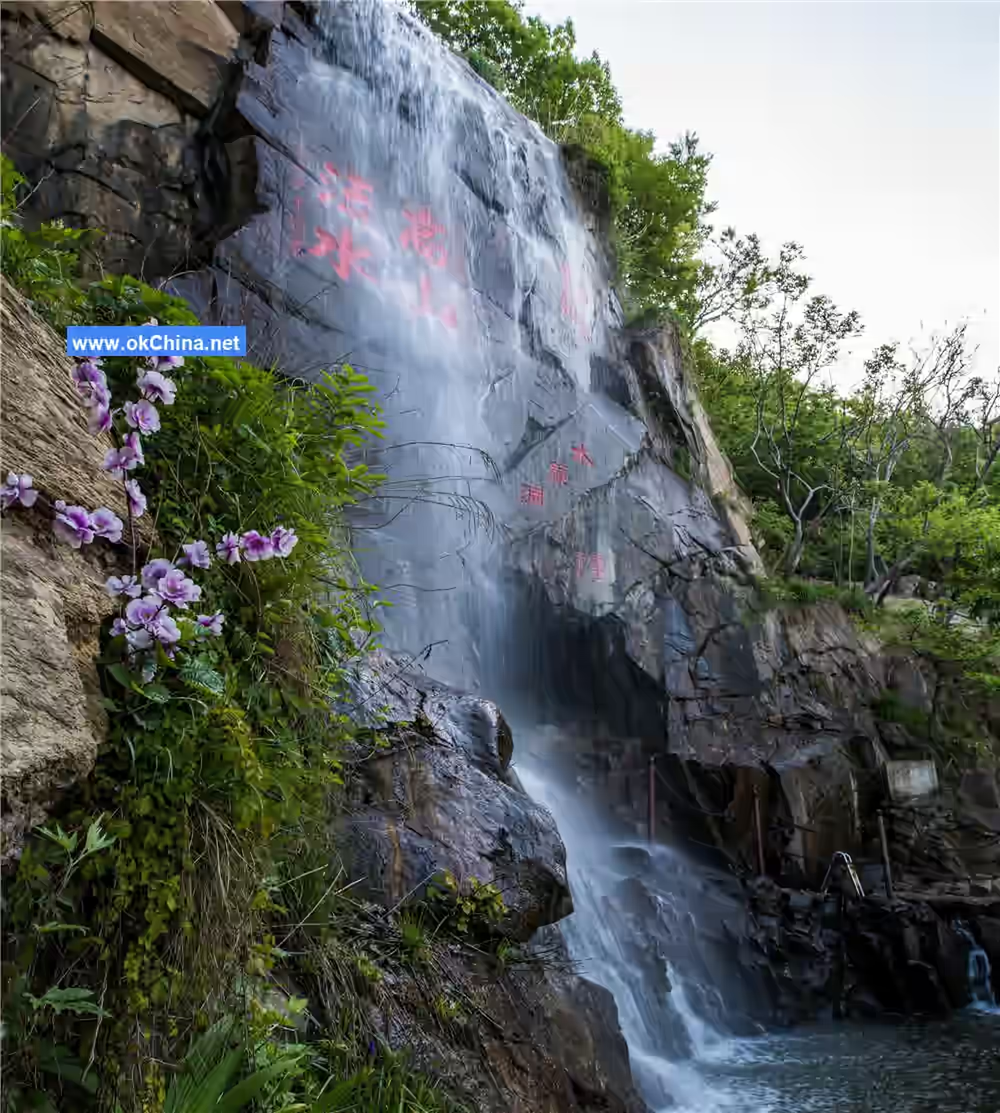
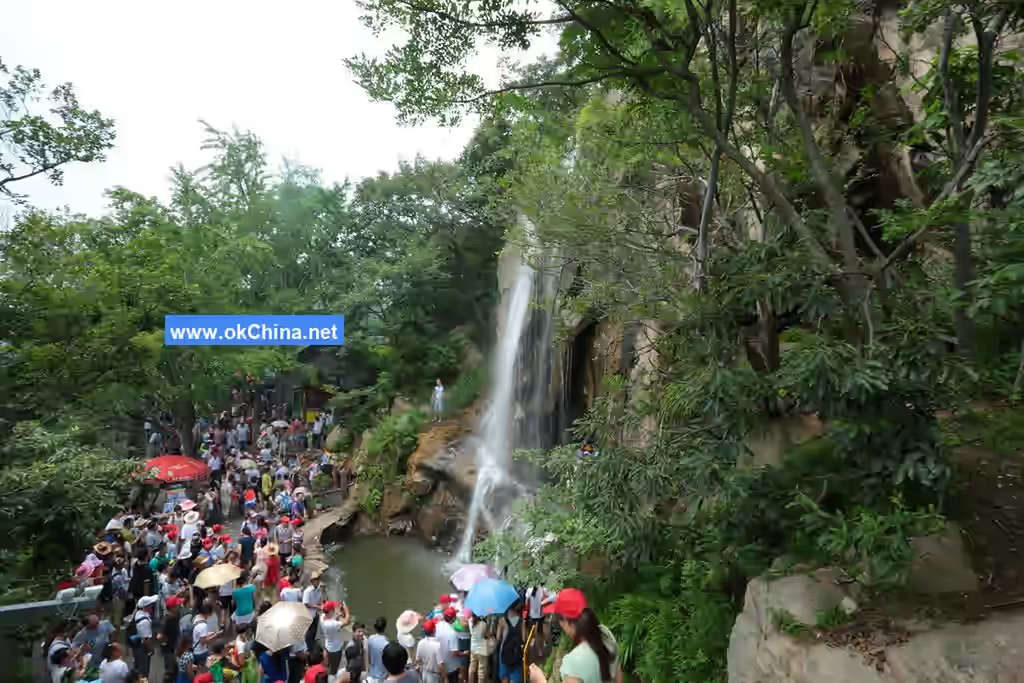
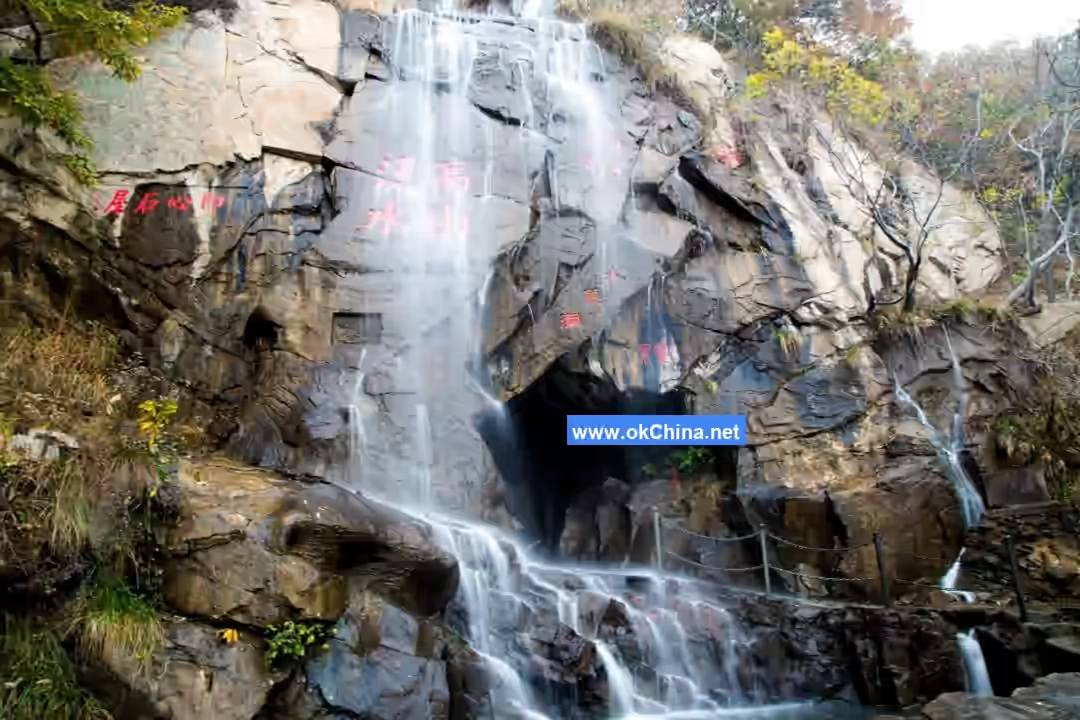
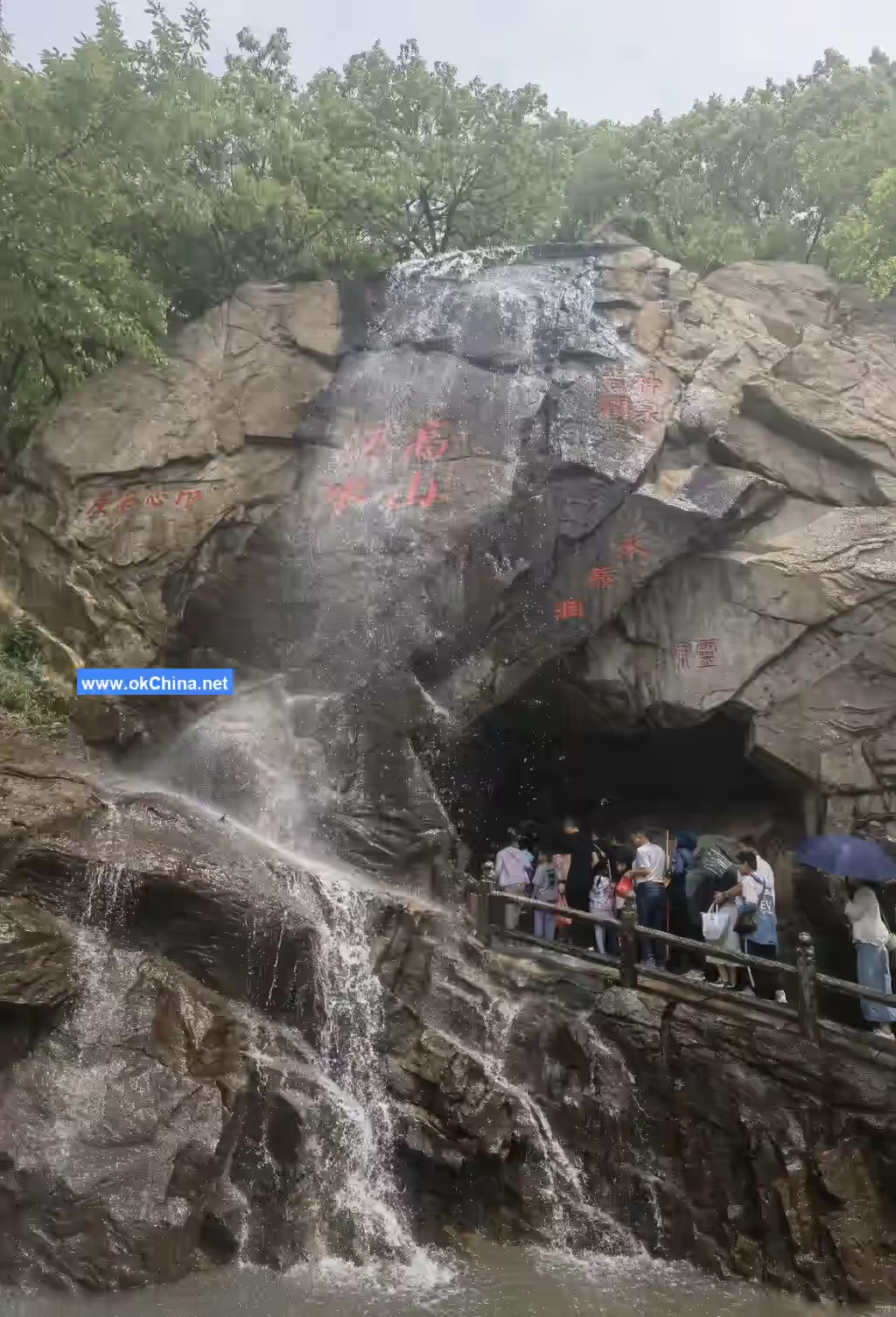
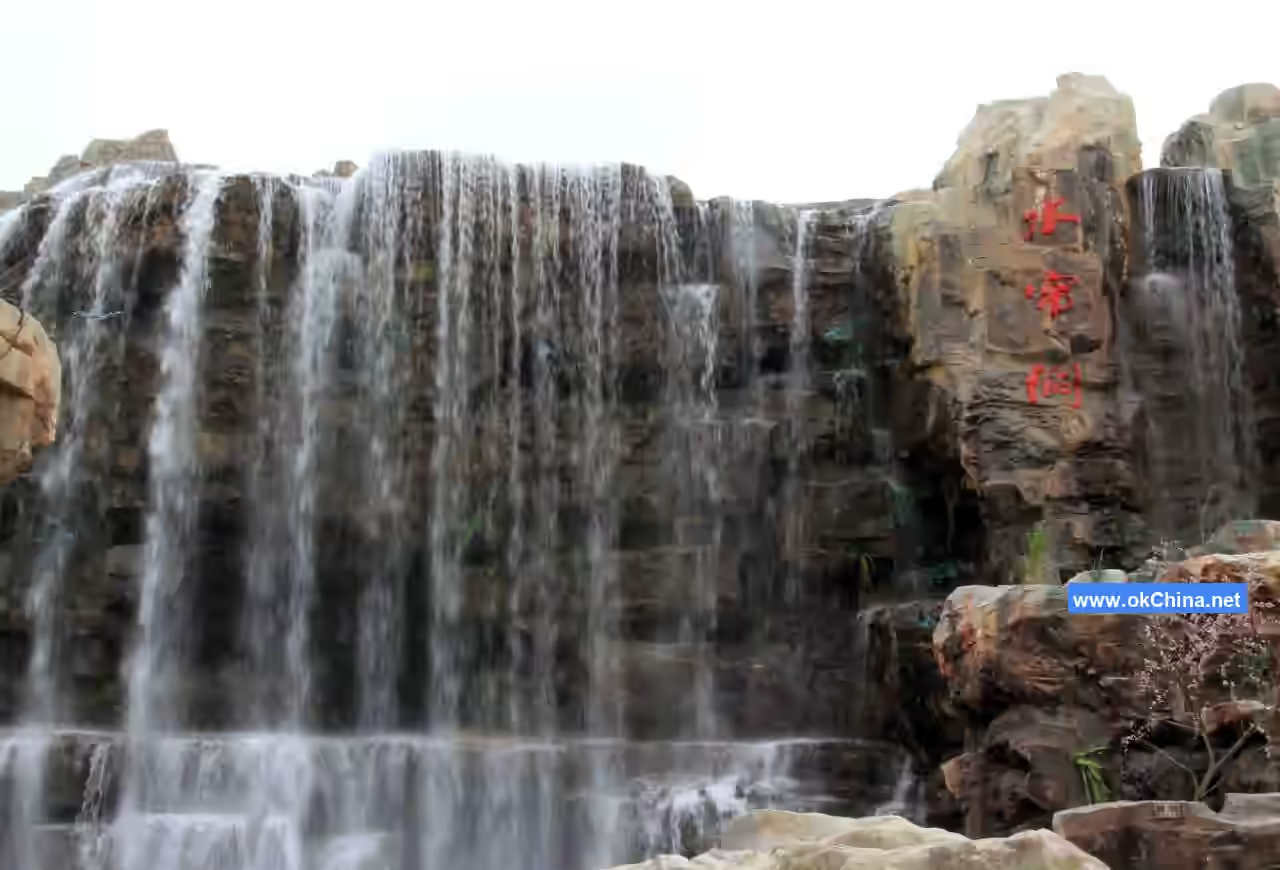
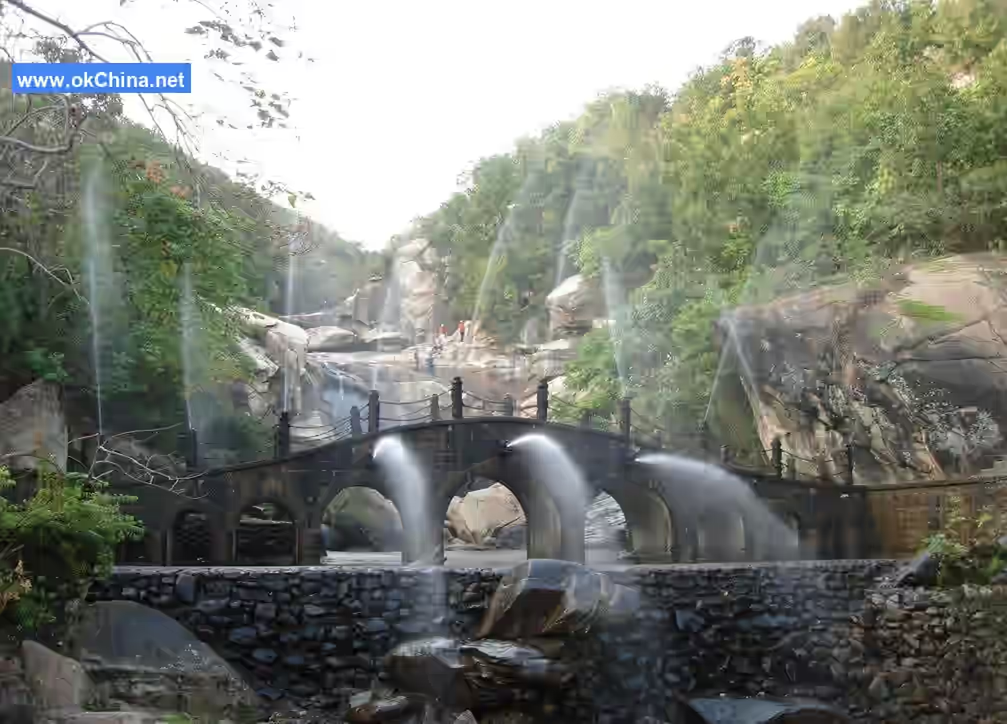
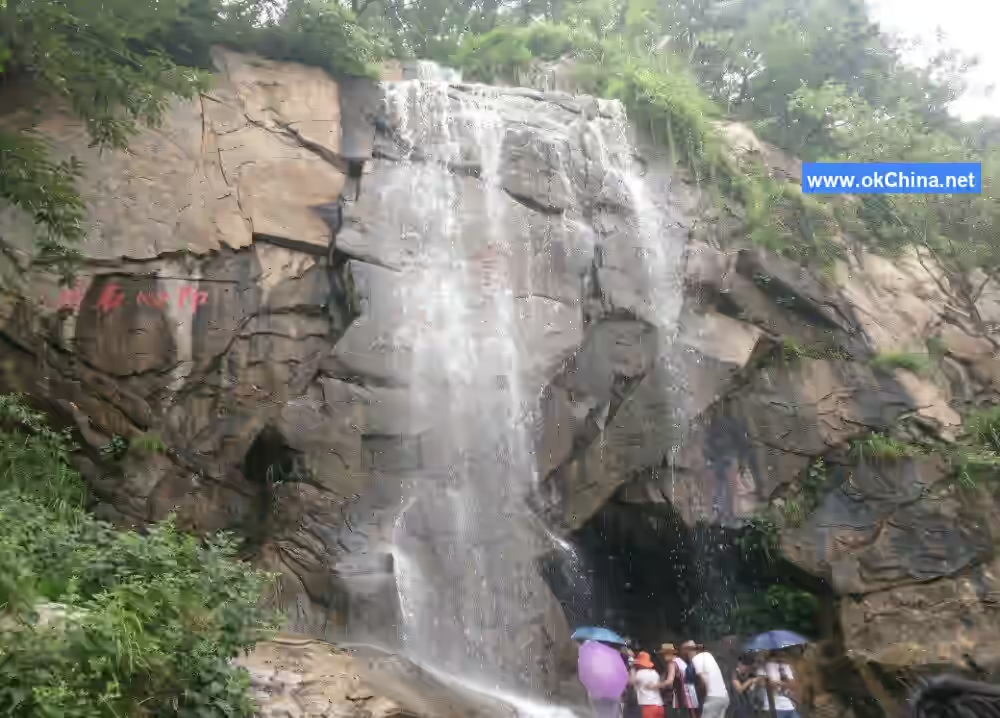
The Water Curtain Cave is a representative attraction of Huaguo Mountain. It is the prototype of Sun Wukong's (the Monkey King's) home, the Water Curtain Cave, in Journey to the West. Long before the novel was written, the Water Curtain Cave was already famous. It was vividly and detailedly described in Ming Dynasty works such as Gu Qian's Thirty-Six Scenes of Yuntai and travelogues by Zhang Chaorui and others, as well as various local chronicles. In front of the cave entrance, there are inscriptions from the 23rd year of the Jiajing era of the Ming Dynasty (1544) by Wang Tong, the prefect of Haizhou, reading "High Mountains, Flowing Water," along with other carved stones like "Divine Spring Widely Moistens" and "Numinous Spring." Journey to the West describes it: "A white rainbow arose, a thousand-fathom snowy wave flew forth... The murmuring stream was named a waterfall, truly like a hanging curtain."
4.4 Sanyuan Palace
Sanyuan Palace is at the center of the Sanyuan Palace architectural complex on Huaguo Mountain, featuring carved beams, painted rafters, and numerous imposing halls. Records indicate it originated in the Tang Dynasty, was rebuilt in the Song Dynasty, received imperial bestowal and expansion in the Ming Dynasty, attracted tens of thousands of worshippers, and was subsequently renovated multiple times in the Qing Dynasty. In the 27th year of the Republic of China (1938), it was bombed by Japanese forces, and the following year, it was burned down when Japanese troops searched the mountain. After the Cultural Revolution, it was gradually restored following Ming Dynasty architectural styles, forming a temple complex centered on Haining Chan Temple. The current mountain gate and the plaque inscribed "Imperially Bestowed Huguo Sanyuan Palace" are relics from the Ming Dynasty. The ancient cypress tree to the right of Sanyuan Palace's main entrance survives from the Song Dynasty. The two ginkgo trees in the courtyard are over 1,100 years old.
4.5 Dawn Greeting Pavilion
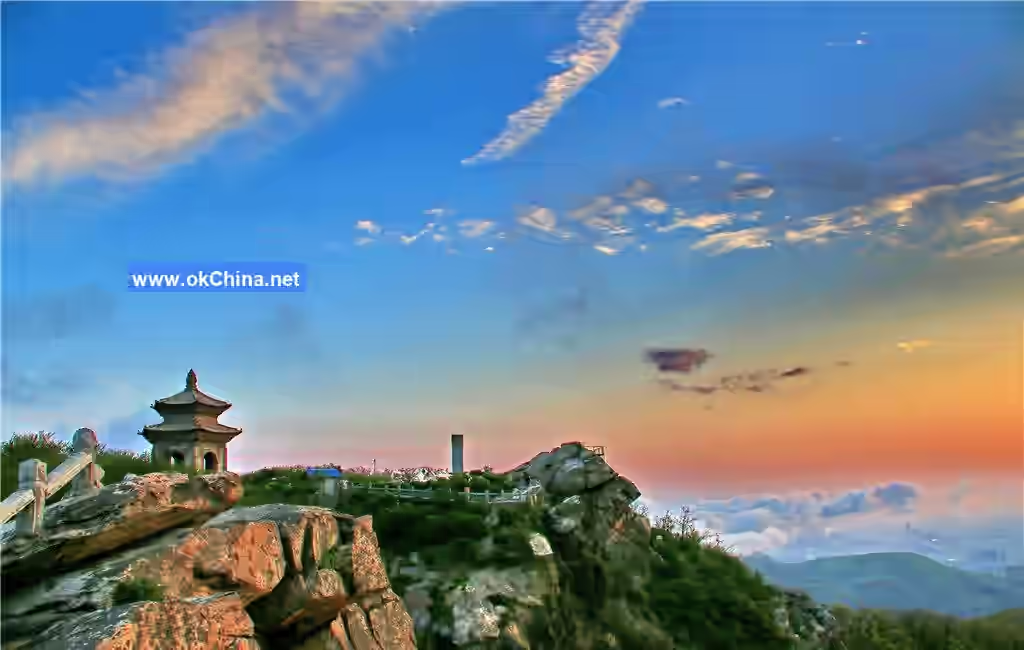
According to Supplements to Yuntai Records, a "Sunrise Viewing Tower" was built in the Tang Dynasty but later collapsed. During the Wanli era of the Ming Dynasty, the "Sea Dawn Tower" was built on the original site. In the 13th year of the Daoguang era of the Qing Dynasty (1833), Tao Shu donated funds for its renovation, personally inscribing "Sea Dawn Tower" on the gate plaque and composing and writing a couplet for the gate sides: "The dawn light is perfectly even, listen to the myriad sounds silent, already feeling one has come to the heavens; The tower's radiance opens on four sides, watch the first ascent of the orb, only then know the body is by the sun's side." In 1986, on the site of the Sea Dawn Tower, the "Dawn Greeting Pavilion" was constructed, which is currently the largest all-stone structure pavilion in China.
4.6 The King of "Divine" Characters
On a large cliff, there is a huge character "神" (shén, meaning divine/god), called the King of "Divine" Characters. The character is 39.4 meters long, 15.8 meters wide, and 0.6 meters deep, making it the world's largest single Chinese character cliff carving. It was entered into the Guinness World Records in 1996. The King of "Divine" Characters can be viewed from afar or up close. Every plant and tree on Huaguo Mountain is imbued with divine charm because of Journey to the West. From the east of the Strange Stone Garden, a stone slab path leads south from the Tang Monk Cliff to the best viewing platform for the King of "Divine" Characters. Along the path, the cliff walls bear numerous cliff carvings of the character "神" in different styles, sizes, and calligraphic flavors by various masters, creating a path full of "divine" atmosphere, aptly named the "Divine Path."
4.7 Ashoka Pagoda
Ashoka Pagoda is a thousand-year-old ancient pagoda standing by the shores of the Great Sage Lake. Backed by overlapping ridges and facing vast blue waves, the pagoda stands gracefully with clear reflections, where the lake's shimmer and mountain hues enhance each other's beauty. Originally, there was a Haiqing Temple next to Ashoka Pagoda, which was a subordinate monastery of the main temple Sanyuan Palace on Huaguo Mountain, similar to a modern reception station. In the past, pilgrims who had traveled long distances to worship at the mountain would rest here before continuing their ascent. The Ashoka Pagoda of Haiqing Temple is the tallest and oldest existing pagoda in northern Jiangsu. According to a stele embedded in the pagoda's inner wall during its construction, a pagoda had previously been built on this site, reputed as the second largest in the country during the Tang Dynasty, indicating this pagoda's significant place in China's pagoda construction history. Ashoka Pagoda has been a main attraction of Yuntai Mountain since ancient times, called "Ancient Pagoda Piercing Clouds" in the Ming Dynasty and "Pagoda's Shadow Perfectly Round" in the Qing Dynasty. It has five distinctive features: First, its ancient history; Second, its deep-rooted stability, having withstood the洗礼 (baptism) of the 1668 Tancheng earthquake of magnitude 8.5 during the Kangxi era of the Qing Dynasty, remaining upright and un-tilted to this day; Third, its magnificent pagoda form, further enhanced by the surrounding landscape; Fourth, it allows both viewing and climbing, offering visitors participatory opportunities; Fifth, it is associated with captivating mythological legends.
4.8 Seventy-Two Caves
Huaguo Mountain has an exceptional number of caves, collectively called the "Seventy-Two Caves," a wonder formed by an orogenic movement hundreds of millions of years ago. Besides the Sea and Sky Cave, famous ones include the Two Immortals Cave, Ten Thousand Buddhas Cave, Morning Sun Cave, Roaring Cloud Cave, Huayan Cave, Lotus Cave, etc. In Chapter 3 of Journey to the West, it describes how the demons of the seventy-two caves on Huaguo Mountain all submitted to the Monkey King and served as vanguards in the defense of Huaguo Mountain.### 4.9 Huaguo Mountain Stone The Natural Stele of Huaguo Mountain Stone is the largest ancient cliff carving on Huaguo Mountain. Its inscription is "A Record of Visiting Qingfeng Peak," written by Tang Boyuan, the Ming Dynasty magistrate of Haizhou. Among the tribute students he led to tour Huaguo Mountain was one named Gu Qian, the author of "Records of Yuntai Mountain" and "Poems on the Thirty-Six Scenes of Yuntai Mountain." As Gu Qian was about to depart for the capital, Tang Boyuan wrote this travelogue for him and had it carved "to the right of Chaoyang Nunnery."
4.10 Great Sage Buddha
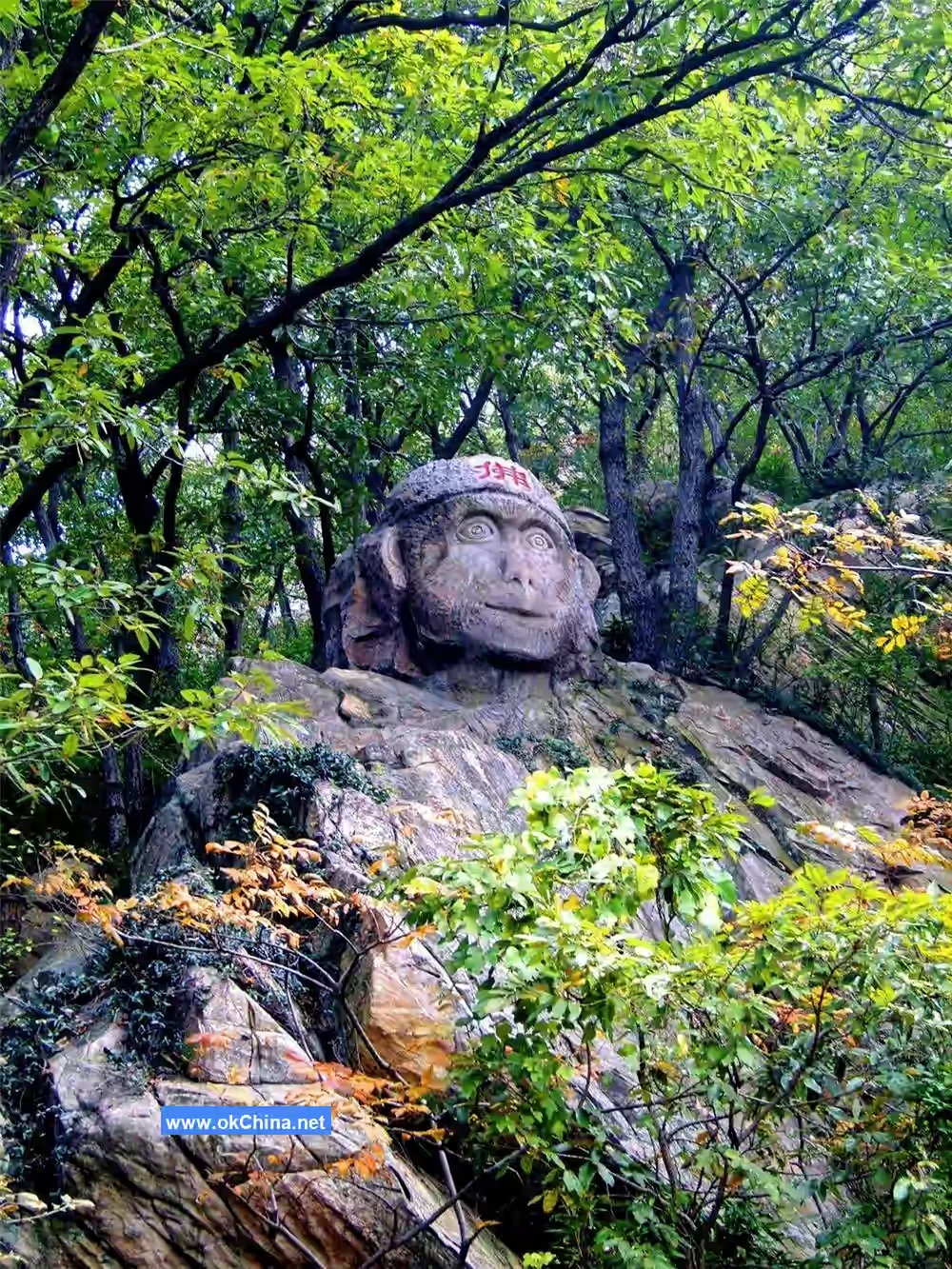
The Great Sage Buddha is a carved head of the Great Sage Sun, based on a natural stone, for worship by devotees of Sun Wukong. After protecting the Tang Monk on the journey to the West to retrieve the true scriptures and achieving perfect merit, Sun Wukong was granted the title "Victorious Fighting Buddha" by Tathagata, a status far above that of Guanyin Bodhisattva. As the name suggests, the Victorious Fighting Buddha is fond of and skilled in combat, and victorious in every battle.
4.11 Bajie Stone
Viewed from the mountainside in the distance towards the "Thread of Sky," Bajie Stone resembles an old pig wearing a monk's hat, sound asleep amidst the green trees. Below the Thread of Sky is the cliff inscription of the name "Huaguo Mountain." Scenes such as the Natural Stele and Inkstone Rock are also found here. Following the path leads to the Fragrant Ink Path, where works by over a hundred contemporary calligraphy masters are carved onto natural stones; one can also reach the Strange Stone Garden to see various bizarre pictographic stones related to "Journey to the West."
4.12 Suppressing the Torrents from Afar
The Qing Emperor Kangxi greatly admired the imposing manner of Yuntai Mountain restraining the Huai River as it flowed into the sea. In the 30th year of his reign (1691), while returning to the capital from a southern tour, he specially dispatched his personal eunuch, Wu Ge, to Yuntai Mountain to offer incense at the temples and bestowed upon Sanyuan Palace a plaque inscribed with his own handwriting: "Suppressing the Torrents from Afar." At that time, Yuntai Mountain was not yet connected to the mainland but stood amidst the blue sea. Later, due to siltation caused by the Yellow River changing its course, it gradually joined the land.
4.13 Jade Emperor Pavilion
Originally named Jade Emperor Palace, a Taoist temple, its stone plaque remains. Before the 15th year of the Wanli era in the Ming Dynasty (1587), it was already the highest temple structure within the Sanyuan Palace complex. Like the Front Hall, Main Hall, and Reunion Palace, it was built against the mountain along a meridian line. In 1992, the Jade Emperor Pavilion was constructed on the original site—a three-story, hexagonal pavilion standing 24 meters high, near the summit of Huaguo Mountain, often shrouded in mist and clouds. From atop the Jade Emperor Palace, one can overlook the Water Curtain Cave, Sanyuan Palace, South Heaven Gate, and Peacock Gully.
4.14 South Heaven Gate
Located above Bamboo Joint Ridge and east of Wind Gap, South Heaven Gate leans against steep ridges in a strategically important position, commanding a high vantage point and facing the Jade Emperor Pavilion and Sanyuan Palace from afar. In "Journey to the West," South Heaven Gate is the outer gate of the Jade Emperor's Hall of Miraculous Mist. Sun Wukong's entries and exits from the heavenly court and his havoc in the Heavenly Palace all used South Heaven Gate as the "breakthrough point." To the south of South Heaven Gate, there is also an octagonal bluestone platform, said to be the muster platform of Pagoda-Bearing Heavenly King Li. When the hundred thousand heavenly troops were ordered to descend to capture Sun Wukong, Pagoda-Bearing Heavenly King Li once deployed his forces here.
4.15 Nine Dragons Bridge
Nine Dragons Bridge is named for the nine mountain streams resembling nine dancing dragons converging from all directions beneath the bridge. At that time, people believed dragons were divine, so some pilgrims would rest briefly on this bridge to absorb some of the dragons' longevity before entering the mountain to pray to Buddha for their families' safety and peace. Hence, Nine Dragons Bridge is also called Longevity Bridge. Legend says there were originally ten dragons on Huaguo Mountain; nine lived within the mountain, and to guard against foreign invasion, the most capable bald dragon was sent to guard the eastern hill. Today, Shandong Village still has Bald Dragon Mountain, and on that mountain, there are two pierced mountain springs said to be the legendary dragon's ears. Looking south from the bridge, the distant village is Shandong Village. Beside Nine Dragons Bridge stands a thousand-year-old ginkgo tree, its thick branches having grown into the bridge structure, casting shade both above and below the bridge.
4.16 Fragrant Ink Path
The Fragrant Ink Path is a natural artistic stele corridor, uniquely blending natural and artistic beauty. Works by contemporary calligraphy masters are engraved on natural stones, hence the name "Fragrant Ink Path." The path features 104 natural stones bearing calligraphic treasures. The characters appear more elegant against the stones, and the stones gain spirit from the characters. Scripts vary from regular, cursive, clerical, to seal styles, each with distinct forms; the styles of Yan and Liu calligraphy exhibit different charms. Original works by masters such as Qi Gong, Shen Peng, Li Kuchan, Sha Menghai, Lin Sanzhi, Wu Zhongqi, Fan Zeng, Shu Tong, Li Shuyi, Xiao Xian, Li Yimeng, and Guo Huaruo add splendor to this scenic spot.
4.17 Monkey Enclosure
Early records of Haizhou mention monkeys, but local chronicles from the Ming and Qing dynasties onwards show no trace of them. This likely served as the prototype for the story in "Journey to the West" where Sun Wukong erased the monkey clan from the Register of Life and Death. The monkeys on Huaguo Mountain still maintain a wild state, foraging and reproducing on their own. Importantly, a健全的 monkey kingdom exists here.
4.18 Prabhutaratna Pagoda
The Prabhutaratna Pagoda was built during the Ming Dynasty and collapsed shortly after completion. By the 1980s, the original pagoda base platform was rediscovered. Excavation of the central stone chamber revealed gilded bronze statues and a large number of ancient coins. The current pagoda, imitating the Southern Tang style, was reconstructed in 1995. Made of stone carvings, solid, shaped like a long-handled bell, it stands 12.77 meters tall with nine levels and eight sides. Surrounding the pagoda body are 64 exquisitely carved stone Buddha statues.
4.19 Flying Stone
Flying Stone is also called Sun Viewing Peak. Legend says it is the half of the stone egg that flew here when Sun Wukong was born and cracked open. The Chaoyang Town below the mountain is the place referred to in Chairman Mao Zedong's commentary for "The Superiority of Large Communes." The glimmering patches in the distance are salt fields, and beyond them lies the vast blue sea.
4.20 Huixin Spring
In front of the Zen courtyard is Huixin Spring, a well with two openings, symbolizing perfect union and hearts in harmony. The spring water is sweet, and using it to brew Huaguo Mountain Cloud Mist Tea produces a green, moist infusion that is fresh and delicious, considered one of the two unique treasures of Huaguo Mountain tea culture.
4.21 Golden Inlaid Jade Bamboo
Golden Inlaid Jade Bamboo is a rare treasure among Huaguo Mountain's bamboos. Its uniqueness lies in the naturally formed light green groove at each node where branches and leaves grow on the嫩黄色的 stalk, with positions alternating node by node. At a glance, they resemble golden rods inlaid with pieces of jade, elegant and lovely, hence called "Golden Inlaid with Green Bamboo" in ancient Haizhou records. This bamboo is widely distributed and grows vigorously on Huaguo Mountain, most abundantly there, and especially luxuriant around the Screen Bamboo Zen Courtyard near Sanyuan Palace. In June 1993, China issued a set of special "Bamboo" stamps, featuring Yuntai Mountain's Golden Inlaid Jade Bamboo as the second of four stamps. A stele marking the Golden Inlaid Jade Bamboo stamp was erected at the intersection leading to Screen Bamboo Zen Courtyard, becoming a unique sight on Huaguo Mountain.
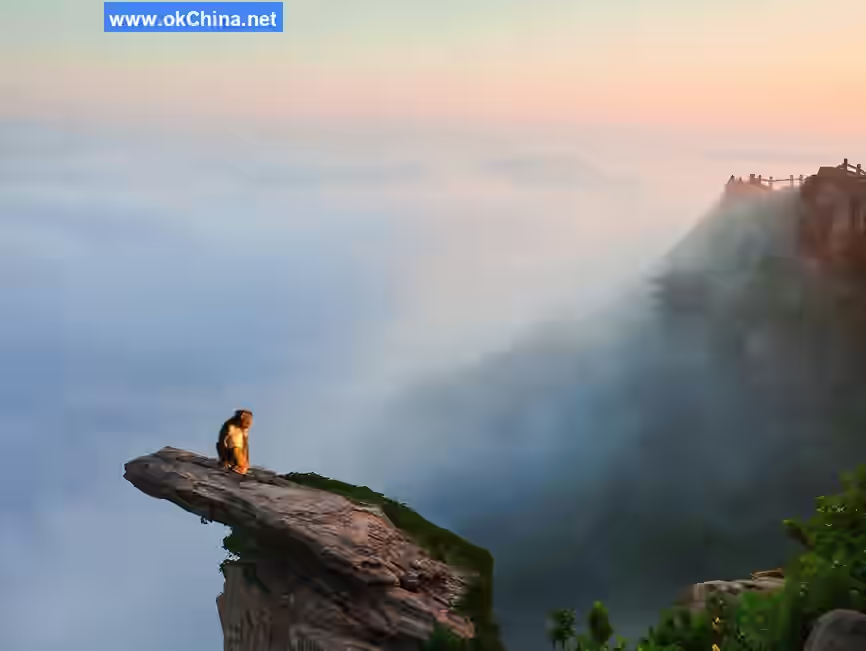
4.22 Sea of Clouds
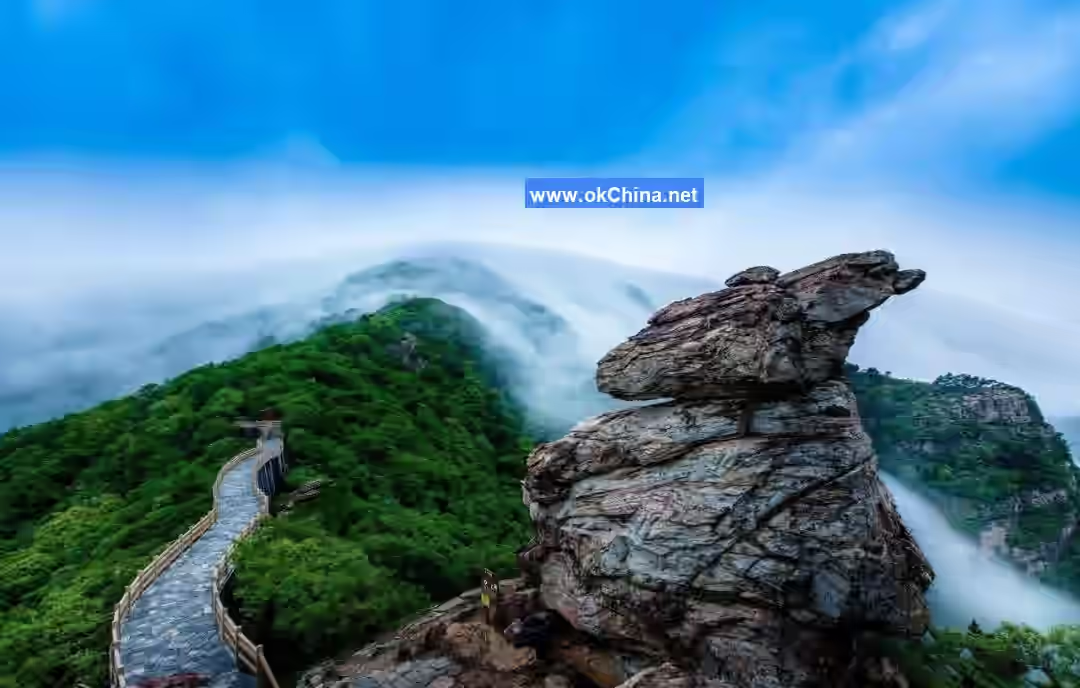
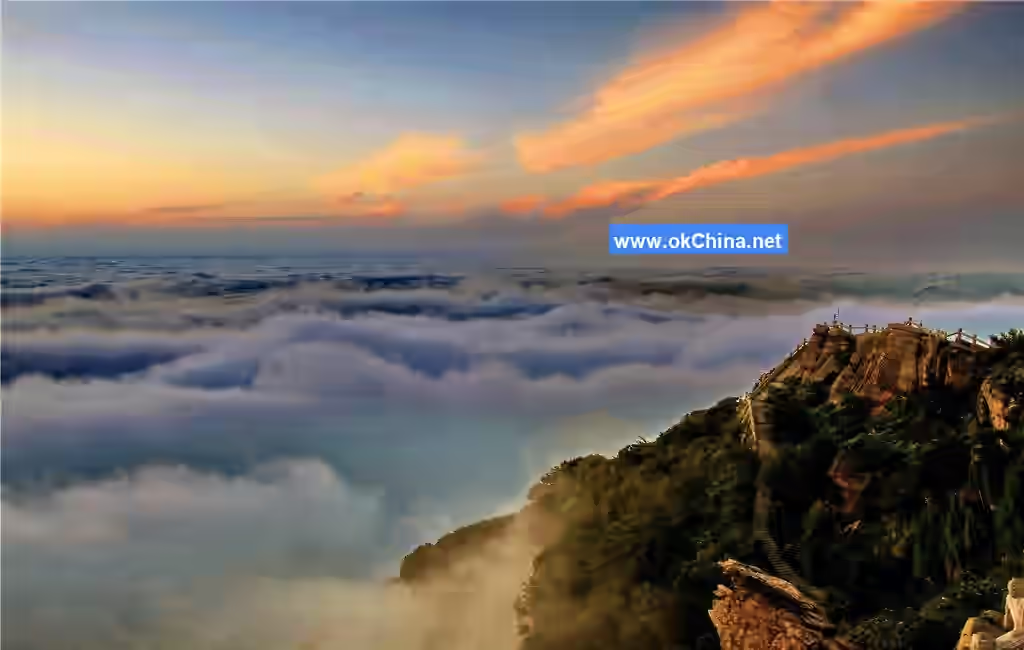
On Huaguo Mountain, under sunlight, vast seas of clouds drift like floating cotton, surging up and down. Mountains are engulfed by the浩瀚 sea of clouds, creating an ocean-like expanse that is sea yet not sea, wrapping Huaguo Mountain's scenery in an intermittently visible, fairyland-like manner. The sea of clouds adorns this "immortal mountain" described in "Journey to the West" with格外迷人 charm.
4.23 Screen Bamboo Zen Courtyard
Named for its bamboo screen-like appearance, Screen Bamboo Zen Courtyard is the most serene location within the Sanyuan Palace complex. Built during the Wanli era of the Ming Dynasty by Xie Chun of Shanyang, who donated his family's resources to open the mountain, it served as a place for monks' cultivation. In the 27th year of the Republic of China (1938), it was burned down during Japanese army mountain searches. It was reconstructed on the original site in 1984. Though the courtyard space is not large, it reveals many ancient gardening techniques, with buildings, pavilions, moon gates, corridors, fish ponds, ancient trees, and rare Golden Inlaid Jade Bamboo harmonizing, creating changing scenes with each step. One can sit in the viewing pavilion, savor fragrant tea, and enjoy the beautiful scenery.
4.24 Tang Monk Cliff
Tang Monk Cliff, also called "Great Buddha Cliff," is a cliff face tens of meters high formed by weathered gneiss rock. Looking east from the Sanyuan Palace parking lot, one can see the figures of the Tang Monk and his disciple Sun Wukong standing on the cliff: the Tang Monk with ears reaching his shoulders, Buddha-like eyes slightly closed, back slightly bent as if solemnly cultivating; to his right, a natural stone monkey appears to be whispering to him. Due to the cliff's complex and colorful textures, closer observation reveals many奇景点缀其间, such as master-disciple dialogue, sacrificing oneself to feed a tiger, and the one-horned ghost king, leading some to also call it "Ten Thousand Buddha Cliff."
4.25 Eighteen Bends
The Eighteen Bends consist of 18 sets of stairs with 349 steps ascending Bamboo Joint Ridge from Immortal Bridge. It is the main path for visitors hiking up the mountain. Predecessors laid flagstones according to the mountain's steepness and起伏程度, constructing 18 groups of steps, each with three to five or seven to eight steps不等, spaced at varying distances, totaling about half a华里 in length.
4.26 Thread of Sky
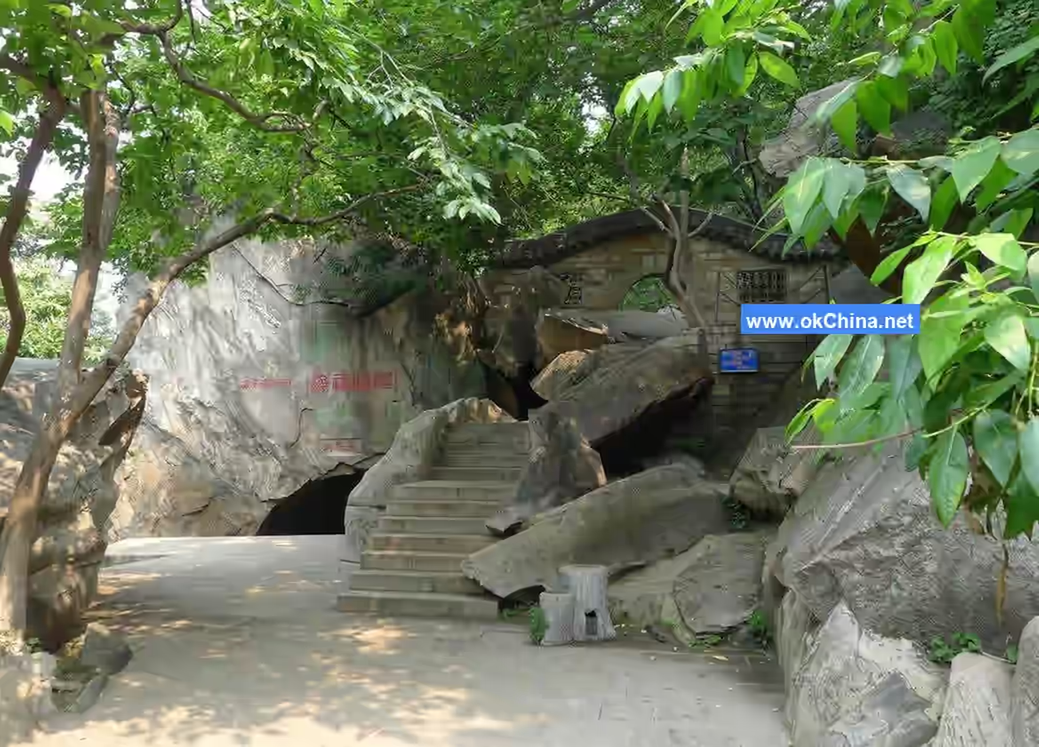
The exit of Bajie Stone, also the ear缝, is another scenic spot on Huaguo Mountain called Thread of Sky. It is formed by two huge rocks touching at their tops but separated at their bodies, capable of容纳十几人 standing. Inside Thread of Sky, looking up reveals a thread of sky. Its grand气势 and sheer石壁 are unmatched by similar features in other domestic scenic areas. Navigating the caves within Thread of Sky involves winding paths that interconnect everywhere; one can hear voices but not see traces of people. Even in midsummer, it feels like autumn with cool breezes naturally arising.
4.27 Wu Cheng'en Memorial Hall
Originally a tea house, the Wu Cheng'en Memorial Hall houses some biographical materials of Wu Cheng'en, various preserved editions of "Journey to the West" from around the world, and works by experts and scholars researching "Journey to the West." It puts an end to the centuries-long debate over the exact原型 location of Huaguo Mountain in "Journey to the West."
4.28 Autumn on Huaguo Mountain
Adorned with autumn charm, Huaguo Mountain presents a natural picture of abundant autumn scenery in red, yellow, and green, instantly refreshing the spirit. The autumn韵 is rich and气象万千. The蜿蜒曲折 tourist paths are lined with lush vegetation: tall nanmu trees, elegant and挺拔 beauty pines,柔中带刚 Golden Inlaid Jade Bamboo, each displaying its own风姿 through different mythological stories.### 4.29 Mao Gong Stele Comrade Mao Zedong, with his profound knowledge of both ancient and modern times, discussed Huaguo Mountain with leaders of Jiangsu Province and its cities on three occasions in 1953, 1955, and 1956, mentioning it was located in Xinhailian City, Jiangsu (renamed Lianyungang City in 1961).
4.30 Yunu Peak
Yunu Peak is the main peak of Huaguo Mountain and also the highest peak in Jiangsu Province, with an elevation of 624.4 meters. As recorded in Yuntai Supplement, "Two peaks stand tall, the eastern one called 'Qingfeng' and the western one 'Yunu,' serving as the main peaks of Yuntai." Yunu is a celestial figure depicted in Journey to the West, who descended to the mortal world for love. Chapter 30 of the novel also mentions that Huaguo Mountain "connects to Yunu's hair-washing basin." Today, relics and stone carvings related to Yunu's hair-washing basin can be seen in Donglei, south of the mountain.
5. Resource Status
5.1 Plant Resources
Huaguo Mountain boasts abundant wild plant resources, with over 1,700 plant species, including 1,190 medicinal resources. Rare species and ancient trees such as the golden-veined bamboo and ancient ginkgo trees, which are uncommon both within Jiangsu Province and nationwide, make it an important wild plant resource repository in Jiangsu. Every year, it attracts numerous universities, research institutions, and experts for investigation and study.
5.2 Animal Resources
In the lush forests of Yunu Peak on Huaguo Mountain, over 300 macaques reside. These wild macaques thrive and reproduce on the mountain during summer, forming an interesting spectacle.
5.3 Water Resources
The Dasheng Lake Water Conservancy Scenic Area of Huaguo Mountain covers a management area of 10.47 square kilometers, with a water surface area of 0.95 square kilometers. After years of development, it has formed a beautiful environment where mountains and waters are interconnected, biomass is abundant, and terrestrial and aquatic ecosystems intertwine. In August 2011, the scenic area was approved as a provincial-level water conservancy scenic area.
6. Honors Received
Huaguo Mountain Scenic Area has been successively designated as a National Key Scenic Area, a National AAAAA Tourist Attraction, a National Geopark, a National Model Site for Civilized Scenic Tourism, an Advanced Unit in the Creation of National Civilized Scenic Tourism Areas, a National Youth Civilization Unit, an Advanced Unit in the Comprehensive Improvement of National Key Scenic Areas, one of China's Top Ten Tourist Attractions, a Gold Award Winner among "50 Places in China Worth Visiting for Foreigners," a National "Golden Week" Tourism Direct Reporting Point, and a National Air Quality Forecast System Point. In November 2024, Huaguo Mountain Scenic Area was included in the third batch of National Civilized Tourism Demonstration Units.
7. History and Culture
7.1 Origin of the Name
Huaguo Mountain has received dozens of names from literati throughout history. Its original names include: Duzhou, Yuzhou, Yingzhou, Yushan, Yushan, and Fengshan. It was also known as: Cangwu Mountain, Fuguo Mountain, and Donghai Mountain. Other names include: Qian Yuntai, Qingfengding, Yunu Peak, and Qianding Mountain, among others. The name "Huaguo Mountain" first appeared in Xu Shaoqu's A Glimpse of Lianyun in the 1930s, primarily referring to the mountain range composed of peaks such as Yunu Peak, Jinniuding, Wanling, Xiaozhai Mountain, and Datuan Mountain, historically known as the Qian Ding and Hou Ding areas. According to researchers of Journey to the West, Wu Cheng'en's depiction of Sun Wukong's hometown, Huaguo Mountain, was based on the entire Yuntai Mountain as it exists today. With the growing interest in Journey to the West research and tourism, the fame of Huaguo Mountain has increased, and people have become accustomed to using this name to refer to the mountain.
7.2 Related Stories
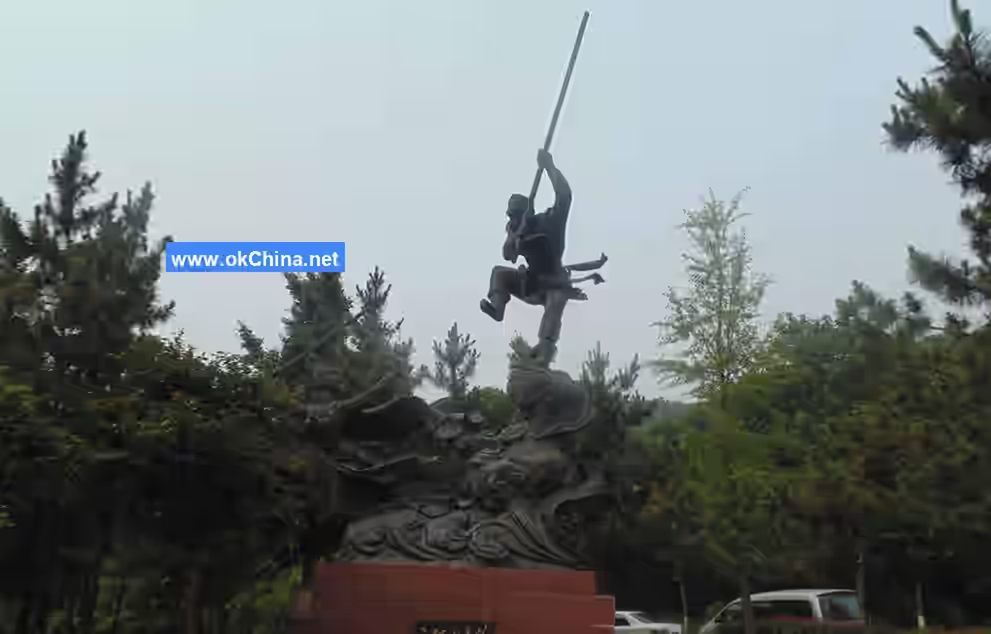
Huaguo Mountain is renowned worldwide as the "hometown of the Great Sage Sun" depicted in the classic novel Journey to the West and is widely known through the mythical stories of the Monkey King. Since ancient times, Huaguo Mountain has been praised as the "Number One Scenic Spot in the East Sea" and one of the "Four Sacred Mountains in China," combining mountain rocks, sea views, historical sites, and mythology. The mountain features sites associated with Journey to the West, such as the Wa Yi Stone, where Sun Wukong was born, and the Water Curtain Cave, where he resided.
Comments
Post a Comment