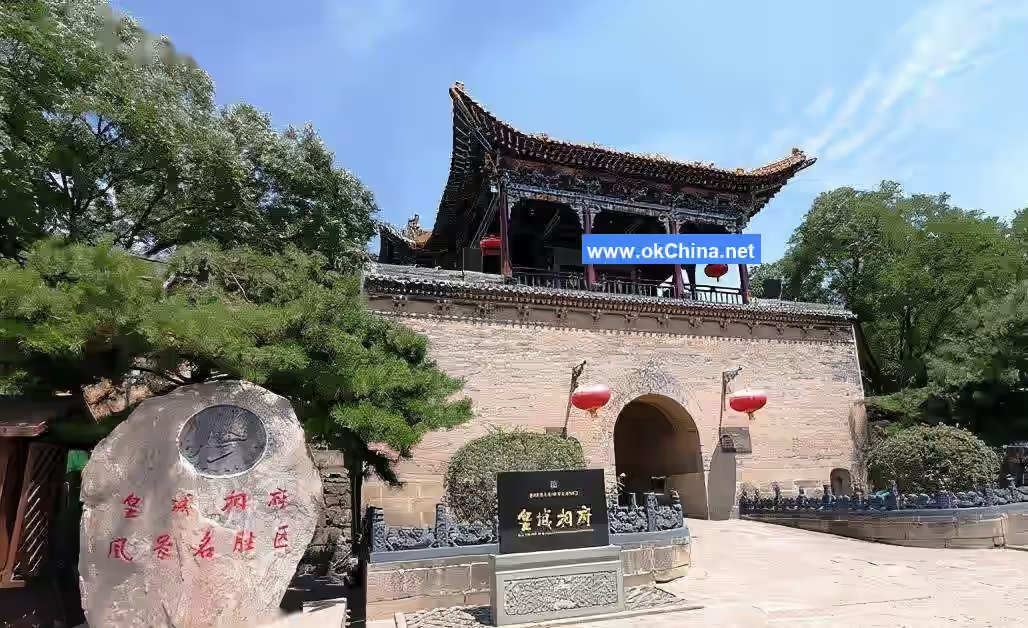
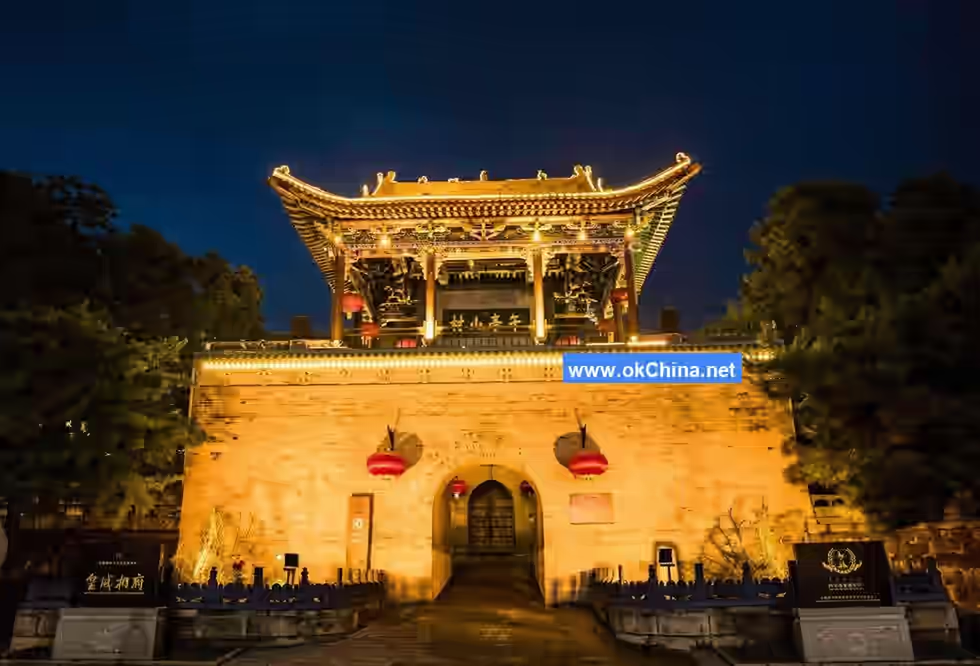
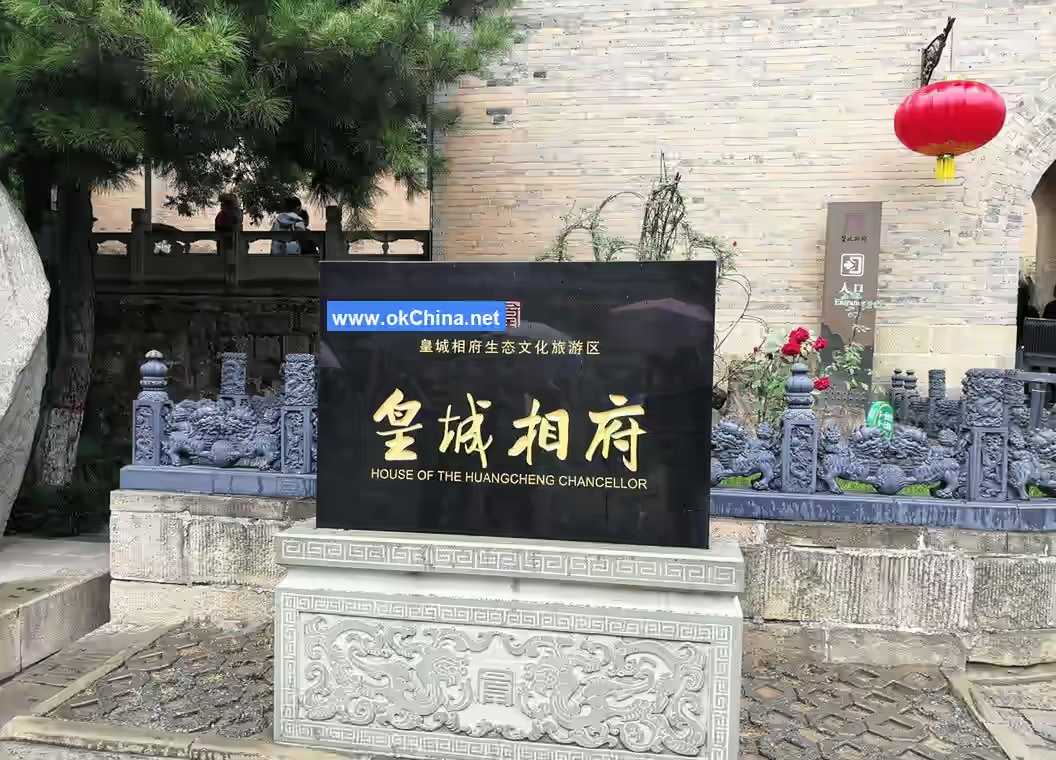
Huangcheng Xiangfu (The Imperial Prime Minister's Residence)
I. Introduction
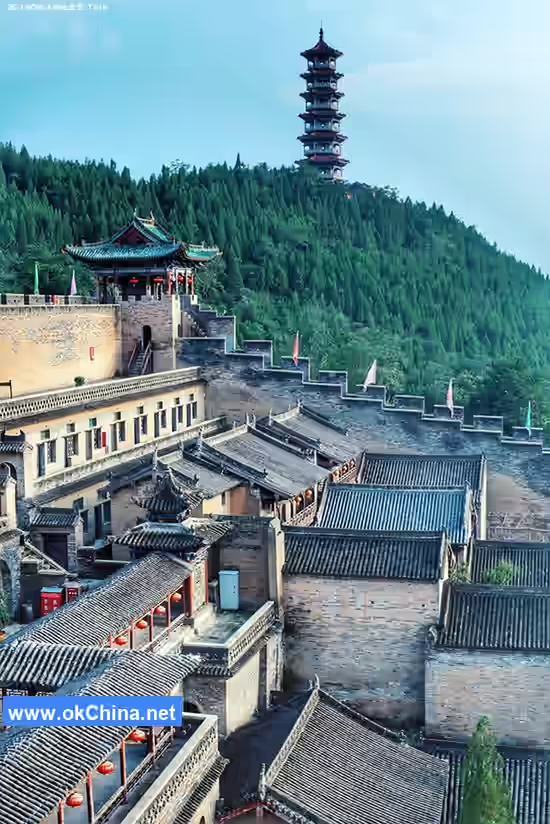
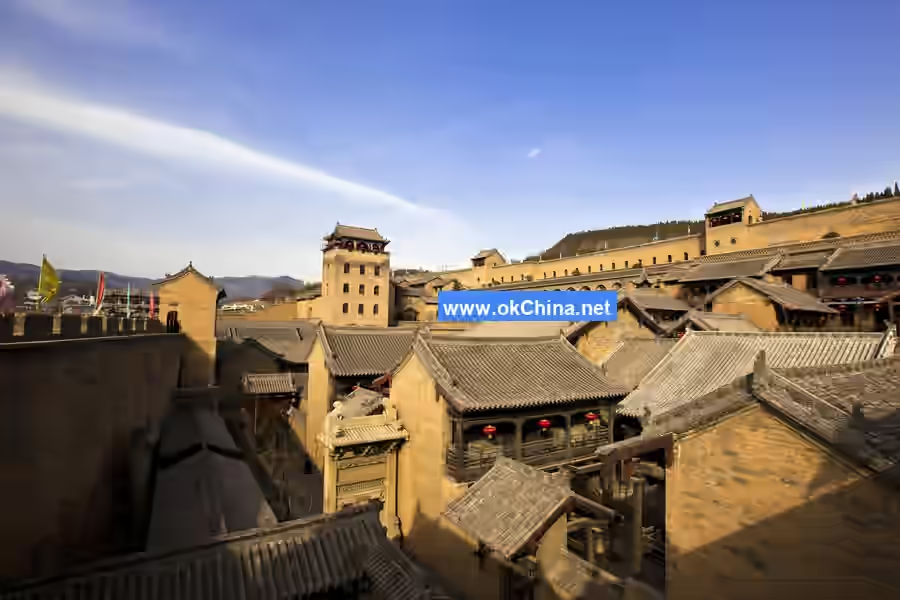
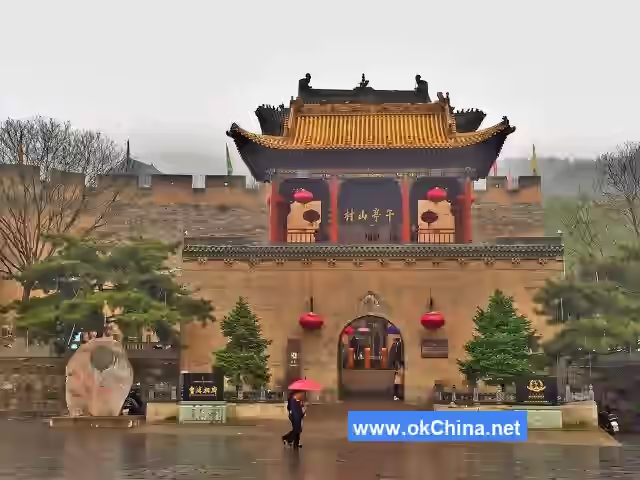
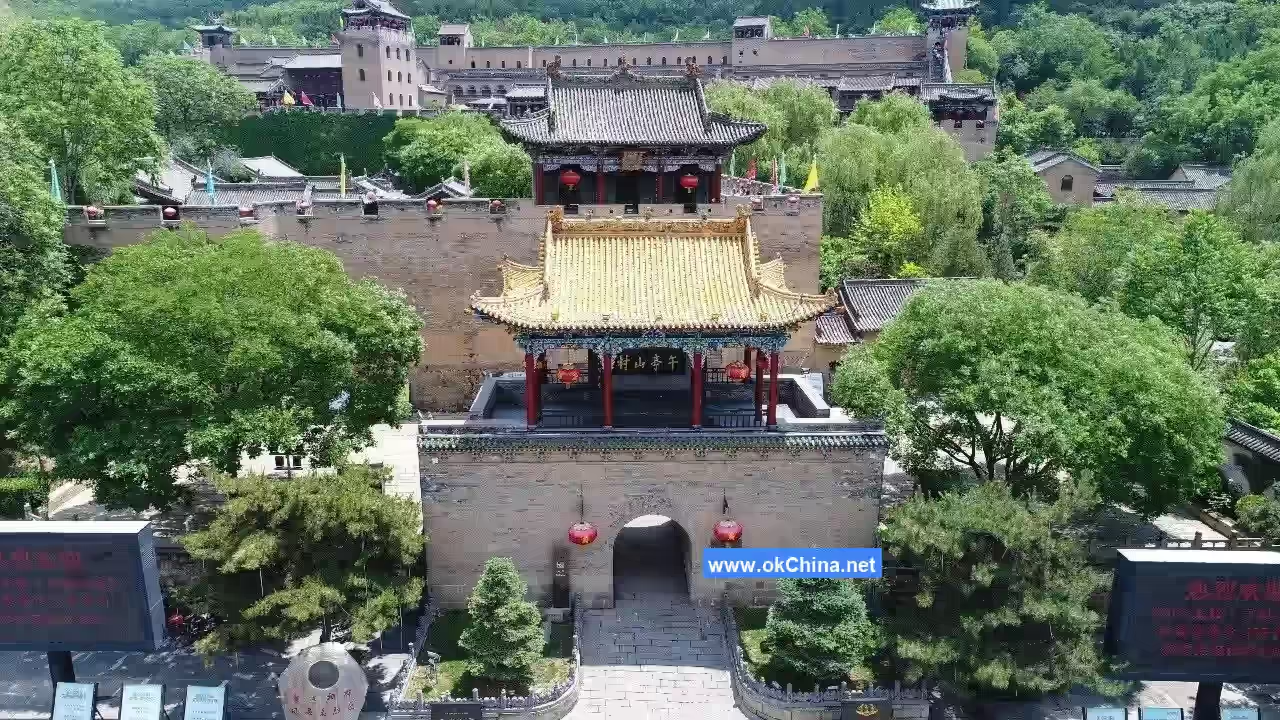
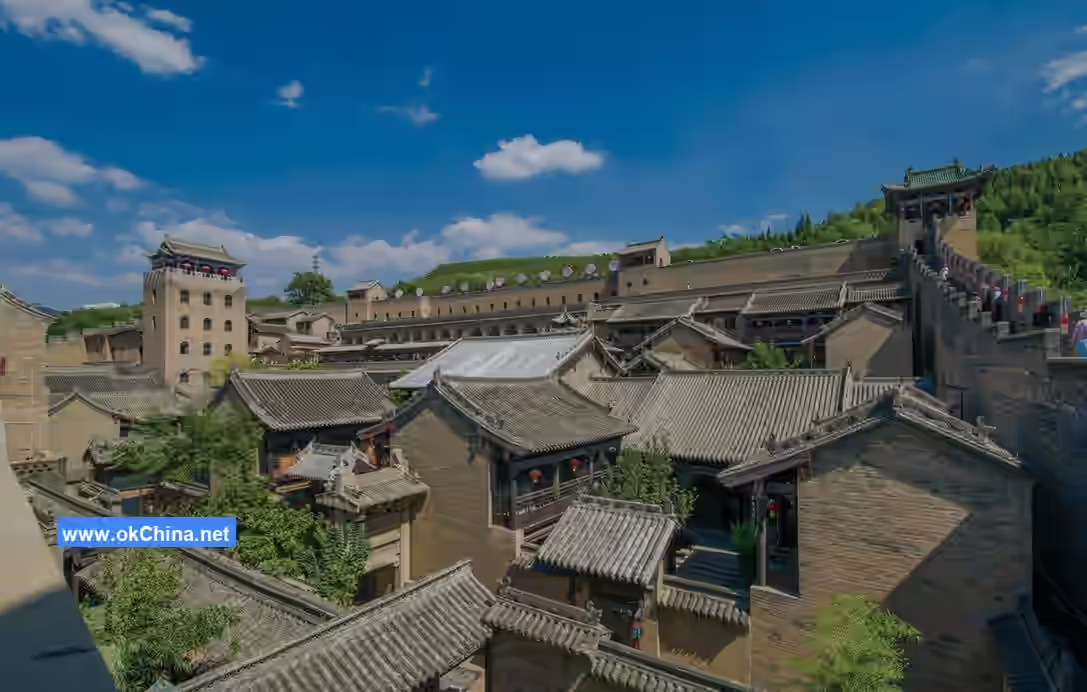
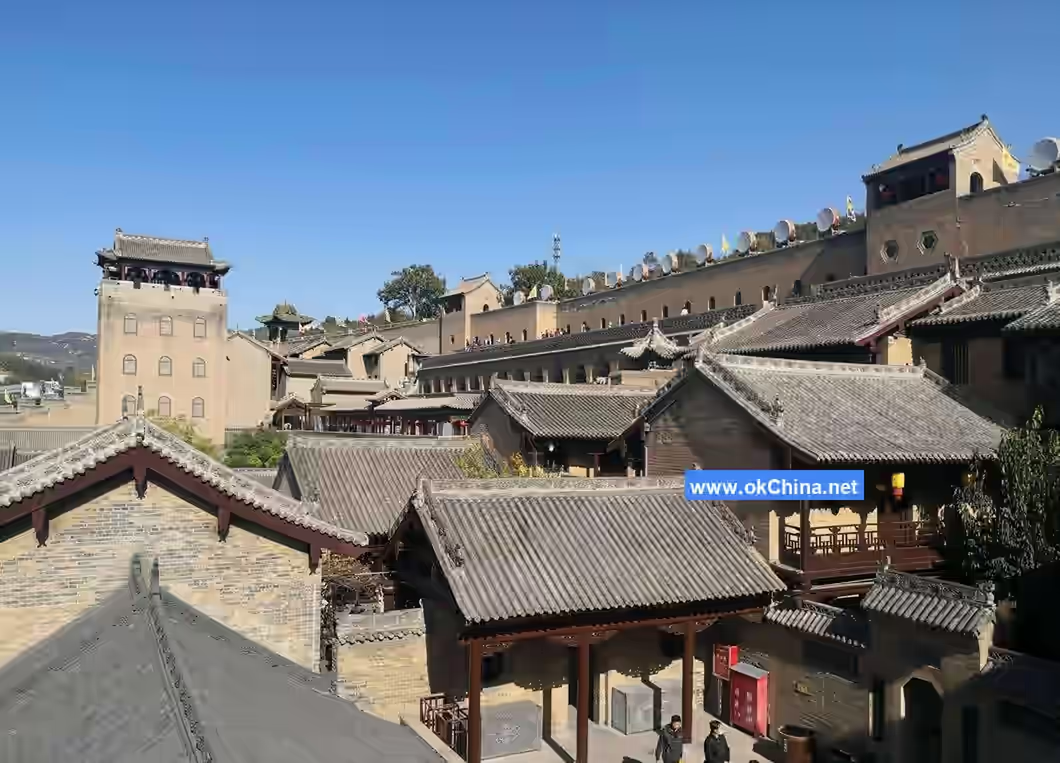
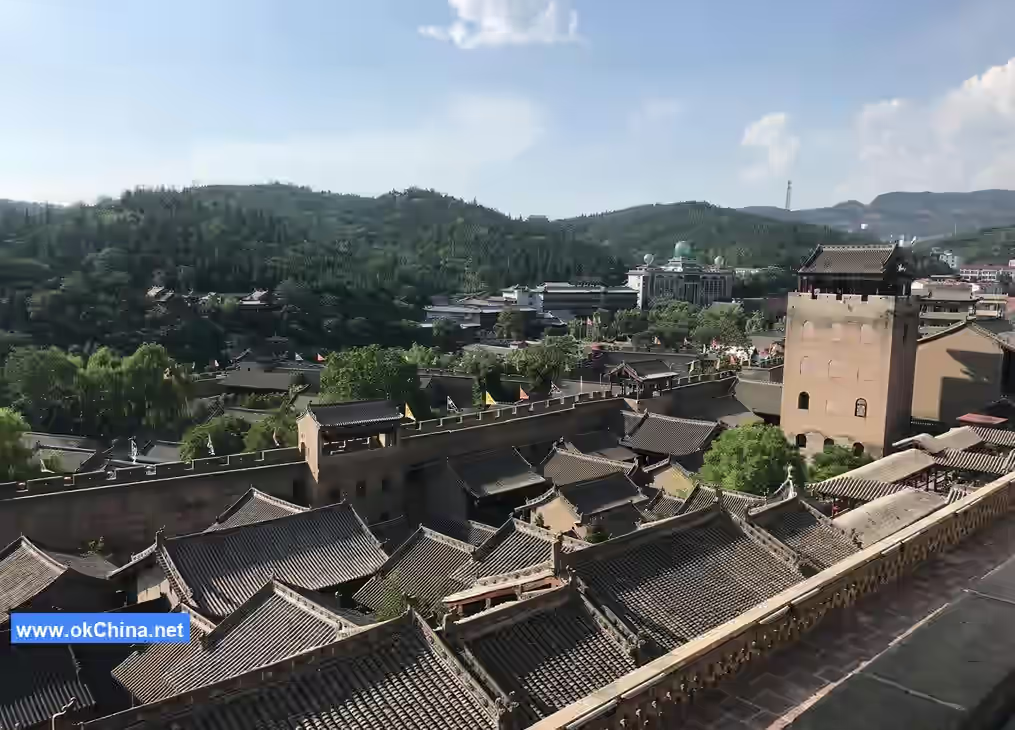
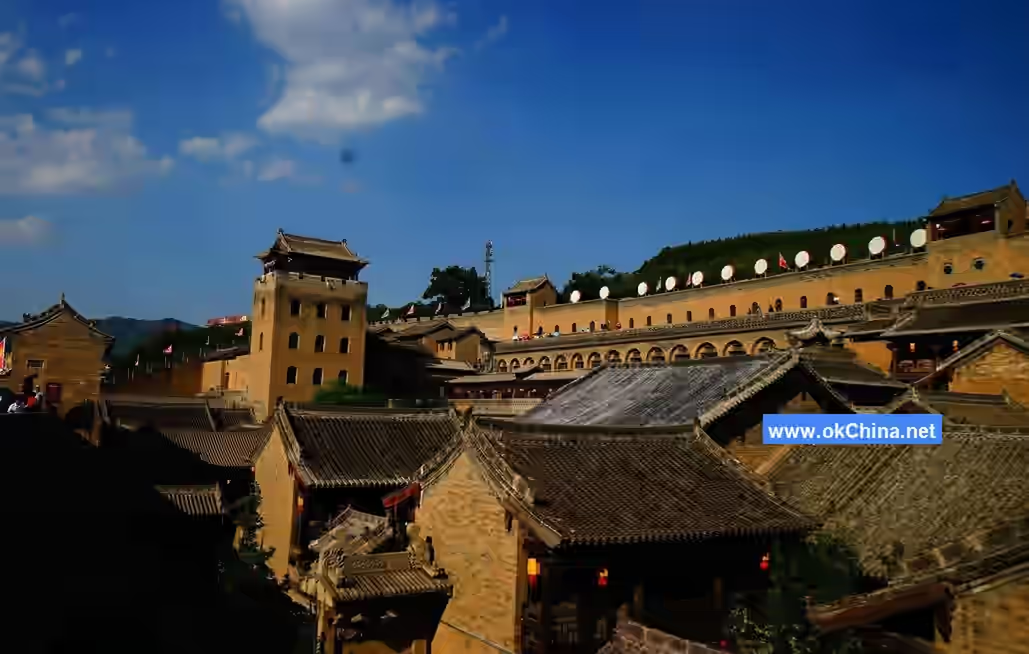
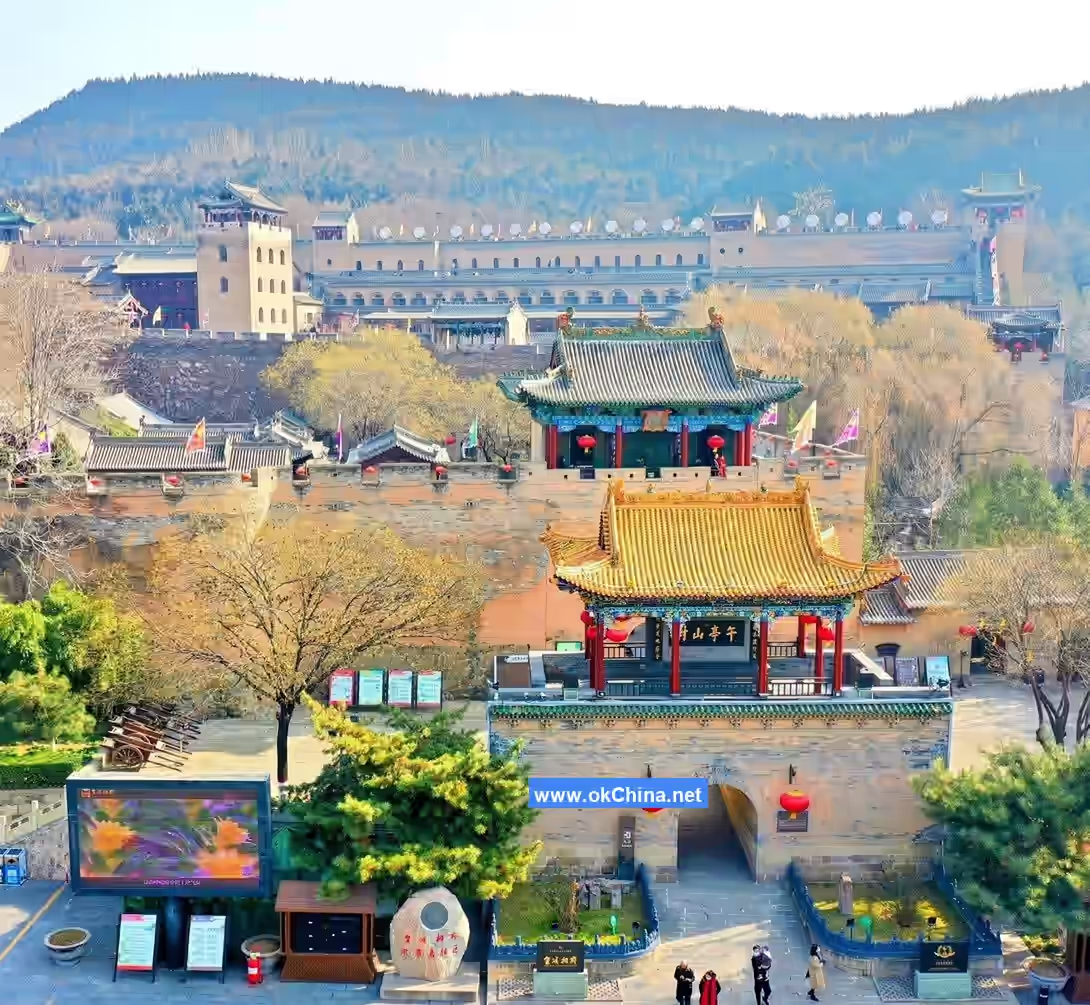
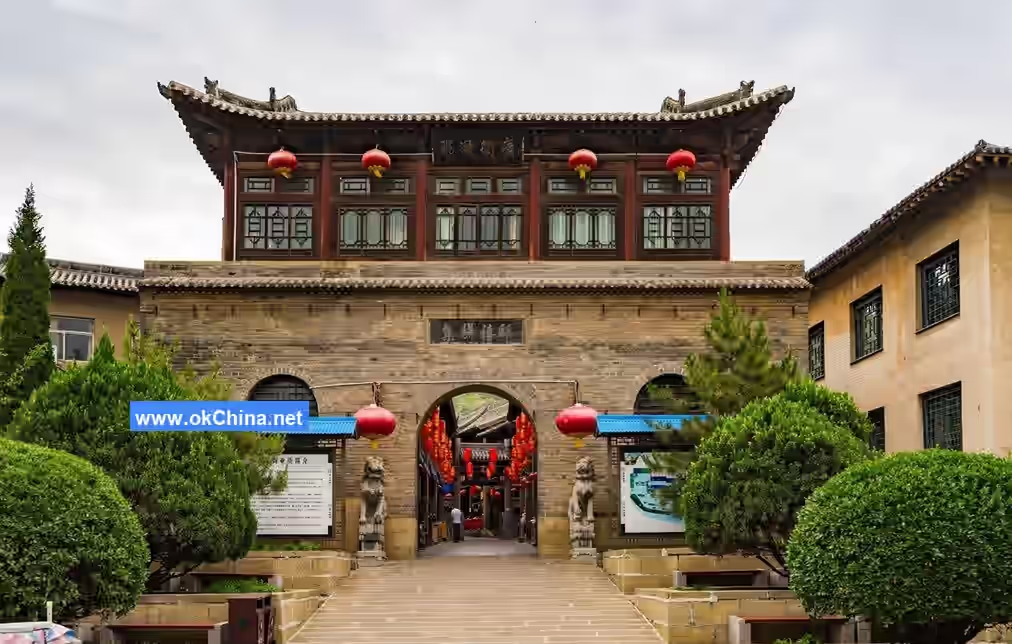
Huangcheng Xiangfu, located in Beiliu Town, Yangcheng County, Jincheng City, Shanxi Province, covers a total area of 36,000 square meters. Also known as Wuting Mountain Village, it was the former residence of Chen Tingjing, a Grand Secretary of the Wenyuan Pavilion, Minister of Personnel with three additional ranks, the chief reviewer of the Kangxi Dictionary, and the lecturer for Emperor Kangxi's imperial lectures for 35 years. The complex consists of an inner city, an outer city, and Ziyunqian, among other sections. The Imperial Library Building is resplendent and magnificent, Zhongdao Village is towering and spectacular, Douzhu Residence features continuous courtyards, Heshan Tower is majestic and precipitous, and the hidden soldier caves are layered and marvelous. It is a rare castle-style residential complex for officials from the Ming and Qing dynasties, praised by experts as "the residence of the first great cultural clan in northern China."
II. Cultural History
Huangcheng Xiangfu was originally named "Zhongdao Village." It was later renamed "Huangcheng" (Imperial City) after Emperor Kangxi stayed there twice.
Huangcheng Xiangfu is a residential complex for officials built during the Ming and Qing dynasties. The inner city was constructed in the sixth year of the Chongzhen era of the Ming Dynasty (1633) by Chen Changyan, the uncle of Chen Tingjing, to escape the turmoil of war. The outer city was completed in the 42nd year of the Kangxi era (1703).
During the 260 years from the reign of Emperor Xiaozong of the Ming Dynasty to the Qianlong era of the Qing Dynasty (1501–1760), Huangcheng Xiangfu produced 41 tribute scholars, 19 provincial graduates, 9 metropolitan graduates, and 6 members of the Hanlin Academy.
In 2007, Huangcheng Xiangfu became a AAAAA-level tourist attraction.
III. Geographical Environment
Location
Huangcheng Xiangfu is located in Beiliu Town, Yangcheng County, Jincheng City, in southeastern Shanxi Province.
Vegetation
Within the scenic area of Huangcheng Xiangfu, vegetation is abundant around Jiunu Lake, Shishan Mountain, Fanshan Mountain, Wangjie, and Laolaozhang. Natural secondary forests, artificial ecological forests, shrub forests, and fruit forests are widely distributed.
IV. Architectural Layout
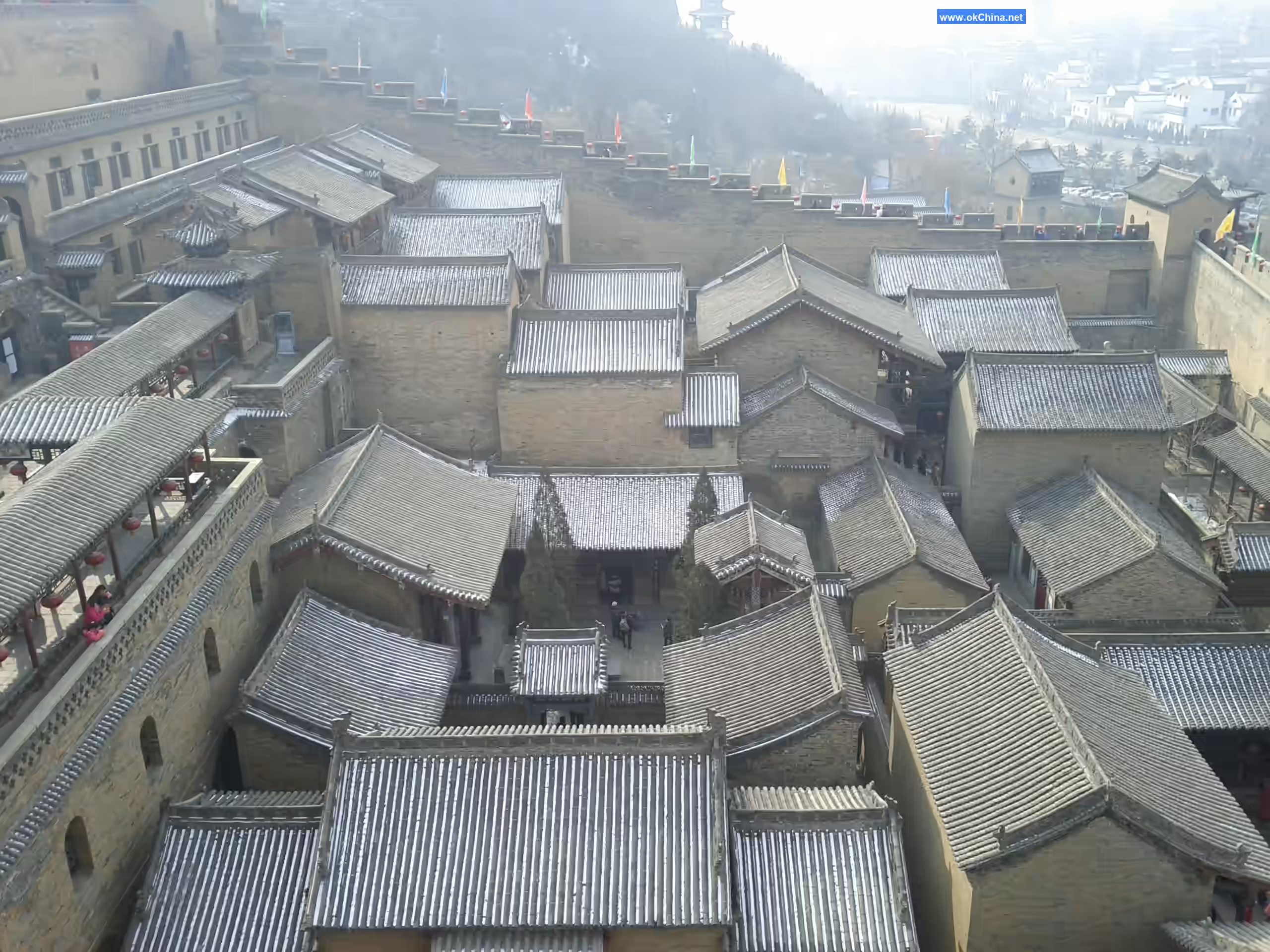
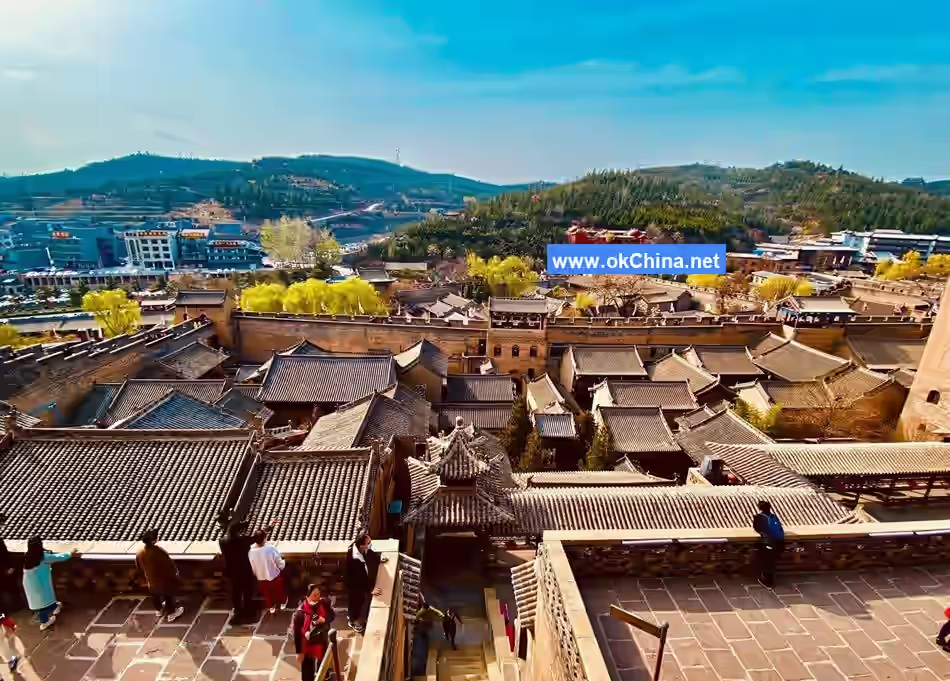
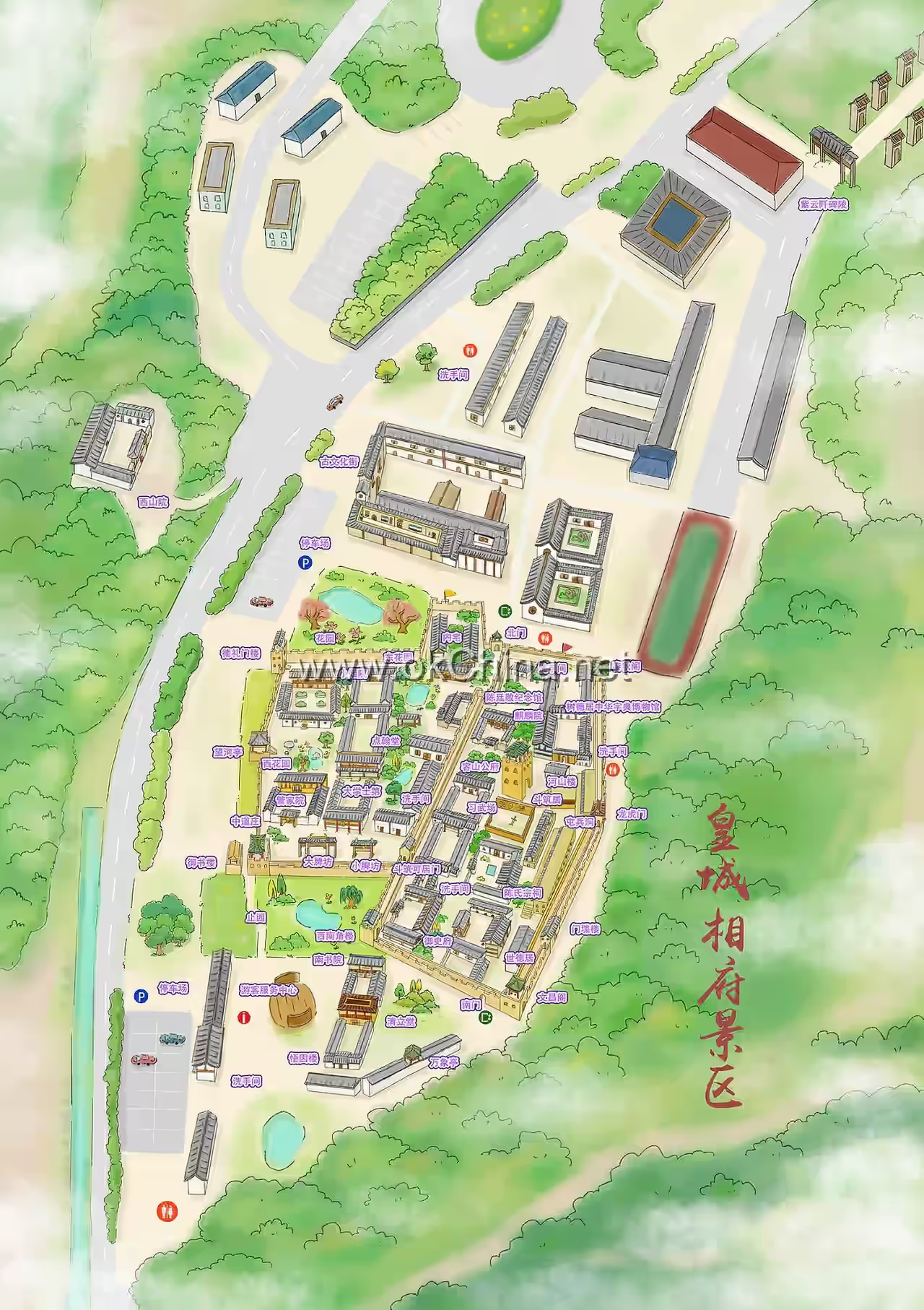
The Huangcheng Xiangfu complex is divided into an inner city and an outer city, comprising 16 courtyards and 640 rooms, with a total area of 36,580 square meters. The inner city, Wuting Mountain Village, was built in the fifth year of the Chongzhen era of the Ming Dynasty (1632) and consists of eight large courtyards. The outer city was completed in the 42nd year of the Kangxi era (1703) and includes a front hall and rear living quarters, left and right inner residences, a study, gardens, a ladies' chamber, a steward's courtyard, and a river-viewing pavilion.
V. Main Attractions
Huangcheng Xiangfu Architectural Complex
The Huangcheng Xiangfu complex is divided into an inner city and an outer city, comprising 16 courtyards and 640 rooms, with a total area of 36,580 square meters. The inner city was built in the fifth year of the Chongzhen era of the Ming Dynasty (1632) and consists of eight large courtyards. The outer city was completed in the 42nd year of the Kangxi era (1703) and includes a front hall and rear living quarters, left and right inner residences, a study, gardens, a ladies' chamber, a steward's courtyard, and a river-viewing pavilion.
Douzhu Residence
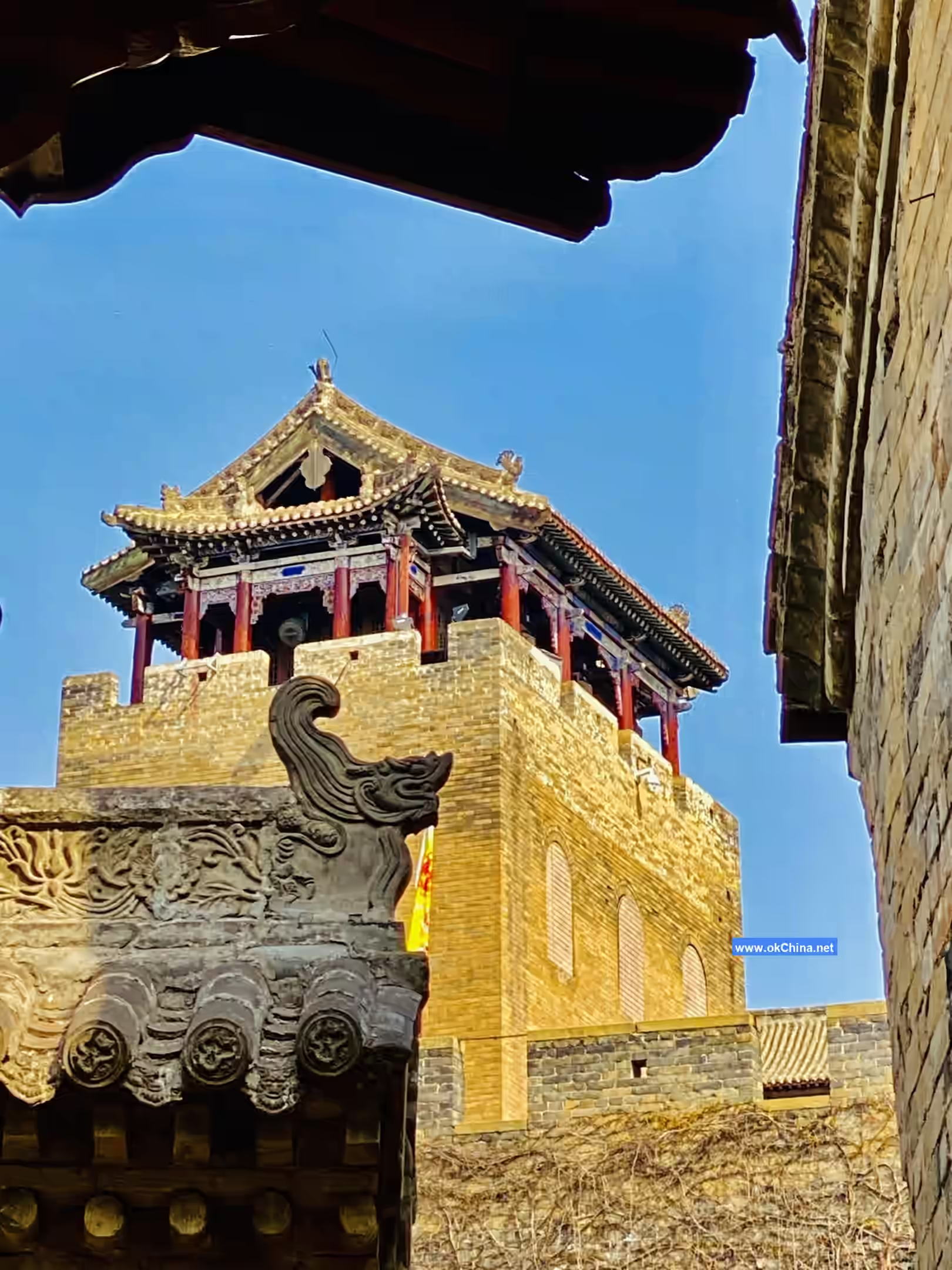
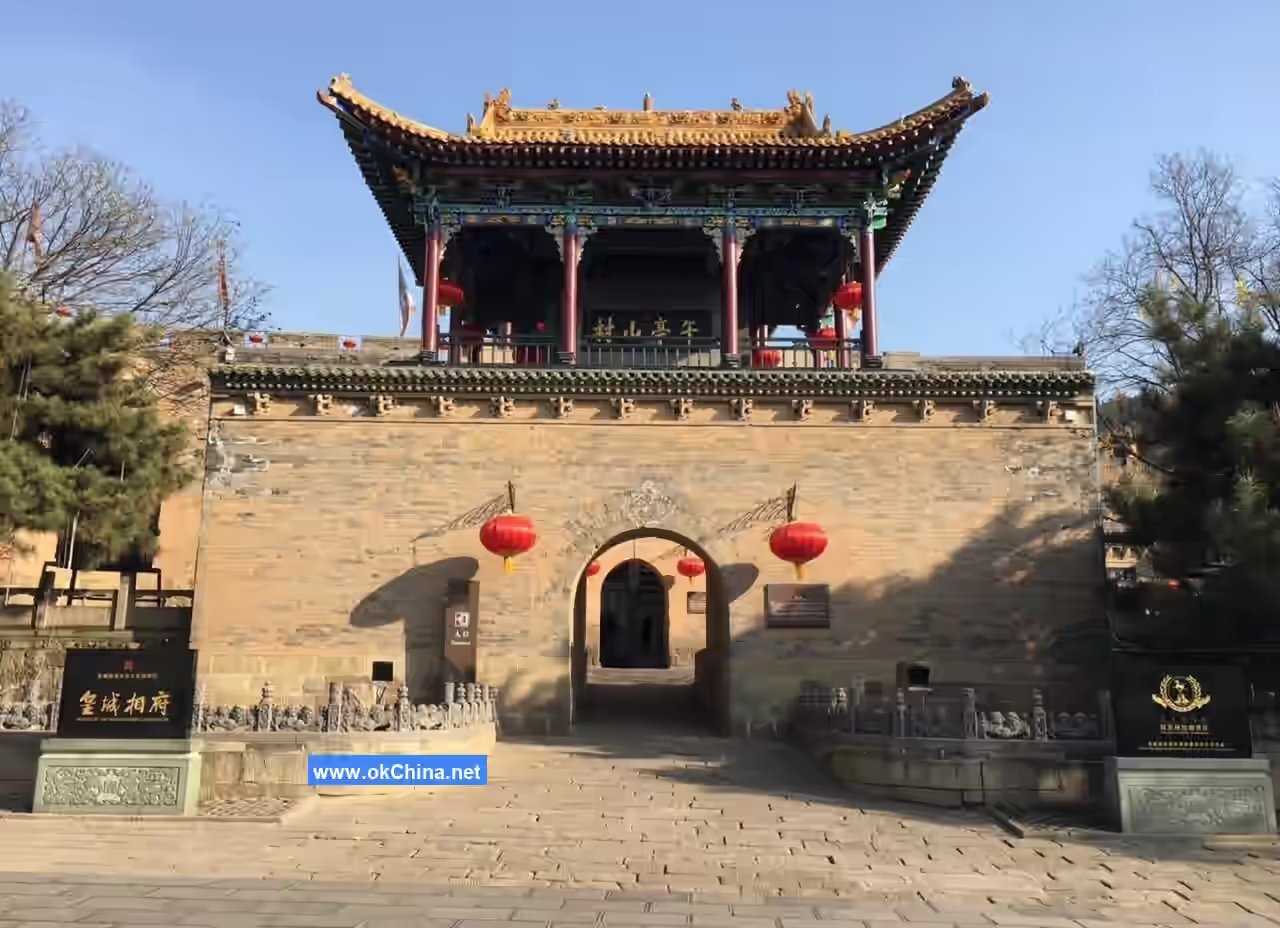
The inner city's "Douzhu Residence" was built in the sixth year of the Chongzhen era of the Ming Dynasty (1633) by Chen Changyan, the uncle of Chen Tingjing, to escape the turmoil of war. The Douzhu Residence measures 71.5 meters from east to west and 161.75 meters from north to south. It has five gates, with battlements lining the walls and watchtowers constructed at key locations. The Chunqiu Pavilion and Wenchang Pavilion were built at the commanding heights of the northeastern and southeastern corners.
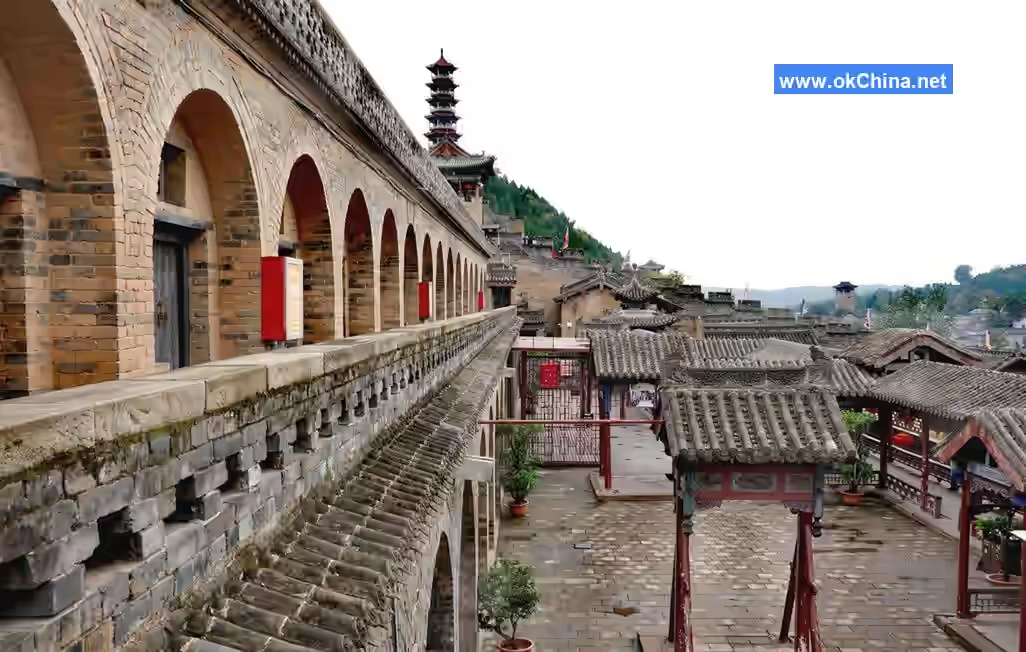
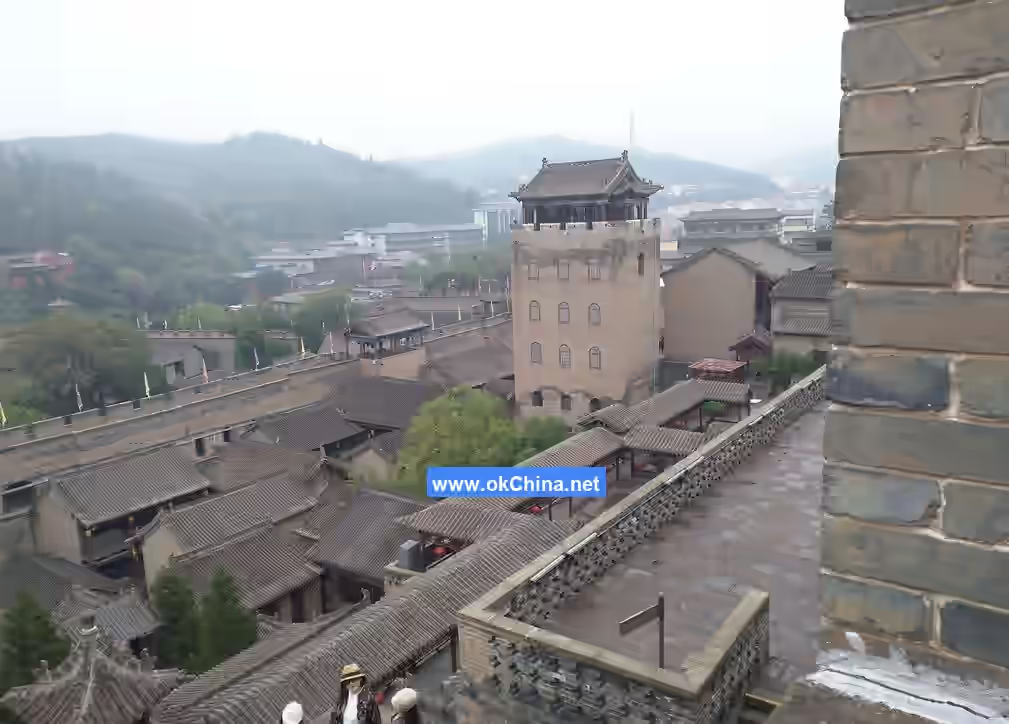
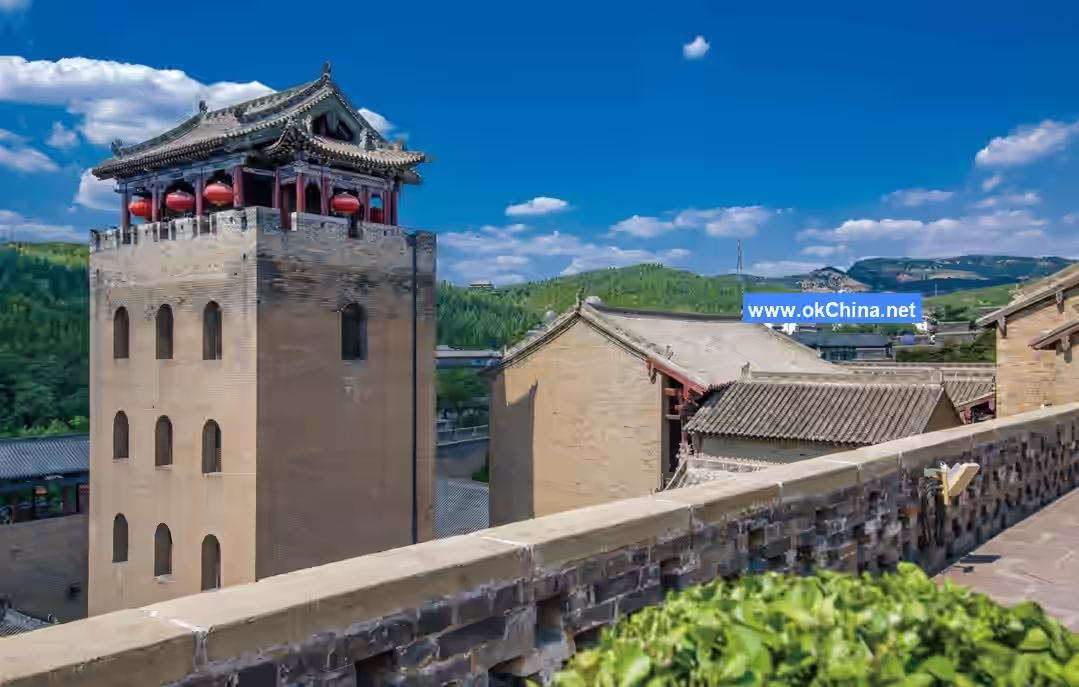
Hidden soldier caves, totaling five levels with 125 rooms, were built around the inner walls for the use of family guards and watchmen during wartime. A tall watchtower called Heshan Tower was constructed in the northern part of the inner city, measuring 34 feet long, 24 feet wide, and 100 feet high. The tower has seven floors, connected by internal staircases or wooden ladders. The bottom floor extends underground and is equipped with a well, a stone mill, and other living facilities. A secret passage leads outside the city, serving as a refuge for the clan during times of war.
The inner city's architecture is divided into three categories: ancestral temples, residential houses, and official mansions, each with distinct styles. The ancestral temple buildings include the Chen Clan Ancestral Hall, while residential houses include Shide Residence, Shude Residence, and Qilin Courtyard. Official mansions include Rongshan Gongfu and the Censor's Mansion.
Heshan Tower
Heshan Tower is located in the northern part of the inner city. Its name derives from the phrase "mountains and rivers as a garden." Built in the fifth year of the Chongzhen era of the Ming Dynasty (1632) during the turbulent late Ming period, it was constructed by the three Chen brothers—Changyan, Changqi, and Changqi—to defend against bandit raids. Standing over 30 meters tall, it is the tallest structure in Huangcheng Xiangfu. The tower is rectangular in plan, measuring 15 meters long, 10 meters wide, and 23 meters high, with seven floors (including one underground). The exterior walls are uniform, while the interior floors decrease in size from bottom to top. The tower has only one arched door on the south side, with two layers of doors for fire prevention: an outer stone door and an inner wooden bar. Platforms between floors were used to store supplies and accommodate people.
Windows are only installed above the third floor of Heshan Tower. The stone door to enter the fortress is suspended above the second floor and connected to the ground by a drawbridge. The tower's roof is equipped with battlements and watchtowers for observing enemy movements and defending the castle. The tower also stored large quantities of grain to withstand potential long-term sieges.
Heshan Tower was built in 1632. Before its completion, bandits unexpectedly arrived, and over 800 members of the Chen family and nearby villagers took refuge inside. The bandits besieged the tower for a long time but failed to capture it. They threatened to blockade it day and night and use fire attacks. The villagers inside poured water from the well over the roof to show their preparedness and lack of fear. The bandits, realizing the difficulty, retreated. Over the next ten months, bandits attacked three more times, but thousands of villagers survived the turmoil thanks to the protection of Heshan Tower.
Heshan Tower is also known as the "Fengyue Tower."
Hidden Soldier Caves
These tunnels, used to house family guards or watchmen during wartime, consist of five levels with 125 rooms. Some caves are connected, while others are not; some are linked in groups of three to five rooms. Secret passages between levels lead directly to the top of the city walls. The highest level is built within the city walls and features gun ports facing outward, allowing for the firing of weapons and observation of enemy movements.
Chen Clan Ancestral Hall
This is the ancestral temple where the Chen family worships and offers sacrifices to their ancestors. Built during the Jiajing era of the Ming Dynasty, it has a two-courtyard layout, with an ancestral worship hall at the front and a hall of sages at the back.
Shude Courtyard
Located in the northeastern corner of the inner city, Shude Courtyard was built during the Jiajing era of the Ming Dynasty. It consists of two adjacent quadrangle courtyards oriented east-west. The main courtyard is enclosed by a main house, side rooms, and an opposite-facing house. The main house is a three-story building designed in the "three visible, five hidden" style, while the side rooms and opposite-facing house are two-story buildings. The four corners of the courtyard feature enclosed or open skylights. This architectural style is highly unique and somewhat resembles the "four courtyards with five skylights" style of residential buildings in Yunnan. The courtyard floor is paved with plain bricks and stone strips. A door in the northwestern skylight of the main courtyard connects to the side courtyard, without a screen wall. The layout of the side courtyard is similar to that of the main courtyard.
Shide Courtyard
Shide Courtyard is the birthplace of Chen Tingjing. Its layout is generally similar to that of Shude Courtyard. Except for the ancestral hall, no bracket sets are used. The beam structures between columns mainly consist of flat beams, large architraves, and corbels. Column bases, door pillow stones, and screen walls are plain. Doors and windows are generally arched or square, with vertical lattice windows and lift-hung windows predominating. Wooden railings and beam structures are minimally decorated. Interior partitions often feature落地罩 (landing screens) with geometric patterns.
Qilin Courtyard and Rongshan Gongfu
One of the early Ming Dynasty buildings in the inner city of Xiangfu, it was originally the residence of Chen Tingjing's grandfather, Chen Jingji. Stone beasts beside the door and the screen wall in front of the gate feature qilin patterns, hence the name "Qilin Courtyard."
Rongshan Gongfu faces south and consists of two courtyards, one in front and one in back. Each courtyard has a main hall and two side rooms. All buildings feature hard-mountain-style double-eaved roofs. The front courtyard served as a reception area, while the back courtyard was the inner residence.
Censor's Mansion
The Censor's Mansion was the residence of Chen Changyan, the uncle of Chen Tingjing. It is named after his official position as a censor in the Censorate. Due to spatial constraints, the main building was constructed as two adjacent courtyards: the left for the hall and the right for the inner residence.
Zhongdao Village
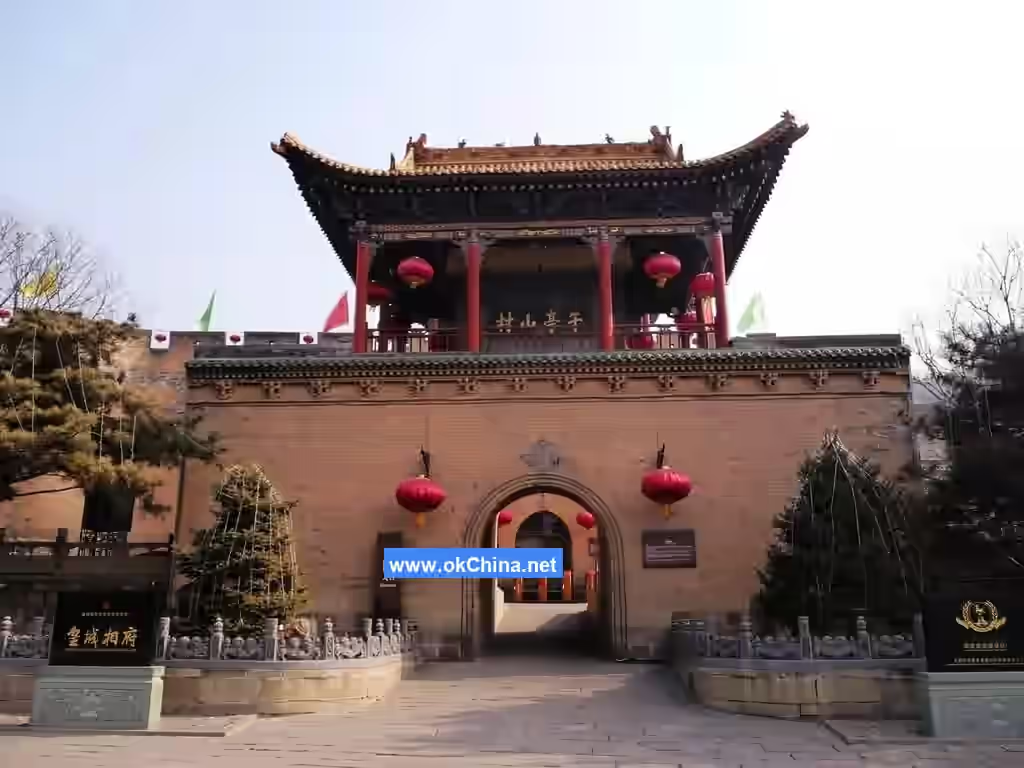
The outer city's "Zhongdao Village" was completed in the 42nd year of the Kangxi era (1703). Built closely against the western wall of the inner city, it is roughly square in shape, slightly shorter than the western city. The main buildings in the eastern city include Chen Tingjing's mansion—Zhongzai Mansion and the Grand Secretary's Mansion—along with auxiliary structures such as a study, gardens, a ladies' chamber, and a steward's courtyard. Outside the main gate of Xiangfu, there are two large and small memorial archways. South of the city walls are the South Academy, gardens, the Zhuangyuan Bridge, Feiyu Pavilion, Bagua Pavilion, and the Ancestral Temple. Zhiyuan Study Hall, a three-courtyard complex covering 11,000 square meters, was where the Chen family's younger generations studied in the past.
Zhongzai Mansion
Also known as the "Grand Secretary's Mansion," it was built in the 39th year of the Kangxi era (1700). The main gate faces south. Upon entering, one encounters a screen wall and turns east into a narrow courtyard. An如意门 (Ruyi Gate) on the east side leads to the East Academy. To the south is an opposite-facing house, and to the north is the second gate, flanked by八字影壁 (eight-character screen walls). A wooden screen is placed between the columns of the central bay, serving as a passage for the host and distinguished guests or during important events, usually kept closed. Beyond the second gate is a spacious square courtyard, with a hall to the north bearing Emperor Kangxi's inscribed plaque "Dianhan Hall." North of the main hall is the inner residence. Turning west from the main gate and heading north along a narrow passage leads to gardens, rockeries, fish ponds, and other areas. North of the garden is the小姐院 (Ladies' Chamber), built specifically for the adult unmarried women of the family. The Ladies' Chamber has doors at both ends connecting to the garden and steps leading to the Wanghe Tower on the city walls.
Stone Memorial Archway
Built in the 43rd year of the Kangxi era (1704), this archway features four pillars and three tiers. The pillars are flanked by夹杆石 (clamping stones). The lower beam is carved with two dragons playing with a pearl, while the upper beams, middle beams, and定枋 (top beams) are adorned with high-relief patterns. Plaques and inscribed boards are placed between the beams. The top beam is decorated with仿木构斗棋屋檐 (wood-like bracket sets and eaves), with吻兽 (ridge-end ornaments) at both ends of the main ridge and a麒麟 (qilin) as the ridge finial. The entire archway is majestic, solemn, and exquisitely crafted.The small two-pillar, single-story archway, built in the 14th year of the Shunzhi reign (1657), served as a prominent symbol of the Chen family before the construction of the grand archway.
Young Ladies’ Courtyard
This courtyard was the residence of the unmarried daughters of the Chen family and their female attendants. It connects to the passage hall of the West Garden. The buildings feature a unique barrel-vaulted roof style with low walls.
South Academy
Established in the 8th year of the Qing Shunzhi reign (1651), this academy was where the young men of the Chen family in the Imperial City studied literature, Confucianism, and prepared for imperial examinations to pursue official careers.
Stewards’ Courtyard
This courtyard served as the workplace and residence for the stewards of the Prime Minister’s Mansion. All buildings here are single-story structures. The gate lintel is inscribed with the characters "Dǔ Chéng" (Sincere and Honest), which were the criteria for selecting stewards for the mansion.
Zhi Garden
Completed in the 18th year of the Qing Shunzhi reign (1661), Zhi Garden is the largest garden of the Chen family, covering nearly 11,000 square meters. It was a frequent gathering place for the mansion’s owner to host literati and scholars for drinking and poetry composition.
Imperial Calligraphy Pavilion
Outside the west gate of "Zhongdao Village," there stands an Imperial Calligraphy Pavilion, built by Chen Zhuangli, the third son of Chen Tingjing. Currently, only the imperial plaque inscribed by Emperor Kangxi, "Wuting Mountain Village," and a couplet reading "Spring returns to the tall trees with lush shade, autumn arrives with chrysanthemums fragrant in late bloom" remain inside the pavilion.
Ziyun Qian
Chen Tingjing’s tomb is named "Ziyun Qian," covering an area of 16,000 square meters. Its main structures include a stone archway, a pavilion housing imperial calligraphy and elegiac poems, and ten tall pathway steles.
Comments
Post a Comment