Hongze Lake Wetland Scenic Area in Suqian City
1. Introduction
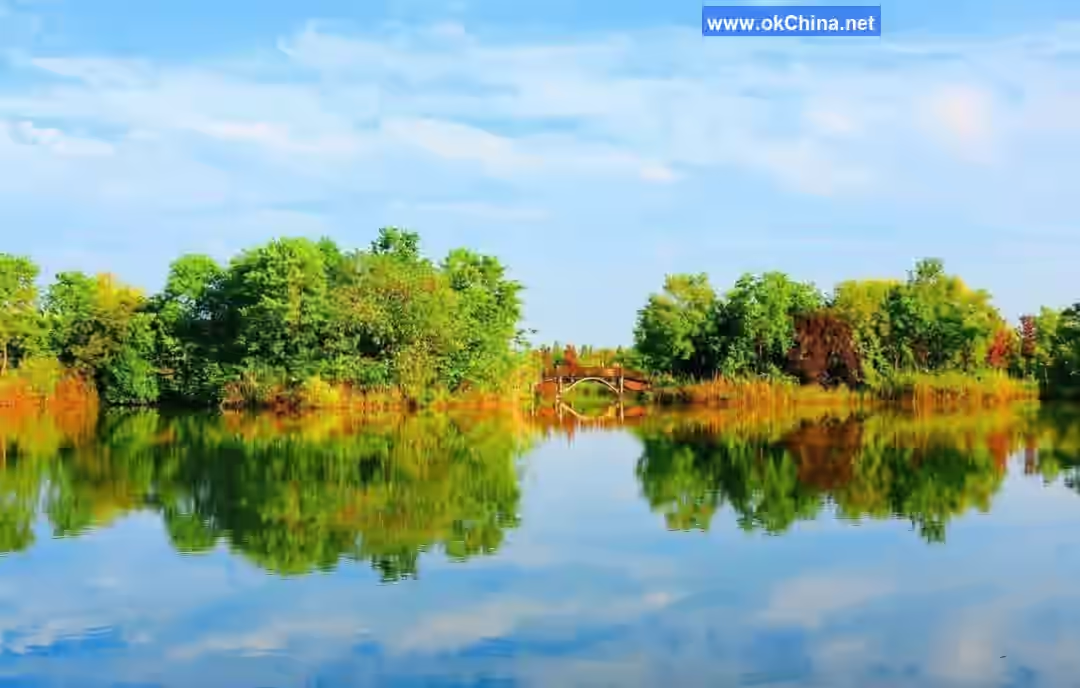
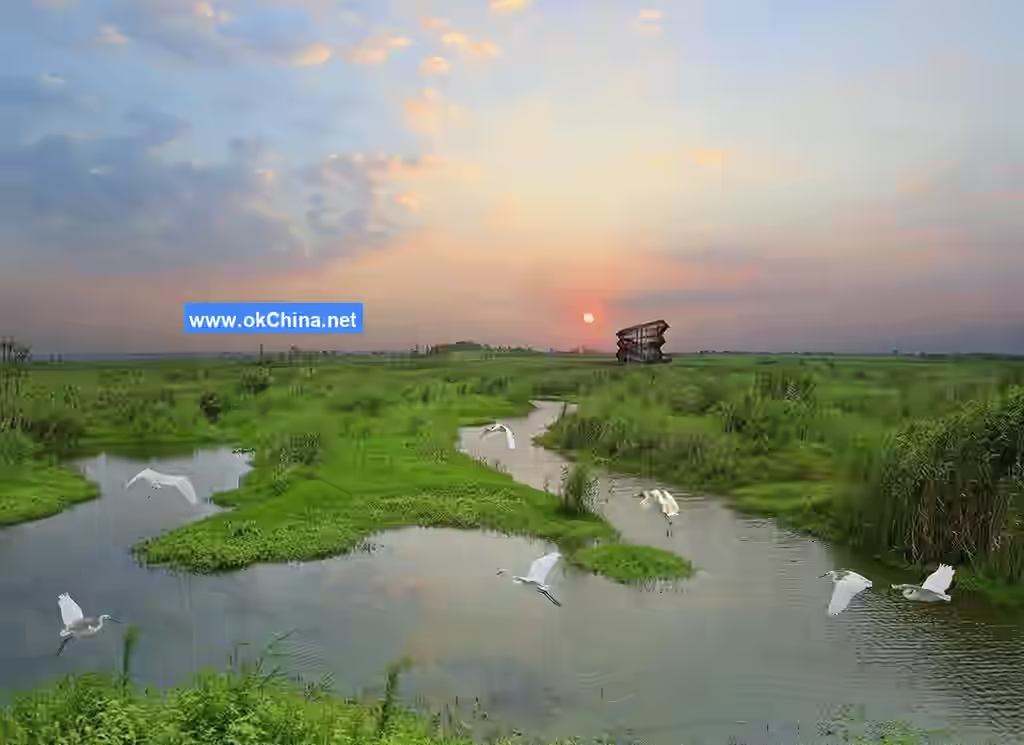
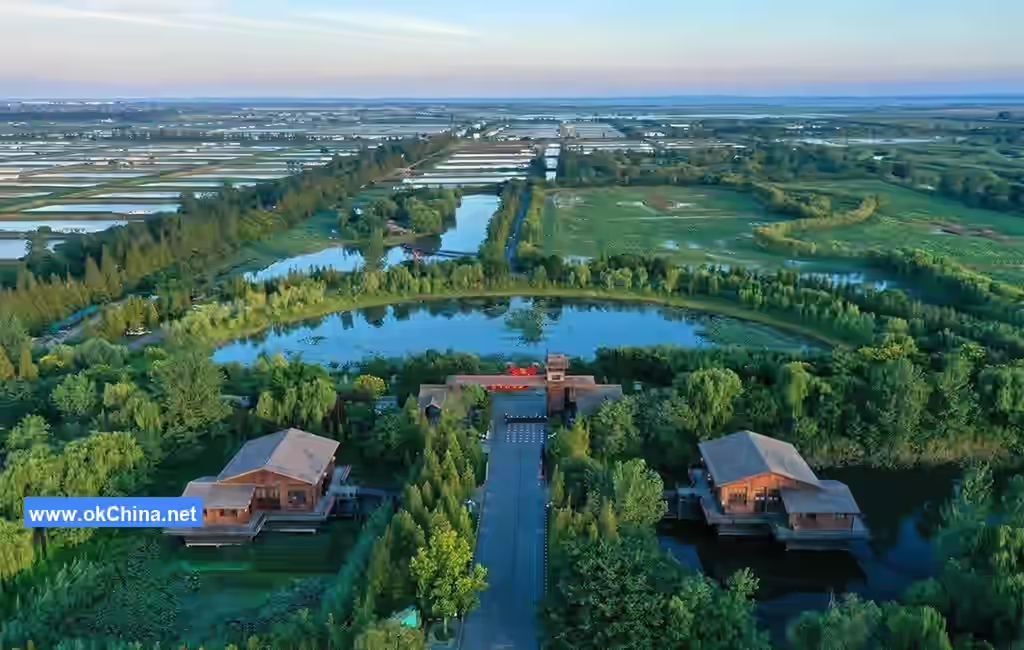
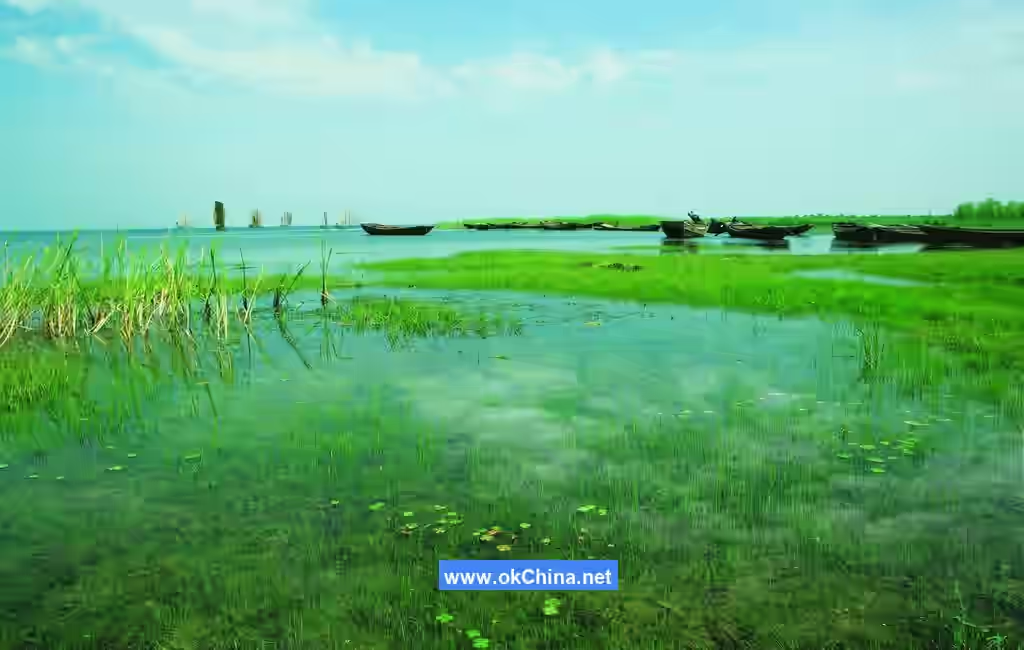
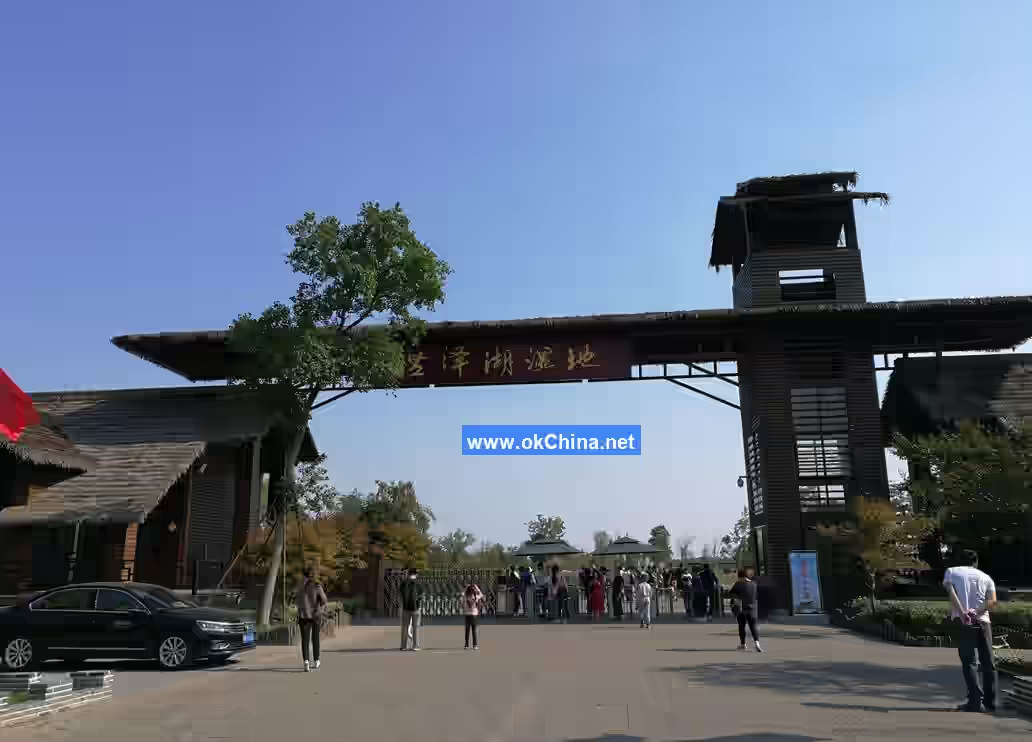
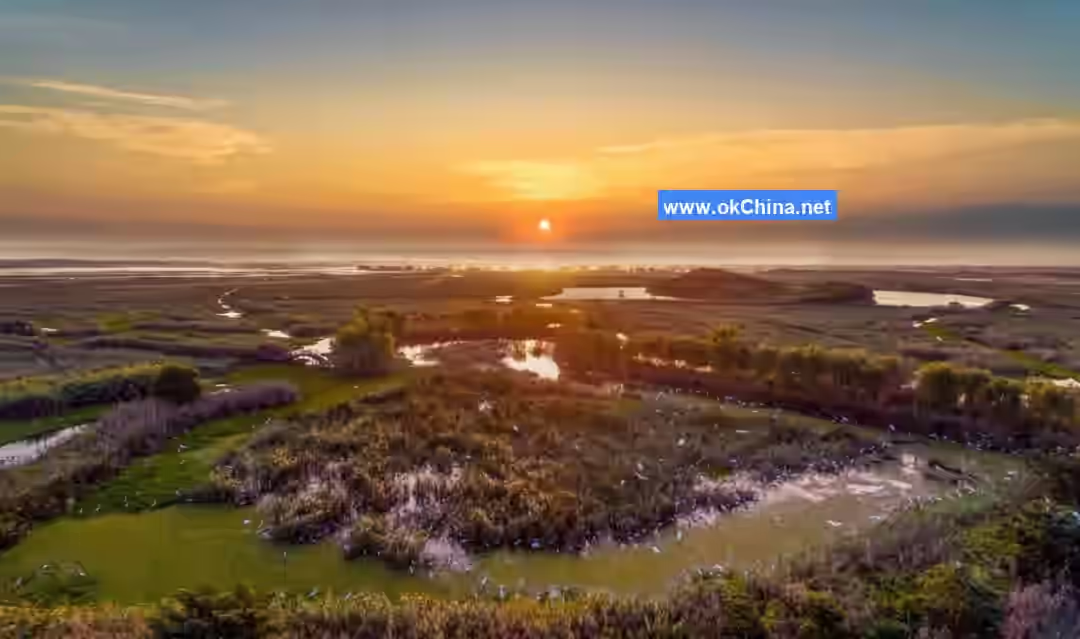
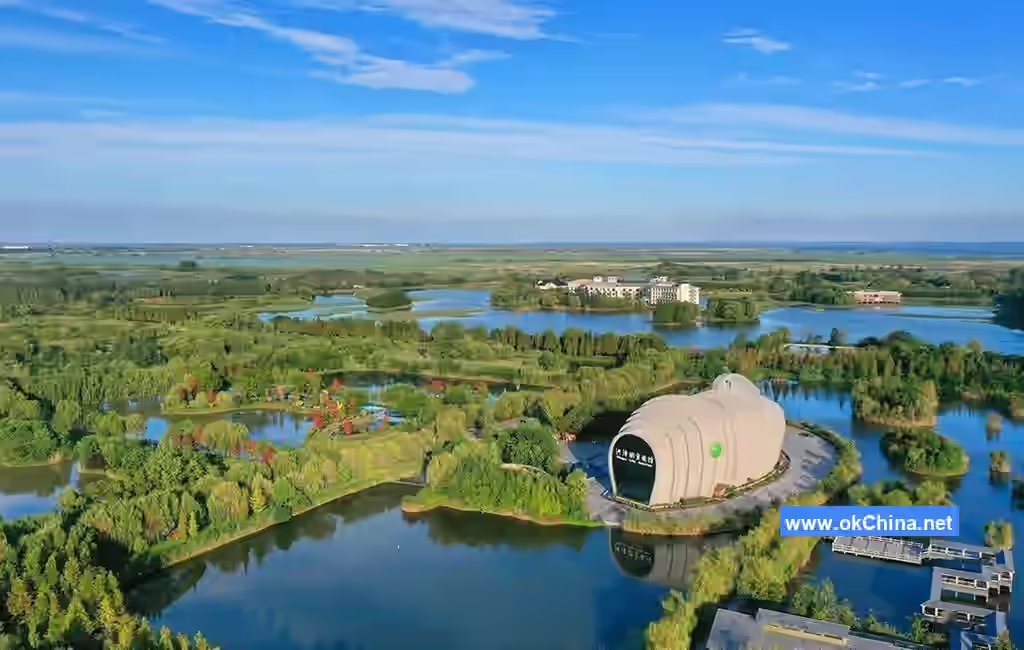
Hongze Lake Wetland Scenic Area in Suqian City, a National AAAAA Tourist Attraction and one of China's Top Ten Eco-leisure Bases, is located within the scientific experimental zone of the Jiangsu Sihong Hongze Lake Wetland National Nature Reserve. Hongze Lake Wetland National Nature Reserve is the largest freshwater wetland nature reserve in Jiangsu Province, ranking 11th among inland freshwater wetlands nationwide and 2nd in East China. The primary conservation targets of the reserve are: inland freshwater wetland ecosystems, nationally protected birds and other wildlife, fish spawning grounds, and the Xia Caowan standard stratigraphic section. The reserve is home to 194 species of birds, including nationally first-class protected birds such as the Great Bustard, Oriental White Stork, Black Stork, and Red-crowned Crane, as well as 26 species of nationally second-class protected birds. Recently, the world-endangered Reed Parrotbill has also been discovered here. The area boasts unique tourism resources with strong appeal.
Hongze Lake Wetland Park was planned and designed by Nanjing University and Nanjing Forestry University. It is a tourist attraction developed by Sihong County by fully utilizing the resource advantages of the Hongze Lake Wetland National Nature Reserve, integrating ecological leisure, sightseeing, and science education.
2. Geographical Environment
2.1 Hongze Lake
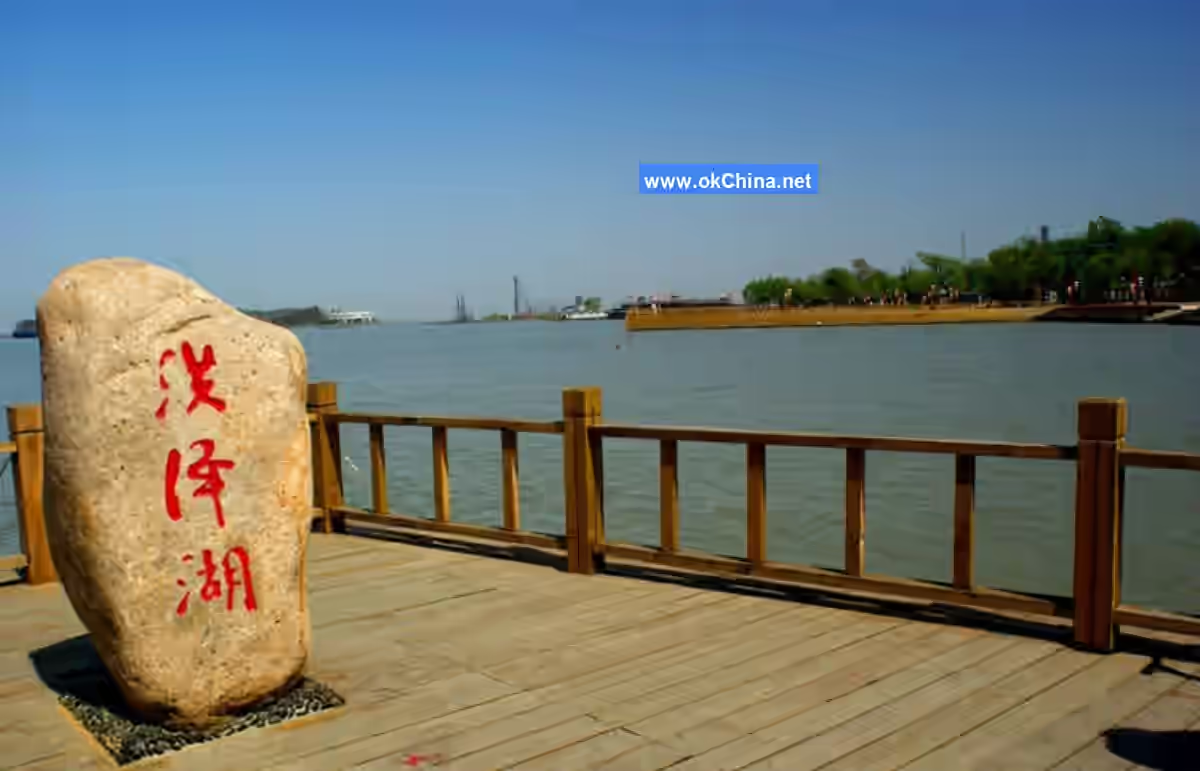
Hongze Lake is the fourth largest freshwater lake in China. It is situated in the lower reaches of the Huai River in western Jiangsu Province, on the western side of the central Suibei Plain, within the territories of Huai'an and Suqian cities. Its geographical coordinates are between 33°06′–33°40′ north latitude and 118°10′–118°52′ east longitude, at the junction of the middle and lower reaches of the Huai River. Originally a group of shallow small lakes, it was called Fuling Lake in ancient times, then Pofu Pond after the Han Dynasty, Hongze Pu during the Sui Dynasty, and finally acquired the name Hongze Lake in the Tang Dynasty. After 1128, the Yellow River shifted southward, merging with the Si River and capturing the lower course of the Huai River below Huaiyin to flow into the sea. The Huai River lost its direct outlet to the sea, causing water to accumulate east of Xuyi, which expanded the original small lakes into Hongze Lake. Hongze Lake is vast, rich in resources, and has a long history. It serves as both a large reservoir and a shipping hub for the Huai River basin, as well as a production base for fisheries, specialty products, and livestock and poultry products, earning the reputation of "yielding a dou of gold at sunrise."
The formation of Hongze Lake involved three major factors. First, depressions formed by crustal fractures were the natural factor for its formation, with its embryo being the group of small lakes existing before the Tang and Song dynasties, mainly including Fuling Lake, Pofu Jian, Nidun Lake, and Wanjia Lake. Second, the Yellow River capturing the Huai River was the objective factor shaping the rudimentary form of Hongze Lake. In the fifth year of Shaoxi in the Song Dynasty (1194 AD), the Yellow River breached at Yangwu, splitting into northern and southern branches at Liangshan Marsh. The southern branch merged with the Si River and flowed south into the Huai River, marking the beginning of the Yellow River's course change. Until the fifth year of Xianfeng in the Qing Dynasty (1855 AD), when the Yellow River shifted northward to enter the sea at Lijin, the Yellow River's capture of the Huai River lasted nearly 700 years. As the Yellow River flowed from a higher elevation, it backflowed into the Huai River. The confluence of the Yellow and Huai Rivers increased the flow volume, raised water levels, and connected Fuling Lake, Pofu Pond, and other lakes, marshes, and depressions into one large body of water, forming the lake. Third, the large-scale construction of Gaojiayan (the Hongze Lake Dam) was the human factor, and also the decisive factor, in the complete formation of Hongze Lake.
2.2 Topography and Landforms
The Jiangsu Sihong Hongze Lake Wetland National Nature Reserve features a basin topography with high surrounding areas and a low center. Its geometric shape is highly irregular. An artificial stone flood-control dam runs northeast-southwest, located 15 kilometers from the lake center. The rest consists of natural lake shores with curved shorelines and gentle slopes.
2.3 Soil
The Jiangsu Sihong Hongze Lake Wetland National Nature Reserve primarily consists of four main soil types: fluvo-aquic soil, yellow-brown soil, purple soil, and sand-ginger black soil.
2.4 Hydrology
The Jiangsu Sihong Hongze Lake Wetland National Nature Reserve is located in the middle reaches of the Huai River region. The catchment area of the Huai River above Hongze Lake is 158,000 square kilometers. The entire water area is composed of three major lake bays: Chengzi Lake Bay, Lihe Lake Bay, and Huaihe Lake Bay. Inflow from the Huai River is the main water source for Hongze Lake. However, the distribution of Huai River water volume within the year is uneven. During the flood season in summer and autumn when rainfall is concentrated in the Huai River basin, the inflow into the lake is greatest, while it is minimal in winter and spring. In the past, flood disasters often occurred during the flood season.
2.5 Climate
The Jiangsu Sihong Hongze Lake Wetland National Nature Reserve is situated in the transitional zone between the northern subtropical and warm temperate zones. Influenced by the East Asian monsoon circulation, the climate is mild with distinct seasons and abundant precipitation. The multi-year average temperature is 16.3°C. The average temperature from December to March in winter and spring is 5.3°C. The average annual precipitation is 925.5 mm, with precipitation from June to September during the flood season amounting to 605.9 mm, accounting for 65.5% of the annual total. Due to the influence of the lake's water body, precipitation here is higher than in other regions at the same latitude.
3. Main Attractions
3.1 Half Moon Lake
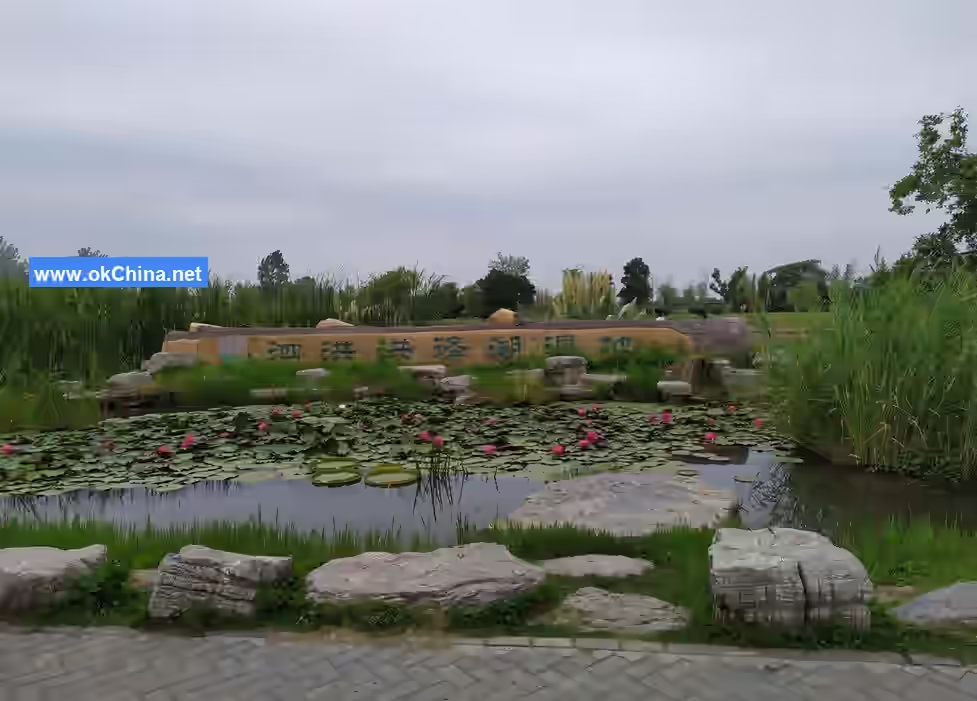
Half Moon Lake is located at the junction of the scenic area's entrance and exit, shaped like a half-moon. The lake is planted with wetland-specific vegetation such as cattails, reeds, and lotuses, forming a small wetland ecosystem. The surrounding square is shaded by green trees and covered with lush grass, making it an important place for visitors to rest, enjoy the scenery, and cool off after touring. The two stone statues by the lake are of Ji Zha and Jin Chun. Ji Zha was from southern Jiangsu during the Spring and Autumn and Warring States periods and has an inseparable connection with Sihong due to the story of "Ji Zha Hanging His Sword." Jin Chun was a native of Sihong, a Minister of three ministries during the Ming Dynasty. He not only contributed to the construction of the Beijing Forbidden City but also dredged the Beijing-Hangzhou Grand Canal. He was an honest official in history but was demoted and returned to his hometown after offending powerful officials. After his death, he was buried by Hongze Lake in Longji Town, Sihong.
3.2 Lotus Grand View Garden
The Lotus Grand View Garden is located at the entrance of the Hongze Lake Wetland Scenic Area, planted with hundreds of thousands of lotus plants featuring numerous and beautiful varieties, presenting elegant and unique scenery. The garden is connected by an 800-meter winding waterfront boardwalk, allowing visitors to bend down and smell the lotus fragrance and admire their beauty. Rest pavilions are dotted throughout. You can have close contact with the wetland's lotuses and fish or take a short rest in the pavilions while enjoying the beautiful surrounding scenery. During the lotus blooming season, this is the best spot for taking photos with the lotuses.
3.3 Hongze Lake Wetland Reed Maze
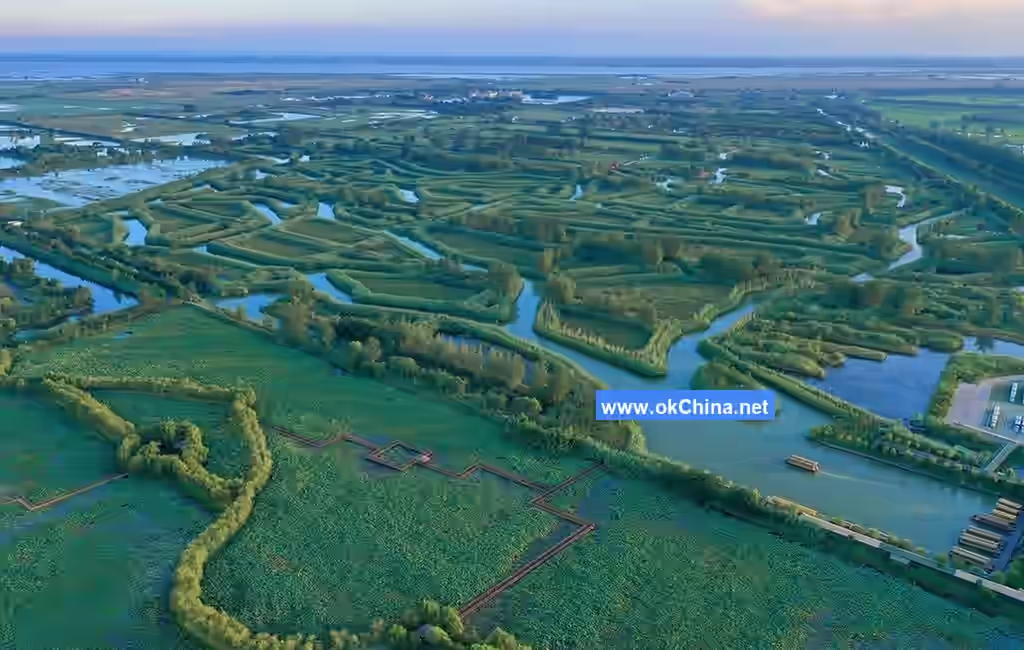
The Hongze Lake Wetland Reed Maze covers a total area of 3,000 mu (approx. 200 hectares) and consists of 60 interconnected channels with a total length of 15 kilometers. Taking a boat tour through it, you can enjoy the scenery of winding waterways and reeds resembling green curtains. It is also a journey through time to experience Sihong's rich cultural heritage, recreate scenes from the War of Resistance against Japan, showcase Sihong's ecological civilization, and experience the legends of the great lake.
3.4 Working Committee Island
Located within the scenic area's reed maze, Working Committee Island is Jiangsu's first comprehensive red tourism site showcasing the waterborne revolutionary struggles of the New Fourth Army soldiers and our Party's cadres and masses during the War of Resistance against Japan and the full-scale civil war. Centered around the Hongze Lake Waterborne Revolutionary Struggle Memorial Hall and Victory Square, it recreates the scenes of the New Fourth Army soldiers and our Party's cadres and masses conducting waterborne bandit suppression, the 33-day counter-mopping-up campaign, and the 58-day waterborne battles in the Hongze Lake area through images, text, sculptures, sound, and light displays. Working Committee Island, connected with Sihong's Dawangzhuang, has become a preferred site for Party members in the province to conduct Party spirit education and red tourism.
3.5 Waterwheel Post Station
Waterwheels have a long history and a unique appearance, being an ancient water-lifting irrigation tool. The Waterwheel Post Station is a specially designed visitor experience area to recreate this ancient irrigation tool. Covering an area of 20 mu (approx. 1.33 hectares), it houses 12 waterwheels, which can be categorized into Han Dynasty, Tang Dynasty, and Yuan Dynasty waterwheels based on their development history and characteristics.
3.6 Fisherman's Wharf
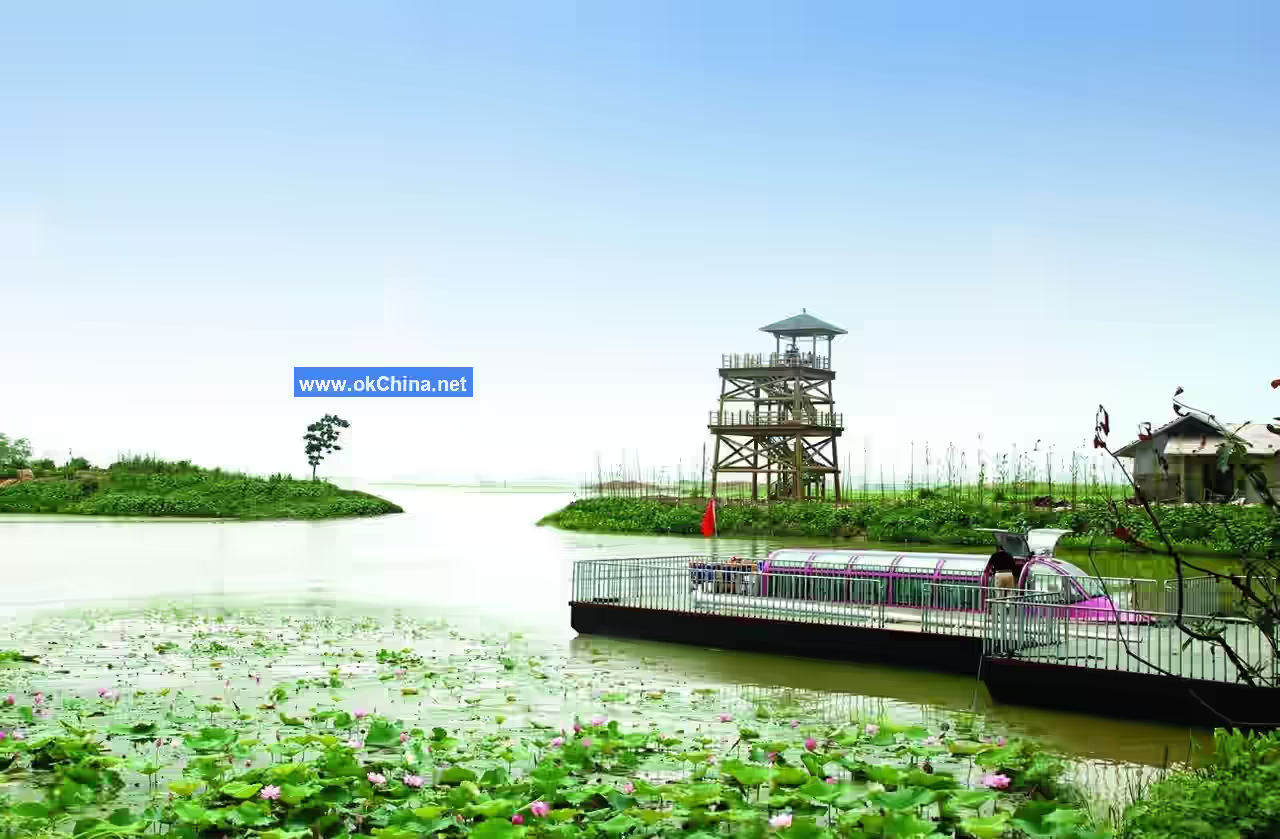
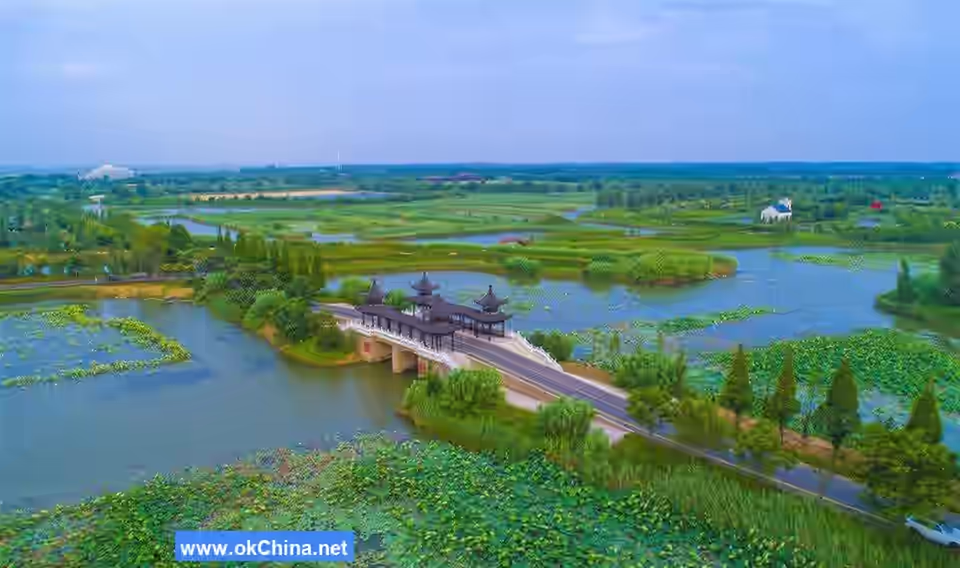
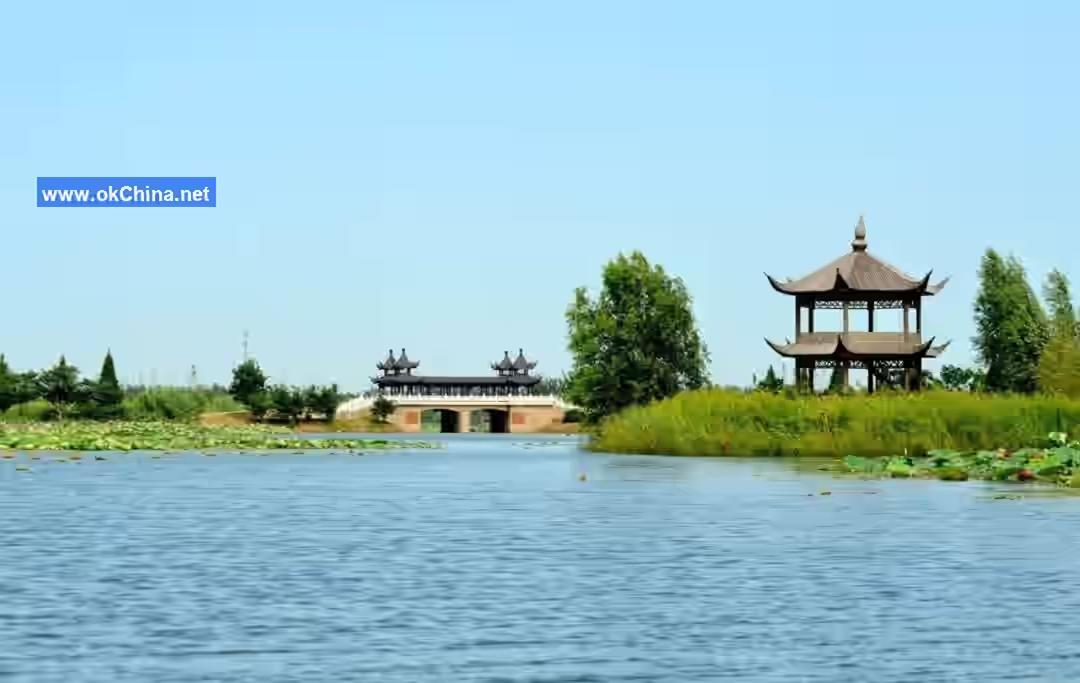
Fisherman's Wharf docks water transportation such as rowing boats and speedboats for visitors to choose from. Here, you can admire the graceful lotuses and swaying reeds nearby, and the variously shaped bridges, the grand Hongze Lake Aquarium, and the scenic area's beautiful skyline in the distance. The wharf is equipped with a 3,000-square-meter visitor rest area where you can enjoy tea while viewing the scenery and leisurely savor a comfortable life.
3.7 Deer Park
Deer Park is a theme park centered on deer culture, integrating sightseeing and science education. The park's plaque reads "The Deer Bleat,"取自诗经《小雅》取自诗经《小雅》取自诗经《小雅》取自诗经《小雅》取自诗经《小雅》取自诗经《小雅》取自诗经《小雅》取自诗经《小雅》取自诗经《小雅》取自诗经《小雅》取自诗经《小雅》取自诗经《小雅》取自诗经《小雅》取自诗经《小雅》取自诗经《小雅》取自诗经《小雅》取自诗经《小雅》取自诗经《小雅》取自诗经《小雅》取自诗经《小雅》取自诗经《小雅》取自诗经《小雅》取自诗经《小雅》取自诗经《小雅》取自诗经《小雅》取自诗经《小雅》取自诗经《小雅》取自诗经《小雅》取自诗经《小雅》取自诗经《小雅》取自诗经《小雅》取自诗经《小雅》取自诗经《小雅》取自诗经《小雅》取自诗经《小雅》取自诗经《小雅》取自诗经《小雅》取自诗经《小雅》取自诗经《小雅》取自诗经《小雅》取自诗经《小雅》取自诗经《小雅》取自诗经《小雅》取自诗经《小雅》取自诗经《小雅》取自诗经《小雅》取自诗经《小雅》取自诗经《小雅》取自诗经《小雅》取自诗经《小雅》取自诗经《小雅》取自诗经《小雅》取自诗经《小雅》取自诗经《小雅》取自诗经《小雅》取自诗经《小雅》取自诗经《小雅》取自诗经《小雅》取自诗经《小雅》取自诗经《小雅》取自诗经《小雅》取自诗经《小雅》取自诗经《小雅》取自诗经《小雅》取自诗经《小雅》取自诗经《小雅》取自诗经《小雅》取自诗经《小雅》取自诗经《小雅》取自诗经《小雅》取自诗经《小雅》取自诗经《小雅》取自诗经《小雅》取自诗经《小雅》取自诗经《小雅》取自诗经《小雅》取自诗经《小雅》取自诗经《小雅》取自诗经《小雅》取自诗经《小雅》取自诗经《小雅》取自诗经《小雅》取自诗经《小雅》取自诗经《小雅》取自诗经《小雅》取自诗经《小雅》取自诗经《小雅》取自诗经《小雅》取自诗经《小雅》取自诗经《小雅》取自诗经《小雅》取自诗经《小雅》取自诗经《小雅》取自诗经《小雅》取自诗经《小雅》取自诗经《小雅》取自诗经《小雅》取自诗经《小雅》取自诗经《小雅》取自诗经《小雅》取自诗经《小雅》取自诗经《小雅》取自诗经《小雅》取自诗经《小雅》取自诗经《小雅》取自诗经《小雅》取自诗经《小雅》取自诗经《小雅》取自诗经《小雅》取自诗经《小雅》取自诗经《小雅》取自诗经《小雅》取自诗经《小雅》取自诗经《小雅》取自诗经《小雅》取自诗经《小雅》取自诗经《小雅》取自诗经《小雅》取自诗经《小雅》取自诗经《小雅》取自诗经《小雅》取自诗经《小雅》取自诗经《小雅》取自诗经《小雅》取自诗经《小雅》取自诗经《小雅》取自诗经《小雅》取自诗经《小雅》取自诗经《小雅》取自诗经《小雅》取自诗经《小雅》取自诗经《小雅》取自诗经《小雅》取自诗经《小雅》取自诗经《小雅》取自诗经《小雅》取自诗经《小雅》取自诗经《小雅》取自诗经《小雅》取自诗经《小雅》取自诗经《小雅》取自诗经《小雅》取自诗经《小雅》取自诗经《小雅》取自诗经《小雅》取自诗经《小雅》取自诗经《小雅》取自诗经《小雅》取自诗经《小雅》取自诗经《小雅》取自诗经《小雅》取自诗经《小雅》取自诗经《小雅》取自诗经《小雅》取自诗经《小雅》取自诗经《小雅》取自诗经《小雅》取自诗经《小雅》取自诗经《小雅》取自诗经《小雅》取自诗经《小雅》取自诗经《小雅》取自诗经《小雅》取自诗经《小雅》取自诗经《小雅》取自诗经《小雅》取自诗经《小雅》取自诗经《小雅》取自诗经《小雅》取自诗经《小雅》取自诗经《小雅》取自诗经《小雅》取自诗经《小雅》取自诗经《小雅》取自诗经《小雅》取自诗经《小雅》取自诗经《小雅》取自诗经《小雅》取自诗经《小雅》取自诗经《小雅》取自诗经《小雅》取自诗经《小雅》取自诗经《小雅》取自诗经《小雅》取自诗经《小雅》取自诗经《小雅》取自诗经《小雅》取自诗经《小雅》取自诗经《小雅》取自诗经《小雅》取自诗经《小雅》取自诗经《小雅》取自诗经《小雅》取自诗经《小雅》取自诗经《小雅》取自诗经《小雅》取自诗经《小雅》取自诗经《小雅》取自诗经《小雅》取自诗经《小雅》取自诗经《小雅》取自诗经《小雅》取自诗经《小雅》取自诗经《小雅》取自诗经《小雅》取自诗经《小雅》取自诗经《小雅》取自诗经《小雅》取自诗经《小雅》取自诗经《小雅》取自诗经《小雅》取自诗经《小雅》取自诗经《小雅》取自诗经《小雅》取自诗经《小雅》取自诗经《小雅》取自诗经《小雅》取自诗经《小雅》取自诗经《小雅》取自诗经《小雅》取自诗经《小雅》取自诗经《小雅》取自诗经《小雅》取自诗经《小雅》取自诗经《小雅》取自诗经《小雅》取自诗经《小雅》取自诗经《小雅》取自诗经《小雅》取自诗经《小雅》取自诗经《小雅》取自诗经《小雅》取自诗经《小雅》取自诗经《小雅》取自诗经《小雅》取自诗经《小雅》取自诗经《小雅》取自诗经《小雅》取自诗经《小雅》取自诗经《小雅》取自诗经《小雅》取自诗经《小雅》取自诗经《小雅》取自诗经《小雅》取自诗经《小雅》取自诗经《小雅》取自诗经《小雅》取自诗经《小雅》取自诗经《小雅》取自诗经《小雅》取自诗经《小雅》取自诗经《小雅》取自诗经《小雅》取自诗经《小雅》取自诗经《小雅》取自诗经《小雅》取自诗经《小雅》取自诗经《小雅》取自诗经《小雅》取自诗经《小雅》取自诗经《小雅》取自诗经《小雅》取自诗经《小雅》取自诗经《小雅》取自诗经《小雅》取自诗经《小雅》取自诗经《小雅》取自诗经《小雅》取自诗经《小雅》取自诗经《小雅》取自诗经《小雅》取自诗经《小雅》取自诗经《小雅》取自诗经《小雅》取自诗经《小雅》取自诗经《小雅》取自诗经《小雅》取自诗经《小雅》取自诗经《小雅》取自诗经《小雅》取自诗经《小雅》取自诗经《小雅》取自诗经《小雅》取自诗经《小雅》取自诗经《小雅》取自诗经《小雅》取自诗经《小雅》取自诗经《小雅》取自诗经《小雅》取自诗经《小雅》取自诗经《小雅》取自诗经《小雅》取自诗经《小雅》取自诗经《小雅》取自诗经《小雅》取自诗经《小雅》取自诗经《小雅》取自诗经《小雅》取自诗经《小雅》取自诗经《小雅》取自诗经《小雅》取自诗经《小雅》取自诗经《小雅》取自诗经### 3.9 Ten-Mile Blossoms · Romantic Sea of Flowers Covering an area of over 1,000 mu, Ten-Mile Blossoms · Romantic Sea of Flowers features more than 10 varieties of specialty flowers, including 500,000 tulips, as well as violet cress, corn poppy, pansy, lupine, rapeseed flowers, hydrangeas, cherry blossoms, roses, peonies, and more. When spring arrives, the tulips are as beautiful as rosy clouds, the violet cress displays a delicate purple hue, the rapeseed flowers form a golden blanket, the roses emit a fragrant aroma, and the peonies exude elegance and nobility. Visitors can experience hands-on flower arranging, making it a top choice for couples seeking photo opportunities. Ten-Mile Blossoms · Romantic Sea of Flowers has become a popular new internet-famous check-in spot, a must-visit destination in spring for couples, families with children, and groups to enjoy flowers and outings. On March 31, 2023, the opening ceremony of the "Ten-Mile Blossoms · Encounter the Sea of Flowers" Sihong Hongze Lake Wetland Scenic Area's First Tulip Festival and the "Millions Tour the Sea of Flowers" event were held here!
3.10 Golden Sand Spring
Golden Sand Spring is divided into a beach area and a water play area. The sand in the beach area is golden in color, fine, and soft, making it not only an excellent spot for sunbathing but also suitable for activities like beach volleyball and beach soccer. The water play area offers opportunities for surfing and swimming. Golden Sand Spring Bath is your premier choice for escaping the summer heat and enjoying leisure and entertainment during the hot summer months.
3.11 Fish Jump Valley
In Fish Jump Valley, visitors can row boats from the dock and navigate through the valley. Fish frequently leap out of the water beside the boats, as if playing or playfully greeting. The intimate interaction between humans and nature is utterly delightful.
3.12 Wetland Leisure Sports Center
Covering an area of 80,000 square meters, the Wetland Leisure Sports Center consists of functional buildings, sports lawns, fountain squares, and more. The functional buildings are equipped with facilities such as restrooms and shower rooms. The sports lawns are divided into play areas and sports areas, hosting tent camping activities according to festivals and seasons. With its beautiful environment, excellent ecology, and high oxygen ion concentration, the scenic area is perfect for engaging in exhilarating exercise at the sports center, enjoying the thrill and happiness of leisure sports.
3.13 Deep Breath Passage
Bordering the buffer zone of the Hongze Lake Wetland National Nature Reserve, strolling through the Deep Breath Passage with its cool breezes refreshes the mind and spirit. Visitors can admire the seasonal beauty of the wetland core area, breathe in the fresh air containing 20,000 to 50,000 negative oxygen ions per cubic centimeter, ascend the bird-watching tower to take in the majestic view of the 750,000-mu vast wetland, and approach the ecological island to listen to the chorus of hundreds of birds singing praises to life. The Deep Breath Passage is the best place to "tour the great wetland and take deep breaths."
3.14 Hongze Lake Fish Aquarium
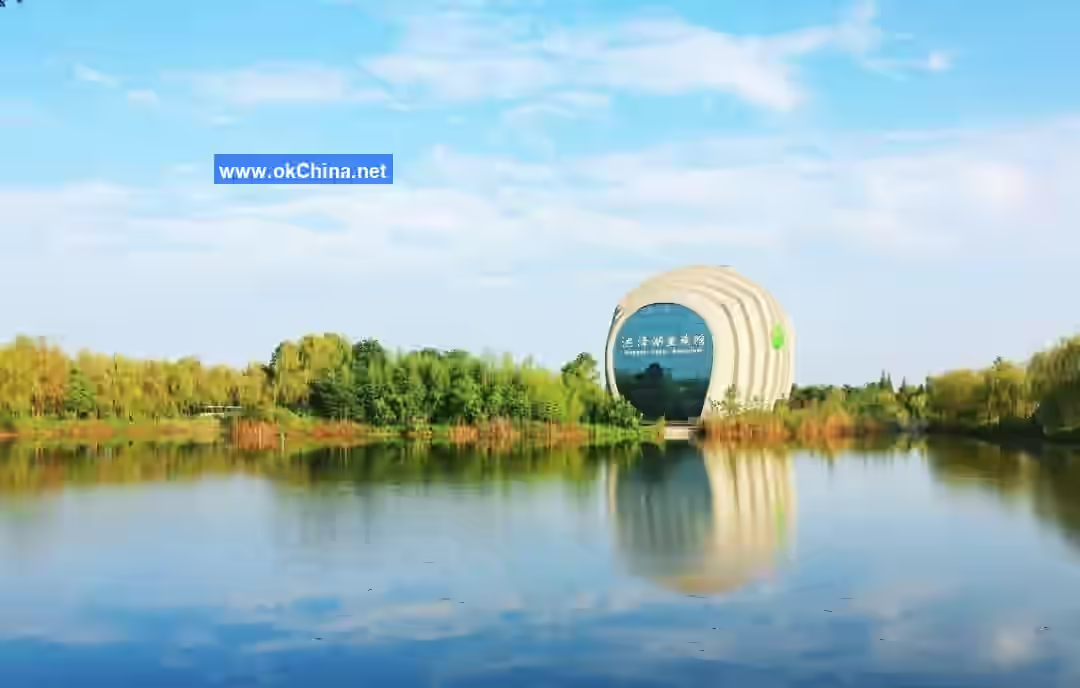
The Hongze Lake Fish Aquarium covers a site area of 20,000 square meters with a building area of 5,888 square meters. Its overall dimensions are 99 meters long, 26 meters high, and 18 meters wide. The structure is shaped like a large Hongze Lake carp swimming within the wetland scenic area, symbolizing good luck and abundance year after year.
The exhibition hall consists of two main parts: the fish head and the fish body. The fish head houses the park's most advanced dome theater. With a dome height of 13.6 meters and four-tiered seating accommodating 36 viewers simultaneously, the six-degree-of-freedom seats can swing up, down, left, right, forward, and backward. High-definition 4D movies panoramically display the underwater world of the lake, allowing visitors to experience the thrilling and exciting scenery of the Hongze Lake bottom in a safe and immersive manner.
The fish body comprises three floors. The first floor primarily focuses on displaying the various fish species of Hongze Lake. The second floor recreates the world of the South American Amazon rainforest, featuring a variety of colorful and uniquely shaped rare fish that are refreshing and delightful. The third floor gathers some of the more precious freshwater fish species from around the world, representing the essence of the entire aquarium.
3.15 Thousand Lotus Garden
Thousand Lotus Garden is an excellent spot in Hongze Lake Wetland to admire lotus flowers in summer, as it is planted with 1,008 varieties of lotus, hence its name. The garden covers 60 mu and contains 100,000 lotus plants, including 15,000 potted ones. It features rare domestic varieties such as the Guangdong series represented by "Victoria amazonica," the Anhui series represented by "Sunshine," and the Hebei series represented by "Red Jade." The garden also houses a bird rescue center, where visitors can observe rescued rare birds from Hongze Lake while enjoying the flowers. In summer, when all 1,008 lotus varieties bloom in competition, the scene resembles a celestial palace or an earthly paradise, so breathtakingly beautiful that visitors often linger, reluctant to leave.
3.16 Fishing Fun Garden
Covering an area of 20,000 square meters, the Fishing Fun Garden resembles a lotus flower floating on clear water when viewed from above. This is a place where you can go wild! The garden showcases traditional fishing tools used by Hongze Lake, such as nets, weirs, traps, lift nets, and fishing spears, as well as traditional fishing methods like lift net fishing and cormorant fishing. It also features various fishing ponds for visitors to experience catching lobsters, crabs, fish, and more, providing diverse fishing fun. It is an ideal venue to experience fishing culture, especially for children to enjoy the乐趣 of fishing.
3.17 Hongze Lake Wetland Museum
The Hongze Lake Wetland Museum was built in 2006. Its exterior shows that the entire structure is built over water. The roofing, exterior walls, flooring, simulated wooden boardwalks, etc., are all made using simulated ecological materials and technologies. The overall design organically integrates with the natural wetland landscape, forming a unified whole. The museum has a building area of 2,300 square meters, with the first floor covering approximately 1,500 square meters. It mainly displays the wetland's unique natural resources, specimens of rare animals and plants, the historical evolution of the wetland, and Hongze Lake's freshwater fish species. Entering the exhibition hall feels like traveling through time back to ancient eras millions of years ago, offering a feast for the eyes. The museum is divided into six exhibition halls: Ecological Homeland, Wetland Changes, Wetland Ecology, Aquatic Animals, Terrestrial Animals, and Wetland Plants.
3.18 Rose Garden
3.19 Peach Garden
3.20 Plum Garden
3.21 Peony Garden
The Hongze Lake Wetland Peony Garden covers an area of 100 mu and is planted with nearly 10,000 peony plants.
3.22 Herbaceous Peony Garden
The Herbaceous Peony Garden is located just across the road from the Peony Garden, with its blooming season following that of the peonies. The garden contains nearly 10,000 herbaceous peony plants with single and double petals, covering an area of about 20 mu, featuring a complete range of flower colors. Herbaceous peonies rank first among herbaceous flowers, praised by people as the "Flower Fairy" and "Flower Prime Minister," and are listed as one of the "Six Famous Flowers." They are also known as the "May Flower Goddess" and have been regarded as the flower of love since ancient times. The best time to admire herbaceous peonies in Hongze Lake Wetland is from late April to mid-May each year.
3.23 Egret Lake
Egret Lake covers an area of over 1,000 mu and consists of a thousand-mu lotus pond and Egret Island. Egret Island is planted with over 10,000 trees suitable for egret habitation, such as Chinese tallow trees, oriental arborvitae, and willows, making it an important habitat for egrets and other birds within the scenic area. Egret Lake offers different scenery throughout the year. In spring, groups of egrets play by the water. In midsummer, the fragrance of lotus flowers from the thousand-mu pond fills the garden. In early autumn, lotus seedpods sway in the wind; visitors can boat on the lotus pond to pick seedpods. "In the south one can gather lotus, how the leaves are lush and wide!" Why travel to the south of the Yangtze River to gather lotus? Hongze Lake Wetland is the poetic and picturesque Jiangnan described by ancient poets. In winter, hundreds of swans from the north inhabit the lake to overwinter, playing in the water, creating a lively scene. To the east of Egret Lake is Swan Lake, where over ten species and hundreds of birds, including swans, black swans, wild geese, wild ducks, and mandarin ducks, are kept, making it an excellent spot for bird watching and feeding.
3.24 Aquatic Botanical Garden
The Hongze Lake Wetland Aquatic Botanical Garden has cultivated 300 species of aquatic plants, including 200 domestic and 100 foreign species. It also includes nationally protected first-grade aquatic plants on the verge of extinction. Efforts are underway to develop it into the most comprehensive aquatic plant gene bank with the greatest variety and quantity of aquatic plant species at latitude 33° north.
3.25 Swan Lake
Swan Lake boasts a good ecological environment and beautiful scenery. Over thirty species of protected birds, including swans and black swans, are kept in the lake. Every winter, hundreds of swans come here to overwinter, with the largest flock exceeding 50. Visitors can admire the elegant postures of various birds floating on the water or soaring from a distance, or step onto the viewing platform to interact with the birds up close in a friendly manner.
3.26 Peacock Garden
Covering an area of over 100 mu, the Peacock Garden is shaped like the Yunnan Dai ethnic instrument, the hulusi, floating on the water. The garden is shaded by trees and perfectly integrates with the surrounding ecological environment. It houses peacocks of various colors, including blue, white, and pied. It features three functional areas: a green lawn area, a sculpture area, and an observation and interaction area, combining观赏性,趣味性, and interactivity. It is recognized as the most beautiful peacock garden built in the province.
4. Cultural Resources
4.1 Evolution of the Name
Hongze Lake was anciently called "Pofu Tang" (Broken Cauldron Pond). In the 12th year of the Daye era of the Sui Dynasty (616 AD), Emperor Yang of Sui traveled by dragon boat from Luoyang to Jiangdu. The journey was plagued by drought until he reached "Pofu Tang," where he happily encountered heavy rain, causing the water level to rise dramatically, creating a boundless expanse. In a moment of inspiration, he renamed Pofu Tang as Hongze Pu (Vast Marsh), from which the name Hongze originates. By the Tang Dynasty, it was renamed Hongze Lake.
4.2 Hongze Lake Levee
The Hongze Lake Levee, also known as "Gaojia Weir," "Gaojia Long Embankment," or "Gaojia Yan," was initially built during the Eastern Han Dynasty. Located within Huai'an City, Jiangsu Province, it is a large-scale embankment project that blocked the Huai River, forming Hongze Lake.
The Hongze Lake Levee stretches north from Matou Town in Huaiyin District to Jiangba Town in Hongze District. It features uniform structural specifications and exquisite construction techniques, showcasing the advanced skills of ancient Chinese water conservancy projects. The Hongze Lake Levee is not only an engineering feat of our ancestors' comprehensive management of the Yellow River, Huai River, and Grand Canal water systems but also a historical relic and a monument to water control that can serve cultural research and tourism development.
4.3 Folk Legends#### 4.3.1 Nine Oxen, Two Tigers, and One Rooster
The phrase "nine oxen and two tigers" is commonly used to describe immense strength. When the Qing government reinforced the Hongze Lake embankment, they cast "nine oxen, two tigers, and one rooster" and placed them at critical points along the dike to pray for flood control. It is said that when the iron oxen were originally cast, they had golden hearts and silver gallbladders inside. At night, they would often run into the fields to steal crops from the common people. When people came out to drive them away, one blow struck off their horns. Later, some greedy individual stole the golden hearts and silver gallbladders, rendering the oxen immobile and thus nullifying their flood-control function.
The surviving iron oxen are life-sized, each depicted with head raised and knees bent, as if mooing, appearing charmingly naive. They lie horizontally on a connected iron base about 10 cm thick, exquisitely cast with vivid craftsmanship, weighing approximately 2,500 kg. On the shoulder of each ox is inscribed in raised regular script: "Metal overcomes wood, the flood dragon hides; Earth controls water, the turtle and snake submit; Casting these rhinoceroses as proof to pacify Huaiyang, Forever eliminating disasters to repay our emperor. Cast on the noon day of the Xinsi year of Kangxi." Over time, the iron oxen have become one of the most beloved scenic attractions of Hongze Lake.
4.3.2 Everywhere Traces of Laozi Mountain
Laozi Mountain within Hongze is traditionally believed to be where Laozi practiced alchemy. In the late Spring and Autumn period, Laozi arrived at Lupu Mountain riding a black ox. Seeing the beautiful mountains and the murmuring Huai River, he decided to gather herbs and refine elixirs here to cure people's illnesses. Laozi relieved countless people from suffering here, and finally, having achieved his virtuous deeds, he vanished without a trace.
Later, people discovered a cave on this mountain with sheer walls, about ten feet deep, containing a stone bed and stone table. They believed it to be Laozi's dwelling, naming it "Immortal Cave." By the Huai River on the west side of Zhongshan, there is a massive rock with tripod-leg marks, surrounded by red stones. It was thought that Laozi once built a furnace here for alchemy, hence it was called "Alchemy Platform." At the southern foot of Nanshan, there is another large submerged rock with hoof-shaped hollows that are perpetually filled with clear water, neither overflowing nor drying up, refilling after being drawn, yet with no visible spring source. Amazed, people believed these were hoof prints left by Laozi's black ox when he rode west to Hangu Pass, thus naming it "Black Ox Traces." Consequently, "Sunset at Immortal Cave," "Reflecting on History at Alchemy Platform," and "Listening to Orioles at Black Ox Traces" became the three major scenic spots of Laozi Mountain.
4.3.3 Colorful Boats Bringing Daughters Home
"Married daughters are like spilled water," but right after the Lunar New Year, fishermen in the Hongze Lake area would decorate their boats colorfully to bring their married daughters home for family gatherings and warm hospitality. In the early years of this century, numerous fishermen drifted into the Huai River basin, settling along the shores of Hongze Lake. On the second day of the second lunar month that year, a fisherman sailed a decorated boat into Little Turtle Beach on Hongze Lake, picked up his daughter, and joyfully sailed upstream on the Huai River to bring her back to her natal home, making quite a spectacle. Local fishermen were curious, and the woman said, "This is our family custom." Then she cheerfully recited a rhyme: "The natal home's colorful boat brings the daughter home, the marital home sends a virtuous wife; Welcoming and sending, sharing heartfelt words, both parents praise the matchmaker." Since then, the custom of colorful boats bringing daughters home has been performed year after year in the Hongze Lake region like a unique, charming play.
4.3.4 Laozi Mountain and Laozi
Laozi was a descendant of Peng Zu, born by the Huai River. His mother became pregnant after eating a plum that floated on the water, carried the child for eighty-one years, and gave birth to a son with white hair, hence named Li Laozi. Also, because his ears had three perforations, he was also called Lao Dan. To develop the western regions and promote Zhou rituals, the Zhou dynasty sent Laozi to travel west for persuasion. During his travels, he consumed the immortal herb of the Queen Mother of the West and attained immortality. One day, riding his black ox, he descended from the heavens onto a reef in the sea. Later, when the sea receded, the reef became a small mountain. Here, he practiced Daoism, refined elixirs, and treated fishermen's illnesses. People revered him as Taishang Laojun (the Supreme Venerable Sovereign) and named this mountain Laozi Mountain.
4.3.5 Fish Eating Immortal Pills
After Sun Wukong wreaked havoc in the Heavenly Palace, he stole and ate Taishang Laojun's immortal pills. Having no other choice, Laojun avoided Sun Wukong, rode a cloud straight west, seeking a quiet place to refine pills. From the cloud, Laojun saw a green mountain below with endless green grass at its foot. Descending to the ground, he found it was Old Mountain on the south shore of Hongze Lake, and there happened to be a cave. Li Laojun gathered herbs and refined pills on this mountain. Sun Wukong anxiously searched everywhere for Laojun to get the pills but could not find him.
Later, Sun Wukong rode a cloud straight west and, seeing a large mountain on the south shore of Hongze Lake, descended. On the southern slope, he found an immortal cave and entered. Inside, he saw Li Laojun busy refining divine pills. Upon seeing Sun Wukong, Laojun quickly put the pills into a gourd, rode a cloud, and fled toward the heavens. Sun Wukong closely pursued, reaching out to snatch the gourd. Seeing the pills about to be taken, Laojun, in a fit of anger, raised a large iron rod and smashed the gourd. Sun Wukong grabbed and snatched a few pills, while the rest fell into Hongze Lake. Fish, shrimp, and crabs all scrambled to eat the pills. Since then, the fish in Hongze Lake have been renowned for their fresh, delicious, and tasty meat, famous far and wide to this day.
4.3.6 Liu Ji Building the Dike
Liu Ji helped Zhu Yuanzhang overthrow the Yuan dynasty and establish the Ming dynasty, bringing peace and prosperity to the nation. However, floods were severe, often submerging crops. Emperor Zhu ordered Liu Ji to undertake water conservancy projects. After receiving the decree, Liu Ji went to the Hongze Lake area, surveying the terrain from Laozi Mountain to Qingjiang. Through his inspection, he found the terrain uneven, and the built dikes were not constructed according to the water level, causing breaches downstream whenever upstream water surged.
After identifying the cause of the breaches, Liu Ji purchased a large amount of rice bran from the people, transported it upstream, and released it into the water at Laozi Mountain. He slowly scattered the bran on the water surface, allowing it to settle along the riverbanks, thereby determining the water level. Based on the bran's position, he constructed the dikes upward, resulting in the winding Hongze Lake embankment we see today. After Liu Ji used this method to build the dikes, there were no more breaches. To this day, the dikes remain intact. People call this sturdy, unbreakable embankment the "Steel Dike."
4.3.7 Fishermen Not Washing Pots in the Water
In the past, an elderly couple of fishermen on Hongze Lake were very poor, owning only a dilapidated boat and a broken pot. One day, the old couple crossed Hongze Lake intending to buy some food and a small pot at the market. When they docked and went to the market, people in shops and stalls ignored them. The old man grew angry. As evening approached, in desperation, he grabbed a handful of millet from a grain store and took a small pot from a sundry shop, then turned and headed back to the boat. The vendors did not chase him for payment, which puzzled the fisherman.
Once on board, they saw nothing but endless water all around. The old couple then realized this was Sizhou City. The next morning, the fisherman discovered that the millet had turned into fresh fish. Overjoyed, the couple carried the fish to the market, sold them, bought some rice, and happily returned to the boat to cook. When they lifted the pot lid, they found it already contained cooked food. The couple relied on this pot for sustenance for a long time. One day, the old fisherwoman put the pot in the water to clean it, but as soon as it touched the water, it vanished. Therefore, fishermen on Hongze Lake no longer wash their pots in the lake. This custom has been passed down to the present day.
Comments
Post a Comment