

Hengdian World Studios
1. Introduction
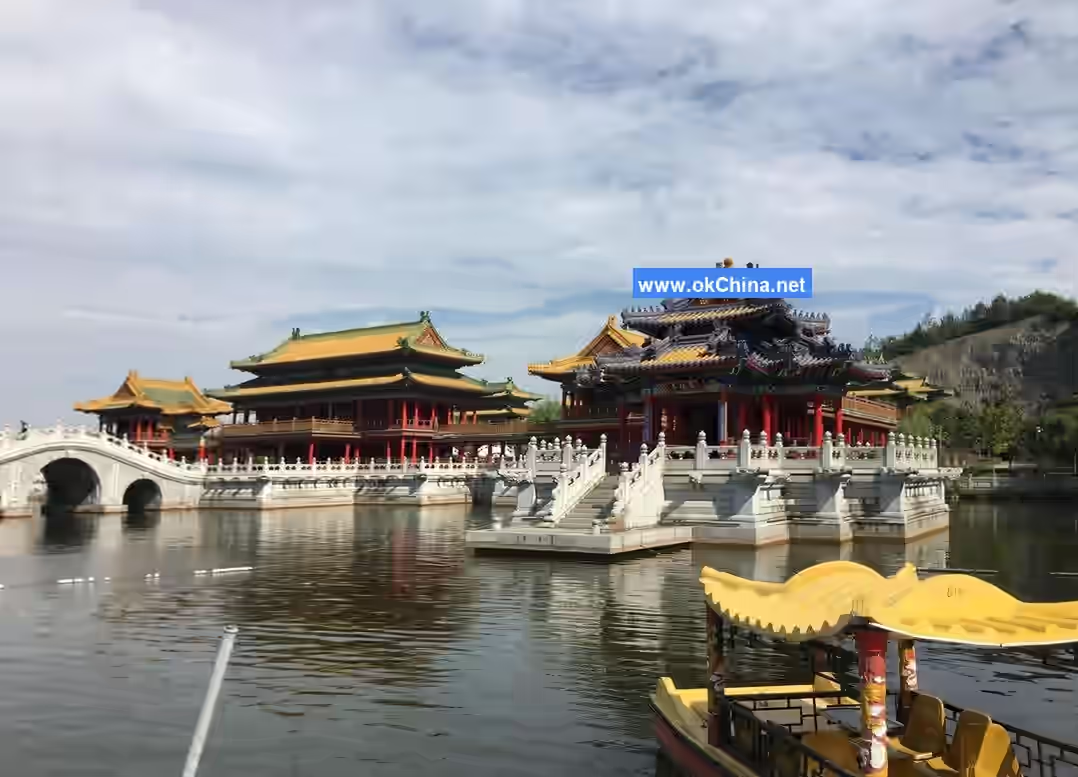
Hengdian World Studios, located in Hengdian Town, Dongyang City, Jinhua, Zhejiang Province, covers a total area of over 50,000 mu. It is China's largest film and television experience resort, established in 1996. The studio complex boasts over a hundred Class A (film-grade) and Class B (TV-grade) sound stages, with more than 2,000 shooting locations spanning ancient, period, and modern settings. It primarily consists of five major scenic areas: Guangzhou Street & Hong Kong Street, Qin Dynasty Palace, Riverside Scene at Qingming Festival, Ming and Qing Palaces, and Dream Valley. On average, it hosts over 15 film and TV crews daily, with up to 50 crews shooting simultaneously at its peak. Numerous films and TV series, such as Hero, The Promise, Schemes of a Beauty, and A Terra-Cotta Warrior, have been filmed here.
In 2000, Hengdian World Studios was awarded the title of one of the first National AAAAA Tourist Attractions by the National Tourism Administration. On April 18, 2010, it was officially designated as a National AAAAA Tourist Attraction. It has become the world's largest film and television shooting base, China's only "National Film and Television Industry Experimental Zone," and is referred to as "China's Hollywood" by The Hollywood Reporter magazine.
2. Geographical Location
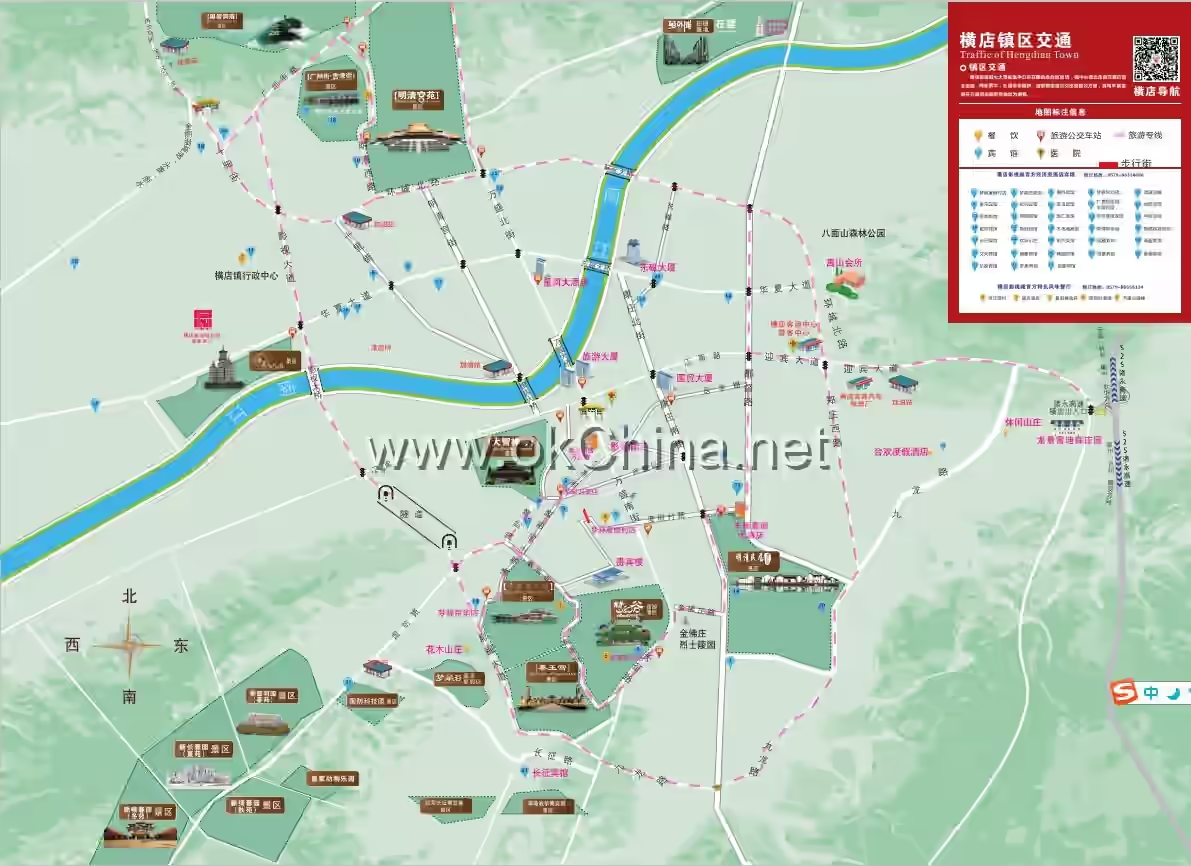
Hengdian World Studios is located in Hengdian Town, Dongyang City, Jinhua, Zhejiang Province.
3. Main Attractions
3.1 Architectural Layout
The Hengdian film and television base covers a total area of over 50,000 mu, encompassing more than thirty shooting bases spanning several thousand years of historical periods and large-scale modern architectural complexes. It features over a hundred Class A (film-grade) and Class B (TV-grade) sound stages, with more than 2,000 shooting locations for ancient, period, and contemporary film and television productions.
3.2 Guangzhou Street & Hong Kong Street
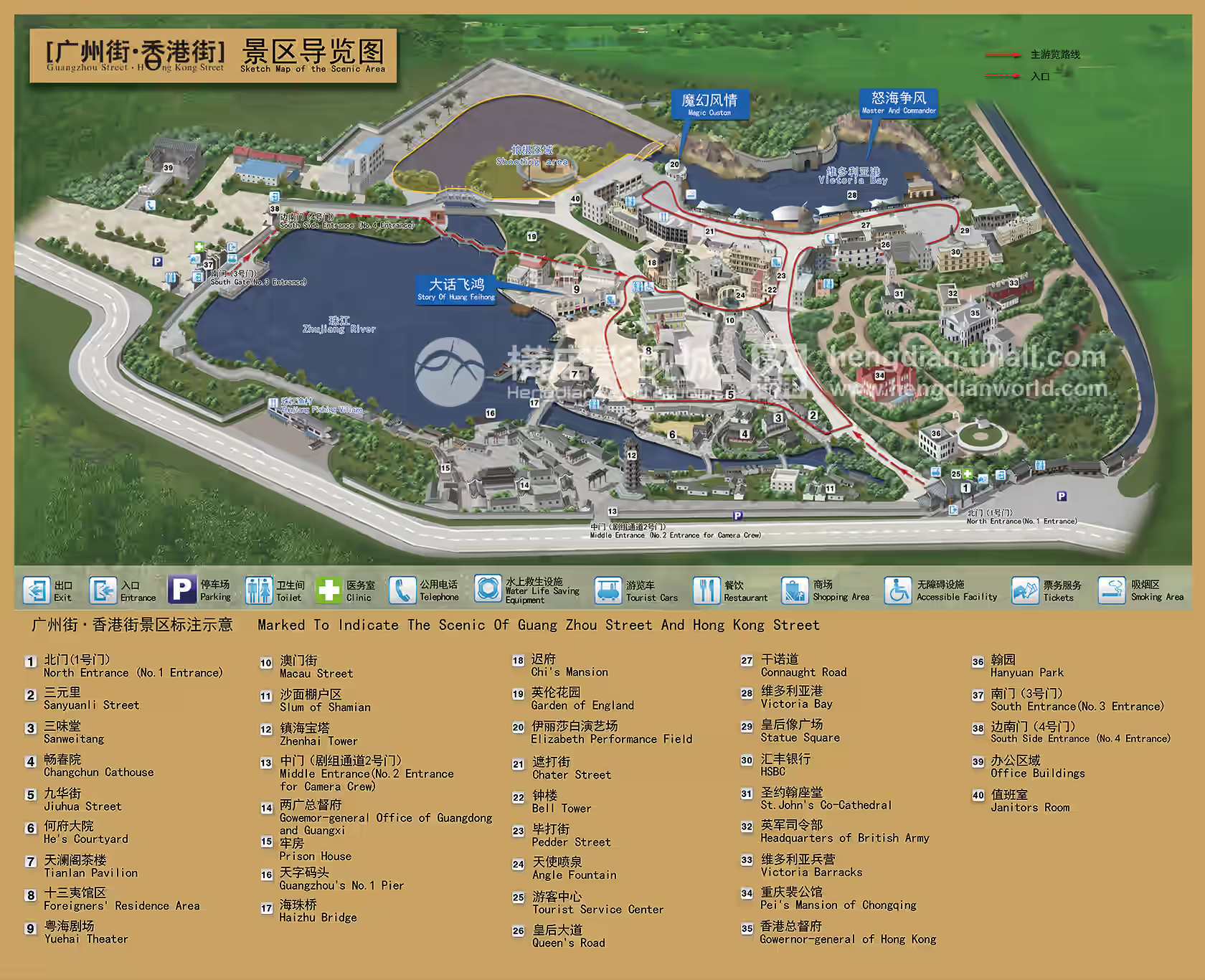
The Guangzhou Street scenic area was built in 1996 to support director Xie Jin's epic historical film The Opium War, marking the birthplace of Hengdian World Studios. In 1998, Hong Kong Street was expanded. With crisscrossing ancient roads and the Pearl River flowing through, it recreates the street market ambiance of 19th-century Guangzhou and Hong Kong. Guangzhou and Hong Kong stand side by side, bordering each other within Hengdian.
Guangzhou Street features reconstructed "19th-century South China Guangzhou city street scenes"; artificial lakes representing the "Pearl River" and "small canals within Guangzhou"; and restored landscapes such as the "Thirteen Factories" and "Tianzi Wharf," recreating the urban life of Guangzhou around the time of the Opium War.
Hong Kong Street is designed to take advantage of the wild slope terrain, featuring numerous street scenes from 19th-century central Hong Kong, including Queen's Road, Hong Kong Governor's House, Victoria Barracks, HSBC Bank, Shanghai Mansion, and Han Garden. Over thirty European-style buildings symbolizing British colonial rule constitute the "Victoria City," representing the political, economic, and cultural center of Hong Kong at that time.
3.3 Ming and Qing Palaces
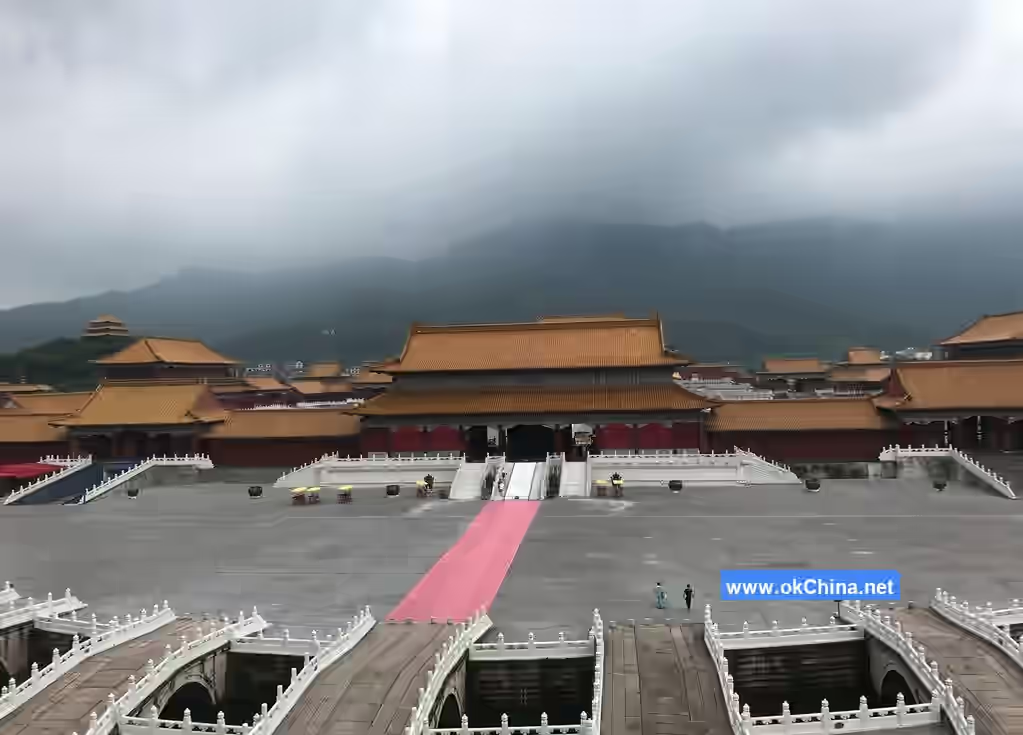
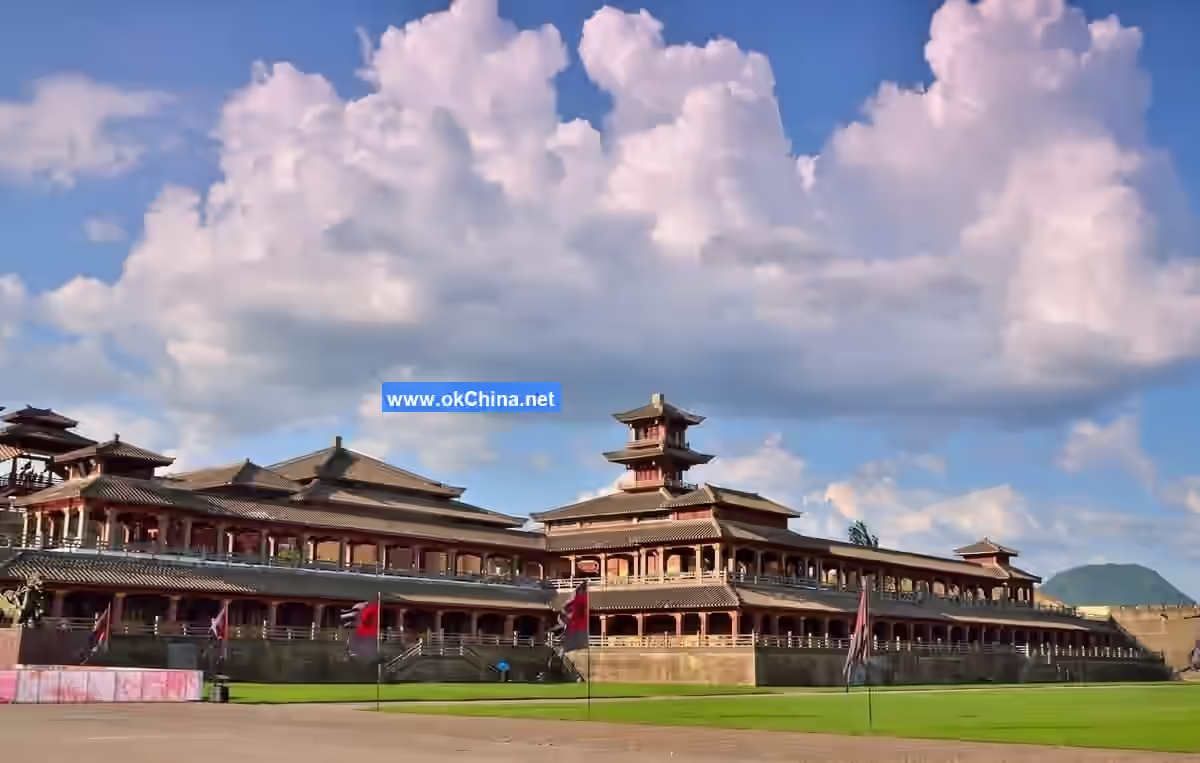
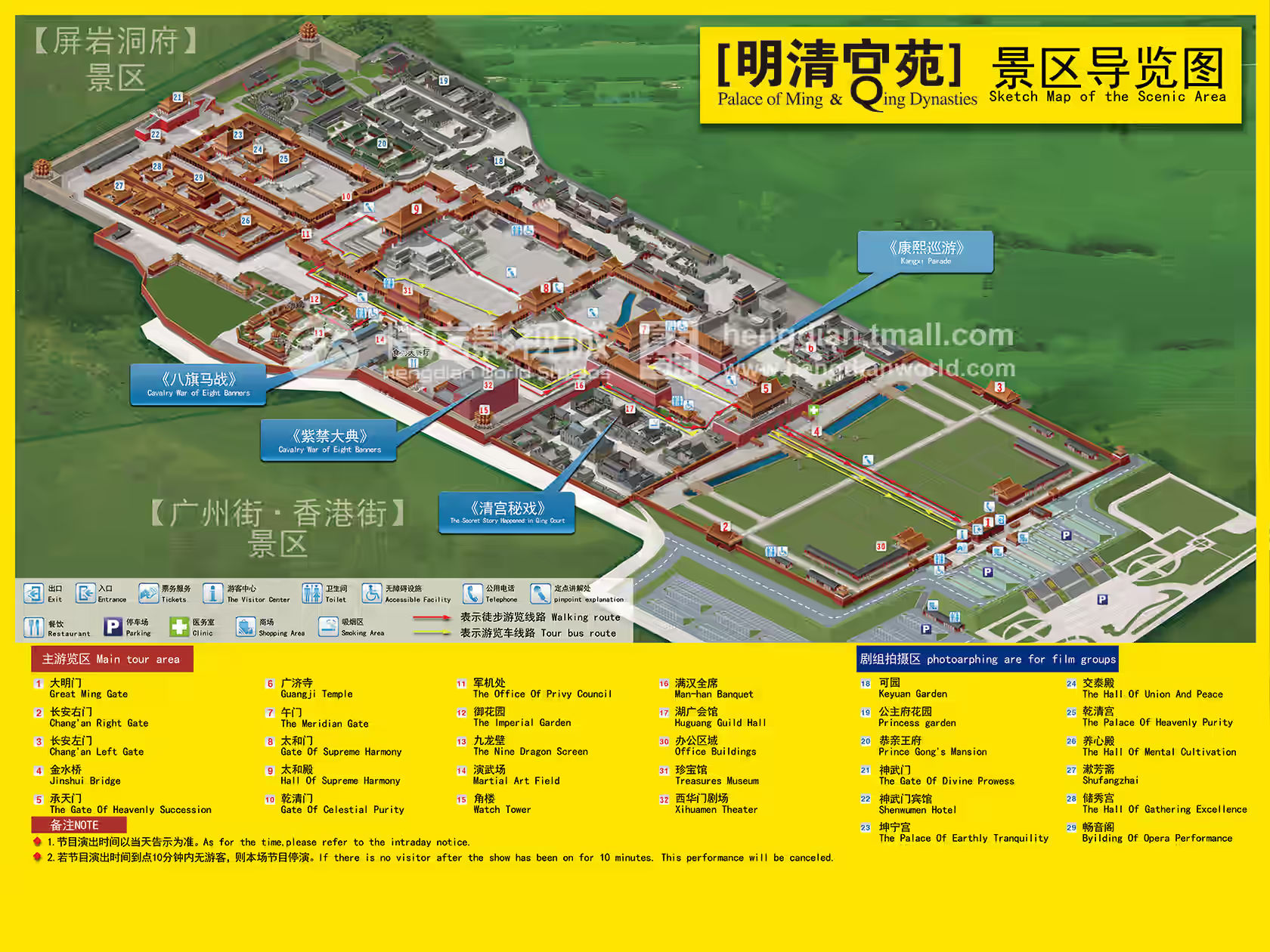
The Ming and Qing Palaces scenic area is a massive complex integrating film and television shooting, tourism, and festival ceremonies. Construction began in 1998, covering an area of 1,500 mu, making it the largest film and television base within Hengdian World Studios. The palaces are a 1:1 replica of the "Forbidden City," referencing Ming and Qing imperial architectural techniques. Using the studio's unique construction methods, it emulates the ceremonial systems of the Tang, Song, and Yuan dynasties while incorporating architectural styles from the Republican era. It brings together four major architectural series: capital palaces, imperial gardens, princely mansions and government offices, and alleyway residences, recreating the official residences, civilian houses, market streets, shops, and palace landscapes of Yanjing (Beijing) across multiple historical periods. It features many historical scenes such as Chessboard Street, Chengtianmen Square, Thousand-Step Corridor, Civil and Military Platform, Golden Water River, Jade Belt Bridge, imperial palaces, garden lakes, dragon towers and phoenix eaves, and palace squares.
3.4 Qin Dynasty Palace
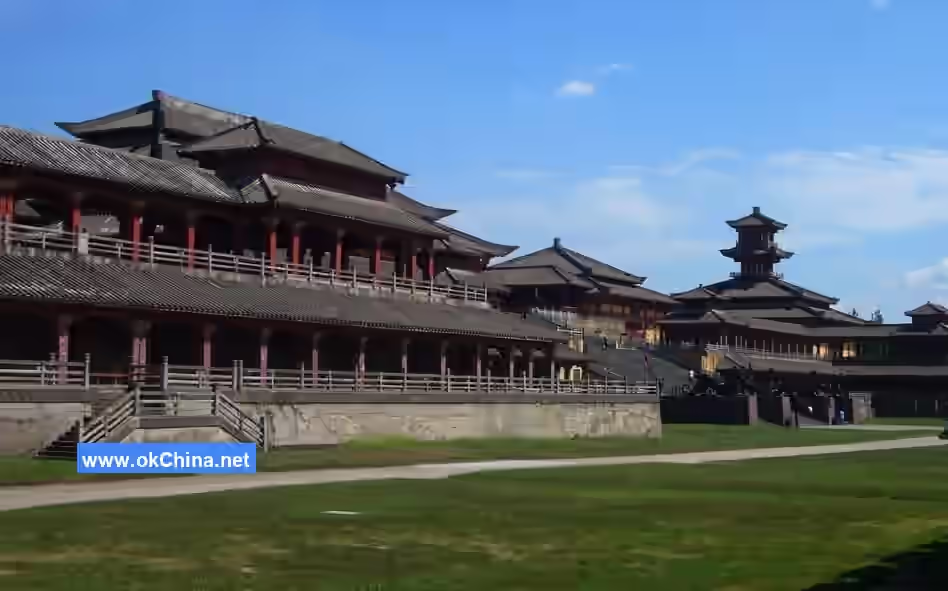
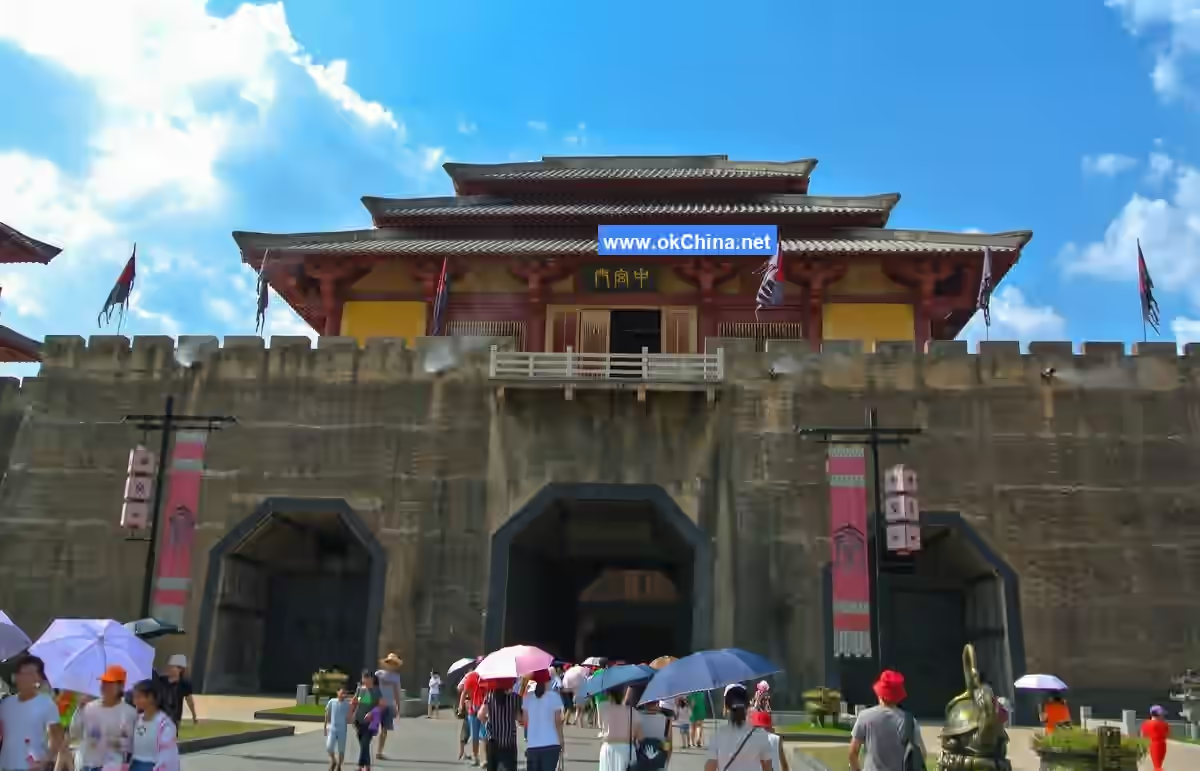
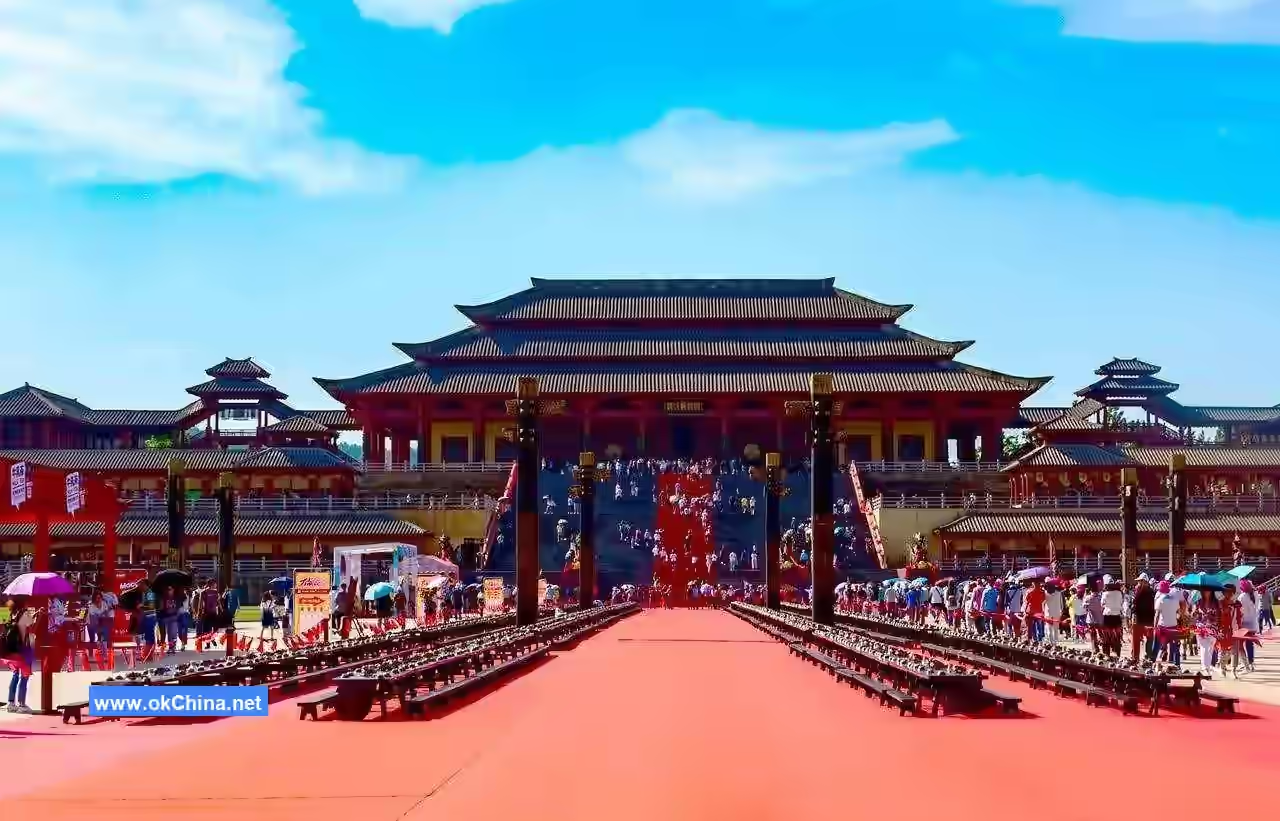
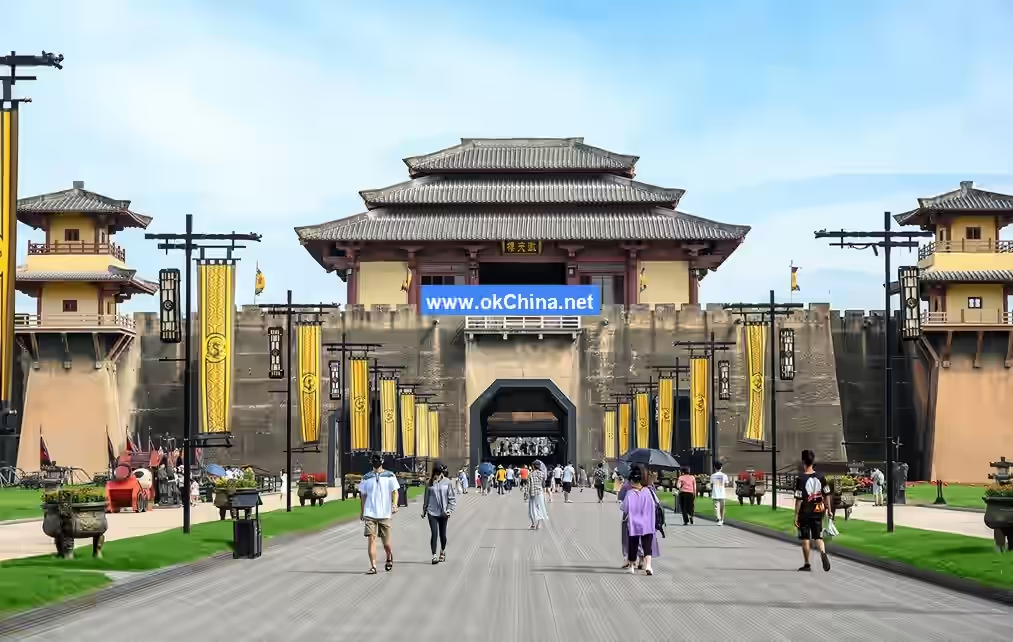
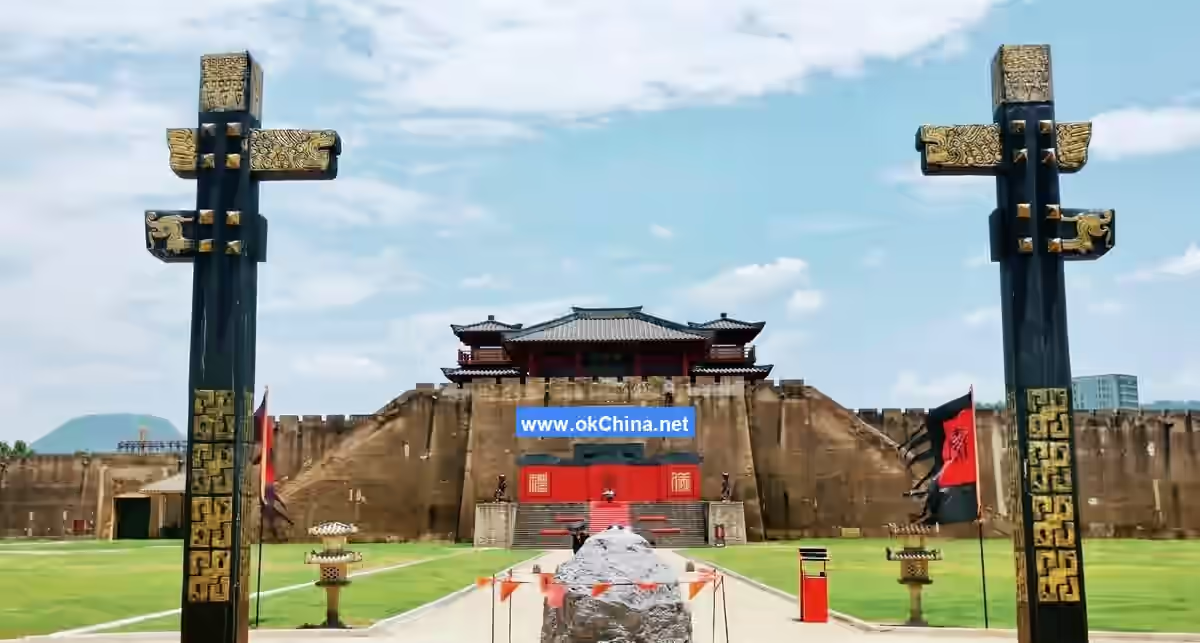
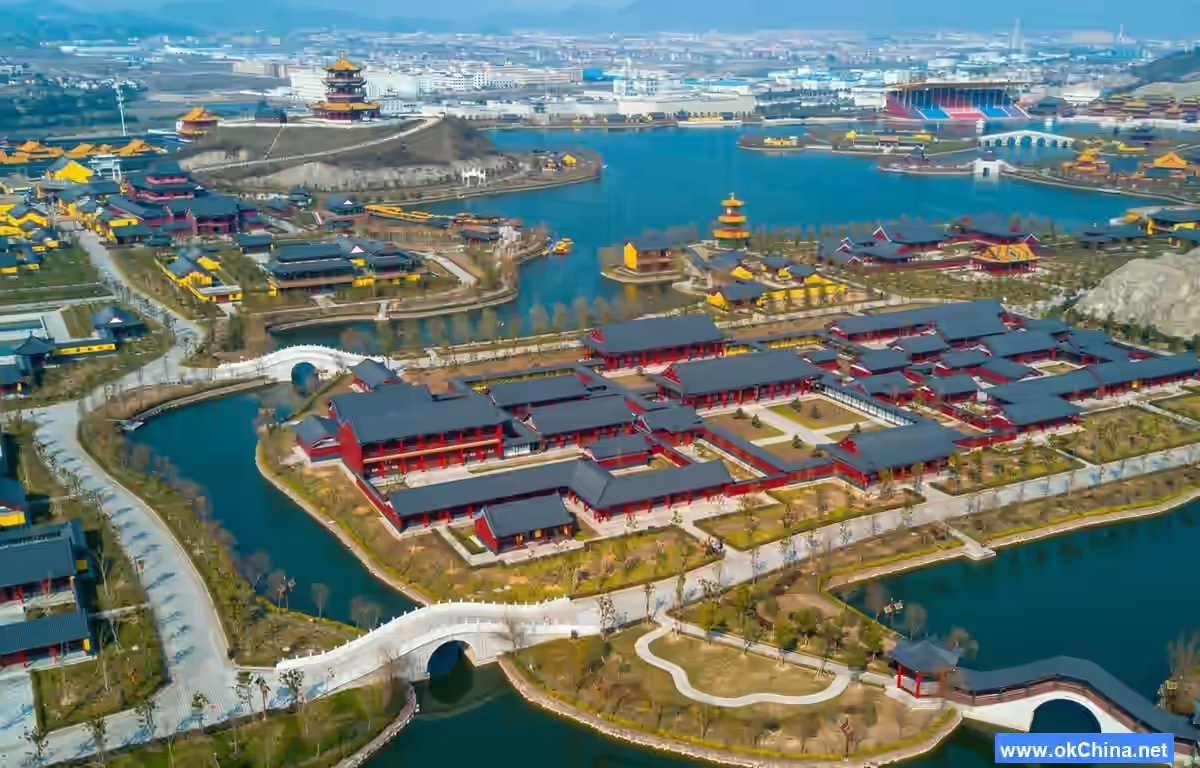
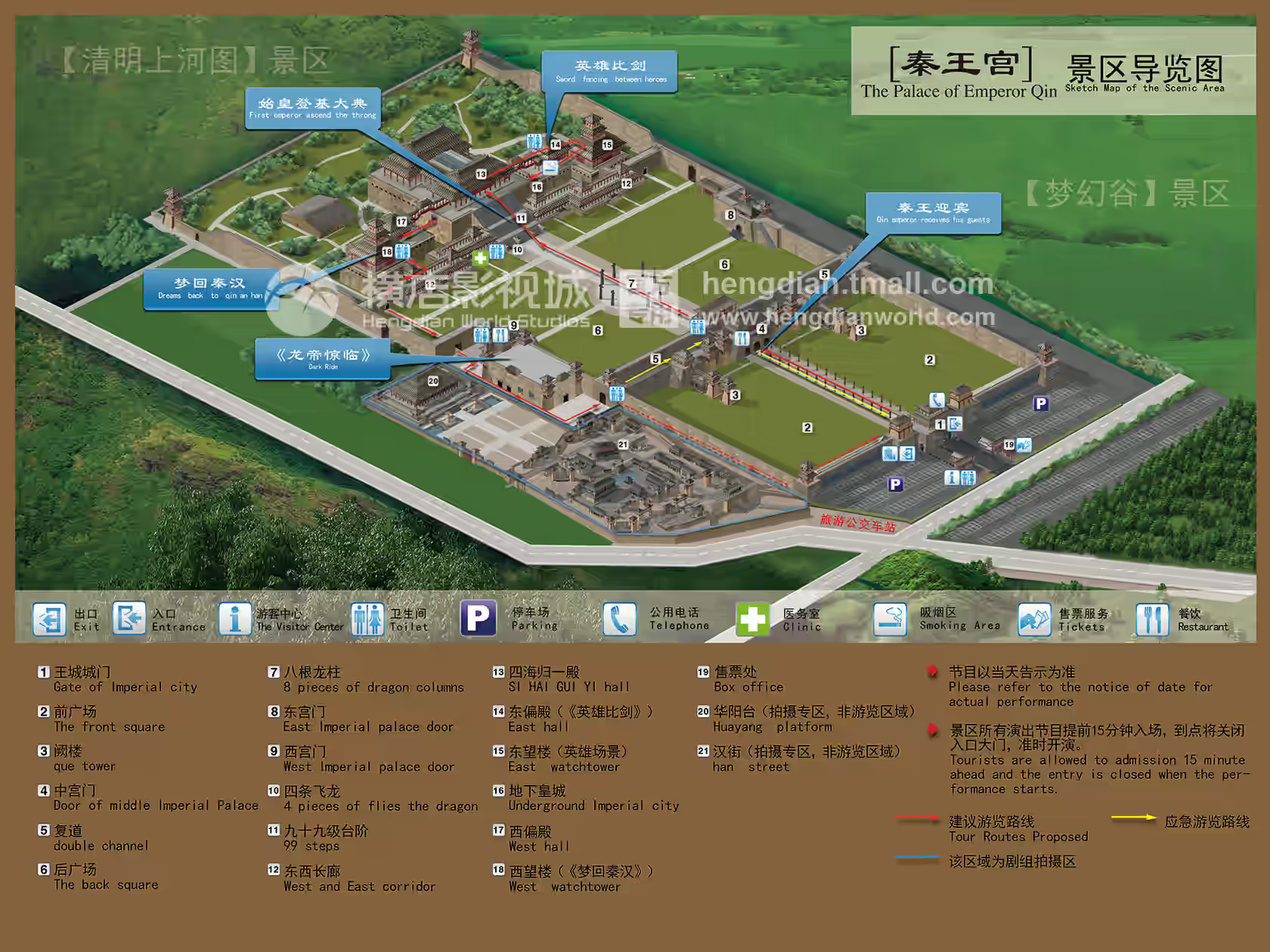
The Qin Dynasty Palace scenic area was built in 1997 for Chen Kaige's epic historical film The Emperor and the Assassin and is also the birthplace of films like Hero and The Forbidden Kingdom. The prototype for the Qin Dynasty Palace replica is the Xianyang Palace, the main palace of the Qin Dynasty.
The Qin Dynasty Palace covers an area of 800 mu, containing various palaces with buildings at every few steps. The main palace, "Hall of Unifying the Four Seas," embodies the majestic momentum of Qin Shi Huang's conquest of the six warring states and unification of China. The "Han Street" showcases the street market style of the Qin and Han periods, with yellow-dust ancient roads, armored cavalry, Yan-Zhao architecture, and Qin-Han culture recreated within the palace grounds.
3.5 Riverside Scene at Qingming Festival
The Riverside Scene at Qingming Festival scenic area covers over 600 mu, recreating the景象 of canal transport on the Bian River and the urban life and folk customs of the Northern Song Dynasty capital Dongjing (Kaifeng) a thousand years ago. The area is based on the masterpiece Riverside Scene at Qingming Festival by Northern Song painter Zhang Zeduan, capturing its essence and combining it with the social context, folklore, customs, and ancient architectural characteristics of the Northern Song period, constructed to meet the needs of film and television production.
At the end of June 2012, the large-scale holographic multimedia live show The Emperor and the Actress debuted in the Riverside Scene at Qingming Festival area of Hengdian.
3.6 Ming and Qing Residential Exhibition City
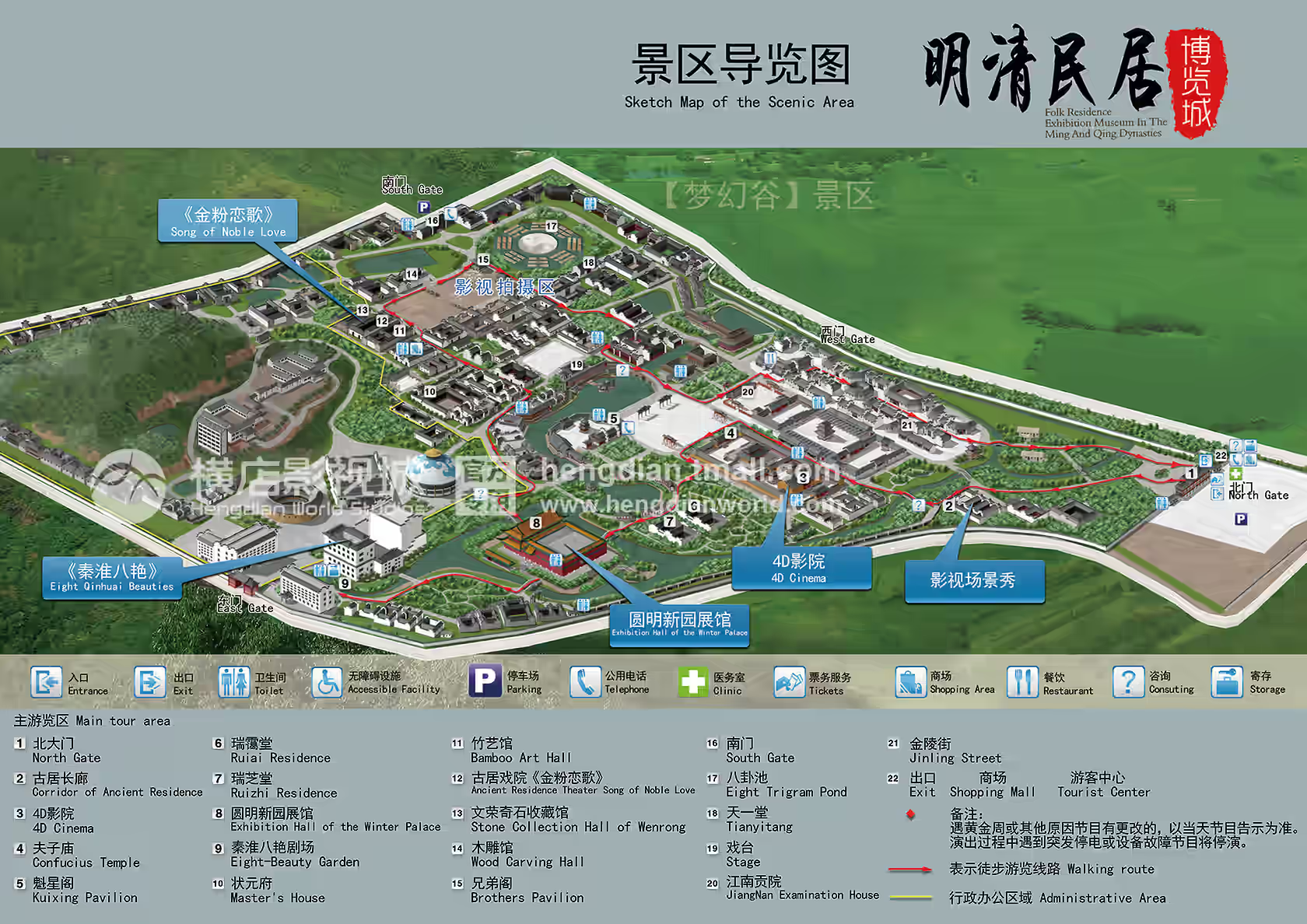
The Ming and Qing Residential Exhibition City scenic area covers over 900 mu. It is a comprehensive tourist area integrating ancient building preservation, film and television shooting, tourism, and art exhibitions, divided into two major scenic systems: "Peach Blossom Land" and "Qinhuai River."
3.6.1 "Peach Blossom Land" Scenic System
The "Peach Blossom Land" scenic system consists of Ming and Qing ancient residences relocated and reconstructed from various parts of Jiangnan (south of the Yangtze). It has been designated as a "Demonstration Base of the China Cultural Heritage Conservation Foundation" and a "China Ancient Residential Protection Base." The white walls and black tiles, brick and stone carvings, and bracket sets and琴坊 (qín fáng, possibly a type of structure or decorative element) are the心血结晶 (painstaking masterpieces) of countless craftsmen. Theaters, ancestral halls, mansions, civilian houses, and Tunxi Old Street form a folkloric画卷 (scroll painting) of千年历史文化 (millennia of historical culture). It houses over ten exhibition halls, including the Dongyang Wood Carving Hall and Xu's Fine Arts Hall, offering strong观赏性 (visual appeal) and知识性 (educational value).
3.6.2 "Qinhuai River" Scenic System
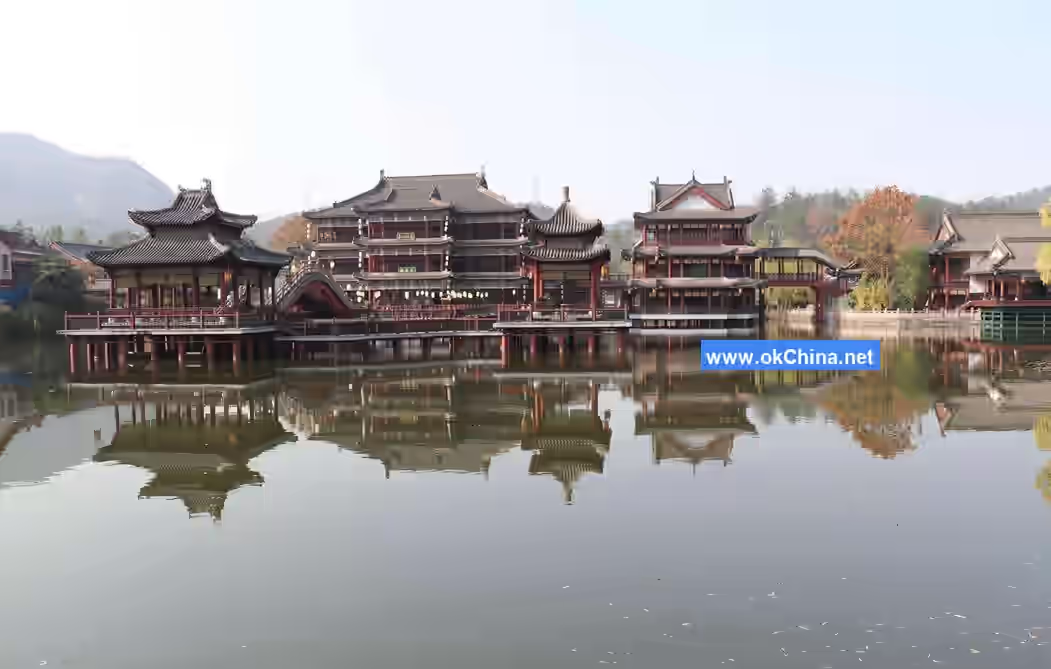
The "Qinhuai River" scenic system is based on the Ten-Mile Qinhuai of Nanjing during the Ming and Qing periods, recreating the繁华古都风貌 (prosperous ancient capital style) centered around the Confucius Temple. It集中再建 (centrally reconstructs) buildings such as the Jiangnan Examination Hall, Eight Beauties Lane, and Taoye Ferry. New highlights include the miniature restored Yuanming New Garden exhibition hall, the "Unique in China" Fujian Tulou (earthen buildings), and a high-tech 4D dynamic cinema. The area features Chinese folk performances, film and TV clips, and folk custom programs for游客观赏和参与 (tourists to watch and participate in).
3.7 Dream Valley
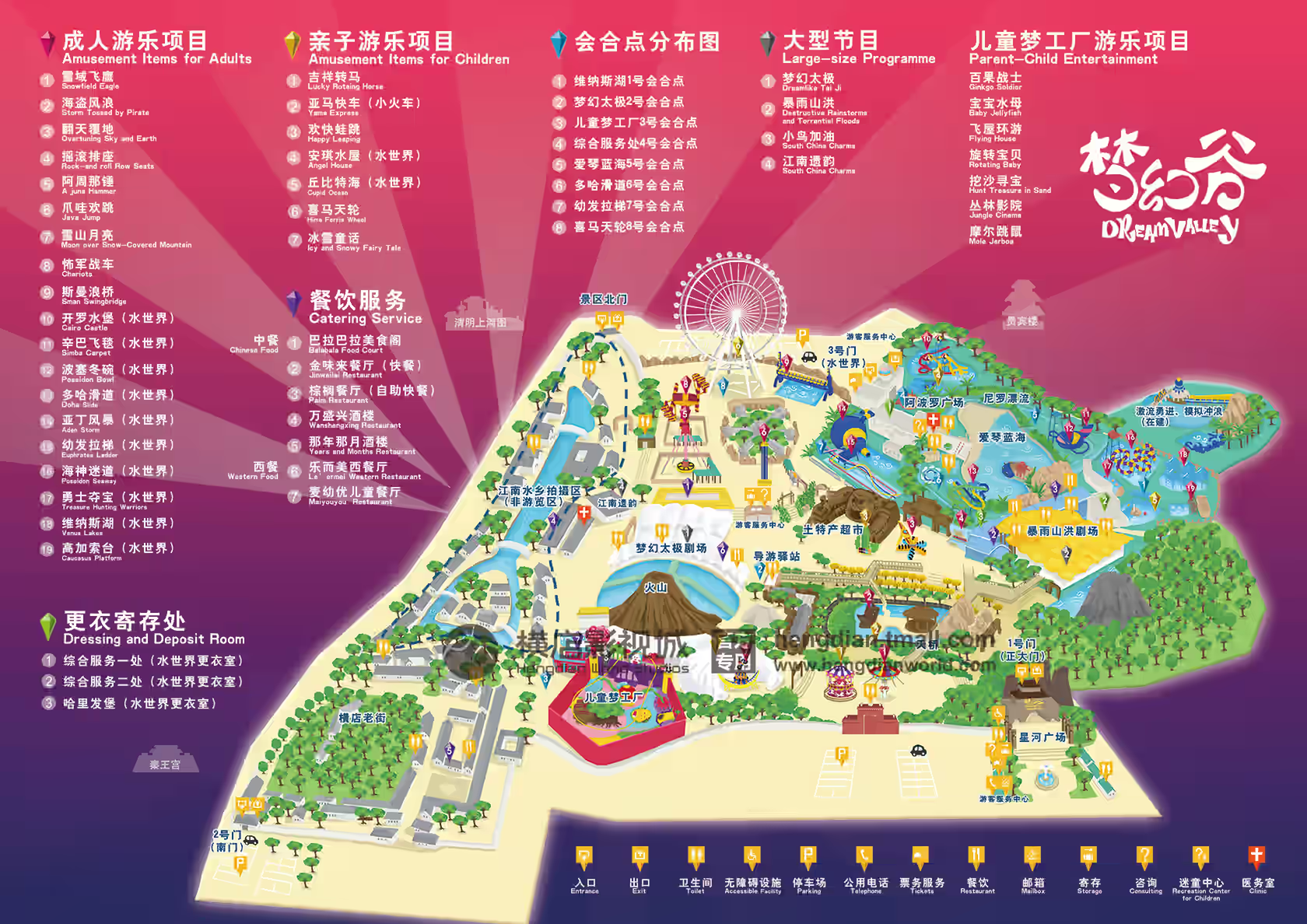
The Dream Valley scenic area includes four major zones: Dream Culture Village, Hengdian Old Street, Jiangnan Water Town, and Water World. Covering 430 mu, it is a large-scale夜间影视体验度假区 (nighttime film and television experience resort) primarily showcasing natural phenomena and landscapes such as volcanic eruptions and torrential mountain floods, supplemented with various amusement facilities and performance activities. With themes of "disaster震撼体验 (shocking experience)" and "纵横博彩参与游戏 (extensive participatory games)," and relying on film and television and high-tech presentation methods, Dream Valley marks a significant shift for Hengdian World Studios away from purely static观赏性旅游 (sightseeing tourism).
3.7.1 Dream Culture Village
Dream Culture Village mainly includes Tonight's Milky Way Square, Ape-Man's Home, Eagle King Divine Waterfall, Ancient Traveling Palace, Golden Populus Euphratica, Blue Moon Gate,翻天覆地 (Heaven and Earth Overturned), Merry Frog Jump, Liaoliao Castle, Rocking Row Seats, Pirate Storm, Yama Express, Java欢跳 (Java欢跳, likely a ride name), Arjuna's Hammer, Snowy Eagle,吉祥转马 (Auspicious Carousel), Snow Mountain Moon, Prayer Wheel, and Mani Stone Pile.
3.7.2 Jiangnan Water Town
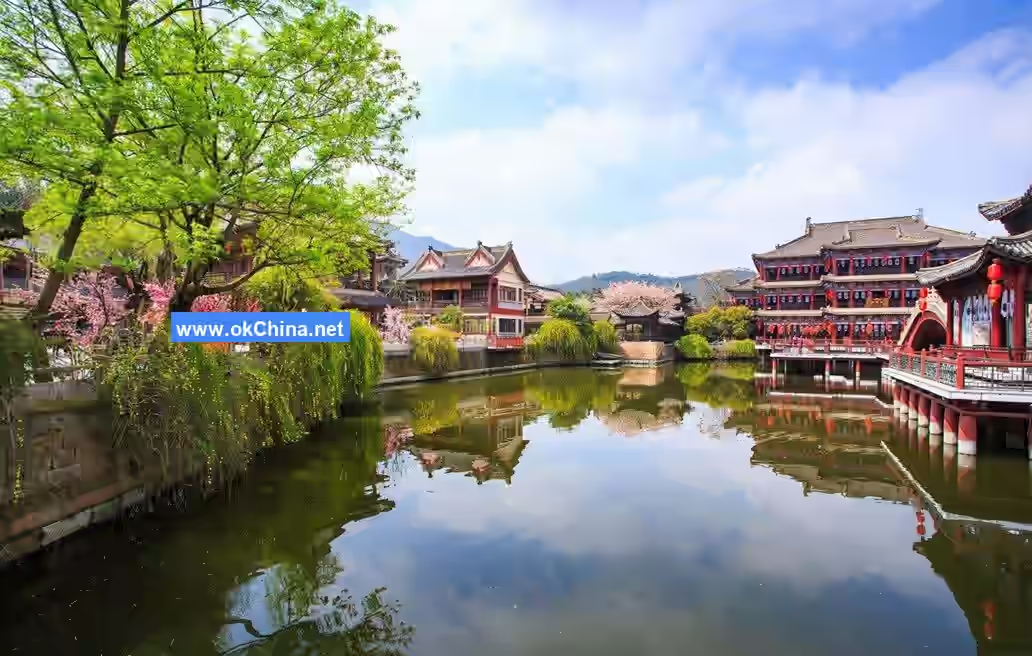
Jiangnan Water Town is built by gathering the essence of Jiangsu and Zhejiang water towns, showcasing the民生百态和万种风情 (various aspects of life and myriad charms) of the Jiangnan water town during the late Qing and early Republican period.
3.7.3 Water World
Water World covers 90 mu, modeled on the geographical features of the Mediterranean region and themed around the cultural background of the Middle East and the stories from the world-famous One Thousand and One Nights. It features a One Thousand and One Nights Water Play Area, Mediterranean Wave Pool, Turkish Ancient City Area, Hurricane Bay Adventure Area, along with supporting facilities like changing rooms, shops, medical centers, and lost child centers. It includes large-scale water amusement设备和游乐区域 (equipment and play areas) such as Aden Storm,幼发拉梯 (likely Euphrates Ladder or slide), Sinbad's Flying Carpet, Poseidon's Bowl, Doha滑道 (Doha滑道, likely a slide), and Aegean Blue Sea (Wave Pool, Tsunami Area), with a visitor capacity of over 10,000 people.
3.7.4 Dream Spring Valley
Dream Spring Valley is a leisure resort integrating hot spring wellness,疗养度假 (recuperation vacation), water play, and生态观光 (ecological sightseeing). It features attractions such as梦幻雨林 (Dream Rainforest),一线天泡池 (Thread of Sky Soaking Pool),五形花池 (Five Elements Flower Pool), and洗砚池 (Inkstone Washing Pool).
3.8 Red Army Long March博览城 (Expo City)
The Red Army Long March博览城 (Expo City) is China's largest特大型综合性景观 (super-large comprehensive landscape) themed on the 25,000-li Long March of the Red Army. It is a unique cultural landscape integrating film and television culture, Long March history, national defense education, and production knowledge. The博览城 (Expo City) covers a total area of over 9,000 mu, 98% of which is mountainous, with a total investment of several billion yuan. Within the park, there is approximately 14 km of experiential Long March walking paths and over 10 km of vehicle touring routes. It is a特大型综合性园区 (super-large comprehensive park) integrating red tourism, national defense education, militia training, team building, leisure entertainment, and military-themed film and television production.
The Red Army Long March博览城 (Expo City) consists of three main parts: the Red Army Long March Theme Park, the National Defense Science and Technology Education Park, and the Militia & Youth Training Base.#### 3.8.1 Red Army Long March Scenic Area The Red Army Long March Scenic Area is the main part of the Hengdian Red Army Long March Expo City. It features over 170 replica buildings of important meeting sites and major event locations along the Long March route, with a total floor area exceeding 40,000 square meters, housing numerous cultural relics and historical materials on display. The park uses the Central Red Army's Long March route as the primary thread and basis for its landscape design. Through detailed materials and physical exhibits arranged in chronological order of key Long March events, it has reconstructed over 40 historical sites, including important meeting venues, major event locations, and significant battlefields, condensing and recreating the Long March journey. In this scenic area, visitors can experience the entire process of the Red Army's Long March on-site, either by car along the mountain-ring road or by walking the over 14-kilometer "Long March" trail to experience its hardships and dangers.
3.8.2 National Defense Science and Technology Education Park
The National Defense Science and Technology Education Park is a significant component of the Red Army Long March Expo City, covering a construction area of 20,000 square meters. Using actual weapons and models as carriers, the park fully displays the equipment of the Chinese military across various historical periods and the development history of China's aerospace industry. It includes several exhibition halls: the Ancient Weapons Hall, Modern Weapons Hall, Military Parade Hall, Modern Warfare Hall, Space Exploration Hall, Aerospace Launch Tracking and Command Center, and Aerospace Launch Site.
3.8.3 Militia and Youth Training Base
The Militia and Youth Training Base is a key part of the Red Army Long March Expo City. It consists of four main sections: a living camp for 500 people, a military training base, a water training base, and parking and service facilities. It can accommodate needs for training, visits, accommodation, dining, and filming of military-themed movies and TV shows.
3.9 New Yuanming Palace (Yuanming New Garden)
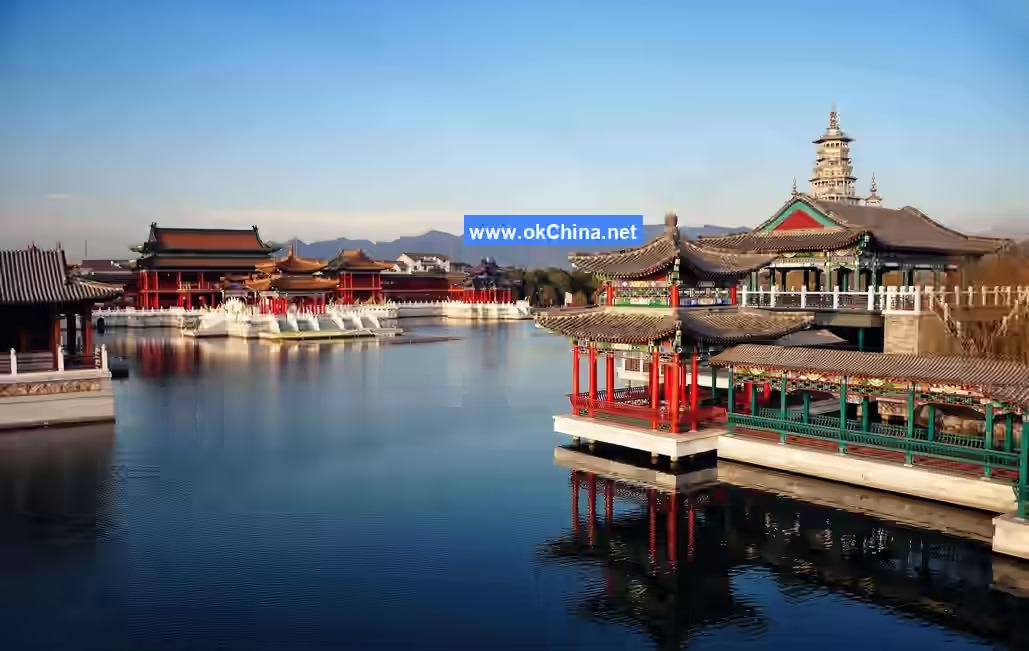
The New Yuanming Palace replicates 95% of the architectural complexes of the Beijing Old Summer Palace (Yuanmingyuan) at a 1:1 scale, covering an area of over 6,200 mu. Xu Wenrong, founder of the Hengdian Group, organized a committee of over 100 Yuanmingyuan experts and historians. They extensively collected cultural relics and artworks scattered among the public, restoring the palace's interior facilities through replication, purchase, and donations.
The New Yuanming Palace consists of four daytime gardens—New Yuanmingyuan (Spring Garden), New Changchun Garden (Summer Garden), New Qichun Garden (Autumn Garden), and New Changchun Garden (Winter Garden)—along with three nighttime scenes, divided into 100 garden areas. The Spring Garden is the largest, comprising 45 exquisite gardens representing various landscaping styles, including imperial, official, merchant, and folk architectures.
Beyond restoring the historical appearance, the design of the New Yuanming Palace incorporates two additional elements: first, cultural elements, such as adding garden architectures from "Dream of the Red Chamber"; second, technological elements, such as using cutting-edge high-tech methods like LED imaging, laser arrays, and searchlight clusters to create an Ice and Snow Sculpture Hall, High-Tech Performance Hall, and Wildlife Specimen Hall.
3.10 Dreamland Shanghai (Meng Waitan)
The Dreamland Shanghai Film Experience Resort is modeled after old Shanghai from the 1920s to 1940s. It is an integrated scenic area combining a movie-themed park, film shooting services, tourist leisure resort hotels, and comprehensive services.
3.11 Chinese Revolutionary War Expo City
The Chinese Revolutionary War Expo City includes scenic areas dedicated to the history of the Communist Party of China, Yan'an, the Eighth Route Army, the New Fourth Army, and the Liberation War.
3.12 Republic of China City
Republic of China City areas are located within the Red Army Long March Expo City, the Chinese Revolutionary War Expo City, and Guangzhou Street • Hong Kong Street, collectively forming the main shooting scenes for Republic of China-era settings. The Phase II expansion project of Republic of China City mainly includes streets and residences from Hong Kong, Guangzhou, and Sichuan-Chongqing regions during the Republic of China period, Japanese-style streets from the shogunate era, Korean-style streets from around 1900, and an underwater photography pool.
3.13 Spring and Autumn • Tang Garden
Located east of the Ming and Qing Folk Houses Expo City, the Spring and Autumn • Tang Garden covers over 300 mu. It primarily features architecture imitating the Spring and Autumn period and the Tang Dynasty, divided into three areas: Spring and Autumn North Garden, Spring and Autumn South Garden, and Tang Garden. It is Hengdian Film Studio's first dedicated shooting base.
3.14 Huaxia Cultural Park
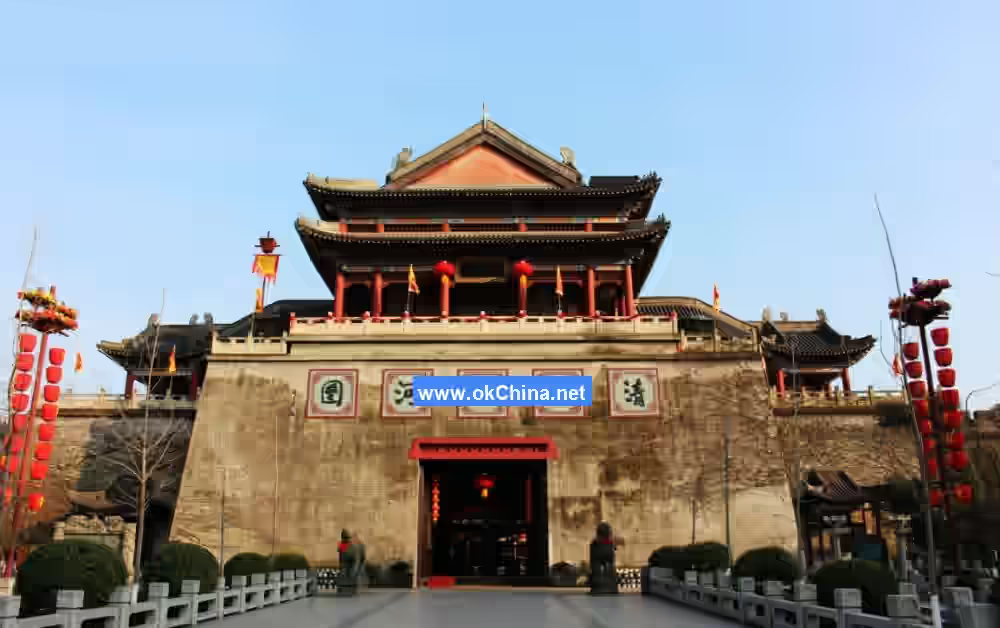
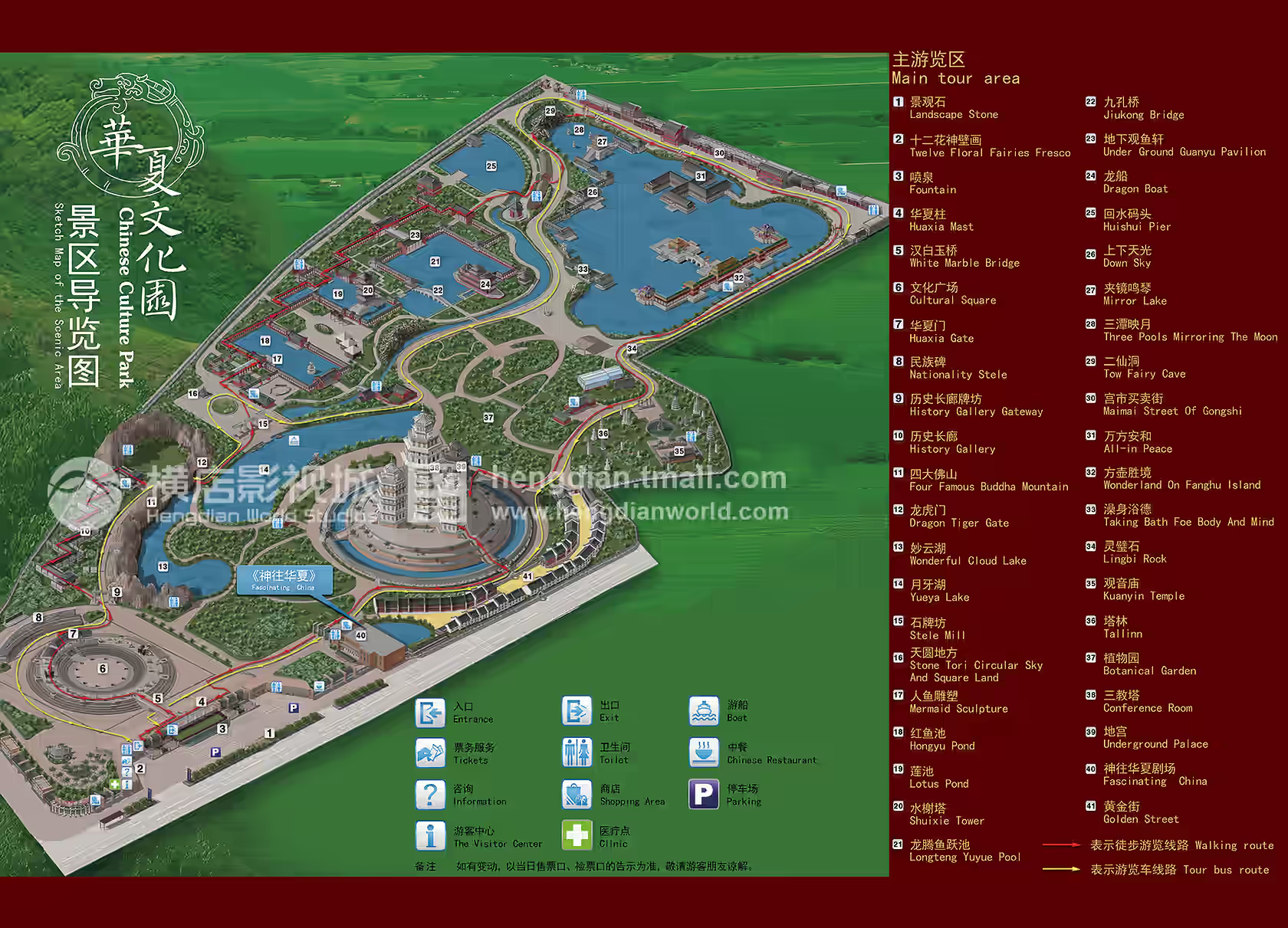
The Huaxia Cultural Park Scenic Area is one of the main attractions of Hengdian Huaxia Cultural City. With its unique conception and presentation, it integrates historical, educational, artistic,观赏性, entertaining, and interactive elements, making it a one-of-a-kind Huaxia Cultural Park both domestically and internationally. Located south of the Hengdian Film and Television Industry Experimental Zone and west of Industrial Avenue, it covers over 500 mu and is accessible by buses passing through the experimental zone. The park is divided into ten major scenic areas: Gate Tower Square, Cultural Square, Historical Corridor, Four Buddhist Mountains, Three Religions Pagoda, Fish Joy Garden, Pagoda Forest, Botanical Garden, Ethnic Street, and Yaotai Scenic Spot.
3.15 Pingyan Cave Mansion
The Pingyan Cave Mansion Scenic Area is a provincial-level scenic spot in Zhejiang Province, known as a blessed place for Taoist practice and often praised as the "No. 1 Cave Heaven in Jiangnan." Taoist temples such as Sanqing Hall, Jade Emperor, Wong Tai Sin, Eight Immortals, and Heavenly Master are built along the steep cliffs. Precipitous cliffs, secluded caves, red leaves, and suspended buildings are the four major features of the area. Typical Danxia landforms form the screen-like rocks, caves, and forests, complemented by plank roads, pavilions, heavenly gates, caverns, and cable cars. Pingyan Cave Mansion is famous for its peculiar peaks, extraordinary caves, strange mountains, and bizarre rocks. The peculiarity lies in the southeast face of the peaks being as steep as if cut by a knife, while the summits are gentle and连绵. The strangeness is found in a bottomless "Jinsi Ravine" within the mountain.
3.16 Dazhi Chan Temple
The Dazhi Chan Temple Scenic Area was initially built during the Southern Liang Dynasty (502–557 AD), boasting a history of over 1,500 years. Its restoration was initiated in 1994, covering an area of 280 mu. The restored temple houses the tallest indoor statue of Sakyamuni in China.
4. Historical Development
In 1996, due to the lack of exterior filming locations for the historical film "The Opium War," the Hengdian Group seized the opportunity, invited the film's director Xie Jin to shoot in Hengdian, and invested heavily to create Hengdian Film Studio's first film and television base, "Guangzhou Street."
In 1997, the Qin Dynasty Palace Scenic Area was constructed for the epic historical film "The Emperor and the Assassin."
In 1998, Hong Kong Street, Riverside Scene at Qingming Festival, and Ming and Qing Palaces Scenic Areas were completed.
In 1999, the Jiangnan Watertown Scenic Area was built, hosting the first "China Farmers' Tourism Festival."
To expand scale and attract more film crews to Hengdian for shooting, starting in 2000, the film studio not only waived location fees for all scenes but also provided a series of supporting services including set construction, prop making, and accommodation. Consequently, more and more film crews came by reputation, rapidly boosting Hengdian Film Studio's popularity. Its revenue-generating ability starkly contrasted with the quietness of many other domestic film bases. Increased personnel flow drove the rapid development of related industries in Hengdian, and the film studio gradually achieved industrialized operation.
In 2001, over 20 enterprises under the Hengdian Group, including all film shooting bases, star-rated hotels, and film shooting and tourism reception services, were integrated into Hengdian Group Zhejiang Film, Television and Tourism Co., Ltd.
In 2002, Hengdian Film Studio successively built 12 film shooting bases and developed three natural scenic areas including Pujiang Shenli Gorge.
On February 18, 2003, the Huaxia Cultural Park was founded, and it was largely completed by August of the same year. The top component of its main structure, the Three Religions Pagoda, was installed on its 100th anniversary.
In 2004, the Zhejiang Hengdian Film and Television Industry Experimental Zone was officially inaugurated, hosting the "8th China International Children's Film Festival" and the "2004 China Hengdian Film and Television Expo." This played a crucial role in Hengdian's development. Seizing this opportunity, Hengdian Film Studio began industrial upgrading. Over 300 film and television companies settled in the Hengdian industrial zone, and Huayi Brothers Media, China's first ChiNext-listed company, was born here. Hengdian Film Studio is now a National 5A-level Tourist Attraction, adhering to the operational philosophy of "film and television as the surface, tourism as the core, culture as the soul," and has progressively transformed from a film base into a film experience resort, and from sightseeing tourism products to leisure experience types.
In 2010, Shanxi Tongzhiren Shopping Center entered Hengdian Film Studio.
In May 2012, construction began on the New Yuanming Palace.
In April 2013, the Qin Dynasty Palace Scenic Area launched the 4D ride experience "The Dragon Emperor's Surprise," and the Ming and Qing Palaces Scenic Area premiered the large-scale song and dance show "Forbidden City Grand Ceremony." In the same month, new amusement facilities like the Ferris wheel debuted in the Dream Valley Scenic Area.
In 2015, the cumulative number of enterprises and 242 studios registered in the Hengdian Film and Television Cultural Industry Experimental Zone reached 638. By the end of the same year, all three areas of the Spring and Autumn • Tang Garden were completed.
On May 10, 2016, the Spring Garden officially opened. In November of the same year, the Spring and Autumn • Tang Garden began officially allowing tourists to visit film sets.
On August 17, 2019, the first phase of Hengdian Film Studio's new scenic area, Dreamland Shanghai, was completed and opened to the public.
Comments
Post a Comment