Haohe River Scenic Area
1. Introduction
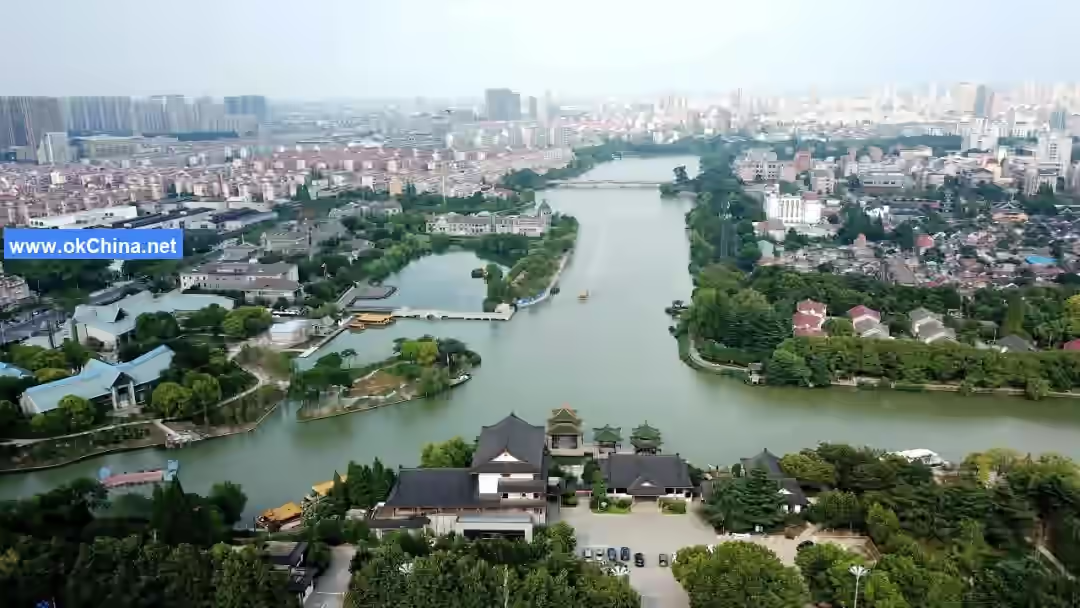
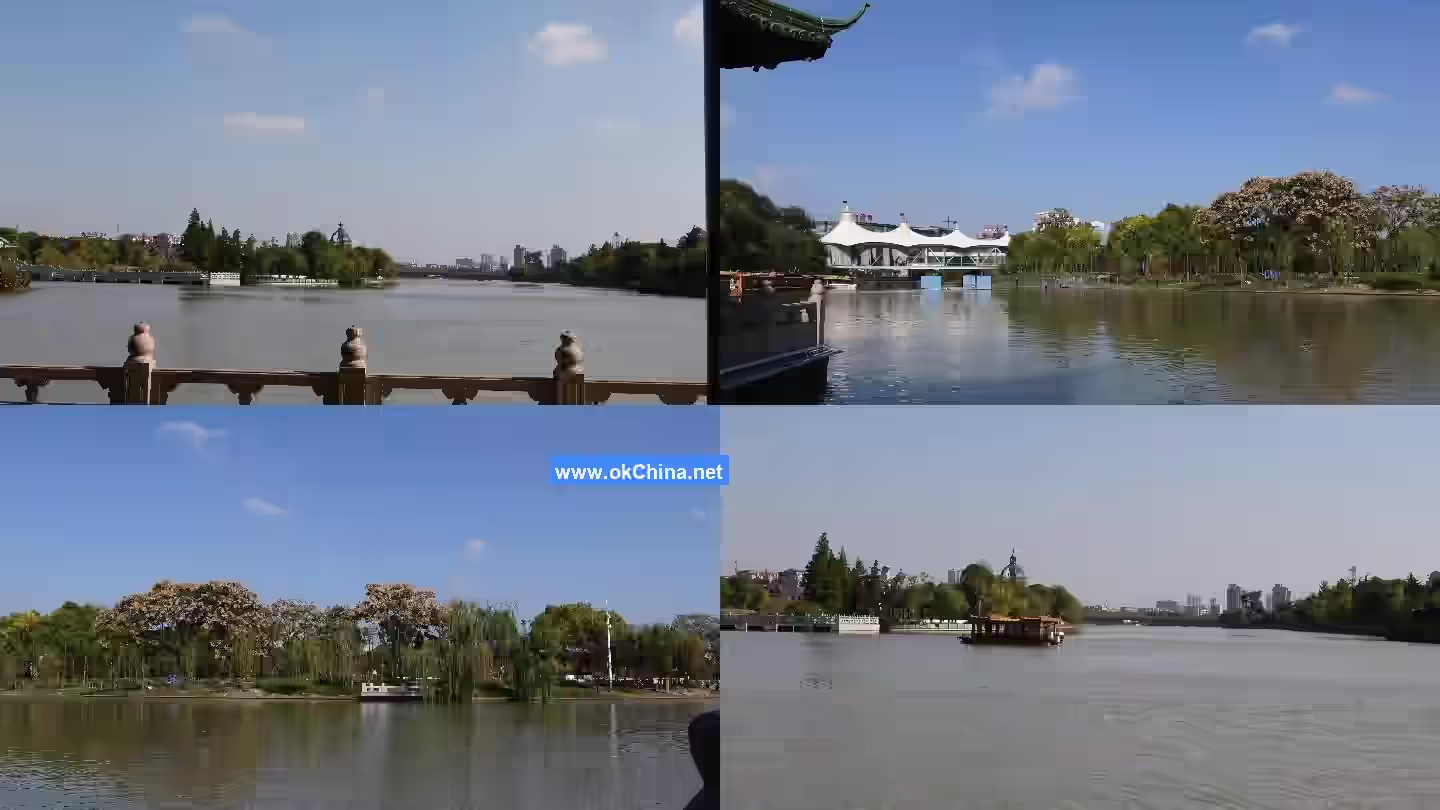
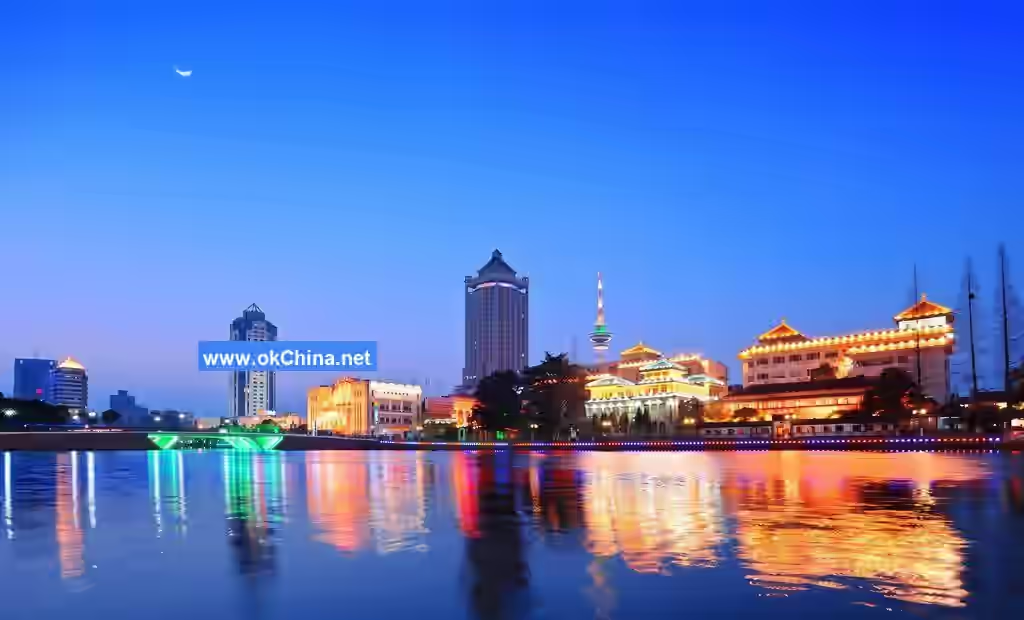
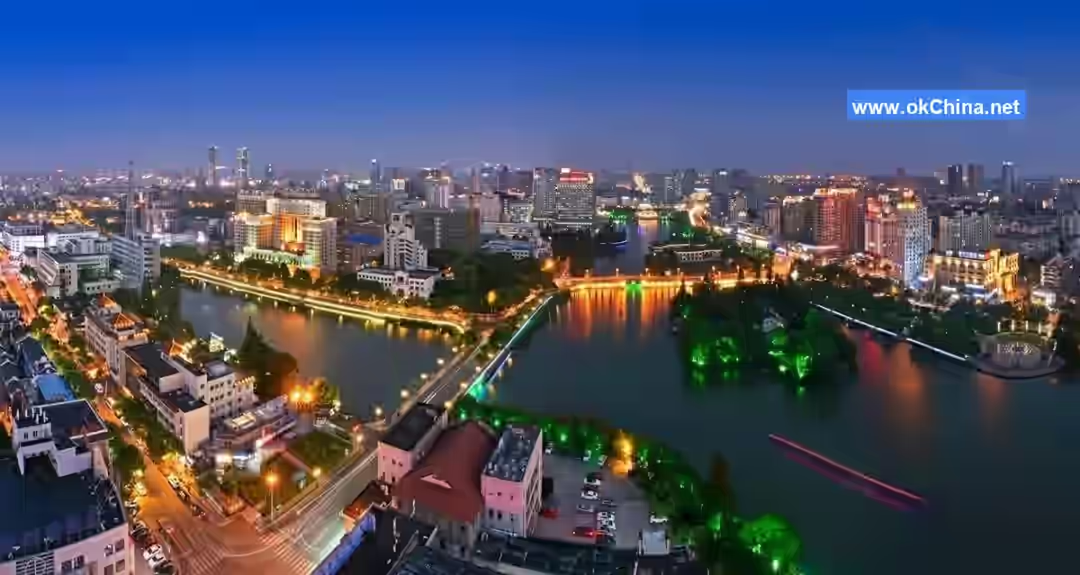
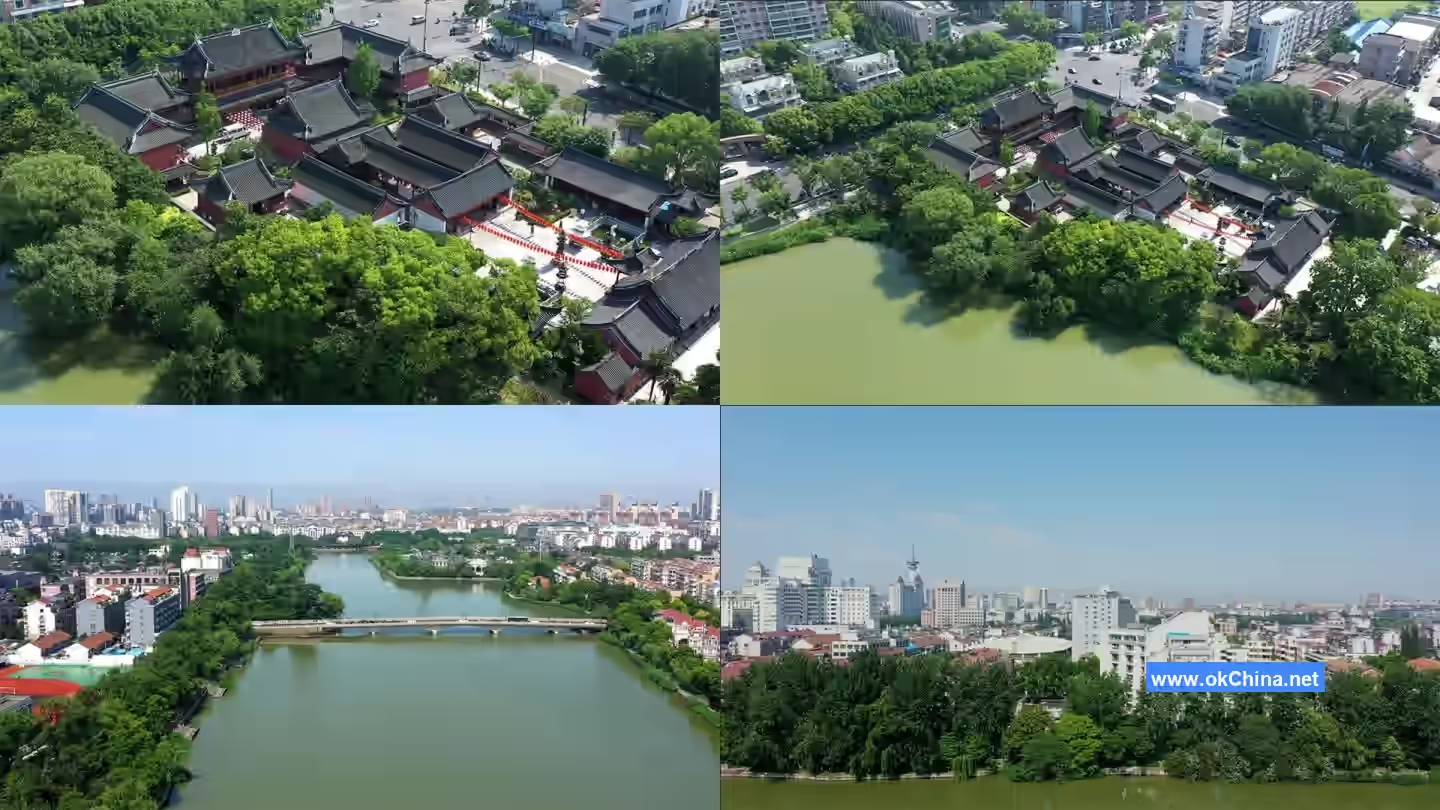
The Haohe River is located at the heart of Nantong, a nationally renowned historical and cultural city. It is one of the most completely preserved ancient moats in China. Historical records indicate that "the river existed when the city was built" in the fifth year of the Xiande era of the Later Zhou Dynasty (958 AD). Stretching 10 kilometers in total length and covering a water surface of 1,040 mu, the river resembles a vast lake at its widest point of 215 meters, while at its narrowest point of only 10 meters, it appears like a silken ribbon. Meandering and surging, the entire Haohe River embraces the old city in the shape of an inverted gourd, forming a unique style of "water embracing the city, the city holding the water, and the city and water being integrated as one." It has long been hailed as the "Emerald Necklace of the River City."
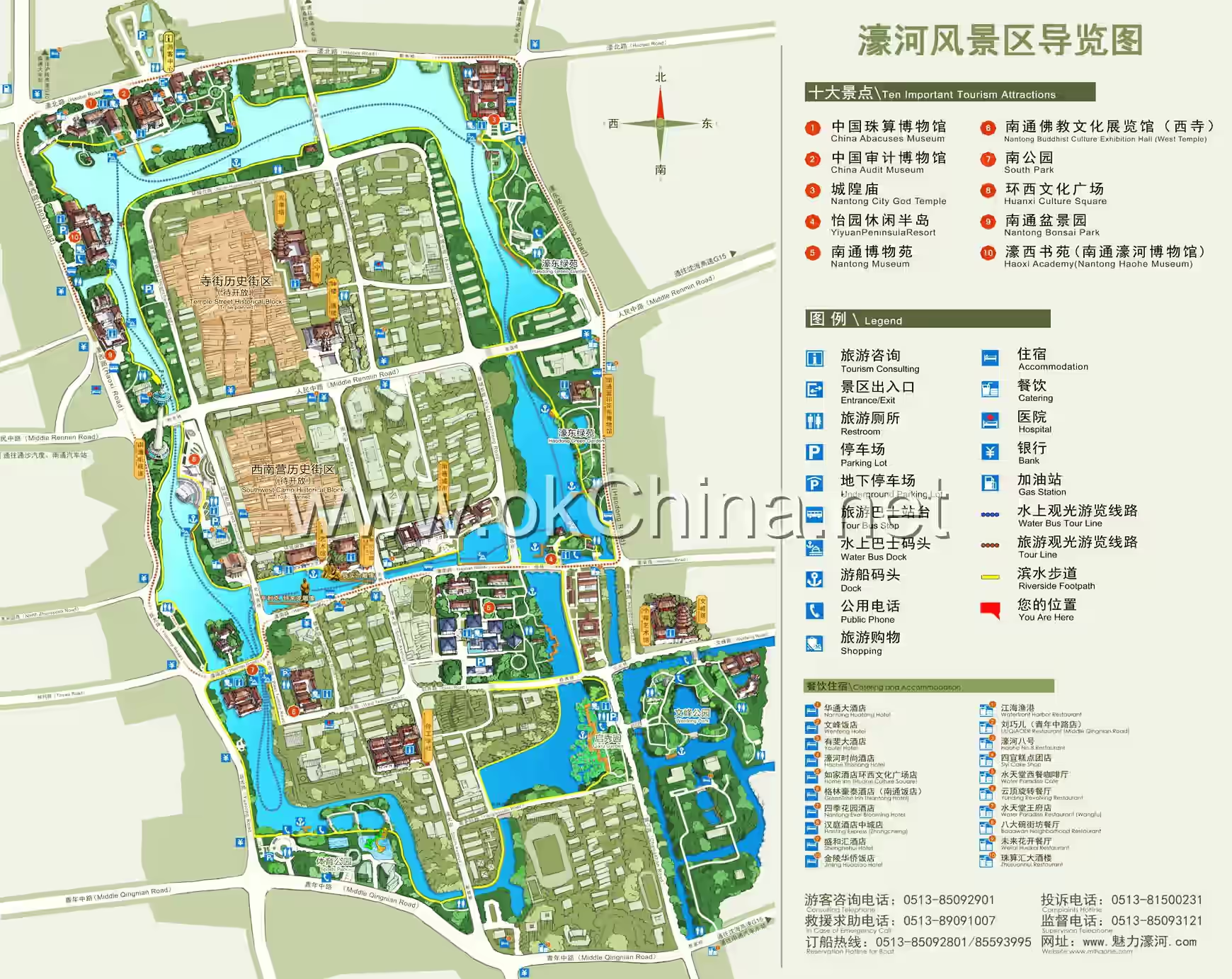
The Haohe River Scenic Area covers 3.23 square kilometers. Centered around the thousand-year-old ancient moat—the Haohe River—it serves as Nantong's "first ecological circle" and has always been the political, economic, and cultural hub of Nantong. The area preserves numerous historical and cultural relics from the Tang Dynasty to modern times, including many "firsts in China": the Guangxiao Pagoda (Tang Dynasty), which predates the founding of Nantong City; the Wenfeng Pagoda (Ming Dynasty), symbolizing Nantong's profound literary ethos; the Nantong Museum, China's first public museum, left by Mr. Zhang Jian—a late Qing Dynasty top scholar, renowned industrialist, educator, and founder of China's first modern city; the Shen Embroidery Museum, China's first embroidery school; the Linggong Drama School, China's first drama school; and the Five Parks, among the first urban parks in China. Additionally, the area boasts rich intangible cultural heritage. Over the years, the Nantong Municipal Party Committee and Municipal Government have meticulously developed a large-scale museum cluster around the Haohe River and a series of distinctive local tourism projects. The scenic area's rich and profound cultural landscapes, coupled with its elegant and beautiful natural scenery, showcase the charm of the River City, Nantong. Complementing the city of Nantong, it forms a splendid urban landscape, attracting nearly ten million visitors annually. As an open, city-encircling national AAAAA-level tourist attraction and provincial-level scenic area that integrates natural and cultural landscapes, it has been awarded the "Jiangsu Provincial Human Settlement Award" by the Jiangsu Provincial People's Government and the "China Human Settlements and Environment Example Award" by the Ministry of Construction.
2. Geographical Environment
The 30-li-long Haohe River encircles the ancient city and is praised by domestic and international tourists as the "Emerald Necklace around a Maiden's Neck." The museum cluster along the Haohe River, centered around China's first museum, the "Nantong Museum," further endows Nantong City with deeper cultural significance. The Langshan Mountain Scenic Area, located in the southern suburbs of the city, is a national AAAA-level tourist scenic area and one of the six major natural scenic areas in Jiangsu Province. Langshan Mountain ranks ahead of Hengshan, Songshan, Lushan, Jizushan, Tiantai Mountain, Zhongnan Mountain, and Xiangshan, holding the top position among China's Eight Lesser Buddhist Mountains. Since the expansion of Guangjiao Temple in the early Tang Dynasty, it has enjoyed continuous incense offerings and widespread fame. Other renowned sites include the Qingdun Cultural Site in Hai'an, Shuihui Garden and Dinghui Temple in Rugao, Wen Tianxiang's South Return Sea-Crossing Pavilion in Tongzhou, the "Sea Disco" (clam stomping) and "Aerial Symphony" (beach kite flying) in Rudong, and the Yuantuojiao Sunrise Viewing Pavilion in Qidong.
3. Main Attractions
3.1 China Abacus Museum
The China Abacus Museum is located on the north bank of the Haohe River, with a building area of over 6,000 square meters. It houses more than 10,000 abacus artifacts and historical materials, making it the world's largest thematic museum dedicated to the abacus. The museum features a History Hall, Culture Hall, Treasures Hall, Temporary Exhibition Hall, and Interactive Hall. The History Hall showcases the long history of the Chinese abacus through rich and detailed historical artifacts and materials. The Culture Hall narrates the stories of abacus culture through micro-scenes, phantom imaging, immersive experiences, and changing scenery. The Treasures Hall constructs a dazzling world of abacuses through eight sections: Wooden Style, Golden Phase, Jade Quality, Bone Spirit, Porcelain Charm, Human Joy, Yearly Harvest, and Family Peace. The Interactive Hall offers various abacus-related interactive projects, while the Temporary Exhibition Hall hosts diverse temporary exhibitions and social education activities, allowing visitors to operate, experience, and expand their knowledge.
The main building of the museum is novel, unique, and well-proportioned, creating a cultural landscape that blends abacus culture with the charm of the Haohe River. Visitors from all directions are welcome to come for sightseeing, learning, tourism, and leisure.
3.2 Bell Tower and Watchtower
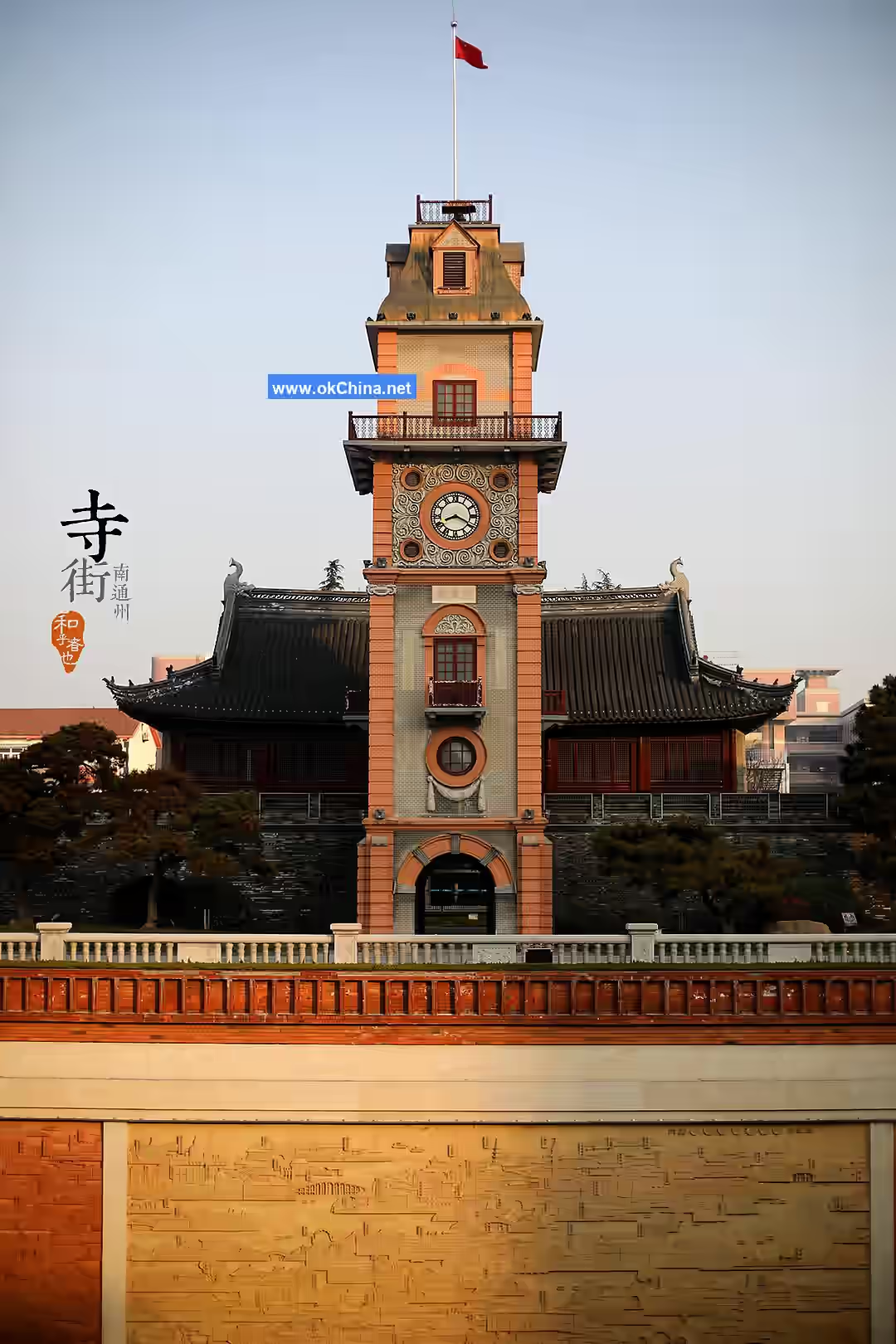
The Watchtower, also known as the Xing Shu Lou, was first built in the ninth year of the Zhizheng era of the Yuan Dynasty (1349 AD) and rebuilt in the third year of the Hongwu era of the Ming Dynasty (1370 AD), undergoing multiple renovations throughout history. The Bell Tower, built in 1914, stands closely to the south of the Watchtower. It is 26 meters high with five stories and 6 meters wide. After its completion, the Watchtower served as the front gate of the Nantong prefectural and county government offices during the Yuan, Ming, and Qing Dynasties, symbolizing Nantong's ancient feudal authority. The Bell Tower, solemn and古朴 (ancient and simple), was designed by China's first-generation architect Sun Zhixia and constructed under the supervision of Chu Nanqiang, the first county magistrate of Nantong during the Republic of China. The tall Western-style Bell Tower was deliberately built in front of the Watchtower, which symbolized feudal rule. These two closely connected buildings, one Chinese and one Western in style, serve as physical evidence reflecting the changes of the times and historical progress. Such a symbolic architectural combination is relatively rare nationwide.
3.3 Nantong Buddhist Culture Exhibition Hall (West Temple)
The Nantong Buddhist Culture Exhibition Hall (West Temple) is situated on the bank of the Haohe River in the southwest of the ancient Tongzhou City. It covers a total land area of approximately 6,000 square meters, with a total building area of 2,900 square meters. The West Temple, also known as Xinghua Chan Temple, is one of the four major Buddhist temples in Nantong. Founded in the first year of the Qiandao era of the Song Dynasty (1165 AD), it has a history of over 850 years. Having undergone multiple reconstructions and repairs over centuries, the temple's layout remains relatively intact. It was listed as a municipal-level cultural relics protection unit in 1998, becoming an important witness to Nantong's status as a historical and cultural city. The Nantong Buddhist Culture Exhibition Hall (West Temple) centers around the "Ancient Temple in Chongchuan, Land of Blessings Through the Ages – Cultural Exhibition of Nantong Xinghua Chan Temple (West Temple)." It displays the essence of traditional Chinese art found in the West Temple's architecture, statues, murals, stone carvings, plaques, and couplets, narrating the temple's history and cultural relics protection. Simultaneously, it creates experiences related to Song Dynasty aesthetics, Zen meditation, and cultural leisure, aiming to inherit excellent traditional culture and Nantong's urban cultural heritage in the context of the new era.
3.4 Nantong Blue Calico Museum
Founded in 1997 by Wu Yuanxin, a master of Chinese arts and crafts, this is China's first professional museum dedicated to blue calico, integrating collection, exhibition, research, production, and operation. The museum has collected and organized over 10,000 physical objects and image materials from the Ming and Qing Dynasties onwards, preserving a large number of excellent folk products. It has published the "Complete Collection of Chinese Blue Calico Patterns" volumes on collections and patterns. In 2005, it was designated as the "Chinese Blue Calico Art Inheritance Base" by the China Folk Literature and Art Association. In 2006, the "Nantong Blue Calico Printing and Dyeing Techniques" were included in the "National Intangible Cultural Heritage Protection List."
3.5 Wenfeng Pagoda
The Wenfeng Pagoda was first built in the 46th year of the Wanli era of the Ming Dynasty (1618 AD). It is a brick-and-wood structure with five stories and a hexagonal shape. Each story has a small chamber, with one door and two windows on each side, an internal staircase, and external guardrails. Its upturned eaves and ridges are decorated with dragon heads, immortals, and mythical beasts, adorned with golden bells. The pagoda spire is 10.33 meters high, with the base in the shape of an inverted alms bowl, topped by a dew-collecting plate. The mast pierces through seven layers of相轮 (discs), and the top is composed of a crescent moon, a halo, and a precious vase, connected to the pagoda top with iron chains, making the pagoda appear solemn, magnificent, tall, and straight. Standing 39 meters tall majestically in the southeast of the old city, the Wenfeng Pagoda is a cultural symbol of Nantong people's reverence for literature and promotion of industry.
3.6 Yiyuan Leisure Peninsula
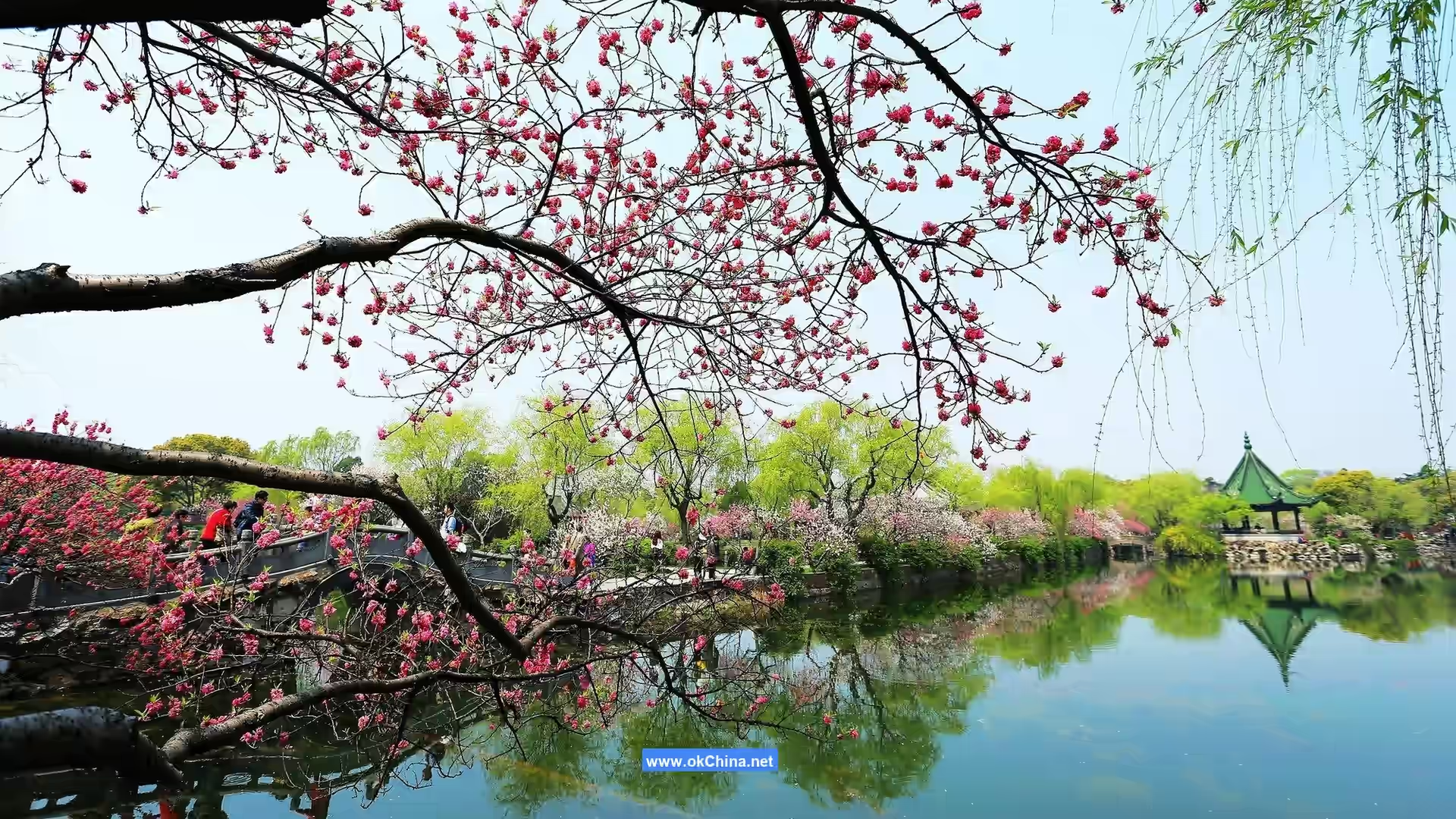
Yiyuan was first built in 1991, covering an area of approximately 0.35 hectares. Surrounded by water on all sides, with a broad water surface to the north, the garden is lush with trees, fresh, and pleasant. The Yiting Pavilion is situated within, facing the Haohe River to the north with weeping willows brushing the water. A couplet on the pavilion reads, "The Hao River's clear flow mirrors the sky; vibrant life swirls as willow brows unfurl," which is extremely fitting. This site is the former location of the Jiangsu Provincial First Normal School Party Branch and also one of the earliest memorial sites for the establishment of underground party organizations in the Nantong area. The Yiqiao Bridge was built adjacent to Yiyuan. With five arches, it is 60 meters long and 16 meters wide, presenting a magnificent sight.
Yiyuan, Yiting, and Yiqiao—the three "Yi's"—combine perfectly to form a unique scenic line at the southeastern corner of the Haohe River. They were all built in memory of the esteemed educator Mr. Gu Yisheng, who was known for his noble character and deep concern for his country and family.
3.7 Nantong Television Tower
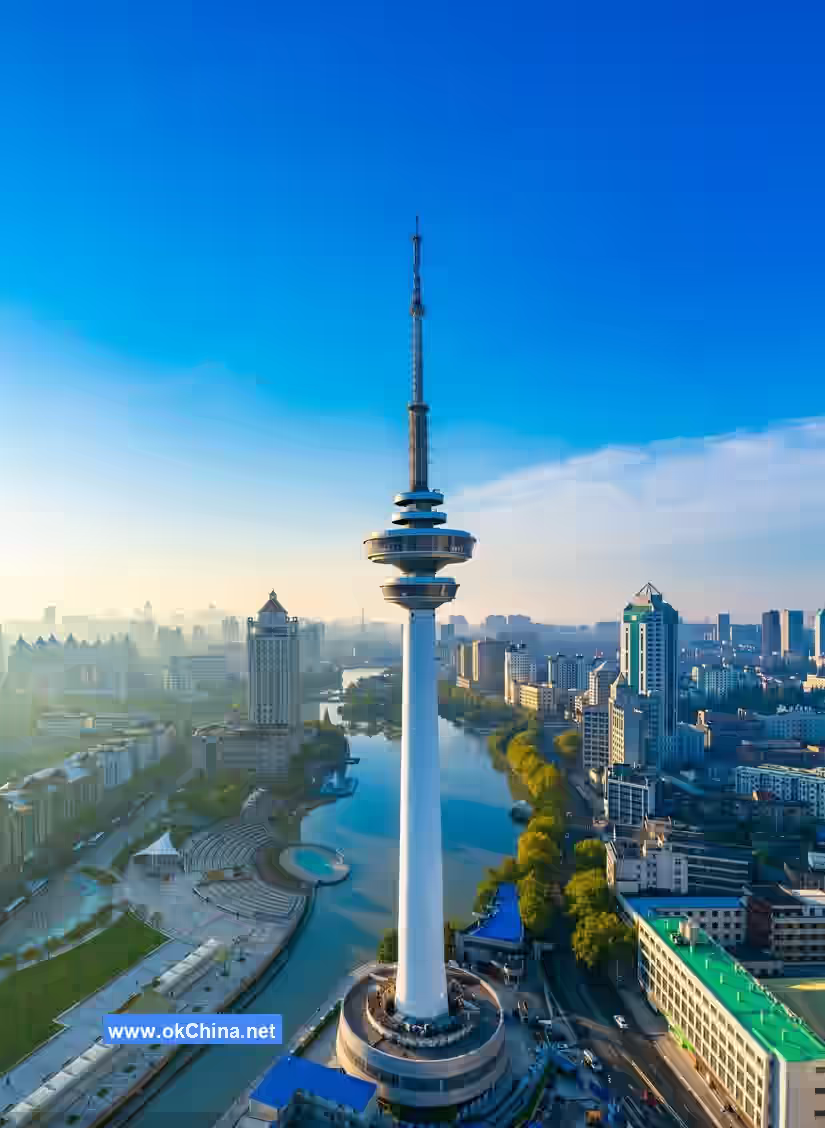
Known as the "Pearl of the Haohe River," the Nantong Television Tower is one of the first four reinforced concrete towers built in China. Its外形 (appearance) features a futuristic flying saucer-style twin-tower design. It serves as the transmission, broadcasting hub, and core signal source for Nantong's radio and television, and is also one of the landmark buildings in downtown Nantong.
3.8 Linggong Drama School
The Linggong Drama School was founded by Mr. Zhang Jian in 1919 as China's first new-style drama school. It primarily taught Peking Opera while also offering courses in Kunqu Opera, modern drama, dance, and Western music. In 2004, the旧址 (former site) of the Linggong Drama School was listed as a Nantong City Cultural Relics Protection Unit. Starting in 2010, the protection and utilization project of the Linggong Drama School was fully launched. It officially opened to the public in 2013 and co-established the "Mei Lanfang Education Base" with the Beijing Mei Lanfang Art Foundation. With daily exhibitions, weekly performances, monthly lectures, seasonal appearances by famous artists, and annual competitions, it further inherits Mr. Zhang Jian's戏剧改革思想 (drama reform philosophy) of improving social customs and cultivating moral sentiment.
3.9 Statue of Hendrik de Rijke
Hendrik de Rijke (1890–1919) was Dutch. After graduating from a specialized Dutch hydraulic engineering school, he came to China with his father to engage in water conservancy work. In 1916, he was invited by Zhang Jian to serve as the resident engineer of the Nantong Bank Protection Association. Over three years, he presided over the design and construction of numerous flood control, bank protection, and农田水利 (farmland water conservancy) projects. He contributed significantly to introducing advanced Western technology, managing water for public safety and prosperity, and realizing Zhang Jian's long-cherished wish of saving the nation through industry. He later died of illness while on duty and was buried at the southern foot of Jian Mountain. A bronze statue was erected, and old machinery from the sluice gates he designed was incorporated as a memorial.### 3.10 Osmanthus Island Osmanthus Island is located in the northeastern part of the Haohe River Scenic Area, bordered by Haobei Road to the north and the Haohe River to the south. The enhancement project commenced in June 2020 and was completed by the end of the year.
A new service support building and a set of garden landscape structures were constructed. The service support building is the Qin Fang Pavilion, situated in the northwest corner of the site. This single-story frame structure building imitates the appearance of traditional garden pavilions. The other set consists of wooden garden structures, formed by a Poetry Corridor connecting a Festooned Gate, two waterside pavilions (Autumn Hall and Emerald Ring Pavilion), and a double-eaved octagonal pavilion (Floating Emerald Pavilion).
Near the current "Xinle Bridge" at the northern end of the North Haohe River, originally named "Huangni Kouzi" (Yellow Mud Inlet), is the burial site of Luo Binwang, one of the "Four Literary Eminences" of the early Tang Dynasty. Luo Binwang is renowned for his writings "Call to Arms Against Wu Zhao on Behalf of Xu Jingye" and "Ode to the Goose." A tomb of Luo Binwang, relocated from Huangni Kouzi, is located at the southern foot of Langshan Mountain. The cultural enhancement of Osmanthus Island centers on the theme of Luo Binwang, serving as a highlight that adds historical and cultural depth to the attraction, echoes the Luo Binwang Tomb at Langshan, and attracts tourists.
3.11 Geyi Art Museum
The Nantong Geyi Art Museum is a calligraphy and painting art museum established by the Nantong Municipal People's Government to promote the artistic achievements of Mr. Wang Geyi, a renowned Chinese epigrapher, calligrapher, painter, and art educator. The museum currently houses over 200 pieces of Wang Geyi's calligraphy, painting, and seal carving works, over 100 pieces of calligraphy, painting, and studio relics by famous artists from the Ming, Qing, and modern periods, as well as over 600 pieces of calligraphy and painting works by famous artists collected since the museum's opening. The main building's exhibition hall is the primary venue for hosting calligraphy and painting exhibitions, featuring the "Wang Geyi Epigraphy, Calligraphy, and Painting Exhibition." It forms the museum's regular display along with five other exhibitions: "Wang Geyi Art Display Room," "Introduction to the Lives of the Curators of Chinese Calligraphy and Painting Masters' Halls," "Nantong Calligraphy and Painting Masters' Works Exhibition," and "Introduction to the Development of Nantong Geyi Art Museum."
3.12 Statue of Chen Shigong
Chen Shigong (c. 1555 – c. 1636), courtesy name Yuren, art name Ruoxu, was a native of Nantong and a surgeon of the Ming Dynasty. He delved into medicine in his childhood due to frequent illnesses. Accumulating over forty years of clinical experience, he authored the book "Orthodox Manual of External Diseases" in 1617. This work summarized and advanced the achievements of traditional Chinese surgical medicine before the Ming Dynasty. Known for its "detailed listing of symptoms and incisive discussion of treatments," it became a classic in Chinese medicine, widely circulated both domestically and internationally. The "Five Precepts" and "Ten Essentials" for physicians proposed in the book are considered the world's earliest code of professional medical ethics. Besides his medical expertise, Chen Shigong was particularly fond of charitable deeds, constructing bridges such as Changqiao and Jianqiao. The site of his former residence is also nearby.
3.13 Shen Embroidery Museum
The Shen Embroidery Museum was established on the former site of the Nantong Women's Needlework Training Institute, founded by Mr. Zhang Jian in 1914, to commemorate the modern embroidery art master Shen Shou. It currently houses exquisite realistic embroidery works by Shen Shou and her disciples. In 2008, "Realistic Embroidery" was included in China's Intangible Cultural Heritage List. The Chinese President has, on separate occasions, brought national gifts of Shen embroidery—"The Obama Family," "Portrait of Putin," and "The Belgian King Philippe Family"—to the White House, the Kremlin, and the Belgian Royal Palace, causing a worldwide sensation and revitalizing the glory of Shen embroidery.
3.14 Nantong Bonsai Garden
The Nantong Bonsai Garden, with its classical Jiangnan garden style, is surrounded by water on three sides, offering tranquility within the bustling city. It covers a total area of 9,800 square meters. The Nantong school of bonsai is famously characterized by the "Two-and-a-Half Bends" shaping style. It emphasizes display arrangements, often in pairs or odd-numbered groups. The bonsai feature lush, dark green foliage, majestic and vigorous postures, imposing and powerful momentum, and a solemn, grand style, possessing distinct regional colors and a rich local flavor. It is a unique treasure in China's bonsai art.
3.15 Haoxi Academy
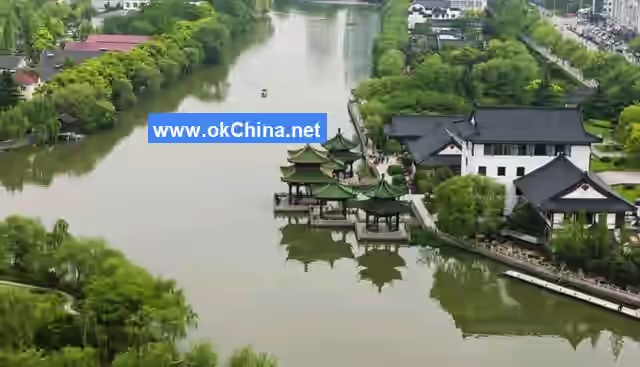
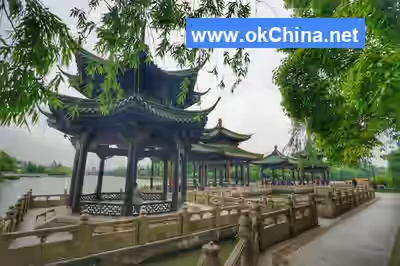
Haoxi Academy was designed by the renowned Chinese architect Professor Pan Guxi. The main building has four floors with a floor area of 2,467.5 square meters, imitating Qing Dynasty architectural style. It was once awarded the title of one of the first "Ten Top Landscape Buildings in Nantong." The entire complex fully leverages the advantage of the broad water area and open vista of the northwest Haohe River. It is exquisitely designed and cleverly laid out. The iconic riverside scenic spot "Five Pavilions Inviting the Moon" on its east side is one of the "Ten Scenes of Haohe." Viewed from above, it resembles five emeralds embedded in jade; from afar, it looks like a jade palace floating on blue waves. It is an excellent place for viewing carp, tasting tea, and appreciating the moon.
3.16 Nantong Heroes Hall
Nantong Heroes Hall is located at No. 1 Huancheng South Road, Chongchuan District, Nantong City, with a floor area of 9,548 square meters. The overall layout is divided into four parts: the Ancient Hall, the Modern Hall, the Contemporary Hall, and the Special Exhibition Hall. The Heroes Hall spans the changes from ancient to modern times, using heroes to narrate history, using their grace to shape beauty, and using their character to manifest strength. It builds a hall of honor showcasing the life and spirit of Nantong's outstanding sons and daughters, a cultural landmark steeped in Nantong's humanistic landscape, and a spiritual high ground that inspires patriotism, love for home, and motivates future generations.
3.16.1 Ancient Hall
Divided into three sections—Virtuous Officials and Eminent Gentry, Distinguished Scholars and Renowned Confucians, and Outstanding Figures in Arts—it displays the ancient sages who chased the rivers and seas, benefited their homeland, promoted the early development of the Nantong region, and also had a significant impact on the historical development of the Chinese nation.
3.16.2 Modern Hall
Divided into three sections—Modern Pioneers, Celebrities and Talented Scholars, and Loyal Souls with Red Hearts—it showcases the extraordinary achievements of the pioneer Zhang Jian and his followers in saving the nation through industry, enlightening the people, benefiting their hometown, and pioneering China's early modernization path, as well as the revolutionary deeds of numerous Nantong revolutionary martyrs and patriots who fought courageously and sought truth relentlessly.
3.16.3 Contemporary Hall
Divided into nine sections—Leading Figures in Science and Technology, Famous Athletes, Renowned Masters and Teachers, Hundred Flowers in the Literary Garden, Famous Doctors in the Medical Field, Role Models of the Times, Iron-willed Generals and Stars, Business Elites, and Public Servants of the People—it displays leading figures in various fields who were born or grew up in Nantong, highlighting their great achievements, virtuous deeds, and exemplary character.
3.16.4 Special Exhibition Hall
The Chengnan Villa has two floors. The first floor is primarily a functional open space, mainly used for hosting thematic and temporary exhibitions, serving as the Special Exhibition Hall of Nantong Heroes Hall, while also providing a place for rest. The second floor is the office and research area.
3.17 Huanxi Cultural Square
Huanxi Cultural Square is located by the West Haohe River, covering an area of 2.1 hectares. Combining with the bow-shaped terrain, it centers around a crystal stage and integrates landscape elements such as a tensioned membrane square, a glass pyramid, relief murals, and a musical fountain. The overall layout is orderly, novel, and lively, rich in modern atmosphere and the charm of the rivers and sea. It is a leisure square integrating sightseeing, cultural entertainment, and recreational fitness.
3.18 City God Temple
The City God Temple was first built in the second year of the Jianlong era of the Song Dynasty (961 AD) by the prefectural official Wang Mao. It is also known as the Jun Temple or Yi Temple. Originally located southeast of the prefectural office at the city's cross street, it has been repeatedly renovated over the millennia, remaining prosperous and enduring. It is the most influential Taoist temple in Nantong and a municipal cultural relics protection unit. In 1998, the City God Temple was relocated and rebuilt at the northern end of Haodong Green Garden, covering nearly ten mu. All structures are of brick and wood, with simple-tiled single-story buildings, exuding an antique charm. The Ceremonial Gate, the Path, the Worship Hall, the Main Hall, as well as the Yuan Chen Hall, the God of Wealth Hall, and the eastern and western side halls were all rebuilt according to their original appearance. Additionally, the Mountain Gate, Opera Stage, Rear Palace, Wenchang Pavilion, Medicine King Pavilion, front and rear eastern and western wing rooms, side rooms, and eastern and western corridors were subsequently constructed.
3.19 Zhang Jian Memorial Hall
The Zhang Jian Memorial Hall was built on the occasion of the 150th anniversary of Mr. Zhang Jian's birth. The museum site is the residence where Mr. Zhang Jian spent his later years—Haoyang Villa. Haoyang Villa was built in 1917, covering a land area of 1,860 square meters with a floor area of 1,200 square meters. It was announced as a provincial-level cultural relics protection unit by the Jiangsu Provincial Government in 2006. The overall style of Haoyang Villa is primarily traditional Chinese courtyard architecture, supplemented by Western architectural decoration techniques, making it a cloister-style courtyard residence rich in traditional Chinese characteristics. The entire courtyard gives a sense of quiet elegance.
3.20 China Audit Museum
The China Audit Museum is an institution directly under the National Audit Office. It is the world's first industry museum themed on auditing, including four exhibition halls: Ancient Chinese Audit, Modern Chinese Audit, New China Audit, and Audit Results Announcement. It showcases the developmental thread of Chinese auditing spanning over 3,000 years. Since its opening in April 2008, it has been committed to popularizing audit knowledge, disseminating audit culture, and promoting contemporary audit achievements. It plays an active role in telling China's audit stories well and spreading the strong voice of contemporary auditing.
3.21 Nantong Museum
Nantong Museum was founded in 1905 by Mr. Zhang Jian, a late Qing Dynasty Zhuangyuan (top scholar in imperial examinations), modern renowned industrialist, educator, and social activist. It is China's first public museum combining a garden with museum functions. It was announced as a National Key Cultural Relics Protection Unit by the State Council in 1988; in 2008, it was among the first batch of National First-Class Museums; in 2011, it was rated as a Third Batch National Civilized Unit.
3.22 Nantong Museum
Nantong Museum inherits the founding philosophy of its founder, Mr. Zhang Jian: "Establish schools for education, and learn the names of birds, beasts, plants, and trees." It particularly emphasizes historical and cultural dissemination and natural science education. In 2005, Professor Wu Liangyong, an academician of both the Chinese Academy of Sciences and the Chinese Academy of Engineering, led the design of the museum's new building. Today, the total area of Nantong Museum has expanded to over 70,000 square meters. The combination of old and new buildings within the entire museum is harmonious, with a strong cultural atmosphere and beautiful garden environment. It showcases historical elegance while brimming with the brilliance of the new era. It has become an ideal place for people to understand Nantong, get close to science, receive cultural熏陶 (edification), and enjoy tourism and leisure.
4. Cultural Background### 4.1 Relevant Figures
Zhang Jian (1853–1926), courtesy name Jizhi, art name Se’an, was a native of Nantong, Jiangsu. He was an outstanding industrialist, educator, and politician in modern Chinese history. In 1894, he achieved the highest honor in the imperial examination, becoming a highly active historical figure on the political stage during the late Qing and early Republican periods. Zhang Jian played a significant role in the late Qing constitutional movement and, after the Xinhai Revolution, served as the Minister of Industry in the Nanjing Provisional Government and the Minister of Agriculture and Commerce in the Beiyang Government.
Zhang Jian advocated for "saving the nation through industry" and founded a series of modern enterprises in Nantong, such as the Dasheng Cotton Mill, promoting the development of China's national industry. Not only did he achieve remarkable success in the economic sphere, but he also dedicated himself to education, establishing over 370 schools and laying the foundation for modern education in China. Additionally, he promoted local self-governance, advocating for village-centric policies and the "cotton and iron doctrine" to drive social progress.
Zhang Jian’s influence extended beyond China, and his deeds garnered international attention. American newspapers frequently reported on his political philosophy and personal integrity, affirming his administrative talent and philanthropic image. He also formed deep friendships with several foreign friends, including Japanese financier Shibusawa Eiichi and Korean poet Kim Chang-hwan.
Zhang Jian also made significant contributions to the museum industry. He founded China’s first museum, the Nantong Museum, and pioneered explorations in museology. His views on industrial integrity and strict management of employees have also been praised by later generations.
Zhang Jian was a key pioneer in China’s modernization process. His entrepreneurial spirit, educational philosophy, and social contributions continue to be widely celebrated and studied to this day.
Comments
Post a Comment