Hainan Binglanggu Li & Miao Cultural Tourism Zone
1. Introduction
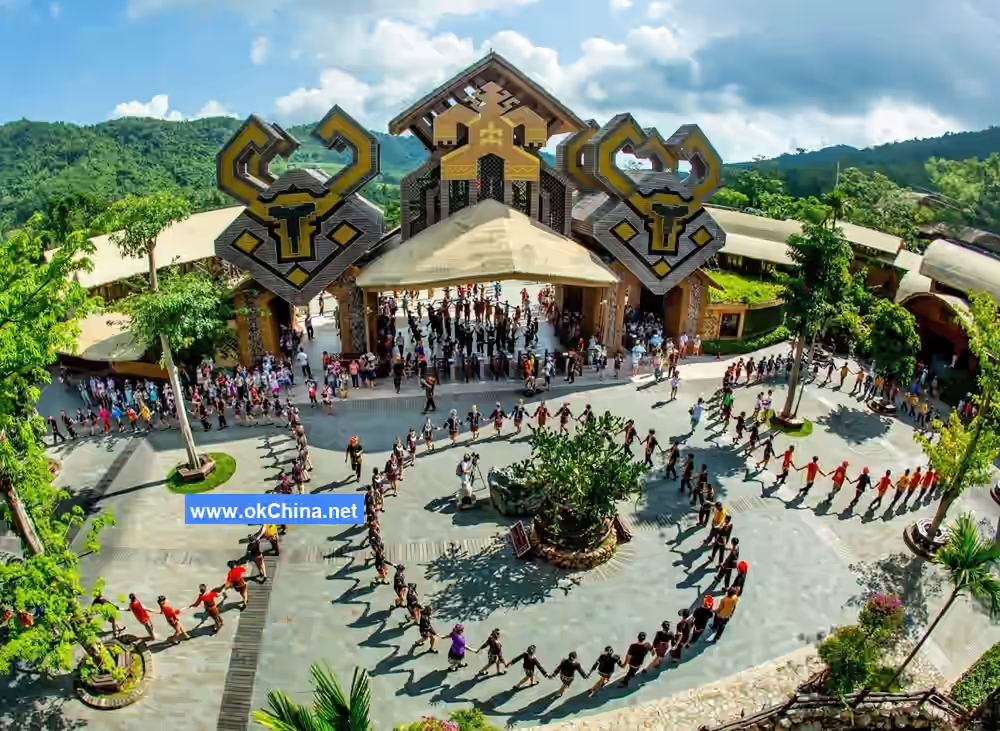
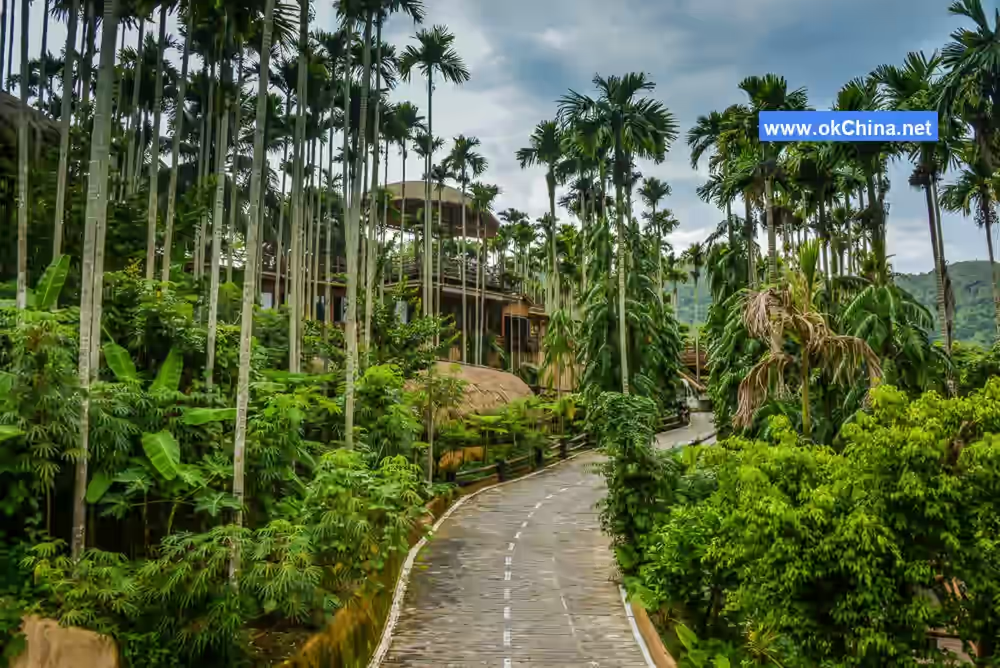
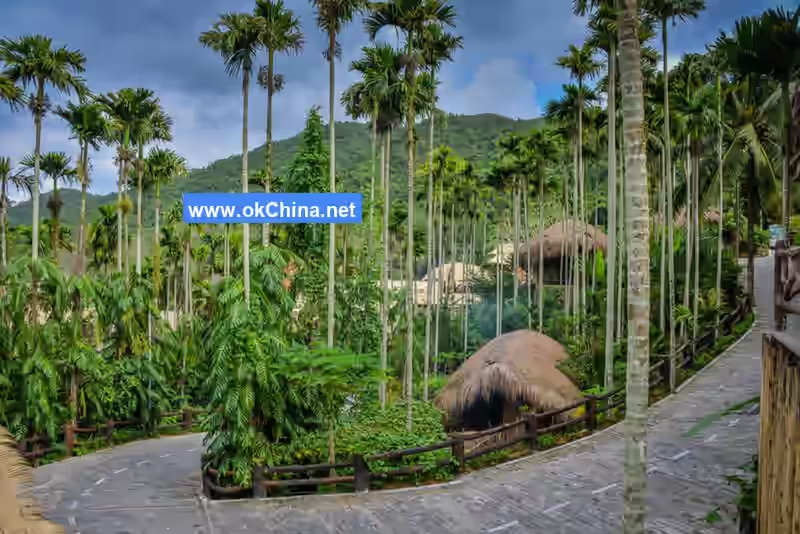
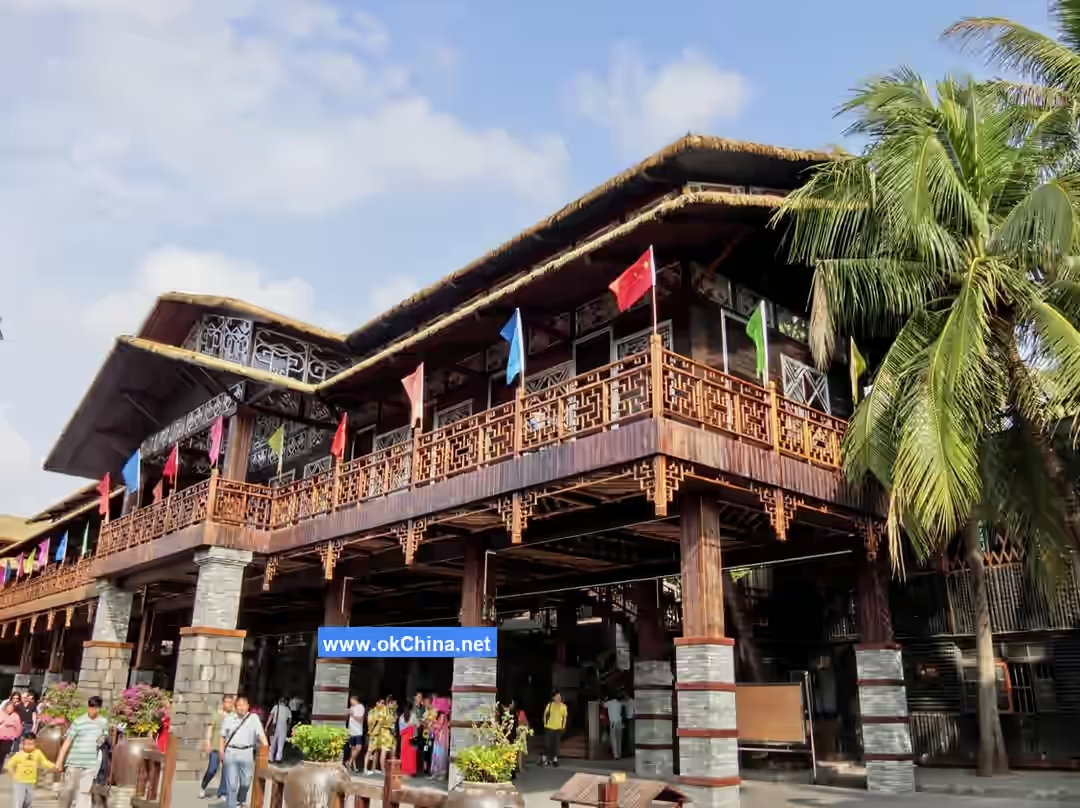
Established in 1998, the Hainan Binglanggu Li & Miao Cultural Tourism Zone is located at 18° north latitude within the Ganshiling Nature Reserve at the border of Baoting County and Sanya City. Nestled amidst a sea of over ten thousand graceful and elegant betel nut palms and surrounded by an ancient, towering tropical rainforest with intertwined vines, the scenic area spans a planned area of over 5,000 acres. It is situated 26 kilometers from the Yalong Bay coastline and 28 kilometers from downtown Sanya. The name "Binglanggu" (Betel Nut Valley) originates from the layered forested mountains on both sides and the several-kilometer-long betel nut valley in between. The scenic zone comprises seven major cultural experience areas: the Intangible Cultural Heritage Village, Ganshi Li Village, Guyin Miao Village, Tianye Li Village, the large-scale live-action performance Betel Nut: Ancient Rhyme, the Orchid Wooden Cabins, and the Li & Miao Flavor Food Street, all set within beautiful scenery. The area also showcases ten national-level intangible cultural heritage items, among which the "Traditional Li Textile Techniques: Spinning, Dyeing, Weaving and Embroidery" is inscribed on UNESCO's List of Intangible Cultural Heritage in Need of Urgent Safeguarding. Binglanggu is also one of the main venues for traditional Li and Miao festivals such as the "March Third Festival" and the "Qixi Water-Splashing Festival." Rich in cultural charm, it is considered a "living fossil" of Hainan's ethnic culture.
2. Geographical Environment
2.1 Location and Area
The Hainan Binglanggu Li & Miao Cultural Tourism Zone in Baoting County is located within the Ganshiling Nature Reserve at the border of Baoting Li and Miao Autonomous County and Sanya City, Hainan Province. It covers a planned area of over 5,000 acres, lying 26 kilometers from the center of Baoting Li and Miao Autonomous County, 26 kilometers from the Yalong Bay coastline, and 28 kilometers from downtown Sanya.
2.2 Topography and Landforms
The Hainan Binglanggu Li & Miao Cultural Tourism Zone in Baoting County is situated on the southern extension of the Wuzhi Mountain Range, characterized by low mountainous and hilly terrain. The topography is higher on the periphery, sloping inward. The lowest point is located in the low-lying farmland in the northeast, with an elevation of approximately 153.6 meters; the highest point is in the east, with an elevation of about 359.3 meters; the site has an elevation difference spanning roughly 205 meters. The slope aspects are quite diverse, and the valley where the scenic area is located runs from southwest to northeast, with the main slope aspect being northwest, followed by north.
2.3 Climate Characteristics
The Hainan Binglanggu Li & Miao Cultural Tourism Zone in Baoting County features a tropical monsoon maritime climate. Influenced by monsoons and typhoons, the annual average rainfall is unevenly distributed, resulting in distinct dry and wet seasons. The annual average temperature is 25°C, with January averaging 20°C and July averaging 28°C. Precipitation is concentrated, with an annual rainfall of about 1,800 mm. The dry and wet seasons are pronounced: the rainy season lasts from June to October each year, while the dry season spans from November to May of the following year.
2.4 Soil Characteristics
The parent material of the soil in the Hainan Binglanggu Li & Miao Cultural Tourism Zone in Baoting County is granite. The surface layer is relatively thin with strong permeability, classified as thin organic matter, thin soil layer, coarse sandy brown clayey red soil. Due to rainwater erosion, the soil surface exhibits about 10% exposed rock and approximately 20% coarse sand.
3. Main Attractions
The Hainan Binglanggu Li & Miao Cultural Tourism Zone in Baoting County is rich in natural, cultural, and social resources, with a comprehensive variety. It consists of seven major cultural experience areas: the Orchid Wooden Cabins, Tianye Li Village, the Li & Miao Flavor Food Street, the large-scale live-action performance Betel Nut: Ancient Rhyme, Guyin Miao Village, Ganshi Li Village, and the Intangible Cultural Heritage Village. The scenic area also displays ten national-level intangible cultural heritage items.
3.1 Themed Attractions
3.1.1 Orchid Wooden Cabins Homestay Experience Area
Adjacent to the mountainside, visitors can hear "field frogs croaking" on rainy days and see "starry skies" at night.
3.1.2 Tianye Li Village Homestay Experience Area
Looking up, visitors can see layered mountain peaks; looking down, they can see traditional Li boat-shaped houses, allowing them to experience the feeling of secluded rural life.
3.1.3 Li & Miao Flavor Food Culture Experience Area
At Bolong Renjia, visitors can eat betel nuts; on the Li Food Street, they can sample Li ethnic snacks.
3.1.4 Betel Nut: Ancient Rhyme Large-Scale Live-Action Performance Experience Area
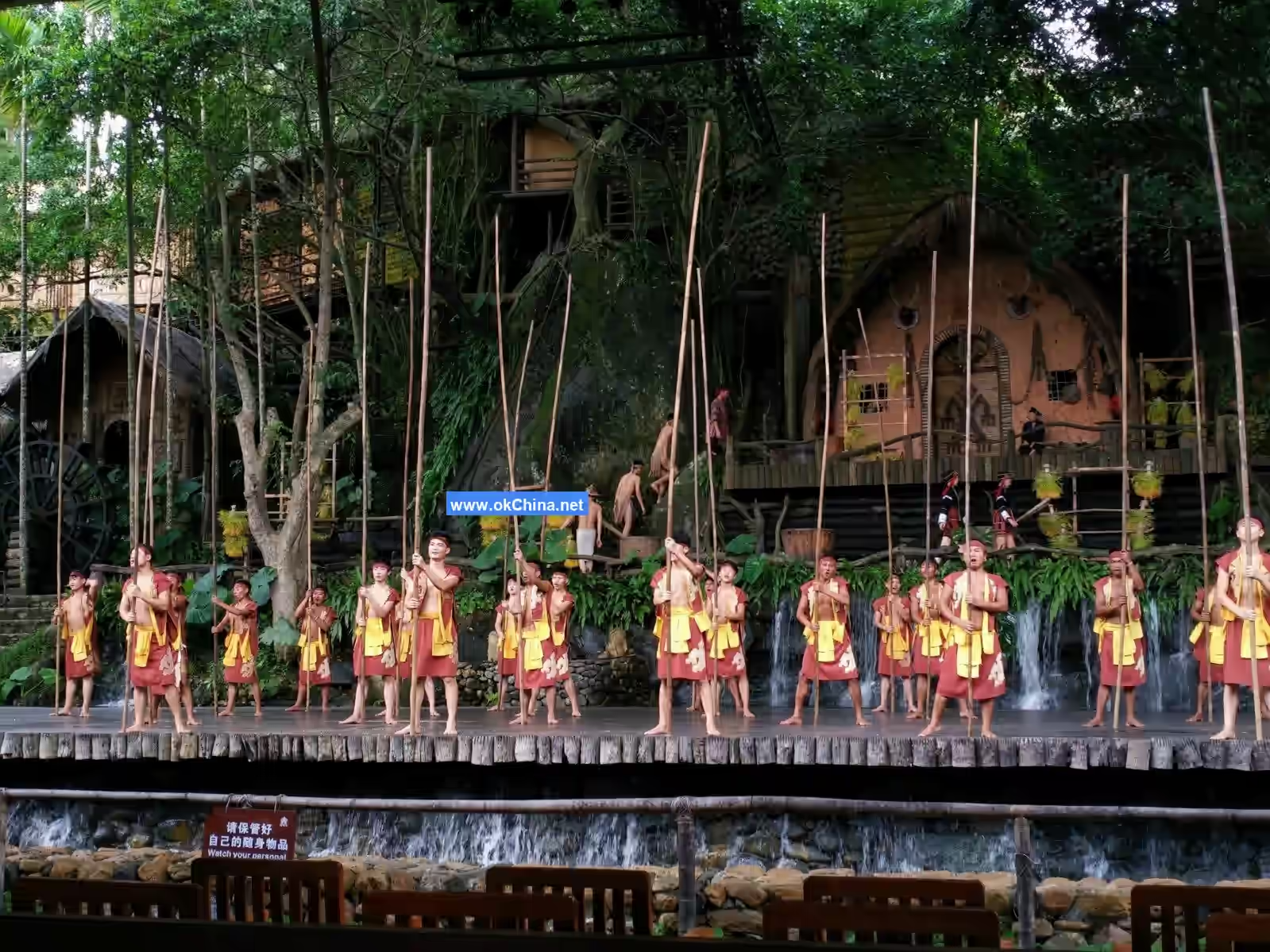
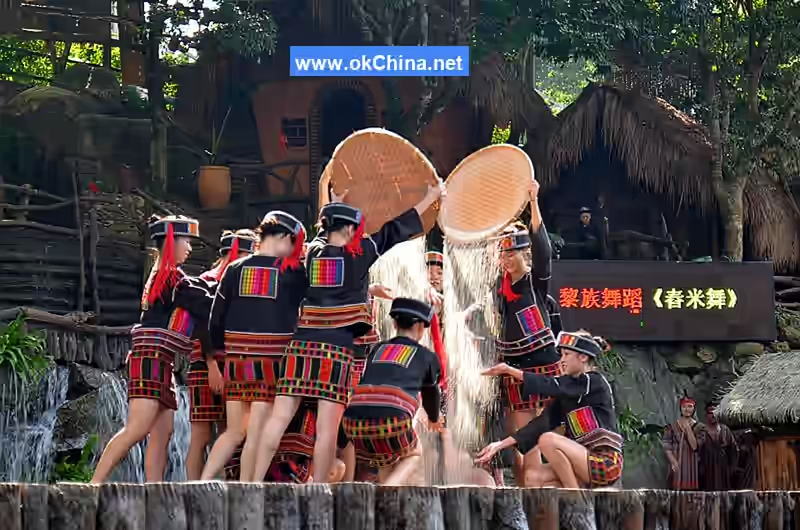
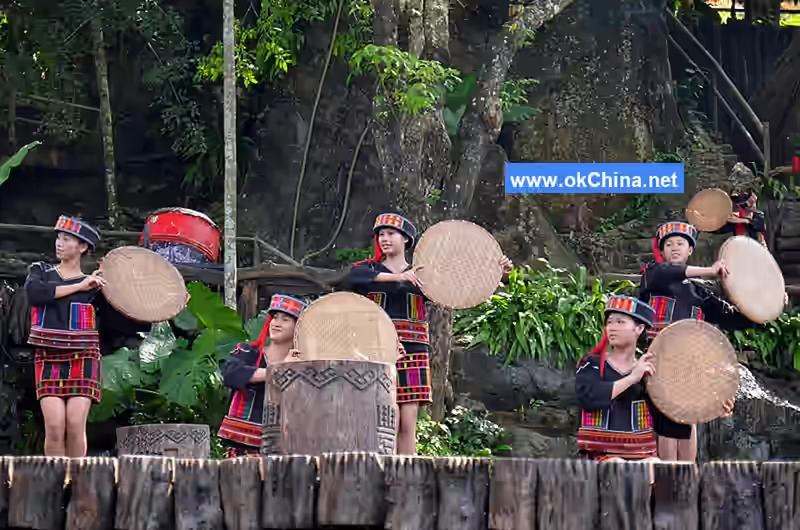
This area features the large-scale original ecological Li and Miao cultural live-action performance Betel Nut: Ancient Rhyme. This performance has been designated as a "National Key Project for Cultural Export" by six ministries including the Ministry of Commerce. It is staged four times daily, showcasing Li life scenes such as the Li firewood dance and rice-pounding dance. Traditional Li culture, including primitive fire-making by drilling wood, self-made Li musical instruments, and Li brocade weaving techniques, is also integrated into the song and dance performance.
3.1.5 Guyin Miao Village Culture Experience Area
This attraction includes the Rainforest Teahouse, Miao Hunting Culture Area, Village Gate, Ox Horn Trumpet, Welcome Area, Batik Household, Miao Elementary School Experience Area, Hunting Household, Beekeeper Household, Snake Farmer Household, Miao Performance Hall—Wang Tian Mou (Knife Mountain, Sea of Fire Performance), Hundred Birds Garden, Stone Ancestor Worship Area, Rainforest Suspension Bridge, Guyin, Spider Science Park, and other projects.
3.1.6 Ganshi Li Village Culture Experience Area
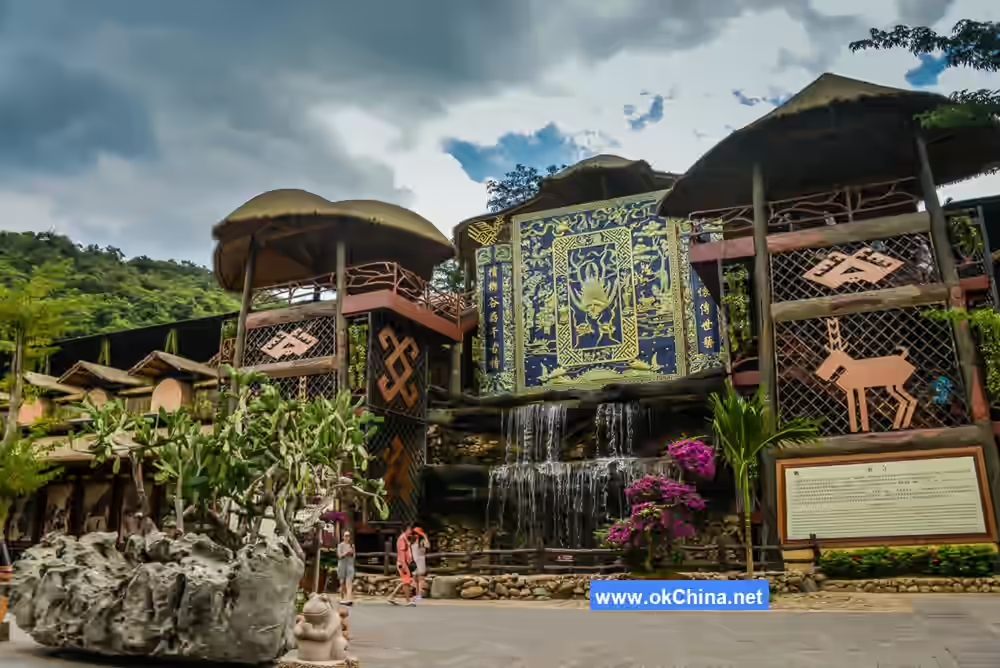
Binglanggu's Ganshi Li Village consists of Upper Village and Lower Village, inhabited by the Sai dialect group of the Li ethnic group, with a population of about 400. This attraction, namely "Ganshi Village," features the Honor Hall, Totem Art Museum, Intangible Cultural Heritage Exhibition Hall, Century-old Granary Complex, Li Tattoo Museum, Shanlan Culture Museum, Brewery, Pottery Museum, Century-old Ancient Li Village, Betel Nut Picking and Tree Climbing Performance, Firewood Dance, Naolonggui (Courtship Custom), Fish Spearing, Harvest Music Ancient Music Performance, Coconut Workshop, and other projects.
3.1.7 Intangible Cultural Heritage Village Culture Experience Area
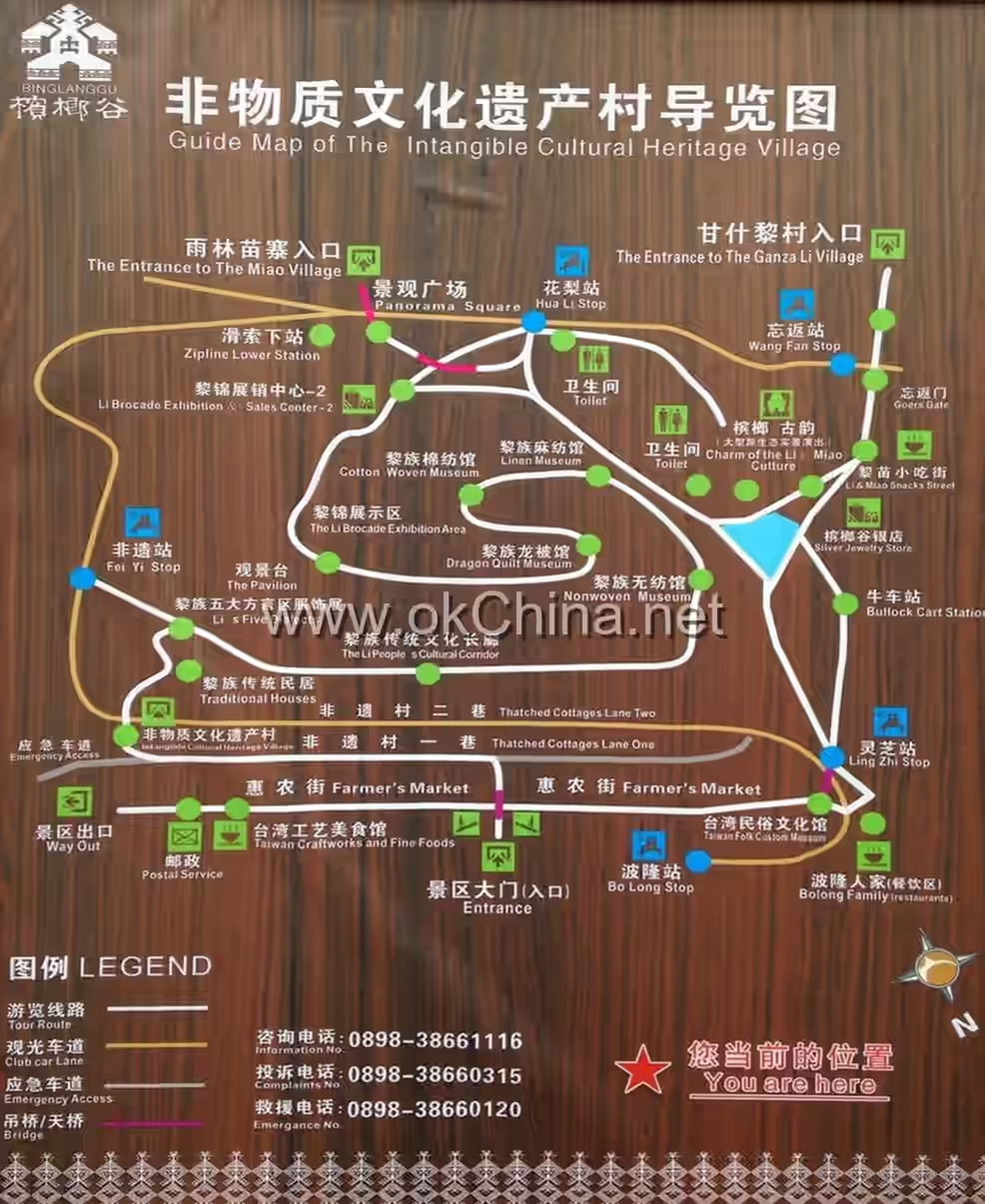
This attraction includes themed museums such as the Non-Weaving Museum, Hemp Weaving Museum, Cotton Weaving Museum, and Dragon Quilt Museum. It also features the March Third Square, Haili Square, Taiwan Fine Products Pavilion, Intangible Cultural Heritage Lane One, Intangible Cultural Heritage Lane Two, Viewing Platform, Century-old Cultural Corridor, Non-Weaving Museum, Hemp Weaving Museum, Cotton Weaving Museum, Dragon Quilt Museum, Li Brocade Exhibition and Sales Center, and other projects. It presents over ten intangible cultural heritage items to visitors, such as the Li firewood dance, boat-shaped houses, and Li tattoos.
3.2 Main Venues
3.2.1 Shanlan Culture Museum
Since ancient times, the Li people and their ancestors were able to cultivate dryland rice varieties—"Shanlan rice"—based on Hainan's natural ecological conditions. Although Shanlan rice is excellent, its cultivation is not easy, requiring a series of production processes including tree felling, burning, sowing, guarding, weeding, and harvesting, representing a slash-and-burn farming method. This museum showcases the history of "Shanlan rice."
3.2.2 Li Tattoo Museum
Tattooing is an ancient custom, an important form of personal adornment among the ancient Yue people of China and their descendants, which still persists among the Li ethnic group. This museum displays tattoo patterns from the five major dialect areas of the Li people and uses wax figures to recreate the scenes and tools used in Li tattooing practices.
3.2.3 Pottery Museum
The Li people's primitive pottery-making techniques were recognized as national intangible cultural heritage in 2006. These techniques are passed down only to women, not men, and open-air firing is a characteristic feature. The Pottery Museum is shaped like a giant pottery steam distiller. Inside, it showcases the complete Li pottery-making process through steps like "collecting clay," "forming the body," "firing pottery," and "reinforcing pottery," using illustrations, text, and physical displays.
3.2.4 Totem Art Museum
The Totem Art Museum houses a series of colored sculpture artworks created by Hainan folk artist Chen Yuxiang using a new type of environmentally friendly sculpting material (fiber-mixed clay) he developed himself. Works such as Li March Third Festival, Goddess of Wuzhi Mountain, The Mighty God, Frog, and Returning from Fishing depict Li customs, totem worship, folk tales, and intangible cultural heritage.
3.2.5 Li Folk Customs Museum (Intangible Cultural Heritage Exhibition Hall)
This museum collects intangible cultural heritage items from different eras and regions. Artifacts like stone axes, steam distillers, fishing waist baskets, bows and arrows, powder guns, hand-twisting knives, skull hairpins, one-log stools, and bridal attire are accompanied by clear and concise textual explanations. They showcase the lifestyle and ethnic history of the Li people from perspectives of production, daily life, diet, crafts, marriage customs, festivals, musical instruments, communication, and religious beliefs.
3.2.6 Dragon Quilt Museum
Dragon quilts are traditional Li brocade art crafts from Hainan. The Dragon Quilt Museum houses dozens of dragon quilt works, including designs like "Dragon Soaring Among Auspicious Clouds" and "Kylin with Double Phoenixes Auspicious Pattern Dragon Quilt."
3.2.7 Cotton Weaving Museum
Kapok trees have long been abundant on Hainan Island, and Li women are particularly skilled at cotton textile production. This museum features a display corridor that uses wax figures to recreate the four major processes of Li brocade making: "spinning, dyeing, weaving, and embroidering."
3.2.8 Hemp Weaving Museum
This museum collects various hemp textile products and production techniques from the history of hemp weaving among the Li people.
3.2.9 Non-Weaving Museum
Before using hemp and kapok for weaving, ancient peoples experienced a long period of "non-weaving." The emergence of bark cloth became a good raw material for making clothing. The Non-Weaving Museum displays the Li bark cloth making techniques and various precious bark cloth products.
3.3 Experience Activities
3.3.1 Ox-Drawn Wooden Wheel Cart
Visitors ride on a wooden wheel cart to enjoy the pastoral scenery within the scenic area. The Li ethnic brother driving the ox will speak Mandarin with a local accent, introducing the沿途 scenery to tourists and explaining Li folk customs, history, and culture along the way.
3.3.2 Vine Climbing to Pick Flowers
"Vine Climbing to Pick Flowers" is a competitive activity created by the Li people. A vine is connected between two trees, with a flower inserted at one end. Participants compete to climb the rope, doing their utmost to swing across to pick the flower. The one who takes the shortest time is the final winner.#### 3.3.3 Turtle Pulling "Turtle Pulling" is a sports game created by Li youth imitating the walking movements of a turtle. Opposing sides each firmly tie one end of a rope around their waist, then face opposite directions and push forward with all their might using both feet and hands until one side pulls the other over a designated boundary line to claim victory.
3.3.4 Bamboo Pole Dance
This is a folk dance of the Li people. According to Li folklore, during the construction of thatched huts, bamboo poles would constantly slide off the roof. To avoid getting hit on the feet, head, or face, people had to keep jumping. This action was gradually imitated and refined, eventually forming the "Jumping Firewood Dance." To the rhythmic and regular clacking sounds, dancers must not only nimbly advance, retreat, and leap between the opening and closing bamboo poles but also perform various movements. When a pair of dancers jumps out from between the poles, the pole holders loudly chant "Hey! Oh hey!".
3.3.5 Zip Line
The zip line is a project that combines recreation and sports, allowing participants to experience the sensation of "flying through the air" while overlooking the tropical rainforest landscape.
4. History and Culture
4.1 Ethnic Group Introduction
4.1.1 Li Ethnic Group
The Li are one of the earliest indigenous ethnic groups on Hainan Island, with a history traceable back thousands of years. According to archaeological and ethnological studies, the ancestors of the Li were likely a branch of the ancient "Baiyue" ethnic groups, who migrated to and settled on Hainan Island as early as the pre-Qin period. The Li share close origins with the Zhuang-Dong language family in the Lingnan region, and their language and cultural characteristics bear similarities to those of the Zhuang, Dong, and other ethnic groups.
Historically, the Li were referred to as "Liren" or "Liren," a name first appearing in Tang Dynasty documents. The Li lived a relatively isolated life on Hainan Island for a long time, forming a unique ethnic culture and social structure. They primarily engaged in agriculture, excelling in cultivating crops like rice and sugarcane, while also developing handicrafts such as weaving and pottery. Li culture is primarily orally transmitted, including myths, folk songs, and dances. Their traditional festival, "Sanyuesan" (Third Day of the Third Lunar Month), is an important manifestation of Li culture.
Due to Hainan Island's geographical isolation, the Li were historically less influenced by external cultures, preserving more primitive ethnic characteristics. It was not until modern times, with the development of Hainan and the migration of Han Chinese, that the Li gradually increased contact with the outside world. However, their unique cultural traditions have continued to be passed down.
4.1.2 Miao Ethnic Group
The history of the Miao on Hainan Island is relatively short, with their migration to the island occurring roughly during the Ming and Qing dynasties. The ancestors of the Miao originated in the middle and lower reaches of the Yangtze River in China. Due to factors like warfare and migration, they gradually moved southward, with some eventually crossing the sea to settle on Hainan Island.
The Miao on Hainan are mainly concentrated in the central mountainous areas, such as Qiongzhong and Wuzhishan. As Hainan's geographical environment shares similarities with the Yunnan-Guizhou Plateau where the Miao traditionally lived, they were able to continue their lifestyle and cultural traditions here. The Miao have their own language, belonging to the Miao branch of the Hmong-Mien language family within the Sino-Tibetan language family, while some also use Chinese.
Miao culture is renowned for its embroidery, silver ornaments, songs, and dances. Their traditional clothing features exquisite embroidery and silver ornaments. The traditional Miao festival "Miao New Year" is an important cultural expression, featuring activities like sacrificial ceremonies, singing and dancing, and bullfighting. On Hainan Island, the Miao primarily engage in agriculture, cultivating crops like rice, corn, and tea, while also retaining traditional hunting and gathering customs.
Compared to the Li, the Miao population on Hainan Island is smaller, but their unique culture adds significant color to Hainan's ethnic diversity.
4.2 Ethnic Culture
4.2.1 Li Boat-shaped House Construction Technique
The traditional Li dwelling—the boat-shaped house—is one of the carriers of Hainan Li culture, embodying the distinctive architectural style of the Li people. This "stilt-style" dwelling is the oldest architectural form of the Li, similar to the "stilt-style" buildings of China's Baiyue ethnic groups. Its architectural characteristic is the integration of roof and walls. The low-platform granaries still seen in Li villages today, resembling boat-shaped houses, are evolved forms of the ancient "stilt-style" houses.
Boat-shaped houses are divided into high-stilt and low-stilt (ground-level) types. Their shape resembles a boat's awning, presenting an arched form. The architectural features include a longitudinal rectangular floor plan, entrances set in the gable walls at both ends, and a generally semi-circular arched roof, giving the house an outline like an overturned sailboat. These houses have no windows, only doors at both ends. There is a balcony at the front with a staircase for access. Upon entering, the entire "boat" body is divided into three sections, like three cabins, each connected by small doors. The first section is the "hall," with a loft for storing grain, sundries, and household items. The second section is the bedroom, which besides containing beds, also holds a stove for distilling liquor or providing warmth. The third section is the smallest, with a back door, serving as the place for daily rice pounding and storing farming tools and chicken coops.
When constructing a boat-shaped house, after preparing the materials, villagers work together and can complete it in about a day. The house uses tree trunks as supports, bound with red and white vines. Walls are woven from branches and bamboo poles, plastered with a mixture of straw and wet mud, and covered with thatch or palm leaves. The size of the house depends on the number of family members and economic capability. Once built, all family life and activities take place within it.
The Li have many taboos regarding house construction. Activities like driving foundation piles and erecting pillars must be done on auspicious days. Construction generally occurs between October and before the Spring Festival each year. During this time, the weather is dry, making bamboo, wood, and other building materials sturdy and durable. Furthermore, the thatch has matured, making the woven thatch panels more flexible. Therefore, this period is the optimal season for construction. According to the Li zodiac day-counting method, "Ox Day," "Pig Day," "Rooster Day," and "Dragon Day" are good days for digging pillar holes, especially "Dragon Day," but these days must not conflict with the homeowner's "inauspicious days." Morning is a good time for erecting pillars. After erecting the pillars, betel leaves or red vine thorn leaves are inserted on the pillar tops, and betel leaves are hung from a bamboo pole in the center of the roof to signify that ghosts and spirits should stay away, ensuring peace in the new home. After the house is completed, the homeowner slaughters a pig and prepares wine to thank relatives and friends. Everyone cooks and drinks inside the new house, a practice called "new house wine."
4.2.2 Spinning, Dyeing, Weaving, and Embroidery
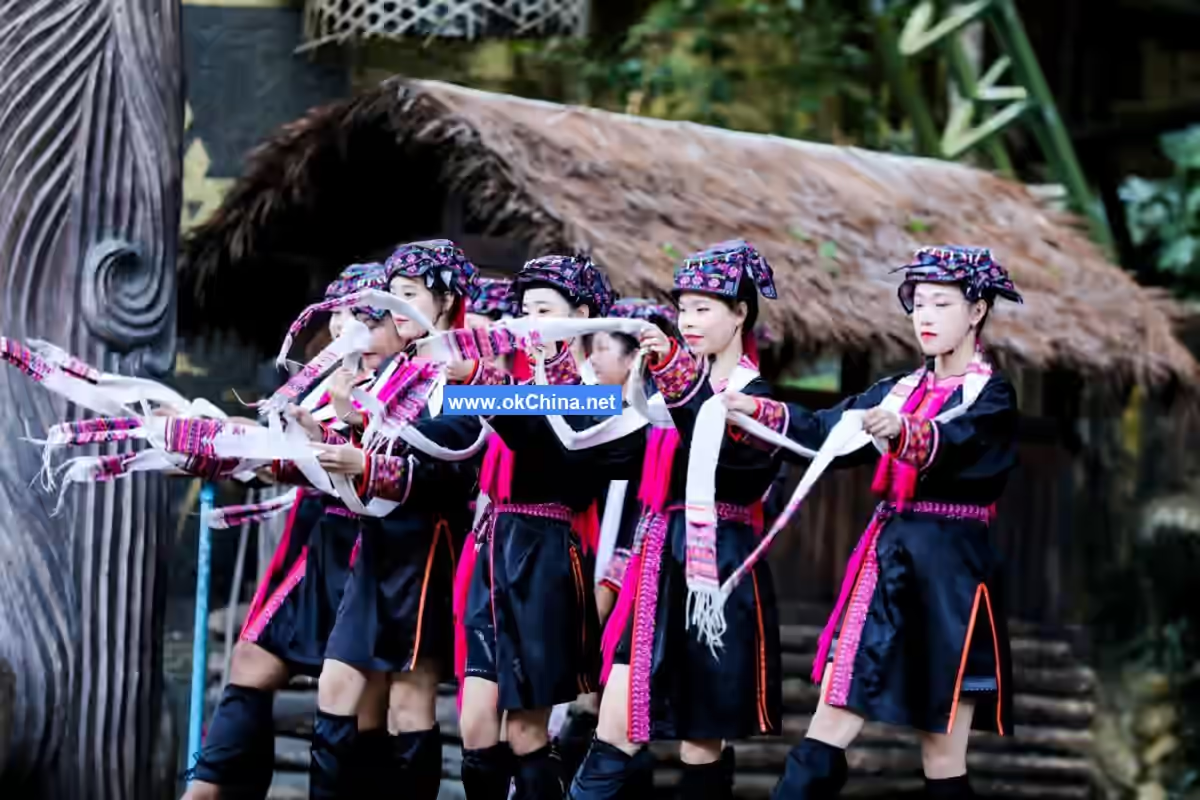
The brocade weaving skills of Li women have persisted for 3000 years, earning the title of a "living fossil" in textile history. Li brocade primarily encompasses four major crafts: spinning, dyeing, weaving, and embroidery. The traditional Li spinning, dyeing, weaving, and embroidery techniques are a combination of Li cotton textile technology, hemp textile technology, and fumigation dyeing techniques. Li brocade is the typical representative of these spinning, dyeing, weaving, and embroidery skills.
"Spinning" involves removing seeds from wild cotton or kapok using a cotton gin, then twisting it into thread and winding it onto a hand-spinning wheel. This process includes arranging the yarn, color matching, heddle threading, and pattern setting.
"Dyeing" refers to yarn dyeing. This includes women of the Meifu dialect tying and knotting white warp threads to form desired patterns, then dyeing them into black-and-white patterned warp threads. Subsequently, colorful weft threads are woven to create the vibrant patterns on tube skirts.
"Weaving" involves using a waist loom and the weaving method of continuous warp and discontinuous weft to create various patterns. When weaving, the warp is first set up manually, tied to a vine or bark cloth belt at the waist. The weaver sits on the ground, stepping on the warp stick of the loom. Pattern weaving uses black or blue-black as the base (warp threads). According to the pattern needs, various dyed threads are matched. The warp threads are pulled, and the weft threads (colored threads) are inserted, then beaten tight with a wooden sword to weave various patterns.
"Embroidery" refers to Li women using colored threads to embroider various patterns on cotton, hemp, or other fabrics. Alternatively, after the brocade pattern is woven, supplementary embroidery is added to enhance the pattern's effect. The main patterns of Li brocade are generally embroidered, and several local details within the main patterns rely on embroidery to complete.
Brocade embroidery includes single-sided and double-sided embroidery, with the double-sided embroidery on women's tops of the Run dialect being the most famous. Double-sided embroidery is a unique traditional embroidery art of the Baisha Li people, passed down through generations of folk artisans. It possesses unique patterns and techniques and is a precious ethnic cultural heritage.
4.2.3 Li and Miao "Sanyuesan" Festival
"Sanyuesan" (Third Day of the Third Lunar Month) is a traditional festival for the Li and Miao peoples to commemorate their hardworking and brave ancestors, celebrate new life, praise life, extol heroes, and pursue happy love. Every year on the third day of the third lunar month, the Li and Miao peoples hold grand celebrations.
On this day, the Li and Miao people dress in festive attire, bringing mountain-bar liquor, bamboo-tube rice, and zongzi (sticky rice dumplings), gathering from all directions at the assembly point to worship their ancestors. At night, elders gather to drink and reminisce, while young men and women engage in antiphonal singing or sing and dance all night long. In addition, local governments across Hainan Province have added new content to the "Sanyuesan" festival. Besides the "Sanyuesan" antiphonal singing, grand traditional Li and Miao sports competitions are held, along with cultural performances and entertainment activities like bull riding races and the "Tiao Dache" dance. The dances of the Li and Miao peoples blend art and sports, being lively, relaxed, and extraordinarily festive.
The "Sanyuesan" festival is the most significant traditional festival for the Li and Miao peoples. It is a concentrated reflection of the overall folk customs of Li and Miao production, life, and entertainment. It serves as a window for the world to understand Li and Miao culture and history and is an excellent opportunity to promote Hainan and carry forward traditional ethnic culture.
In 1984, approved by the Guangdong Provincial People's Congress and the Guangdong Provincial People's Government, the People's Government of the Hainan Li and Miao Autonomous Prefecture designated the "Sanyuesan" festival as an official holiday. In May 2006, the Li "Sanyuesan" festival was included in the first batch of national intangible cultural heritage lists.
Comments
Post a Comment