
Hailuogou
1. Introduction
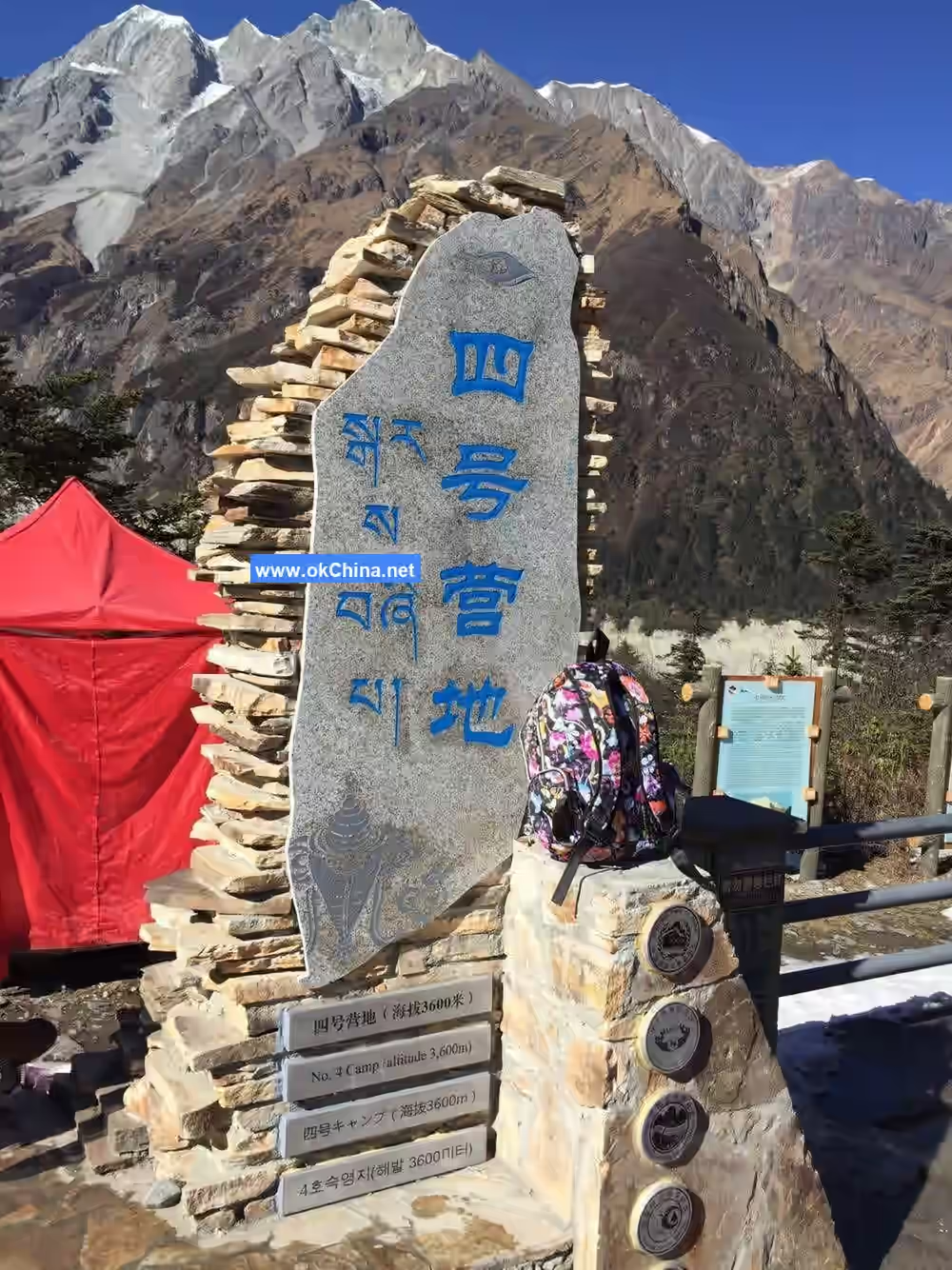
Hailuogou Scenic Area in Ganzi Prefecture, also known as Hailuogou Glacier Forest Park, is located in Moxi Town, Luding County, Ganzi Tibetan Autonomous Prefecture, Sichuan Province. It is an important component of the Gongga Mountain Scenic Area and a national nature reserve.
Within the scenic area, Hailuogou originates from the eastern slope of Gongga Snow Mountain, the "King of Sichuan Mountains." The gully is approximately 30.7 kilometers long and covers an area of about 220 square kilometers. The Hailuogou Glacier formed 16 million years ago and is geologically classified as a modern maritime glacier. The scenic area is situated at the junction of Luding County and Kangding City in Ganzi Tibetan Autonomous Prefecture, and Shimian County in Ya'an City, with a total area of 906.13 square kilometers. The gully features landscapes and attractions such as high-altitude snow peaks, glaciers, ice waterfalls, primeval forests, geothermal hot springs, wildlife parks, Red Stone Park, and glacier forests.
2. Geographical Environment
2.1 Location and Territory
Hailuogou Scenic Area in Ganzi Prefecture is located in Moxi Town, Luding County, Ganzi Tibetan Autonomous Prefecture, Sichuan Province. Within the scenic area, Hailuogou is about 30.7 kilometers long and covers an area of approximately 220 square kilometers.
2.2 Climate Characteristics
Hailuogou Scenic Area in Ganzi Prefecture is situated in the transitional zone of the Sichuan Basin. Here, the rich variety of high mountains, low-altitude modern glaciers, alpine lakes, hot springs, primeval forests, and rare flora and fauna form the world's most complete bioclimatic zones. Visitors can experience the natural changes described as "four seasons in one gully, different weather every ten li."
The coldest month in Hailuogou Scenic Area is January, with the lowest temperature reaching -12°C and an average daily temperature of 3.9°C. The warmest month is August, with an average daily temperature around 13°C and a maximum temperature of 22°C. The annual average temperature is 5°C, with a snow depth of 35 centimeters.
2.3 Natural Resources
2.3.1 Overview
Hailuogou Scenic Area in Ganzi Prefecture is home to over 2,500 species of alpine plants ranging from subtropical to frigid zones, distributed within the grand canyon formed by an elevation difference of over 6,500 meters across a horizontal distance of less than 30 kilometers. Lush bamboo forests, towering palms, low-lying mosses and lichens, and sky-reaching pine and nanmu trees are all found here. The gully is inhabited by over 400 species of wild animals, including 28 precious species under state protection, ranging from gentle pandas to bears and wild boars.
2.3.2 Topography and Orientation
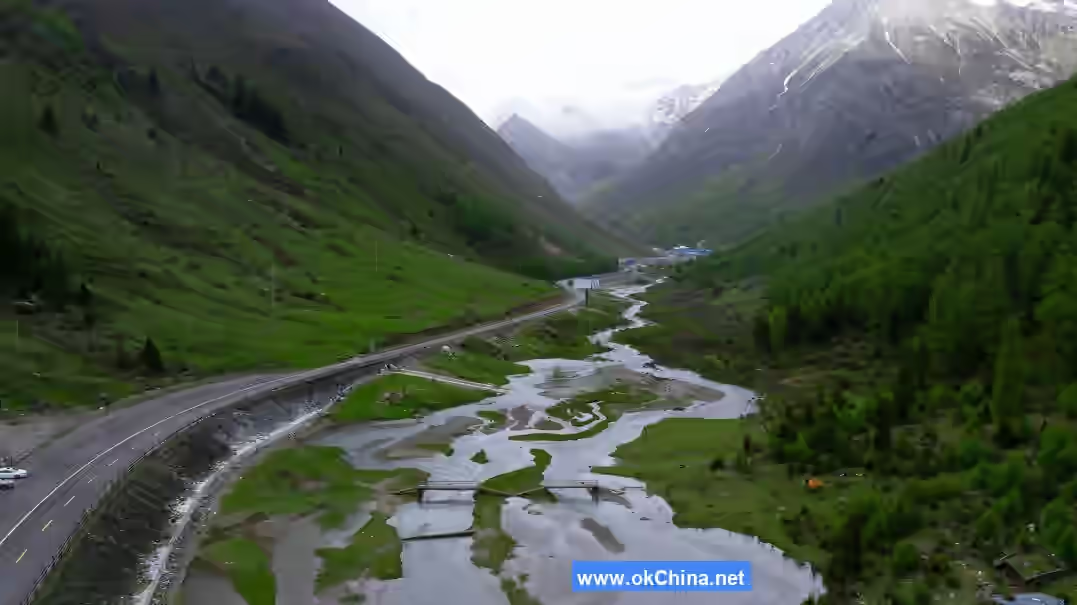
To the east of the main ridge of Gongga Mountain in Hailuogou Scenic Area lies steep high mountain gorges with significant terrain fluctuations. The Dadu River roars and rushes through narrow valleys with deep water and sheer cliffs.
2.3.3 Plant Distribution
Hailuogou Scenic Area in Ganzi Prefecture is located in mid-high mountain, high mountain, and extreme high mountain regions, with an elevation difference exceeding 6,000 meters. This has formed seven unique vegetation belts and seven soil belts in nature, encompassing most of China's plant species.
The vertical differentiation of vegetation types manifests as zonal combinations across different spaces. Starting from the gully entrance, it transitions from the valley sparse tree shrub belt to the mountain evergreen broad-leaved forest belt and the mixed evergreen and deciduous broad-leaved forest belt, then to the subalpine mixed coniferous and broad-leaved forest belt and the coniferous forest belt, and finally to the alpine shrub meadow belt. According to survey data from institutions like the Chengdu Institute of Biology, Chinese Academy of Sciences, Gongga Mountain has approximately 3,000 species of vascular plants belonging to 205 families and 912 genera, including about 2,600 species of seed plants from 156 families and 818 genera, and 399 species of ferns from 49 families and 93 genera. Among these plants, 46 rare species have been identified.
2.3.4 Water Resources
Hailuogou Scenic Area in Ganzi Prefecture features hot springs, locally known as "Hot Water Gully" by mountain residents. Hot springs gush from cracks in the rocks year-round. Tests show that this spring is a neutral, high-quality sodium bicarbonate-type medical hot mineral spring with remarkable therapeutic effects for various diseases. The water temperature reaches over 83°C, with a daily flow of 8,900 tons.
3. Scenic Spots and Attractions
3.1 Hailuogou Scenic Area
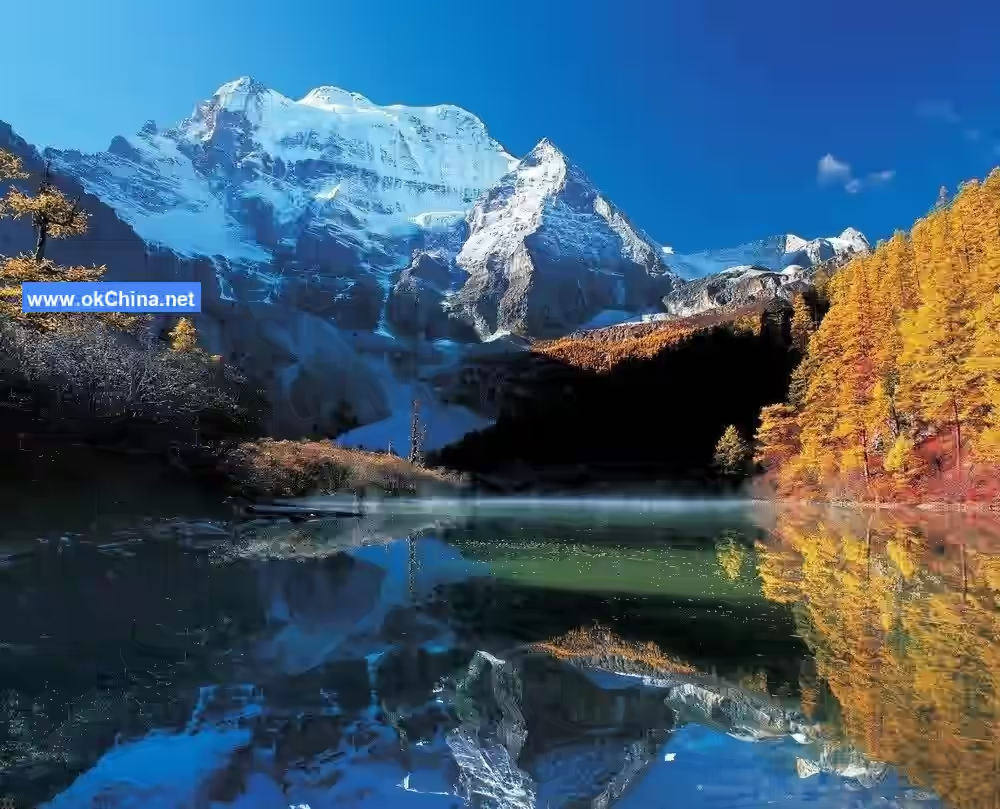
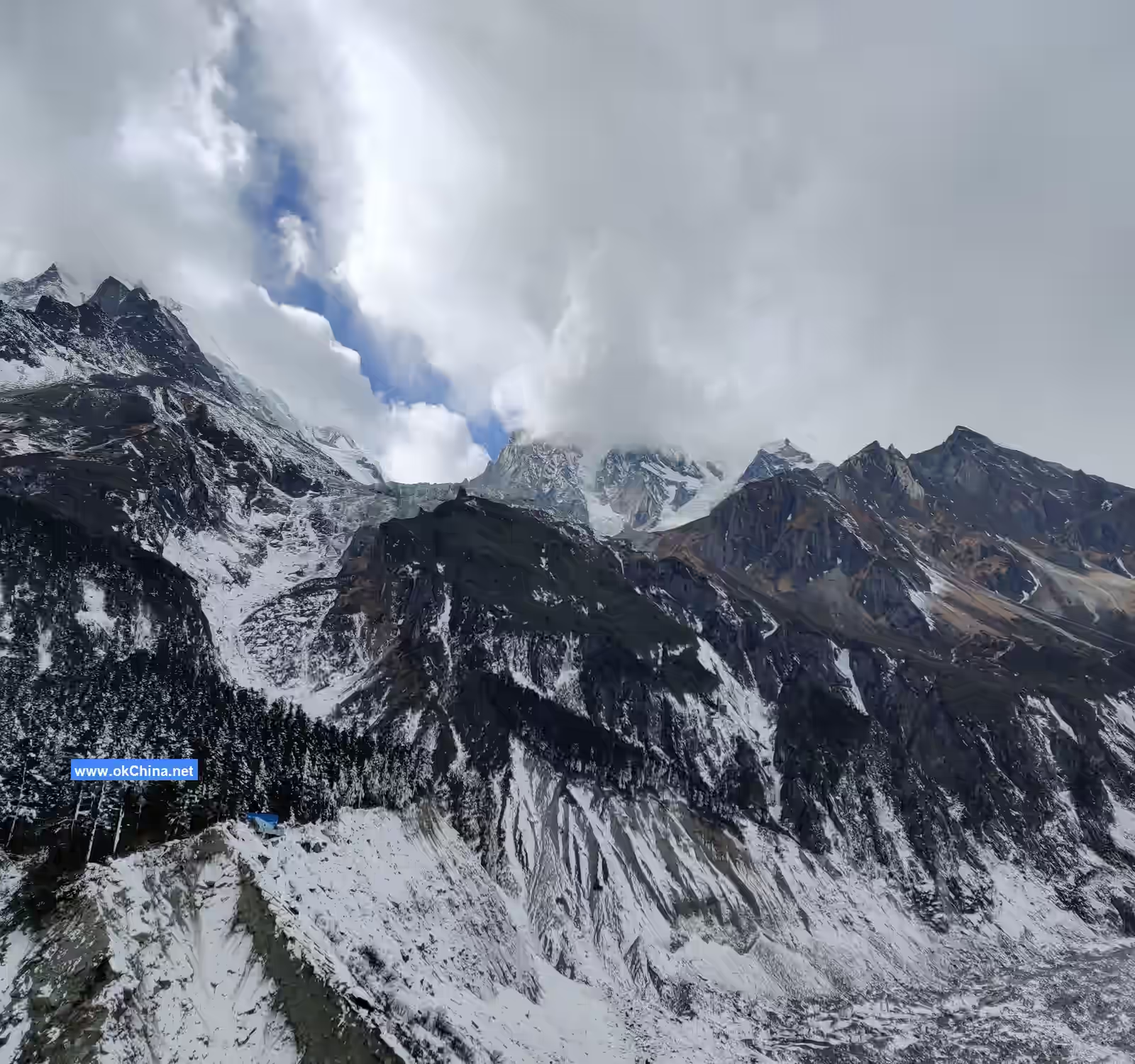
Hailuogou Scenic Area is located in Moxi Town, Luding County, Sichuan Province, on the eastern slope of Gongga Mountain. It is an extreme high mountain area on the eastern edge of the Qinghai-Tibet Plateau. Situated at the foot of Gongga Snow Peak, Hailuogou is renowned worldwide for its low-altitude modern glaciers. Glittering modern glaciers cascade down from lofty valleys; massive ice caves and perilous ice bridges make visitors feel as if they have entered a mythical crystal palace. The large ice waterfall is over 1,000 meters high and about 1,100 meters wide. The gully also contains high-flow hot and cold mineral springs.
3.2 Yanzi (Swallow) Gully Scenic Area
Yanzi Gully Scenic Area is a sister gully to Hailuogou, located about 10 kilometers northwest of Hailuogou. It is surrounded by 15 peaks over 5,000 meters, extending from an elevation of 2,100 meters up to the main peak of Gongga Mountain at 7,556 meters. Yanzi Gully Scenic Area preserves intact forests, wetlands, humus layers, shrubs, and towering trees, collectively forming a complete wetland forest ecosystem. Yanzi Gully features the Red Stone Gully and unique stones within the gully, as well as large areas of colorful foliage forest belts. Yanzi Gully is also a famous international mountaineering and tourism route, where most climbers attempting Gongga Mountain establish their base camps.
3.2.1 Red Stone Beach
Red Stone Beach, at an elevation of 3,100 meters, is located in the river valley opposite the Fish Scale Glacier, in the middle reaches of the Gonggalaqu River. It is the most concentrated area of red stones in Yanzi Gully, spanning several square kilometers. In the nearly 100-meter-wide river valley, red stones are densely packed. The洁白湍急的河水 (white and swift river water) is divided and gathered here, flowing around the red stones downstream. The red stones of Yanzi Gully, shaped by the impact of glacial meltwater, appear increasingly vibrant and magnificent from a distance. Red stones can only grow in the main channel of Yanzi Gully; they are absent where sunlight does not reach, in forests away from the main channel, and at elevations below 2,100 meters. Moreover, red stones taken out of Yanzi Gully will die and turn black.
In Tibetan Buddhism, at the Chakrasamvara (Sanskrit: Cakrasaṃvara) mandala in India, devotees have since ancient times used a red substance to make offerings to the consort of Chakrasamvara, Vajrayogini. This red substance is transliterated from Sanskrit as "Sindura." On the 25th day of each lunar month, known as the "Ocean of Dakinis" day, meaning "the day when countless bodhisattvas gather," on this day, dakas and dakinis, like an ocean, will scatter "Sindura" over the Chakrasamvara mandala. The Sindura falls like sunlight, offered to Chakrasamvara as a供养 (offering). Similarly, as a Chakrasamvara mandala, much "Sindura" has fallen around Gongga Mountain, forming the mysterious red stones. Yanzi Gully is the location of the eastern gate of the main mandala of the Chakrasamvara mandala, where the most "Sindura" has been scattered, hence it has the largest scale of red stones.
3.2.2 Black Stone Cellar
Black Stone Cellar, at an elevation of 3,200 meters, offers open视野 (views) and excellent scenery. The panoramic view of Red Stone Beach can be fully appreciated here. The Nine Lotus Peaks,蜿蜒而来 (winding their way) from the mandala, completely reveal their true appearance here. The Fish Scale Glacier opposite Zhaxi Rewa is the first glacier visible after entering the gully, and its majestic气势 (presence) can also be fully appreciated here. Especially at dawn, when clouds and mist linger, rosy light波动 (undulates), and the peaks appear dark green like黛 (eyebrow pigment), it resembles a fairyland.
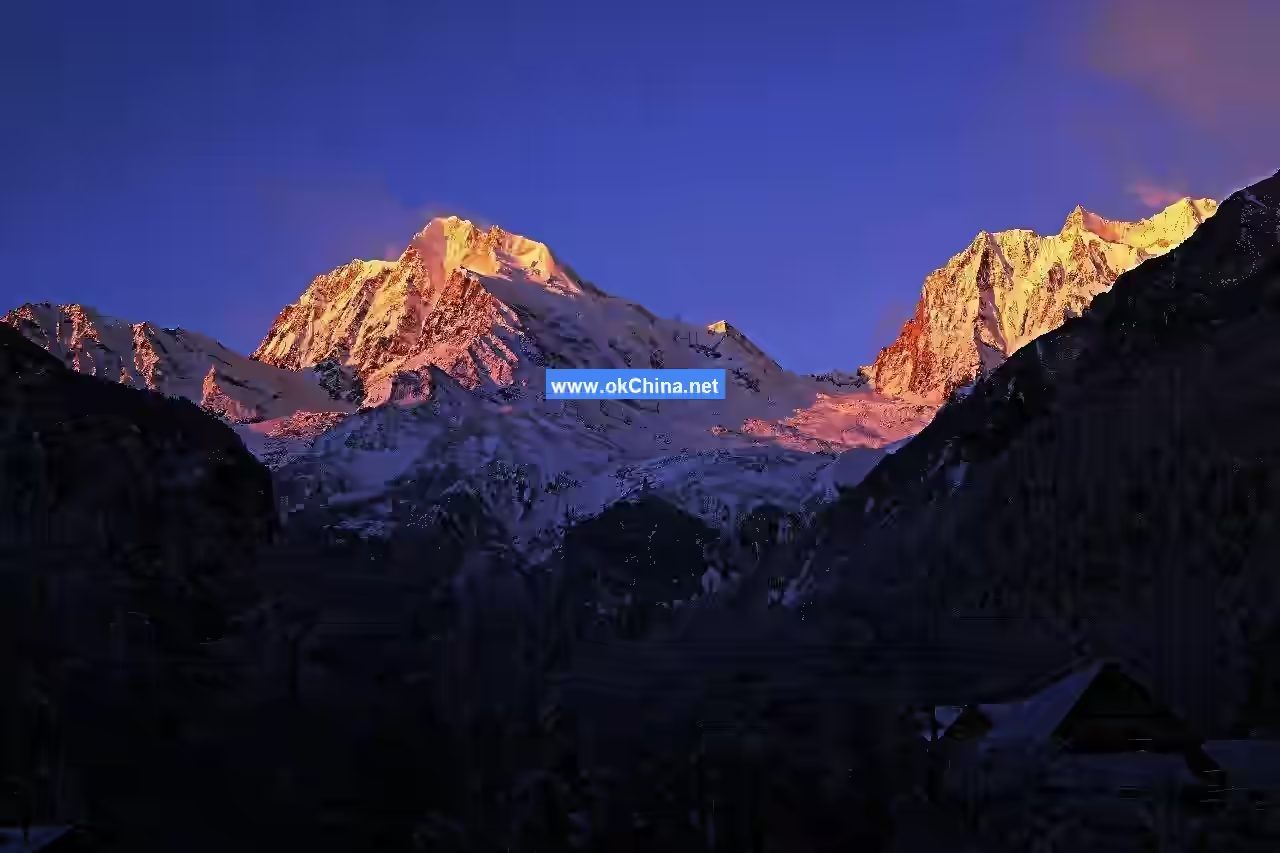
In the embrace of the mountains, only the sounds of nature remain in the human world. Opposite Black Stone Cellar is Zhongshan Peak. The景观 (scene) of the golden summit reflecting snow at the entrance of Yanzi Gully Scenic Area refers to the snow on Zhongshan Peak. Every year around the eighth month of the lunar calendar, Zhongshan Peak begins to snow. By the end of the eighth month and beginning of the ninth lunar month, when the Chengdu Plain is just entering autumn, Zhongshan Peak is already covered in皑皑白雪 (pure white snow), vast and jade-like. The view of Zhongshan Peak from here is different from that at the scenic area entrance. Zhongshan Peak at the entrance appears mysterious and tranquil, while here it is磅礴张扬 (grand and expansive). At dawn, the first ray of sunlight in Yanzi Gully falls on Zhongshan Peak. The red sunlight seems to dye the white snow golden, thus forming the日照金山 (sunlight shining on the golden mountain).
Fish Scale Glacier is the first glacier visible upon entering Yanzi Gully. It has rested in the embrace of Zhongshan Peak for millions of years, like a sleeping infant or a maiden just entering the world. The greatest characteristic of Fish Scale Glacier lies in its shape. While other glaciers in the world may be平整 (flat) or沟壑连连 (full of gullies), the first glacier of Yanzi Gully, during its formation, due to geological movements and erosion by雪山消融水 (snowmelt water), developed a shape resembling fish scales. This is rare in the world.
3.2.3 Swallow Rock
Swallow Rock is a巨大陡峭的巨石 (huge, steep rock). Mountain stream moisture lingers here year-round. Whenever mist rises, Swallow Rock is enveloped in变幻莫测的雾气 (ever-changing mist), like a奇峰 (fantastic peak) in a heavenly palace. The main peak service area of Yanzi Gully is set at the foot of Swallow Rock. From there, it takes 30 minutes forward to reach the main peak viewing platform at the ice cellar entrance, and one hour across the river to reach Haozidian. It is one of the service areas in Yanzi Gully with the most complete functions, the best service facilities, and the most concentrated美景 (beautiful scenery).
Swallow Rock is a protruding巨石 (huge rock). Many small alpine swallows play and rest here. These small alpine swallows are extremely handsome: their beaks, tails, and abdomens each have a touch of嫣红 (bright red), their heads are洁白 (pure white), and the feathers on the rest of their bodies are墨黑色 (jet black). When spring returns to the earth, if you are fortunate, you can certainly witness their靓丽的风采 (beautiful elegance) at Swallow Rock in Yanzi Gully. The origin of the name "Yanzi (Swallow) Gully" lies precisely here.
3.2.4 Haozidian
Haozidian is at an elevation of 3,980 meters. Crossing the river from the main peak service area and一路向上穿行 (ascending all the way) through the方圆十平方公里 (ten-square-kilometer) alpine azalea forest, the azalea trees are all of similar height,波动有致 (undulating gracefully) with the起伏 (undulations) of the mountain terrain. Visitors can stroll along the walking paths, surrounded by azalea forests taller than their heads. In spring, there are also满山的杜鹃花 (azalea flowers covering the mountains). Overhead is the high, blue sky and white clouds of the western Sichuan plateau, and not far away, the glacier welcomes with a smiling face. Resting and游憩 (recreating) in such an environment, the feeling of "I am in nature, and nature is in me" spontaneously arises.At Haozidian Azalea Terrace, one can not only view the azaleas covering the hills and the willow forests but also appreciate the second glacier of Swallow Gully up close—the Tea Glacier. We have seen glaciers as white as jade and those mud-colored due to mixed sand and stones, but the Tea Glacier of Swallow Gully resembles a cup of strong tea, rich and elegant in color. Like the Fish Scale Glacier, it is a rare sight among the world's glaciers.
At the end of the azalea forest lies a vast ice-melt meadow and alpine lakes left behind by the retreating glacier. Crossing the lakes and turning over a small ridge, you reach the Gongga Glacier Viewing Platform, where three pristine white glaciers can be seen. These three glaciers originate from the main peak of Gongga and cascade down from it. Standing opposite them, you can almost feel them rushing toward you, carrying the majesty of Gongga's main peak. After converging at the bottom of the gully, the three glaciers wind their way along the valley floor, heading straight for the ice cellar entrance, creating a majestic and awe-inspiring scene.
3.2.5 Tianyaoshuiping
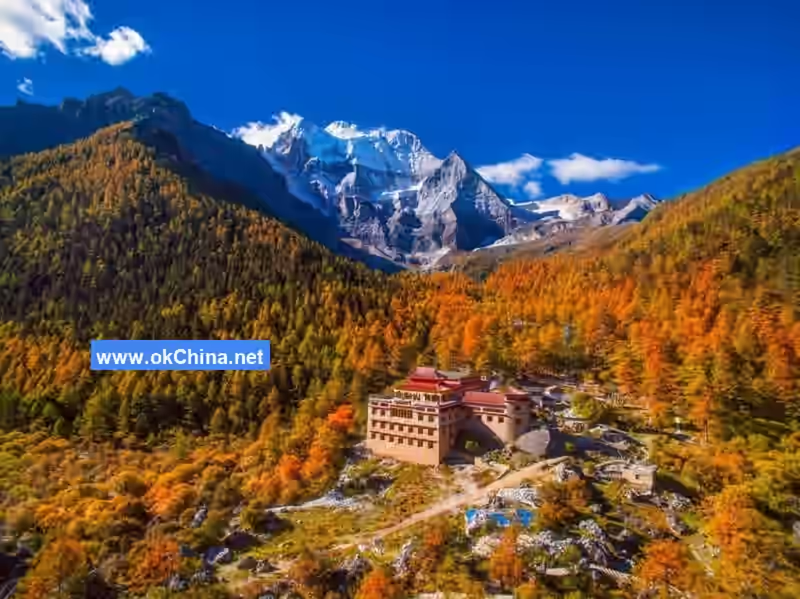
Tianyaoshuiping is the location of the entrance to Swallow Gully and one of its main service areas. To the right of the mountain gate stand three majestic and steep peaks—the three sacred peaks of the Gongga mountain range, known as the Three Protector Peaks. Tianyaoshuiping marks the beginning of the pilgrimage route in Swallow Gully, with an elevation of 2,588 meters. It is named after the Tianyao Spring beneath the Guanyin Peak. The grand gate of Swallow Gully stands majestically in the center of Tianyaoshuiping. The gate's roof is paved with pure gold, shimmering brilliantly under the sunlight. During the snowy seasons of autumn and winter, the golden roof of the gate reflects the snow-capped mountains, creating the unique spectacle of the "Golden Gate Reflecting Snow" in Swallow Gully.
To the left of Tianyaoshuiping lies Yaoquan Ridge. Amidst the towering mountains, various medicinal springs are scattered, with cool and slightly spicy-tasting water. The spring water contains potassium, sodium, calcium, magnesium, ferrous ions, ferric ions, silica colloid, strontium, barium, radon, and other elements, giving it high medicinal value and miraculous health benefits. The name "Yaoquan Ridge" originates from this. In autumn, this area becomes a world of colorful forests, offering even more splendid scenery.
3.2.6 Fan Line
When Jinhua Maben subdued Zhega, he used three divine needles bestowed by Guanyin Bodhisattva, but General Jinhua's own weapon was a divine axe. After descending from the heavenly realm, General Jinhua tested the sharpness of his divine axe by striking a massive boulder, which instantly split into two. This narrow passage is called the "Fan Line," borrowing its Buddhist寓意, symbolizing a connection between the heavenly and earthly realms. It is said that passing through the middle while turning a prayer wheel can grant a baptism. The method involves turning the prayer wheel clockwise with the right hand while silently reciting the six-syllable mantra, "Om Mani Padme Hum." Each turn of the wheel is equivalent to reciting the mantra once, and the more turns, the greater one's devotion to the Buddhas and Bodhisattvas.
3.2.7 Black Forest
The starting point of the Black Forest extreme trek is opposite Shuipengzi, and the endpoint is the Antelope Meadow Comprehensive Service Area. The entire route is approximately 3 kilometers long, with an elevation drop of 80 meters. Along the way, trekkers will traverse complex terrains such as primeval forests, swamps, rocky piles, and ravines. This trek is suitable for visitors with some outdoor experience and a strong interest in outdoor adventures. Completing the 3-4 hour trek not only pushes one's physical limits but also provides an unparalleled sense of conquest. Professionally trained Tianyu ambassadors can teach visitors basic skills such as using a compass and tying knots. They also set up protective measures in dangerous sections, install ropes for crossing ravines, and possess professional first-aid knowledge, ensuring visitors experience the极限 in absolute safety.
3.2.8 Double Fish Platform
The Double Fish Platform is named after the shape of the viewing platform. At the "fish mouths" are two trees, both iron firs, hundreds of years old. Looking westward between the two trees, one can see the万年雪山 waters rushing down, creating a magnificent spectacle. When the water flow is low, the river surface is calm. However, after rain in the mountains, overnight floods can fill the entire riverbed, with torrents resembling ten thousand white horses galloping, as if the many mountain gods of Gongga are collectively parading—a truly astonishing sight.
At the fish mouths, there are two white jade stones shaped like eyes, with a basin of water from the雪山 nearby. Friends can dip their hands in the sacred water and touch the fish's eyes, thereby bringing blessings and wealth back home.
3.2.9 Ten-Mile Fairyland
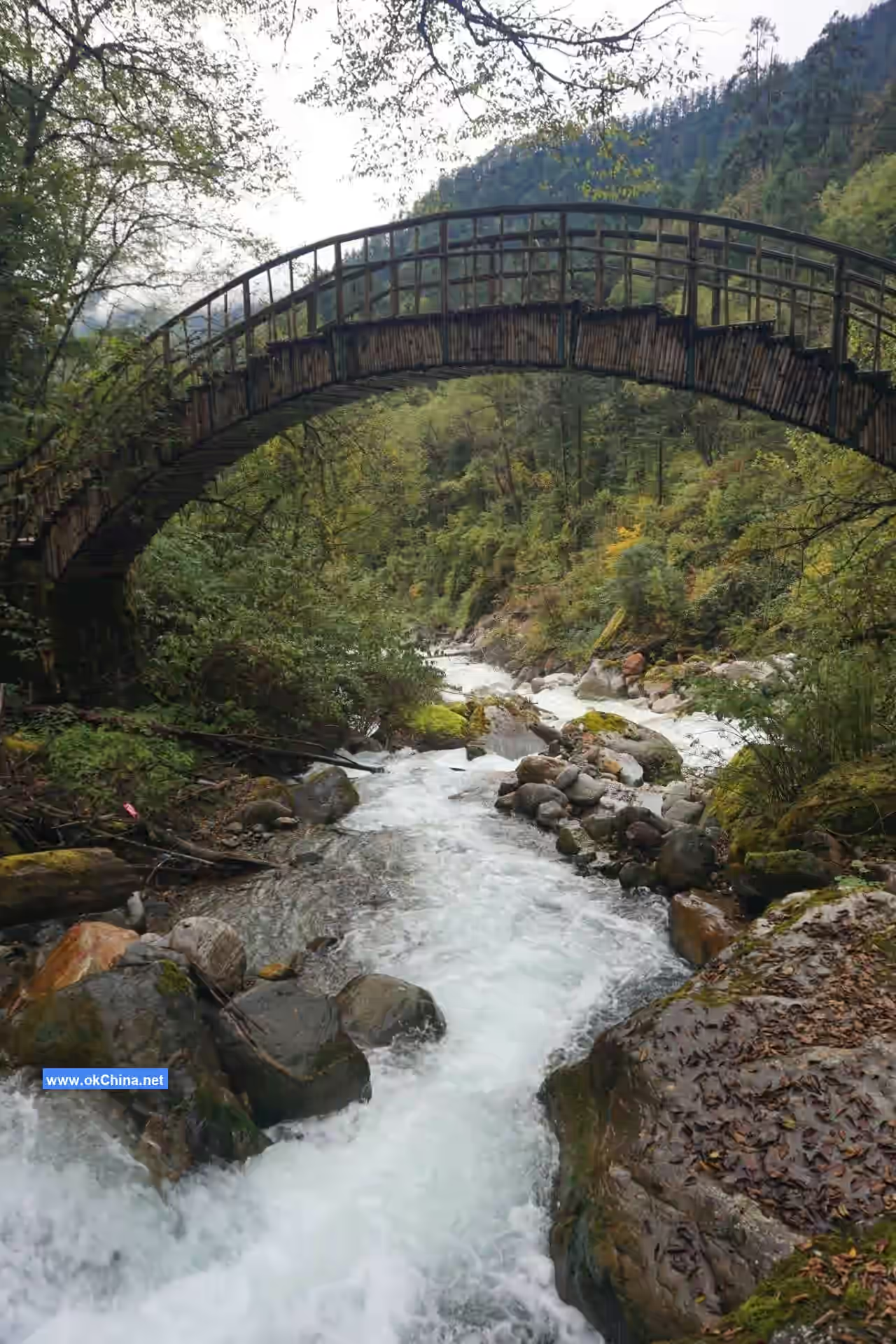
Following the winding mountain path through the forest, skirting moss-covered streams, climbing mist-shrouded steps, and gazing at the towering snow-capped peaks in the distance, the Ten-Mile Fairyland is a primeval forest perpetually enveloped in clouds and mist. Ancient giant trees reach for the sky, and occasionally, small streams or waterfalls formed by converging waters appear. Along the way, the air is filled with the fragrance of flowers and birdsong, with colorful gesang flowers lining the path. The forest walking trail is gentle, and the air is rich in oxygen and负离子, rejuvenating both body and mind.
3.2.10 Heavenly Ladder
The Heavenly Ladder is the必经之道 to the Swallow Gully Mandala Pure Land. It consists of 432 steps, representing 108 sets of the Four Immeasurables—loving-kindness, compassion, empathetic joy, and equanimity. The Four Immeasurables are four vast altruistic minds in Tibetan Buddhism, aimed at bringing happiness and relieving suffering for countless beings. Additionally, in Tibetan Buddhism, the number 108 holds profound meaning, representing the 108 afflictions of human life, the merits of 108 Buddhas, or 108 kinds of immeasurable samadhi, among others.
To the right of the Heavenly Ladder is a row of prayer wheels. If you have been to Tibetan regions, you will notice prayer wheels are ubiquitous, surrounding major temples. Turning prayer wheels disseminates Buddhist teachings for all visible and invisible beings. Inside the prayer wheels are scriptures of the six-syllable mantra, "Om Mani Padme Hum." Each turn of the wheel is equivalent to reciting the mantra once, offering prayers for all beings in the world. While climbing the Heavenly Ladder, turning the prayer wheels clockwise represents a prayer for each rotation, believed to保佑身体健康 and事业顺心. In Tibetan Buddhism, reciting the six-syllable mantra can purify all ten non-virtuous actions, the five heinous crimes, and other karmic obstacles and habits created by body, speech, and mind.
From the Heavenly Ladder, one can see the majestic Nine Lotus Peaks opposite, complemented by溪水 flowing down from the high mountains and mist swirling around the mid-slopes, resembling a painting.
3.2.11 Letting-Go Pavilion
The "Letting-Go Pavilion" is located along a lush walking trail with fresh air. In spring, it is a sea of azaleas; in autumn, it is五彩斑斓; and in winter, it is flanked by pristine snow-capped mountains, making one feel as if walking in a painting. In autumn, the various leaves here turn五彩斑斓, covering the mountains with vibrant colors. In winter, it becomes a冰雪世界 with洁白的雪山 on both sides, while spring brings a sea of azaleas, akin to strolling through a painting. The next attraction we will reach is the Nirvana Ground. In life, we often struggle to let go of many things, filling our lives with confusion and pain. Here, we should open our hearts, let go of everything—both what we can and cannot release—adjust our mindset, and prepare for the upcoming mandala pilgrimage and journey toward enlightenment. Thus, life has too many "things we cannot let go of." When you reach the "Letting-Go Pavilion," why not let go first and proceed with a lighter load...
3.2.12 Nirvana Ground
Nirvana is originally a Buddhist term, meaning coolness, tranquility, the absence of烦恼, and the permanent cessation of all sufferings. It embodies the middle-way nature of neither arising nor ceasing, neither defiled nor pure, neither increasing nor decreasing, and transcending duality, birth and death, permanence and annihilation, both and neither, etc. Here, it has become a寓意 for升华解脱 in life.
At first glance, the Nirvana Ground resembles a maze, roughly spiral-shaped when viewed from above. As you enter this maze and ascend along the spiral path, you will encounter many forks. At these points, different方向选择 will lead to different outcomes—perhaps you will smoothly reach the终点, or perhaps you will return to the starting point. This mirrors how life is filled with choices, and different choices lead to different人生之路.
Thus, we can fully understand the Nirvana Ground as a microcosm of our life's journey. When you finally exit the maze and look back from the highest point of the Nirvana Ground, you will surely gain deeper insights into the gains and losses, choices and sacrifices in life.
3.2.13 Three Bodies Pavilion
The roof of the "Three Bodies Pavilion" features two designs of three leaves each, representing the three bodies of the Buddha: the Dharma Body, the Reward Body, and the Manifestation Body. "Body" here means aggregation—the aggregation of all dharmas to form a body. Thus, the aggregation of principle dharmas is called the Dharma Body, the aggregation of wisdom dharmas is called the Reward Body, and the aggregation of merit dharmas is called the Manifestation Body.
The pavilion is built against a tall美容杜鹃. From a distance, it appears as if the美容杜鹃 is gently embracing the Three Bodies Pavilion with outstretched arms. From the three directions of the pavilion, three distinct views can be enjoyed: to the right, the perpetually snow-capped文山; directly ahead, the divine monkey offering honey on a奇峰; and to the left, the spectacular view of万峰竞秀 opposite the红石滩.Opposite the Sanshen Pavilion stands a peak resembling a monkey's head, known as the "Divine Monkey Offering Honey." According to records in The Jataka Tales of Shakyamuni and The Great Tang Records on the Western Regions, when Shakyamuni practiced asceticism in Rajgir, he was accompanied not only by numerous disciples devoted to cultivation but also by a divine monkey. This monkey attended to Shakyamuni's daily needs and scripture studies with meticulous care. What touched Shakyamuni the most was the monkey's daily offering of fresh honey collected from the Swallow Gully of Mount Gongga. Later, when Shakyamuni attained enlightenment and became the Buddha, the divine monkey was rewarded for its exceptional service. However, in its excitement, the monkey fell into a valley, dying in a posture of offering honey to the Buddha.
To express gratitude and commemorate the divine monkey, Shakyamuni transformed it into a towering mountain. From a distance, the mountain resembles a divine monkey offering honey. Located beside the Xiaonanmenguan Gully of Mount Gongga, it has become a sacred mountain worshipped by people.
Looking toward the Nanmenguan Gully from the right side, one can see a tall snow-capped mountain named Wenfeng. The lower part of this mountain has been eroded by glacial meltwater into steep cliffs.
3.2.14 Takin Meadow
Takin Meadow is named after the takin, a rare wild animal in Swallow Gully that resembles both a sheep and a cow. Takins inhabit forests, shrubs, or meadows above 2,000 meters, feeding on the tender leaves of broadleaf trees such as willow, birch, and oak. During harsh winters or when descending to drink from hot springs, they linger here, especially solitary takins, which seem to wander as if lost in thought, adding an air of mystery to the meadow. Takin Meadow serves as a multifunctional leisure hub in Swallow Gully, where visitors can taste Tibetan cuisine, make butter tea, and participate in ethnic activities, offering a deeper understanding of the local culture. In addition to the rich folk atmosphere, Swallow Gully offers cordyceps tea here. The cordyceps used in the tea are wild varieties harvested from mountains above 4,000 meters, dried without any processing, and brewed directly, making them far more precious than those found in cities.
Takin Meadow is one of the leisure and entertainment centers for visitors in Swallow Gully, featuring high-end facilities such as premium coffee shops, tea bars, and upscale restaurants. Sitting in the restaurants, guests can enjoy the view of Mount Gongga while savoring the delicacies of the Tibetan region. The cuisine at Takin Meadow is uniquely green and environmentally friendly, from ingredient selection and cooking techniques to water usage and waste disposal, all adhering to eco-friendly and low-carbon standards while ensuring nutritional value. The entire cooking process uses electricity, or dishes are prepared in town and transported to the restaurant, avoiding oil smoke pollution and offering visitors a firsthand experience of a low-carbon dining concept.
3.2.15 Ice Cellar Entrance
This is one of the water sources of the Gongga Laqu River in Swallow Gully, where the Mount Gongga main peak viewing platform is located at an altitude of 3,771 meters. The three famous glaciers of Swallow Gully—Gongga No. 1, No. 2, and No. 3—converge in the canyon and extend here, forming bizarre and unparalleled ice tongue formations.
3.2.16 Majestic Glaciers
In the Mount Gongga region, Swallow Gully’s glaciers are renowned for three distinctions: the most uniquely shaped Fish Scale Glacier, the world’s steepest Tea Glacier, and the purest low-altitude Gongga No. 1, 2, and 3 Glaciers. The Fish Scale Glacier is covered with orderly scales, resembling an enormous fish crawling down from the mountaintop. The Tea Glacier hangs on the cliff opposite Haizidian, descending almost vertically from the peak of Swallow Gully. This type of glacier is extremely rare, not only in China but worldwide. Unlike the grayish hue of other mountain glaciers, the Gongga No. 1, 2, and 3 Glaciers are exceptionally clean, free from pollution, and exhibit a translucent emerald green under sunlight, combining grandeur with pure spirituality. Such pristine green glaciers are exceedingly rare at low altitudes, typically found only in remote areas of the Alps or the Earth’s poles. The crystal-clear glaciers stand alongside lush, serene forests—one sparkling and transparent, the other verdant and dense; one strong as iron, the other soft as cotton. Under the blue skies and white clouds of Mount Gongga’s eastern slope, they paint a dreamlike landscape...
3.2.17 Vast Snowy Mountains
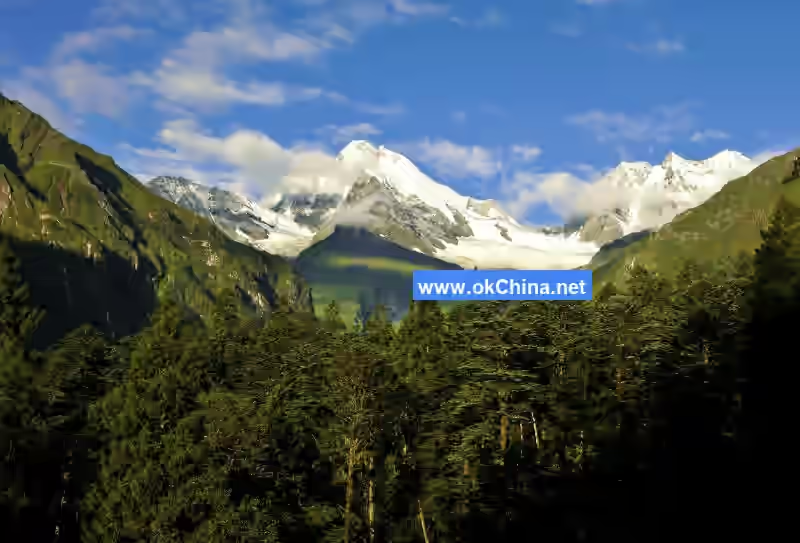
Swallow Gully boasts over 15 peaks exceeding 6,000 meters in altitude, with more than 35 being snow-capped year-round. The unadorned and misty snowy mountains of Swallow Gully appear even more majestic and desolate. The seemingly within-reach peaks feel both intimate and mysterious, as if a loud word might disturb their millennia-long contemplation.
3.2.18 Dazzling Red Stones
Swallow Gully is home to the world’s largest and most concentrated collection of red stones. These stones are absent in areas without sunlight, away from river channels, and below 2,100 meters in altitude. The color of the red stones changes with the seasons and even weather conditions. They have extremely stringent environmental requirements, with air purity, humidity, and water cleanliness affecting their growth. Swallow Gully’s low-carbon, oxygen-rich air, glacial meltwater streams, and pristine forest vegetation provide an ideal habitat for the red stones. If trampled or removed from Swallow Gully, the red stones quickly lose their vitality and turn into ordinary black rocks.
3.2.19 Colorful Forests
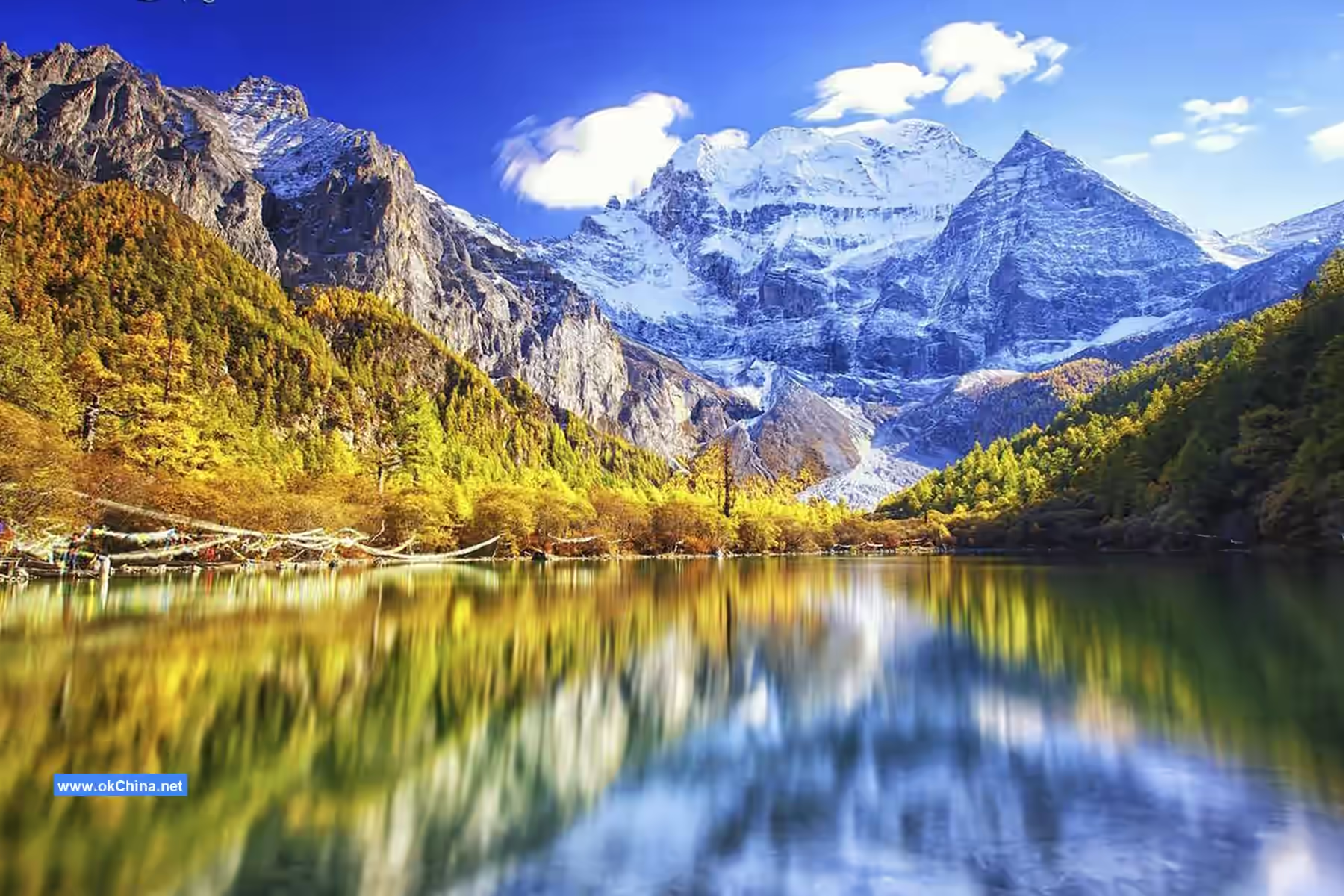
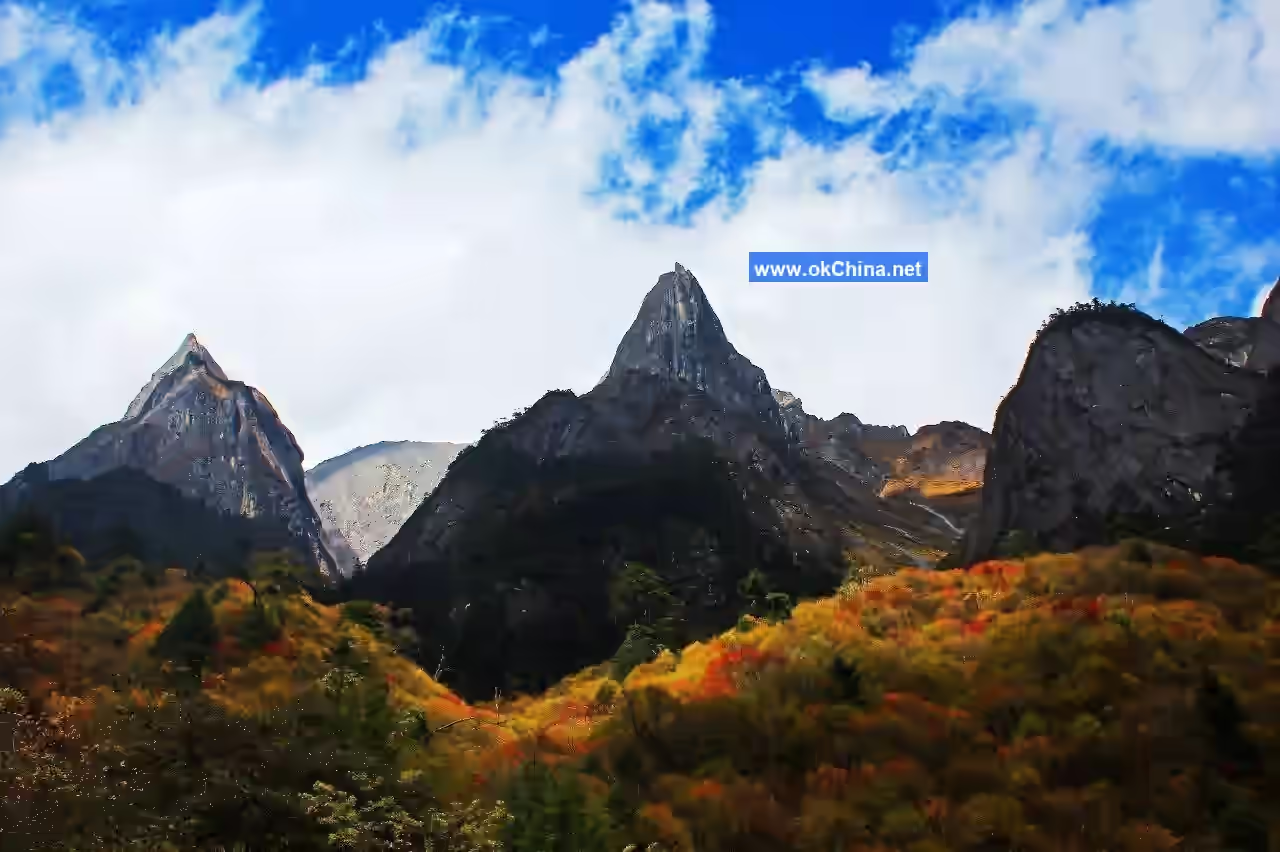
Swallow Gully hosts over 6,000 plant species across eight vertical vegetation zones. When autumn arrives, these plants shed their green hues and adorn themselves in vibrant colors—reds, purples, and yellows—transforming the entire gully into a series of bright and colorful scenes. Visiting Swallow Gully in autumn, one can admire the variegated leaves up close and enjoy the distant peaks resembling watercolor paintings, creating a feeling of wandering in a fairyland.
3.2.20 Rhododendron Sea
The Rhododendron Sea is one of the most beautiful sights in Swallow Gully during spring. In areas such as Mandala Realm, Shengdelaman, Takin Meadow, and the Rhododendron Sea, various rhododendron species bloom side by side. When spring arrives, all rhododendrons in Swallow Gully quietly blossom, painting the gully in a riot of colors.
3.3 Mozigou Scenic Area
The Mozigou Scenic Area is surrounded by mountains on three sides, with a cliff on the fourth. Only a narrow path leads into Mozigou. Inside, tiered waterfalls cascade down, with a bathing pool at the base.
3.4 Nanmenguan Gully Scenic Area
The Nanmenguan Gully Scenic Area is a valley within the Mount Gongga scenic region, located in Baozhi Village of Xinxing Township, about 10 kilometers from Hailuogou. The area features numerous glaciers and snow-capped mountains, with a winding "Red Stone Dam" at its base. Nanmenguan Gully is the only valley among the discovered Gongga gullies that remains untouched by human logging, preserving its pristine landscape—a hidden paradise nestled among the peaks of Mount Gongga.
3.5 Yajiageng Scenic Area
The Yajiageng Scenic Area serves as the boundary mountain between Kangding and Luding counties. Known as the "Chinese Alpine Botanical Garden" and "Chinese Red Stone Park," the area boasts rare flora and fauna, red stone valleys, alpine lakes, snow peaks, flower seas, tea-horse road relics, Wilson’s Trail, millennia-old hanging coffins, red pandas, and "Xikang magnolias."
3.6 Moxi Platform
Moxi, historically known as Moximian, was originally inhabited by the descendants of the Di people, the Mosuo. The ancient Mogangling Road, dating back to the Han Dynasty, made Moxi a bustling town on the Sichuan-Tibet route. The Moxi Platform is situated on a terrace on the eastern slope of Mount Gongga, along the Moxi River, from which it derives its name.
4. Cultural Legends
4.1 Culinary Culture
4.1.1 Daily Meals
In the Hailuogou mountainous areas, corn is the staple food, followed by potatoes. In flatlands, rice and wheat flour are supplemented, with legumes and coarse grains used as vegetables. In the early 1950s, people also consumed wild yams, cottonseed cakes, palm flowers, oilseed cakes, and lacquer seed flour to survive. After the 1950s, cornmeal became the staple in most mountainous villages, later replaced by rice. Pork is the primary meat, followed by beef, lamb, chicken, duck, and fish. Since the 1980s, the variety of meat and vegetables has increased significantly, with greater emphasis on preparation. Some households make pickled and preserved vegetables. Seasonal snacks include zongzi (sticky rice dumplings), salted eggs, and garlic for the Dragon Boat Festival; mooncakes for the Mid-Autumn Festival; glutinous rice cakes for the tenth day of the lunar month; and glutinous rice balls and fermented glutinous rice for the Spring Festival.
4.1.2 Banquets
For weddings and funerals, "Nine Big Bowls" are served. Wealthy families first drink alcohol and eat stir-fried dishes, followed by large bowls of food with rice, later evolving into ten bowls arranged in a 4-3-2-1 pyramid shape. In rural areas, the Nine Big Bowls typically include two bowls of pork stew, meatballs, and steamed dishes as main courses, with crispy meat, vermicelli, kelp, and wood ear fungus as side dishes. Temple fairs, pilgrims, and monasteries serve vegetarian feasts, primarily using vegetable oil, fried tofu, and melon or potato dishes.
4.1.3 Cured Meat
It is a traditional custom in the region to cure meat. After the Winter Solstice, pigs are slaughtered for the year, typically cut into 3–4 jin pieces, strung with palm leaves, and placed in large pots or jars. Layers of salt are applied, and the meat is cured for 3–5 days before being hung indoors or in earthen buildings. The surface is rubbed with salt, and the meat is smoked over a fire made of walnut shells and cypress branches. Afterward, it is air-dried in a ventilated area and stored.
4.1.4 PastriesDuring the folk New Year celebrations, rural households make their own corn maltose. They fry and puff sorghum, then bind it into cakes with the maltose, known as sorghum cakes. These are then pressed into strips and sliced. Corn maltose is processed into strips, sprinkled with roasted flour, and stored, called sesame candy. Peanuts, walnuts, sesame, and roasted sorghum are ground into powder, formed into strips, and cut into pieces the size of a middle finger. After drying, they are stir-fried in a pan with stove ash or sand, then cleaned of ash and sand, bound with sugar, and coated with sorghum flowers, resulting in what is called flower fruit. Wealthier families use ingredients like clear oil wheat flour, glutinous rice, sesame, eggs, and red or white sugar to make high-end pastries, which are not accessible to ordinary households.
4.1.5 Beverages
In the past, ordinary people would go to town and sit in teahouses, brewing covered-bowl tea to chat. At home, they typically drank "old shade tea" (coarse tea), where a pot of water was boiled with coarse tea and could be consumed throughout the day. In impoverished mountainous areas, people would collect and store hawthorn leaves to brew for drinking. The Yi people traditionally enjoyed drinking jar wine, where several people would sit around a jar and sip through wheat straws, known as "straw-sipping wine." Nowadays, this has been replaced by drinking bowl wine, and meat dishes are also cooked, differing significantly from the past.
4.2 The Ancient Tea Horse Road
During the Zhou and Qin dynasties, Moxi Town was inhabited by the Qiang ethnic group, specifically the Bailang Loubo tribe. During the reign of Emperor Wu of Han, it was under the jurisdiction of Guandu County. Located at the entrance of Hailuogou, Moxi Town is a place where diverse cultures blend and various ethnic groups coexist harmoniously. Since ancient times, it has been a crucial town on the Sichuan-Tibet Ancient Tea Horse Road. Before the completion of the Luding Bridge in 1706, the Ancient Tea Horse Road mainly passed through Moxi Town, crossed the Yajiageng Pass, and reached Kangding, contributing to the prosperity of ancient Moxi Town at the time.
4.3 Red Culture
On May 29, 1935, Comrade Mao Zedong led the Workers' and Peasants' Red Army through Moxi during the Long March. The famous "Moxi Conference" was held at the Moxi Catholic Church, where the battle to capture the Luding Bridge was specifically planned, writing a glorious page in history.
4.4 Historical Legends
4.4.1 Naming by the Dharma King
During the Ming Dynasty, Dharma King Tangdong Jiebu arrived at the construction site of the Luding Bridge. Seeing the craftsmen struggling to install the iron chains across the river, he instructed them to use bamboo ropes threaded through short bamboo tubes, with iron chains tied to the tubes using bamboo ropes for a slow, sliding transfer. Following his method, the craftsmen suspended iron chains over 40 zhang long and weighing more than 2,000 jin. When the craftsmen could not pull the chains, Dharma King Tangdong Jiebu took out his treasure conch and blew it three times. The magical sound of the conch miraculously guided the tubes to slide along the ropes, safely transferring all 13 iron chains. After the completion of the Luding Bridge, Dharma King Tangdong Jiebu traveled through Hailuogou, crossed the snow-capped mountains, and built temples and pagodas on the western slopes. While staying overnight in a glacial boulder cave in the dense forest of Hailuogou, he chanted Buddhist scriptures in front of the cave entrance morning and evening, kneeling in worship toward the sacred Gongga Mountain. Whenever he blew the conch, birds and animals from the forest would gather around the cave to listen to his chants. After the Dharma King left, the birds and animals continued to gather around the boulder cave at the times he used to blow the conch. Trees grew on top of the cave, and flowers and plants flourished, creating a scene of thriving life. One day, Dharma King Tangdong Jiebu appeared in a dream to his disciple, saying that the boulder cave where he stayed in Hailuogou had been consecrated by the mountain god of Gongga as the "Hailuogou Spiritual Stone." The deep valley he traversed was named "Hailuogou" after his treasure conch. Thus, the names Hailuogou and Hailuogou Spiritual Stone originated.
4.4.2 Modern Explanation
Explorers and mountaineers standing at an elevation of 4,300 meters on the ice waterfall overlook the Hailuogou Glacier. Within their line of sight, the entire arched structure is clear, symmetrical, and adorned with finely ordered, radiating tensile cracks. The massive ice formation resembles a conch, giving rise to the name Hailuogou Glacier.
Another legend suggests that the early glacier shape resembled a city gate cave. When the river wind blew into the cave, it produced a sound like a conch being played, hence the name Hailuogou.
Comments
Post a Comment