Guifeng Scenic Area in Shangrao City
1. Introduction
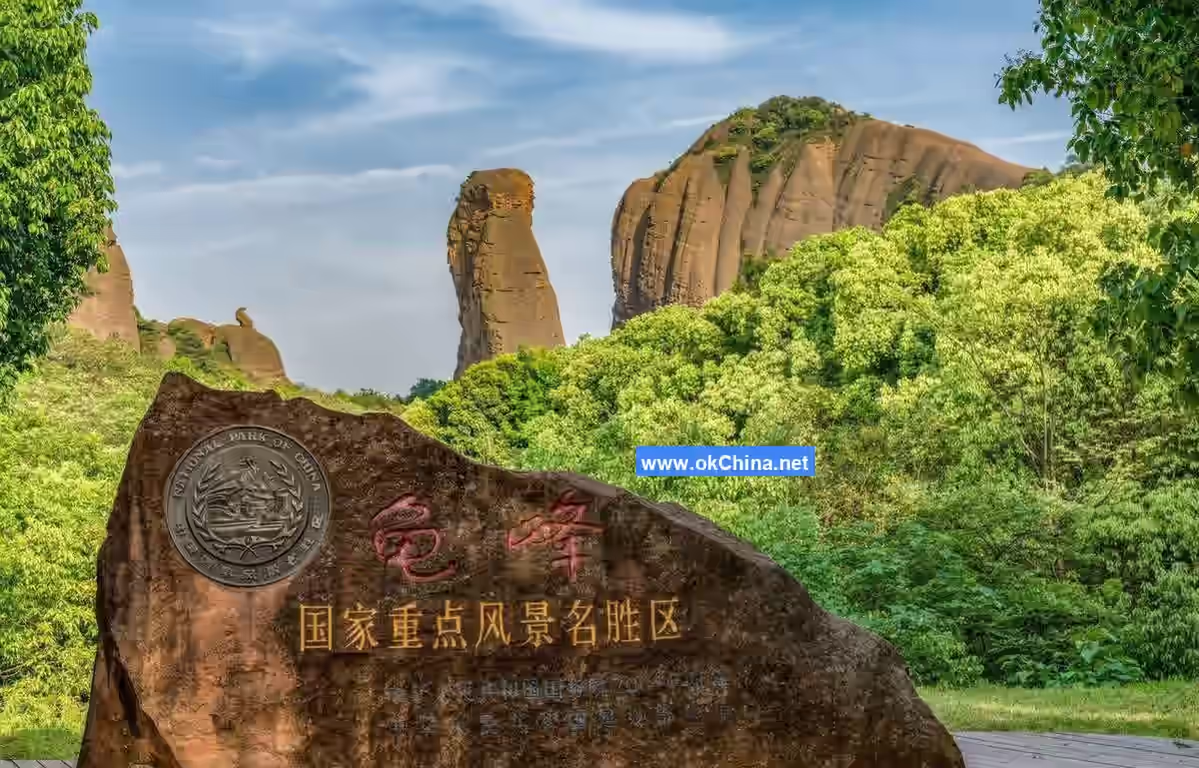
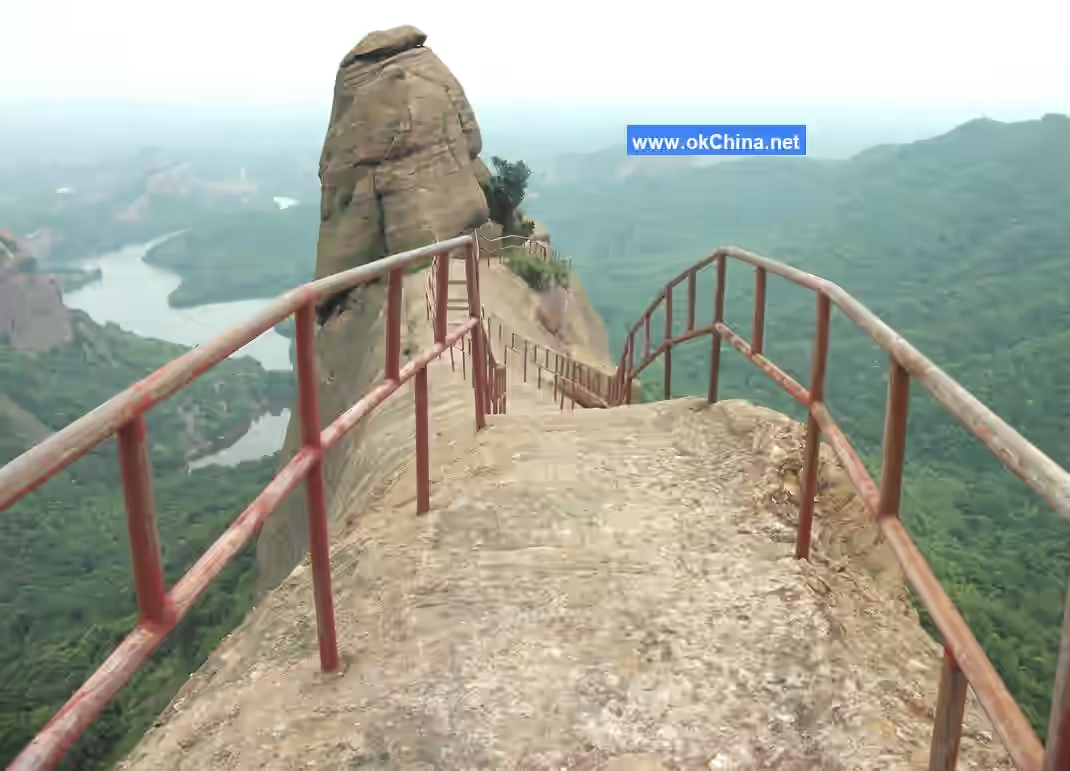
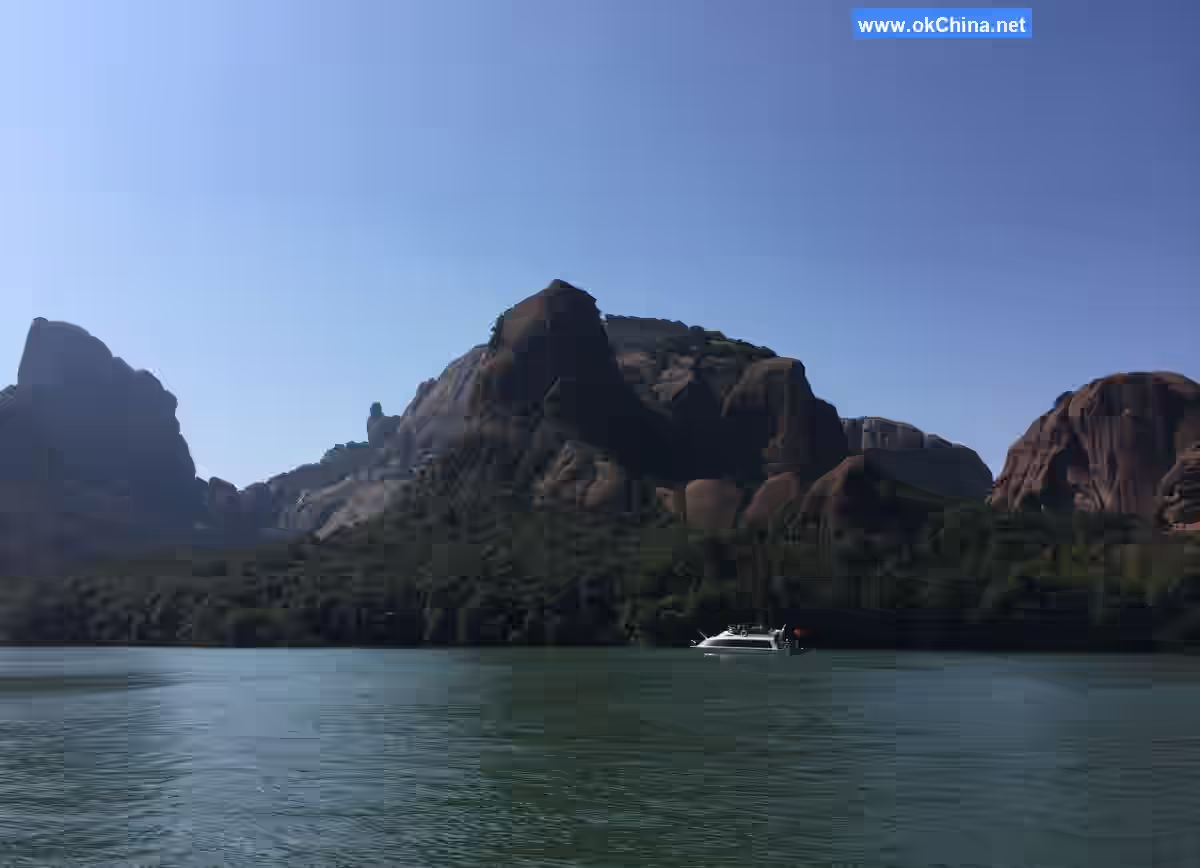
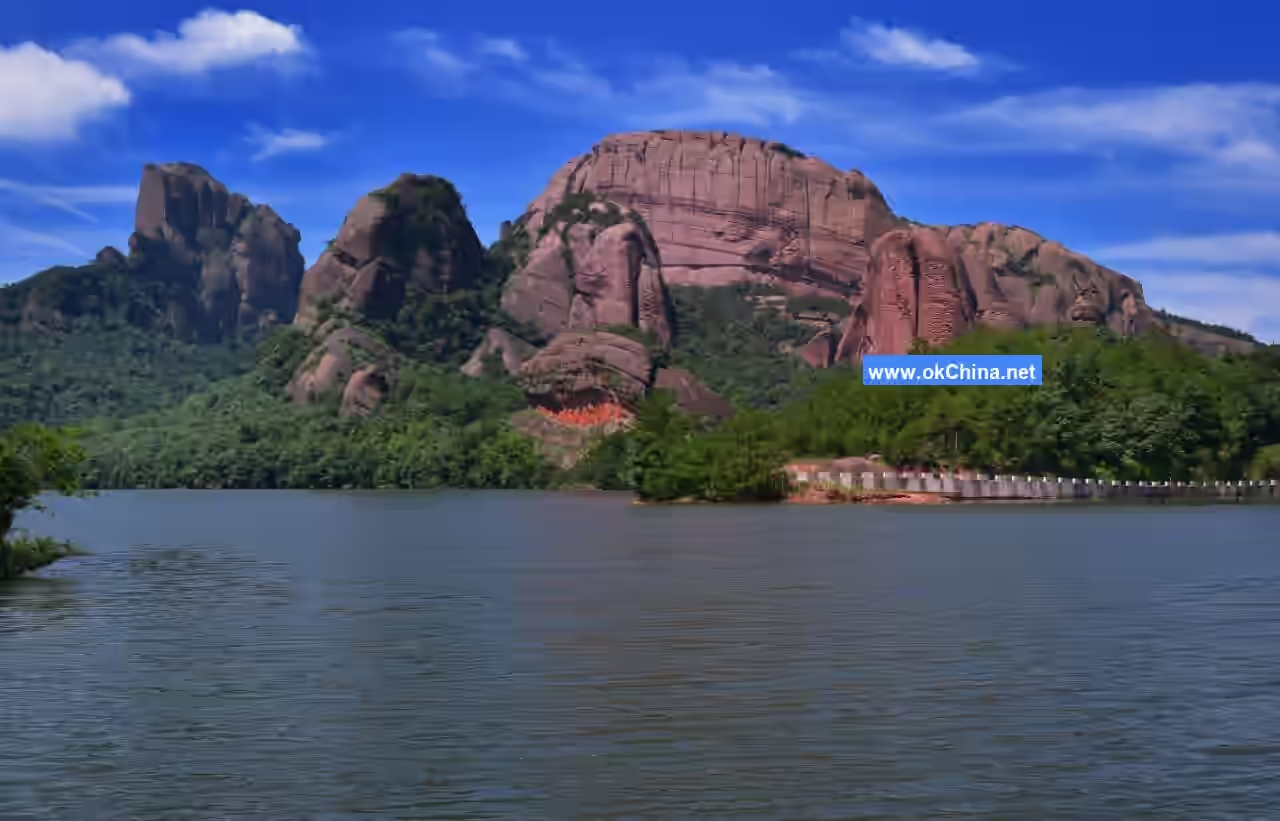
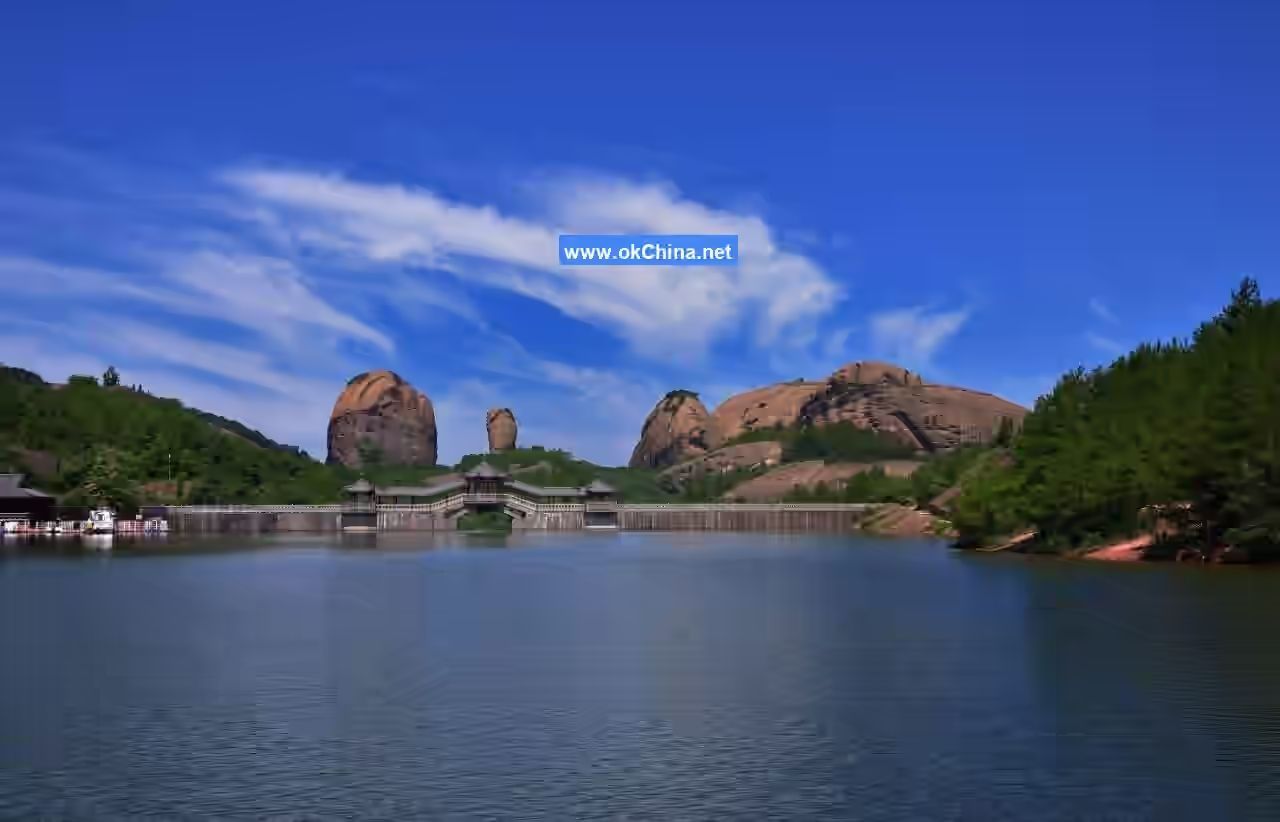
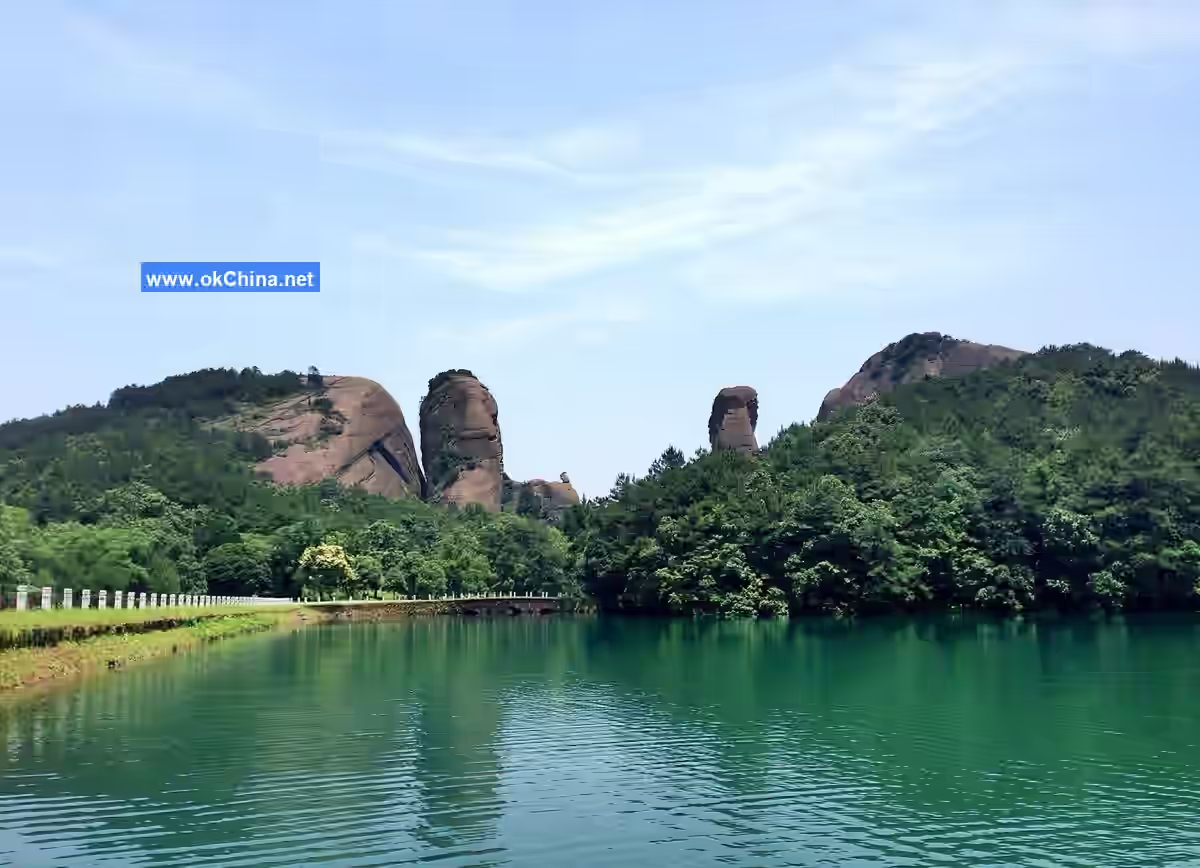
The Guifeng Scenic Area is located southwest of Yiyang County's urban area in Jiangxi Province, adjacent to National Highway 320, Expressway 311, and the Zhejiang-Jiangxi Railway. It is 10 kilometers from Yiyang County and covers a total area of 136 square kilometers. It is part of the Longhushan-Guifeng UNESCO Global Geopark and the "China Danxia" World Natural Heritage site. It is also recognized as a National Scenic Area, a National AAAAA Tourist Attraction, a National Forest Park, and a National Patriotic Education Demonstration Base.
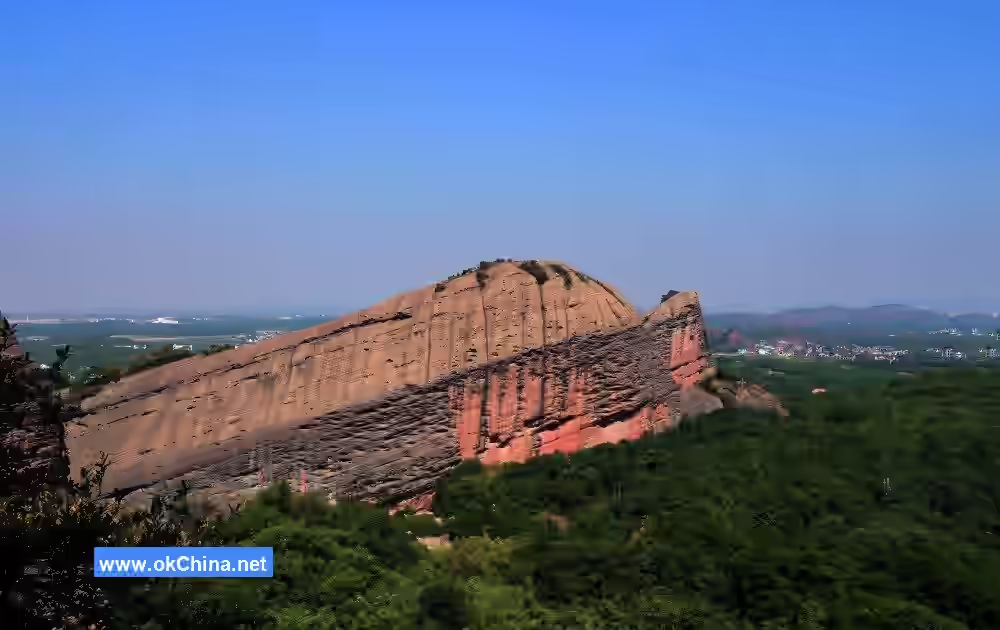
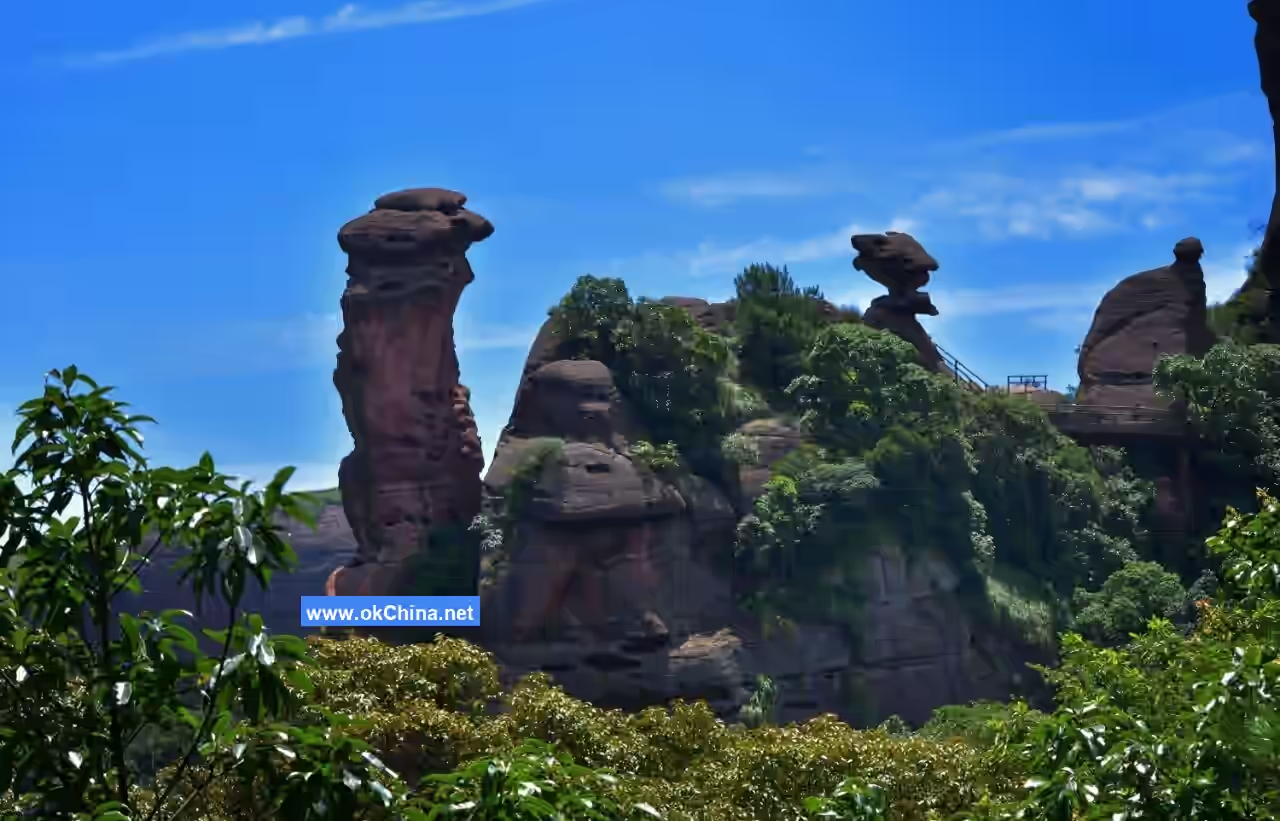
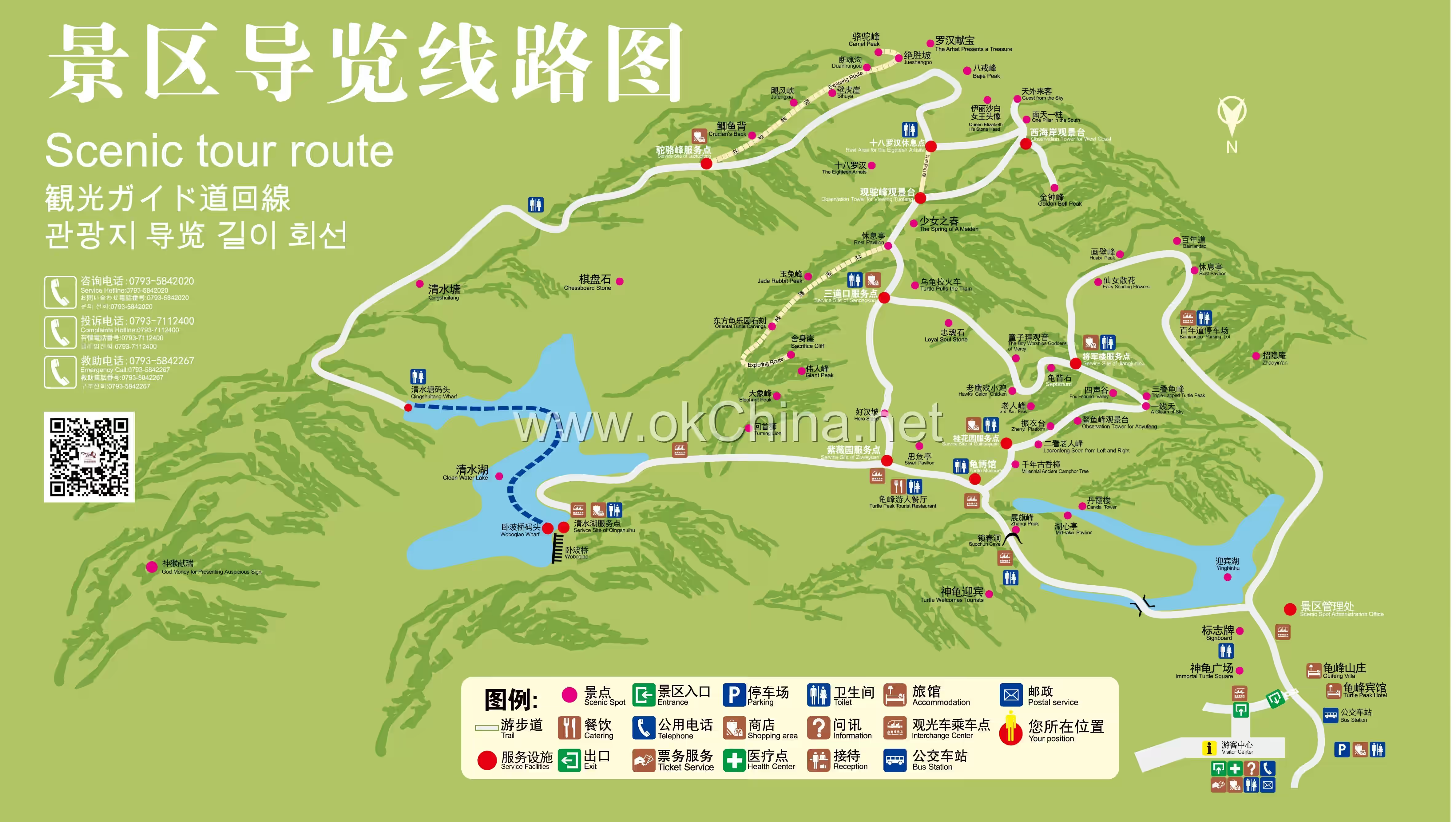
The area is named "Guifeng" (Turtle Peak) due to the numerous rocks within the scenic area that resemble turtles in shape and the overall appearance of the area from a distance, which looks like a gigantic turtle. It is famously known for its "36 peaks and 72 scenic spots," integrating the characteristics of "uniqueness, peril, spirituality, and exquisiteness." It has earned the reputation of being "a rare wonder under heaven on the river" and a "natural bonsai garden." With its unique natural landscape where "every mountain resembles a turtle, and every rock looks like a turtle," combined with its profound cultural heritage, it has been recommended by famous figures such as the travel sage Xu Xiake and featured in TV series like Journey to the West.
2. Geographical Environment
2.1 Topography and Geology
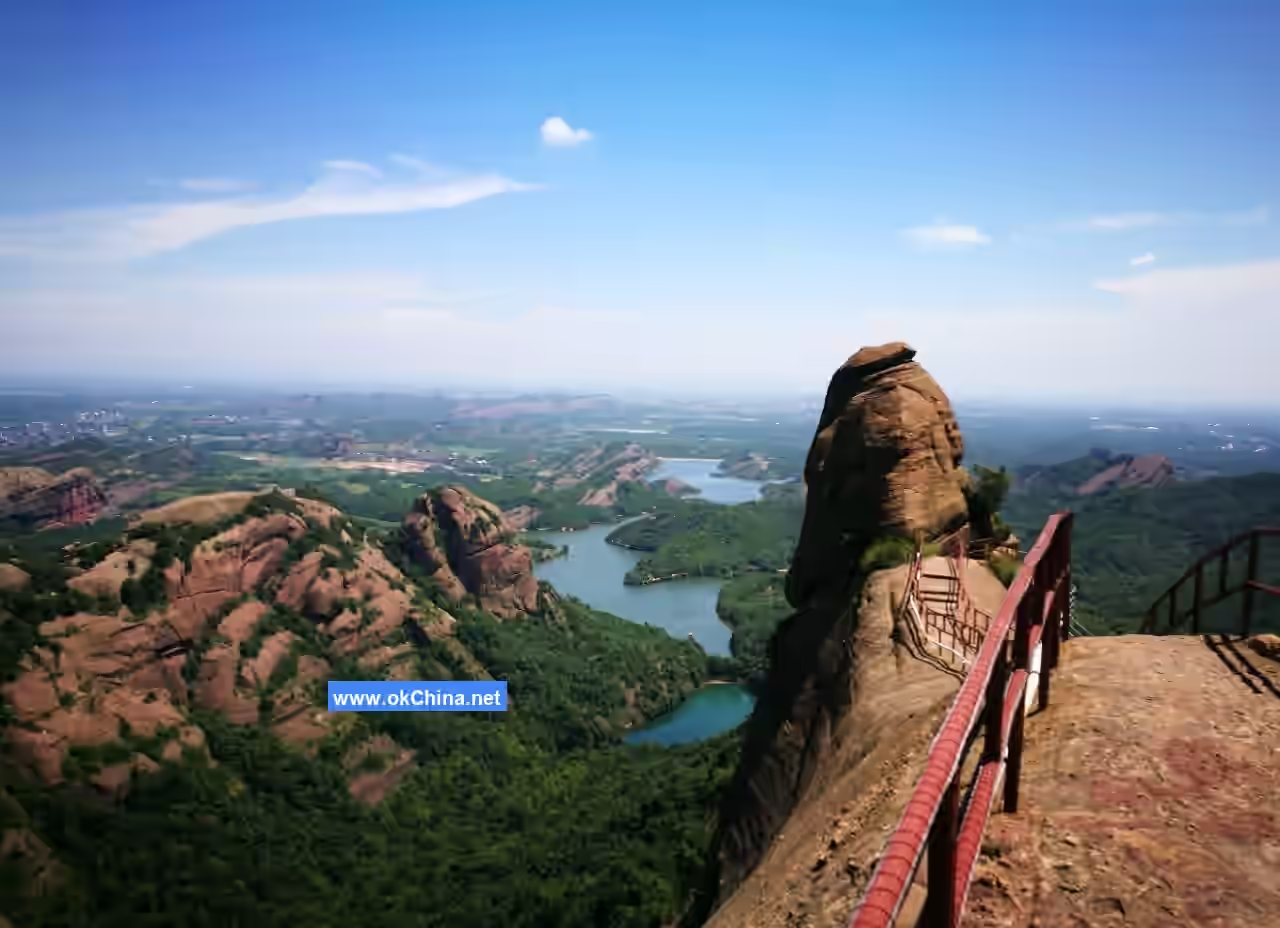
Guifeng was formed during the late Cretaceous period, approximately 135 million years ago, and is a typical Danxia landform. It features Danxia landscape formations such as peak forests, peak clusters, stone pillars, isolated peaks, residual rocks, residual hills, stone beams, stone walls, through caves, natural bridges, broad valleys, and quasi-flattened lakes.
2.2 Climate
Guifeng falls within the Jiangnan climate zone of the mid-subtropical humid monsoon climate region. Winters are often influenced by cold air from the northwest, giving it continental climate characteristics. Due to the moderating effects of large water bodies and lush forest vegetation, the area experiences mild summers without extreme heat, mild winters without severe cold, and a warm, humid climate with distinct seasons. The annual average temperature is 17.9°C, with an extreme maximum of 40.7°C and a minimum of –8.6°C. The average temperatures in January and July are 5.3°C and 29.6°C, respectively. The annual frost-free period averages 262 days, with 1,800–1,900 hours of sunshine per year, averaging 1,820 hours. The average solar radiation ranges from 404.2 to 467.7 kJ/cm².
The area receives abundant rainfall and has high atmospheric humidity, with an average annual precipitation of 1,878 mm and an average relative humidity of 75%–80%. There are about 160 rainy days per year, with the rainy season occurring from April to June. Thunderstorms are common from July to August, while the period from September to February is relatively dry. The average annual evaporation is 1,648.4 mm. Major climatic hazards include low temperatures, high temperatures, dry hot winds, frost, freezing, heavy rain, prolonged overcast and rainy weather, drought, strong winds, and hail.
2.3 Biological Resources
2.3.1 Flora
The flora of Guifeng is exceptionally rich, with over 140 families and 800 species of higher plants, primarily composed of subtropical flora. It also preserves some ancient relict and endemic components, such as gymnosperms like ginkgo, Podocarpus nagi, and Glyptostrobus pensilis, and angiosperms like Sassafras tzumu, Cyclocarya paliurus, and Fokienia hodginsii. Notably, the tall Podocarpus nagi and Taxus chinensis found here are rare nationwide. Among the woody plants in Guifeng, 18 species are under national protection, and over 30 are under provincial protection, earning it the nickname "Little Kingdom of Plants."
Within Guifeng, there is an osmanthus tree that blooms year-round, standing about 10 meters tall with a crown spread of 15 meters and eight branches. It is lush and blooms in all seasons, estimated to be over a thousand years old, making it a distinctive plant landscape in Guifeng. Another notable tree is an ancient camphor tree near Suoyun Bridge in the park, with a trunk diameter of 2.1 meters, a height of 30 meters, and a crown spread of 36 meters. Legend has it that it was planted by the Tang Dynasty monk Maochan when he built the "Ruixiang Temple," making it over 1,100 years old.
Guifeng's suitable climate and complex terrain support many ornamental landscape plants in its natural forests. In spring, there are azaleas, roses, peach blossoms, plum blossoms, locust flowers, and wisteria. In summer and autumn, scattered lilies and clusters of gardenias, osmanthus, and crape myrtle bloom. In winter, the pine, bamboo, and plum trees create a plant landscape with distinctive Chinese characteristics.
2.3.2 Fauna
According to county records, Guifeng is home to over a thousand species of animals. In addition to common mammals, birds, and insects, it also hosts many rare and precious animals such as leopards, serows, sika deer, long-tailed pheasants, and red-billed leiothrix.
3. Scenic Spots
3.1 Natural Landscapes
3.1.1 Guifeng Reclining Buddha
With a total length of 416 meters and a shoulder height of 68 meters, this natural mountain reclining Buddha is the largest of its kind discovered in the world to date. "The mountain is a Buddha, and the Buddha is a mountain."
3.1.2 Wanglang Stone (Stone of the Longing Wife)
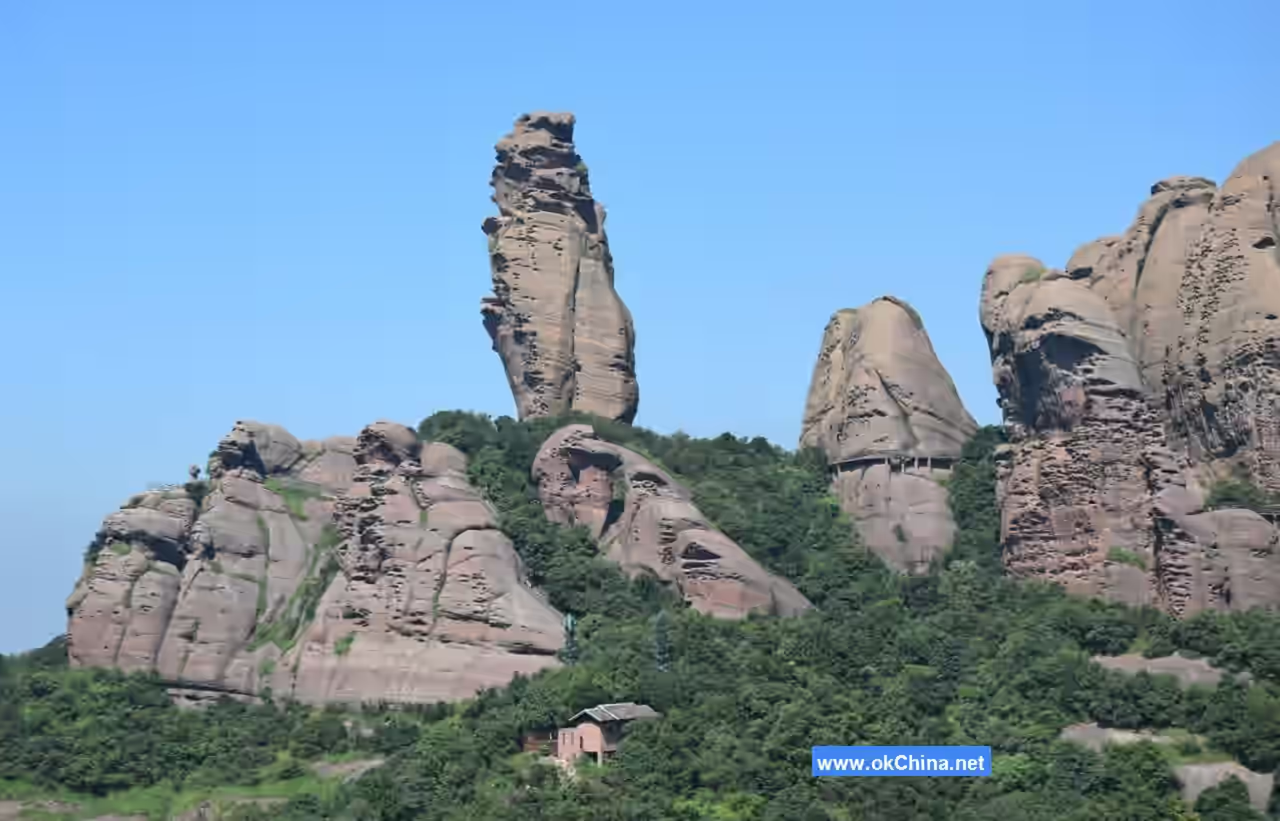
Located on Wanglang Peak, a tall, slender stone stands tilted on the mountainside of Guifeng. Its shape resembles a young woman with a skirt tied at the waist. From a distance, she appears slender, with a protruding chest and a slightly swollen abdomen, as if pregnant. She gazes into the distance, longing for her husband's return.
3.1.3 Tiangu Wanggu (Heavenly Dog Gazing at Bones)
At the entrance of Guifeng, on the side of Zhanqi Peak, there is a peculiar rock tens of meters high on the mountaintop, shaped like a crouching dog. Its neck is twisted, mouth open and tongue out, staring intently at the opposite Paigu Peak (Rib Bone Peak), which is a flat-shaped peak resembling ribs.
3.1.4 Xiaozi Kufen (Filial Son Weeping at the Grave)
Located in the northeastern corner of Guifeng, on a hill about five li from the area, a strange rock protrudes from the ground, tens of meters high, shaped like a young man in mourning clothes kneeling before a grave, weeping with his head bowed. The grave is a mountain peak about 100 meters away from the Filial Son Stone, with a broad base and a rounded top, resembling an ancient tomb.
3.1.5 Ying Xi Xiaoji (Eagle Playing with Chicks)
About 200 meters southeast of Guifeng, two giant rocks stand facing each other. The rock on the right resembles a terrified chick hiding its head and neck in the grass, while the one on the left looks like a fierce eagle with a hooked beak and claws, eyes fixed on the chick, wings spread as if pouncing. The chick seems to be fleeing for its life.
3.1.6 Fuhu Yaoyang (Tiger Biting a Goat)
Located 800 meters east of Guifeng, on Chaomao Peak, two large intersecting rocks are present. The front rock resembles a gentle kid goat, tail tucked tightly, struggling desperately to escape the tiger's mouth. The rear rock looks like a fierce tiger crouching on the ground, its bloody mouth biting the goat's hindquarters.
3.1.7 Matou Shi (Horse Head Stone)
Located on the north side of Jinzhong Peak, about 600 meters east of Guifeng. A peculiar rock protrudes from a crevice halfway up the mountain, shaped like a horse's head with distinct nostrils and eyes, ears perked up. Behind the horse's head is a patch of lush grass, resembling the mane standing on end.
3.1.8 Yutu Shi (Jade Rabbit Stone)
On top of Yutu Peak, about 2 kilometers east of Guifeng, a rock shaped like a jade rabbit crouches with an arched back, a short tail raised, and ears perked up, its nostrils flaring.
3.1.9 Chanchu Wangtian Shi (Toad Gazing at the Sky Stone)
On the cliff halfway up the left side of Jinping Peak in the center of Guifeng, there is a large brown rock shaped like a toad. Its head faces the sky, eyes bulging as if hoping for a swan to fly by. Its limbs are bent, half-crouching and half-sitting, ready to leap. Water cascades from the mountaintop directly into its wide-open mouth.
3.1.10 Yixiantian (One-Line Sky)
Located on the east side of Guifeng, formed by the adjacent Guifeng and Wouniu Peaks. The two peaks are closely connected, less than a meter apart, creating a gorge tens of meters high and over 10 meters long. Looking up from within the gorge, only a sliver of blue sky is visible. Cool mountain breezes pass through the gorge, providing refreshing relief from the summer heat. Outside the gorge, a vast landscape unfolds with vibrant colors. The characters "一线天" (One-Line Sky) are carved on the cliff wall, inscribed in the sixth year of the Tianqi era (1626) of the Ming Dynasty.
3.1.11 Huisheng Gu (Echo Valley)
Located southeast of Guifeng. On the southeastern cliff wall, the characters "回声谷" (Echo Valley) are inscribed, written by the Ming Dynasty traveler Wang Siren. Shouting in the valley produces a marvelous series of four distinct echoes, clear and melodious, lingering and spreading in all directions. Yuhua Cliff is located 500 meters south of Guifeng. At the foot of the western side of Jinzhong Peak, there is a cave covering about 80 square meters, with a mountain spring cascading down a hundred-meter cliff above the entrance.
3.1.12 Wusheng Quan (Silent Spring)
Located beneath the cliff at the end of Zhenyi Terrace. The water is sweet and mellow, excellent for brewing tea, and is said to have cooling and fever-reducing properties.
3.1.13 Qifeng Guan Richu (Watching Sunrise at Flag Peak)
This is an excellent spot for viewing the sunrise over the hills. The peak is not high, only 110 meters, but one can climb to the top to witness the spectacular sight of the rising sun.
3.2 Cultural Landscapes
3.2.1 Nanyan Temple
Originally built during the Jin Dynasty, the temple stands against the rock, constructed without tiles for its beams or eaves for its enclosures. It houses over 40 exquisitely crafted stone niches, making it the largest cave-carved grotto in a natural cavern in China. It is acclaimed as the "First Buddhist Cave in China" and the "Dunhuang of the South."
3.2.2 Guifeng Temple
Located at the center of the Guifeng landscape. During the Tang Dynasty's Qianning period (894–895), the monk Maochan laid the foundation for the Lingsheng Temple. Later, Xu Xuan, a Minister of Personnel of the Southern Tang Dynasty, donated his residence for its expansion. During the Song Dynasty's Xianping and Jingde periods (998–1004), Emperor Zhenzong bestowed the name "Ruixiang Temple." The Southern Song Prime Minister Chen Kangbo petitioned the court to rename it "Xianqin Chongfu Temple." During Emperor Gaozong's reign, it was renamed Guifeng Temple. During the Ming Dynasty's Hongwu period, local resident Shu Guiqing raised funds to add an incense courtyard. The temple is now in ruins.
3.2.3 Zhaoyin Nunnery
Also known as the Nun's Cave. Located halfway up the northern side of Lingzhi Peak, the nunnery is housed within a cave, accessible by narrow stone steps. Inside the cave are stone beds, mortars, and other stone utensils. The characters "招隐庵" (Zhaoyin Nunnery) carved on the cave wall were written by Peng Qing during the Qing Dynasty's Qianlong era. Outside the cave, there are inscribed poems by Liandeng. Legend has it that during the late Southern Song Dynasty, a local woman, forced by her parents to marry against her will, fled her home to avoid the marriage and entered this cave to become a nun.#### 3.2.4 Shake-Clothes Platform Located at the northwest side of Guifeng (Turtle Peak) and at the foot of Jinping Peak (Brocade Screen Peak). The platform is an irregular rectangular stone block, 10 meters long and 3 meters wide, covering an area of approximately 30 square meters. The platform surface is equipped with stone tables and stools, surrounded by a railing. Its inner side is closely backed by towering green cliffs. The platform offers a broad view, and its inner cliff face bears numerous inscriptions.
3.2.5 General's Villa
Located near the Valley of Four Echoes. In the 24th year of the Republic of China (1935), Zhao Guantao, a division commander of the Kuomintang forces, built a two-story villa near the Valley of Four Echoes. The house was constructed with stone and wood. It contained a bedroom, a dressing room, a bathroom, a guard room, and a living room, with a balcony outside. From the balcony, one could enjoy a panoramic view of the surrounding peaks. After the outbreak of the War of Resistance Against Japan, the general left, and the house fell into disrepair with broken doors and collapsed windows. After liberation, the People's Government allocated funds for its renovation.
3.2.6 Guifeng Fortress
Located near the Thread of Sky. During the Xianfeng period of the Qing Dynasty, Luo Dajiang of the Taiping Heavenly Kingdom and Loyal King Li Xiucheng successively led their troops into Yiyang. They built a stone fortress near the "Thread of Sky" at Guifeng and engaged in several fierce battles with Qing forces. The remains of the fortress walls still exist. Later generations refer to it as the "Guifeng Fortress."
3.2.7 Cliff Inscriptions
There are over 200 inscriptions in total. From the Mid-Tang Dynasty to the present, many famous figures from various dynasties have left poems, inscriptions, and calligraphic carvings at Guifeng. Most are concentrated in the area from the Shake-Clothes Platform to the Thread of Sky, forming a corridor of stone carvings. The inscriptions on the Shake-Clothes Platform are carved on the inner cliff face of the platform. Inscriptions have been added by successive dynasties since the Mid-Tang period. The calligraphy includes seal script, clerical script, regular script, running script, and cursive script, showcasing exquisite carving techniques and diverse styles. Besides the numerous inscriptions at the Shake-Clothes Platform and Zhaoyin Hermitage, other scenic spots also feature larger-character inscriptions such as "Guifeng," "Valley of Four Echoes," "Thread of Sky," "Deep Silence, Thunderous Sound," "Mani Cave Heaven," "Another Cave Heaven," "Natural Threefold Cascade," and "Ruan Xiao."
4. Cultural History
4.1 Development History
Artifacts from the Yaowu Shang-Zhou cultural site indicate that Guifeng was inhabited as early as the Shang and Zhou periods. People engaged in hunting, farming, and other productive labor, creating a primitive civilization.
Buddhist development of Guifeng began in the Liang Dynasty, when Monk Cao initiated the construction of temples there. Monk Maochan of the Tang Dynasty completed the Lingsheng Temple. After the Tang Dynasty, Buddhist activities flourished. By the Song Dynasty, the Guifeng Temple had become one of the famous temples in the Jiangnan region. The temple was expanded during the Ming Dynasty and continued to thrive through the Qing Dynasty. Due to Buddhist development, the scenic wonders of Guifeng became known far and wide, attracting many renowned officials and poets. Visitors to Guifeng increased generation by generation, raising its fame. Celebrities from the Tang, Song, Ming, and Qing dynasties left numerous poems and writings, and inscriptions multiplied, eventually forming the corridor of cliff inscriptions.
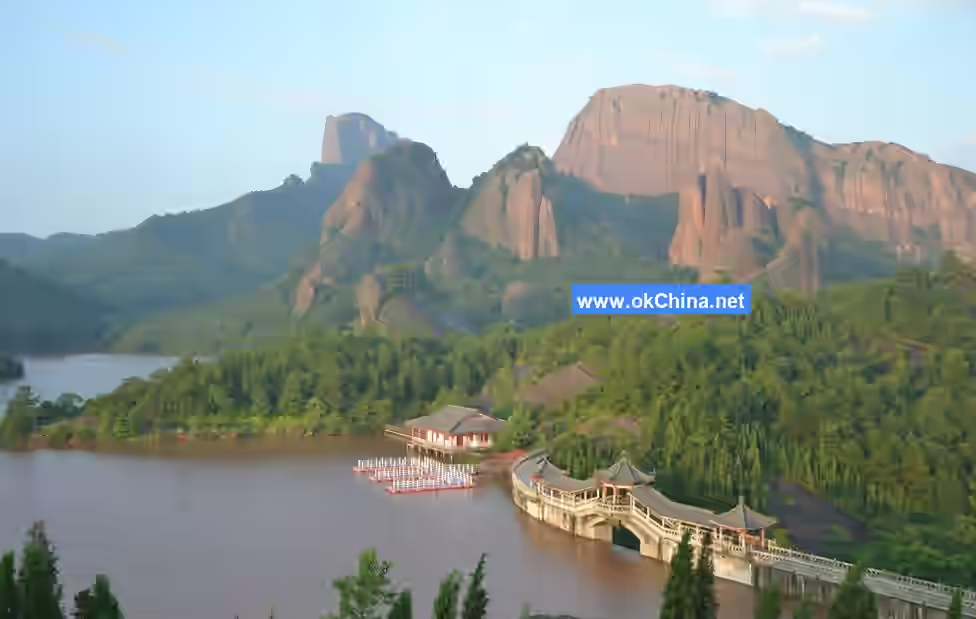
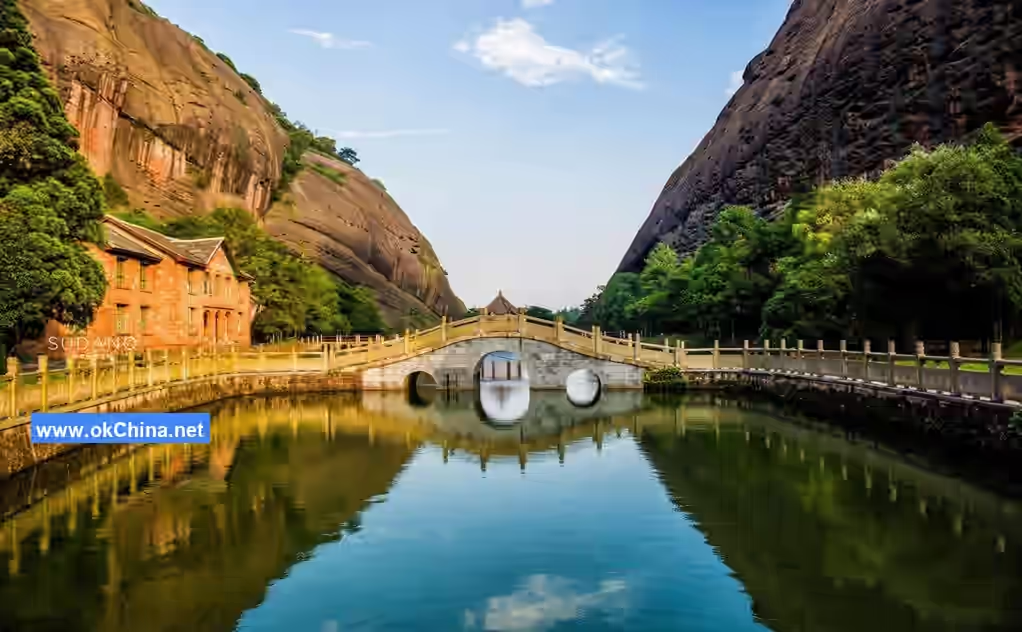
After liberation, the development of Guifeng expanded. A road was built from the county town to Guifeng. A spacious tunnel over 100 meters long was excavated beneath the Banner Peak. The Guifeng Lake and Outer Lake were constructed, covering an area of over 70 mu. At the scenic area's center, office buildings, an auditorium, guest houses, a library, sports fields, restaurants, and shops were built. Bridges and pavilions were added to Guifeng Lake, along with small boats for lake tours. In 1957, the Guifeng Horticultural Farm was established, covering 118 mu. In 1958, a sika deer farm was founded.
In October 1953, the Shangrao Prefecture Cadre Sanatorium was established. In 1958, the Nanchang and Jingdezhen sanatoriums were closed, and some of their staff and equipment were merged into the Guifeng Sanatorium. After expansion, it was renamed the Jiangxi Province Guifeng Sanatorium. In 1977, it was reassigned to the prefecture's management and renamed the Shangrao Prefecture Guifeng Sanatorium. Starting from 1985, besides hosting cadres for convalescence and rest, the sanatorium also established a tourism service company to handle tourism business.
4.2 Religious Culture
Historically, Guifeng was a convergence point for Buddhism, Taoism, and Confucianism, where the three religions intermingled. Guifeng features a Buddhist cultural tourism area represented by the Nanyan Temple, the famous Ruixiang Temple, and over 40 Buddhist statues from the Tang and Song periods, making it one of the birthplaces of Chan Buddhism. Simultaneously, Guifeng possesses profound Taoist culture, with the famous Taoist site, the Gexian Taoist Temple, still preserved. Confucianism was also revered at Guifeng, with notable Confucian architectural remains such as the Dieshan Academy.
4.3 Opera Culture
Yiyang Opera, the foremost of China's four major vocal styles, originated in the late Southern Song Dynasty. It emerged from the fusion of Southern Opera circulating in the Yiyang area of Jiangxi with local dialects and regional folk customs, hence named "Yiyang Opera" after its birthplace. Its distinctive feature is "one lead singer with a chorus responding," accompanied by percussion instruments and string, bamboo, and wind instruments. Its vocal style is highly adaptable and sonorously high-pitched, combining the gentle, refined elegance of the south with the passionate, vigorous spirit of the north, achieving a harmonious balance of strength and grace, performed with great ease.
According to the "Nan Ci Xu Lu" (Records of Southern Lyrics), during its peak, Yiyang Opera was popular not only in Jiangxi but also in over ten provinces and cities including Beijing, Hunan, Fujian, and Guangdong. In the Ming Dynasty alone, there were about 100 Yiyang Opera repertoires and over 400 musical modes. Famous works include The Expedition to the East, The Expedition to the West, Journey to the East, Journey to the West, Journey to the South, Journey to the North, The Water Seller, The Thorn Hairpin, and Mulian Rescues His Mother.
Comments
Post a Comment