Guangwu Mountain
1. Introduction
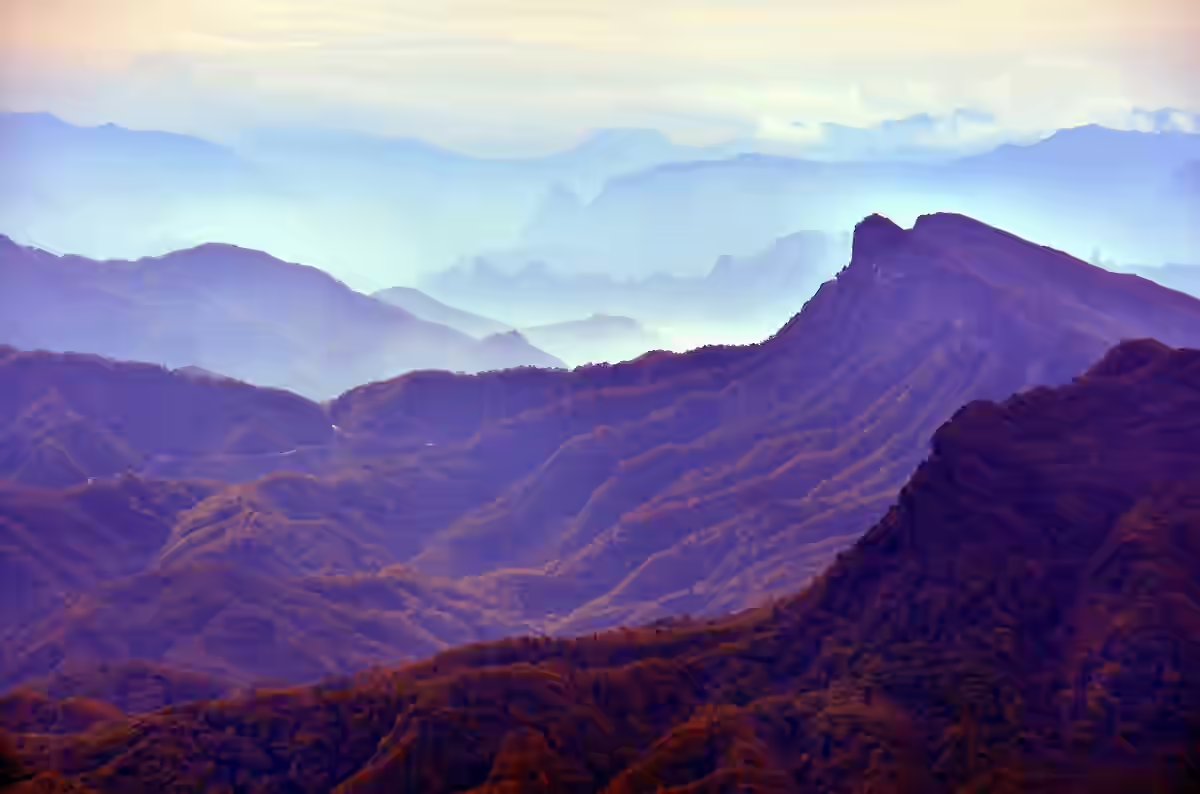
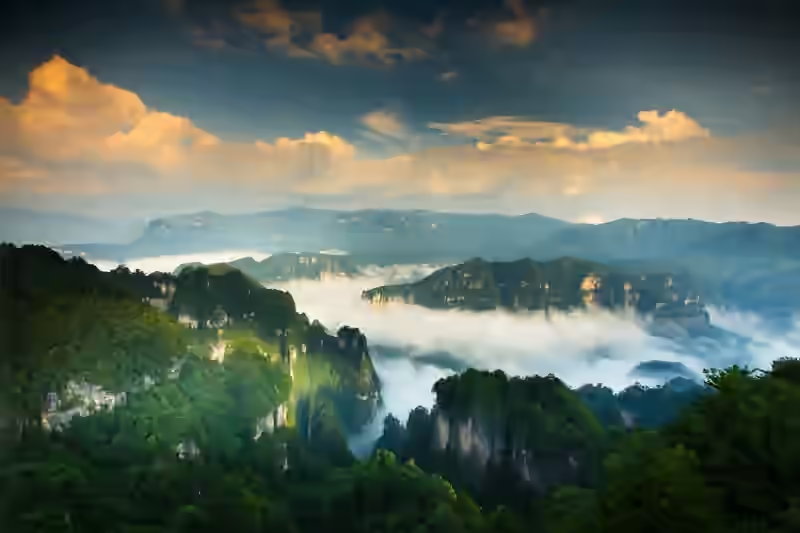
The Guangwu Mountain Scenic Area is located in the heart of China's territory, within the hinterland of the Micang Mountains. Situated at the climatic divide between northern and southern China, where warm and cold air masses converge, it is known as "the North of the South and the South of the North." The scenic area features majestic peaks perpetually shrouded in mist and clouds. Its unique geographical climate and special tectonic setting have created a distinctive karst ridge and peak cluster landscape, pristine primary vegetation, and serene canyon scenery. It is renowned for its "Five Wonders": spectacular mountains, peculiar rocks, secluded valleys, beautiful waters, and perilous peaks, making it a natural landscape area of exceptionally high resource endowment in China. It was approved as a National Scenic Area in 2004, designated as a National AAAAA Tourist Attraction in 2020, and successfully established as a UNESCO Global Geopark in 2018. It serves as a rare scientific research sample for comparative studies of karst in China.
Guangwu Mountain is not only renowned for its spectacular landscapes but also stands as a profound cultural and historical treasure trove. The Micang Ancient Trail, currently on the UNESCO World Heritage Tentative List, along with the cultures of the Qin and Han Dynasties, the Three Kingdoms period, Red Army history, and local folk customs, collectively narrate a magnificent history. These elements have left behind many vivid and magical stories, infusing Guangwu Mountain with a living soul and forming another unique scenic highlight.
2. Geographical Environment
2.1 Location and Region
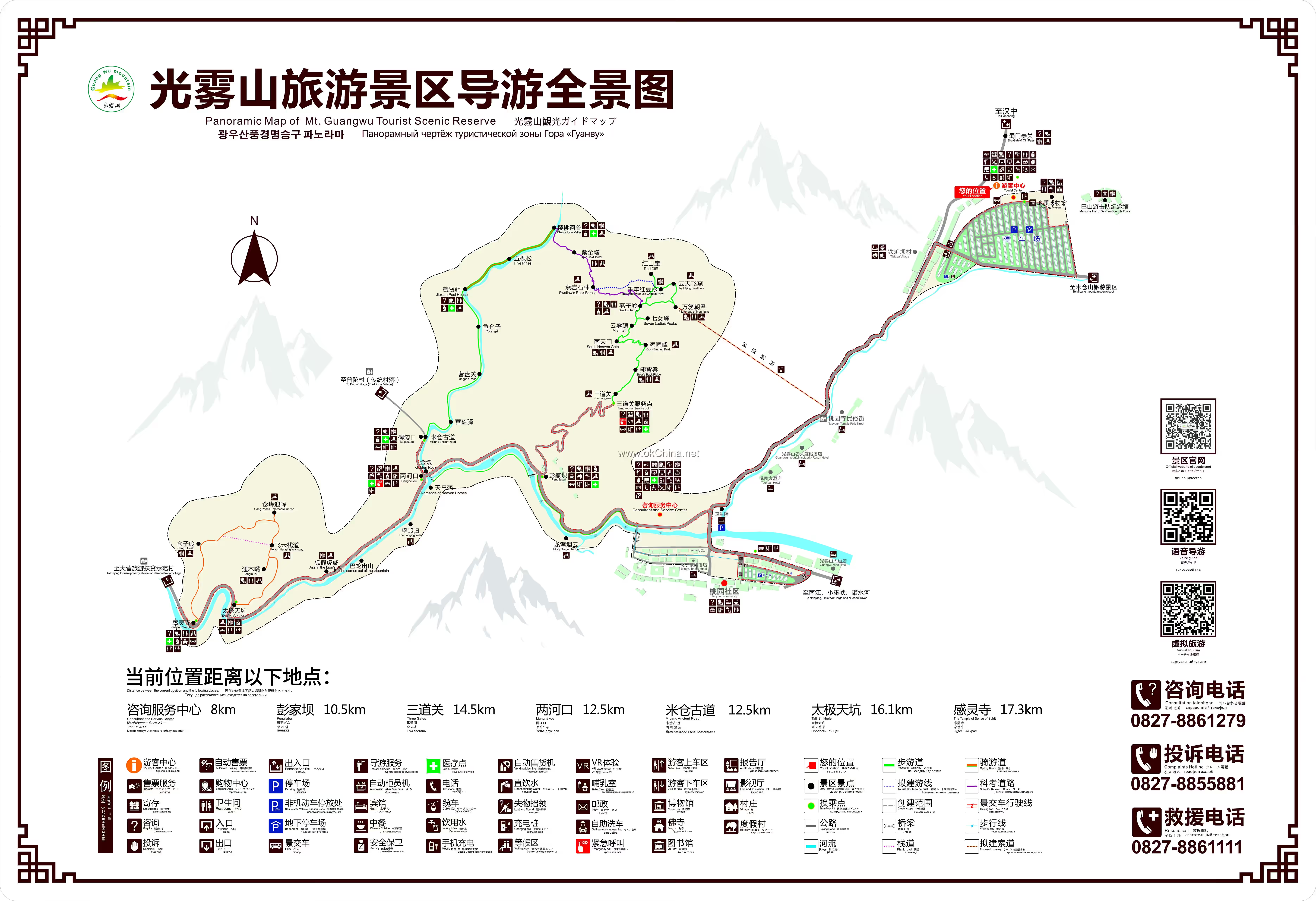
Guangwu Mountain is located in the northern part of Nanjiang County, Bazhong City, Sichuan Province. It is 50 kilometers from the county seat and 46 kilometers from Hanzhong City, Shaanxi Province. National highways connect to the scenic area, with roads leading from Hanzhong, Guangyuan, Wanyuan, Dazhou, and Nanchong. Traveling north via Hanzhong leads to Xi'an, southeast via Nanchong or Dazhou leads to Chongqing, southwest via Nanchong leads to Chengdu, and west via Guangyuan and Mianyang leads to Chengdu.
2.2 Topography and Landforms
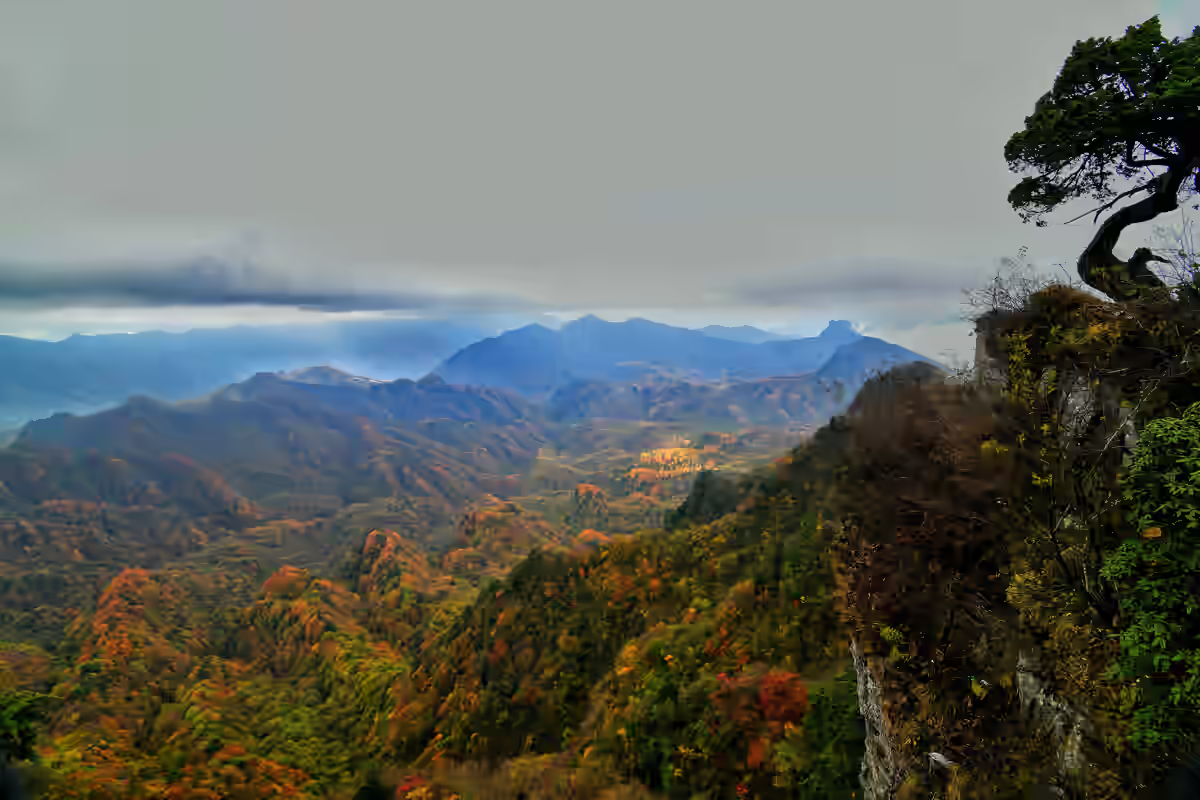
Guangwu Mountain has an elevation of 2,507.2 meters. The scenic area features high terrain in the north and south, with a lower central part. The mountains rise imposingly, featuring over 30 pillar-like peak cluster stone forests of varying sizes, ranging from over 50 meters to several hundred meters in height, some standing independently and others clustered together.
2.3 Climate Characteristics
The Guangwu Mountain Scenic Area enjoys a pleasant climate. The annual average temperature is 13°C, with an average of 20°C in July and -2.5°C in January. The frost-free period lasts 200 days, with the earliest first frost around October 10th and the latest final frost around March 20th. The average annual rainfall is 1,350 mm. The snowfall period generally lasts from November to February of the following year, with an average perennial snow cover thickness of 20 cm, reaching up to about 1 meter at its maximum. The area experiences four distinct seasons with fresh air: warm springs, pleasantly cool summers, crisp and non-dry autumns, and snowy yet not harshly cold winters. The air quality meets National Class I standards, with an average negative oxygen ion concentration exceeding 30,000 per cubic centimeter. Noise levels and surface water quality also meet National Class I standards.
2.4 Natural Resources
2.4.1 Plant Resources
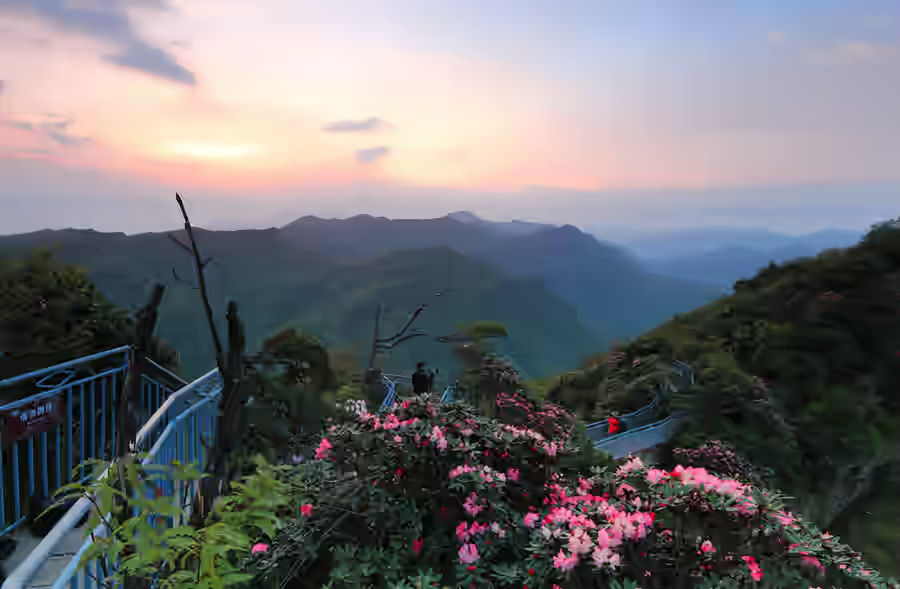
The forest coverage rate in the Guangwu Mountain Scenic Area is 97.5%. The forest vegetation is primitive and lush, characterized by high biodiversity. There are nearly 2,300 species of wild vascular plants, including over 600 species of woody plants belonging to 91 families and 223 genera. There are over 200 species of trees and shrubs, including nearly 20 species under national or provincial protection or endemic to Nanjiang. The area hosts hundreds of precious plant species, including over 40,000 mu (approx. 2,667 hectares) of Fagus longipetiolata ("Bashan Beech"), a well-preserved living fossil plant community of primary forest, as well as Phoebe zhennan (Nanmu) trees and various rhododendrons.
2.4.2 Animal Resources
The Guangwu Mountain forest area is rich in diverse animal resources. Currently, 275 species of wild animals have been documented, belonging to 26 orders and 61 families. This includes 53 species of mammals (7 orders, 18 families), 108 species of birds (14 orders, 36 families), 15 species of reptiles (3 orders, 6 families), and 19 species of amphibians (2 orders, 7 families). Among them, 25 species are under national first or second-class protection, including the Golden Eagle, Clouded Leopard, Leopard, Asian Black Bear, Chinese Pangolin, Large Indian Civet, Red Panda, and Chinese Giant Salamander. Additionally, 18 species are under provincial protection, such as the Tufted Deer.
In January 2024, the rare and endangered Large Indian Civet was discovered for the first time in Sichuan's Guangwu Mountain.
3. Main Attractions
3.1 Seven Maidens Peaks
Rising abruptly from a ridge beside the Jiaojiaba River and extending upwards to Yanyan Peak, this ridge is dotted with dozens of peak clusters of various sizes, arranged in an orderly yet staggered manner. Each peak is covered from top to bottom with flowers, plants, trees, and entwining vines, with ancient pines standing tall. Among these numerous peaks, seven stand out particularly, resembling graceful fairies—elegant, dignified, and ethereal. With mist and clouds drifting among them, creating a fairyland-like scene, they are known as the Seven Maidens Peaks. The inscription "Guangwu Mountain, a Fairyland on Earth" by Fei Xiaotong, former Vice Chairman of the Standing Committee of the National People's Congress, originated here. The scenery of the Seven Maidens Peaks varies with the seasons: fragrant mountain flowers in spring, lush green trees in summer, colorful foliage covering the mountains in late autumn, and ice and snow weighing down the branches in deep winter.
3.2 Myriad Tablets Paying Homage
Walking 500 meters east from Yanzi Ridge leads to "Myriad Tablets Paying Homage." From the viewing platform, one can see layered mountains and vast forests in the distance, while nearby, numerous peak clusters stand in various forms. Opposite, a winding ridge embraces the scene, facing the Seven Maidens Peaks from afar. At the base of one peak on this ridge, there is a cave that pierces through the ridge, about 10 meters in diameter and 100 meters long. Passing through this cave leads directly to the back of the ridge. This cave is called "Chuanxinyan" (Piercing Heart Cave), and the ridge is called Chuanxin Ridge. A valley forms between the Seven Maidens Peaks and Chuanxin Ridge. The valley mouth is narrow while the interior is wide, resembling a gourd. Inside this valley, a type of stone called "flint" (huoshi), used with a "fire striker" (huolian), is found, hence the area is called "Huoshi Tang" (Flint Pond). The "fire striker" is a fire-making tool invented by mountain dwellers. Holding a paper spill and a piece of flint in one hand, and striking the flint with a piece of wrought iron in the other produces sparks. When sparks land on the paper spill, it ignites, providing a fire source. This primitive tool may seem both complex and simple today, but it embodies centuries of human exploration and understanding of nature. It records the history of production and life of the Guangwu Mountain people, reflecting their boundless wisdom. Within Huoshi Tang, large and small peak clusters are scattered, extending in sequence to the surrounding slopes and cliffs, creating a spectacular sight. Some resemble upright candles, others twin lotus flowers, some look like sailing ships, and others resemble ancient court boots. On the left, a tall and straight stone peak stands on a cliff, shaped like a giant figure seated atop the cliff, overlooking the peak clusters and stone forests around Huoshi Tang. This is the origin of the name "Myriad Tablets Paying Homage."
3.3 Dragon Riding Mist and Clouds
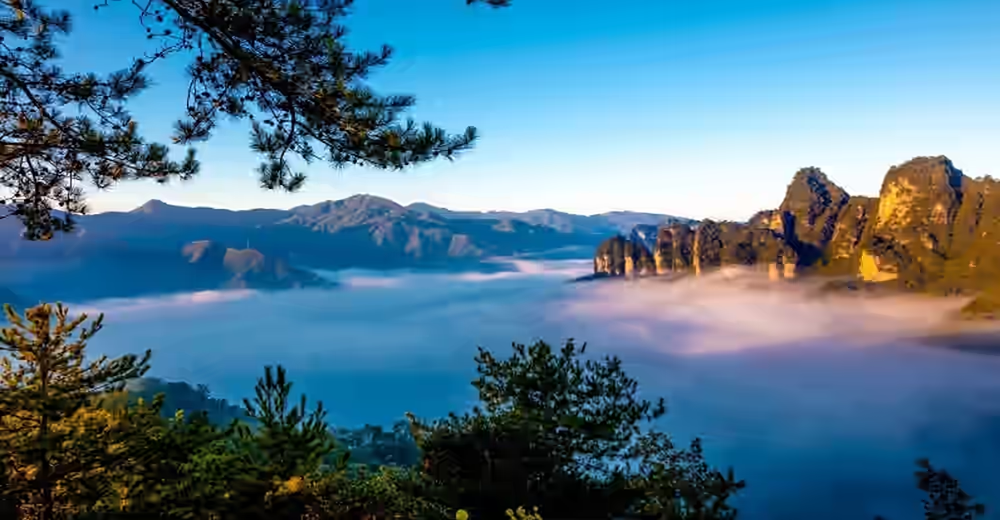
Upon entering the Guangwu Mountain Scenic Area, one can see a tall and elegant mountain—this is Longjia Mountain (Dragon Frame Mountain). Rising abruptly from the banks of the Jiaojiaba River, it lies between green waters and blue skies, often wrapped in layers of thick or thin mist and clouds, appearing and disappearing, hence the name "Dragon Riding Mist and Clouds." The entire Longjia Mountain is over 300 meters high and about 5 kilometers long. Its shape resembles the skeleton of a giant dragon, clearly divided into upper, middle, and lower layers. The upper layer consists of jagged, staggered peaks resembling the dragon's spine; the middle layer is a belt of continuous forest resembling the dragon's body; and the lower layer features eighteen peaks of various sizes resembling the dragon's whiskers and claws. Longjia Mountain has a wonder: on clear mornings after rain, when the sun rises, red clouds often crown the mountaintop. Mist drifts among the mountains, and the green peaks appear and disappear, creating a magical and spectacular scene. Locals call this "Buddha's Halo" and believe those who see it will gain fortune and longevity. In reality, it is a natural phenomenon—a rainbow formed by light and mist under suitable conditions. Someone once wrote a poem about this wonder: "The azure dragon winds through the clouds, spewing mist that turns to colors guarding the dragon's crown. Having absorbed the essence of heaven and earth, it does not return to the great sea but lingers in this paradise."
3.4 Micang Ancient Trail
The Micang Ancient Trail is named after crossing the Micang Mountains. Along with the Jinniu Road and Lizhi Road, it is known as one of China's three major ancient Shu Roads. It is hailed as "a living fossil in the history of Chinese and even world transportation," "a flowing river of Tea Horse Road culture," and "a tangible piece of history." The Micang Ancient Trail served as a strategic link between the southern frontiers and the northern heartland, connecting north to the Guanzhong Plain and Central Plains, and south to the Ba-Shu region and Southwest China. It was an extremely important military passage and grain/material transport route in Chinese history. The Micang Ancient Trail is not only a witness to history but also a narrator of the passage of time. For three thousand years, the trail witnessed galloping soldiers and horses, traveling merchants, and continuous journeys, leaving behind numerous fascinating stories waiting to be explored. The tales of the generations of "Ba Mountain Porters" (Beierge) and "Ba Mountain Maidens" (Yaomei) are particularly enduring. They have not only left behind the intangible cultural heritage of the "Ba Mountain Porter Song," but their accumulated stories have also been adapted into the large-scale immersive landscape night tour "Dreamscape Guangwu Mountain," performed within the scenic area. Currently, the UNESCO World Heritage Committee has included the Micang Ancient Trail on its Tentative List for World Cultural and Natural Heritage. Today, walking on the Micang Ancient Trail within the Guangwu Mountain Scenic Area, one encounters historical traces everywhere—the rugged and perilous cliffside plank paths, the rich and diverse stone inscriptions and monuments—all narrating a distant and mysterious history.
3.5 Yanyan Stone ForestDescending 300 meters north from Swallow Ridge leads to the Swallow Rock Stone Forest. At the base of the sheer cliff on the northern side of Swallow Rock Peak lies a massive karst cave known as Swallow Cave. Every spring, tens of thousands of swallows come to roost in this cave, departing in autumn, which is how Swallow Rock got its name. In the past, people often sneaked into the cave to steal "bird's nests." Today, to protect the biological environment, entry is strictly prohibited, making wildlife conservation in Guangwu Mountain widely known. Standing on the viewing platform of Swallow Rock Stone Forest, the scenery before your eyes is breathtaking, as if entering a fairyland. Stone forests form arrays all around, presenting a spectacle of wonders; ancient pines and vines flourish lushly; canyon cliffs appear as if carved by knives and axes; clusters of peaks and stone forests vary in size; the scenes are unique and extraordinarily diverse. Some resemble bamboo shoots after rain, rising from the ground to form forests; some are elegant and graceful, standing tall and slender; some are towering and straight, piercing the sky; others cluster together, embracing naturally. Among these numerous stone forests, one stands out particularly—it is about 200 meters tall, grand and majestic, standing imposingly in the valley, known as the "Sea-Calming Needle." Beside it, three stone pillars stand together, and two stand in a row, referred to as the "Three Incense Sticks" and "Two Candles." Swallow Rock Stone Forest not only features arrays of stone formations but also boasts abundant vegetation. Many of the stone forest peaks are crowned with trees of varying sizes, each vigorous and robust, mostly Bashan pines. Here, flowers, grasses, and trees thrive in their suitable habitats; vines twine and cling to rocks and cliffs; verdant mountains stretch as far as the eye can see, lush and vibrant; the air is refreshing, invigorating the lungs.
3.6 Taiji Tiankeng (Taiji Sinkhole)
Taiji Tiankeng is a premier scenic attraction in the Guangwu Mountain tourist area. Standing here feels like entering a sinkhole, though it is not a sinkhole in the geological sense. It is an arc-shaped curved river channel formed by the subsidence of upper rock layers due to groundwater dissolution along structural fissures or weak zones in the dolomite of the Sinian Dengying Formation, combined with surface water incision. According to geological experts, this is a typical Guogiang landform. Over hundreds of millions of years, the Jiaoji River has continuously cut from east to west, shaping the karst mountains here into an S-shape resembling a Taiji diagram, hence the name "Taiji Tiankeng." As the Jiaoji River flows here, it seems to become gentler and more tranquil, meandering through the embrace of mountains, elegant peaks, cliffs, and greenery like an emerald jade belt winding through the canyon. Extraordinary mountains give rise to extraordinary peaks, and these peaks enhance the beauty of the landscape. Nestled among the mountains and cliffs lies a pearl-like green island, shaded by shrubs and lush with trees, reminiscent of the Penglai fairyland or a lotus emerging from clear water. A peculiar green peak stands tall, resembling reunited lovers, dragon horns leaning against the sky, a peacock spreading its tail, or the oath of the Peach Garden. The geological wonders on the surrounding cliffs record the history of geological structures, crustal changes, and the transformations of time, astonishing and captivating numerous geologists. Over millions of years, as the stars shift and time passes, nature inadvertently created this magnificent, transcendent landscape spectacle, also inspiring the creative talents and endless imaginations of many literati and scholars. Truly: The landscape's Taiji creates wonders, with Guogiang's heavenly eye amidst mountains and waters. Water winds around mountains, mountains embrace water; mountains give birth to extraordinary peaks, peaks grace the mountains.
3.7 Guangwu Mountain Red Leaves
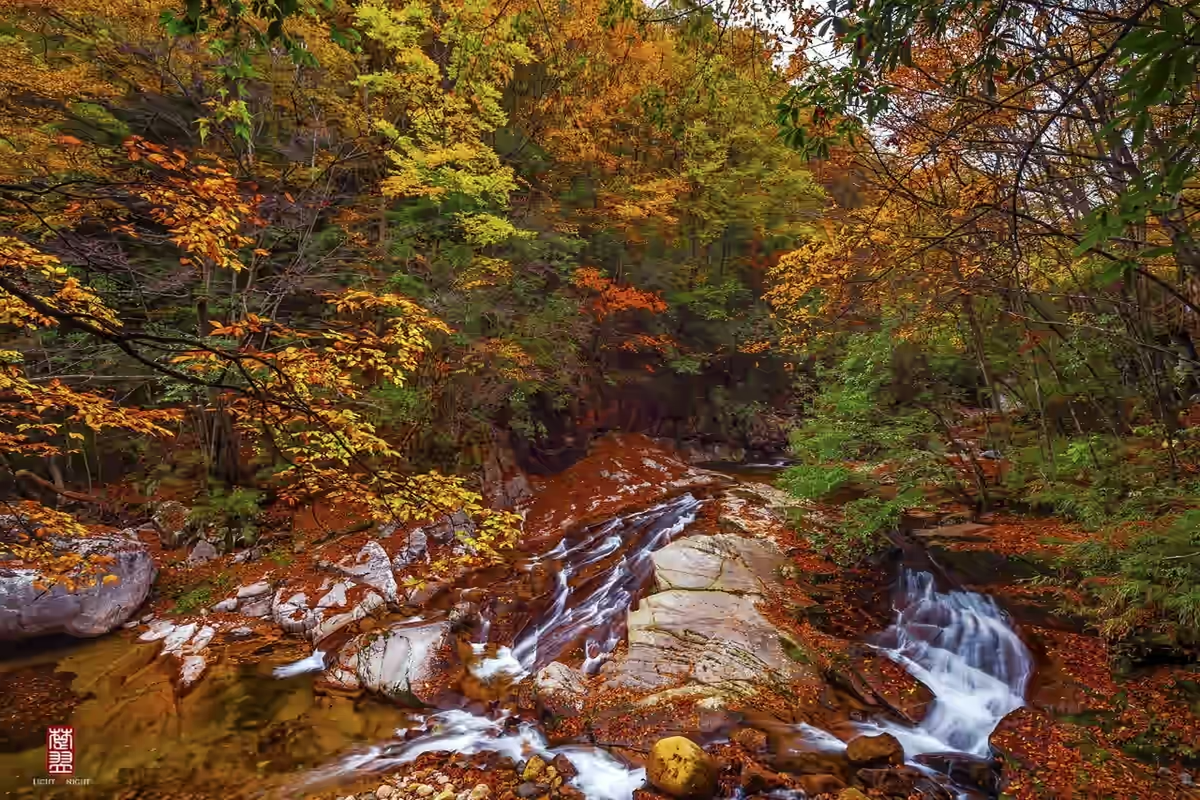
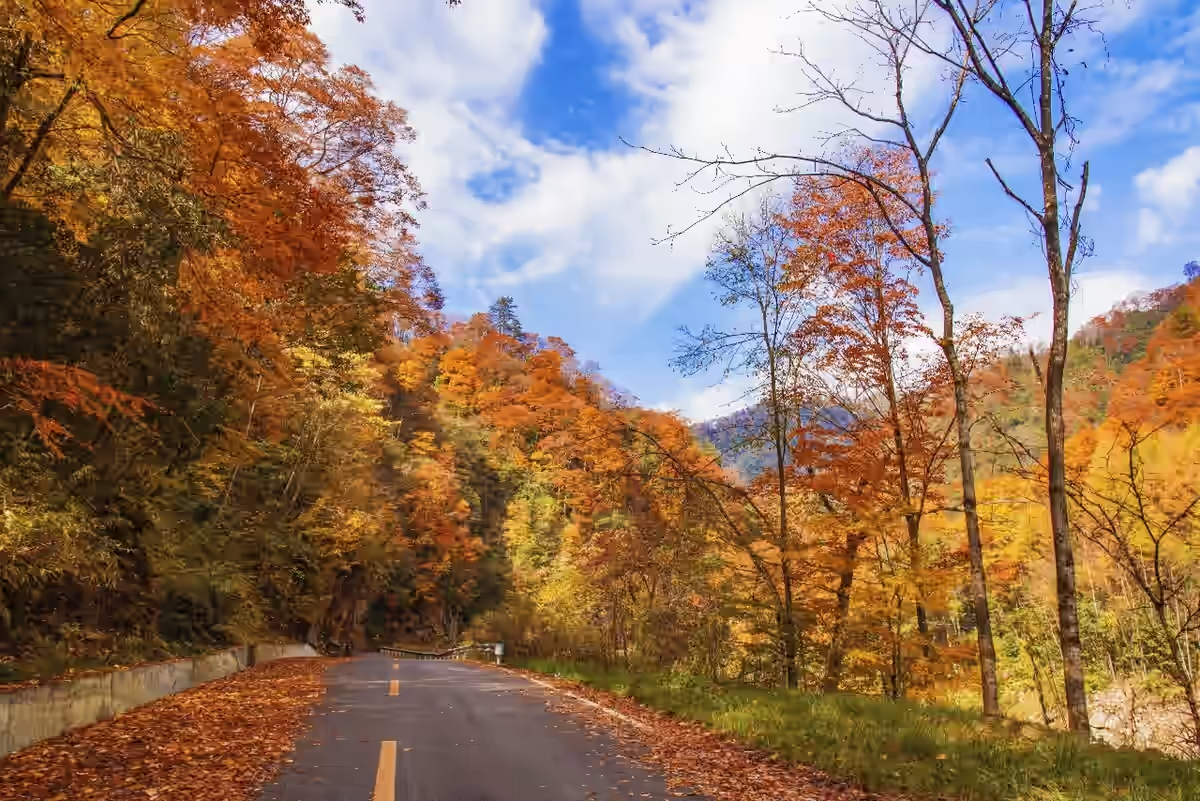
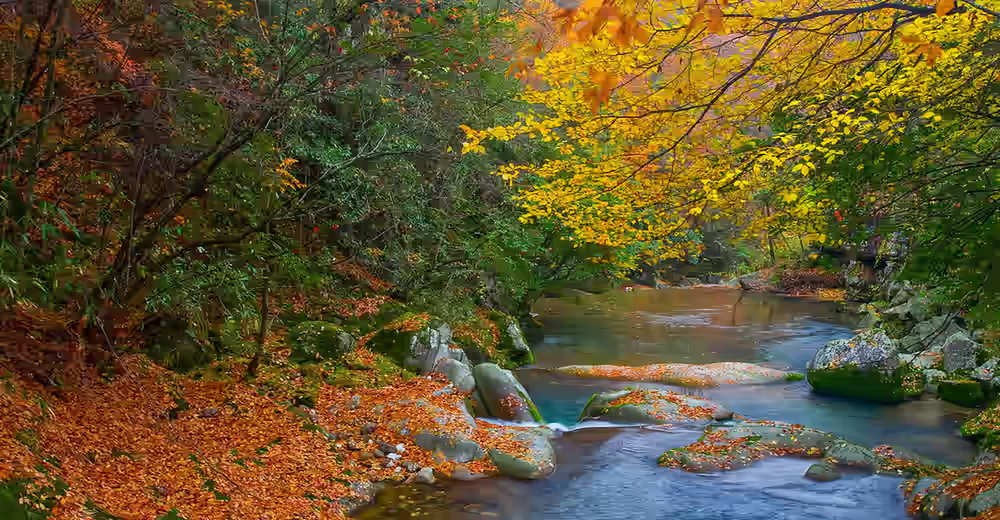
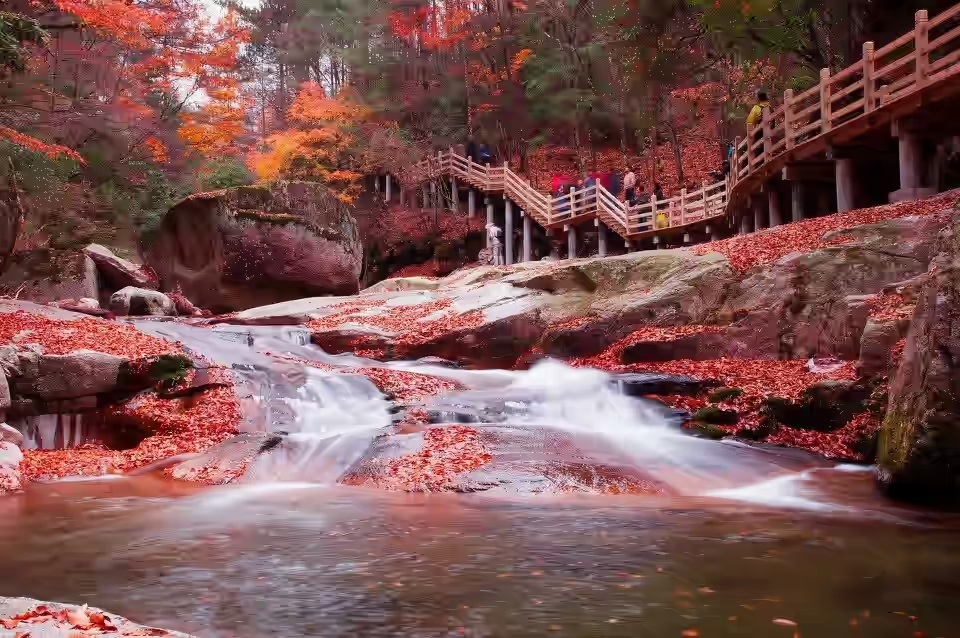
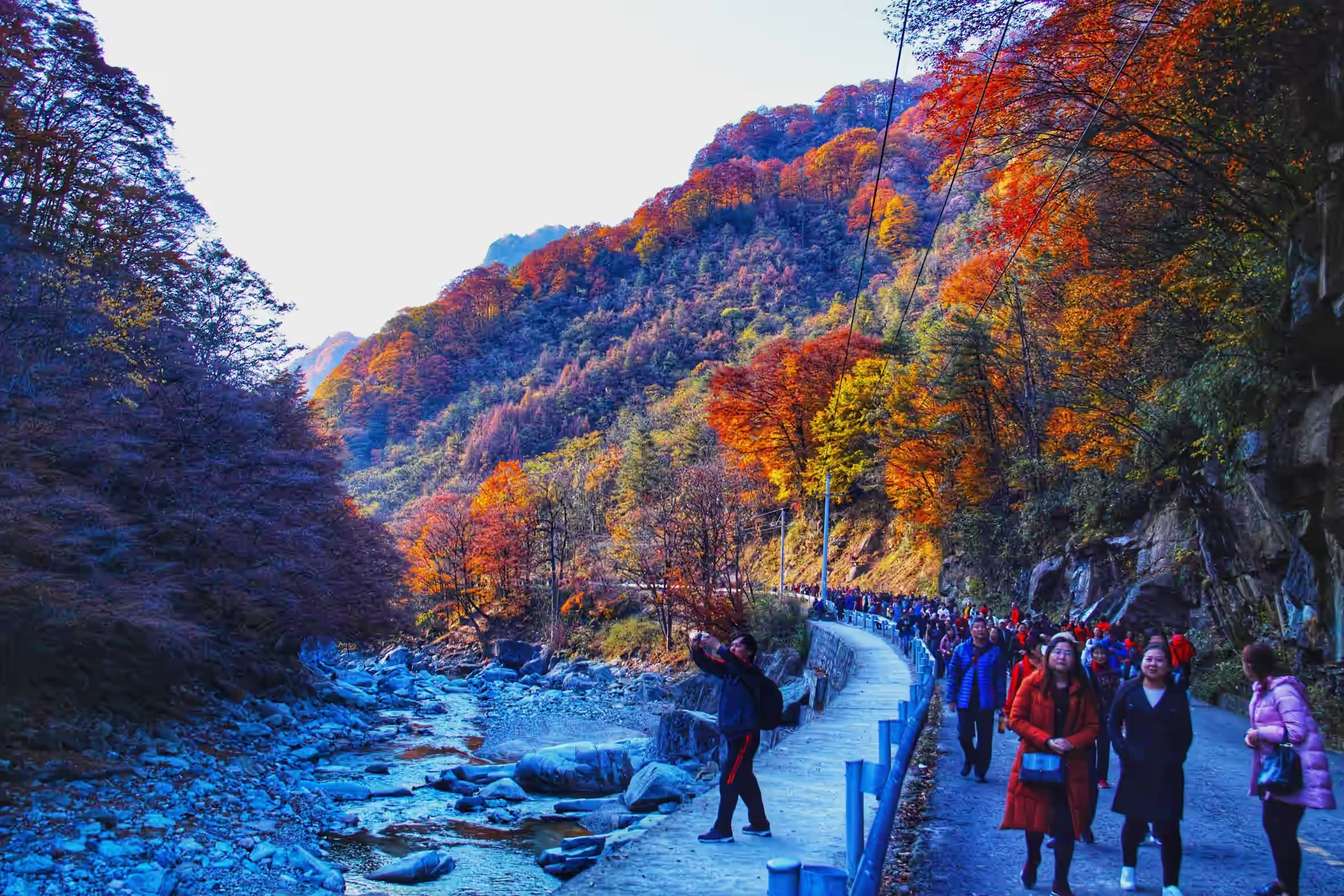
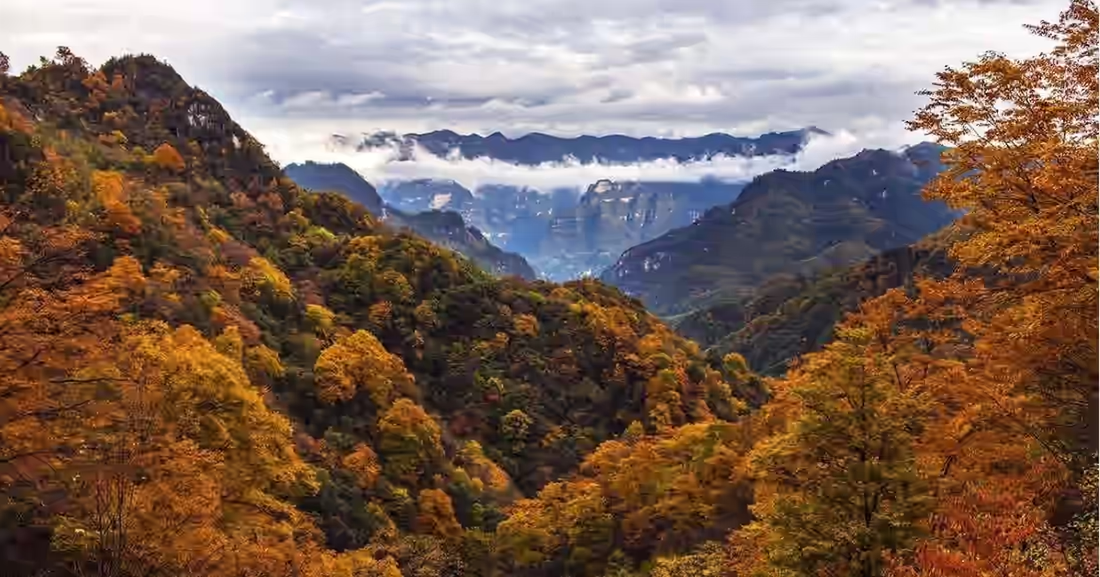
The red leaves of Guangwu Mountain have five main characteristics: First, they cover a vast area, presenting a magnificent spectacle. The scenic area spans 830 square kilometers, with red leaf landscapes covering 680 square kilometers. Second, the colors are rich and varied. While red leaves are typically dominated by red, Guangwu Mountain's red leaves display a gradient of colors, primarily blue, green, yellow, orange, and red, which is incomparable to other red leaf viewing areas. Third, the viewing period is long with distinct phases. The red leaf viewing season lasts up to a month: the first phase features multicolored red leaves, the second phase showcases forests dyed in layers of red, and the third phase presents a myriad of red leaves drifting like cinnabar. Fourth, there is a wide variety with rich content. Guangwu Mountain's red leaves include over 40 species such as beech, maple, linden, and Rosaceae plants, with more than 20 shapes like palm-shaped, feather-shaped, boat-shaped, and needle-shaped, and over 10 colors including fiery red, crimson, wine red, reddish-brown, rose red, purple-red, and golden red. Fifth, they are of high quality and prestigious origin. After inspections by botanical experts from the UK, Germany, France, Canada, and the United States, the Guangwu Mountain scenic area has been called the "Golden Area," and its red leaves are referred to as "Golden Leaves."
4. Cultural Activities
4.1 Cultural History
The Micang Ancient Road runs north-south through Guangwu Mountain, serving as a vital route from the Central Plains to the Ba-Shu region in ancient times. Many stories are associated with this area: Han Xin's night journey across Hanxi River, Zhang Lu stationing troops at Hanwang Terrace, and Zhuge Liang preparing troops and horses at Muyang City. The Bashan Guerrillas relied on the natural barriers of the forest sea to fight against enemies for as long as five years.
4.2 Myths and Legends
After the two deities, Thousand-Mile Eye and Wind-Following Ear, discovered the beautiful scenery of Guangwu Mountain in Nanjiang, they reported it to the Jade Emperor. Upon learning this, the Jade Emperor became very uneasy, fearing that the deities might neglect their duties and descend to the mortal world without permission. Thus, he issued two decrees: first, to strictly keep the secret and not disclose it; second, to order the Mist Fairy to shroud the area, preventing deities and fairies from seeing it, ensuring peace in the heavenly court. Upon receiving the decree, the Mist Fairy immediately went to Guangwu Mountain, gently draping her gauze garment over it. Instantly, clusters of white mist drifted toward Guangwu Mountain. From then on, the area has been enveloped in clouds and mist, regardless of spring or autumn, cloudy or sunny, rising morning and evening, ceaseless day after day.
Comments
Post a Comment