Xi'an Giant Wild Goose Pagoda - Tang Paradise Scenic Area
I. Introduction
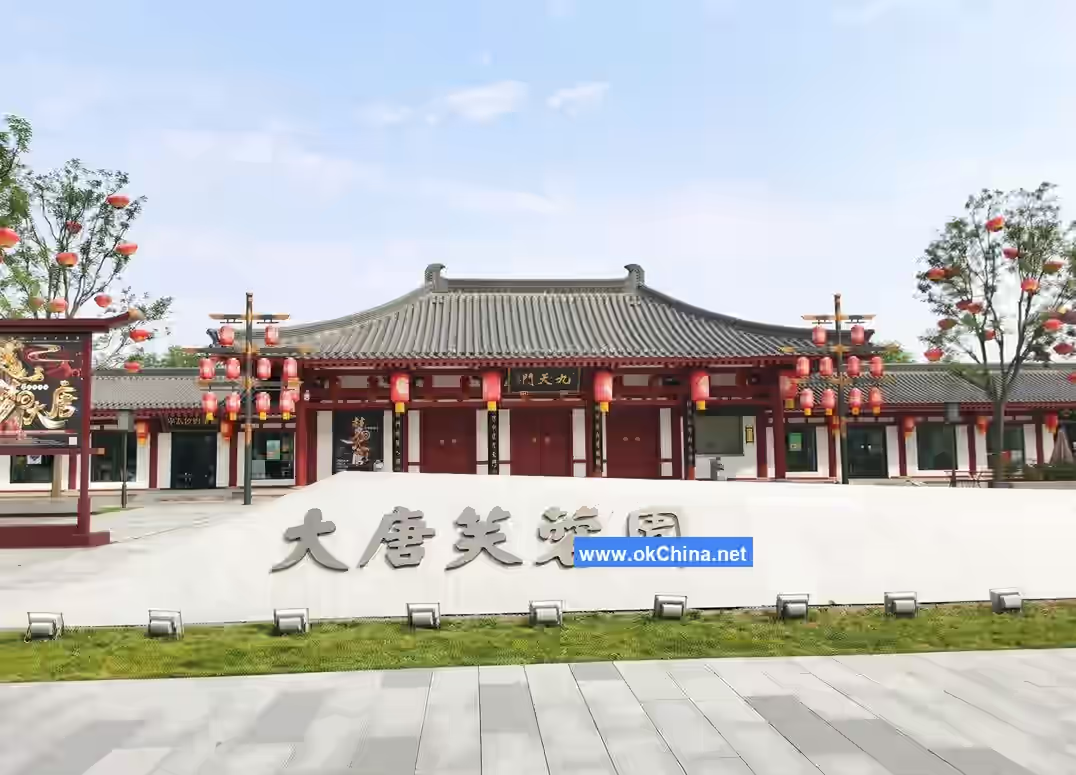
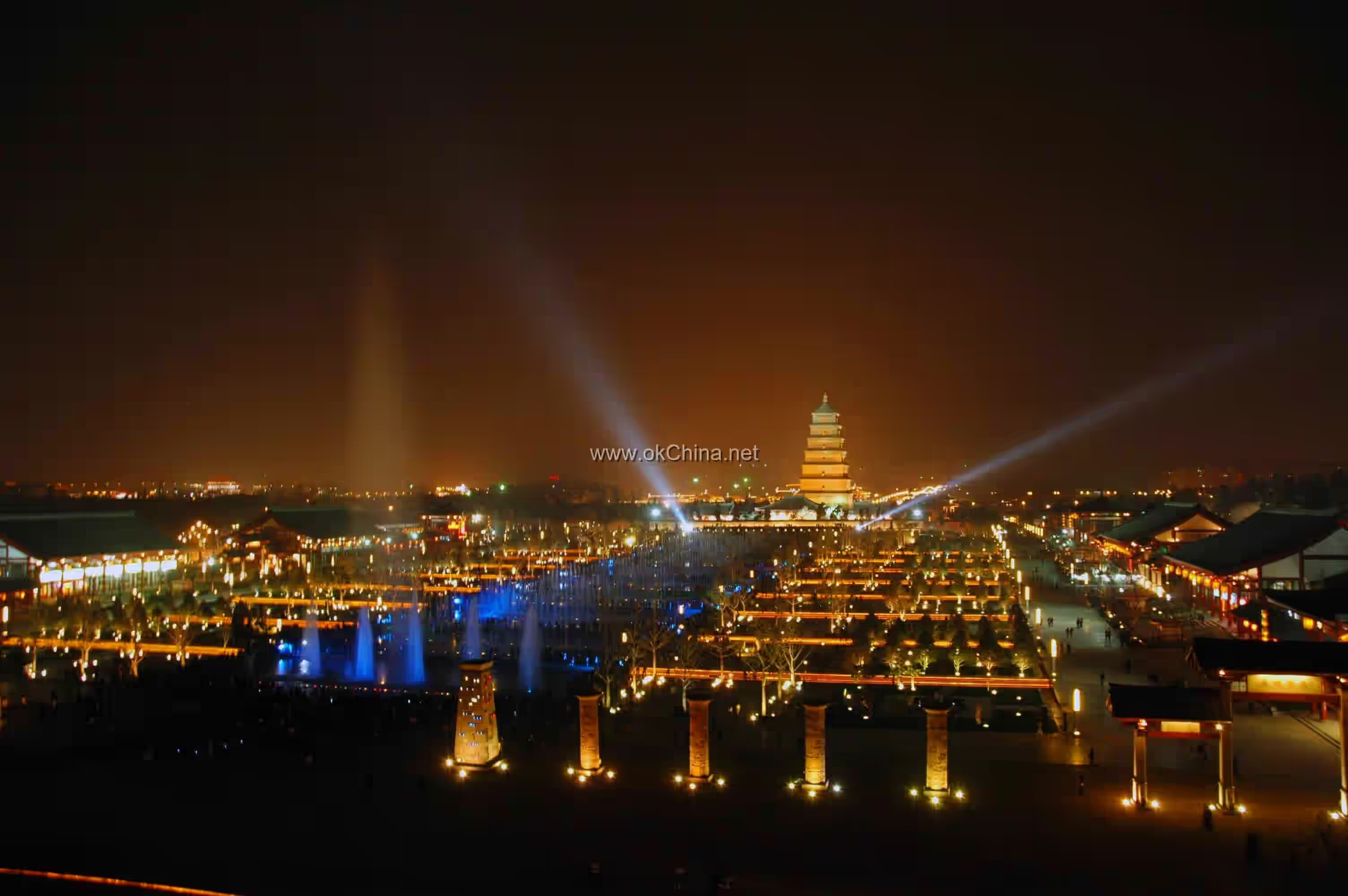
The Xi'an Giant Wild Goose Pagoda - Tang Paradise Scenic Area, abbreviated as the Giant Wild Goose Pagoda - Tang Paradise Scenic Area, is located in the core area of Qujiang New District, Xi'an City, Shaanxi Province. Covering a total area of 3.8 square kilometers, it integrates a product layout of "six parks, one city, and one pagoda."
The six parks refer to Tang Paradise, Qujiangchi Heritage Park, Tang City Wall Heritage Park, Tang Daci'en Temple Heritage Park, Hanyao Heritage Park, and Qin Ershi Mausoleum Heritage Park. The one city refers to the Great Tang Never Sleeps City, and the one pagoda refers to the Giant Wild Goose Pagoda of Daci'en Temple. On September 25, 2018, the launch ceremony of the second "National Travel Festival" and the award ceremony of the "Great Country Journey—China Scenic Area Tourism Comprehensive Service Capability Index Selection" were grandly held in Beijing. The Giant Wild Goose Pagoda - Tang Paradise Scenic Area won two awards: the Comprehensive Grand Prize and the Most Livable Scenic Area. On October 24, 2020, the Giant Wild Goose Pagoda - Tang Paradise Scenic Area was selected as one of the "Top Ten Night Scenic Areas Favored by Tourists in 2020."
II. Historical Background
Giant Wild Goose Pagoda
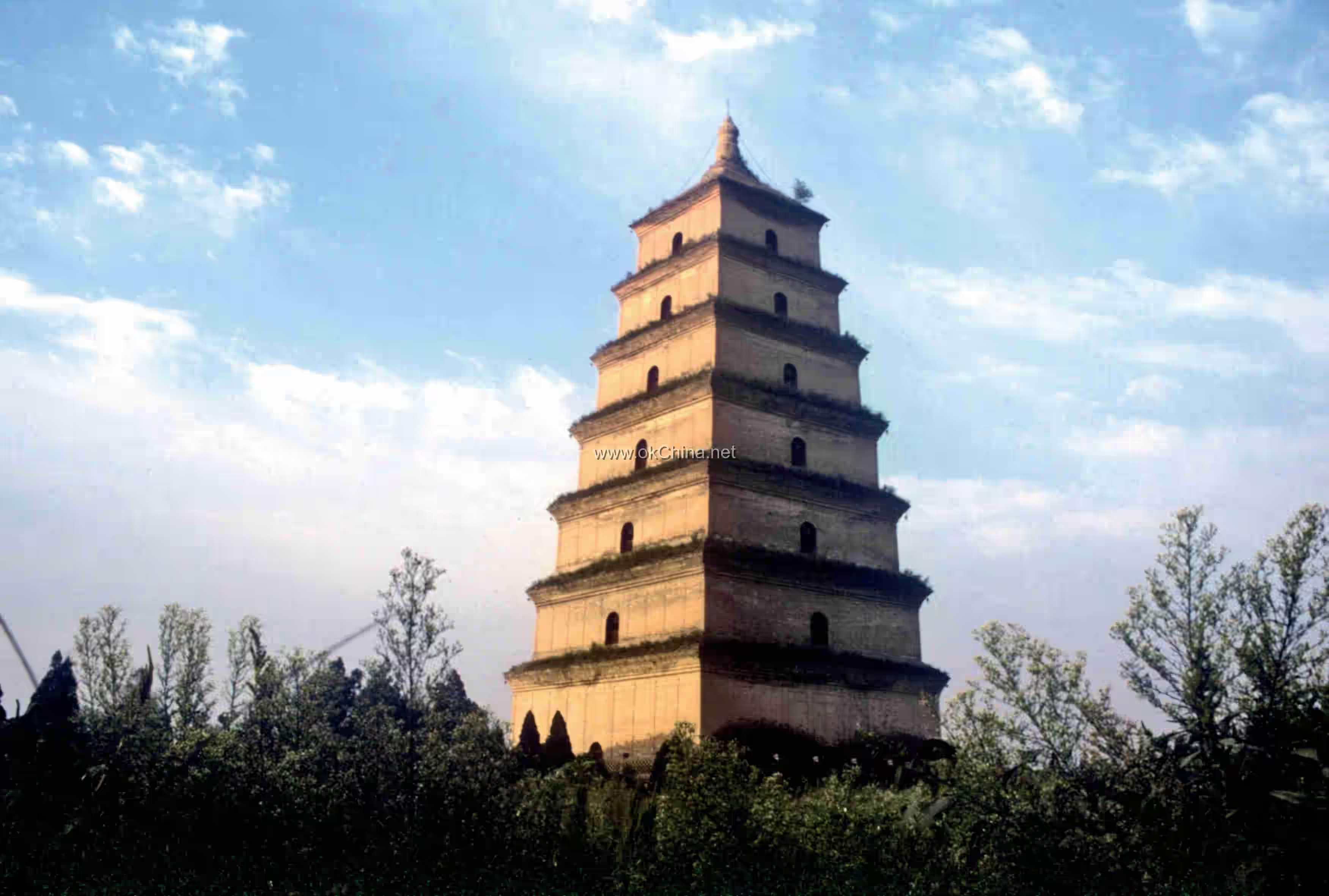
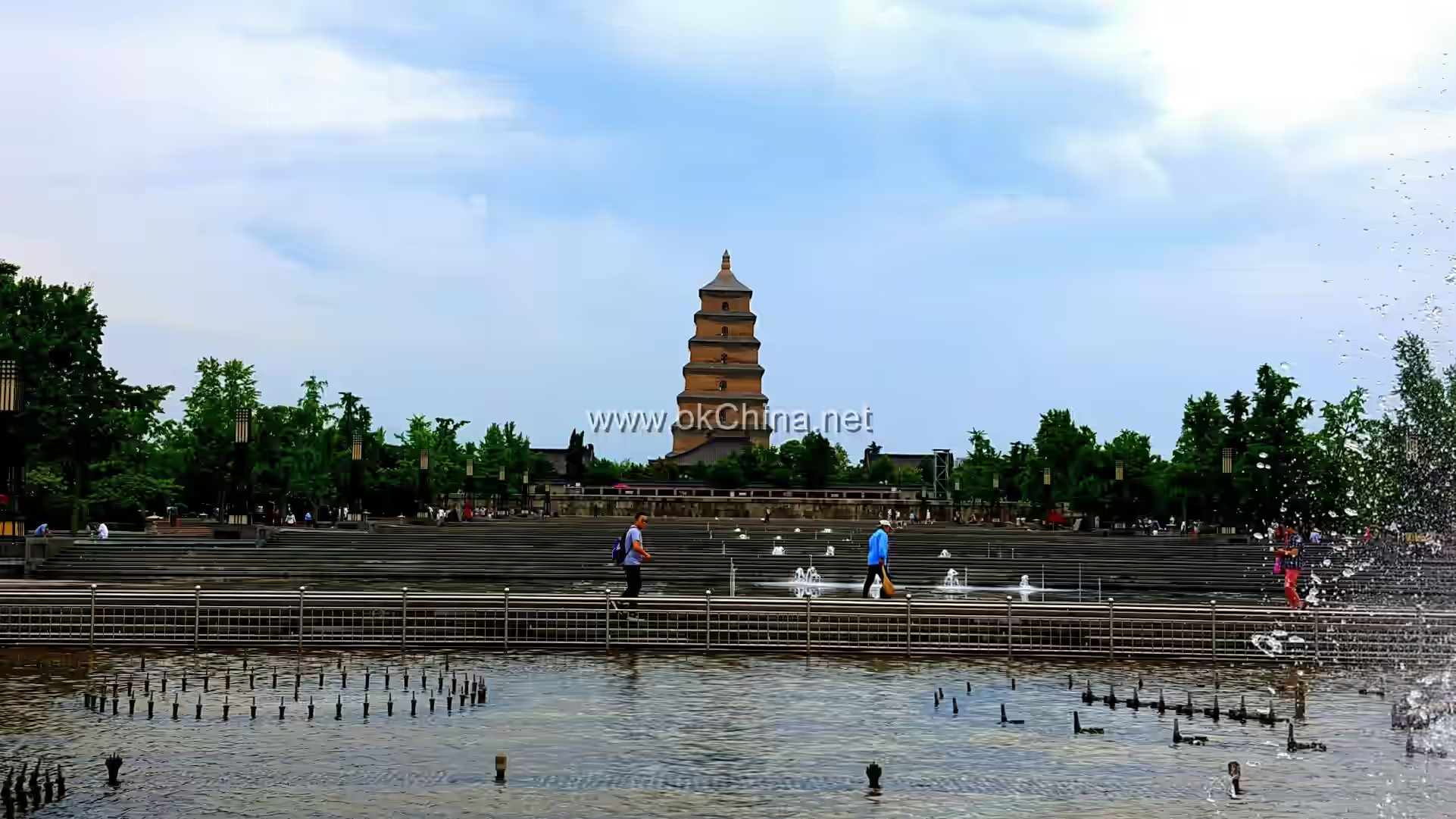
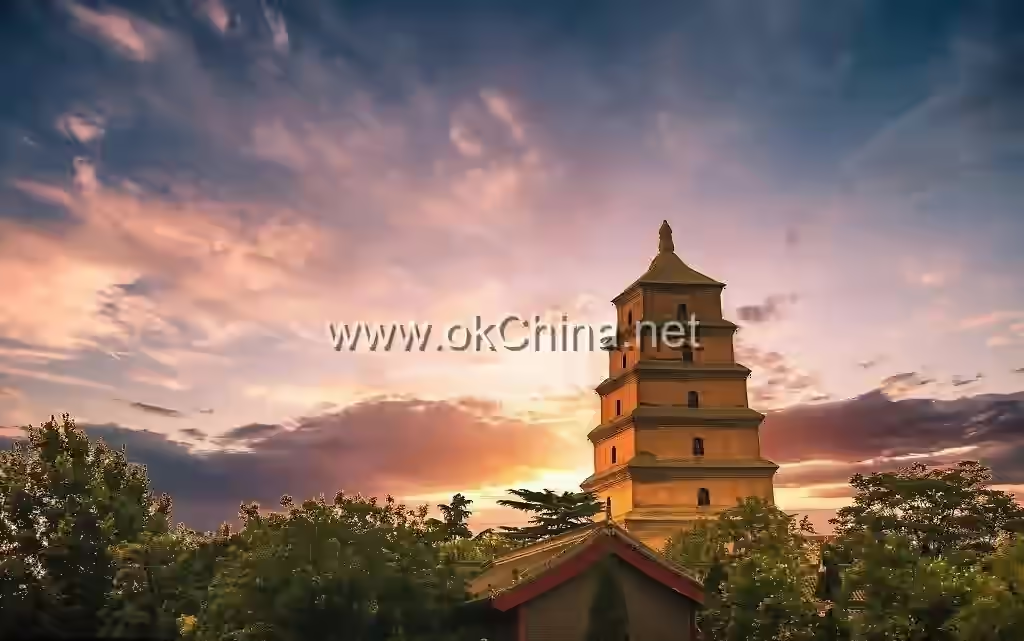
The Giant Wild Goose Pagoda is situated within Daci'en Temple in the southern part of Xi'an City, Shaanxi Province. As the earliest and largest existing square pavilion-style brick pagoda from the Tang Dynasty, it carries profound historical and cultural significance, witnessing the changes and development of multiple dynasties in ancient China.
The Giant Wild Goose Pagoda was initially built during the Zhenguan period of the Tang Dynasty. At that time, the Tang Dynasty was flourishing, and Buddhism was widely disseminated and highly revered in society. To enshrine and preserve the Buddha statues, relics, and Sanskrit scriptures brought back from India, Master Xuanzang petitioned Emperor Taizong of Tang for permission to construct this pagoda in the western courtyard of Daci'en Temple. After returning from his westward journey to obtain Buddhist scriptures, Master Xuanzang brought back a wealth of precious Buddhist texts. He hoped to properly house these scriptures by building a tall pagoda and to better promote Buddhist teachings. Through the efforts of numerous skilled craftsmen, the Giant Wild Goose Pagoda rose from the ground. Its original architectural style combined the characteristics of Indian stupas with traditional Central Plains construction techniques. The five-story pagoda stood tall and majestic, becoming one of the iconic structures of Chang'an City at the time, attracting countless devotees and literati to worship and admire it.
During the Tang Dynasty, the Giant Wild Goose Pagoda was not merely a religious structure; it was also closely connected to the cultural and social life of the era. Many literati and scholars often gathered here to compose poetry and leave behind numerous timeless masterpieces, forming the unique cultural phenomenon of "Yanta Inscriptions." Newly appointed scholars inscribed their names on the Giant Wild Goose Pagoda to showcase their glory, reflecting the pagoda's esteemed status in the cultural circles of the time. It became an important venue for literati pursuing fame and cultural exchange, witnessing the prosperity of Tang Dynasty culture.
As history evolved, the Giant Wild Goose Pagoda weathered numerous storms and vicissitudes. Although it suffered damage from natural disasters such as earthquakes multiple times, it underwent repairs and preservation efforts to varying degrees in subsequent dynasties. During the Ming Dynasty, the pagoda was renovated and expanded to ten stories, but later reduced to seven stories due to war damage. The Giant Wild Goose Pagoda we see today is the result of renovations during the Ming and Qing Dynasties. It still retains the grandeur and rustic charm of Tang Dynasty architecture, serving as a symbolic landmark of Xi'an, a city rich in history and culture. The Giant Wild Goose Pagoda is not only an important symbol of Buddhist culture but also a vivid testament to cultural exchange, architectural art, and social and historical development in ancient China. It holds immeasurable value for the study of ancient Chinese religion, culture, architecture, and many other aspects.
Tang Paradise
Tang Paradise is located in Qujiang Development Zone, south of Xi'an City, Shaanxi Province, southeast of the Giant Wild Goose Pagoda. Its historical background is extensive, carrying rich cultural connotations.
Qin to Sui Dynasty Period
Qin Dynasty: During the Qin Dynasty, this area was part of the famous royal forbidden garden, Yichun Garden. The Qin Dynasty chose to establish the forbidden garden here primarily due to its enchanting landscape, laying the foundation for royal gardens in the region and endowing it with profound cultural heritage.
Sui Dynasty: After Emperor Wen of Sui officially moved to the new capital, he renamed Qujiang as "Furong Garden" and carried out renovations, reintroducing Qujiang as a royal garden on the historical stage. It was closely connected to the capital city, Daxingcheng, and became one of the water sources for the southeastern districts of the city. At that time, Huang Gun carved various water ornaments in Qujiang Pond, and scenes of emperors and ministers enjoying the "Qujiang Flowing Banquet" along the pond were incorporated into the palace gardens. These laid the foundation for the formation and development of Qujiang culture during the Tang Dynasty.
Tang Dynasty Period
Emperor Xuanzong's Expansion: Emperor Xuanzong of Tang carried out large-scale expansions of Qujiang, bringing the garden construction of Furong Garden to its peak. He built numerous structures within the garden, including Ziyun Tower, Caixia Pavilion, Linshui Pavilion, Water Palace, Mountain Tower, Penglai Mountain, and Liangtang. He also constructed a walled passageway stretching approximately 7,960 meters in length and 50 meters in width, connecting Daming Palace via Xingqing Palace directly to Furong Garden. After this expansion, Furong Garden featured continuous palaces and undulating pavilions, achieving an extremely high level of garden architecture.
Cultural Prosperity: Furong Garden during the Tang Dynasty was a vibrant and lively place, attracting a large number of literati and artists. Various cultural activities flourished here, such as poetry creation, music performances, and painting, making it an outstanding representative of the prosperous Tang culture and fully reflecting the splendor and cultural prosperity of the era. The emperor's visits to Furong Garden also became a regular entertainment activity. During the Qujiang Grand Assembly, everyone from royalty and nobility to commoners gathered at Qujiang to celebrate the grand occasion. Li Longji, along with his consorts and officials, joined the people in Furong Garden for festivities, showcasing the openness and harmony of society at the time.
Modern Reconstruction
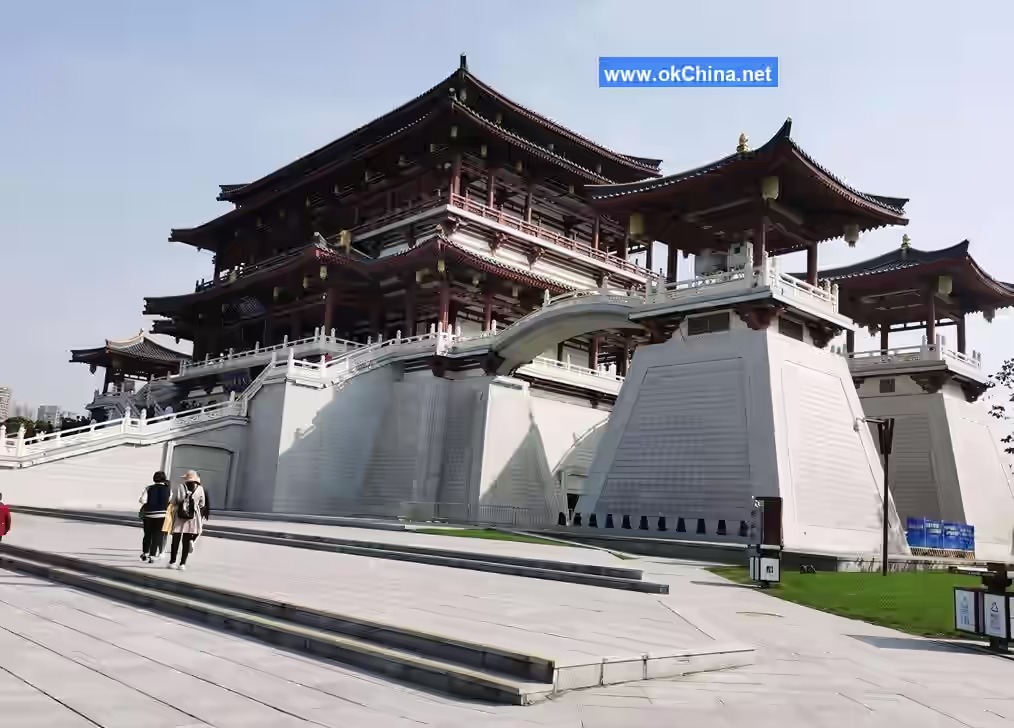
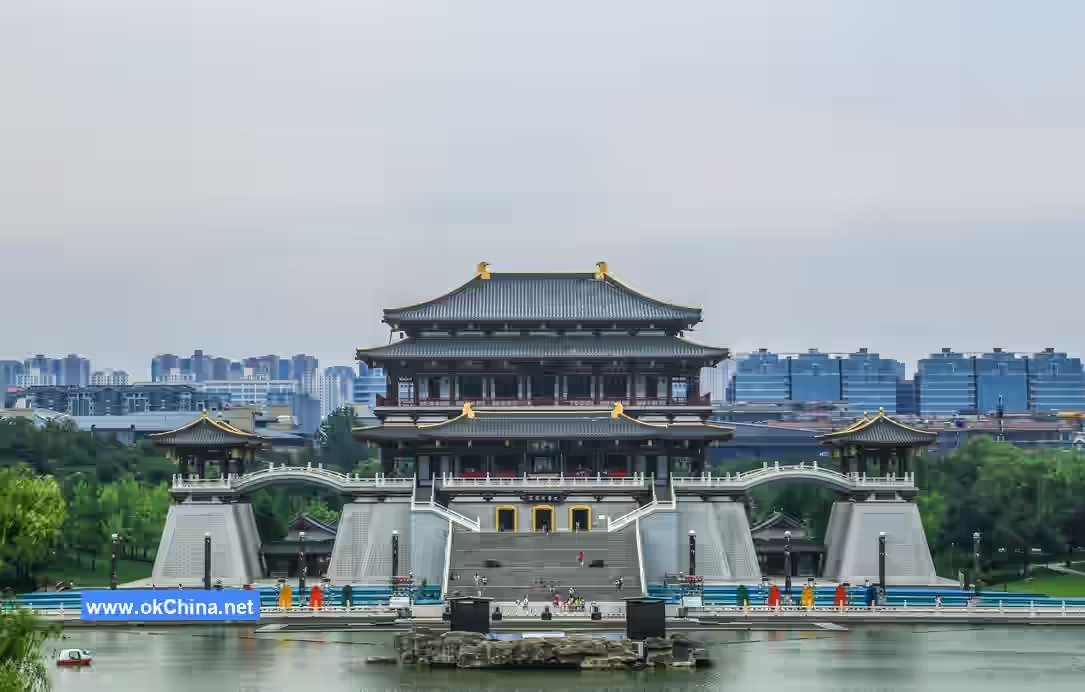
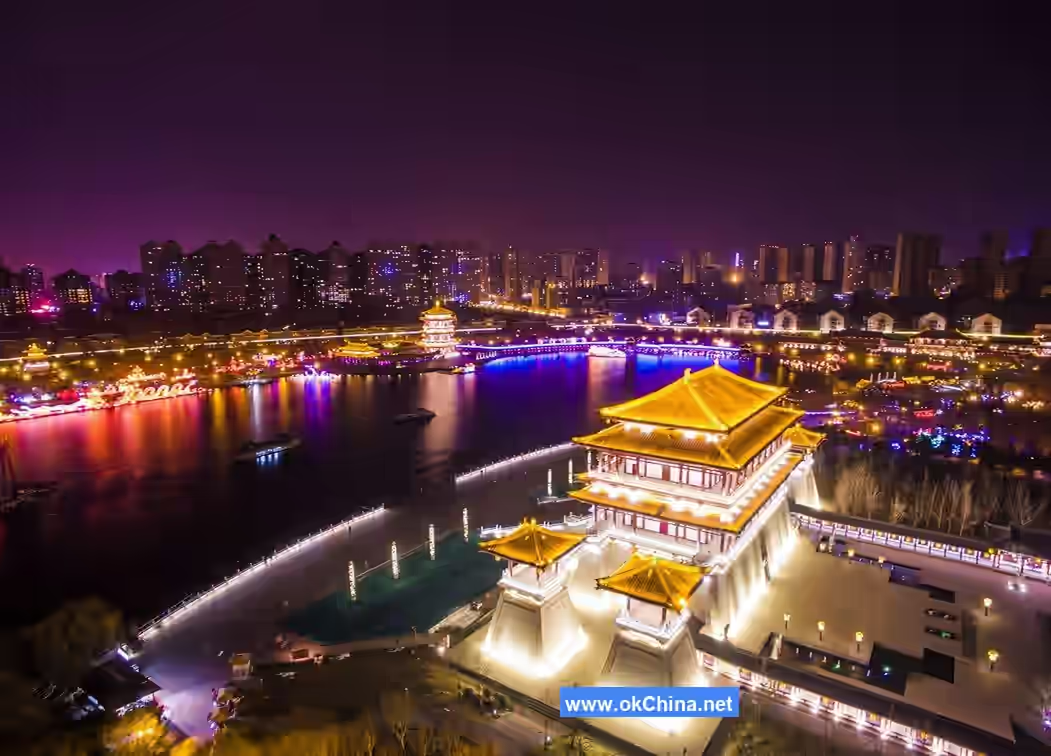
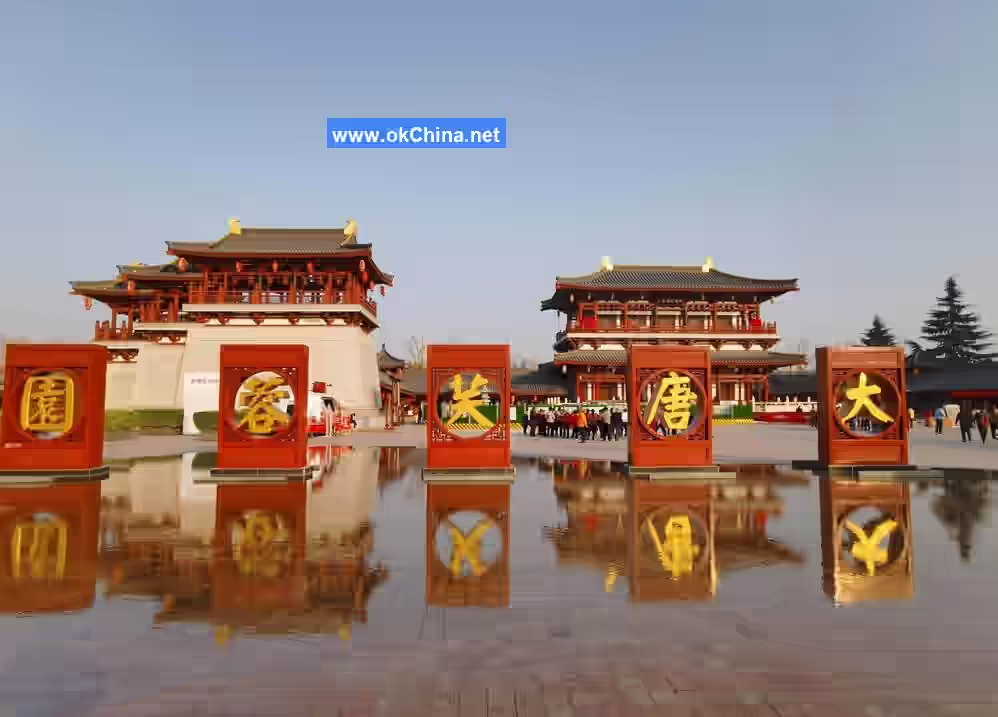
In 2002, Tang Paradise began construction north of the original Tang Dynasty Furong Garden site, aiming to restore the royal garden style of the Tang Dynasty and allow visitors to personally experience Tang culture and history. After two years of meticulous construction, it was completed in 2004 and officially opened to the public on April 11, 2005. The architectural design was completed by Ms. Zhang Jinqiu, an academician of the Chinese Academy of Engineering, while the landscape design was crafted by Japanese designer Hiroshi Akiyama. The buildings in the garden are large in scale and majestic, with exquisite yet not overly delicate details. They employ a wooden structural system and feature many imitation ancient structures, such as Ziyun Tower, Ladies' Pavilion, Imperial Banquet Palace, Apricot Garden, Fanglin Garden, Fenghuang Jiutian Theater, and Tang Market. It is the largest architectural complex of imitation Tang royal buildings in China.
III. Main Attractions
Giant Wild Goose Pagoda
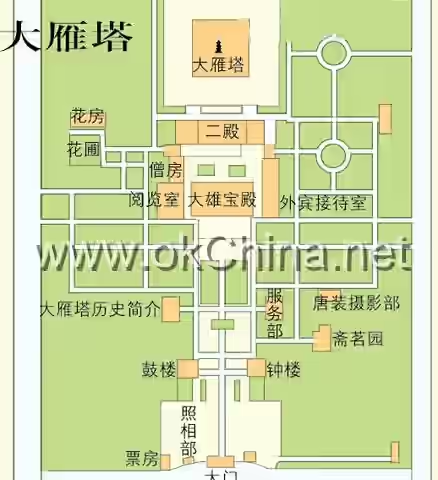
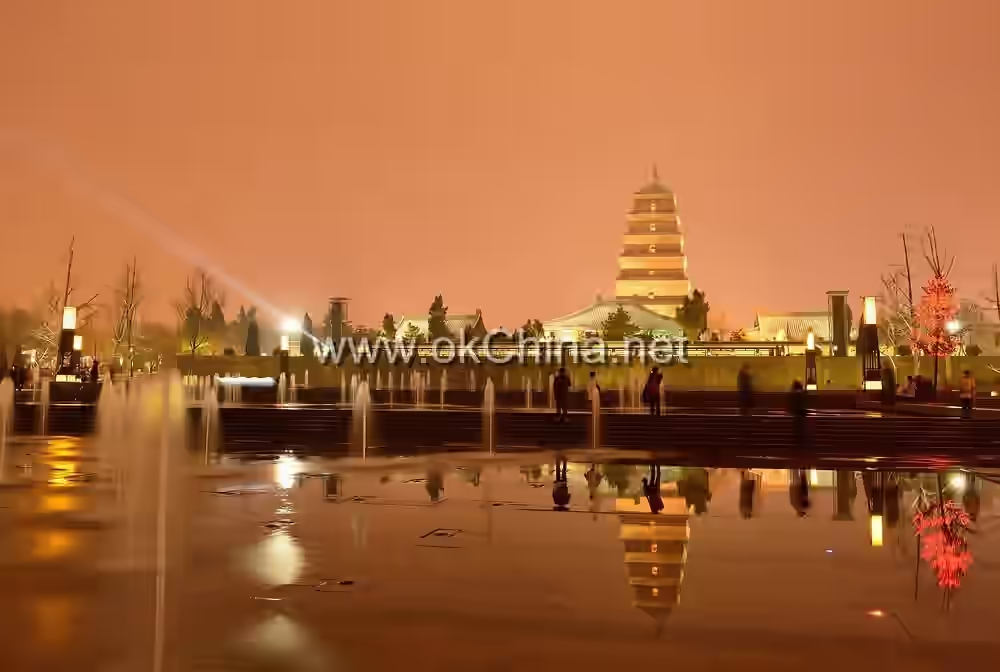
The Giant Wild Goose Pagoda is located at the southern end of Yanta Road in Xi'an City. The temple was built by Li Zhi, Emperor Gaozong of Tang, when he was the crown prince, in the 22nd year of the Zhenguan era (648), on the site of the Sui Dynasty's Wulou Temple, to honor his mother, Empress Wende, and pray for her "blessings in the afterlife." Historical records indicate that the temple originally consisted of over ten courtyards and 1,897 buildings, halls, pavilions, and towers, occupying the eastern half of the Jinchang Ward in Tang Dynasty Chang'an City. Shortly after the temple was completed, Master Xuanzang invited renowned monks from across the country to form an unprecedented Buddhist scripture translation center. They translated a vast number of Buddhist classics, inaugurating a new era in Chinese translation history and establishing the Faxiang School of Chinese Buddhism here. In the 3rd year of the Yonghui era (652), Master Xuanzang supervised the construction of a five-story Indian-style pagoda in the western courtyard to store the Buddhist scriptures brought back from India. This pagoda, made of brick with an earthen core, collapsed approximately 50 years later. During the Chang'an era of Empress Wu Zetian (701–704), a seven-story Chinese-style pagoda was rebuilt on the original site, known as the "Daci'en Temple Pagoda" in the Tang Dynasty and commonly called the "Giant Wild Goose Pagoda." After the Tang Dynasty, Daci'en Temple suffered repeated damage from wars, but the pagoda survived. From the Song Dynasty onward, the pagoda and temple underwent multiple repairs, slightly thickening the pagoda's structure. From 1954 to 1956, the wooden stairs inside the pagoda were replaced, and the base of the pagoda was widened by approximately 1 meter. The Giant Wild Goose Pagoda is a seven-story imitation wooden structure pavilion-style brick pagoda, with a square pyramidal body and a vase-shaped finial. The bottom side measures 25 meters, and the total height is 64.517 meters. It stands on a square brick platform with a base area of 45.5 × 48.5 meters and a height of 4.2 meters. The pagoda body is entirely constructed with blue bricks laid in tight seams, featuring flat columns and lintels, with each column adorned with a large bracket. The bottom two stories are divided into nine bays; the third and fourth stories into seven bays; and the top three stories into five bays. Each story has an arched door in the center of all four walls. The blue stone lintels and door frames of the four arched doors on the ground floor are carved with Tang Dynasty line-engraved Buddha images. The "Amitabha Preaching the Dharma" scene on the western lintel depicts halls and corridors, while the brick niches on the eastern and western sides of the southern door contain two steles inscribed by the Tang Dynasty calligrapher Chu Suiliang: "Preface to the Sacred Teachings of the Great Tang Tripitaka" and "Record of the Sacred Teachings of the Tripitaka." The interior of the pagoda is a square hollow cylinder, slightly tapered, with each level separated by wooden floors and a wooden staircase spiraling up to the top. The Giant Wild Goose Pagoda is one of the iconic structures preserved from Tang Dynasty Chang'an City and holds significant historical value. It was designated as a provincial-level key cultural relic protection unit by the Shaanxi Provincial People's Committee in 1956 and as a national-level key cultural relic protection unit by the State Council in 1961.
Tang Paradise
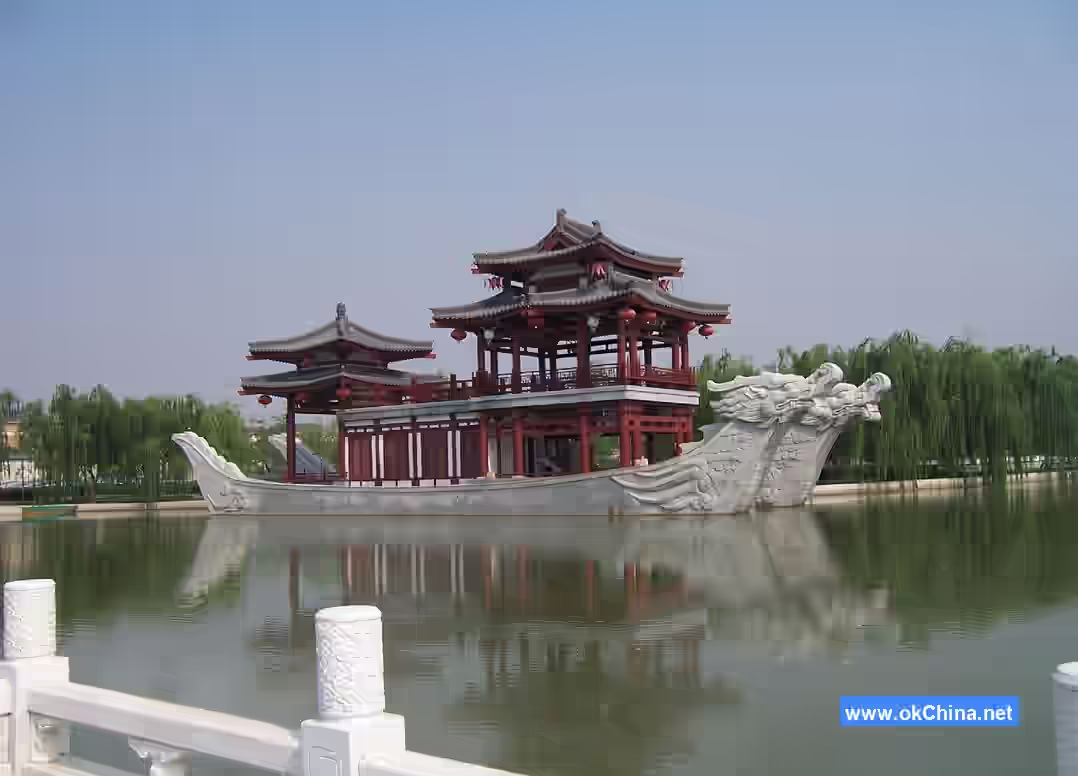
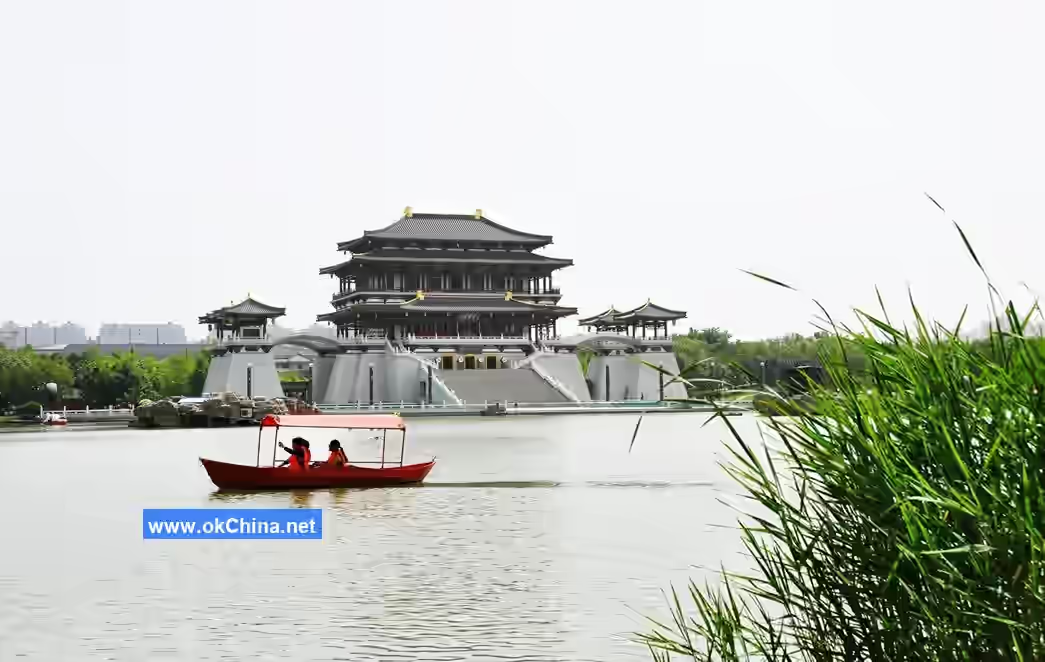
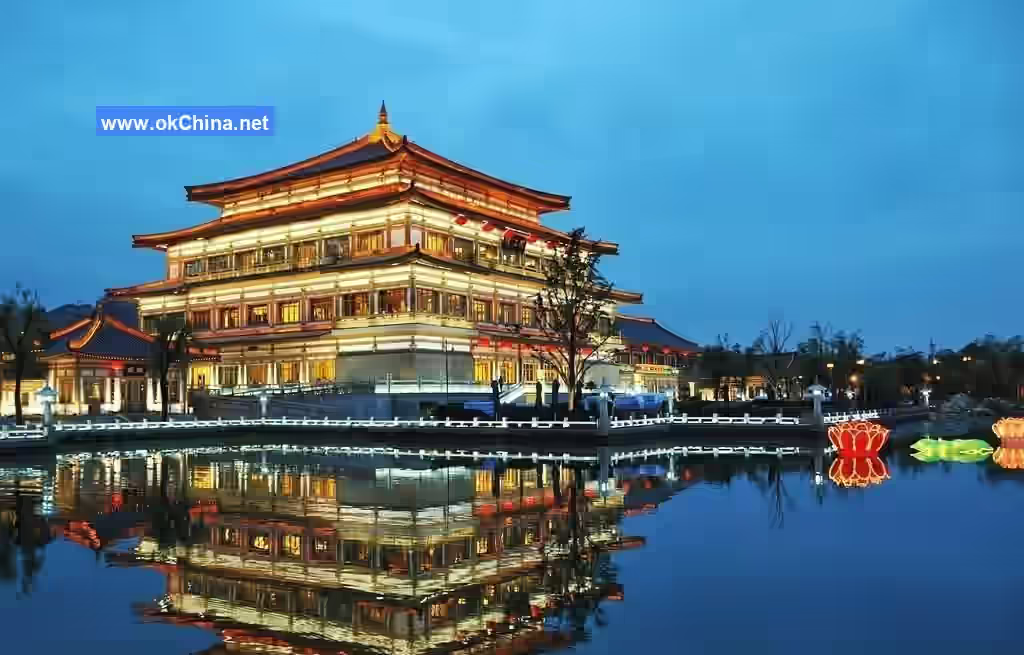
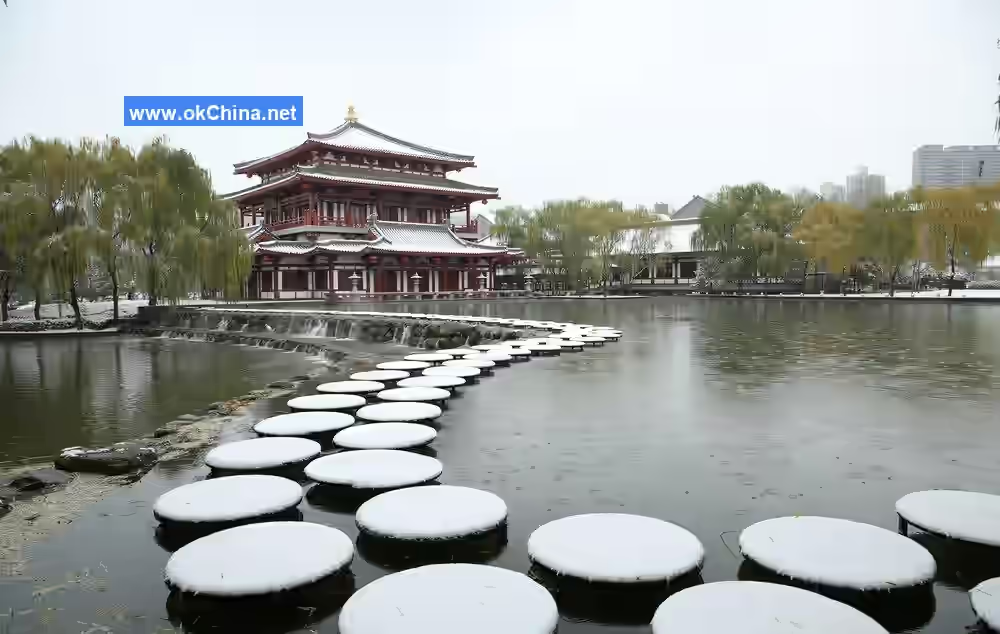
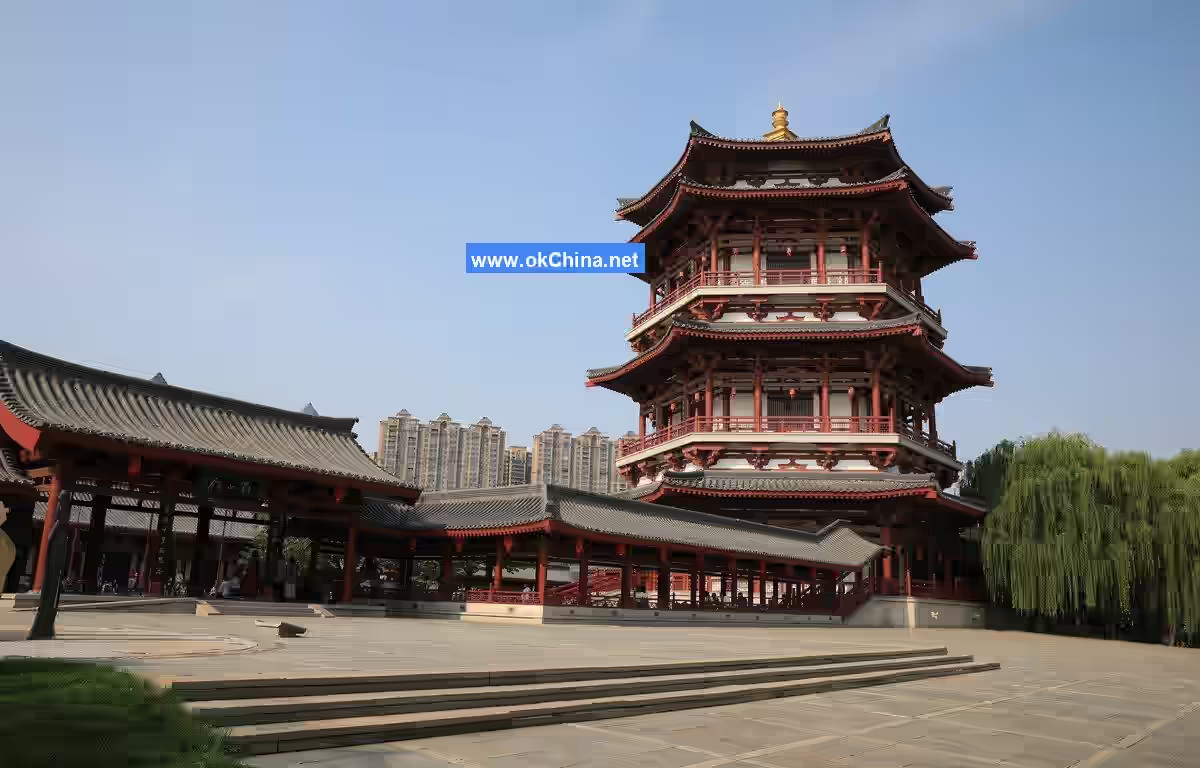
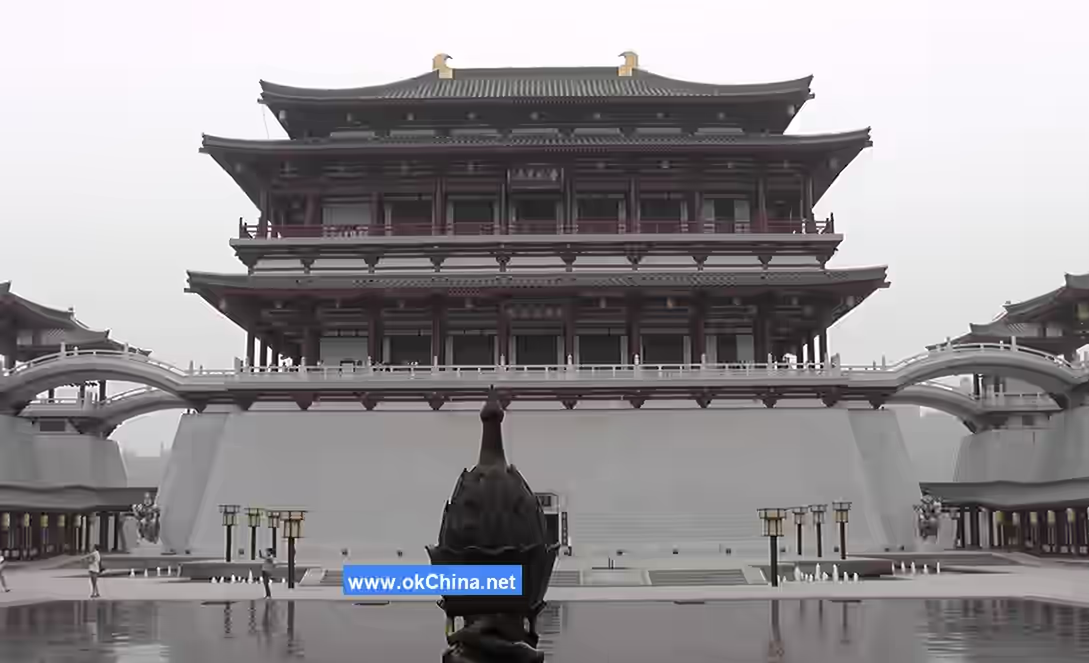
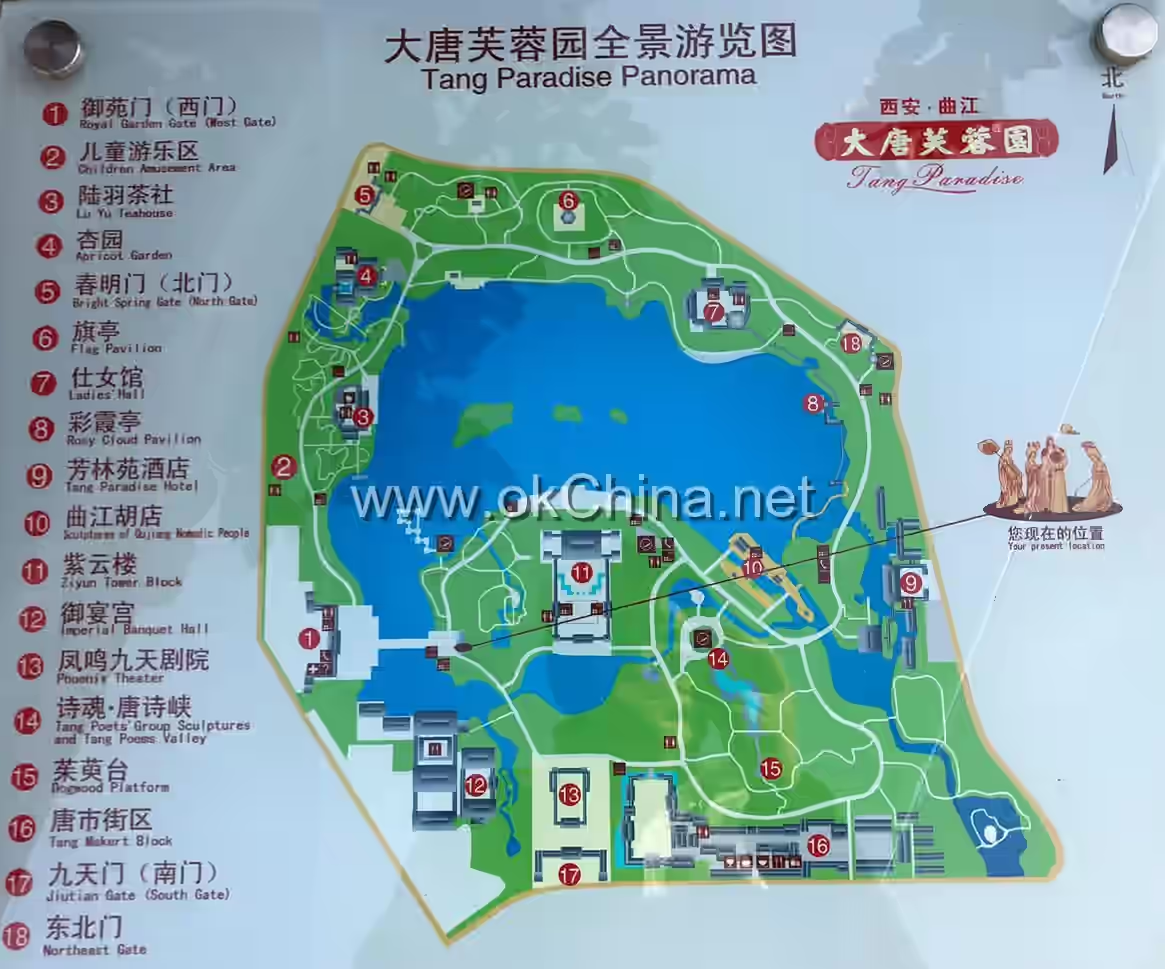
Tang Paradise is located southeast of the Giant Wild Goose Pagoda, north of the original Tang Dynasty Furong Garden site. It is China's first large-scale theme park that comprehensively showcases the grandeur of the prosperous Tang Dynasty, reconstructed in the style of Tang royal gardens. It covers an area of 1,000 mu (approximately 66.7 hectares), with a water area of 300 mu (approximately 20 hectares). Tang Paradise is divided into fourteen themed cultural zones: Imperial Culture Zone, Women's Culture Zone, Poetry Culture Zone, Imperial Examination Culture Zone, Tea Culture Zone, Song and Dance Culture Zone, Food Culture Zone, Folk Culture Zone, Diplomatic Culture Zone, Buddhist Culture Zone, Taoist Culture Zone, Children's Entertainment Zone, Entrance Landscape Culture Zone, and Water Show Performance Zone. These zones collectively showcase the Tang Dynasty's spirit of towering strength and radiating influence, its dazzling and unparalleled culture and arts, and its majestic and awe-inspiring grandeur. The main attractions in the garden include Ziyun Tower, Fenghuang Jiutian Theater, Imperial Banquet Palace, Tang Market, Fanglin Garden, Ladies' Pavilion, Caixia Pavilion, Lu Yu Tea House, Apricot Garden, Poetry Soul, Tang Poetry Gorge, Qujiang Flowing Banquet, Qiting, Beautiful Women Promenade, Peach Blossom Dock, and Cornelian Cherry Terrace.
Qujiangchi Heritage Park
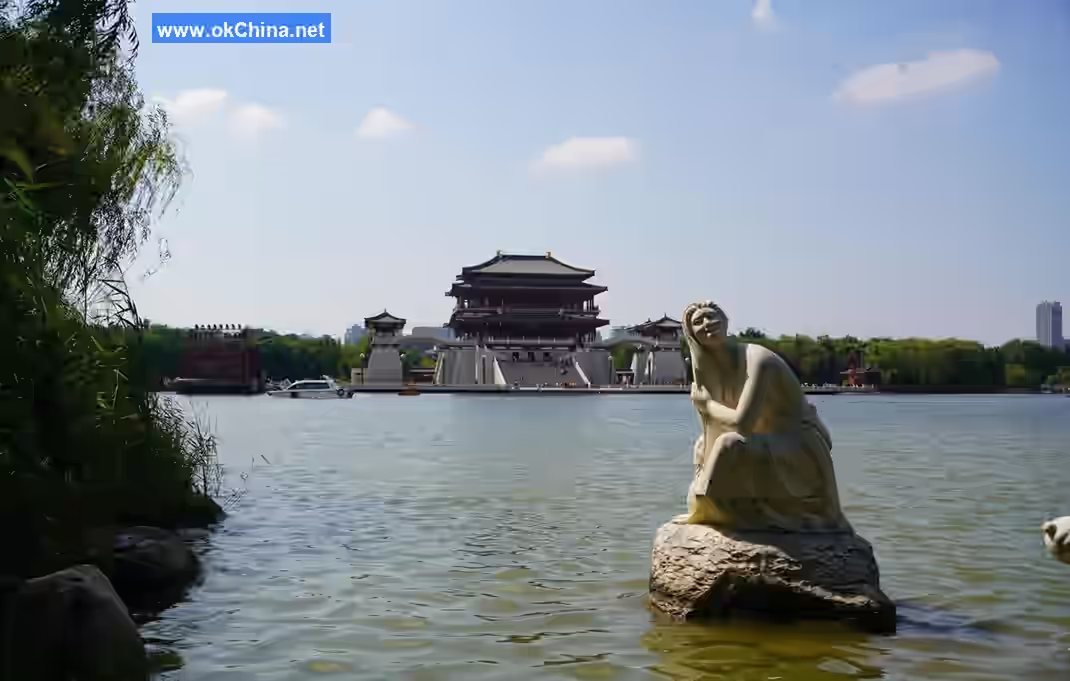
Qujiang Pond flourished during the Qin and Han Dynasties, reached its peak in the Sui and Tang Dynasties, and has endured for over a thousand years. It is a classic example of ancient Chinese landscape gardens.Qujiang Pond Heritage Park, master-planned by renowned architect Zhang Jinqiu, covers an area of 471 acres and was completed on July 1, 2008, on the original site of Qujiang Pond. The water surface of Qujiang Pond stretches 1,088 meters from north to south, with varying widths from east to west, reaching a maximum of 552 meters. It is divided into the Upper Pond and Lower Pond. Leveraging the rich surrounding tourism resources and cultural traditions, the park has restored and reconstructed historical and cultural landscapes such as Qujiang South Lake, Qujiang Flowing Banquet, Hanwu Spring, Yichun Garden, and Phoenix Pond. It recreates the landscape and cultural pattern of the Qujiang area, characterized by "layered green forests and expansive clear waters," and establishes a comprehensive urban ecological and recreational zone integrating ecological restoration, sightseeing, leisure, entertainment, modern business conferences, and exhibitions. It is an open urban ecological and cultural park that combines historical and cultural preservation, ecological gardens, landscape scenery, leisure tourism, folk heritage, and artistic display.
Tang City Wall Heritage Park
Located 500 meters south of the Great Tang All Day Mall, between the east-west parallel urban roads of Yannan 2nd Road and Yannan 3rd Road, Tang City Wall Heritage Park sits on the site of the southern city wall of Chang’an during the Tang Dynasty. Stretching 3,600 meters from east to west and 100 meters in width, the park covers 540 acres. Designed by architect Zhang Jinqiu, it was a key construction project in Xi’an’s 11th Five-Year Plan. With the theme of "Citizens, Nature, Leisure, Health, Art, and Enjoyment," the park uses Tang poetry as its main thread and incorporates calligraphy, sculpture, painting, crafts, and garden landscapes as expressive means. It provides citizens with artistic enjoyment in their leisure lives, serving as a cultural corridor that integrates poetry, philosophy, aesthetic experiences, and ecological gardens.
Tang Daci’en Temple Heritage Park
Tang Daci’en Temple Heritage Park is a relatively independent and thematically distinct open garden within the Giant Wild Goose Pagoda cultural and leisure scenic area, situated on the site of the Tang Dynasty Daci’en Temple. Originally known as Qujiang Chunxiao Garden, it was artistically repositioned and renovated before being renamed Tang Daci’en Temple Heritage Park. As a Buddhist-themed garden, it pervasively conveys the uniquely Chinese religious experience of "Zen enlightenment" to visitors. While pursuing ultimate aesthetic beauty, the park expresses the designers’ aspiration for inner Zen through statues, sculptures, vegetation, and other means, embodying an exquisite and elegant style alongside a profound and lofty cultural atmosphere.
Hanyao Heritage Park
Hanyao Heritage Park is one of the six heritage park projects in the Qujiang New District, with a total planned area of 188.75 acres. The park itself covers 60 acres, while the surrounding functional area spans over 120 acres. Centered on the Hanyao site and the enduring love story of Wang Baochuan and Xue Pinggui, it is China’s first love-themed cultural park. It integrates heritage protection, tourism development, and cultural industry construction, serving as both a love-themed park and a happiness industry base. The Hanyao site includes the Wang Baochuan Ancestral Hall. In 1934, Sun Yilian, mother of Yang Hucheng, donated funds for its renovation. In June 1984, the local township government financed further construction, and it officially opened to visitors on February 28, 1985. The newly developed Hanyao Heritage project comprises wedding celebration areas, museum zones, heritage sites, and museums showcasing Chinese and foreign wedding customs and sexual culture.
Qin Er Shi Mausoleum Heritage Park
Located on the southern bank of Qujiang Pond Heritage Park, Qin Er Shi Mausoleum Heritage Park covers approximately 70 acres, with a building area of 4,714 square meters. Adhering to the principle of heritage protection, the park embodies the cultural reflections on the fall of the Qin Dynasty and Qin civilization. It aims to enhance the regional humanistic, ecological, and tourism environments, serving as a Qin cultural heritage park that integrates site preservation, cultural exhibitions, and garden construction. The park is divided into exhibition areas and heritage zones. The exhibition areas include newly built structures such as the visitor service center, the Qin Demise Exhibition Hall, and the Qujiang New District Excavated Artifacts Exhibition Hall. The heritage zone comprises original structures like the mountain gate, main hall, and the mausoleum of Qin Er Shi Emperor Hu Hai.
Great Tang All Day Mall
Stretching from the Giant Wild Goose Pagoda South Square in the north to the Tang City Wall Heritage site in the south, and from Cien East Road in the east to Cien West Road in the west, the Great Tang All Day Mall spans 2,100 meters north-south and 500 meters east-west, with a total building area of 650,000 square meters. Set against the backdrop of the prosperous Tang culture and themed around Tang-style elements, it features four major squares: Giant Wild Goose Pagoda North Square, Xuanzang Square, Zhenguan Square, and Creating a New Era Square. It also includes four cultural venues: Xi’an Concert Hall, Shaanxi Grand Theatre, Xi’an Art Museum, and Qujiang Pacific Cinema. Additionally, five cultural sculptures—Great Tang Buddhist Culture, Great Tang Heroes, Zhenguan Reign, Empress Wu’s Procession, and Kaiyuan Prosperity—are highlights. It is the premier destination in Xi’an for experiencing and showcasing Tang culture. On April 29, 2019, the Great Tang All Day Mall pedestrian street was listed as one of the first 11 pilot pedestrian streets in China for renovation and upgrading. In July 2020, it was included in the first batch of national model pedestrian streets.
IV. Cultural Performances
【Cultural Activities】
Themed Performances
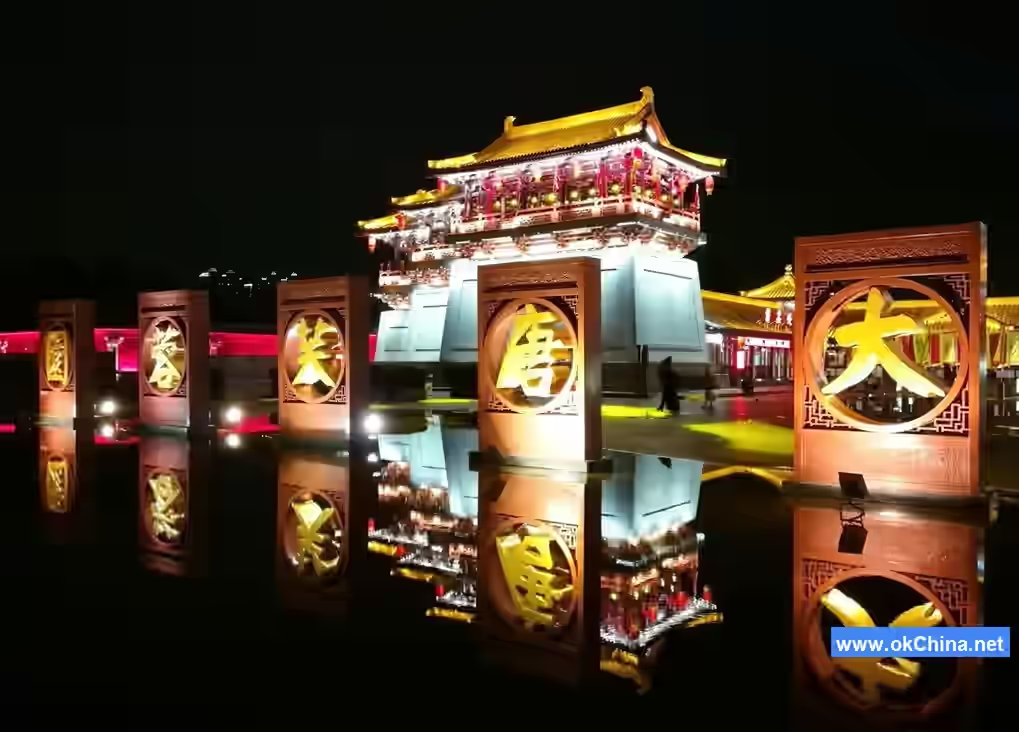
"Great Tang Dream Pursuit" is a large-scale water dance and light show launched by the Tang Paradise. The performance uses "the culture and customs of the prosperous Tang Dynasty" as its载体, "the Qujiang Banquet" as its original theme, "vision" as its立意, and "dreams" as its主题. By integrating technology with historical culture, it creates a unique梦幻 experience of light, shadow, and boat rides.
2022 Spring Festival Lantern Festival
On January 27, 2022, tens of thousands of lanterns at Tang Paradise were lit to welcome visitors, offering a chance to admire the lanterns, enjoy the scenery, and experience renewal while Chang’an remains timeless. Outside the Imperial Garden gate of Tang Paradise, the "Lucky Tiger Welcomes Spring" lantern display was radiant and magnificent. The adorable tiger-head hats, lively and full of vigor, were popular during the Tang Dynasty, symbolizing protection for children against evil spirits and viruses, and embodying hopes for health, peace, and happiness. They conveyed wishes for smooth sailing and new beginnings in 2022.
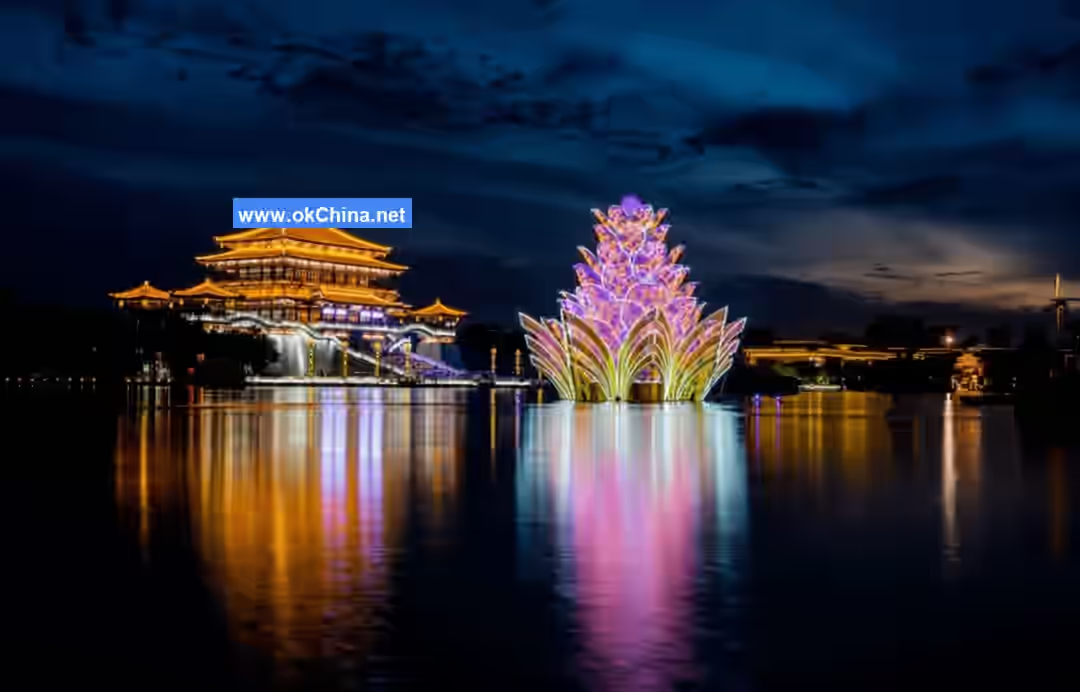
The large-scale interactive water lantern installation "Lotus Throne and Celestial Pivot" in front of Ziyun Tower featured a glowing "lotus flower" at its top, blooming with thousands of petals like clouds and rosy clouds stretching for miles, symbolizing吉祥 and平安. The "Dragon and Phoenix Bring Prosperity" lantern installation on the white marble Lotus Bridge盘旋飞舞, grand and majestic,寓意 the auspicious dragon and phoenix would bring abundant blessings to visitors in the new year. The "Water Pavilion and Jade Pool" lantern installation on Swan Lake integrated sound, light, lanterns, and scenery to create an immersive lantern festival experience. The themed performances there would奏响 blessings for the new spring, wishing for joy and renewal year after year.
The "Phoenix Soaring" lantern installation on the阙桥 east and west of Ziyun Tower prayed for prosperity and安康. The bracket通道 lanterns near the Ladies’ Pavilion演绎 the splendor of the盛唐. The "Drums and Music for Eternity" in the children’s play area allowed both kids and adults to rediscover childhood joy... Under the lantern-lit芙蓉 night, it felt like a small团圆 in the mortal world. The stunning water and land lanterns transported visitors back a thousand years, dreaming of the Tang Dynasty’s上元 Lantern Festival.
Comments
Post a Comment