Famen Cultural Scenic Area in Baoji
I. Introduction
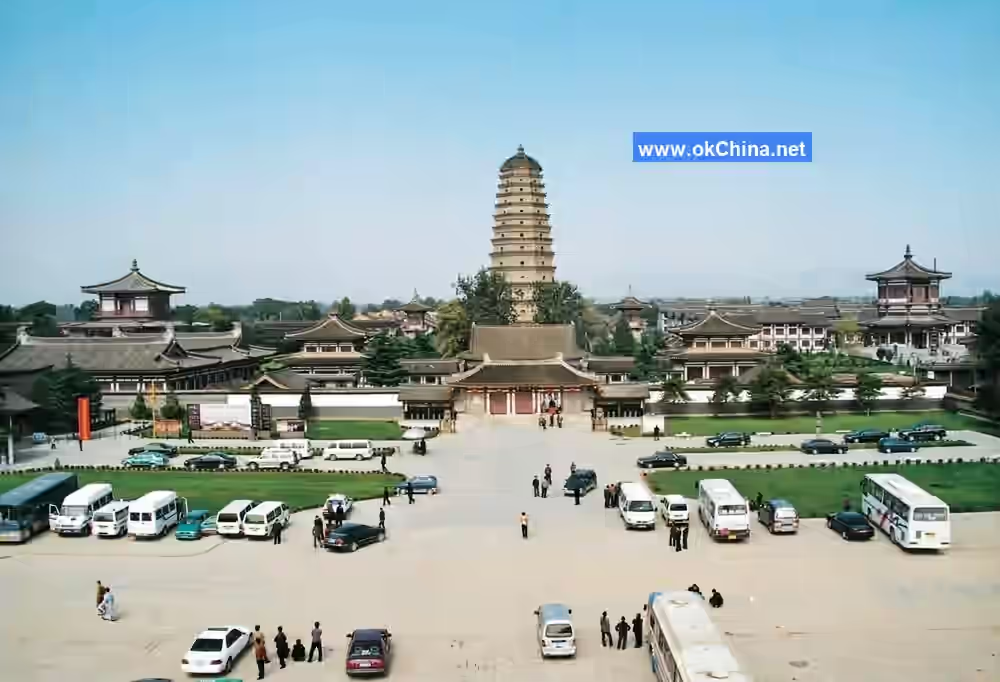
The Famen Cultural Scenic Area in Baoji City, abbreviated as the Famen Cultural Scenic Area, is located in Famen Town, 10 kilometers north of Fufeng County, Baoji City, Shaanxi Province. It lies 110 kilometers east of Xi'an and 90 kilometers west of Baoji. Famen Temple was initially built during the reign of Emperors Huan and Ling in the late Eastern Han Dynasty, boasting a history of approximately 1,700 years. It is renowned as the "Ancestor of Pagoda Temples in Guanzhong" and has become a nationally revered Buddhist sanctuary due to its enshrinement of a finger bone relic of Sakyamuni Buddha. On May 9, 2009, the Famen Temple Cultural Scenic Area was completed and opened to the public. Covering an area of 1,300 mu, the scenic area comprises the Mountain Gate Square, the Buddha's Light Avenue, the Famen Temple monastery, the Heshijiali Pagoda (Pagoda of Palms Joined in Reverence), and numerous sculptures.
II. Historical Development
Initial Construction of Famen
Famen Temple was first built during the reign of Emperors Huan and Ling in the late Eastern Han Dynasty. The temple was established around a pagoda constructed to house relics. This wooden pagoda had four stories, with an underground palace beneath it. Inside the palace was a coffin made of sandalwood, containing a golden vase that held the finger bone relic of the Buddha. The wooden pagoda was named the "True Body Relic Pagoda," and the temple built around it was originally called King Ashoka Temple. After Sakyamuni Buddha entered parinirvana, his body was cremated, resulting in relics. In the 3rd century BC, after King Ashoka unified India, he divided the Buddha's relics into 84,000 portions to propagate Buddhism. These were distributed by various spirits to countries worldwide to be enshrined in pagodas. China received nineteen such portions, with Famen Temple being the fifth site.
The wooden pagoda housing the Buddha's bone relic at Famen Temple was repeatedly damaged during the tumultuous warfare of the Sixteen Kingdoms and the Northern and Southern Dynasties period. Particularly, Emperor Taiwu of Northern Wei, Tuoba Tao, adopting Cui Hao's advice, banned Buddhism and destroyed Buddhist scriptures, statues, and pagodas/temples. This led to the inevitable destruction of the temple's relic pagoda, reducing it to ruins. However, devotees continued to visit to burn incense and worship the Buddha, and the site was referred to by people of that time as the "Holy Mound." In 558 AD, Tuoba Yu, a descendant of the Northern Wei imperial family and the Regional Inspector of Qizhou, restored King Ashoka Temple and the relic pagoda. Furthermore, in the second year of Emperor Gong of Western Wei (555 AD), the pagoda was opened for the first time to view the relics, greatly enhancing Famen Temple's reputation and establishing it as one of China's four major Buddhist sacred sites.
In the third year of the Kaihuang era of Emperor Wen of Sui (583 AD), the temple was renamed "Chengshi Daochang" (Realization Dharma Arena), and the relic pagoda was correspondingly called the "Chengshi Daochang Relic Pagoda." In the second year of the Renshou era (602 AD), Li Min, the Right Palace Aide, opened the pagoda for a second viewing of the relics. In the second year of the Yining era of Sui (618 AD), "Chengshi Daochang" was changed to "Famen Temple," and the pagoda was renamed the "Famen Temple Relic Pagoda." That same year, Famen Temple unfortunately suffered a fire. After the towering flames subsided, only the pagoda base and remnants of walls remained.
In the fifth year of the Zhenguan era of Emperor Taizong of Tang (632 AD), Zhang Deliang, the Prefect of Qizhou, constructed the Wangyun Hall on the pagoda base, replacing the pagoda with a hall building of four stories. In the fifth year of the Xianqing era of Emperor Gaozong of Tang (660 AD), the Buddha's bone was welcomed to the eastern capital Luoyang. After being venerated for three years, it was returned to the underground palace of Famen Temple in the second year of the Longshuo era (662 AD). Emperor Gaozong also ordered monks like Huigong and Yifang to rebuild the Famen Temple pagoda. Emperor Gaozong once donated 5,000 strings of cash and 5,000 bolts of silk to the temple. Imperial family members and high officials also competed in donating goods and money. The Forest of Gems in the Garden of the Dharma records the grand occasion: "At that time, within and outside the capital, clergy and laypeople lined up continuously for over 200 li, coming and going in succession." Zhang's Inscription on the True Body Pagoda of the King Asoka Temple described the rebuilt Famen Temple pagoda: "It raises a pillar to support the heavens." It is known from this that King Ashoka Temple was also called "King Asoka Temple," and the pagoda was also named the "True Body Pagoda of King Asoka Temple." In the fourth year of the Jinglong era of Emperor Zhongzong of Tang (710 AD), the relic pagoda was inscribed as the "Great Sage True Body Pagoda," also known as the "Nation-Protecting True Body Pagoda."
In the second year of the Longde era of Emperor Mo of Later Liang (922 AD), Li Maozhen, the former Tang military governor and Prince of Qi, repaired the wooden pagoda, added a central pillar, and covered the pagoda top with green glazed tiles. Thanks to Li Maozhen's repairs, the four-story wooden pagoda was preserved until the late Ming Dynasty.
Veneration in the Tang Dynasty
Over more than 200 years of the Tang Dynasty, eight emperors—Gaozong, Empress Wu, Zhongzong, Suzong, Dezong, Xianzong, Yizong, and Xizong—welcomed the Buddha's finger bone relic six times and returned it twice. Each welcoming and sending-off ceremony was grand and sensational, causing a stir in both court and common society. The emperors performed prostrations and worship, a level of reverence unparalleled in history. Historical records state that "opening [the pagoda] every thirty years brings abundant harvests and harmony among people," capable of quelling conflicts, ensuring national peace and prosperity, and favorable weather. On the fourth day of the first lunar month in the fifteenth year of the Xiantong era (874 AD), when Emperor Xizong of Tang, Li Xuan, returned the Buddha's bone for the last time, following Buddhist rituals, the Buddha's finger bone relic along with thousands of rare treasures were sealed together into the underground palace beneath the pagoda, enshrined using Tang Esoteric mandala altar arrangements. Tang emperors devoutly believed in Buddhism and piously venerated the relics. The temple propagated both Mahayana and Hinayana teachings, harmonizing exoteric and esoteric Buddhism, making Famen Temple an imperial monastery and a world-renowned Buddhist sacred site. The pagoda was honored as the "Nation-Protecting True Body Pagoda."
The welcoming of the Buddha's bone intensified towards the end of the Tang Dynasty, reaching its climax. The so-called welcoming of the Buddha's bone involved bringing the bone, enshrined in the underground palace beneath the pagoda base, into the imperial palace in Chang'an City for veneration every thirty years. The most magnificent occasion was in the fourteenth year of the Xiantong era of Emperor Yizong of Tang (873 AD). Preparations for this welcoming took two years. At that time, along the over 200 li route from the capital Chang'an to Famen Temple, carriages and horses moved day and night without cease, with food and drink supplied along the way, called "unobstructed almsgiving." The procession for welcoming the Buddha's bone was led by the resplendently armored and fully armed Imperial Guards, escorted by civil and military officials, supported by renowned monks, with banners blocking the sun and drums and music resounding. Devout men and women believers lined the route in worshipful homage. Various colored towers made of silk and satin were erected on streets throughout Chang'an. Emperor Yizong personally went to the Xunfu Gate tower to welcome and prostrate himself in worship, while officials and the masses paid respects along the streets. The Buddha's bone was first welcomed to the imperial palace for three days of veneration, then taken to monasteries in the capital for轮流供养 (rotational供养). Civil and military officials and wealthy families competed in donating gold and silk. People from all directions, supporting the old and carrying the young, came to view it, with some even severing arms or fingers to demonstrate piety. After this welcoming, the underground palace was closed, remaining isolated from the world for 1,113 years. Famen Temple also faced misfortune during the Tang Dynasty. Emperor Wuzong of Tang launched a large-scale persecution of Buddhism in the fifth year of the Huichang era (845 AD), historically known as the "Huichang Persecution." Emperor Wuzong ordered the destruction of the Buddha's finger bone relic. However, beforehand, the temple monks had prepared several "shadow bones" (replicas) of the Buddha's finger bone relic to敷衍 (fudge) the imperial command, while secretly hiding the true finger bone of Sakyamuni Buddha.
The Imperial Buddhist Monastery in the Song Dynasty
In the Song Dynasty, Famen Temple inherited the grand scale of the Tang imperial monastery and was restored to its largest extent. At that time, just one of its twenty-four compounds, the "Bathhouse Compound," could accommodate a thousand people for bathing daily. Emperor Huizong of Song personally inscribed the four characters "皇帝佛国" (Emperor's Buddha Land) above the mountain gate. During the Jin and Yuan periods, Famen Temple remained a famous temple in Guanzhong. The "Sutra-Collection Stele" records that temple monks copied 5,000 volumes of the Buddhist canon. The Jin people also carved a "Poetry Stele" praising its temple and pagoda: "Its three-tiered eaves and wind-bells surpass Lu's territory; its nine-coiled轮相 (spire) strengthens the Qin plain."
Decline in the Ming and Qing Dynasties
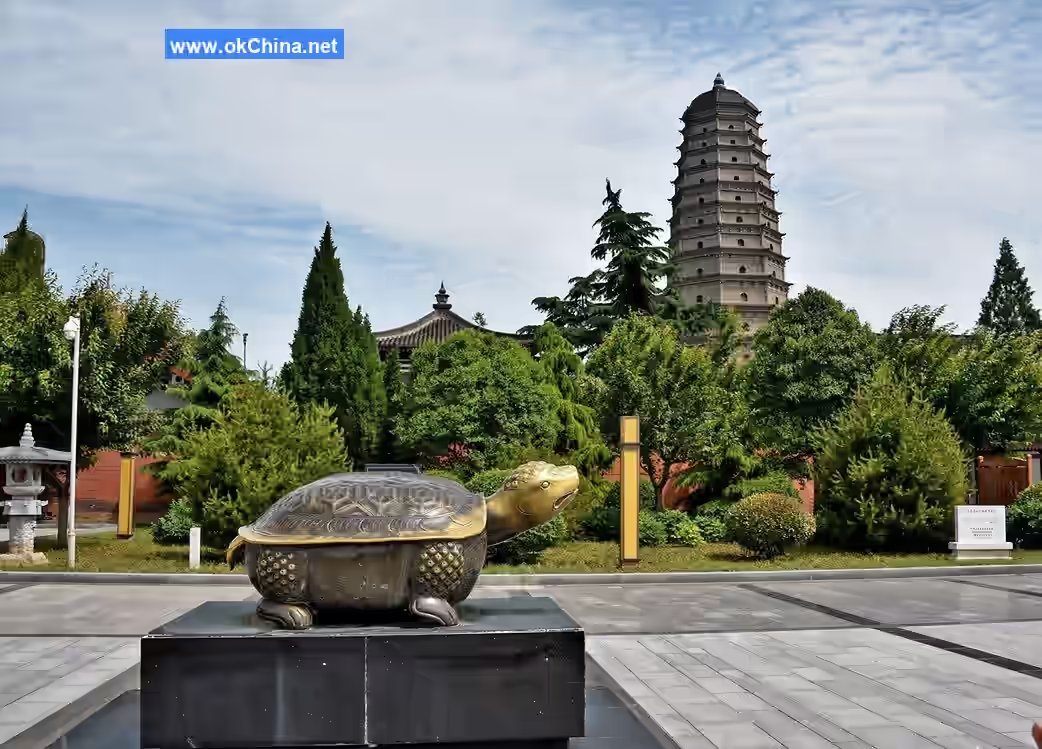
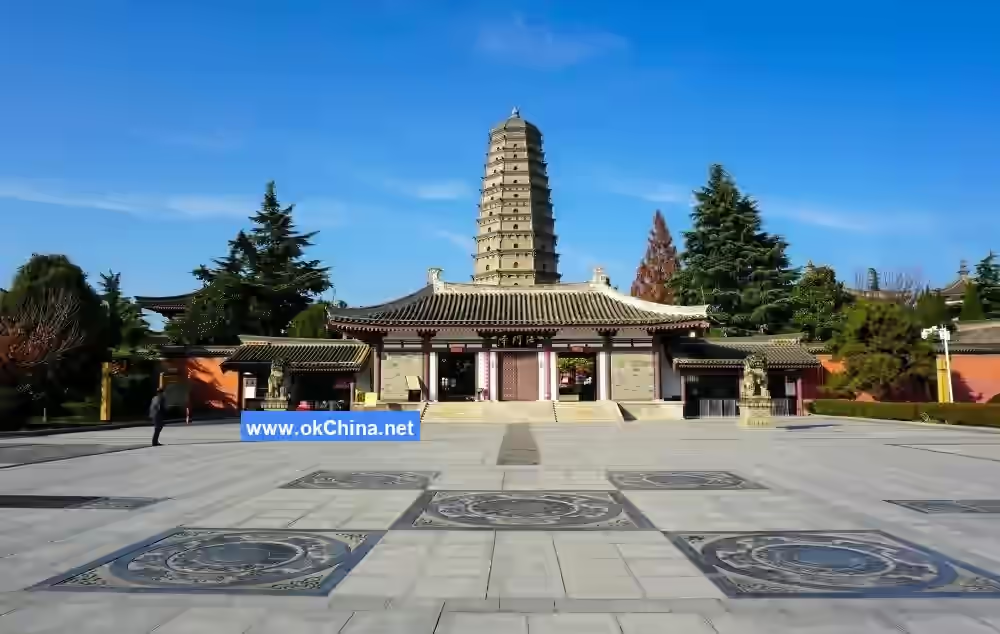
After the Ming and Qing dynasties, Famen Temple gradually declined. In the third year of the Longqing era of Ming (1569 AD), an earthquake struck the Fengxiang Prefecture, causing the collapse of the centuries-old four-story Tang wooden pagoda. In the seventh year of the Wanli era of Emperor Shenzong of Ming (1579 AD), local gentry such as Yang Yuchen and Dang Wanliang donated funds to repair the pagoda. After thirty years, an octagonal thirteen-story brick pagoda was completed, standing 47 meters high. Its edges were built with carved decorative bricks, and bells hung at the corners. The ground-level first-story pagoda door faced south. The four正面 (main sides)—east, south, west, and north—all had exquisite stone carvings, respectively: "浮屠耀日" (Pagoda Gleaming in the Sun), "真身宝塔" (True Body Pagoda), "舍利飞霞" (Relic Amid Flying Rosy Clouds), and "美阳重镇" (Important Town of Meiyang). The four偏面 (oblique sides)—northeast, northwest, southwest, and southeast—were inlaid with the eight trigrams symbols: Qian, Kan, Gen, Zhen, Xun, Li, Kun, Dui. From the second to the eighth story, the pagoda had bracket sets and railings. From the ninth story upward, blue bricks formed the屋檐 (eaves). From the second to the twelfth story, each story had eight niches, each enshrining one to three bronze Buddha statues. Beside the statues were placed scripture boxes, covered with iron mesh. The pagoda top was cast in bronze, three pieces joined to form a gourd shape, inscribed with eight regular script characters: "明万历三十七年造" (Made in the 37th Year of Wanli, Ming). Overall, the relic pagoda had a base side length of 27 meters and a height of 1.8 meters. The combined height of the base, body, and top totaled 60.25 meters, towering and magnificently grand. During the Longqing era of Ming, craftsmen repairing Famen Temple witnessed the treasure casket containing the Buddha's bone in the underground palace. According to the Fufeng County Annals: "During the Longqing era of Ming, the pagoda collapsed. Opening its treasury to view it, it was several zhang deep, exquisitely crafted, resplendent with gold and jade. A pool of mercury, with a golden boat floating on it. Inside, a casket stored the Buddha's bone, with a golden kasaya still beside it." However, awestruck and out of reverence for the Buddha, the craftsmen dared not disturb the Buddha's bone casket or the underground palace treasures. The underground palace was subsequently sealed, and a new pagoda was built above it.
In the eleventh year of the Shunzhi era of Qing (1654 AD), another earthquake struck the Guanzhong region, causing the Famen Temple pagoda body to tilt southwest. Many Buddha statues fell from their niches to the ground. In the first year of the Tongzhi era of Qing (1862 AD), Famen Temple was once occupied due to turmoil, and the monastery was also destroyed by a major fire.
Renovation in the Republic of China Era
In the 28th year of the Republic of China (1939 AD), under the leadership of Mr. Zhu Ziqiao, a patriotic personage and then chairman of the North China Charity Association, Shanghai industrialists Li Zushen and Li Zucai brothers donated 30,000 yuan. An additional 20,000 yuan was raised from various sources, enabling the largest-scale renovation since the late Ming Dynasty. The project lasted one year and four months, completing in July 1940. During the renovation of Famen Temple, a worker accidentally discovered a corner of the underground palace. At that time, China was beset by internal troubles and external threats, with war raging. Japanese invaders' planes were bombing Xi'an and approaching its surroundings, and displaced refugees were everywhere. Moreover, the world-shocking tomb robbery case of the Eastern Qing Tombs had occurred only about ten years prior. To ensure the safety of the underground palace, Mr. Zhu Ziqiao, overseeing the renovation work, immediately gathered those in the know, requiring them to swear to keep the secret, never letting outsiders, especially greedy Japanese, know about it; otherwise, they would be eternal sinners of the Chinese nation. It was later proven that these知情者 (those in the know) were indeed upright men of the Qin plain, true to their word, as no one leaked the secret of the underground palace. Zhu Ziqiao and others resealed the entrance to the underground palace and even对外谎称 (falsely claimed to the outside) that the cave beneath the pagoda was coiled with poisonous snakes, making entry utterly impossible.
After the Founding of the People's RepublicDuring the Cultural Revolution, Red Guards attempted to dig up the pagoda, but Master Liangqing set himself on fire, using his own life to protect the treasures beneath the pagoda.
In August 1976, a major earthquake struck Songpan, Sichuan, and the tremors reached Fufeng. The bricks on the southwest side of the second level of the Famen Temple Pagoda shattered and fell, causing the pagoda to tilt severely to the southwest. Subsequently, cracks and collapses continued to appear in the pagoda. By September 1981, the top of the pagoda had collapsed on its own, leaving only half of the structure precariously standing on a damaged brick and stone foundation.
In February 1987, while repairing the collapsed brick pagoda of Famen Temple, which had fallen into disrepair over the years, the cultural heritage units at the provincial, city, and county levels in Shaanxi Province discovered the Tang Dynasty underground palace of Famen Temple. The Tang cultural treasures, which had been沉睡 underground for 1,113 years, including the true relic of Buddha Shakyamuni's finger bone and a large number of precious Tang Dynasty artifacts offered to the relic, were brought to light. This was a significant new archaeological discovery in China, following the Banpo and the Terracotta Army. The pagoda rebuilt in 1988 was constructed entirely in the style of the Ming Dynasty's thirteen-story octagonal pagoda, and the brick structure was replaced with reinforced concrete.
On May 25, 2006, the Famen Temple site, as an ancient site from the Northern and Southern Dynasties to the Qing Dynasty, was approved by the State Council to be included in the sixth batch of national key cultural relics protection units. On October 1 of the same year, the Shaanxi Famen Temple Cultural Scenic Area Construction Co., Ltd. was approved for establishment, with a management and construction team dispatched by the Xi'an Qujiang New District, fully responsible for the construction of the Famen Temple cultural scenic area. The minutes of the "Coordination Leading Group Meeting for the Development and Construction of the Famen Temple Cultural Scenic Area" on the morning of October 16 of the same year proposed that land acquisition and demolition work, as well as the land required for the Hesh Relic Pagoda, the Buddha Light Avenue, and the square, would be coordinated by the Shaanxi Provincial Department of Land and Resources.
On April 16, 2007, the main entity for the scenic area's development and construction, Shaanxi Famen Temple Cultural Scenic Area Construction Co., Ltd., was established. The company's registered capital was 700 million yuan.
On May 9, 2009, the Famen Temple cultural scenic area was completed and opened to the public. In February 2020, to pay tribute to medical workers fighting on the front lines of the pandemic, the scenic area implemented a free admission policy for medical workers nationwide with valid certificates (physician or nurse certificates) from the date of resumption of operations until December 31, 2020.
III. Main Attractions
Mountain Gate Square
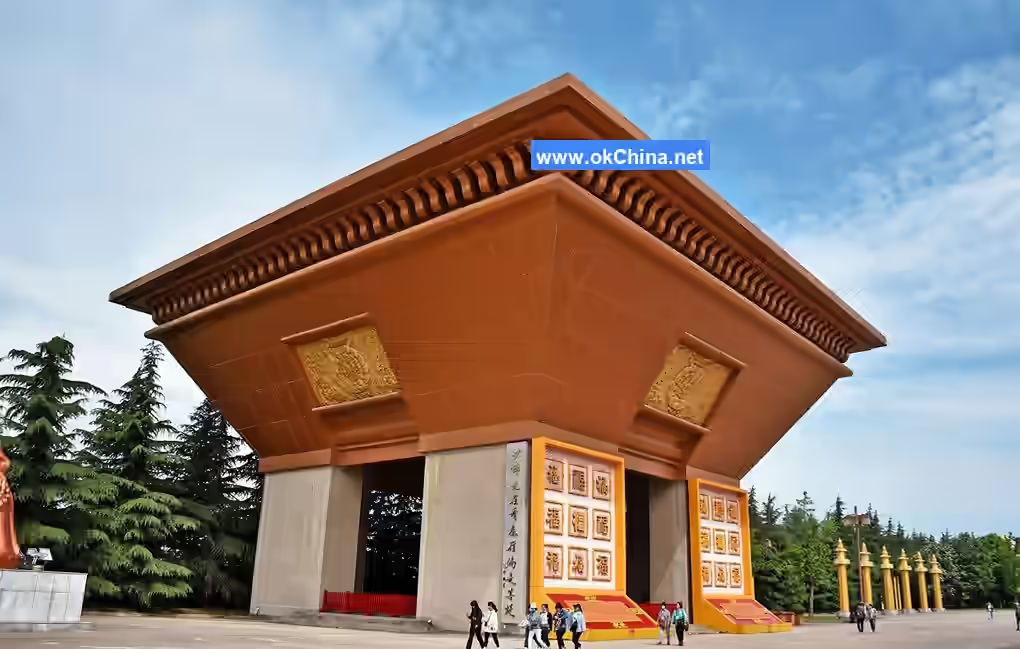
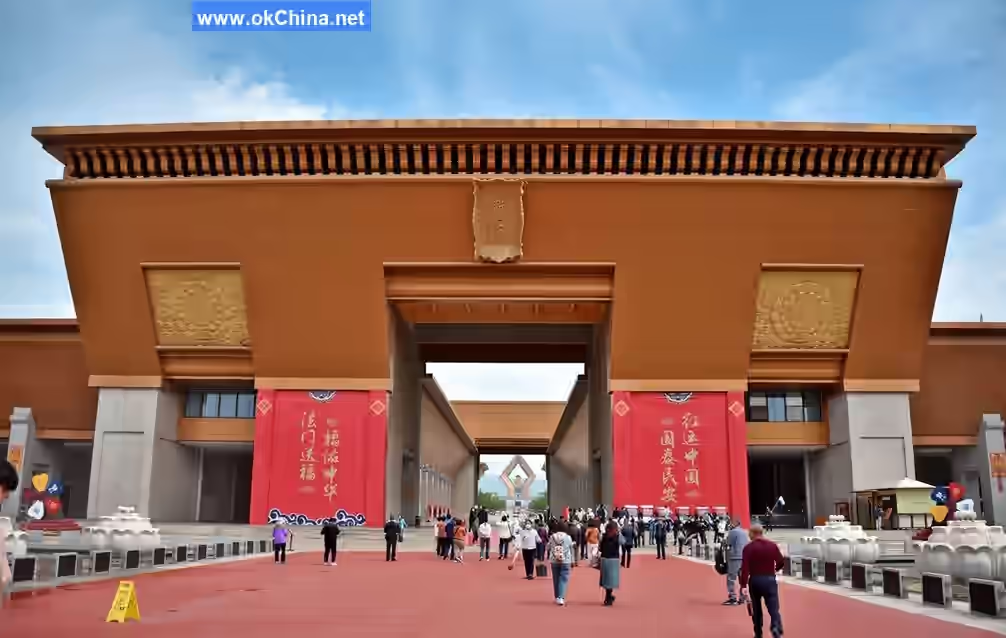
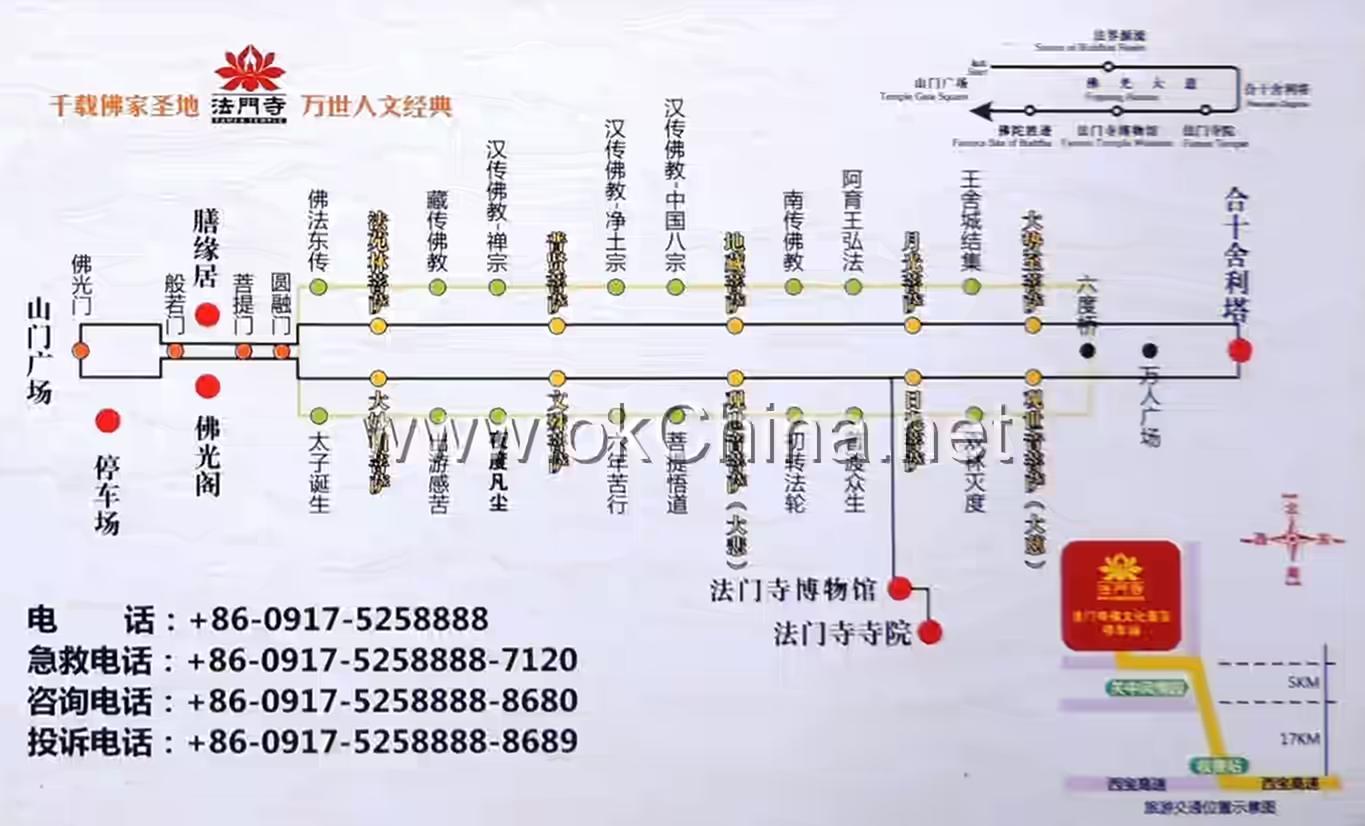
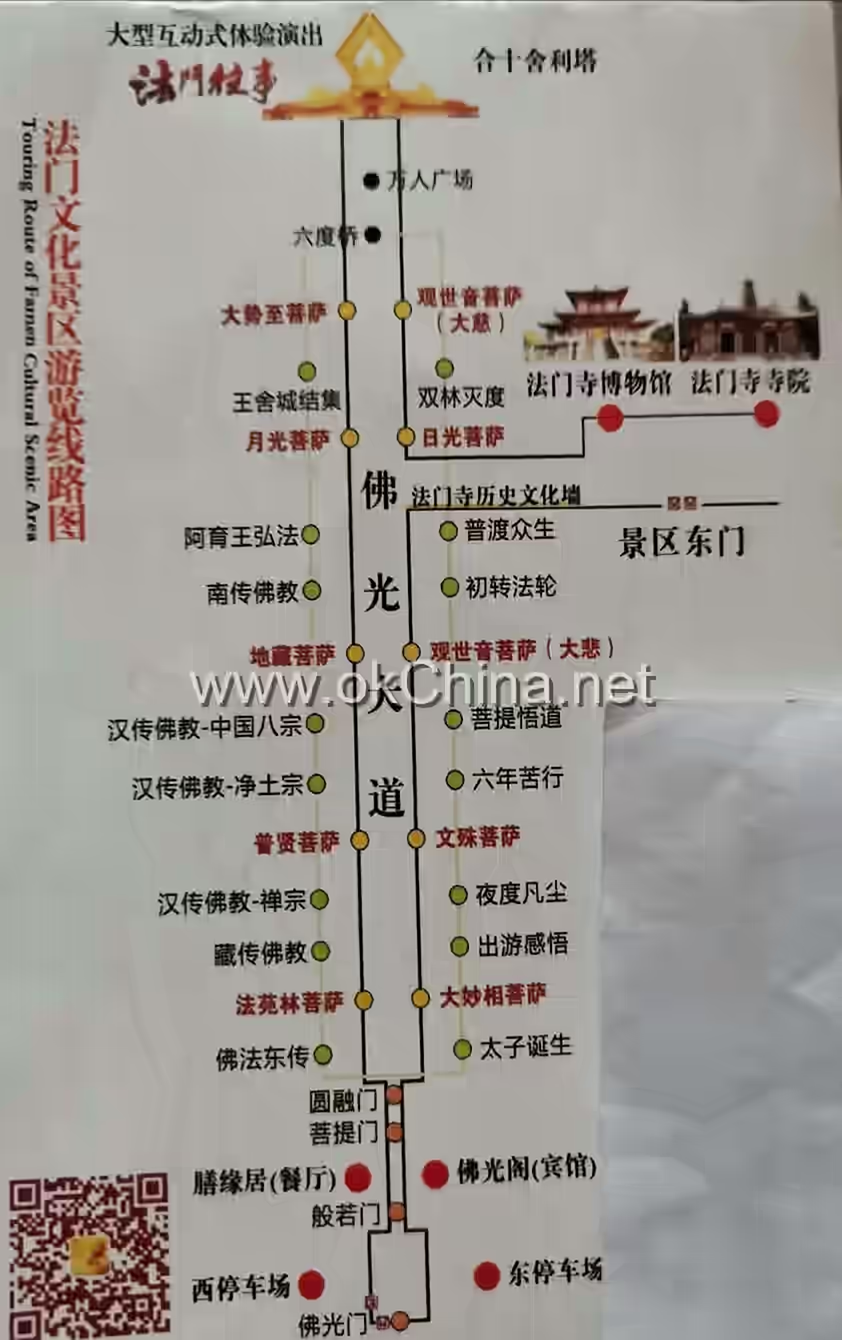
The Mountain Gate Square covers an area of approximately 150,000 square meters and consists of four parts: the Gate of Buddha Light, the Gate of Prajna, the Gate of Bodhi, and the Gate of Perfect Harmony. This area includes comprehensive facilities such as hotels, vegetarian restaurants, Tang Dynasty Zen tea houses, lecture halls, tourist souvenir shops, visitor centers, large supermarkets, and electric vehicle rentals. The architectural design of the Mountain Gate Square is grand and majestic, connecting to the Buddha Light Avenue in the north, symbolizing the process of sentient beings crossing from this shore to the Buddha's other shore.
Buddha Light Avenue
The Buddha Light Avenue is 1,230 meters long and 108 meters wide. The number 1 represents the enshrinement of the world's only relic of Buddha Shakyamuni's finger bone; 2 represents the old and new pagodas; 3 represents the design and planning of the Three Jewels of Buddhism (Buddha, Dharma, Sangha); and 0 represents all sentient beings. As for 108, for example, the prayer beads held by monks are 108 in number, with each bead representing the letting go of a particular affliction.
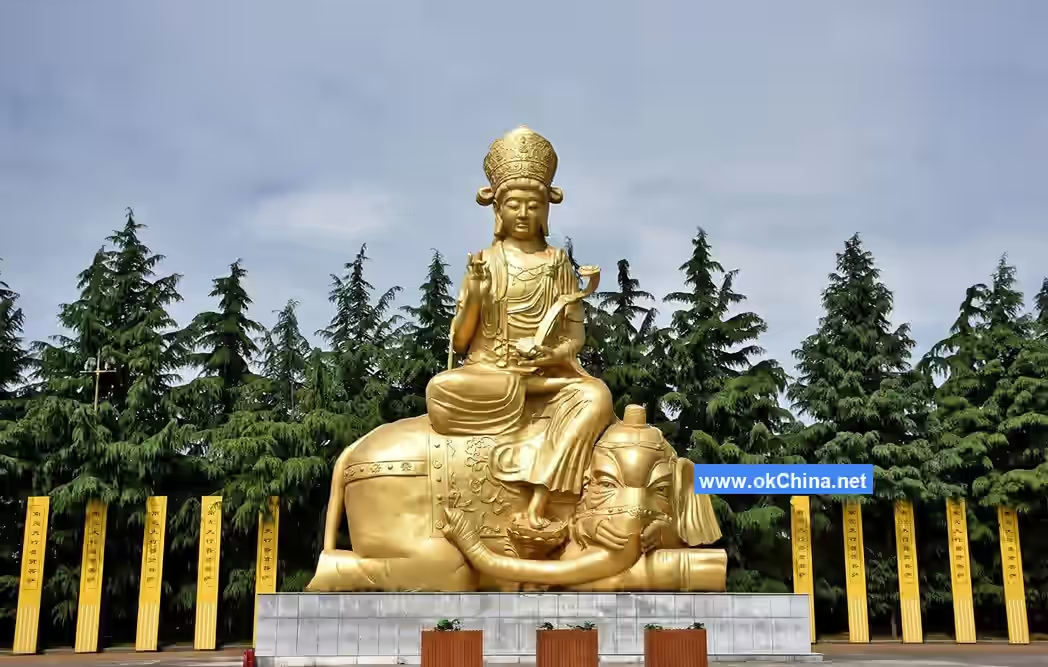
The Buddha Light Avenue is divided into a main path and auxiliary paths. The main path is lined with ten statues of Bodhisattvas and sutra pillars. The yellow cylindrical structures on both sides are Buddhist sacred objects called sutra pillars, often inscribed with Buddhist scriptures, symbolizing the wisdom of the Dharma that can subdue all afflictions. The sutra pillars are arranged according to the five periods of Buddhism: the Avatamsaka period, the Agama period, the Vaipulya period, the Prajna period, and the Lotus Sutra period. The Avatamsaka period refers to the Dharma realm's teachings for great Bodhisattvas, emphasizing Mahayana Buddhism. The auxiliary paths feature eight landscape installations on each side, with the east side depicting the Buddha's sacred traces and the west side illustrating the origin and flow of the Dharma realm.
Famen Temple Monastery
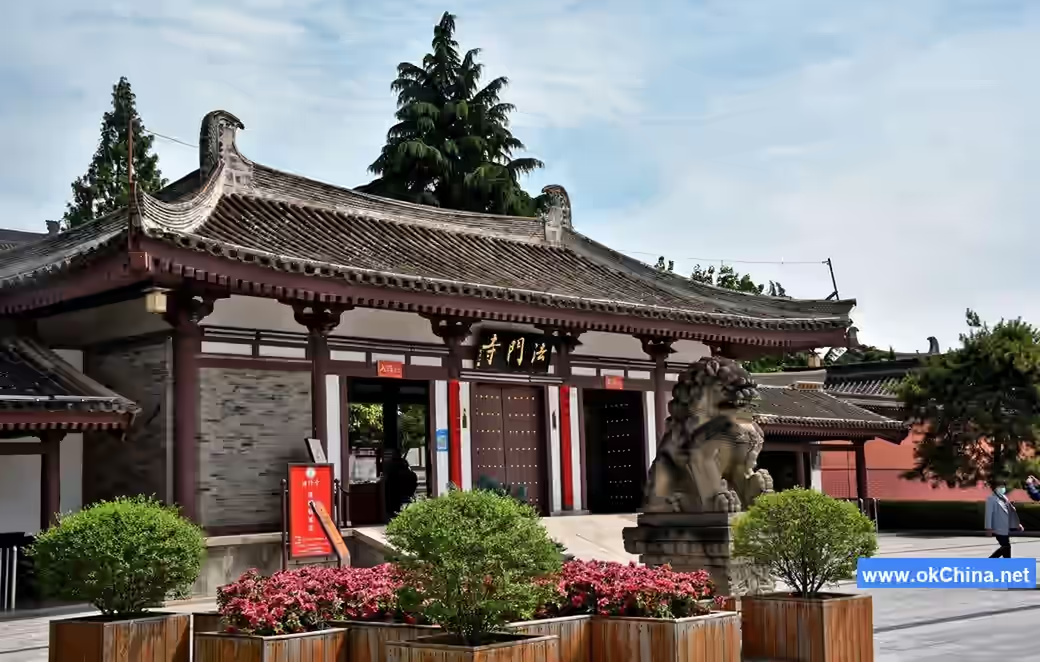
Located on the east side of the northern section of the Buddha Light Avenue is the Famen Temple Monastery, covering an area of approximately 30,000 square meters. It was first built during the reign of Emperor Huan and Emperor Ling in the late Eastern Han Dynasty, about 1,700 years ago, and is known as the "ancestor of pagodas and temples in Guanzhong." Famen Temple was established because of the relic, with the pagoda built first and the temple later. Originally named King Ashoka Temple, it was renamed "Chengshi Daochang" during the reign of Emperor Wen of the Sui Dynasty. In the seventh year of the Wude era of Emperor Gaozu of Tang (625 AD), it was officially built and renamed "Famen Temple," earning the reputation of an imperial temple. On August 24, 1981, half of the pagoda collapsed. In 1986, the government decided to rebuild it, and the pagoda was reconstructed by the end of February 1987. Over 2,499 national treasures from the Tang Dynasty, along with the true relic of Buddha's finger bone, returned to the world! The rare treasures unearthed from the underground palace hold extremely important value for research in Chinese social and political history, cultural history, technological history, history of Sino-foreign exchanges, art history, and more.
Relic Pagoda Square
North of the Buddha Light Avenue is the Six Paramitas Bridge, a necessary bridge for cultivating oneself to attain Buddhahood. "Paramita" is a Sanskrit term meaning "to reach the other shore," signifying the crossing from the shore of afflictions to the shore of enlightenment. The Six Paramitas refer to six methods of transitioning from affliction to enlightenment, from this shore to the other shore, which are also ways of human cultivation. The Six Paramitas are giving, precept observance, patience, diligence, meditation, and wisdom (prajna). Each step taken on the bridge represents a cleansing of the mind. The Six Paramitas Bridge is the必经之路 for sentient beings to cross from the Mountain Gate via the Buddha Light Avenue to the other shore to pay homage to the true body of Buddha. Crossing the Six Paramitas Bridge and passing through the Hundred Thousand People Square leads to the front of the Famen Temple Hesh Relic Pagoda.
Hesh Relic Pagoda
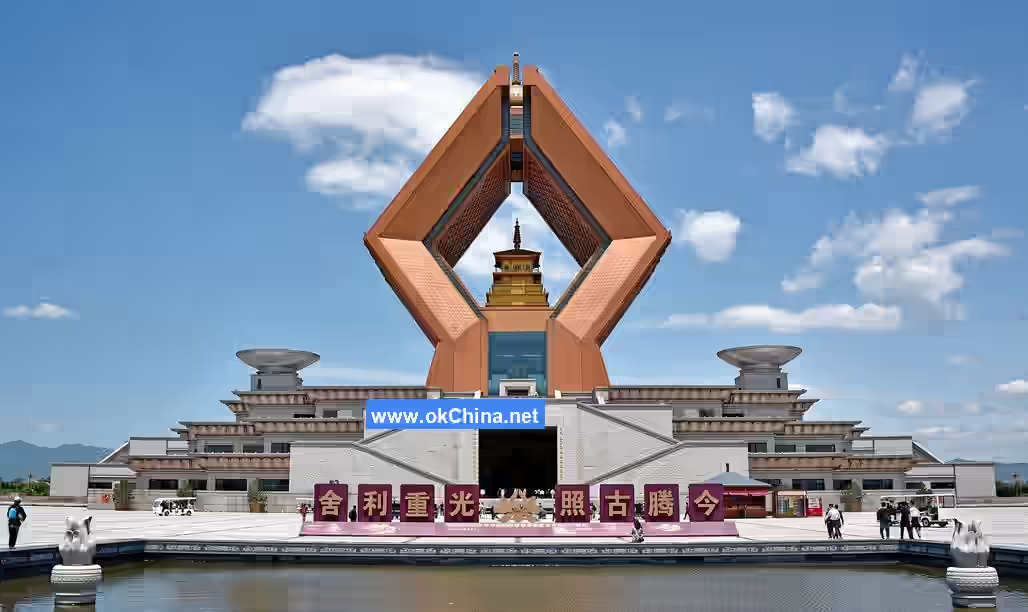
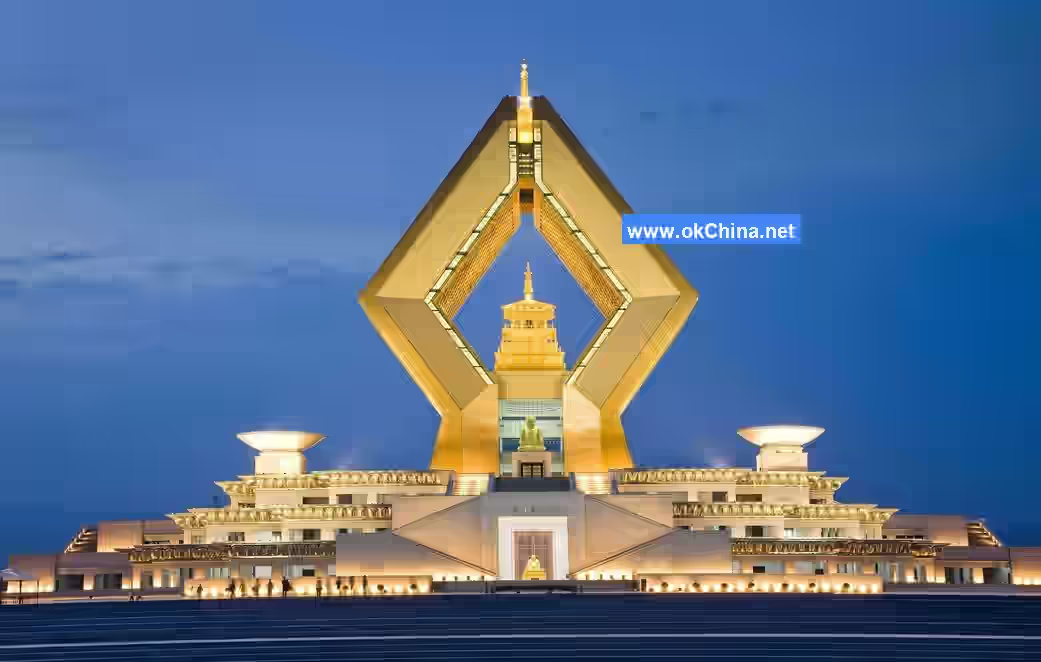
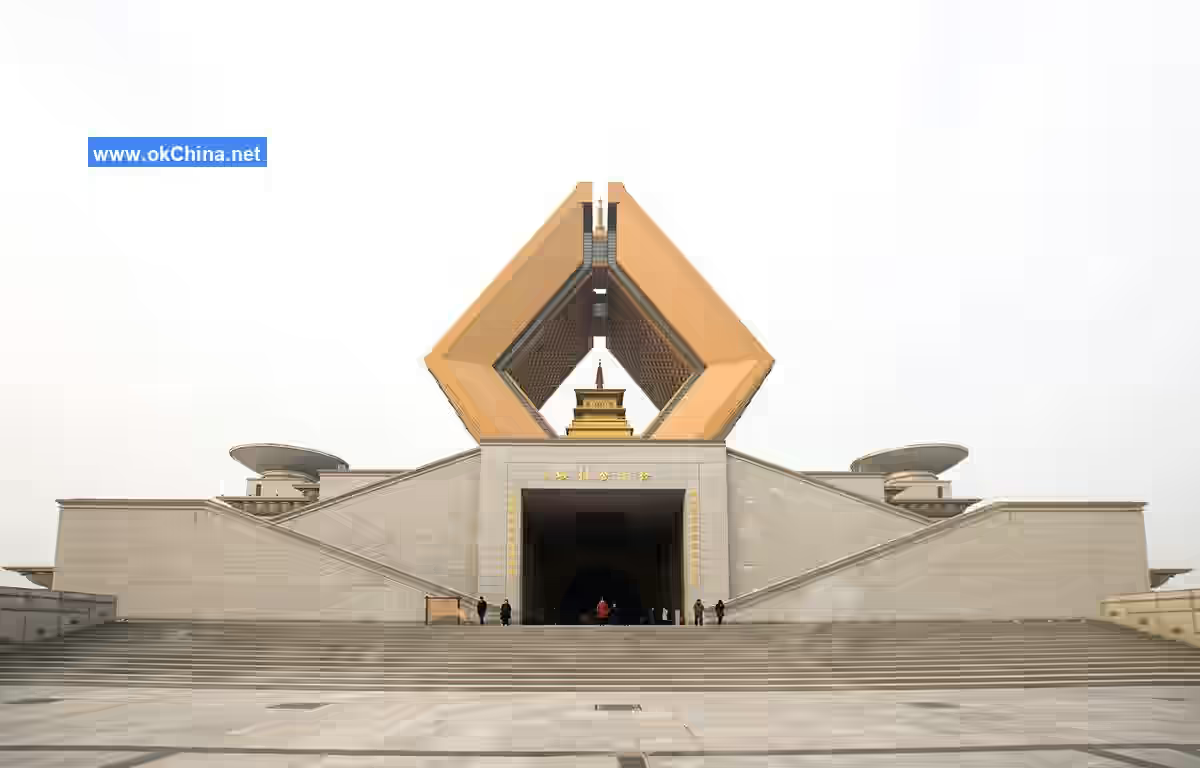
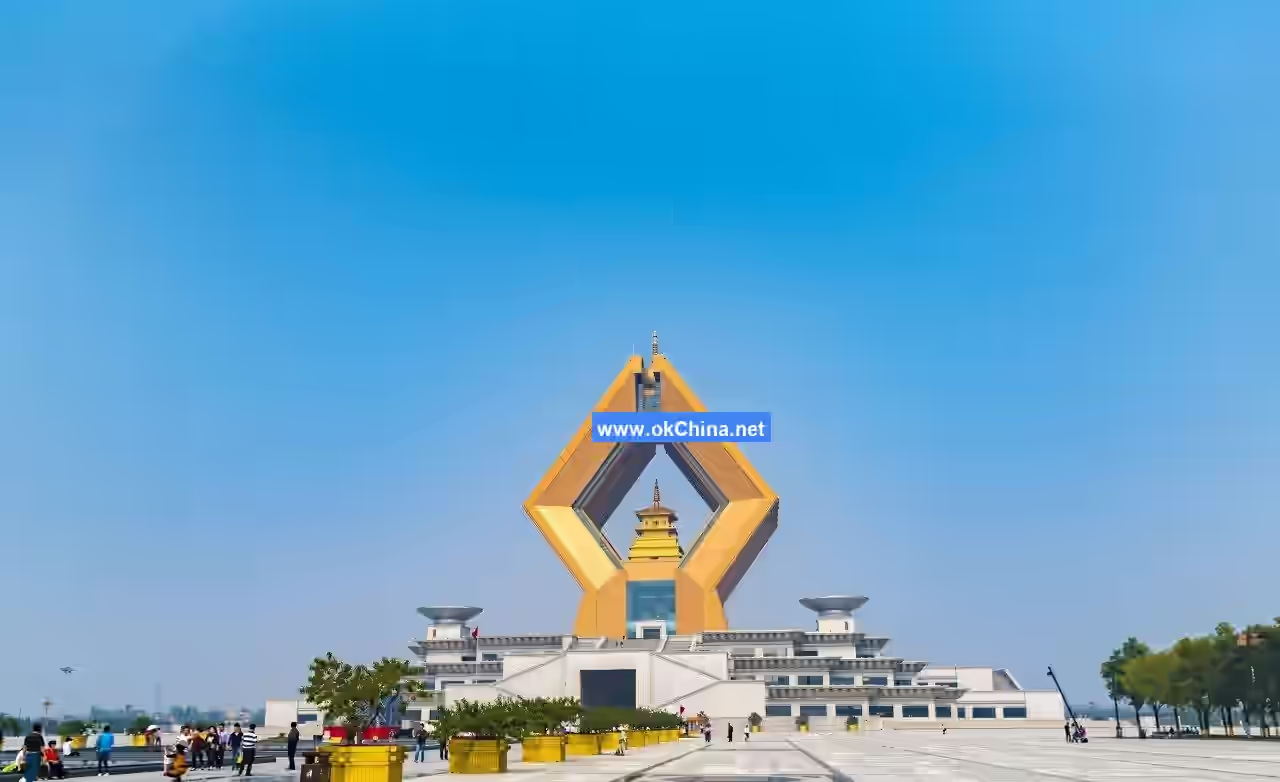
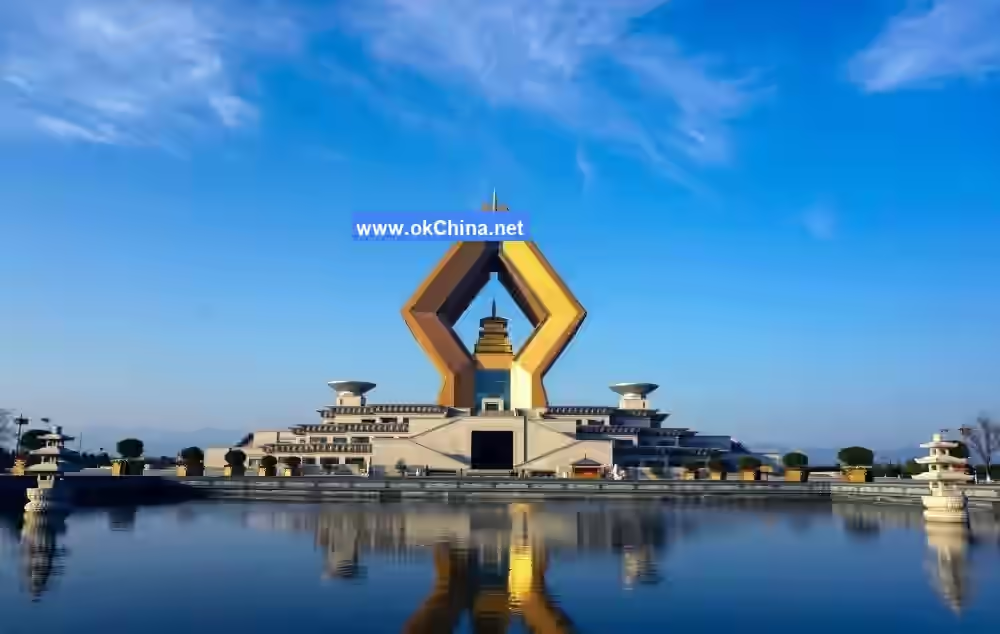
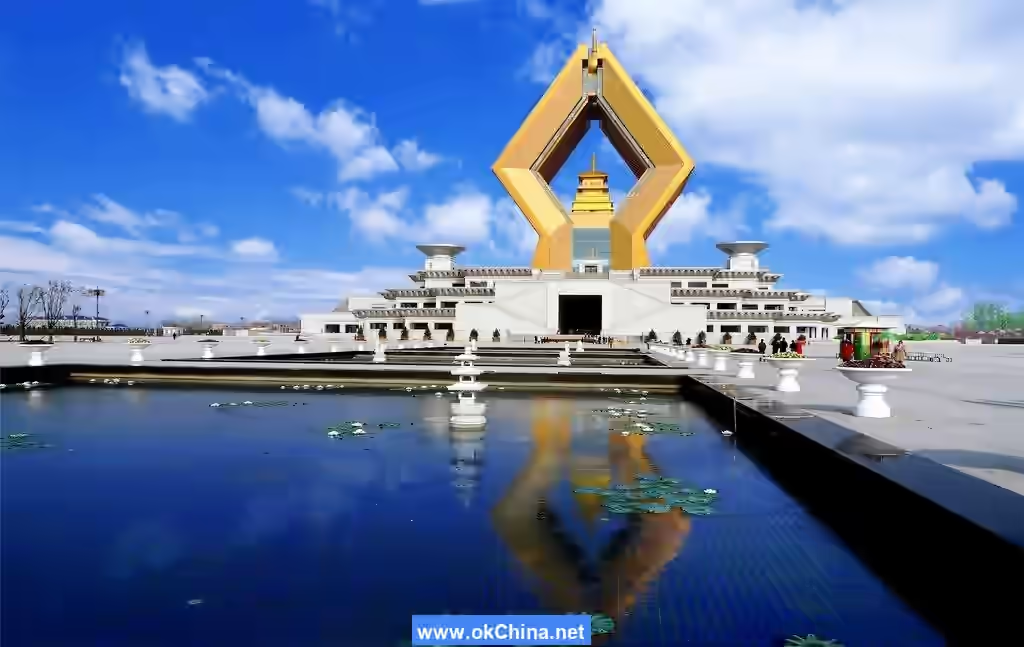
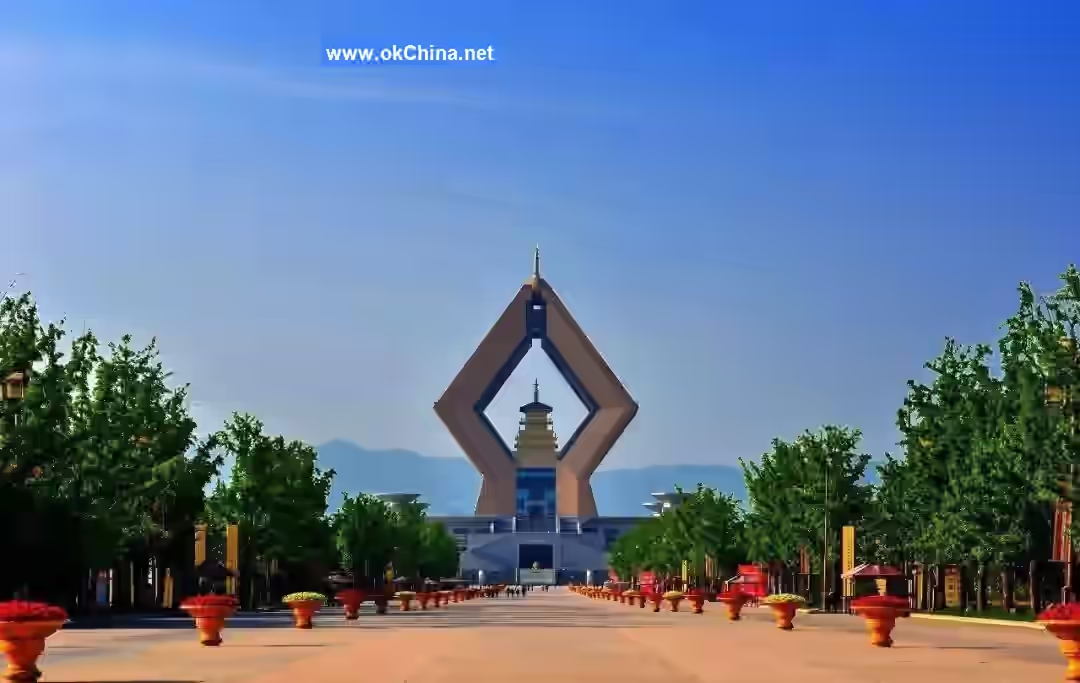
The Hesh Relic Pagoda is solemn, majestic, and grand, enshrining the world's only relic of Buddha Shakyamuni's finger bone. The pagoda's design resembles two hands pressed together in prayer, symbolizing the ritual characteristics of Buddhism, its fundamental理念, and humanity's basic desire for peace. Within the design of the hands pressed together, the embedded Tang-style pagoda represents the perfect融合 of history and modernity. Inside the space formed by the hands, three bodies of Buddha, Buddhas of the three periods, and Bodhisattvas are enshrined, indicating that this is the Dharma realm of the universe. Through the architectural form of hands pressed together, the pagoda expresses the Buddhist ideas of harmony, amity, concord, and peace.
The Hesh Relic Pagoda is 148 meters tall. The "1" signifies that Buddha and sentient beings are not different—Buddha is an enlightened sentient being, and sentient beings are unenlightened Buddhas. The "4" and "8" refer to the eighth day of the fourth month in the lunar calendar, the day of Buddha's birth, symbolizing an era of harmony, peace, and national prosperity. The pagoda has six floors, divided into above-ground and underground palace sections. The underground palace covers an area of over 5,000 square meters, more than 100 times larger than the mysterious underground palace of the ancient Famen Temple, and can accommodate over 2,000 people. In the underground palace, the Four Heavenly Kings, Maitreya Buddha, and Skanda Bodhisattva are enshrined on the south side, while Thousand-Handed Guanyin and Ksitigarbha Bodhisattva are enshrined on the east and west sides.
Famen Temple Museum
The Famen Temple Museum was established following the most significant archaeological discovery of a Tang Dynasty pagoda underground palace in 20th-century China. It is based on the world's only true relic of Buddha's finger bone and the rare artifacts offered by the Tang Dynasty imperial court. It is China's first museum specializing in Tang Dynasty imperial treasures and Buddhist art. The proportion of national treasure-level artifacts and higher-grade cultural relics in its collection is unparalleled among domestic museums. It has become a unique destination for Tang culture and Buddhist cultural tourism in Northwest China and an influential academic and cultural exchange center in the country.
Famen Temple Underground Palace
The Tang Dynasty underground palace of Famen Temple was discovered in 1987 and is the oldest, largest, and highest-grade pagoda地下宫 discovered in the world. The大批文物 preserved in the underground palace are not only of high grade and variety, but some are even完好如初. They provide physical evidence for the study of various disciplines such as Tang Dynasty politics, economy, culture, and religion, holding significant importance for both Chinese and world cultural history. The artifacts from the Famen Temple underground palace represent the pinnacle of Tang culture.
Comments
Post a Comment