Enshi Grand Canyon Scenic Area
1. Introduction
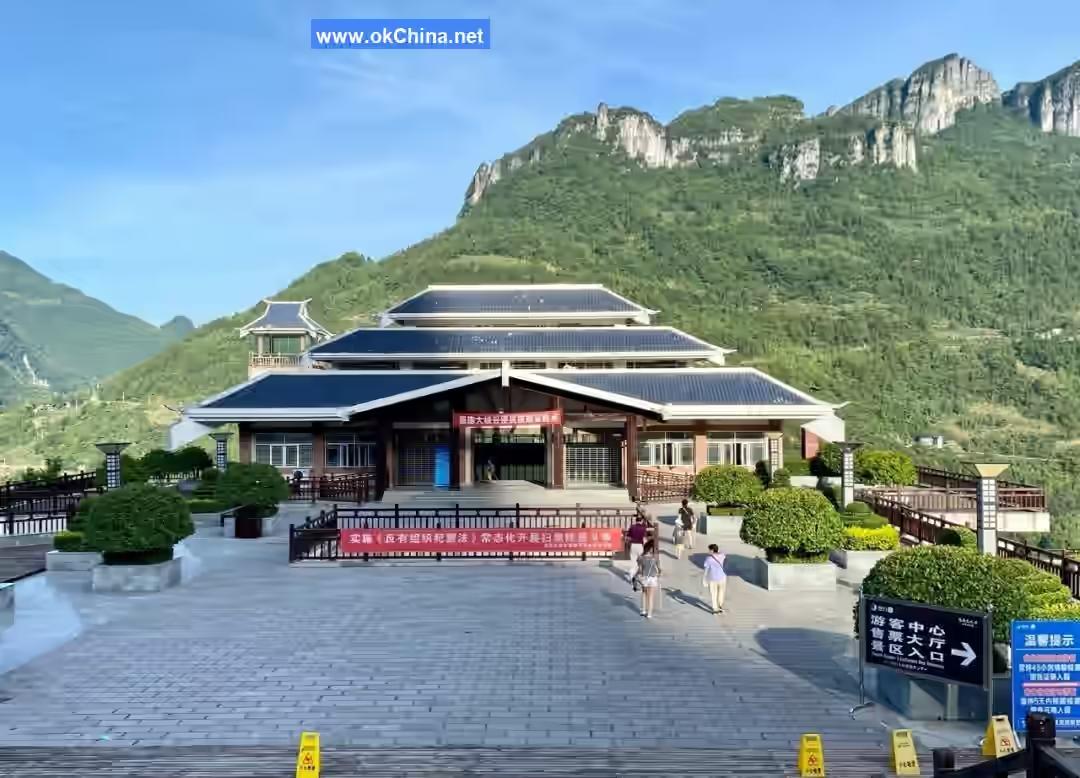
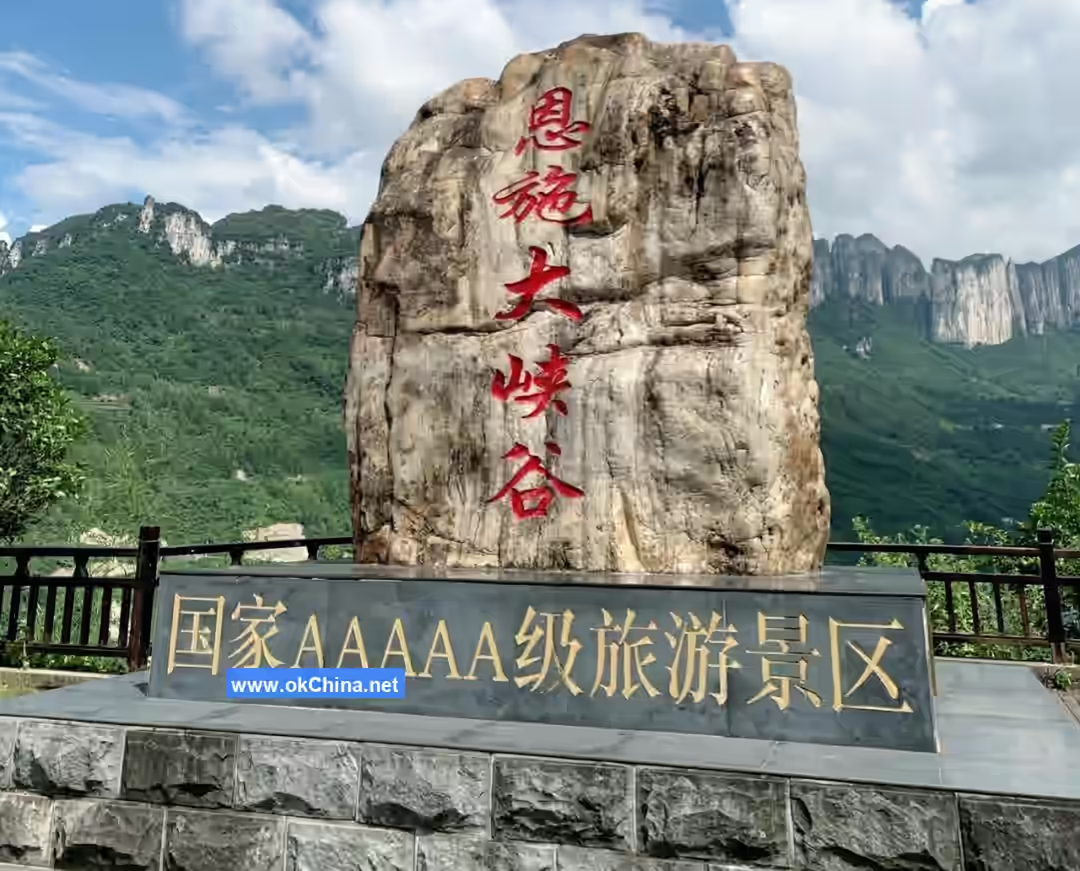
The Enshi Grand Canyon Scenic Area, located in Tunbao Township, Enshi City, Enshi Tujia and Miao Autonomous Prefecture, Hubei Province, sits at the junction of Hunan, Chongqing, and Hubei provinces. It is 49 kilometers from downtown Enshi and 39 kilometers from downtown Lichuan. The canyon stretches 108 kilometers in length and covers an area of 300 square kilometers.
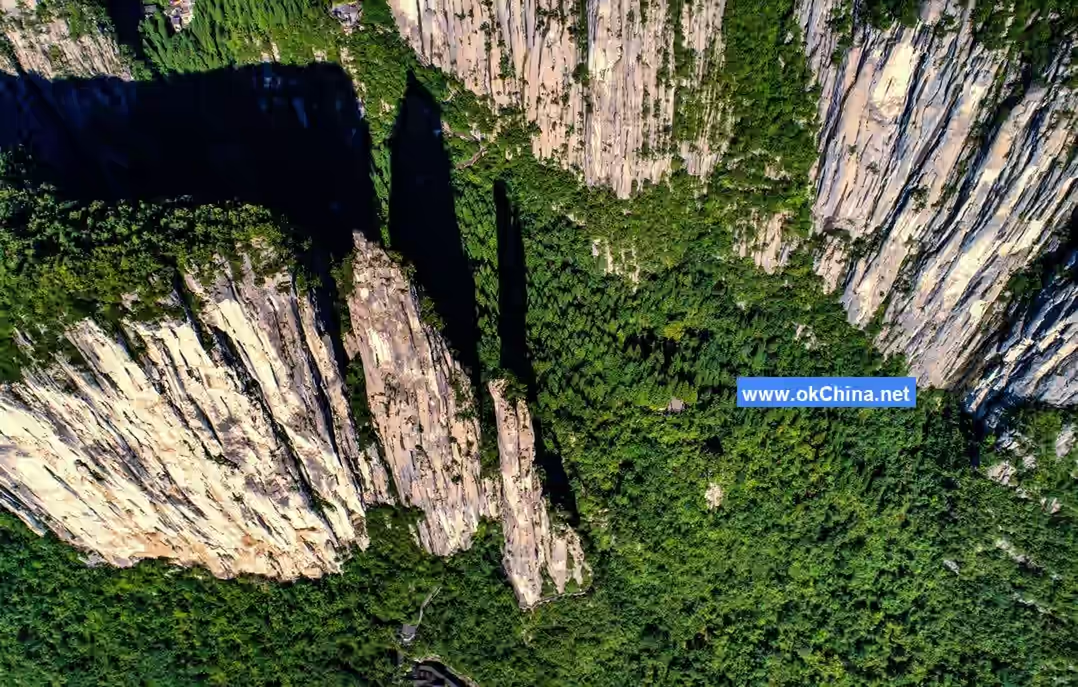
The Enshi Grand Canyon Scenic Area opened to the public on October 1, 2010. Currently, the entire Qixingzhai Scenic Area and part of the Yunlong Ground Fissure Scenic Area are open. The open area of Qixingzhai is 7.2 square kilometers, featuring a comprehensive array of geological landscapes such as sinkholes, ground fissures, sheer cliffs, peak clusters, rock pillar groups, karst caves, and underground rivers. It is known as a "natural museum of karst topography and landforms."
2. Geographical Environment
2.1 Location and Territory
The Enshi Grand Canyon is situated in Tunbao Township, Enshi City, Enshi Tujia and Miao Autonomous Prefecture, Hubei Province, at the tri-province border of Hunan, Chongqing, and Hubei. It is 39 kilometers from downtown Lichuan and 49 kilometers from downtown Enshi, with convenient access via highways, national roads, railways (including high-speed rail), aviation, and water transport to the urban areas. The canyon is 108 kilometers long and covers a total area of over 300 square kilometers. The remaining branches of the Wuling Mountain Range wind in from the southeast, the Dalou Mountain Range extends northward in the west, and the remaining branches of the Wushan Mountain Range encircle the area in the north.
2.2 Topography and Landforms
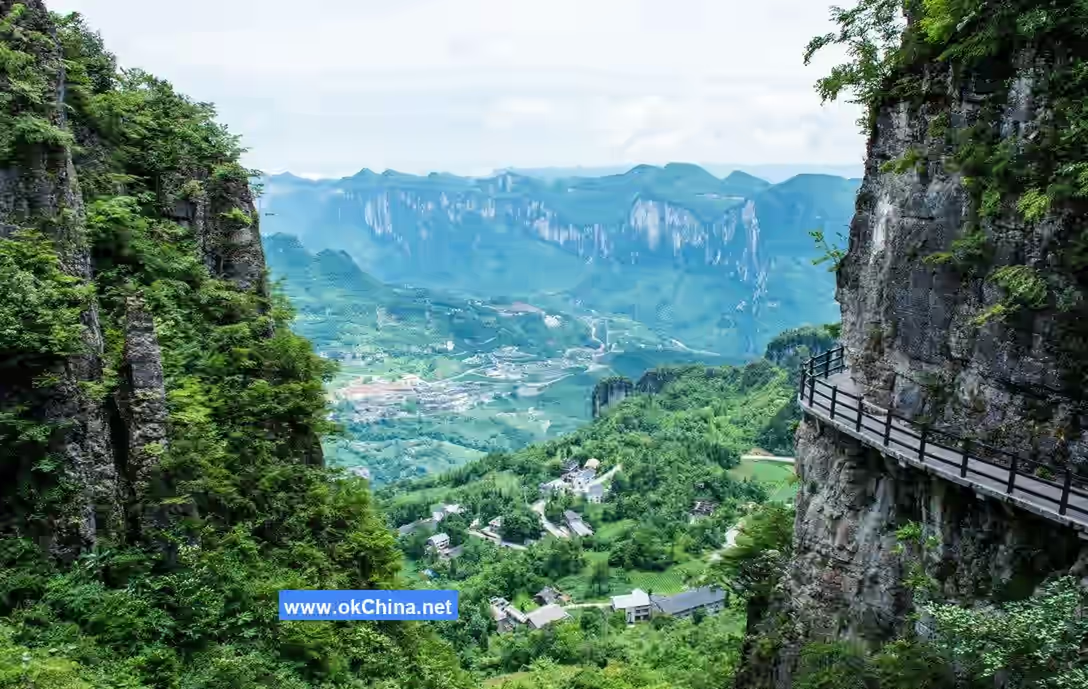
The northwestern and southern flanks of the Enshi Grand Canyon are high, resembling a plateau-like landform with an average elevation of over 800 meters. Most areas in the southwest and northeast have an elevation of around 900 meters, featuring relatively large intermountain basins and troughs. The central region consists of rolling hills. Due to subsidence of the strata, a sunken basin has formed, which is relatively open with an average elevation of about 500 meters.
The main stratigraphic sequences in the Enshi Grand Canyon area belong to the Sinian (Z) through Triassic (T) periods, reflecting ancient sedimentary environments of epicontinental seas, including broad coastal zones or carbonate platforms and shallow marine shelves. The extensive deposition of carbonate rocks laid the foundation for subsequent karst processes and the formation of karst landscapes.
2.3 Climate Environment
The Enshi Grand Canyon experiences a temperate monsoon climate, characterized by summers without intense heat and winters with little severe cold, ample sunlight, and four distinct seasons. The redistribution of light, heat, and water within the canyon creates a complex climate and rich climatic resources, exhibiting vertical climatic zonation and the particularity of local climates. The main features are a gradual decrease in temperature and increase in humidity with rising elevation, showing a three-dimensional correlation between climate and topography. The city's average annual temperature is around 16°C, with a frost-free period of 282 days, annual sunshine duration of 1,300 hours, and relative humidity of 82%. Annual precipitation ranges from 1,400 to 1,500 mm, with over 66% concentrated between May and August. The extreme daily rainfall recorded is 227.5 mm. Summer droughts often occur from mid-July to early August. The low-altitude areas within the canyon have a mild climate with four distinct seasons, frequent rainfall, light winds, and a long frost-free period. High-altitude areas have mild summers and colder winters, with late springs and early autumns, being damp and rainy. The frost-free period is short in high mountains, which are cool and humid, especially above 1,600 meters, where long winters prevail without summer, and spring and autumn connect, often foggy and cold. The temperature contrast between high and low altitudes is significant and distinct, particularly each spring.
2.4 Hydrological Characteristics
The Enshi Grand Canyon is rich in water resources, with riverbeds having large drops, substantial runoff, and abundant hydropower potential. Mountains and rivers interlace within the area, creating significant elevation differences.
3. Main Attractions
3.1 Overview
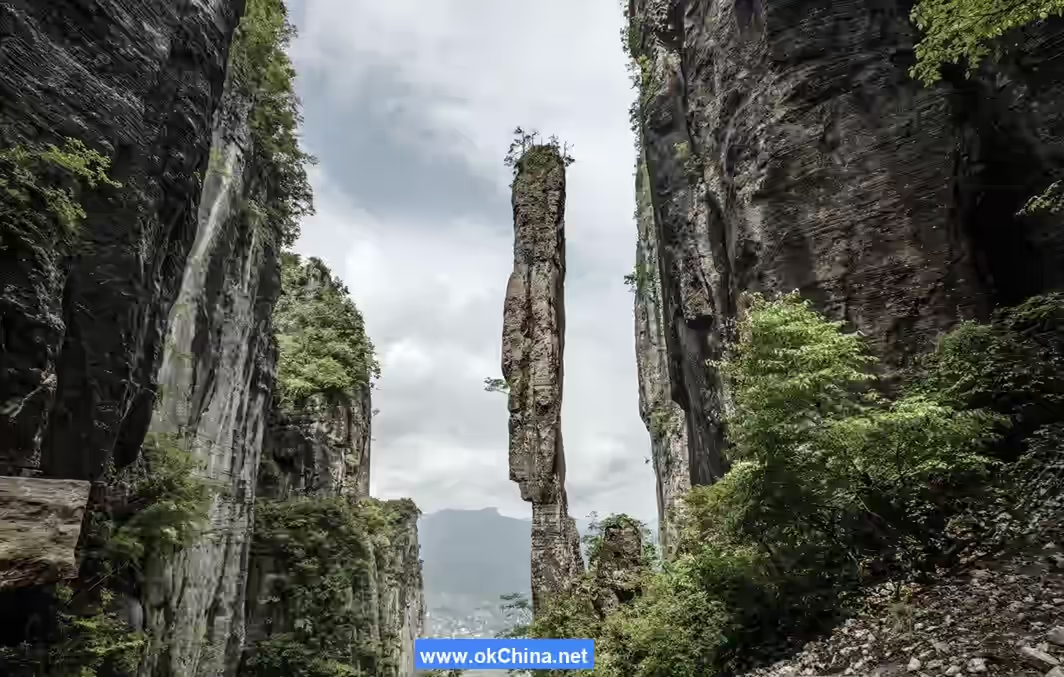
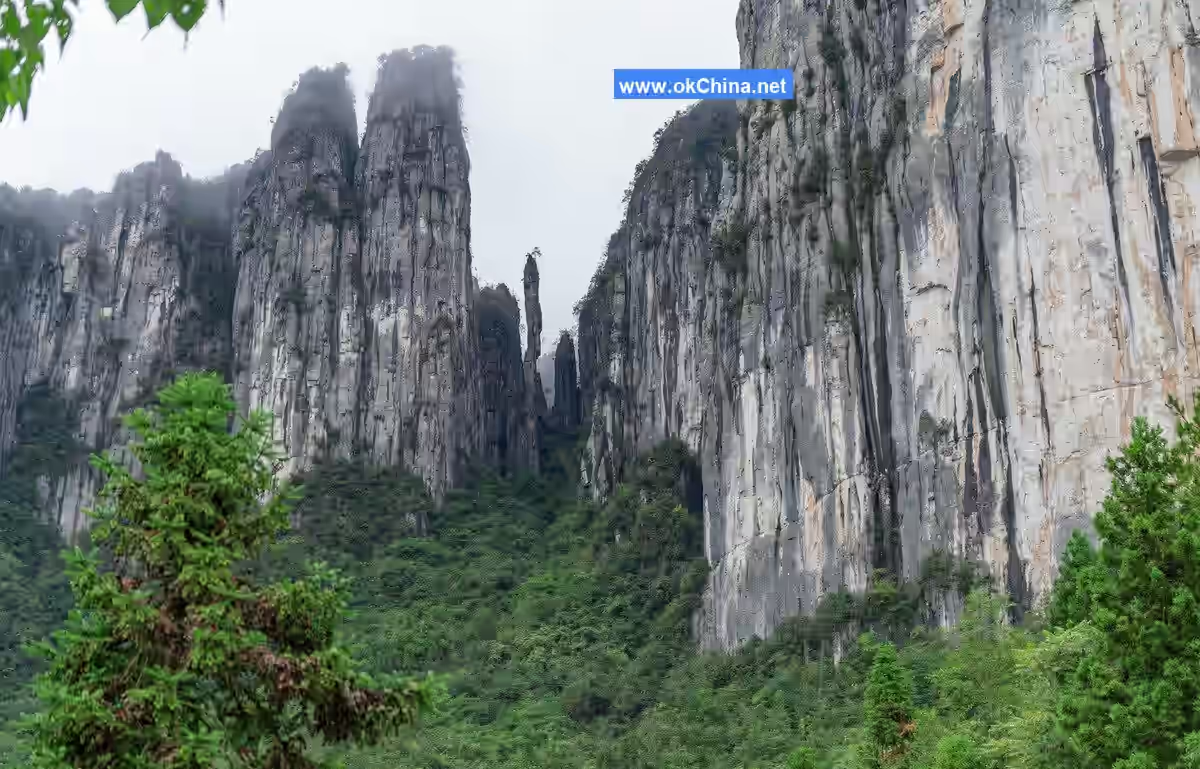
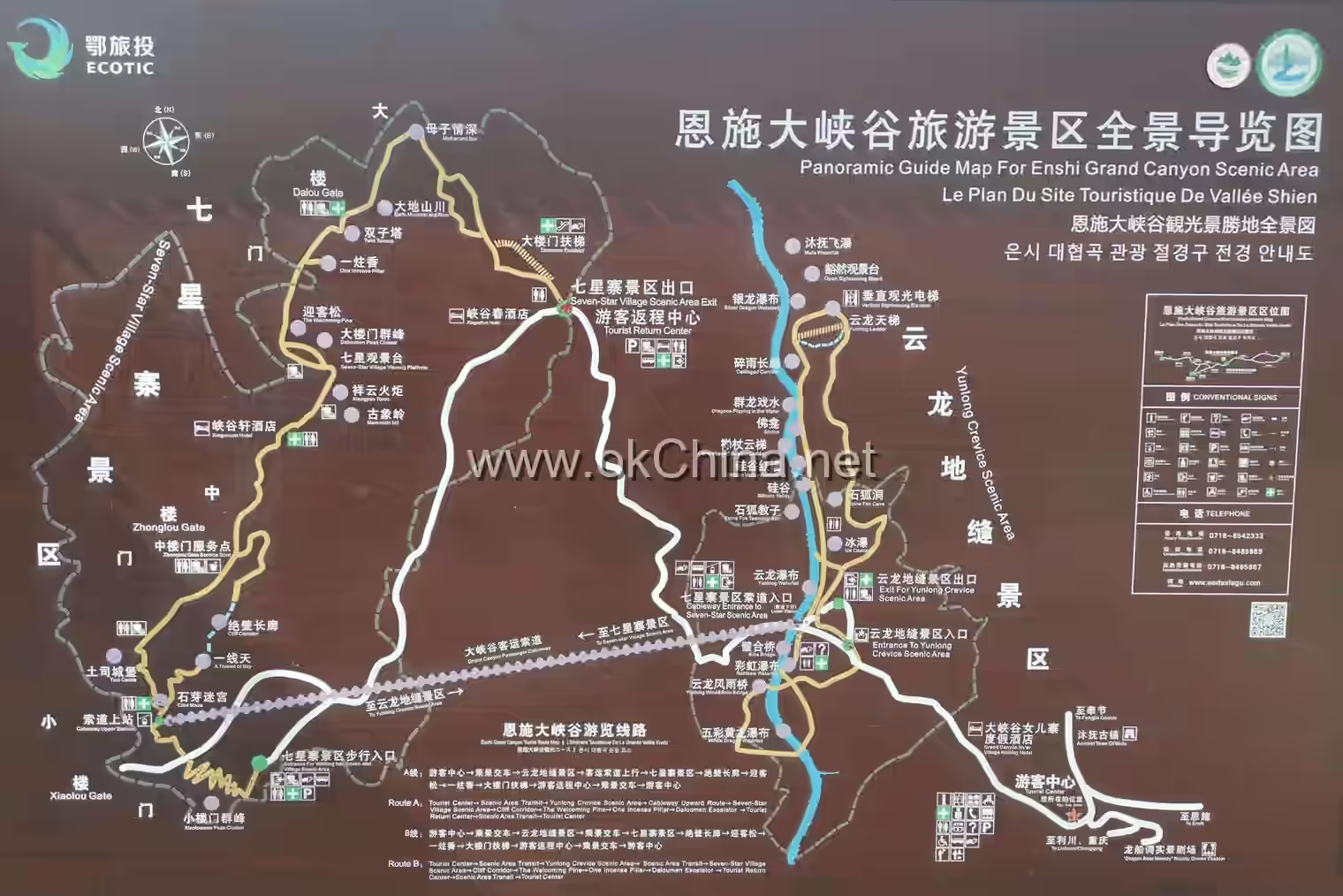
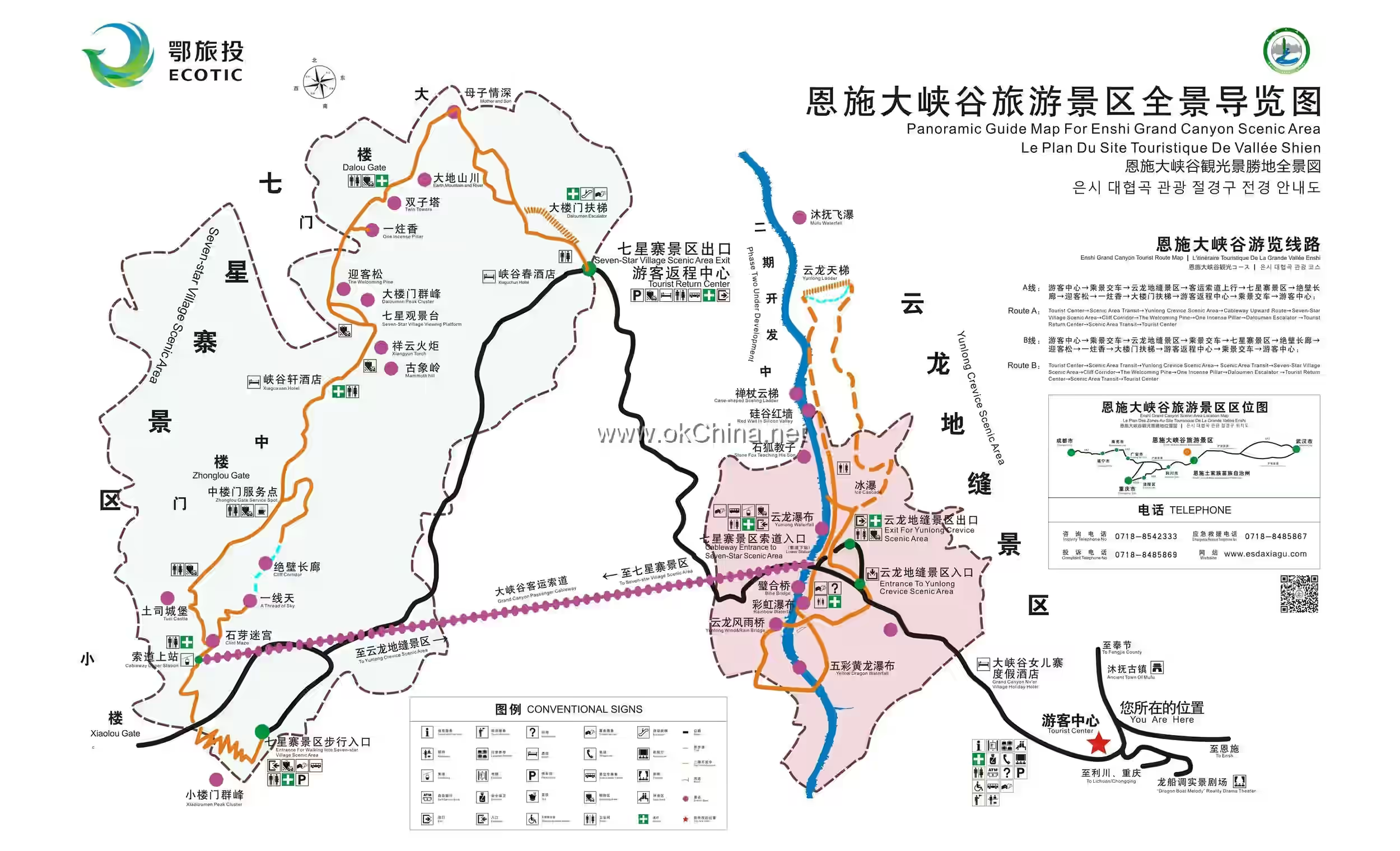
The Enshi Grand Canyon Scenic Area comprises two core scenic areas: the Qixingzhai Scenic Area and the Yunlong Ground Fissure Scenic Area, along with the live-action performance "The Dragon Boat Tune." Attractions such as One Incense Stick, Welcoming Pine, Great Mountains and Rivers, and Mother and Child's Deep Affection are all located within the Qixingzhai Scenic Area. The canyon features sights like hundred-mile-long sheer cliffs, thousand-zhang waterfalls, solitary peaks towering proudly, primeval forests, and ancient villages. Two peaks beside the One Incense Stick stone pillar were named the Dean Potter Twin Peaks on April 22, 2012, and are also part of the Hubei Enshi Tenglong Cave Grand Canyon Geopark.
3.2 Attractions
3.2.1 Passenger Cableway
The Enshi Grand Canyon Passenger Cableway is the first detachable gondola cableway with a single circulating rope in Enshi Prefecture, Hubei Province. It runs from the east side of the Yunlong River Bridge to Xiaoloumen, with upper and lower station buildings. The upper station is located on the hillside northwest of the "Dragon Gate Stone Waves" at Xiaoloumen, at an elevation of 1,641 meters. The lower station is situated on the terrace east of the Yunlong River Bridge, at an elevation of 841 meters, on flat and open terrain. The cableway line ascends along the western slope of the Yunlong River Valley, passing over Daoguanshui and through the col south of the "Treading Waves Pavilion" at Xiaoloumen to reach the upper station. The line is 2,284 meters long with a vertical drop of 792 meters. It uses fully enclosed 8-person cabins, with a total of 61 cabins, a maximum operating speed of 6 meters/second, and a one-way travel time of approximately 6.27 minutes. It saves visitors from climbing 768 steps of the "Heavenly Ladder" and reduces the walking distance by 2 kilometers. The designed transport capacity is 2,000 people per hour. The Enshi Grand Canyon Passenger Cableway is fully imported from France and serves as an important, safe, and comfortable means of transportation between the Yunlong Ground Fissure Scenic Area and the Qixingzhai Scenic Area.
3.2.2 Cliffside Corridor
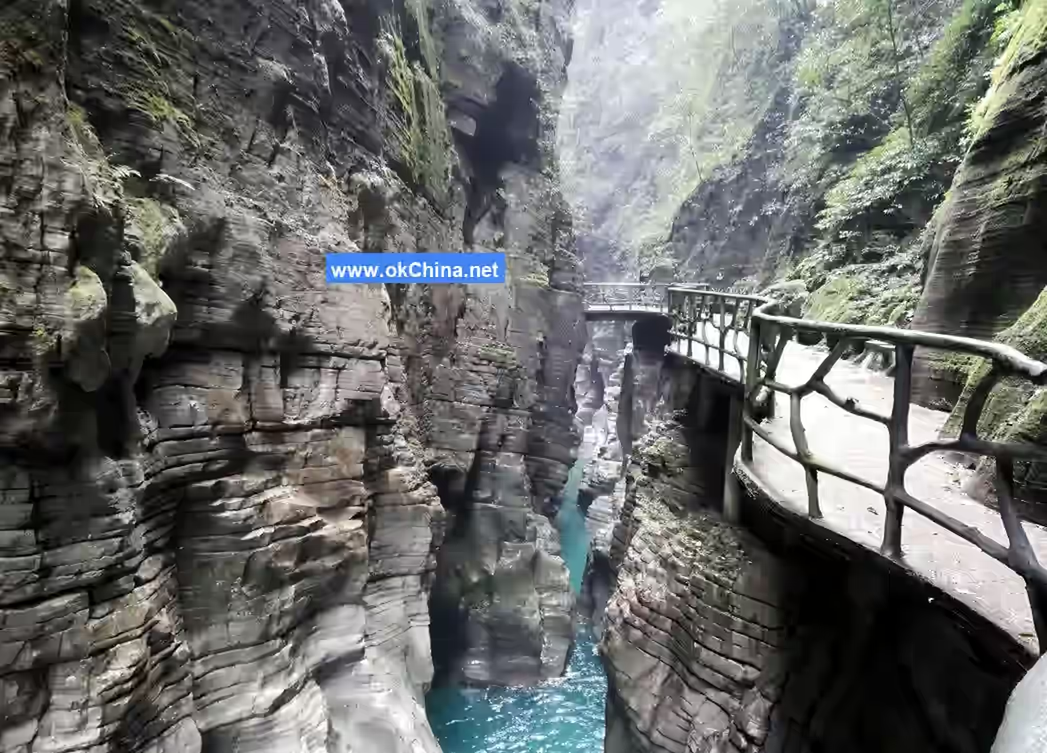
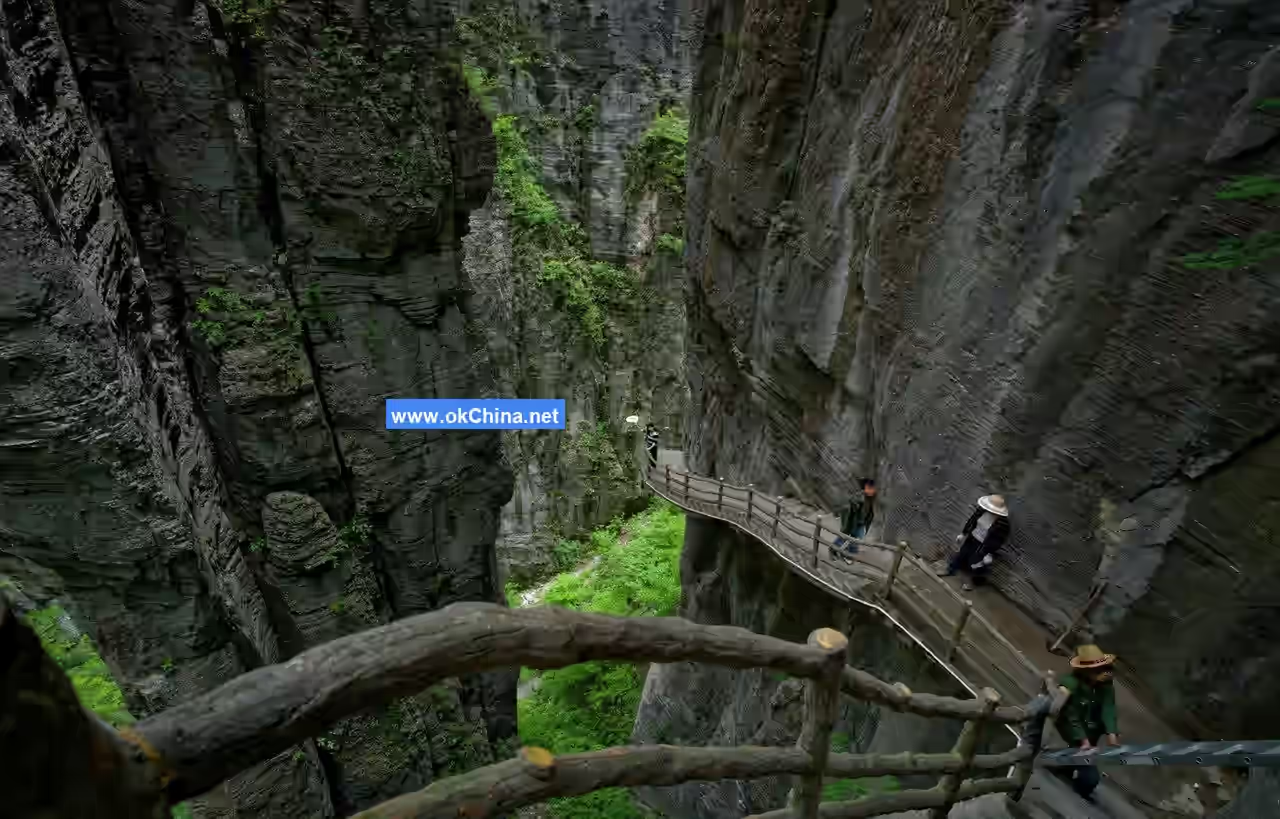
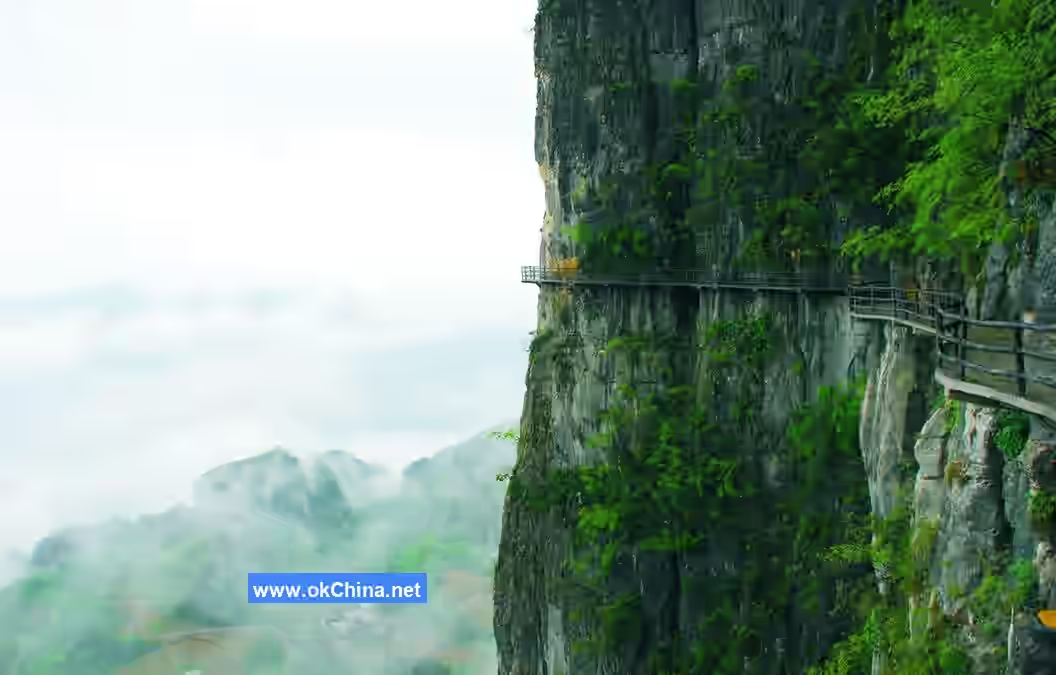
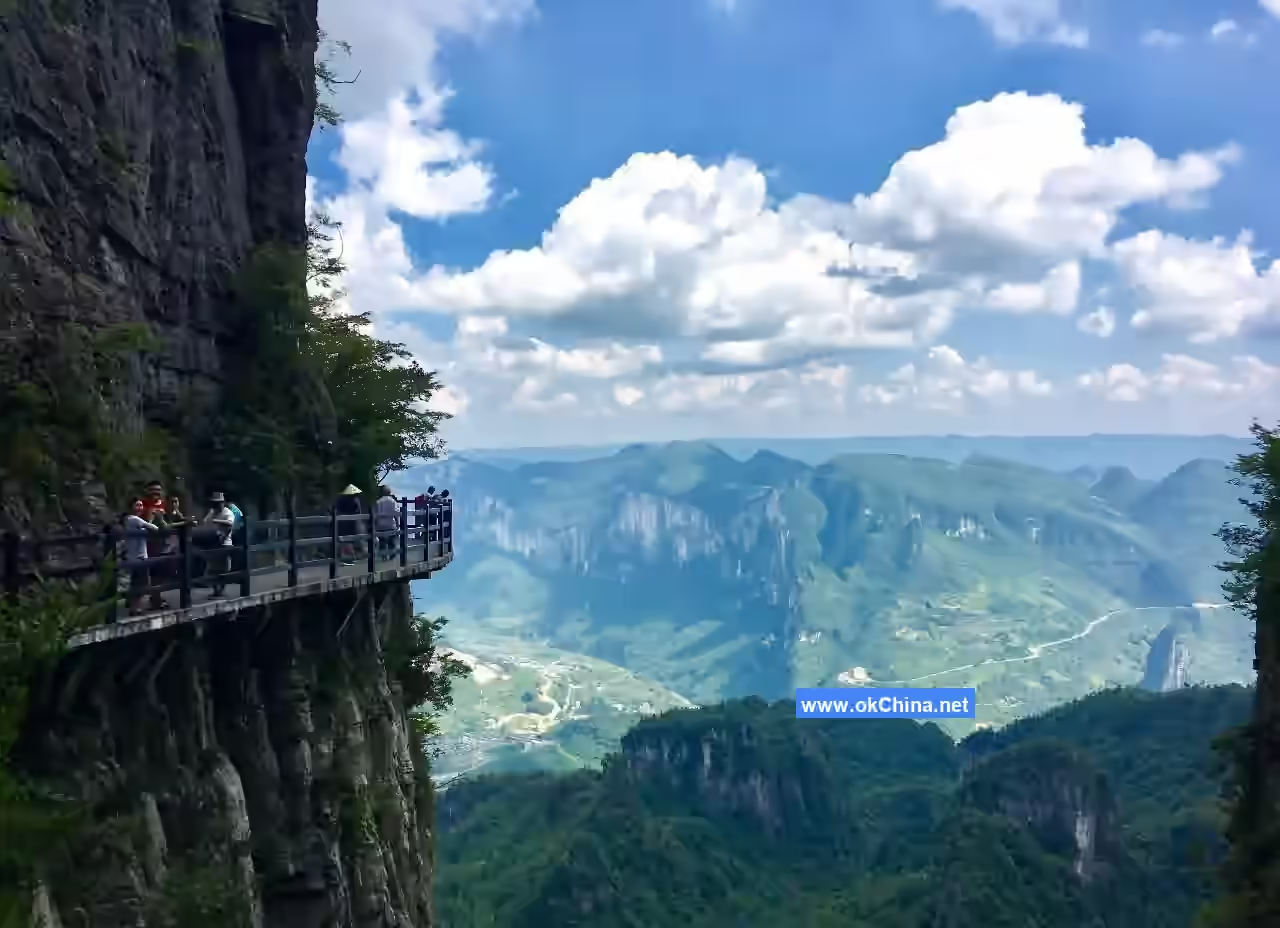
The Cliffside Corridor, also known as the "Cliffside Plank Walk," was constructed starting in October 2007. It is 488 meters long with 118 steps, built along the waist of a sheer cliff at an altitude of over 1,700 meters and a net height difference of over 300 meters. This engineering project draws inspiration from the construction methods of ancient Ba-Shu plank roads while incorporating modern reinforced concrete construction techniques, making it scientifically sound and safe. It embodies the courage and wisdom of contemporary developers and pioneers. Traveling along the plank walk offers continuous views of the Wuling landscape. The walkway has seven bends and eight turns, symbolizing that although the path twists and turns, the heart remains steadfast. A local song says: The Big Dipper has seven stars (dǒu), the Cliffside Plank Walk has seven trembles (dǒu); after a good scare, we walk hand in hand on life's road.
3.2.3 Bowing Pine
The Bowing Pine is one of the representatives of the five wonders of the Enshi Grand Canyon. In karst landforms, sheer cliffs and peak clusters typically do not coexist. However, this pine tree in the Grand Canyon symbolizes the hospitable Tujia and Miao people bowing deeply to distant visitors, expressing both welcome and farewell.
3.2.4 One Incense Stick
"One Incense Stick" stands about 150 meters tall with a minimum diameter of only 4 meters. The compressive strength of the rock here is 800 kg per square centimeter. Unshaken by wind and rain, it has stood proudly among the peaks for millions of years, guarding this mysterious land. Legend has it that this stone pillar was a "difficulty-incense" given by a deity to the local people. In times of disaster, lighting it would send a wisp of smoke skyward, prompting the deity to descend and provide relief, hence the local name "Difficulty-Incense." Geologically, due to the long-term alternating influence of the Yangtze River and Qingjiang River systems, continuous erosion and scouring formed this steep stone pillar. Such slender stone pillars are rare on Earth due to the extreme difficulty of their preservation.
3.2.5 Enshi Grand Canyon Large-Scale Landscape Live-Action Music Theater
Built beside the Grand Canyon with its unique karst landforms, the Enshi Grand Canyon Large-Scale Landscape Live-Action Music Theater covers an area of over 240 acres with a total floor area of 49,000 square meters. It is one of the world's largest canyon live-action theaters, featuring a cast and crew of over 500 people. It includes audience seating that can accommodate more than 2,580 spectators simultaneously. The great Tang Dynasty poet Li Bai once wrote, "The waterfall flies straight down three thousand feet, I wonder if it's the Milky Way falling from the ninth heaven." The theater features the world's largest-span river-opening system—a river channel over 120 meters long that can split open to a width of nearly 10 meters and a depth of over 10 meters, creating a massive flowing waterfall. The theater also faithfully recreates the original site of stilted buildings with unique Tujia architectural style within the theater village and constructs a main Tusi (chieftain) building reflecting the architectural style of the Rongmei Tusi period.
The Enshi Grand Canyon Large-Scale Landscape Live-Action Music Theater has established a Tusi building in the style of a covered bridge (Fengyu Langqiao) with Ming and Qing Dynasty Tujia stilted building characteristics. It covers an area of 1,350 square meters with a total floor area of 2,447.5 square meters and a span of nearly 120 meters, making it the world's largest Tujia stilted building constructed in the form of a covered bridge. It contains multiple VIP viewing areas. The building's design employs landscape-oriented techniques, integrating ancient pavilions, corridors, and memorial archways, forming a historical and cultural architectural complex with regional characteristics together with the main Tusi building and stilted building clusters.
3.2.6 Yunlong Ground Fissure
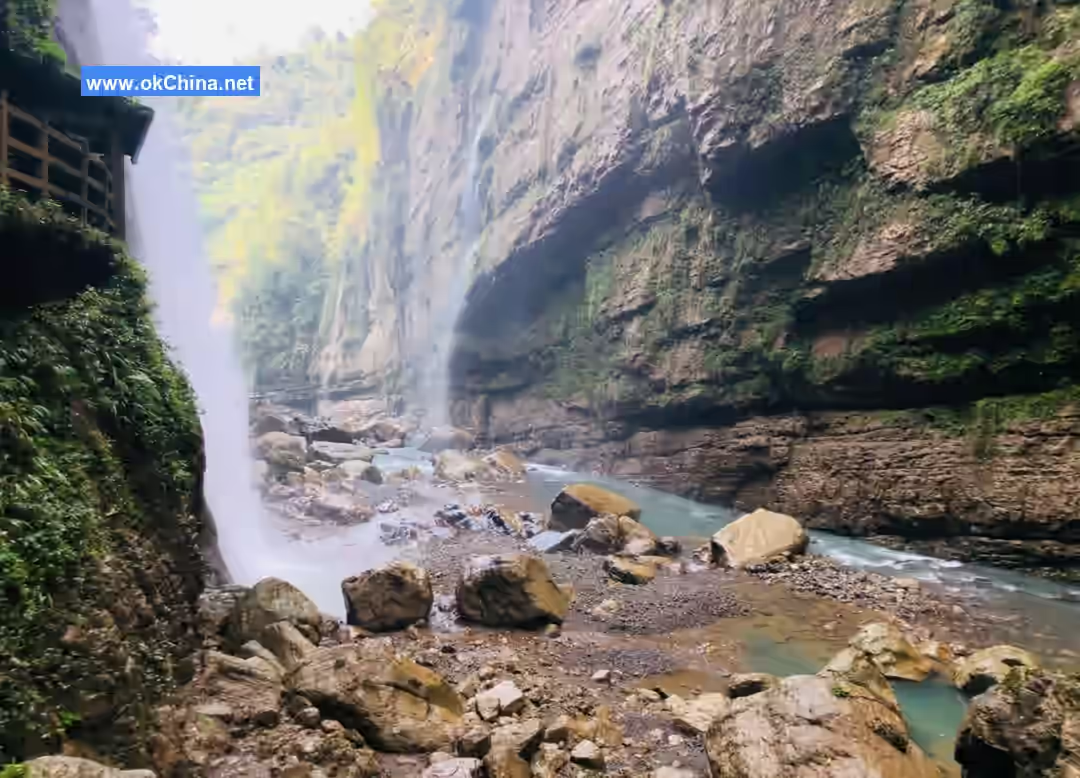
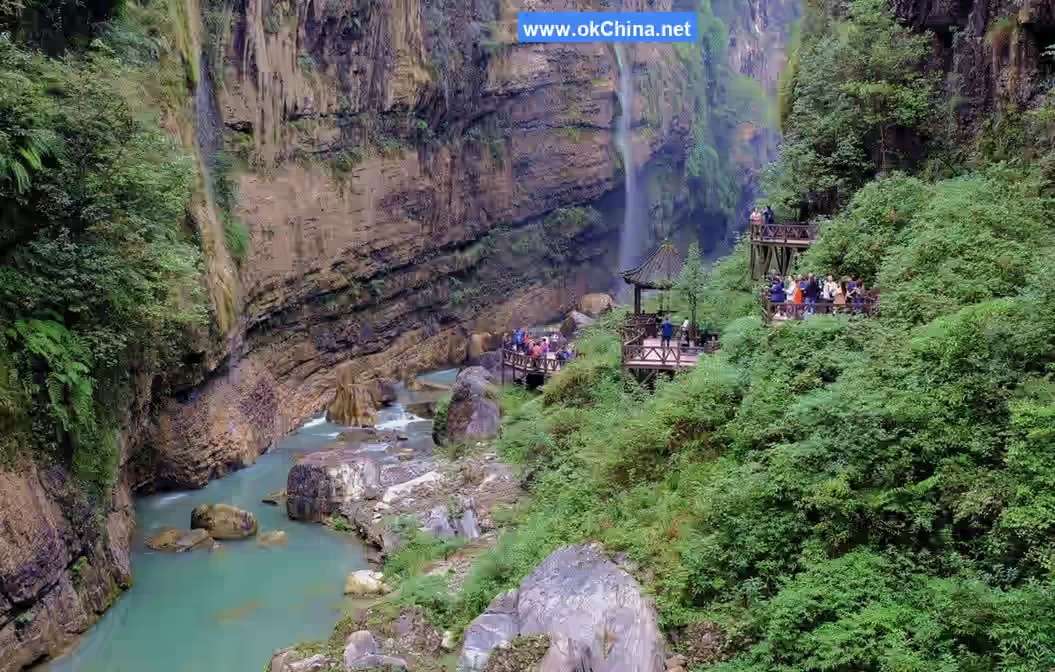
The Yunlong Ground Fissure formed at least 50 million years ago. The strata from the top to the bottom of the fissure are primarily limestone formed between 210 and 290 million years ago, spanning the Permian and Triassic periods. It is 3.6 kilometers long, with an average depth of 75 meters and an average width of 15 meters. The banks are steep, with waterfalls cascading down and streams murmuring at the bottom. It connects to the Tianshui Underground River above and the vast Qingjiang River below. There are a total of seven and a half waterfalls along the fissure (one is called the "Half-Flow Waterfall," present in the wet season but absent in the dry season, hence counted as half). The Yunlong Ground Fissure was once a subterranean section of the Yunlong River, lying dormant underground as an underground river for 20 to 30 million years. Later, due to intense subterranean erosion by water and continuous surface denudation, the roof of the underground river collapsed, bringing the fissure to light and making it a major wonder of the Enshi Grand Canyon.
Field research by China University of Geosciences indicates that the two banks of the fissure belong to different geological periods. The right bank consists of Triassic strata formed 180-230 million years ago, while the left bank consists of Permian strata formed 250-280 million years ago. The reason is that during early crustal movements, faulting caused Triassic and Permian strata to be in fault contact. Subsequent mountain uplift and long-term downcutting and erosion by water along the weak fault zone formed this deep valley fissure.Yunlong Ground Fissure is located within the "World Geological Wonder and Natural Museum of Karst Topography and Landforms." Shaped like a "U," it stretches 3.6 kilometers in total length with an average depth of 75 meters, of which 1.6 kilometers is open to the public. The aim is to develop an ecological tourism area primarily focused on pristine natural landscapes, supplemented by scientific exploration and adventure, integrating themed landscape sightseeing, in-depth geological experiences, and adventure sports. Its overall planning layout follows the concept of "one core, one belt, one zone," connecting the natural canyon landscapes and green spaces. "One core" refers to the interactive sightseeing experience centered on the ground fissure theme; "one belt" is the thrilling canyon rafting zone; and "one zone" is the ground fissure exploration and science education experience area.
Yunlong Ground Fissure boasts unique and extraordinary karst landscapes, encompassing numerous individual tourism resources. Externally, it is surrounded by sheer cliffs, deep ravines, and undulating mountain ranges with varied terrain. Internally, streams murmur, waterfalls cascade, and peculiar rock formations stand tall, creating a majestic, perilous, profound, and serene atmosphere. Key attractions include Yunlong Cliff, Fengyu Bridge, Shikong Bridge, Yunlong Hanging Waterfall, and cascading waters.
3.2.7 Five Wonders
The magnificent Enshi Grand Canyon features vast and open spaces, rich layers of landscapes, diverse mountain formations, and the deeply incised Qingjiang River Valley.
First, Clouds Rising from the Qingjiang River
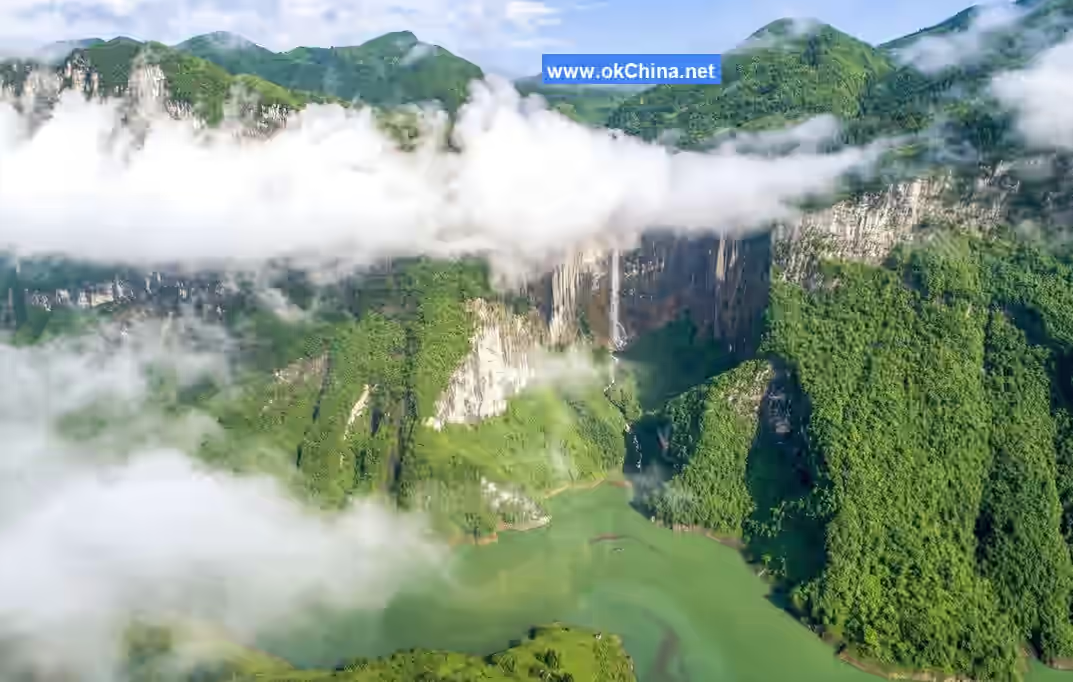
Unlike the scattered and disorderly sea of clouds often seen over famous mountains, the clouds rising from the Qingjiang River in the Mufu Canyon of Enshi Grand Canyon resemble a soaring dragon, winding and stretching for hundreds of miles.
Second, Sheer Cliffs Encircling Peak Clusters
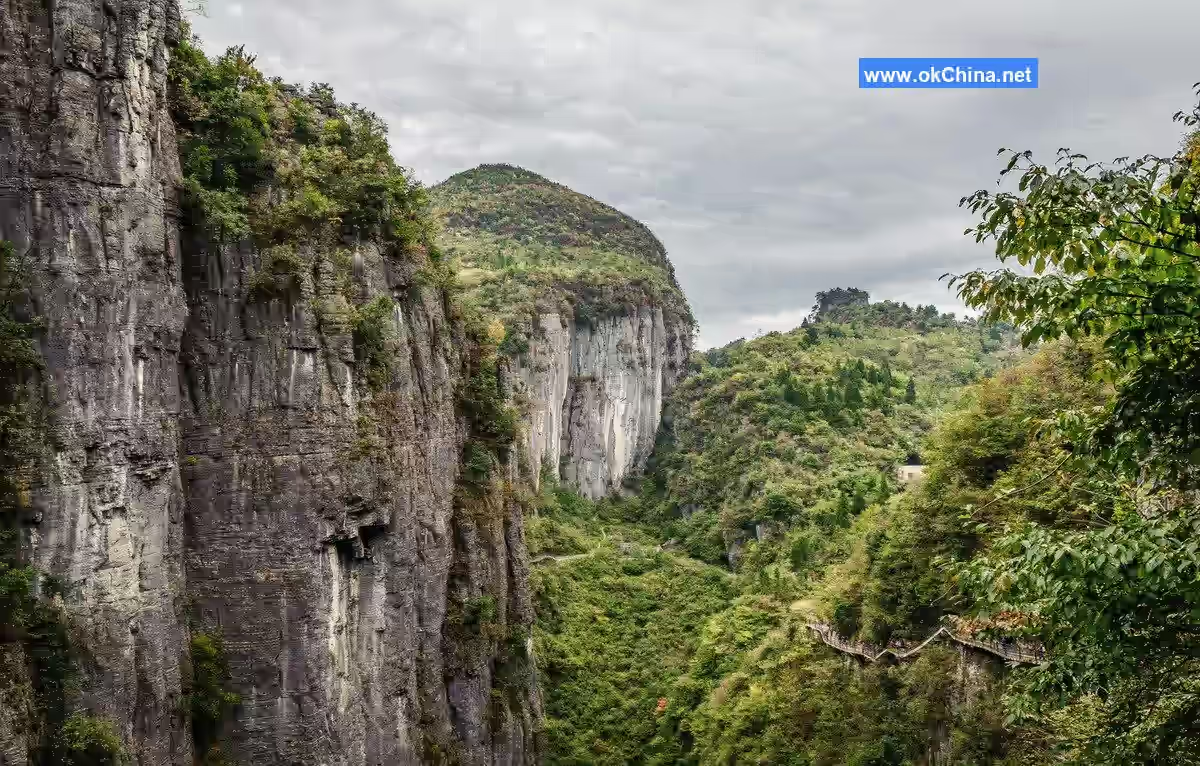
In karst landscapes, it is rare to find both sheer cliffs and peak clusters coexisting. Here, some sheer cliffs are recessed among clusters of peaks, while others protrude as if towering above them.
Third, Natural Bridges Linking Cave Clusters
Cave clusters are another distinctive feature of the grand canyon. According to incomplete statistics, there are over 200 caves of various sizes along the canyon. For example, the Reyun Cave in Banqiao has two entrances separated by a stone wall—one emitting warm air and the other cold air, creating a misty blend of temperatures. The cave's main chamber can accommodate tens of thousands of people and is complemented by natural bridges.
Fourth, Ground Fissures Connecting to Waterfalls
The Yunlong River Ground Fissure within Enshi Grand Canyon spans 7.5 kilometers in length, with a maximum depth of 75 meters. It is dotted with peculiar rocks, lush ancient trees, and clear flowing streams, with several waterfalls cascading down its banks.
Fifth, Underground Rivers Paired with Shafts
The underground river from Fengjie Longqiao River to Enshi Grand Canyon stretches 50 kilometers, making it the longest of its kind in the world. Above this underground river alone, there are 108 shafts, resembling the karez wells of Xinjiang.
4. Cultural Resources
Within the Hubei Enshi Grand Canyon National Geopark, large-scale original ecological folk performances such as Yishui Lichuan and the immersive theater production Longchuan Diao draw on the distinctive musical elements and expressive forms of the Tujia ethnic group in the Enshi region. Integrating Tujia history and culture, these performances depict the primitive lifestyles of the Tujia and Miao peoples, blending stage artistry with immersive realism.
The Hubei Enshi Grand Canyon National Geopark also features unique Tujia folk activities, including wedding customs such as "crying marriage," "opening the face," and "inviting the sedan chair child"; funeral customs like "bitter bamboo stick," "circling the coffin," and "night vigil"; and festive customs such as "Daughter's Festival," "worshipping the cave deity," "Ox King Festival," and "drying the dragon robe." During festivals, Tujia people dressed in their distinctive ethnic attire—characterized by "three circles at the head, waist, and legs, white clothes, black shoes, and magpie shirts"—participate in cultural activities like dragon boat racing, performing the "Hand-Waving Dance," playing "Meat Chain Clapping," lion dancing, and stilt walking.
The folk customs of the Tujia and Miao peoples in the Hubei Enshi Grand Canyon National Geopark region are diverse and rich, including tunes like Longchuan Diao, wedding lament songs, work chants, market songs, woodcutting songs, and ethnic antiphonal songs, all of which exhibit high artistic value and strong local characteristics. The Lichuan folk song Longchuan Diao is widely sung and celebrated.
Comments
Post a Comment