Wuhan East Lake Ecological Tourism Scenic Area
1. Introduction
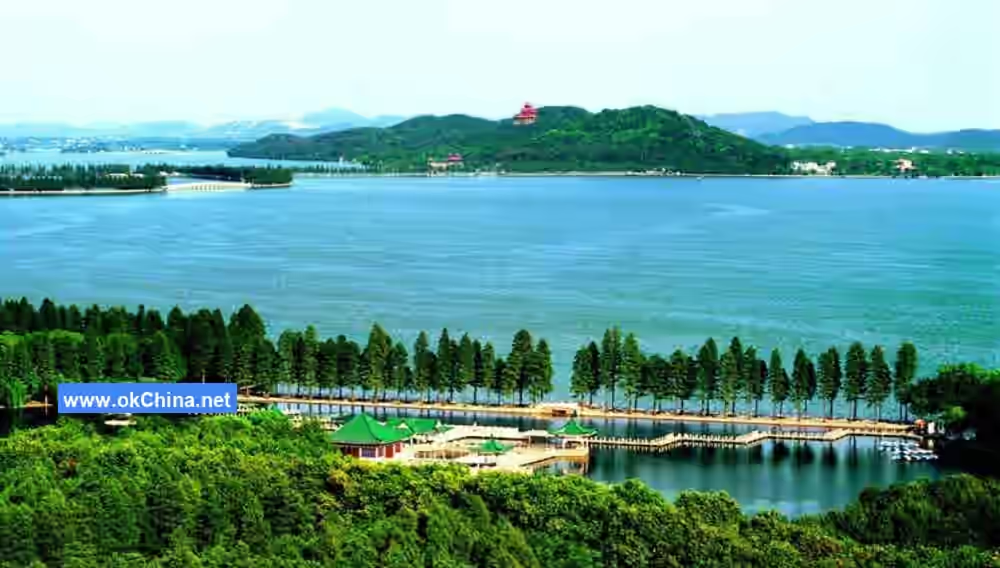
Wuhan East Lake Ecological Tourism Scenic Area, abbreviated as East Lake Scenic Area, is located in the eastern part of the central urban area of Wuhan City, Hubei Province. The scenic area covers 88 square kilometers, with a water area of 33 square kilometers.
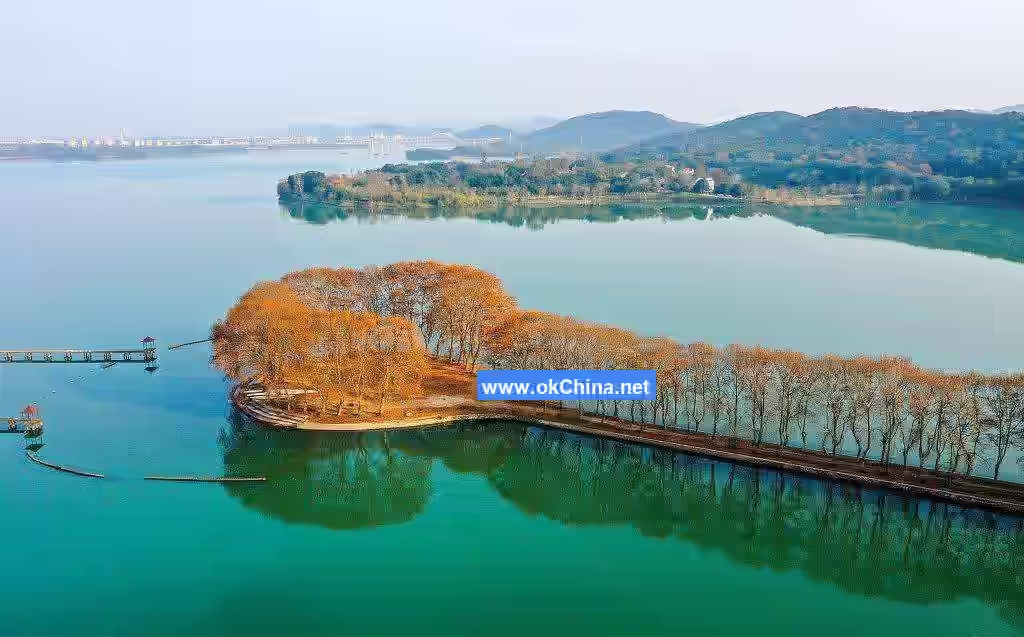
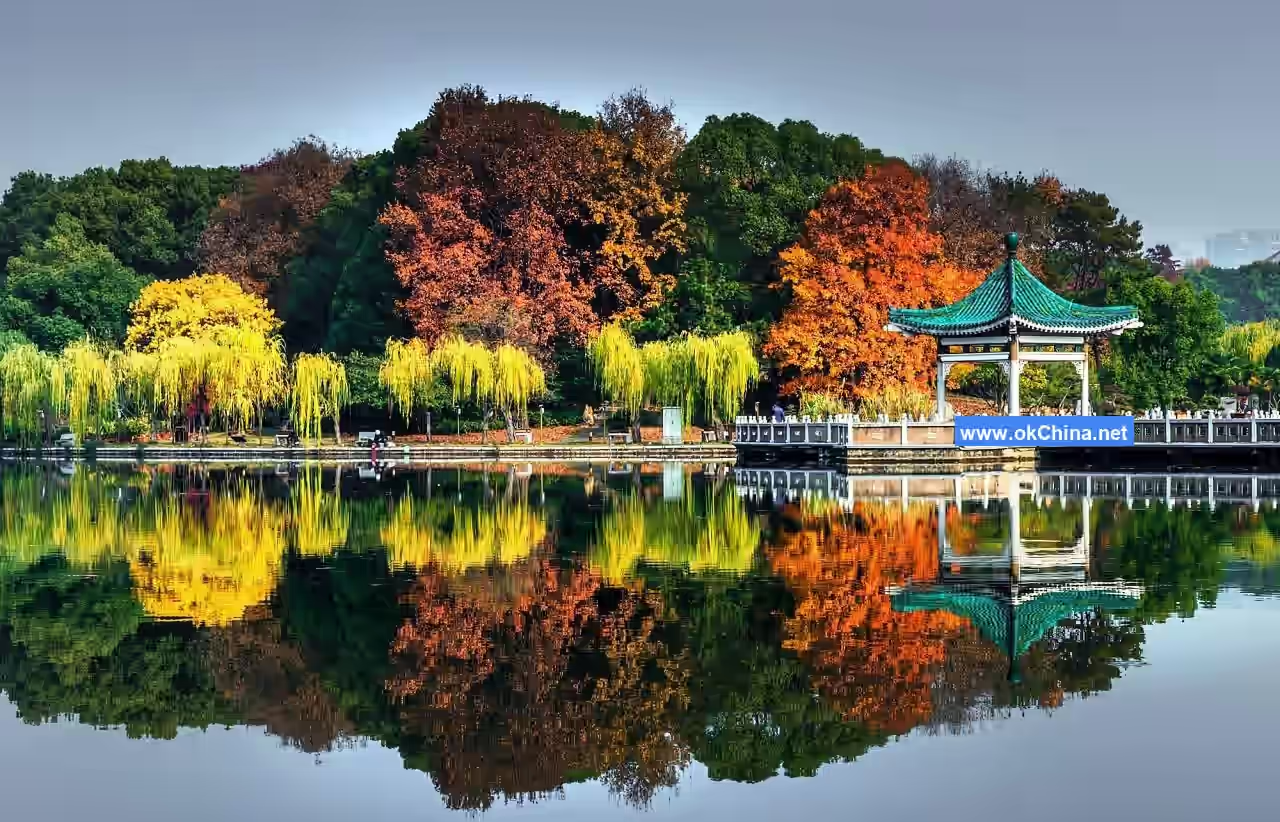
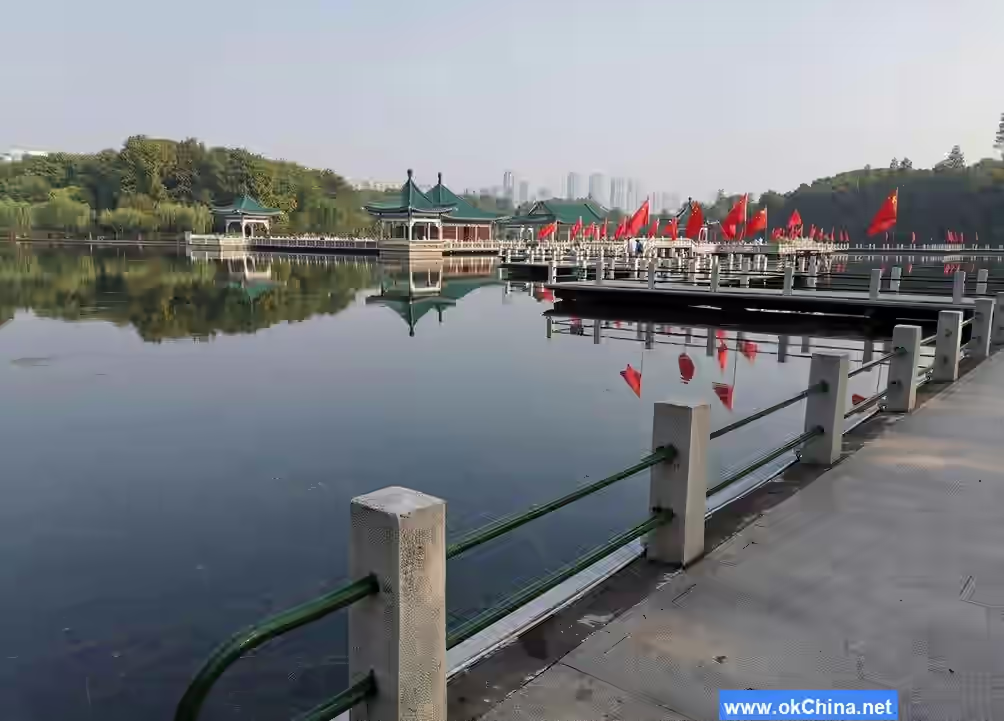
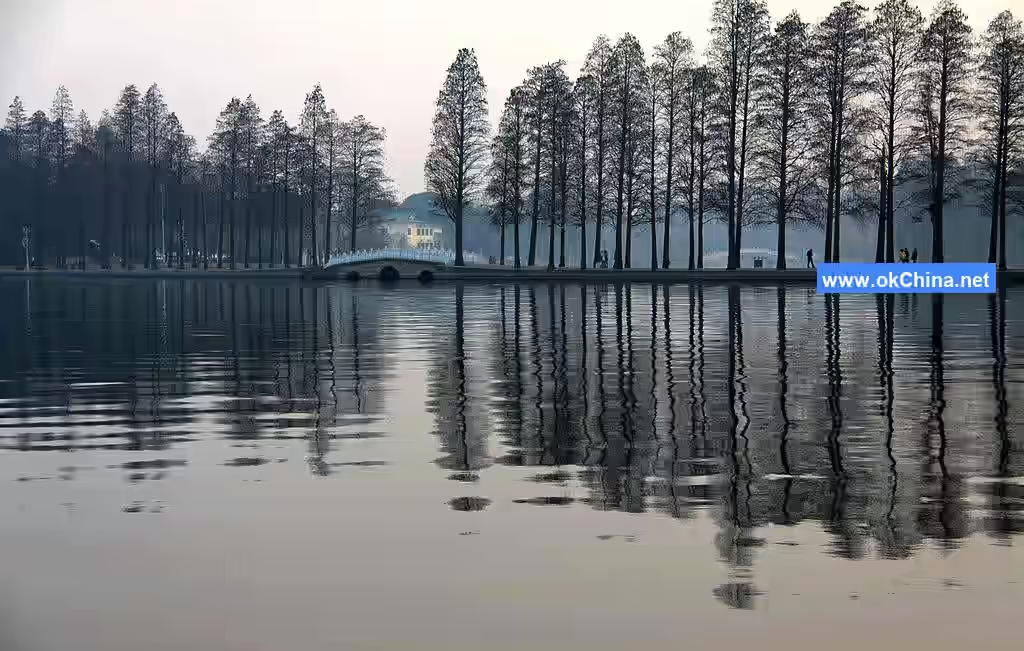
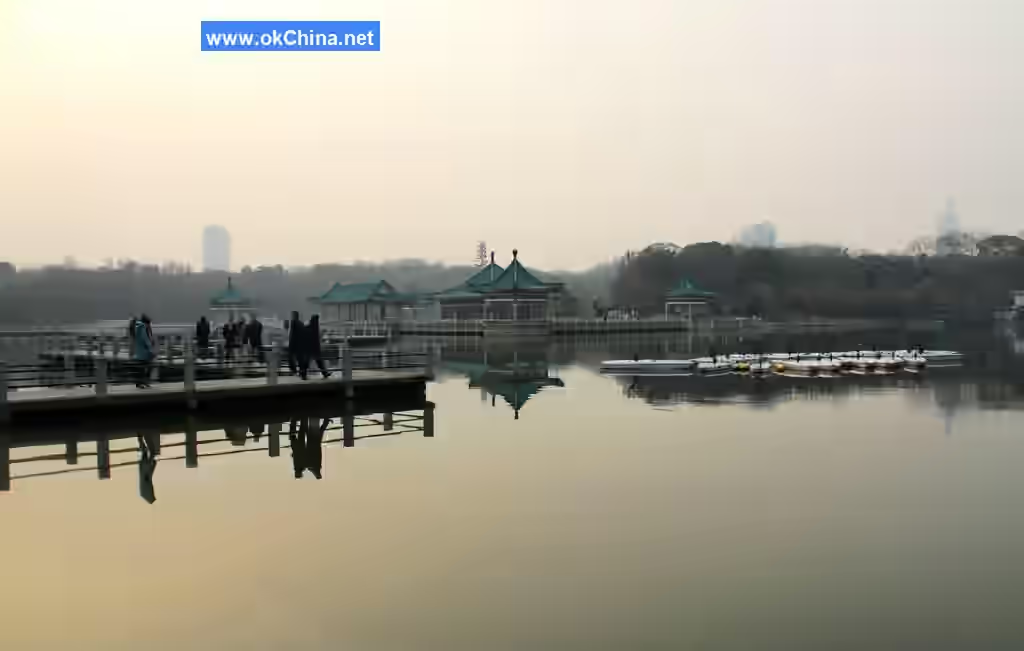
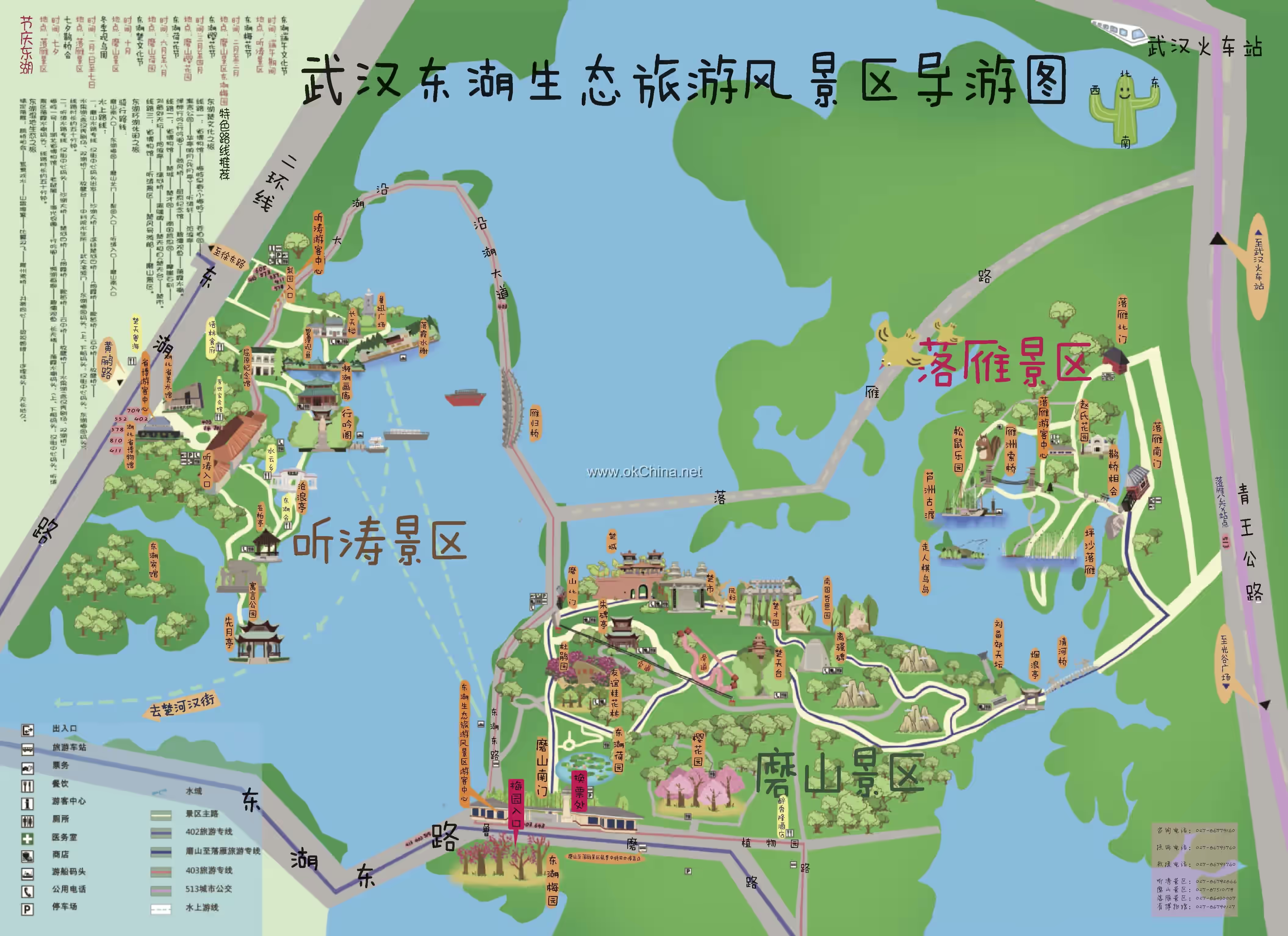
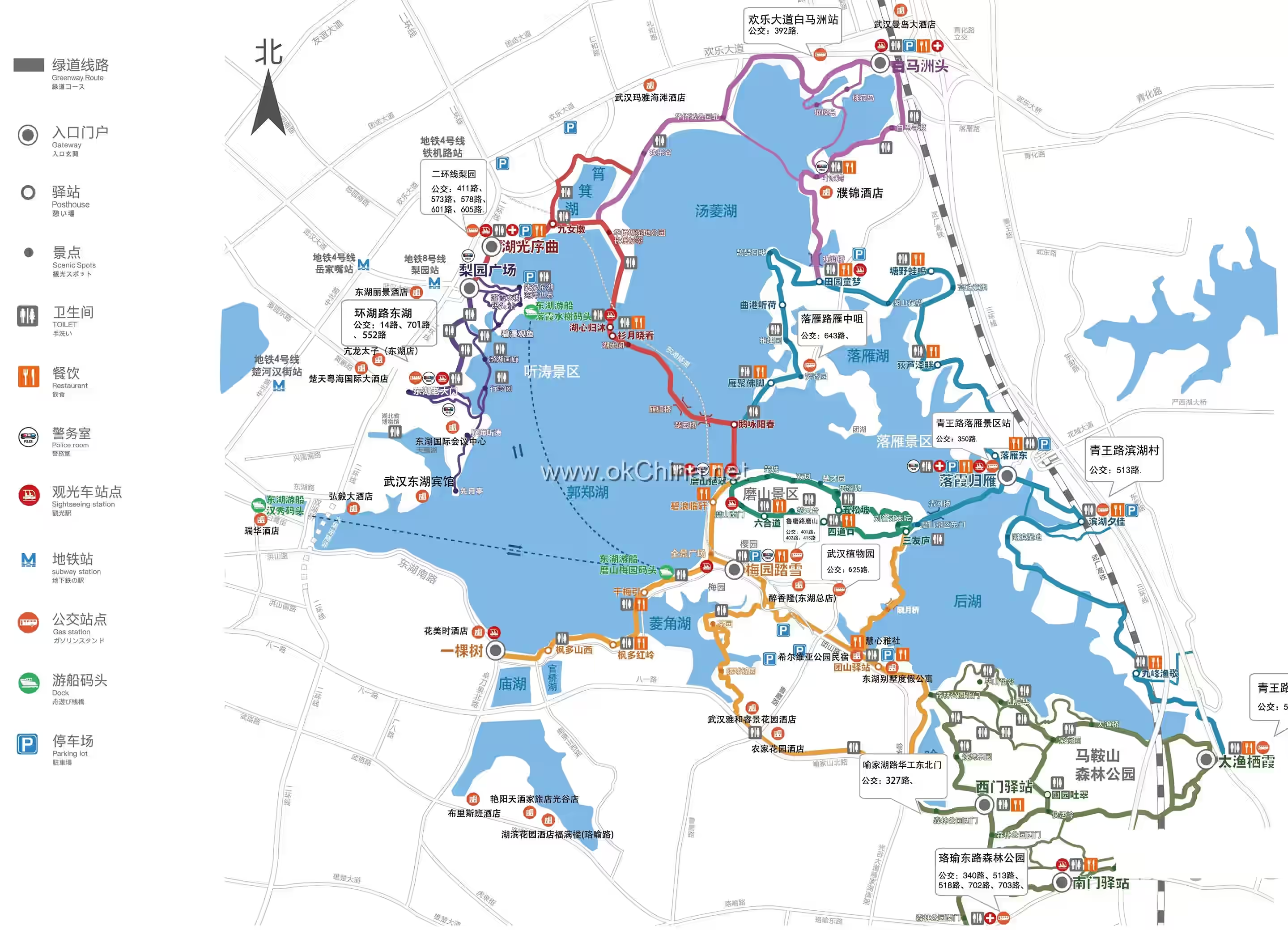
Wuhan East Lake Ecological Tourism Scenic Area is characterized by abundant rainfall, ample sunshine, and four distinct seasons. Within the area are the Tingtao (Listening to Waves) Scenic Area, Moshan (Mill Hill) Scenic Area, Luoyan (Falling Wild Geese) Scenic Area, and Chuidi (Flute Playing) Scenic Area. The East Lake Scenic Area is beautiful, with a winding shoreline and numerous islands and islets dotting the lake. Moshan Hill, Fengduo Hill, Chuidi Hill, and a total of 34 peaks closely encircle the emerald waters of East Lake. There are 396 species of trees, totaling over 3 million, including cedar, metasequoia, and camphor trees, earning it the name "Green Treasure Trove." It is also a sea of flowers, where exotic blooms abound and fragrance lingers throughout the year. The most characteristic flowers of East Lake include plum blossoms, lotus flowers, and osmanthus, among more than a dozen varieties. It is home to China's largest plum garden. East Lake also boasts the East Lake Cherry Blossom Garden, one of the world's three major cherry blossom gardens, the country's first fable sculpture garden, and the Birds' Paradise—Bird Song Forest, among over 100 various scenic gardens.
2. Environment
2.1 Location and Territory
Wuhan East Lake Ecological Tourism Scenic Area is situated in the eastern part of Wuchang District, Wuhan City, Hubei Province, between Wuhan's Second Ring Road and Third Ring Road. Its geographical coordinates are 114°21′—114°28′ east longitude and 30°30′—30°37′ north latitude.
2.2 Climate and Hydrology
Wuhan East Lake Ecological Tourism Scenic Area has a subtropical humid climate, characterized by abundant rainfall, ample sunshine, and four distinct seasons.
The East Lake water system has a drainage area of 190 square kilometers. The lake is 11.3 kilometers long, with a maximum width of 10.3 kilometers and a total shoreline length of 121.7 kilometers. The multi-year average water depth is 2.61 meters, with a maximum depth of 4.8 meters and an average water level of 19.55 meters. The historical highest water level is 20.06 meters, and the lowest is 19.05 meters. The lake surface area is 33.9 square kilometers, composed of 11 lakes including Guozheng Lake, Tangling Lake, Xiaotan Lake, Tuan Lake (Yanwo Lake), Hou Lake (Yingwo Lake), Shaoji Lake, Miao Lake, Lingjiao Lake, Yujia Lake, Swan Lake, and Shuiguo Lake. Among these, Guozheng Lake is the main lake. It connects with Sha Lake, Yangchun Lake, Daijia Lake, and others via Shahu Port and Qingshan Port, forming a small lake system. The multi-year average water temperature of the lake is 18.4°C. The water flow velocity is relatively low, ranging from 5 cm/s to 10 cm/s, with a maximum of 17 cm/s. The direction of the lake current is variable, but currents from different directions ultimately flow towards the main Guozheng Lake. The main sources of lake water are precipitation on the lake surface, surface runoff, urban sewage, and groundwater recharge. The main outputs of lake water are evaporation, landscape and recreational use, and agricultural water use.
2.3 Biodiversity
2.3.1 Plants
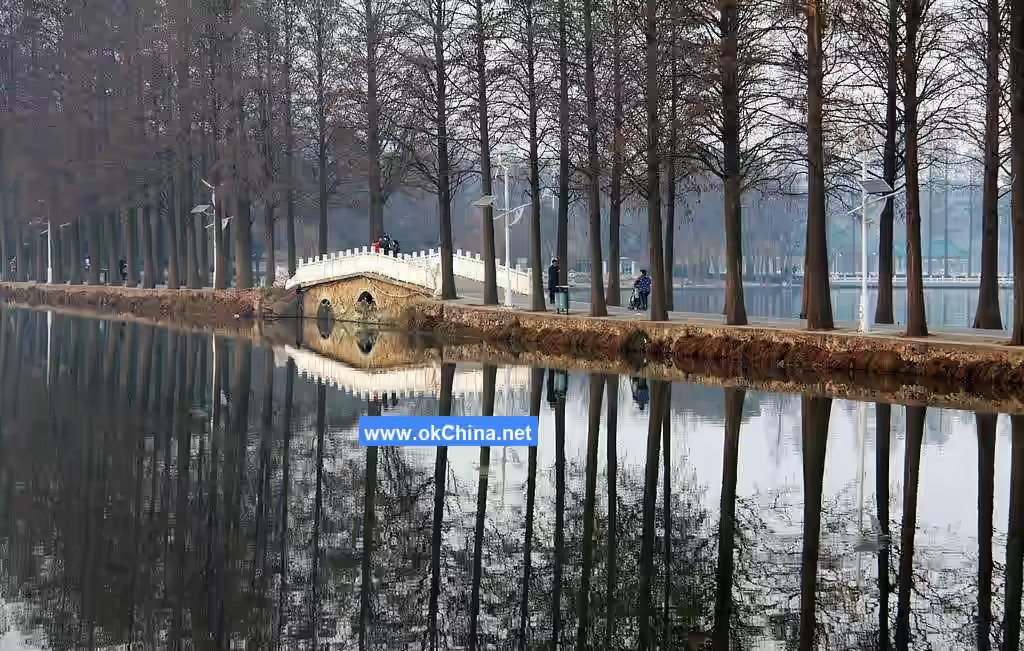
Wuhan East Lake Ecological Tourism Scenic Area is rich in plant resources, with natural and artificial forest areas covering nearly 7,000 mu. The scenic area exhibits plant community characteristics transitional from subtropical to warm temperate zones, primarily featuring mid-subtropical evergreen broad-leaved forests. This forms waterside landscapes dominated by tree species like metasequoia and pond cypress, and hilly and plain plant landscapes dominated by pine, cypress, osmanthus, etc. Among them are national first-class protected plants such as metasequoia, Taiwan fir, and southern yew, as well as national second-class protected plants like Chinese wingnut, hackberry, and sloe-leaved pear.
2.3.2 Animals
Within Wuhan East Lake Ecological Tourism Scenic Area, there are over 30 species of wild waterfowl and birds, including geese, wild ducks, egrets, larks, orioles, blue sparrows, Chinese bulbuls, finches, doves, mynas, and woodpeckers. Among them, the Baer's pochard, known as the "panda among birds," is a national first-class protected wild animal. Crested goshawks, white-throated kingfishers, Chinese sparrowhawks, and common kestrels are national second-class key protected wild animals.
3. Main Attractions
3.1 Tingtao (Listening to Waves) Scenic Area
3.1.1 Overview
The Tingtao Scenic Area is located on the northwest shore of East Lake and is the earliest developed and opened scenic area within the East Lake Scenic Area. This area primarily commemorates the patriotic poet Qu Yuan. Main attractions include the Qu Yuan Memorial Hall, Xingyin Pavilion, Jiunu Mound Monument, Fable Sculpture Garden, Changtian Tower, Huguang Pavilion, and Bitan Guanyu (Observing Fish in the Emerald Pool).
3.1.2 Qu Yuan Memorial Hall
The Qu Yuan Memorial Hall is located within the Tingtao Scenic Area and was built to commemorate Qu Yuan. The hall's name was inscribed by Dong Biwu. A bust of Qu Yuan stands in front of the hall, and inside, literature related to Qu Yuan, research achievements on Qu Yuan, and calligraphy and painting artworks are displayed.
3.1.3 Xingyin Pavilion
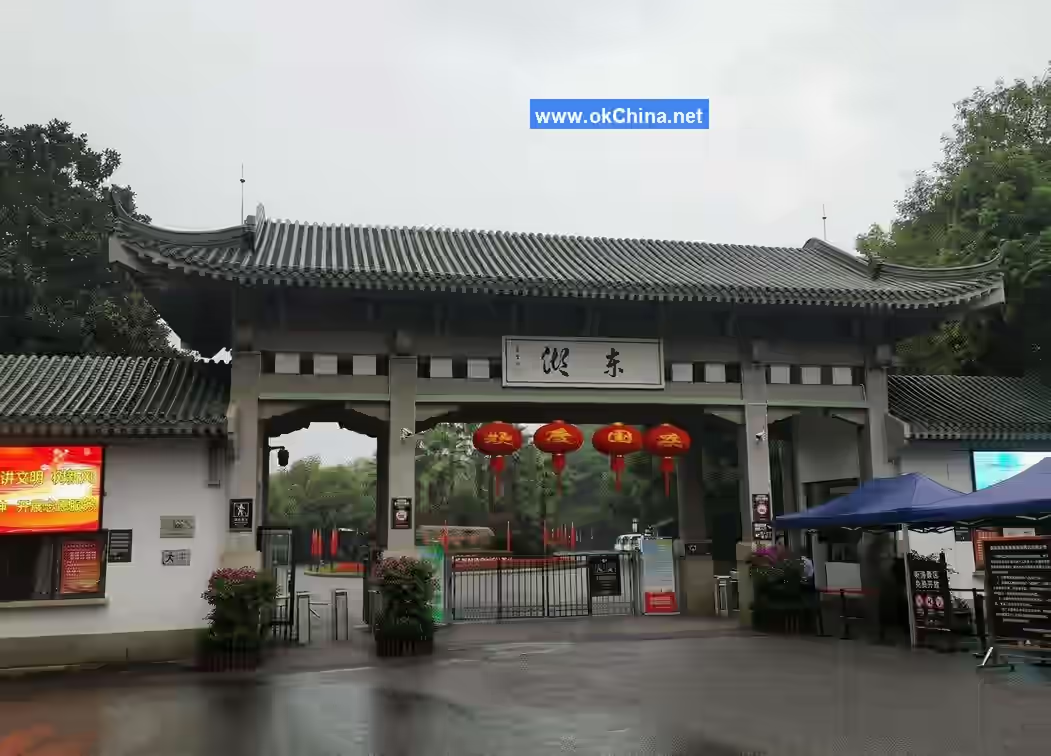
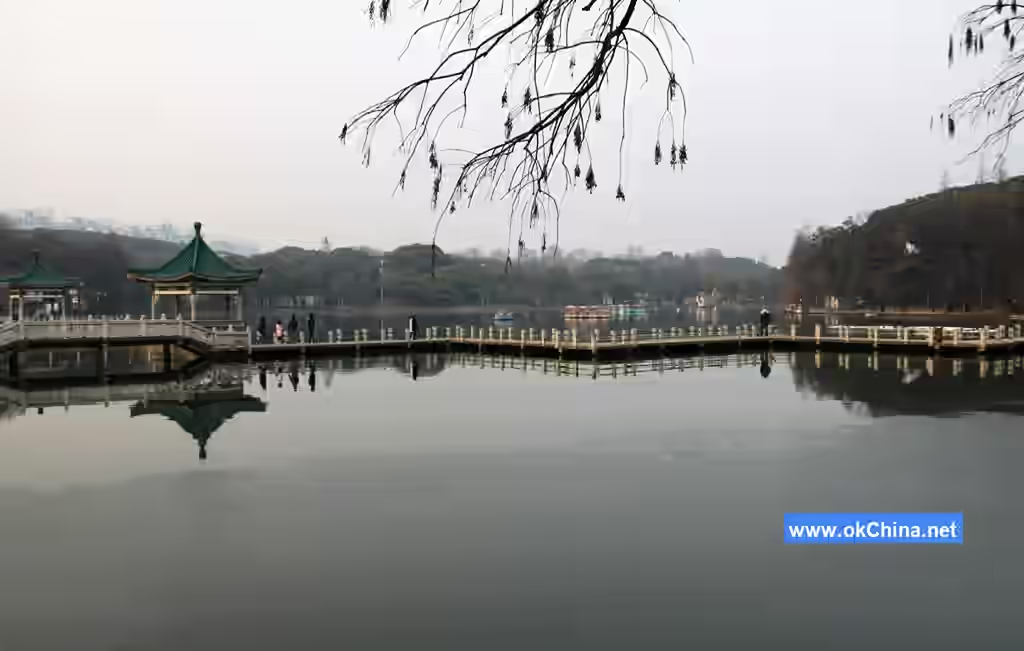
Xingyin Pavilion is located on a small circular island along the lake inside the East Lake gate of the Tingtao Scenic Area, connected by long embankments on both sides. It was built in 1950. The pavilion's name originates from "The Fisherman" in Chu Ci: "Qu Yuan, having been banished, wandered by the rivers and lakes, chanting poems along the shores."
3.1.4 Jiunu Mound
Jiunu Mound is located on a small hill northwest of the East Lake Greenway. It was built to commemorate nine brave female soldiers who fought during the Taiping Heavenly Kingdom period. The Jiunu Mound Monument is made of granite, standing 8 meters high, with six bronze bells hanging from the top. The front and sides bear inscriptions written by Dong Biwu, Soong Ching-ling, Guo Moruo, and others. It is a provincial-level cultural relic protection unit in Hubei Province.
3.1.5 Fable Sculpture Garden
The Fable Sculpture Garden is located in the Tingtao Scenic Area of East Lake. Construction began in 1986, making it the country's first sculpture garden themed on ancient fables. The garden contains 23 groups of fable sculptures, including "The Foolish Old Man Who Removed the Mountains," "The Fox Borrows the Tiger's Might," "The Blind Men and the Elephant," and "Passing Off Fish Eyes as Pearls." Among them, eight sculptures, such as "The Blind Men and the Elephant" and "The Fox Borrows the Tiger's Might," were created by the famous Chinese sculptor Liu Zhengde.
3.1.6 Changtian Tower
Changtian Tower was completed in 1956. Its name was inscribed by Comrade Dong Biwu, and it covers a total area of 1,775 square meters. The name is taken from the line "The autumn water shares the color of the vast sky" from Wang Bo's Tang dynasty preface to the Tengwang Pavilion. On the first floor of Changtian Tower, visitors can view the "Mao Zedong and East Lake Large-scale Historical Photo Exhibition."
3.1.7 Bitan Guanyu (Observing Fish in the Emerald Pool)
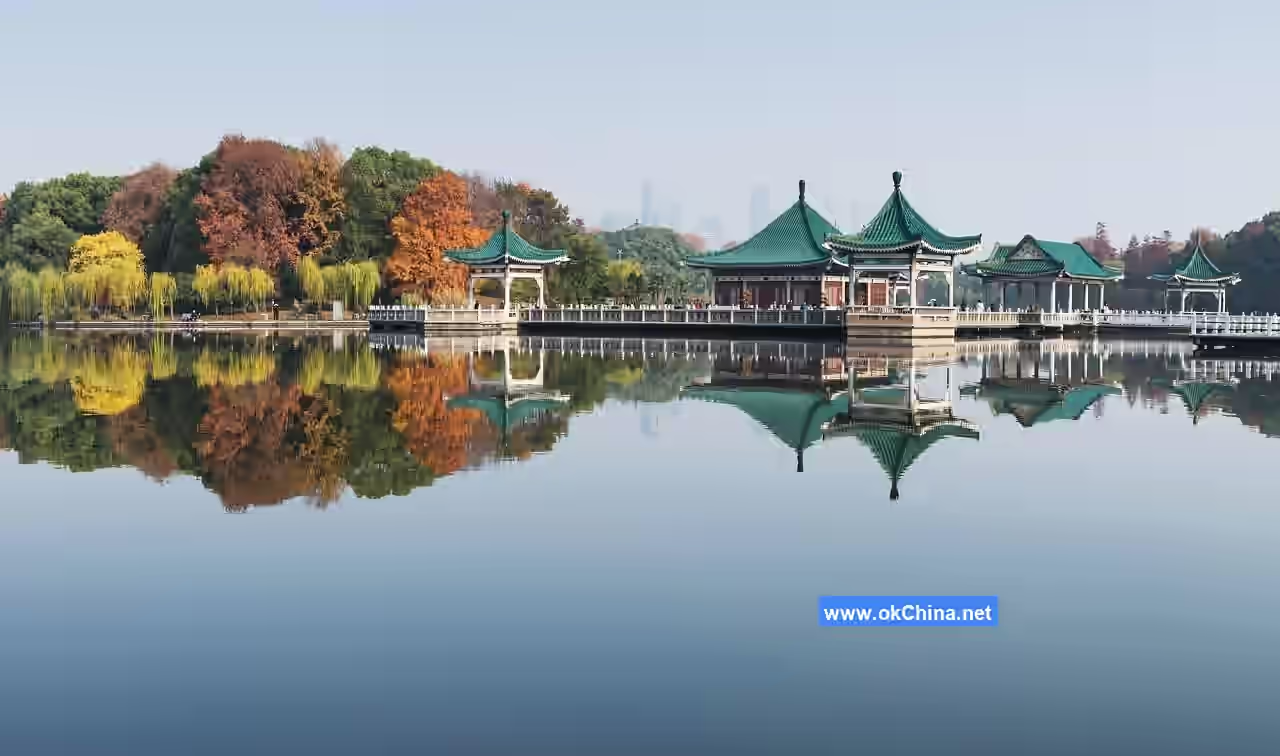
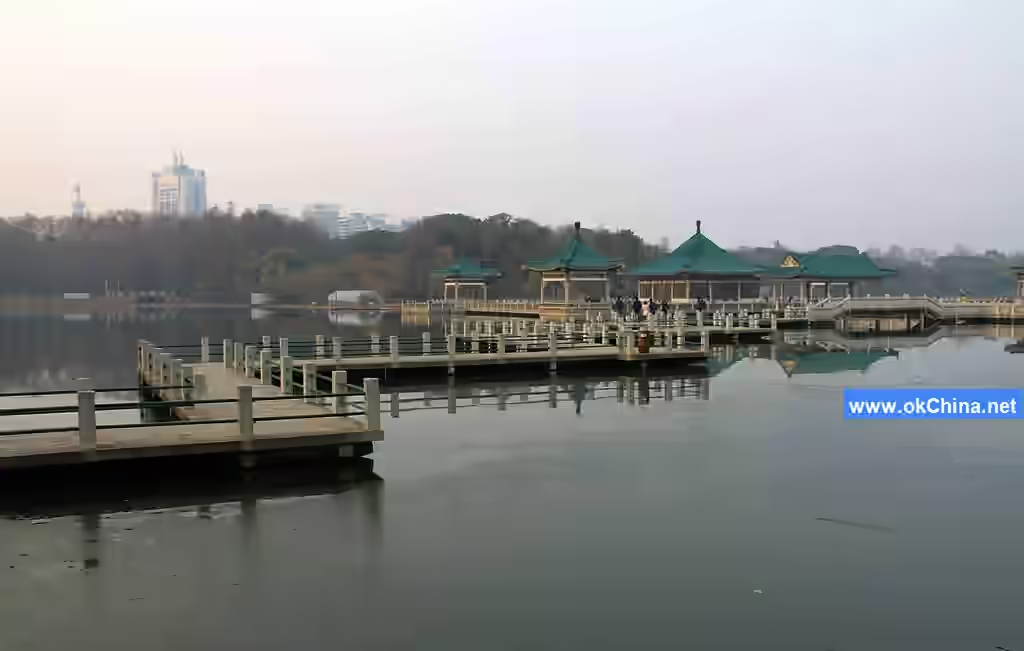
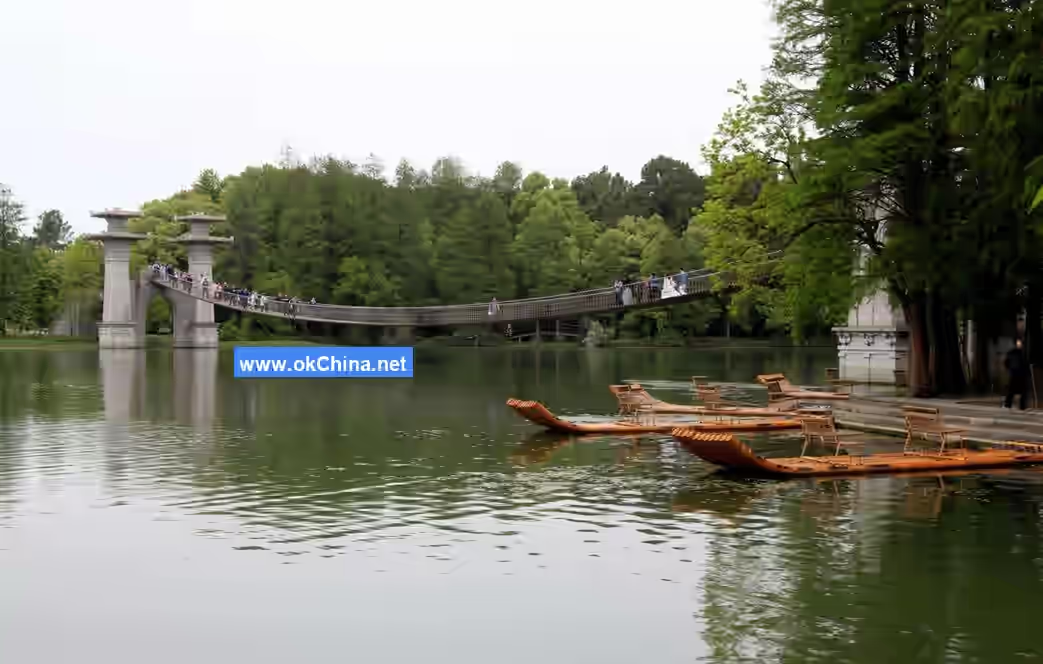
The Bitan Guanyu attraction in the Tingtao Scenic Area is an inner lake covering about 70,000 square meters. A winding Nine-Bend Bridge naturally extends across the lake, connecting with green-tiled pavilions, forming an integrated, classically beautiful Jiangnan-style garden architectural complex.
3.1.8 Huguang Pavilion
Huguang Pavilion, also known as the "Mid-Lake Pavilion," is located north of Moshan Hill and south of the Tingtao Scenic Area. In the 20th year of the Republic of China (1931), Xia Douyin spent over 85,000 yuan to build this pavilion on a peninsula in the middle of the long embankment to commemorate Chiang Kai-shek's 50th birthday, naming it "Zhongzheng Pavilion." The pavilion has three stories with green tiles and upturned eaves, each containing several rooms housing tea houses. Later, due to the意境 (artistic conception) of a lofty pavilion seemingly floating on the vast expanse of emerald water, it was renamed Huguang Pavilion, forming the "Huguang Floating Pavilion"景观 (landscape).
3.2 Moshan (Mill Hill) Scenic Area
3.2.1 Overview
The Moshan Scenic Area is an important component of the East Lake Scenic Area. Located at the center of East Lake, it is surrounded by water on three sides, covering a total area of 14.37 square kilometers, of which 2.7 square kilometers is water surface.
3.2.2 Zhubei Pavilion
Zhubei Pavilion was built in 1982 as a two-story pavilion-style corridor building. A plaque inscribed by Guo Moruo with "Zhubei Pavilion" hangs on the pavilion. In front stands a red natural stone tablet engraved with an inscription by Chairman Zhu De: "East Lake temporarily yields to West Lake's beauty, but in the future, it will surpass West Lake. East Lake has excellent natural conditions. Combined with industrial construction, it can certainly be developed into a cultural and scenic area greatly loved by the working people."
3.2.3 Liu Bei's Suburban Altar of Heaven
Liu Bei's Suburban Altar of Heaven is located on the eastern peak of Moshan Hill. The peak is round like a millstone, over a hundred meters high, with the ruins of Liu Bei's Suburban Altar of Heaven at the top.
3.2.4 Chu Culture Tourist Area
The Chu Culture Tourist Area is situated within the Moshan Scenic Area, along the lakeside at the northern foot of Moshan Hill. Construction began in 1989. The area contains cultural structures such as Chu City, Chu Market, Chutian Terrace, Phoenix Standard, Lisao Stele, and Chucai Garden, making it the largest Chu culture tourist area in the country.
3.2.5 East Lake Eye
The "East Lake Eye" is a Ferris wheel located within the Happy Jungle of the Moshan Scenic Area. It officially opened in August 2020. This Ferris wheel has a diameter of 49.9 meters, equipped with 28 cherry blossom pink cabins that can accommodate 112 people simultaneously. One full rotation takes 13 minutes and 14 seconds. There are a total of 28 cabins in a "cherry blossom pink" color scheme. Riding the East Lake Eye offers a 360-degree panoramic view of the Moshan Scenic Area. When the Ferris wheel reaches its highest point, the scenery of East Lake within a 20-kilometer radius can be fully appreciated.
3.2.6 East Lake Cherry Blossom Garden
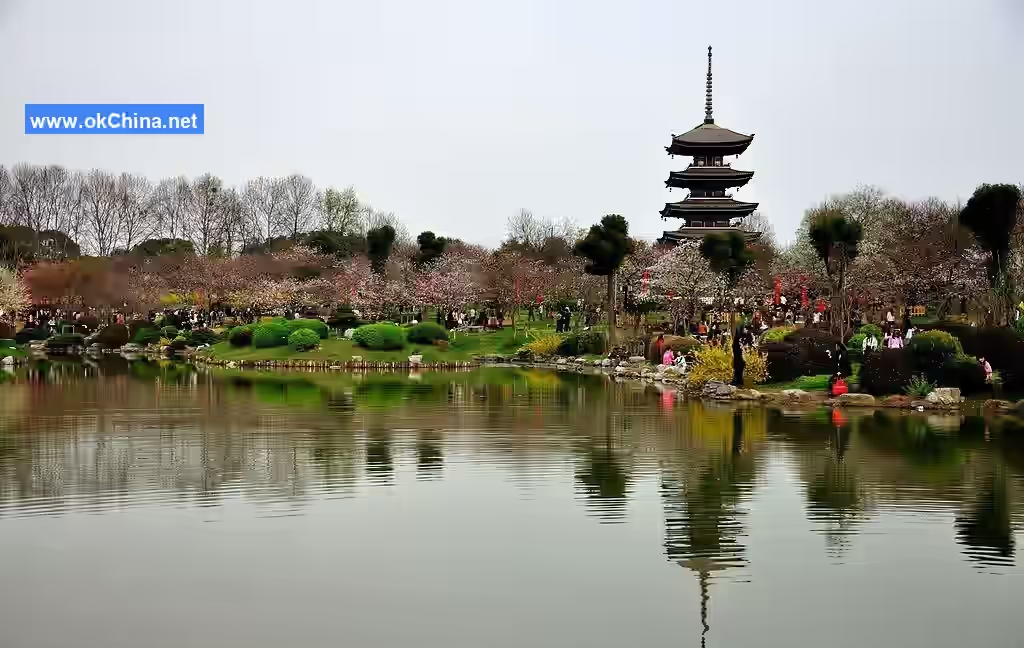
The East Lake Cherry Blossom Garden is one of the world's three major cherry blossom viewing gardens (the other two are the Hirosaki Cherry Blossom Garden in Aomori Prefecture, Japan, and the Washington State Cherry Blossom Garden in the USA). The scenic area covers 260 mu, planting over 30 varieties totaling more than 10,000 trees. Among them, "78 trees" were gifted by former Japanese Prime Minister Tanaka Kakuei to Zhou Enlai's wife, Deng Yingchao, in memory of Premier Zhou Enlai (on the occasion of the 78th anniversary of Premier Zhou's birth). After careful site selection, they were planted on the shores of East Lake. The viewing period is from March to April each year.
3.3 Luoyan (Falling Wild Geese) Scenic Area
The Luoyan Scenic Area borders Qingyu Road to the east and faces the Moshan Scenic Area across the lake to the south. The total land area is 10.24 square kilometers, of which 5.92 square kilometers is land and 4.32 square kilometers is water. It consists of four peninsulas extending into the water, featuring lush vegetation and numerous waterbirds. The water surface is often inhabited by waterfowl such as wild geese, ducks, and egrets.### 3.4 Flute Playing Scenic Area East Lake Flute Garden is located on the southern foothills of Ma'anshan, the main peak of Ma'anshan Forest Park (East Lake Flute Playing Scenic Area). It was expanded from the original Banshan Lotus Garden (a bonsai garden featuring Jiangnan style). It is named after the legend that Zhu Zhen, the sixth son of Emperor Zhu Yuanzhang, played the flute here when he was enfeoffed in Wuchang.
3.5 East Lake Greenway
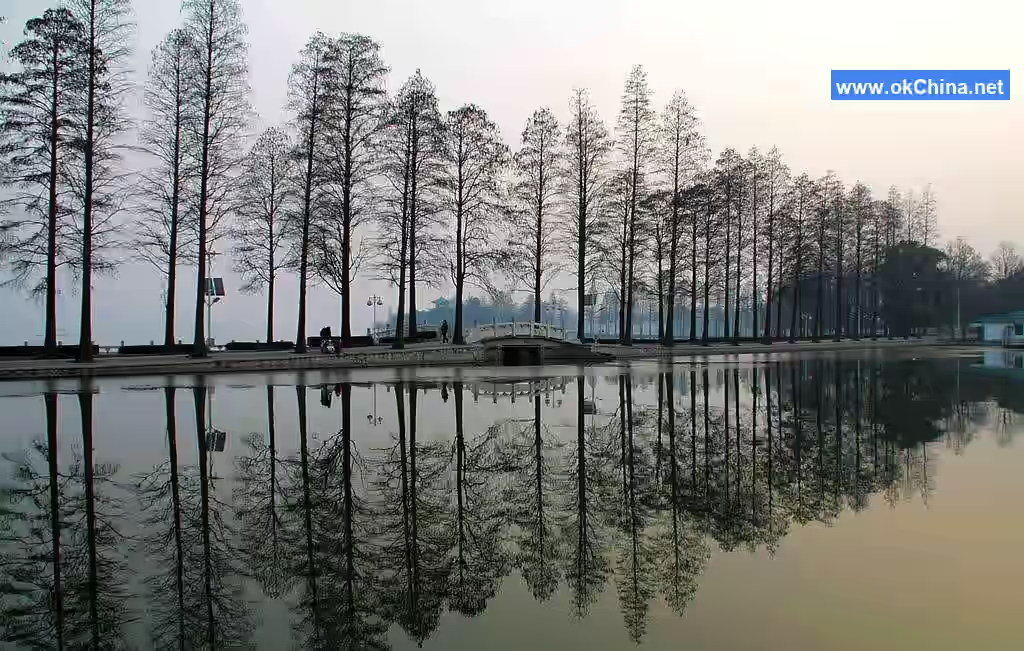
The East Lake Greenway is situated within the East Lake Scenic Area. With a total length of 102 kilometers and built to world-class bicycle path standards, it is a national 5A-level tourist attraction's lakeside greenway. Leveraging eight natural landscapes—mountains, forests, marshes, gardens, islands, dikes, fields, and bays—it forms seven themed sections: Tingtao Path, Lake Center Path, Baima Path, Countryside Path, Forest Path, Moshan Path, and Lakeside Path. It features 25 scenic spots, including the Metasequoia Forest, Fluorescent Night Path, Frog Chorus in the Pond, and World Customs.
3.6 OCT Ecological Wetland Park
OCT Ecological Wetland Park is located at No. 1, East Lake Road. As a national safety education base covering 180 mu, it is a wetland park focused on ecological safety, divided into four sections: land resource safety, water resource safety, atmospheric resource safety, and biological resource safety. It illustrates the entire process of East Lake wetland management through graphics and texts and includes leisure attractions such as waterfront platforms, Rainbow Bridge, and bird-watching houses.
3.7 East Lake Beach Bathing Site
The East Lake Beach Bathing Site is located at No. 26, Yanhu Road, facing Moshan from afar and known as the "Heart of East Lake." It covers a total area of 70,000 square meters, with a sandy beach area of 15,000 square meters. It offers leisure and entertainment projects such as beach barbecues, beach camping, inflatable water parks, and beach playground facilities.
3.8 East Lake Sightseeing Helium Balloon
The East Lake Sightseeing Helium Balloon is located on the Lake Center Island of the East Lake Greenway. It is the first aerial tourism helium balloon project in Central China. With a diameter of 23 meters and a volume of 6,000 cubic meters, it can accommodate 29 passengers simultaneously. It ascends vertically up to 150 meters, offering a 360-degree panoramic view of the beautiful East Lake scenery and the surrounding urban landscape.
4. Cultural Resources
4.1 Historical Evolution
According to historical records and oral folklore, over 100 years ago, East Lake was part of the Shahu Lake system. East Lake, Shahu Lake, and Baiyang Lake were originally interconnected and connected to the Yangtze River. At that time, the lake area on the southern bank of the Yangtze was vast, with rivers and lakes connected and no artificial embankments to prevent floods. Every summer when the Yangtze River swelled, or during spring with slightly higher water levels, the southern bank would be inundated. The river waters merged Shahu Lake and Guozheng Lake (now East Lake) into one, extending from the riverbank to the Mopan Mountains area, turning it all into marshland. During Zhang Zhidong's governance of Hubei, embankments were constructed to regulate East Lake's flooding. Wuqing Embankment, Wujin Embankment, Wutai Sluice, and Wufeng Sluice were successively built. Baiyang Lake gradually silted up into a small inlet, separating East Lake from Shahu Lake, transforming from a natural lake connected to the Yangtze River into an artificially regulated lake.
In the 18th year of the Republic of China (1929), national capitalist Zhou Cangbai invested heavily in building Haiguang Farm on the west bank of East Lake for citizens to exercise and play. The completed Haiguang Farm covered over 2,000 mu, including areas that are now part of the Tingtao Scenic Area and East Lake Hotel.
In 1949, Wuhan was liberated. In June of that year, Zhou Cangbai voluntarily donated Haiguang Farm to the state, and it was renamed East Lake Park.
On October 25, 1950, the second plenary session of the Central-South Military and Administrative Committee discussed and passed the "Proposal for the Construction of East Lake Park and East Lake Fish Farming."
In 1982, Wuhan City initiated the construction of the Moshan Chu Culture Tourist Area, successively building attractions such as Chu City, Chu Market, Chutian Tower, Phoenix Marker, Zhurong Observing Stars, Chucai Garden, Lisao Stele, and Philosopher Garden.
In June 2006, the East Lake Ecological Tourism Scenic Area Management Committee was officially established.
In 2009, to improve the water quality of East Lake, fishing was completely phased out in East Lake.
On December 28, 2016, the first phase of the 28.7-kilometer East Lake Greenway was completed.
On December 26, 2017, the second phase of the East Lake Greenway project was completed and opened.
4.2 Cultural Activities
4.2.1 Culture
In June 2019, the East Lake Ecological Tourism Scenic Area in Wuhan held the second East Lake Poetry Festival, with over 40 renowned poets from across the country participating.
In June 2019, the "Beautiful East Lake • Enjoying Lotuses with You" East Lake Lotus Exhibition was held at the Lotus Garden in the Moshan Scenic Area of East Lake.
In May 2011, the East Lake Ecological Tourism Scenic Area in Wuhan held the Dragon Boat Festival Cultural Tourism Festival, including folk activities such as dragon boat races, ancient rituals to commemorate Qu Yuan, and children's poetry competitions.
In February 2021, the Wuhan East Lake Plum Blossom Festival was held in the Plum Garden of the East Lake Ecological Tourism Scenic Area in Wuhan.
In 2022, the 14th Meeting of the Conference of the Contracting Parties to the Ramsar Convention was held in the Luoyan Scenic Area of the East Lake Ecological Tourism Scenic Area in Wuhan.
In January 2023, the East Lake Ecological Tourism Scenic Area in Wuhan held the "East Lake Spring Festival Giant Fish Lantern Show," with lantern sets like "Auspicious Rabbit Welcomes Spring," "World Famous Lakes," and "Beautiful East Lake" showcasing the historical culture of East Lake.
4.2.2 Sports
In 2016, the first Wuhan Marathon was held on the East Lake Greenway.
In 2019, the final leg of the torch relay for the 7th CISM Military World Games was held on the Greenway of the East Lake Ecological Tourism Scenic Area in Wuhan.
In May 2024, the East Lake Ecological Tourism Scenic Area in Wuhan launched a series of summer cultural and tourism activities.
On August 16, 2024, the East Lake Ecological Tourism Scenic Area in Wuhan held the "Low-Carbon East Lake Cycling 'Summer'" event and the 2024 National Ecology Day themed publicity activity for the East Lake Scenic Area. Nearly 30 environmental cycling enthusiasts set off from the East Lake Moshan Cherry Blossom Garden and headed towards the OCT Wetland Park.
On September 29, 2024, the East Lake Ecological Tourism Scenic Area in Wuhan held the Lingbomen Sunrise Singing event. Intangible cultural heritage Duxuan Qin, piano, electric music bands, violin, cello, and beautiful voice choirs performed in a crossover show, singing blessings for the motherland.
Comments
Post a Comment