Dongjiang Lake Scenic Area
1. Introduction
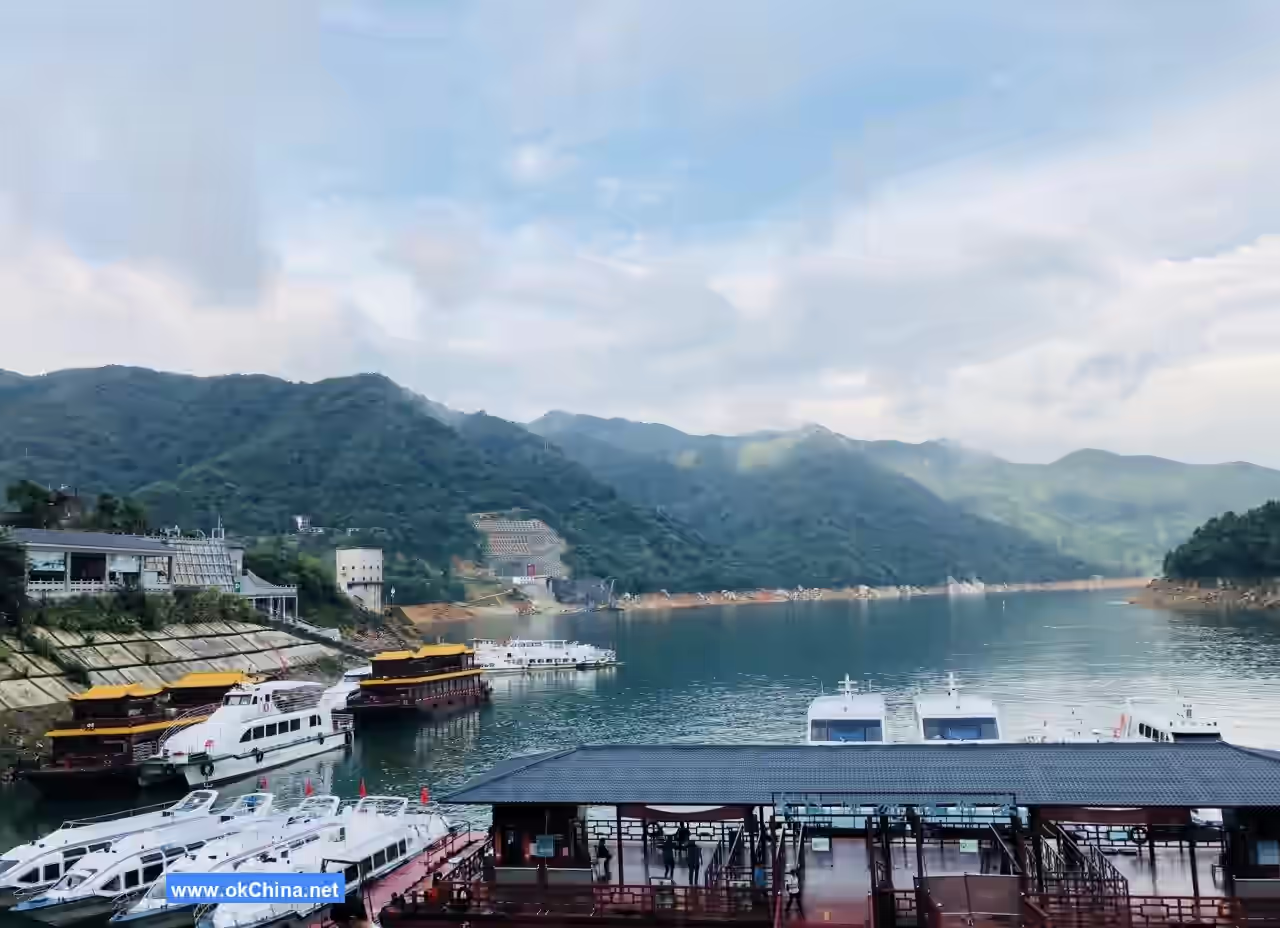
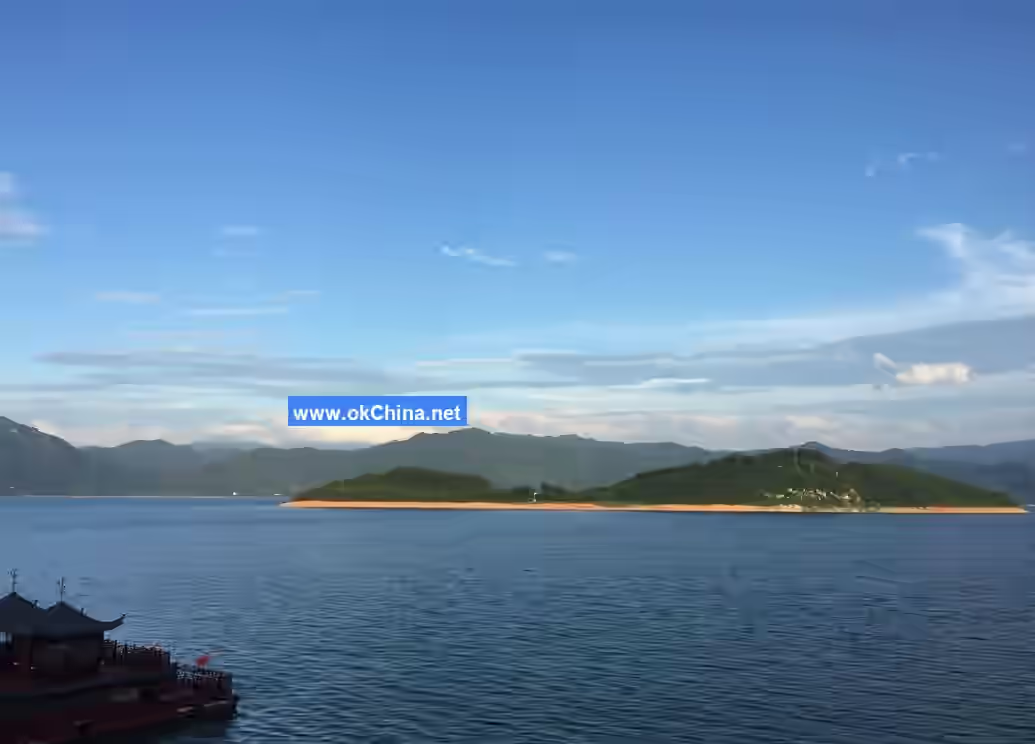
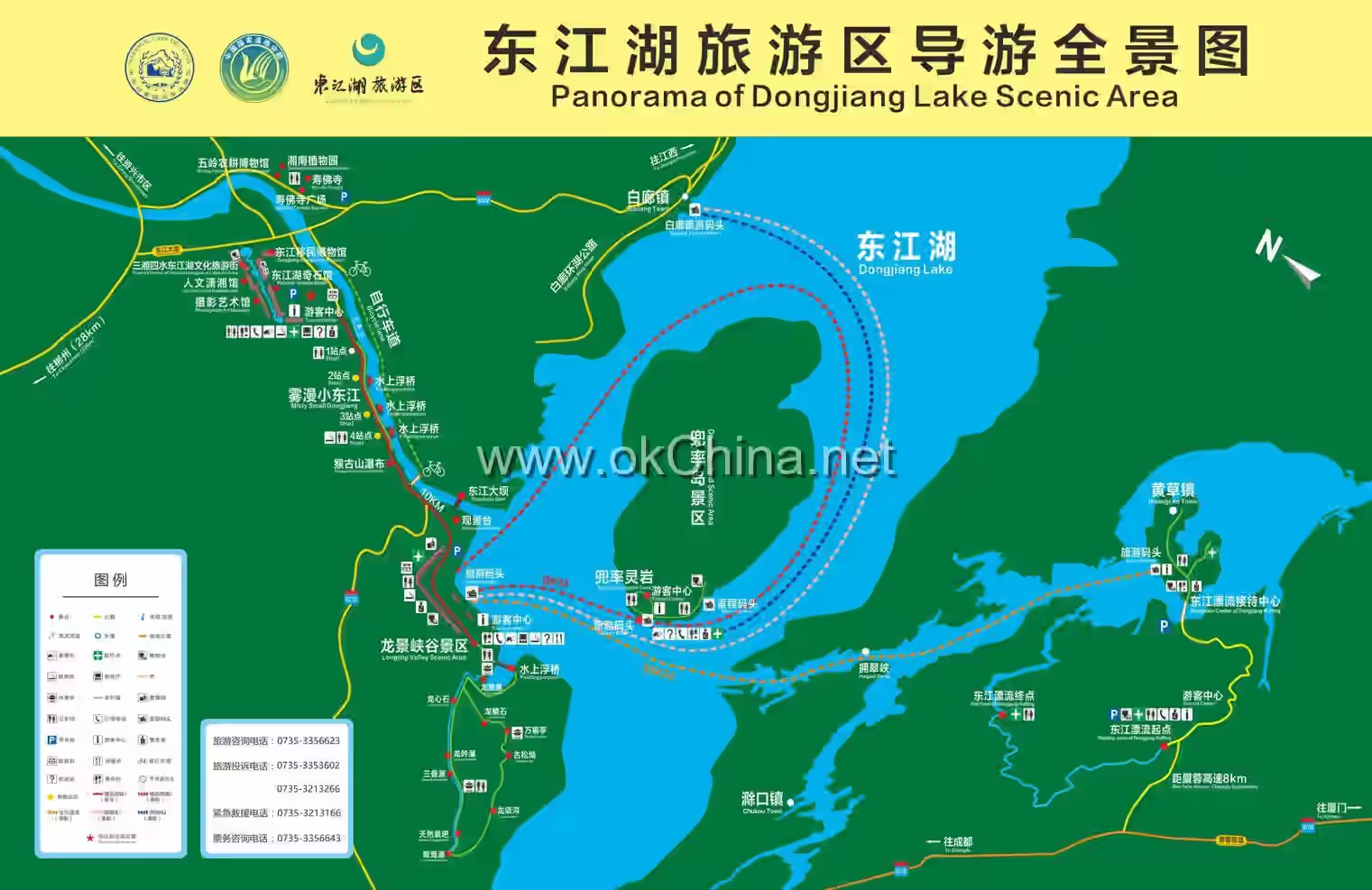
The Dongjiang Lake Scenic Area, also known as the Dongjiang Lake Tourist Area, is a tourist attraction located in Zixing City, Chenzhou City, Hunan Province. It covers a total area of 200 square kilometers and is only 28 kilometers away from the urban area of Chenzhou. Dongjiang Lake is the reservoir formed by the Dongjiang Hydropower Station, a key national energy project during the "Sixth Five-Year Plan" period. The lake surface area spans 160 square kilometers with a storage capacity of 8.12 billion cubic meters. Known as the "Southern Dongting Lake," it is the largest artificial lake in central and southern China and one of the national water sports training bases. The scenic and tourism resources within the Dongjiang Lake Scenic Area are mainly concentrated in three major regions: the Dongjiang Lake Core Scenic Area, the Swan Mountain National Forest Park, and the Chengjiangkou Scenic Tourist Area.
2. Geographical Environment
2.1 Location and Territory
The Dongjiang Lake Scenic Area is situated on the western slope of Bamian Mountain at the southern end of the Luoxiao Mountain Range in Zixing City, Chenzhou City, Hunan Province. It lies in the upper reaches of the Lei River, a tributary of the Xiang River. The scenic area is located between 25°34'–26°18' north latitude and 113°08'–113°44' east longitude.
2.2 Topography and Landforms
The Dongjiang Lake Scenic Area is located at the southern end of the Luoxiao Mountain Range, on the western slope of Bamian Mountain and the northern slope of the Nanling Mountains. It is part of the Rugui Mountain Range, characterized by medium-low mountainous terrain with higher elevations in the east and lower in the west. The area features overlapping mountains, crisscrossing ravines, and complex topography. The highest elevation is 1,691.0 meters, and the lowest is 180.0 meters.
2.3 Climate Characteristics
Although the Dongjiang Tourist Area is located north of the Nanling Mountains, the regulating effect of the lake creates a unique regional microclimate of the "Lingnan type," featuring warm winters, cool summers, and pleasant temperatures.
2.4 Hydrological Features
The Dongjiang Lake wetland belongs to the upper reaches of the Lei River, a first-level tributary of the Xiang River system. Zixing City has a dense network of rivers, with a total of 404 large and small streams spanning 1,900 kilometers. The Dongjiang River system originates in Guidong, enters from the southeast via Rucheng, flows about 50 kilometers within the territory, and enters the Lei River through Dongjiang Lake. The Yongle River system originates on the western side of Bamian Mountain, flows through the northeastern corner of the city for about 47 kilometers, and also enters the Lei River via Dongjiang Lake.
3. Main Attractions
3.1 Dongjiang Lake Core Scenic Area
3.1.1 Huangcao Water Town – Huangcao Town
Huangcao Town is named for its "yellow grass," also known as Huangcaoping. Legend has it that the area was rich in water plants, attracting a golden water buffalo. Upon arrival and seeing only yellow grass everywhere, it was greatly disappointed and said, "It's just Huangcaoping (yellow grass plain)," later shortened to Huangcao. Viewed from above, Huangcao Town resembles a buffalo horn reflected on the lake surface, hence it is also called "Golden Buffalo Island."
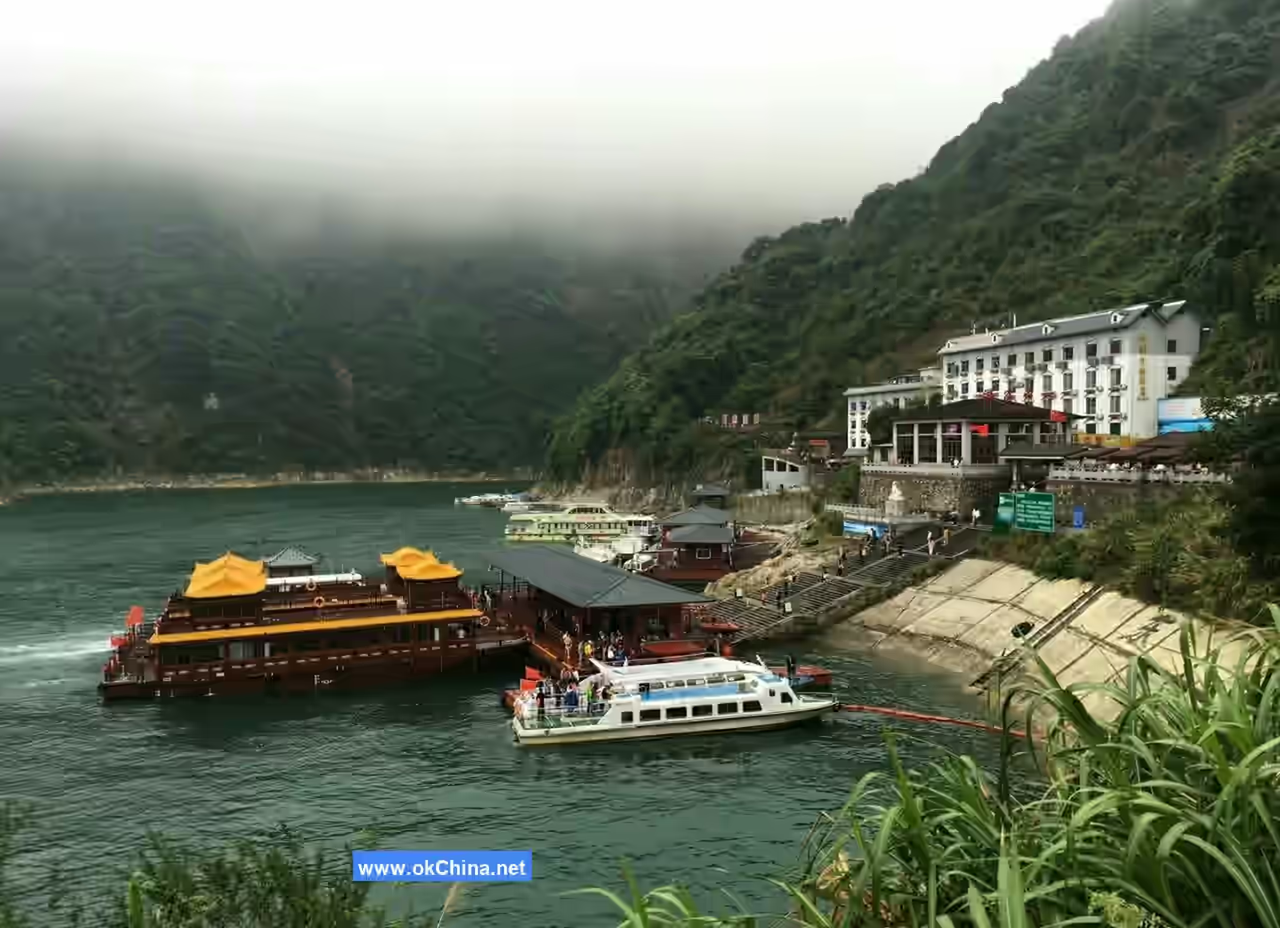
Huangcao boasts a beautiful environment and pleasant climate, making it an excellent leisure and vacation destination, acclaimed as the "First Water Town of Xiaoxiang Style." The Xiaoxiang-style water town of Huangcao Town is located on Golden Buffalo Island in Dongjiang Lake and is the core scenic area of the national AAAAA-level Dongjiang Lake Tourist Area. It enjoys the reputation of "the moon in the water of Jiangnan, the flower in Dongjiang Lake." Within its jurisdiction are thrilling attractions such as China's first ecological tourism rafting – Dongjiang Rafting, and natural landscapes known as the "Three Immortals and Four Islands," including "Leigong Mountain," "Tongtian Mountain," "Longfeng Mountain," "Golden Buffalo Island," "Golden Turtle Island," "Garden Island," and "Pine Forest Island." The tranquil water dwellings, white-walled and gray-tiled houses, and unique folk customs allow Chinese and foreign tourists to fully enjoy the pleasures of water and time.
3.1.2 Misty Xiaodong River
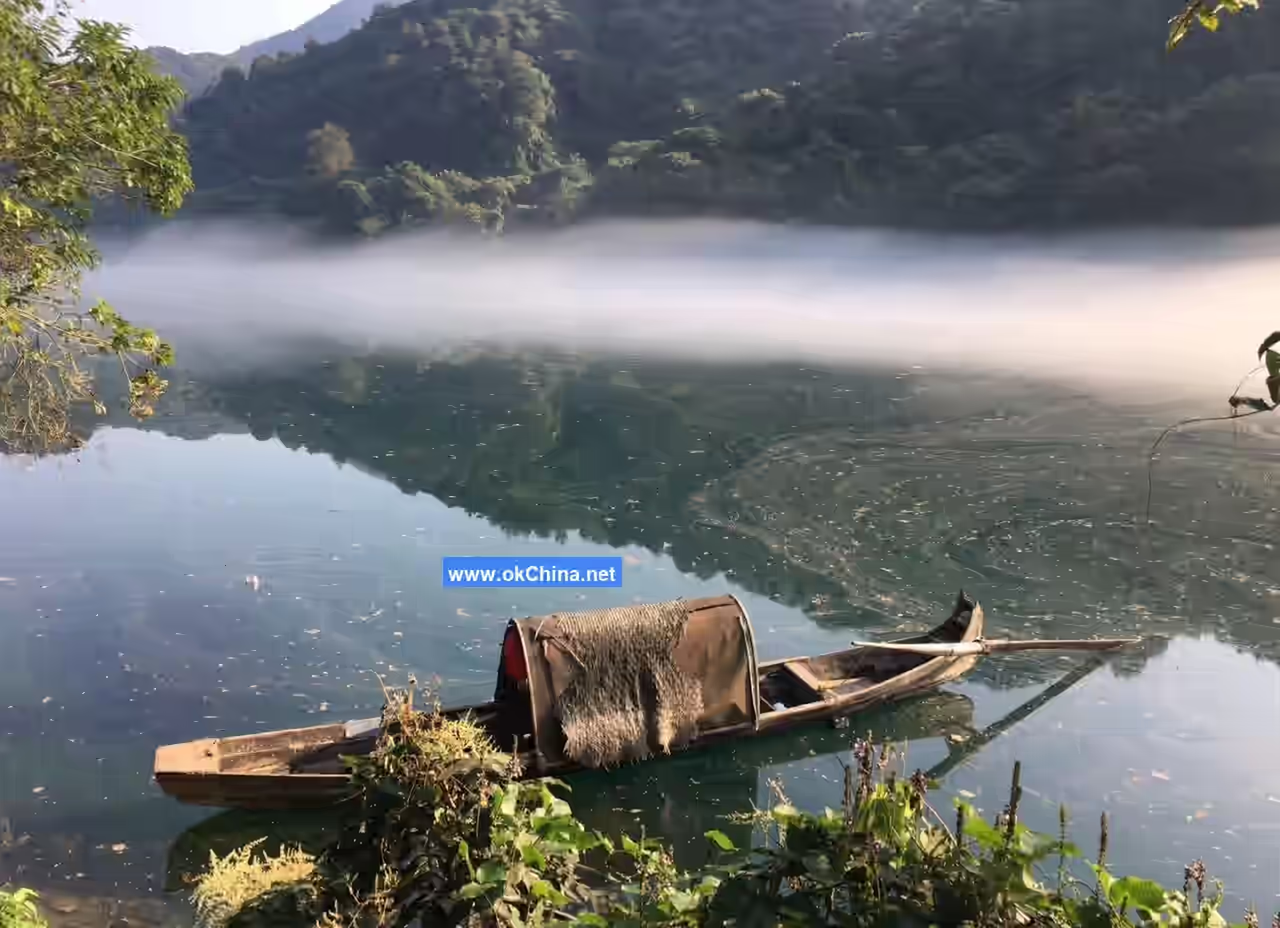
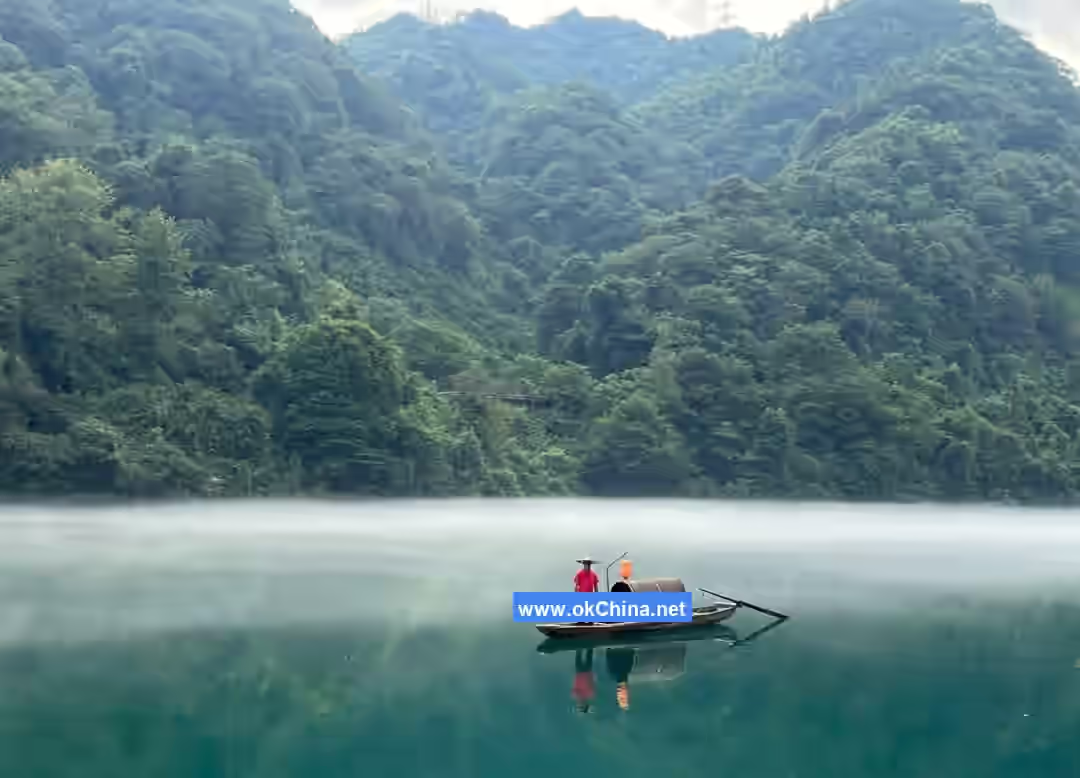
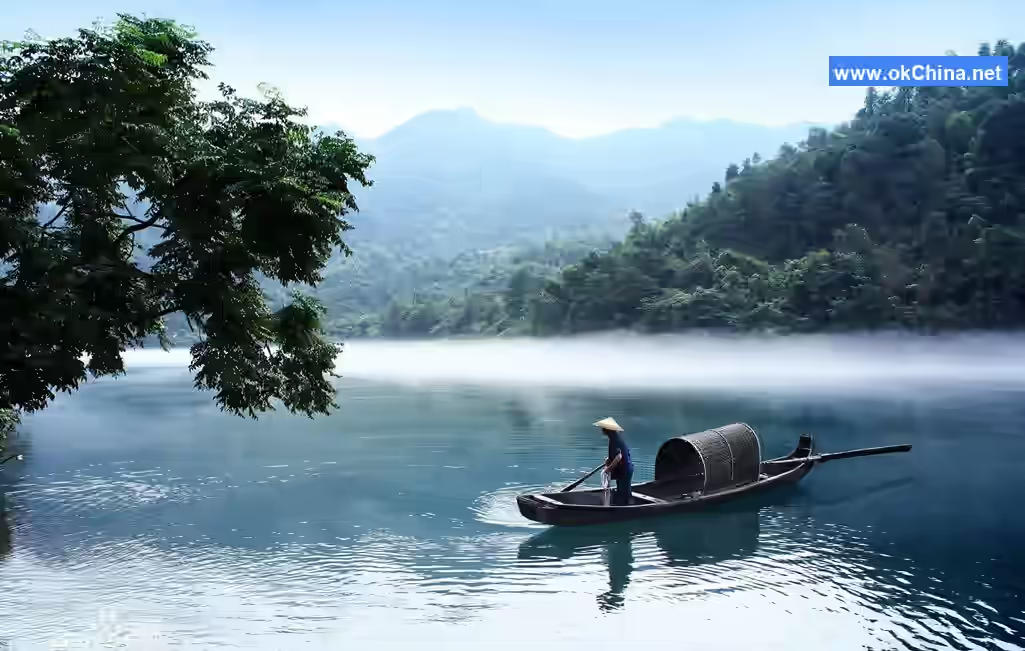
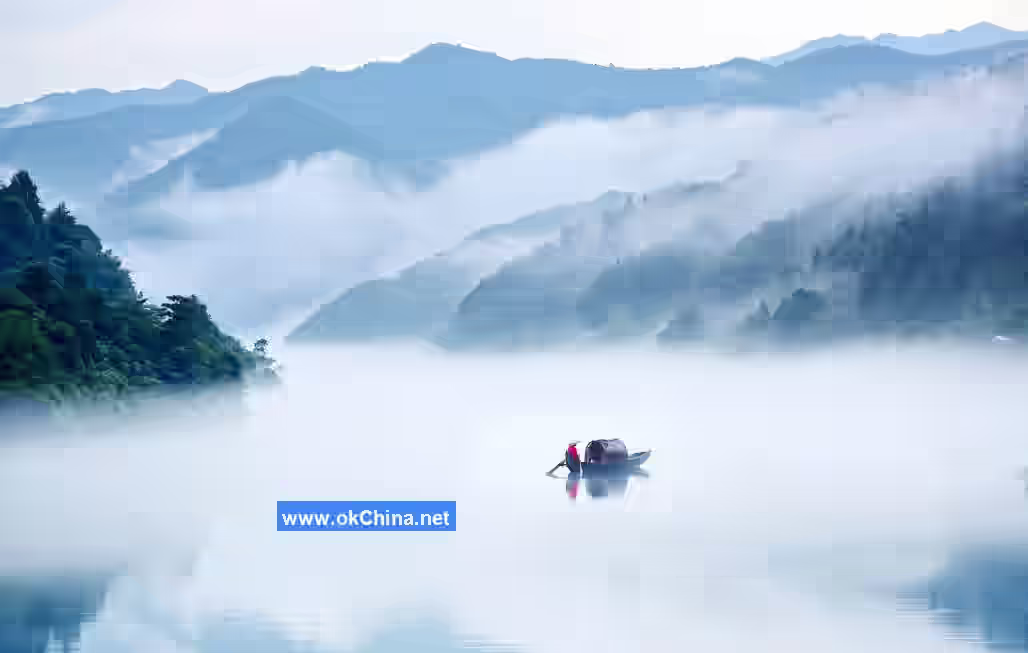
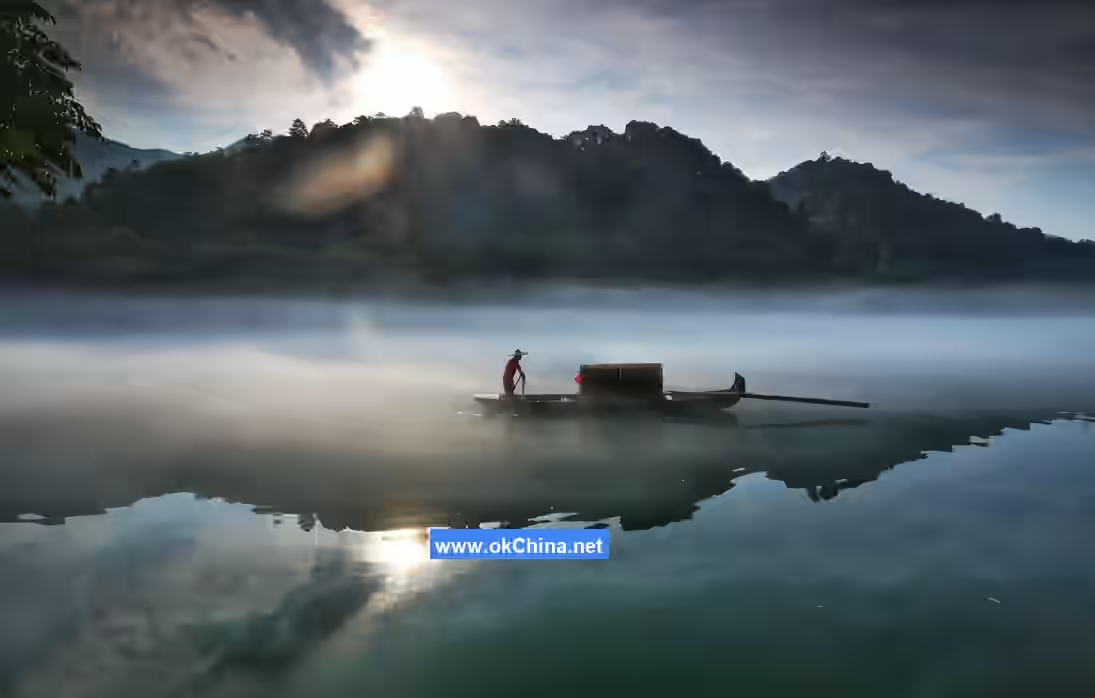
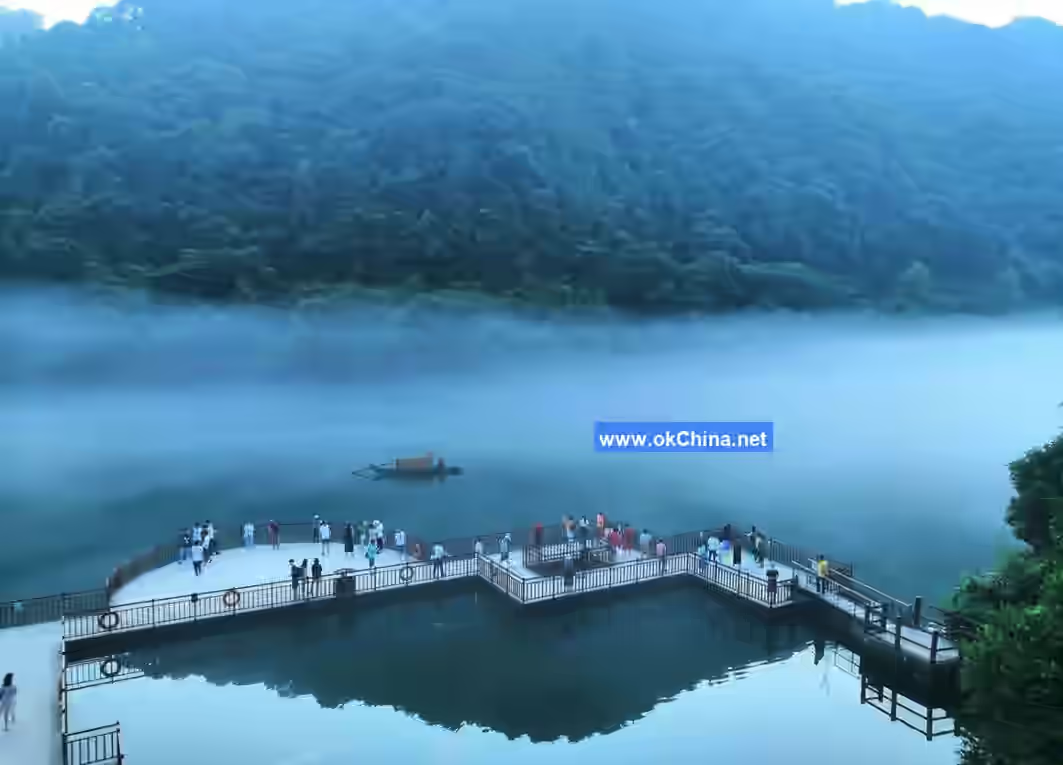
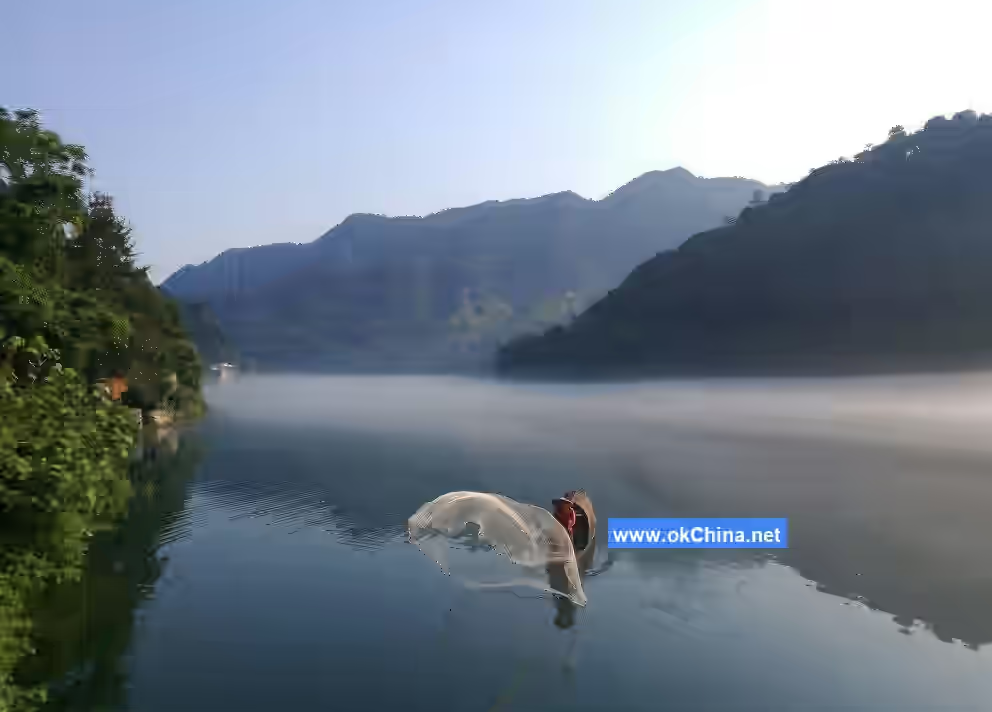
Misty Xiaodong River is located at the main northern entrance of the scenic area, formed by the upstream and downstream Dongjiang Hydropower Stations, creating a narrow, elongated lake about 10 kilometers long.
3.1.3 Dongjiang Reservoir Dam
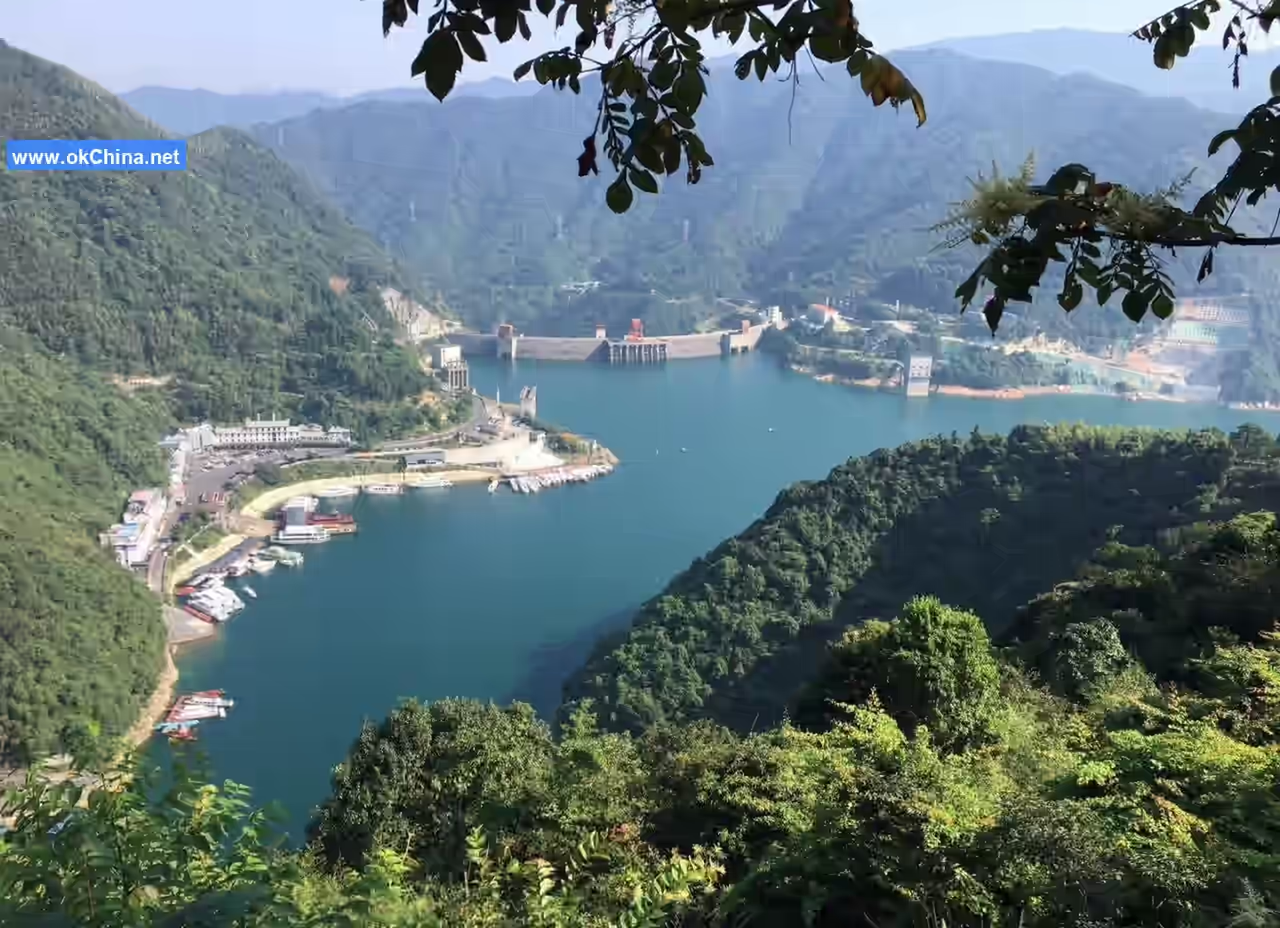
The Dongjiang Reservoir Dam is 157 meters high, with a base width of 35 meters, a crest width of 7 meters, and a central crest arc length of 438 meters. It has an installed capacity of 500,000 kilowatts. The dam structure is novel, unique, grand, and magnificent, ranking first in Asia and second in the world. It is a double-curvature thin-shell arch dam designed and constructed independently by China. During the spring rain season, when the lake water surges and the dam gates open for flood discharge, the emerald green water rushes down into the canyon, creating a spectacular sight.
3.1.4 Dongjiang Lake
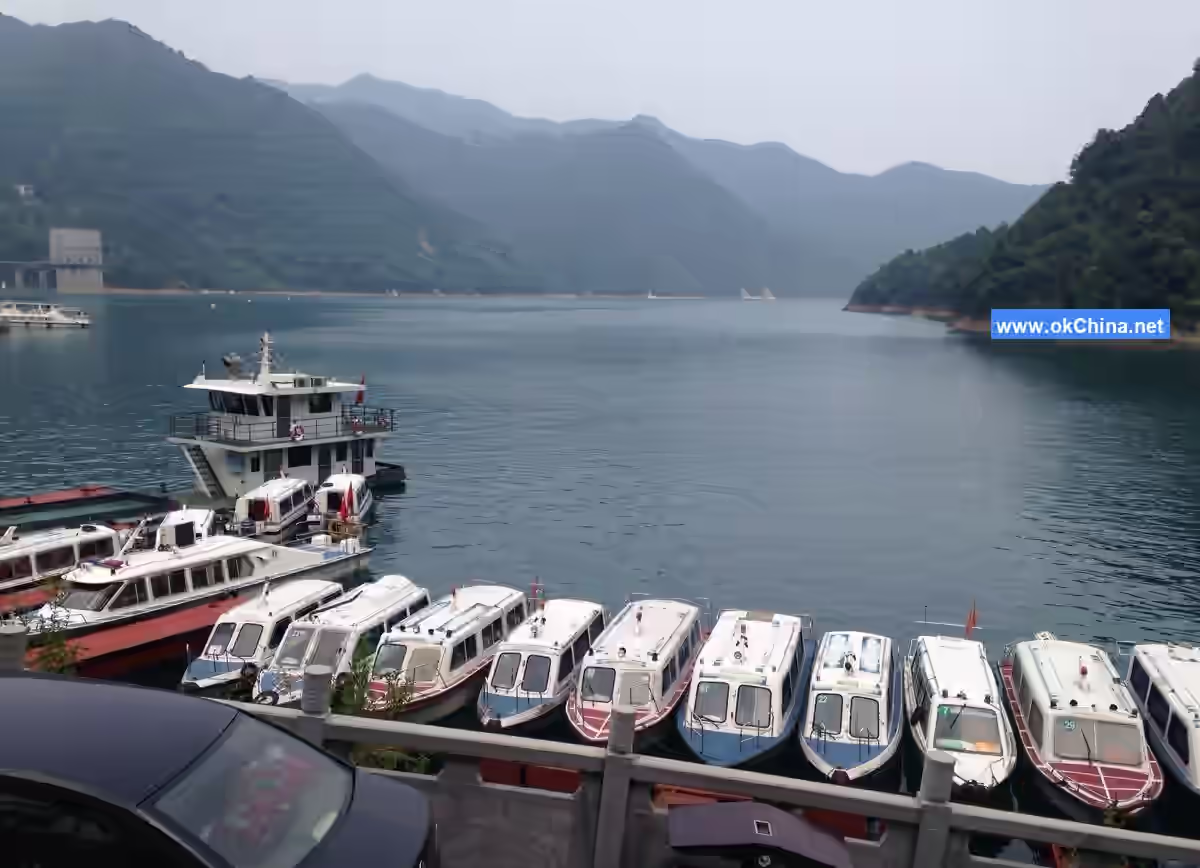
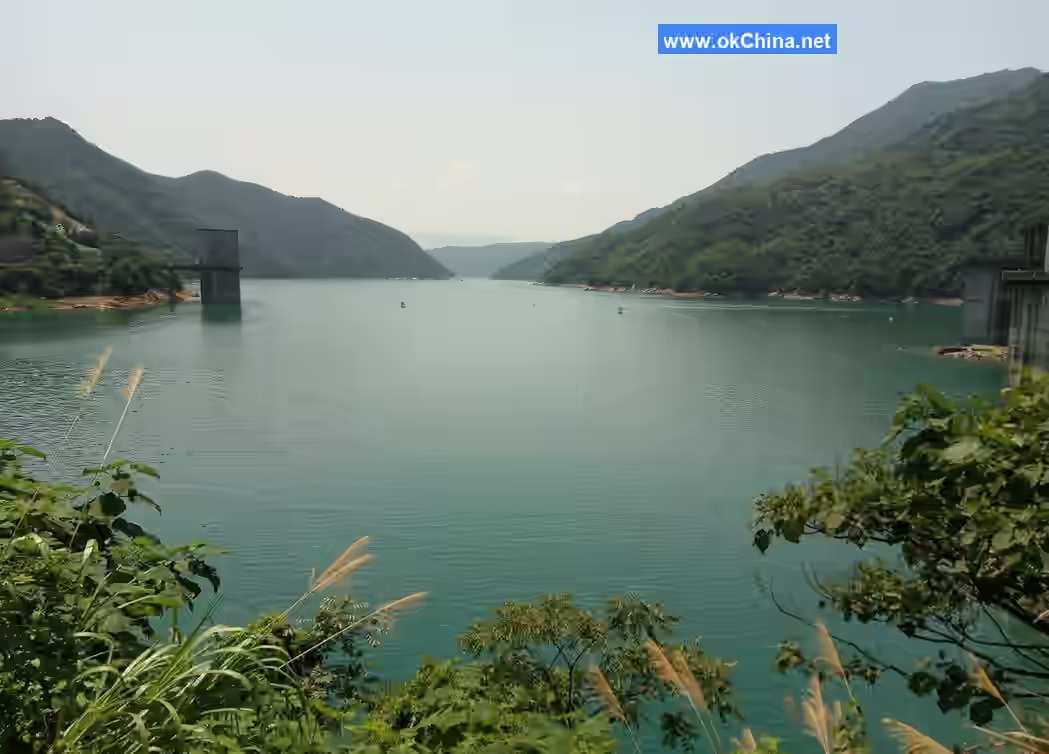
Dongjiang Lake is the reservoir of the Dongjiang Hydropower Station, a key national energy project during the "Sixth Five-Year Plan" period. The lake surface covers 160 square kilometers with a storage capacity of 8.12 billion cubic meters. Known as the "Southern Dongting Lake," it is currently the largest artificial lake in central and southern China and one of the national water sports training bases.
3.1.5 Hougu Mountain Waterfall
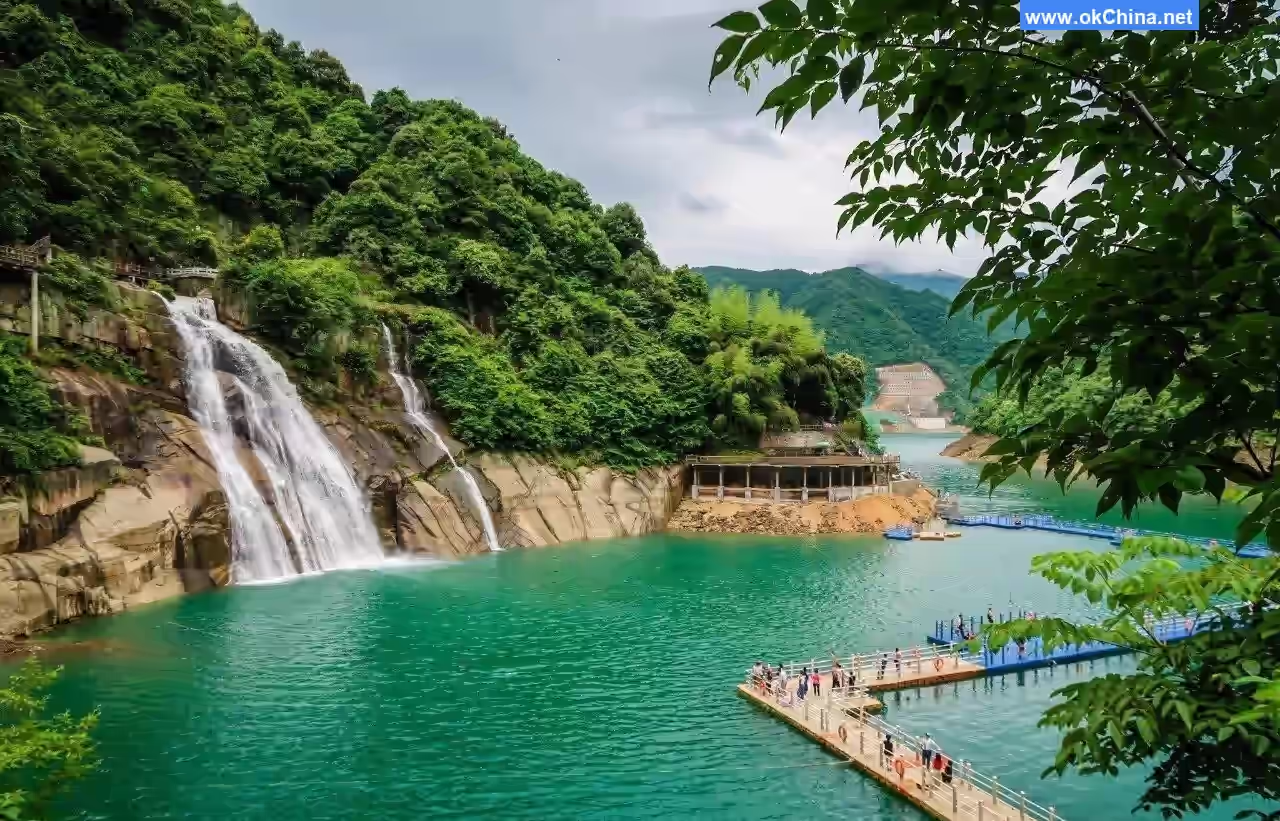
The Hougu Mountain Waterfall consists of two waterfalls about 100 meters apart, located in a mountain bend southwest of the Dongjiang Dam. Surrounded by green hills and ancient trees, the western waterfall is nearly 10 meters wide and over 20 meters high, plunging directly into the lake, stirring up rolling blue waves and splashing spray. The southern "Hundred Zhang Waterfall" is over 200 meters high, cascading down between green cliffs and rocks, winding through several bends before reaching the surface of Dongjiang Lake.
3.1.6 Longjing Gorge
Longjing Gorge is a comprehensive tourist area integrating sightseeing, leisure, health, and water entertainment. The gorge features what is considered the largest waterfall group in southern China – the Longjing Eighteen Waterfalls, the Longjing Water Slide known as China's premier outdoor water slide, and the Longjing Gorge Negative Oxygen Ion Enrichment Zone, the largest natural oxygen bar in China.
The full hiking trail through the gorge is 2.5 kilometers. Along the way, steep mountains, verdant greenery, ancient towering trees, numerous clear pools, and waterfalls create the scenic area with the highest density of waterfalls in China, boasting 26 waterfalls of various sizes and 18 water pools. Visitors can breathe air containing up to 94,000 negative oxygen ions per cubic centimeter and various plant essences beneficial to human health, making it a rare high-negative-ion area in China.
3.1.7 Doushuai Lingyan (Doushuai Spiritual Rock)
Doushuai Lingyan is a massive limestone karst cave formed 270 million years ago. It is hidden within the ancient Doushuai Temple beneath the southern cliff of Doushuai Island, the central island of Dongjiang Lake. The ancient temple was first built in the 51st year of the Qing Dynasty's Qianlong era (1796), making it over 200 years old. The Doushuai Lingyan karst cave is renowned for its height, size, grandeur, uniqueness, depth, and spaciousness. The cave is warm in winter and cool in summer, filled with stalactites, towering stone pillars, and myriad formations. The cave extends over 10 li (about 5 kilometers), and its stone curtains, stone pillars (36 meters high), and stone flowers are among the largest and tallest in the world, earning it the title "World's Best." Xie Yan's "Record of Doushuai Lingyan" from the Song Dynasty was included in the "Records of Famous Mountains Under Heaven." After investigation, experts from the United Nations Speleological Association praised it as the "Labyrinth of Underground Nature" and the "Number One Cave Under Heaven." Literary figures have praised it as "Caves under heaven are similar, but this cave is uniquely different."
3.1.8 Dongjiang Mountain Villa
Dongjiang Mountain Villa is located on the mountainside amidst the woods southeast of Doushuai Island, 500 meters from the Doushuai Lingyan karst cave. It covers a construction area of 3,300 square meters, with 44 guest rooms, 108 mid-to-high-end beds, 5 meeting rooms of various sizes, and entertainment facilities such as karaoke, beauty salon, fitness, and chess/poker rooms. The entire complex follows the mountain's contours, featuring varied heights, bright colors, white walls, chestnut-colored pillars, fir bark roofs, and ridge covers made of moso bamboo. It includes stilted pavilions, carved wooden railings, courtyards connected by skylights, hidden stairs leading to corridors, winding paths, and secluded trails, blending the charm of Jing-Chu inns with the style of southern Hunan folk houses and garden cottages.
3.1.9 Dongjing Village
Dongjing Village is situated close to the lakeside ring road on the eastern shore of Dongjiang Lake. Small stone forests rise abruptly from the ground, appearing unique and peculiar. A sky bridge spans north and south on the mountain, while Butian Village at the foot is a Chinese revolutionary memorial site. In the summer of 1928, Zhu De, Chen Yi, and others led their troops here for rest and reorganization and held the "Anniversary Celebration of the August 1 Nanchang Uprising." After the troops withdrew, reactionaries massacred Butian Village. The people of Butian made tremendous sacrifices for the revolution, forever worthy of commemoration by future generations.
3.1.10 Orchard
The orchard is located in the central part of Doushuai Island in Dongjiang Lake. Here, fruit trees and tea plants grow in patches, trees stand in rows, spring brings fragrant flowers and tea blossoms with bees and butterflies, while autumn fills the garden with oranges and tangerines, golden fruits abundant. Influenced by the unique microclimate of Dongjiang Lake, products such as "Chuyun Immortal Tea," "Dongjiang Elegant Needle Tea," and "Dongjiang Silver Tip Tea" have been repeatedly rated as provincial and ministerial-level famous products, renowned both domestically and internationally.
3.1.11 Yongcui Gorge (Embrace Verdure Gorge)
Yongcui Gorge is a flat-source gorge about 20 kilometers long on the route from Doushuai Island to Huangcao.
3.1.12 Dongjiang Rafting
Dongjiang Rafting is located on the Zheshui River within Huangcao Town in the upper reaches of Dongjiang Lake. The entire course is 26 kilometers long. The upper section, from Dragon King Temple to Swallow Row, is about 12 kilometers with a 75-meter drop and 108 rapids, winding through strange rocks, clear springs, and primeval secondary forests. The lower section, from Swallow Row to Huangcao Town, is about 14 kilometers, known as Dongjiang Calm Drift. Dongjiang Rafting is famous for its numerous rapids, turbulent waves, significant drops, emerald water, peculiar rocks, unique fish, and excellent forest vegetation on both banks.
3.2 Hunan Botanical Garden
The Southern Hunan Botanical Garden is located within the Dongjiang Bay Scenic Area, adjacent to the famous attractions Dongjiang Lake and Longevity Buddha Temple. It is a comprehensive botanical garden focusing primarily on plant introduction and acclimatization, while also integrating science education and ecological tourism.
The Southern Hunan Botanical Garden has a total planned area of 267 hectares, with a core area covering 37 hectares. It includes sections such as the Magnolia Garden, Rose Garden, Camphor and Phoebe Garden, Rare and Endangered Plants Garden, and Gymnosperm Garden. The core area is directly connected to the Longevity Buddha Cultural Tourism Area, serving as an extension of its cultural connotations. Its completion will further enhance the supporting facilities of the Longevity Buddha Cultural Tourism Area.### 3.3 Dongjiang Lake Humanistic Xiaoxiang Hall The Dongjiang Lake Humanistic Xiaoxiang Hall is the first professional exhibition hall in our province dedicated to showcasing the millennia-old humanistic culture of the Lake Hunan region. The total exhibition area within the hall is 2,800 square meters. The hall's name was inscribed by the renowned writer Han Shaogong. It integrates artistic forms such as spatial design, sculpture, painting, calligraphy, and embroidery, combined with high-tech display technologies including sound, light, electricity, and the internet. Based on objective knowledge and through cross-disciplinary collaboration, it presents the splendid humanistic landscape of the Lake Hunan region in a three-dimensional and vivid manner, adding a unique public space for the people of Zixing City.
3.4 Shoufo Temple
Zixing is the hometown of Shiquanzhen, the Buddha of Infinite Life. Shiquanzhen, secular surname Zhou, given name Zonghui, was born in Zhouyuanshan, Zixing, Hunan in the 16th year of the Kaiyuan era of the Tang Dynasty (728 AD). He became a monk at the Kaiyuan Temple in Chenzhou in the 2nd year of the Tianbao era of the Tang Dynasty (743 AD) and later studied under Chan Master Daoqin in Hangzhou, Zhejiang. In the 7th year of the Tianbao era (748 AD), he accompanied his master to the capital to pay homage to Emperor Xuanzong of Tang. In the 1st year of the Zhide era (756 AD), he founded the Pure Land Monastery (now Xiangshan Temple) in Xiangyuan County (present-day Quanzhou), Guangxi, which was praised as the "Foremost Chan Forest in Southern Chu." In the 8th year of the Xiantong era of the Tang Dynasty (867 AD), he passed away in a seated posture at the age of 138. Shiquanzhen authored works such as The Song of Herding Cattle, The Sutra of Bequeathed Teachings, and One Hundred Questions of Xiangshan. He received imperial titles from five emperors: Emperor Huizong of Song conferred upon him the title "Master of Serene Illumination," Emperor Gaozong of Song added the title "Compassionate Guardian, Serene Illumination, Wondrous Response, Universally Beneficial Master," and Emperor Xianfeng of the Qing Dynasty granted him the title "Protecting and Beneficent Buddha of Infinite Life." Due to his high virtue and longevity, he is revered as the "Buddha of Infinite Life" or "Lord Longevity Buddha," enjoying great fame in Jiangnan, Hong Kong, Macao, Taiwan, and Southeast Asia.
Shoufo Temple is located at Liangshuwan on the banks of the Dongjiang River in Zixing and is a key attraction of the Dongjiang Bay scenic area. The temple backs against Zhouyuanshan Mountain and faces the Xiao Dongjiang River, boasting a beautiful environment. The overall planned area is 30.7 hectares, with a construction land area of 11 hectares and a total investment of 35 million yuan. The temple adopts the architectural style of the Tang Dynasty. Along the central axis are sequentially the Mountain Gate Hall, the Shoufo Hall, and the Great Hero Hall (Mahavira Hall). To the east are arranged the Bell Tower, Drum Tower, Dining Hall (Zhai Tang), and Guest Hall (Ke Tang). The overall structure is simple, elegant, robust, and serene. The foundation for the restoration of Shoufo Temple was laid on July 22, 2007. The completion ceremony and Buddha statue consecration ceremony were held on May 4, 2009, presided over by Venerable Shenghui, Vice President of the Buddhist Association of China, with participation from over 200 eminent monks and tens of thousands of devotees, making it an unprecedented grand occasion.
3.5 Wuling Farming Civilization Museum
The Wuling Farming Civilization Museum is situated on the banks of Dongjiang Bay in Zixing City, backed by Fenghuang Mountain and facing the Dongjiang River. It was established by the Zixing Municipal Party Committee and Municipal Government with the aim of showcasing and preserving the cultural heritage of the ancestors of the Wuling region. The museum officially opened on September 20, 2010, and is free to the public. It covers a total area of 4,560 square meters, with a building area of nearly 3,000 square meters and a total investment of over 10 million yuan. The museum's exterior features a typical southern Hunan style, with blue bricks, black tiles, upturned eaves, and flying corners. The courtyards are adorned with orchids, osmanthus, bamboo, and trees. The interior consists of two floors with six main halls, featuring hollowed-out dark red lacquered wooden doors, black retro floor tiles, and walls in a gray fine-grid pattern, complemented by designs incorporating oil paintings, background murals, and earthen brick walls. The exhibition content is divided into two main sections: First, "Wuling Farming Songs – An Exhibition of Physical Artifacts of Wuling Farming Civilization," displaying over 700 farming culture artifacts, including a Grade II cultural relic, a Qing Dynasty household shrine, and 68 Grade III cultural relics (such as Qing Dynasty wooden measuring containers, oil-pressing tools, and mahogany carrying poles). This exhibition is divided into six areas: the Preface Hall, Ancient Legends, Mountain Dwelling Lifestyle, Well-Clothed and Well-Fed, Farming and Studying as Family Tradition, and the Epilogue Hall, comprising 19 display groups. It recreates scenes like rice paddies, forest cabins, oil-pressing workshops, and farmhouse kitchens through images, text, artifacts, sculptures, sound, and lighting. Second, the "Zixing's Natural Abundance Temporary Exhibition Hall," divided into sections on local products and scenic landscapes, showcasing Zixing's mineral resources, wildlife and plant resources, and natural and humanistic environment. As the only museum in Hunan Province dedicated specifically to farming culture, the Wuling Farming Civilization Museum has been widely praised for its unique theme, creative displays, and rich content, having received over 60,000 domestic and international visitors. Within less than half a year of opening, it won an award in the Hunan Province "Eleventh Five-Year Plan" selection for outstanding museum and memorial exhibition displays, ranking third and becoming the only museum in the Chenzhou region to receive this honor.
3.6 Swan Mountain National Forest Park
Swan Mountain National Forest Park is located on the northeastern side of Dongjiang Lake, within a vast forested mountain area spanning hundreds of thousands of acres. It features competing peaks, lush green trees like clouds, babbling streams, the songs of numerous birds, rare animals roaming, and precious birds easily spotted, making it an ideal destination for various forms of forest tourism. Key attractions include the world's largest "Cathaya argyrophylla community," Hunan's highest "Swan Mountain Bridge," the Xiashuibao Waterfall, the Swan Peak National Forest Fire Lookout Tower, Swan Pond, Swan Egg, Lianxi Sunset, the National Forestry Nursery Base, Tangshi Hot Springs, dozens of species of rare birds and animals, and forest hunting.
3.7 Chengjiangkou Scenic Tourist Area
The Chengjiangkou Scenic Tourist Area is located at the confluence of Suxian District, Zixing City, and Yongxing County, in the upper reaches of the Leishui River and the lower reaches of the Dongjiang River. It covers a total area of approximately 100 square kilometers. This area combines the essence of Guilin's landscape with Danxia landforms, earning it the nickname "Surpassing Guilin." The Chengjiangkou Scenic Tourist Area is renowned for its emerald bamboo, clear water, peculiar mountains, strange rocks, elegant trees, green grass, and flat sandy beaches. It exudes a garden-like and pastoral atmosphere, making it a rare scenic tourist destination for sightseeing and vacationing, as well as a natural and cultural heritage site.
4. Construction History
October 1958: The Dongjiang Hydropower Station project officially commenced, as the first phase of the Leishui River basin development, initially constructed with the assistance of Soviet experts. 1960: Due to the Soviet Union tearing up the aid agreement and the national policy of shortening the basic construction front, the project was forced to halt. 1961: After the project's suspension, the Dongjiang Gorge remained dormant for 17 years. During this period, the Dongjiang Hydropower Station continued to attract attention due to its superior geological conditions and significant comprehensive benefits. 1976: The National Ministry of Water Resources, the Hunan Provincial Government, and relevant departments held multiple meetings to re-evaluate the dam design plan, ultimately deciding on a double-curvature thin-arch dam with a normal pool level of 285 meters and an installed capacity of 500,000 kilowatts. March 1978: The project officially resumed construction. Units including the National Construction Commission and the Eighth Bureau of the Ministry of Water Resources and Electric Power, totaling 18,000 personnel, were stationed at Dongjiang to commence full-scale construction. 1984: During the construction process, builders overcame a series of technical challenges related to the arch dam's shape, dam body stress, concrete temperature control, and innovated multiple construction techniques. October 1987: The first generating unit officially began power generation, marking the Dongjiang Hydropower Station's entry into the operational phase. June 1988: All generating units were put into operation, and the project was fully completed. April 1989: All four generating units were connected to the grid for power generation, with an annual power generation capacity reaching 1.32 billion kilowatt-hours, making it an important peak-load regulating power station for the Central China Power Grid. 1992: The Dongjiang Lake Tourist Area, developed based on the Dongjiang Lake Hydropower Station, was officially opened to the public.
Comments
Post a Comment