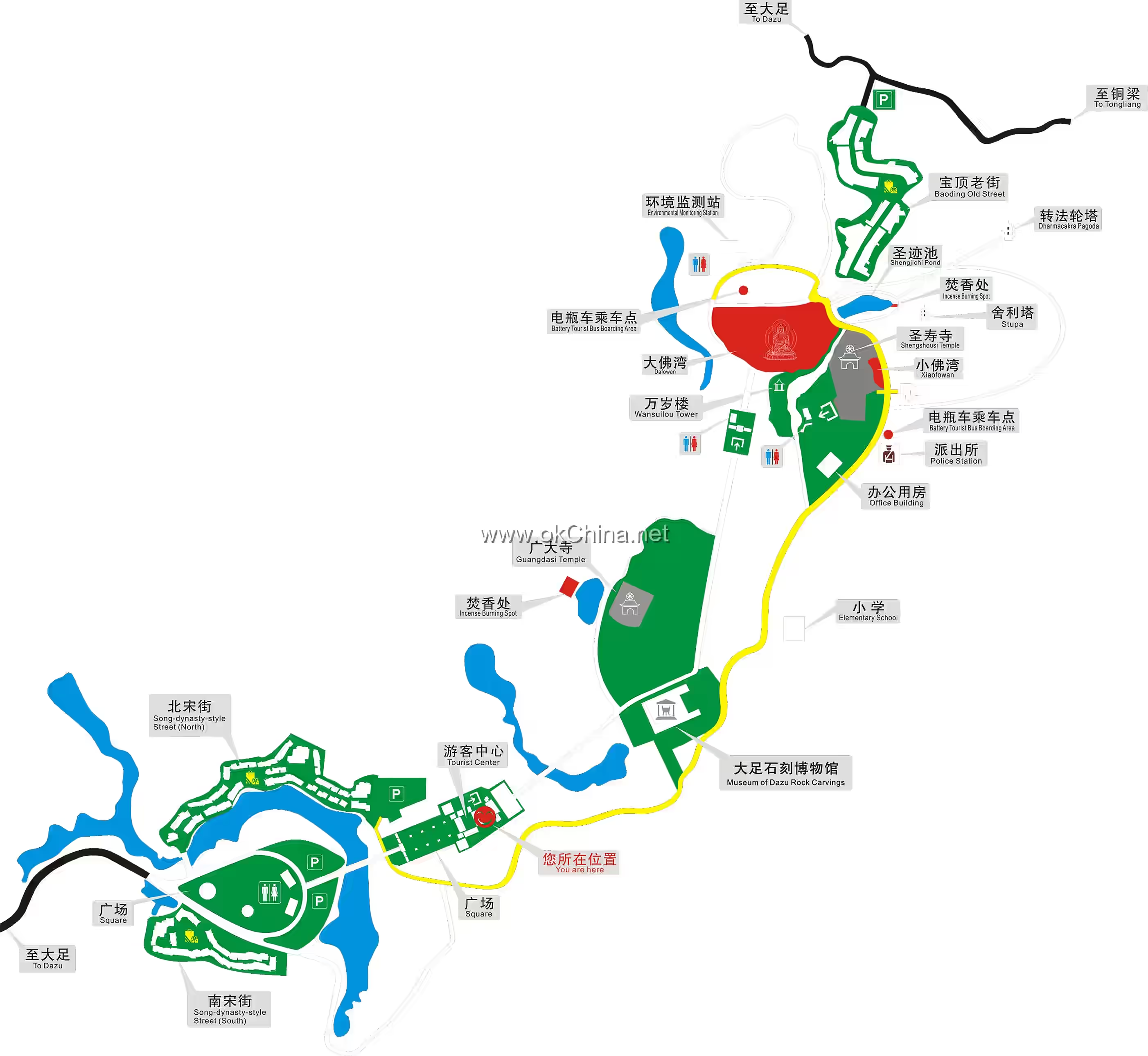
Dazu Rock Carvings Scenic Area
1. Introduction
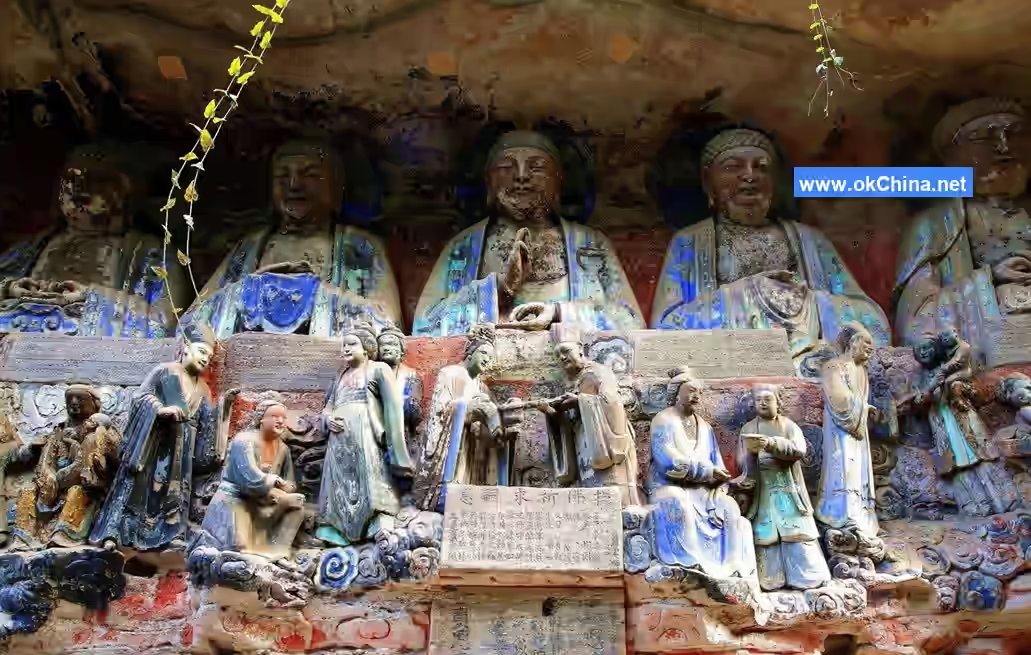
The Dazu Rock Carvings are located in Dazu District, Chongqing Municipality. They were carved and created during the Tang, Five Dynasties, and Song periods, with continued additions during the Ming and Qing dynasties. They are now a UNESCO World Heritage Site and one of the world's eight major grotto complexes.
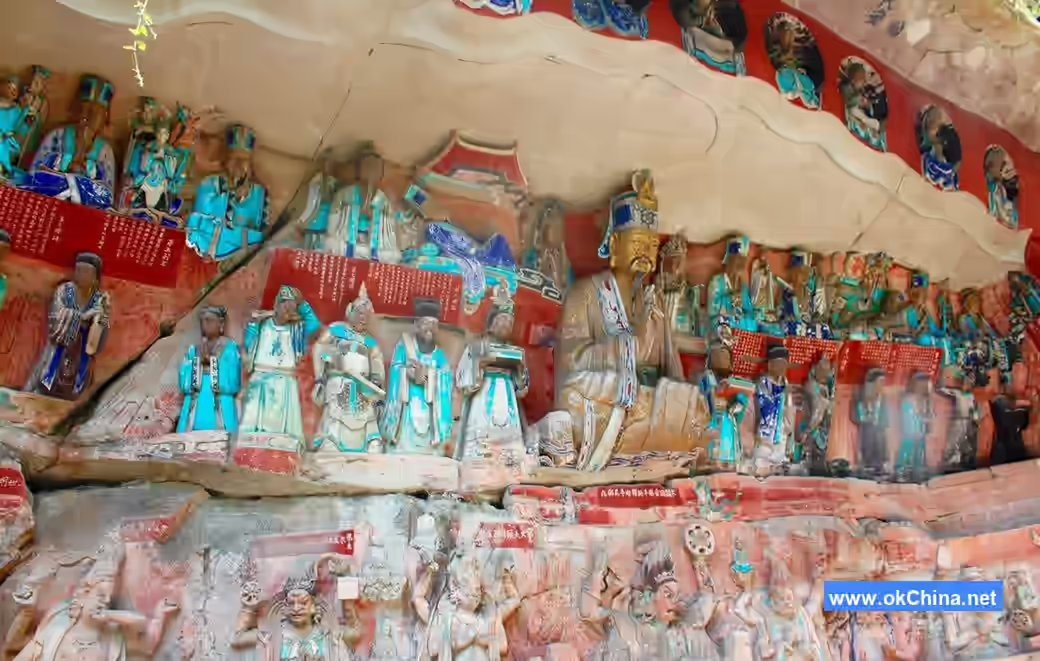
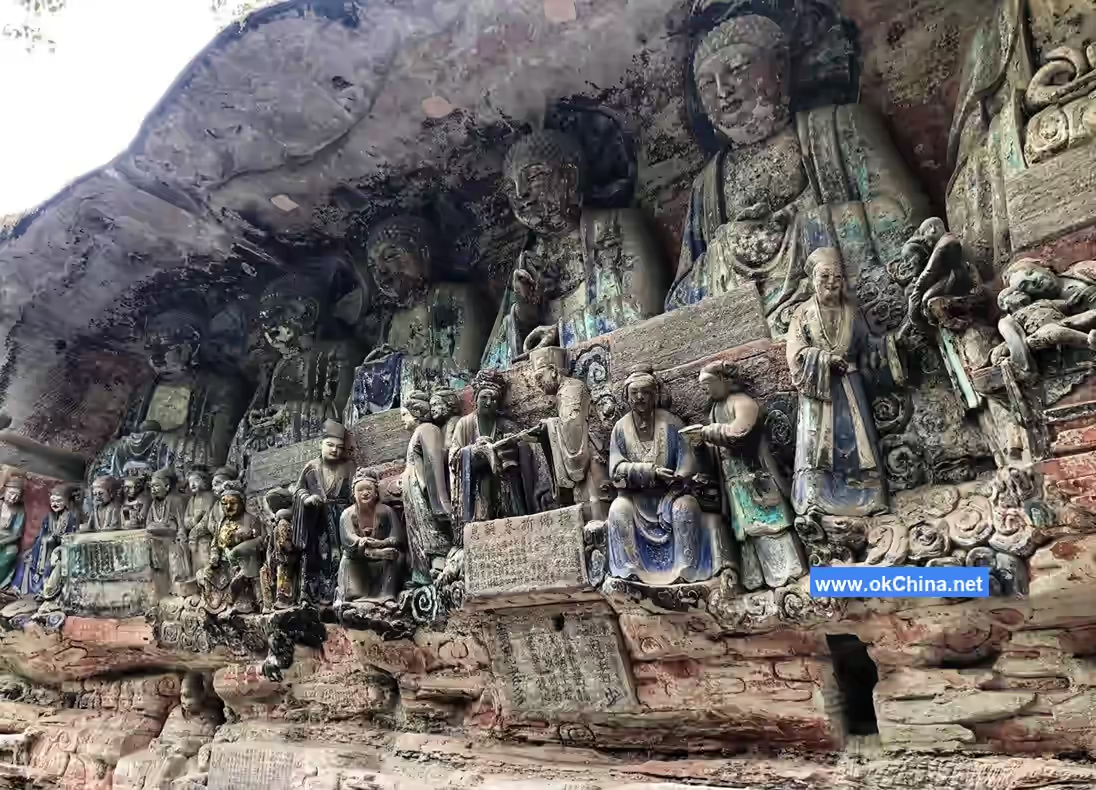
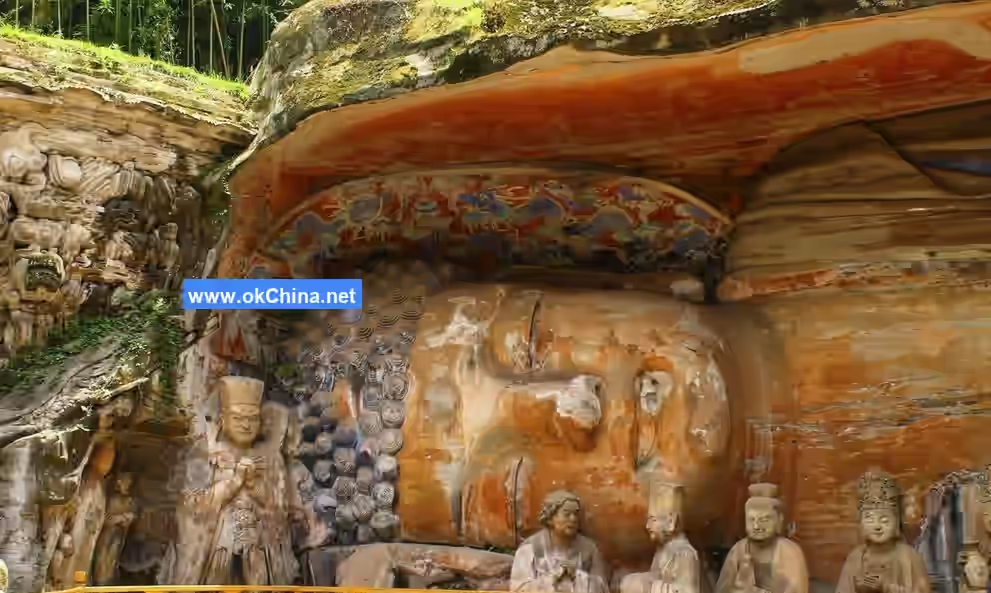
The Dazu Rock Carvings are distributed across 23 sites in the southwest, northwest, and northeast sectors of the district. Nineteen of these sites are relatively concentrated, including Baodingshan and Beishan. Among them, the cliff-side sculptures at Baodingshan are the largest in scale and most exquisite in craftsmanship. In addition to Buddhist and Taoist statues, there are also sculptures combining Confucianism, Buddhism, and Taoism within single niches or caves, with Buddhist statues constituting the largest proportion.
The Dazu Rock Carvings represent the pinnacle of world grotto art from the 9th to the 13th centuries and stand as the final monumental achievement in the history of human cave art. They showcase significant developments and changes in the artistic style of Chinese grottoes during the Tang and Song periods from various perspectives, holding historical, artistic, and scientific value irreplaceable by earlier grottoes. They are renowned worldwide for their grand scale, exquisite carving, diverse themes, rich connotations, and excellent state of preservation.
2. Historical Development
2.1 Origins of Construction
Dazu County was established in 758 AD (the first year of the Qianyuan era, Tang Dynasty) under the jurisdiction of Changzhou. In 885 AD (the first year of the Guangqi era, Tang Dynasty), the administrative seat of Changzhou was moved from Jingnan County to Dazu. Until 1279 AD (the end of the Southern Song Dynasty), Dazu remained the seat of Changzhou. The cliff carvings of the "Five Mountains" within the Dazu Rock Carvings were completed during this nearly 400-year period.
Among the existing Dazu Rock Carvings, the earliest are the Jianshanzi cliff carvings created in 650 AD (the first year of the Yonghui era, early Tang). For over 200 years thereafter, only the Shengshui Temple cliff carvings were newly opened. These two sites from the early and middle Tang periods comprise no more than 20 niches in total. It was not until after Changzhou's administration moved to Dazu in 885 AD that cliff carving began to flourish.
In 892 AD (the first year of the Jingfu era, Tang Dynasty), Wei Junjing, the Prefect of Changzhou who also served as Commander-in-Chief of the four prefectures of Chang, Pu, Yu, and He, and Military Commissioner of the Jingnan Army, initiated the carving of Buddhist statues on Beishan (then called Longgang Mountain, north of the county seat) while simultaneously constructing the Yongchang Stockade, described as having "grain stores for ten years and troops numbering tens of thousands." Subsequently, officials from the prefecture and county, along with local gentry, commoners, monks, and nuns followed suit. Continuous statue creation persisted until the period between 907 and 965 AD (during the Five Dynasties and Ten Kingdoms period, when Sichuan was part of the Shu states, historically known as Former Shu and Later Shu), forming the first peak of carving activity in the history of Dazu Rock Carvings.
2.2 Origins of the Statuary
Grotto art, originating in ancient India, was introduced to China around the 3rd century AD. It experienced two peaks of statue creation in northern China around the 5th and 7th centuries AD (from the Wei-Jin period to the High Tang period) but began to decline by the mid-8th century AD (after the Tianbao era of the Tang Dynasty). At this critical juncture of potential extinction, the cliff carvings in Dazu County, located in the Yangtze River basin, emerged prominently. From the late 9th century to the mid-13th century, the Dazu Rock Carvings, represented by the "Five Mountains" cliff carvings, were created, forming another peak in the history of Chinese grotto art and extending the timeline of Chinese grotto art history by over 400 years. Subsequently, Chinese grotto art stagnated, and no new large-scale grottoes were opened elsewhere. Thus, the Dazu Rock Carvings became the final monumental achievement in the history of Chinese grotto art construction.
2.3 Late Tang Statuary
Over the 360 years from 892 to 1252 AD (from the Jingfu era of the Late Tang to the Chunyou era of the Southern Song), 34 areas of Buddhist, Taoist, and "Three Teachings" statuary were successively completed in Dazu, accounting for approximately 80% of the total number of Dazu Rock Carvings. Among these, except for the Beishan cliff carvings which began in 892 AD (the first year of Jingfu, Late Tang), the rest were built over about 170 years from 1082 to 1252 AD (from the Yuanfeng era of the Northern Song to the Chunyou era of the Southern Song).
In the late 13th century during the late Southern Song, rock carving was interrupted due to warfare. It gradually revived during the Yongle era of the Ming Dynasty in the late 15th century and continued until the late Qing Dynasty. Over the 500 years from the early 15th to the late 19th century (Ming and Qing dynasties), there were 39 cliff carving sites. Although some fine works exist among them, most are small-scale carving areas, and the number of statues accounts for less than 20% of the total Dazu Rock Carvings today.
2.4 Northern Song Statuary
For over a hundred years from 965 to 1077 AD (from the Qiande to Xining eras of the Northern Song), cliff carving stagnated, and no dated statues from that period have been found in the entire county to this day. During this time, the creation of free-standing stone sculptures for temple供奉 (供养) became popular. Traces or records remain of several sites, such as Dazhong Temple in the east of the county, Shibi Temple in the west, and Yan'en Temple in the north. By the 1980s, over 100 dated Buddhist free-standing sculptures had been unearthed from Dazhong Temple alone.
From 1078 to 1173 AD (from the late Northern Song's Yuanfeng era to the Southern Song's early Shaoxing and Qiandao eras), Dazu rock carving experienced its second peak. Starting in 1082 AD (the fifth year of Yuanfeng) when the major landowner Yan Xun donated land to open the Shizhuanshan carving area featuring statues of Buddhism, Taoism, and Confucianism (the "Three Teachings"), cliff carving sites emerged one after another across the county. A total of 32 areas of Buddhist, Taoist, and "Three Teachings" statuary were opened. The Nanshan, Shimenshan carving areas, and the Duobao Pagoda on Beishan were all completed during this period. The Beishan carving area, begun in 892 AD, took over 250 years and was finally completed in 1146 AD (the 16th year of Shaoxing, Southern Song). During the more than 70 years from 1174 to 1252 AD (from the Chunxi to Chunyou eras of the Southern Song), the Dazu monk Zhao Zhifeng, known as the "Sixth Patriarch transmitting the esoteric seal," propagated the teachings at Baodingshan. He upheld the Buddhist Esoteric school founded by Liu Benzun in western Sichuan during the Late Tang. With the aim of promoting Buddhist teachings, he lived austerely for over 70 years, solicited donations from all directions, and oversaw the carving of nearly ten thousand Buddha statues. He established the only large-scale grotto ritual site in the history of Chinese Buddhist Esotericism, bringing Dazu rock carving to its zenith. During this period, carving at other sites in the county largely ceased. Followers from all directions gathered under Zhao Zhifeng, and master carvers congregated at Baodingshan to compete and showcase their skills. Baodingshan became the center of the Chengdu Yoga school of Chinese Buddhist Esotericism.
2.5 The "Five Mountains" Carvings
In the late 13th century and mid-17th century, Dazu suffered from warfare twice. Among the "Five Mountains" cliff carvings, except for the Shengshou Temple at Baodingshan which was burned down twice and rebuilt twice, the cliff carvings themselves have remained well-preserved.
After the completion of the "Five Mountains" cliff carvings, aside from世俗装绚 (secular decoration and repairs), it was not until the late 19th to early 20th centuries that local people added a few small niches featuring Guanyin, mountain deities, and the Heavenly Lord and Earth Mother beside the carving areas. They have largely maintained the scale and style of the Tang and Song period carvings. Since the establishment of the People's Republic of China in 1949, they have been properly protected and opened to the public.
The Dazu Rock Carvings, represented by the cliff carvings of Beishan, Baodingshan, Nanshan, Shizhuanshan, and Shimenshan (collectively known as the "Five Mountains"), are an important component of Chinese grotto art. They also represent the most magnificent and glorious chapter in world grotto art from the late 9th to mid-13th centuries, specifically from 892 AD (first year of Jingfu, Late Tang) to 1252 AD (12th year of Chunyou, Southern Song). The Dazu Rock Carvings began in 650 AD (first year of Yonghui, Tang), flourished from the late 9th to mid-13th centuries, and continued into the Ming and Qing dynasties. They are representative works of late Chinese grotto art.
The "Five Mountains" cliff carvings are renowned worldwide for their grand scale, exquisite carving, diverse themes, rich connotations, and excellent preservation. They differ from earlier grottoes by synthesizing statues from Buddhism, Taoism, and Confucianism (the "Three Teachings"). They stand out in Chinese grotto art with their distinct national and secular characteristics. Through a wealth of visual imagery and textual historical materials, they showcase significant developments and changes in Chinese grotto artistic styles and folk religious beliefs from the late 9th to mid-13th centuries from various perspectives. They made important contributions to the innovation and development of Chinese grotto art and possess historical, artistic, scientific, and鉴赏 (appreciation) value irreplaceable by grottoes from earlier dynasties.
2.6 Later Damage
-
Buddha Head Theft: On June 4, 1995, the head of a Southern Song period statue of Sakyamuni Buddha inside the Duobao Pagoda on Beishan, Dazu Rock Carvings, was stolen. Twenty-five days later, police apprehended the principal offender, Wang Hongjun, in Chengdu and recovered the Buddha head, which he had not yet sold. Wang Hongjun was sentenced to death according to law and executed in 1996. An accomplice, Yang Wende,侥幸逃脱 (luckily evaded) police capture and went into hiding. In June 2006, Dazu police received a tip that Yang Wende had appeared at a building materials market in Chongqing. On August 30, through surveillance, police arrested Yang Wende, who was working at the building materials market.
-
Buddha Head Appears at Wen Qiang's Home: In 2004, two stone Buddha heads from the Shimenshan cliff carvings in Dazu were stolen. Police filed a case upon receiving the report. However, the case remains unsolved, and the Buddha heads have been missing since. In August 2009, members of a special task force "found" one of the Buddha heads, missing for over five years, in the villa of Wen Qiang. To appraise the value of cultural relics confiscated from Wen Qiang, Chongqing authorities invited experts from the Beijing Palace Museum to conduct assessments.
3. Main Attractions
Encompassing Dazu District, Tongnan District, Bishan District, and Tongliang District, Dazu District is a district of Chongqing Municipality. It was established in 758 AD (first year of Qianyuan, Tang Dynasty) and named for its寓意 (implied meaning) of "great abundance and ample resources." It is renowned as the "Hometown of Rock Carvings" and "Hometown of Hardware," one of China's first Class-A open districts, the starting point for the nationally designated Three Gorges tourism route, a national advanced ecological agriculture district, and an important window for Chongqing's opening-up. Within Dazu District, rock carvings are scattered like stars. There are 75 cliff carving sites designated as cultural relics protection units, containing over 50,000 statues and more than 100,000 characters of inscriptions. Among these, six are Major Historical and Cultural Sites Protected at the National Level.The Dazu Rock Carvings are the collective name for 102 cliff carvings within the county. Among these, 75 sites are designated as cultural relics protection units at various levels. National-level sites include Baodingshan, Beishan, Nanshan, Shimenshan, and Shizhuanshan. Municipal-level sites include Jianshanzi, Miaogaoshan, Shuchengyan, and Qianfoyan. County-level sites include 66 locations such as Fengshansi. There are 1,030 niches (grottoes) containing approximately over 50,000 statues. The content is predominantly Buddhist, followed by Taoist, with the remainder comprising combined Buddhist-Taoist, Buddhist-Taoist-Confucian, historical figures, donors (also known as benefactors), and other statues. There are over 100,000 characters of inscriptions, eulogies, and dedicatory texts. The carving categories are mainly high and bas-relief, with a few in the round and very rare incised line carvings.
3.1 Baoding Rock Carvings
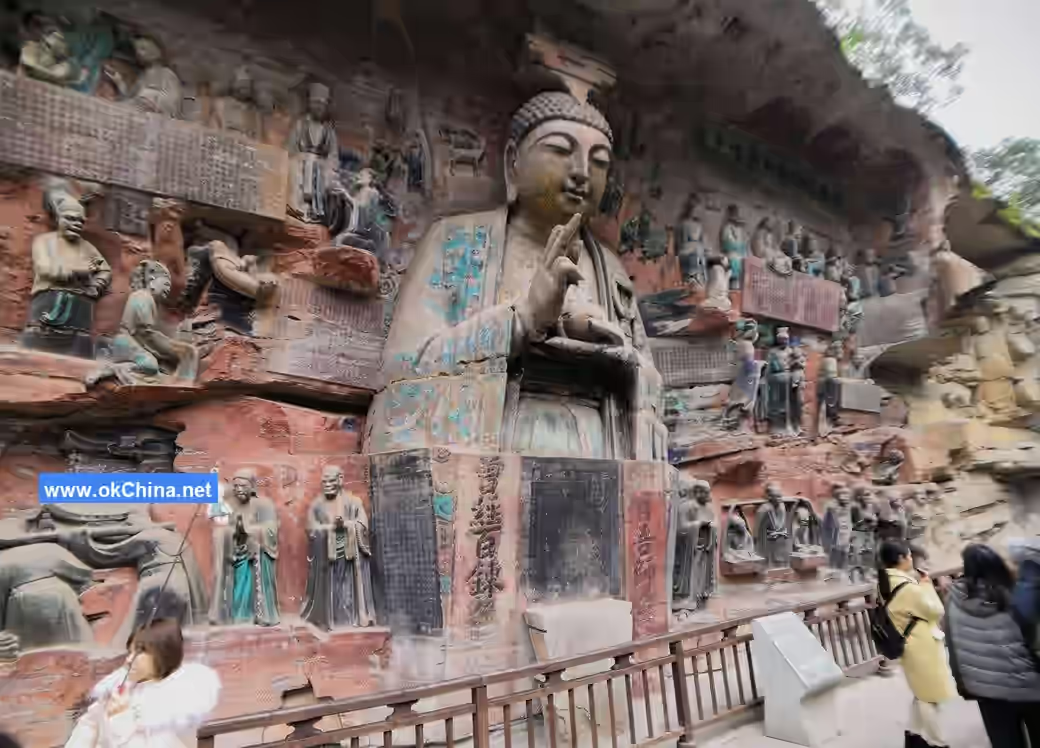
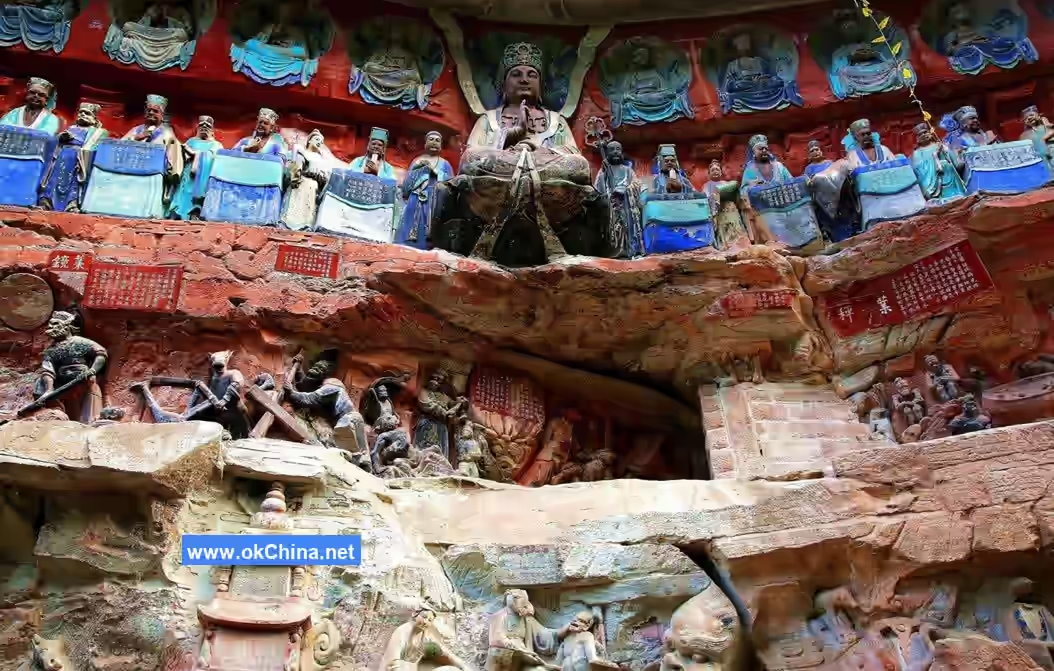
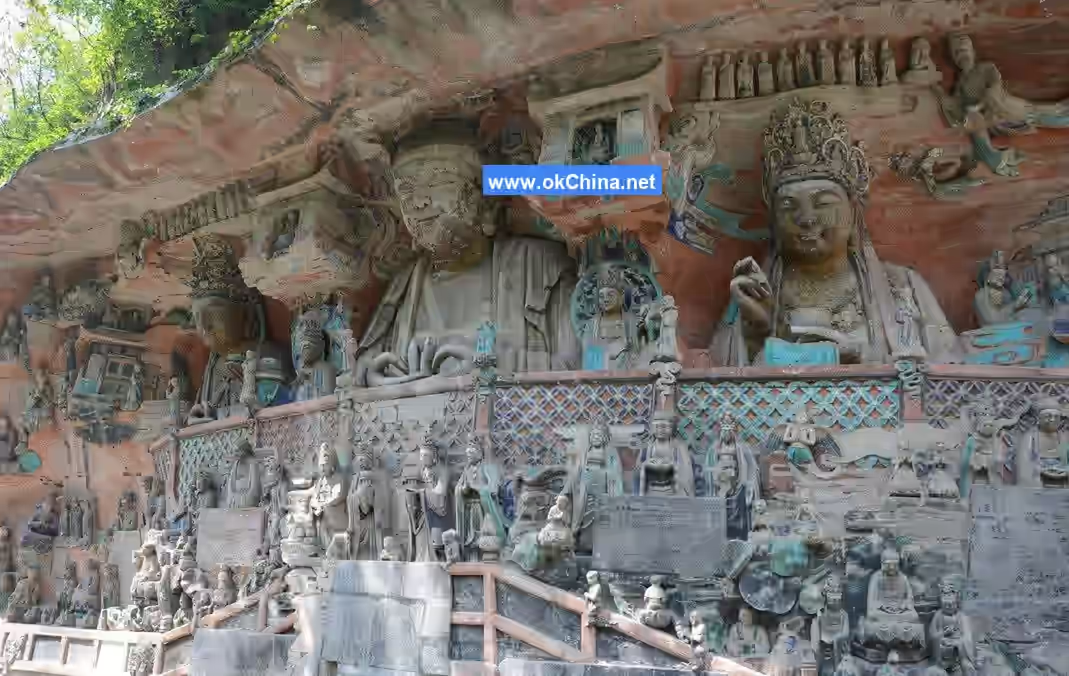
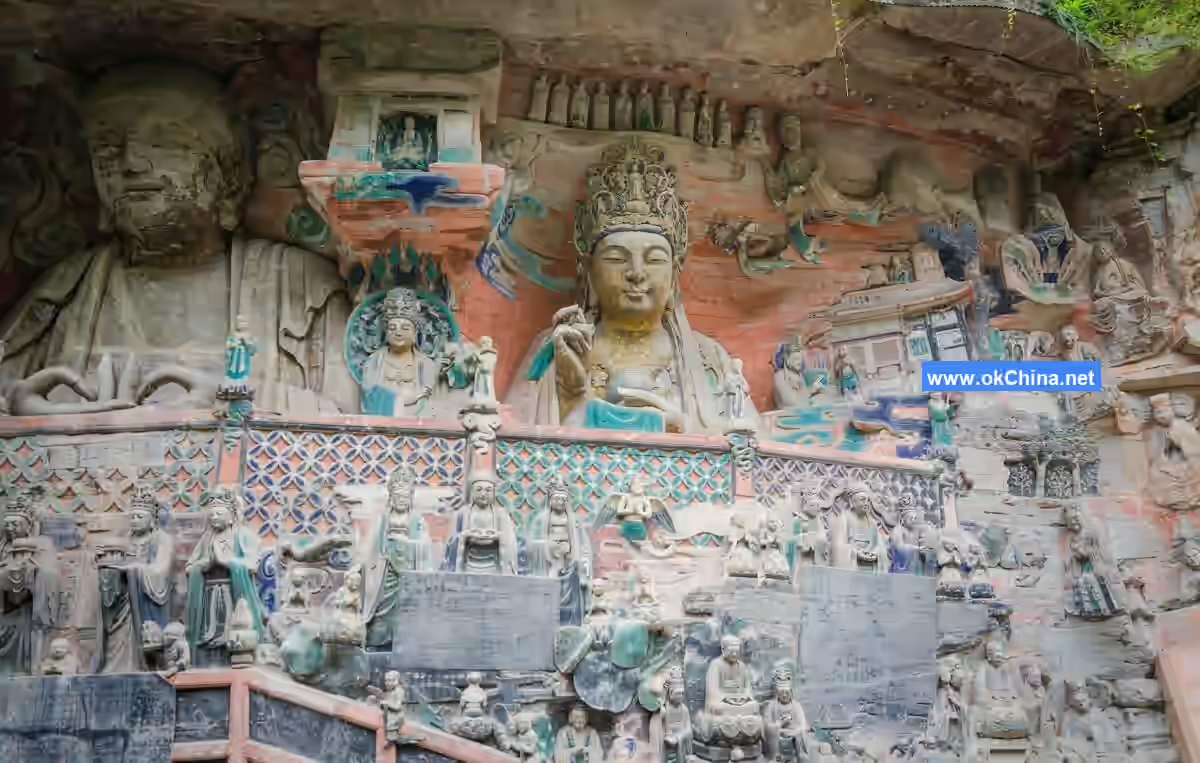
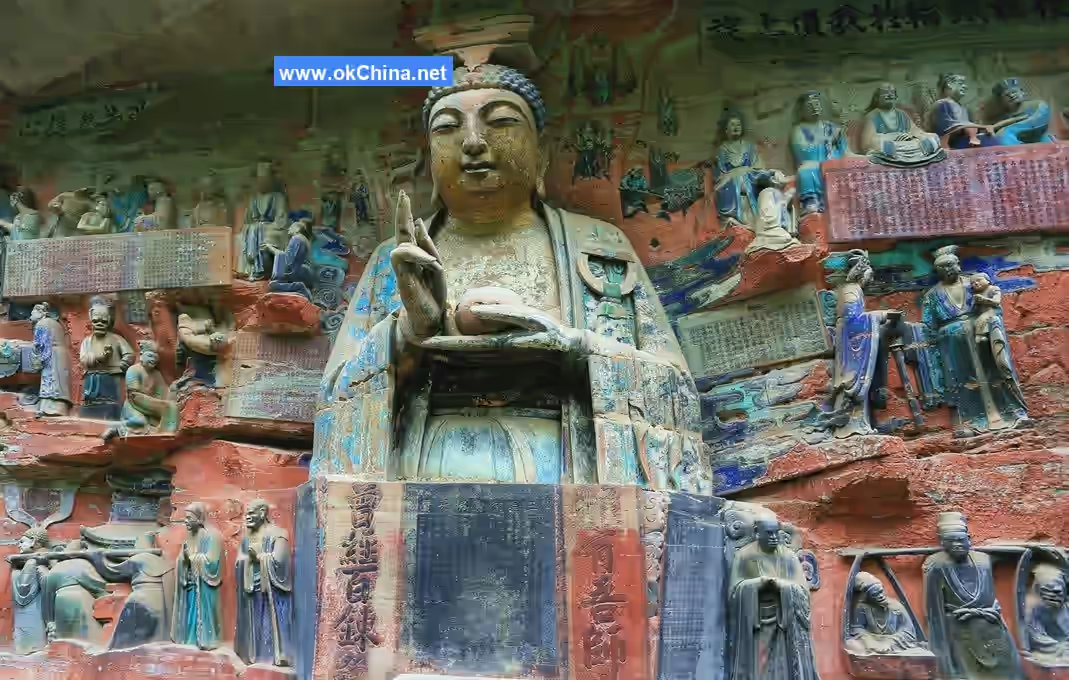
Baoding Mountain is located 15 kilometers northeast of Longgang Subdistrict in Dazu District, with an altitude of 527.83 meters. The Baoding Mountain cliff carvings began in the Southern Song Dynasty. Buddha images are carved extensively on the mountain rocks within a 2.5-kilometer radius, including the carvings at Dafowan and Xiaofowan centered around Shengshou Temple. Dazu's Dafowan is the main area, followed by Xiaofowan, distributed across the eastern, southern, and northern sides. There are over 360 giant carvings, with the most famous being the Wheel of Life, the Grand Pavilion of Treasures, the Huayan Triad, and the Thousand-Hand Guanyin.
At Dafowan of Baoding, there is the ancient Sichuanese temple Shengshou Temple, founded in the Southern Song Dynasty. The temple is majestic, richly adorned with carvings, and situated amidst steep, beautiful, and serene forested surroundings. To the south of the temple is the Wansui Lou (Longevity Tower), a uniquely styled two-story pavilion with upturned eaves. The Baoding rock carvings were conceived and organized over more than 70 years from 1174 to 1252 during the Chunxi to Chunyou reigns of the Southern Song Dynasty by Zhao Zhifeng, known as the "Sixth Patriarch transmitting the esoteric seal." It is a large-scale Esoteric Buddhist ritual site with nearly ten thousand statues. The core protection area for the Baoding Mountain cliff carvings covers 7.93 hectares, the general protection area 37.14 hectares, and the construction control zone 53.30 hectares.
Shengshou Temple is built against the mountain, grand and spectacular. It was founded by Zhao Zhifeng in the Southern Song Dynasty, later damaged by warfare in the Yuan and Ming dynasties, and rebuilt twice during the Ming and Qing dynasties. The existing seven halls—the Mountain Gate, Heavenly King Hall, Indra Hall, Mahavira Hall, Trikala Buddha Hall, Dipankara Hall, and Vimalakirti Hall—were reconstructed in the Qing Dynasty, with a total floor area of 1,631.68 square meters.
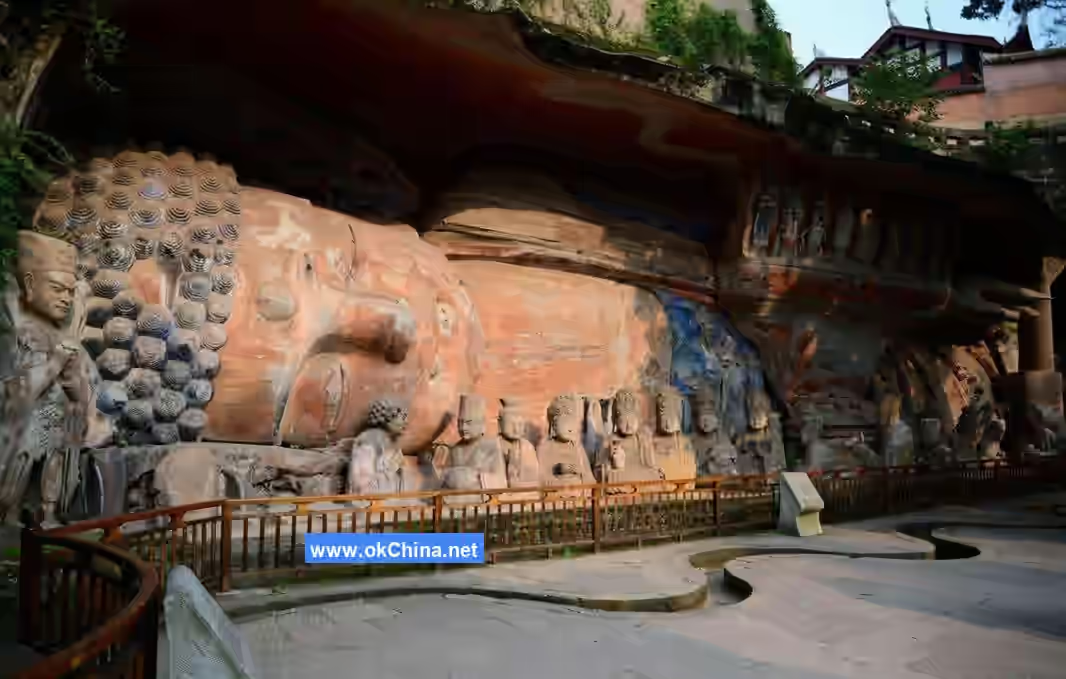
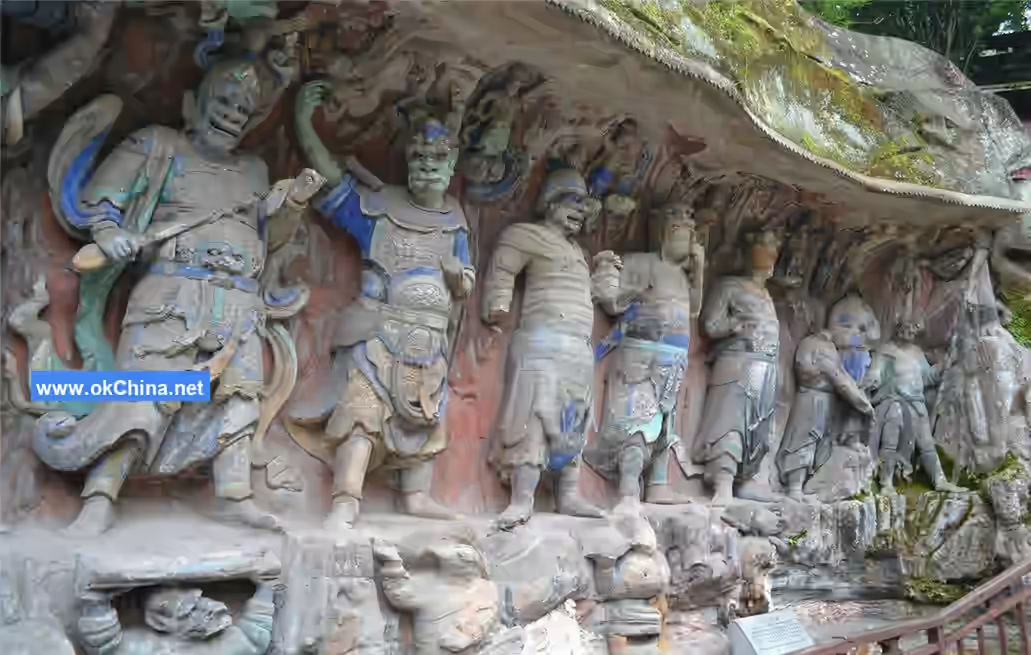
Dafowan is located in a mountain cove shaped like a "U" below and to the left of Shengshou Temple. The cliff face is about 500 meters long and 8 to 25 meters high. The carvings are on the eastern, southern, and northern cliff walls, numbered consecutively as 31 sections. They sequentially depict guardian deities, the Wheel of Life, the Grand Pavilion of Treasures, the Huayan Triad, Thousand-Hand Guanyin, stories from the Buddha's life, the Parinirvana of Sakyamuni, the Nine Dragons Bathing the Prince, the Mahamayuri Vidyaraja Sutra illustrations, Pilu Cave, the Sutra on the Profound Kindness of Parents illustrations, the Thunder Sound illustration, the Mahayana Sutra of Storing Up the Treasures of Great Compassionate Kindness and Repaying the Kindness of the Buddha illustrations, the Sutra of Contemplation on the Buddha of Immeasurable Life illustrations, the Six Desires illustration, the Hell illustration, the Acts of Liu Benzun, the Ten Great Wisdom Kings, the Herding Oxen illustrations, the Yuanjue Cave, and the Enlightenment Statue of Liu Benzun. All carvings are accompanied by text and images, with no two niches identical.
Xiaofowan is located to the right of Shengshou Temple, facing north. Its main structure is a stone altar platform, 2.31 meters high, 16.50 meters wide east-west, and 7.90 meters deep. Stone walls and chambers built from stone slabs on the platform are covered with carvings of Buddhas and Bodhisattvas, numbered consecutively as 9 sections. Main features include the Pagoda with Sutra Titles of the Patriarch's Dharma Body, the Seven Buddha Niche Wall, the Repayment of Kindness Sutra Illustration Cave, the Hall Moon Wheel Buddha Niche and the Ten Evil Karmic Retribution illustration, Pilu Nunnery Cave, Huayan Triad Cave, and the Abhiseka Well Niche.
3.2 Nanshan Rock Carvings
Nanshan, anciently named Guanghua Mountain, is located about five li southeast of Dazu District's urban area. Originally, there was a Taoist temple named Yuhuang Guan (Jade Emperor Temple) on the mountaintop. The Nanshan rock carvings originated in the Southern Song Dynasty (1127–1279 AD) and belong to Taoist statuary, with minor additions during the Ming and Qing dynasties.
On August 16, 1956, the Sichuan Provincial People's Committee declared the Nanshan cliff carvings a Sichuan Provincial Cultural Relics Protection Unit. After Chongqing regained its status as a municipality directly under the central government, it was also designated as a Chongqing Municipal Key Cultural Relics Protection Unit. There are a total of fifteen niches here. A major characteristic of the Nanshan carvings is that the works are predominantly Taoist.
3.3 Beishan Rock Carvings
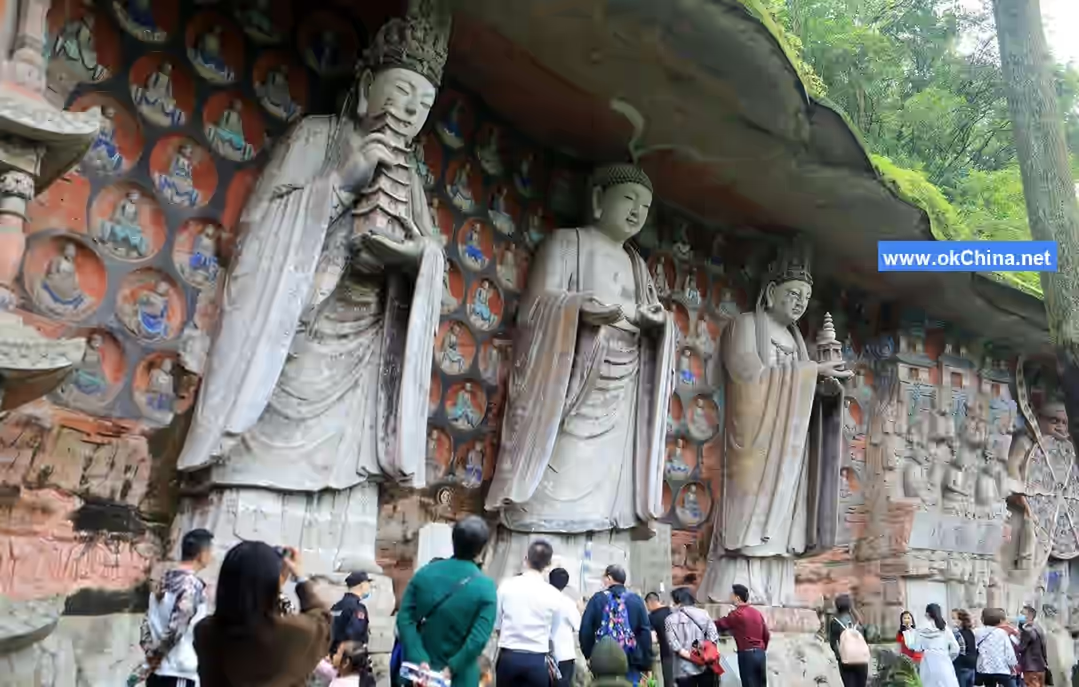
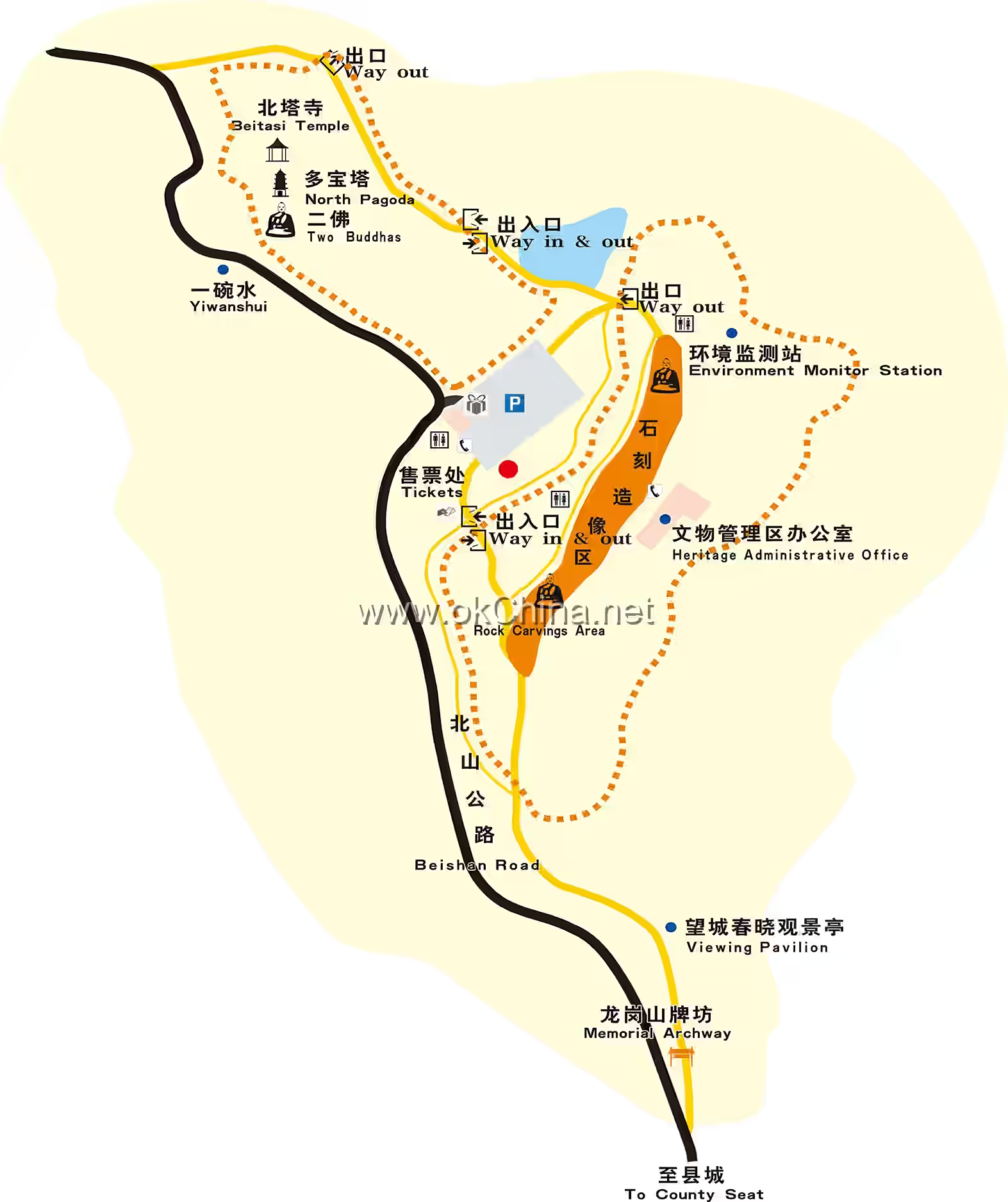
The Beishan cliff carvings began in the late Tang Dynasty and ended in the Southern Song Dynasty. Along with the Baoding Mountain carvings, they constitute the largest part of the Dazu Rock Carvings, located on Beishan Mountain, 2 kilometers north of Dazu District's urban area. Centered on Dafowan, they extend to four surrounding areas: Guanyinpo, Yingpanpo, Fo'eryan, and Beita Temple, covering over 500 meters. The cliff is about 7 meters high, with carvings along its face. From south to north, the shape resembles a crescent moon, with niches as dense as a honeycomb. There are over 5,000 statues. The carvings are exquisite, delicate, and demonstrate masterful technique. Except for some damaged steles, pagoda pillars, and small shallow niches, the rest are well-preserved.
Beishan, anciently named Longgang Mountain, is 1.5 kilometers north of Longgang Subdistrict in Dazu District, with an altitude of 545.5 meters. Beishan is surrounded by greenery, with a leaning white pagoda on the summit and two large Buddha statues below it. The core protection area for the Beishan cliff carvings covers 7.62 hectares, the general protection area 21.82 hectares, and the construction control zone 28.15 hectares. The Beishan Fowan cliff carvings were carved from 892 to 1162 AD (the first year of Tang Jingfu to Southern Song Shaoxing). The carved cliff face is about 300 meters long and 7–10 meters high. The niches are as dense as a honeycomb, divided into southern and northern sections, numbered consecutively as 290 (Nos. 1–100 southern section, Nos. 101–290 northern section). Among these are 264 statue niches, one incised illustration, and eight sutra pillars.
The Beishan cliff carvings number nearly ten thousand statues, primarily commissioned and funded by lay devotees. There are 51 thematic types, with Esoteric Buddhism predominating, accounting for over half. Others include the Three Stages School, Pure Land Buddhism, etc. These themes were extremely popular among the common people at the time, products of the secularization of Buddhism, differing from earlier Chinese grottoes. The Beishan carvings are renowned worldwide for their delicate carving, exquisite artistry, and elegant beauty, showcasing the development and changes in Chinese folk Buddhist beliefs and grotto art styles from the late 9th to the mid-12th century (Late Tang, Five Dynasties, Northern and Southern Song).
Late Tang carvings from the late 9th century feature 12 thematic types, predominantly Guanyin, combined Guanyin and Ksitigarbha niches, and Amitabha Buddha flanked by Guanyin and Ksitigarbha. The statues are dignified, full-bodied, with a robust spirit, fine drapery patterns, and thin clothing clinging to the body, retaining the style of the High Tang. Representative works include niche No. 5 (Vaisravana), No. 9 (Thousand-Hand Guanyin), No. 10 (Sakyamuni Buddha), No. 51 (Trikala Buddhas), and No. 52 (Amitabha Buddha). Particularly, niche No. 245, illustrating the Sutra of Contemplation on the Buddha of Immeasurable Life, is rich in content and clearly layered, depicting the "Western Triad," "Three Grades and Nine Levels of Rebirth," "The Story of Ajatasatru's Grudge," "Sixteen Contemplations," along with celestial musicians, pavilions, and towers. It contains 539 figure statues and over 460 various objects, preserving multifaceted visual historical materials. It is considered preeminent among similar thematic carvings in Chinese grottoes.
Five Dynasties carvings from the mid-10th century account for over one-third of the Beishan statues, making this the region with the most carvings from this period in China. There are 18 thematic types, introducing new content like illustrations of the Medicine Buddha Sutra and Dharani pillars. Their artistic characteristics are delicate and exquisite, with varied postures, free and easy expressions, and increasingly elaborate ornamentation, showing a transitional style from Tang to Song. For example, the Buddha and Bodhisattva statues in niche No. 53 possess both the fullness and simplicity of Tang carving and the slender bodies of Song statuary. The Thousand-Hand Guanyin and attendants in niche No. 273 and the Eastern Pure Land of the Medicine Buddha illustration in niche No. 281 feature thin, body-clinging clothing reminiscent of Tang style, with beautiful countenances resembling Song carvings.
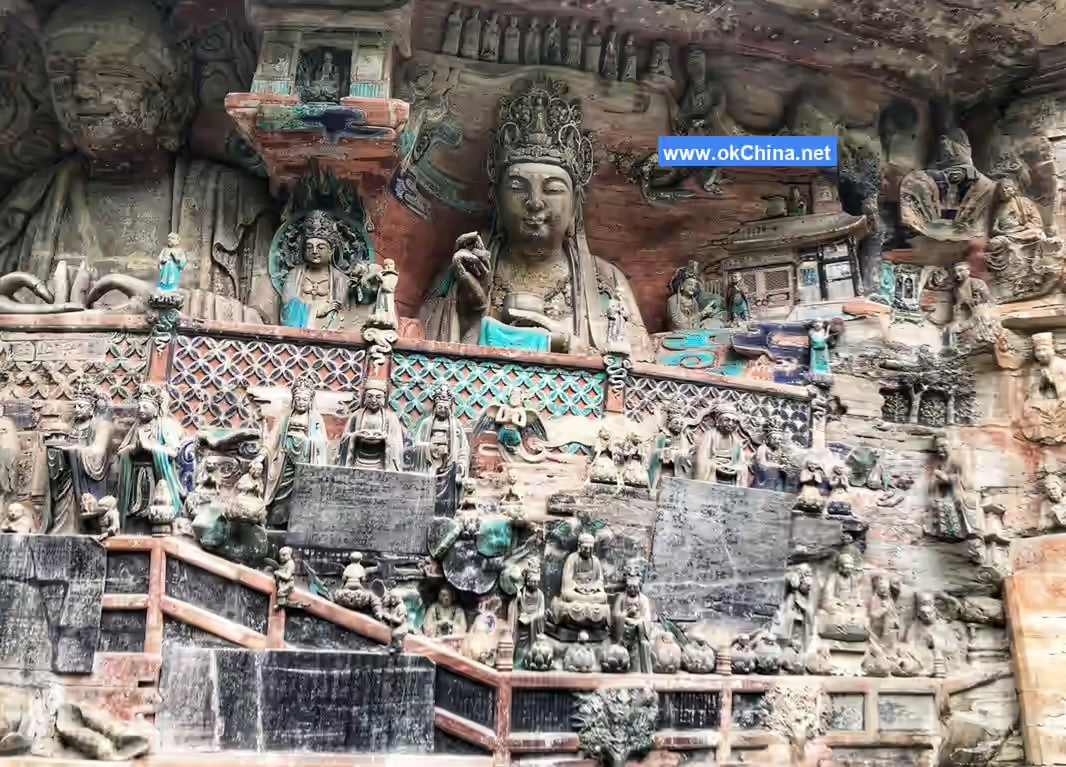
Song Dynasty carvings from the late 10th to mid-12th centuries cover a wide range of 21 themes, with Guanyin being particularly prominent, earning the site the title "Exhibition Hall of Chinese Guanyin Statuary." Works from this period are closer to life, reflecting Song aesthetic tastes. The statues are characterized by distinct personalities, elegant postures, well-proportioned figures, and bright, ornate attire. The most representative is niche No. 136, the Revolvable Sutra Repository Cave, built between 1142 and 1146 AD. The statues in this cave reflect inner tranquility through serene facial expressions and signify noble status through exquisite crowns and attire. Using lines for modeling, emphasizing both line and plane, it is rich in Chinese national characteristics. Adorned with jeweled necklaces, flowing ribbons, floral clusters, and pearl strings, it is exquisitely detailed and highly decorative. Moreover, they are mostly well-preserved, appearing as if newly carved, and are universally recognized as "a pearl in the crown of Chinese grotto art." Other treasures from this period include niche No. 125 (Rosary-Holding Guanyin), niches No. 113 and No. 133 (Water-Moon Guanyin), niche No. 155 (Mahamayuri Vidyaraja Cave), niche No. 177 (Sizhou Great Sage), and niche No. 180 (Thirteen Transformations of Guanyin Cave). The images, postures, characters, expressions, drapery folds, and ornaments of these statues are richly varied and exquisitely carved, offering new perspectives with each step and angle.
Among the Beishan cliff carvings, seven stone steles remain. Among them, the "Stele of Wei Junjing," carved in 895 AD, holds significant value for supplementing Tang history. The "Spirit Way Stele of Zhao Yijian," carved between 1163 and 1189 AD, was inscribed by Cai Jing, one of the Four Great Calligraphers of the Song Dynasty, and is a treasure of calligraphic art. The twenty-two chapter "Ancient Text Classic of Filial Piety Stele" is hailed by historians as "the only carving of its kind in the world." Additionally, there are 17 pieces of inscribed poems and verses and 77 dedicatory inscriptions. These hold high research value for historical geography, religious beliefs, grotto chronology and periodization, and historical figures.
3.4 Shimen Mountain Rock CarvingsShimen Mountain is located in Xinsheng Village, Shima Town, 20 kilometers east of Longgang Street in Dazu District, with an elevation of 374.1 meters. The statues were carved between 1094 and 1151 AD (from the Shaosheng era of the Northern Song Dynasty to the 21st year of the Shaoxing era of the Southern Song Dynasty). The cliff face with carvings spans a total length of 71.8 meters and a height of 3.4 to 5 meters, divided into 16 sections, including 12 niches and caves with statues. Additionally, there are 20 inscriptions of statue records, 8 steles and inscriptions, 8 repair records, and the names of craftsmen such as Wen Weiyi, Wen Judao, and Jian Zhongjin. The key protection area of the Shimen Mountain Cliff Carvings covers 1.06 hectares, the general protection area covers 1.30 hectares, and the construction control zone covers 5.50 hectares.
The Shimen Mountain Cliff Carvings are a combined Buddhist and Taoist statue area, with Taoist statues being particularly distinctive. For example, the statue of Thousand-Mile Eye outside the Jade Emperor’s niche (No. 2) has eyes like bronze bells, seemingly capable of seeing for thousands of miles; the statue of Wind-Following Ear has an ugly and grotesque appearance, with ears perked up as if listening intently. Both statues feature robust muscles and prominent veins, executed in an exaggerated style. The statue of the One-Legged Wutong Emperor (No. 7) stands on a single left foot atop a wind-fire wheel, with a broad forehead, deep-set eyes, a wide mouth, thick lips, and fluttering robes and belts, conveying a sense of swift movement. The Three Emperors Cave (No. 10) currently houses 35 statues, elegant and refined, with smooth and flowing drapery folds, executed in a realistic style that emphasizes human qualities over divine ones. The Eastern Peak Emperor’s Repentance Transformation Niche (No. 12) contains 98 statues, with the Eastern Peak Emperor and Empress Shuming at the center, reflecting the prominent status of the Eastern Peak family in the Taoist pantheon during the 10th to 13th centuries (Song Dynasty). Buddhist themes mainly include the Medicine Buddha niche, Water-Moon Guanyin niche, Shakyamuni Buddha niche, Ten Holy Guanyin cave, Peacock Mingwang Sutra Transformation cave, and Hariti Mother niche. Among these, the Ten Holy Guanyin cave (No. 6) is particularly exquisite.
The Shimen Mountain Grottoes, carved during the Song Dynasty, are located at the summit of Shimen Mountain in Xinsheng Village, Shima Town, east of Dazu District. The mountain is named for its two massive rocks that stand like a gate. The statues are carved along the cliff, totaling 13 niches and caves, featuring immortals, Buddhist figures, and various deities and ghosts, all gathered in one area. They are exquisitely crafted, as if shaped by divine skill, and are incredibly refined and magnificent. In 1996, they were designated as a National Key Cultural Relics Protection Unit by the State Council.
3.5 Shizhuan Mountain Carvings
Shizhuan Mountain is located in Fohui Village, Sanqu Town, 25 kilometers southwest of Longgang Street in Dazu District, with an elevation of 444.6 meters. According to the "Yan Xun Record Stele" at Fohui Temple, the statues were carved between 1082 and 1096 AD (from the 5th year of the Yuanfeng era to the 3rd year of the Shaosheng era of the Northern Song Dynasty). The cliff face with carvings is approximately 130 meters long and 3 to 8 meters high, divided into 10 sections. The key protection area of the Shizhuan Mountain Cliff Carvings covers 0.21 hectares, the general protection area covers 0.18 hectares, and the construction control zone covers 2.47 hectares.
The Shizhuan Mountain Cliff Carvings are a typical combined statue area of Buddhism, Taoism, and Confucianism, which is rare among grottoes. Among them, No. 6 is the niche of Confucius and the Ten Philosophers, featuring a seated statue of Confucius, the great Chinese thinker and founder of Confucianism, on the central wall, with his ten most famous disciples carved on the side walls. This is truly a rarity among grotto statues. No. 7 is the niche of the Three Bodies of Buddha. No. 8 is the Laozi niche, with a seated statue of Laozi, the founder of Chinese Taoism, in the center, flanked by seven statues of real persons and masters on each side. According to the inscriptions, the statues in these three niches were funded by the wealthy landowner Yan Xun and carved by the renowned craftsman Wen Weijian and others.
4. Cultural Value
4.1 Grotto Art
The Dazu Rock Carvings in Chongqing are renowned worldwide for their grand scale, exquisite craftsmanship, diverse themes, rich connotations, and excellent preservation. They represent the essence of Chinese Buddhist, Taoist, and Confucian statue art, characterized by distinct national and everyday life features, making them a shining pearl in Chinese grotto art. Through a large number of physical images and textual historical materials, they showcase the stylistic evolution of Chinese rock carving art and the development of folk religious beliefs from the late 9th to the mid-13th centuries from various perspectives. They have made significant contributions to the innovation and development of Chinese rock carving art, possessing irreplaceable historical, artistic, and scientific value compared to earlier grottoes. Many Europeans, especially the French, hold the Dazu Rock Carvings in particularly high regard.
The Dazu Rock Carvings refer collectively to the grotto art in Dazu District, primarily manifested as cliff carvings. Dazu is a land of rock carvings, with over 40 sites in the county featuring more than 50,000 statues. The most famous and largest among them are Baoding Mountain and Beishan. Both are National Key Cultural Relics Protection Units and representative works of grotto art from the late Tang Dynasty onward. Dazu County, a suburban county under the jurisdiction of Chongqing, is dotted with 75 sites designated as cultural relics protection units, featuring over 50,000 statues and more than 100,000 characters of inscriptions. Among these, six are National Key Cultural Relics Protection Units.
The Dazu Rock Carvings were first carved in the first year of the Yonghui era of the Tang Dynasty (650 AD) and flourished during the Song Dynasty. Currently, there are over 50,000 cliff carvings and more than 100,000 characters of inscriptions distributed across over 100 sites. The more important ones include Beishan (including the North Pagoda), Baoding Mountain, Nanshan, Shimen, and Shizhuan Mountain carvings, which represent the largest scale and highest artistic value among the Dazu Rock Carvings.
The carvings are predominantly Buddhist statues, with some Confucian and Taoist statues. They exhibit the characteristics of grotto statues and belong to the category of grotto art. The early "temple hall" style structures are entirely cliff carvings, such as those in the Great Buddha Bay, which are all exposed and integrated with the cliff face, providing a very intuitive impression. They break through some religious constraints, making the statues more humanized. The carving techniques include round carving, high relief, low relief, convex relief, and intaglio, with high relief being the primary technique supplemented by others. They depict not only countless figures from various social strata and numerous scenes of social life but also include a wealth of textual records, forming a vivid historical scroll.
4.2 Artistic Value
In the long-term development of Chinese grotto art, each period has accumulated its own unique patterns and connotations. Early grotto art, represented by the Yungang Grottoes during the Wei and Jin periods (4th to 5th centuries AD), was significantly influenced by Indian Gandhara and Gupta art, with statues often exhibiting "foreign and Indian features." Mid-period grotto art, represented by the Longmen Grottoes during the Sui and Tang periods (6th to 9th centuries AD), demonstrated the fusion of Indian and Chinese cultures. As representative works of late grotto art (late Tang to Southern Song periods, late 9th to mid-13th centuries AD), the Dazu Rock Carvings, while absorbing and integrating the essence of earlier grotto art, made breakthroughs in theme selection, artistic forms, modeling techniques, and aesthetic tastes. With their distinct national and everyday life characteristics, they became a model of Chinese-style grotto art, forming a complete history of Chinese grotto art together with the Dunhuang, Yungang, and Longmen Grottoes. The Dazu Rock Carvings feature statues of all three religions—Buddhism, Taoism, and Confucianism—distinguishing them from earlier grottoes. The Taoist statues from the mid-11th to mid-13th centuries, represented by the Nanshan Cliff Carvings, are the most exquisitely carved and complete Taoist pantheon from this period in China. The Confucian statues featuring Confucius, the founder of Chinese Confucianism, as the main deity in the Shizhuan Mountain Cliff Carvings are extremely rare in grotto art. The combined statues of Buddhism, Taoism, and Confucianism represented by the Shizhuan Mountain Cliff Carvings, as well as the combined Buddhist and Taoist statues represented by the Shimen Mountain Cliff Carvings, are also highly uncommon in Chinese grotto art. In terms of preservation, the Dazu Rock Carvings are among the best-preserved grotto art groups in China.
The cliff carvings of the "Five Mountains" are well-preserved. All niches, caves, and statues, except for minor repairs to some damaged parts in history, have not suffered significant human or natural disasters. After the founding of the People's Republic of China in 1949, daily maintenance and protection have strictly adhered to the principle of "not altering the original state," based on reliable documents and inscriptions, using a combination of traditional techniques and modern scientific methods. Their design, materials, craftsmanship, and layout have all maintained historical authenticity. While protecting the main statues of the "Five Mountains," attention has also been paid to preserving their surrounding environment, with minimal changes to their contextual relationships. Therefore, overall, the cliff carvings of the "Five Mountains" have largely retained their historical scale, original state, and appearance.
The Thousand-Handed Guanyin in the Dazu Rock Carvings is the only true Thousand-Handed Guanyin in China, with approximately 1,006 hands. The Beishan statues are built along the cliff, with niches and caves densely packed like honeycombs, earning it the reputation as a "grotto art museum" from the late 9th to mid-13th centuries. The statues in the Great Buddha Bay of Baoding Mountain stretch for 500 meters, majestic and grand. They combine transformations and transformation texts, with both images and texts complementing each other; the layout and composition are rigorous, and the doctrinal system is complete, making it a rare large-scale esoteric Buddhist grotto site in the world with an overall concept and over seventy years of construction. The statues pursue both formal beauty and accurate expression of content. The stories and religious and life philosophies they convey can enlighten people with reason, move them with emotion, entice them with blessings and joy, and warn them with suffering and hardship. They encompass profound social thought, prompting reflection on life and offering endless fascination. The exquisitely carved cliff statues of Nanshan, Shizhuan Mountain, and Shimen Mountain are rare treasures of Buddhist, Taoist, and Confucian "three-religion" statues in Chinese grotto art groups.Contribution to Chinese Grotto Art: The Dazu Rock Carvings emphasize the aesthetic and formal principles of sculptural art itself, serving as an excellent example of the transition from cave statues to cliffside carvings. In terms of three-dimensional sculpting techniques, they employ a complementary approach of realism and exaggeration to depict challenging forms and convey profound emotions. Different characters are endowed with distinct personality traits, striving for vividness and emotional depth. The carvings highlight strong contrasts between good and evil, beauty and ugliness, with content that is close to daily life, expressed in simple and concise language. This not only creates strong artistic appeal but also serves a significant role in social education. In terms of subject matter, the carvings draw from classical sources while not being confined to them, demonstrating great inclusiveness and creativity. They consistently reflect the secular beliefs in punishing evil, promoting good, taming the mind, and regulating behavior. In layout, they represent a skillful integration of art, religion, science, and nature. Aesthetically, they blend mystery, naturalness, and elegance, fully embodying the traditional Chinese cultural emphasis on moral reflection. In expression, they break away from some of the old conventions of religious sculpture, achieving creative development by humanizing deities and unifying humans and gods, showcasing distinct Chinese characteristics. In summary, the Dazu Rock Carvings pioneered new forms of grotto art in many aspects, becoming a model of grotto art with Chinese style, traditional cultural connotations, and aesthetic ideals. Simultaneously, as a turning point in the development and transformation of Chinese grotto art, the many new elements in the Dazu Rock Carvings, distinct from earlier periods, greatly influenced later generations.
Exemplar of the Secularization of Grotto Art: With its strong secular beliefs and simple, lifelike atmosphere, the Dazu Rock Carvings stand out uniquely in grotto art, pushing the secularization of grotto art to an unprecedented level. In both content selection and expressive techniques, they strive to closely integrate with secular life and aesthetic tastes. The figures are depicted as gentle and serene, adorned in elegant attire with minimal exposure, aiming for beauty without seductiveness and grace without affectation. Whether depicting Buddhas, Bodhisattvas, Arhats, Vajras, or various attendants, the statues closely resemble real-life individuals from all walks of life. In particular, the cliff carvings on Baodingshan Mountain reflect an extensive range of social life scenes, almost covering every aspect, resembling a folk customs gallery from the 12th to mid-13th centuries (Song Dynasty). From nobles and officials to scholars, fishermen, woodcutters, farmers, and readers, all characters are vividly portrayed, as if coming to life. The cliff carvings of the "Five Mountains" in Dazu can be described as a vivid historical panorama, encapsulating various facets of Chinese social life from the 9th to 13th centuries (Late Tang, Five Dynasties, and Song periods). This marks the culmination of the Sinicization process of grotto art, which originated in India and underwent long-term development.
Contribution to the History of Chinese Esoteric Buddhism: According to historical Buddhist records, Chinese Esoteric Buddhism flourished in the early 8th century in the Yellow River Basin and gradually declined in Han Chinese regions after the Japanese monk Kūkai introduced it to Japan in the early 9th century. However, the extensive statues and inscriptions on Beishan and Baodingshan Mountains irrefutably demonstrate that from the 9th to 13th centuries, Esoteric Buddhism not only persisted but thrived in Sichuan. In the late 9th century (Late Tang), Liu Benzun in western Sichuan founded his own Esoteric Buddhist school, calling himself the "Master of Tang Yoga and Sovereign Dhāraṇī King." He practiced asceticism and propagated the teachings. By the mid-12th to 13th centuries (Southern Song period), the eminent monk Zhao Zhifeng inherited and upheld this tradition, proclaiming himself the "Sixth Patriarch Transmitting the Esoteric Seal." He preached in Dazu, Changzhou, and created the Baodingshan cliff carvings—a rare and comprehensive Esoteric Buddhist site in grotto history. This extended the history of Chinese Esoteric Buddhism by approximately 400 years, adding a new chapter to its legacy.
Changes in Religious Beliefs: The shift toward "believing in deities rather than organized religion" and the diversification of beliefs represent significant changes in Chinese folk religious beliefs during their long-term development. The Dazu Rock Carvings, as a product of Chinese folk religion, serve as an important physical testament to this transformation. On one hand, Confucianism, Daoism, and Buddhism—the three main pillars of traditional Chinese culture—gradually moved from "mutual confrontation" to "mutual integration" over their long development. One manifestation of this is the adaptation of grotto art, originally a Buddhist creation, by Daoism and Confucianism, with the founders of the "Three Teachings" appearing together in the same grotto without hierarchy. The Dazu Rock Carvings include separate statues of Buddhism, Daoism, and Confucianism, as well as combined statues of Buddhism and Daoism or all three teachings. These carvings indicate that by the 10th to 13th centuries, the social trend of "Confucius, Laozi, and Śākyamuni all being supreme sages" and "punishing evil, promoting good, and jointly achieving governance" had solidified. Secular beliefs increasingly blurred the religious boundaries among the "Three Teachings."
On the other hand, the rich and diverse subjects of the Dazu Rock Carvings powerfully reflect the fusion of Buddhist deities from India and early Daoist immortals with Chinese folk beliefs during this period, showcasing a trend toward diversified beliefs. The significant developments and changes in folk religious beliefs demonstrated by the Dazu Rock Carvings laid the foundation for later folk beliefs, exerting a profound and lasting influence.
Comments
Post a Comment