Daming Palace Tourist Attraction in Xi'an
I. Introduction
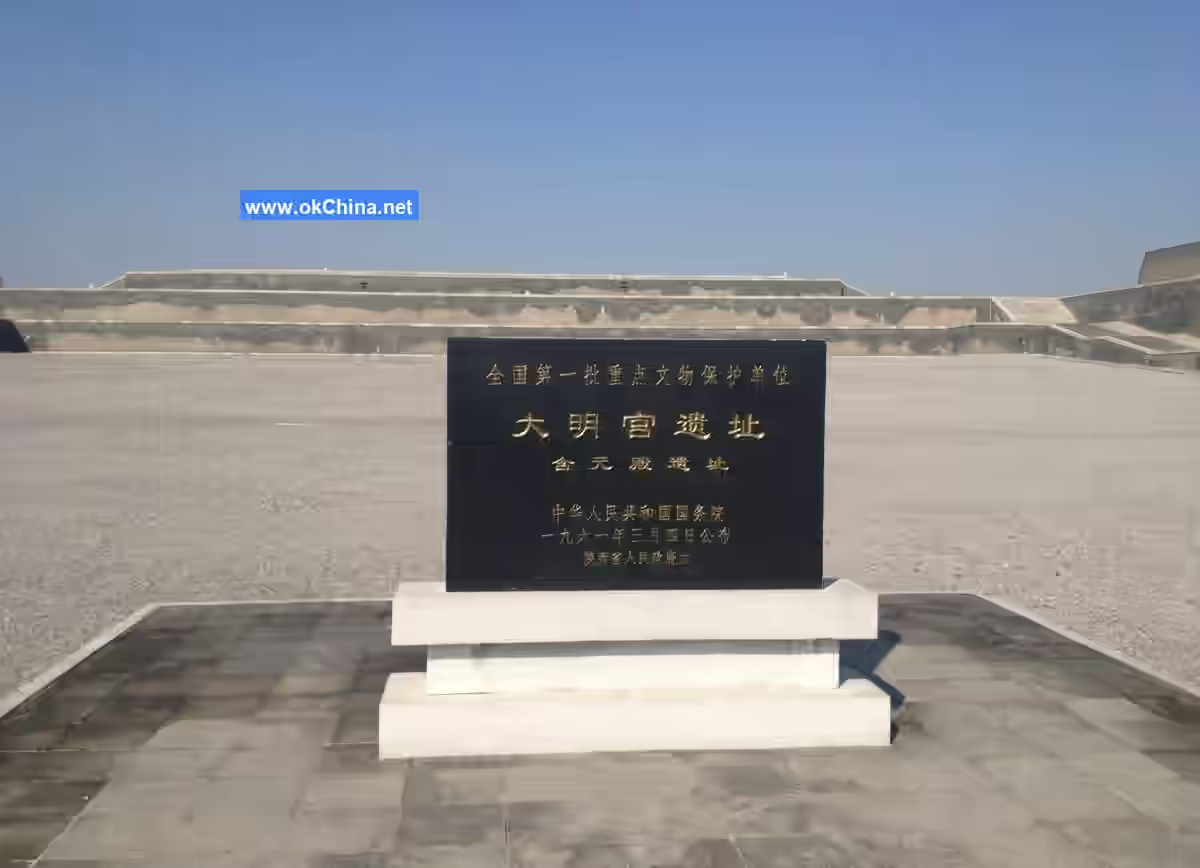
Daming Palace National Heritage Park is located at No. 585 Ziqiang East Road, Xincheng District, Xi'an City, Shaanxi Province. The Daming Palace was first built in the eighth year of the Zhenguan era of the Tang Dynasty (634 AD) and was initially named Yong'an Palace. In the first month of the ninth year of Zhenguan (635 AD), it was renamed Daming Palace and served as the political center of the Tang Dynasty for over 200 years. In the first year of the Tianyou era of the Tang Dynasty (904 AD), the Daming Palace was abandoned and reduced to ruins. On October 1, 2010, Daming Palace National Heritage Park was completed and opened to the public.
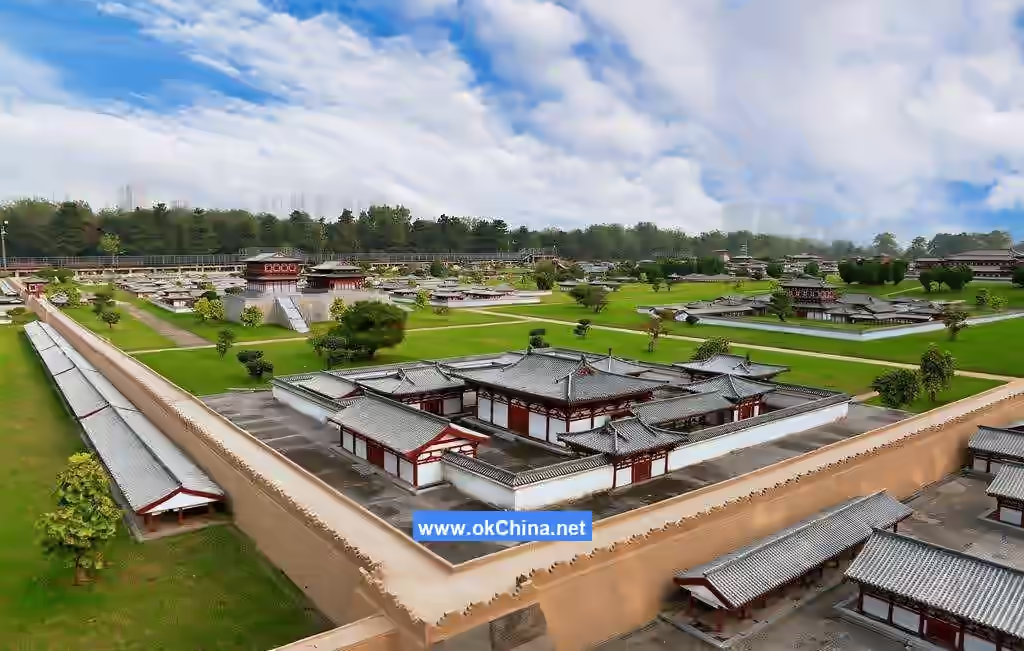
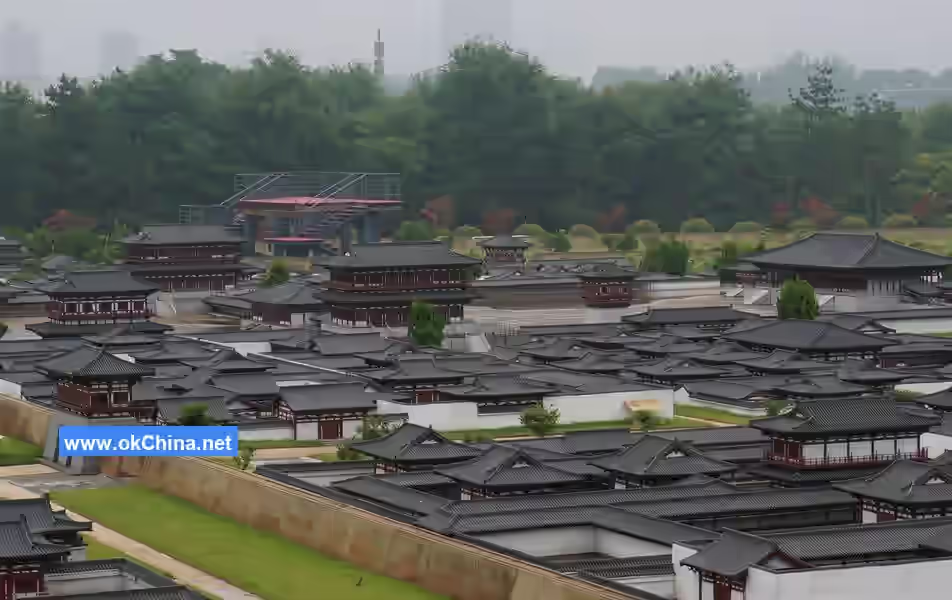
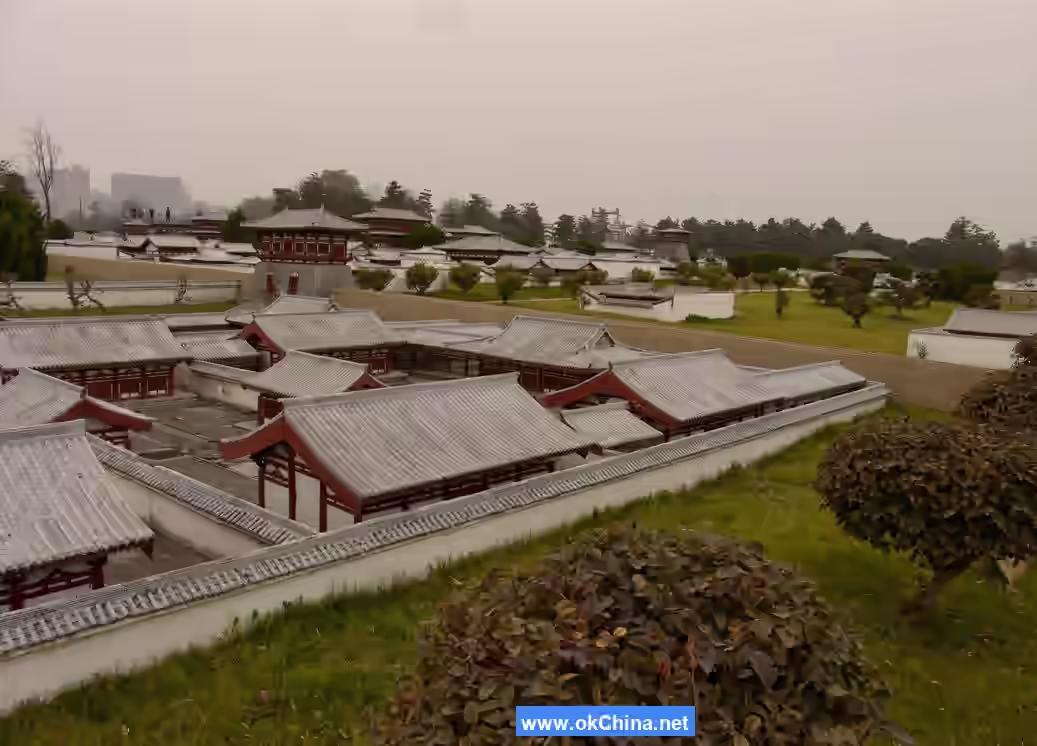
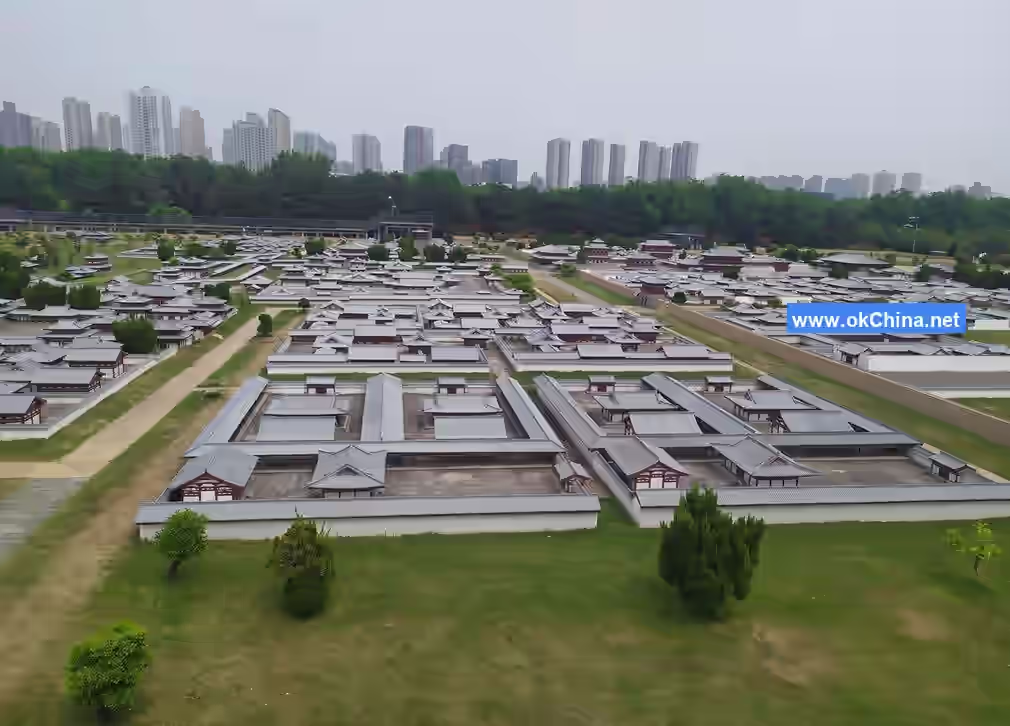
The Daming Palace was the most magnificent architectural complex among the "Three Great Palaces" (Taiji Palace, Daming Palace, and Xingqing Palace) of Chang'an, the Tang capital. Situated on the Longshou Plateau in the northern part of Chang'an, it primarily includes the ruins of palaces such as the Hanyuan Hall, Linde Hall, Sanqing Hall, Qingsi Hall, Xuanzheng Hall, and Zichen Hall. The planning area of Daming Palace National Heritage Park extends south to Ziqiang Road, north to Chongxuan Road and Xuanwu Road, east to Taihua South Road, and west to Jianqiang Road, covering a total area of approximately 3.84 square kilometers. The park largely restores the historical appearance of the Tang Dynasty Daming Palace while incorporating tourism elements on the basis of cultural heritage preservation. Following the historical layout of the Tang Daming Palace, the park is divided into three main areas along the central axis from south to north: Danfeng Gate—Hanyuan Hall—Xuanzheng Hall—Zichen Hall—Xuanwu Gate—Chongxuan Gate. These areas are the Front Palace Area, Palace Area, and Palace Garden Area. Daming Palace National Heritage Park is the largest urban central park in Xi'an, featuring six highlights and ten typical tourist attractions. It is a key project in Xi'an's urban construction, large-scale heritage site protection, and improvement of people's livelihoods, serving as Xi'an's "Urban Central Park."
II. Historical Evolution
The Daming Palace was first built in the eighth year of the Zhenguan era of the Tang Dynasty (634 AD) and was initially named Yong'an Palace.
In the first month of the ninth year of Zhenguan (635 AD), it was renamed Daming Palace.
In the third year of the Longshuo era (663 AD), Emperor Gaozong expanded the palace, making it the most prominent and magnificent architectural achievement of the Tang emperors. Starting from Emperor Gaozong's reign, many emperors held court here, establishing it as the political center of the Tang Dynasty for over 200 years.
In the late Tang Dynasty, the Daming Palace suffered repeated damage from warfare. In the first year of the Tianyou era (904 AD), it was abandoned and reduced to ruins.
From 1957 to 1962, the Institute of Archaeology of the Chinese Academy of Sciences conducted archaeological surveys and excavations at the site.
From 1980 to 1984, key excavations were carried out, preliminarily clarifying and restoring the Daming Palace site.
On July 17, 2007, the Qujiang Special Session of the 2007 Hong Kong-Xi'an Investment Promotion Conference was successfully held in Hong Kong. During this conference, it was decided to jointly develop the world-class cultural heritage site, Daming Palace National Heritage Park, and the surrounding area renovation project.
From 2007 to 2008, the construction of Daming Palace National Heritage Park was initiated. Demolition within the park's planned area was largely completed, and the construction of urban infrastructure within the Daming Palace site protection and renovation planning area was fully launched.
On October 28, 2007, the International Competition for the Conceptual Design of the Xi'an·Tang Daming Palace Site Protection and Demonstration Park and National Heritage Park was launched.
On January 24, 2008, the "Xi'an·Tang Daming Palace Site Protection and Demonstration Park and National Heritage Park Conceptual Design International Competition Review Meeting," jointly organized by the Xi'an Municipal Cultural Heritage Bureau and the Xi'an Qujiang Daming Palace Site Area Protection and Renovation Office, was held in Xi'an. Following the international competition, the winning proposal was selected as the implementation plan for Daming Palace National Heritage Park, and the company responsible was tasked with deepening the overall conceptual plan and detailed planning of the park.
On August 3, 2008, the "Expert Demonstration Meeting for the Master Plan of the Tang Daming Palace National Large Heritage Site Protection and Demonstration Park and Heritage Park" was held in Xi'an. Representatives from the National Cultural Heritage Administration and experts in history, archaeology, cultural heritage protection, and architecture attended the meeting. The meeting approved the "Master Plan for the Tang Daming Palace National Large Heritage Site Protection and Demonstration Park and Heritage Park." This demonstration meeting marked the official confirmation of the master plan for Tang Daming Palace National Heritage Park.
On October 1, 2010, Daming Palace National Heritage Park was completed and opened to the public.
III. Architectural Layout
Layout
The Daming Palace site is the most magnificent architectural complex among the "Three Great Palaces" (Taiji Palace, Daming Palace, and Xingqing Palace) of Chang'an, the Tang capital. Located on the Longshou Plateau in the northern part of Chang'an, it was first built in the eighth year of the Zhenguan era (634 AD). Its plan is roughly trapezoidal, covering an area of approximately 3.2 square kilometers. The original palace wall had a circumference of 7.6 kilometers, with 11 gates on all four sides. Over 40 sites of halls, platforms, towers, and pavilions have been identified, mostly concentrated around the Taiye Pond in the northern part of the city. These include the ruins of palaces such as the Hanyuan Hall, Linde Hall, Sanqing Hall, Qingsi Hall, Xuanzheng Hall, and Zichen Hall. The main street within the city, Danfeng Gate Street, was as wide as 176 meters. The southern part of the Daming Palace was the front court, centered around the Hanyuan Hall, Xuanzheng Hall, and Zichen Hall from south to north. The inner court in the northern part was centered around the Taiye Pond. The northern part of the Daming Palace was the palace garden area, featuring a relatively sparse layout and diverse architectural forms, representing a masterpiece of Tang Dynasty garden architecture.
The planned area of the Daming Palace National Heritage Protection Zone is 19.16 square kilometers. The planning scope extends south to Ziqiang Road, north to Chongxuan Road and Xuanwu Road, east to Taihua South Road, and west to Jianqiang Road, covering a total area of approximately 3.84 square kilometers, which is 4.5 times the size of the Beijing Forbidden City. The park largely restores the historical appearance of the Tang Dynasty Daming Palace while incorporating tourism elements on the basis of cultural heritage preservation.
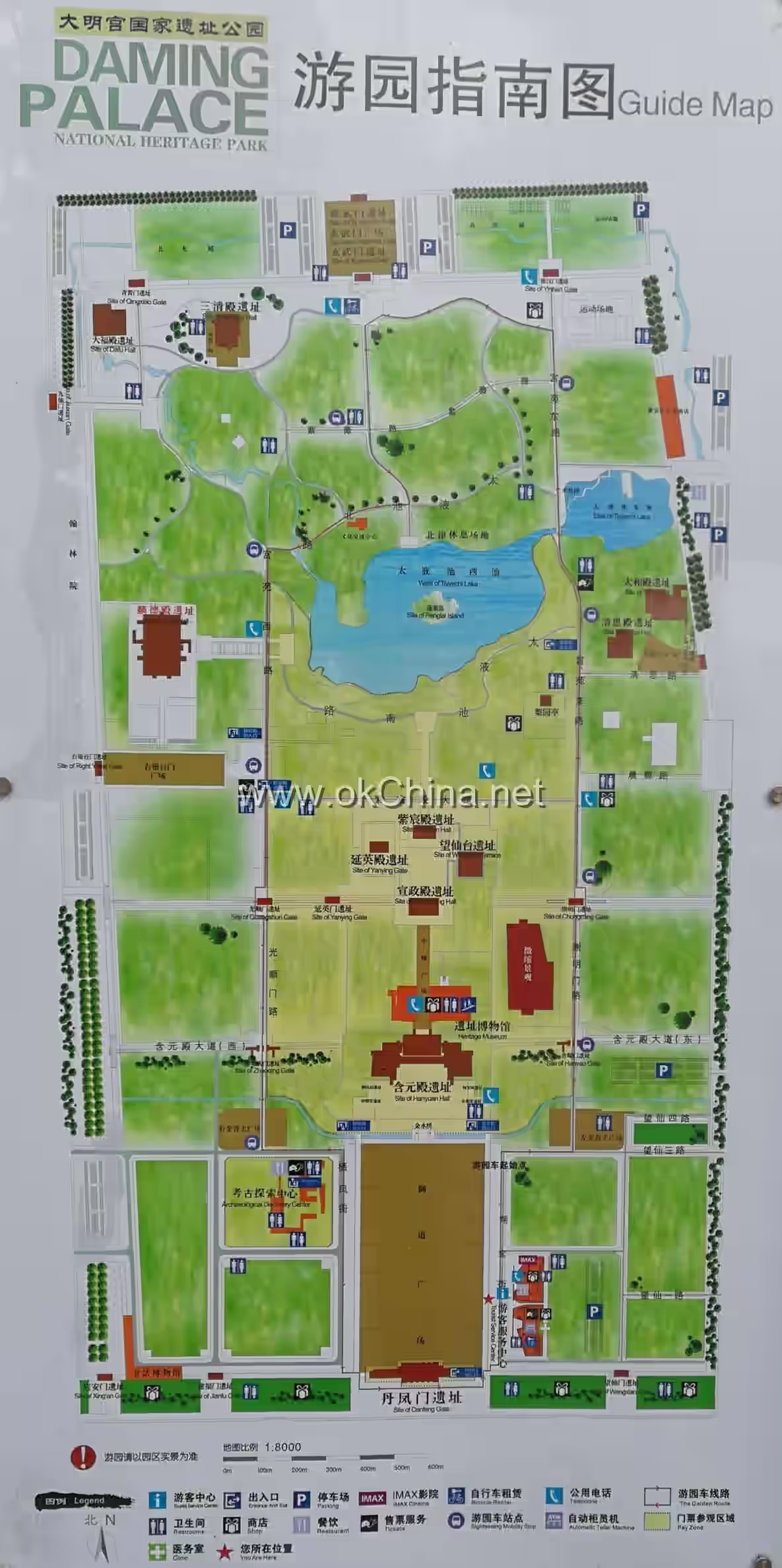
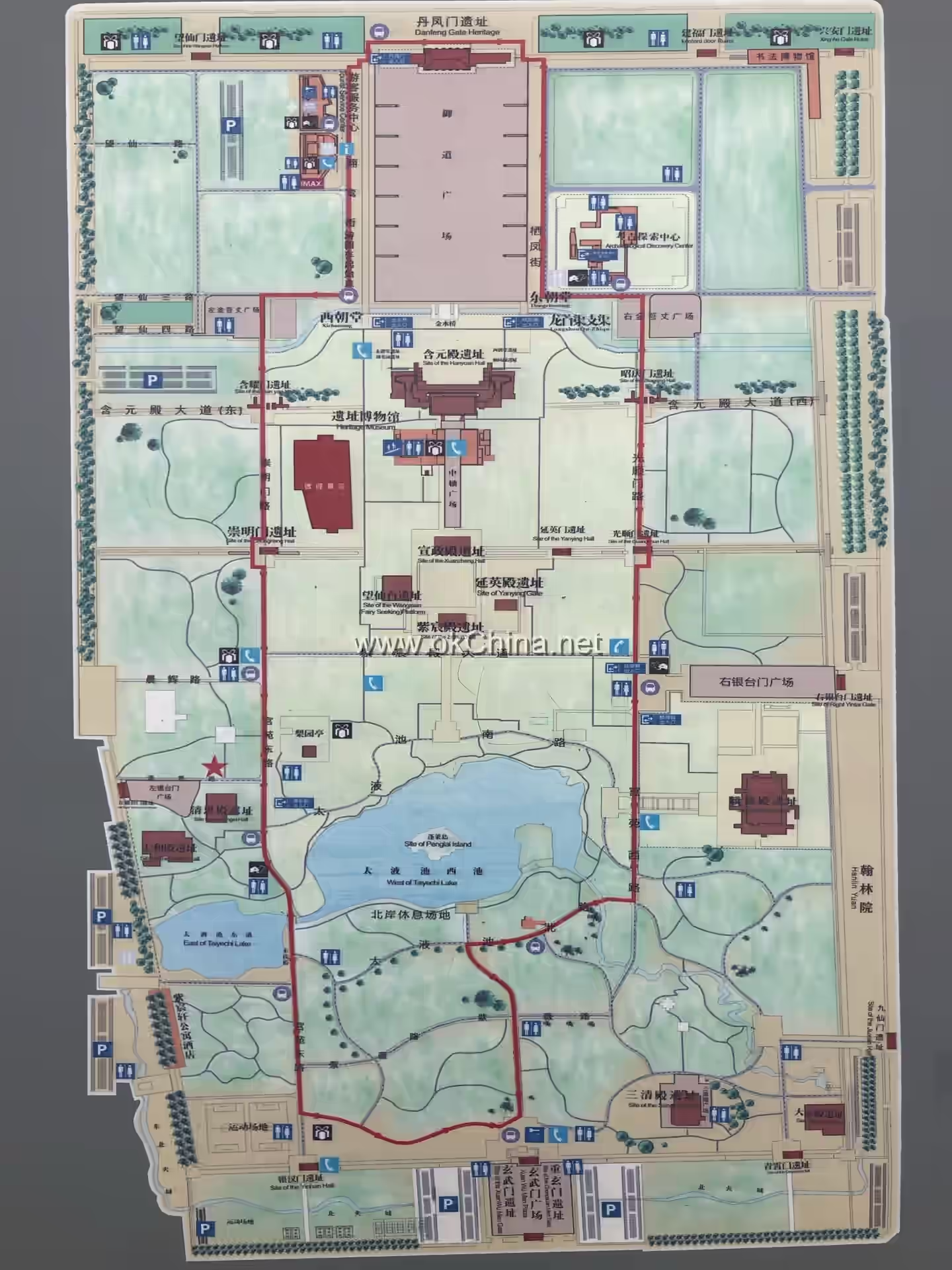
Daming Palace National Heritage Park follows the historical layout of the Tang Daming Palace, with the central axis running from south to north: Danfeng Gate—Hanyuan Hall—Xuanzheng Hall—Zichen Hall—Xuanwu Gate—Chongxuan Gate. It is divided into three main areas: the Front Palace Area, Palace Area, and Palace Garden Area.
-
The Ceremonial Area from Danfeng Gate to South of Hanyuan Hall is a Tang culture-themed park. It includes visitor reception service centers, the Daming Palace Museum, the Daming Palace International Heritage Research Center, and other projects showcasing Tang culture and archaeological sites. The Daming Palace Museum complex consists of four museums: the Tang Culture Museum, Daming Palace Museum, Daming Palace Modern Art Museum, and Daming Palace Comprehensive Exhibition Hall, which are national-level museums. Key protected cultural relics in this area include the sites of Danfeng Gate, Jianfu Gate, Zhaoxun Gate, Wangxian Gate, Guangfan Gate, as well as the ruins of the imperial court road, canals, bridges, and palace walls.
-
The Administrative Area from Hanyuan Hall to Zichen Hall is an archaeology-themed park and is the ticketed area of Daming Palace National Heritage Park. It focuses on showcasing advanced modern archaeological processes and achievements, as well as advanced concepts, methods, technologies, materials, and outcomes of cultural heritage protection. It serves as a key demonstration zone for the protection and display of ancient sites. Key protected cultural relics include the sites of Hanyuan Hall, East and West Audience Halls, Xuanzheng Hall, Zichen Hall, Yanying Hall, Wangxian Terrace, Linde Hall, Qingsi Hall, Hanguang Hall, Zhaoqing Gate, Hanyao Gate, Guangshun Gate, Yanying Gate, Chongwen Gate, and Left and Right Yintai Gates. Among these, the protection and display areas of the three main halls—Hanyuan Hall, Xuanzheng Hall, and Zichen Hall—are key zones for archaeological research. They serve as a primary venue for promoting the grand palace complex of Tang Daming Palace and Tang civilization, reflecting the prosperity of the Tang golden age and providing visitors with excellent landscapes and a place to experience Tang political culture.
-
The Palace Garden Area of Daming Palace National Heritage Park was the area where Tang emperors relaxed and entertained, featuring extensive garden landscapes and including the large water area of Taiye Pond. The Palace Garden Area is a non-ticketed zone, primarily catering to local residents and a small number of out-of-town tourists. Visitors to this area will mainly learn about the private lives of Tang emperors and appreciate the beautiful garden landscapes of Daming Palace National Heritage Park. The Palace Garden Area also includes a certain number of urban sports and leisure facilities. As a Tang leisure and secular life culture-themed park, it serves as an urban cultural and leisure district. Key protected cultural relics in this area include the sites of Taiye Pond, Penglai Hill, Sanqing Hall, Dafu Hall, Hanlin Academy, Xuanwu Gate, Qingxiao Gate, Yinhan Gate, Chongxuan Gate, and Jiuxian Gate.
Features
Daming Palace National Heritage Park centers around the Daming Palace site park, radiating outward to concentrated resettlement areas, central residential areas, commercial and trade service areas, cultural tourism zones, and business core areas. Based on the harmony between humans and nature, it constructs a complete cultural and ecological system. The development positioning of the protection zone is characterized by the protection, renovation, and display of the prosperous Tang culture of the Daming Palace site. It aims to build an internationally-level new urban district integrating culture, tourism, commerce, residence, and leisure services.
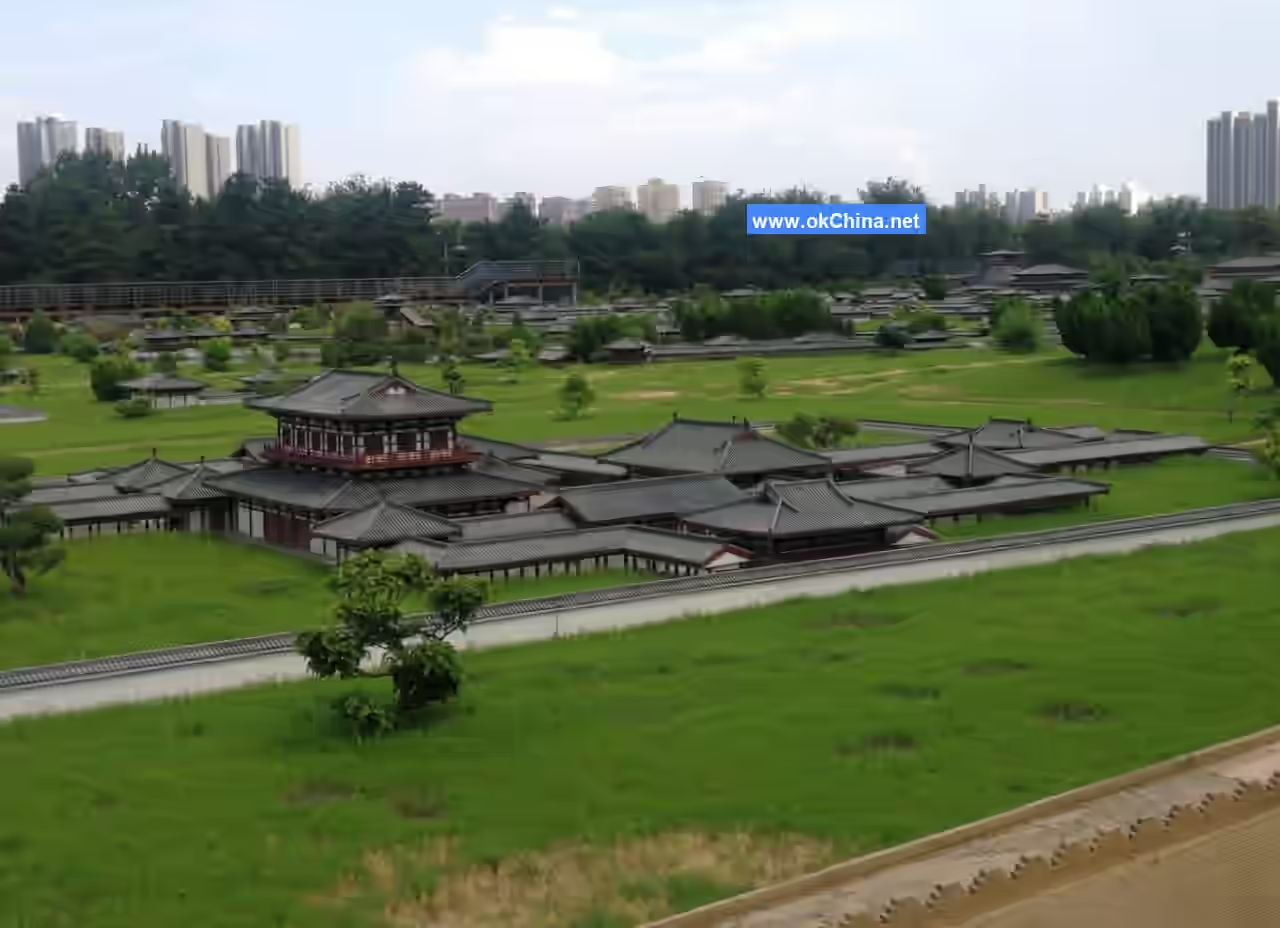
Daming Palace National Heritage Park is the largest urban central park in Xi'an, featuring six highlights and ten typical tourist attractions. The six highlights are: the large-scale site layout formed by an 8-kilometer palace wall, 18 palace gates, and the central axis; unique iconic landmarks of ancient Eastern architecture, such as Zichen Hall and Hanyao Gate; a panoramic miniature landscape of Daming Palace constructed on the basis of scientific restoration research; a heritage center integrating archaeology, scientific research, popular science, recreation, and tourism; an interpretive system combining IMAX 3D films, physical objects, electronics, models, and signage; and the "Moonlight Daming Palace" nightscape system.
IV. Main Attractions
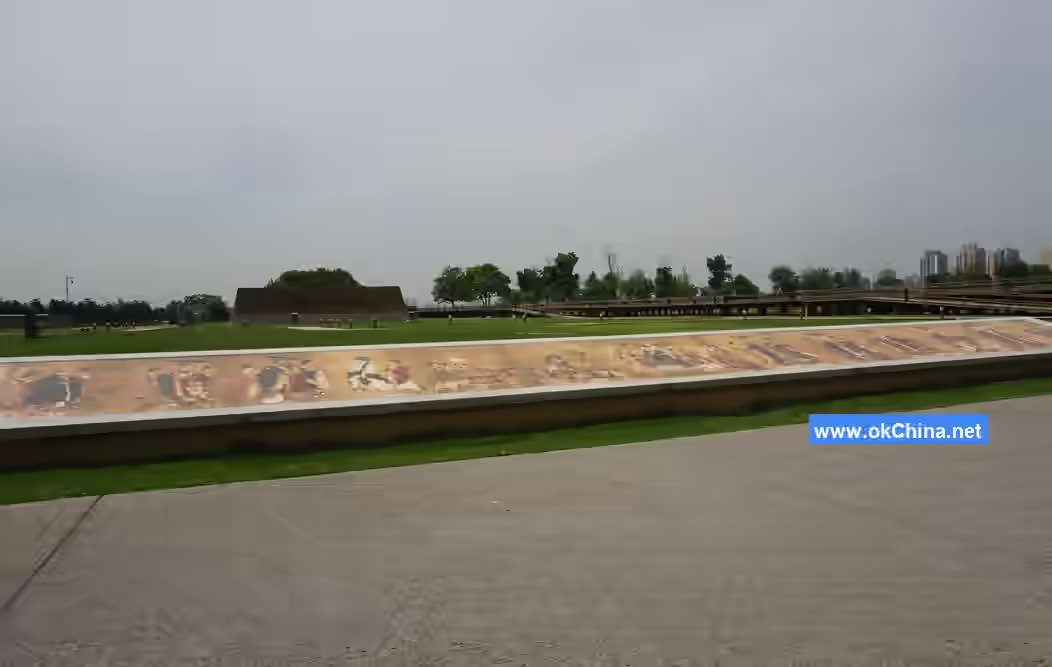
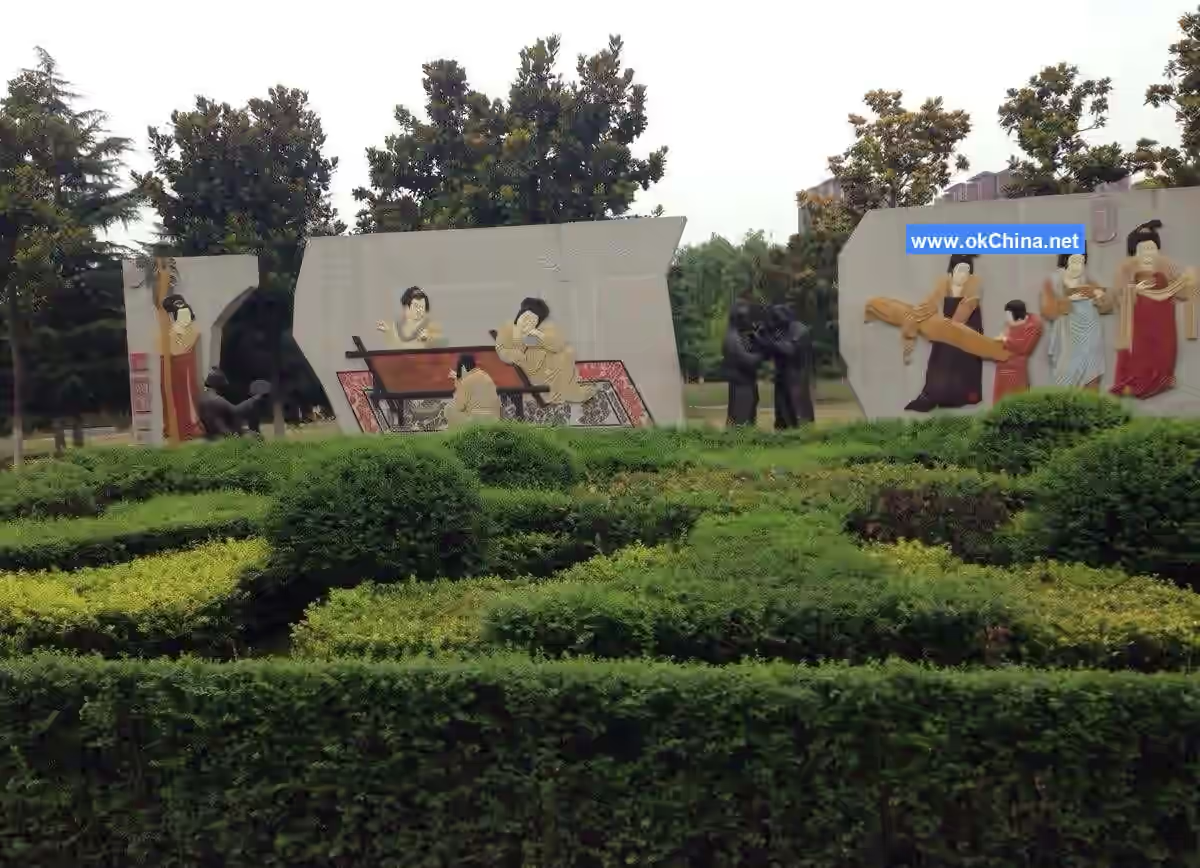
OverviewThe Daming Palace National Heritage Park largely restores the historical appearance of the Tang Dynasty Daming Palace. Key attractions include the Danfeng Gate site, the central axis sites, the Taiye Pond, the Linde Hall, the Heritage Center, the Xuanwu Gate, the Chongxuan Gate, and the North Jia Cheng Sports Area; the Sanqing Hall, Dafu Hall, Kangdizhai original village site, and some village exhibition areas; the garden landscapes and sculptures within the palace garden area; the Chinese Calligraphy Museum and Tang Tri-Color Glazed Pottery Museum along the South Palace Wall; and the leisure area along the East Palace Wall. Located north of the Hanyuan Hall, the Daming Palace Heritage Museum is a fully underground structure. The museum showcases the cultural essence of the High Tang period, including architecture, painting, clothing, and ceremonial systems.
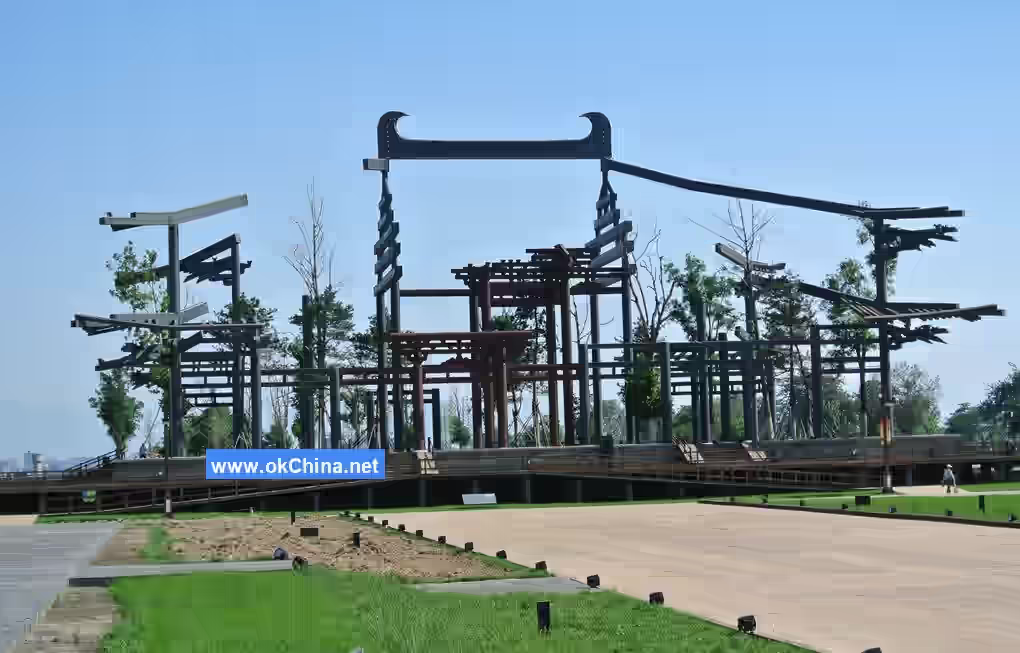
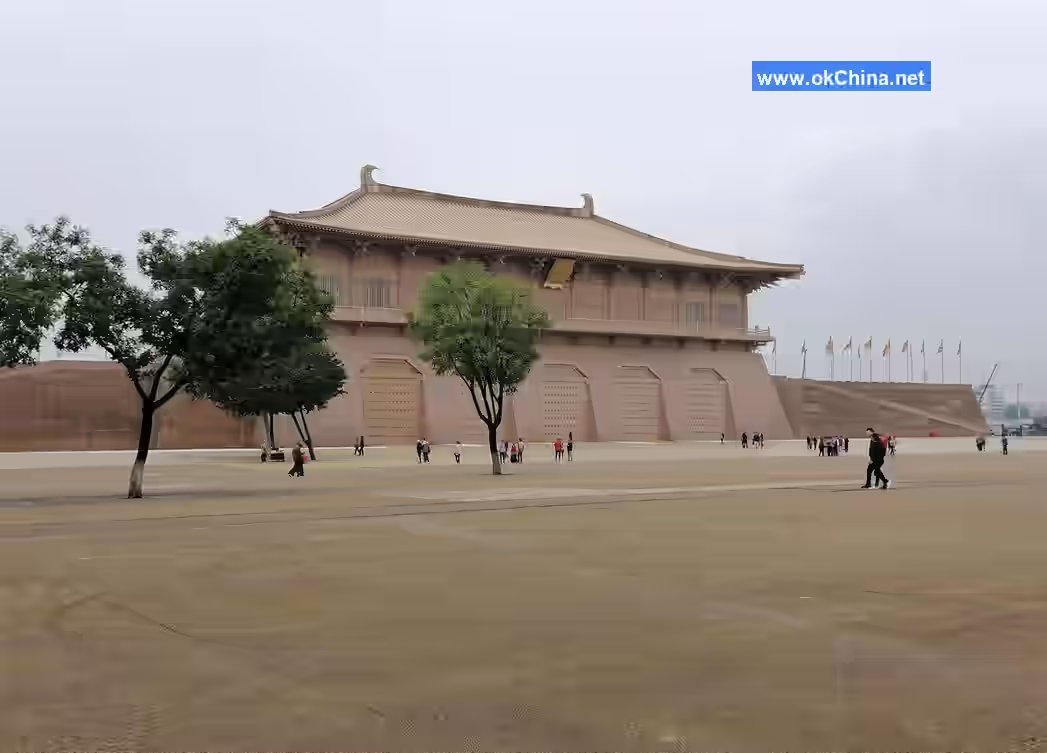
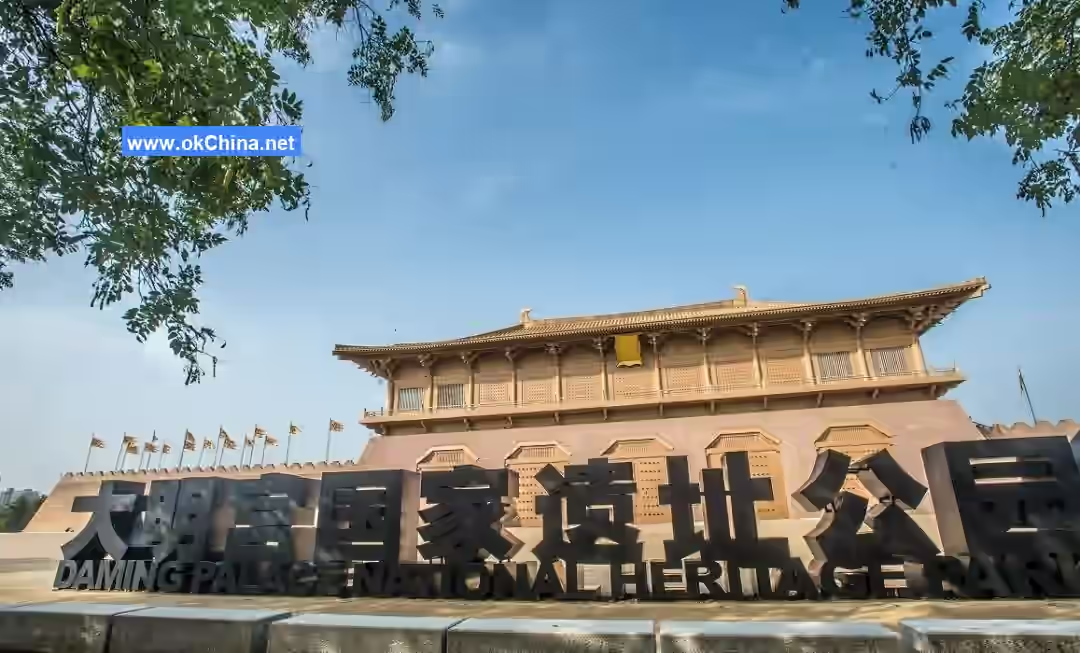
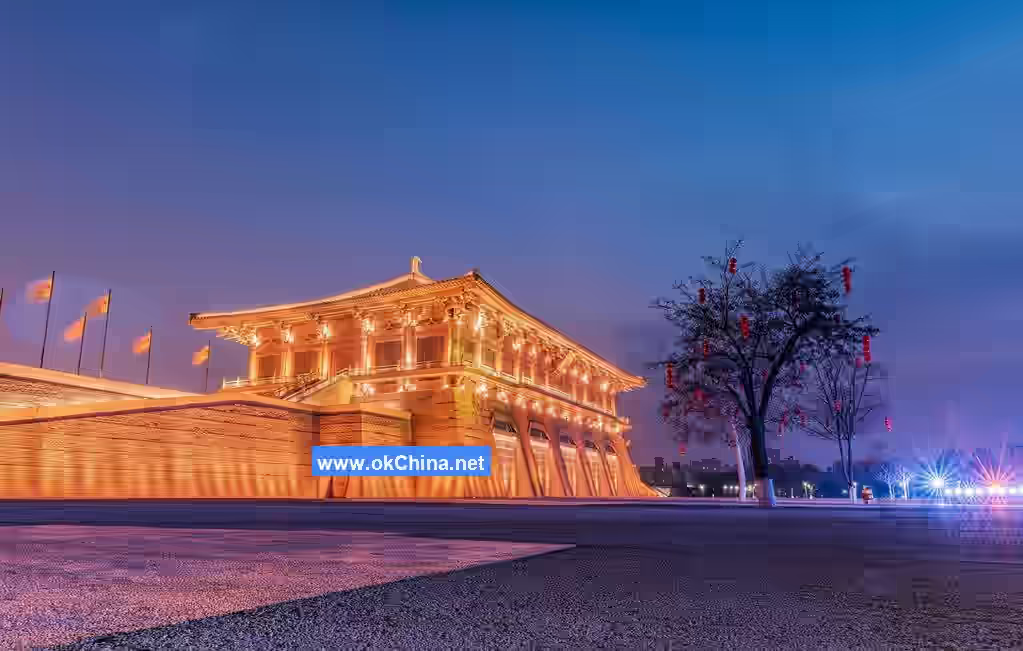
To protect the heritage site, the construction within the Daming Palace National Heritage Park follows international conventions, avoiding large-scale reconstruction of the Daming Palace buildings. Instead, based on historical records and reasoning, only the Danfeng Gate, the main southern gate of the Daming Palace, was recreated. However, Danfeng Gate is not an actual reconstruction; it is a model made by attaching panels to a steel structure and placing it over the ruins. This is, in fact, a method of protective display for heritage sites.
Hanyuan Hall Ruins
Hanyuan Hall was the first main hall of the Daming Palace’s outer court and also a landmark building of Tang Chang’an City. It was the most magnificent structure in Tang Chang’an at the time, serving as the venue for the emperor’s grand ceremonies and court assemblies. To the east and west in front of the hall were the Xiangluan and Qifeng Pavilions, as well as the Dragon Tail Path leading to the flat ground. The measured rammed-earth platform base of the hall is over 3 meters high, 75.9 meters long from east to west, 42.3 meters wide from north to south, with a facade of 11 bays and a depth of 4 bays. Each gate is 5.3 meters wide.
Linde Hall Ruins
Linde Hall was built around the Linde era of Emperor Gaozong of Tang, hence its name "Linde." Located on high ground west of the Taiye Pond in the northern part of the Daming Palace, it was where the emperor met with nobles and close confidants, received foreign envoys, and held grand banquets. Built during the Linde era of the Tang Dynasty, it served as a venue for banquets and receiving foreign envoys. Its platform base is 130 meters long from north to south, over 80 meters wide from east to west, covering a construction area of more than 12,300 square meters. A large number of black cylindrical tiles and a small number of glazed tile fragments were unearthed at the site.
Dafu Hall Ruins
Dafu Hall was one of the large halls within the Tang Daming Palace. The existing rammed-earth platform base is 70 meters long from east to west, 50 meters wide from north to south, and about 5 meters high, covering a total area of approximately 11,600 square meters. A large number of paving bricks remain on the platform base, and there appears to be a ramp for ascending the hall on the southern side.
Lingxiao Gate Ruins
Lingxiao Gate, also known as Qingxiao Gate, was a gate on the western side of the northern wall of the Daming Palace, located 355 meters west of the Xuanwu Gate. The "Lingxiao Gate Incident," a struggle for the throne between Emperor Suzong’s second son, Li Xi, and the crown prince, Li Yu, during Emperor Suzong’s critical illness, occurred here.
Xuanwu Gate and Inner Chong Gate Ruins
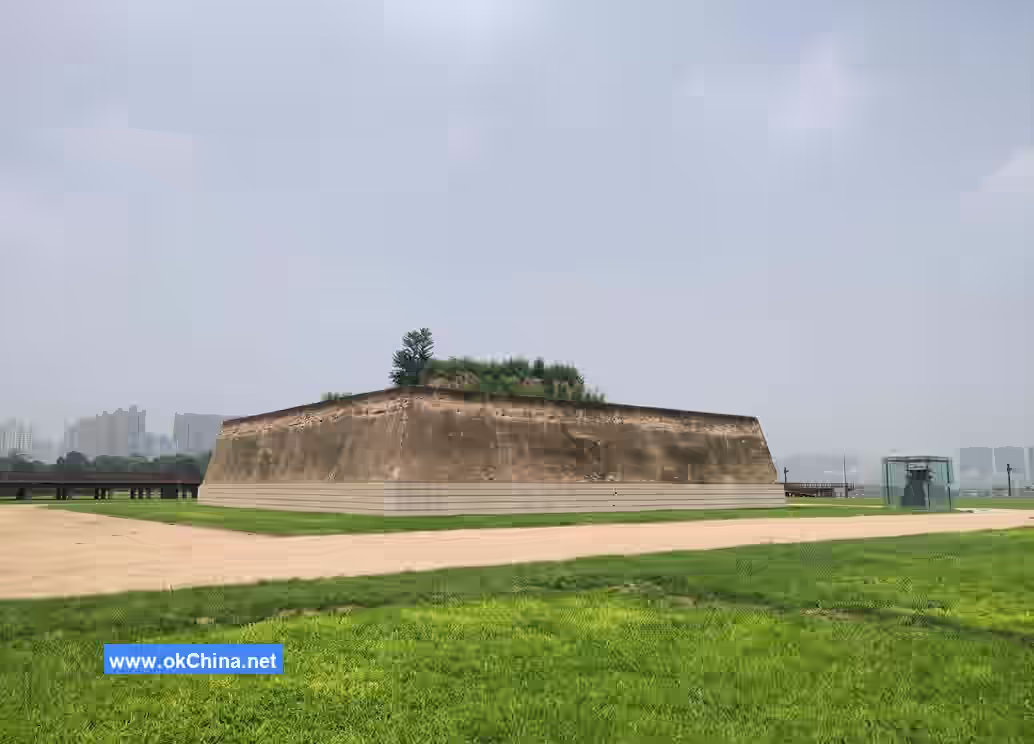
Xuanwu Gate was the main northern gate of the Daming Palace. Located slightly west of the center of the northern wall, it is 538 meters west of the northwest corner of the palace city and 597 meters east of the northeast corner. The gate site covers a wide area, with an excavation area of over 1,000 square meters. There was a gate tower above the Xuanwu Gate, with the entire tower base larger at the bottom and smaller at the top, forming a trapezoidal shape. Clear ruts from carriage wheels are still visible on the road inside and outside the threshold. Historical records indicate that this was where the palace city’s heavy guard troops were stationed, with the Chongxuan Gate located to its north.
Chongxuan Gate Ruins
The Chongxuan Gate ruins are located directly north of the Xuanwu Gate in the Jia Cheng area, 156 meters away from the Xuanwu Gate. This gate is relatively well-preserved. The gate tower bases on both sides of the passage are over 4 meters above the current ground, forming saddle-shaped mounds, with the passage in the lower middle section. There are architectural ruins both inside and outside the Chongxuan Gate. Inside, the left and right corridors connect to the Xuanwu Gate, serving as the northern guard station, while outside lies the Jide Courtyard.
Sanqing Hall Ruins
The Sanqing Hall ruins are located in the northwest corner of the Daming Palace, a high-platform structure. During the Tang Dynasty, Taoism was revered, and Laozi was worshipped. The Sanqing Hall was a Taoist worship and sacrificial building within the palace. Its layout is convex-shaped, wider in the north and narrower in the south, measuring 78.6 meters from north to south and covering an area of over 4,000 square meters. Besides the Sanqing Hall, there are other Taoist temple ruins in the Daming Palace, such as the Dajiao Temple and the Xuanyuan Emperor Temple.
Qingsi Hall Ruins
Qingsi Hall was built during the reign of Emperor Jingzong of Tang, located inside the Zuoyintai Gate on the east city wall. Its platform base is rectangular, 228 meters long from north to south and 33 meters wide from east to west. Among the unearthed artifacts is a copper fish tally inscribed with the seven characters "Tong Jun Fu Zuo Ling Jun Wei" (Left Guard of the Tongjun Prefecture), along with 12 damaged pillar base stones.
Tang Taiye Pond Ruins
Taiye Pond, also known as Penglai Pond, is located in the central northern part of the Daming Palace. It was initially excavated during the Zhenguan or Longshuo eras. In the later Kaiyuan period, Emperor Xuanzong ordered the construction of a Moon-Viewing Platform on the banks of the Taiye Pond for enjoying the moon with Consort Yang. The platform was 100 chi high. Currently, there is a mound in the pond, about 5 meters high, believed to be the Penglai ruins. The Taiye Pond covers an area of approximately 16,000 square meters, divided into eastern and western ponds connected by a channel. According to archaeological measurements, the western pond is 500 meters long from east to west and 320 meters wide from north to south. The eastern pond is smaller, 220 meters long from north to south and 150 meters wide from east to west, only about 5 meters away from the eastern palace wall. The pond banks are three to four meters higher than the pond bottom. The water source for the Taiye Pond was drawn from the Longshou Canal to the south, with an underground channel connecting it to outside the palace. The corridors along the banks and nearby palace buildings were deliberately arranged according to the terrain features, creating a picturesque and well-proportioned layout.
V. Cultural Value
Social Value
The Tang Daming Palace is an outstanding representative of Eastern garden architecture art, hailed as the Eastern Sacred Hall of the Silk Road. The Daming Palace ruins were among the first key cultural relics protection units announced by the State Council in 1961. They are recognized by the International Council on Monuments and Sites as a significant heritage protection project of global importance and a key component of the Silk Road’s collective application for UNESCO World Heritage status. The Daming Palace National Heritage Park is a major project for urban construction, large-scale heritage protection, and improving people’s livelihoods in Xi’an. As Xi’an’s "Central Urban Park," it has made the protection of the Daming Palace area a driving force for the city’s pioneering, balanced, and scientific development, serving as an ecological foundation and the most important cultural symbol for Xi’an’s future urban growth. It also supports Xi’an’s status as an ancient capital of world civilization, further enhancing the city’s distinctive character.
The Daming Palace National Heritage Park will develop in sync with the city, driving the growth of northern Xi’an, enhancing the city’s overall image, and becoming a significant urban "green lung" for Xi’an in the future. It will provide residents and tourists with essential leisure spaces and a tranquil spiritual home.
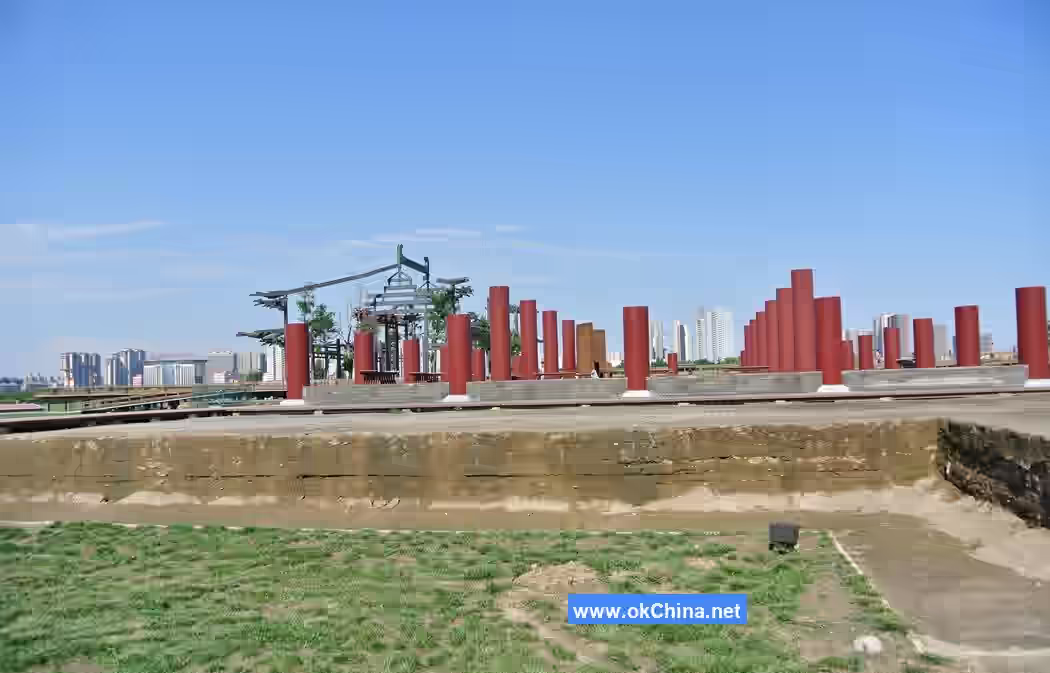
For the Daming Palace National Heritage Park, the primary goals are to protect the ruins and preserve this spiritual heritage, and to continuously enrich the interpretation of its cultural connotations. Since the Daming Palace is an archaeological site, much of it lies underground, with only partial rammed-earth remains visible above ground. Helping visitors understand the site more deeply and, consequently, Tang Dynasty architectural culture relies heavily on cultural interpretation methods. First, methods of heritage site marking from the archaeological field are employed. Second, numerous signage boards, covering architecture, historical stories, figures, and events, provide visitors with vivid impressions.
Humanistic History
The Tang Daming Palace is the most magnificent architectural complex among the renowned "Three Great Palaces" (Taiji Palace, Daming Palace, and Xingqing Palace) of Tang Chang’an. Located on the Longshou Plateau in the northern forbidden garden of Chang’an City, it was also known as Penglai Palace. It was originally built as a summer palace by Emperor Taizong of Tang, Li Shimin, for his father, Li Yuan. Construction began in the eighth year of the Zhenguan era (634 AD), and it was expanded in the third year of the Longshuo era (663 AD) during Emperor Gaozong’s reign, becoming the most prominent and splendid building of the Tang emperors. Starting from Emperor Gaozong’s time, many emperors held court here, making it the political center of the Tang Dynasty for over 200 years.
The Daming Palace project was unfinished when Li Yuan passed away. In the first month of the ninth year of the Zhenguan era (635 AD), it was renamed Daming Palace. After two more name changes, the name Daming Palace was finally fixed in the first year of the Shenlong era (705 AD). During the reign of Wu Zetian, the only female emperor in Chinese history, the Daming Palace was renamed "Penglai Palace," and she held court here.
Many significant historical events took place within the Daming Palace. It also served as the seat of power for Huang Chao’s peasant rebel army. In the twelfth month of the first year of the Guangming era (880 AD), the peasant army entered Chang’an, and Huang Chao ascended the Hanyuan Hall of the Daming Palace to hold a grand enthronement ceremony, then announced the establishment of the "Great Qi" dynasty from the Danfeng Gate tower. In the late Tang Dynasty, the Daming Palace was repeatedly damaged by warfare. In the first year of the Tianyou era (904 AD), the Daming Palace was abandoned and reduced to ruins.
Comments
Post a Comment