Nanjing Confucius Temple - Qinhuai River Scenic Belt
1. Introduction
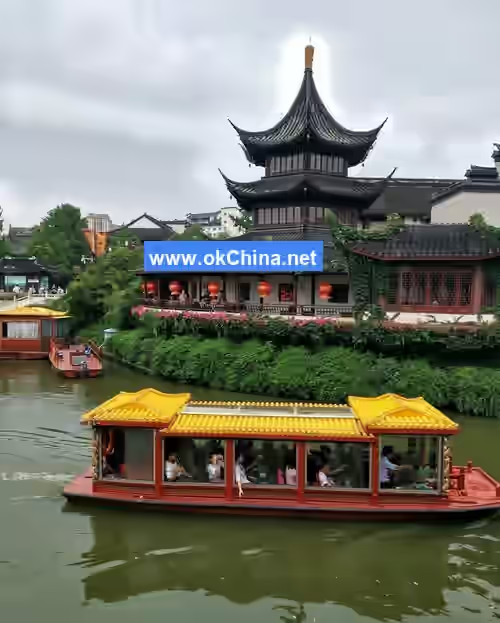
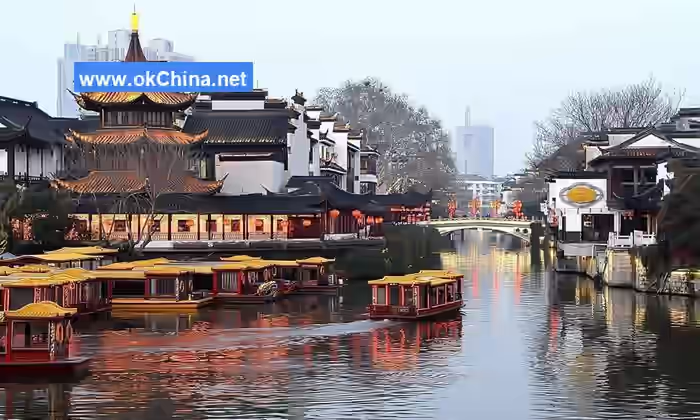
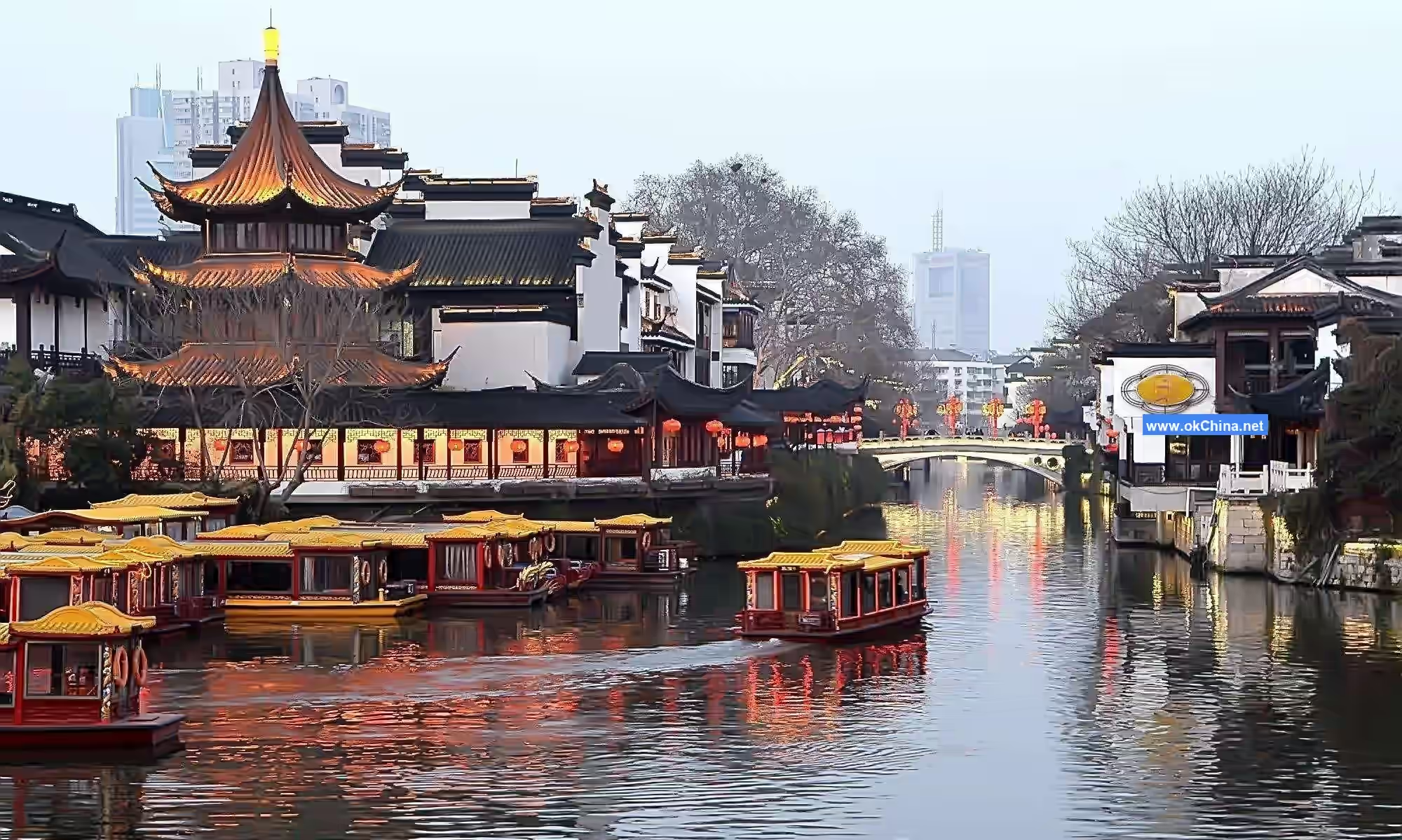
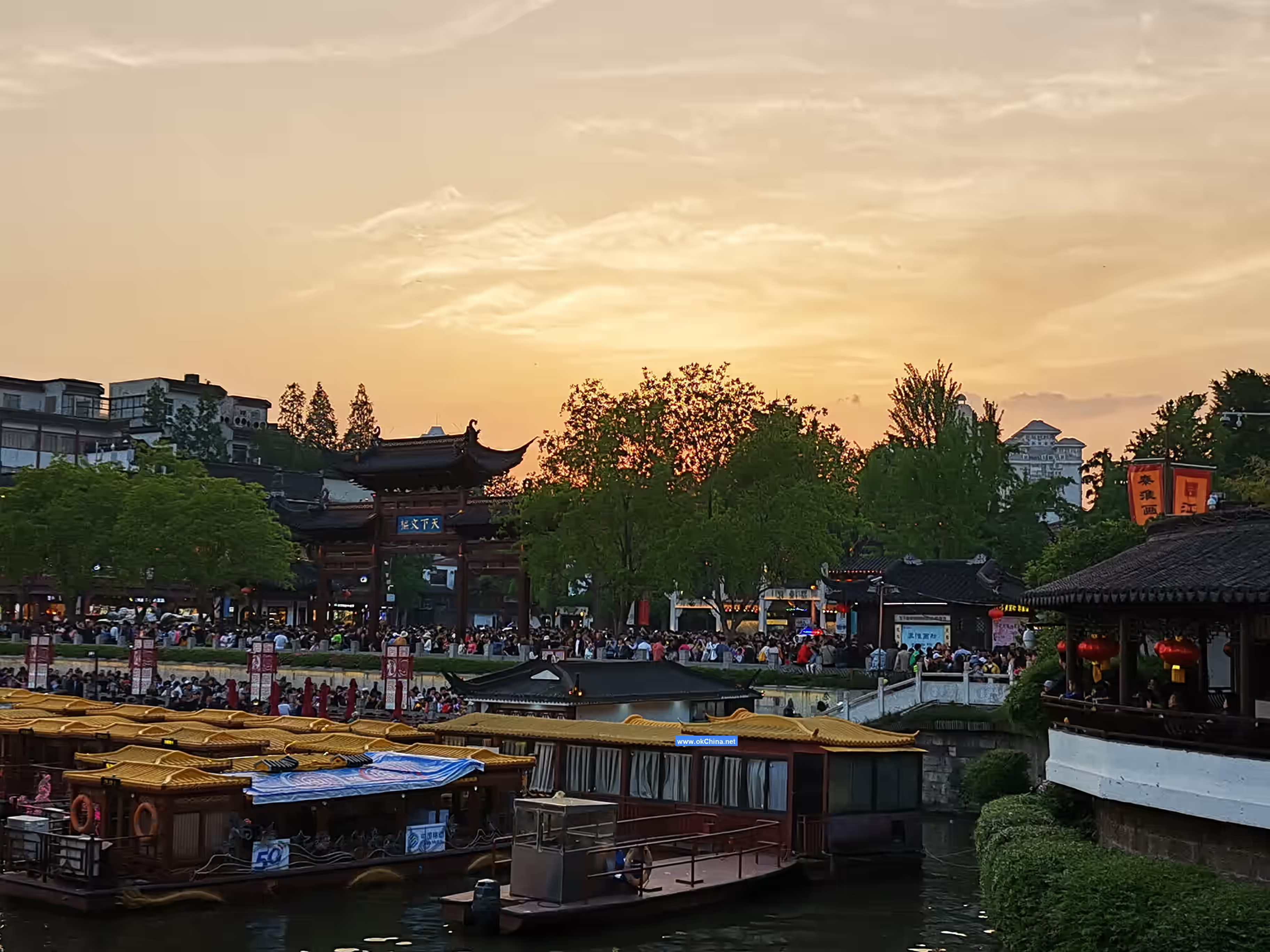
The Nanjing Confucius Temple - Qinhuai River Scenic Belt is located in the central part of Qinhuai District, Nanjing City, Jiangsu Province. It stretches from the East Water Pass in the east to the West Water Pass (present-day Shuiximen) in the west, with a core scenic area covering 1.2 square kilometers. It is a tourist area that integrates natural scenery, landscape gardens, temples and schools, street residences, and local customs.
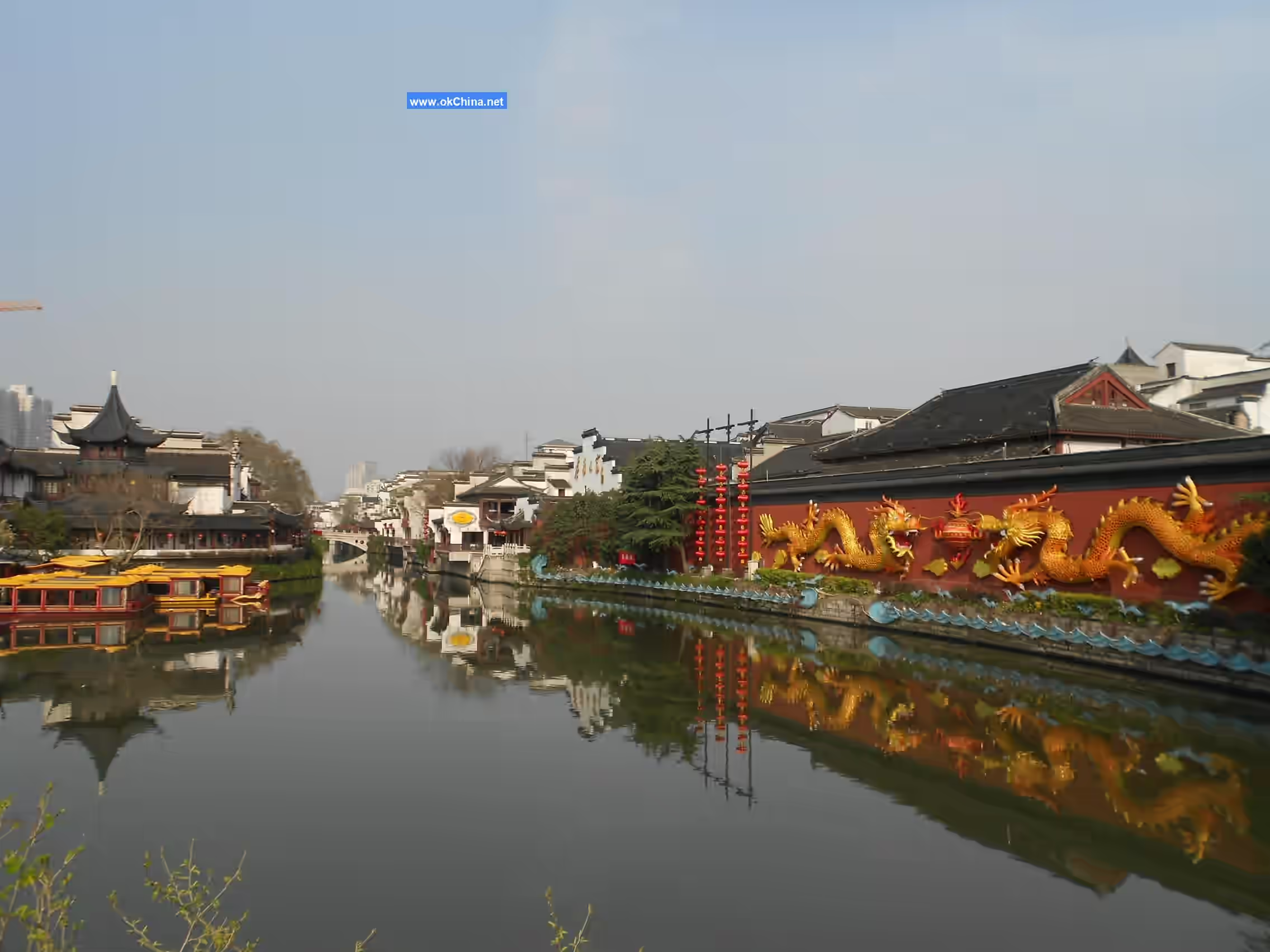
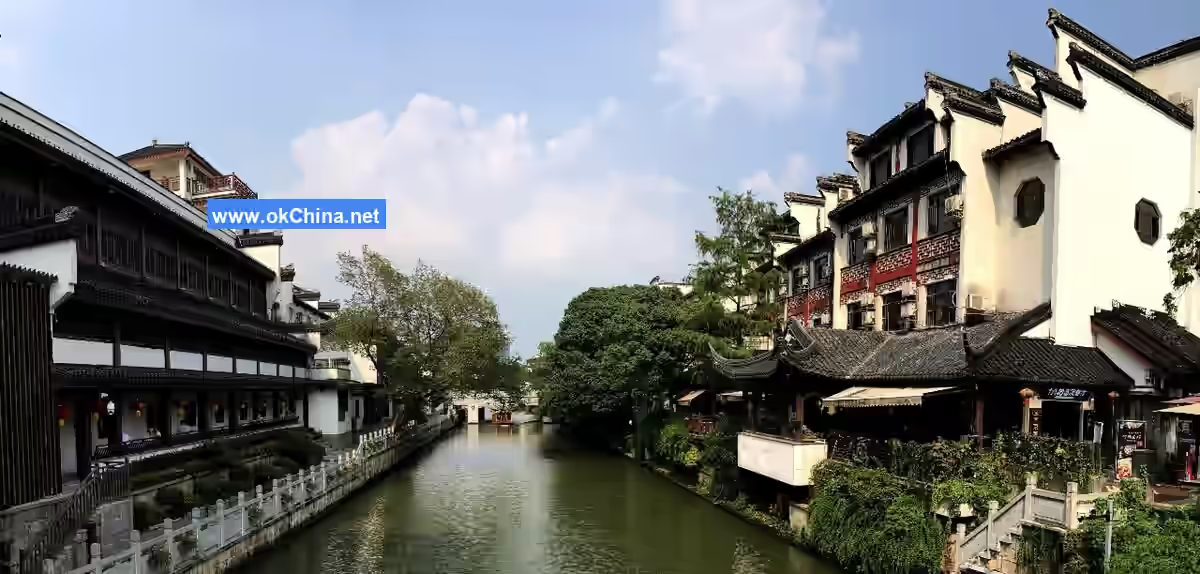
The Qinhuai River is Nanjing's "Mother River" and the cradle of the ancient Jinling culture. Its inner section, known historically as the "Ten-Mile Qinhuai," spans five kilometers and represents the essence of the Confucius Temple-Qinhuai Scenic Belt. Since 1984, with support from the national, provincial, and municipal governments, Qinhuai District has comprehensively implemented the construction project of the Confucius Temple-Qinhuai Scenic Belt. Centered around the ancient architectural complex of the Confucius Temple and using the Ten-Mile Inner Qinhuai River as its axis, the area features important attractions such as the Qinhuai River, Zhonghua Gate Fortress, Zhan Garden, the ruins of the Great Bao'en Temple, and the Confucius Temple.
In April 2010, the Nanjing Confucius Temple - Qinhuai River Scenic Belt was rated as a National AAAAA Tourist Attraction by the China National Tourism Administration. [2] In October 2021, it was selected as one of the first national-level nighttime cultural and tourism consumption clusters.
2. Historical Development
As early as the Neolithic Age five to six thousand years ago, human settlements thrived along the Qinhuai River. Over fifty or sixty primitive village sites have been discovered along its banks, with famous examples including the Hushu Cultural Site and the Yinzi Mountain Site.
During the Six Dynasties period, the area around the Confucius Temple along the Qinhuai River was already a bustling commercial hub.
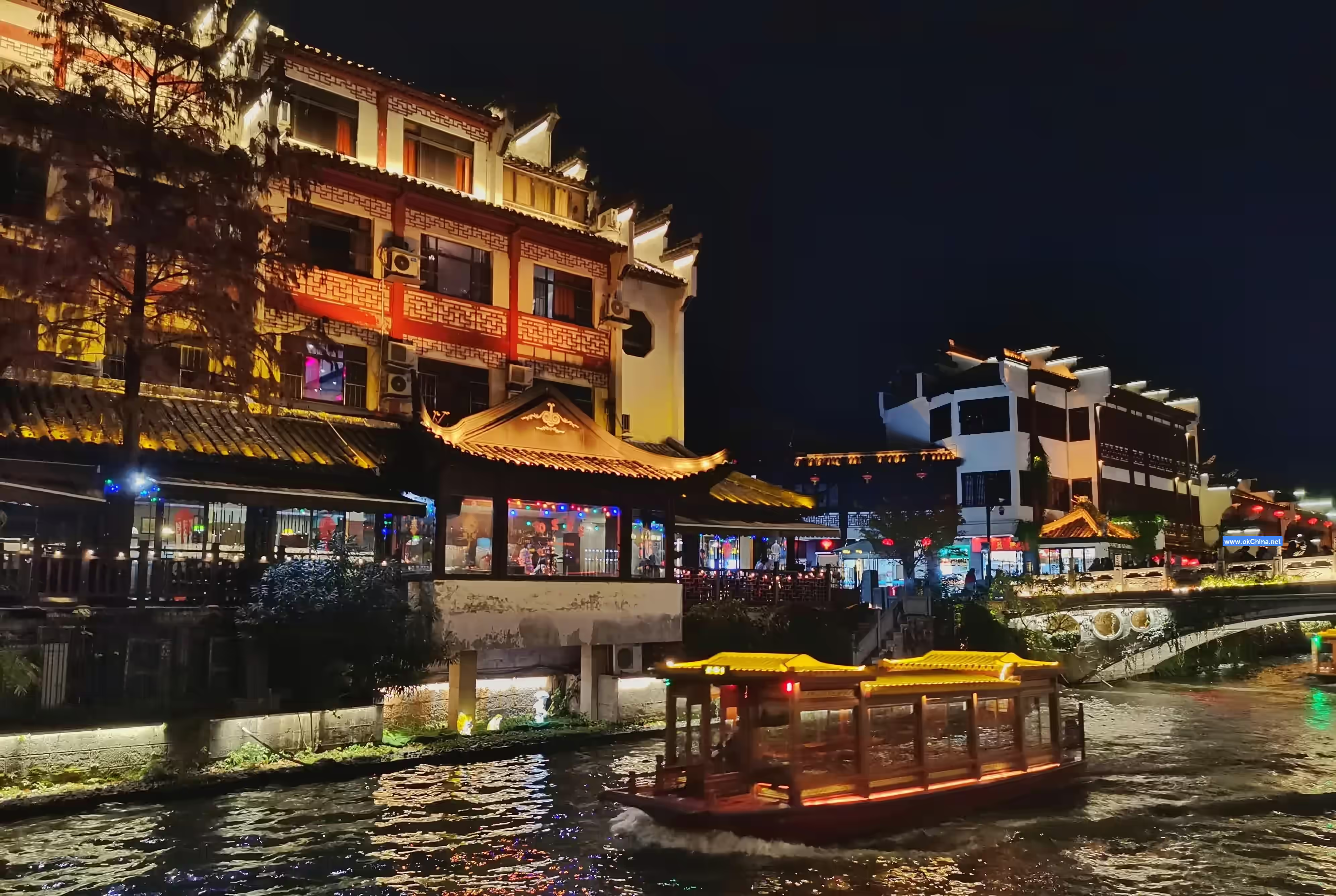
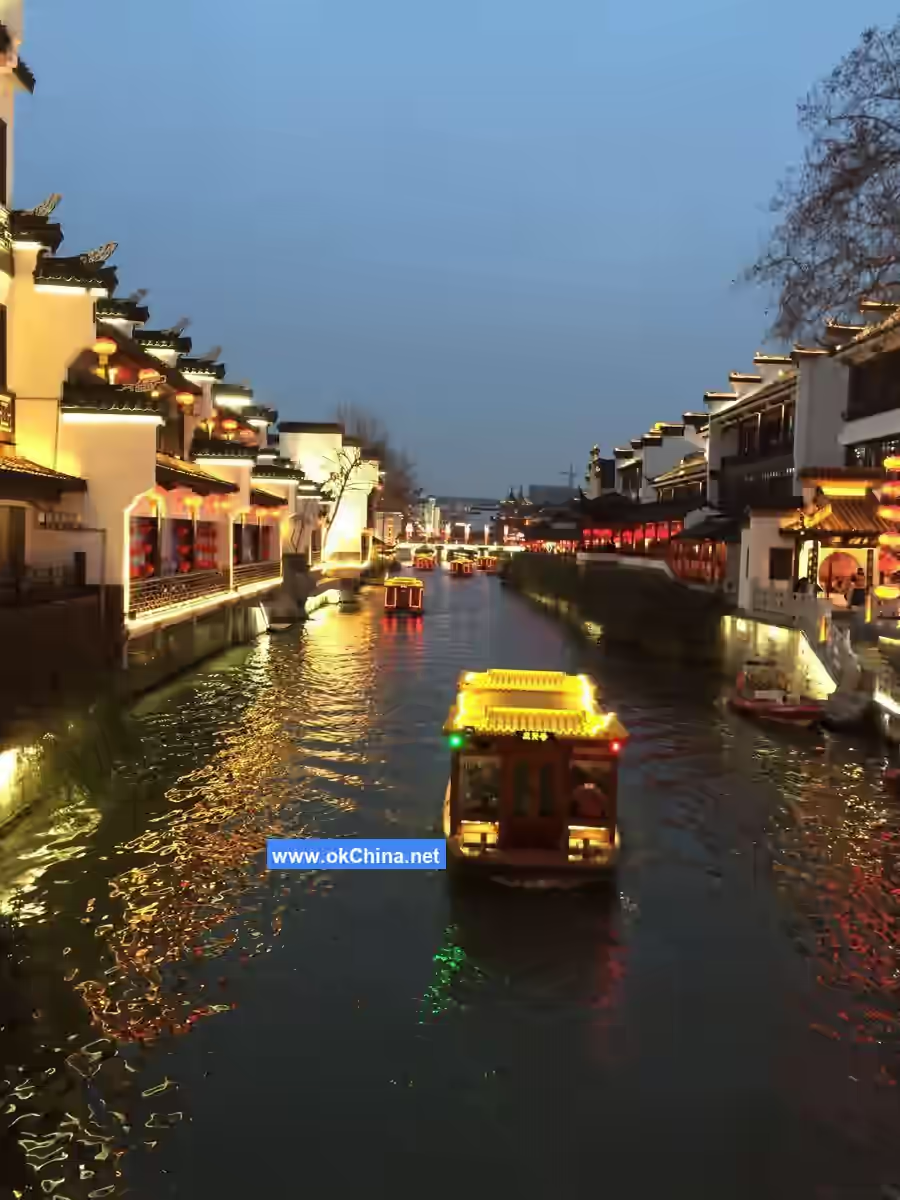
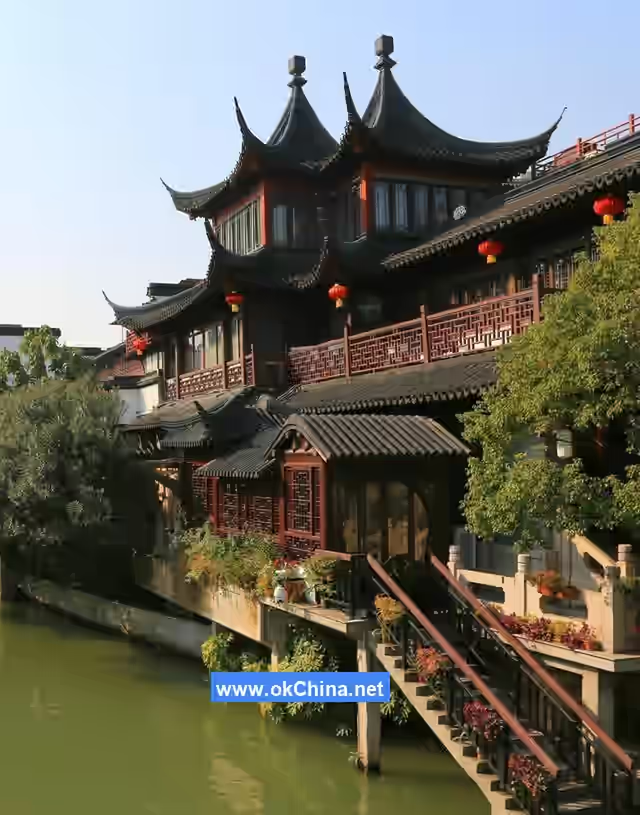
After the Eastern Jin Dynasty, the banks of the Qinhuai River near the Confucius Temple became a paradise for nobles and officials. Places like Wuyi Lane, Zhuque Street, and Taoye Ferry were inhabited by prominent families. During that time, the Qinhuai River area was a gathering place for merchants and literati, with Confucianism flourishing. Along both banks, singing towers, taverns, river houses, and waterside pavilions competed in splendor, while boats and painted pleasure barges, brightly lit, shuttled along the river.
During the Ming and Qing Dynasties, the Qinhuai River was densely populated, adorned with ornate towers and brothels, where painted barges glided over the waves amidst the sounds of oars and the glow of lanterns. As described by Kong Shangren in The Peach Blossom Fan: "Pear blossoms like snow, grass like mist, spring graces both banks of the Qinhuai; a row of dressing pavilions built over the water, each reflecting powdered beauties in its shimmer."
Since 1984, with support from the national, provincial, and municipal governments, Qinhuai District has comprehensively implemented the construction project of the Confucius Temple-Qinhuai Scenic Belt.
3. Scenic Area Layout
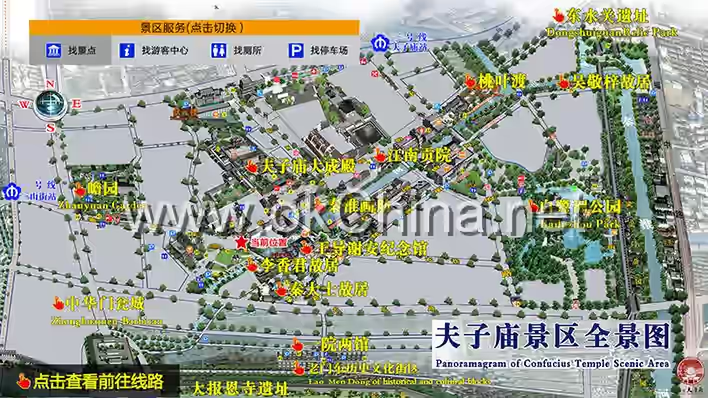
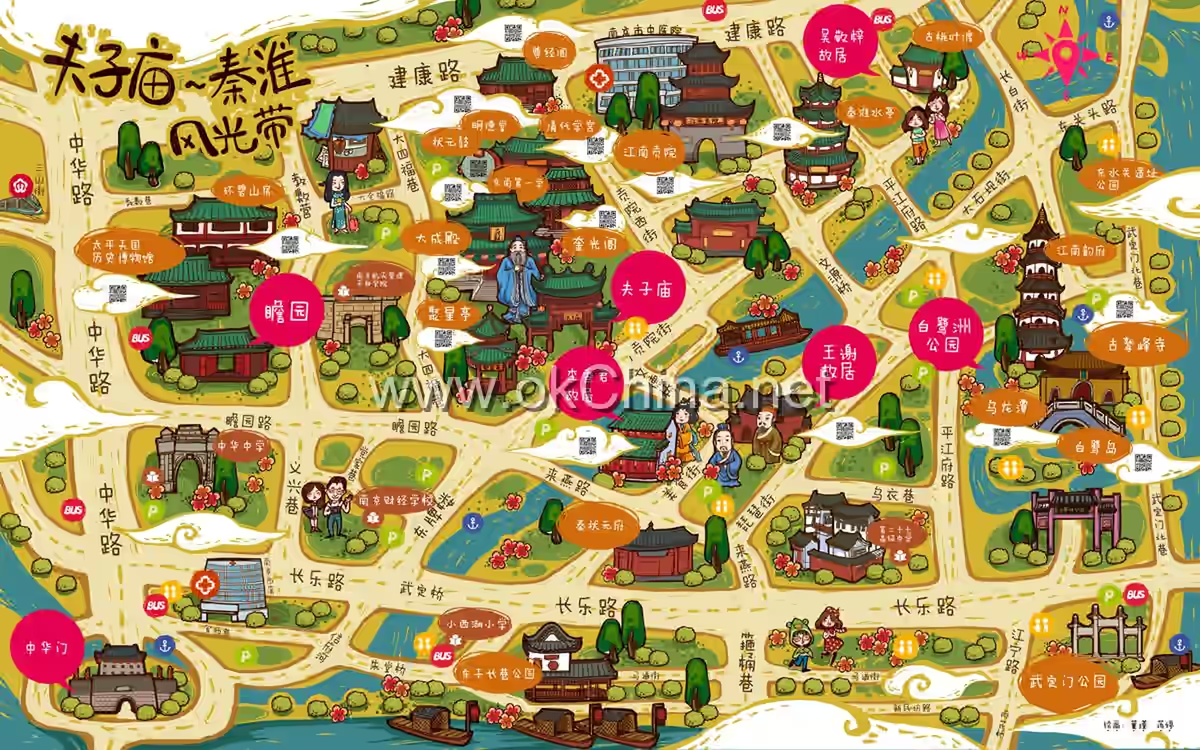
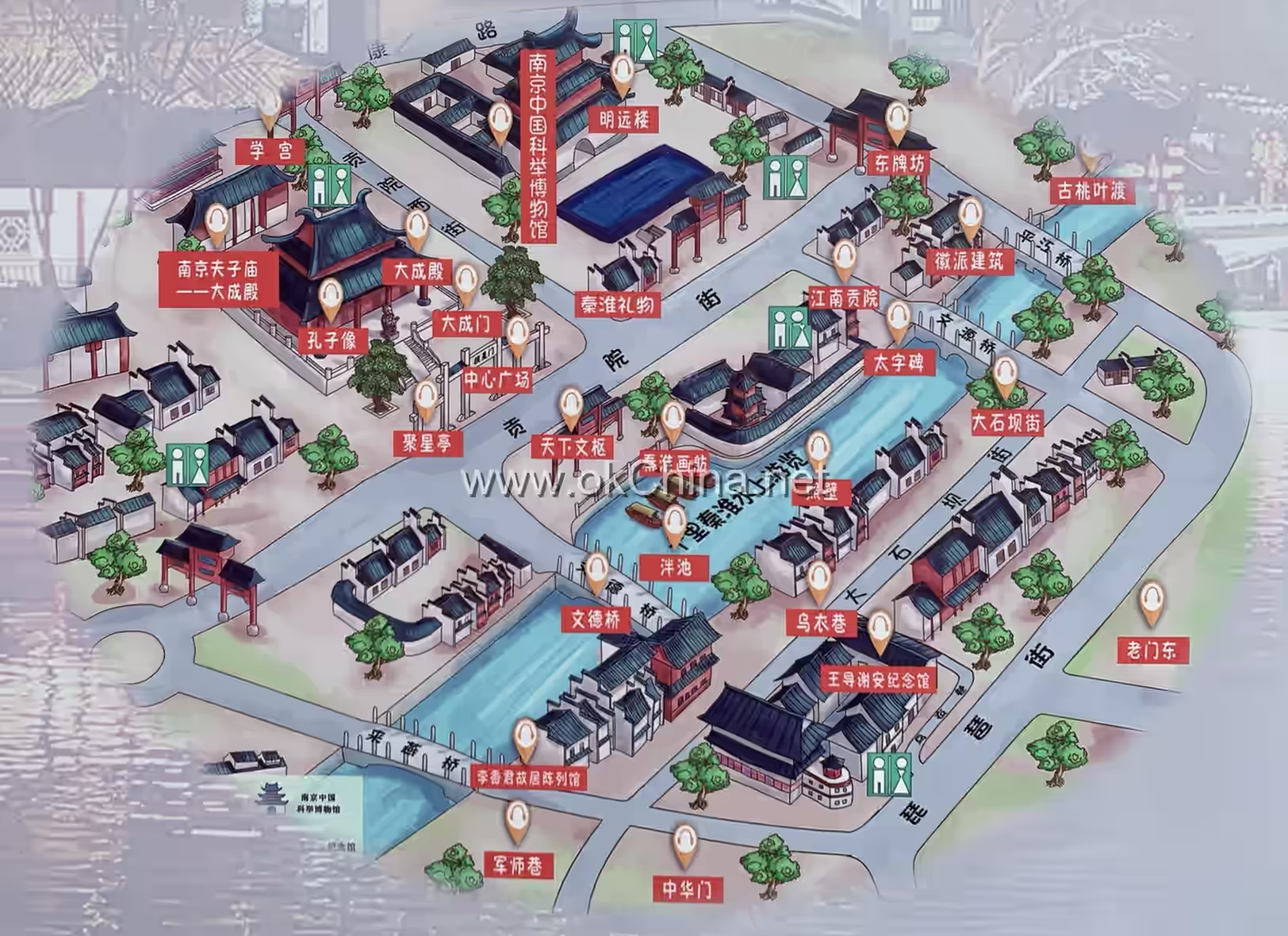
The Nanjing Confucius Temple - Qinhuai River Scenic Belt is centered around the ancient architectural complex of the Confucius Temple, with the Ten-Mile Inner Qinhuai River as its axis, stretching from the East Water Pass Park in the east to the West Water Pass Park (present-day Shuiximen) in the west. The overall planning of the scenic belt involves hierarchical protection through primary, secondary, and tertiary protection zones. The scenic area is further divided into the Confucius Temple-Bailuzhou Scenic Area, Mendong-Menxi Scenic Area, Great Bao'en Temple-Jinling Arsenal Scenic Area, and Chaotian Palace-Pingshi Street Scenic Area. The primary protection zone is the core scenic area, covering 1.2 square kilometers and including important architectural complexes such as the Qinhuai River, Zhonghua Gate Fortress, Zhan Garden, the ruins of the Great Bao'en Temple, and the Confucius Temple. The secondary protection zone surrounds the core area and consists of regions with high tourism value, serving as important visiting areas within the scenic belt, covering 0.75 square kilometers and designated as restricted construction areas. The tertiary protection zone is the main facility support area, covering 1.42 square kilometers and designated as controlled construction areas.
4. Important Attractions
4.1 Nanjing Confucius Temple
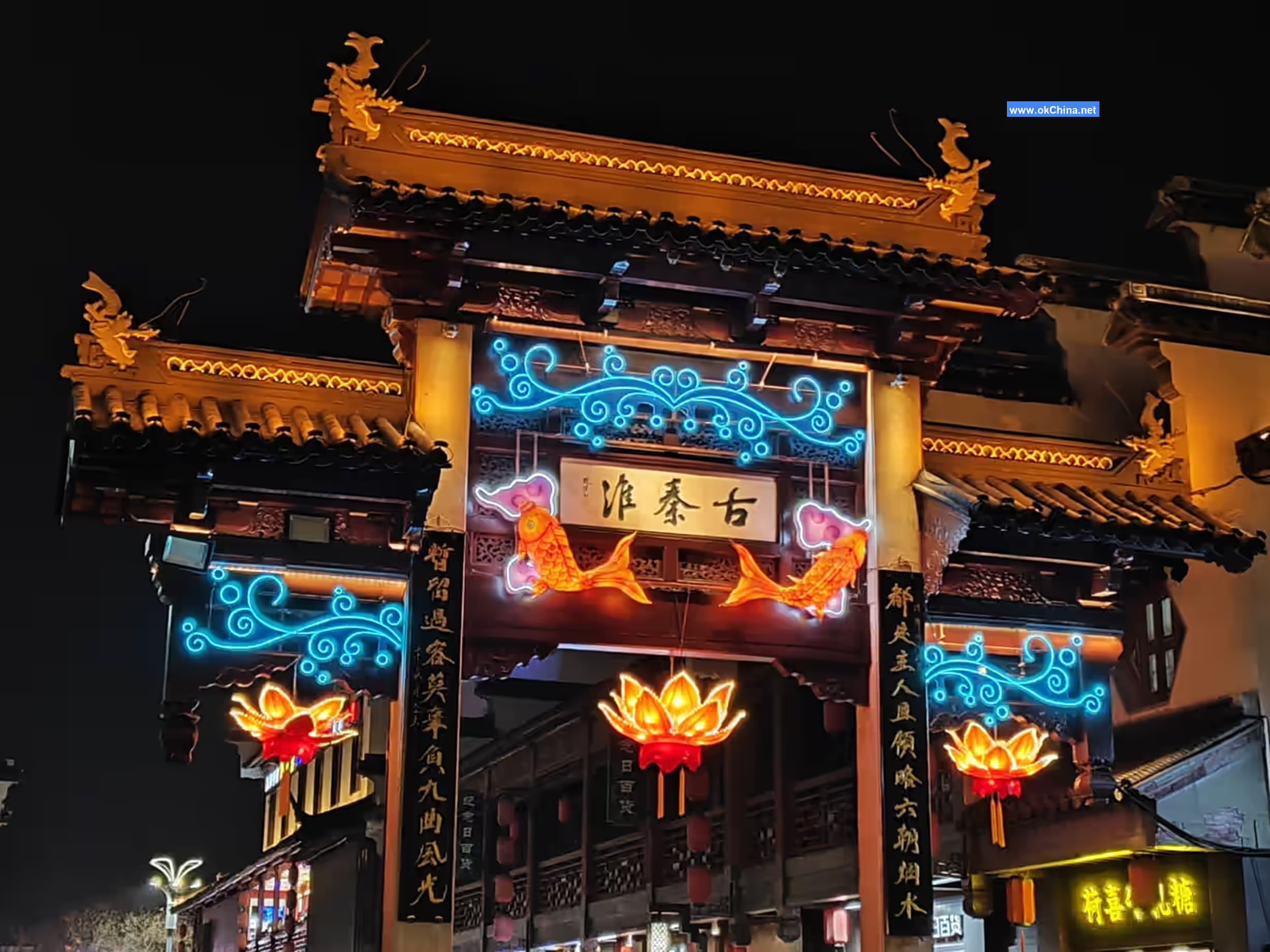
The Nanjing Confucius Temple features a layout with the temple in front and the school behind. The Confucius Temple, the Imperial Academy, and the Jiangnan Examination Hall (the examination venue for selecting scholars through imperial examinations) to the east form the three major ancient cultural and educational architectural complexes. The entire Confucian cultural axis consists of the Temple of Confucius and the Imperial Academy. From south to north, the attractions include: the Great Screen Wall, the Pan Pond, the "Center of World Culture" Archway, the Lingxing Gate, the Dacheng Gate, the Dacheng Hall, the Gate of the "Foremost Academy in the Southeast," the Mingde Hall, the Bell and Drum Towers, the Zunjing Pavilion, Weishan Hill, and the Jingyi Pavilion. The layout is symmetrical, showcasing typical Ming and Qing architectural styles and integrating temple, market, street, and scenery.
4.2 Zhan Garden
Zhan Garden (Taiping Heavenly Kingdom History Museum) was originally the West Garden of the mansion of Ming Dynasty Prince Zhongshan, Xu Da. Its construction began during the Jiajing period and has a history of over six hundred years. During the Qing Dynasty, it was converted into the Provincial Administration Commissioner's Office. When Emperor Qianlong visited the south, he stayed in this garden and named it "Zhan Garden" based on Su Shi's line: "Gazing at the Jade Hall, as if in heaven." During the Taiping Heavenly Kingdom period, Zhan Garden served as the Eastern King's Palace and the Young Western King's Palace. In the Republican era, it was also used as the Jiangsu Provincial Office and the Ministry of Interior of the Nationalist Government. The Zhan Garden scenic area consists of Zhan Garden and the Taiping Heavenly Kingdom History Museum. Zhan Garden features spacious halls and beautiful ponds, and is especially renowned for its Taihu rocks, among which the "Flower and Rock Collection" from Emperor Huizong of Song is particularly famous. It enjoys the reputation of "The First Garden of Jinling" and is listed among the "Five Great Gardens of Jiangnan" alongside Shanghai's Yuyuan Garden and Suzhou's Humble Administrator's Garden. The Taiping Heavenly Kingdom History Museum is the only national museum dedicated to the history of the Taiping Heavenly Kingdom and serves as the center for the collection of Taiping Heavenly Kingdom materials and the exhibition of cultural relics.
4.3 Bailuzhou Park
Bailuzhou Park covers a total area of 229.41 mu, with a lake area of 57.35 mu. Historically, it was the private estate of the family of Xu Da, a founding general of the Ming Dynasty, also known as Xu Zhongshan Garden, East Garden, or Taifu Garden. It was officially opened as Bailuzhou Park during the Republican era. Relying on its integrated natural scenery of mountains, water, city walls, and forests, along with unique cultural resources, Bailuzhou Park combines sightseeing, entertainment, and interactivity, embodying harmony among ecology, humanity, and historical culture. Among its ten scenic spots, the "Four Scenes of Spring in Egret Islet" – "Spring Water and Weeping Willows," "Magnolia in Bloom," "Apricot Blossoms in the Rain," and "Peach Blossoms in Full Bloom" – are the most famous.
4.4 Zhonghua Gate Fortress
Zhonghua Gate, anciently called Jubao Gate, was the south gate of the Ming Dynasty capital Nanjing. Built between 1366 and 1386 (from the 26th year of the Zhizheng era of Yuan to the 19th year of the Hongwu era of Ming), it is also known as the "Wengcheng" (Urn Fortress) due to its shape resembling a pottery urn. It was renamed Zhonghua Gate in 1931. The characters "Zhonghua Gate," personally inscribed by Chiang Kai-shek, can still be seen on the gate today. The entire fortress is 129 meters long from north to south, 118 meters wide from east to west, covering an area of 16,512 square meters. The highest point of the city wall reaches 21.45 meters. The entire structure uses lime, tung oil, and glutinous rice juice as binders, making it extremely sturdy. [19]
Zhonghua Gate Fortress has a strict layout and unique structure, consisting of three urn fortresses arranged in a rectangular shape. Each urn fortress has one gate and one portcullis. The gates are double-leaf iron-clad doors with internal bolt grooves for securing them with wooden bolts. In the era of cold weapons, if enemy troops breached the gate and poured into the city, closing the gate and portcullis of the urn fortress would trap them inside, akin to "catching a turtle in a jar." The entire fortress contains twenty-seven troop shelters capable of hiding over 3,000 soldiers.
4.5 Qinhuai River
The Qinhuai River is Nanjing's Mother River, with a total length of 110 kilometers. As it flows into Nanjing city, it splits into two branches at the Jiulong Bridge outside Tongji Gate in the east of the city. One branch flows outside the Ming city walls of Nanjing, serving as the city's moat and known as the Outer Qinhuai. The other branch enters the city from the East Water Pass and exits from the West Water Pass, known as the Inner Qinhuai. The Inner Qinhuai River is 9.6 li (approximately 4.8 kilometers) long, historically called the "Ten-Mile Qinhuai," and represents the essence of the Confucius Temple-Qinhuai Scenic Belt. Along its banks are tourist and cultural attractions such as the East Water Pass Ruins Park, Qinhuai Waterside Pavilion, Taoye Ferry, Bailuzhou Park, Jiangnan Examination Hall, Wang Dao and Xie An Memorial Hall, Li Xiangjun's Former Residence, Zhan Garden (Taiping Heavenly Kingdom History Museum), Qin Dashi's Former Residence, Shen Wanshan's Former Residence, and Zhonghua Gate Fortress.
4.6 Great Bao'en Temple Ruins Park
The Great Bao'en Temple Ruins Park is located outside Zhonghua Gate in Nanjing, bordering the Outer Qinhuai River to the north, Yuhuatai to the south, the 1865 Creative Industry Park to the east, and Yuhua Road to the west. The entire park covers an area of approximately 200 mu. The park contains the Xiangshui River, Xiangshui River Bridge, Yongle Stele, Xuande Stele, Imperial Way, Ming Dynasty hydraulic facilities, ruins of the three main halls, gallery ruins, oil depot ruins, Yijing Well, and official kilns used for firing glazed architectural components.
4.7 Yu Garden
Yu Garden was the largest private garden in Nanjing during the late Qing and early Republican periods, renowned as the "Lion Grove of Jinling." As the garden owner's surname was Hu, it was also commonly known as the Hu Family Garden. After restoration, Yu Garden covers an area of approximately 33,600 square meters, with a building area of about 3,890 square meters (including the restoration of cultural relics such as Mingze Hall and Rong'an Cottage, covering about 1,266 square meters). The landscape garden area is about 24,000 square meters, and Yu Lake covers about 6,000 square meters. Based on analysis of existing remains and historical information, thirty-two scenic spots of Yu Garden have been restored.
4.8 Jiangnan Examination Hall
The Jiangnan Examination Hall was one of the largest imperial examination venues in ancient China. Initially built during the Southern Song Dynasty as an examination site for county and prefectural schools, it was continuously expanded until the Guangxu period of the Qing Dynasty, when it became China's largest examination venue with 20,644 examination cells. During the Qing Dynasty alone, 58 top scholars (zhuangyuan) who passed the provincial examinations in Jiangnan accounted for more than half of the national total. Famous figures such as Tang Bohu, Zheng Banqiao, Wu Jingzi, Wu Cheng'en, Fang Bao, Yuan Mei, Lin Zexu, Zeng Guofan, Zuo Zongtang, Li Hongzhang, and Chen Duxiu all had direct connections with the Jiangnan Examination Hall.
The Jiangnan Examination Hall primarily displays and exhibits cultural relics, historical materials, and research related to the imperial examination system. The hall still preserves twenty-three precious historical artifacts, including the "Provincial-Level Key Cultural Relics Protection Unit – Examination Hall Stele Inscriptions."
4.9 Wuyi LaneWuyi Lane is located between Zhuque Bridge and the southern bank of the Qinhuai River in Nanjing. During the Three Kingdoms period, it served as the barracks for the troops garrisoning the Stone City of the Wu Kingdom. In the Jin Dynasty, Wuyi Lane became the residential area for the prestigious Wang and Xie families. Members of both clans favored wearing black clothing to signify their noble status, hence the name "Wuyi Lane" (Black Clothing Lane). The lane was bustling with activity and frequented by dignitaries, producing cultural giants such as Wang Xizhi, Wang Xianzhi, and Xie Lingyun, the founder of the landscape poetry school.
4.10 Imperial Examination Museum
The imperial examination system, established in the Sui Dynasty, perfected in the Tang Dynasty, reformed in the Song Dynasty, declined in the Yuan Dynasty, flourished in the Ming Dynasty, and abolished in the Qing Dynasty, spanned over a millennium. Countless Chinese scholars dedicated their lives to this path, grounding themselves in the classics, histories, philosophies, and literary collections, guided by the principle of "excel in learning to enter officialdom," striving tirelessly for scholarly honors and official careers. The merits and demerits of the imperial examination system have been widely debated, yet it remains an indispensable part of our history, and its influence can still be glimpsed in modern examinations such as the Gaokao. According to the plan, the Imperial Examination Museum and its supporting projects span from Pingjiangfu Road in the east, Gongyuan Street in the south, Jinling West Road in the west, to Jiankang Road in the north, covering a total area of approximately 6.63 hectares with a planned construction area of over 200,000 square meters. The project is divided into two phases. The first phase, covering an area of 2.75 hectares south and west of Mingyuan Tower, includes a planned construction area of 92,000 square meters. It focuses on the restoration and preservation of historical structures such as examination cells and Mingyuan Tower, the construction of the main museum building and necessary supporting facilities, with an investment of approximately 946 million yuan. The second phase, covering an area of 3.88 hectares north and east of Mingyuan Tower, primarily involves the restoration of Feihong Bridge, reconnecting the historical axis of the Jiangnan Examination Hall, and constructing cultural tourism supporting facilities. The newly designed Imperial Examination Museum resembles a historical treasure chest buried underground. At its core is the Kuixing Hall, inscribed with the names of top scholars from successive dynasties (symbolizing the essence of the imperial examination system—excelling in learning to serve in government). Its exterior features stone walls engraved with texts from the classics, histories, philosophies, and literary collections (representing the content of the examinations). The museum is structured in layers corresponding to the historical evolution of the imperial examination system (Sui, Tang, Song, Yuan, Ming, Qing... akin to the pages of a historical volume), encapsulating its millennium-long history, awaiting discovery. The treasure chest of the Imperial Examination Museum measures 36 meters in length, 36 meters in width, and 20 meters in height. It is entirely submerged underground, with a tranquil shallow pool above. As visitors pass through the Gongyuan Archway and face Mingyuan Tower, the museum resembles an ancient mirror (historically called a "jian"), reflecting the tower and evoking the ancient saying, "Take history as a mirror." The museum visit is akin to a treasure hunt. This long-sealed treasure chest is deeply buried underground. Visitors descend along a sloping, narrow passageway, flanked on one side by scripture cases covered in inscriptions and on the other by a three-dimensional courtyard filled with rubble. As they stroll, visitors gradually leave behind the hustle and bustle of the city, cleanse their restless minds, and begin to experience the hardships of the imperial examination journey. At the bottom, 20 meters underground, lies an open courtyard surrounded by a circular pool. Sunlight casts moving shadows on sunny days, while raindrops create ripples during the rainy season. At the center of the courtyard stands the four-story-high Kuixing Hall. Looking upward, under the illumination of lights, the names of top scholars from successive dynasties shine brilliantly around the Kuixing constellation. Visitors ascend via escalators, traversing the history of the imperial examination system—from its establishment in the Sui Dynasty, perfection in the Tang Dynasty, reforms in the Song Dynasty, decline in the Yuan Dynasty, flourishing in the Ming Dynasty, to its abolition in the Qing Dynasty. Through physical exhibits and virtual presentations, they momentarily span a millennium of imperial examination history. Emerging from the treasure chest, Mingyuan Tower stands majestically before them. The design provides a series of exhibition spaces of varying sizes and heights, accommodating exhibits of different scales and diverse equipment needs. The design fully considers the needs of people with disabilities, incorporating comprehensive accessibility features to ensure all visitors can easily navigate the museum. A dedicated passage is also provided for special guests, offering convenience without disrupting public visits. The museum is also a green building. Emphasizing sustainable development and energy conservation, the design leverages Nanjing's climate characteristics to maximize natural lighting and ventilation, reduce energy consumption, and lower operational costs. After restoration and maintenance, Mingyuan Tower will be open to the public, allowing visitors to ascend and enjoy the view. On both sides of Mingyuan Tower, 206 examination cells will be restored (representing one percent of the over 20,600 cells during the peak of the Jiangnan Examination Hall). These will serve as outdoor immersive displays, where visitors can observe the diverse experiences of examination candidates and achieve an immersive effect with the help of modern technology. In the late Qing Dynasty, after 1,300 years, the imperial examination system declined due to various reasons and was eventually abandoned. However, the principles of fairness and meritocracy it championed continue to thrive in modern society, providing indispensable historical insights for the ongoing improvement of contemporary examination systems. As Western historians have noted: "To date, there has been no better selection system than the imperial examination." If the compass, gunpowder, paper, and movable type printing are considered ancient China's outstanding contributions to the world's material civilization, the imperial examination system is its significant institutional contribution to global civilization.
5. Cultural Activities
5.1 Nanjing Qinhuai Lantern Festival
On the evening of January 14, 2023, the 37th Nanjing Qinhuai Lantern Festival was illuminated at the Confucius Temple. Various lanterns adorned the area around the Confucius Temple and Qinhuai River, blending modern light displays with the ancient capital of Nanjing. This year's festival drew inspiration from the "Shangyuan Lantern Painting," using modern lighting technology to recreate the bustling scene depicted in the painting against the backdrop of the Confucius Temple and Qinhuai River. The theme of the festival was "Glorious Jinling Night, Forging Ahead on a New Journey." The lantern displays were primarily set up at the Confucius Temple, Mendong, and along the Ten-Mile Qinhuai River cruise route, featuring a total of 170 lantern sets.
5.2 National Day Activities
From October 1 to 7, 2024, the Dacheng Hall of the Confucius Temple hosted a variety of traditional cultural experiences, including interactive activities on the "Six Arts of the Gentleman," hands-on workshops at the Lingxing Workshop, processions to pay homage to Confucius, and Hanfu parades. In the evenings, performances such as the feather dance "Cloud Feathers" and the dance "Splendid Chapter of a Prosperous Era" were staged. From October 1 to 3, the Nanjing China Imperial Examination Museum conducted a research activity titled "Stories of the Imperial Examination." On October 2, it hosted a calligraphy and painting event with the theme "Brush Dancing for National Day, Ink Rhyming with China." Additionally, hands-on experiences with intangible cultural heritage crafts like "Diancui" (kingfisher feather art) and the "National Tide Painting Scroll" activity were organized.
Comments
Post a Comment