Dali Chongsheng Temple Three Pagodas Cultural Tourism Area
1. Introduction
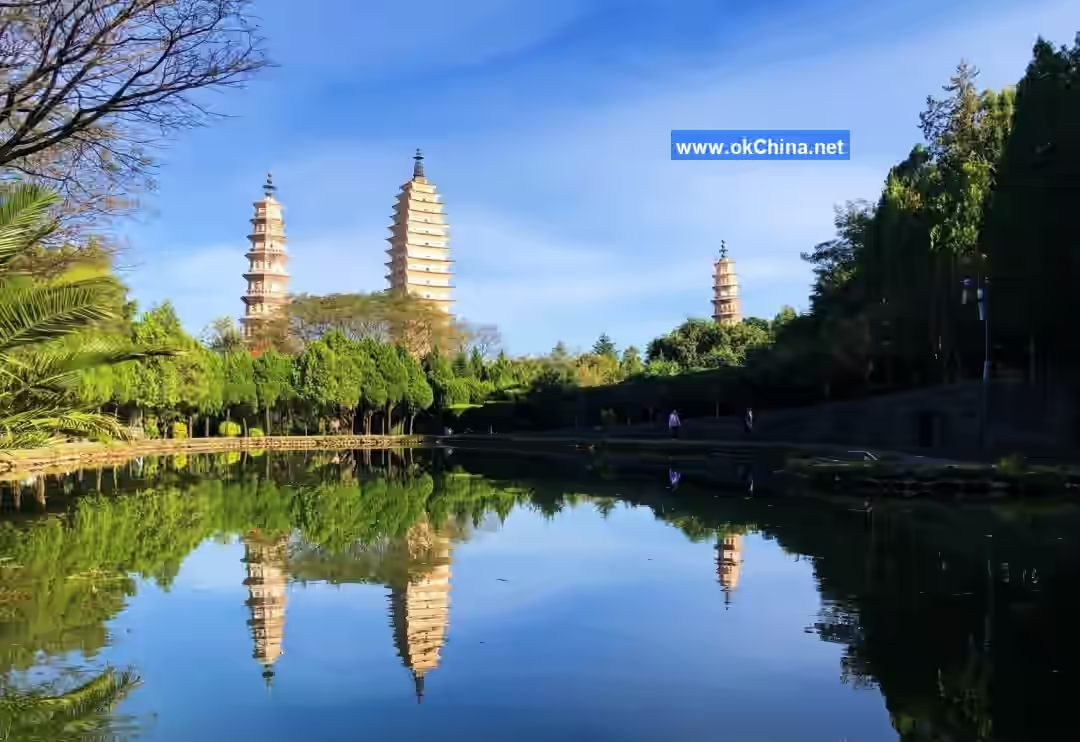
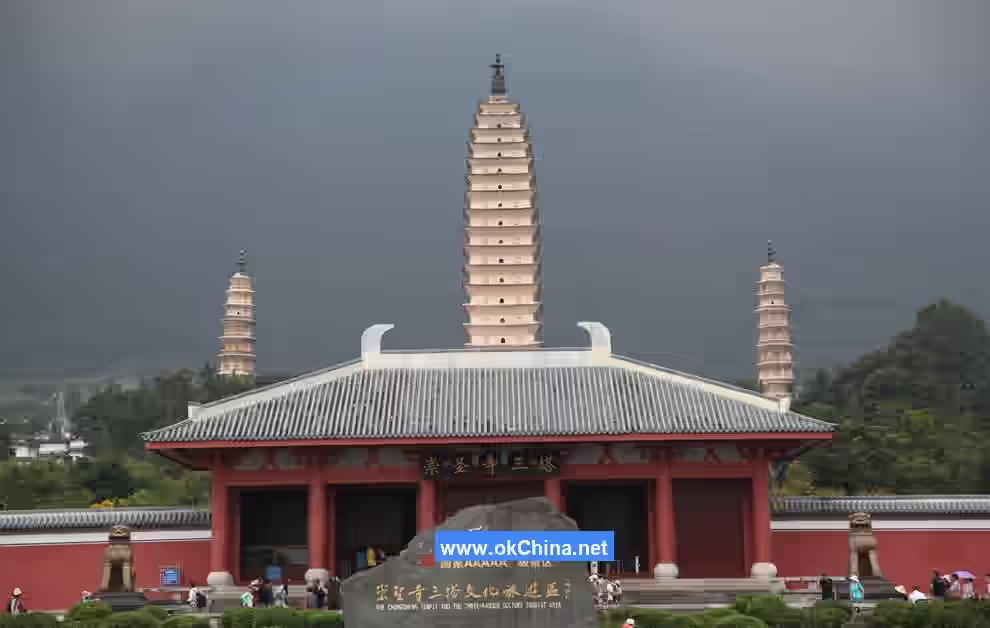
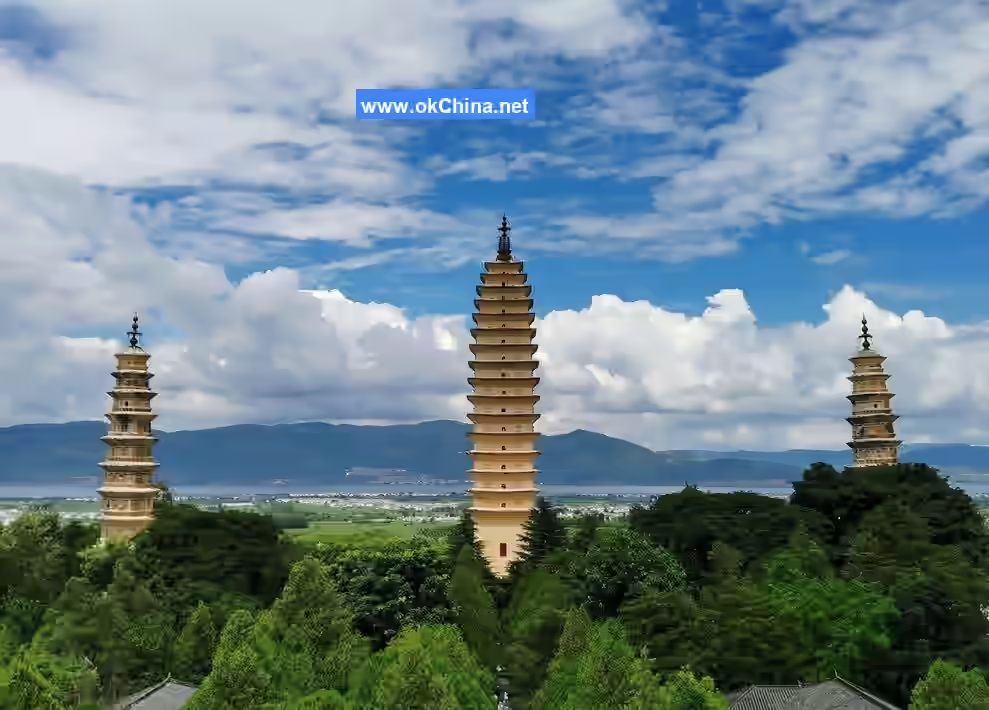
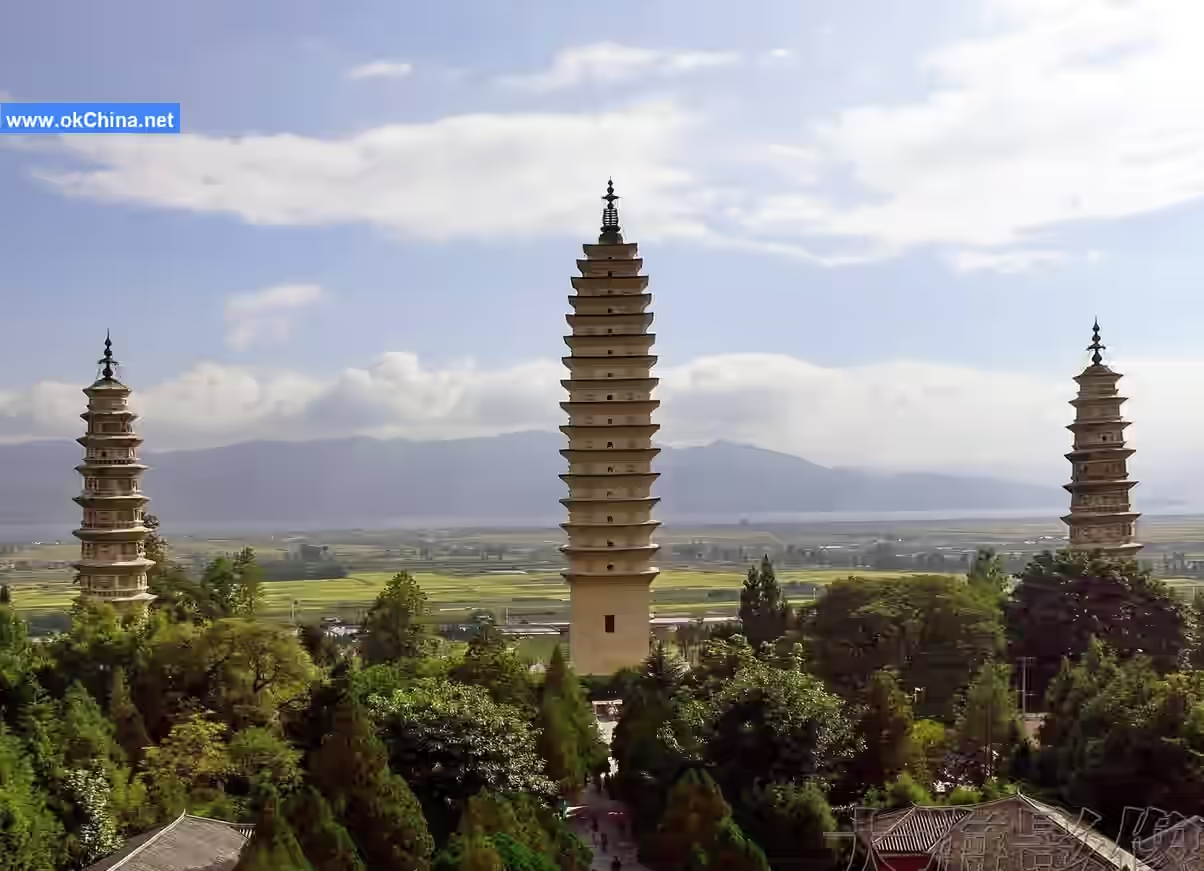
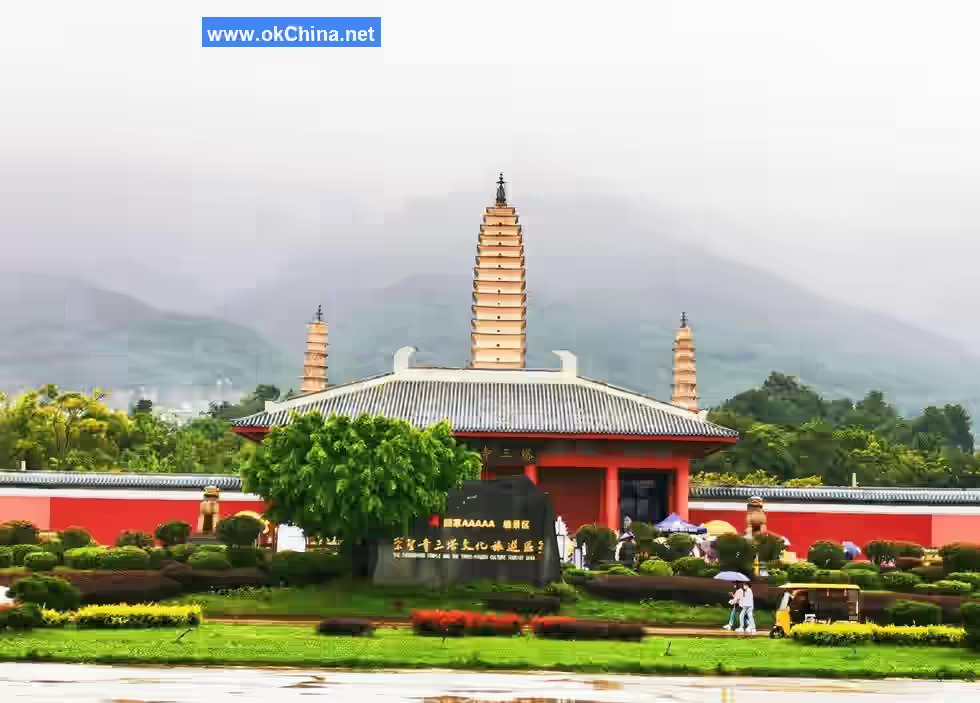
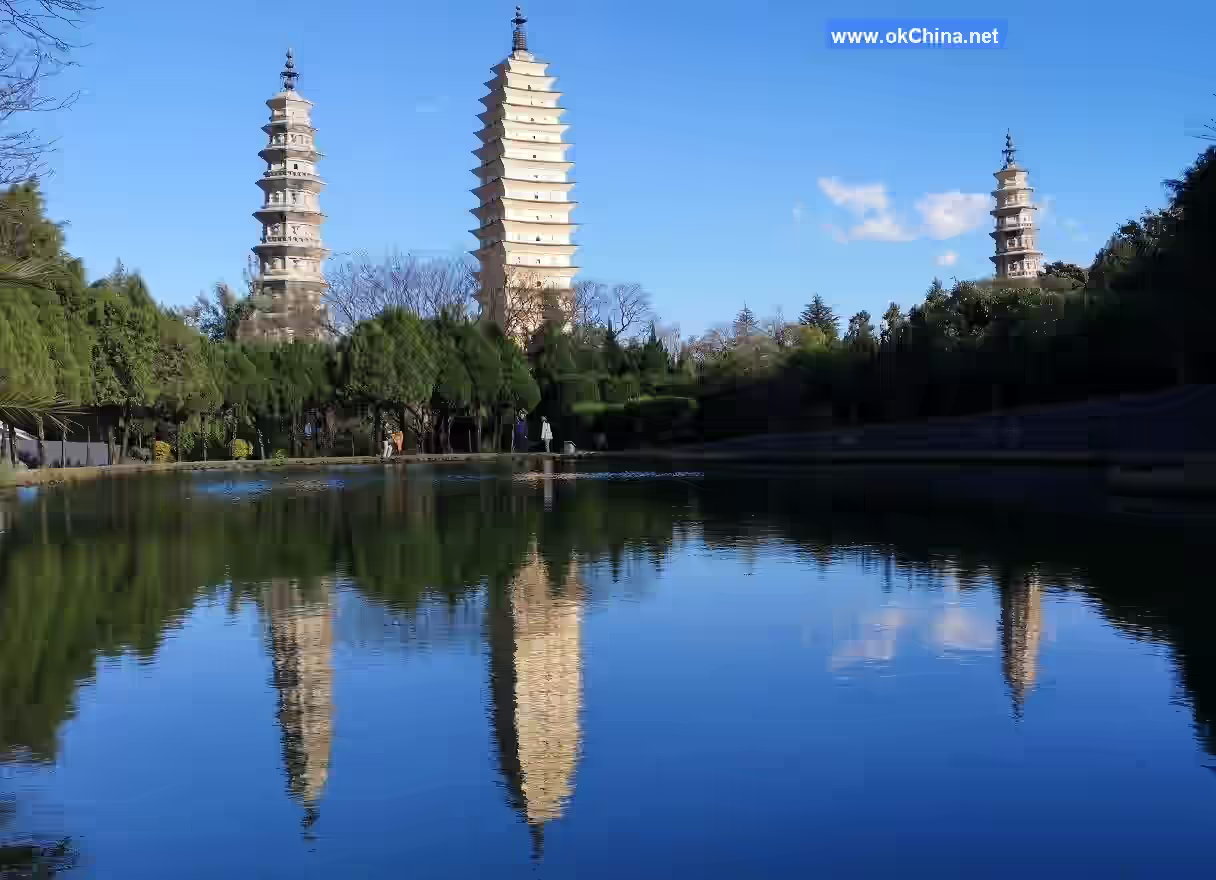
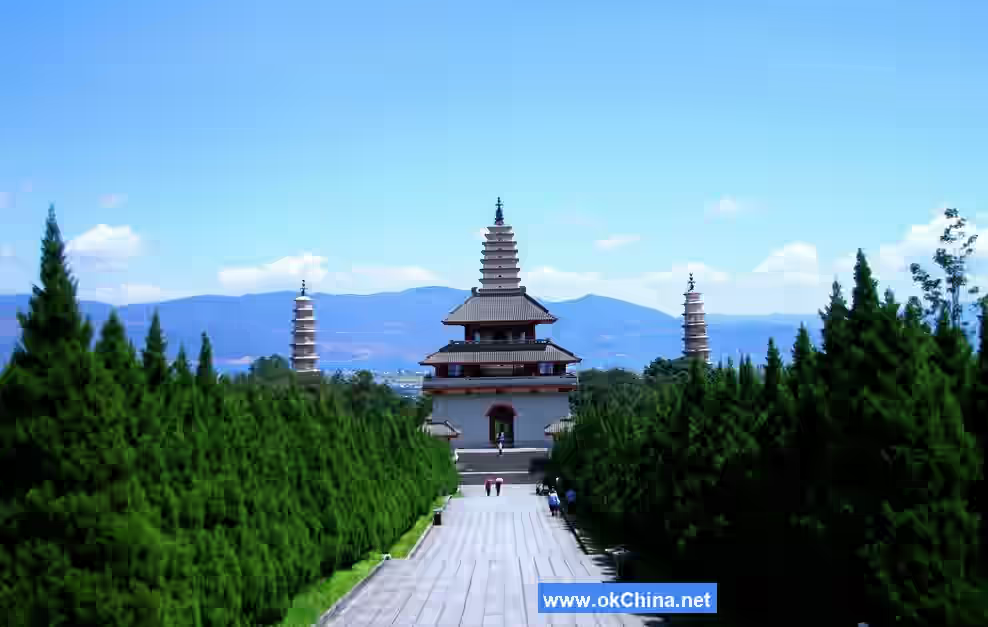
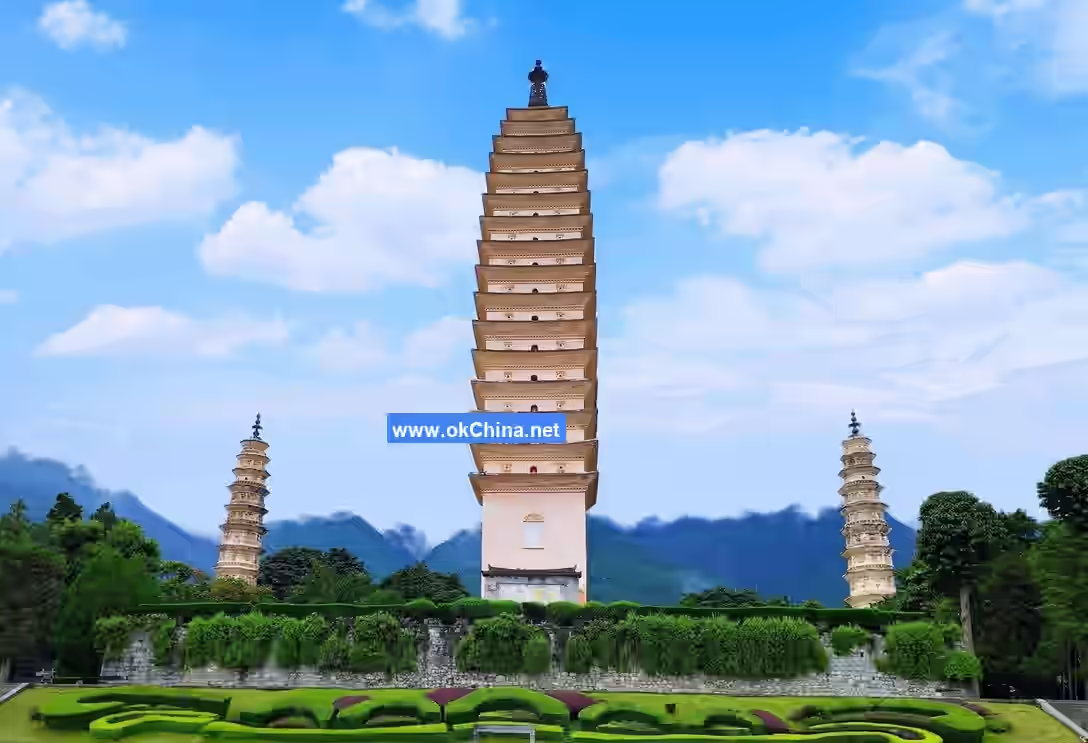
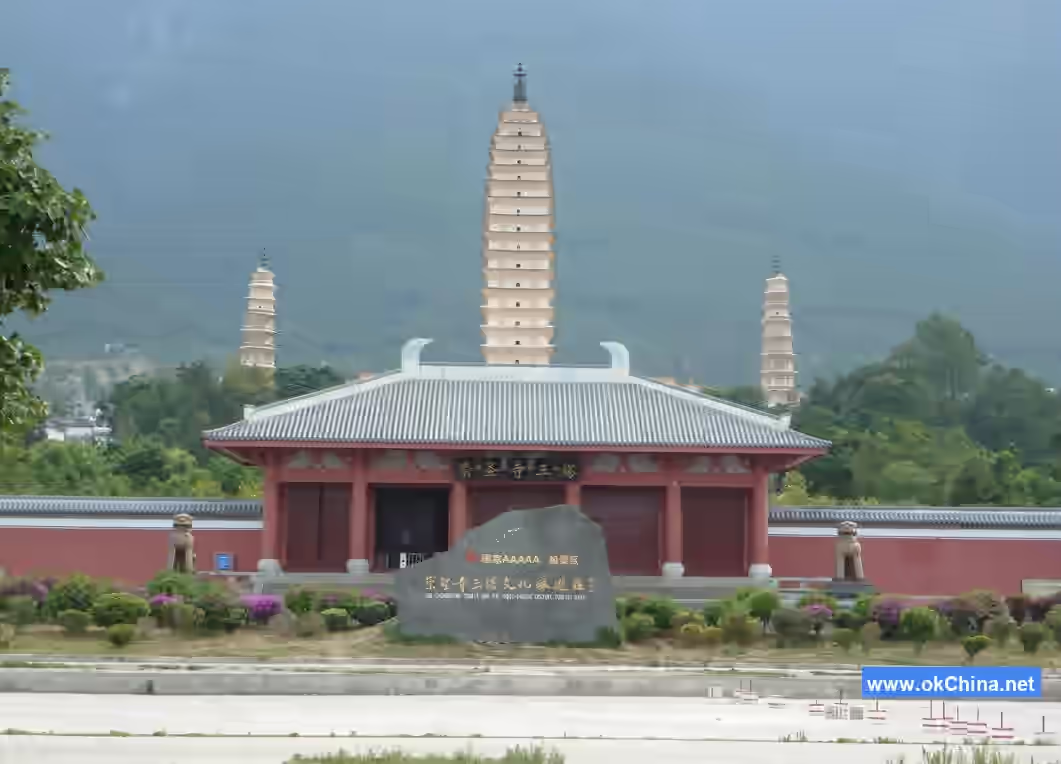
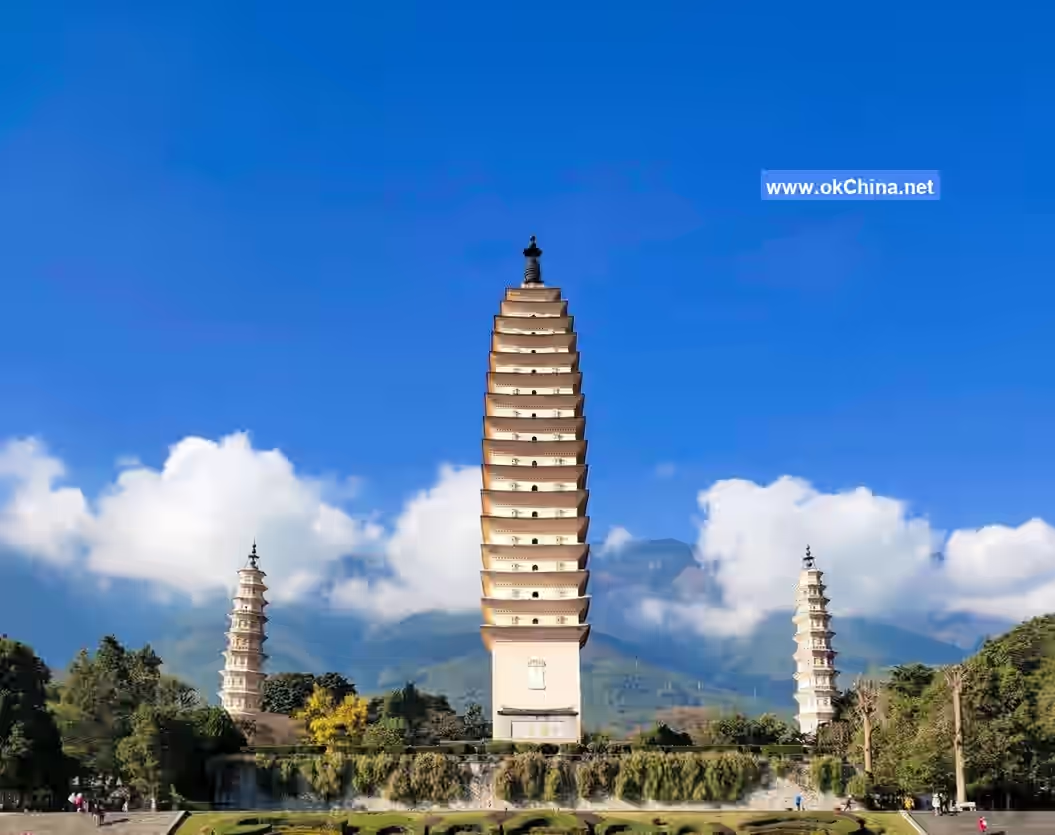
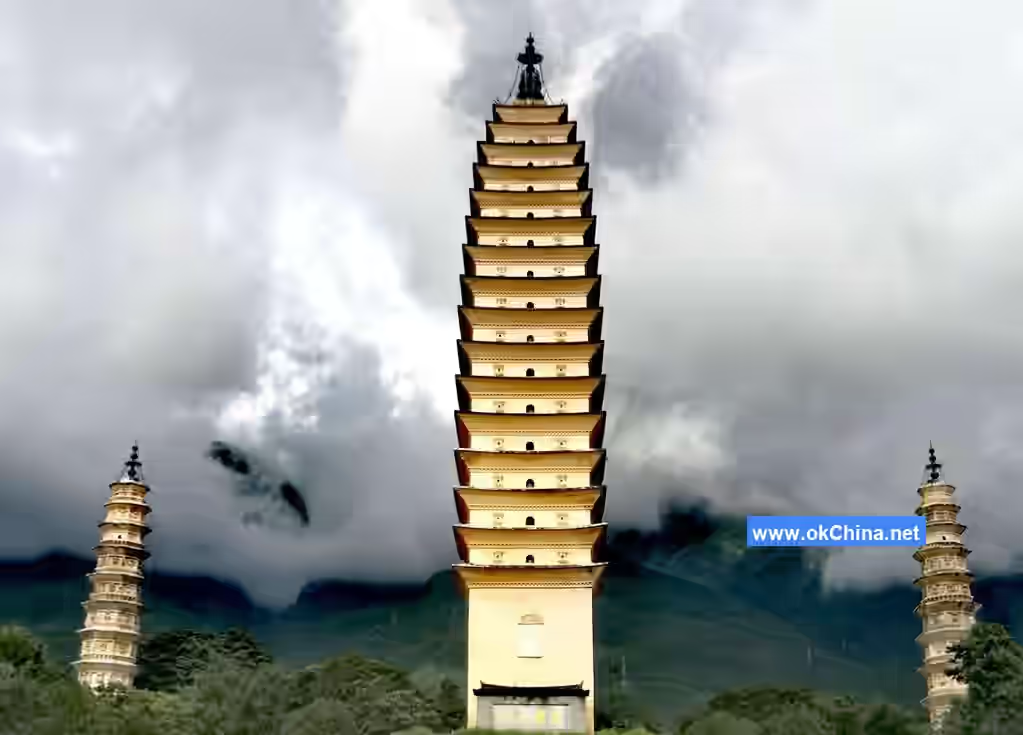
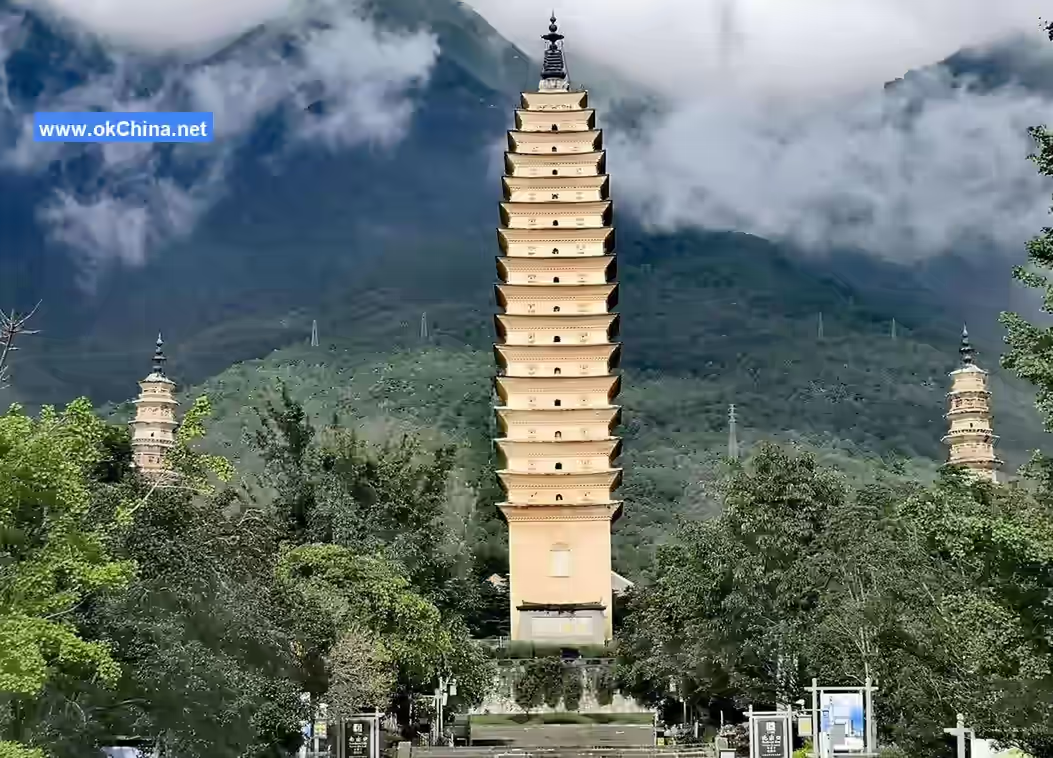
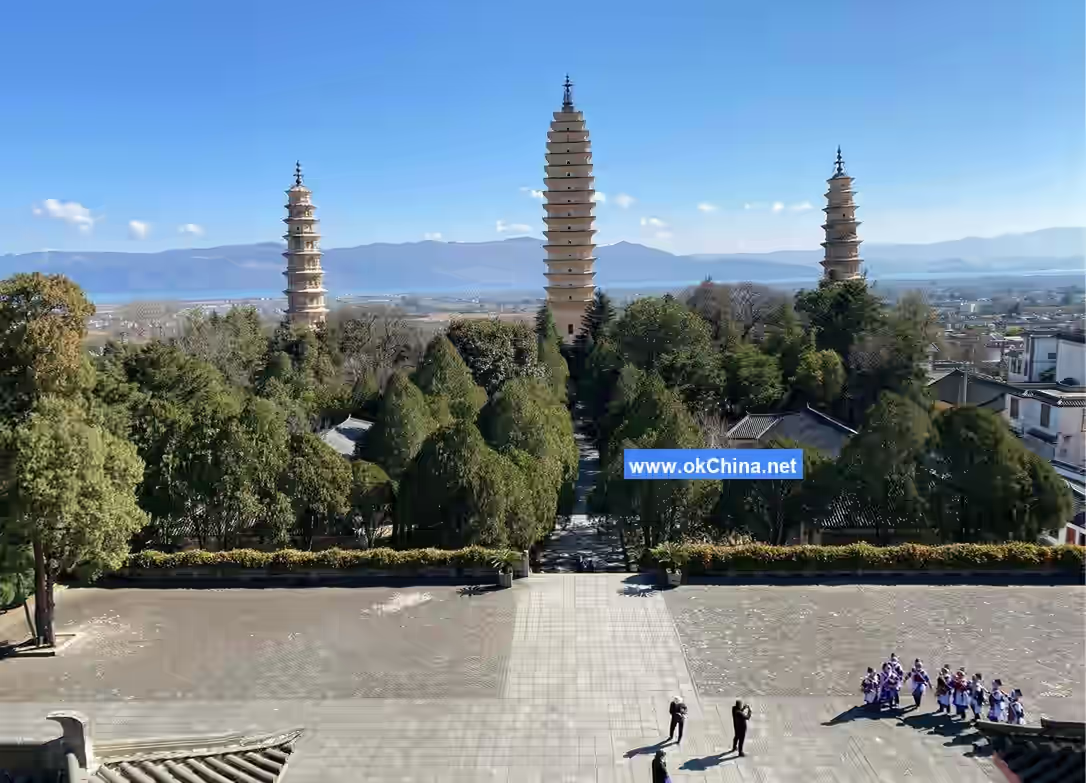
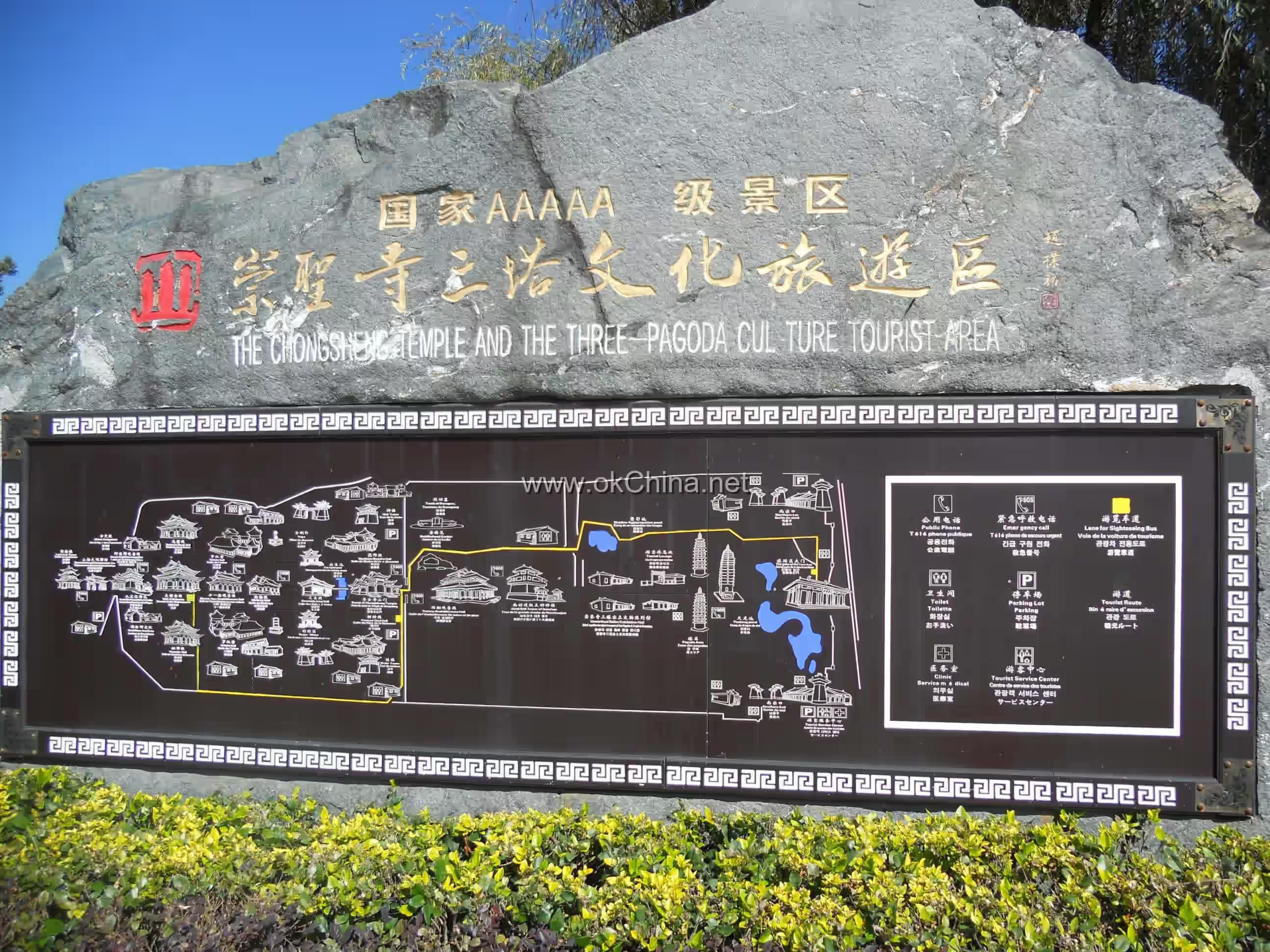
The Chongsheng Temple Three Pagodas Cultural Tourism Area in Dali Prefecture, abbreviated as the Chongsheng Temple Three Pagodas Cultural Tourism Area, is a tourist attraction located within Dali City, Dali Bai Autonomous Prefecture, Yunnan Province. The protected and utilized area of the tourism zone spans 5.68 square kilometers, with a core scenic area covering 1,000 mu (approximately 66.7 hectares). It is divided into two main parts: the front area and the rear area. The front area centers on the Three Pagodas, showcasing historical relics such as the Three Pagodas, the Nanzhao Jianji Great Bell, and the Yutong Guanyin Hall. The rear area features the Chongsheng Temple, renowned as the "First Temple of Han Buddhism," which recreates the splendor of Buddhist culture during the Nanzhao and Dali Kingdom periods. The Chongsheng Temple Three Pagodas were initially constructed during the Kaiyuan era of the Tang Dynasty, reaching their peak in the Song Dynasty. They are famed worldwide for five major treasures: the Three Pagodas, the Jianji Great Bell, the Yutong Guanyin Statue, the "Buddhist Capital" plaque, and the Three Holy Golden Statues. Nine kings of the Dali Kingdom once practiced asceticism at Chongsheng Temple, making it a famous royal monastery during the Nanzhao and Dali Kingdom periods. During the Xianfeng and Tongzhi eras of the Qing Dynasty, Chongsheng Temple was destroyed by warfare and natural disasters, leaving only the Three Pagodas standing. The Chongsheng Temple Three Pagodas consist of one large and two smaller pagodas. The large pagoda, also called Qianxun Pagoda, is formally named the "Dharma Realm, Spiritual Illumination, and Path Vehicle Pagoda." It is situated 70 meters from each of the two smaller pagodas to the north and south, forming a tripartite, tripod-like configuration.
2. Geographical Environment
2.1 Location and Territory
The Chongsheng Temple Three Pagodas Cultural Tourism Area is located in Dali City, Dali Bai Autonomous Prefecture, Yunnan Province. It is situated at the northern outskirts of Dali Ancient City, on the eastern foothills of the Cangshan Mountains. The protected and utilized area of the tourism zone spans 5.68 square kilometers, with a core scenic area covering 1,000 mu.
2.2 Climate Characteristics
Dali has a low-latitude plateau monsoon climate with indistinct seasonal changes and small annual temperature variations. The average annual temperature is 15 degrees Celsius. There are no severe winters or intense summers; the climate is moderate, with spring-like weather throughout the four seasons. The air is clear, but sun protection is advised.
3. Main Attractions
3.1 Chongsheng Temple Three Pagodas
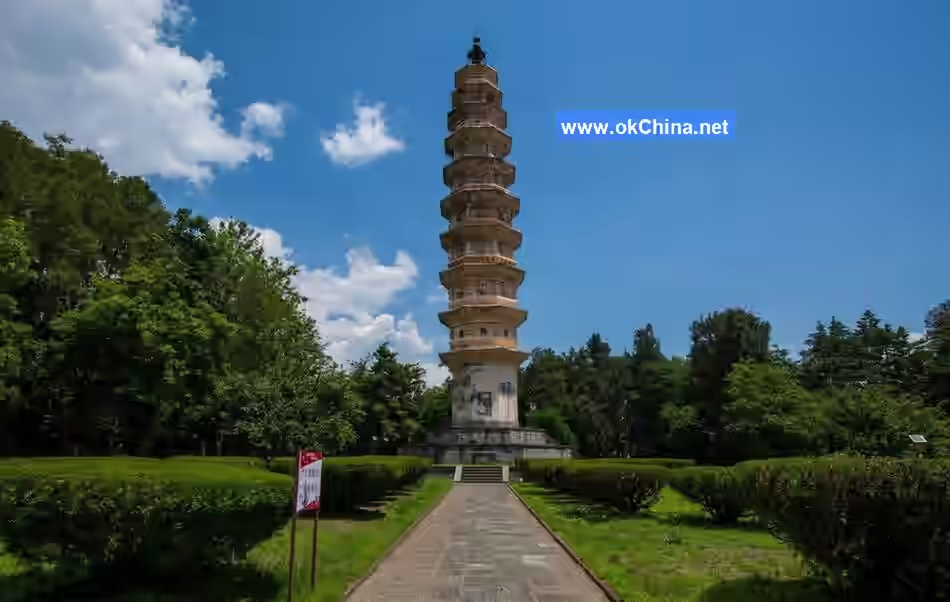
The Three Pagodas are the foremost among the five major treasures of the ancient Chongsheng Temple. The main pagoda is named Qianxun Pagoda, standing 69.13 meters tall. It was built during the Nanzhao Kingdom period of the Tang Dynasty (AD 833–840). It is a square, multi-eaved, hollow brick pagoda with 16 tiers, featuring a wooden staircase spiraling upwards inside the pagoda core. The pagoda body is spindle-shaped with smooth, rounded lines, characteristic of typical Tang Dynasty architectural style. The two smaller pagodas to the north and south are both 42.19 meters tall, constructed during the reigns of Duan Zhengyan and Duan Zhengxing of the Dali Kingdom (AD 1108–1172). The two smaller pagodas are 97 meters apart. They are octagonal, pavilion-style, 10-tiered brick pagodas. Each tier's eave is decorated with corbelled brackets (dougong), balustrades (pingzuo), and niches of various shapes imitating wooden structures. The pagoda bodies feature relief carvings of Buddhas, lotuses, vases, etc., with each tier being distinct. The Chongsheng Temple Three Pagodas combine the functions of promoting Buddhism, warding off disasters and evil, and providing scenic enjoyment, possessing extremely high historical, cultural, and architectural value.
3.1.1 Qianxun Pagoda
Qianxun Pagoda is located about 300 meters in front of Chongsheng Temple, facing east-southeast with its back to the west. It is a square-plan, hollow, 16-tiered brick pagoda with corbelled eaves (diese miyan). The pagoda body height is 59.4 meters (from the top of the platform base to the top of the iron finial disc). The two-tiered platform base is 3 meters high, making a total height of 62.4 meters. Including the finial (tasha), the overall height is 69.13 meters. Its outline is dignified and elegant, similar in appearance to the Small Wild Goose Pagoda in Xi'an, the Yongtai Temple Pagoda in Dengfeng, and the White Horse Temple Pagoda in Luoyang.
3.1.2 North (South) Pagoda
The North Pagoda is 70 meters from Qianxun Pagoda. It has an octagonal plan, is hollow, and is a 10-tiered, multi-eaved brick pagoda. The pagoda body height (from the top of the platform base to the tip of the finial) is 39.42 meters. The platform base is 0.77 meters high, making a total height of 42.19 meters. The bodies of the North Pagoda (and the South Pagoda) are adorned with molded and carved lotuses, corbelled brackets and balustrades (douqi pingzuo), numerous forms of pagoda-shaped niches, clustered lotuses, attached pillars, etc. Their appearance is light and ornate, forming a sharp contrast with the solemn and majestic style of Qianxun Pagoda. They differ from both Tang Dynasty multi-eaved brick pagodas and Liao-Jin period pagodas.
3.2 Historical and Cultural Experience Zone
The Historical and Cultural Experience Zone includes the Nanzhao Jianji Great Bell (Bell Tower), the Yutong Guanyin Hall, two rare scroll paintings—"Illustrated History of the Nanzhao Kingdom" and "Portraits of Buddhist Deities Painted by Zhang Shengwen of the Dali Kingdom"—the Tomb of Duan Gong, and the Bodhi Garden.
3.2.1 Nanzhao Jianji Great Bell (Bell Tower)
The Nanzhao Jianji Great Bell is one of the five major treasures of the ancient Chongsheng Temple. The original bell was cast in AD 871, the 12th year of the Jianji era of Nanzhao, hence its name. According to Xu Xiake's travelogue: "The bell is extremely large, its diameter can be over ten feet, and its thickness about a foot. Its sound can be heard for eighty li..." It was a treasure of the temple alongside the Three Pagodas, but unfortunately, it was destroyed during the warfare of the Xianfeng and Tongzhi eras of the Qing Dynasty (AD 1856–1872). The recast Nanzhao Jianji Great Bell from 1997 is a typical Buddhist bell. The bell body is divided into upper and lower layers, with the upper layer decorated with six paramita patterns. It weighs 16.295 tons, making it the largest bell in Yunnan Province and the fourth largest bell cast in modern China.
3.2.2 Yutong Guanyin Hall
The Yutong Guanyin Hall enshrines statues of Yutong Guanyin, Acuoye Guanyin, Fushi Guanyin (Stone-bearing Guanyin), Fansen Guanyin (Brahmin Monk Guanyin), and Shuiyue Guanyin (Water-Moon Guanyin). The original Yutong Guanyin statue was cast in the 2nd year of the Zhongxing era of Nanzhao (AD 899). The statue was exquisitely crafted with flowing drapery lines, praised as "like the paintings of Wu Daozi," and was one of the five major treasures of Chongsheng Temple. However, it was destroyed during the Cultural Revolution. The meticulously recast Yutong Guanyin statue in 1999, based on surviving photos from the late Qing Dynasty, is 12.6 meters tall, made of gilded bronze, and weighs 11 tons. Its form is unique to the Dali region: a male body with a female face—a kind, benevolent female countenance on a tall, upright male physique—which differs from Guanyin depictions in the Central Plains. Acuoye Guanyin is a Guanyin form unique to Dali and also the most revered Guanyin by the Dali people. The statue was cast based on a gold Acuoye Guanyin statue unearthed from the Three Pagodas. Fushi Guanyin and Fansen Guanyin are manifestations of Acuoye Guanyin, widely celebrated and worshipped for saving people from suffering and protecting the populace. Their statues are cast based on Dali folk legends. The second floor of the Yutong Guanyin Hall displays the two rare scroll paintings: "Illustrated History of the Nanzhao Kingdom" and "Portraits of Buddhist Deities Painted by Zhang Shengwen of the Dali Kingdom."
3.2.3 Tomb of Duan Gong
Located west of the Chongsheng Temple Three Pagodas, 350 meters east of Qianxun Pagoda, it was referred to as the Tomb of Duan Pingzhang in local records after the Ming Dynasty. Originally a circular earthen mound about 8 meters in diameter and 2 meters high, topped with a stone pillar, now only the mound remains, as the tomb pillar has been destroyed. After the Three Pagodas Cultural Relics Management Office acquired over 120 mu of land in the Chongsheng Temple ruins area in August 1996, the Tomb of Duan Gong came under the management of the Three Pagodas Cultural Relics Management Office. Its development and utilization are being implemented step by step according to the "Protection and Construction Plan for the Three Pagodas Cultural Relics Management Office."
3.3 Religious and Cultural Sightseeing Zone
The Religious and Cultural Sightseeing Zone refers to the ancient architectural complex of Chongsheng Temple restored and reconstructed in 2005. The overall layout follows three main and secondary axes, with eight platforms, nine courtyards, and eleven levels. Architecturally, it incorporates the essence of styles from the Tang, Song, Yuan, Ming, and Qing dynasties. Along the main central axis are sequentially built: the Mountain Gate, Liberation Pond (Fangsheng Chi), Welcoming Bridge (Jieyin Qiao), Heavenly King Hall (Tianwang Dian), Maitreya Hall (Mile Dian), Eleven-Faced Guanyin Hall (Shiyimian Guanyin Dian), Mahavira Hall (Daxiong Baodian), Acuoye Guanyin Pavilion (Acuoye Guanyin Ge), "Grand View of Mountains and Seas" Stone Archway (Shanhaidaguan Shipaifang), and Sea-Viewing Tower (Wanghai Lou). On both sides of the central axis and along the secondary axes are built: Dharma Article Distribution Center (Fawu Liutong Chu), Monks' Quarters (Sengfang), Abbot's Courtyard (Fangzhang Yuan), Guest Reception Hall (Ketang), Arhat Hall (Luohan Tang), Thousand Buddha Corridor (Qianfo Lang), Patriarch Hall (Zushi Dian), Dharma Protector Hall (Hufa Dian), Buddhist Research Institute (Fojiao Yanjiuyuan), etc. The corbelled brackets (dougong), doors, windows, and detailed decorations of all halls are meticulously carved from high-quality red toon wood (hongchunmu). For color painting, the highest-grade Golden Dragon and Phoenix Hexi Cai, the dignified and elegant Xuanzi Cai, and the lively and humorous Suzhou-style Cai are used. All 617 statues and ritual objects within the temple are cast from bronze, using over a thousand tons of copper. Among these, 599 statues and ritual objects are gilded and painted, setting a record in China. Examples include the long wooden carving of "Zhang Shengwen's Scroll Painting," stories of the Buddha's past lives, and the Eighteen Transformations of Guanyin.
3.3.1 Stone Carvings
Using fine white granite from Fujian Province, Putian Qingcao Stone, and white marble (Hanbaiyu) as main materials, Chongsheng Temple features numerous stone carving artworks. Among them, the Dragon Pond in front of the Mountain Gate is based on the description of "Tianlong Temple" in Jin Yong's novel "Demi-Gods and Semi-Devils" (Tian Long Ba Bu). Using a large bluestone, 5 meters high and 4.5 meters wide, excavated from the original site, a giant dragon head 4.5 meters high and 4.2 meters wide was carved based on its natural shape. Below the dragon head, a pond 7 meters wide, with a radius of 3.7 meters and 0.6 meters deep, was constructed. The Nine Dragons Bathing the Prince fountain in front of the Acuoye Guanyin Pavilion takes the legend of the Nine Dragons Bathing the Prince as its theme. The nine dragons and the prince are carved in stone to form a group landscape, combining stone carving with high-tech fountain effects to recreate the realistic scene of bathing the Buddha.
3.3.2 Mahavira Hall (Daxiong Baodian)
The Mahavira Hall is modeled after the Hall of Supreme Harmony (Taihe Dian) in the Beijing Forbidden City. It is a Qing Dynasty-style double-eaved hall with nine bays, featuring a three-tiered platform base. The hall is 51.7 meters wide and 26 meters high. "Zhang Shengwen's Scroll Painting" has been carved into a wooden long scroll 1.8 meters high and 117 meters long, installed within a giant niche 2.03 meters high and 119 meters long on the four interior walls of the Mahavira Hall. Furthermore, the "Stories of the Buddha's Past Lives" (the story of the Tathagata Buddha from birth, renunciation, enlightenment, founding Buddhism, teaching disciples, spreading Buddhism, being revered as Buddha, to parinirvana) are depicted in 18 panels, carved into the 18 lattice doors of the Mahavira Hall. The Mahavira Hall is the highest-ranking building in Chongsheng Temple, located at the center of the monastery.
3.3.3 Medicine Buddha Hall (Yaoshi Dian)
The Medicine Buddha Hall enshrines a 1.6-meter-tall seated statue of the Medicine Buddha. "Yaoshi Fo" is the Chinese transliteration of the Sanskrit name. The full title is "Medicine Master Lapis Lazuli Light Tathagata," also known as "King of Physicians Who Has Well Passed Away" and "Great King of Physicians Buddha."
3.3.4 Dharma Protector Hall (Hufa Dian)
Modeled after a Ming Dynasty-style single-eaved hip-roofed hall with five bays, it employs the dignified Golden Dragon and Phoenix Hexi Cai color painting. In the center is enshrined a 5.7-meter-tall statue of Mahakala (Dahei Tianshen), flanked by statues of the Four Heavenly Kings, each 5 meters tall.
3.3.5 Maitreya Hall (Mile Dian)
Modeled after a Song Dynasty-style single-eaved hip-roofed hall with seven bays, it employs the dignified and elegant Hexi Cai color painting. In the front center is enshrined Maitreya Buddha, with a statue of Skanda (Weituo) behind it. The Eight Classes of Supernatural Beings (Tianlong Babu) are arranged on both sides.#### 3.3.6 Eleven-Faced Guanyin Hall This is a five-bay, double-eave structure modeled after Ming Dynasty architecture. It houses a 9-meter-tall statue of the Eleven-Faced Guanyin and eight manifestations of Guanyin (standing and seated statues, each 4 meters tall).
3.3.7 Acuoye Guanyin Pavilion
This is a triple-eave pavilion on a high platform, modeled after Tang Dynasty style and surrounded by woods. It enshrines a 12-meter-tall statue of Acuoye Guanyin.
3.3.8 "Grand View of Mountains and Seas" Stone Archway
A Bai ethnic-style archway inscribed with the powerful and vigorous characters "山海大观" (Grand View of Mountains and Seas).
3.3.9 Wanghai Tower (Sea-Viewing Tower)
Also known as the Sutra Repository, this is a triple-eave tower in the Ming-Qing architectural style. As the last major structure of Chongsheng Temple, it served as a repository for the Buddhist canon, other Buddhist texts, and ritual implements.
3.3.10 Arhat Hall
This hall houses five hundred Arhats and two Wisdom Kings. The Arhat statues, averaging 1.8 meters in height, are made of gilded bronze.
3.3.11 Prayer Wheels
Reflecting Tibetan Buddhist beliefs, these wheels are inscribed with scriptures.
3.3.12 Vajra Pestle
Commonly known as the Demon-Subduing Pestle, it originated as an Indian weapon and later became a ritual implement in Esoteric Buddhism, often held by guardian vajra warriors. The vajra pestles unearthed from the Three Pagodas were all handheld objects used by Azhali monks during scripture recitation. Among the five vajra pestles at Chongsheng Temple, the largest is 6 meters high and 1 meter in diameter.
3.3.13 God of Wealth Hall
This hall enshrines a 4-meter-tall, gilded-armored statue of the God of Wealth riding a tiger.
3.3.14 Eminent Monk Hall
This hall contains cast statues of nine Dali Kingdom emperors who became monks. The statues are 4 meters tall.
3.3.15 Patriarch Hall
This hall contains the six patriarchs of Chan Buddhism: Bodhidharma, Huike, Sengcan, Daoxin, Hongren, and Huineng. All six patriarchs are depicted in seated statues, each 6 meters in total height, and are not gilded.
4. Historical Development
4.1 Chongsheng Temple
Chongsheng Temple was built during the Nanzhao period, though details of its construction vary. Meng Duan Zhu Yi Seng records: "The original Chongsheng Temple was first built in the early Nanzhao period. It was the site where King Geluofeng of Nanzhao formed an alliance with Tibetan State Preceptor Zancuo and served as the residence for Tibetan envoys." The Dali Kingdom's internal history, Dali Guo Seng Fen Wu Lei, states: "The Meng clan revered the Dao and respected the Buddha, building eight great temples and four Daoist monasteries west of the city. The most magnificent among them was Chongsheng Temple, where the State Preceptor resided." During the reign of Nanzhao's Quan Fengyou, Grand Master Haishou was heavily relied upon. The master advised: "Establish Nanzhao as a Buddhist kingdom and renovate Chongsheng Temple into the Great State-Protecting Chongsheng Temple." According to historical records such as Nanzhao Yeshi (Hu and Wang editions) and Bai Gu Tong Ji, during the construction of Chongsheng Temple and its main pagoda, the temple foundation covered an area of seven li. The holy monk Li Chengmei Xianzhe built the Three Pagodas, 890 rooms, and 11,400 Buddha statues, using 40,590 jin of copper. Construction lasted from the 10th year of Baobe to the 1st year of Tianqi of Nanzhao's tenth ruler, Fengyou (834–840 CE), employing over 708,000 laborers and consuming gold, silver, cloth, silk, and brocade worth 43,514 jin of gold. During the subsequent Dali Kingdom period, Buddhism flourished even more than in Nanzhao, earning the region the titles "Buddhist Kingdom" and "Land of Fragrant Incense." Upon its completion, Chongsheng Temple became the center of Buddhist activities during the Nanzhao and Dali Kingdom periods. The "saint" venerated at Chongsheng Temple was Guanyin, whose worship was extremely prevalent in the Dali region at that time. Among the twenty-two emperors of the Dali Kingdom, nine became monks at Chongsheng Temple. In 1056 CE, the King of Burma came twice to Chongsheng Temple to welcome a Buddha tooth relic. Dali Emperor Duan Silian presented him with a jade Buddha statue from the temple. During the reign of Emperor Wuzong of Yuan, an imperial decree was issued appointing Shi Juexing as the abbot to protect the temple's property and exempt it from grain taxes. The Yuan Dynasty also carried out repairs, resulting in "the halls and corridors being splendidly restored, the Three Pagodas standing tall, their gold and jade colors shining upon each other, their grandeur matching the mountains." On the sixth day of the fifth lunar month in the ninth year of the Zhengde era of the Ming Dynasty (1514 CE), a strong earthquake struck Dali, severely damaging Chongsheng Temple. "The pagoda cracked over three chi," and historical records state "the city walls, dwellings, and houses all collapsed. The central pagoda split as if cleaving bamboo, yet closed again within ten days, appearing seamless." Except for the Rain-Copper Guanyin Hall, which survived, all other halls and buildings were destroyed, and precious cultural relics were almost entirely lost. Li Yuanyang led a reconstruction and wrote Chongsheng Temple Zhong Qi Ke Bao Zhe Ji (Record of Valuable Heavy Objects at Chongsheng Temple), which states: "There are five heavy objects of value in the temple: first, the Three Pagodas; second, the Great Bell; third, the Rain-Copper Guanyin; fourth, the 'Zhengdao Ge Fodu' plaque; fifth, the Golden Statues of the Three Saints." Among them, the large-scale structure Cangshan Shenggai Lou (Tower of Cangshan's Finest Views) is recorded in the Ming Dynasty's Yunnan Tong: "Cangshan Shenggai Lou is located at Chongsheng Temple, three li northwest of the prefectural city. It was first built during the Zhenguan period of the Tang Dynasty and hung the Great Bell, cast during the Xiantong period of the Tang." By the time Xu Xiake visited Dali, in front of Chongsheng Temple, "the Three Pagodas stood like a tripod... all around were tall pines reaching for the sky. Entering from the west through the mountain gate, there was a bell tower facing the Three Pagodas, presenting an extremely majestic sight." Behind the tower was the main hall, and behind the main hall was "the Rain-Pearl Guanyin Hall, which houses a standing statue, cast in copper, three zhang tall" (Xu Xiake Youji: Dian You Riji Ba). Chongsheng Temple was burned down during the Xianfeng era of the Qing Dynasty, with only the Three Pagodas remaining intact. Since the 1980s, continuous restoration and reconstruction of Chongsheng Temple have been undertaken. In 1997, the Bell Tower was rebuilt, and the "Jianji Great Bell" was recast. Later, the "Gathering Shadow Pool" was constructed, and the "Rain-Copper Guanyin Hall" was rebuilt, among other projects. To change the situation of having pagodas but no temple, the Dali Cultural Bureau invested 182 million RMB in 2004 to reconstruct Chongsheng Temple. The reconstruction project focused on protecting the Three Pagodas as the core. Based on preserving the already-built Bell Tower, Rain-Copper Guanyin Hall, and the environmental layout of the front guide area, the architectural complex was arranged according to a layout of three main and secondary axes, eight platforms, nine courtyards, and eleven layers. Major structures include the Garuda Square, Mountain Gate, Dharma Protector Hall, Maitreya Hall, Eleven-Faced Guanyin Hall, Mahavira Hall, Acuoye Guanyin Pavilion, Wanghai Tower, Arhat Hall, Patriarch Hall, and Thousand Buddha Corridor. The statues in each hall were based on the Zhang Shengwen Scroll Painting (also known as Dali Kingdom Buddhist Image Scroll), the "Five Hundred Arhat Statues" sculpted by Li Guangxiu at Qiongzhu Temple during the Ming Dynasty, and cultural relics discovered within the Three Pagodas. They were cast according to the characteristic layout of Dali's multiculturalism and the syncretism of Chan and Esoteric Buddhism. All 617 statues (pieces) of Buddhas and ritual implements were cast in bronze, with 599 of them gilded and painted. The entire antique-style architectural complex covers 600 mu (approx. 40 hectares), with a floor area of 20,080 square meters, and belongs to the Chinese Buddhist temple tradition. On April 22, 2005, the reconstruction project of Chongsheng Temple was fully completed.
4.2 The Three Pagodas
Among the Three Pagodas of Chongsheng Temple, the large pagoda, "Qianxun Pagoda," was built first. It stands 69.13 meters tall and is a square, multi-eave brick pagoda with 16 stories. Shortly after, the southern and northern small pagodas were built. Both are 42.19 meters tall, octagonal brick pagodas with 10 stories each. Besides the Buddhist teaching that building pagodas can lead to Buddhahood, another important reason for constructing the Three Pagodas was that ancient Dali was a "marshy land prone to floods." The ancient text Jin Shi Cui Bian records: "It is traditionally said that dragons respect pagodas but fear the Peng bird. Dali was formerly a dragon marsh, so these were built to subdue it." Legend has it that during the ancient construction of the Three Pagodas, a method of piling up a layer of earth and then building a layer of the pagoda was used. After the pagodas were completed, the earth was gradually excavated layer by layer to reveal them, hence the sayings "piling earth to build the pagoda" and "digging earth to reveal the pagoda." The ramp built for the pagoda construction was as high as a hill and extended over 10 li. When manpower for transporting materials was insufficient, goats were even used to carry bricks. Today's Yinqiao Village in Dali was anciently called "Taqiao Village" (Pagoda Bridge Village). Ancient texts record that building the Three Pagodas "employed 7.7 million laborers, consumed over 40,000 jin of gold, and took eight years to complete." After building the Three Pagodas, the grand-scale Chongsheng Temple was constructed. The specific beginning date of the Three Pagodas' construction has been inconsistently recorded throughout history, with major theories including: ① Built by Yuchi Jingde during the Tang Zhenguan era (627–649 CE); ② Built by Gong Tao and Hui Yi in the first year of Tang Kaiyuan (713 CE); ③ Built by the holy monk Li Xianzhe and others from the 10th year of Baobe to the 1st year of Tianqi of Nanzhao King Quan Fengyou (833–840 CE, corresponding to the 7th year of Tang Taihe to the 5th year of Kaicheng); ④ Built by Doctor Xu Zheng and others from the 10th year of Baobe to the 9th year of Tianqi (833–848 CE, corresponding to the 7th year of Tang Taihe to the 2nd year of Dazhong). Based on the construction periods of similar ancient pagodas in inland China, those in Yunnan should be slightly later. Cross-referencing with relevant cultural relics and records from the original Chongsheng Temple and the central pagoda, it seems most likely that the central pagoda was built during the reign of Nanzhao King Quan Fengyou (reigned 824–859 CE). The two small pagodas were built later than the central pagoda, at the latest during the early Dali Kingdom period, meaning the central pagoda was built first, followed by the addition of the two small pagodas. According to historical records such as Nanzhao Yeshi (Hu and Wang editions) and Bai Gu Tong Ji, during the construction of Chongsheng Temple and its main pagoda, the temple foundation covered an area of seven li. The holy monk Li Chengmei Xianzhe built the Three Pagodas, 890 rooms, and 11,400 Buddha statues, using 40,590 jin of copper, employing over 708,000 laborers, and consuming gold, silver, cloth, silk, and brocade worth 43,514 jin of gold. During the reign of Emperor Wuzong of Yuan, an imperial decree was issued appointing Shi Juexing as the abbot to protect the temple's property and exempt it from grain taxes. The Yuan Dynasty also carried out repairs, resulting in "the halls and corridors being splendidly restored, the Three Pagodas standing tall, their gold and jade colors shining upon each other, their grandeur matching the mountains." During the Ming Dynasty, Li Yuanyang led a reconstruction, which also included "three pavilions, seven towers, nine halls, and one hundred buildings." At that time, the temple possessed five treasures: the Three Pagodas, the Great Bell, the Rain-Copper Guanyin, the Zhengdao Ge stele, and the Fodu plaque. By the time Xu Xiake visited Dali, he still saw in front of Chongsheng Temple "the Three Pagodas standing like a tripod, all around were tall pines reaching for the sky. Entering from the west through the mountain gate, there was a bell tower facing the Three Pagodas, presenting an extremely majestic sight." Behind the tower was the main hall, and behind the main hall was "the Rain-Pearl Guanyin Hall, which houses a standing statue, cast in copper, three zhang tall" (Xu Xiake Youji: Dian You Riji Ba). It is said that the temple's Great Bell was made in the "12th year of Jianji" (871 CE), "with a diameter of about one zhang and a thickness of about one chi," and "its sound could be heard for eighty li." During the great earthquake in the ninth year of the Ming Zhengde era (1514 CE), Qianxun Pagoda "cracked about two chi, looking like split bamboo," but later "closed again within ten days." In the 1925 earthquake, the pagoda tops were shaken off, increasing the damage. After the founding of the People's Republic of China, the government placed great importance on the protection of the Three Pagodas. From 1978 to 1981, the State Administration of Cultural Heritage allocated funds for a three-year period of maintenance and reinforcement of the Three Pagodas.## 5. The Dali Kingdom The Dali Kingdom (937–1253) was a regime in Chinese history primarily established by the Bai ethnic group, located in what is now Yunnan Province, with its capital at Dali (present-day Dali Ancient City). Inheriting the territory and culture of the Nanzhao Kingdom, the Dali Kingdom adopted Buddhism as its state religion and was renowned as the "Land of Fragrant Buddhism." During the Dali period, Buddhist culture flourished, with the Chongsheng Temple becoming a center of Buddhism in Southeast Asia; nine out of its 22 kings renounced the throne to become monks. The Dali Kingdom achieved remarkable accomplishments in economy, culture, and the arts, leaving behind a rich legacy particularly in architecture, sculpture, and painting, such as the Three Pagodas of Chongsheng Temple and the Dali Kingdom Scroll of Buddhist Images by Painter Zhang Shengwen. In 1253, the Dali Kingdom was conquered by the Mongol Empire, but its cultural influence remains profound and continues to be preserved in the history and folklore of the Dali region to this day.
Comments
Post a Comment