Chishui Danxia
1. Introduction
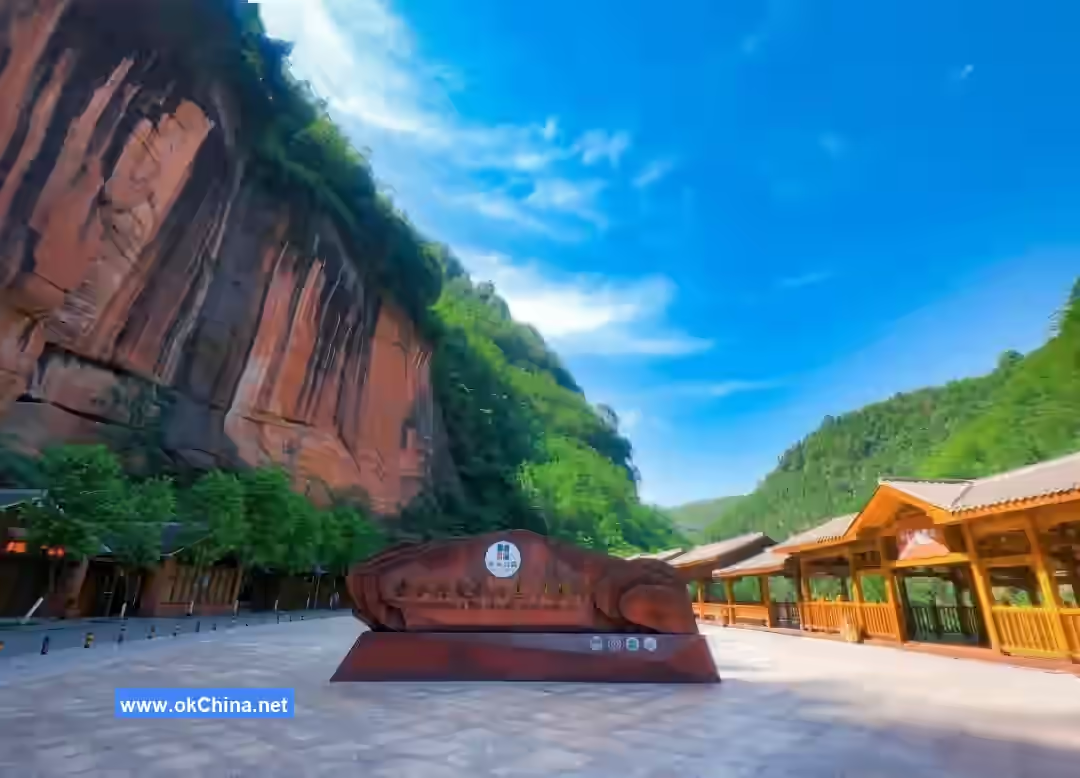
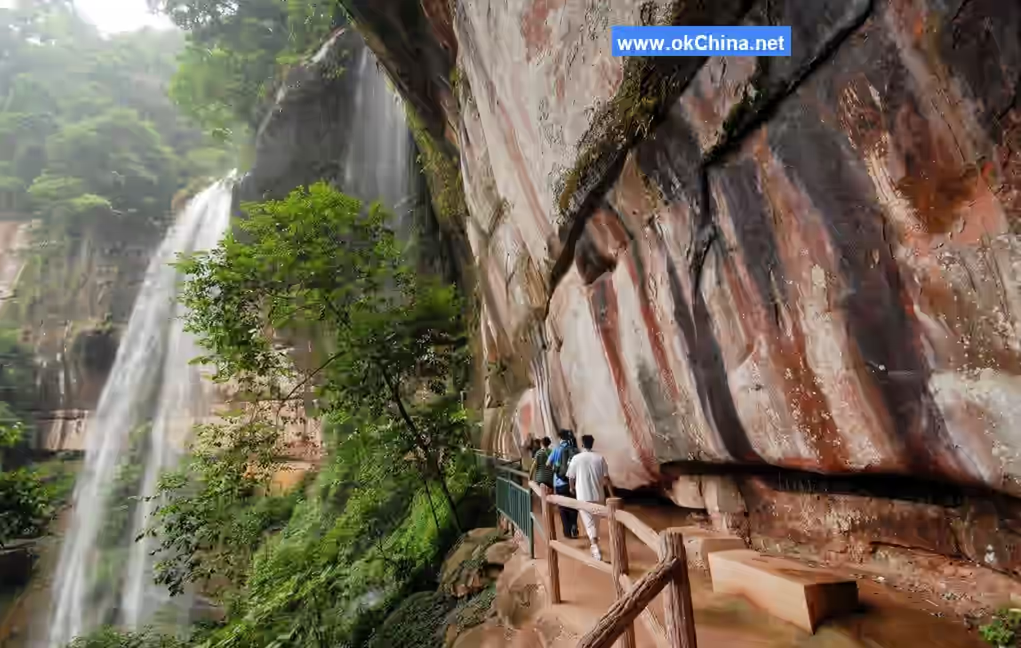
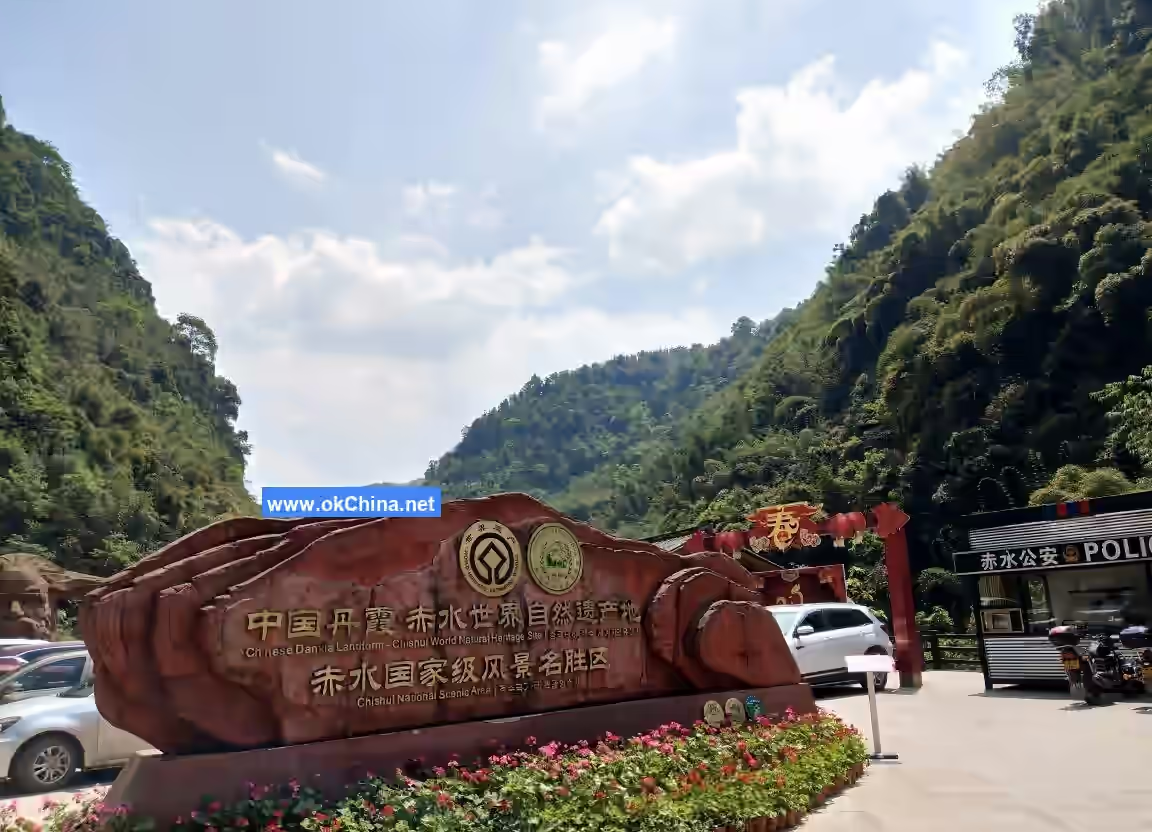
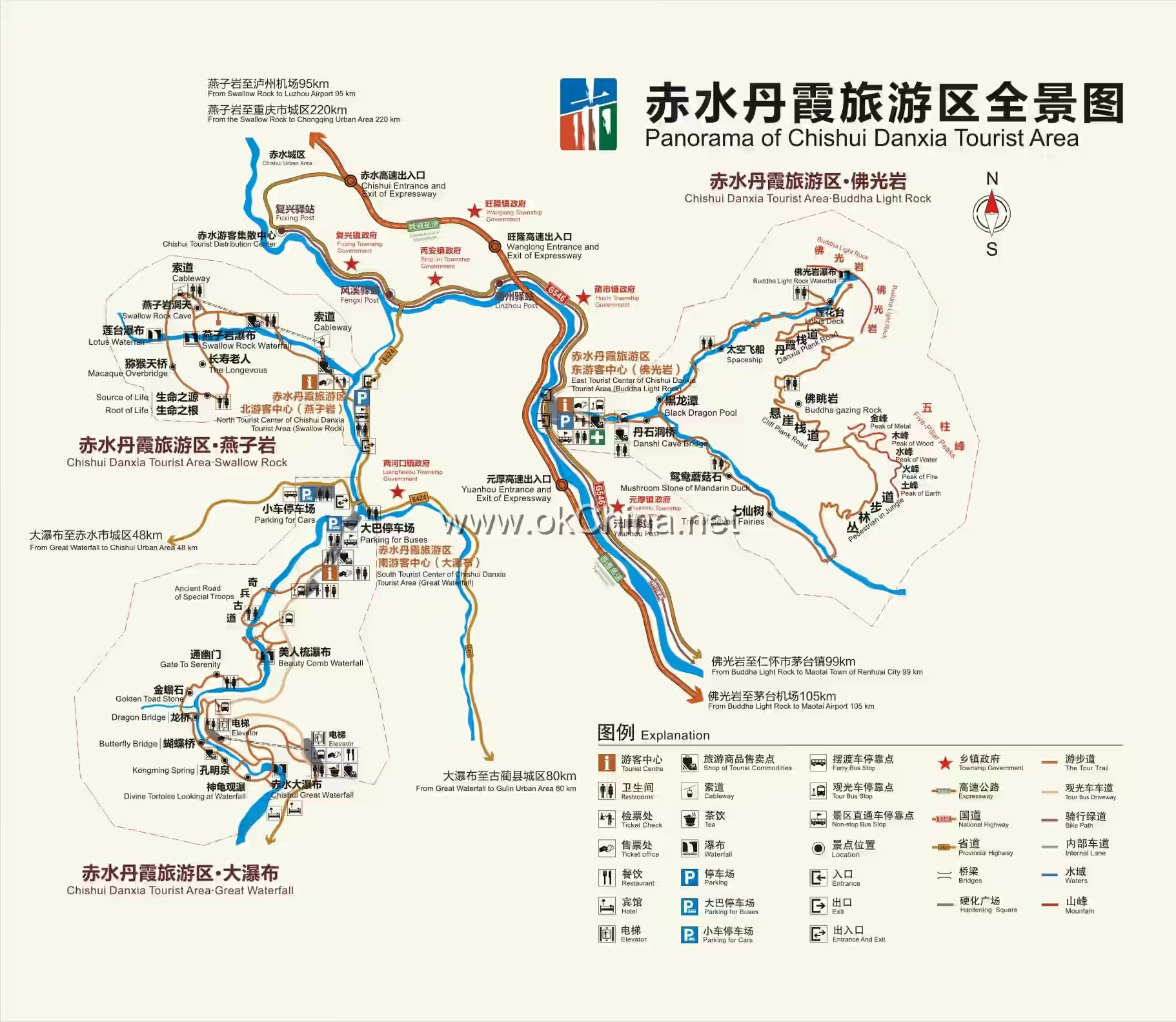
The Chishui Danxia Tourist Area in Zunyi City, abbreviated as Chishui Danxia Tourist Area, is a scenic area located within Chishui City, Zunyi City, Guizhou Province, covering an area of 36.3 square kilometers. The Chishui Danxia Tourist Area comprises three major scenic zones: Chishui Grand Waterfall, Foguangyan (Buddha's Halo Cliff), and Swallow Rock. It is characterized primarily by Danxia landforms, waterfall clusters, bamboo forests, tree ferns, and virgin forests, forming a diverse array of landscape types including mountains, valleys, waterfalls, lakes, rivers, villages, and rare flora and fauna. It is a microcosm of the "City of a Thousand Waterfalls, Crown of Danxia, Hometown of Bamboo, and Kingdom of Tree Ferns." It is the Danxia landform area with the best configuration of mountains, water, and forests, representing the world's most typical, most beautiful, most ecologically diverse, and best-configured Danxia landscape, a rarity globally. In August 2010, Chishui Danxia was successfully inscribed on the World Heritage List as a significant component of China Danxia. The Chishui Danxia Tourist Area is the core scenic area of the China·Chishui Danxia World Natural Heritage Site and is also an important component of a National Scenic Area, National Nature Reserve, National Forest Park, and National Geopark.
2. Geographical Environment
2.1 Location and Territory
The Chishui Danxia Tourist Area of Zunyi City is located in Fuxing Town, Chishui City, Zunyi City, Guizhou Province. Its geographical coordinates are approximately 105°73′ E longitude and 28°42′ N latitude. The tourist area covers 36.3 square kilometers.
2.2 Topography and Landforms
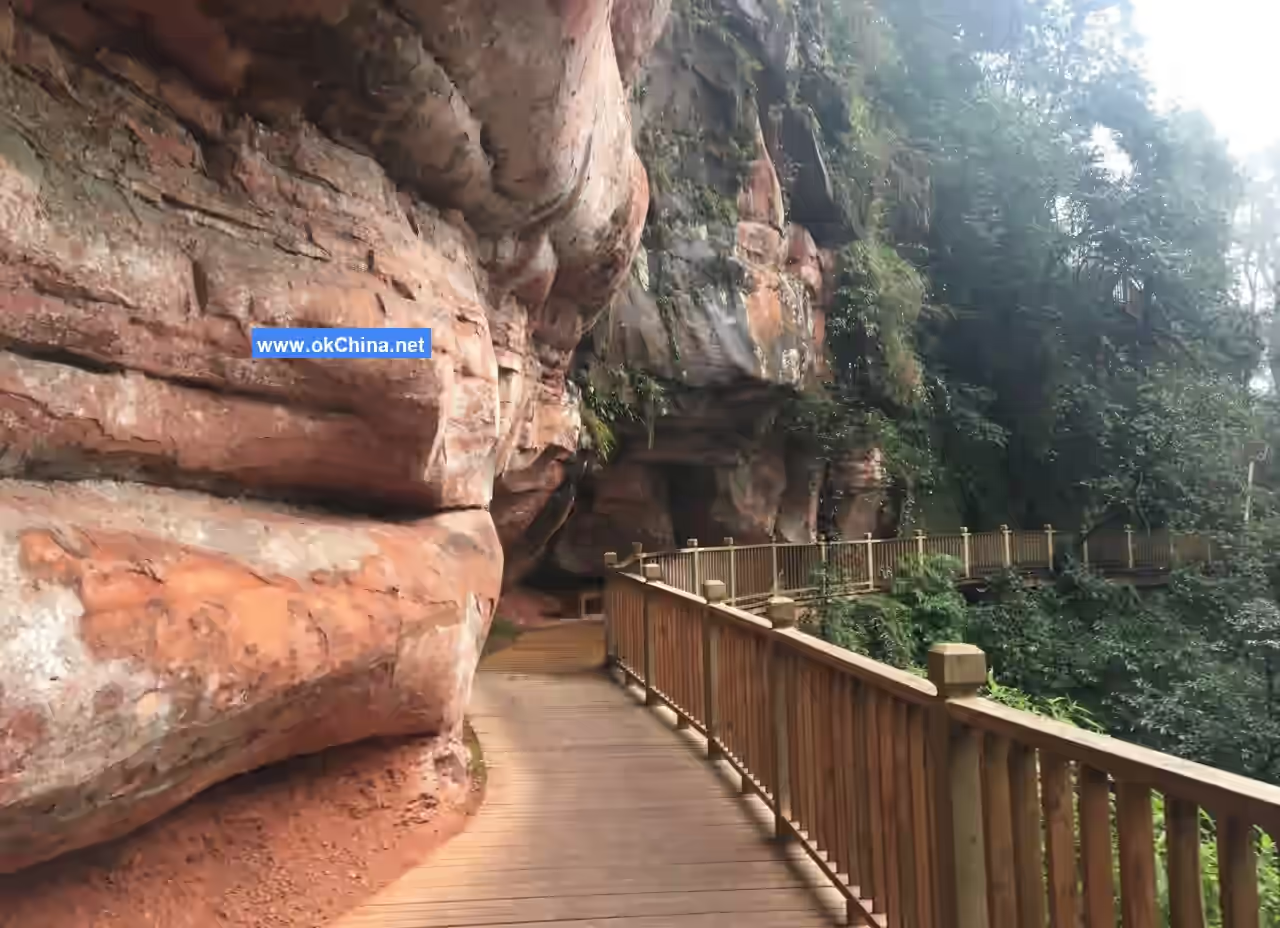
The Chishui Danxia Heritage Site is situated on the southern edge of the Sichuan Basin—China's largest red bed basin—in the transitional zone between the Guizhou Plateau and the Sichuan Basin. The Danxia landform development at the heritage site is in the early rejuvenation youth stage. The area is dotted with canyons, cliffs, streams, and waterfalls. The Danxia landforms are mainly of the plateau-canyon and mountain-plain-canyon types, featuring deeply incised canyons, fragmented terrain, and significant elevation changes. The highest altitude is about 1,730 meters, the lowest is 240 meters, with a relative height difference of nearly 1,500 meters. Multiple topographic levels exist at 1,600–1,700 meters, 1,400–1,500 meters, 1,200–1,300 meters, 900–1,000 meters, and 300–500 meters. The Cretaceous Jiading Group forms the core material foundation for the development of the Danxia landforms at the heritage site. It consists mainly of thick, massive, red sandstone interbedded with siltstone of fluvial-lacustrine facies. The rock is hard, highly resistant to erosion, and has well-developed vertical joints, often forming grand and majestic Danxia landform shapes like canyon cliffs. The Jurassic strata are primarily composed of purplish-red and purplish-gray sandstone, mudstone, and shale. These rocks are relatively soft and less resistant to erosion, mainly forming denudation-erosion landforms such as red rock low mountains and hills, with gentle slopes.
2.3 Climatic Characteristics
The Chishui Danxia Heritage Site experiences a prevailing subtropical mountain monsoon climate. The annual average temperature is 18.1°C, with an annual sunshine duration of 1,297.7 hours. The highest average monthly temperature, around 28°C, occurs in July, while the lowest, around 7.9°C, occurs in January. The annual temperature range is 20.1–20.5°C. Extreme low temperatures range from -7.1°C to -3.3°C; extreme high temperatures range from 35.7°C to 40.5°C. In the core area, the multi-year average temperature is relatively lower, generally 16–17°C, with an extreme minimum of -4°C and an extreme maximum of 39°C. Due to significant topographic shading and lush forests, damaging high temperatures above 40°C are rare. Annual precipitation ranges between 800 and 1,700 millimeters, concentrated mainly from April to October, accounting for over 80% of the annual total. Summer (June–August) receives the most precipitation, 383–681 mm, constituting 40.12%–44.7% of the annual rainfall. Winter (December–February) receives the least precipitation, only 58.3–166 mm, accounting for 6.5%–10.5% of the annual total. The prevailing wind direction is northerly throughout the year, southeasterly in summer, and northerly in winter. Extreme wind speeds can reach 27 m/s (Force 10). The average wind speed is 1.6 m/s. Gale-force winds (Force 8 and above) frequently occur from March to September, with the highest frequency in July and August.
2.4 Hydrological Features
The Chishui Danxia Heritage Site belongs to the Yangtze River system. The Chishui River is the largest river within the area, a first-level tributary of the Yangtze River. It is 524 kilometers long with a basin area of 20,440 square kilometers and a drop of 1,558 meters. Its hydropower potential is 1.3946 million kilowatts, accounting for 0.52% of the Yangtze River's total potential. The section upstream of Bing'an within Chishui is the middle reaches, where the river cross-section is V-shaped, the riverbed is relatively narrow with many rapids and fast flow, navigable by motorized boats. The section downstream of Bing'an is the lower reaches, where the river surface widens, the flow is gentle, and it is navigable by ships of 100–300 tons. At standard water level, the widest point of the river surface is about 200 meters, the narrowest about 20 meters, with a drop of 67 meters within Chishui City.
3. Main Attractions
3.1 Chishui Grand Waterfall Scenic Area
3.1.1 Beauty in the Secluded Valley
Designed by the Sichuan Fine Arts Institute, "Beauty in the Secluded Valley" is entirely constructed from carved and built Danxia stone. The front of the gate tower features a sculpture of a long-bearded old man's head, symbolizing the "Forest Elder"; the back features a sculpture of a beautiful woman's head, inspired by Master Liu Haisu's inscription for the grand waterfall, "Beauty in the Secluded Valley." The head sculptures organically integrate with the surrounding Danxia landforms, green forests, and cascading white waterfalls, complementing and enhancing each other.
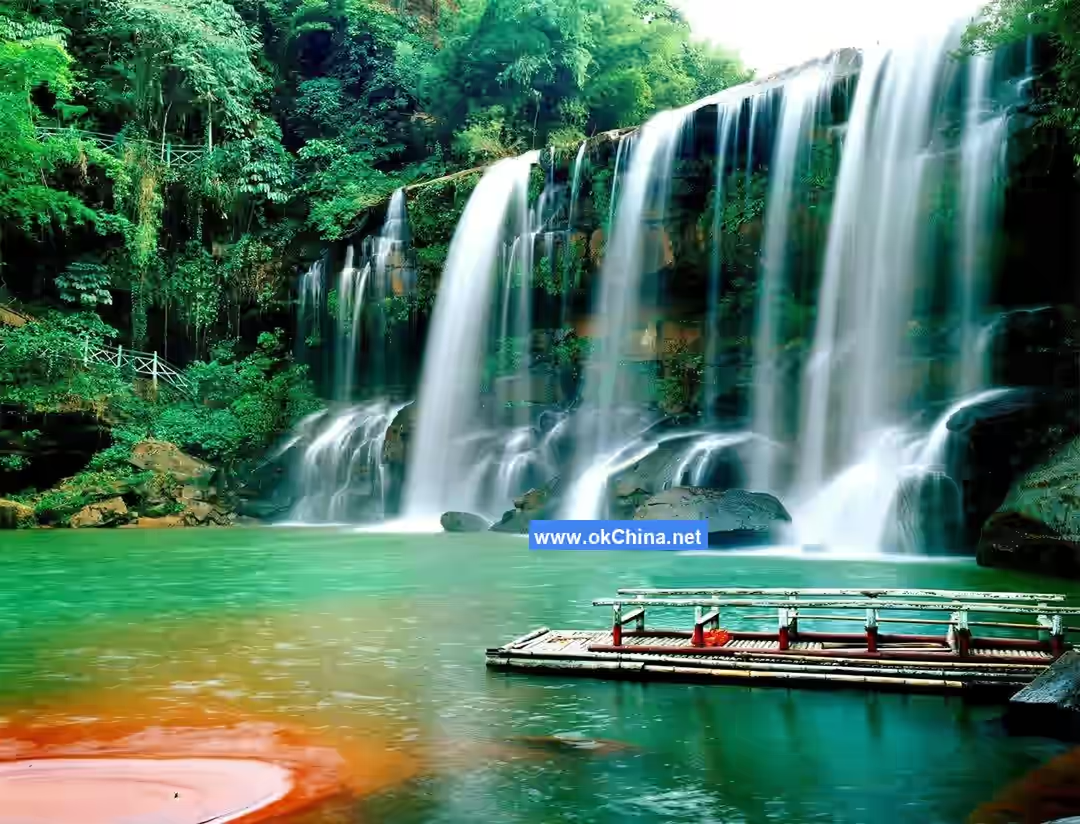
3.1.2 Beauty's Comb Waterfall
Also known as Zhongdong Waterfall, it is 18.5 meters high and 75.6 meters wide. The stream water falls into the pool like a silver chain, resembling a silver bead curtain hanging from a "lintel" or an inverted silver comb, vividly called "Beauty's Comb" by locals. Experts from the Chinese Academy of Sciences expedition team hailed it as "the most typical representative of curtain waterfalls in China."
3.1.3 Butterfly Bridge
During summer mornings and evenings, countless butterflies of various colors gather on this bridge, creating a spectacular sight, hence the name "Butterfly Bridge."
3.1.4 Immortal Breeze Cave
Legend has it that this cave connects to the sea of clouds spectacle at the Fangbei in Baoyuan Township. Inside the cave are exotic flowers and strange rocks, filled with spiritual energy and exceptionally cool, making it a summer retreat for immortals. It is said that a destined person reaching into the cave can be touched by immortal energy, leading to success, fame, and longevity.
3.1.5 Kongming Spring
Legend says that during Zhuge Liang's (Kongming) seven captures of Meng Huo, soldiers fell ill from poisoning upon arrival here. Zhuge Liang ordered a well to be dug for water. After drinking it, the soldiers recovered immediately, leading to a great victory. Later generations named this spring "Kongming Spring." The spring water is sweet, cool, and clear, never drying up throughout the year. Drinking it is said to clear the eyes, refresh the lungs, stop sweating, and invigorate the body.
3.1.6 Divine Turtle Viewing the Waterfall
Looking from afar at the Chishui Grand Waterfall, two Danxia rocks, one large and one small, combine to form the image of a divine turtle, resembling a ten-thousand-year-old stone turtle watching over the Chishui Grand Waterfall.
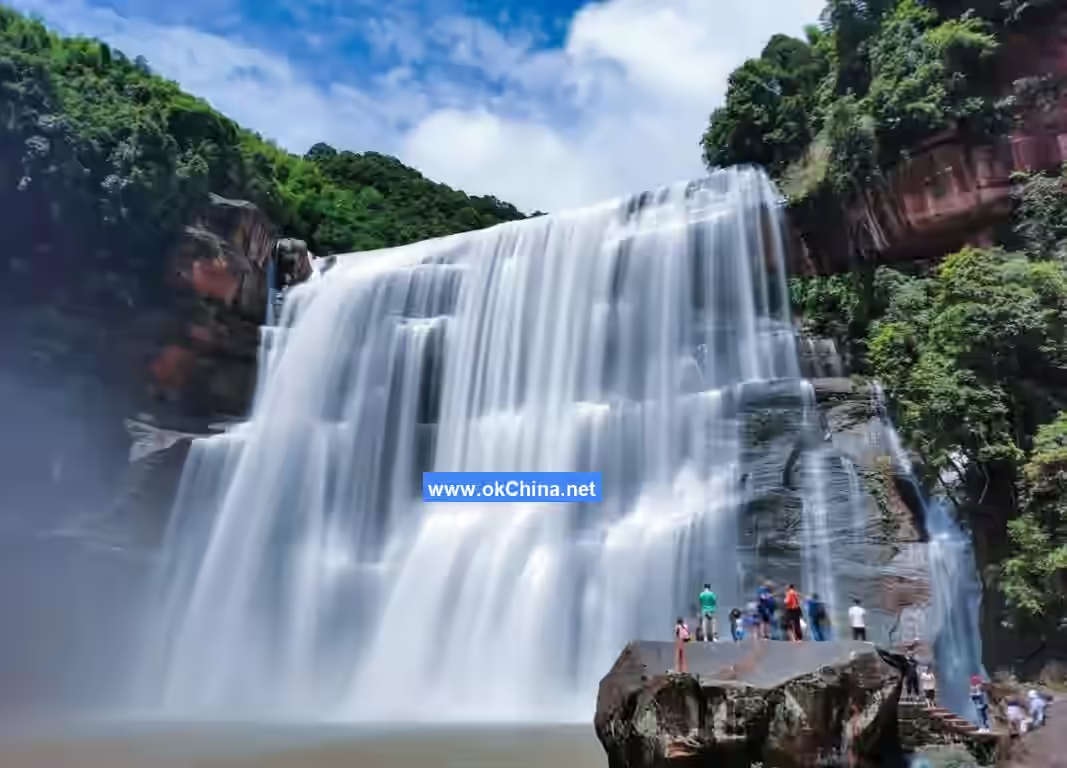
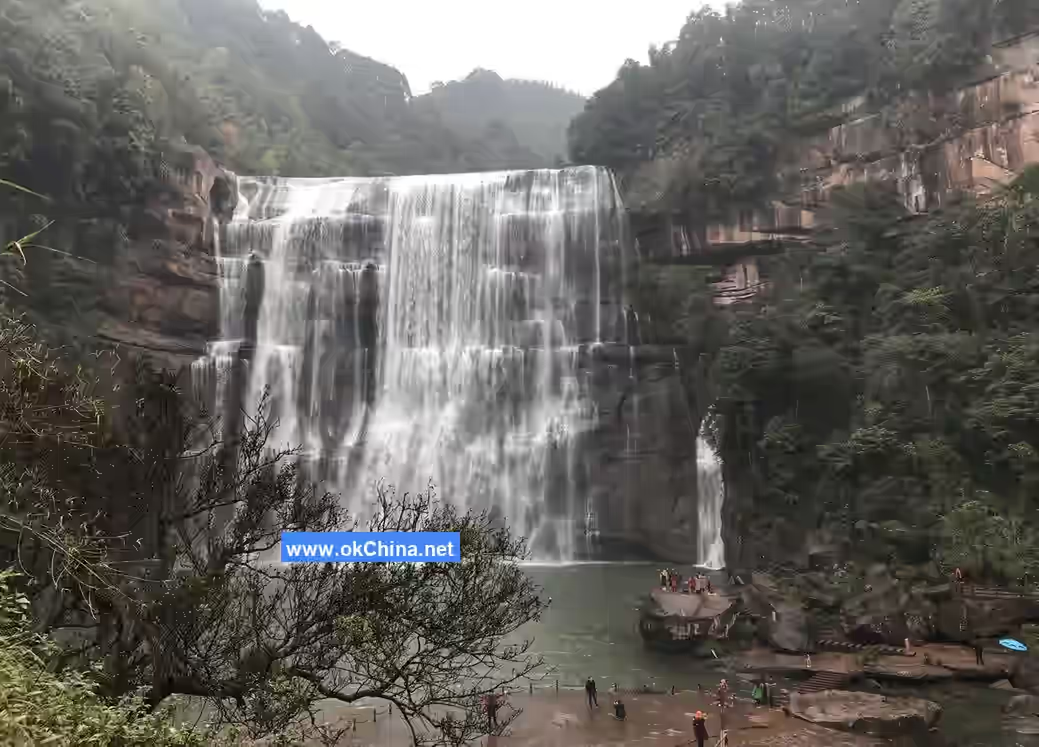
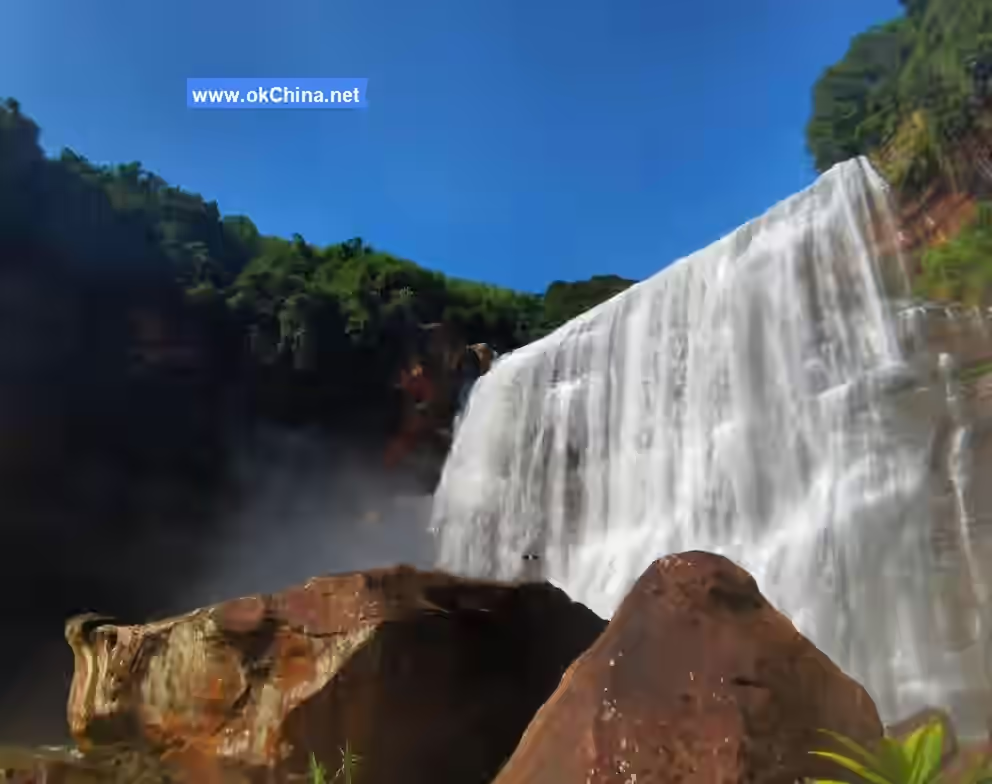
3.1.7 Chishui Grand Waterfall
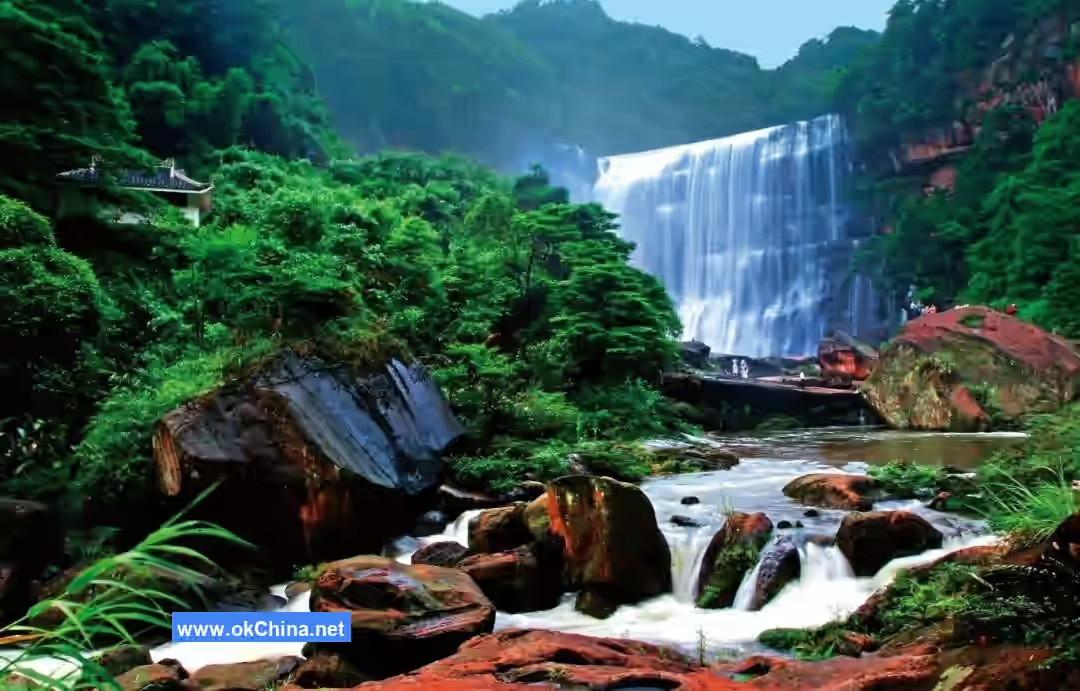
The waterfall is 76 meters high and 80 meters wide, recognized as the number one waterfall in Danxia landforms worldwide and the number one waterfall in the Yangtze River system. Master painter Liu Haisu praised it as "Beauty in the Secluded Valley," while Chinese Academy of Sciences experts evaluated it as a "wondrous spectacle of Danxia waterfalls in China."
3.1.8 Surprise Troop Ancient Path
The Surprise Troop Ancient Path is 3.15 kilometers long. From the 8th day of the 4th lunar month to the 22nd day of the 7th lunar month in the first year of the Tongzhi reign (1862), Shi Dakai, the Prince of Yi of the Taiping Heavenly Kingdom, twice passed through Chishui to enter Sichuan. One of his troops used this ancient path to launch a surprise attack on Fuxingchang, clearing the obstacle for entering Sichuan. On January 28, 1935 (the 24th year of the Republic of China), after the Red Army withdrew from the battle at Fuxingchang, one unit moved upstream along the Fengxi River. On November 29, during the Red Army's first crossing of the Chishui River, a unit of the Red Second Division entered the territory of Gulin, Sichuan, via the Surprise Troop Ancient Path. Red Army slogans can still be seen on the stone walls of the Panlong Ancient Path. Hence, the path is named Surprise Troop Ancient Path.
3.2 Foguangyan (Buddha's Halo Cliff) Scenic Area
3.2.1 Black Dragon Pool
This dark green water pool covers about ten square meters and is bottomlessly deep. During the rainy season, the pool water churns and surges, producing roaring sounds that echo through the valley, as if several giant dragons were rolling and playing within. Hence, it is called Black Dragon Pool.
3.2.2 Spaceship
The "Spaceship" is a typical Danxia landform landscape. The Chishui Danxia landforms primarily developed in Cretaceous rock layers dating back about 65 million years. These layers consist mainly of thick, massive, bright red sandstone and multiple layers of purplish-red mudstone. The sandstone is hard, highly resistant to erosion, and has well-developed vertical joints, prone to collapse forming canyons and cliffs. The mudstone is relatively softer and weathers faster, quickly forming recesses after weathering. The "Spaceship" shape was formed precisely due to differential weathering of the rock and collapse of rock blocks along vertical joints.
3.2.3 Purple Mist Palace
Danxia caves are a very common geological landscape in Danxia landform areas, a cave system completely different from karst caves. Under the combined effects of water erosion, weathering, and collapse, Danxia caves form diverse combinations and peculiar shapes. This Purple Mist Palace was mainly formed by rock collapse along joint planes. Under sunlight, it shines brightly like rosy clouds, resembling a purplish-red palace.
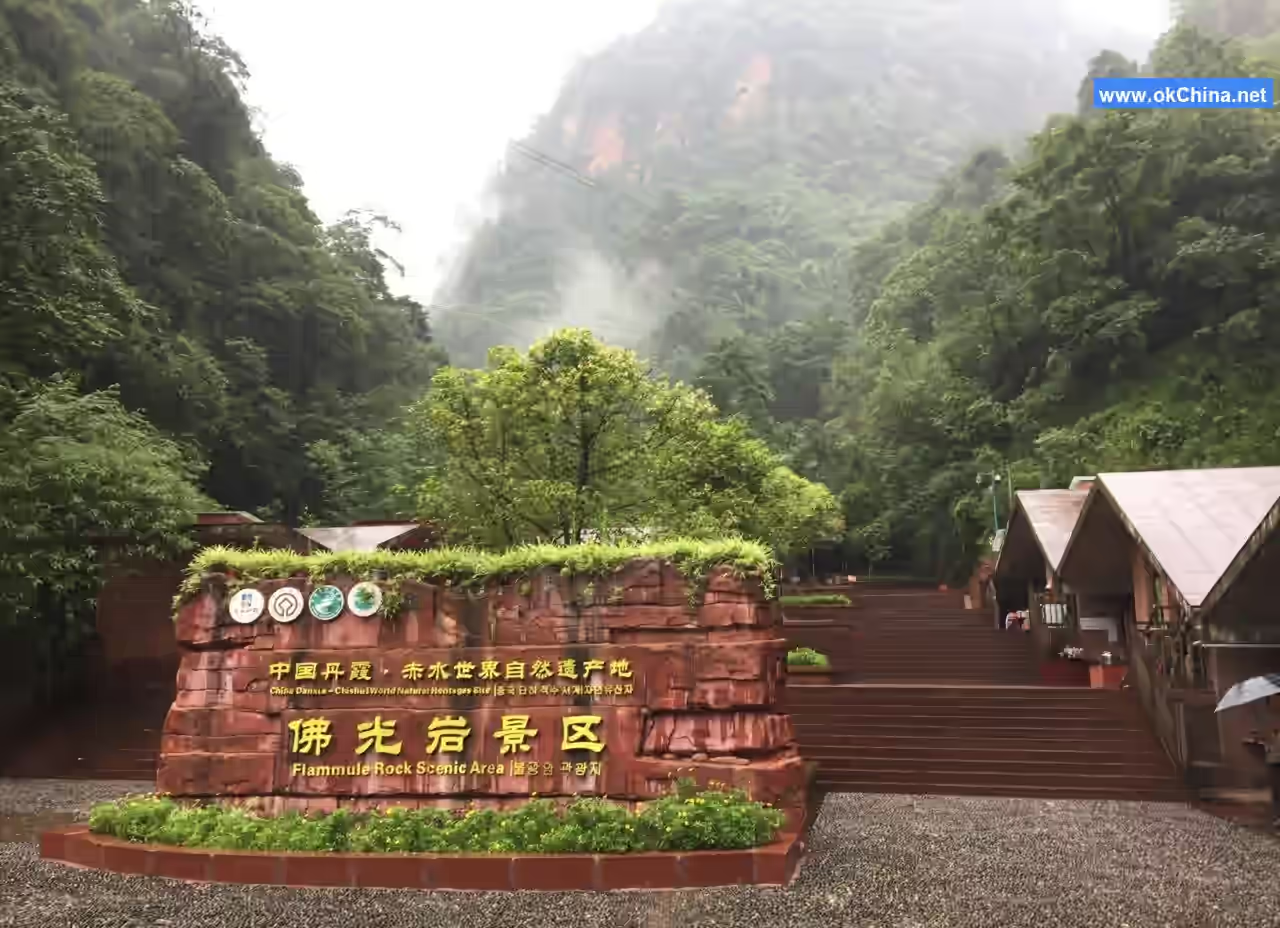
3.2.4 Foguangyan (Buddha's Halo Cliff)
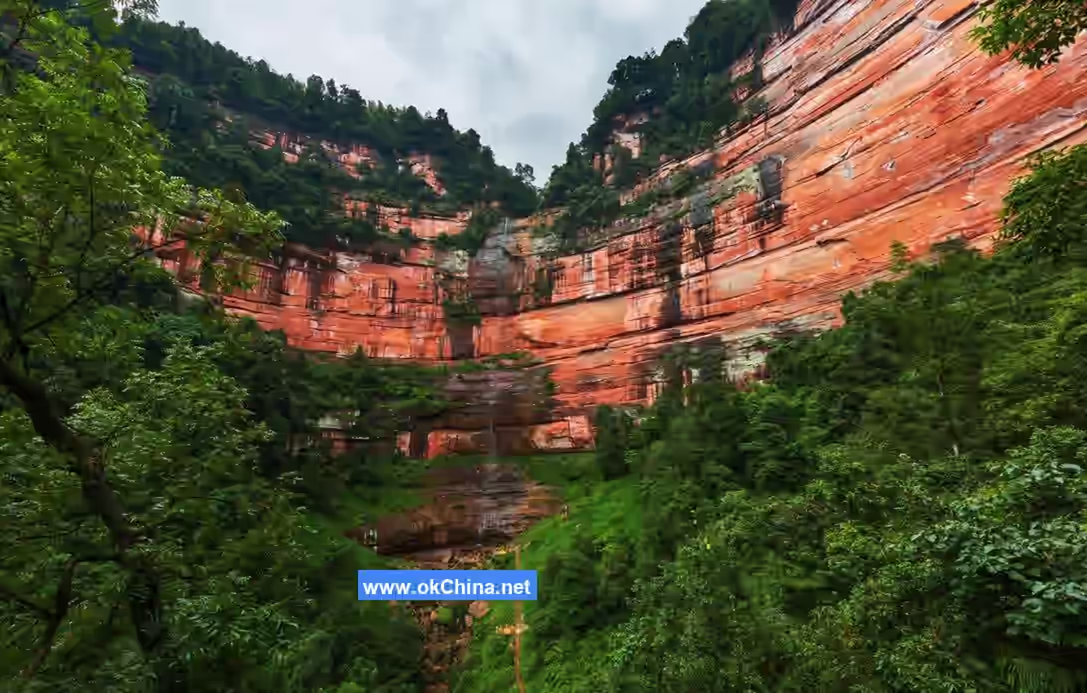
The Chishui Danxia landform area in Guizhou features deeply incised canyons with steep cliffs on both sides. The Cretaceous thick, massive red sandstone has well-developed vertical joints, and the rock mass collapses integrally along these joints, often forming cliffs tens or even hundreds of meters high and wide. Foguangyan is a typical representative of giant Danxia cliffs. It is horizontally distributed in a horseshoe shape, with a relative height of nearly 385 meters and an arc length of 1,117 meters. At the center of the cliff face is a columnar waterfall over 269 meters high and 42 meters wide, resembling the Chinese character for "Buddha" (佛). The cascading waterfall produces thunderous sounds, creating a magnificent spectacle. Under sunlight, Foguangyan radiates red light, like an exquisitely beautiful landscape painting,堪称丹霞一绝 (deserving to be called a unique wonder of Danxia).#### 3.2.5 Buddha Gazing Rock Vertical joints are highly developed in the Chishui Danxia. Surface water infiltrates along these vertical joints, gathers at the bottom, and flows to erode the rock walls on both sides. After the rock between two adjacent joints is eroded through, collapse intensifies, with massive rocks often falling along the joint surfaces. Physical, chemical, and biological weathering have a widespread and profound impact on the formation and development of its Danxia landform. Coupled with vertical differences in lithology, soft rock layers on the cliff face weather rapidly into grooves. The formation of Buddha Gazing Rock is the result of differential weathering and erosion of the Cretaceous thick-bedded sandstone and mudstone/shale interbeds, along with collapse along vertical joints.
3.2.6 Five Pillar Peak
Five Pillar Peak consists of five tall, semi-detached Danxia stone pillars aligned side by side, each tens of meters high. Viewed from afar, they resemble a giant hand, remarkably lifelike. The formation of Five Pillar Peak is the result of intense rock collapse along joints. Due to the gentle dip and hard texture of the rock strata, X-shaped vertical joints of various scales are well-developed. Furthermore, Five Pillar Peak is located on one side of a deeply incised valley. Intense river cutting caused pressure release and massive collapse of rock on both sides of the valley, forming the initially developed Danxia stone peaks. Gravitational collapse caused the rock masses between joints to protrude, creating the distinctive pillar-shaped landscape. The crimson stone pillars are dazzling like rosy clouds, while the lush green forest is intensely verdant. The combination of these two natural colors presents a vibrant scene, like the powerful pulse of nature, possessing significant aesthetic value.
3.2.7 Mandarin Duck Mushroom Rock
Due to differences in rock properties, the degree and speed of Danxia landform development vary, leading to the formation of various realistic shapes resembling humans, objects, birds, or beasts, known as figurative Danxia. Within the Chishui Danxia area, certain isolated rocks, stone pillars, and some mountain bodies, when viewed from specific angles, closely resemble humans, animals, or certain objects. The "Mushroom Rock" before us looks like two large mushrooms. It is precisely the remnant form after differential weathering and erosion of interbedded hard and soft rock layers, appearing vivid and lifelike, with high aesthetic value.
3.2.8 Seven Immortals Tree
The Chishui Danxia area showcases important and ongoing biological and ecological evolutionary processes. Vegetation has undergone natural succession to its climax stage, forming a pristine mid-subtropical evergreen broad-leaved forest ecosystem. Under the habitat conditions of the unique plateau-canyon type Danxia landform in the subtropics, an evergreen broad-leaved forest has developed, with tree species primarily from the Fagaceae, Lauraceae, Theaceae, and Magnoliaceae families. These seven trees before us are actually of the same species, named Casearia (commonly called脚骨脆 in Chinese), belonging to the Salicaceae family. They are small trees with grayish-yellow bark, usually fissured; branchlets are terete and brownish. Leaves are thick and oblong-elliptic. Flowering occurs from April to May, and fruiting from June to March of the following year. The wood can be used for furniture, utensils, and farm tools; it can also serve as a landscaping tree species.
3.3 Swallow Rock Scenic Area
3.3.1 Twin Stone Gorge
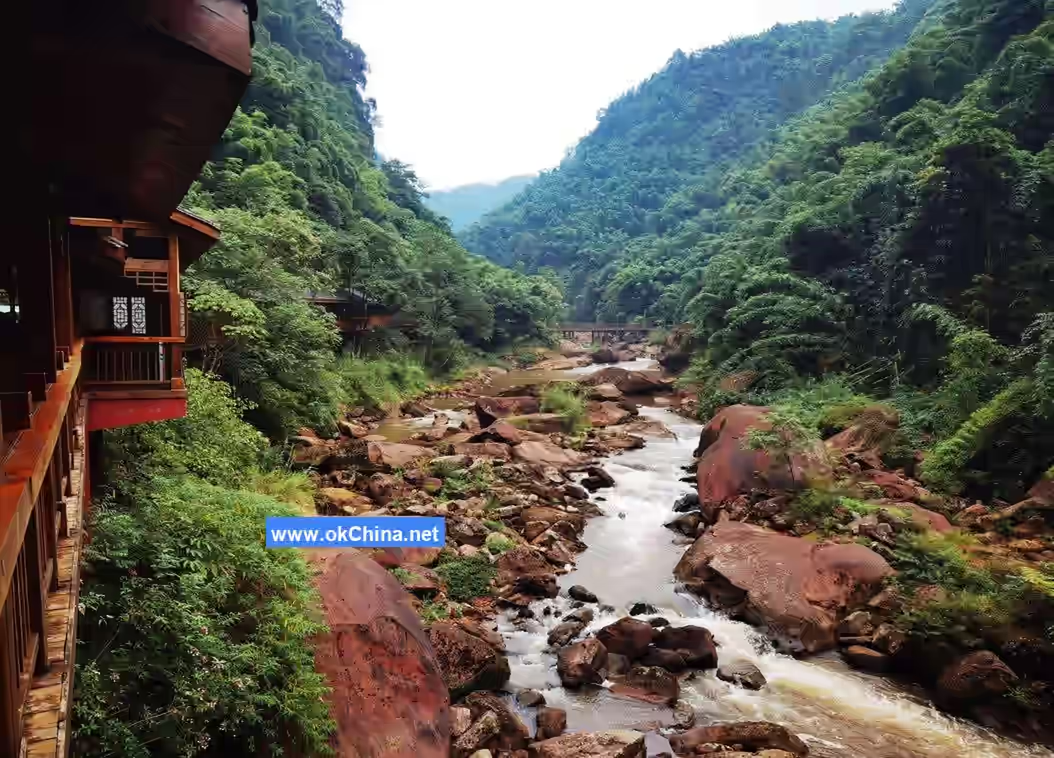
A stream cascades down from a mountaintop waterfall, interacting with the variously shaped Danxia rocks in the gorge to create a unique Danxia river valley landscape. Within this river valley, two massive rocks stand facing each other on the left and right, like guardian deities watching over the life within Swallow Rock. The stream flows between these two giant rocks, forming a beautiful scene of natural integration between mountain and water, hence named "Twin Stone Gorge."
3.3.2 Cascading Pools
The stream flows down, meandering through the mountains. Where it encounters stone steps, water accumulates to form pools. At rocky drops, the stream becomes a gentle, slender, and graceful flow.
3.3.3 Golden Turtle Leaping Waterfall
A Danxia boulder shaped like a golden turtle appears to be leaping upstream against the waterfall, creating a natural landscape where the Danxia wonder-stone and the waterfall complement each other. Symbolizing "unceasing struggle for life and flourishing prosperity," it is named "Golden Turtle Leaping Waterfall."
3.3.4 Swallow Rock Waterfall
The stream plummets from the top of the Swallow Rock cliff. The waterfall is 87 meters high and 50 meters wide, with two streams forming a swallow-tail shape, one larger and one smaller. Its slender form has earned it the praise of being the "Waterfall Prince" of Chishui, the city of a thousand waterfalls.
3.3.5 Swallow Rock Cave
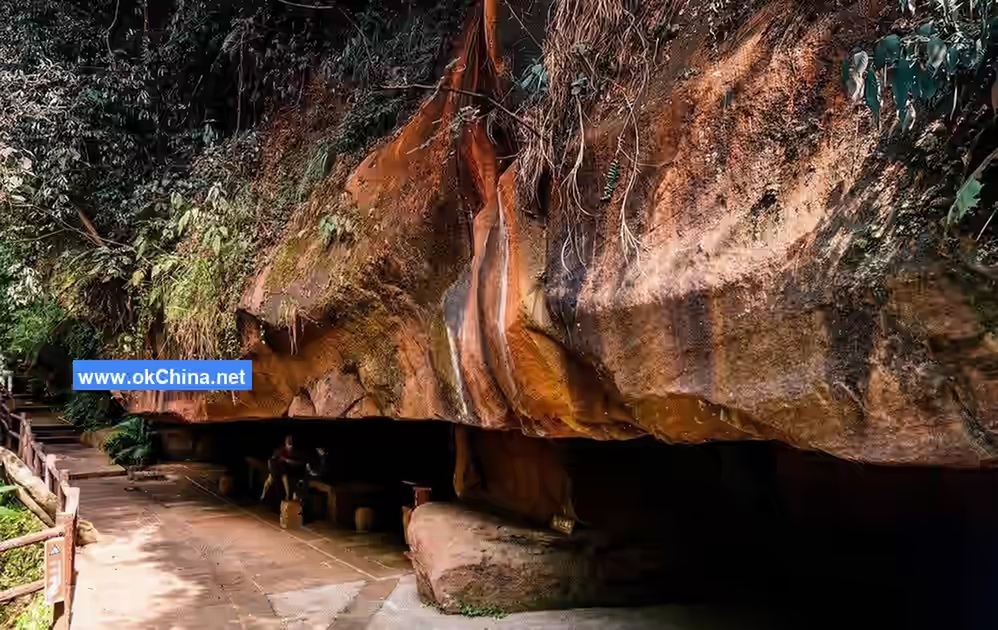
A naturally formed semi-circular Danxia rock cave, 42 meters high and 80 meters wide. Thousands of grey rock swallows (Ptyonoprogne rupestris) inhabit the crevices on the cave's sheer walls year-round, giving "Swallow Rock" its name. According to archaeological experts, Swallow Rock Cave was likely a dwelling site for ancient humans. In the 1930s, a family still lived here, building a shelter against the cliff and residing in seclusion for over half a century.
3.3.6 Longevity Spring & Longevity Elder
Scientifically known as "fissure water," this is groundwater filtered through three layers: Danxia rock, bamboo roots, and tree roots. It is cool in summer and warm in winter, clear and flawless, mellow and sweet. According to local lore, the spring water can cure all ailments and prolong life, hence it is called Longevity Spring.
3.3.7 Lotus Throne Waterfall
The waterfall is 42 meters high and 14 meters wide. Its shape resembles a large Buddha embracing a smaller Buddha, with the smaller Buddha holding a side-profile human head image, all seated on a lotus throne. The waterfall cascades down from the heads and shoulders of the large and small seated Buddhas, splitting into two jade curtains that pour into the emerald pool of the lotus throne, creating mist and a cool breeze. On clear, sunny days, rainbows encircle the base of the waterfall, one for each person, creating a captivating scene. Legend has it that those who witness this phenomenon will have good fortune, as those rings of light are Buddha's halos, lucky objects bestowed by Buddha.
4. Research Value
The Chishui Danxia scenic area holds significant geological research value. Its typical early youth-stage Danxia landform records the history of Earth's geological evolution. The Chishui Danxia is primarily composed of Cretaceous Jiading Group red sandstone, characterized by hard rock with well-developed vertical joints, forming the typical Danxia landform features of "flat top, steep body, and gentle foot." Its geological structure is closely related to the uplift of the Sichuan Basin and the differential uplift of the Guizhou Plateau, dominated by faults with few folds, and the rock strata remain essentially horizontal. The development of the Chishui Danxia landform has undergone multiple stages, including ancient lake deposition, uplift and denudation, and the youthful Danxia stage. It serves as a classic case for studying the evolution process of Danxia landforms and provides an important basis for revealing the geological evolution patterns of red-bed basins in southern China since the Mesozoic era.
Comments
Post a Comment