





Yancheng Chinese Milu Park Scenic Area
1. Introduction
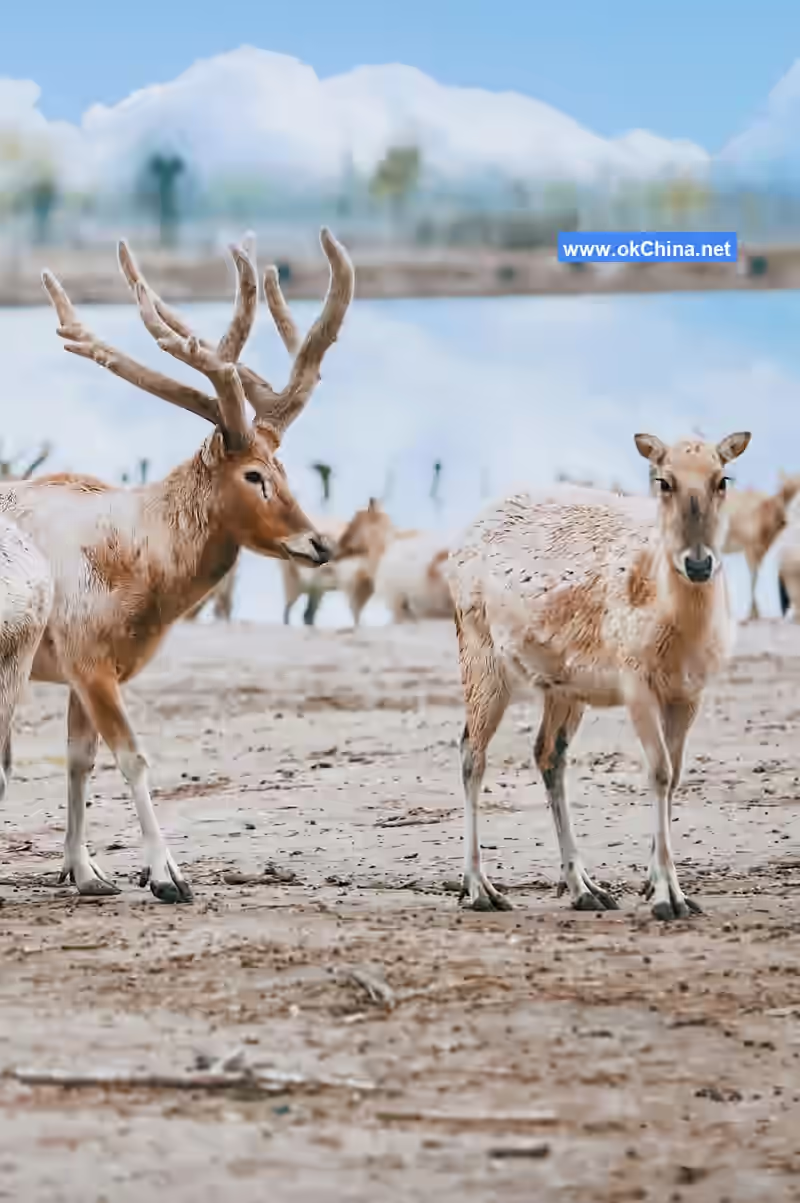
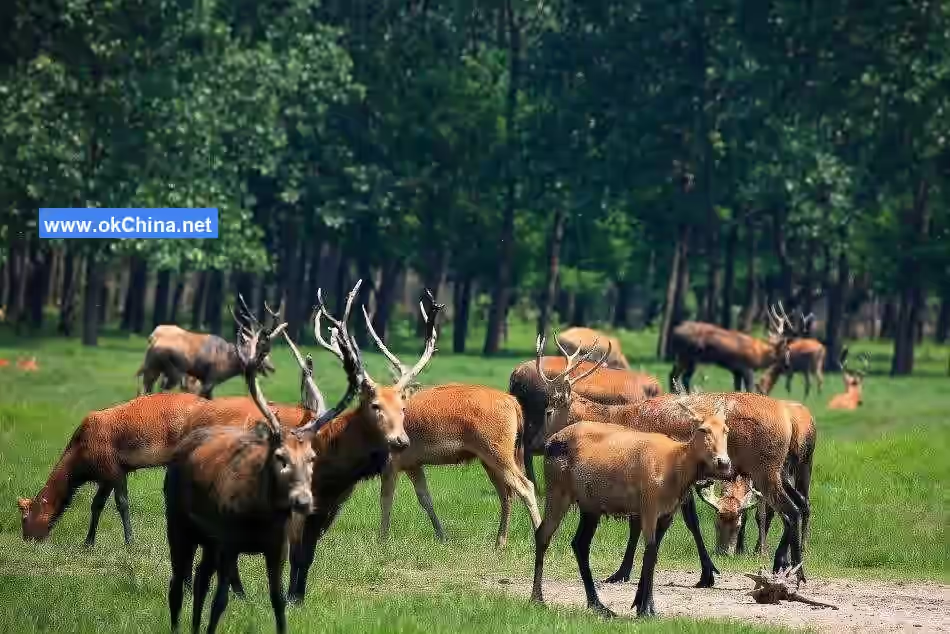
The Yancheng Chinese Milu Park Scenic Area, abbreviated as the Chinese Milu Park Scenic Area, is located in Dafeng District, Yancheng City, Jiangsu Province. It is established based on the Jiangsu Dafeng Milu National Nature Reserve, covering an area of 2,667 hectares, of which wetlands account for 8% and vegetation coverage is within 70%. It is the world's first, largest, and most populous wild Milu (Père David's deer) park. [2-3] [12]
The Chinese Milu Park Scenic Area integrates ecological tourism, leisure vacations, science education, and scientific research and conservation. On this vast, magnificent, and beautiful pristine land, nearly 2,000 species of wild animals and plants thrive. The azure sky, fresh air, gatherings of rare birds, and galloping exotic beasts form a primitive, ancient, and extraordinarily colorful natural landscape. [2] The Chinese Milu Park Scenic Area is one of the "China's Top Ten Wetland Tourism Destinations" and "China's 15 Selected Eco-Tourism Projects," a five-star "Most Beautiful Place in Jiangsu," and the world's only tourist attraction themed on "wetland ecology and Milu culture." Centered around the ecological themes of Milu and wetlands, Milu elements are incorporated into landscape design, product development, souvenir creation, and various other aspects, achieving thematic coherence for the scenic area.
2. Geographical Environment
2.1 Location and Territory
The Dafeng Milu Nature Reserve, where the Chinese Milu Park Scenic Area is located, is situated in the southeastern corner of Dafeng within the forest farm, covering an area of 15,000 mu. The area features woodlands, grassy wastelands, swamps, and natural water surfaces. It is located in the southeast of Dafeng City, Jiangsu Province, with geographical coordinates between 32°56′-33°36′ north latitude and 120°42′-120°51′ east longitude.
2.2 Geology and Topography
The Chinese Milu Park Scenic Area is a typical coastal wetland. The main wetland types include tidal flats, seasonal rivers, and some artificial wetlands, with extensive woodlands, reed marshes, swamps, salt flats, and forested grasslands.
2.3 Climate Characteristics
Dafeng City, where the Chinese Milu Park Scenic Area is located, belongs to the transitional zone between subtropical and warm temperate zones, suitable for the growth of thermophilic crops. The maritime climate is characterized by a slow temperature rise in spring, stable temperatures in autumn with a gradual decline, late first frost, and a long frost-free period. The monsoon climate brings continental cold air masses in winter, predominantly northwest winds, with mainly dry weather and frequent low temperatures and frost; in summer, it is influenced by maritime monsoons, with predominantly southeast winds, abundant precipitation, and concurrent rain and heat; spring and autumn are transitional periods, resulting in a variable climate of dry, wet, warm, and cold conditions. The boundaries between spring and summer, and autumn and winter are not distinct. Winter temperatures are relatively warm, with heavy snow, ice, and river freezing being rare. The annual average temperature is 14.5°C, the frost-free period is 299 days, the average annual precipitation is 751.0 mm, and sunshine duration is 2,325.4 hours.
3. Main Attractions
3.1 Galloping Milu
A group sculpture of Milu made to scale based on the prototypes of 39 "returnee" Milu. The leading figure, tall and imposing with robust antlers, is the first deer king after the return, the first to pass away, the No. 18 male deer. Beside him is the mischievous, runaway, and adventurous No. 39. Behind them is No. 26, the last of the 39 Milu to pass away, and next to him is the mother of the first calf—"Shengsheng"—No. 3 Milu... Each of the 39 Milu has many little-known stories, and every "returnee" has an epic life journey.
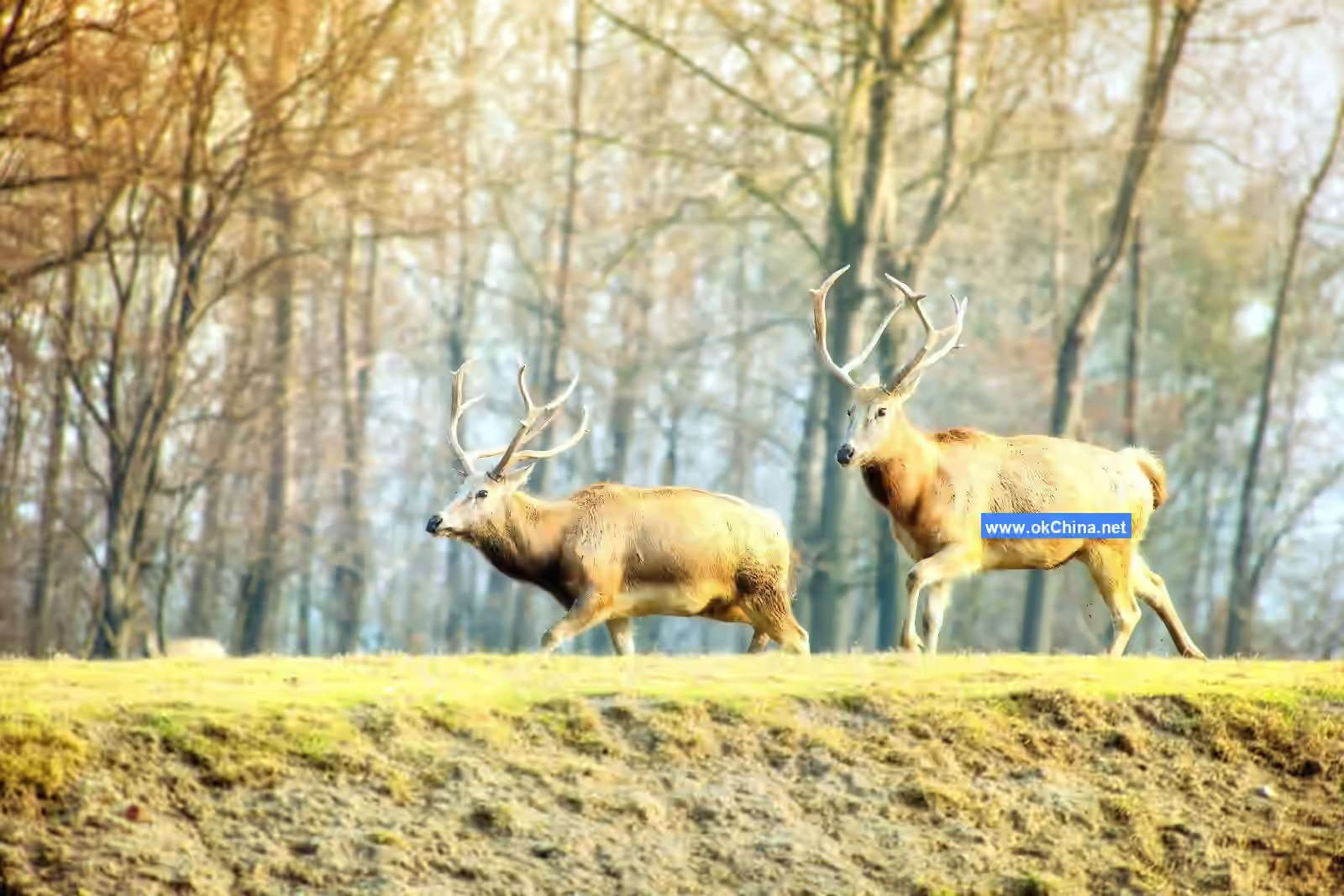
The scene of "Galloping Milu" is based on their first spring after returning, specifically the spring of 1987, when the Milu, well-fed and watered, joyfully leaped over a dirt slope and charged down. It realistically recreates the living scene of the 39 Milu and symbolizes the arrival of spring in the history of animal conservation for the Milu protection cause.
Stepping into the Galloping Milu area of the Chinese Milu Park is like entering a stage of the animal kingdom filled with primitive power and vitality. Here is the perfect place to witness the life force and wild beauty of the Milu.
The vast grassland unfolds before your eyes, lush and green like a giant velvet carpet gently covering the earth. Among the grass, wildflowers dot the landscape in purple, yellow, white, or red, swaying gently in the breeze as if whispering to the wind. In the distance, several tall trees stand solitary, like loyal guardians quietly watching over this Milu homeland. The sky is as blue as a gemstone, with pure white clouds drifting leisurely like cotton wool, adding a touch of tranquility and vastness to the entire scene.
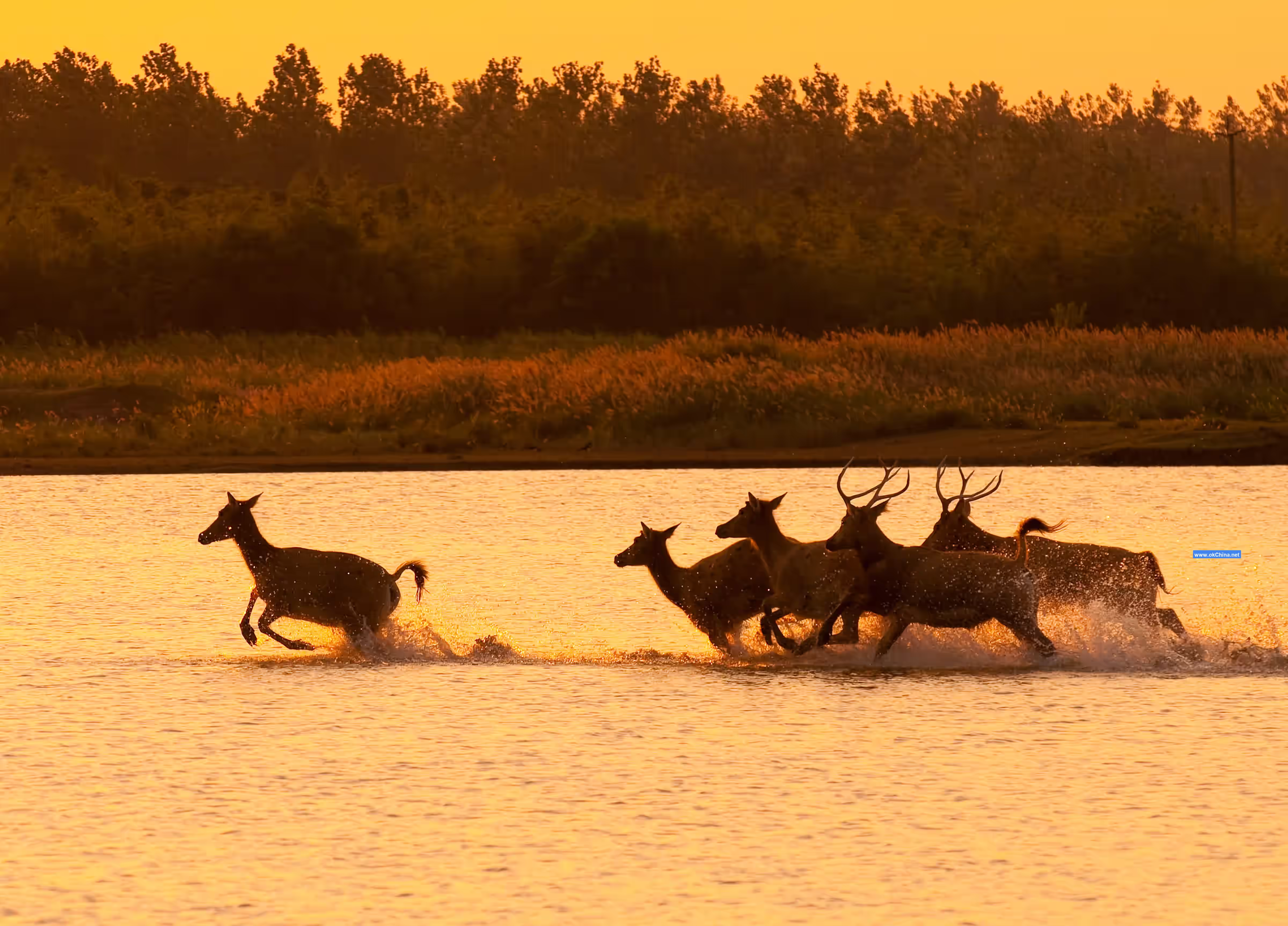
When the Milu gallop, the scene is truly breathtaking. Herds of Milu surge like a tide, their hooves thundering like drums, kicking up clouds of dust on the grassland. Their bodies are agile, muscles taut, and hooves flying, moving as fast as arrows shot from a bow. Some Milu hold their heads high, their antlers gleaming uniquely in the sunlight, majestic and awe-inspiring; others lower their heads slightly, focused on the rhythm of their run, their eyes revealing determination and perseverance. The calves follow closely behind the adults, their steps still somewhat clumsy but running with all their might, their fearless spirit touching to behold.
Here, you can deeply feel the wonder of nature and the tenacity of life. The Milu gallop freely across this land; their running is not merely an instinct for survival but also a love and pursuit of life. Witnessing this magnificent spectacle, a sense of reverence for nature wells up from deep within, and affection for these lovely creatures naturally arises. Whether you are a photography enthusiast eager to capture the thrilling moment of the Milu's gallop with your lens, or an ordinary tourist simply wanting to quietly feel this vitality and passion for life, the Galloping Milu area will offer you an unforgettable visual feast, immersing you in the charm of nature and leaving a lasting impression.
3.2 Chronicles of the Milu
The world's longest stone-carved calligraphy gallery themed on Milu culture. It is 42 meters long and 3.9 meters high, with 39 black marble slabs embedded in the ancient-style gallery, symbolizing the prosperous and enduring lineage of the descendants of the 39 Milu. Using the historical style "Annals" (Benji) from the Records of the Grand Historian (Shiji), which records imperial history, it narrates in classical Chinese the tortuous history of the Milu species: their origin, coexistence with ancient peoples, thriving in thousands, decline into scattered groups, seclusion in parks, wandering in foreign lands, survival against the odds, return to their homeland, and population revival. It integrates calligraphy, stone carving, elegant prose, and history, possessing high cultural and aesthetic value.
Deep within the Chinese Milu Park lies a unique place full of historical charm and cultural depth—the Chronicles of the Milu. It resembles a history book carved in stone, quietly recounting the long and magnificent legendary story of the Milu.
Entering the Chronicles of the Milu area, the first thing that catches the eye is a series of exquisite stone carvings. These carvings vary in form, some delicate and lifelike, others bold and unrestrained, yet all vividly depict the Milu's past. Walking along the winding path feels like traveling through a time tunnel back to a distant past.
The scenes on the stone carvings begin with the Milu's initial proliferation on the ancient land of China. They once lived leisurely in ancient swamp wetlands, coexisting harmoniously with nature. However, the wheel of time rolled on mercilessly. With increasing human activity, the Milu's living environment gradually deteriorated. The carvings show them forced to leave their homes, fleeing in all directions—their confused eyes and weary figures evoke pity.
But the Milu's story did not end there. The carvings continue to show the awakening and actions of human awareness for Milu conservation. There are images of domestic and international zoologists working tirelessly to save the Milu, studying their habits and ecological needs diligently; scenes of Milu regaining peaceful lives within protected areas, gradually recovering their population under careful care—their increasing numbers like rekindled sparks of hope.
Strolling through, each stone carving is a witness to history, every detail imbued with profound emotion. You can sense the ancient people's fondness and reverence for the Milu and appreciate the efforts and dedication of modern people in protecting them. This place is not merely a retrospective of Milu history but also a profound reflection on the relationship between humans and nature. Visitors here can savor the stories behind each carving, comprehend the importance of protecting wildlife and maintaining ecological balance, allowing their souls to undergo a deep baptism in the fusion of history and culture, and continue their life journey with reverence and responsibility towards nature.
3.3 Antler Silhouette
Antler Silhouette is an enlarged replica of the antlers of the first deer king after the Milu's return. The growth of Milu antlers, like other deer species, follows a regular annual shedding cycle, similar to leaves on deciduous trees, growing and falling year after year. In contrast, the horns of cattle and sheep grow only once in a lifetime and are never replaced. Among individuals, the size of Milu antlers can indicate the deer's age. The size of the antler branches is positively correlated with reproductive success. The primary function of antler branches is competition among males of the same species. Normally, one branch is added per year until the age of five, after which nodules develop with increasing age. During mating competitions, male Milu primarily rely on display and ritualized combat. Although they often engage in antler-pushing postures and produce deafening clashes, they generally do not injure each other's vital areas. This is the result of clever selection during evolution.
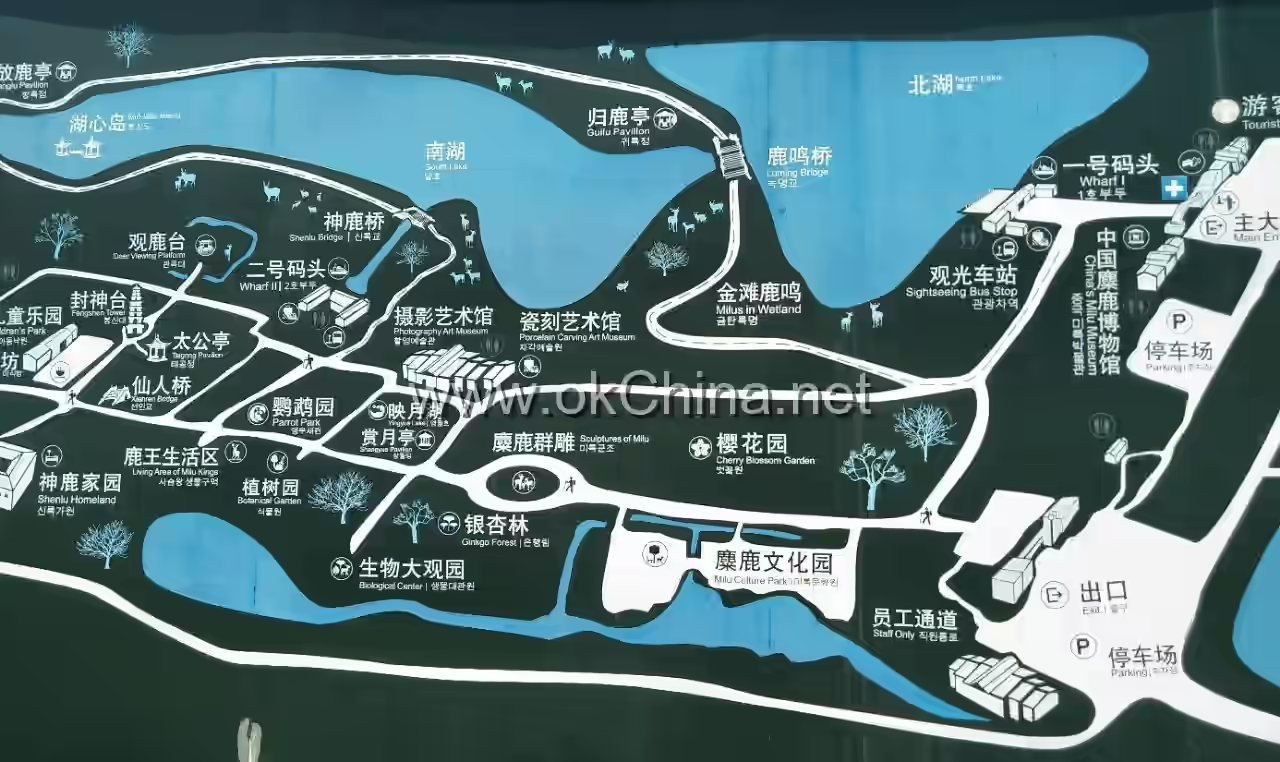
3.4 Deer Observation PlatformThe Deer Observation Tower is modeled after the one in the southern suburbs of Beijing. It consists of 39 steps divided into three sections, symbolizing the three stages of the Dafeng elk population's development: introduction and expansion, behavioral reshaping, and wild release. Here, visitors can enjoy an imperial-like experience, spending a leisurely and delightful time amidst a relaxed herd of elk.
The Deer Observation Tower in the Chinese Elk Garden is undoubtedly a magical place that allows visitors to appreciate the charm of elk from a unique perspective. Towering high, it resembles a bridge connecting the human world with the realm of elk, offering an excellent vantage point to overlook the entire elk habitat.
As you ascend the steps slowly, the surrounding scenery gradually unfolds beneath your feet. The architectural style of the Deer Observation Tower is ingenious, blending rustic charm with elegance. The wooden railings emit a faint, pleasant fragrance and feel warm to the touch. Upon reaching the top, a gentle breeze brings a refreshing coolness. Gazing into the distance, the magnificent landscape of the entire elk garden unfolds before your eyes.
In front, vast wetlands stretch out like a giant mirror, shimmering under the sunlight. Lush aquatic grasses sway in the wind as if dancing gracefully. The elk roam freely across this expansive wetland. Some move in herds, resembling drifting brown clouds; others gather in small groups to forage, their leisurely demeanor seemingly untouched by the world's troubles. From the Observation Tower, you can clearly observe the elk in various scenes of their daily lives. Some play in the water, splashing sparkling droplets; others lie on the grass, basking lazily in the sun and enjoying their peaceful moments.
The uniqueness of the Deer Observation Tower lies in its ability to allow visitors to observe the elk up close without disturbing their normal lives. Here, you can witness the elk's agile movements, elegant strides, and heartwarming interactions. Whether it's the playful antics between elk or the tender care of a mother for her calf, one can sense their rich emotional world and strong familial bonds.
Standing on the Deer Observation Tower, visitors not only admire the beauty and charm of the elk but also deeply feel the tranquility and harmony embodied by this land. It serves as a vivid portrayal of the harmonious coexistence between humans and nature, encouraging every visitor to reflect on the relationship between humans, animals, and the natural world while enjoying the scenery. This reflection fosters a greater appreciation for this precious ecological resource and inspires a love and reverence for nature that can be carried back into daily life.
3.5 The Hundred Elk Mosaic
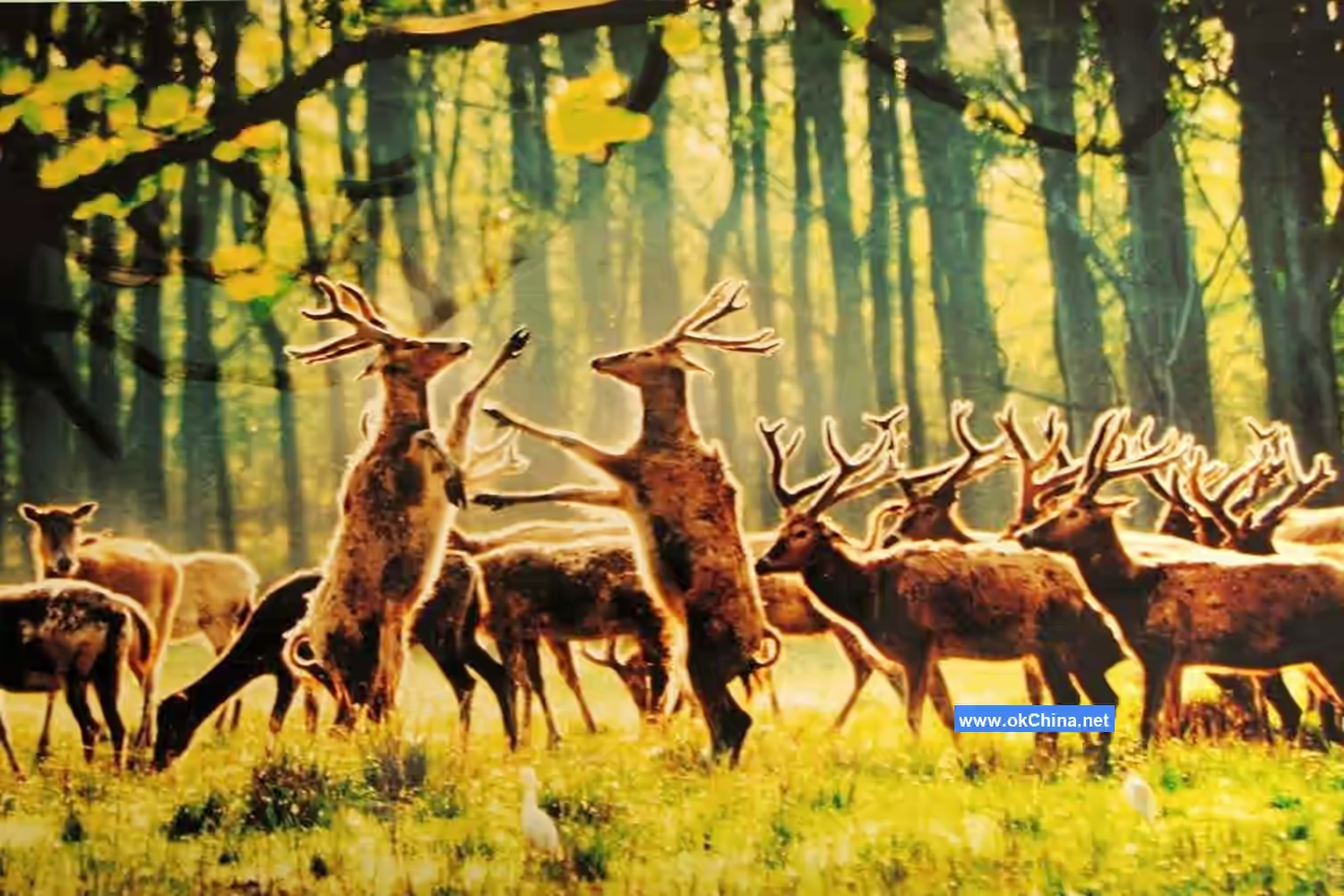
Built to commemorate the milestone in 2007 when the wild elk population in Dafeng exceeded one hundred, the Hundred Elk Mosaic depicts one hundred behaviors of elk. It features lifelike and vivid representations of one hundred elk, including the elk king looking down, a doe chewing, a fawn suckling, two elk fighting, and a herd leaping. This mosaic serves as an encyclopedia of elk behavior. The preliminary success of four planned, fully wild release experiments—in November 1998, July 2002, October 2003, and October 2006—has seen the wild population grow from 53 to 235 individuals. This achievement stands as a successful example of global efforts to save endangered species and reintroduce wildlife, embodying the harmony between humans and nature.
The Hundred Elk Mosaic in the Chinese Elk Garden is like a brilliant pearl embedded in this vibrant land. Through its unique artistic form, it vividly brings the image of elk to life, achieving a perfect fusion of art and nature. It offers visitors a distinctive dual feast for the eyes and the soul.
The Hundred Elk Mosaic is not a traditional painting but rather a carefully crafted arrangement of numerous elk-shaped green plants. Stepping into this area, you are instantly captivated by the sight. Amidst a vast expanse of lush greenery, "elk" seem to leap before your eyes—some galloping and playing, others foraging with heads bowed, and still others gazing into the distance. Their varied postures are vivid and lifelike. These "elk" plants are remarkably realistic, with each leaf seemingly sculpted by nature's miraculous artist, perfectly combined to outline the agile forms and unique charm of the elk.
Under the sunlight, the Hundred Elk Mosaic appears even more vibrant. Light filters through the gaps between leaves, casting dappled shadows on the ground as if draping these "elk" in a golden veil, making them look dreamlike. When the breeze rustles the leaves, it sounds like the soft whispers of elk or the rhythmic patter of their hooves as they run joyfully, infusing the entire scene with dynamism and vitality.
Approaching the Hundred Elk Mosaic, you can clearly see the details of each "green elk." Their antlers are distinct and powerful, their eyes lively and curious as if observing the world around them, and their postures agile and graceful, showcasing a natural harmony. This is not only an artistic representation of elk but also a tribute to the creativity of nature.
Visitors strolling through the Hundred Elk Mosaic feel as if they have stepped into a fairytale world of elk. They can take photos here, capturing themselves alongside these unique "elk," or simply admire the scene quietly, savoring the tranquility and beauty born from the fusion of art and nature. Both adults and children are drawn to the wonder of the Hundred Elk Mosaic, immersing themselves in this landscape brimming with creativity and vitality. Here, they can forget all worries and fatigue, fully enjoying this rare and beautiful experience while gaining a deeper understanding and memory of the unique charm of the Chinese Elk Garden.
3.6 The "Divine Elk's Return" Monument
This monument was created spontaneously by Zhao Xuemin, former Deputy Director of the State Forestry Administration, during an inspection when he learned of the encouraging progress in the wild release and natural reintroduction experiments of elk. Throughout the long history of Chinese culture, elk have always been regarded as a symbol of auspiciousness—representing vigorous vitality, virtue, benevolence, and righteousness, as well as the imperial authority that spanned thousands of years. This is evidenced by the numerous elk patterns depicted on unearthed artifacts such as roof tiles, porcelain, and burial items from various periods in China.
Comments
Post a Comment