Chengyang Eight Villages Scenic Area
1. Introduction
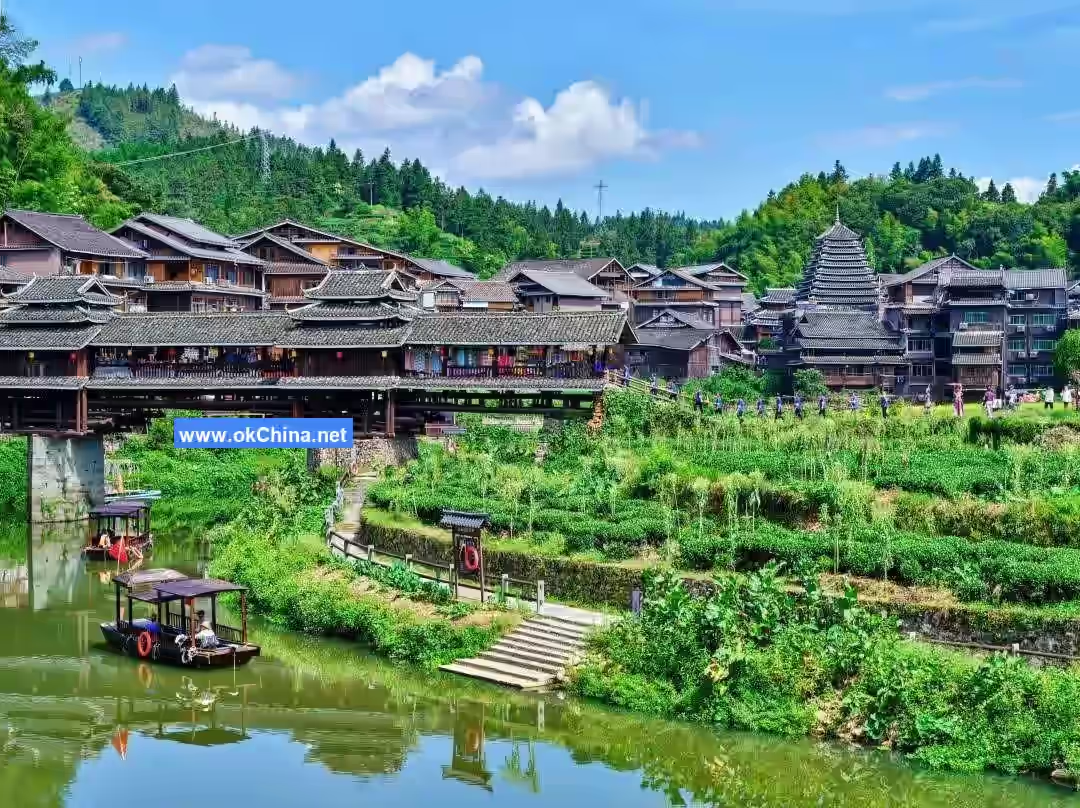
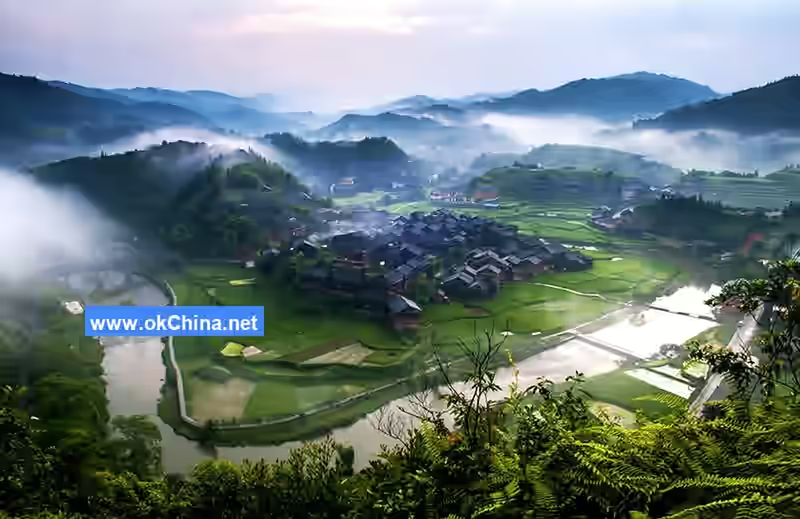
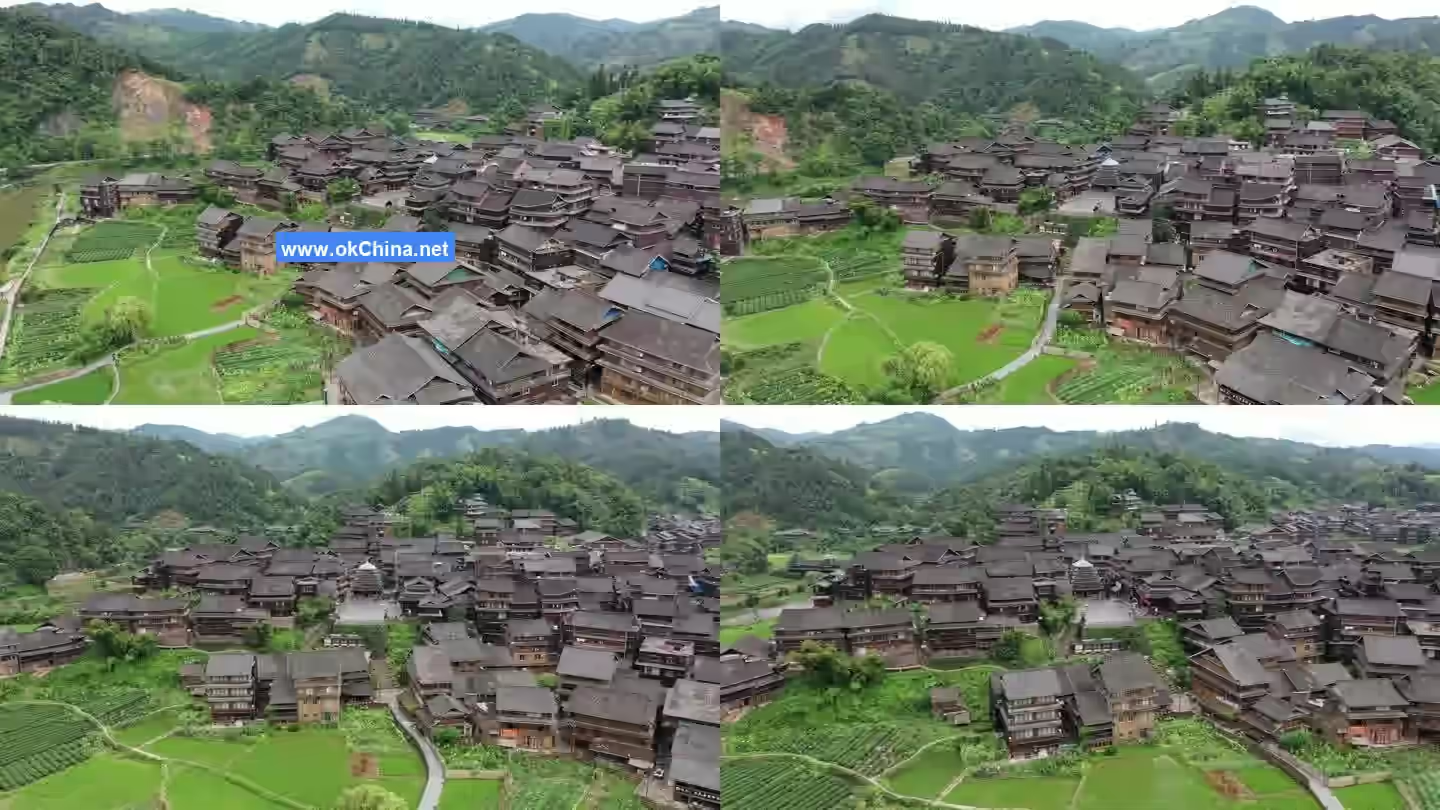
Sanjiang County of Liuzhou City is located at the junction of Hunan, Guizhou, and Guangxi provinces (regions). It connects Longsheng and the famous tourist city Guilin to the east, borders Congjiang, Kaili, and Guiyang to the west, links Huaihua and Zhangjiajie to the north, and neighbors Liuzhou City to the south. The Chengyang Eight Villages Scenic Area is situated in Linxi Town, Sanjiang County, 19 kilometers from the county seat. It covers an area of 12.55 square kilometers with a population of 10,678, of which the core area spans 150 hectares. This area boasts a rich Dong ethnic culture and abundant original ecological tourism resources of the Chinese Dong people. It is renowned for its unique wind-and-rain bridges, drum towers, stilted wooden houses, seasonal farmlands, and strong folk customs. It is a concentrated destination for Dong culture and ethnic tourism in China, a key project under the national western region tourism investment plan, and a core node on the international ethnic customs tourism golden route "Guilin—Longsheng—Sanjiang—Guizhou."
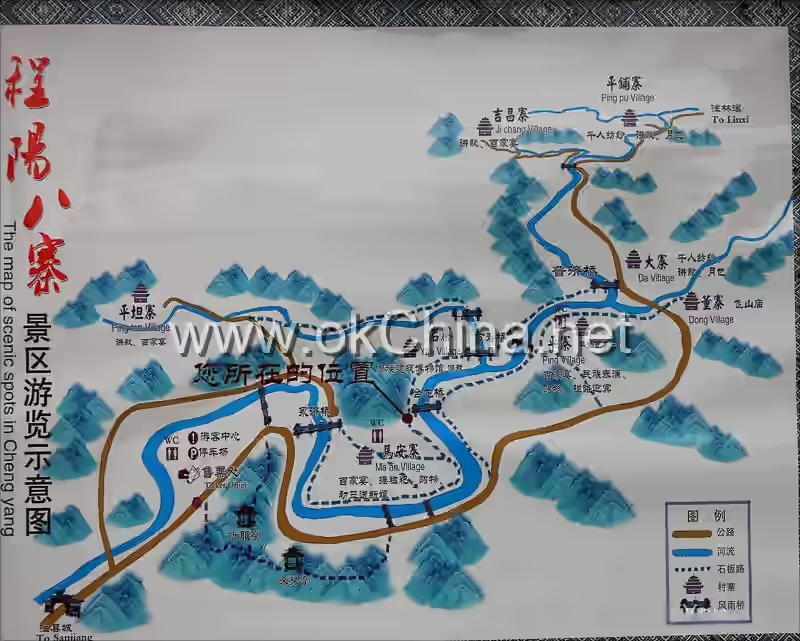
The Chengyang Eight Villages Scenic Area includes eight natural villages: Ma'an, Pingzhai, Yanzhai, Pingtan, Dongzhai, Dazhai, Pingpu, and Jichang. It has successively been honored with titles such as "China's First Batch of Landscape Villages," "Guangxi's Top Ten Charming Villages," "National AAAAA Tourist Attraction," "China's Spectacular Village," "National Famous Tourism Town," and "Chinese Ethnic Minority Characteristic Village." It is also known as the "Land of a Hundred Festivals." In 2014, three Dong villages—Ma'an, Pingzhai, and Yanzhai—were listed on the World Cultural Heritage Tentative List.
2. Geographical Location
Linxi Town, Sanjiang Dong Autonomous County, Liuzhou City, Guangxi Zhuang Autonomous Region
3. Scenic Area Introduction
3.1 Chengyang Yongji Bridge
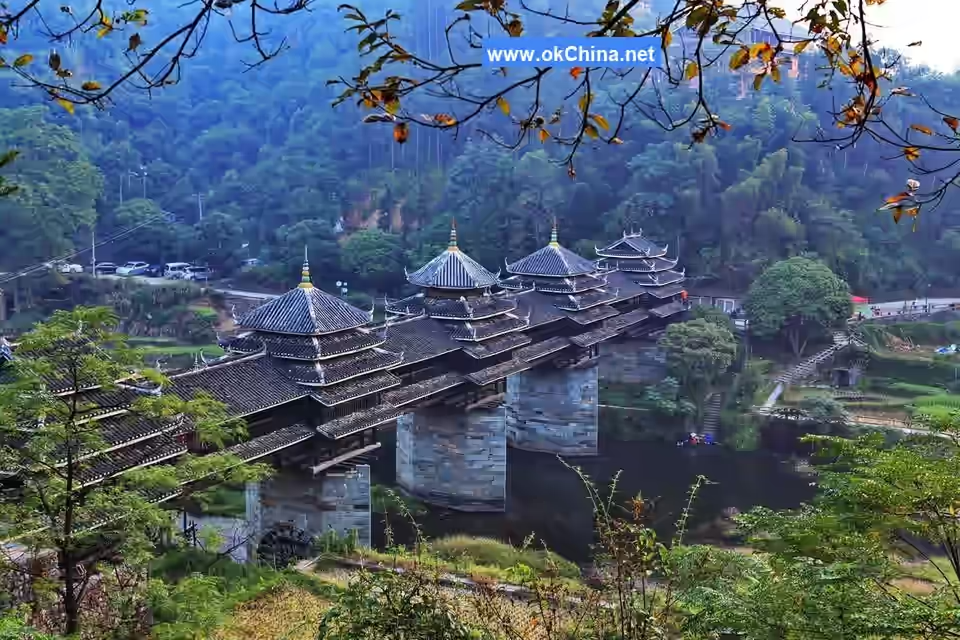
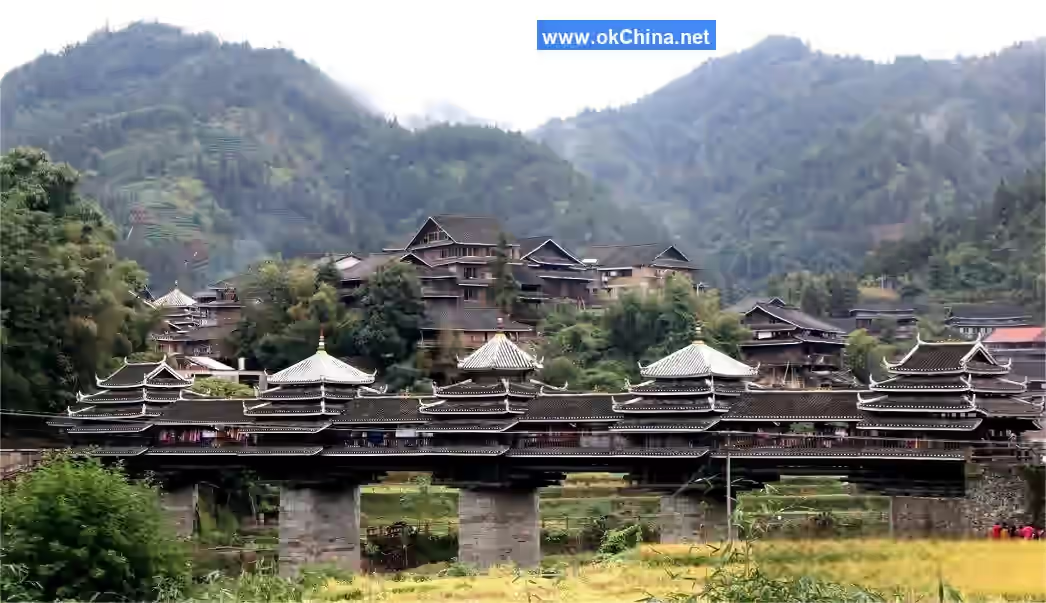
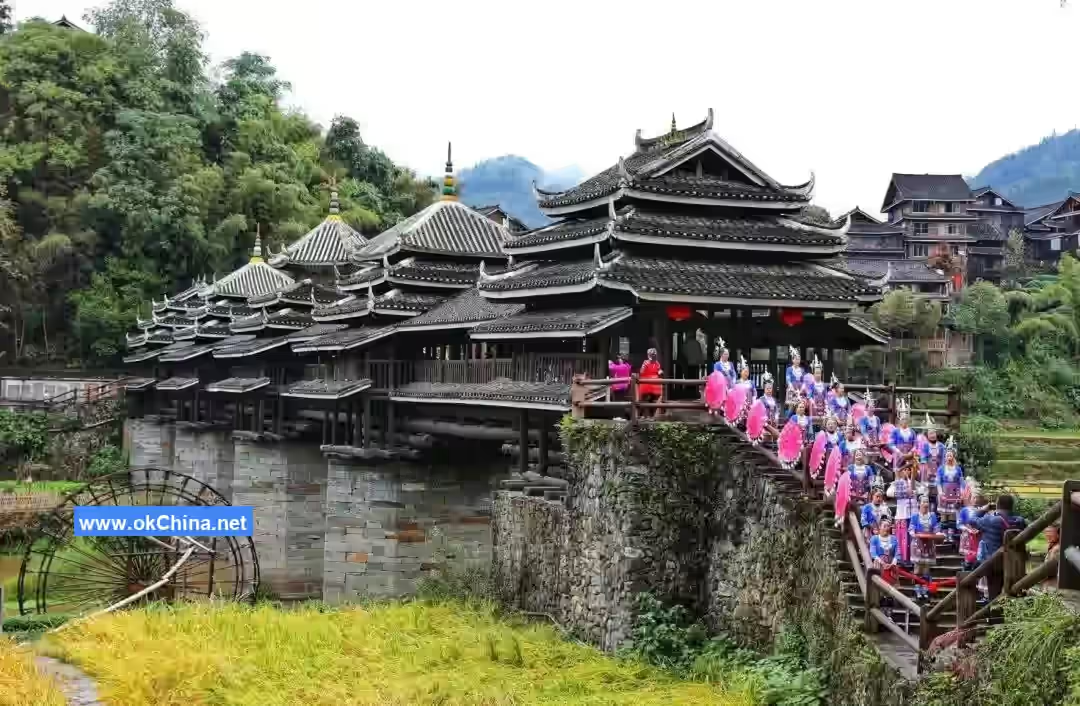
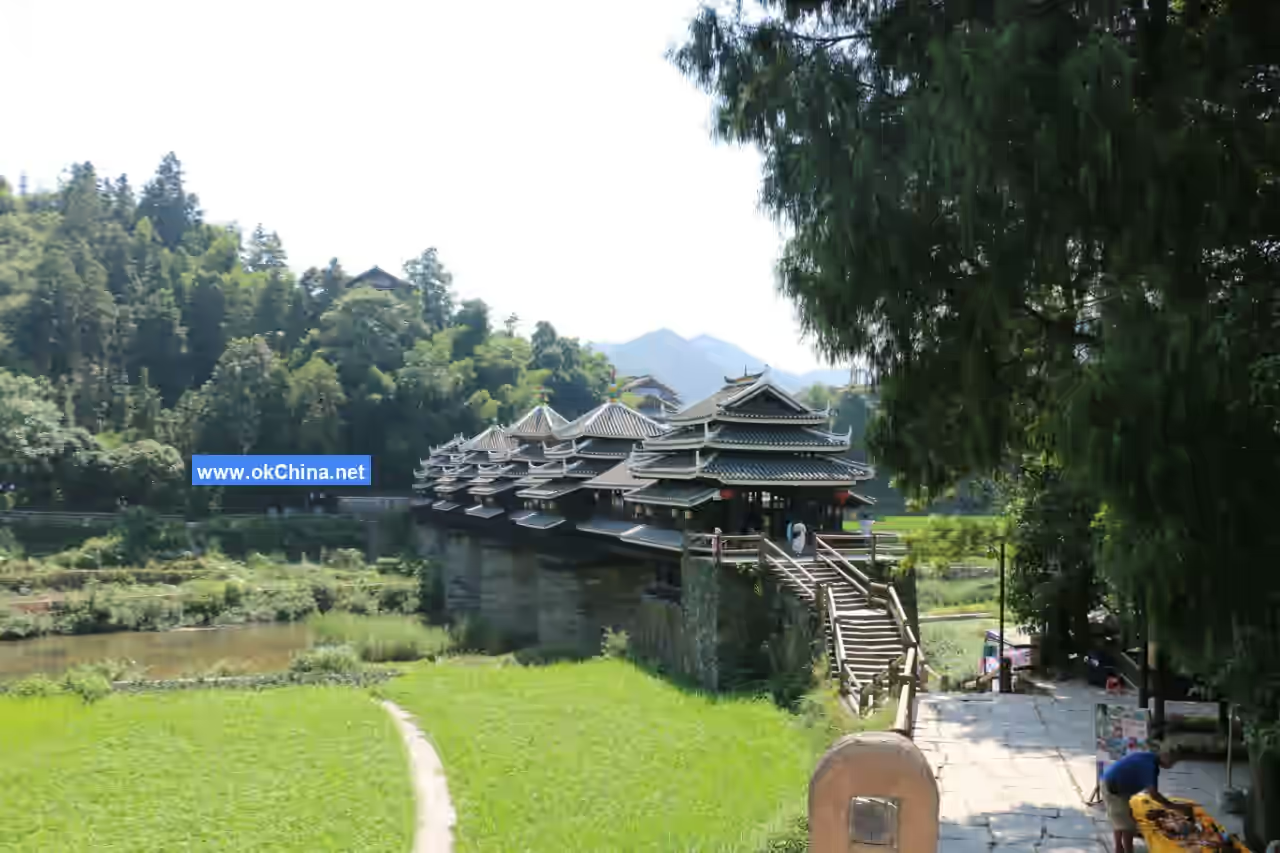
Representative of the wind-and-rain bridges in the Dong region of China. Its construction began in 1912 and was completed in 1924. The bridge is 77.76 meters long, 3.75 meters wide, and 11.52 meters high. It is a stone-pier wooden structure pavilion-style building with 2 abutments, 3 piers, and 4 spans. The piers support 5 pagoda-style bridge pavilions and 19 bridge corridors. The entire structure is connected by mortise and tenon joints, making it solid, precise, seamless, and exceptionally sturdy. It is a national key cultural relics protection unit. Along with China's Zhaozhou Stone Arch Bridge, Luding Iron Chain Bridge, and Romania's Nova Vo Steel Girder Bridge, it is known as one of the world's four great historical bridges. It is an outstanding representative of world wooden architecture and a model of the national intangible cultural heritage—Dong wooden architecture construction techniques—possessing extremely high craftsmanship and artistic value.
3.2 World Cultural Heritage Tentative List Ancient Village—Ma'an Dong Village
One of the Chengyang Eight Villages, located in the southern part of Pingyan Village. Legend has it that when the ancestor Cheng Chu arrived, he rode a red-maned steed, which later rested and transformed into the southernmost concave-shaped earthen slope of the Chengyang Eight Villages, resembling a saddle. Hence, this village is called "Ma'an Village" (Saddle Village). It is said that Ma'an Village has been established for over 700 years. The Dong people built their village along the river and streams, following the mountain terrain. Rows of blue-tiled wooden houses stand tall and uneven, simple and elegant, closely packed together. It is one of the main filming locations for movies such as Skiptrace starring Jackie Chan and Fan Bingbing, and The Nightingale starring Li Baotian.
3.3 Ma'an Drum Tower
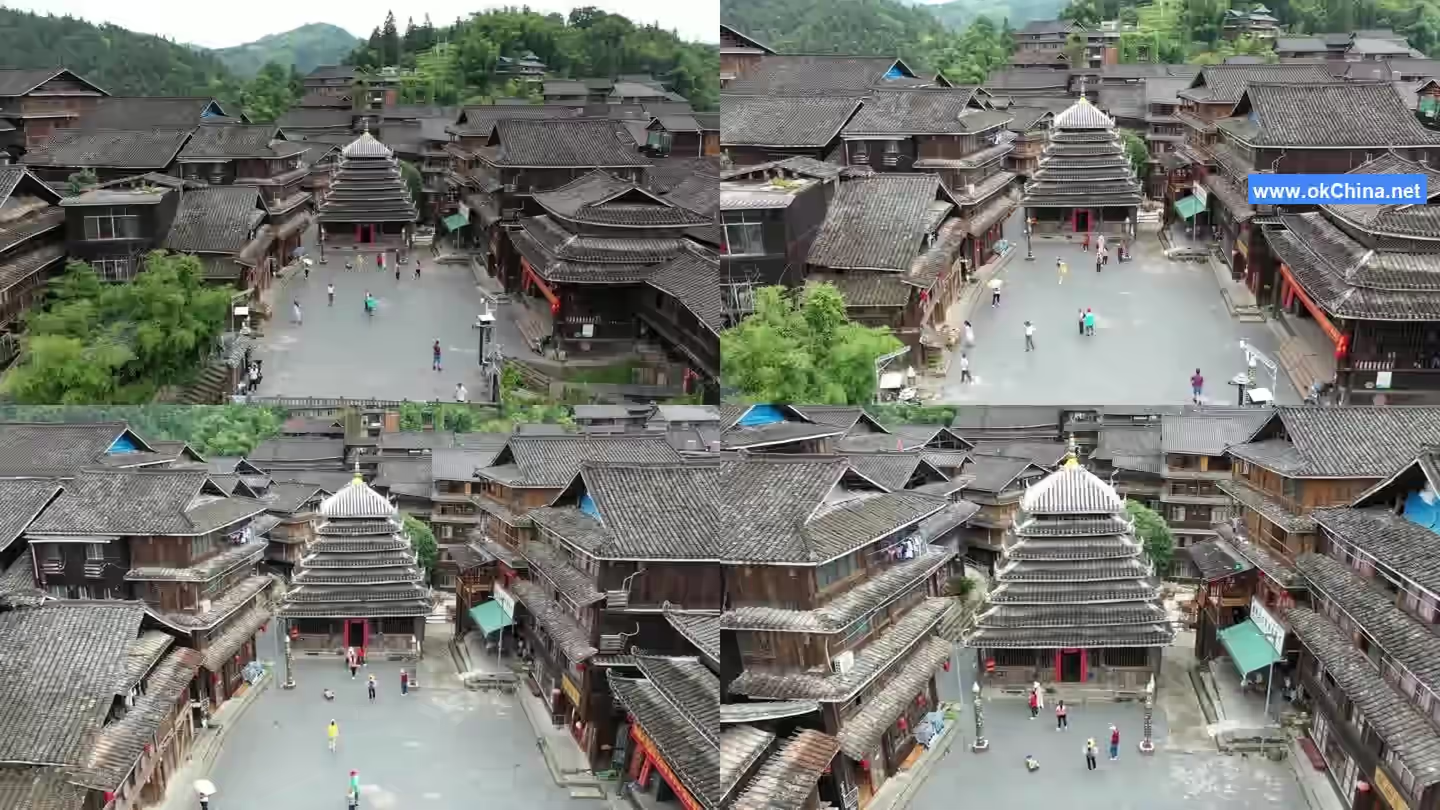
The drum tower is the activity center of a Dong village, a public space for villagers to discuss affairs, hold ceremonies, welcome guests, and enjoy song and dance entertainment. The Ma'an Drum Tower was initially built during the Jiaqing period of the Qing Dynasty. The tower is quadrilateral with a pointed spire, seven layers of eaves, 12.6 meters high, and 8.4 meters wide and deep. It combines the grandeur of a pagoda with the elegance of a pavilion, featuring a black-and-white color scheme and perfect structure.
3.4 Ma'an Drum Tower Square
The small square in front of the Ma'an Drum Tower serves as a venue for social and cultural activities of the Ma'an Dong community, such as "Yueye" (visiting festivals), "Jiangkuan" (discussing village rules), Lusheng competitions, and Hundred-Family Feasts.
3.5 Ma'an Opera Stage
Also known as the opera tower, it is a venue for the Dong people to perform Dong opera. Each Dong village has its own opera stage. The stage's design is similar to Dong folk houses, featuring a stilted wooden structure built with fir wood using mortise and tenon joints and bracket sets. It integrates architecture, color painting, sculpture, and poetry, creating a unique and beautiful appearance. The Ma'an Opera Stage has an open front and enclosed back, with two side doors left in the dry wall of the backstage for actors to enter and exit. During festivals, villagers organize and perform Dong opera here, hold "Yueye" gatherings, and welcome and send off guests in a joyous atmosphere.
3.6 Wooden Architecture Heritage Base—Yanzhai
One of the Chengyang Eight Villages, located in the center of Pingyan Village. It is a Dong village established in the late Ming Dynasty, situated on the west bank of the Linxi River. It is said that the terrain was uneven and rocky when the village was built, hence the name "Yanzhai" (Rock Village). The entire village has over 80 master carpenters. Yang Siyu and Yang Qiushi are inheritors of the national intangible cultural heritage—Dong wooden architecture techniques. Among them, Yang Siyu's family is renowned as a "family of craftsmen." In 2014, Yanzhai was included in the World Cultural Heritage Tentative List for Dong Villages.
3.7 Helong Bridge
A wind-and-rain bridge connecting Yanzhai and Pingzhai. It was first built in the 19th year of the Jiaqing period of the Qing Dynasty (1814) and is the oldest wind-and-rain bridge in the scenic area. The bridge is 42.8 meters long, 3.78 meters wide, and 9 meters high from the riverbed to the corridor eaves. It is a county-level cultural relics protection unit. The bridge corridor is supported by 36 wooden pillars, 13 on each side, with wooden planks serving as railings on both sides. The bridge foot consists of 23 round logs arranged in two inverted V shapes, with 14 wooden pillars embedded into the stone embankments on both banks, covered with bridge planks. The bridge has a corridor where pedestrians can shelter from rain, rest, and villagers can cool off and gather for conversation.
3.8 Yanzhai Drum Tower
The landmark building of Yanzhai, built in 2005. The tower is nearly 30 meters high with 15 layers of eaves, composed of four main pillars and twelve auxiliary pillars. To build the drum tower, every household in Yanzhai enthusiastically donated materials, timber, money, labor, and effort. It took only one year to complete the largest and most magnificent pointed-spire drum tower in the scenic area. Every pillar and every tile in the drum tower embodies the hard work, sweat, and wisdom of the villagers, symbolizing the unity and strength of the Dong people.
3.9 Intangible Cultural Heritage Inheritance and Exhibition Center
The first municipal-level intangible cultural heritage inheritance and exhibition center in Guangxi, located at the home of Yang Siyu, an inheritor of the national intangible cultural heritage—Dong wooden architecture techniques. In June 2005, the Sanjiang Dong Culture Exhibition Center was inaugurated and opened here. Three years later, it was upgraded to a municipal-level intangible cultural heritage inheritance and exhibition center. The exhibition center has a display area of 436 square meters, featuring 2 exhibition halls, 15 display cabinets, and exhibitions on carpentry skills, models, handicrafts, production and daily life tools, Dong cloth making process, achievement displays, clothing, and embroidery machines. It houses over 150 various collections, hundreds of pictures, and text display panels. It is one of the important platforms in the world for studying Dong culture.
3.10 Wanshou Bridge
First built in 1920, located downstream from Yanzhai. The bridge is 18.5 meters long, 4.6 meters wide, and 7 meters high. It is a stone-pier wooden structure with 2 abutments, 1 pier, and 2 spans. The pier supports 1 pagoda-style bridge pavilion and 7 bridge corridors. The bridge has an altar where villagers burn incense and worship deities, praying for blessings, virtue, and protection for their households.
3.11 Pin'an Bridge
Built during the Daoguang period of the late Qing Dynasty. The bridge is 23.5 meters long, 3.8 meters wide, and 6 meters high. Fourteen giant logs are stacked horizontally across the banks, supported by 8 rows of upright pillars. It has 2 abutments, 1 span, 1 pagoda-style bridge pavilion, and 7 bridge corridors, all connected by mortise and tenon joints. The bridge corridor provides shelter from rain for pedestrians and a place for villagers to cool off and gather for conversation.
3.12 Yanzhai Sa Altar
"Sama" refers to the Great Grandmother Goddess, said to be a brave and skilled female leader of the Dong people during the matrilineal clan society. She won the admiration and love of the Dong people in wars against foreign invasions and is revered as a goddess who brings peace and happiness to the nation. The "Sa Altar" is a place for worshiping and offering sacrifices to Sama. The Yanzhai Sa Altar is the largest and oldest open-air altar in the Chengyang Eight Villages, shaped like a fortress and built with bluestone. Every year during the Sa worship, women come to the "Sa Altar" to make offerings. They bring soybeans, puffed rice, glutinous rice cakes, tea leaves, and tea oil from home to cook oil tea at the altar. They sing "Ye" songs day and night, praising the great kindness and virtue of the "Grandmother" and praying for blessings for the Dong homeland.
3.13 Dong Dwellings—Stilted Houses
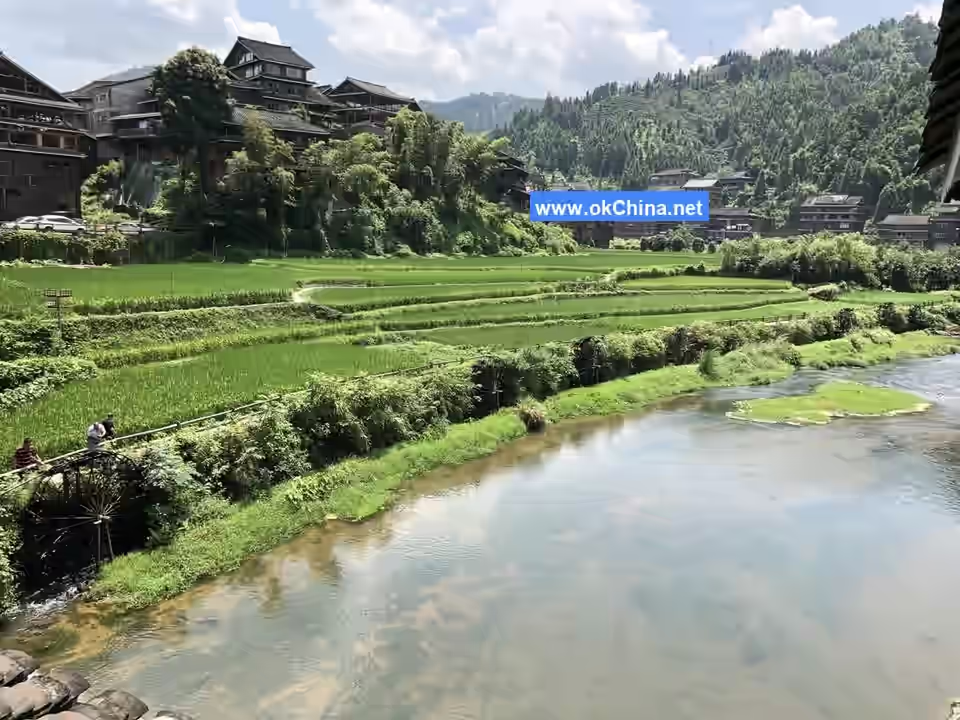
Chengyang Dong dwellings retain the ancient "ganlan" (pile-dwelling) wooden structure of the ancient Yue people. They are generally divided into three floors: the ground floor is for storing farm tools and raising poultry and livestock; the front part of the second floor is an outer corridor with a fire pit, serving as both the seat for "ancestors" and a place for heating, cooking, and stir-frying; the third floor is for bedrooms and granaries. Except for the tiled roof, the entire house is built with fir wood, with "stilted pillars" around the perimeter, forming the "stilted house." Typically, each Dong family has its own house, with connected eaves and interlinked floors. As the saying goes, "Dong houses rise high into the clouds, one can walk through the whole village without descending the stairs."
3.14 Puji Bridge
Also known as the Filial Piety Temple Bridge, it is the only "blessing bridge" in the Chengyang Eight Villages that preserves statues of Guan Yu, the God of Literature (Wenquxing), the God of Examinations (Kuixing), and the Earth God. It was first built during the Zhengde period of the Ming Dynasty (1505-1521) and has a history of over 500 years. The bridge is 50 meters long and 4 meters wide, located between Chengyang Dazhai and Yanzhai. It was built by the Dong people to commemorate the great filial son of the Dong family, "Bu Kuan."
3.15 Flagstone Paths
In Dong villages, the endless flagstone paths were not laid overnight. Instead, enthusiastic Dong families contributed piece by piece, section by section, accumulating over time. With the spirit of the "Foolish Old Man who moved mountains," they carried stones and paved the paths, eventually connecting them into a whole. The flagstone paths bear witness to the warm-heartedness, kindness, and generosity of the Dong compatriots.### 3.16 Pingsai Village—Flat Village One of the Eight Villages of Chengyang, it is named for its flat terrain. In the Dong language, it is called "Xian Wu," named in memory of the ancestors who settled here during the Wu hour. The village features one old drum tower from the Qing Dynasty, a century-old wind-and-rain bridge, and clusters of wooden residential houses. Historical relics such as wood carvings, stone carvings, stone mills, and ancient post roads are well-preserved.
3.17 Pingsai Village Gate
The village gate of a Dong village is called "Xing," built at the entrance and exit of the village, serving as one of the symbols of a Dong community. The gate is a ceremonial portal for interactions between villages, where villagers welcome and send off guests, offer roadside wine, and sing roadside songs. In ancient times, it also served defensive purposes against enemies and thieves.
3.18 The Best of China's Dong Ethnic Group—Pingsai's Old and New Drum Towers
The old drum tower of Pingsai was first built in the first year of the Daoguang era (1821) and is a county-level cultural relic protection unit. It is the only ancient building in Sanjiang County with well-preserved stone tablets and wooden plaques. The drum tower has three bays, featuring a suspended-hill roof with multiple eaves in the center. It is the only drum tower in China's Dong region constructed with hemlock wood. Inside, there is a horizontal wooden plaque inscribed with "世泽绵长" (Long-lasting Legacy) from the Daoguang era, and the wooden pillars retain traces of the ancient Dong social organization—punishments under the "Kuan" covenant. The new drum tower of Pingsai was built in September 2014, covering an area of 169 square meters, standing about 25 meters tall with 17 layers. With a total cost of approximately 1.5 million yuan, it has the most eaves among the eight villages' drum towers and is the tallest and largest single-pillar drum tower in China's Dong region.
3.19 Mountain Trail
The trail is approximately 1.5 kilometers long, lined with lush green trees and cool breezes along the way. From the viewing platform at the mountaintop, one can overlook the panoramic view of the Eight Villages of Chengyang, surrounded by mountains and shrouded in mist, admire the graceful wind-and-rain bridges, and see the stilted wooden houses nestled against the mountains and rivers, arranged in orderly rows. Layers of rice paddies and turning waterwheels create a picturesque scene of Chengyang's four seasons amidst green mountains and clear waters. On the bluestone-paved path, one can quietly listen to the melodious lusheng (a reed-pipe wind instrument) and beautiful Dong songs, experiencing the pristine and rustic charm of the Dong village's original ecology.
3.20 Tingye Pavilion
The Dong people have long adhered to the saying, "Build villages and towers, erect bridges over water, and set up pavilions on ridges." The Tingye Pavilion was established to provide tourists with a place to overlook the eight villages and enjoy the scenery of Chengyang throughout the four seasons. During festivals, when grand competitions of lusheng playing and song-and-dance gatherings are held in the Dong village, judges come to this pavilion to score each team. This ensures fairness and impartiality, and the distance allows the songs and wind music to resonate beautifully, making the listening experience heavenly. Hence, the name "Tingye Pavilion" (Listening to Songs Pavilion) was derived.
3.21 Lainu Pavilion
"Lainu" means beautiful in the Dong language. The pavilion is named "Lainu Pavilion" for its natural elegance and its position opposite the Dong village. As the best spot to overlook the eight villages, it highlights the beauty of Chengyang's four seasons.
3.22 Ma'an Village Gate
Built in 2014 and located south of Ma'an Village, this wooden structure resembling a pavilion is a public building of the Dong village, standing at the village entrance. The village gate is an important venue for the Dong people to welcome and send off guests.
3.23 Riverside Well
This natural mountain spring is the well closest to the water surface in the Eight Villages of Chengyang scenic area. Above the well stands a wooden structure with Dong characteristics—a well pavilion, which shelters from wind and rain and provides a resting place for villagers passing by or fetching water.
3.24 Drunken Mountain Spring
The well pavilion combines a pavilion and a corridor, built against the mountain with a unique design. It is the only well pavilion in the Eight Villages of Chengyang scenic area with an attached leisure corridor.
3.25 Pingsai Dong Well
A rare vertical double-well in Dong villages and one of the oldest wells, it serves as the main drinking water source for Pingsai. According to village elders, the well was dug by ancestors when the village had not yet expanded to this area, and the surroundings were farmland. Hence, it was named "Dong Well," meaning "the well in the eastern outskirts of the village." Small fish swim in the well year-round, and villagers use them to monitor changes in water quality.
3.26 Pingsai Village Gate
The best-preserved village gate in the Eight Villages of Chengyang scenic area, built in the late Qing Dynasty, it has a history of over a hundred years. From a feng shui perspective, the village gate connects the dragon vein and facilitates communication. Built at the village entrance, like the drum tower and wind-and-rain bridge, it is a symbol of the Dong village. Major inter-village activities begin at the village gate.
3.27 Siyuan Pavilion (Remembering the Source Pavilion)
This well was built as part of the village's fire prevention and drinking water project. It began storing water in the fifth lunar month of 1991, greatly facilitating villagers' daily lives and production. The Siyuan Pavilion was completed in February 1993. The inscription reads: "Pingsai's drinking water benefits from the Party's grace. Remembering the source while drinking water, we built this pavilion to commemorate it, naming it Siyuan Pavilion." The hexagonal pavilion has a pointed roof and is equipped with resting benches, making it an excellent spot for leisure and cooling off.
3.28 Longfeng Well (Dragon and Phoenix Well)
One of the main drinking water sources for Yansai villagers, the Longfeng Well is located below the drum tower. Legend has it that a pair of dragons and phoenixes descended from the sky, exhausted, and perched atop the drum tower. After drinking from this well, they instantly regained strength and flew away. Today, "dragon drinking water" is used as a metaphor for a rainbow. It is also said that drinking water from the Longfeng Well increases the likelihood of having twins (a dragon and a phoenix). Therefore, during the collective wedding ceremonies at Spring Festival, brides often choose to fetch water from this well.
3.29 Upper and Lower Well
As the name suggests, this well has two springs, upper and lower. The upper well, located on the inner side of the road, is convenient for fetching water and is used by villagers for washing vegetables and rice. The lower well, on the outer side of the road, has sweet-tasting water and is used for drinking. On the first day of the Lunar New Year, villagers clean coins and throw them into the lower well to pray for their families' safety, health, and happiness in the coming year.
3.30 Riverside Village Gate
Built on the ninth day of the twelfth lunar month in 1947, the Riverside Village Gate retains its original appearance. Located on the bluestone path leading into and out of Yansai, it was the main passage before the Wanshou Bridge was built.
3.31 Yansai Well
A mountain spring on the north side of Yansai, nestled against the hills, it has ample water year-round. The larger well provides drinking water for villagers, while the smaller one is for washing vegetables and clothes. The original well pavilion was built in the early 1950s. Due to its location in a valley, it was often damp, and the pillars deteriorated severely. A new pavilion was built in 2016, offering better protection for the well.
3.32 Pingdong Drum Tower
Completed in September 2005, the Pingdong Drum Tower has nine layers of eaves and combines a drum tower with a stage, serving as the main venue for village gatherings and cultural activities. According to ancestral tales, the construction of the Pingdong Drum Tower was foretold by immortals when the ancestors settled here. However, due to the massive scale of the project, it was difficult to undertake and remained an unfulfilled wish. The completion of the drum tower has now fulfilled this ancestral aspiration.
3.33 Under-the-Tower Well
Originally, a "Jiangkuan Tower" (a tower for village gatherings and discussions) stood above the well (later demolished to build a drum tower), giving the well its name. Located by the roadside, it is one of the main drinking water sources for Chengyang Dazhai and Dongzhai.
3.34 Dongzhai Drum Tower
Completed on March 30, 2005, the Dongzhai Drum Tower is square-shaped, with watchtowers on all four sides of the second floor. A unique feature of this drum tower is the reuse of the ridge beam from the old drum tower built in the fourth year of the Tongzhi era (1865) of the Qing Dynasty. As the old drum tower deteriorated over time, villagers decided to rebuild it. During demolition, they discovered that the ridge beam of the old drum tower remained strong and intact. Believing it would bring good fortune to the village, they preserved the beam and reinstalled it atop the new drum tower upon completion, allowing this treasure of the old drum tower to endure to this day.
3.35 Feishan Temple
The Feishan Temple was built by the Dong people to commemorate "Feishan Taigong" Yang Zaisi and underwent major renovations in 2005. Yang Zaisi was a chieftain of the "Feishan Barbarians" during the late Tang and Five Dynasties periods, known as the leader of the Ten Grottoes. After his death, he was revered as a deity or ancestor by Dong people in the border regions of Hunan, Guangxi, and Guizhou, leading to the widespread construction of Feishan Temples in his honor. Local people often visit the temple to pay homage on the sixth day of the sixth lunar month (his birthday) and the twenty-sixth day of the tenth lunar month (his death anniversary).
3.36 Dazhai Village Gate
Located at the western entrance of the cross street in Chengyang Dazhai, it was completed in July 2009. Like the drum tower and wind-and-rain bridge, the village gate is a symbol of the Dong village. Especially on the third day of the Lunar New Year, when collective village weddings take place and brides are sent off, the Dazhai Village Gate is a必经之地 for the wedding processions. The processions, resembling long dragons, weave through the village amidst the sounds of firecrackers and cheers, creating a lively and festive atmosphere.
3.37 Dazhai Well
A natural mountain spring, Dazhai Well is conveniently located near the road, with water that is warm in winter and cool in summer. The well pavilion was built in November 2015. Its rustic, unadorned pillars blend harmoniously with nature.
3.38 Dazhai Drum Tower
Completed in October 2002, the Dazhai Drum Tower stands 18 meters tall with a unique two-story design: the first floor serves as a stage, and the second floor is a gathering place for villagers. During its construction, every household in the village contributed funds and timber, and volunteered labor. The four main pillars were donated by villagers and transported from deep in the mountains through collective effort. When the ridge beam was installed, villagers from various villages came to celebrate. A grand banquet filled the cross street, accompanied by singing and dancing, creating a vibrant and joyous occasion.### 3.39 Dong Silver Ornament Museum Dong silver ornaments boast a long history, where abundance is considered beautiful and weight signifies value. Located in the South Area of Chengyang Bazhai, the Dong Silver Ornament Museum is dedicated to preserving civilization and inheriting culture. Covering an area of approximately 1,500 square meters and housing about 3,000 pieces, it is a comprehensive silver ornament museum in China's Dong ethnic region focused on collection, inheritance, research and development, processing, and exhibition-sales. The venue is divided into the Wind-Rain Bridge Exhibition Area, Intangible Cultural Heritage Masters Exhibition Area, Premium Collection Exhibition Area, and Modern Exhibition Area. The categories include hair ornaments, earrings, necklaces, bracelets, rings, and other decorative items, showcasing the exquisite craftsmanship of the Dong people and infusing intangible cultural heritage with vitality and a sense of fashion.
3.40 Chengyang Bazhai Metaverse Photo Studio
The Chengyang Bazhai Metaverse Photo Studio is located on the commercial street of the South Service Area. At the Foto-X Metaverse Photo Studio, visitors will step into a fantastical virtual reality photography experience space! Utilizing Web3-related technologies such as virtual humans, AIGC, virtual reality, and blockchain, the venue showcases the rich customs, culture, and history of the Dong ethnic group. Unique features like the Wind-Rain Bridge, Drum Tower, stilted wooden houses, seasonal pastoral landscapes, and numerous scenic spots will be preserved in visitors' unique photos. Additionally, visitors will receive a permanent digital wallet containing exclusive digital assets like NFT photos, electronic postcards, badges, and scenic area coupons, enabling permanent storage, recording, sharing, and dissemination of photos, with permanent display in their personal metaverse gallery.
3.41 Dong Oil Tea Food Experience Hall
Located in the South Area of Chengyang Bazhai, this venue is based on the immersive experience of making oil tea in the thousand-year-old Dong village. It is a food culture experience hall that integrates the dissemination of Sanjiang tea and oil tea food culture, leisure experiences, brand display, training and education, and sightseeing tourism.
3.42 Dong Wooden Architecture Museum
Sanjiang is known as the "Capital of Chinese Wooden Architecture Craftsmanship." The construction techniques of Dong wooden architecture can be traced back to the early primitive clan society or even the earlier nest-dwelling period. They have created an architectural culture characterized by "bamboo-wood structure," "mortise and tenon beam joining," and "carved beams and painted rafters." In 2006, these techniques were included in the first batch of national-level intangible cultural heritage lists. The Dong Wooden Architecture Museum is divided into indoor exhibition areas and outdoor experience areas, displaying various Dong architectural models, traditional furniture, etc. It is a venue for understanding wooden architecture, natural sciences, and educational popularization, providing specimens for research institutions and experiential scenarios for students, citizens, and tourists.
3.43 Yuediwa Ecological Agriculture Park
The agriculture park covers an area of 200 mu and is divided into four areas: the South Area, Dong Painting Hall, Ma'an, and Pingzhai. Adhering to the principles of "ecology, environmental protection, and health," the park integrates观赏性 (ornamental value), participation,娱乐教育 (edutainment), and趣味性 (fun). It employs an ecological park model for agricultural layout and production, combining agricultural activities, natural scenery, rice-fish demonstration, flower cultivation, children's entertainment, and environmental protection. Through the integration of agriculture and tourism and land transfer, it aims to achieve ecological, economic, and social benefits for both the scenic area and the community.
3.44 Chengyang Bazhai Red Education Base
The Chengyang Yongji Bridge is a Guangxi regional-level patriotic education base. The venue covers a building area of 1,300 square meters and utilizes modern artistic techniques such as historical pictures, simulated environments, and physical exhibits. Focusing on the two major themes of patriotic education and revolutionary tradition education, it primarily showcases the revolutionary history of the Red Seventh Army passing through Sanjiang and staying in Bazhai during its northward march. Although brief, this period sowed the seeds of revolution and deepened the profound friendship with the Dong people.
3.45 Grand Song Welcoming Square
Located in the South Service Area of Chengyang Bazhai, it covers an area of 6,800 square meters. A large Chengyang Bazhai landscape gate stands in the center of the square. The ground is paved with patterns of "Three Fish Sharing One Head" and "Coin," with the sun in the middle and human figures holding hands around the perimeter, highlighting the theme of "Duoye Unity, One Family." There are 4 sets of gourd-shaped lamp posts on both the south and west sides, symbolizing the auspiciousness and happiness of Chengyang Bazhai and the well-being of the Dong people.
3.46 Tongxin Bridge (Heart-Linking Bridge)
Located in the South Service Area of the Chengyang Bazhai Scenic Area, it is a bridge connecting the Tourist Center and the "Yaluoye" Leisure Street. The bridge is 37.8 meters long, 2.8 meters wide, and 12 meters high, constructed with 3 piers, 3 pavilions, and 2 corridors, featuring a wooden structure. It symbolizes lovers walking hand in hand across the bridge, with the Tongxin Bridge as the matchmaker and the Dongqing Lake as the witness. Hanging auspicious flowers symbolizing love on the bridge serves to见证甜蜜的爱情 (witness sweet love).
3.47 Dongqing Lake (Dong Affection Lake)
"Zuomei Sanjiang, Dongqing Tianxia" (Courting in Sanjiang, Dong Affection Under Heaven). Dongqing Lake is located in the South Service Area of Chengyang Bazhai, covering an area of approximately 13.14 mu. It derives its name from the century-old collective wedding customs传承 (inherited) in Chengyang Bazhai.
4. Dong Ethnic Culture
4.1 Culture and Arts
Dong literature and art are rich and diverse, earning the reputation of "the hometown of poetry, the ocean of songs." The poetry features strict metrical rules, interlocking rhymes, echoing lines, and apt metaphors, possessing strong artistic appeal. Love songs are beautiful, sincere, and passionate; narrative songs are委婉曲折 (subtle and winding), profound in meaning, and can be sung for several nights consecutively. The lyrics often focus on themes such as human origins, ethnic migrations, marital love, and romantic relationships between men and women, holding historical value. The流传故事 (circulated stories) are曲折 (intricate) and captivating. The musical melodies are melodious and graceful. The Pipa Song, named after being accompanied by the pipa or the "Geyiqin" (commonly known as the Niubajiao), features cheerful and smooth melodies and is unique to the Dong ethnic group.
4.2 Arts and Crafts
Handicrafts include cross-stitch work, embroidery, rattan weaving, and bamboo weaving. Silver ornaments include neck rings, necklaces, bracelets, earrings, rings, hairpins, and silver flowers. Textiles include Dong brocade, Dong belts, Dong handkerchiefs, and Dong cloth. The "egg cloth," first dyed with indigo and then coated with egg white, is bright in color and is the traditional fabric of the Dong people.
4.3 Architecture
The Dong people excel in stone and wood architecture. The Drum Tower and Wind-Rain Bridge are the crystallization of their architectural art and are highly distinctive. The Drum Tower is a wooden structure joined by mortise and tenon without using iron nails. It has three, five, or up to fifteen stories,呈4面或6面8面 (presenting four, six, or eight sides), and stands 4 to 5 zhang high (approx. 13-16 meters). With its soaring pavilions and multiple eaves,它形如宝塔 (it resembles a pagoda), majestic and spectacular, integrating the styles of pagodas and pavilions. The Drum Tower is the center of a Dong village, serving as a public assembly and discussion venue. Its location and height facilitate登高远望 (ascending for a distant view). The Wind-Rain Bridge is a stone-pier wooden bridge with a long corridor bridge deck and桥亭重瓴联阁 (bridge pavilions with multiple layers of roofs and connected structures), grand and magnificent. It functions not only as a交通设施 (transportation facility) built on essential paths, at village entrances and exits, or connecting both sides of streams and rivers, and as an architectural feature that adorns the village landscape, but also as a place for people to shelter from wind and rain, enjoy coolness and rest, welcome and send off guests, and for young people to sing and entertain.
4.4 Clothing
The attire of Dong women varies from place to place. Some wear tube trousers, jackets with shoulder patches, large silver-beaded buttons, and braided hair coiled on the head. Some wear knee-length jackets with滚边或花边 (piped edges or lace) on the front plackets, sleeve openings, and trouser legs, with hair coiled up. Some wear large-front jackets, wide-leg trousers, waist sashes, headscarves, and coiled hair buns. Some wear front-opening jackets, chest cloths, pleated skirts, aprons, leg coverings or绑脚 (leg wrappings), with hair buns adorned with silver cones. Some wear wide-sleeved large-front jackets embroidered with dragons, phoenixes, and flowers, long skirts below the knees, and coiled hair. Generally, they enjoy wearing silver ornaments. The attire of Dong men near towns is similar to that of the Han Chinese, with slight differences only in remote mountainous areas, where they wear right-lapel collarless short jackets, tube trousers, and large headscarves.
4.5 Festivals
Most Dong areas celebrate the Spring Festival, while some choose a day in October or November to celebrate the "Dong New Year." On these occasions, people make glutinous rice cakes, brew rice wine, collectively slaughter pigs and cattle, worship ancestors, bring gifts to visit their parents-in-law to offer New Year greetings, prepare wine and feasts to接待宾客 (receive guests), and hold "Duoye" dances or芦笙 (lusheng) dances and "bullfights." The New Rice Tasting Festival mostly falls in July, with varying dates. During the festival, new rice and fish are used to祭祖 (worship ancestors) and预祝丰收 (predict a good harvest).
4.6 Diet
Staple food is rice. They enjoy drinking rice wine and have a preference for sour and spicy flavors, hence the saying "The Dong cannot do without sour." Self-made "sour fish" and "sour meat" have unique flavors and can be stored for years without spoiling. Oil tea is a special snack for招待客人 (entertaining guests), complete in color, aroma, and taste.
Comments
Post a Comment