Chengde Mountain Resort
1. Introduction
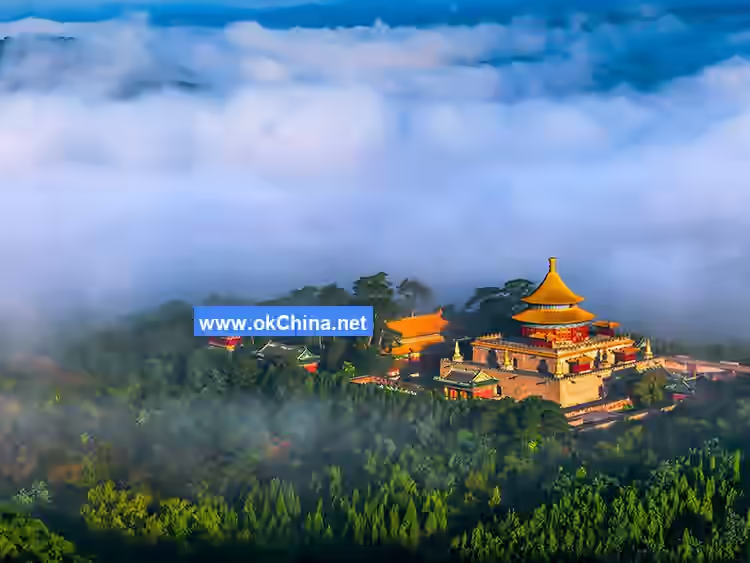
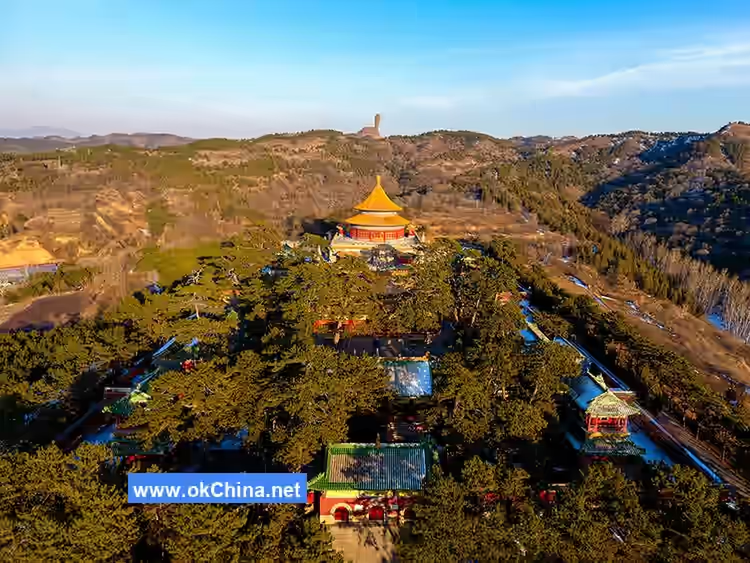
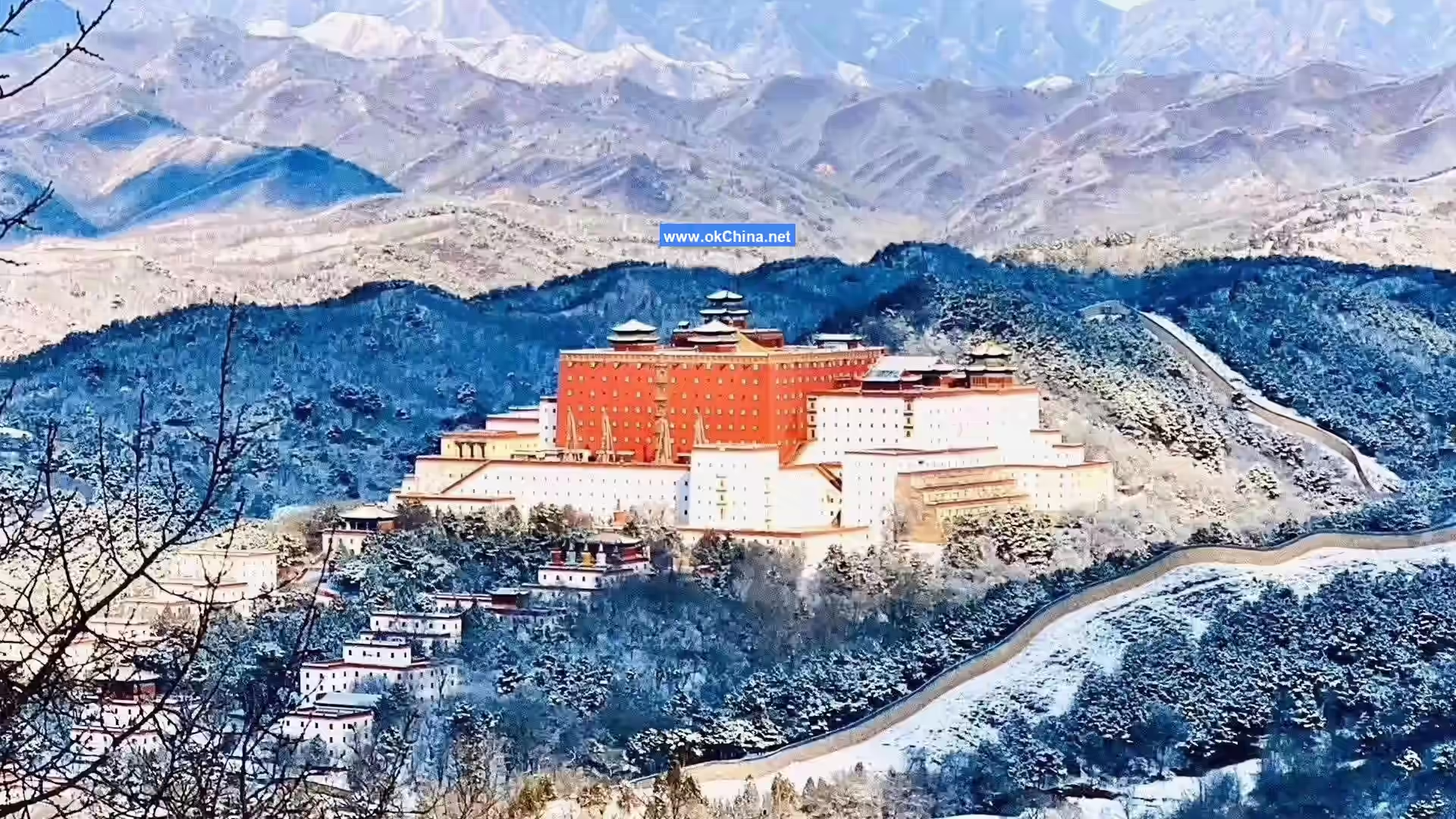
The Chengde Mountain Resort, also known as the "Chengde Imperial Palace" or "Rehe Imperial Palace," is located at No. 6 Shanzhuang East Road, Shuangqiao District, Chengde City, Hebei Province. Construction of the Chengde Mountain Resort began on a large scale in the 42nd year of the Kangxi Emperor's reign (1703) during the Qing Dynasty. It was built as a summer palace by the Qing emperors to achieve the political goals of pacifying and uniting China's frontier ethnic minorities and consolidating national unity.
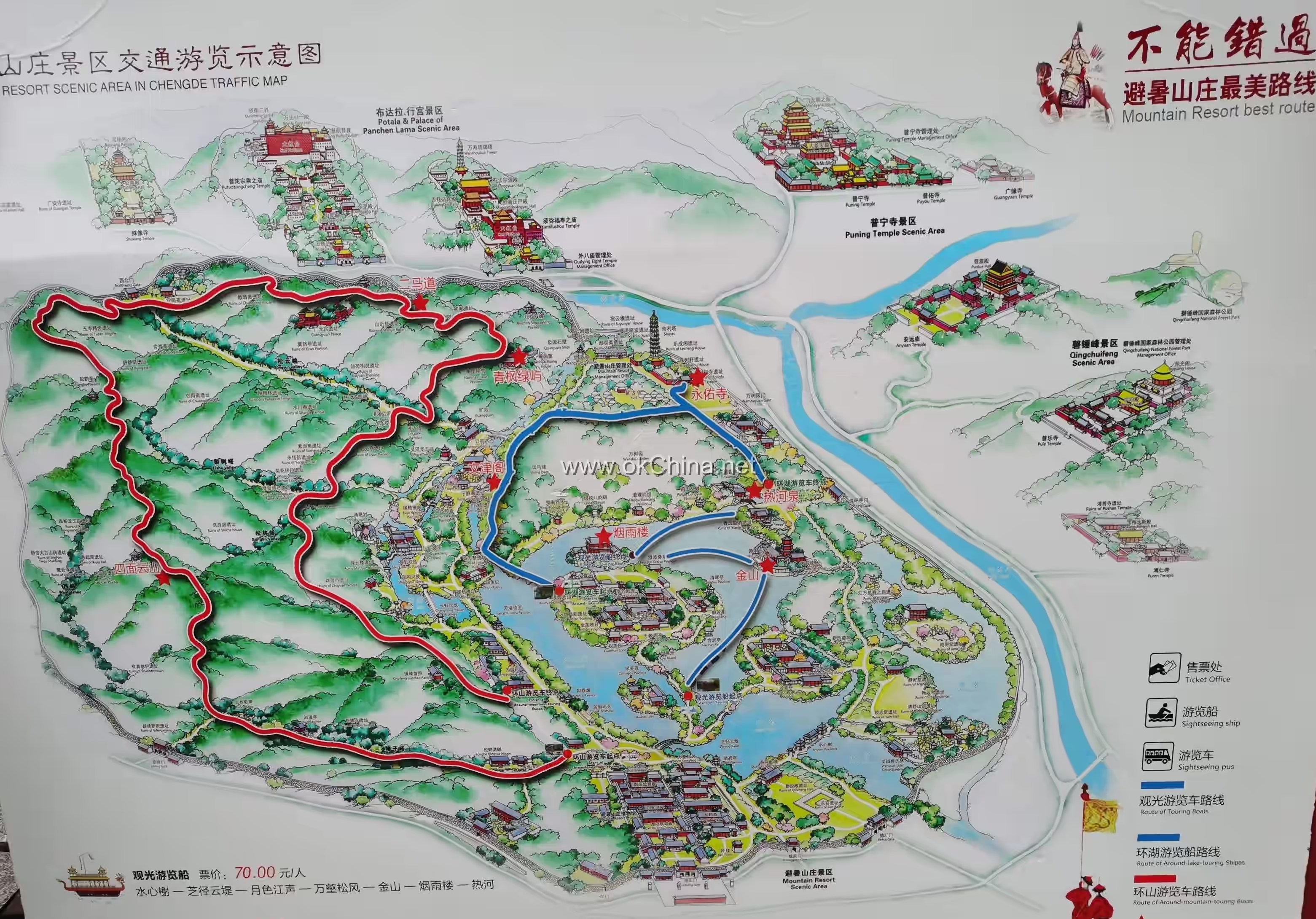
Covering an area of 5.64 million square meters, the Chengde Mountain Resort is mainly divided into two parts: the palace area and the garden area (including the lake area, plain area, and mountain area). Unlike other imperial gardens, the Chengde Mountain Resort inherits and develops the traditional Chinese garden design philosophy of "integrating human-made beauty into nature, conforming to nature while surpassing it." It was sited and designed according to the natural topography, fully utilizing the natural terrain and following the contours of the mountains and water. It represents the pinnacle of ancient Chinese garden and architectural art and is a masterpiece of creativity.
2. Historical Development
2.1 Construction Background
In the 16th year of the Kangxi Emperor's reign (1677), after suppressing the "Revolt of the Three Feudatories" led by Wu Sangui in the south, Emperor Kangxi turned his attention to the north. To preserve the Manchu tradition of "horseback riding and archery," train the military, strengthen the management of Mongolian territories, consolidate border defense, and maintain the stability of the Qing regime, the Mulan Hunting Ground was established in the 20th year of the Kangxi Emperor's reign (1681) in the nomadic lands of Mongolian tribes such as Ongniud, Aohan, Bairin, Hexigten, and Harqin, approximately 350 kilometers from the capital.
To address issues such as food, lodging, rest, and material transportation along the way, more than 20 imperial palaces were gradually built after the 40th year of the Kangxi Emperor's reign (1701). The Rehe Imperial Palace was established under these circumstances.
Located midway between Beijing and the Mulan Hunting Ground, the Rehe Imperial Palace enjoyed favorable terrain, a pleasant climate, and beautiful scenery. It also provided direct access to the birthplace of the Qing Dynasty in the north, serving as a gateway to the emperor's homeland. Additionally, it overlooked the interior of the Great Wall and controlled various Mongolian tribes. As a result, it was designated as the central hub among all imperial palaces, and large-scale construction began in the 42nd year of the Kangxi Emperor's reign (1703).
2.2 Construction During the Qing Dynasty
The construction of the Mountain Resort can be broadly divided into two stages.
First Stage: From the 42nd year of the Kangxi Emperor's reign (1703) to the 52nd year of the Kangxi Emperor's reign (1713), the lake area was developed, islands were built, embankments were constructed, and palaces, pavilions, and palace walls were erected, giving the Mountain Resort its initial form. Emperor Kangxi selected scenic spots within the garden and named them with four-character phrases, creating the "Thirty-Six Scenic Spots."
Second Stage: From the 6th year of the Qianlong Emperor's reign (1741) to the 19th year of the Qianlong Emperor's reign (1754), Emperor Qianlong carried out large-scale expansions of the Mountain Resort, adding palaces and numerous exquisite large-scale garden structures. Following the example of his grandfather Kangxi, Qianlong named another set of scenic spots with three-character phrases, creating an additional "Thirty-Six Scenic Spots." Together, they are known as the "Seventy-Two Scenic Spots of the Mountain Resort."
In the 20th year of the Kangxi Emperor's reign (1681), to strengthen the management of Mongolian territories and consolidate northern border defense, the Qing government established the Mulan Hunting Ground on the Mongolian grasslands, approximately 350 kilometers from Beijing. Every autumn, the emperor led tens of thousands of people, including nobles, ministers, the Eight Banners army, imperial concubines, and royal descendants, to the Mulan Hunting Ground for hunting expeditions, aiming to train the military and secure the borders. To accommodate the emperor's needs for food and lodging along the way, 21 imperial palaces were built between Beijing and the Mulan Hunting Ground. The Rehe Imperial Palace—the Mountain Resort—was one of them. Construction of the Mountain Resort and its surrounding temples began in the 42nd year of the Kangxi Emperor's reign (1703) and was completed with the final project in the 57th year of the Qianlong Emperor's reign (1792), spanning the reigns of three emperors—Kangxi, Yongzheng, and Qianlong—over 89 years. During the Anglo-French invasion of Beijing, Emperor Xianfeng fled here with a group of ministers.
From the 52nd year of the Kangxi Emperor's reign (1713) to the 45th year of the Qianlong Emperor's reign (1780), as the Mountain Resort was being constructed, the surrounding temples were also built successively.
During the reigns of Emperors Kangxi and Qianlong, the Qing emperors spent approximately half of each year in Chengde. Important political, military, ethnic, and diplomatic affairs of the early Qing Dynasty were handled here. As a result, the Chengde Mountain Resort became a secondary capital and the second political center outside Beijing. Emperor Qianlong received and entertained important figures here, such as the Dörbet Mongol leader Three Cheling, the Torghut leader Ubashi, and the Sixth Panchen Lama, a Tibetan political and religious leader. He also received the first British diplomatic mission to China, led by Ambassador Lord Macartney. Emperors Jiaqing and Xianfeng of the Qing Dynasty both died of illness here. In 1860, when the Anglo-French forces attacked Beijing, Emperor Xianfeng sought refuge in the Mountain Resort and approved several unequal treaties, including the Sino-Russian Treaty of Beijing, in this very place. The "Xinyou Coup," which influenced the course of Chinese history, also originated here. With the decline of the Qing Dynasty, the Mountain Resort gradually fell into disrepair.
2.3 Modern Conservation
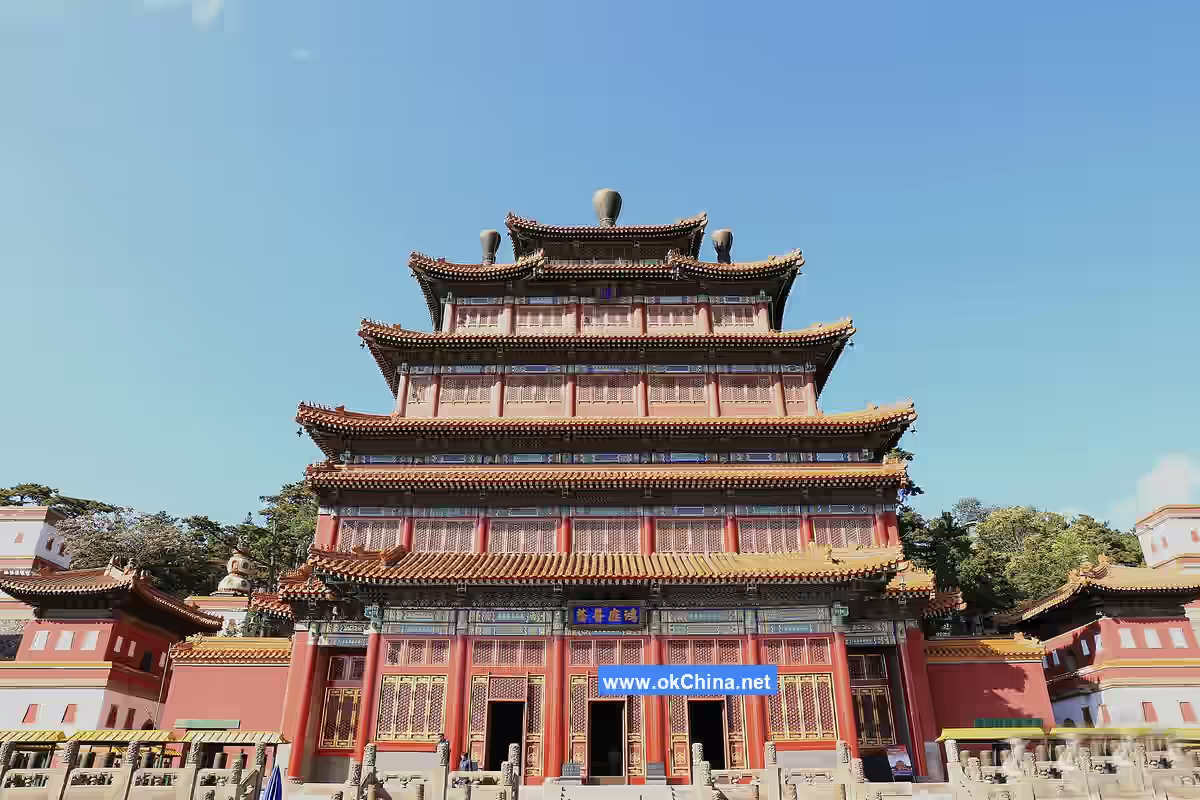
Since August 2010, a comprehensive conservation project for the Chengde Mountain Resort and its surrounding temples has been fully launched. The project, planned to take 3 to 5 years, involves a special central government fund of 600 million yuan for cultural relic restoration and water system management of the resort. It includes multiple cultural heritage conservation projects, such as ancient architecture protection and scientific conservation of relics, as well as three comprehensive water environment management projects for the resort. The restoration project also established a strong "think tank," with each project receiving a tailored restoration plan based on meticulous surveys. According to updates from the working office of the Chengde Mountain Resort and Surrounding Temples Cultural Heritage Conservation Project Command, all conservation projects are progressing smoothly. A total of 13 projects have commenced, including archaeological surveys, the protection and restoration of Anyuan Temple, and emergency repairs to the Great Red Terrace of Xumifushou Temple. Among these, five projects, such as the emergency repairs to the Great Red Terrace of Xumifushou Temple and the restoration of Qing Dynasty roads in the Mountain Resort, have been completed.
3. Layout and Orientation
3.1 Location and Territory
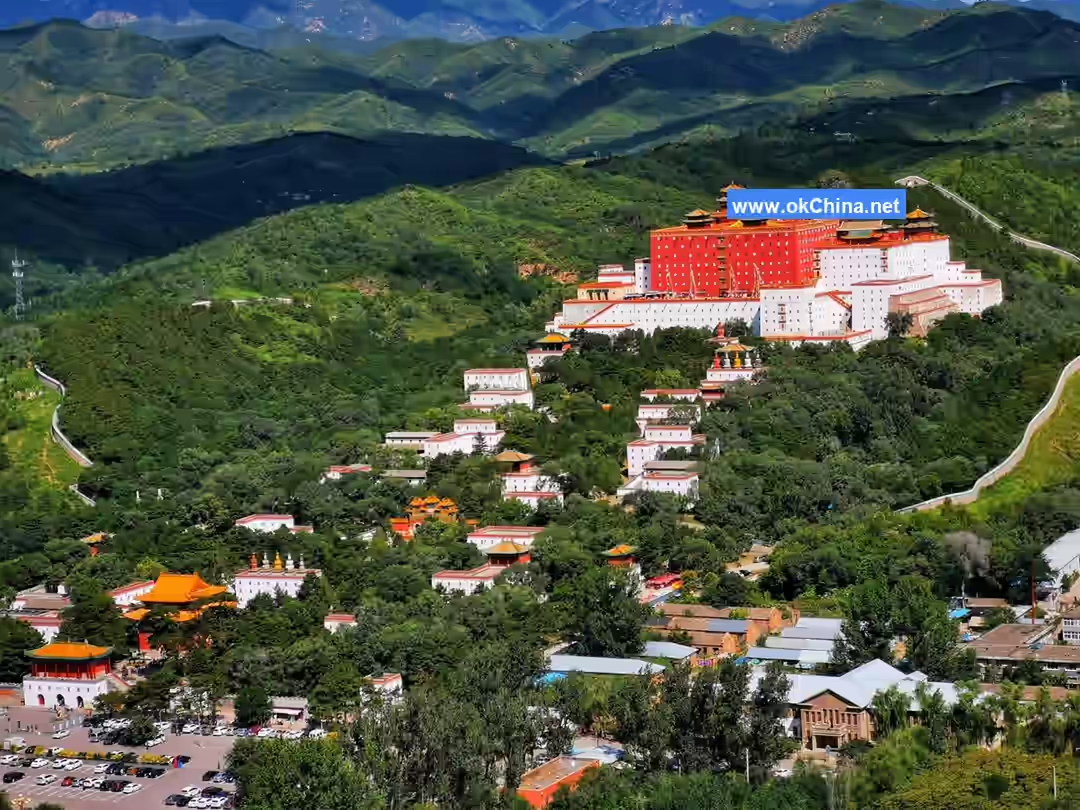
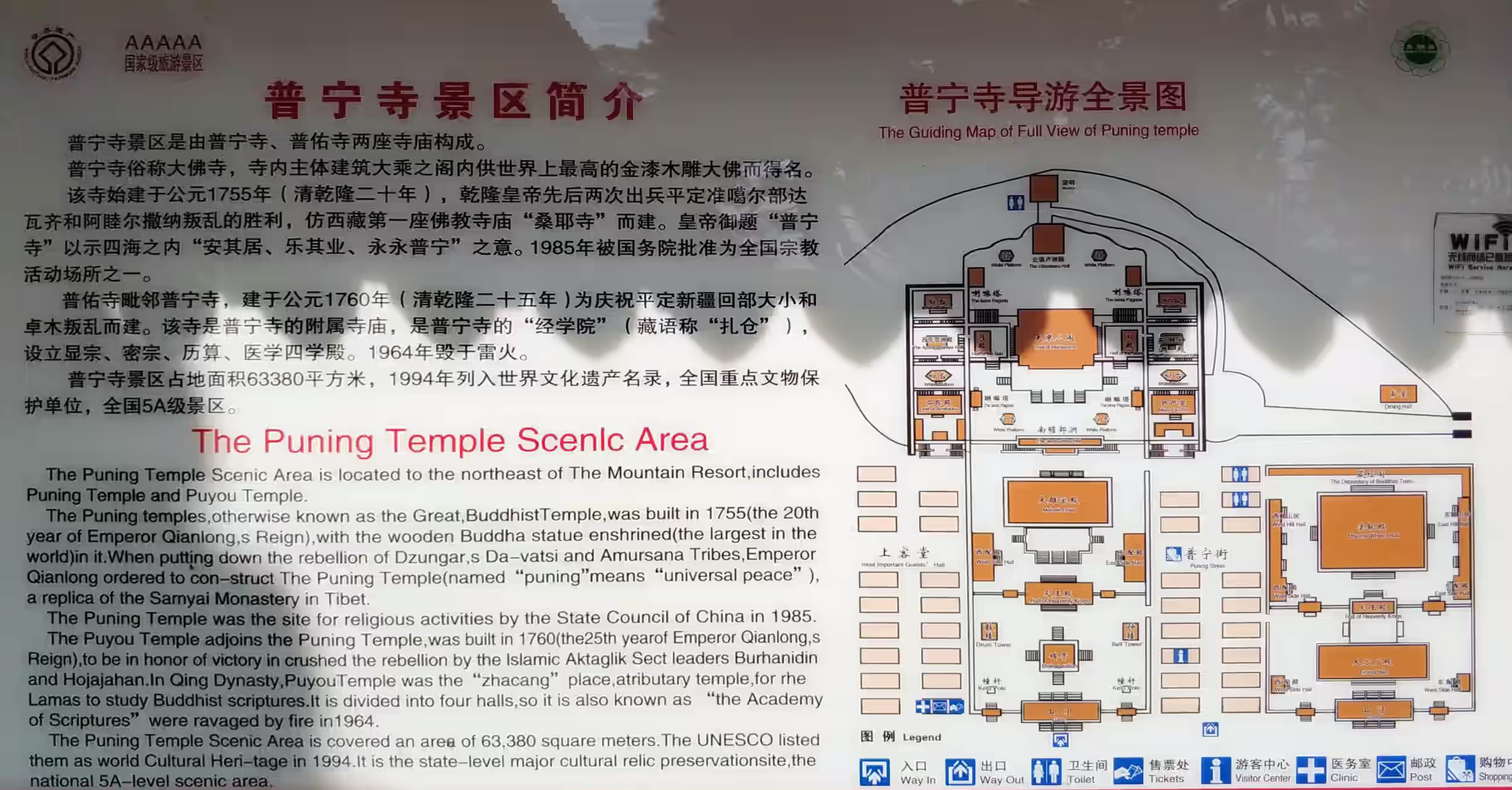
The Chengde Mountain Resort and its surrounding temples scenic area are located in Shuangqiao District, Chengde City, Hebei Province. The Chengde Mountain Resort covers an area of 5.64 million square meters, the Potala Palace scenic area covers 257,900 square meters, the Puning Temple scenic area covers 57,800 square meters, and the Hammer Peak scenic area covers 40.05 million square meters.
Climate Characteristics
Shuangqiao District, where the Chengde Mountain Resort and its surrounding temples are located, lies in a transitional zone from warm temperate to cold temperate climates. It experiences a temperate semi-humid, semi-arid continental monsoon mountain climate. The climate is characterized by cold, dry, and long winters; short, windy, and dry springs; cool, rainy summers ideal for escaping the heat; and clear, crisp autumns with significant daily temperature variations. Precipitation varies greatly annually and seasonally. The multi-year average temperature is 8.9°C, with an extreme minimum of -24.2°C (occurring in January) and an extreme maximum of 41.5°C (occurring in July). The annual frost-free period lasts 157 days, with a cumulative annual sunshine duration of 2,903 hours. The multi-year average precipitation in the basin is 560 mm, with a maximum daily precipitation of 151.4 mm and a maximum hourly precipitation of 52 mm. Rainfall is concentrated mainly in July, August, and September.### 3.2 Architectural Layout
3.2.1 Palace Area
The Palace Area is located in the southern part of the Mountain Resort, covering an area of 102,000 square meters. It is densely built with palace structures, featuring a strict and orderly layout, serving as a microcosm of the Forbidden City. It includes four main architectural complexes: the Main Palace, Songhezhai (Pine and Crane Hall), Wanhesongfeng (Pines Soughing in Myriad Valleys), and the Eastern Palace.
The Main Palace is the principal structure of the Palace Area, comprising nine courtyards divided into two sections: the "Front Court" and the "Rear Living Quarters."
The Danbo Jingcheng Hall (Hall of Frugality and Sincerity) is the main hall of the Front Court in the Main Palace, equivalent to the Hall of Supreme Harmony in the Forbidden City. In the 19th year of the Qianlong Emperor's reign (1754), Qianlong had the Danbo Jingcheng Hall reconstructed using nanmu wood sourced from the deep mountains of the southwest. Behind the red sandalwood Sumeru throne is a red sandalwood carved screen, measuring 3 meters high and 4 meters wide, composed of five panels. It is carved with 163 vivid figures depicting scenes of farming across the four seasons and silk production, expressing the Qing emperors' ideology of diligence in agriculture to ensure the stability of the realm. The ceiling and partition screens of the hall are also carved with patterns of the swastika (wanzi) and "Five Bats Holding the Character for Longevity" (wufu pengshou). The 48 large nanmu pillars in the hall's corridor were treated with waxing, without any painted colors or carvings, preserving the natural color of the nanmu wood and harmonizing with the resort's architectural style of grey bricks and tiles.
The Palace Area served as the place where Qing emperors handled court affairs, held grand ceremonies, and resided. Its architectural style is simple and elegant, yet retains the solemnity befitting an imperial palace. The Main Palace is now open as a museum, displaying court artifacts left from the Qing Dynasty. The Main Palace area houses over 20,000 precious cultural relics. The halls behind it are named "Sizhi Shuwu" (Study of Four Knowledges), "Yanbo Zhishuang" (Mist and Waves Bring Coolness), and "Yunshan Shengdi" (Landscape of Clouds and Mountains), which were places where the emperor handled state affairs, studied, and lived. The "Yanbo Zhishuang" Hall is a five-bay single-story building.
Songhezhai, meaning "Longevity of Pines and Cranes," was built during the Qianlong period for the Empress Dowager's residence. Wanhesongfeng was where Qing emperors reviewed memorials and studied; it serves as a transitional structure between the Palace Area and the Lake Area, with a design similar to the Xiequ Garden in the Summer Palace. The Eastern Palace, located at the easternmost part of the Palace Area, was originally a venue for Qing emperors to hold celebratory banquets and grand ceremonies but was later destroyed by war.
3.2.2 Scenic Garden Area
The Scenic Garden Area is further divided into the Lake Area, Plain Area, and Mountain Area. North of the Palace Area lies the Lake Area.
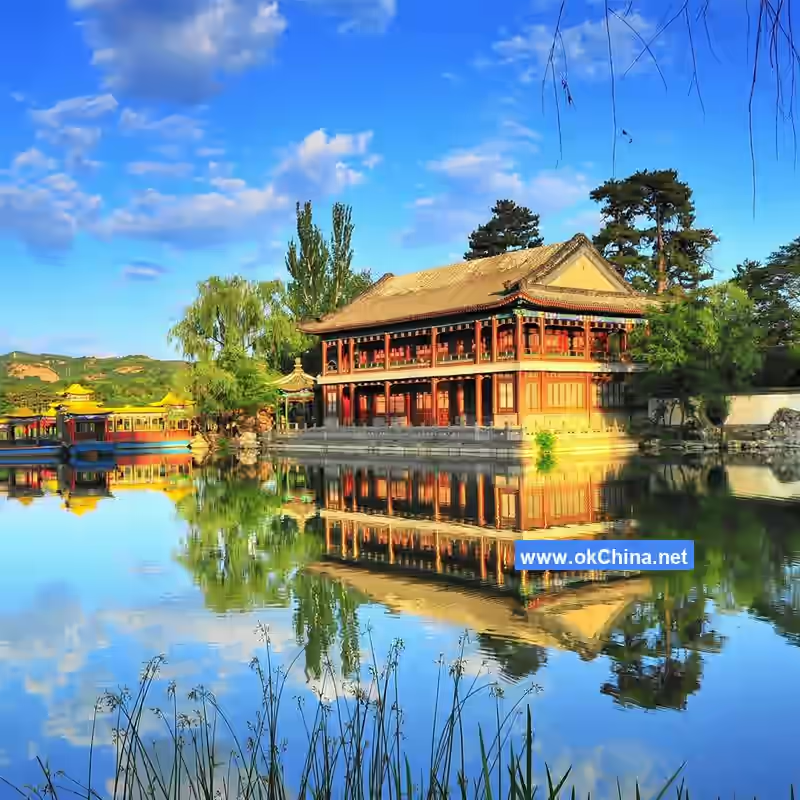
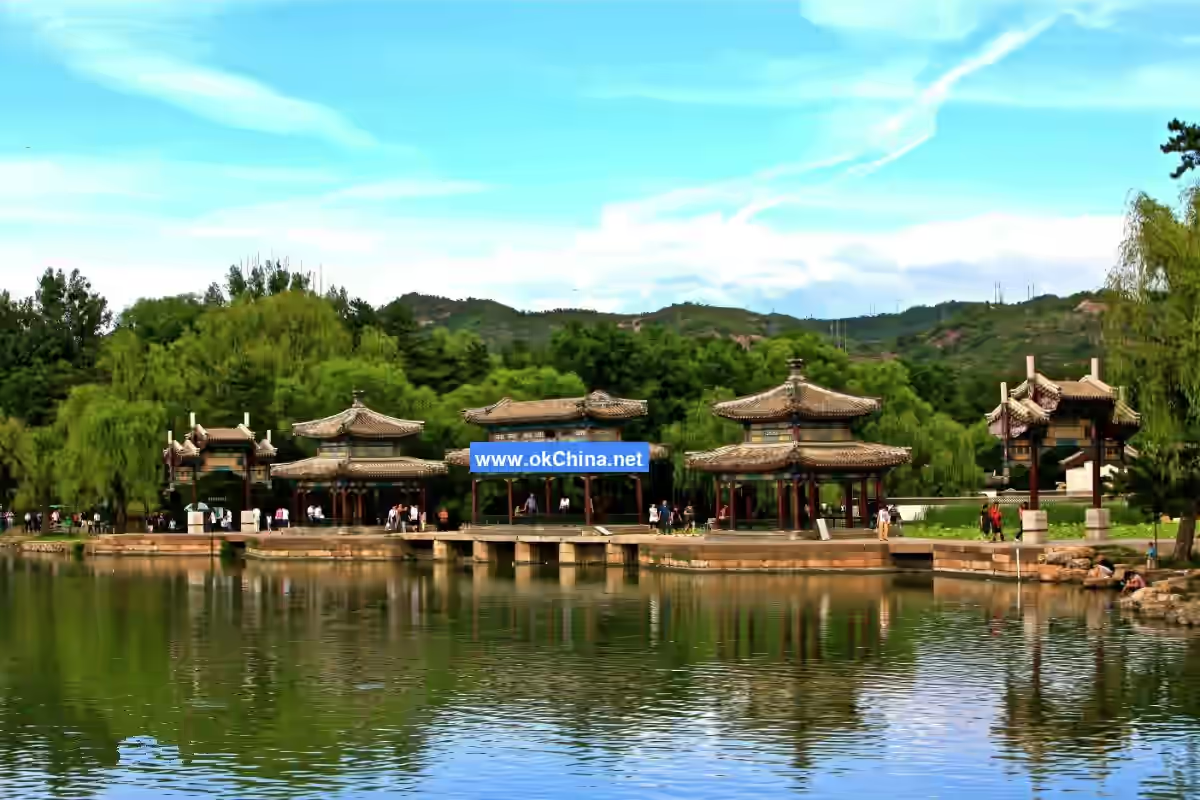
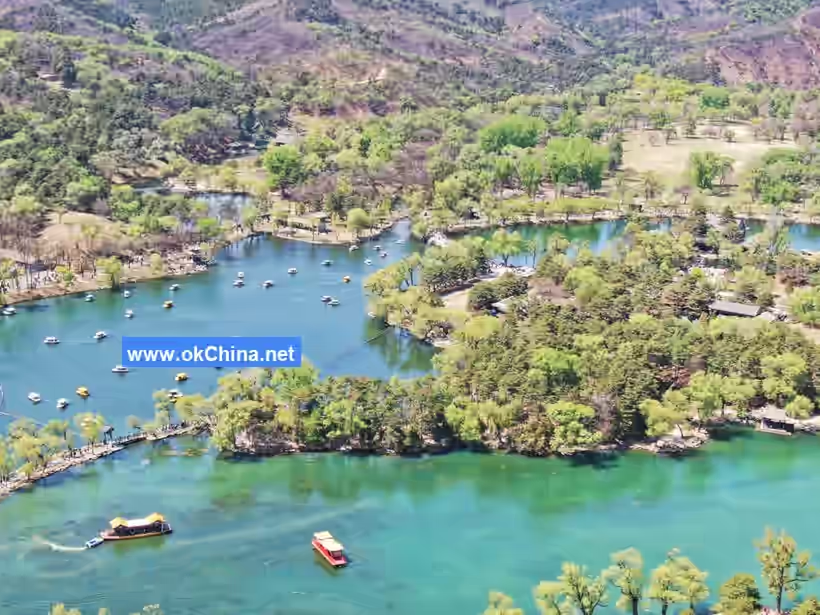
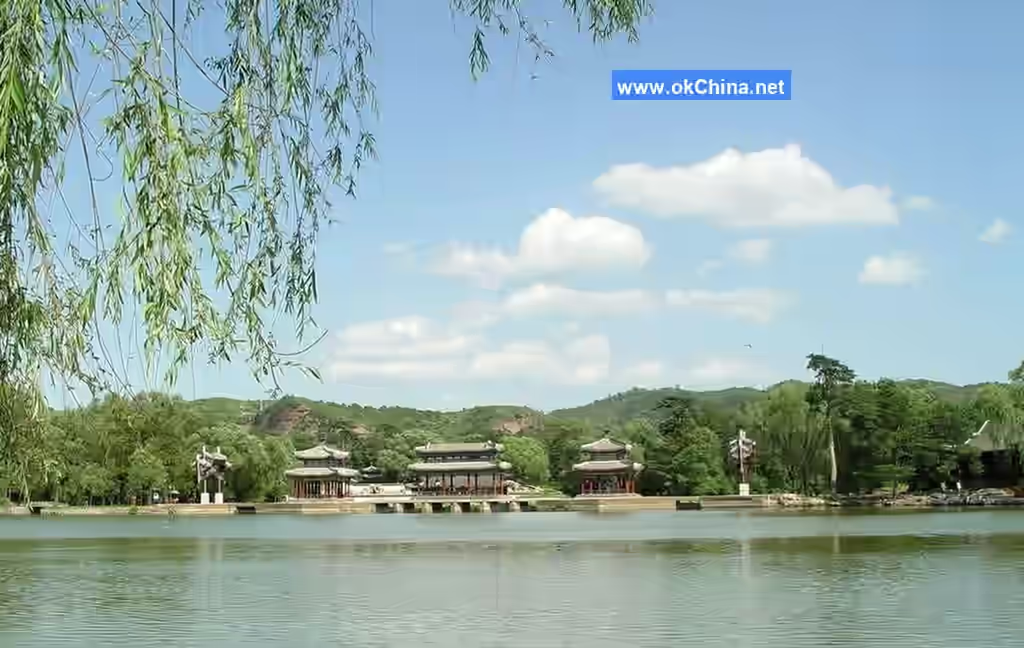
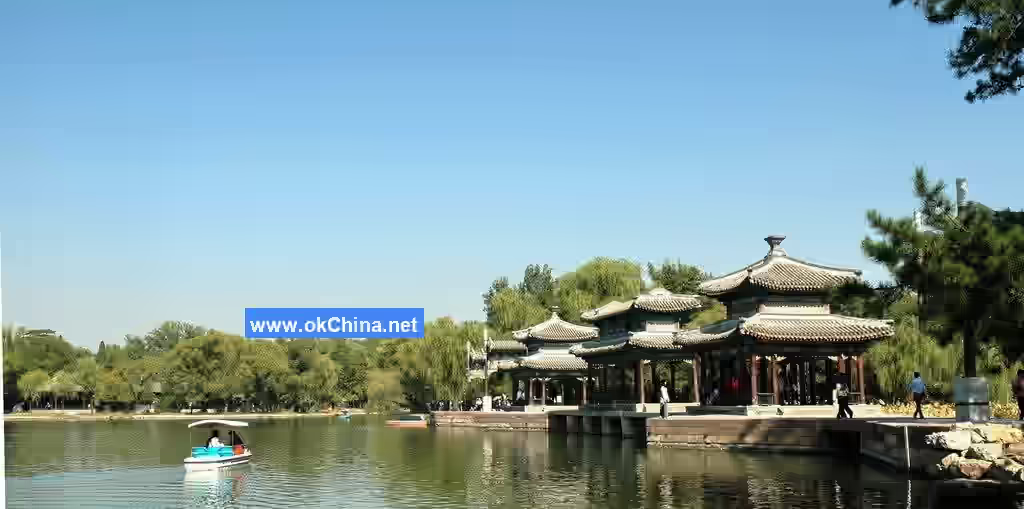
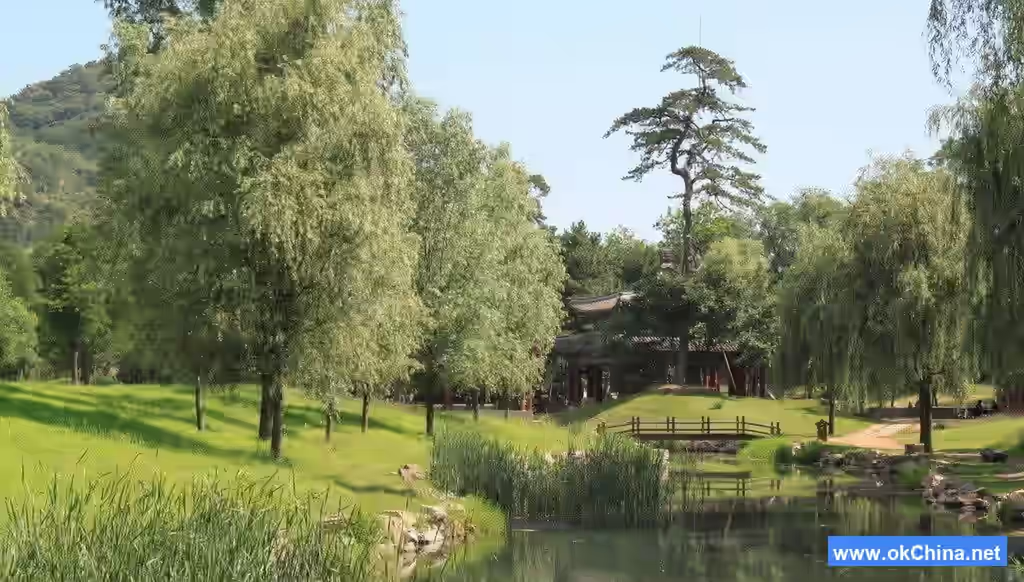
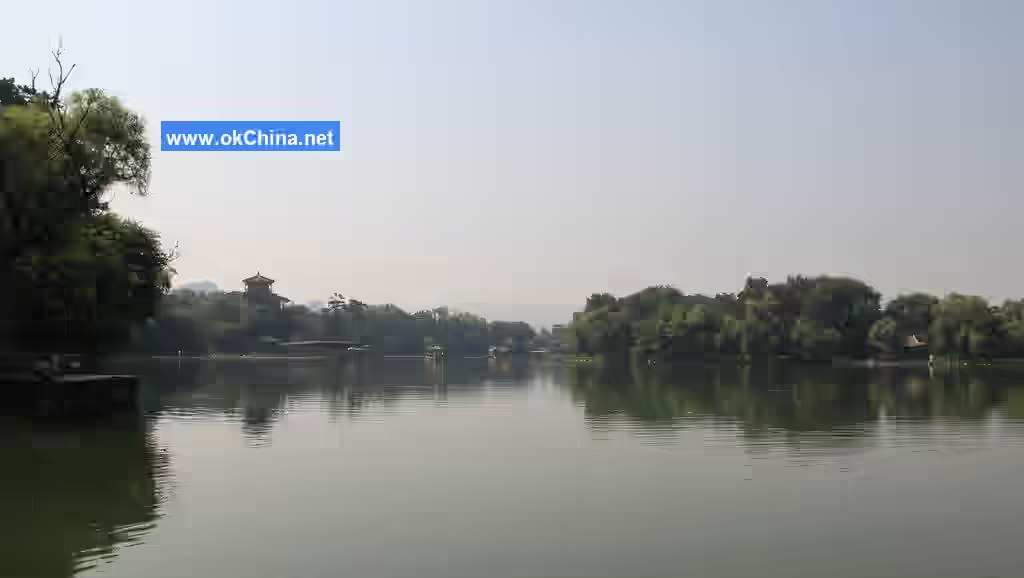
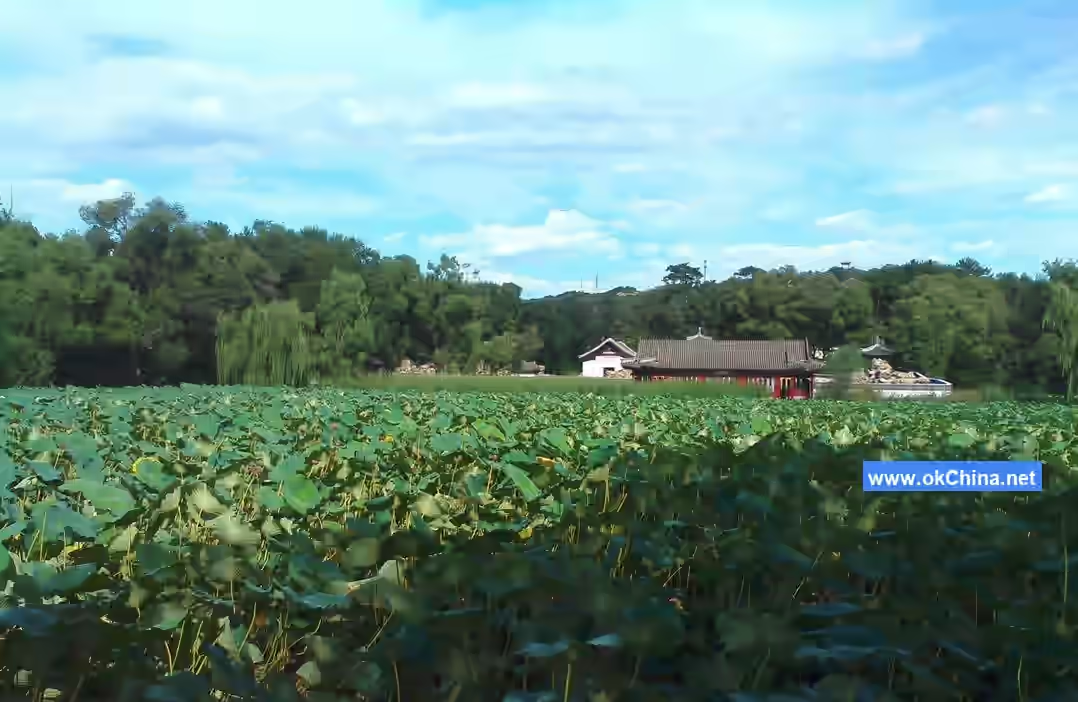
Lake Area: The essence of the Scenic Garden Area is largely concentrated in the Lake Area. Emperor Kangxi once boasted that its "natural scenery surpasses that of West Lake." Due to the scattered islets, the lake surface is divided by causeways and islets into five lakes, interconnected by bridges. With shaded banks and the resort's main scenic buildings scattered around the lake area, it appears winding and graceful, beautifully varied. The Lake Area is located in the southeast of the resort, covering an area of 496,000 square meters. It contains eight lakes of varying sizes: West Lake, Clear Lake, Ruyi Lake, Upper Lake, Lower Lake, Silver Lake, Mirror Lake, and Crescent Lake, collectively known as the "Sai Lakes." Most of the scenic architecture in the Lake Area imitates famous sights from southern China. For example, the "Misty Rain Tower" (Yanyu Lou) was built in imitation of the Misty Rain Tower on South Lake in Jiaxing, Zhejiang. The layout of Golden Mountain Island (Jinshan Dao) is modeled after Golden Mountain in Zhenjiang, Jiangsu. The two islands in the lake each host a group of buildings: one called "Ruyi Zhou" (Isle of Perfection) and the other "Yuese Jiangsheng" (Moonlight and River Sounds). "Ruyi Zhou" features rockeries, pavilions, halls, temples, ponds, and other structures, cleverly arranged, forming the center of the scenic area. "Yuese Jiangsheng" consists of an exquisite quadrangle courtyard and several pavilions and halls. On nights when the moon rises over the eastern hills, the bright moonlight reflects on the calm lake water. With all sounds hushed within the resort, only the gentle lapping of the lake against the embankment produces a pleasant sound—hence the name "Moonlight and River Sounds." The Lake Area combines the elegance of southern gardens with the grandeur of northern gardens, transplanting the landscapes of Jiangnan gardens beyond the Great Wall. The lakes in this area are collectively called "Saihu" (Frontier Lakes), with a total area of 57 hectares.
Plain Area: The Plain Area is located north of the resort and east of the Lake Area, covering an area of 607,000 square meters. It primarily consists of expanses of grassland and woodland, further divided into western grasslands and eastern forested land. The grassland, centered on Shimadai (Horse-Trying Mound), was the venue for the emperor's horse racing activities. The forested area is called Wanshuyuan (Garden of Ten Thousand Trees), one of the important political activity centers within the Mountain Resort. In its time, there was the Garden of Ten Thousand Trees, containing 28 Mongolian yurts of different specifications. The largest among them was the Imperial Felt Yurt, with a diameter of 7 zhang and 2 chi (approx. 24 meters), serving as the emperor's temporary palace. Emperor Qianlong often received ethnic minority princes and nobles, religious leaders, and foreign envoys here. To the west of Wanshuyuan is Wenjin Ge, one of China's four great imperial library pavilions. Additionally, structures like Yongyou Temple, Chunhao Xuan, and Suyun Yan are scattered among the grasslands and woodlands.
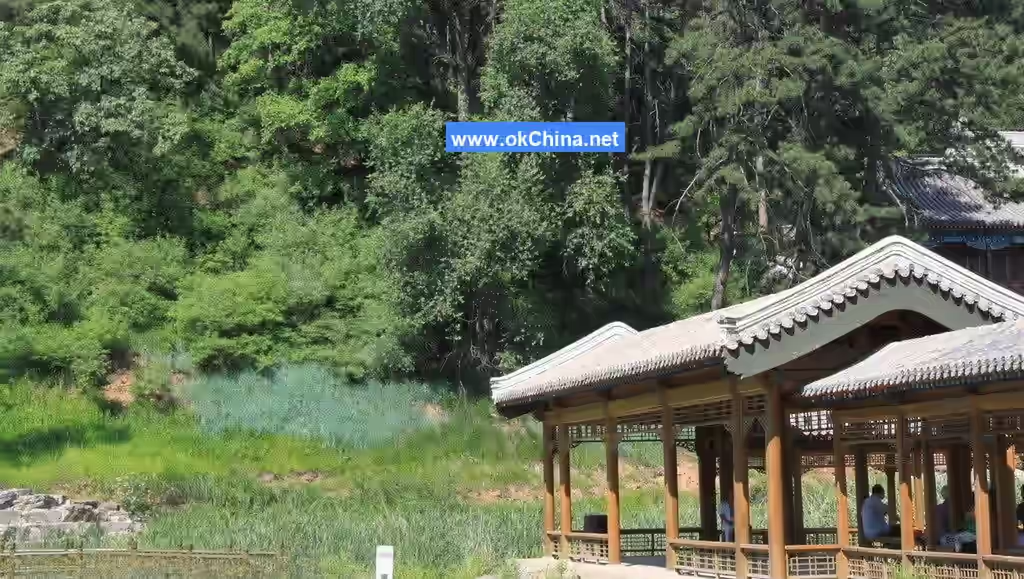
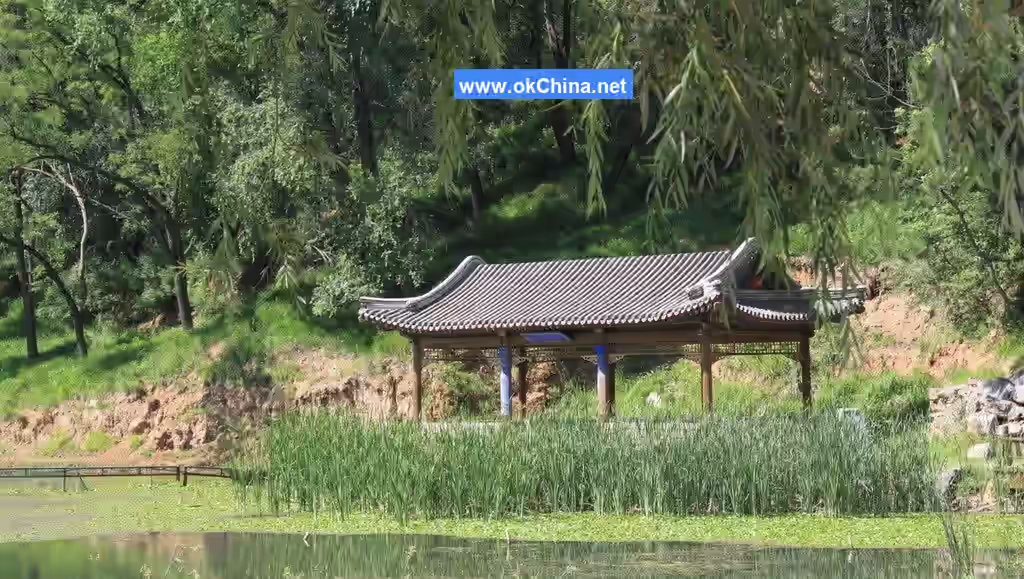
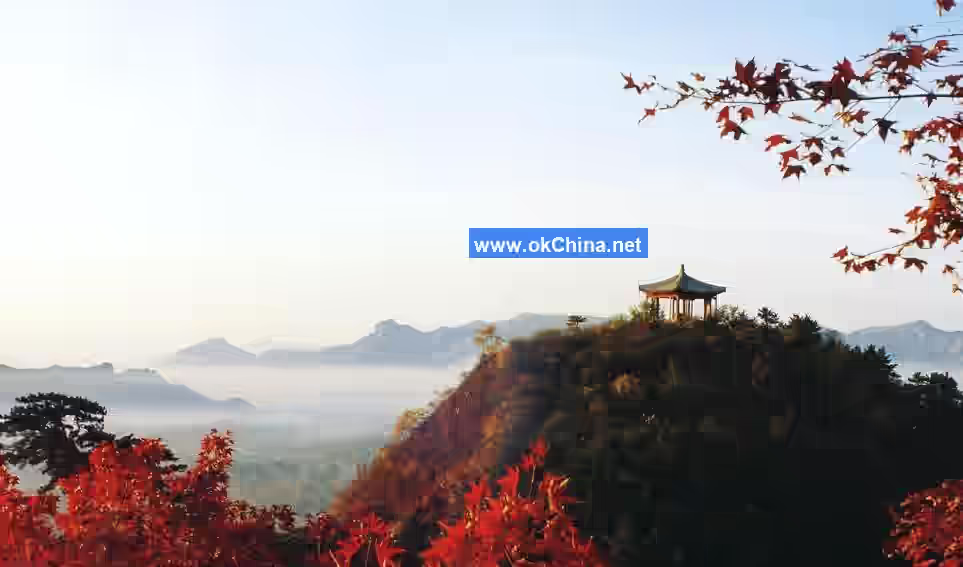
Mountain Area: Located in the northwestern part of the resort, it covers an area of 4.435 million square meters. The mountainous region accounts for four-fifths of the entire garden area. From the high peaks in the northwest to the lakes, marshes, and plains in the southeast, there is a relative height difference of 180 meters, creating a landscape of encircling peaks and crisscrossing valleys, with clear springs flowing in the valleys and deep, secluded forests. The towering peaks act as a natural barrier, blocking the invasion of cold northwestern winds, which is an important factor in regulating the resort's climate. In the past, taking advantage of the terrain of peaks, cliffs, foothills, and mountain streams, over 40 gardens and temples were built.
3.3 Architectural Features
3.3.1 Garden Design Philosophy
The Chengde Mountain Resort differs from other imperial gardens. It inherits and develops the traditional Chinese garden design philosophy of "integrating artificial beauty into nature, conforming to nature yet surpassing it." The site selection and overall design were based on the topographic features, relying entirely on the natural terrain, following the mountains and waters, and complying with nature.
3.3.2 Architectural Style
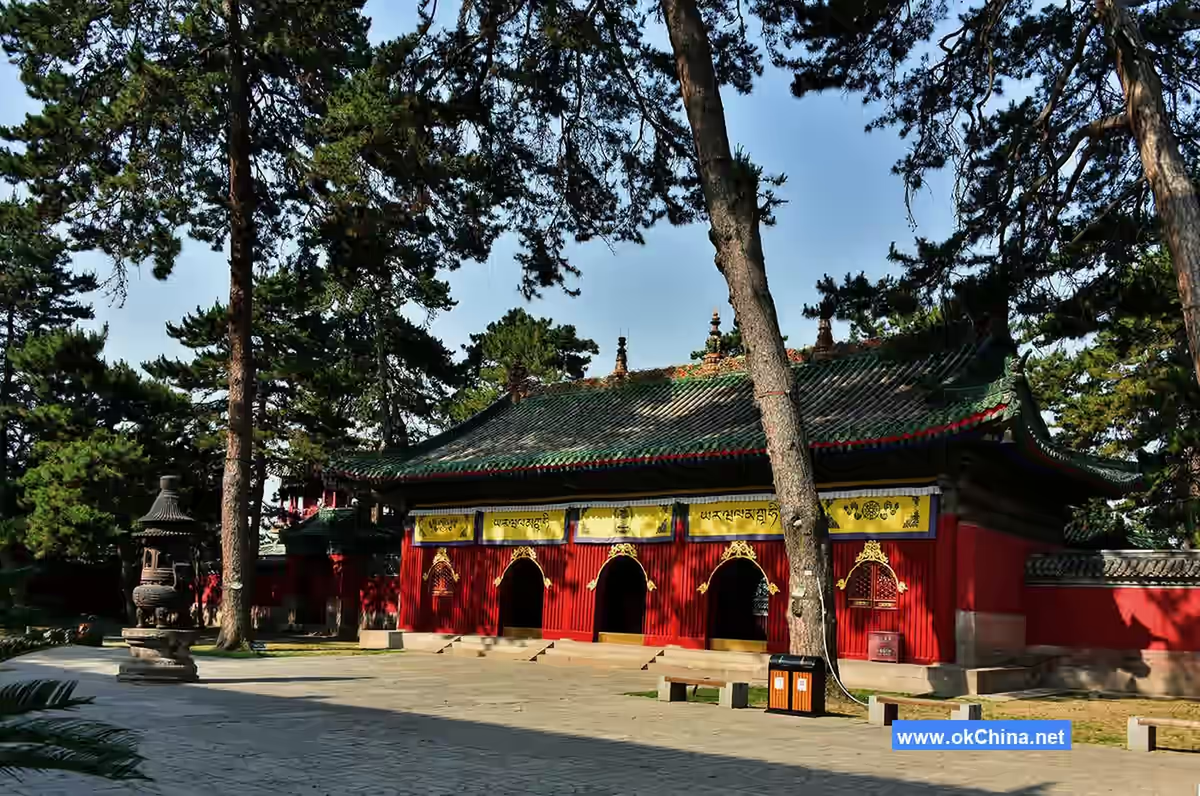
The overall layout of the Chengde Mountain Resort features clear zoning and rich scenery, possessing a unique style compared to other gardens. The Palace Area has a rigorous layout and simple architecture, while the Scenic Garden Area is naturally wild and rustic. The palaces and natural landscapes harmoniously blend into one, achieving a state of returning to nature. The resort integrates the essence of northern and southern architectural arts. The buildings within the garden are not large in scale; halls and enclosure walls mostly use grey bricks and tiles, with the natural color of the wood, presenting an elegant, dignified, simple, and moderate appearance. This stands in clear contrast to the Forbidden City in Beijing, with its yellow glazed tiles, red walls, gilded colors, and magnificent brilliance. The architecture of the resort possesses the style, structure, and construction techniques of southern gardens while also following methods commonly used in the north, making it a perfect example of the integration of northern and southern architectural arts.
4. Main Attractions
4.1 Golden Mountain (Jinshan)
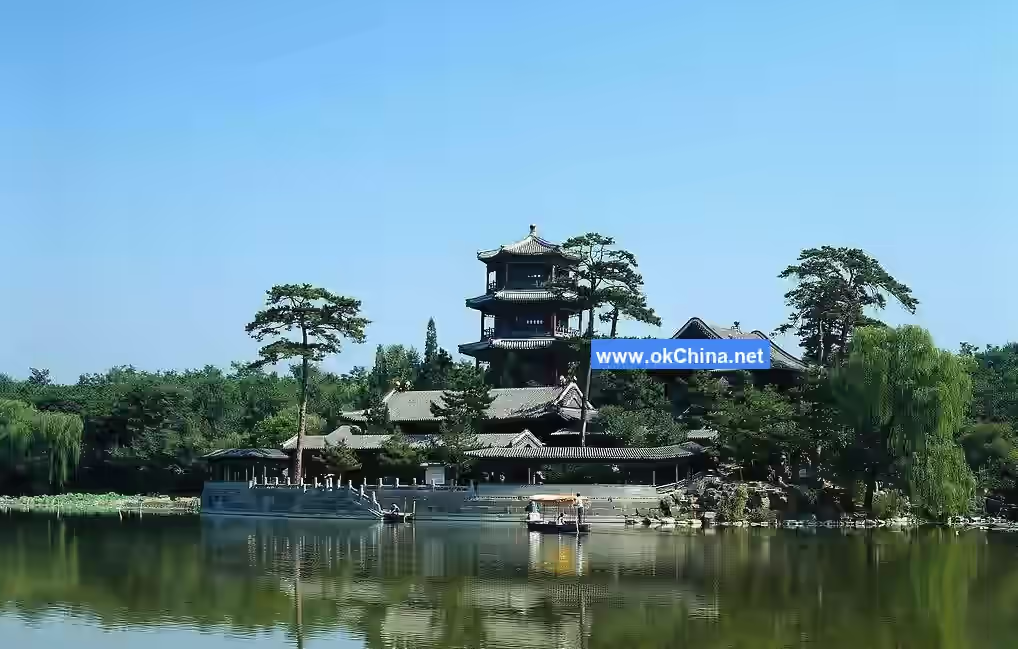
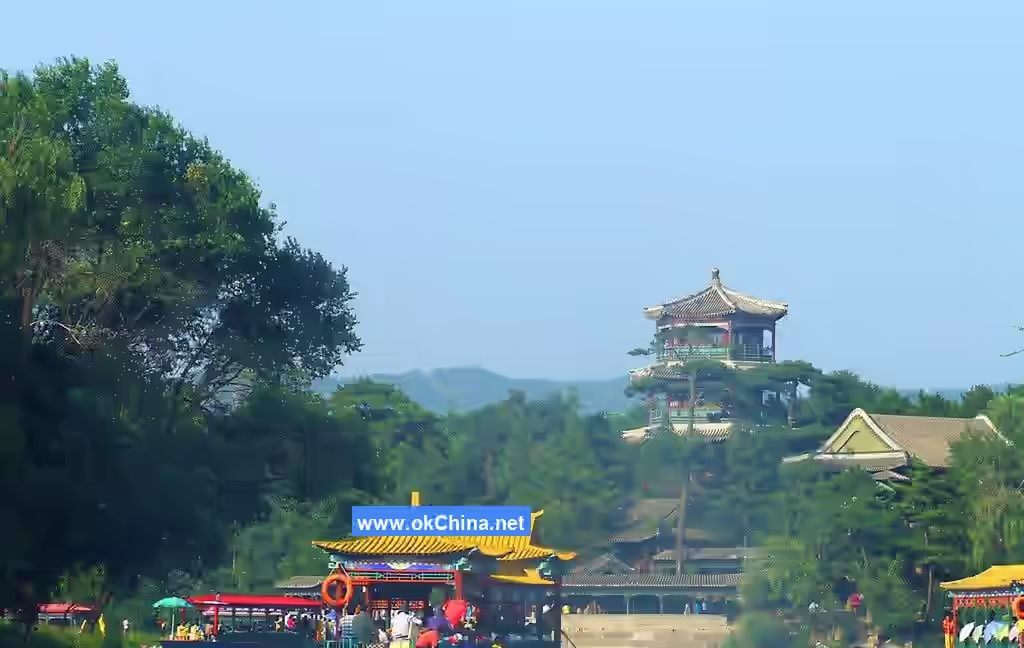
Golden Mountain Island was built in the 42nd year of the Kangxi Emperor's reign (1703), modeled after the Golden Mountain Temple in Zhenjiang. The island features piled rockeries, with a hall built on the hill, five bays wide. Emperor Kangxi personally inscribed its name "Jing Shui Yun Cen" (Mirror Water and Cloudy Peaks). Ascending the stone steps leads to "Tian Yu Xian Chang" (All Under Heaven is Joyous). Both halls are included among Kangxi's Thirty-Six Views. At the island's highest point in the north stands a three-story wooden pagoda named "Shangdi Ge" (Pavilion of the Supreme Deity), where Qing emperors worshipped the Perfected Warrior Emperor and the Jade Emperor. Although artificially piled, this island appears as if created by nature. Emperor Kangxi praised it, saying, "Looking up, it touches the clouds; looking down, it overlooks the blue water—as if ascending the Miaogao Peak."
4.2 Rehe (Hot River)
The Rehe Spring is located in the northeastern corner of the resort's Lake Area and is the main water source for the resort's lakes. Clear spring water gushes from underground, flows through Clear Lake, Ruyi Lake, Upper Lake, and Lower Lake, exits from the five-arched sluice at the southern end of Silver Lake, and merges into the Wulie River along the long embankment. The total length of the Rehe River is over 700 meters, yet it is not typically found on general maps. It is the shortest river in China. The Rehe River originates from a tiny stream fed by various springs within the Mountain Resort, with its main source being the Rehe Spring. The water temperature in winter is 8°C. Beside the spring is a large rock inscribed with the two characters "Re He" (Hot River).
4.3 Lizheng Gate
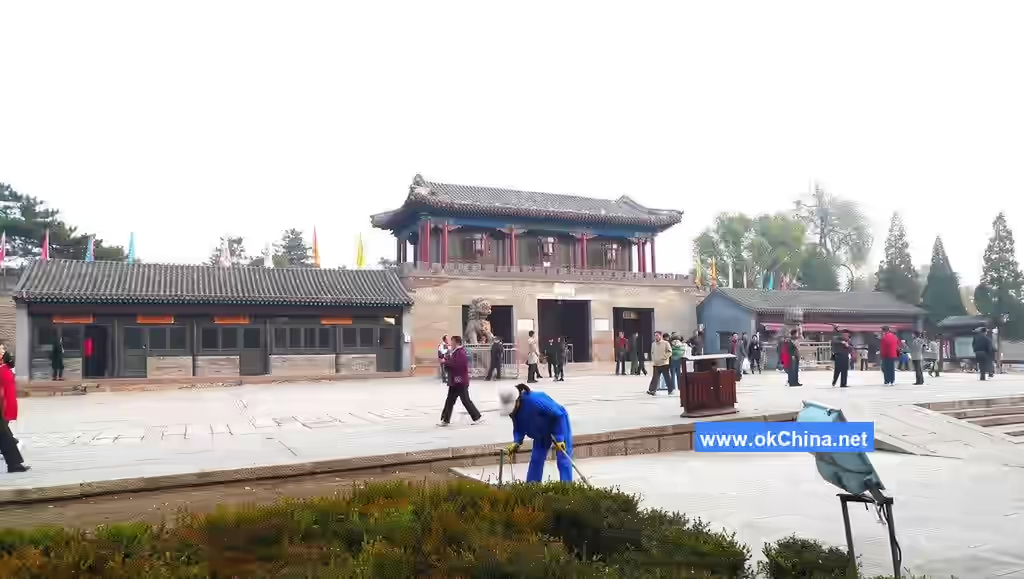
Lizheng Gate is the main gate of the Mountain Resort. The characters "Li Zheng" are taken from the Book of Changes: "The sun and moon adhere to the sky; all grains, grass, and trees adhere to the earth. Doubled brightness adheres to what is correct, thereby transforming and perfecting the world," meaning the "Gate of Brightness and Uprightness." Above the gate passage is inlaid a stone plaque inscribed with "Lizheng Gate" in five languages, bearing the profound aspiration of the Chinese nation for the hearts of all under heaven to return and for the unity of the realm.
4.4 Misty Rain Tower (Yanyu Lou)
The Misty Rain Tower in the Mountain Resort is modeled after the Misty Rain Tower on South Lake in Jiaxing, Zhejiang.
As the focal point of the northern composition of the main garden's Lake Area, the Misty Rain Tower, while creating courtyard spaces, particularly emphasizes an outward-looking character in its layout, thus placing more emphasis on borrowing scenery from outside. The entire garden-within-a-garden uses architecture to govern the overall scene. The main building, the Misty Rain Tower, and the courtyards enclosed by connecting corridors form the primary space. To the north, a section of balustrade extends directly over the water surface, offering views upward to the vast expanse of Wanshuyuan (Garden of Ten Thousand Trees) and downward to the boundless blue waves of Ruyi Lake. The primary space connects to a set of secondary spaces on each side: to the east, Qingyang Study (Qingyang Shuwu), Square Pavilion (Sifang Ting), and Octagonal Pavilion (Bafang Ting) face Clear Lake (Chenghu). Looking northeast, one can glimpse the endless charm of Xiangyuan Yiqing (Fragrance from Afar) and the Rehe Spring; looking southeast, one can admire the towering Little Golden Mountain (Xiao Jinshan) and even borrow the scenery of the Hammer Rock Peak (Qingchui Feng) outside the garden, forming an outward-looking waterfront space. To the west, the courtyard of Duishan Study (Duishan Zhai) is enclosed by courtyard walls, relatively more introverted.
Simultaneously, an astonishingly large rockery stands tall in the southwest of the courtyard, forming a yin-yang contrast with the courtyard space, echoing the height variations with Duishan Study, and complemented by intertwined ancient trees, evoking a sense of misty, drizzling rain. A light and elegant wing pavilion sits steadily atop the hill, open on six sides, simultaneously borrowing views of the courtyard, ancient pines, piled rocks, the lake surface, and distant mountains.
From the perspective of elevation effects, each facade of the Misty Rain Tower courtyard has a distinct character. The western and southern facades, sheltered by rockeries, ancient trees, and courtyard walls, possess a somewhat introverted and hazy quality. In contrast, the eastern and northern facades allow the architectural elevation to reach directly to the water's edge, displaying extraordinary grandeur.5 Wenjin Pavilion
Built in the 39th year of the Qianlong Emperor's reign (1774), Wenjin Pavilion is located at the foot of the "Snow-Capped Southern Mountain" in the northwest of the Chengde Mountain Resort, south of the "Thousand-Foot Snow" and "Clouds and Water Scenery." It was constructed in imitation of the "Tianyi Pavilion" of the book collector Fan Qin in Ningbo, Zhejiang, following the design principle of "Heaven generates water, and Earth completes it in six." Together with Wenyuan Pavilion in the Forbidden City of Beijing, Wenyuan Pavilion in the Old Summer Palace, and Wensu Pavilion in the Shenyang Imperial Palace, it is known as one of the Four Inner Court Pavilions, or the Four Northern Pavilions, which were used to store the Complete Library of the Four Treasuries. It is a garden within a garden at the Mountain Resort, the largest such complex on Wenjin Island, and a royal library with typical garden-style architecture.
4.6 Songhezhai (Pine and Crane Lodge)
Songhezhai is located at the southern end of the Mountain Resort, adjacent to the Main Palace area on the left, separated by a path from "Wind in the Pines of a Thousand Valleys" at the back, facing the Lizheng Gate to the southwest, and leading to the lake area to the north. It is a symmetrical palace-style architectural complex with a layout similar to that of the Main Palace. Within Songhezhai, ancient trees, famous plants, rockeries, and stacked stones are artfully arranged, creating secluded courtyards and an exceptionally elegant environment. Emperor Kangxi once built "Songhe Qingyue" in the Hazelnut Valley of the Mountain Resort for his mother to enjoy her later years. Emulating his grandfather, Emperor Qianlong also built "Songhezhai" for his mother to reside in. "Songhe" (Pine and Crane) symbolizes longevity, as expressed in Qianlong's poem: "Often I see green pines coiling outside the door, and even more delight in white cranes dancing before the courtyard."
Construction of Songhezhai began in the 14th year of the Qianlong Emperor's reign (1749), covering a total area of approximately 10,000 square meters. It consists of seven courtyards arranged along a central axis, starting with a five-bay gate hall with a flush gable roof, flanked by side gates, followed by a three-bay second gate. North of the second gate is a seven-bay front hall with a flush gable roof, inscribed by Qianlong with the plaque "Songhezhai." Behind it is a seven-bay rear hall, inscribed with the plaque "Leshou Tang" (Hall of Joyful Longevity), which served as the residence of the Empress Dowager. Behind the hall is a fifteen-bay rear-facing building. In the backyard of this building stands a seven-bay hall with a single-eave hip-and-gable roof and a round ridge, featuring front and rear corridors. Originally named "Suicheng Hall," it was renamed "Jide Tang" (Hall of Inherited Virtue) after renovations in the 57th year of Qianlong's reign (1792) and served as the residence of the Crown Prince Yongyan (later Emperor Jiaqing). Behind this hall is a two-story pavilion with five bays, inscribed with the plaque "Changyuan Lou" (Tower of Far-Reaching Views), similar in design to the "Cloud and Mountain Scenic Spot" in the Main Palace area. The interior lacks stairs; instead, an outdoor rockery path leads to the upper floor. The northernmost part features a decorative hanging flower gate. The eastern courtyard of Songhezhai comprises two groups of buildings facing south, with a southern gate hall at the south end and a northern gate hall at the north end, connected by a path paved with patterned bricks.
5. Value and Significance
5.1 Historical Value
The Mountain Resort was built by the emperors of the Qing Dynasty as a summer palace to pacify and unite the ethnic minorities in China's border regions and consolidate national unity. After its construction, Qing emperors spent significant time here each year handling military and political affairs, receiving foreign envoys, and meeting with political and religious leaders from border ethnic minorities, making it the second political center of the Qing Dynasty. A series of important events, historical sites, and cultural relics that took place here bear witness to the final formation of China as a unified multi-ethnic nation.
5.2 Model of Palace Gardens
The Mountain Resort and its surrounding temples were constructed during the last prosperous era of China's feudal society—the Kangxi-Qianlong Prosperity—spanning the reigns of three emperors (Kangxi, Yongzheng, and Qianlong) over 89 years, utilizing nationwide resources and labor. They represent the culmination of imperial garden and royal temple architectural expertise. As a masterpiece of the imperial palace garden system, one of China's two major garden systems alongside private gardens, they exemplify the integration of "palace" and "garden" in form and the unity of "governing and holding court" with "leisure and entertainment" in function. The temple architecture also served distinct political purposes.
5.3 Architectural Art
The Mountain Resort and its surrounding temples constitute the largest existing ancient imperial garden and royal temple complex in China. They epitomize the pinnacle of ancient Chinese garden and architectural art, representing a creative masterpiece. In garden design, they inherit and develop the traditional Chinese gardening philosophy of "integrating human artistry into nature, harmonizing with nature while transcending it." They summarize and innovatively apply various gardening materials and techniques, making them outstanding examples of natural landscape gardens and architectural gardenization. In architecture, they inherit, develop, and creatively employ various building techniques, drawing inspiration from famous gardens and temples across China, blending imitation with innovation to express the architectural theme of "bringing the world's wonders into the emperor's embrace." In the specific construction of gardens, temples, individual structures, and building complexes, the Mountain Resort and its surrounding temples achieve a fusion of northern and southern Chinese gardening and architectural arts, encompassing most architectural forms of ancient China, such as pavilions, terraces, towers, and temples. They showcase the advanced craftsmanship of ancient Chinese timber-frame structures and integrate timber-frame with brick-and-stone construction, as well as Han-style architecture with ethnic minority architectural forms. Combined with the application of the highest levels of ancient Chinese craftsmanship in architectural decoration and Buddhist statues, they form a marvel in the history of Chinese architecture.
5.4 Research Value
Whether in gardening or architecture, the Mountain Resort and its surrounding temples are not merely applications of materials and techniques but also infuse the essence of classical Chinese philosophy, aesthetics, literature, and other cultural aspects, making them a microcosm of traditional Chinese culture.
Comments
Post a Comment