

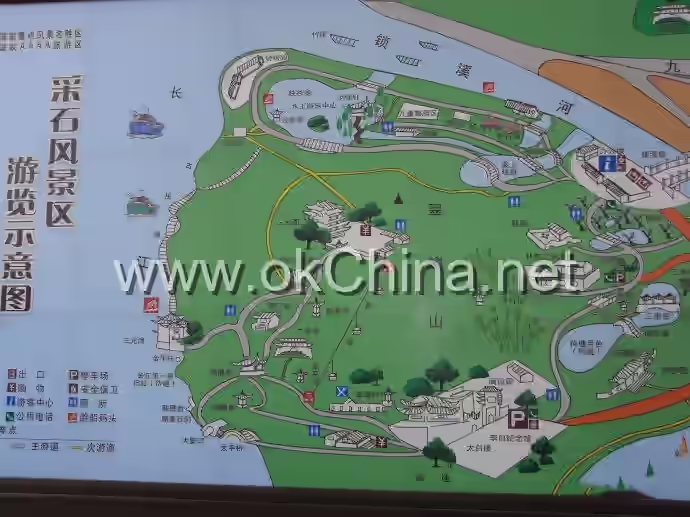
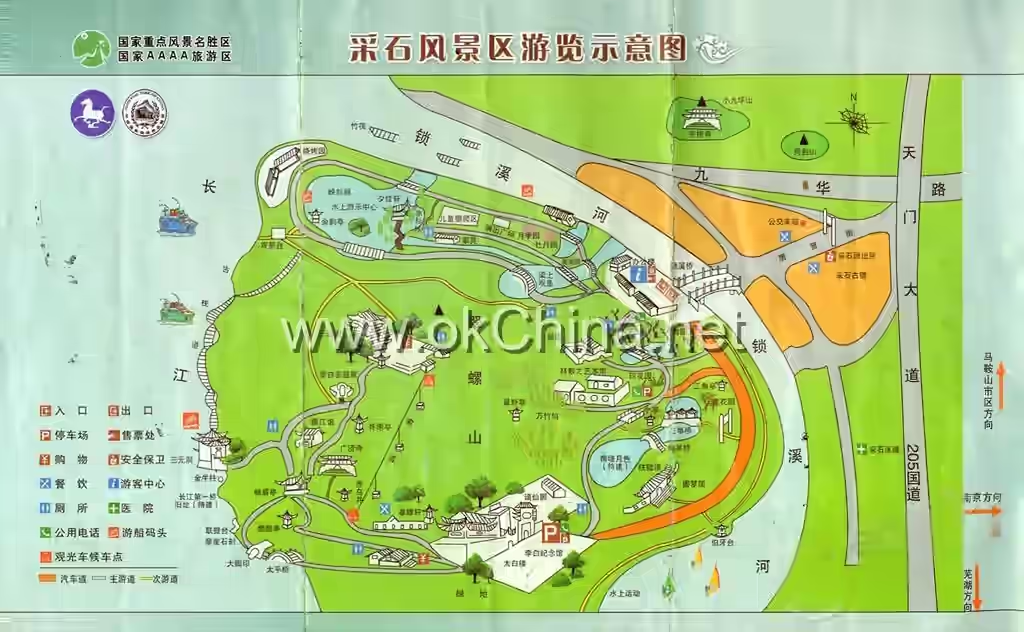
Ma'anshan Yangtze River Caishiji Cultural and Ecological Tourism Area
1. Introduction
The Ma'anshan Yangtze River Caishiji Cultural and Ecological Tourism Area, abbreviated as the Yangtze River Caishiji Cultural and Ecological Tourism Area or Caishiji Scenic Area, is located in Caishi Subdistrict, Yushan District, Ma'anshan City, Anhui Province, with a total area of 3.92 square kilometers.
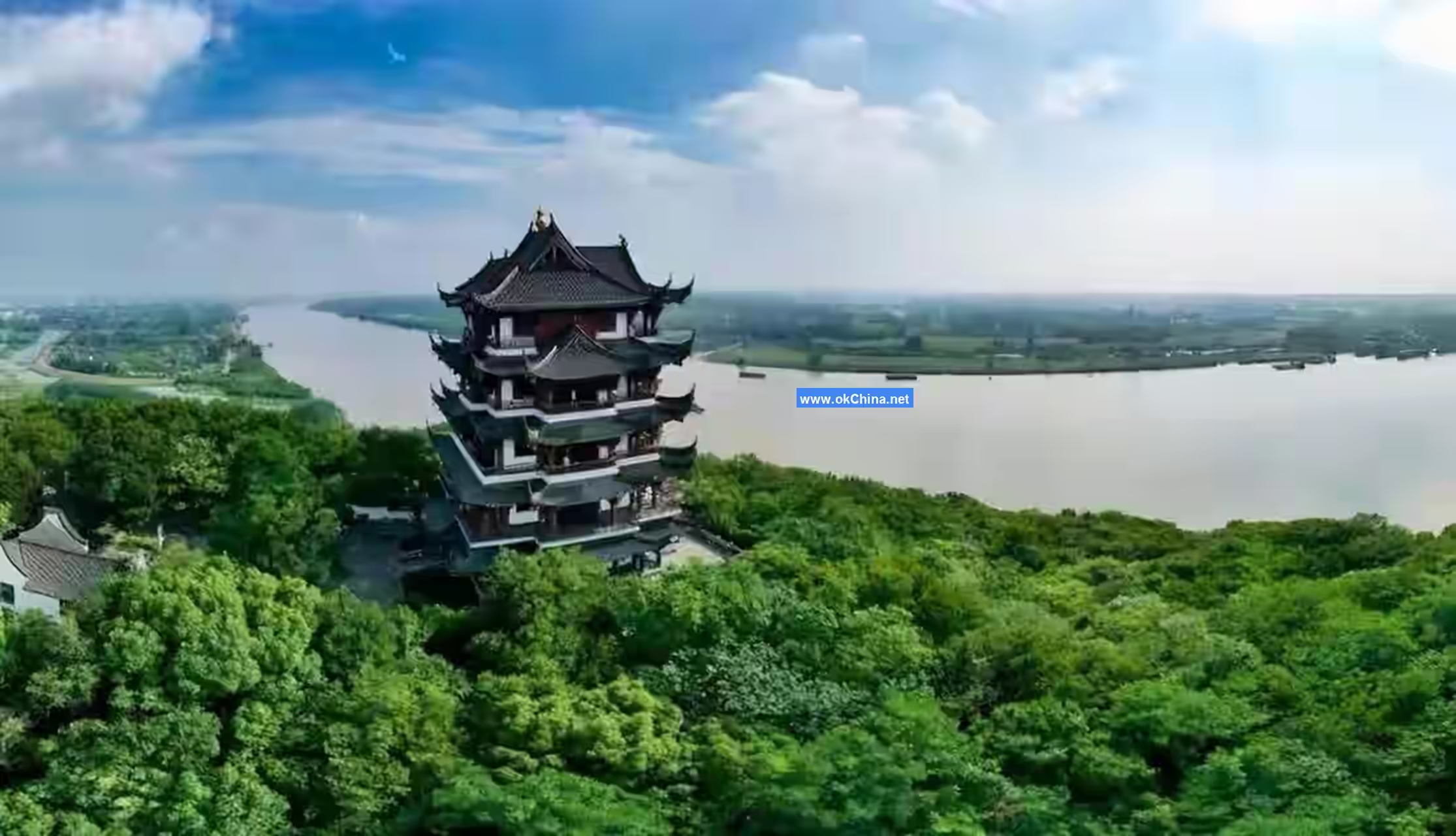
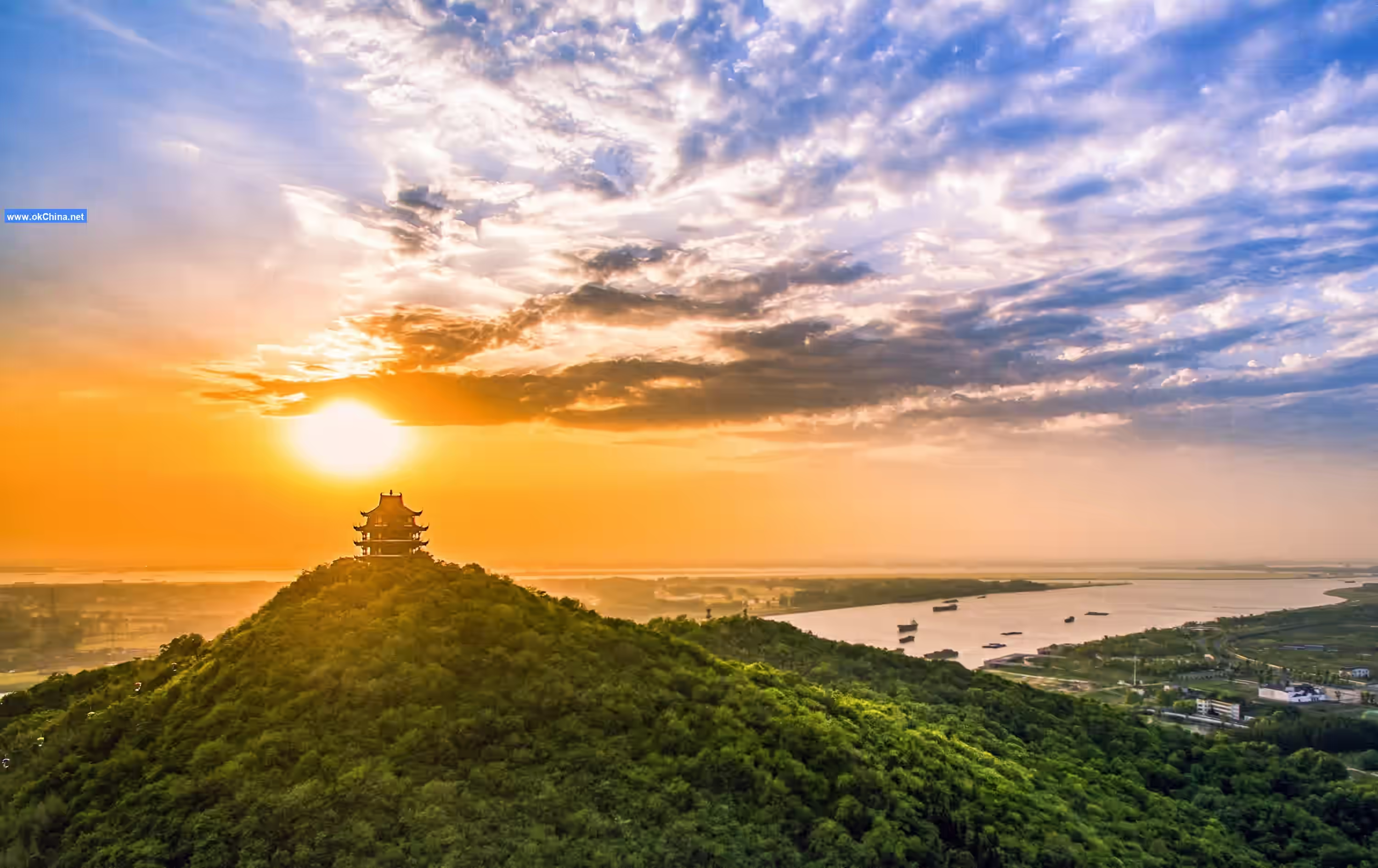
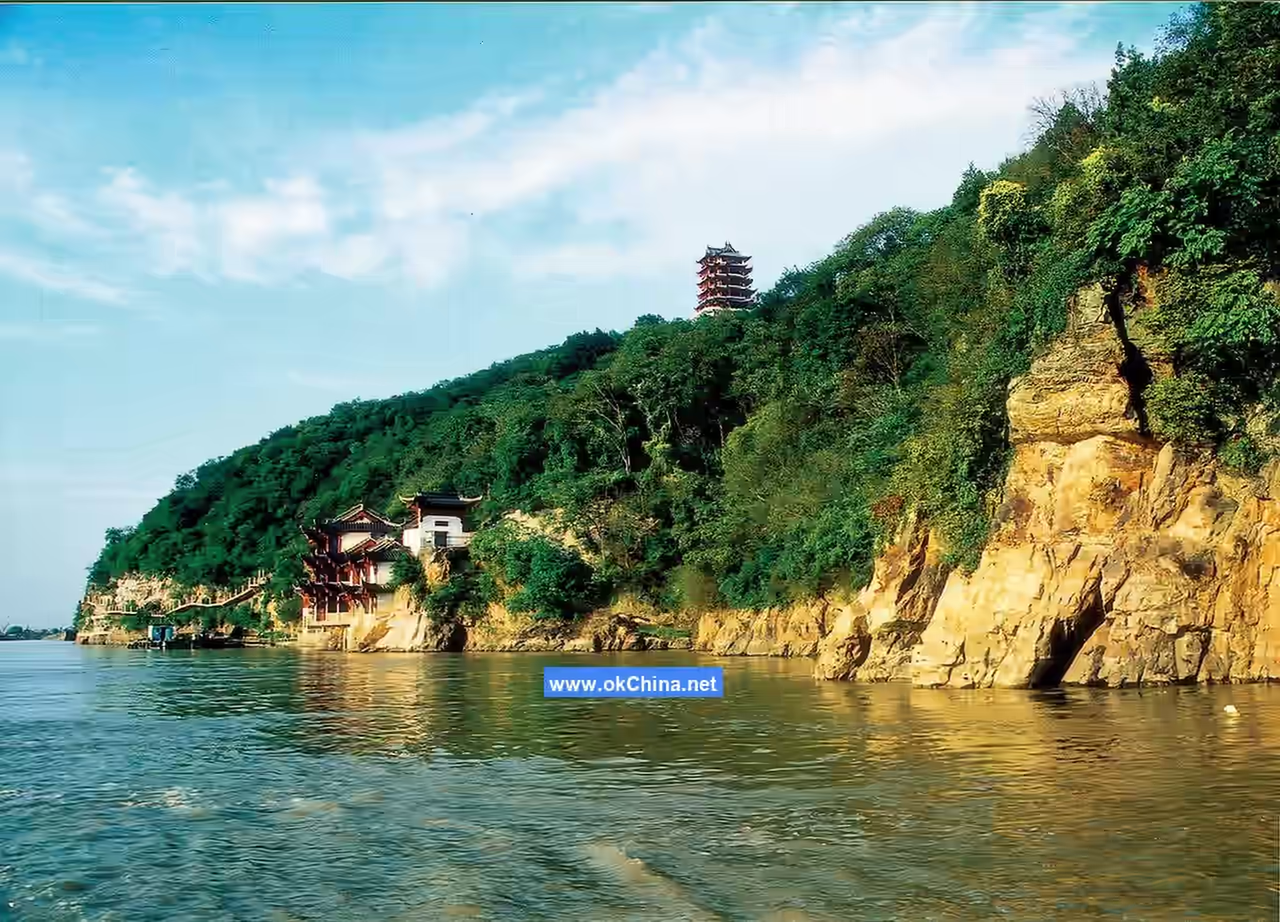
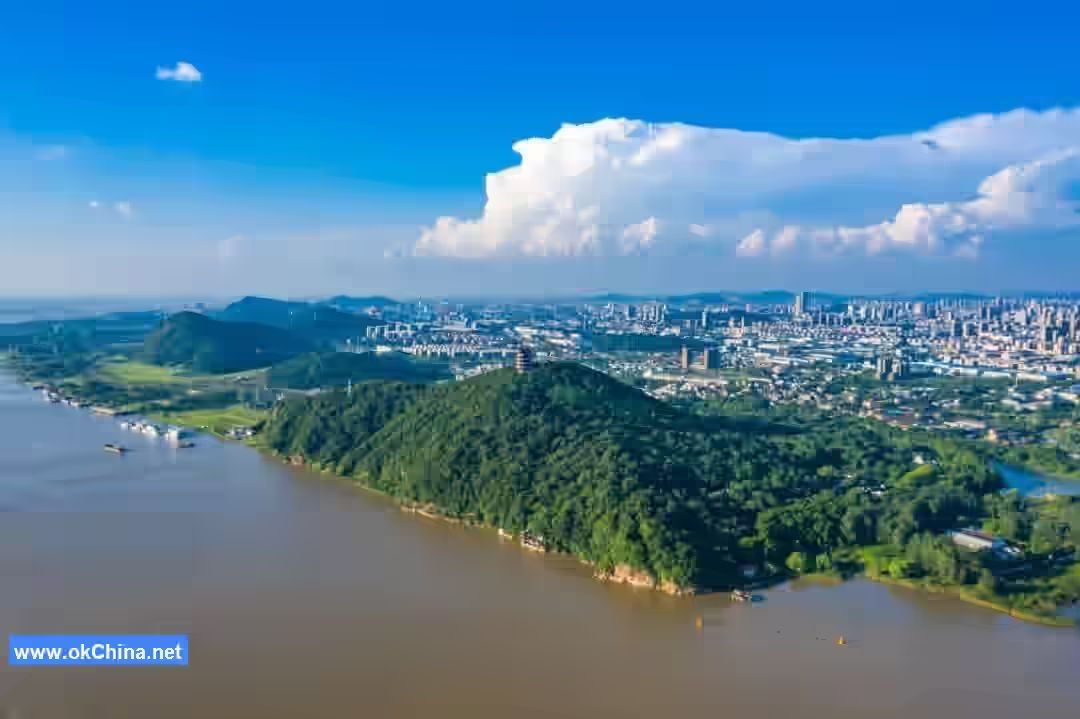
Caishiji, anciently known as Niuzhu Ji, features sheer cliffs along the river, turbulent waters, and peculiar rocks. Together with Chenglingji in Yueyang and Yanzi Ji in Nanjing, it is known as the "Three Jis of the Yangtze River." Renowned for integrating grandeur, wonder, elegance, and peril, it is acclaimed as the foremost of the three Jis and has long been celebrated as "the beauty of the ages." The Yangtze River Caishiji Cultural and Ecological Tourism Area takes the poetic essence of the Tang Dynasty poet Li Bai as its soul, with the main features being the riverside cliff landscape of "Cuiluo Mountain emerging from the great river" and the landscapes of the Suoxi River and the riverside wetland belt. It comprises four major functional zones: the Caishiji Sightseeing Area, the Yangtze River Wetland Tourism Area, the Wangfu Mountain Cultural Tourism Area, and the Caishi Ancient Town Leisure Experience Area. Within the scenic area are distinctive attractions such as Caishiji (the foremost of the "Three Jis of the Yangtze River"), the national protected cultural heritage site "Taibai Tower," the "Sanyuan Cave" known as the "Land of Scholarly Success," and Lin Sanzhi's "Thatched Cottage on the River."
On December 29, 2020, the Ma'anshan Yangtze River Caishiji Cultural and Ecological Tourism Area in Anhui Province was designated by the Ministry of Culture and Tourism of the People's Republic of China as a National AAAAA Tourist Attraction. It became the first such attraction in Ma'anshan City and the twelfth in Anhui Province.
2. Geographical Environment
2.1 Location and Territory
The Yangtze River Caishiji Cultural and Ecological Tourism Area is located in Caishi Subdistrict, Yushan District, Ma'anshan City, Anhui Province, situated on the southern bank of the Yangtze River, covering a total area of 3.92 square kilometers.
2.2 Topography and Landforms
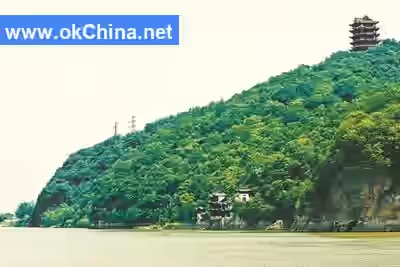
Caishiji rises abruptly from the river, with sheer cliffs overlooking the water, commanding a strategic position at a key point of the great river. The waters flow rapidly, and the terrain is perilous, making it a contested military stronghold since ancient times.
2.3 Climate Characteristics
Yushan District, where the Yangtze River Caishiji Cultural and Ecological Tourism Area is located, belongs to the northern subtropical monsoon transition zone. It experiences four distinct seasons, significant monsoons, mild and humid conditions, and concentrated plum rains. It features a short frost period, long sunshine hours, and abundant rainfall. The annual average temperature is 15.8°C, with precipitation of 1080 mm, a frost-free period of 234 days, and sunshine duration of 2109.9 hours.
3. Main Attractions
3.1 Taibai Tower
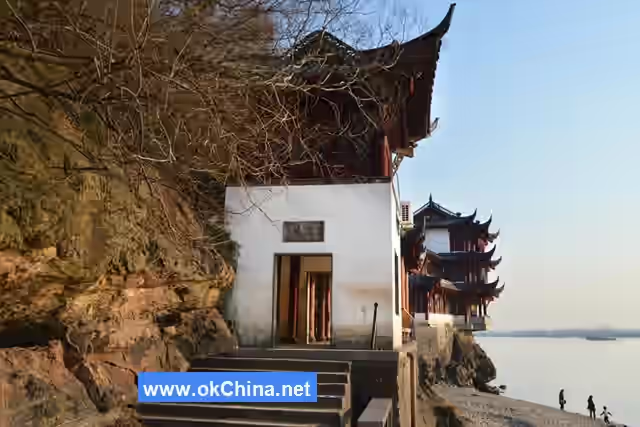
Taibai Tower was initially built during the Yuanhe period of the Tang Dynasty (806-820 AD) and was originally named "Zhexian Tower." It underwent repairs during the Song and Yuan dynasties. In the fifth year of the Zhengtong era of the Ming Dynasty (1440), Zhou Chen, the Right Vice Minister of Works, reconstructed it during his inspection of the Jiangnan region. In the fourteenth year of the Shunzhi era of the Qing Dynasty (1657), Prefect Hu Jiying rebuilt it and renamed it Taibai Tower, also known as "Tang Li Gong Qinglian Shrine." It was later destroyed by war. In the third year of the Guangxu era of the Qing Dynasty (1877), Peng Yulin, the Minister of War, donated funds for its reconstruction.
Taibai Tower is located at the southern foot of Cuiluo Mountain, nestled against the mountain and facing the river. The tower is 18 meters high, with three stories and two sections, featuring a front tower and a rear pavilion with corridors on both sides. It has a hip-and-gable roof, barrel tiles for drainage, decorative ridge ornaments, and upturned eaves, presenting a magnificent sight. Particularly noteworthy is the standing statue of Li Bai carved from nanmu wood enshrined in the main hall of the shrine. With hands clasped behind his back, head held high, and a carefree and elegant demeanor, it vividly captures the romantic charm of the "Poet Immortal." Visitors and scholars who ascend the tower can gaze into the distance at the Yangtze River flowing like a ribbon, verdant islets, numerous boats vying on the water, and soaring gulls. It is famously praised as "a tower storing the wind, moon, river, and sky." Together with Yueyang Tower in Hunan, Yellow Crane Tower in Hubei, and Tengwang Pavilion in Jiangxi, it is known as the famous "Three Towers and One Pavilion" along the Yangtze River.
3.2 Lin Sanzhi Art Museum
The Lin Sanzhi Art Museum covers an area of 3,800 square meters, featuring an architectural style that is both classical, elegant, and uniquely modern. The museum consists of four parts: the main hall, auxiliary hall, academic hall, and cemetery. The main hall, with a thatched roof, is also known as the "Thatched Cottage on the River." It primarily displays over a hundred exquisite calligraphy and painting works from different periods of Mr. Lin Sanzhi's life. The auxiliary hall mainly exhibits seals and personal items used by Mr. Lin during his lifetime, as well as works by his teachers and friends. The academic hall serves as a venue for academic research activities and guest receptions. Since its opening, the rich exhibition content, unique architectural style, and elegant garden layout of the Lin Sanzhi Art Museum have attracted numerous celebrities and tourists from China and abroad. The Lin Sanzhi Art Museum has become an important site for studying and researching Mr. Lin Sanzhi's artistic thoughts and achievements, as well as a practical base for calligraphers, painters, and enthusiasts to study the origins of traditional Chinese poetry and calligraphy art.
3.3 Sanyuan Cave
Sanyuan Cave, also known as Sanguan Cave or Sanguan Hall. "Sanguan" refers to the deities worshipped in Taoism: the Heavenly Official, the Earthly Official, and the Water Official. The Heavenly Official bestows blessings, the Earthly Official grants amnesty for sins, and the Water Official relieves misfortunes. Taoism associates these three officials with the "Sanyuan" (Three Primes): the Upper Prime Heavenly Official, the Middle Prime Earthly Official, and the Lower Prime Water Official. Sanyuan and Sanguan share the same meaning and are deities revered in Taoism.
There is another folk legend about Sanyuan Cave. It is said that three scholars from Hunan were traveling to the capital for the imperial examination when they encountered a sudden storm at Caishi. They took refuge in this cave and survived the disaster. Subsequently, these three scholars swept the top three positions in the palace examination and became high-ranking officials. To express gratitude for the divine protection, they built a temple here for worship, hence the name "Sanyuan Cave," also called "Sanguan Cave." This folk tale spread widely, and the cave became a must-visit site for scholars.
3.4 Riverside Cultural Park
The Riverside Cultural Park covers an area of approximately 400 mu. It borders Wangfu Mountain to the east, connects to the riverside wetland (poplar forest) to the north, faces the Yangtze River to the west, and overlooks Caishiji to the south. Within the park, winding paths lead to secluded spots, and lush trees abound. The viewing platforms offer distant views of the great river flowing eastward and close-up sights of playful finless porpoises. The park features numerous attractions, including Hengjiang Ferry, Thousand-Character Terrace, Xiangsi Terrace, Qin Shi Huang's River Crossing Terrace, Yongyu Terrace, Finless Porpoise Bay, Music Terrace, Reed River Bend (Hengjiang Night Moon), and more.
3.5 Wangfu Mountain
Wangfu Mountain has an elevation of 157 meters. At the mountaintop overlooking the river, there once stood a stone about 2 meters high, resembling a human figure, inscribed with the three characters "Wangfu Shi" (Stone of Awaiting Husband). According to records: "In the past, a man went to Chu and did not return for years. His wife climbed this mountain to await her husband and eventually turned into stone." The great Tang Dynasty poet Li Bai wrote a poem titled "Wangfu Shi" and also dedicated a poem to "Wangfu Mountain" in his "Ten Odes of Gushu." Subsequently, literary figures such as Liu Yuxi, Mei Yaochen, Wang Anshi, Guo Xiangzheng, He Zhu, Zhang Xiaoxiang, and Lu You composed poems about it. Therefore, Wangfu Mountain is an important witness to China's culture of love and longing. The mountain features attractions such as the Small Jiuhua Temple and the Ksitigarbha Hall.
3.6 Caishi Ancient Town
Caishi Ancient Town is located along the banks of the Yangtze River, covering an area of 69,000 square meters. It borders Tangxian Street to the right, connects to the Riverside Wetland Park to the left, faces Caishiji across the river to the south, and leads to Wangfu Mountain to the north. Based on its topography and location, it is divided into various functional and business zones: hotel area, commercial area, cultural industry area, food and dining area, and leisure experience area. Inside, there are venues such as the Hehe Ancient Stage, Night Mooring Square, Children's Career Experience Hall, and Taibai Study Base. Relying on its profound cultural heritage related to Li Bai, Caishi Ancient Town integrates world-class Li Bai culture into tourism, creating a millennium-old sacred site of the Poet Immortal renowned worldwide.
3.7 Santaige Pavilion
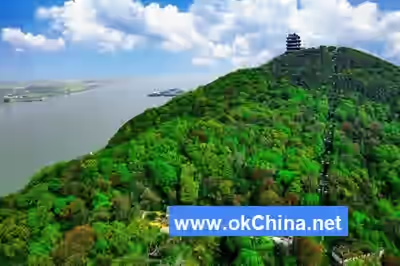
The current Santaige Pavilion has six floors, stands 31 meters high, and majestically rises atop Cuiluo Mountain with its upturned eaves, carved beams, and painted rafters. Standing at Santaige, one can look west to see the great river flowing, gaze south to view the interrupted Tianmen Mountains, and look east to take in the scenery of the new city. The landscape is charming and the scenery delightful. As the famous essayist Yu Qiuyu wrote in his "Inscription for Santaige": "The Yangtze River, flowing here, has sufficiently proven itself to possess a world-class cultural character." "This pavilion, situated high and looking down upon the vastness, should be more capable than elsewhere of comprehending the thousand-mile-long Yangtze River." When you ascend this pavilion, will you also sigh like Mr. Yu: "What it ultimately etches upon the earth is actually the poetic secret treasure deep within the character of a great nation."
3.8 Yanyuan Garden
Yanyuan Garden is located on Cuiluo Mountain in Caishiji, nestled against the shaded slope of the mountain and adjacent to the Lin Sanzhi Art Museum. It collects various precious ancient inkstones and contemporary masterpieces of calligraphy and painting, making it an ideal place for studying the arts of poetry, calligraphy, and painting.
Yanyuan Garden covers an area of 2,000 square meters, with a construction area of 1,225 square meters. It is primarily a single-story structure with some two-story sections, arranged in a courtyard style. It features gently sloping roofs, an expansive and stretching form, a simple and elegant style, and Tang Dynasty-inspired architecture. The main exhibition hall is 290 square meters, with two auxiliary exhibition halls each measuring 60 square meters, and a multi-functional conference room of 180 square meters. It displays 72 ancient Chinese inkstones donated by the famous collector Mr. Ji Hanzhang, as well as masterpieces of calligraphy and painting by contemporary artists.
The "Muzi Collection Hall" within Yanyuan Garden exhibits 218 precious calligraphy and painting works donated by Mr. Lü Xixue, including "Signature Collection Scroll," "Calligraphy and Painting Collection Scroll," "Longevity Star Scroll," and "Dragon Year Dragon Scroll." Among them, the "Signature Collection Scroll" features works by 108 contemporary calligraphers and painters from 21 provinces and cities across China. The collection of this scroll took ten years, and it has been recognized by the Guinness World Records as "the longest scroll featuring the most signatures of contemporary calligraphers and painters aged eighty or above."
3.9 Riverside Wetland Park
The Riverside Wetland Park borders Caishiji to the north and the Yangtze River to the west. The Ma'anshan Riverside Ecological Wetland Park, where the poplar forest is located, has set up 10 viewing platforms along its 5,670-meter park path, forming an ecological landscape characterized by "one poplar forest, two connected water systems, two looped boardwalks, and three entrances/exits."
The Riverside Ecological Wetland features a sightseeing corridor combining park paths and boardwalks with a total length of approximately 7.8 kilometers. Visitors can stroll along the corridor to enjoy the riverside scenery. The entire park is lush with green trees and clear blue skies and waters, offering fresh air. Walking along the corridor, one can take in the beautiful riverside views. Strolling on the shaded paths by the river, one is greeted by an ecological picture of harmonious mountains and waters, a green and livable environment.
For the convenience of visitors for sightseeing and rest, the park is equipped with leisure facilities such as stone tables and benches, as well as trash bins and mobile toilets, aiming to minimize the environmental impact of human activities and allow people to enjoy the river while also protecting it.### 3.10 Baoji Mountain Baoji Mountain, first documented during the Ming Dynasty's Zhengde period with the three seal-script characters "宝积山" (Baoji Mountain) carved at its base, derives its name from the numerous peculiar rocks on the mountain, resembling countless piled pearls and gems. It is located north of Caishi Town in Ma'anshan City, Anhui Province. With an elevation of 208 meters, a relative height of 58 meters, a length of 350 meters, and a width of 120 meters, the mountain covers an area of 7.75 hectares and takes the shape of a coiled dragon.
3.11 Zhexian Garden
Zhexian Garden is designed in the style of a Jiangnan classical garden, with its themes centered around the stories of Li Bai in Anhui, Dangtu, and Caishi, highlighting the poet's simple and genuine personal charm. The garden employs various artistic techniques, complemented by sculptures such as "Grinding an Iron Rod into a Needle" and "Farewell at Peach Blossom Pond." In its design, the garden cleverly utilizes the terrain's elevation changes, featuring waterfalls and deep pools as focal points. With winding streams, secluded paths, artfully arranged rocks and plants, and pavilions dotting the landscape, the entire garden is rich in charm and scenery from every plane and perspective.
3.12 Cuiluo Bay
Cuiluo Bay is situated in the southwest of the Caishiji Scenic Area, covering an area of 200,000 square meters, including 50,000 square meters of water systems. It features two stone arch bridges, three wooden flat bridges, and one stone flat bridge, with a total construction investment of 20 million yuan.
Nestled against mountains and water, Cuiluo Bay boasts beautiful scenery. The park is designed with a landscape garden as its foundation, featuring pavilions, waterside pavilions, wooden bridges, and interconnected fish ponds and pools. The attractions are well-arranged and harmoniously laid out, including hexagonal pavilions, thatched pavilions, waterside pavilions, fishing platforms, boat docks, boardwalks, farmhouse entertainment, recreational facilities, rose gardens, and peony gardens. The expansive Yingshan Lake, set amidst a forest of pond cypresses, presents a magnificent and picturesque view. Strolling along the lakeshore allows visitors to enjoy the beautiful scenery of the lake and mountains, while also providing a tranquil environment for relaxation and reflection, making it a delightful and memorable experience.
4. History and Culture
4.1 Poetry and Literary Collections
Caishiji is the place where the Tang Dynasty poet Li Bai spent his final years. The "Poetry Immortal" Li Bai visited and composed poems here multiple times throughout his life, leaving behind the legend of "getting drunk, catching the moon, and riding a whale to ascend to heaven." Many other literary figures, such as Bai Juyi, Wang Anshi, Su Dongpo, Lu You, and Wen Tianxiang, also visited Caishiji and inscribed poems here. Chen Congzhou once remarked, "There are many gardens in the country, but only Caishiji uniquely incorporates green mountains, steep cliffs, the great river, and culture into its garden design."
4.2 Historical Development
The Second Year of Chiwu in the Eastern Wu Dynasty (239 AD): The Chiwu Well within the Guangji Temple in Caishi was excavated. This is the oldest surviving cultural relic in the Caishi Scenic Area. The Third Year of Xining in the Northern Song Dynasty (1070 AD): Zhang Gui, the prefect of Taiping, built the Emei Pavilion on the southern side of Cuiluo Mountain. The Fifth Year of Zhengtong in the Ming Dynasty (1440 AD): Zhou Chen, the Right Vice Minister of Works, inspected Jiangnan and ordered the monk Xiuhui of Guangji Temple to build the Qingfeng Pavilion on Cuiluo Mountain in Caishi. He also constructed the Zhexian Tower (later renamed Taibai Tower) in front of the pavilion, with a statue of Li Bai placed inside. The Fourteenth Year of Shunzhi in the Qing Dynasty (1657 AD): In spring, due to the carelessness of a visitor, a fire broke out and destroyed the Zhexian Tower. The Second Year of Kangxi in the Qing Dynasty (1662 AD): Hu Jiying, the prefect of Taiping, and Ge Yuanfu, the magistrate of Dangtu County, among others, rebuilt the Zhexian Tower and renamed it Taibai Tower. They also relocated and reconstructed the original Li Bai Shrine from Caishi Town behind the tower. The painter Xiao Yuncong created four murals inside Taibai Tower: "Misty Clouds of Emei," "Ancient Pines of Huashan," "Waterfall of Mount Lu," and "Sunrise of Mount Tai." The Twenty-Third Year of Jiaqing in the Qing Dynasty (1818 AD): Zhang Pichang, the prefect of Taiping, and Wu Cunkai, the magistrate of Dangtu County, renovated Taibai Tower. During the Xianfeng Period of the Qing Dynasty (1851–1861 AD): Taibai Tower and its murals were destroyed by war. The Third Year of Guangxu in the Qing Dynasty (1877 AD): In April, the renovation project of Taibai Tower, funded by Peng Yulin (Right Vice Minister of War), Li Hongzhang (Viceroy of Zhili), and Yulu (Governor of Anhui), and supervised by Tao Lizhong (Deputy Commander of the Yangtze River Naval Forces), was completed. The Thirteenth Year of Guangxu in the Qing Dynasty (1887 AD): Li Chengmou, the Commander of the Qing Dynasty's Yangtze River Naval Forces, rebuilt the Ranxi Pavilion on the southeast side of Cuiluo Mountain. The Thirty-Second Year of Guangxu in the Qing Dynasty (1906 AD): Local gentry such as Lu Shijin from Caishi Town established the Caishi Primary School, using the income from temple fair lands and wheat fields as funds, and building it on the sites of the Shenxiao Palace and Taibai Hall. The Twenty-Fourth Year of the Republic of China (1935 AD): The Anhui Provincial Construction Department approved the Dangtu County Government's plan to develop the Cuiluo Mountain area into Caishi Park, opening it to tourists. October 8, 1959: The Ma'anshan Municipal People's Government decided to rebuild Caishi Park based on the natural landscape and cultural relics of Cuiluo Mountain in Caishi. 1961: Caishi Park and the Li Bai Memorial Hall were opened to the public.
4.3 Specialty Products
4.3.1 Caishiji Dried Tofu
Caishiji dried tofu has a history of over two hundred years and was once a tribute to the Qing imperial court. The product has been exported to countries and regions such as Japan, Singapore, and Hong Kong. It has won provincial and ministerial awards, three silver medals at the China First Food Expo and the 1992 Hong Kong International Food Expo for high-quality Chinese health products, and has been honored with the title of Anhui Famous Trademark.
4.3.2 Caishiji Liquor
During the Yuan, Ming, and Qing dynasties, Caishiji liquor was consistently presented as a tribute to the emperor by the Taiping Prefecture. When Guo Moruo visited Caishiji, ascended Taibai Tower, and tasted Caishiji liquor, he left behind the poem: "I present you three hundred dou of wine, to compose thirty thousand poems."
4.4 Cultural Activities
4.4.1 November 7–15, 2020
The Ma'anshan "Cultural Tourism Mega Carnival" kicked off on Hengjiang Street in the ancient town of Caishi.
4.4.2 May 1, 2023
The event "Intangible Cultural Heritage Enters the Scenic Area, Enjoy a Tour of Caishiji" was successfully held in front of the Li Bai Memorial Hall in the Caishiji Scenic Area.
4.4.3 November 5, 2023
The "2023 Ma'anshan · Caishiji Half Marathon" kicked off with great enthusiasm.
4.4.4 May 25–26, 2024
The "2024 Caishiji Yangtze River Music Festival" was held with great excitement at the Ma'anshan Yangtze River Caishiji Cultural and Ecological Tourism Area (Fangcaodi).
Comments
Post a Comment