Changchun Film Century City
1. Introduction
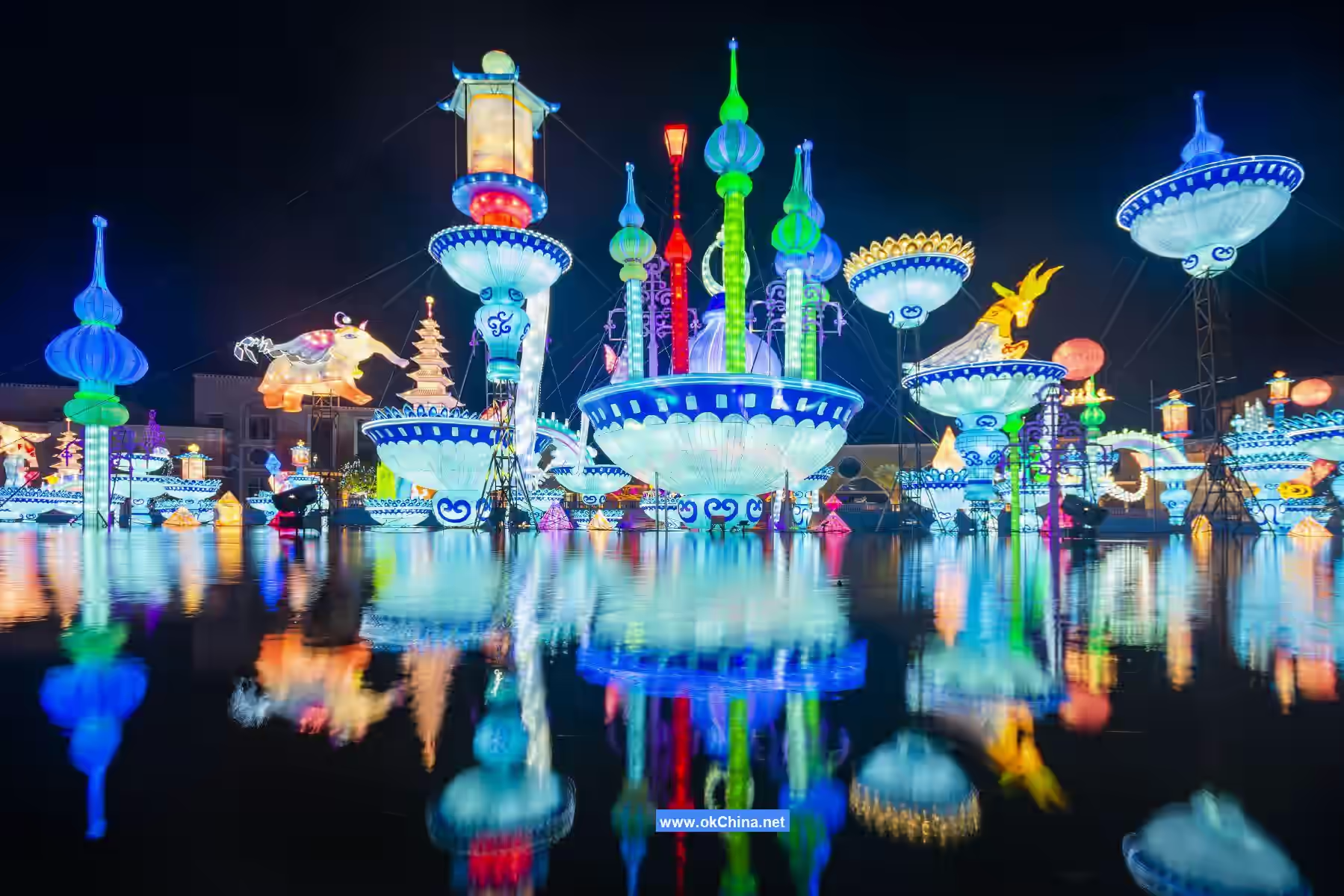
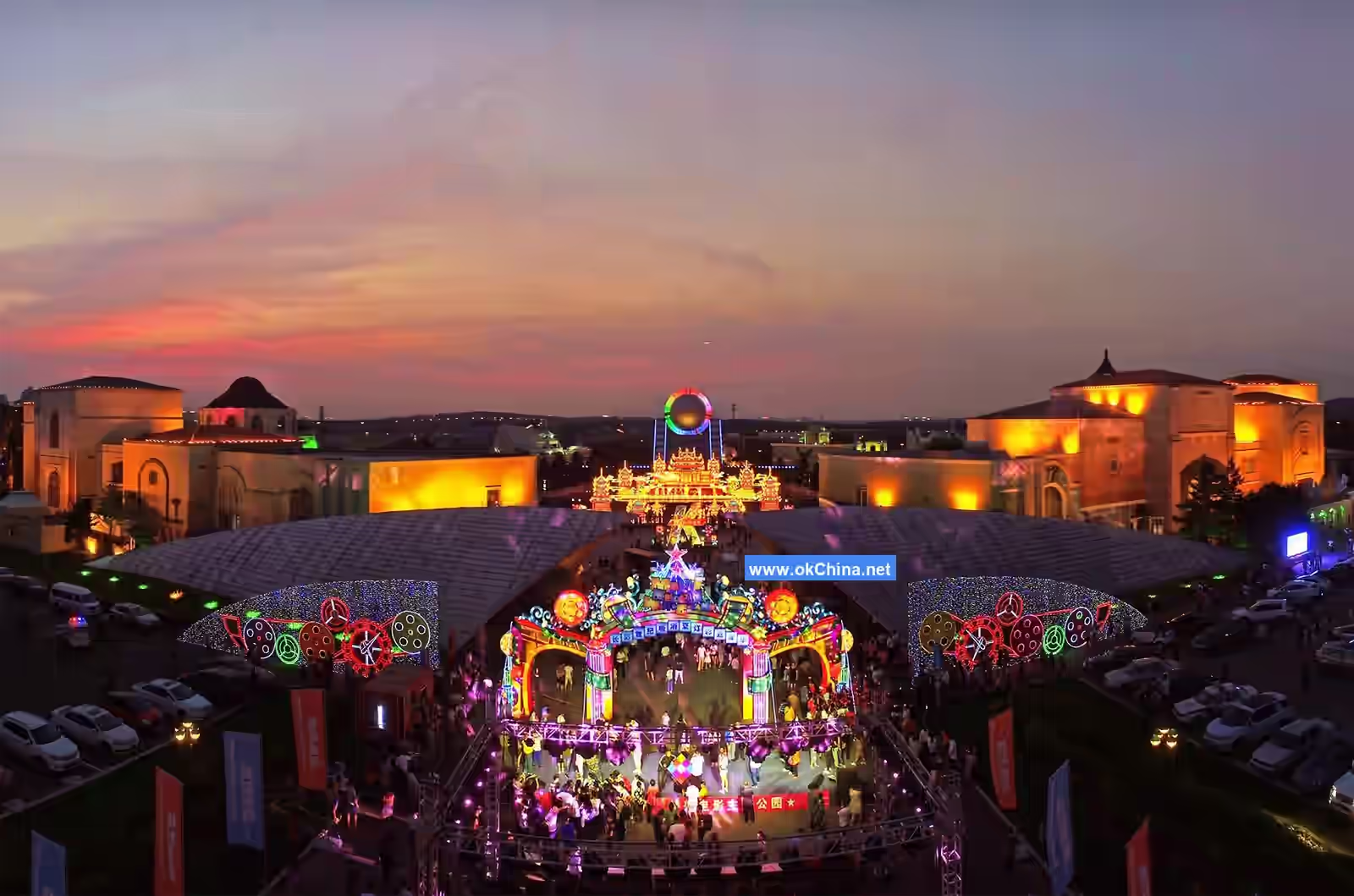
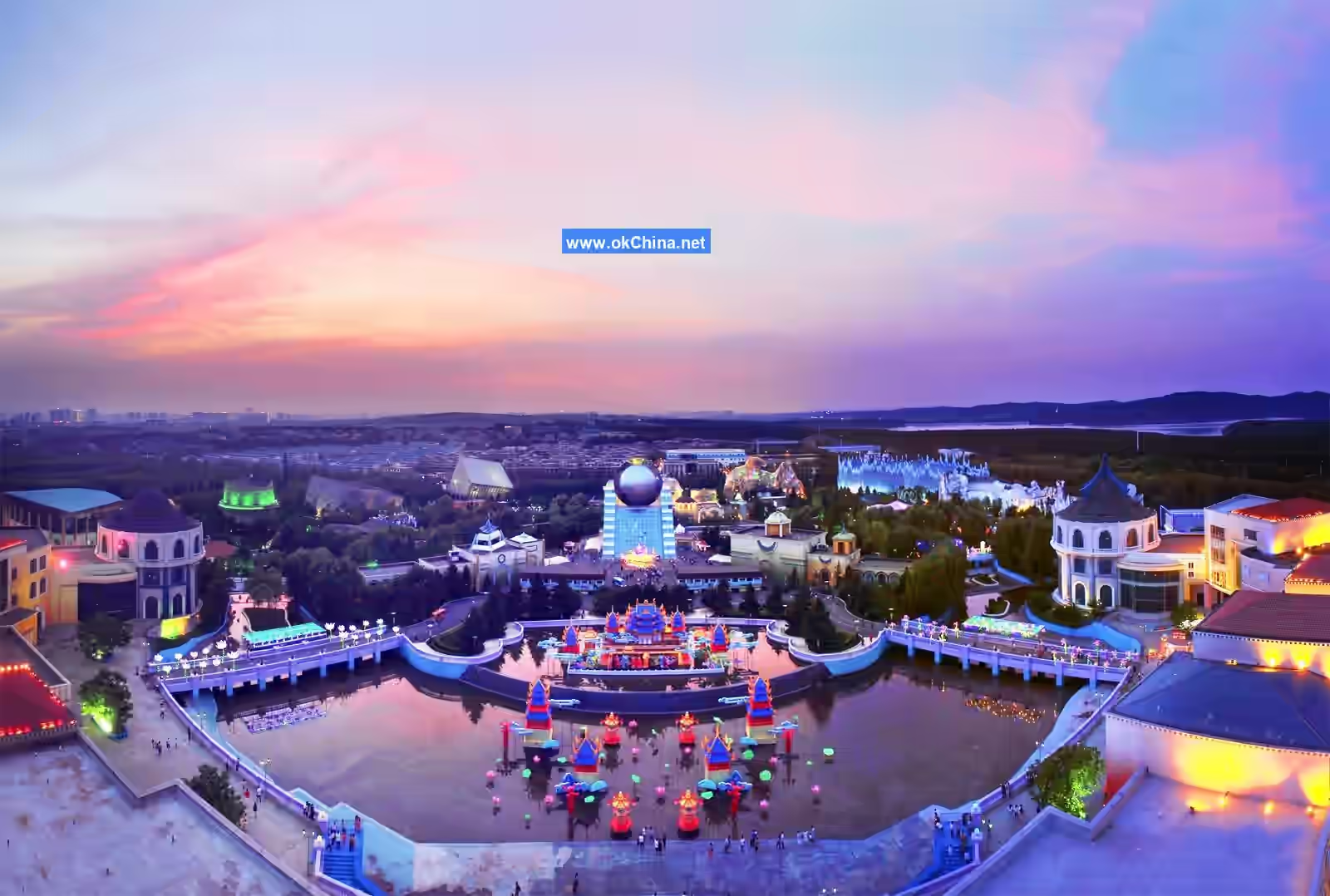
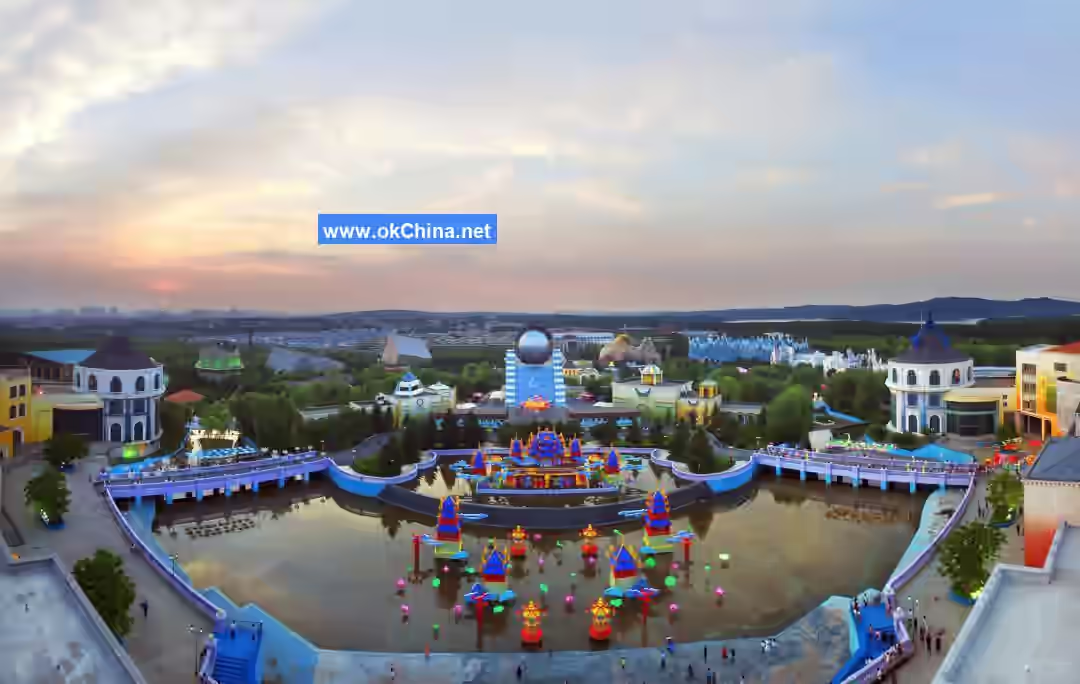
Changchun Film Century City is located on the west side of Jingyuetan Scenic Area in Changchun City, Jilin Province. It is China's first world-class film-themed entertainment park and a landmark project symbolizing the reform and second entrepreneurial venture of Changchun Film Studio. On October 1, 1945 (the 34th year of the Republic of China), Liu Jianmin announced the establishment of the Northeast Film Company. On February 28, 1955, Changchun Film Studio was founded. On January 4, 1999, Changchun Film Group Co., Ltd. was established. In 2003, the national, provincial, and municipal governments raised 300 million yuan to assist Changchun Film Group in launching the Changchun Film Century City project. On May 29, 2005, the Changchun Film Century City film-themed park officially opened. The main attractions of Changchun Film Century City include landscapes such as "Soaring over China," "Space Maze," and "Elf Kingdom." In 2014, Changchun Film Century City received the Jilin Province Quality Award. In 2015, it was honored with the national "Youth Civilization" title for the first time. In the same year, it was awarded the "Most Popular Tourism Brand Award" by the China Tourism General Review and was rated as a National AAAAA Tourist Attraction.
2. History of Changchun Film Studio
2.1 Early Establishment
Changchun Film Studio is a large comprehensive film production studio in China. It was established on the foundation of the Japanese "Manchuria Film Association Co., Ltd." during the puppet Manchukuo period in 1937. The preparation for Changchun Film Studio began after Japan's surrender in 1945. Chinese Communist Party members Liu Jianmin and Zhao Dongli secretly entered the "Manchuria Film Association," organizing progressive employees to protect the studio. On October 1, 1945, they established the "Northeast Film Company," which was officially renamed the Northeast Film Studio on October 1, 1946. Due to the civil war between the Kuomintang and the Communist Party in Changchun, the studio temporarily relocated to Hegang City, Heilongjiang Province. The first director was Yuan Muzhi, and the initial staff mainly consisted of film workers from Yan'an, the Manchuria Film Association, and other liberated areas.
In 1946, as the civil war between the Kuomintang and the Communist Party was imminent, the Northeast Film Company relocated to Xingshan City, Heilongjiang Province (now Hegang City, Heilongjiang Province) on May 23. They set up a "studio" in a primary school, establishing the first film production base of New China. On October 1, 1946, it was renamed the "Northeast Film Studio." At the same time, a large number of cadres were transferred to support the construction of new studios, earning it the reputation as the "Cradle of New Chinese Cinema."
In 1947, Director Yuan Muzhi proposed that the tasks of the Northeast Film Studio were to "persist in film production, establish a prototype, train cadres, organize distribution, and expedite foreign orders." During the Liberation War, the Northeast Film Studio produced 17 installments of the news documentary "Democratic Northeast," using 300,000 feet of film. Three young photographers sacrificed their lives on the battlefield: Zhang Shaoke, aged 30; Wang Jing'an, aged 27; and Yang Yinxuan, aged 24.
With the victorious progress of the Liberation War, after the liberation of Changchun on October 19, 1948, the Northeast Film Studio gradually returned to Changchun. In response to the dominance of American films in the market at the time, the Northeast Film Studio experimented with various film genres. From 1947 to 1949, they achieved six "firsts" in Chinese film history: the first puppet film "The Emperor's Dream," the first educational film "Preventing Plague," the first animated film "Catching a Turtle in a Jar," the first short feature film "Keep Him to Fight Chiang Kai-shek," the first full-length feature film "The Bridge," and the first dubbed film "An Ordinary Soldier." In April 1949, the Northeast Film Studio returned to its current location in Changchun and produced films such as "Daughters of China," "Zhao Yiman," "Steel Warriors," and "The White-Haired Girl."
In February 1955, the Ministry of Culture of the Central Committee of the Communist Party of China decided to rename the Northeast Film Studio to Changchun Film Studio. That same year, films such as "Flowers of the Motherland," "Guerrillas on the Plain," and "Dong Cunrui" were produced and released. It was not only a film production base but also a training ground for film personnel. Between 1960 and 1962, the studio also established a film academy, which was later disbanded. It comprised departments such as the editorial office, director's office, shooting studio, art studio, music composition studio, production studio, publication office, and workshops for art, lighting, sound recording, makeup, costumes, props, editing, and special effects. It even had its own film processing plant and film orchestra. Changchun Film Studio produced hundreds of feature films, excelling particularly in rural and war-themed films. Its works are filled with authentic local flavor and the bold, unrestrained style unique to the black soil region. In recent years, many of the studio's works have shown a strong commercial tendency. Despite this, films like "The Spring Festival" have still earned it honors. Changchun Film Studio made significant contributions to dubbing foreign films. Outstanding films such as "Lenin in 1918," "Chapayev," and "Queen Christina," which are still remembered today, were introduced to Chinese audiences by the studio.
From May 1947 to July 1949, the Northeast Film Studio dispatched 32 photography teams to the front lines, factories, and rural areas, capturing a vast amount of extremely precious historical documentary footage. They edited 17 installments of the news documentary "Democratic Northeast," the first news documentary of New China. It vividly reflected the scenes of the Northeast Liberation War and the North China Liberation War and authentically recorded parts of the Liaoshen and Pingjin campaigns. The film was successfully distributed overseas and won the Documentary Honorary Award at the 5th Karlovy Vary International Film Festival in Czechoslovakia in 1950. "Democratic Northeast" recorded a wealth of valuable historical materials. Outstanding photographers Zhang Shaoke, Yang Yinying, and Wang Jing'an sacrificed their lives for this project.
2.2 Creating Firsts
Many "firsts" in New China's film industry were created by Changchun Film Studio. For example:
New China's first puppet film, "The Emperor's Dream." The film vividly exposed Chiang Kai-shek's ugly face of selling out the country, engaging in civil war, and dictatorship, while praising the great power of the people (directed by Chen Bo'er, completed in November 1947).
New China's first animated film, "Catching a Turtle in a Jar." The film depicts Chiang Kai-shek, supported by American imperialism, launching a civil war but ultimately failing under the blows of the people's power, like a turtle trapped in a jar. Its completion marked the beginning of the production history of people's film art (written by Zhu Dan, directed and animated by Fang Ming, completed in December 1948).
New China's first educational film, "Preventing Plague." The film played an important propaganda role in combating the Japanese imperialists' germ warfare and eradicating the plague. It also pioneered the creation of educational films, holding significant importance in New China's film history (directed by Yuan Naichen, completed in the summer of 1948).
New China's first short feature film, "Keep Him to Fight Chiang Kai-shek." The film vividly portrays the close relationship between the people's army and the masses, with believable character portrayals and natural, simple performances by the actors. Performing artist Chen Qiang played an old farmer in the film, marking his screen debut. He later gained fame for playing villains, such as Huang Shiren in "The White-Haired Girl" and Nan Batian in "The Red Detachment of Women."
New China's first full-length feature film, "The Bridge," completed in May 1949. The film was the first to feature workers as the main characters on screen, with a distinct thematic focus, holding profound historical significance in New China's film history. Director Wang Bin successfully directed the film "The White-Haired Girl" in 1951. Art designer Liu Yuguang graduated from the "Manchuria Film" Film School in 1946 and served as the first head of the art department at Changchun Film Studio. He later worked as an art designer for films and TV series such as "The Party's Daughter," "Battle on Shangganling Mountain," "Flame Mountain," "The Mysterious Traveling Companion," "The Dadu River," and the TV series "The Young Marshal's Chronicles."
New China's first dubbed film, "An Ordinary Soldier." From then on, the Northeast Film Studio began dubbing a large number of Soviet films, laying the foundation for future dubbing work. The film was directed by Yuan Naichen, a pioneer in Chinese film dubbing, and was dubbed in May 1949.
2.3 Reform Plan
In 1997, Zhao Guoguang, who came from a media background, took over as the studio director, and Liu Lijuan, former director of the Jilin Provincial Sports Lottery Center, was appointed as the deputy director in charge of operations. In 1998, Changchun Film Studio began a bold reform plan. The first step was land replacement, selling 21 hectares of the old studio land to Changchun Guoxin Group for 300 million yuan. At the same time, they proposed the "one studio, three districts" plan and the slogan "no loss-making films." Subsequently, they secured a loan of 300 million yuan and raised an additional 300 million yuan in self-raised funds, totaling 600 million yuan, to build Changchun Film Century City. After that, Changchun Film Studio established film and television companies led by deputy directors Han Zhijun and Song Jiangbo. They also collaborated with Jilin Television to establish the Changchun Film and Television Channel.
On January 4, 1999, Changchun Film Studio was restructured into "Changchun Film Group Co., Ltd.," abbreviated as "Changchun Film Group."
In early 2005, Changchun Film Studio streamlined its workforce by offering buyouts and terminating labor contracts. At the same time, the large-scale tourism project Changchun Film Century City was completed and put into operation. Additionally, Changchun Film Network Technology Co., Ltd. was established. A group of young film enthusiasts with shared aspirations aimed to spread the spirit of Changchun Film Studio to every corner of the internet through the network.President Liu of the Changchun Film Studio Group once commented: "Changchun Film Century City has now exceeded original expectations in terms of both economic and social benefits. The number of visitors has shown a clear increase, and both revenue and social influence have significantly improved. Many national leaders have visited and spoken highly of it after their tours. Not long ago, Donald Tsang visited Changchun Film Century City and said it could rival Hong Kong Disneyland, giving it high praise, which is an encouragement for us." Regarding the future of Changchun Film Studio, President Liu is full of confidence: "First, we hope to build Changchun Film Studio into a film industry cluster in China; second, to create a distinctive and influential film and television tourism destination in Asia, becoming a world-class film entertainment center."
In 2010, Chinese cinema entered another spring, and a new wave of vitality is surging at Changchun Film Studio.
3. Park Layout
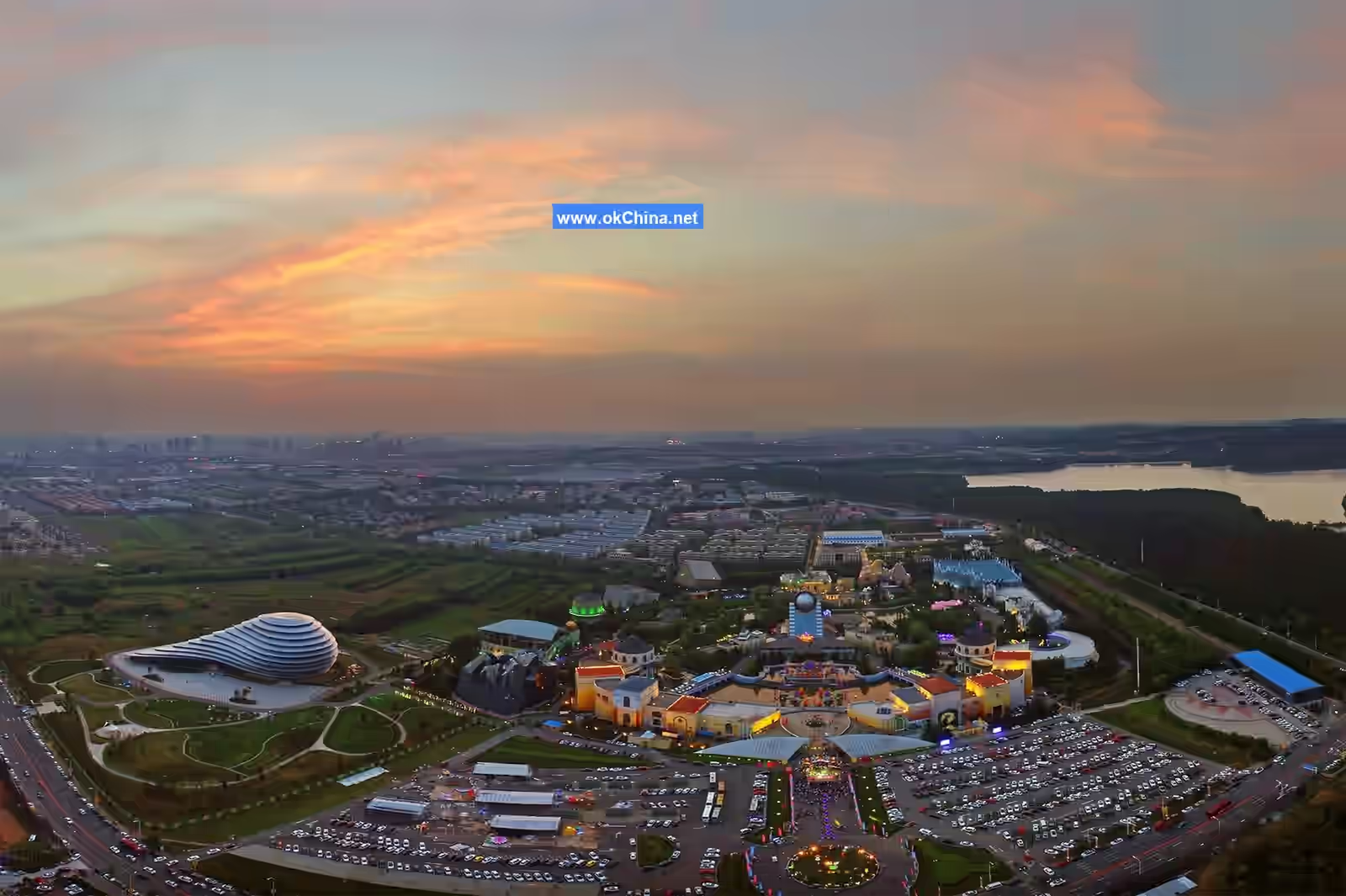
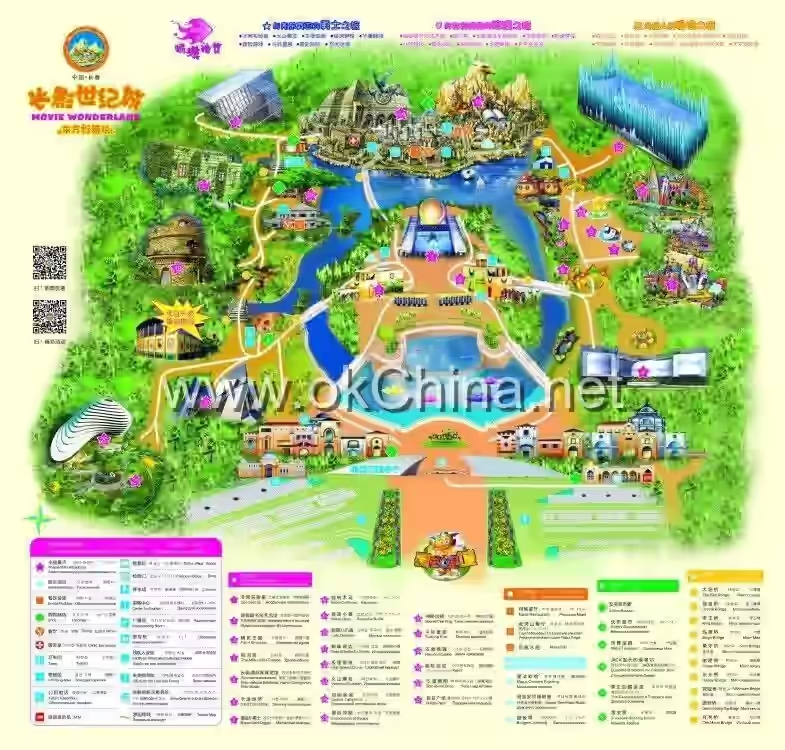
Changchun Film Century City in Changchun City is planned to cover an area of 1 million square meters, with the first phase covering 350,000 square meters. Its main attractions include China Soaring, Space Maze, Zombie Hospital, Elf Kingdom, Giant Screen Theater, Interstellar Adventure, Extreme Lab, Elf Kingdom, Volcano Eruption, Shifting Stars, Haunted Castle, Galaxy Palace, Hero Show, High-Speed Shuttle, Changchun Film Prop Vehicle Exhibition Hall, and Mysterious Ancient Tree, among others. These form four systems centered on film-themed experiences: special effects film entertainment, film production revelations, film stunt displays, and film prop exhibitions.
4. Main Attractions
4.1 China Soaring
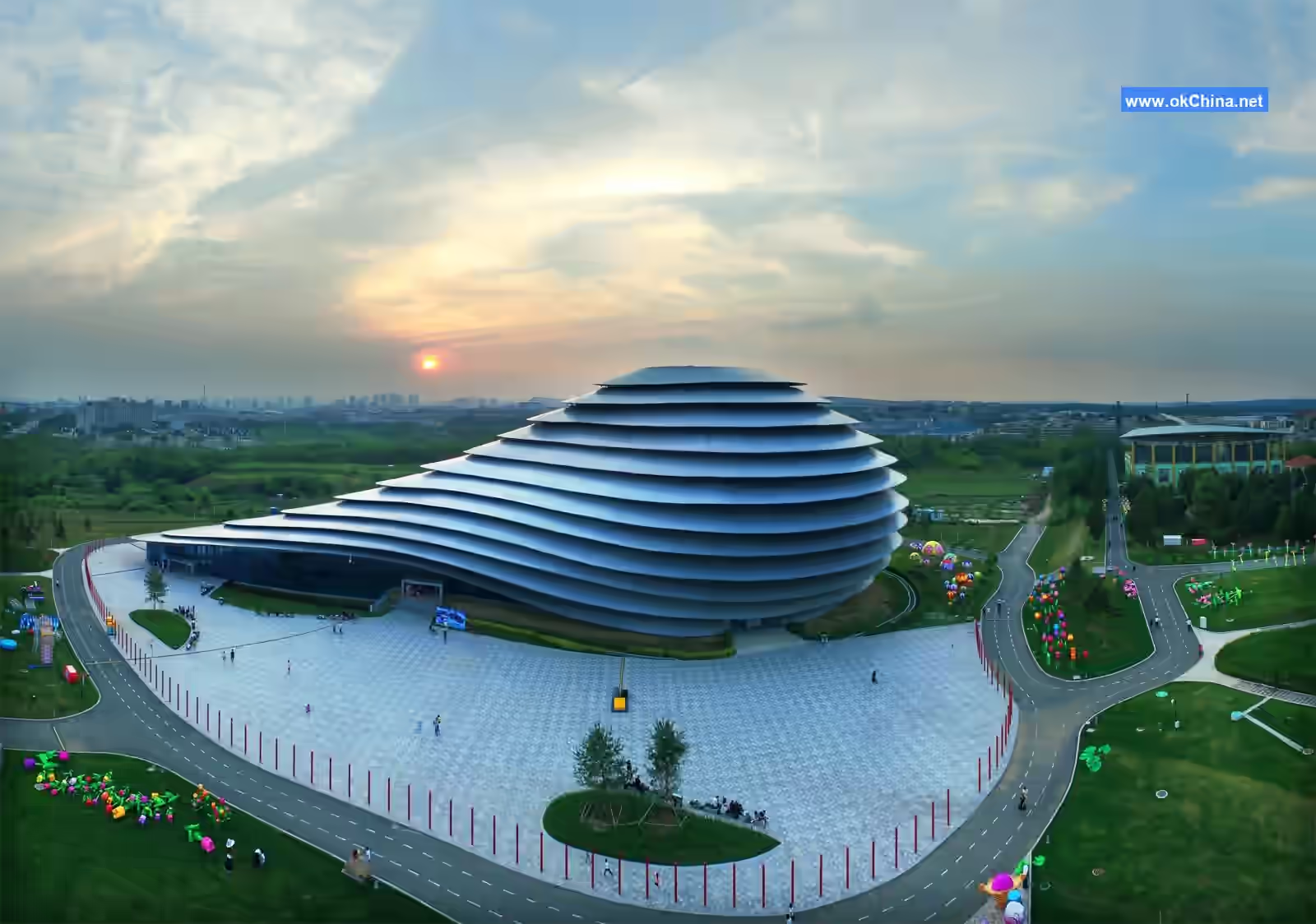
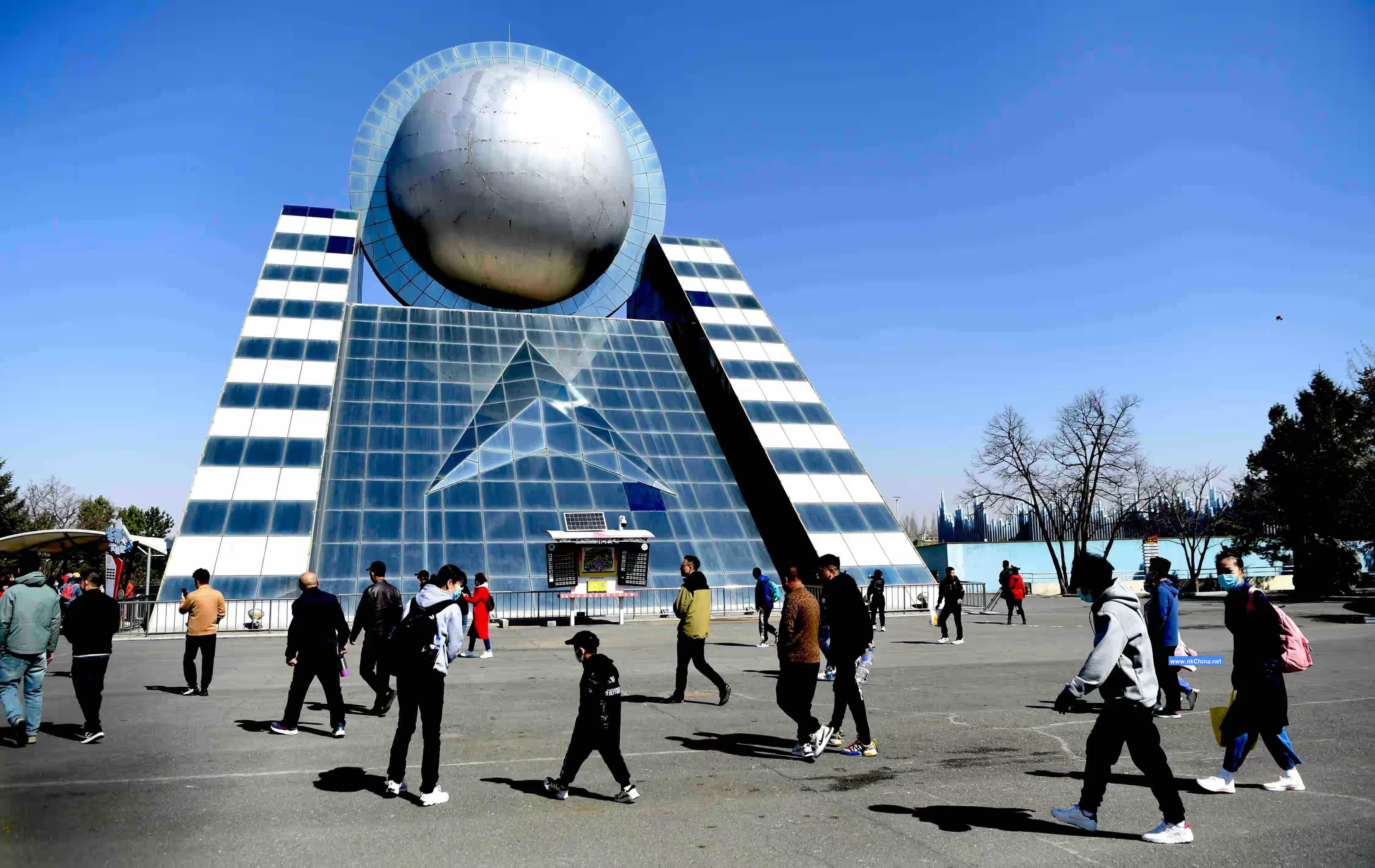
China Soaring, located at the southwestern end of Changchun Film Century City, is a flying dome theater and one of the park’s flagship projects. It was jointly completed by a design team involved in projects like the National Grand Theatre and the Bird’s Nest. The structure uses steel and features a spherical design with multi-curve connections. The dome film shown here was shot by the special effects cinematographer of the American film The Lord of the Rings and an international stunt pilot, capturing footage of China’s mountains and rivers. After post-production editing and special effects, the film was completed. The experience capsule can rotate 180 degrees and simultaneously rise to the height of a five-story building, allowing visitors to dangle their feet in the air and experience flying over mountains and rivers, time-space transitions, and rapid descents in a flight posture.
4.2 Space Maze
Space Maze, located at the northern end of Changchun Film Century City, uses stereoscopic film technology to tell the story of Alexander the Great rescuing a golden coffin in The Mystery of the Golden Coffin. The scenes include Alexander’s palace, a thousand-year-old ice corpse, a cosmic black hole, a starry sky, and a final battle. The entire experience does not require 3D glasses.
4.3 Zombie Hospital
Zombie Hospital is the latest horror-themed project at Changchun Film Century City, launched in 2014, and is only open during summer vacation night sessions. Unlike traditional haunted houses that rely heavily on dummy models, many of the ghosts and monsters in Zombie Hospital are played by real people.
4.4 Interstellar Adventure
Interstellar Adventure, located at the northwestern end of Changchun Film Century City, combines motion film technology with dome film technology to create a dynamic movie experience. The seats move with six degrees of freedom in front of a 25-meter-diameter hemispherical screen, allowing visitors to feel as if they are on an interstellar adventure.
4.5 Extreme Lab
Extreme Lab, located in the central part of Changchun Film Century City, was custom-designed for the park by an American design company. It features three-dimensional effects and enhances the atmosphere with olfactory, auditory, and tactile special effects, simulating the real environment of the film.
4.6 Elf Kingdom
Elf Kingdom, located in the central part of Changchun Film Century City, is a theater that integrates lasers, floating music, and animation.
4.7 Volcano Eruption
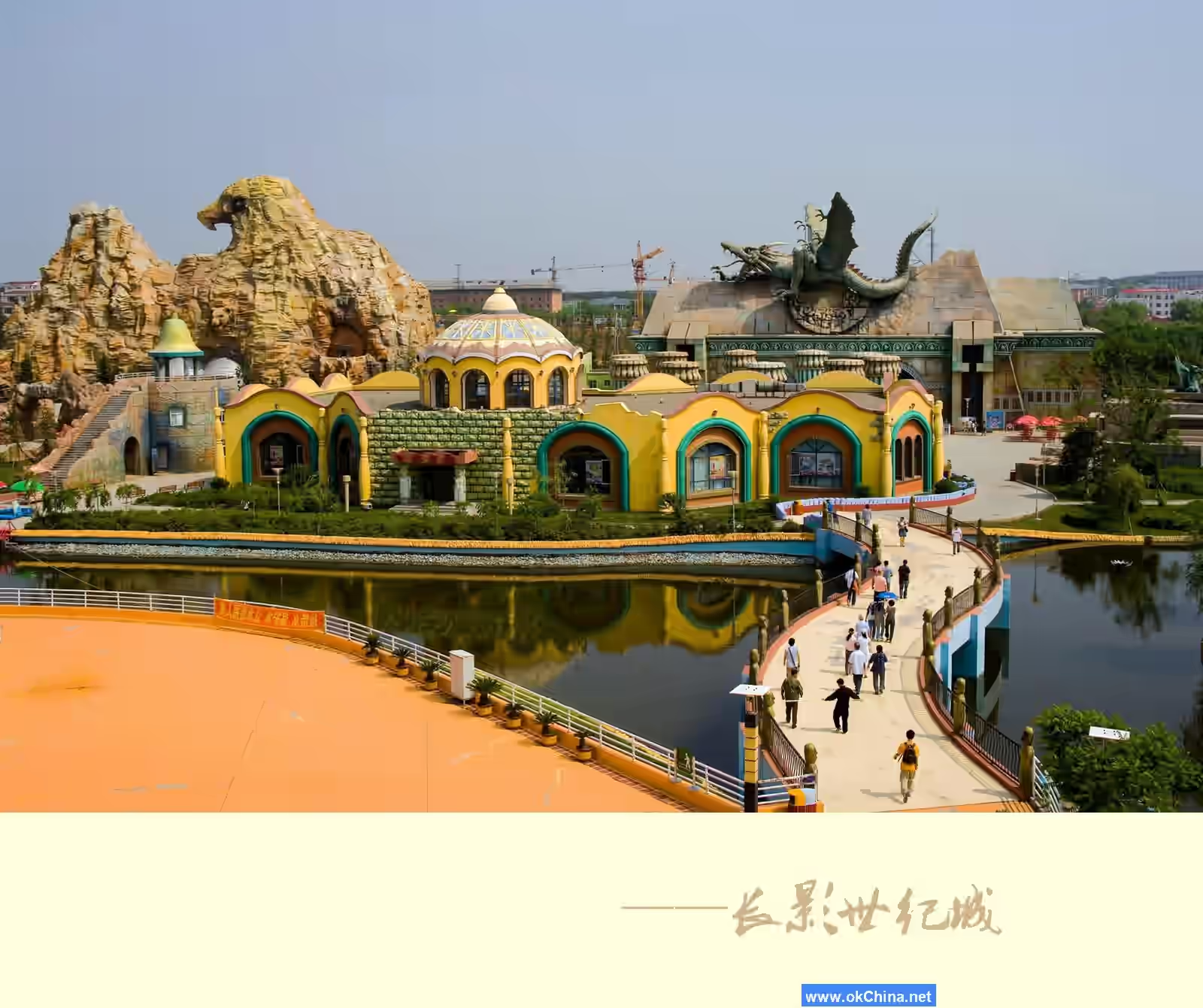
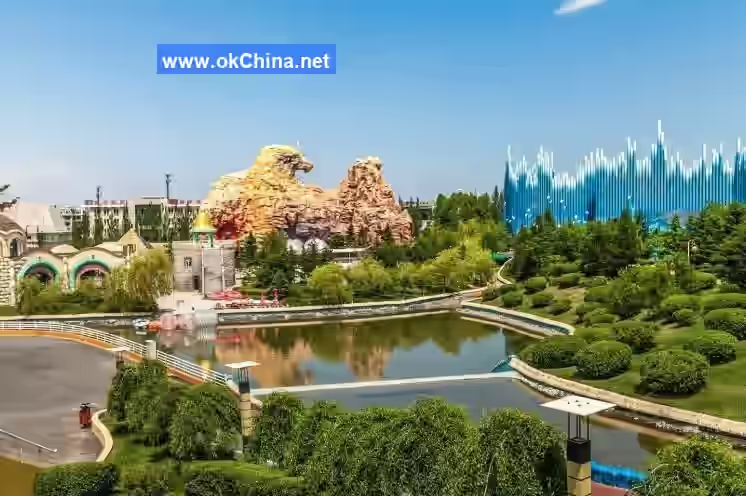
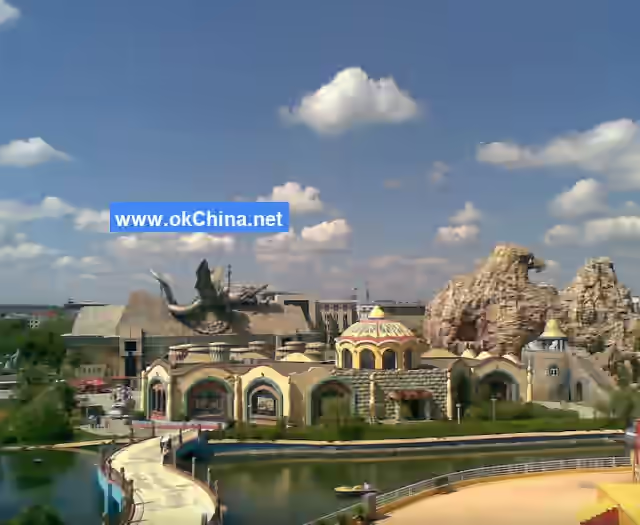
The eagle-shaped building to the right of Maya Square is Eagle God Mountain—"Volcano Eruption." Using sound, light, and electrical technologies, it simulates the scene of a volcanic eruption, recreating the process of the ancient Maya city being swallowed by a volcano overnight, thereby unraveling the mystery of the destruction of the ancient Maya civilization.
4.8 Shifting Stars
Shifting Stars uses light and shadow special effects to interpret the mysteries and secrets of the unknown Bagua array, revealing the secrets of flight in the world of light and shadow.
4.9 Haunted Castle
Haunted Castle, located on the western side of Changchun Film Century City, features scenes such as an enchanting witch, castle guardians, vampires, zombies, graves, and ghosts, creating a terrifying atmosphere through auditory, visual, and tactile effects.
4.10 Galaxy Palace
Galaxy Palace reveals the secrets of film special effects to visitors and showcases the production of film special effects.
4.11 Hero Show
Hero Show is one of the signature projects at Changchun Film Century City. Using film stunts such as car chases, explosions, and wirework, it recreates the filming scenes of Guerrillas on the Plain and Heroic Sons and Daughters. With thrilling actions, grand scenes, and passionate performances, it presents an epic ode to heroes.
4.12 High-Speed Shuttle
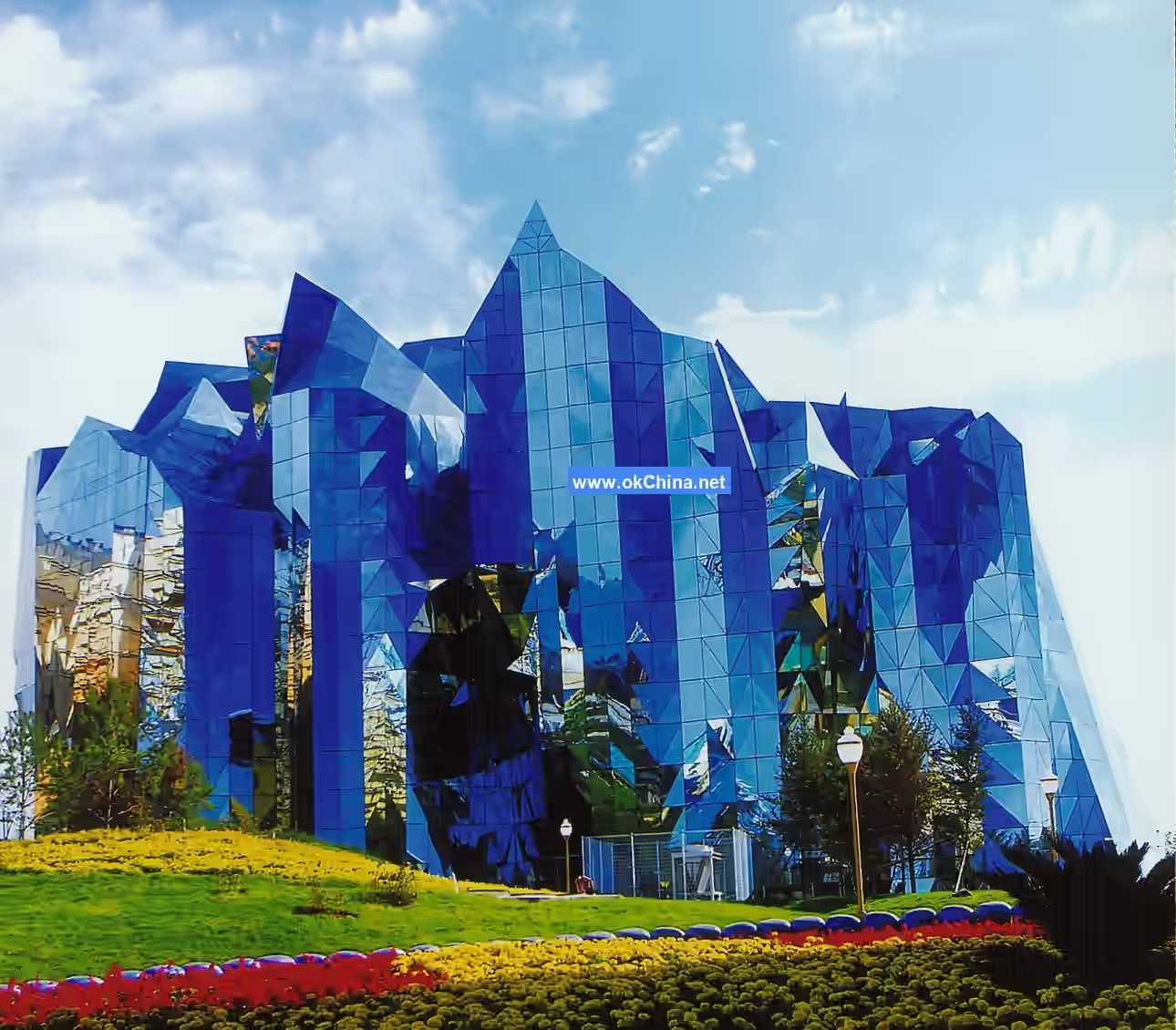
High-Speed Shuttle, located at the northeastern end of Changchun Film Century City, features a sky-blue exterior. Inside, scenes include the Shenzhou spacecraft, a space transfer station, meteorites, and flying saucers.
4.13 Changchun Film Prop Vehicle Exhibition Hall
The Changchun Film Prop Vehicle Exhibition Hall, located on the eastern side of Changchun Film Century City, displays vehicles preserved by Changchun Film Studio, all of which have been used in films produced by the studio.
Comments
Post a Comment