Bifeng Gorge
1. Introduction
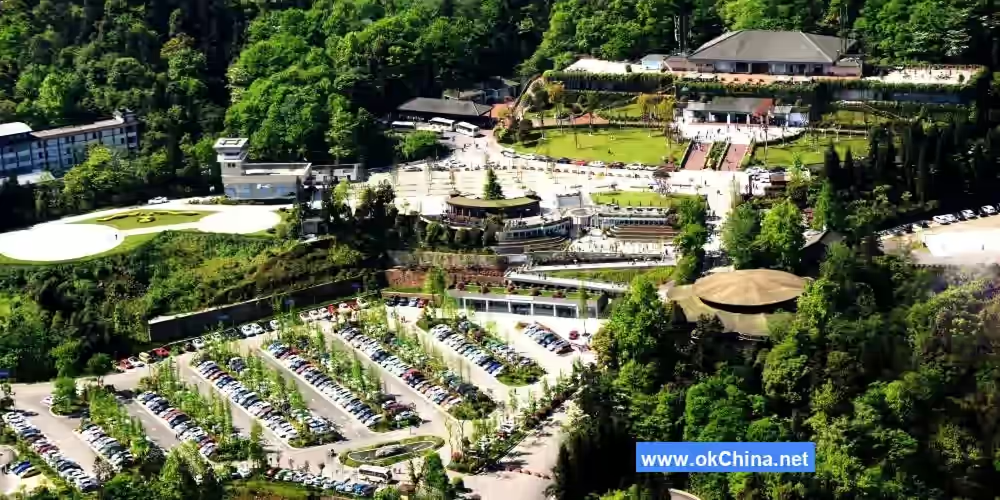
The Ya'an Bifeng Gorge Scenic Area, abbreviated as Bifeng Gorge Scenic Area or Bifeng Gorge, is a tourist attraction located in Bifeng Gorge Town, Yucheng District, Ya'an City, Sichuan Province. The scenic area covers 20 square kilometers.
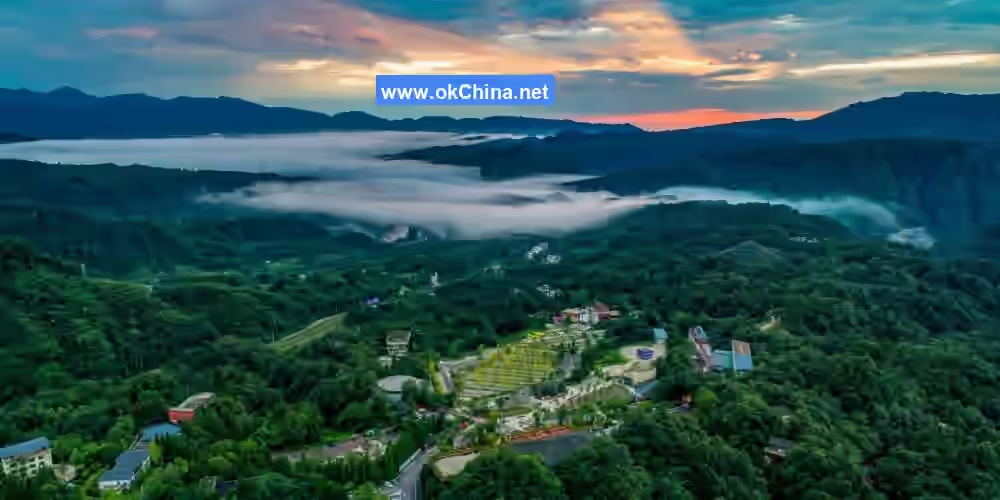
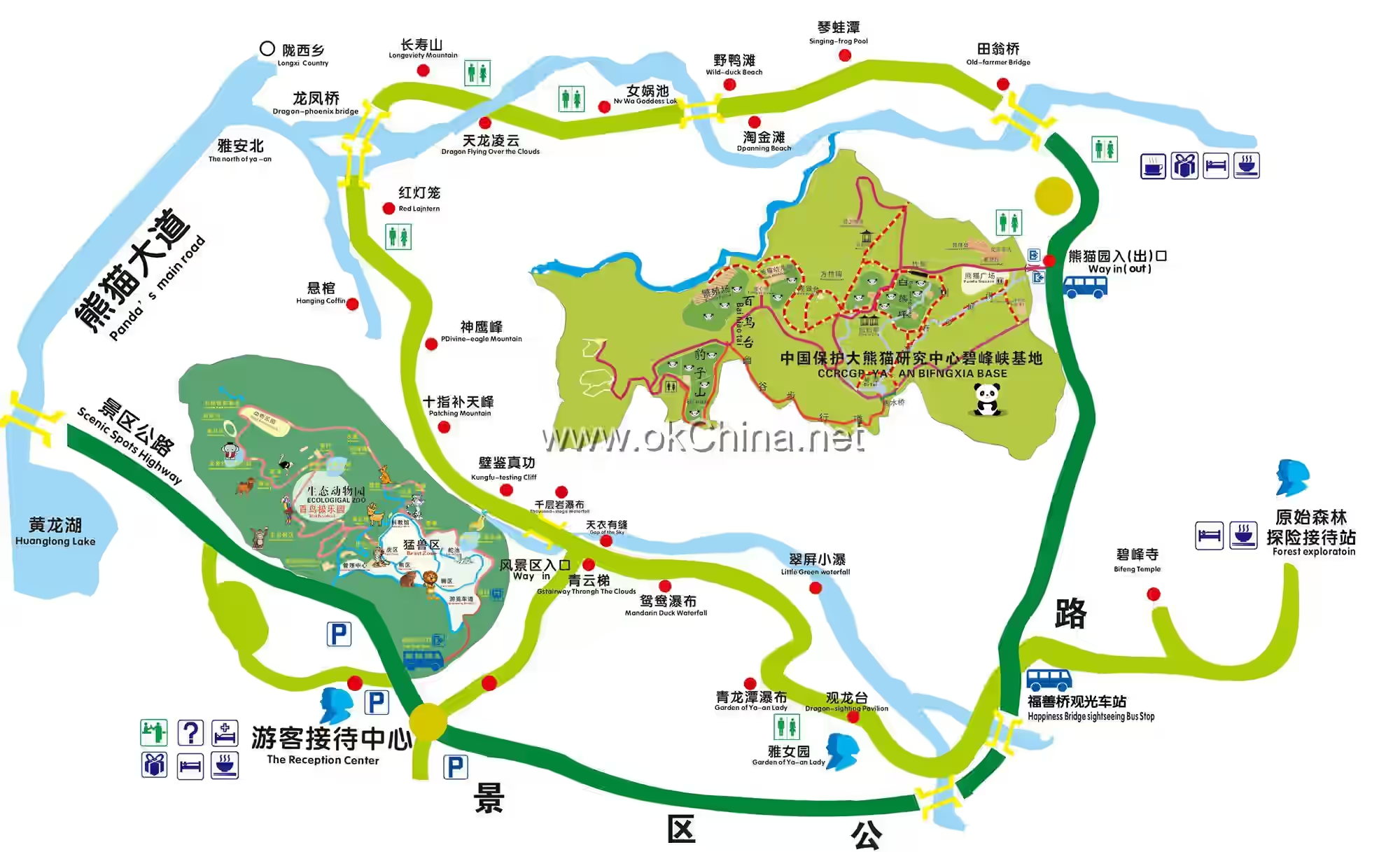
The Bifeng Gorge Scenic Area consists of three parts: the Bifeng Gorge Base of the China Conservation and Research Center for the Giant Panda, a wildlife park, and an ecological gorge scenic area. The Bifeng Gorge Wildlife Park, with a planned area of 10,000 mu, is composed of a drive-through area for viewing beasts of prey (the Predator Zone) and a walk-through area for viewing gentle animals (the Walking Zone). It is the first wildlife park in Southwest China and also the first ecological wildlife park in China. The ecological gorge scenic area consists of left and right gorges. The China Conservation and Research Center for the Giant Panda has built over 20 laboratories and facilities, including a giant panda breeding farm, a giant panda kindergarten, a giant panda hospital, and a giant panda research institute. The Bifeng Gorge Base covers an area of over 1,000 mu and houses more than 40 giant pandas. Bifeng Gorge is a canyon-type natural scenic area formed by sandstone, conglomerate, and mudstone. The scenic area belongs to the subtropical humid monsoon climate zone. The forest coverage rate within the scenic area exceeds 95%, earning it the reputation as the "Lungs of the Land of Abundance."
2. Geographical Environment
2.1 Location and Territory
The Bifeng Gorge Scenic Area is located in Bifeng Village, Bifeng Gorge Town, Yucheng District, Ya'an City, Sichuan Province. It covers an area of 20 square kilometers, with a forest area of over 20,000 mu.
2.2 Geology and Landforms
Bifeng Gorge is a canyon-type natural scenic area formed by sandstone, conglomerate, and mudstone.
2.3 Climate Characteristics
The climate type in Yucheng District, where the Bifeng Gorge Scenic Area is located, is basically a subtropical humid monsoon climate zone, except for a few high mountain areas. Temperature characteristics: The climate is mild with abundant rainfall, without extreme heat in summer or severe cold in winter. The annual average temperature is 16.2°C, with the highest recorded at 16.0°C (1987) and the lowest at 15.4°C (1976). January is the coldest month, and July is the hottest. Sunshine is relatively scarce, and humidity is high. Wind is light, and foggy days are few. The frost-free period is long, and snowfall is rare.
3. Main Attractions
3.1 Giant Panda Base
3.1.1 Overview
The Ya'an Bifeng Gorge Base of the China Conservation and Research Center for the Giant Panda is a branch base of the center. It was officially completed and opened to the public on December 28, 2003, covering an area of 1,074 mu. The base currently houses over 60 giant pandas and integrates functions such as scientific research, breeding, and tourism. It is divided into three exhibition and visiting areas: Baixiongping (White Bear Flat), the Kindergarten, and the Returnee Panda Paradise.
3.1.2 Returnee Panda Paradise
The Returnee Panda Paradise was built to house giant pandas returning from overseas. It consists of 7 enclosures, with dense jungle, a quiet environment, and spacious outer areas that closely resemble the natural habitat of wild giant pandas. The research center has the world's largest population of returnee giant pandas. Born in places like the United States, Austria, and Thailand, they returned to China after growing up. They are lively, adorable, and stars among stars. Famous giant pandas such as Hua Mei, Tai Shan, and Fu Long have lived here.
3.1.3 Giant Panda Kindergarten
The Giant Panda Kindergarten consists of a nursery room and two panda enclosures, primarily dedicated to artificial rearing and the care of juvenile giant pandas. When a female giant panda gives birth to twins or multiple cubs, she often chooses only the strongest one to nurture, abandoning the others. The abandoned cubs are then artificially reared in the nursery. The nursery mainly cares for pandas under six months old. At this stage, their eyes are closed, their bodies are pink with sparse white fur, their ears resemble two fleshy lumps, and they cannot stand or crawl but can lift their heads and cry loudly. Giant pandas typically open their eyes around 40 days, develop vision and hearing between 70 to 90 days, begin to resemble adult pandas at 2 months, and can weigh up to 10 kilograms by six months. After six months, they move into the kindergarten. The kindergarten enclosures are equipped with toys like swings and tires for the young pandas to play with. Giant pandas are solitary animals and can only coexist peacefully with peers during their juvenile years. Therefore, one kindergarten enclosure usually houses several young giant pandas.
3.1.4 Baixiongping (White Bear Flat)
Baixiongping is the attraction closest to the base entrance, consisting of 8 panda enclosures primarily housing adult giant pandas. The visiting area of Baixiongping is spacious and natural. To make the base's ecological environment as close as possible to the wild habitat of giant pandas, caretakers occasionally place items like sacks and PVC pipes in the pandas' activity areas to break the monotony of the captive environment and make it more natural. The pandas here are all managed under a free-range system, making their behavior more natural. Well-known pandas such as "Tuantuan" and "Yuanyuan" (gifted to Taiwan), "Yangguang" and "Tiantian" (sent to the UK), and "Wujie" and "Hubao" (sent to Singapore) have all lived at Baixiongping.
3.2 Ecological Gorge Scenic Area
3.2.1 Overview
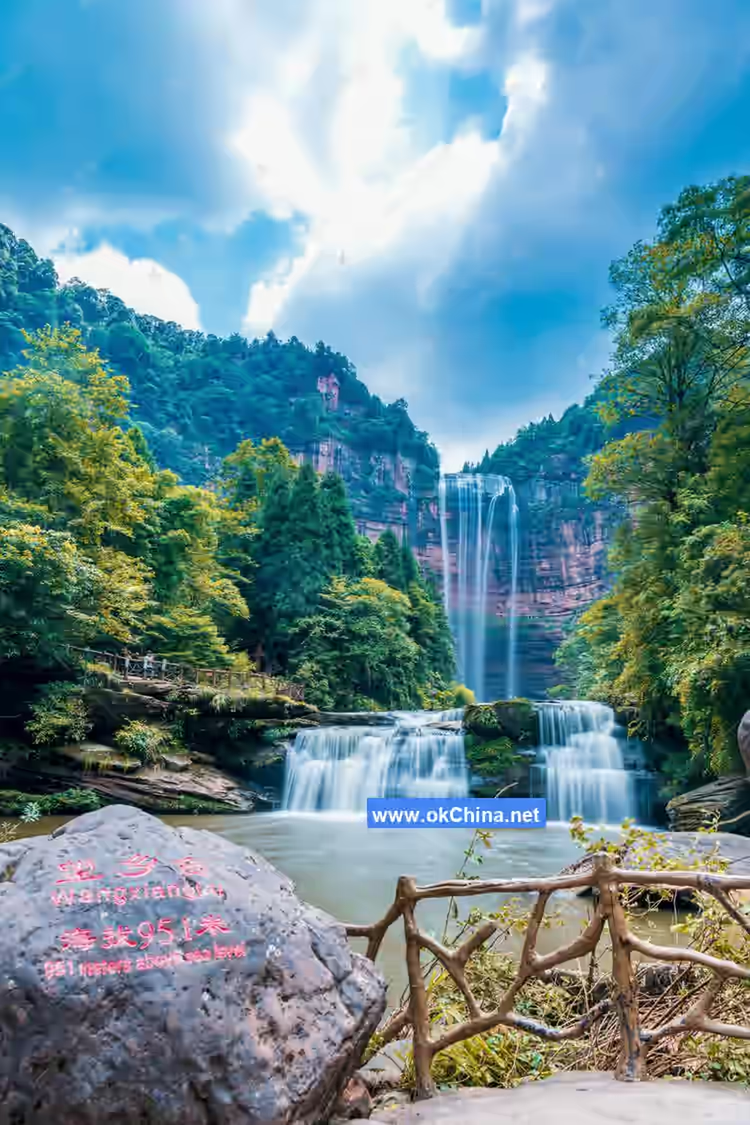
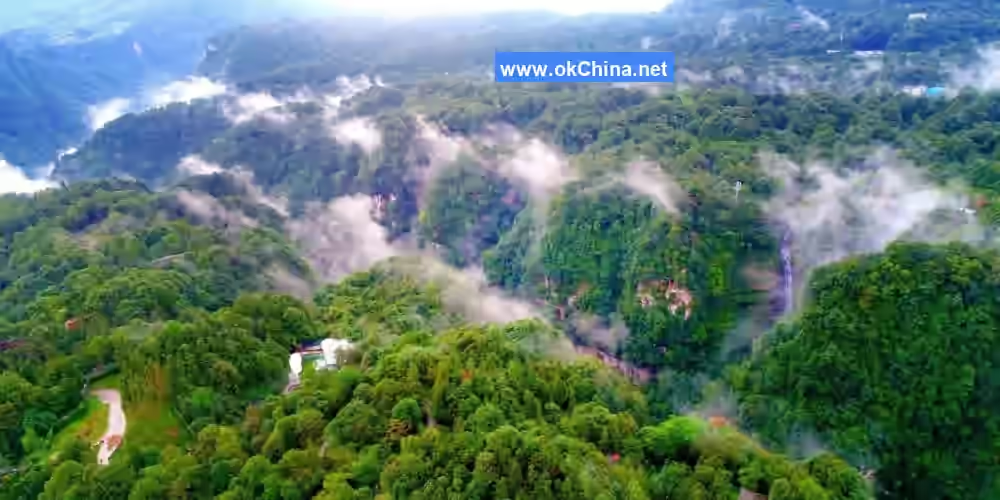
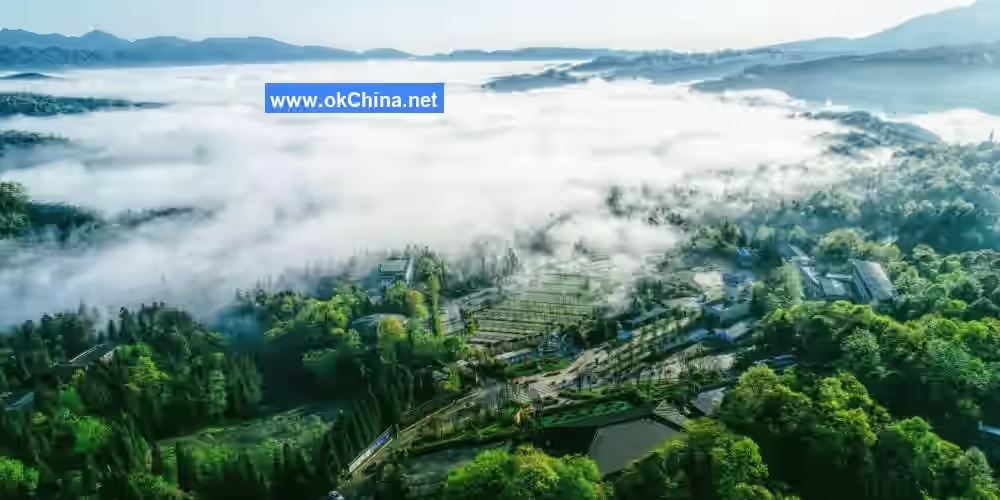
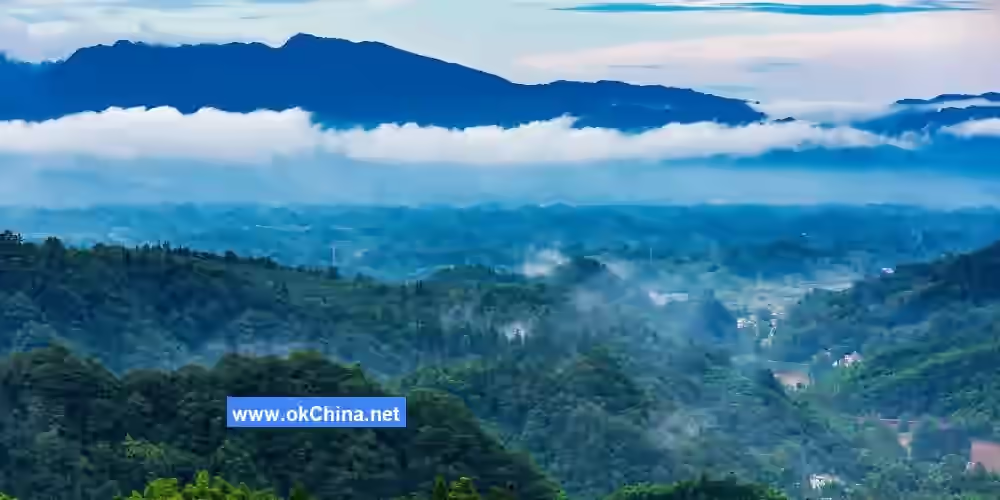
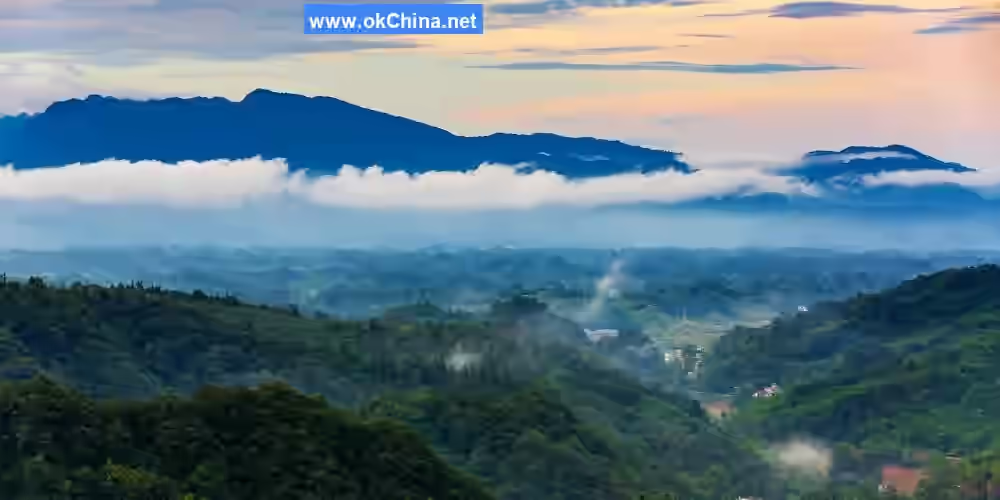
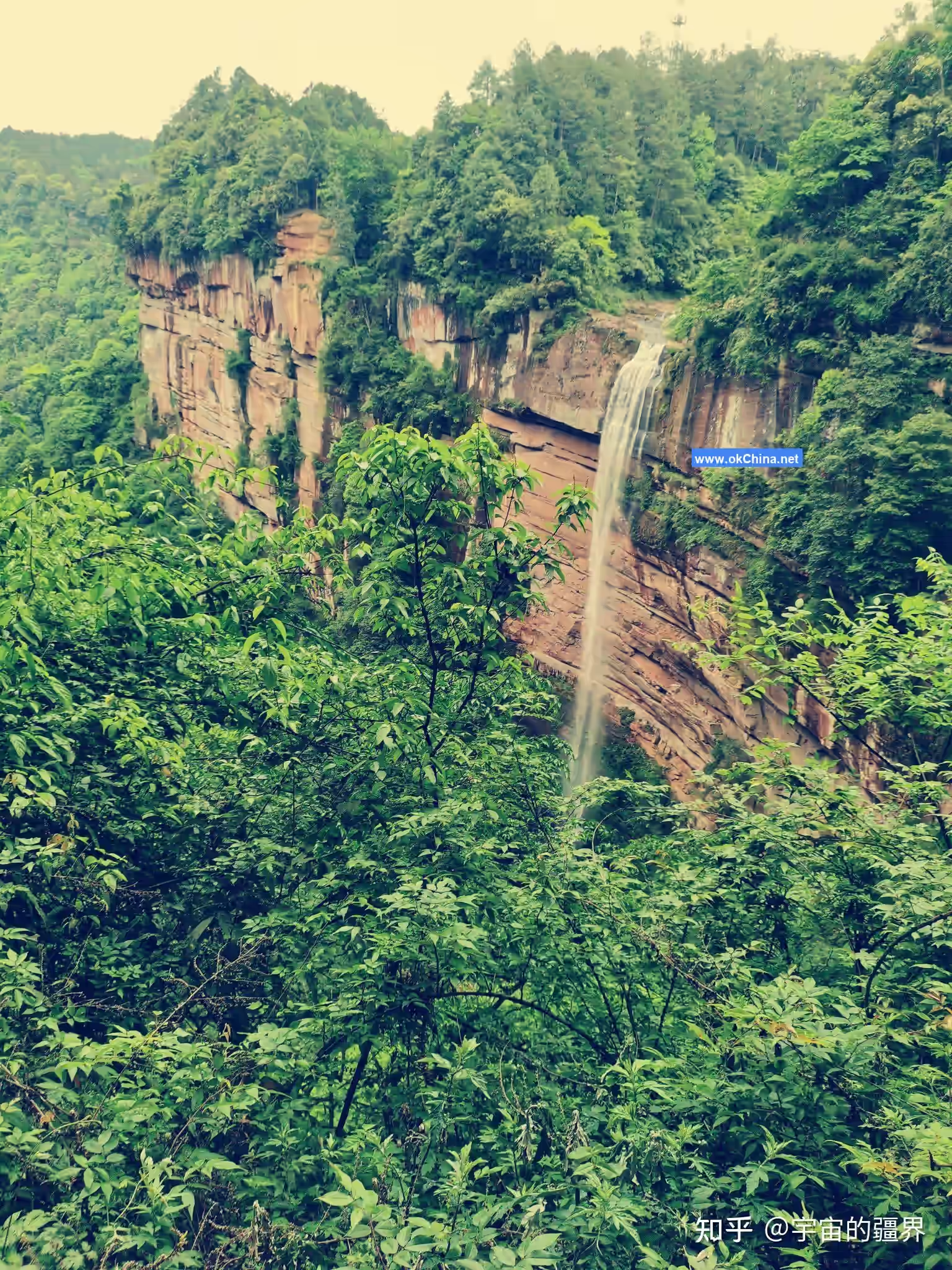
The Bifeng Gorge Ecological Gorge Scenic Area consists of two gorges. The left gorge is 7 kilometers long, and the right gorge is 6 kilometers long, forming a V-shape. It is a closed-loop scenic area with a gorge width of 30–70 meters, an elevation of 700–1971 meters, and gorge wall heights of 100–200 meters. Touring within the gorge area allows visitors to experience the primitive features of danger, wonder, beauty, and seclusion. Vegetation, waterfalls, gorge scenery, and sea of clouds are distinctive characteristics of the Bifeng Gorge Scenic Area. The ecological gorge scenic area is an excellent place for leisure vacations and escaping the summer heat. Within the gorge, there are over 60 attractions, such as Tianlong Lingyun (Heavenly Dragon Reaching the Clouds), Shizhi Butian Feng (Ten Fingers Mending the Sky Peak), Qiancengyan Waterfall (Thousand-Layer Rock Waterfall), Nüwa Pool, and Yuanyang Waterfall (Mandarin Duck Waterfall), which narrate the magical legend of Nüwa mending the sky.
3.2.2 Bailongtan Waterfall (White Dragon Pool Waterfall) in the Left Gorge
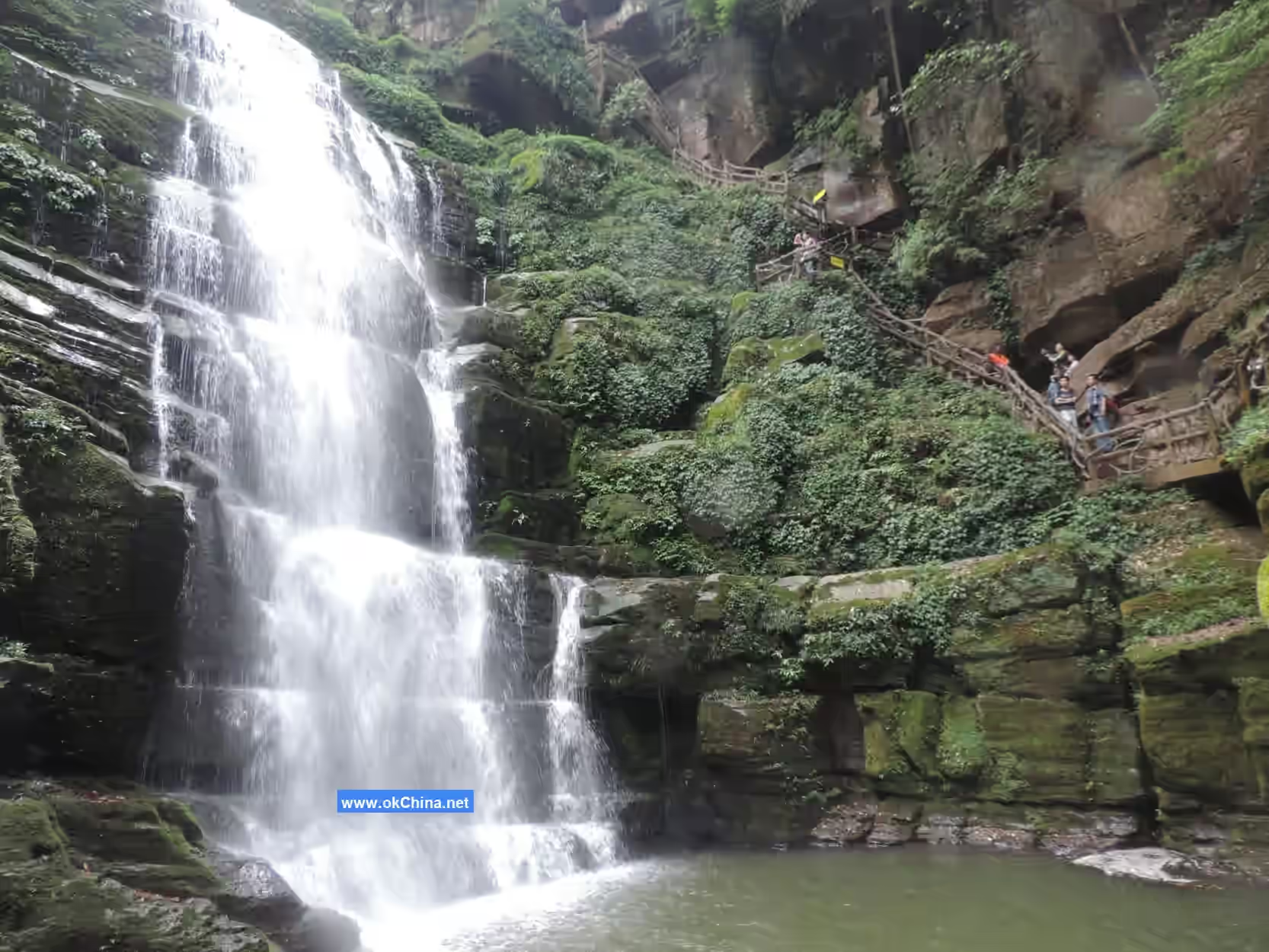
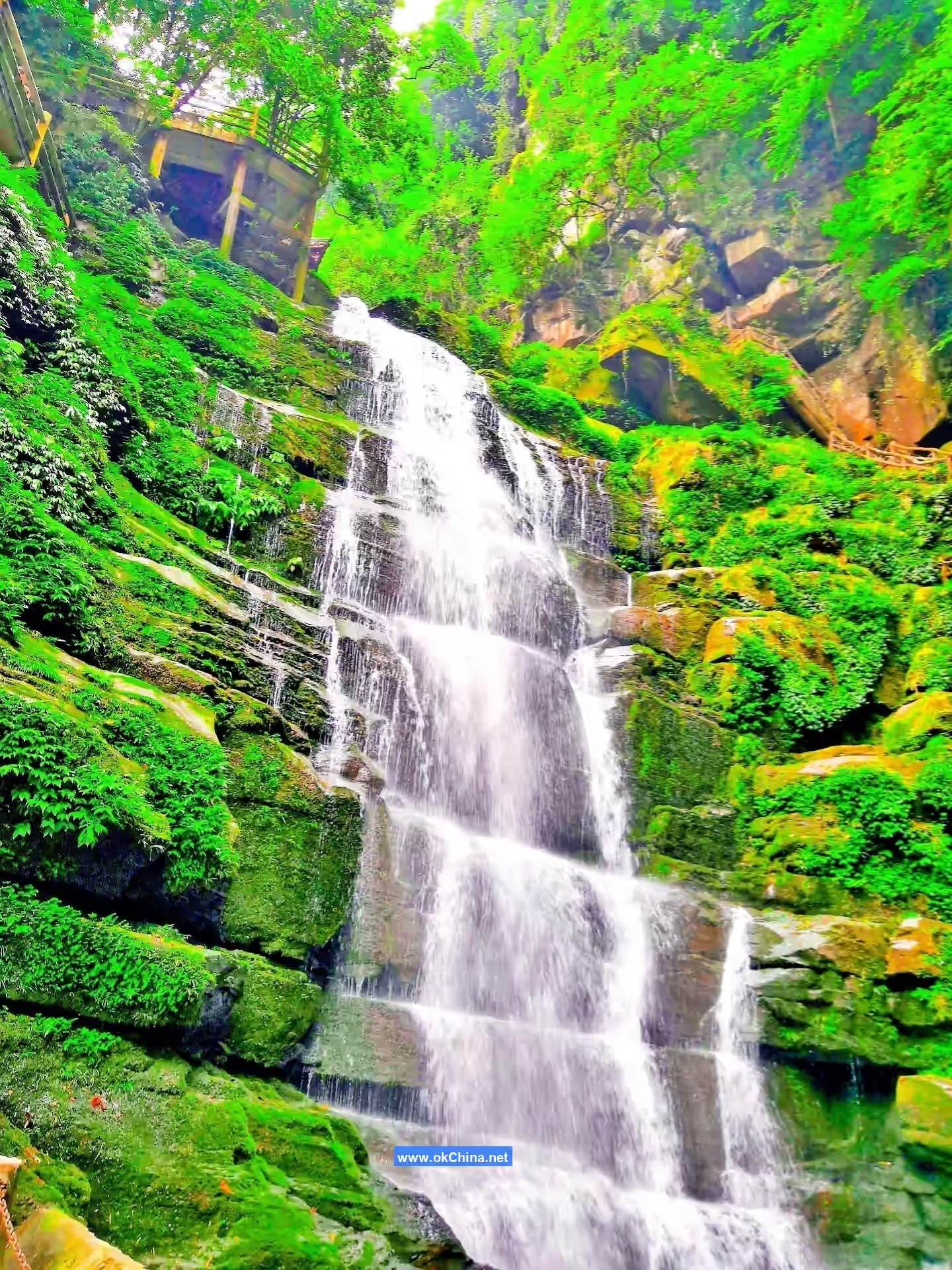
The Bailongtan Waterfall is 30 meters high and 10 meters wide, with a 10-meter-deep pool at its base.
3.2.3 Qingyun Ti (Green Cloud Ladder) in the Left Gorge
The Qingyun Ti is located at the gorge entrance of the scenic area. It is 99 meters high and built against the cliff.
3.2.4 Qingyun Valley in the Left Gorge
Qingyun Valley is located at the bottom of the gorge below Qingyun Ti and serves as the convergence point for entering and exiting the left and right gorges of the scenic area.
3.2.5 Qiancengyan Waterfall (Thousand-Layer Rock Waterfall) in the Left Gorge
The Qiancengyan Waterfall is approximately 100 meters high and about 10 meters wide.
3.2.6 Hanging Coffins in the Left Gorge
Hanging coffins are a cliff burial custom of the Qiang people. During the Eastern Han Dynasty, Qiang people scattered along the Qiang River area practiced cliff burials, placing coffins in suspended positions on cliff walls.
3.2.7 Yuanyang Waterfall (Mandarin Duck Waterfall) in the Right Gorge
The Yuanyang Waterfall cascades down, splitting into two streams due to the terrain. The left stream is larger, representing yang (masculine), and the right stream is smaller, representing yin (feminine). During summer when the water flow is strong, the two streams merge into one, hence the name Mandarin Duck Waterfall.
3.2.8 Qinglongtan Waterfall (Green Dragon Pool Waterfall) in the Right Gorge
Legend has it that when Nüwa mended the sky in Western Shu, she exhausted her energy and transformed into the beautiful Bifeng peaks. Her mount, the "Green Dragon," unwilling to leave its master, turned into a long stream, guarding her day and night. This place is said to be where the Green Dragon wept in sorrow and transformed, hence later generations named it "Qinglongtan." The waterfall is about 40 meters high and 6 meters wide.
3.2.9 Bifeng Temple in the Right Gorge
Bifeng Temple, also known as Cuiping Temple, is situated at the foot of Cuiping Mountain at an elevation of 1,250 meters. It was initially built during the Tang Dynasty and reconstructed during the Ming Dynasty. The temple covers an area of 12,000 square meters. Its buildings follow the mountain's contours, originally arranged along a central axis with halls such as the Front Hall, Middle Hall, Mahavira Hall, Huiling Pavilion, and Rear Hall. However, after several periods of prosperity and decline, only the Guanyin Hall (Goddess of Mercy Hall), stone archway, stone lions, incense burners, etc., remain today. In front of the Guanyin Hall, there is a stone wall inscribed with the four large characters "Guan Xin Zi Zai" (Observe the Heart, Be at Ease). Below the wall, spring water flows out, sweet and clear, known as "Divine Water."
3.3 Wildlife Park
The Bifeng Gorge Wildlife World is the only wildlife park in Sichuan and also the first ecological wildlife park in China. The park has a planned area of 10,000 mu. The first phase of construction covers 3,000 mu, including 1,600 mu for wildlife viewing areas and 1,400 mu for pasture base, with a total investment of 200 million RMB. It consists of a drive-through area for viewing beasts of prey and a walk-through area for viewing gentle animals. The drive-through area is divided into free-range lion, bear, and tiger zones. The walk-through area is further divided into aquatic reptile trench, monkey valley, bird paradise, ostrich free-range area, red panda free-range area, parrot free-range area, crocodile pool, snake trench, and premium animal area. The park houses nearly 300 species of wild animals, totaling about 10,000 individuals. Among them are over 30 species of national first-class protected animals, such as the Siberian tiger, golden snub-nosed monkey, and jaguar, as well as rare and precious animals like white lions and white tigers.
4. Related Culture
4.1 Origin of the Name
Bifeng Gorge is named for its lush, verdant forests that remain green throughout the four seasons.
4.2 Legends and Stories
The culture of Nüwa created the magical Bifeng Gorge. According to legend, the two gods Gonggong and Zhurong were "incompatible as fire and water." After Gonggong was defeated in battle, he angrily struck Mount Buzhou, causing the sky to collapse and the earth to crack. Nüwa exerted all her strength to mend the sky, exhausting her vital energy to lift the final stone into the sky. Finally, she collapsed from exhaustion and transformed into mountain peaks. In Bifeng Gorge, these legends seem to find possible correspondences.The Ten Fingers Mending the Sky Peak is a scenic spot within Bifeng Gorge. Looking around this area, one can see five finger-like peaks on each side, creating the sensation of standing between two cupped hands, as if positioned in the palm of the goddess Nüwa. Legend has it that when Nüwa lifted the final stone to mend the sky, she finally exhausted her energy and collapsed, utterly spent. Her body transformed into the deep valleys of Bifeng Gorge, while her hands remained raised toward the heavens, turning into ten verdant mountain peaks—the Ten Fingers Mending the Sky Peak.
Similar remnants of the sky-mending legend can be found in many places within Bifeng Gorge. The Nüwa Pool in the Bifeng Gorge Ecological Scenic Area is said to be where Nüwa bathed while mending the sky. During her task, she used knotted ropes to record events and carved marks on stones to count the days. For each day spent repairing the sky, she etched a sword mark on the cliff face. On the thousand-layer cliffs of the Bifeng Gorge scenic area, there remain 1,026 sword marks left by Nüwa. These ancient carvings on the layered rocks are the original imprints she made to track the days of her sky-mending endeavor.
Comments
Post a Comment