

Benxi Water Cave Scenic Area
1. Introduction
The Benxi Water Cave Scenic Area, located in Xiejiawaizi Village, Xiaoshi Town, Benxi County, Benxi City, Liaoning Province, is approximately 26 kilometers from downtown Benxi.
The Benxi Water Cave is currently recognized as the world's longest underground water-filled karst cave. It opened to the public in 1983 and was designated as a National AAAAA Tourist Attraction in 2015. Since its official opening, the scenic area has welcomed over 8 million domestic and international visitors from 120 countries and regions, including heads of state and government leaders from 40 countries. It is acclaimed as a "Treasure of the North," a "World Wonder," "First-class in Asia," and "Rare in the World."
2. Geographic Information
2.1 Location
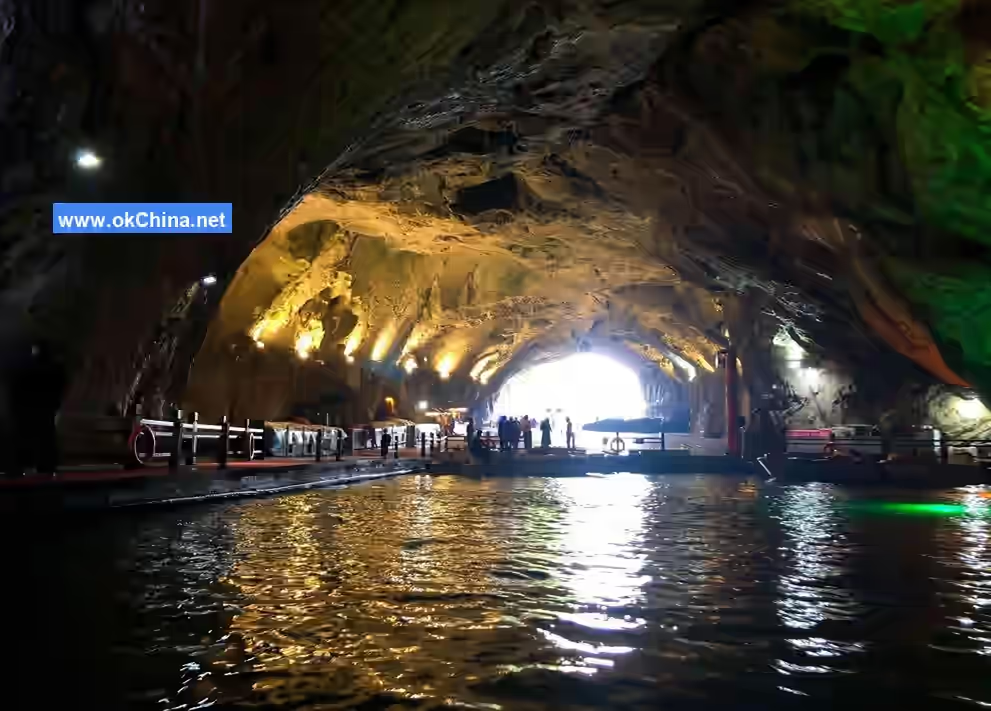
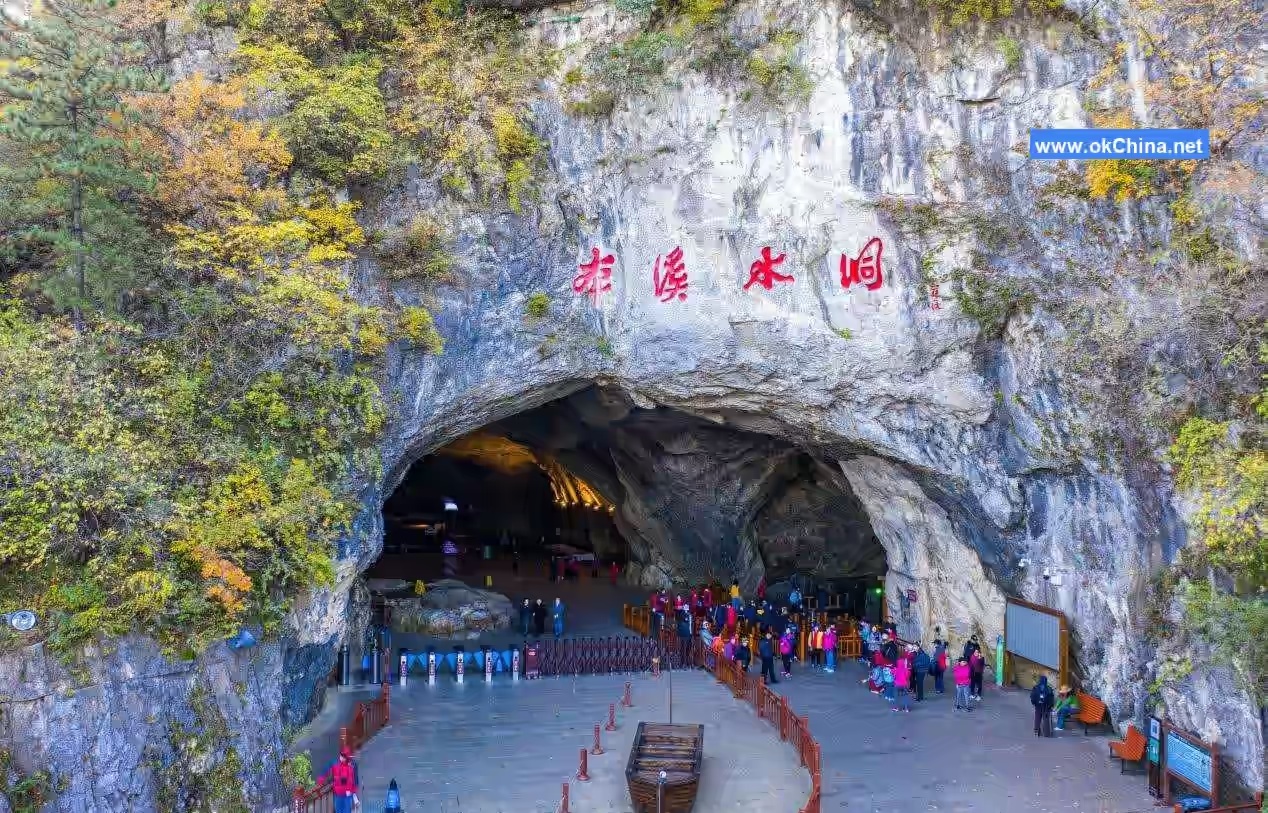
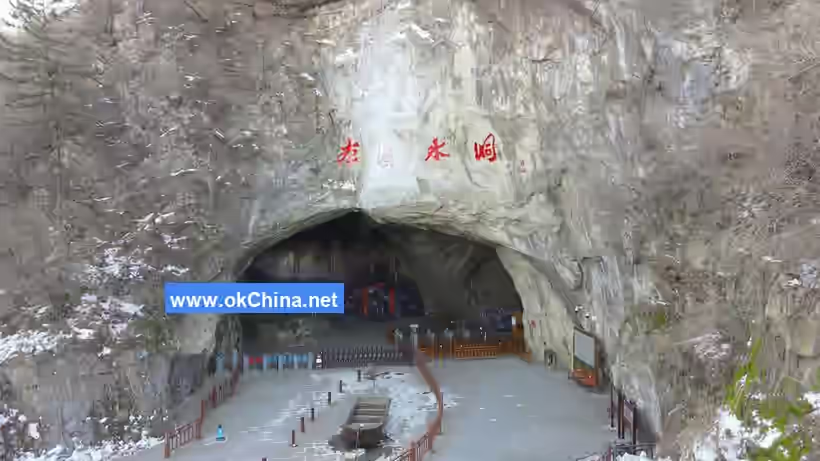
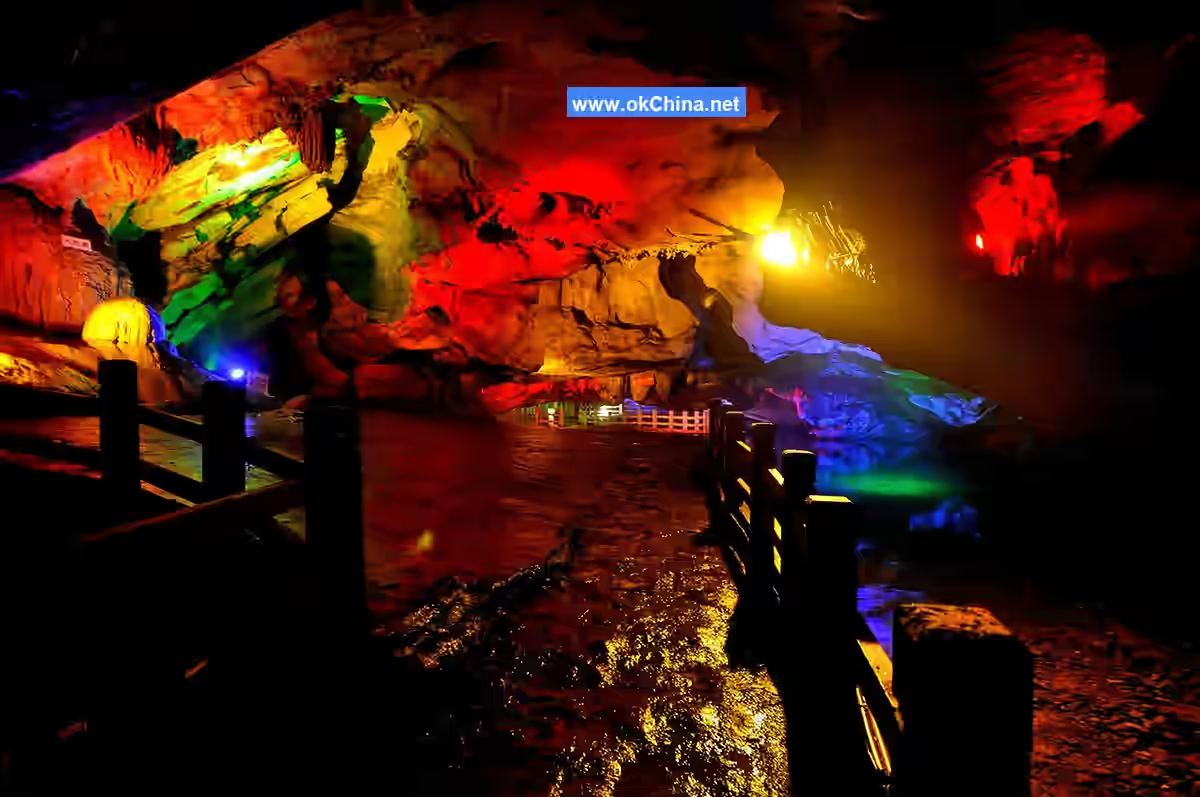
The Benxi Water Cave is a large water-filled karst cave formed hundreds of thousands of years ago. It is situated on the bank of the Taizi River in the eastern mountainous area of Benxi City, Liaoning Province. The cave is divided into a water cave and a dry cave. The entrance faces north, is 16 meters high and 25 meters wide, shaped like a crescent moon, and bears the inscription "Benxi Water Cave" in calligraphy by Bo Yibo.
Upon entering, visitors encounter a majestic "Reception Hall" over 20 meters high and wide, capable of accommodating a thousand people. To the right of the hall lies a 300-meter-long dry cave, featuring uneven heights, interconnected chambers, and a labyrinthine layout, each section offering a unique vista.
2.2 Formation
The Benxi Water Cave is a large water-filled karst cave formed hundreds of thousands of years ago. It is located on the bank of the Taizi River in the eastern mountainous area of Benxi City, Liaoning Province. The cave consists of both water and dry sections. The entrance faces north, is 16 meters high and 25 meters wide, shaped like a crescent moon, and bears the inscription "Benxi Water Cave" in calligraphy by Bo Yibo.
Upon entering, visitors encounter a majestic "Reception Hall" over 20 meters high and wide, capable of accommodating a thousand people. To the right of the hall lies a 300-meter-long dry cave, featuring uneven heights, interconnected chambers, and a labyrinthine layout, each section offering a unique vista.
Approximately 570 million years ago, the area of the Benxi Water Cave was a vast ocean. During this period, the climate was warm, fostering the proliferation of various organisms such as brachiopods, gastropods, and trilobites. These organisms followed natural cycles of life and death, and their shells, after being washed and abraded by hydrodynamic forces, deposited different types of biogenic and chemical carbonates.
The limestone of the Benxi Water Cave developed during the Lower Ordovician Liangshan Formation and Middle Ordovician Majiagou Formation through lithification. Subsequent crustal movements caused the sea to recede, and the area slowly uplifted to become land.
Over hundreds of millions of years, the limestone was continuously eroded by external geological forces, gradually forming the water cave. This erosive process continues to this day.
3. Scenic Area Overview
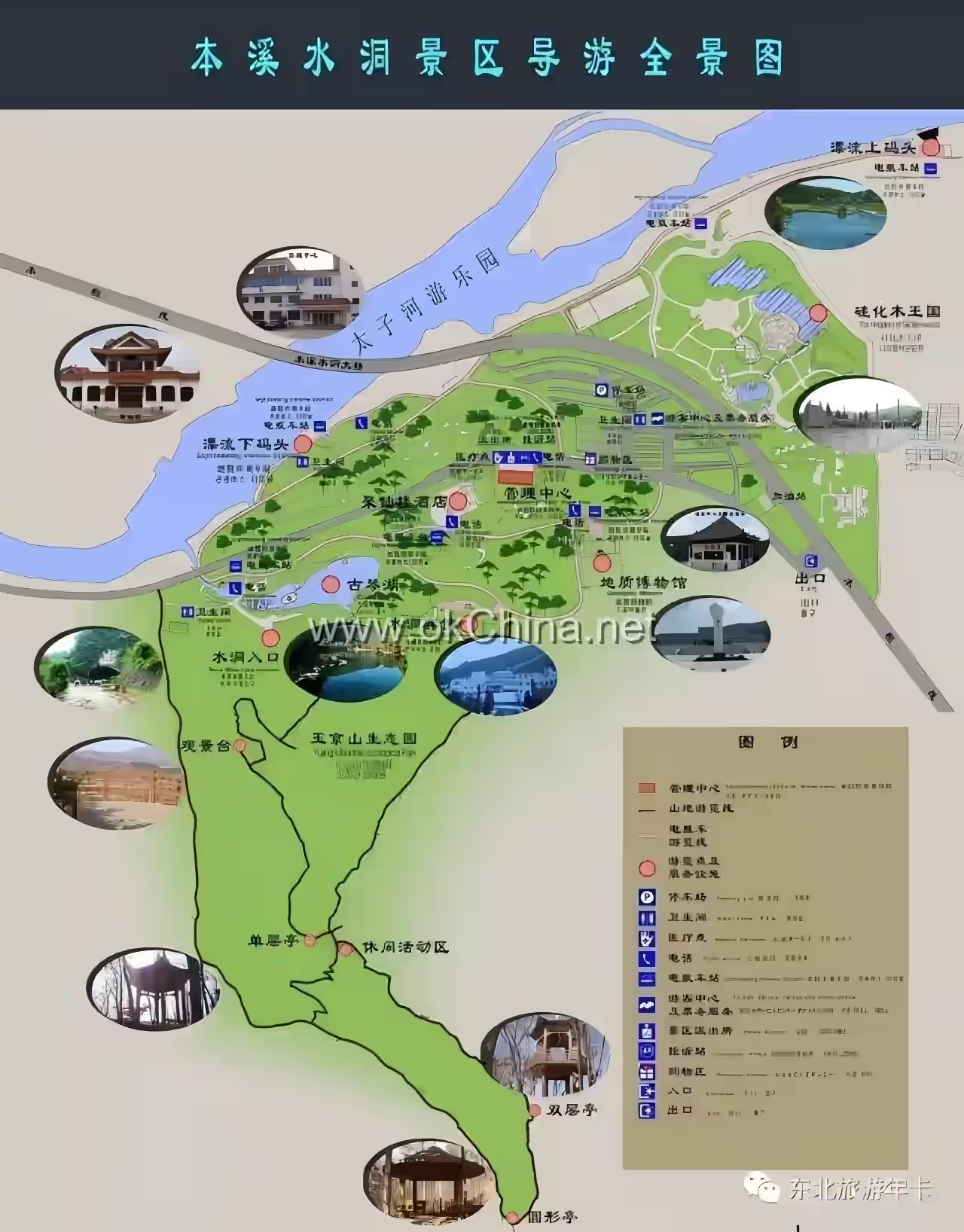
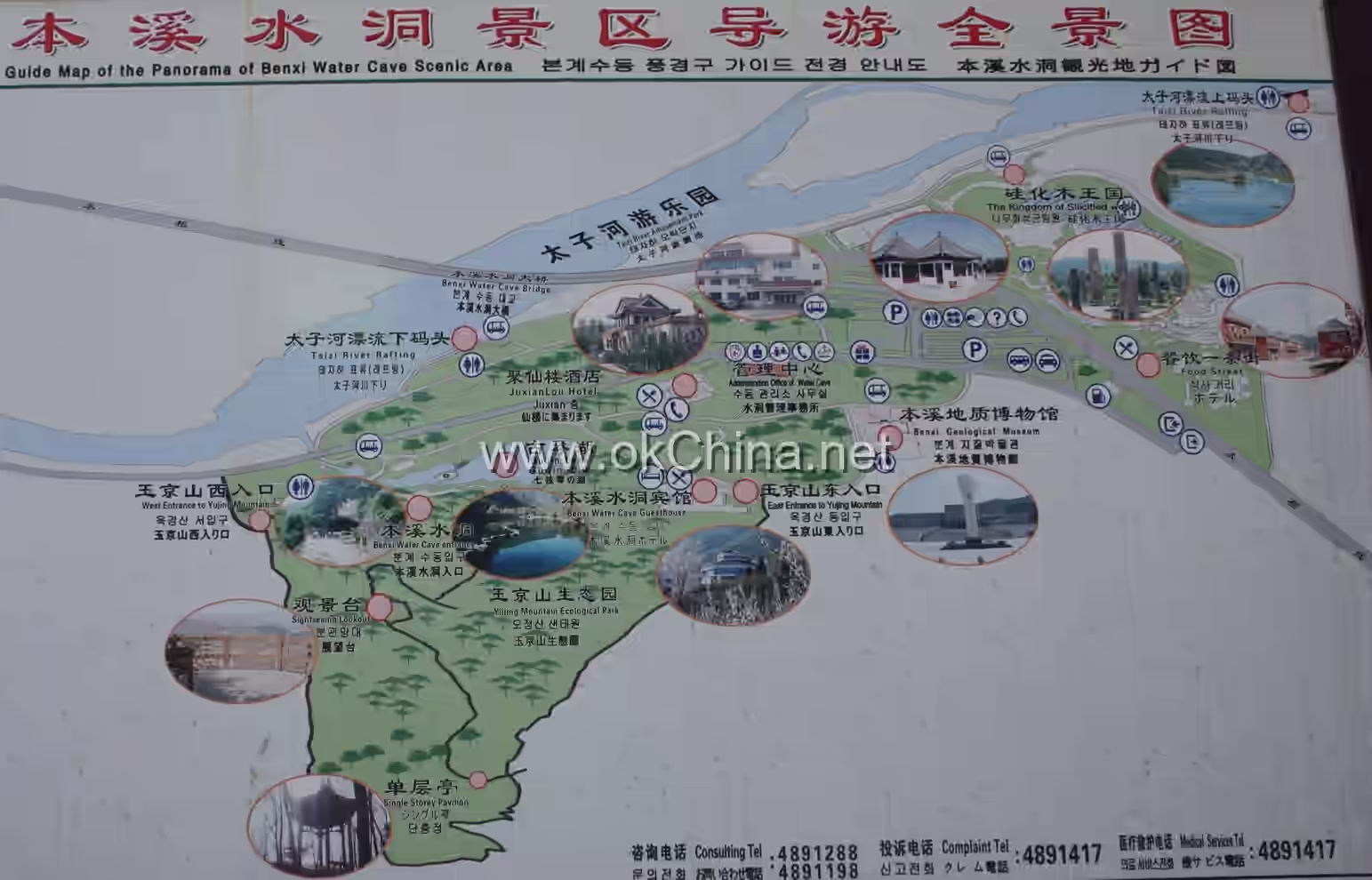
The Benxi Water Cave Scenic Area includes attractions such as the Benxi Water Cave (Nine-Bend Silver River), the China Geological Museum Benxi Branch, the Petrified Wood Kingdom, the Yanshui Amusement Park, the Yujingshan Ecological Garden, and the Shengdi Cultural Garden. It has already received over ten million visitors from 120 countries and regions. The Benxi Water Cave is located within the Xiake Mountains, an extension of the Changbai Mountain range. The mountains are of medium to low height, with relative elevations of only 200–300 meters, characterized by rolling hills and verdant layers. The Taizi River flows 200 meters in front of the cave entrance, meandering clearly like a jade belt before joining the Liao River and emptying into the sea. The cave entrance faces north, stands 13 meters above the Taizi River surface, and extends into the mountain. The Benxi Water Cave is a large aquifer-type underground river karst cave formed approximately 400,000 years ago (during the Middle Pleistocene). The explored cave system consists of the Nine-Bend Silver River Cave (main passage), the Coiling Dragon Cave (dry cave), the Silver Wave Cave (water-filled cave), and the upstream continuation of the dark cave. The cave generally runs from northwest to southeast, with its main passages extending horizontally, often appearing as hall-tunnels, halls, and corridors. The water cave is grand in scale, featuring diverse karst landscapes with over ninety scenic spots such as the "Nine Bends," "Seven Palaces," and "Three Gorges."
The Benxi Water Cave is 3,650 meters long, covers an area of 49,000 square meters, and has a volume of over 400,000 cubic meters. Its widest section is 38 meters high and 70 meters wide. The cave is well-ventilated, with a perennial water flow of 14,000 cubic meters per day. The average water depth is 1.5 meters, reaching a maximum of 7 meters, and the cave maintains a constant temperature of 12°C. The river course is winding, and the water is clear.
The Benxi Water Cave is divided into water and dry sections. The water cave is deep and broad, traversed by a 5,800-meter-long underground river known as the Nine-Bend Silver River. Of this, 2,800 meters are open to tourists, divided into the Three Gorges, Seven Palaces, and Nine Bends, with scenic views at every step. The water flow is perennial, with an average depth of 1.5 meters and a maximum depth of 7 meters. The newly developed 500-meter section of the underground river, featuring sights like "Source Heaven and Earth" and "Jade Maiden Palace," offers a unique experience. The cave maintains a constant temperature of 10°C year-round, making it feel like spring throughout the seasons. The dry cave is 300 meters long, filled with jagged rocks, varying elevations, interconnected chambers, and a maze-like structure, featuring attractions such as an ancient well, a dragon pool, and the Hundred-Step Pond. It has been developed into a Paleontology Palace. Outside the cave, an ancient-style corridor winding along the mountainside, an artificial lake, and pavilions complement the interior scenery.
3.1 Water Cave
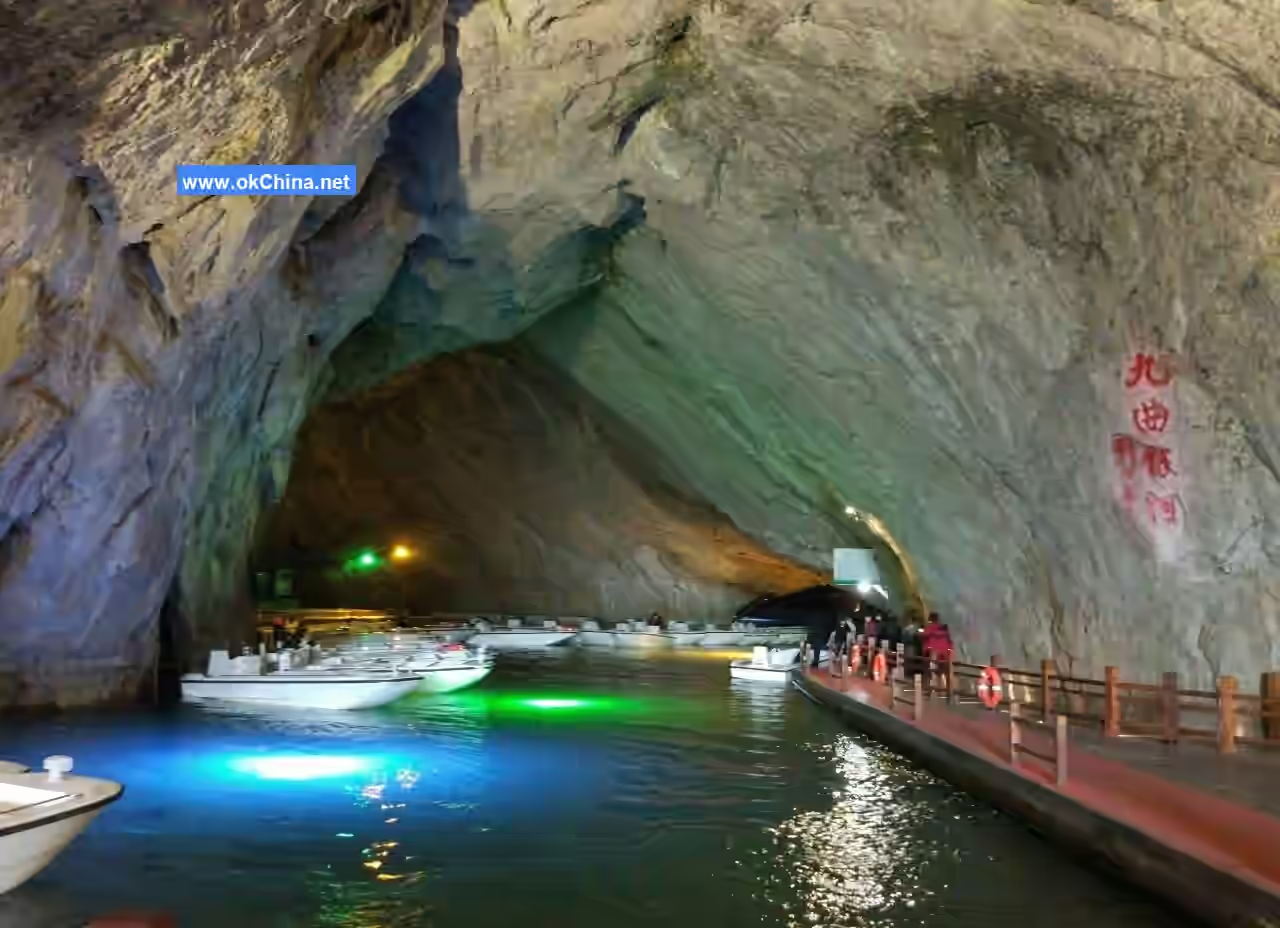
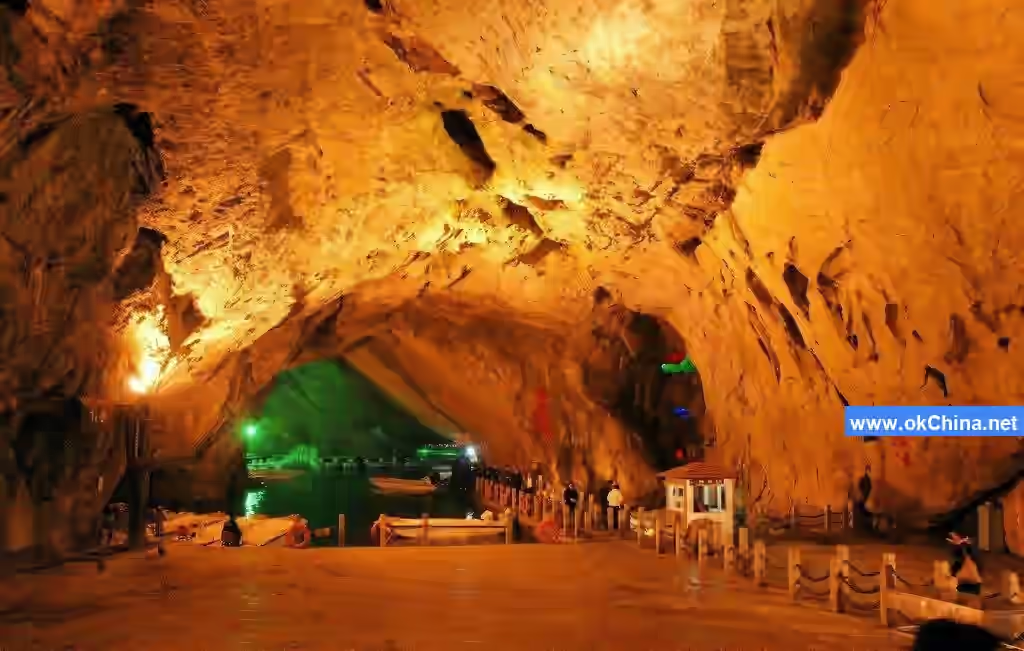
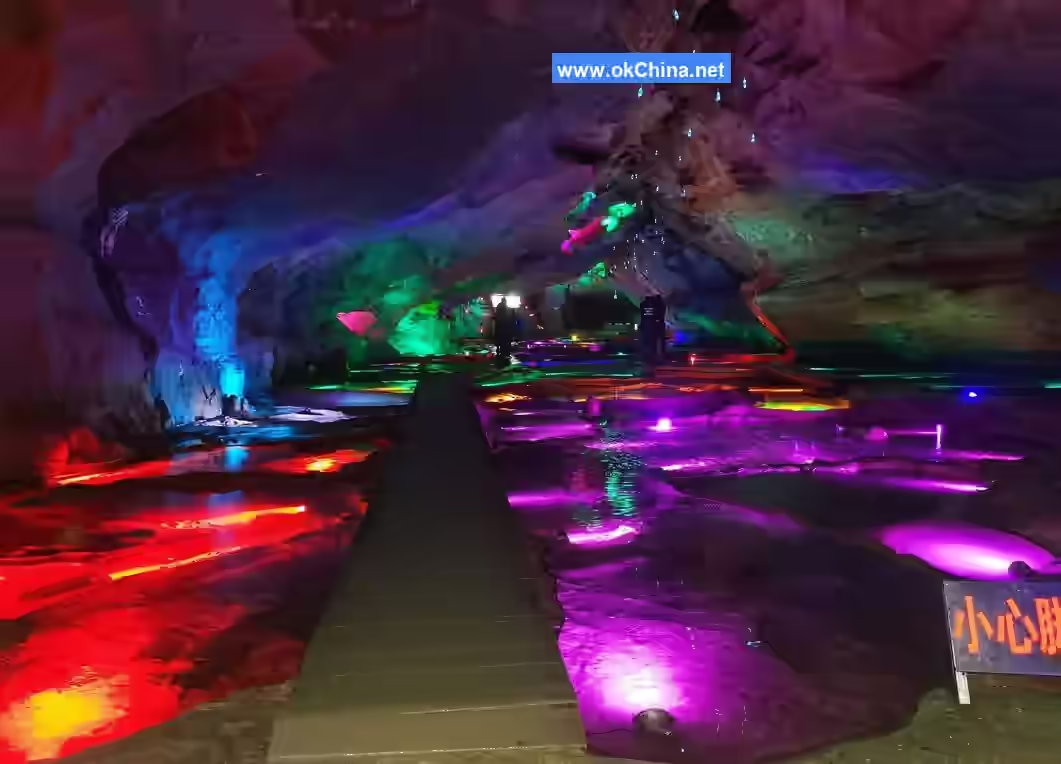
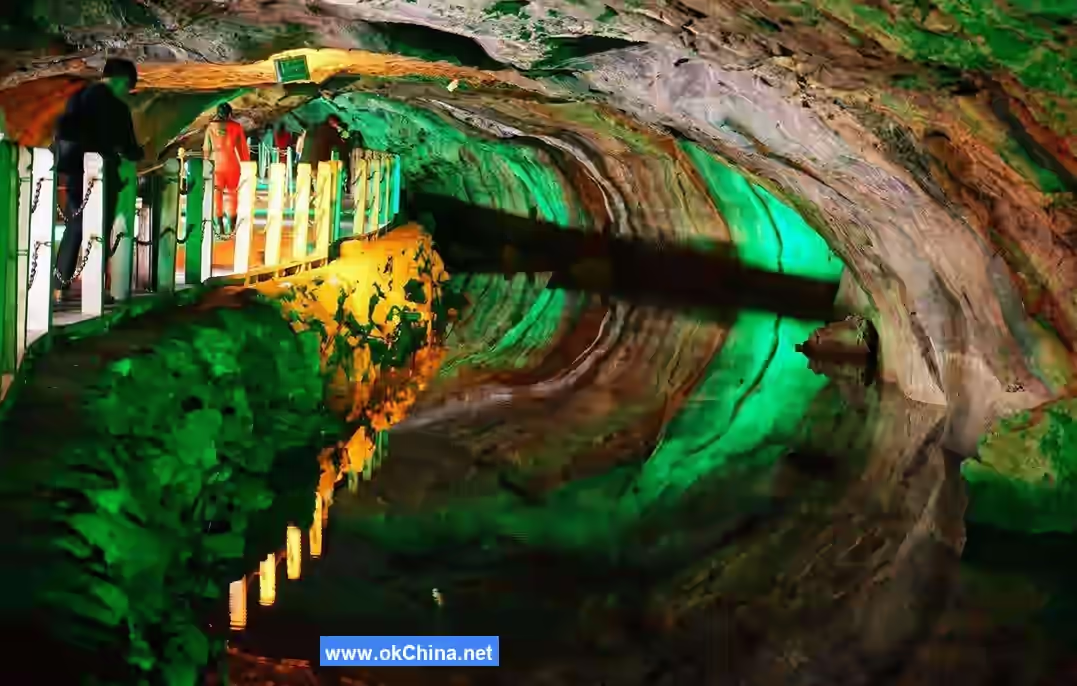
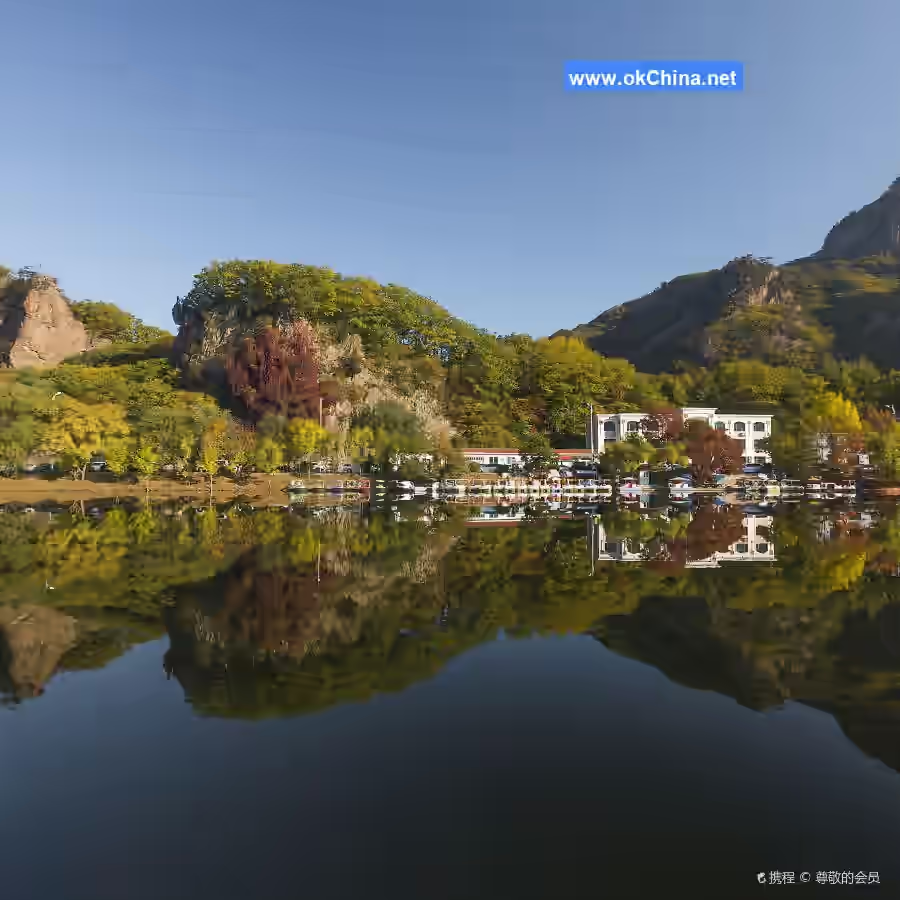
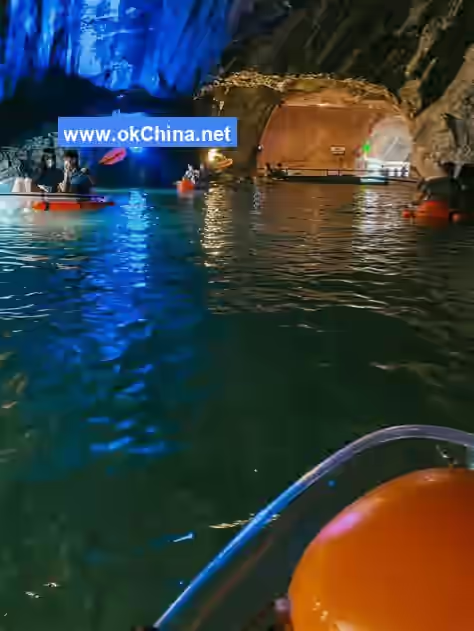
The dock leading to the water cave features a water surface of over a thousand square meters, resembling a tranquil and elegant "harbor." Under the lights, the tour boats and stone formations inside the cave are reflected in the water, creating a fairyland-like atmosphere. Descending the stone steps from the embankment and boarding a boat via the long corridor allows visitors to explore the water cave. The water cave is 5,800 meters long in total, with 2,800 meters currently developed, covering an area of 36,000 square meters and a volume of over 400,000 cubic meters. Its widest section is 38 meters high and 70 meters wide.
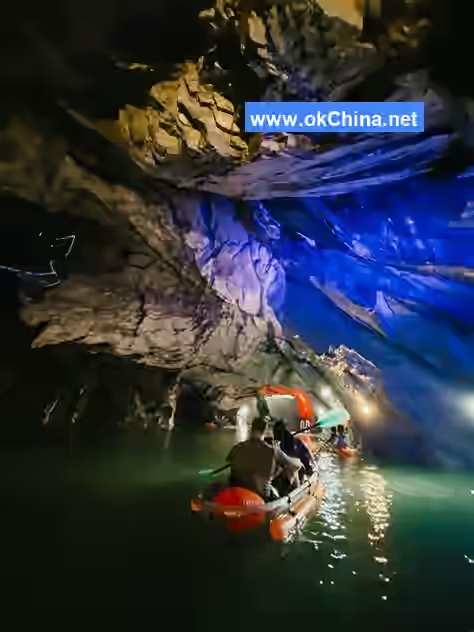
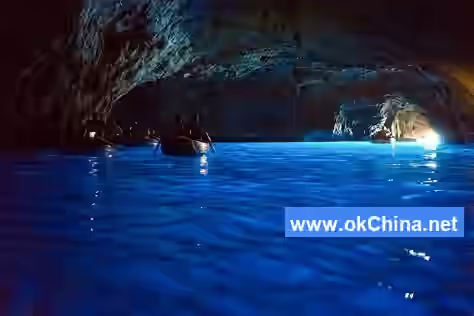
Facing the main hall is a water surface of over 1,000 square meters, with a dock that can accommodate 40 tour boats simultaneously. Boating allows visitors to appreciate the vastness, length, depth, and beautiful waterfalls of the water cave, leading to the exclamation: "Stalactite peaks present myriad scenes, / A light boat on emerald water is like a painting; / Such elegance belongs only to the celestial realm, / On earth, this cave is uniquely divine." The cave is well-ventilated, with a perennial water flow of 14,000 tons per day. The average water depth is 1.5 meters, reaching a maximum of 7 meters, and the cave maintains a constant temperature of 12°C.
The winding river course has clear water, and the cave is divided into the "Three Gorges," "Seven Palaces," and "Nine Bends," hence the name "Nine-Bend Silver River."
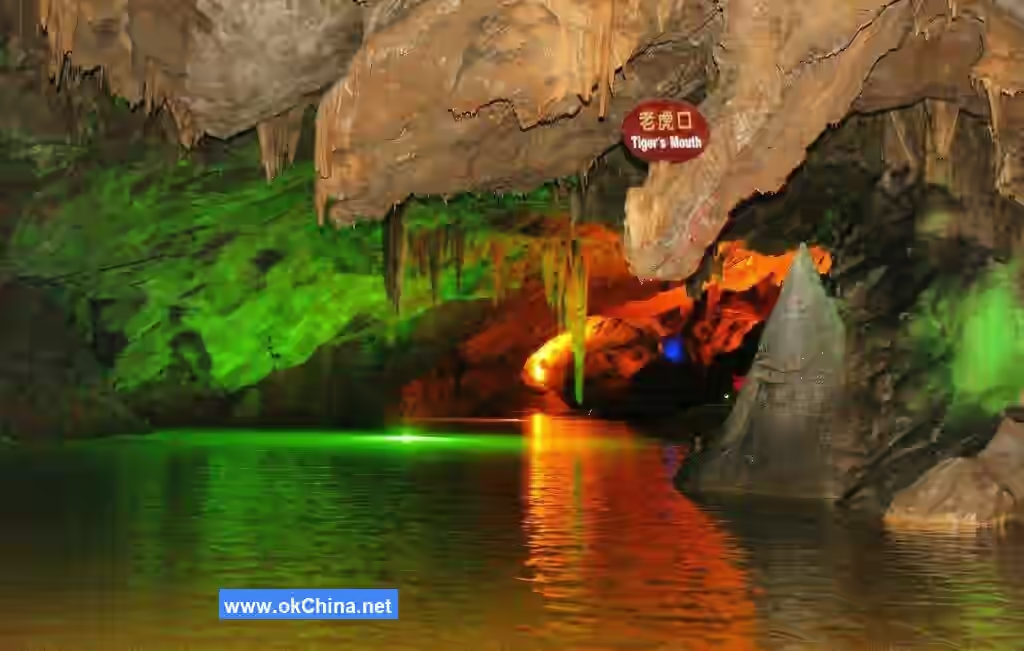
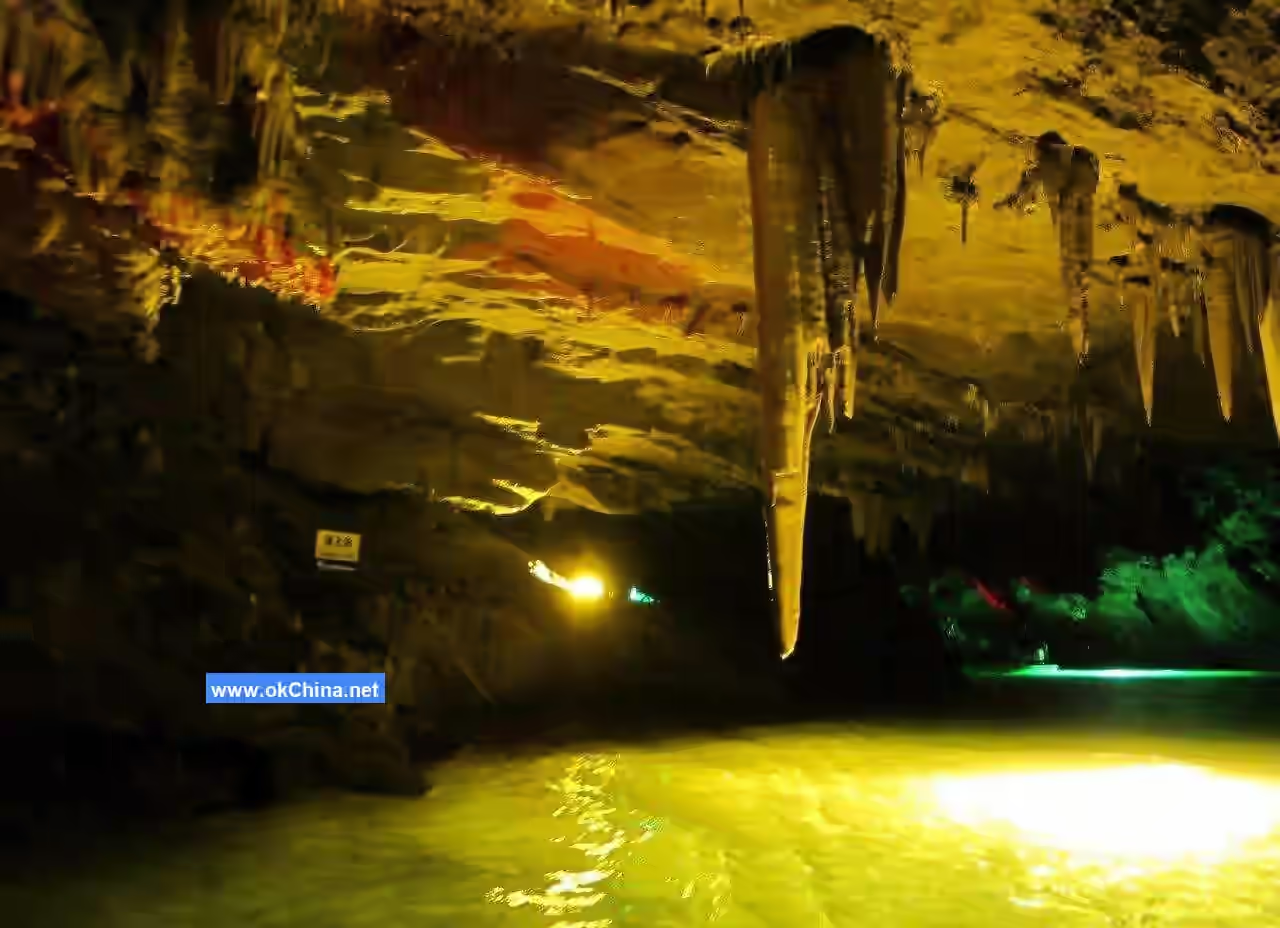
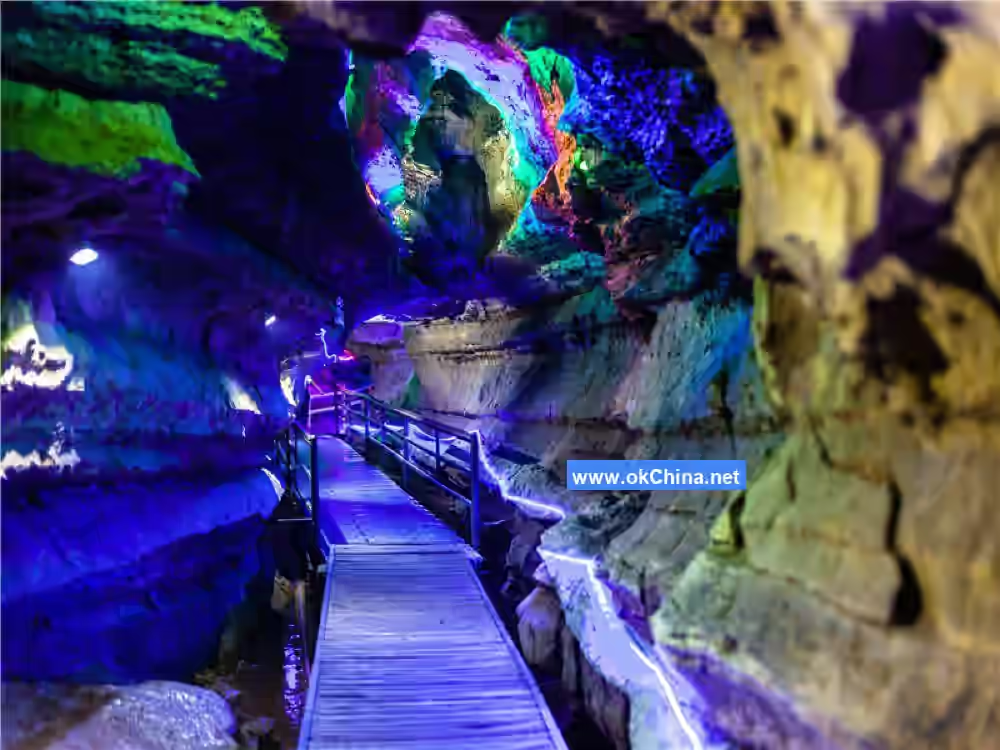
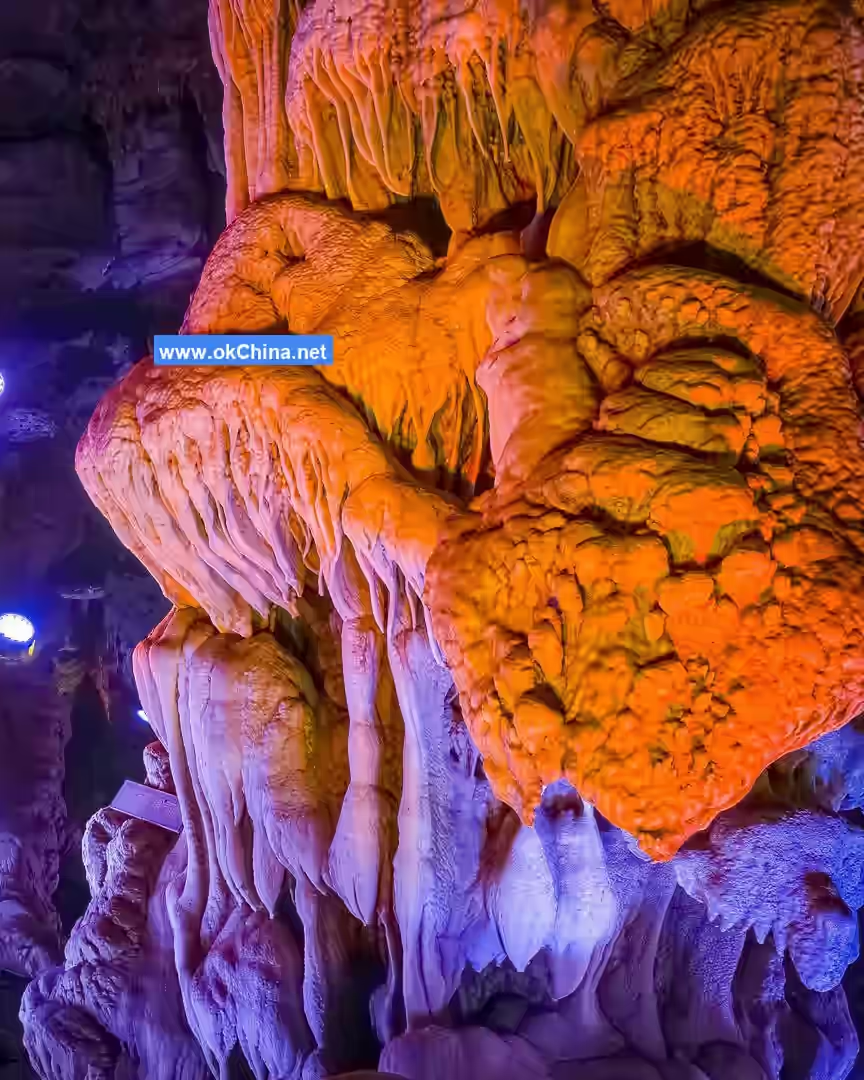
The waterway extends along the cave body for 2.3 kilometers, varying in width and meandering. Stalactites, stalagmites, and stone columns emerge from crevices, naturally forming various shapes without artificial carving. These formations are fantastical and highly观赏性.
Boating from the dock inward, visitors can欣赏 sights such as Flying Spring Welcoming Guests, Bottle Mouth, Sea Tide, Magic Lotus Lamp, Group of Monkeys, Double Stars of Fortune and Longevity, Corn Pagoda, Precious Tripod, Immortal Elixir Stone, Dragon Horn Rock, Sword Cluster, Kylin Rock, Waterfall, Unicorn Rhinoceros, Spring Bamboo Shoots, Hanging Curtain, Three Pagodas, Leaning Pagoda, Jade Elephant, Sky-Piercing Long Sword, Peacock Rock, and Snow Mountain.
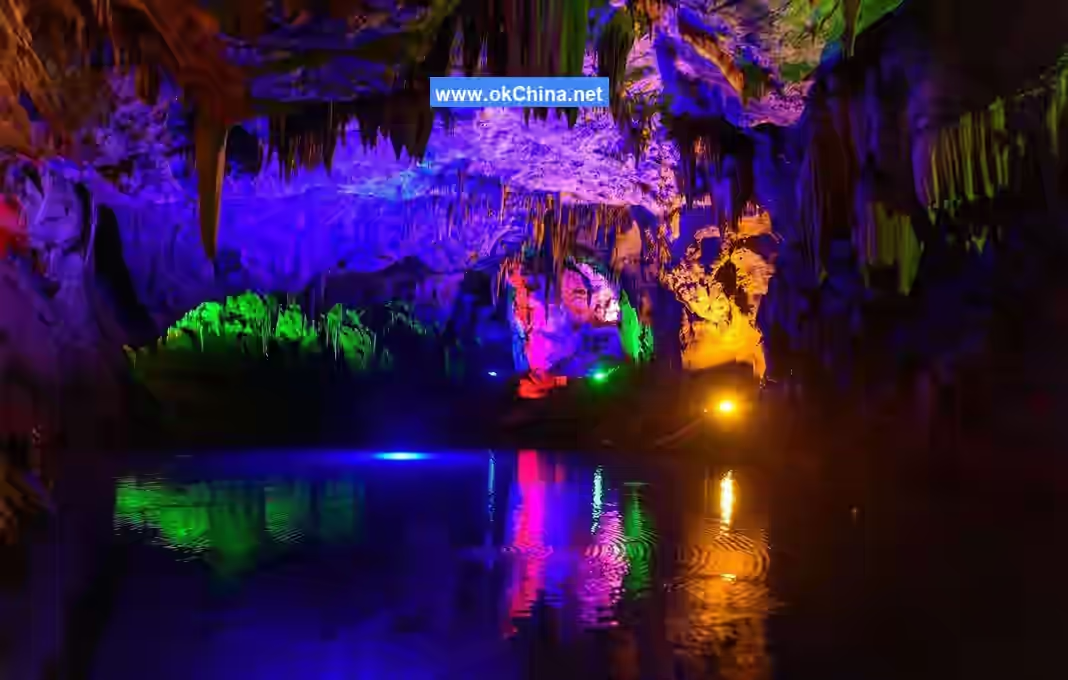
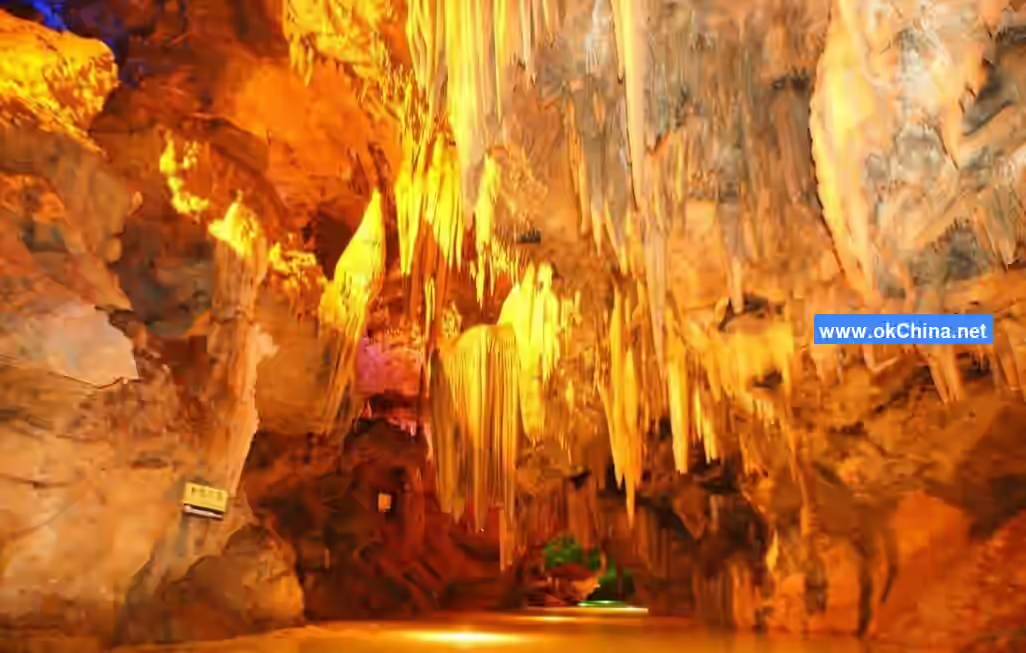
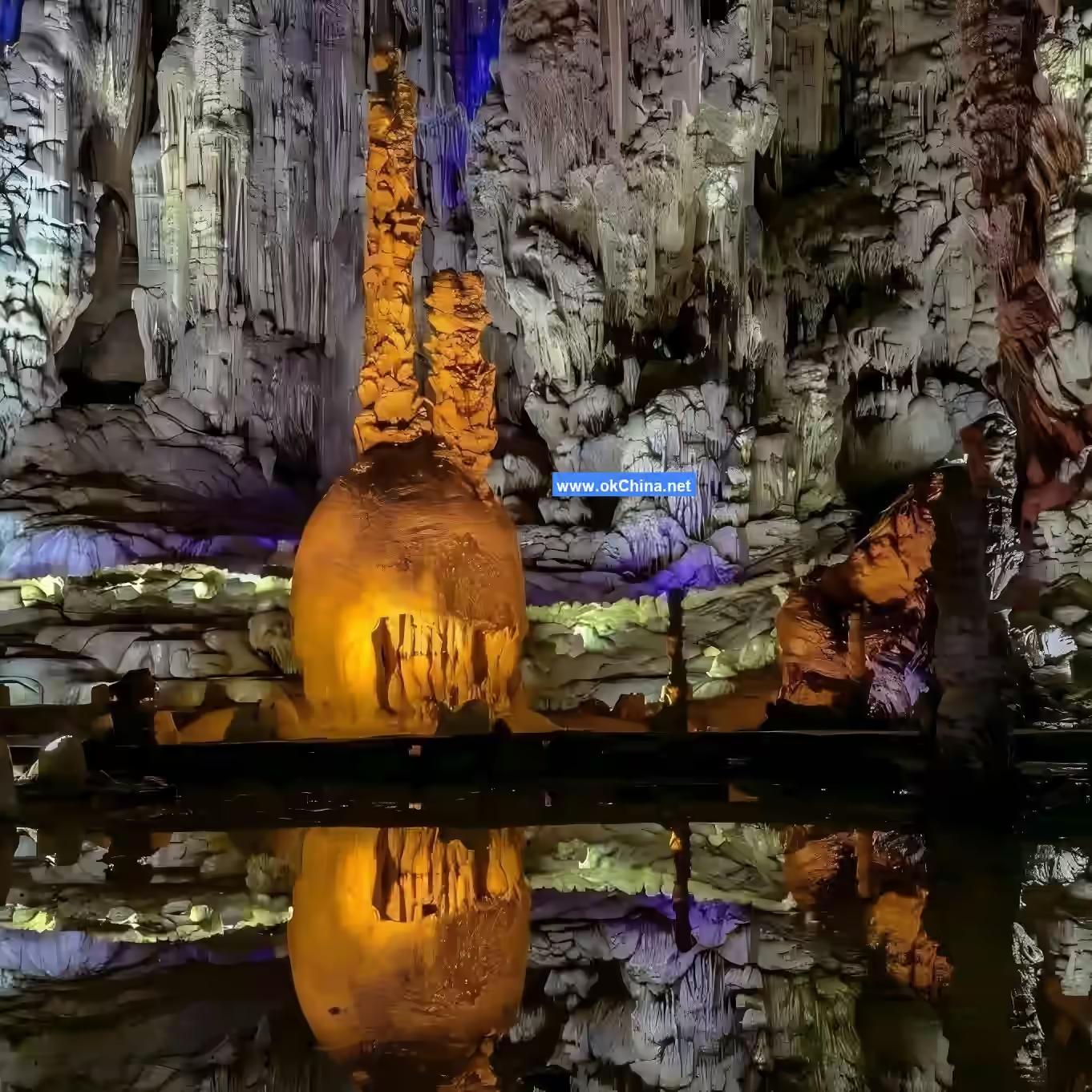
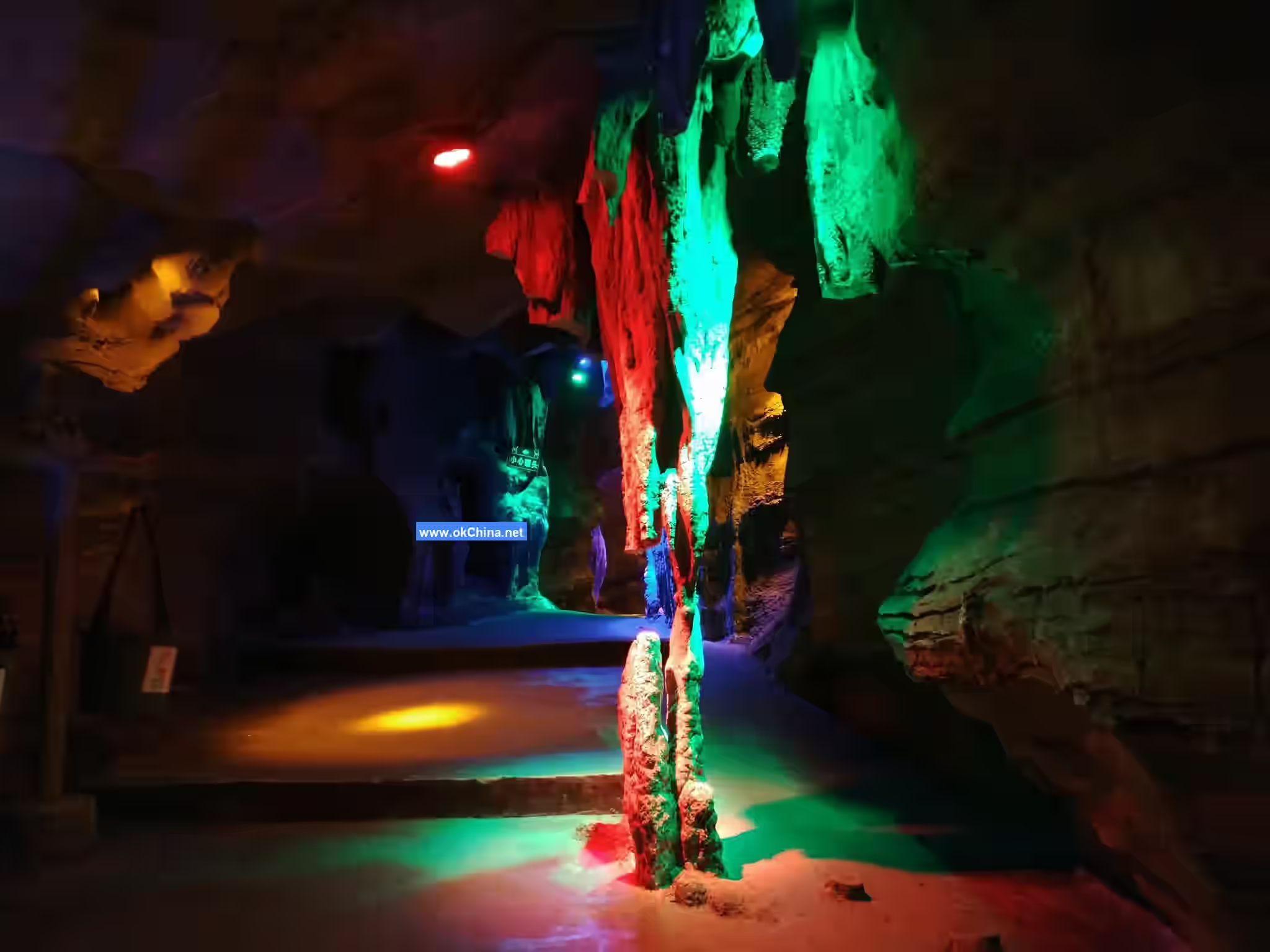
These formations are remarkably lifelike and vivid. Particularly, the Corn Pagoda, Jade Elephant, and Snow Mountain are so realistic they are almost indistinguishable from the real things. Along both banks of the Silver River, stalactites stand like forests, and stalagmites resemble paintings, presenting a variety of fantastical shapes. The cave ceiling is adorned with hanging stalactites, sparkling and colorful, full of charm. There are over 100 scenic spots along the river, each with its unique characteristics. Boating through feels like entering a fairyland. This is a mysterious cave where water and stone blend seamlessly, and it is the longest navigable underground river discovered in the world to date.
3.2 Dry Cave
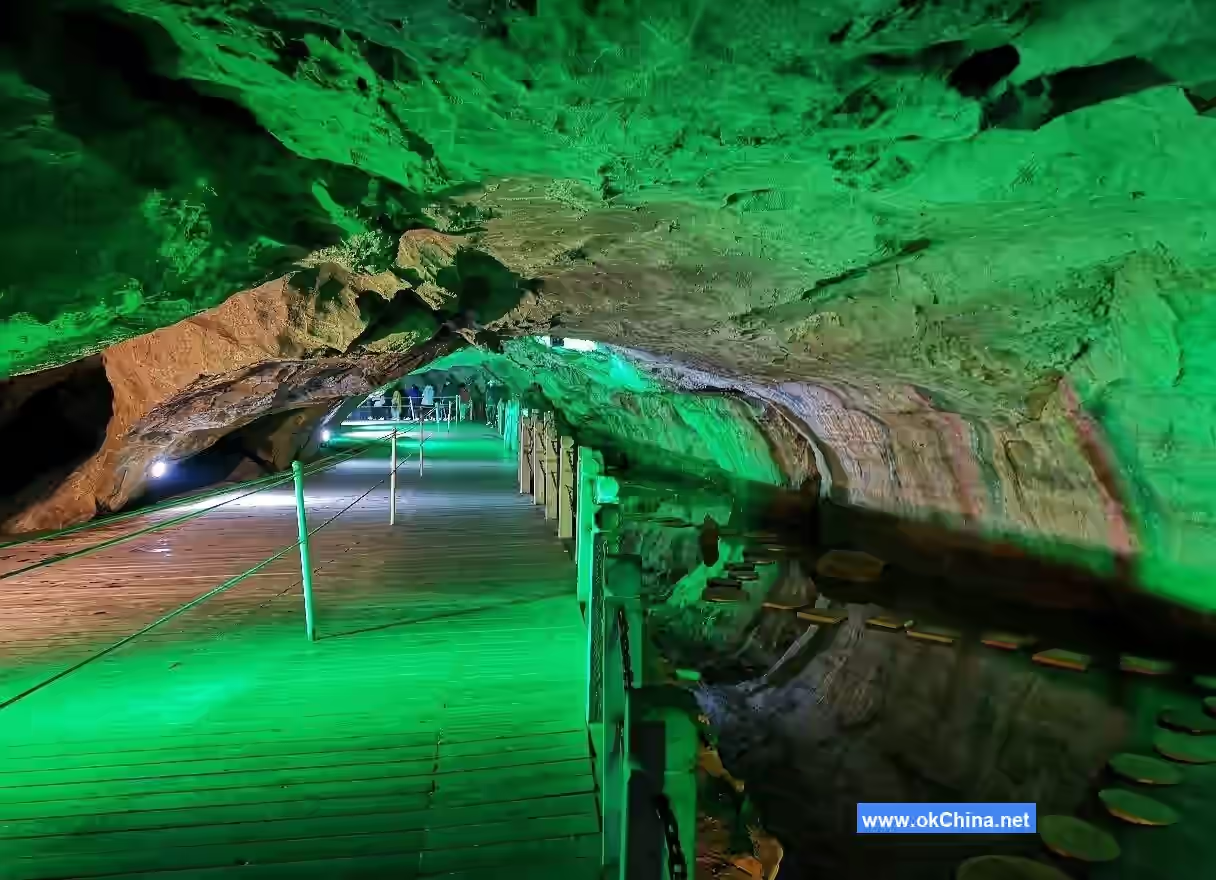
The dry cave is 300 meters long, featuring uneven heights, interconnected chambers, and a maze-like structure, each section offering a unique vista. Stalactites on the ceiling and walls often develop in groups along fissures, forming various shapes naturally, resembling a dragon palace fairyland.
Attractions such as the ancient well, dragon pool, and Hundred-Step Pond inspire visitors' imaginations and make them linger. On the left is a "harbor" where, under the lights, the cave formations are reflected upside down in the water.
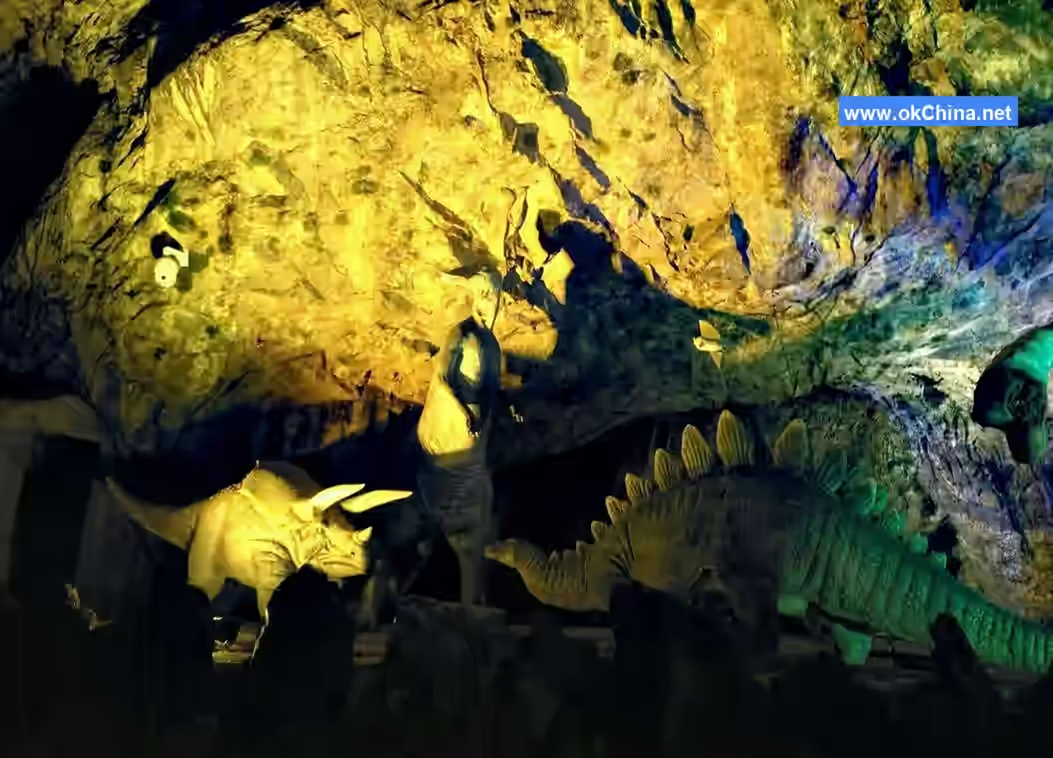
The end of the cave is a deep, clear pool with unfathomable depth; the cool mist emanating from it creates a chilling atmosphere. Utilizing the unique resources of the dry cave, it has been artificially transformed into a Paleontology Palace. Using advanced sound, light, and electrical technologies, it recreates the evolutionary process of ancient organisms, making it an ideal site for tourism and科普教育.
3.3 Taizi River Rafting
The Taizi River, which flows past the water cave, is a natural playground for visitors. Known as the "Number One Rafting in Northeast China," Taizi River rafting combines adventure with novelty. The journey is surrounded by mountains and water, with clear mists and flowing clouds creating an ethereal and奇幻 atmosphere, full of冒险 and刺激. Plans are underway to extend the rafting route to a hot spring, covering a total distance of 14 kilometers. This will allow visitors to fully enjoy the scenery on both banks, experiencing the "lush green grass and falling blossoms" and the "crisscrossing paths with chickens and dogs heard," as if entering a Peach Blossom Spring.
3.4 Crocodile Park
At the Crocodile Park, visitors can欣赏 thrilling crocodile驯服 performances, including playing with crocodiles in water and human-crocodile kisses. Brave visitors can also ride on a crocodile for a memorable photo.
Additionally, exotic歌舞表演 can be enjoyed here, with graceful young dancers from Myanmar presenting charming异域歌舞.
3.5 Benxi Geological Museum
The Benxi Geological Museum is located within the core area of the Benxi National Geopark—the Water Cave Scenic Area—and is an important component of the Benxi National Geopark.
Construction of the Benxi Geological Museum began in 2006. It covers an area of 13,000 square meters, with a building area of 3,080 square meters. The museum showcases the major geological changes and characteristics of the Earth over its 4.6-billion-year history. It displays geological relics and prehistoric geological遗迹 from the Liaoning Benxi National Geopark, including over 30 national treasure-level珍贵标本 and more than 3,300 rare specimens.The museum houses a vast collection of geological specimens, many of which are of exceptional quality, rich in scientific significance, and imbued with distinctive local characteristics. These exhibits possess high aesthetic and educational value, making the museum another splendid urban landmark for Benxi.
The Benxi Geological Museum is divided into five exhibition halls.
3.51 Earth Hall
This hall primarily introduces the Earth, our home, covering its formation, early evolution, internal structure, and surface features.
3.52 Life Evolution Hall
After learning about the early evolution of the Earth, visitors enter the Life Evolution Hall to explore the origin of life, its evolution, and the development of humanity.
3.53 Mineral Resources Hall
Benxi's terrain is described as "eight parts mountains, one part water, and one part farmland." The mountains are like "money trees," and the underground is a "treasure trove." Over a hundred types of mineral resources have been discovered within Benxi, providing unique advantages for the city's industrial development.
3.54 Geological Heritage Hall
Benxi's geological resources are characterized by their typicality, rarity, scientific value, diversity, and visual appeal. Notably, fourteen geographical features in textbooks are named after Benxi. In August 2005, Benxi passed the review by the Ministry of Land and Resources and officially became a National Geopark. It is quite rare in China for an entire city to be designated as a National Geopark. The park covers a planned area of 218.2 square kilometers, encompassing three major zones: Benxi Water Cave, Pingdingshan, and Wunü Mountain, which include 21 scenic areas and 30 attractions. These areas feature all of Benxi's geological heritage sites, natural landscapes, and cultural landmarks.
3.55 Multifunctional Hall and Comprehensive Hall
These halls primarily screen various materials and videos.
3.6 Yougu Bird Song Ecological Garden
The Yougu Bird Song Ecological Garden is located on the west side of Benxi Water Cave and is intrinsically connected to it. The cave lies within the mountain, while the garden is situated on its slopes. The ecological garden is lush with a wide variety of trees, including five resource protection zones for walnut, birch, pine, oak, and fir locust trees. It is often referred to as the "Eastern Liaoning Tree Museum." A winding 4-kilometer trail traverses the mountain, passing over 20 scenic spots that delight visitors. Attractions such as Stone Buddha, Stone Dragon Slope, Heavenly Book Wall, Immortal Pine, Lion Peak Mountain, Camel Ridge, Seven-Star Field, Immortal Listening to the Wind, Lotus Peaks, Heart-Lock Bridge, and Viewing Platform captivate and enchant tourists.
The fresh air is rich in negative oxygen ions, making it feel like stepping into a natural oxygen bar. It is an ideal place for exercise, fitness, reconnecting with nature, and experiencing the natural world.
3.7 Tiecha Mountain Scenic Area
Tiecha Mountain Scenic Area, also known as Jiuding Tiecha Mountain, is the birthplace of Taoism in Northeast China. It is located southwest of Nandianzi Station on the Xitian Railway in Benxi City, stretching for dozens of miles. The Taizi Lake flows around the northern side of the mountain, while the Eight-Turn Ridge guards the southern side. Peaks such as Yuanshi Peak, Zhenwu Peak, Lingbao Peak, Yuhuang Peak, Taishang Peak, and Jinxiu Peak stand like rows of ceremonial tablets facing the sky. The highest peak reaches an altitude of 700 meters. A poem praises its landscape: "High as carved jade, bringing chill at night" and "Looking down, clouds and trees stretch for a thousand layers." On the cliffs, there are early Qing Dynasty inscriptions, including large characters such as "A Glimpse Overwhelms All Mountains" and "A World Apart from Mortal Realm." A winding path with over seventy turns leads to the main peak. The mountain features caves such as Yunguang, Riguang, Tianguan, and Tianqiao. Among them, Yunguang Cave is the most famous. Inside the cave, natural wonders like stone dragons and stone tigers are vividly formed and are referred to as the "Eight Treasures," giving the cave its name, Eight Treasures Yunguang Cave. In the third year of the Chongzhen era of the Ming Dynasty, Guo Shouzhen secluded himself in Yunguang Cave and later took disciples here, earning him the title of the founder of Taoism in the Guandong region.
3.8 Miaohou Mountain Scenic Area
The Miaohou Mountain Scenic Area includes 12 ancient cultural sites, among them an early Paleolithic cave site in Northeast China. These sites hold significant value for studying the distribution of ancient humans in Eastern Liaoning and ancient geography.
Comments
Post a Comment