The Grand Canal
1. Introduction
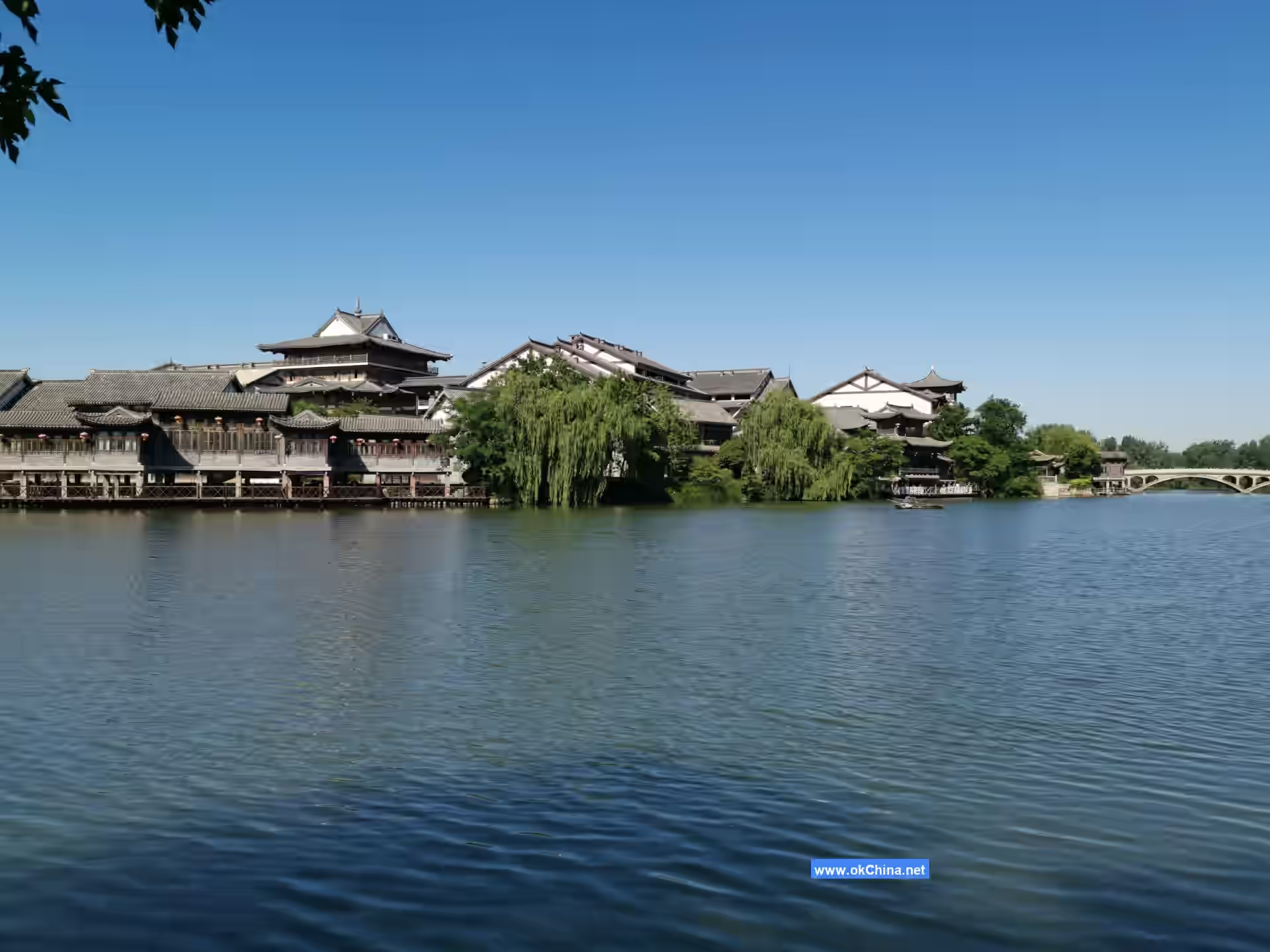
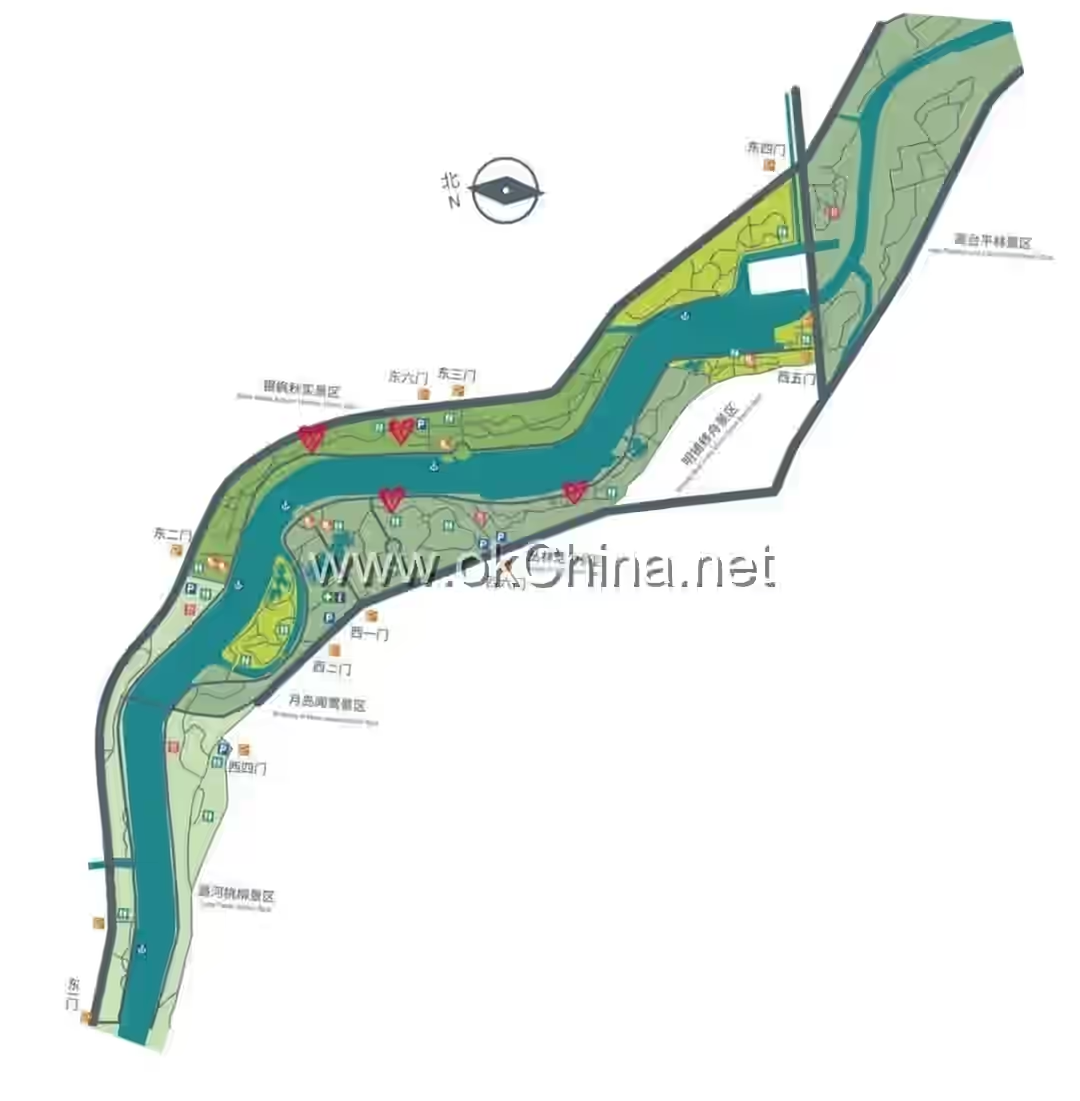
The Beijing (Tongzhou) Grand Canal Cultural Tourism Scenic Area is located at the northern end of the Grand Canal and is an important component of the Grand Canal World Heritage Site. The scenic area covers a planned area of 7.23 square kilometers, with a water area of 2.56 square kilometers. It is divided into the North, Central, and South Zones. The area integrates three core attractions: the "Three Temples and One Pagoda," the Canal Park, and the Grand Canal Forest Park. The main attraction of the North Zone is the "Three Temples and One Pagoda," which is the only architectural complex in China that combines three religions. The North Canal in the Central Zone passes under six major bridges. This section of the canal was once famous for the scene of "countless boats moored together," which was listed as one of the "Eight Scenic Spots of Tongzhou." The main attractions in the South Zone include the Willow Shade Square, the Moon Island and Orioles Scenic Area, and the Wind in the Reed Marshes, among others. The scenic area recreates the canal's former grandeur with its forest of masts and ships blotting out the sun. It is a shining pearl on the Grand Canal Cultural Belt and a tourist destination integrating leisure, vacation, experience, and shopping.
2. Geographic Location
Both sides of the North Canal in Tongzhou New Town, Tongzhou District, Beijing
3. Main Attractions
3.1 "Three Temples and One Pagoda" Scenic Area
3.1.1 The Buddhist Temple and Pagoda
Since the Northern Qi Dynasty, the administrative seat of Tongzhou's prefecture and county has been located inside the old city's north gate, on the west side. In the third year of the Jin Dynasty's Tiande era (1151), Tongzhou's administrative seat was established here and remained until 1958 when it was demolished and relocated. Ancient Tongzhou was at the confluence of several rivers. During the rainy season, water would come from three directions, often causing floods. According to the customs and beliefs of the time, in the late Northern Zhou Dynasty, a pagoda for the Buddha's relics, the Randengfo (Light-Bearing Buddha) Sheli Pagoda, was built on a high mound at the confluence of four rivers, not far from the west bank of the Lu River, to subdue the river god and calm the floods. The pagoda was built just northwest of the county government office, and the temple below it is the Buddhist Youshengjiao Temple. This temple has a single courtyard with a three-bay mountain gate hall and a three-bay main hall. There is a stone stele from the Republican era recording the crimes of the Eight-Nation Alliance destroying the temple and damaging the pagoda. Youshengjiao Temple, also known as "Pagoda Nunnery," is believed to have been built earlier than the Randengfo Sheli Pagoda. According to records, the early Youshengjiao Temple was quite large. Over the generations, only a Daguangming Hall, an ancient tree, and a large incense burner marked "Randengfo Pagoda" remain. The hall enshrines Randengfo, the teacher of Sakyamuni Buddha. Randengfo is the most famous among the Buddhas of the past. In a previous life before attaining Buddhahood, Sakyamuni was a Confucian youth who encountered the ancient Randengfo traveling in the world. Recognizing the ancient Buddha, the youth offered five lotus stems and, seeing mud on the ground, spread his hair for the Buddha to walk on. Randengfo then gave him a prophecy: "After ninety-one kalpas, in the kalpa named Bhadra, you will become a Buddha named Sakyamuni Tathagata." Ninety-one kalpas later, the youth indeed became a Buddha. Buddhist scriptures refer to him as the Buddha of the present, along with Randengfo of the past and Maitreya Buddha of the future, collectively revered as the Buddhas of the Three Periods. In the small courtyard west of Youshengjiao Temple stands the Randengfo Sheli Pagoda, named because the niche on the south side of the pagoda enshrines Randengfo, the teacher of Sakyamuni. It is also commonly known as "Tongzhou Pagoda." The pagoda was first built in the Northern Zhou Dynasty. Legend has it that ancient Tongzhou had many rivers with monsters that often stirred up storms and floods, so this pagoda was built at the highest point in the city to subdue the river god and calm the floods. It was repeatedly rebuilt, reconstructed, and repaired during the Tang, Yuan, Ming, and Qing dynasties. The current pagoda was built in the 35th year of the Kangxi era (1696). Damaged by the 1976 Tangshan earthquake, it was most recently repaired in 1985.
3.1.2 The Confucian Temple Occupies the Central Position in the Three-Temple Complex
The layout of the Three-Temple complex reflects the historical gradual integration of Confucianism, Taoism, and Buddhism, demonstrating mutual recognition. It is both a history of religion and a history of thought. Buddhism holds that the first element of practice is to sever worldly ties and remain unstained by the world. Therefore, its temples are often located in beautiful places with elegant peaks, fine forests, lakes, and flowing springs, conducive to pure cultivation. Retreating to the mountains for cultivation is a Taoist tradition, a religion that follows nature, i.e., "The Tao begets one; one begets two; two begets three; three begets all things. The earth follows the heavens; the heavens follow the Tao; the Tao follows nature (couplet from the Celestial Master Cave, Mount Qingcheng)." Its demands on the cultivation environment far exceed those of Buddhism. Since Confucius and Mencius, Confucianism has been actively engaged in the world, emphasizing the maintenance of the feudal old system and orthodox traditions through the ages, i.e., the distinctions between ruler and subject, superior and inferior, gentleman and petty man. Further developed through Song and Ming Neo-Confucianism, Confucianism took on the responsibility of regulating the family, governing the state, and bringing peace to the world, thus becoming a religious-like doctrine consistently utilized by feudal rulers as an unalterable law. Its active engagement with the world is unrelated and often conflicts with Buddhism and Taoism. In the Three-Temple complex, the Confucian Temple occupies the central front position, with Youshengjiao Temple and Ziqing Palace situated behind it on two flanks, both smaller in scale than the Confucian Temple, forming an equilateral triangle position adjacent to the government office, highlighting the status of Confucianism. As the saying goes, "First-class Buddhas, second-class immortals, third-class emperors, fourth-class officials," is fully embodied here. This model reflects the interrelationship between religion and society, spirit and matter, the abstract and the concrete. The secular government office is primary, the worldly Confucianism is primary, i.e., the concrete is primary, supplemented by the abstract religious spirit. They depend on and complement each other, truly a concentration of thousands of years of Chinese feudal thought.
3.1.3 Randengfo Sheli Pagoda
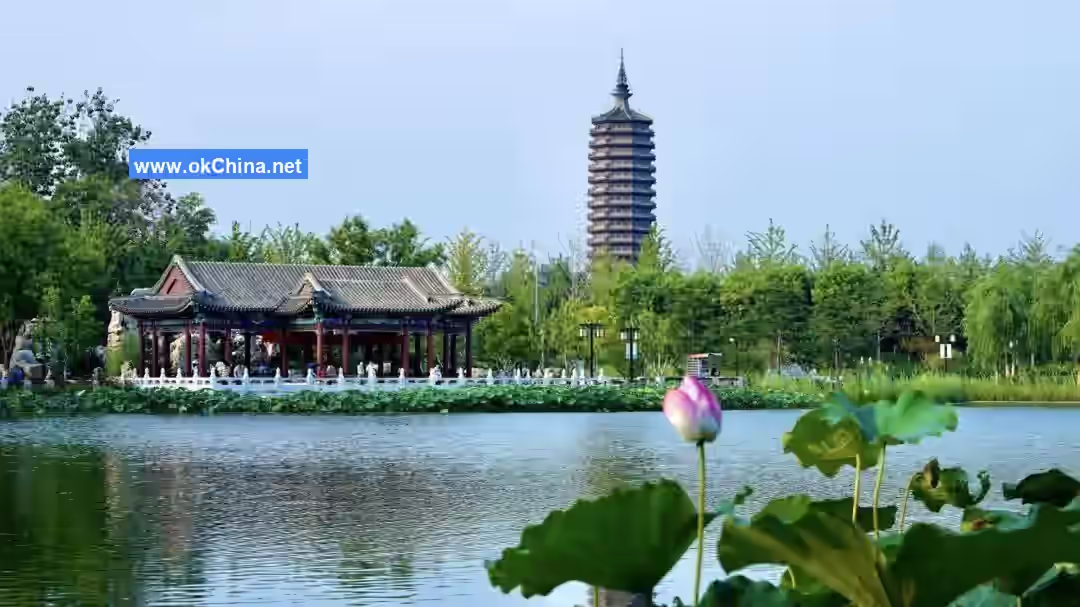
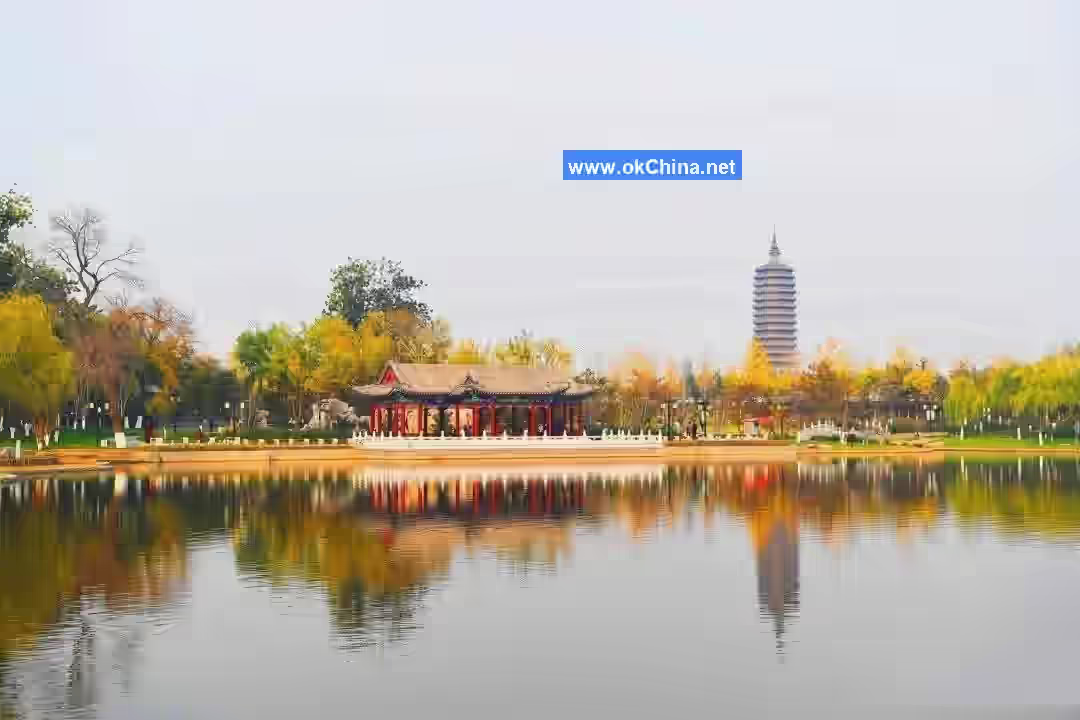
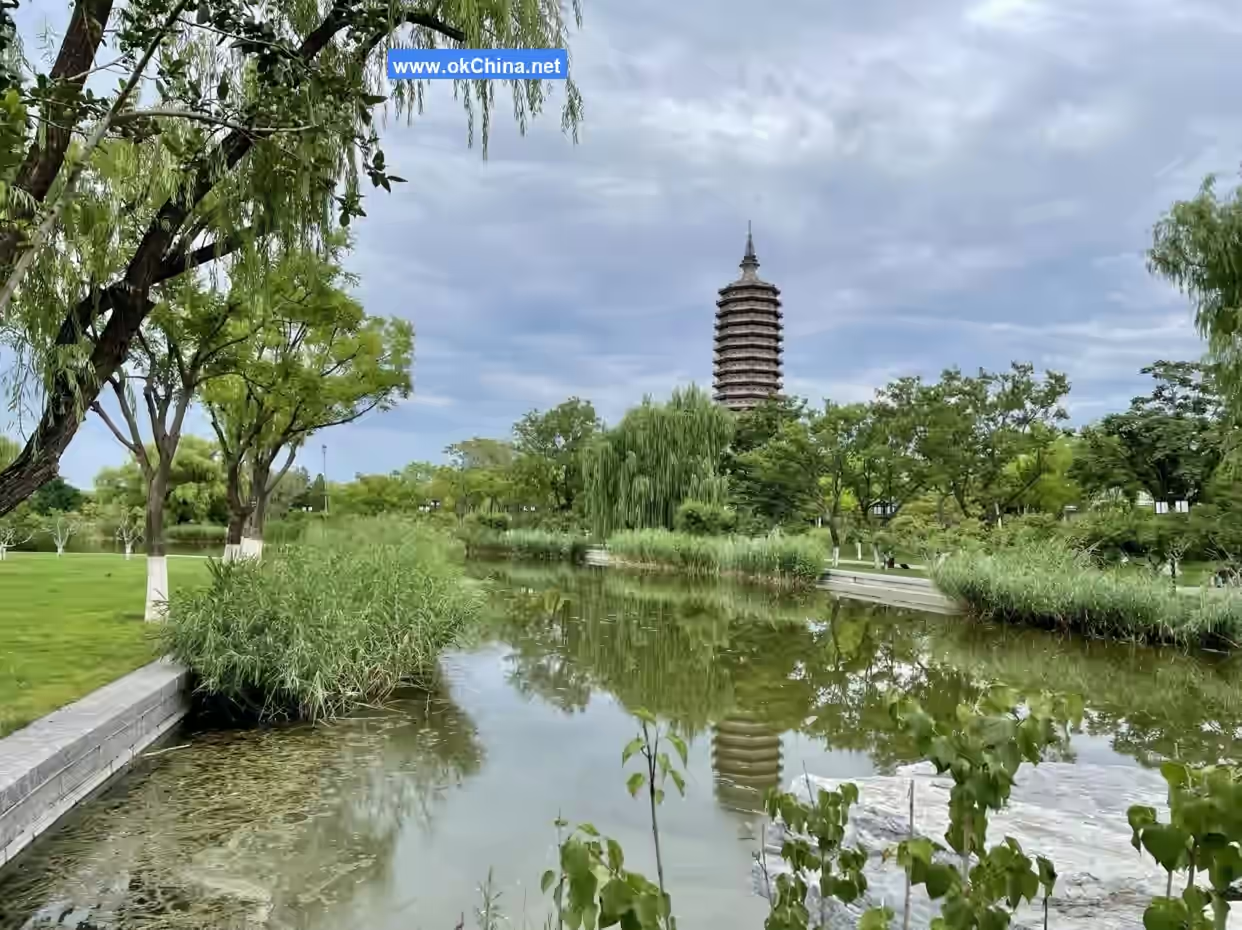
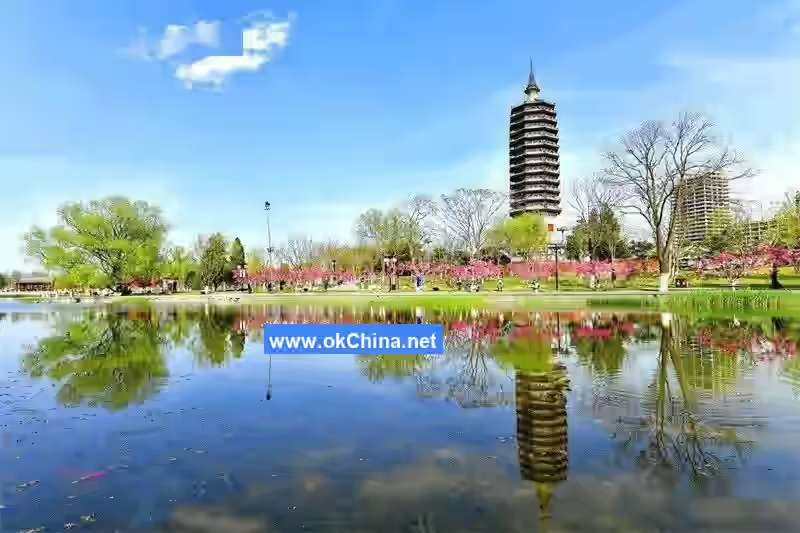
The Randeng Pagoda has 13 stories, is 53 meters high, octagonal, a solid brick pagoda with dense eaves in brick-and-wood structure, commonly known as "Tongzhou Pagoda." It consists of three main parts: the Sumeru base, the 13-story pagoda body, and the two-layer lotus pedestal finial. The pagoda body is tall and steep, with finely crafted brick carvings of bracket sets on each layer. The Buddha statues, beasts, and various decorative patterns embedded on the pagoda base, although having endured countless natural and man-made disasters, still show traces of their former exquisite beauty. A bronze bell hangs from the end of each rafter and corner beam. The Randeng Pagoda is 56 meters tall, the tallest and largest pagoda in the Beijing area. Amazingly, although the Randeng Pagoda is several hundred meters away from the ancient canal, its reflection can be seen in the canal. In the past, grain transport ships and merchant vessels on the canal could see it from afar. Therefore, the Randeng Pagoda served as a landmark at the northern end of the Grand Canal and an iconic structure of ancient Tongzhou, inspiring the ancient verse: "Unharmed sail in the fresh rain, a single pagoda's shadow identifies Tongzhou." West of the pagoda, there is also a stone inscription "Ancient Pagoda Reaching the Clouds." The "Ancient Pagoda Reaching the Clouds" was once one of the Eight Scenic Spots of Tongzhou in the Ming Dynasty, referring to this place. There are four famous pagodas along the Beijing-Hangzhou Grand Canal: Liuhe Pagoda in Hangzhou, Wenfeng Pagoda in Yangzhou, Sheli Pagoda in Linqing, and then this Randengfo Pagoda in Tongzhou. The first story of the pagoda is very high, with doors on the four main sides and false lattice windows on the others. Each eave and each corner of every story hangs a bronze wind bell, totaling 2,224, making it the ancient pagoda with the most wind bells in China. The pagoda body is carved with 415 Buddha statues. There is also a bronze mirror on the pagoda top, the largest found on an ancient pagoda to date. "Ancient Pagoda Reaching the Clouds" was once one of the Eight Scenic Spots of Tongzhou. Adjacent to Youshengjiao Temple, this pagoda forms a scenic spot at the northern end of the Beijing-Hangzhou Grand Canal and is also a symbol of the ancient city of Tongzhou. The pagoda has a history of over 1,300 years. Damaged in the earthquake of the 18th year of Kangxi (1679), a Buddha's tooth and hundreds of relics were discovered. In 1900, the Eight-Nation Alliance occupied Tongzhou and damaged the pagoda. It was damaged again in the 1976 Tangshan earthquake. It was renovated in September 1985. The famous Boya Pagoda on the Peking University campus was modeled after it.
3.1.4 Tongzhou Confucian Temple
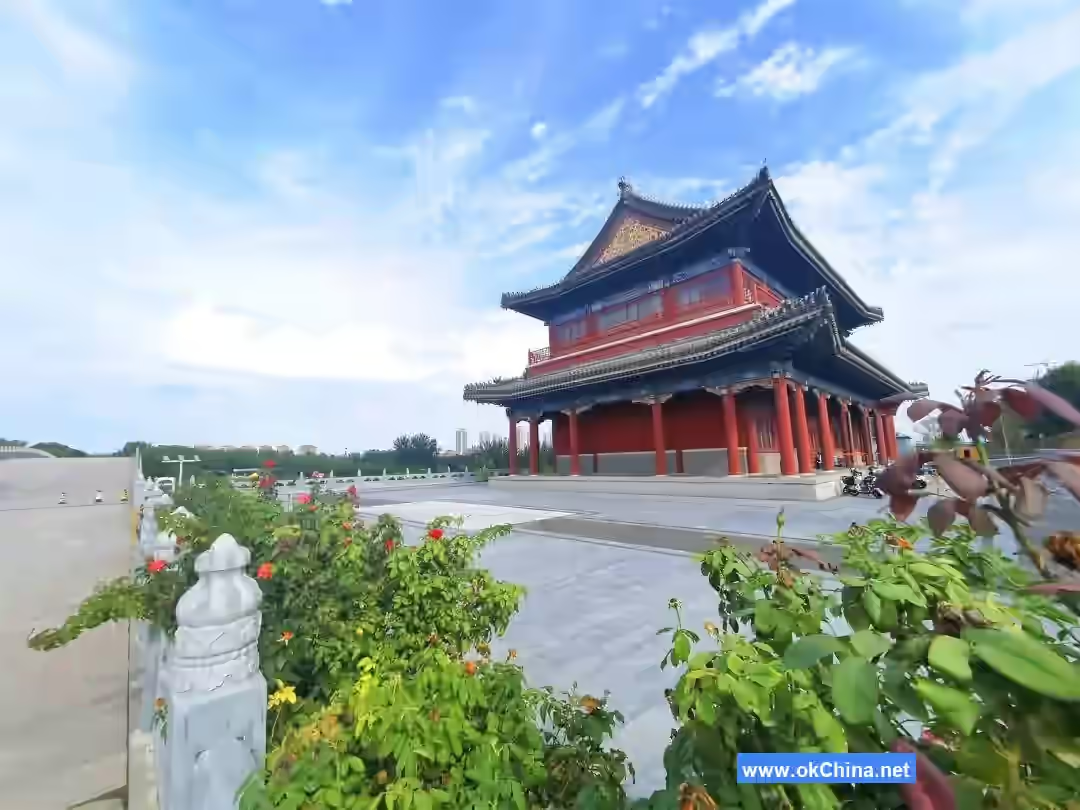
In the second year of the Yuan Dynasty's Dade era (1298), the Confucian Temple was built west of the prefecture and county government offices, enshrining the Supreme Sage and Teacher. Spanning east and west courtyards and adjacent to the government offices, this temple was built four years earlier than the Confucian Temple on Chengxian Street in Beijing. Since its construction, it has undergone nearly twenty renovations, expansions, and repairs. The statue of Confucius inside was destroyed by the Eight-Nation Alliance. The Tongzhou Confucian Temple faces south, measuring over 150 meters long and 50 meters wide. A Golden Water Bridge is buried under the central axis. The Dacheng Hall has five bays wide and three bays deep, with a hip-and-gable roof covered with cylindrical tiles. It features one-set three-step bracket sets with intertwined hemp-leaf patterns: four sets on the central bay, decreasing by one set on the secondary and end bays, and six sets on the gable ends. The hall has Hexi-style painted decorations and coffered ceilings with swan patterns. Today, only the Dacheng Hall remains.
3.1.5 Taoist Temple Ziqing Palace
In the mid-Ming Dynasty, Ziqing Palace, a Taoist temple, was built east of Youshengjiao Temple and to the left rear of the Confucian Temple. It was jointly donated by capital residents and local people, enshrining the Supreme Venerable Sovereign (Laozi). It is commonly known as the Red Boy Temple because the Red Boy painted on its hall walls was vivid and lifelike. It originally had one courtyard. Now, only a single-bay mountain gate, a three-bay main hall, a three-bay west side hall, and an ancient locust tree in front of the mountain gate remain.
3.1.6 Shengxun Pavilion
The garden also contains the Shengxun Pavilion, first built in the second year of the Yuan Dynasty's Dade era (1298). It was repaired multiple times during the Yuan, Ming, and Qing dynasties and is an auxiliary building of the Confucian Temple. It was restored in 2004. "Shengxun" means respecting the teachings of the ancient sages, embodying the Chinese tradition of honoring teachers and valuing education.
3.2 Canal Park
3.2.1 Pier No. 1
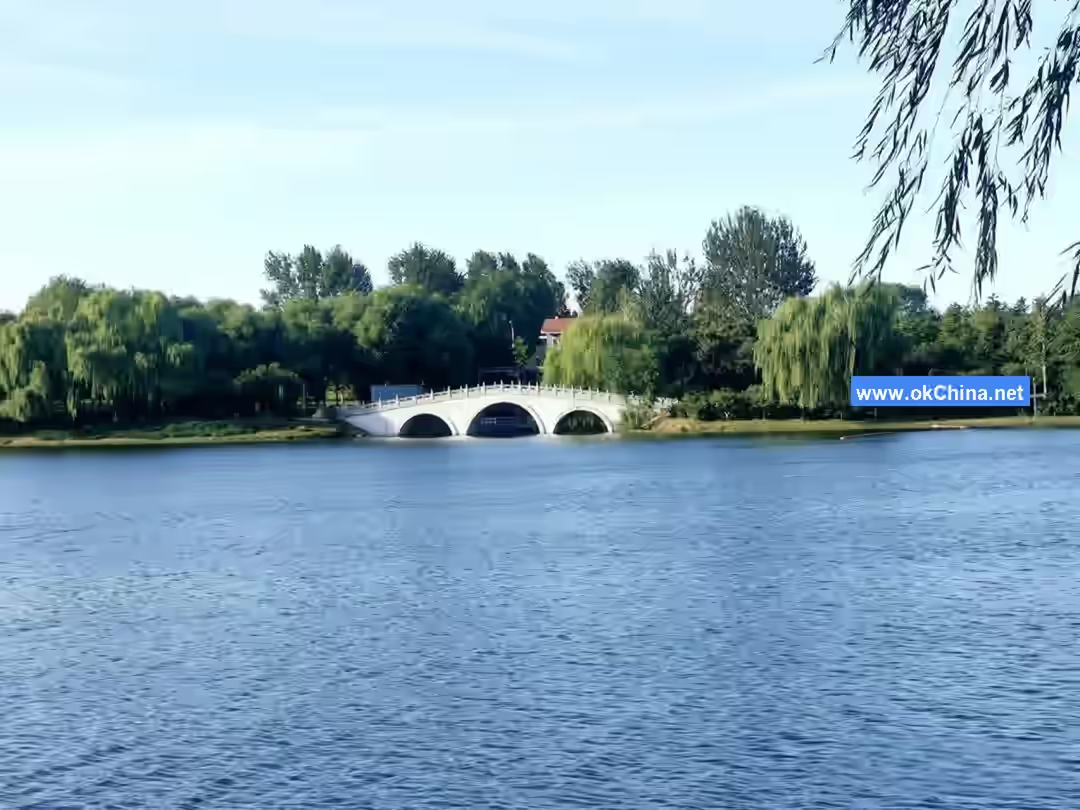
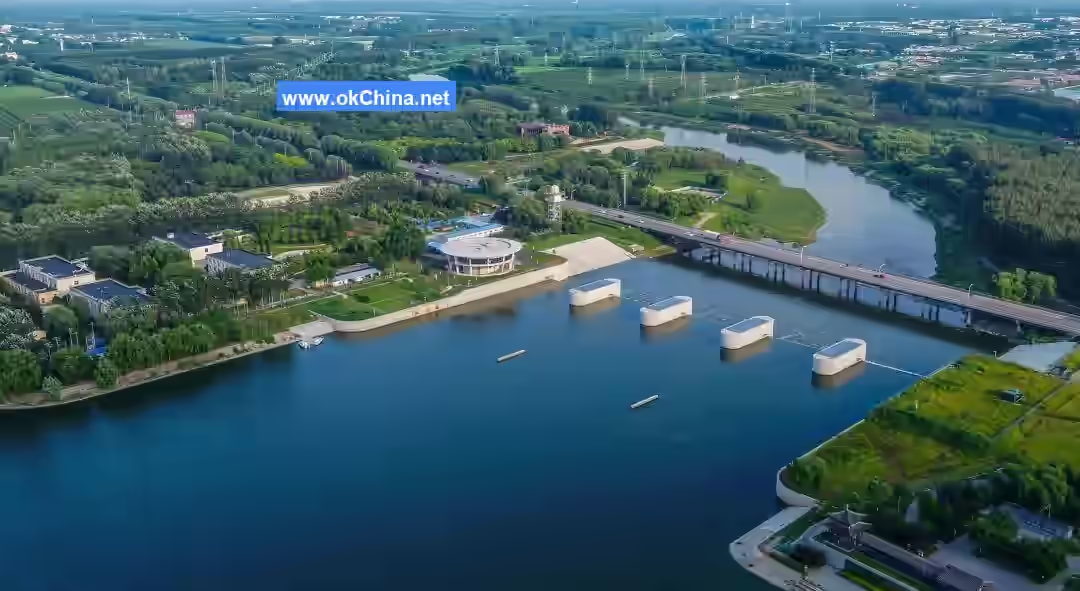
Tongzhou Canal Pier No. 1 is the northern starting point of the thousand-mile-long Beijing-Hangzhou Grand Canal. The Wenyu River, Tonghui River, Yunchaojian River, and Xiaozhong River converge here into the Beijing-Hangzhou Grand Canal, forming the spectacular scene of five rivers meeting at the northern source of the Grand Canal. The newly built seven-arch stone bridge-style barrage at the Grand Canal estuary, the rebuilt Grain Inspection Tower (disappeared for a century), and the millennia-old Randeng Ancient Pagoda can all be seen here. In 2006, the Tongzhou Canal Cultural Landscape Belt was listed as one of the six major cultural scenic areas for the Beijing 2008 Olympics. The Beijing Olympic torch relay in Beijing included a waterborne segment here.#### 3.2.2 Cultural Square Pier No. 1 is located within the Tongzhou Canal Cultural Square. The Canal Cultural Square was completed in 2006, covering an area of 138,000 square meters. The central axis of the square is the Millennium Walkway, which features a massive stone carving 226 meters long, entirely made of 15-centimeter-thick granite inlaid with bronze. Taking historical chronology as its main thread, the Millennium Walkway selects the 14 most significant events in the history of the Grand Canal, visually and vividly showcasing its historical landscape. The "Orient" themed sculpture within the square was designed by the renowned master artist Han Meilin. With a total height of 32 meters and a total weight of 260 tons, the entire sculpture consists of one giant dragon and three qilin (Chinese unicorns), with the dragon standing 10 meters high and each qilin 3.5 meters high. The sculpture is made of cast bronze and granite. Located at the northern head of the thousand-mile Beijing-Hangzhou Grand Canal, the sculpture symbolizes auspiciousness and ascension.
3.2.3 Grain Inspection Tower
The Grain Inspection Tower, originally named Daguang Tower and also known as Dam Tower, was first built in the 7th year of the Jiajing reign of the Ming Dynasty (1528) and rebuilt in the 11th year of the Tongzhi reign of the Qing Dynasty (1872), with three-bay platforms added to both its north and south sides. During the Ming and Qing dynasties, officials from the Board of Revenue's Grain Transport Office inspected tribute grain here, hence its name Grain Inspection Tower. Located at the confluence of the Grand Canal and the Tonghui River, it marks the northernmost end of the 3,400-li Grand Canal, serving as both a terminus and a starting point, as well as a distribution center for goods from north and south. Emperor Qianlong of the Qing Dynasty, on his way to the Eastern Mausoleums to pay homage to his ancestors, passed through Tongzhou, ascended the tower for a short rest to admire the view, and once recited the line, "It should also be included in the poetry of the Xie family." In his eyes, the scenery of Tongzhou's rivers and waters already possessed the poetic imagery found in the works of Xie Lingyun, the founder of the landscape poetry school.
3.3 Grand Canal Forest Park
3.3.1 Peach and Willow along the Lu River
The Peach and Willow along the Lu River scenic area is located south of the Lutong Bridge, covering an area of nearly a thousand mu. The area primarily features plant landscaping, emphasizing a natural transition from the urban landscape of the canal to pastoral scenery. Large areas of spring-flowering plants such as peach, apricot, and plum blossoms are planted, forming a landscape of "peach and willow reflecting on the banks" with the weeping willows. With the themes of urban memory and historical memory, the scenic area has established various landscape nodes. Jujube trees, pagoda trees, elms, and other trees left over from urban construction and demolition processes have been transplanted and preserved in the park, leaving memories of past life for relocated residents.
3.3.2 Tea Shed at Dusk
On the right bank of the canal north of the Songlang Road Bridge, there was once a Guandi Temple in ancient times, serving as a landmark for the passenger ship wharf at the northern end of the Grand Canal. Scholars, merchants, and travelers heading north along the canal would disembark here. As Guandi was also regarded as the God of Wealth in ancient times, most passing merchants would enter the temple to burn incense and pray for wealth and protection. At that time, the temple's Taoist priests set up a large mat shed in front of the mountain gate to sell tea for passersby to drink.
3.3.3 Moon Island and Warbler Scenic Area
Moon Island is a raised landform formed during the regulation of the North Canal's watercourse. Surrounded by water on all sides and shaped like a crescent moon, it is hence named Moon Island. With a planned area of 256 mu, it is dominated by tall arboreal forests, complemented by evergreen trees, flowering shrubs, and other plants, highlighting a three-dimensional vegetation structure. Over a hundred varieties of plants, including trees, shrubs, flowers, grasses, ground cover, and hygrophytes, have been planted on the island, providing safe nesting sites for different bird species and making it a popular science demonstration base showcasing northern plant varieties.
3.3.4 Jungle Vitality
The Jungle Vitality scenic area covers approximately 800 mu, with nearly 80% consisting of linear forest patches and orchards. Ancient Tongzhou had the "Twelve Scenes of the Wenchang Pavilion," one of which was called "Wind through the Reed Marshes," leaving behind poetic lines such as "The sound of leaves like rain, catkins like mist" and "Reed flowers on both banks, a single fishing boat." The reeds in the Grand Canal Forest Park have distinct characteristics throughout the four seasons. "Wind through the Reed Marshes" not only recreates the ancient canal scene of "reed flowers on both banks, a single fishing boat," but also features wooden boardwalks and waterfront platforms built within the reeds, allowing visitors to have zero-distance contact with the Grand Canal and experience the wetland up close.
3.3.5 Silver Maple and Autumn Harvest
The Silver Maple and Autumn Harvest scenic area covers over a thousand mu. Against the backdrop of the Cao Transport Wharf and with the theme of tribute grain storage, it recreates in a modern form the scene of granaries full of tribute grain and autumn harvests being stored along the canal banks. Drawing on historical images and texts, large sheds in the form of granaries have been designed around the Cao Transport Wharf. These can serve as "greenhouses" for growing plants year-round and also become exhibition bases showcasing Cao transport culture and reflecting people's lives. Simultaneously, they serve as a display window for Tongzhou District's urban sightseeing agricultural industry.
3.3.6 Clear Mirror and Moving Boats
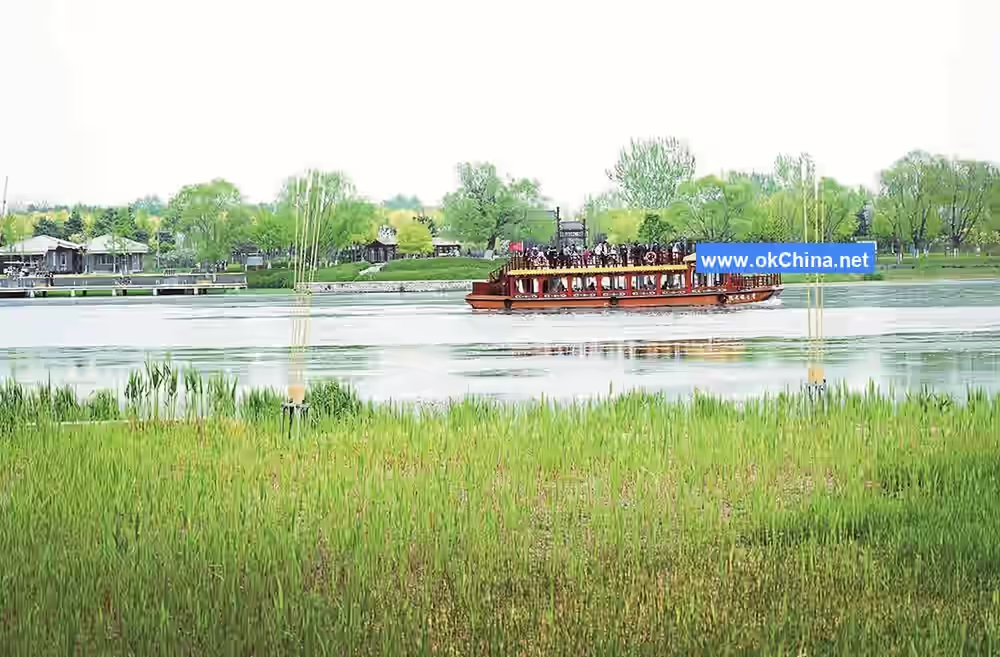
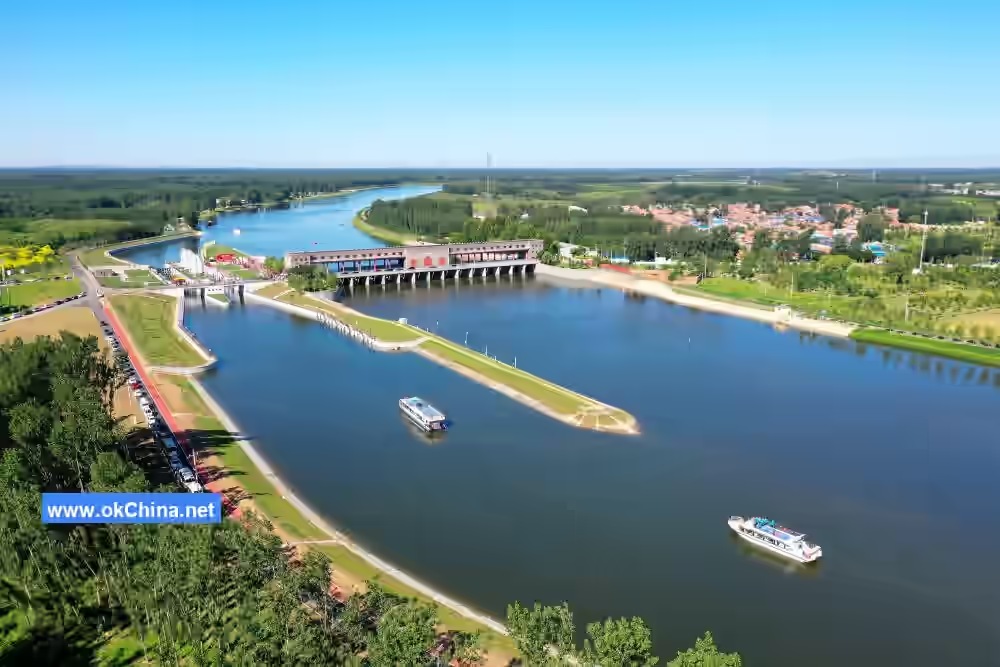
The Clear Mirror and Moving Boats scenic area covers over a thousand mu, located near the Gantang Rubber Dam. It is the terminus for waterborne tours of the canal and the area with the widest water surface in the project zone, reaching up to 360 meters at its broadest point. The "Lu River Supervision and Transport Map" on the scenic wall depicts the historical scene of the canal's prosperity and bustling activity.
3.3.7 High Platform and Flat Woods
The High Platform and Flat Woods scenic area is located south of Wuxing Road, covering over 1,500 mu. With plant landscapes as the main feature, it utilizes natural and simple techniques to highlight large color blocks and grand vistas, forming a natural transition from the pastoral scenery of the canal to wilderness landscapes, paving the way for the downstream greening project of the canal.
4. The Grand Canal
4.1 Introduction
The Grand Canal is an ancient Chinese hydraulic engineering project, comprising three sections: the Beijing-Hangzhou Grand Canal, the Zhejiang Eastern Grand Canal, and the Sui-Tang Grand Canal. Stretching 3,200 kilometers, it spans eight provinces/municipalities (Beijing, Tianjin, Hebei, Shandong, Henan, Anhui, Jiangsu, Zhejiang) and 35 cities. Traversing the North China Plain, it connects the five major water systems of the Hai River, Yellow River, Huai River, Yangtze River, and Qiantang River, serving as the vital north-south transportation artery in ancient China. This artificial waterway running across China is one of the greatest engineering marvels in the history of human civilization. It is not merely a transport route but also the lifeblood of Chinese civilization, bearing over two thousand years of historical accumulation and cultural heritage. From the excavation of the Han Gou by King Fuchai of Wu during the Spring and Autumn period, to the connection of north and south by Emperor Yang of Sui, to the continuous improvements during the Yuan, Ming, and Qing dynasties, the Grand Canal has witnessed the rise and fall, glory and humiliation of the Chinese empire, recording the wisdom and creativity of the Chinese nation. This winding waterway of over three thousand kilometers tightly linked China's political center with its economic heartland, shaping a unique canal civilization and influencing China's political, economic, and cultural landscape. The existence of the Grand Canal not only altered China's historical course but also left a profound mark on the history of human civilization.
4.2 The Crystallization of Wisdom from a Millennium Project
The history of the Grand Canal's construction and renovation can be traced back to the Spring and Autumn and Warring States periods. In the late Spring and Autumn period, the State of Wu excavated three canals: the Xu Xi, the Han Gou, and the Huang Gou, with the excavation of the Han Gou being particularly important. In 486 BC, King Fuchai of Wu, to facilitate his northern expedition against the State of Qi, excavated the Han Gou, connecting the Yangtze River and the Huai River, marking the beginning of China's Grand Canal. The opening of the Han Gou not only provided convenience for Wu's military operations but also laid the foundation for the later canal network. Subsequently, Wu also excavated the Huang Gou further north, connecting the Si River and the Ji River, further expanding the canal's coverage.
During the Warring States period, the State of Wei excavated the Hong Gou, connecting Zhengzhou and Shangqiu, greatly promoting agricultural irrigation and commodity trade. The Hong Gou became a symbol of the boundary between Chu and Han during the Chu-Han contention, further highlighting the canal's political and military importance.
During the Qin, Han, Wei, and Jin periods, canal construction and maintenance were mainly concentrated in the south. Qin Shi Huang excavated the Lingqu, connecting the Xiang River and the Gui River, facilitating north-south transportation. The Han Dynasty excavated the Cao Qu, connecting Chang'an and the Yellow River, further expanding the canal network. During the Eastern Han Dynasty, Chen Min renovated the Han Gou, avoiding the dangers of wind and waves on Sheyang Lake and improving the convenience of water transport. Furthermore, in the late Eastern Han, Cao Cao excavated canals such as the Bai Gou and Pinglu Qu in the north, forming a canal network traversing the Hebei Plain, greatly facilitating water transport in the north.
The Sui Dynasty was the peak period of Grand Canal construction. Emperor Yang of Sui extensively renovated the Tongji Qu, Han Gou, Yongji Qu, and Jiangnan Canal, connecting north and south for the first time and linking the five major water systems of the Hai River, Yellow River, Huai River, Yangtze River, and Qiantang River, forming a complete north-south Grand Canal system. This project not only promoted the flow of goods between north and south but also spurred the prosperity of cities along the route.
The Tang Dynasty inherited the Sui canal system and conducted multiple dredging and repair projects. The Tang Dynasty carried out numerous management projects on canals like the Bian Qu, Han Gou, and Jiangnan Canal, ensuring the smooth flow of water transport. Particularly during the reign of Emperor Xuanzong, Pei Yaoqing implemented a segmented transport method, greatly improving the efficiency of water transport. The Tang Dynasty also excavated waterways like the Dan-Ba Waterway and the Baoxie Road, further expanding the canal network.
During the Song and Yuan periods, the importance of the canal increased further. The Northern Song Dynasty established its capital in Kaifeng, relying on the canal to transport tribute grain from the south, making Kaifeng a prosperous metropolis. During the Southern Song Dynasty, the Zhejiang Eastern Canal saw greater utilization, becoming an important waterway connecting Hangzhou and Ningbo. The Yuan Dynasty excavated the Beijing-Hangzhou Grand Canal, directly connecting Beijing and Hangzhou, further optimizing the canal's route.
During the Ming and Qing dynasties, the central government highly valued the canal's water transport function, establishing specialized water transport and watercourse management agencies. The Ming Dynasty expanded the Huitong River, solving water source issues, and built hydraulic projects like the Hongze Lake Dam, ensuring the canal's smooth flow. The Qing Dynasty further dredged the canal, completely separating it from the Yellow River and reducing the impact of Yellow River floods on the canal.Since modern times, with the rise of railway and road transportation, the canal's grain transport function has gradually diminished. However, after the founding of the People's Republic of China, certain sections of the Grand Canal were restored and expanded. Combined with the South-to-North Water Diversion Project, the canal's irrigation and drainage functions have been fully utilized, continuing to contribute to the economic development of the regions along its route.
Overall, the construction and maintenance history of the Grand Canal spans over two thousand years of Chinese history. It is not only an outstanding representative of ancient Chinese hydraulic engineering but also an important link for economic and cultural exchanges between the north and south, profoundly influencing China's historical development.
4.3 A Flowing Cultural Corridor
The Grand Canal is not merely a transportation route but also a conduit for cultural dissemination. Along its banks, a unique canal cultural belt has formed, where various regional cultures converge and interact, giving rise to a rich diversity of cultural expressions.
Cities along the canal flourished due to grain transport, developing distinctive urban cultures. Cities such as Yangzhou, Suzhou, and Hangzhou became gathering places for literati and artists, fostering brilliant literary and artistic achievements. The canal's grain transport culture, merchant guild culture, and folk culture constitute an important part of Chinese culture.
The Grand Canal facilitated the exchange and integration of northern and southern cultures. The boldness of the north and the subtlety of the south converged here, creating a unique cultural landscape. Art forms such as opera, calligraphy, painting, and crafts spread through the canal, promoting the prosperity and development of Chinese culture.
4.4 A Far-Reaching Artery of Civilization
The Grand Canal had a profound impact on the economic development of ancient China. It connected the political center in the north with the economic hub in the south, promoting coordinated regional economic growth. The establishment of the grain transport system ensured food supplies to the capital and maintained national stability.
In terms of politics and military affairs, the Grand Canal played a significant role. It served not only as a channel for material transportation but also as a vital route for troop movements. The smooth operation of the canal directly affected the rise and fall of dynasties. The emphasis placed on the canal during the Ming and Qing dynasties reflects its strategic importance to the state.
The Grand Canal holds profound implications for modern society. It showcases humanity's courage and wisdom in transforming nature and embodies the concept of sustainable development. Today, as a UNESCO World Heritage site, the Grand Canal continues to play a vital role in cultural heritage preservation and ecological conservation.
Comments
Post a Comment