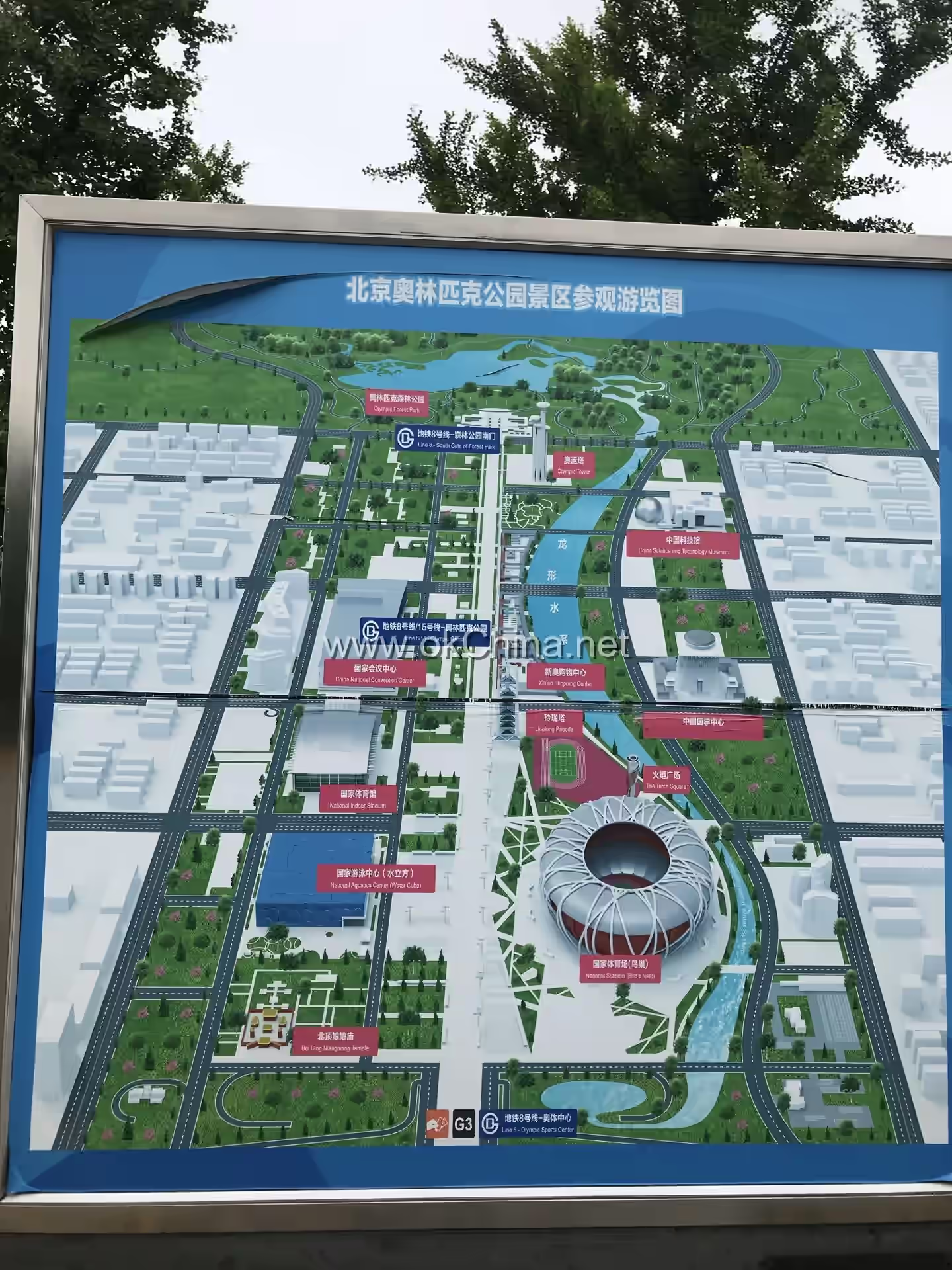
Beijing Olympic Park
1. Introduction
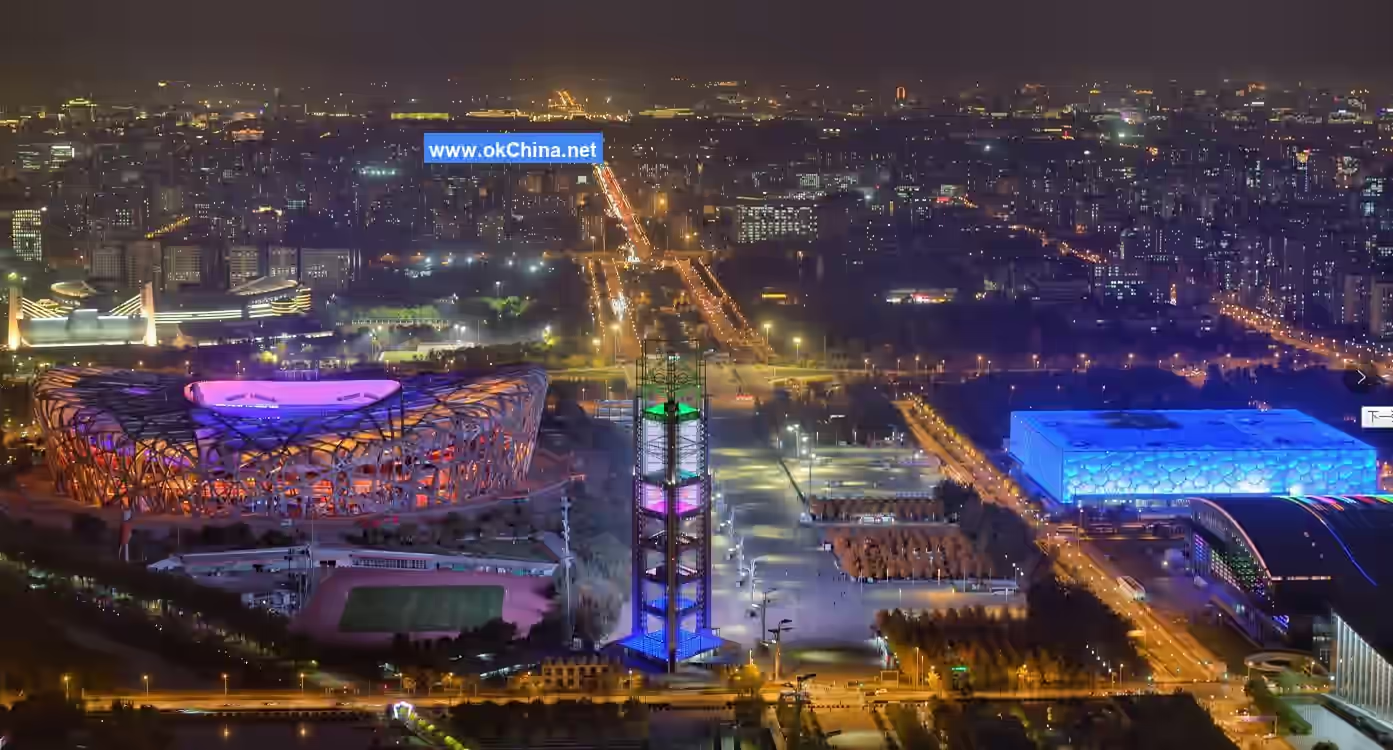
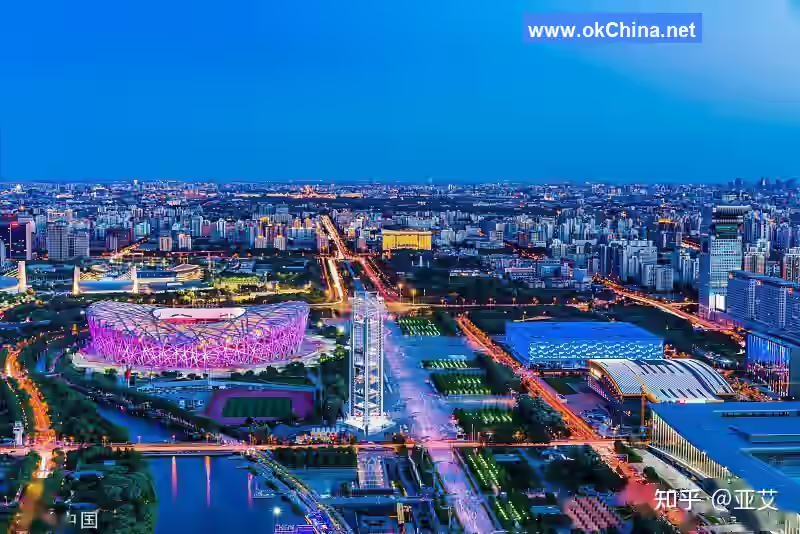
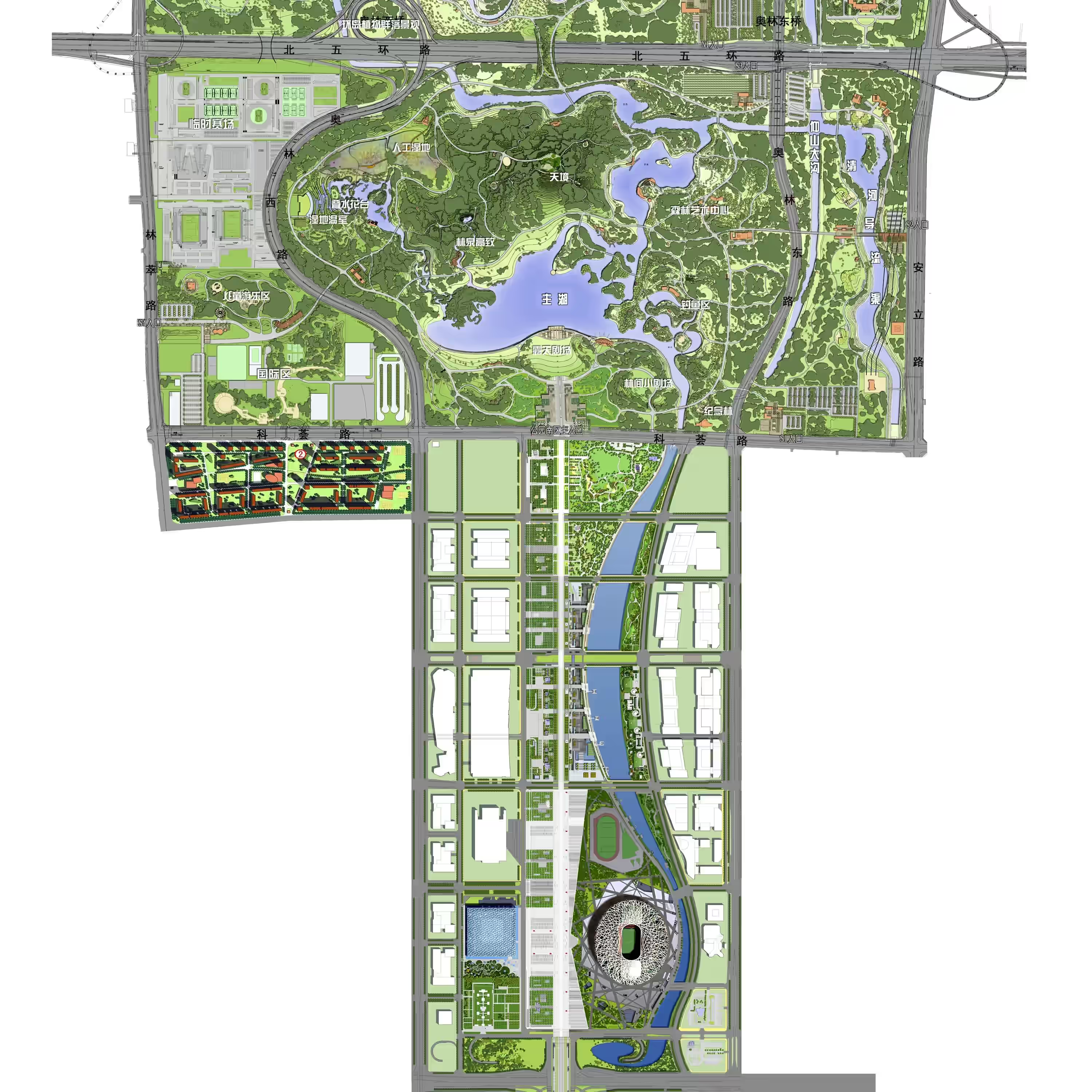
Beijing Olympic Park, located at No. 15 Beichen East Road, Chaoyang District, Beijing, sits at the northern end of Beijing's central axis. It is bounded by the south bank of the Qinghe River to the north, Beitucheng Road to the south, Anli Road and Beichen East Road to the east, and Lincui Road and Beichen West Road to the west. Covering a total area of 11.59 square kilometers, it embodies the three core concepts of "Technology, Green, and Humanity." It is a new urban area integrating various functions such as office, commercial, hotel, cultural, sports, conference, and residential spaces. The park is divided from north to south into the North Area, Central Area, and South Area. The North Area is the Olympic Forest Park, the largest urban green landscape in Asia, serving as an eco-tourism and leisure zone. The Central Area is a concentration of national-level venues and supporting facilities, housing well-known landmarks like the Bird's Nest and the Water Cube, and is also a site for major national political events. The South Area consists of the Olympic Sports Center and the Olympic Cultural Business Park. Major attractions within Beijing Olympic Park include the Bird's Nest, Water Cube, and National Stadium.
2. Physical Geography
2.1 Location and Area
Beijing Olympic Park is located at No. 15 Beichen East Road, Chaoyang District, Beijing, situated at the northern end of Beijing's central axis. It extends to the south bank of the Qinghe River in the north, Beitucheng Road in the south, Anli Road and Beichen East Road in the east, and Lincui Road and Beichen West Road in the west, encompassing a total area of 11.59 square kilometers.
2.2 Climate
Beijing Olympic Park experiences a temperate continental semi-humid monsoon climate. The four seasons are distinct, with precipitation concentrated in certain periods. Spring is dry and windy, summer is hot and rainy, autumn is clear with little rain, and winter is cold and dry. The annual average temperature is 11.6°C, with a frost-free period of 192 days. The average annual precipitation is 581 mm (1971–2000). The total annual solar radiation is 134.24 kcal/cm², with physiological radiation accounting for about 49% of the total annual radiation. The total annual sunshine duration is 2,841.4 hours, with May having the most at 279.1 hours, followed by June with 277.3 hours.
3. Major Attractions
3.1 Bird's Nest
The National Stadium, also known as the "Bird's Nest," is located in the southern part of the Central Area of Beijing Olympic Park. It served as the main stadium for the 2008 Beijing Olympic Games, hosting the opening and closing ceremonies, athletics events, and football finals for both the 2008 Summer Olympics and Paralympics, as well as the opening and closing ceremonies for the 2022 Winter Olympics and Winter Paralympics. The stadium covers an area of 204,000 square meters, with a floor area of 258,000 square meters, and can accommodate 91,000 spectators, including 80,000 permanent seats and 11,000 temporary seats. It was designed by Jacques Herzog, Pierre de Meuron, Ai Weiwei, and Li Xinggang, and constructed by the Beijing Urban Construction Group. The stadium's form resembles a "nest" and cradle that nurtures life, symbolizing humanity's hope for the future. The designers left the structure exposed without unnecessary embellishments, naturally forming the building's exterior. Construction began on December 24, 2003, and was completed in March 2008, with a total cost of 2.267 billion yuan. As a national landmark and the main stadium for the 2008 Olympics, the National Stadium has distinctive structural features. It is a top-tier sports building and a large-scale sports venue. The main structure is designed for a 100-year service life, with a first-class fire resistance rating, seismic fortification intensity of 8 degrees, and first-class waterproofing for underground works. After the 2008 Olympics, the National Stadium became a large professional venue for Beijing residents to participate in sports activities and enjoy sports entertainment, serving as an iconic sports building and Olympic legacy. On April 15, 2014, the China Contemporary Top Ten Buildings Selection Committee shortlisted 20 buildings from over 1,000 landmarks in China based on criteria such as era, scale, artistry, and influence. On June 8 of the same year, the Bird's Nest National Stadium was announced as one of the "China Contemporary Top Ten Buildings." In 2024, the Bird's Nest hosted 39 large-scale concerts, attracting over 2.16 million attendees, with an average of over 55,000 per show, setting a historical record.
3.2 Water Cube
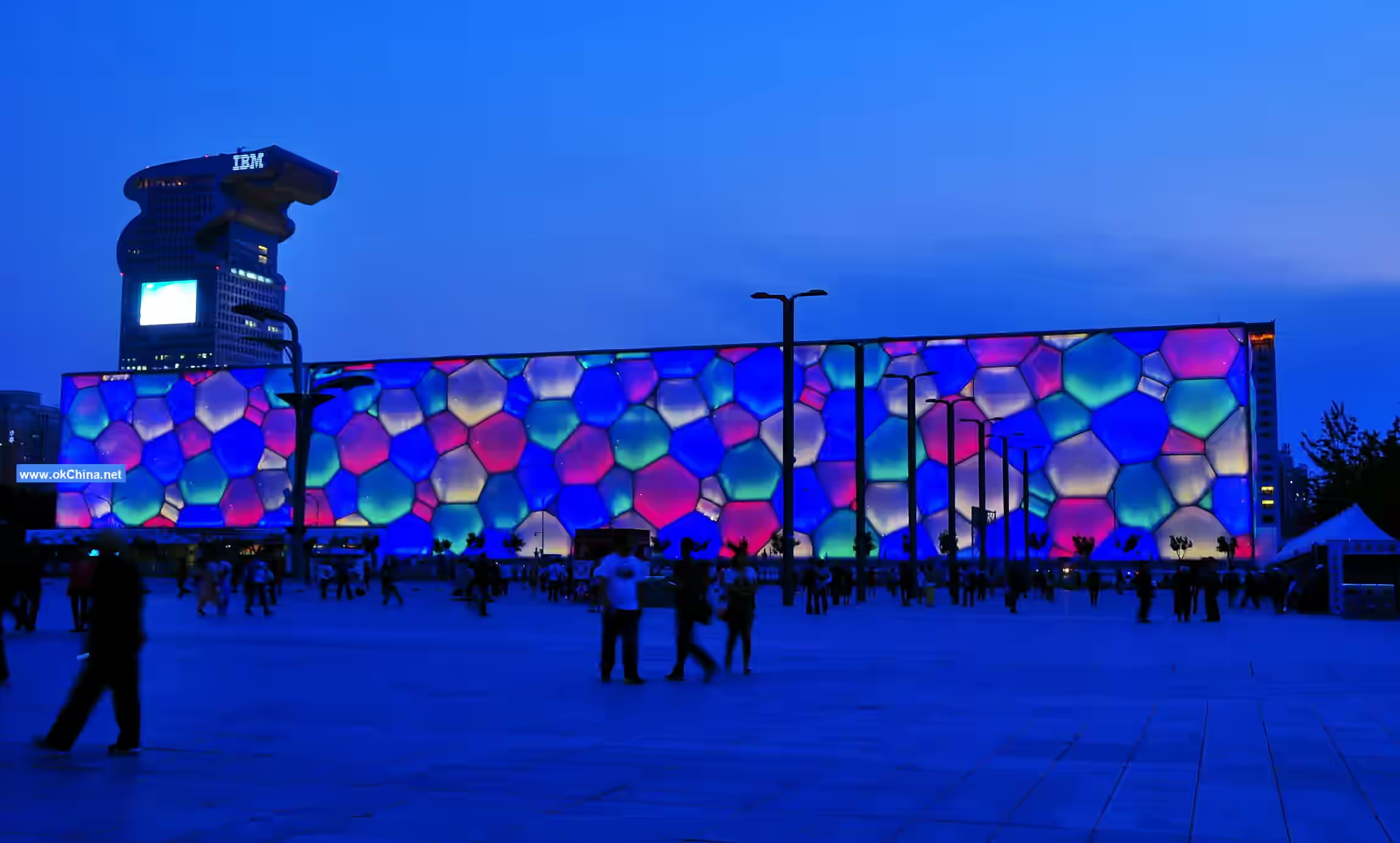
The National Aquatics Center, also known as the "Water Cube" and "Ice Cube," is located within Beijing Olympic Park in Chaoyang District, Beijing (No. 11 Tianchen East Road, Chaoyang District). Construction began on December 24, 2003, and it was officially completed in January 2008. On November 27, 2020, the renovation project for the Winter Olympics curling venue at the National Aquatics Center passed final acceptance, transforming the "Water Cube" into the "Ice Cube." The National Aquatics Center is a premier venue from the 2008 Beijing Olympics and a classic renovated venue for the 2022 Beijing Winter Olympics. It is also the only Olympic venue funded by donations from compatriots in Hong Kong, Macao, Taiwan, and overseas Chinese. It has been rated as one of the "Top Ten New Architectural Marvels of China." The total floor area of the National Aquatics Center ranges from 65,000 to 80,000 square meters, with the underground portion covering no less than 15,000 square meters. Its dimensions are 177 meters in length, 177 meters in width, and 30 meters in height. The exterior resembles an ice-crystal cube, with a simple and modern design. The interior is a six-story building with a square layout. Facilities include the competition hall, warm-up pool, multifunctional hall, and a large water amusement park. The "Ice Cube" Ice Sports Center is located in the underground space of the South Plaza of the National Aquatics Center, with a total floor area of approximately 8,000 square meters. It features a standard ice rink of 1,830 square meters and a curling venue with four standard 45x5 meter lanes, along with supporting service facilities. The National Aquatics Center is an internationally advanced center integrating swimming, sports, fitness, and leisure, serving as a water entertainment hub for Beijing residents. Utilizing the underground space of the South Plaza, the center established two ice surfaces: one standard ice rink and one curling rink. These will serve as an experiential base for curling in the Olympic Central Area, providing an open platform for the public and supporting the goal of involving 300 million people in winter sports. International Olympic Committee President Thomas Bach praised the "Ice Cube" as a model for the sustainable development of Olympic venues.
3.3 National Indoor Stadium
The National Indoor Stadium, also known as the "Ice Fan," is located in the southern part of the Central Area of Beijing Olympic Park. With a total floor area of 80,890 square meters, it is one of the iconic buildings in the Olympic Central Area. Commonly referred to as the "Folding Fan," it is one of the three main venues of the Beijing Olympics. The stadium has 18,000 fixed seats and 2,000 temporary seats. During the Olympics, it hosted artistic gymnastics, trampoline, and handball events.
3.4 Forest Park
The Olympic Forest Park is located at Lincui Road, North Fifth Ring Road, Chaoyang District, Beijing. It is bounded by Anli Road to the east, Lincui Road to the west, the Qinghe River to the north, and Kehui Road to the south. The park covers an area of 680 hectares, with the South Park occupying 380 hectares and the North Park 300 hectares. The park is rich in forest resources, dominated by trees and shrubs, with a green coverage rate of 95.61%. The Olympic Forest Park is one of the key supporting construction projects of the Olympic Park.
3.4.1 Open-Air Theater
The Open-Air Theater is located north of the South Entrance, backed by the Ao Hai Lake and Yangshan Hill, marking the terrestrial endpoint of the city's central axis. Covering an area of approximately 40,000 square meters, it can accommodate 20,000 spectators simultaneously. It mainly consists of the stage square, media area, viewing area, and underground structures. Combined with fountain water features and a landscape stage, it forms an outdoor performance venue. The paving patterns of the stage square incorporate cloud patterns, fret patterns, and incense seal patterns, symbolizing auspiciousness, happiness, and enduring heritage.
3.4.2 Ao Hai Lake
"Ao Hai" Lake is located north of the park's South Entrance, with an open-air performance square on its south bank, integrated with the Olympic Landscape Avenue. It covers an area of about 40,000 square meters and can accommodate 20,000 spectators at once. The seating terraces of the performance square are designed using a gentle slope from south to north. To the north of the open-air performance square, within the main lake, there is a large musical laser fountain with a main jet reaching 80 meters high.
3.4.3 Yangshan Hill
Yangshan Hill is situated on Beijing's central axis, with its main peak reaching 48 meters in height. Naming the main hill of the Forest Park "Yangshan" not only preserves the traditional local place name but also echoes the name "Jingshan" (Prospect Hill). It alludes to the verse from the Book of Songs: "High is the mountain I look up to; bright is the path I walk upon," and together they form the term "jingyang" (admiration), aligning with the traditional Chinese cultural values of symmetry, balance, and harmony.
3.4.4 Tianjing (Heavenly Realm)
"Tianjing" is located at the summit of "Yangshan" Hill in the Forest Park. At "Tianjing," there is a specially transported landscape stone from Mount Tai, standing 5.7 meters high and weighing 63 tons. Surrounding it are 29 pine trees, symbolizing the 29th Olympic Games.
3.4.5 Zhaohuatai and Xishitai
"Zhaohuatai" (Morning Flowers Terrace) and "Xishitai" (Evening Plucking Terrace) are located to the east and west of "Tianjing," respectively. The names of these two landscapes are derived from Lu Xun's essay collection Dawn Blossoms Plucked at Dusk.
3.4.6 Tianyuan Platform
Tianyuan Platform is located on the lake island at the central axis position of Ao Hai Lake. The circular waterfront platform extends into the water, serving as a transitional area in the landscape sequence between Ao Hai Lake and Yangshan Hill. The platform embodies the grandeur of "Tianjing" and the concept of harmony between man and nature. Positioned along the central axis like "Tianjing," the two sites resonate with each other from afar.#### 3.4.7 Forest and Spring Elegance Located on the southwestern foothills of "Yangshan" (Looking-up Hill), Forest and Spring Elegance transforms a naturally formed mountain valley into a stream and waterfall landscape. It features three ponds and two peaks, stretching approximately 370 meters in total. A cascading waterfall is set at the hilltop, winding its way down through multiple tiers before finally converging into the Ao Hai (Olympic Lake).
3.4.8 Constructed Wetland
The Constructed Wetland is situated beyond the reeds, cattails, Cyperus difformis, calamus, and canna groves. Walking 500 meters from the bridge leads to the underwater gallery, which is built below the water surface. The corridor is surrounded by glass railings, offering views of the underwater scenery. To the west of the underwater gallery lies the "Cascading Flower Terrace." Utilizing the elevation difference from west to east, three terraced water levels are constructed. As the water cascades down step by step, it forms small waterfalls with distinct auditory effects. Within the "Cascading Flower Terrace" landscape, rustic wooden boardwalks crisscross close to the water's surface.
3.4.9 North Park "Great Tree Garden"
The North Park "Great Tree Garden" was generously donated to the Chaoyang District Government by Ms. Li Xiaoxue from Hong Kong. The garden covers an area of 1,200 mu (approximately 80 hectares), with a water surface of 100,000 square meters. As of 2010, the garden was home to 176 species of trees, totaling nearly 30,000 individual plants, including crape myrtles, ash trees, Chinese wingnuts, magnolias, and ginkgos. Some of the large trees are "transplants" from the Three Gorges Reservoir area. In winter, staff light charcoal fires around these southern-origin trees to keep them warm and help them survive Beijing's harsh winters safely. During hot and dry seasons, they also spray water to cool the trees. Some trees, struggling to adapt to the local environment and prone to "illness," receive intravenous drips of nutrient solutions. The soil composition for their roots is also formulated with reference to the soil from their "native homes."
3.4.10 Swift Tower
The Swift Tower is an artificial structure built for animals. Standing 20 meters high with a 2-meter square base, it contains 2,240 nesting cavities. Originally intended to provide shelter for swifts, the tower now primarily houses sparrows due to the scarcity of swifts and design flaws. Additionally, the fir wood used is brittle, prone to drying and cracking, and easily eroded by rain and snow, resulting in many damaged and unusable nests.
3.4.11 Olympic Manifesto Plaza
The Olympic Manifesto Plaza takes the shape of five concentric circles. Radiating outward from a central 2.9-meter square bronze floor plate in a wave-like pattern, it symbolizes the inheritance and relay of the Olympic spirit following the Beijing 2008 Olympic Games. Engraved on it are the host cities, edition numbers, and dates of the modern Olympic Games from 1896 to 2016, forming a pattern converging towards the five rings. The northern half of the outermost circle features three curved bronze steles with a total length of 29 meters, bearing the text of the Olympic Manifesto in French, Chinese, and English. The Chinese version's curved stele is positioned centrally, topped by the main monument. The main monument stands 2.9 meters high, 1.99 meters wide, and 0.38 meters thick. Its front and back sides are respectively carved with relief images of Pierre de Coubertin, the father of the modern Olympics, and Jacques Rogge, former President of the International Olympic Committee. The Olympic Manifesto Plaza primarily uses natural granite and bronze components, featuring bronze "inscriptions" and carvings. The monument design incorporates the auspicious cloud motif, a widely used Chinese cultural element during the Beijing Olympics, and further expresses it through relief based on traditional cloud patterns dating back to the Han Dynasty.
3.5 Sunken Garden
Located in the central area of the Olympic Park, the Sunken Garden is flanked by large shopping malls and subway entrances. This 700-meter-long space is connected by seven courtyards. From south to north, they are: Imperial Path Palace Gate, Ancient Wood Flower Hall, Ritual Music Grand Gate, Crossing Yingzhou, Harmonious Courtyard Delight, and Waterprint Long Sky. These seven courtyards highlight Chinese elements, showcasing typical symbols of traditional Chinese culture and embodying a perfect fusion of tradition and modernity.
3.6 Beiding Niangniang Temple
Located in the southwestern part of the Olympic Park, Beiding Niangniang Temple is a royal temple commissioned during the Ming Dynasty. With a history of over 600 years, it is one of the "Five Dings and Eight Temples" in Beijing. The temple is dedicated to Bixia Yuanjun, also known as the Goddess of Mount Tai, who is the daughter of the Great Emperor of the Eastern Peak (Mount Tai).
3.7 Tennis Center
The National Tennis Center, constructed for the Beijing 2008 Olympic Games, is a professional tennis venue and one of the world's top tennis facilities. Situated within the Beijing Olympic Forest Park, it covers an area of 16.68 hectares and boasts 30 international standard courts: 17 outdoor courts, 12 indoor courts (including two red clay courts meeting international competition standards), and one Diamond Court with a retractable roof. The Diamond Court, the air-supported dome indoor hall, along with existing venues like the Lotus Court and Moon-reflecting Court, form a new cluster of sports facilities.
3.8 Olympic Tower
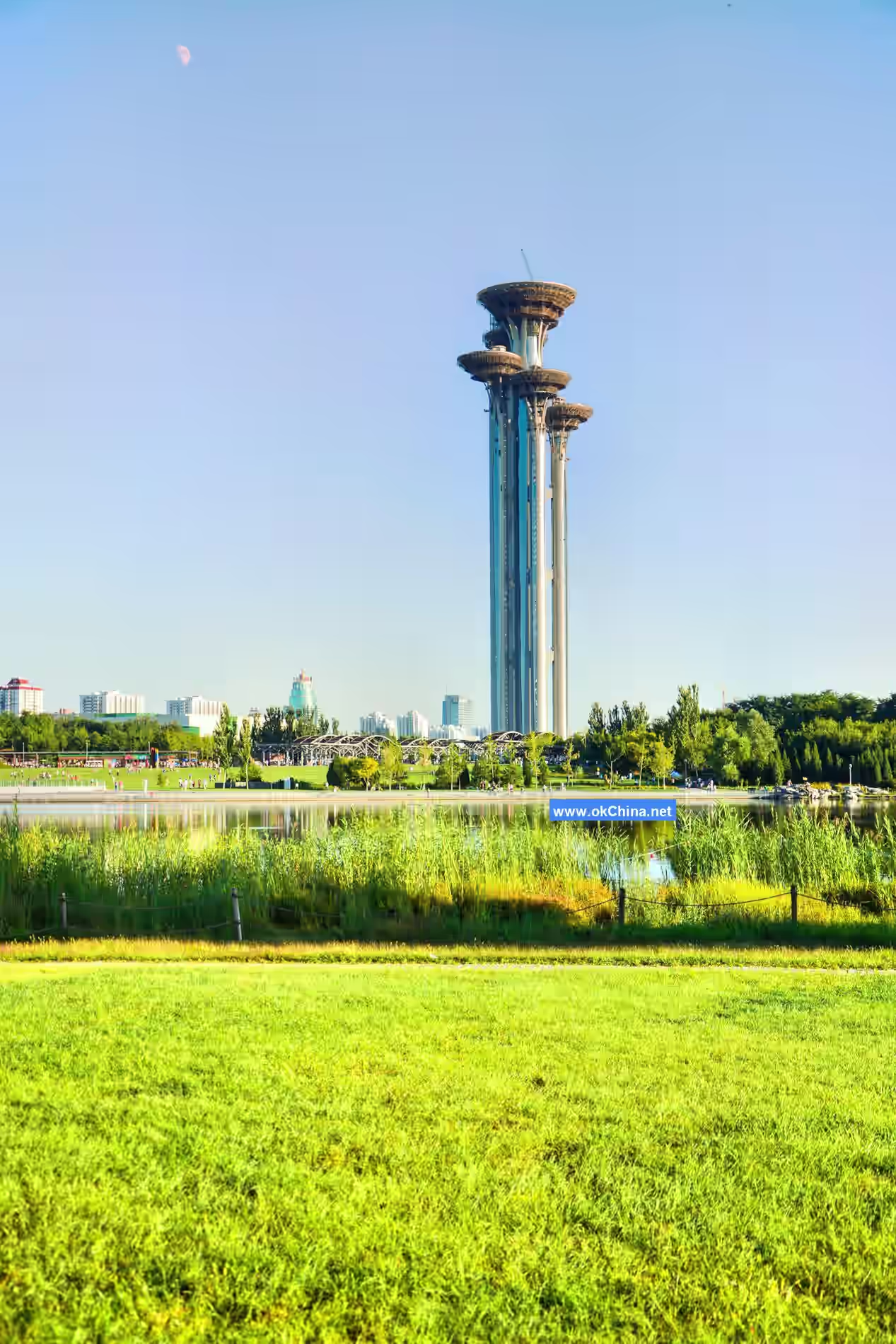
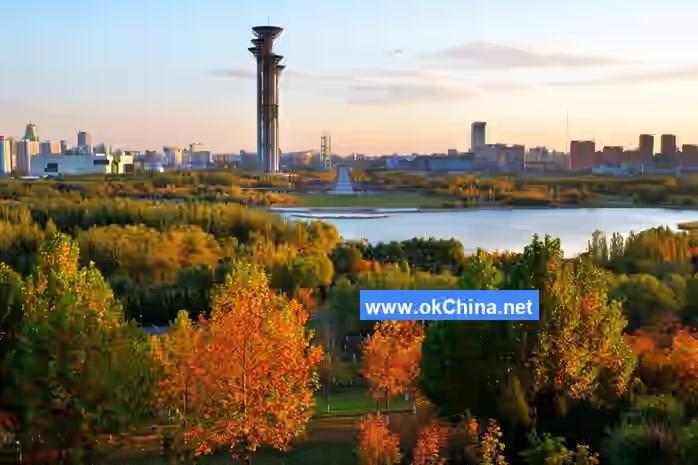
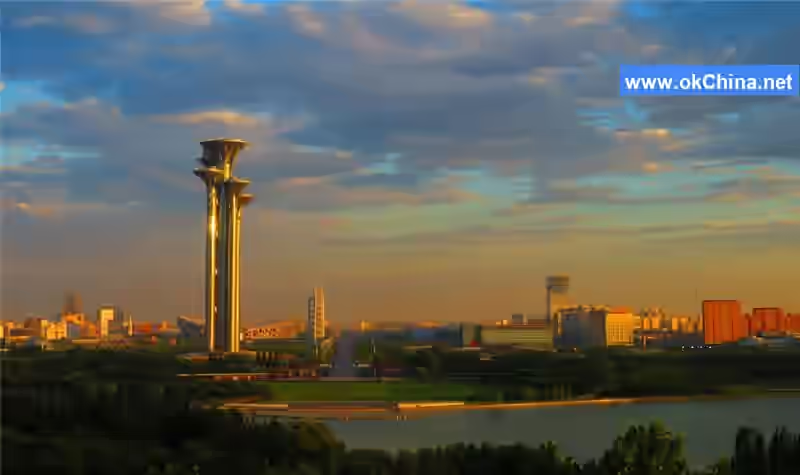
The Olympic Tower stands at the northern end of Beijing's central axis, located in the northeastern part of the Olympic Park's central area, by the shore of Ao Hai (Olympic Lake). It connects to the Central Axis Landscape Boulevard on the west, borders Kehui Road to the north, faces Kehui South Road to the south, and is adjacent to the dragon-shaped water system along Hubin West Road to the east, making it a new landmark in Beijing. The tower structure consists of five independent towers ranging in height from 186 meters to 264.8 meters, with a total construction area of 18,687 square meters. This includes a crown area of 5,257 square meters and a base area of 13,430 square meters. It is the world's only tower complex composed of five independent towers.
4. Historical Background
4.1 A Century-Old Dream Realized: The Historical Echo of the Beijing Olympics
At 8 PM on August 8, 2008, brilliant fireworks lit up the sky above the Beijing National Stadium, the "Bird's Nest," marking the official opening of the 29th Summer Olympic Games. This was a moment the Chinese nation had awaited for a full century. From the "Three Questions on the Olympics" posed by Tianjin Youth magazine in 1908 to the successful hosting of the 2008 Beijing Olympics, China completed a historic leap from a sporting weakling to a sporting powerhouse over a hundred years. The Beijing Olympics was not merely a sporting event; it was a significant symbol of an ancient civilization's rejuvenation, a concentrated showcase of China's achievements from 30 years of reform and opening-up, and a crucial milestone on the Chinese nation's path toward great rejuvenation.
4.1.1 A Historical Choice: The Bid Journey for the Beijing Olympics
In 1993, Beijing made its first bid for the 2000 Olympic Games, narrowly losing to Sydney by just two votes. This defeat made the nation deeply realize that passion alone was insufficient; it required the support of comprehensive national strength. In 1998, Beijing once again proposed bidding for the 2008 Olympic Games. By then, Beijing had undergone earth-shaking changes. After two decades of reform and opening-up, China's economic power had significantly increased, urban construction was advancing rapidly, and its international status was continually rising. On July 13, 2001, at the 112th IOC Session in Moscow, then IOC President Juan Antonio Samaranch announced that Beijing had won the right to host the 2008 Olympic Games. The news sparked nationwide jubilation. This moment not only fulfilled China's century-old Olympic dream but also signified that China's developmental achievements had gained broad recognition from the international community. Following the successful bid, Beijing immediately plunged into intense preparations. From venue construction to urban transformation, from environmental protection to volunteer services, every task demonstrated China's determination and capability. Landmark structures like the "Bird's Nest" and the "Water Cube" rose from the ground, showcasing not only China's architectural prowess but also its innovative spirit.
4.1.2 Dialogue of Civilizations: The Cultural Significance of the Beijing Olympics
The Beijing Olympics opening ceremony, themed around "Harmony," presented the profundity of Chinese civilization to the world through the modern expression of traditional Chinese cultural elements. From movable-type printing to the Silk Road, from Tai Chi performances to the dream of flying, each segment carried profound cultural connotations. Director Zhang Yimou and his team used modern technological means to interpret traditional Chinese culture vividly and thoroughly. During the Olympics, Beijing became a center for global cultural exchange. Athletes, coaches, journalists, and spectators from 204 countries and regions gathered in Beijing, experiencing the charm of Chinese culture firsthand. Faces of different skin colors were ubiquitous on Beijing's streets, with various languages interweaving to create a harmonious global tapestry. The Olympics facilitated a deep dialogue between Eastern and Western civilizations. Through the common language of sport, people from different cultural backgrounds enhanced mutual understanding and friendship. The concept of harmony from traditional Chinese culture perfectly merged with the Olympic spirit, providing a new paradigm for global civilizational exchange.#### 4.1.3 A Milestone in Development: The Far-Reaching Impact of the Beijing Olympics The successful hosting of the Beijing Olympics significantly enhanced China's international image. Through the Games, the world witnessed an open, confident, and vibrant China. The outstanding performance of Chinese athletes showcased the flourishing development of sports in China. The warm hospitality of the Chinese people reflected their spirit and character. The Olympics propelled comprehensive social progress in China. Improvements in urban infrastructure, increased awareness of environmental protection, and the cultivation of a spirit of volunteerism—these Olympic legacies continue to have an impact today. The Olympics also accelerated the rapid development of China's sports industry and promoted the popularization of nationwide fitness activities. The spiritual legacy left by the Beijing Olympics is even more valuable. It strengthened national confidence and cohesion, inspiring patriotic fervor among the people. The Olympic spirit and the spirit of reform and opening up resonated with each other, injecting new momentum into China's development. Fifteen years have passed since the Beijing Olympics, yet its influence remains profound. This grand event not only realized the century-old dream of the Chinese nation but also opened a new chapter in China's development. Looking back at 2008 from a new historical starting point, we have come to a deeper understanding: the Beijing Olympics served as a vital window for China to engage with the world and for the world to understand China, marking a significant milestone in the great rejuvenation of the Chinese nation. The Olympic spirit continues to inspire us as we strive forward on the path to realizing the Chinese Dream.
Comments
Post a Comment