Bayingolin Mongol Autonomous Prefecture Bayinbuluke Scenic Area
I. Introduction
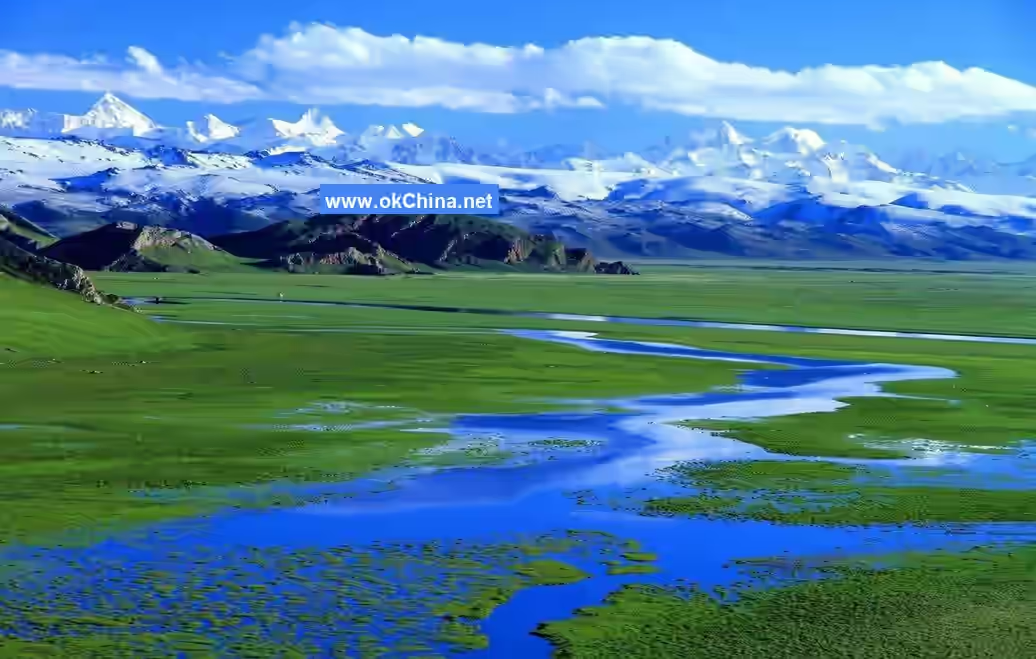
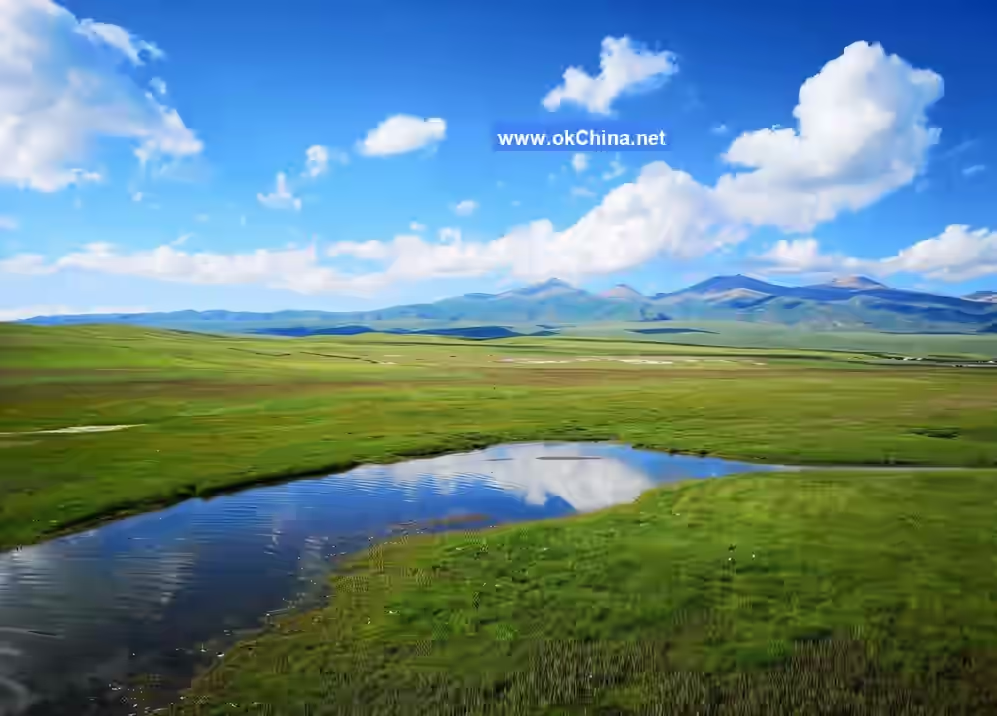
Bayingolin Mongol Autonomous Prefecture Bayinbuluke Scenic Area, abbreviated as Bayinbuluke Scenic Area, is a tourist attraction located within Hejing County, Bayingolin Mongol Autonomous Prefecture, Xinjiang Uygur Autonomous Region, with a total area of approximately 1,259.47 square kilometers. Bayinbuluke Scenic Area is a natural landscape tourism zone developed against the backdrop of the high-altitude large intermountain basin of the Tianshan Mountains, featuring alpine meadow grasslands and alpine swamp wetland ecosystems, with the upper reaches of the Kaidu River's meandering channels and swamp wetlands as its core. It is home to the largest subalpine alpine meadow grassland in China. The Bayinbuluke Grassland Scenic Area boasts ecological landscapes such as snow-capped mountains, canyons, basins, grasslands, river meanders, and wetlands, as well as cultural characteristics including Mongolian customs, the Eastward Return culture, and grassland culture. Its main attractions include the Torgut Folk Culture Village, Swan Lake, Nine Bends and Eighteen Turns, Love of the Grassland, and Barun Kure.
II. Orientation and Layout
Location and Territory
Bayingolin Mongol Autonomous Prefecture Bayinbuluke Scenic Area is located in the northwestern part of Hejing County, Bayingolin Mongol Autonomous Prefecture, Xinjiang, situated deep within the southern foothills of the central Tianshan Mountains. Its central geographic coordinates are 42°47′53″ N latitude and 84°09′50″ E longitude. The total area is approximately 1,259.47 square kilometers.
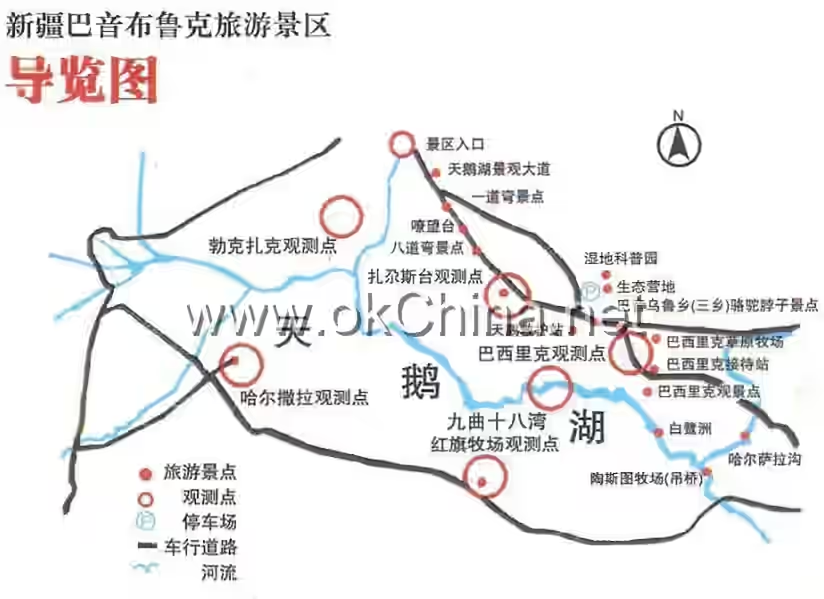
Bayingolin Mongol Autonomous Prefecture Bayinbuluke Scenic Area consists of three parts: the Swan Lake attraction (core landscape area), the tourist area, and the Bayinbuluke town area. The main attractions include Love of the Grassland, Swan Homeland, Zhakesitai Bird Watching Platform, Barun Kure, Baxilik Viewing Platform, the Sacred Grassland Mountain Tagleng Mountain, and Hushen Kure. It is an ecological tourism area integrating hills, basins, grasslands, and wetlands.
Topography and Geomorphology
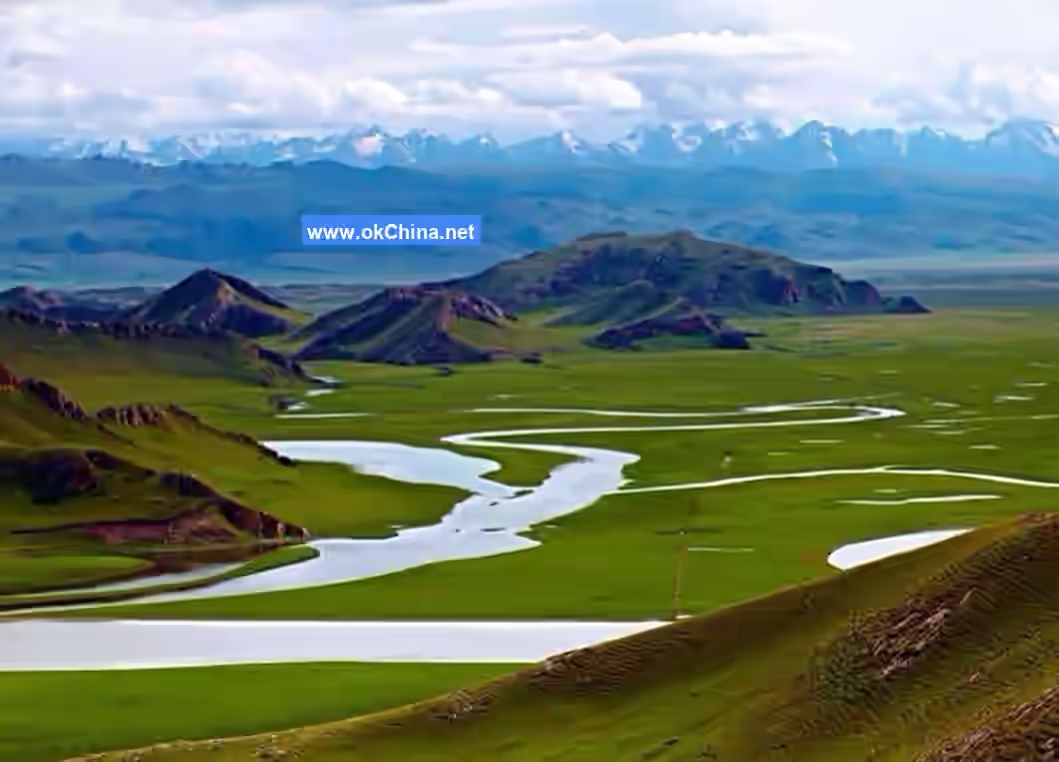
Bayingolin Mongol Autonomous Prefecture Bayinbuluke Scenic Area is situated in the Yulduz Basin of the central Tianshan Mountains, surrounded by mountains on all sides, with generally gentle terrain that is slightly higher in the west. The Yulduz Basin is a typical high-altitude intermountain fault basin. The interior of the basin features gentle terrain, while along the basin's edge, the foothills consist of inclined plains formed by alluvial fans and proluvial fans. The basin's edges contain hilly land composed of large amounts of glacial deposits, below which lie proluvial fan belts beneath Quaternary glacial terraces.
Climate and Hydrology
Climate
Bayingolin Mongol Autonomous Prefecture Bayinbuluke Scenic Area has a temperate continental arid climate, characterized by cool, short summers and cold, long winters, with an extremely short frost-free period.
Hydrology
The water supply in Bayingolin Mongol Autonomous Prefecture Bayinbuluke Scenic Area primarily comes from a mixture of snowmelt and rainfall, supplemented by groundwater in some areas, forming extensive swamp grasslands and lakes. The Bayinbuluke Grassland has a total of 13 springs of various sizes, 7 lakes, and 20 rivers.
The Kaidu River is a major river in the Bayingolin Mongol Autonomous Prefecture Bayinbuluke Scenic Area. It is approximately 610 kilometers long, with a basin area of 22,000 square kilometers, a total drop of 1,750 meters, and an average annual runoff of 3.362 billion cubic meters.
Biodiversity
Vegetation
In China's vegetation zoning, Bayingolin Mongol Autonomous Prefecture Bayinbuluke Scenic Area belongs to the Xinjiang Desert Region, the Eastern Xinjiang–Southern Xinjiang Desert Subregion, the Southern Slope of Tianshan Mountain Grassland Province, and the Yulduz Basin District. The plant species in this region are relatively poor in number but relatively rich in diversity. The Bayinbuluke Scenic Area has a total of 704 species of wild vascular plants, belonging to 254 genera and 62 families. Among them, three rare and endangered species and endemic species are listed in the Convention on International Trade in Endangered Species of Wild Fauna and Flora (CITES): Coeloglossum viride, Dactylorhiza majalis, and Dactylorhiza umbrosa. Additionally, there are 19 plant species endemic to Xinjiang, including Asplenium renchangianum, Delphinium tianshanicum, Ligularia narynensis, and Poa multiflora. Angiosperms comprise 681 species in 245 genera and 54 families, accounting for 96.74% of the total vascular plant species in the scenic area.
Fauna
Due to minimal human impact, Bayingolin Mongol Autonomous Prefecture Bayinbuluke Scenic Area preserves various rare species from around the world, including 128 bird species in 23 families; 24 mammal species in 12 families; 4 reptile species in 2 families, 2 amphibian species in 2 families, 5 fish species in 2 families, and various invertebrates. The landscapes are largely in their primitive state, possessing a monopolistic and irreplaceable character.
Bayingolin Mongol Autonomous Prefecture Bayinbuluke Scenic Area is home to 145 species of vertebrates. Among them, 8 species are under National Category I protection, such as the snow leopard, black stork, golden eagle, and eastern imperial eagle; 25 species are under Category II protection, such as swans, argali, and snowcocks. The scenic area is rich in bird resources, hosting hundreds of thousands of various birds including common cranes, little egrets, golden eagles, bar-headed geese, greylag geese, whooper swans, tundra swans, and mute swans.
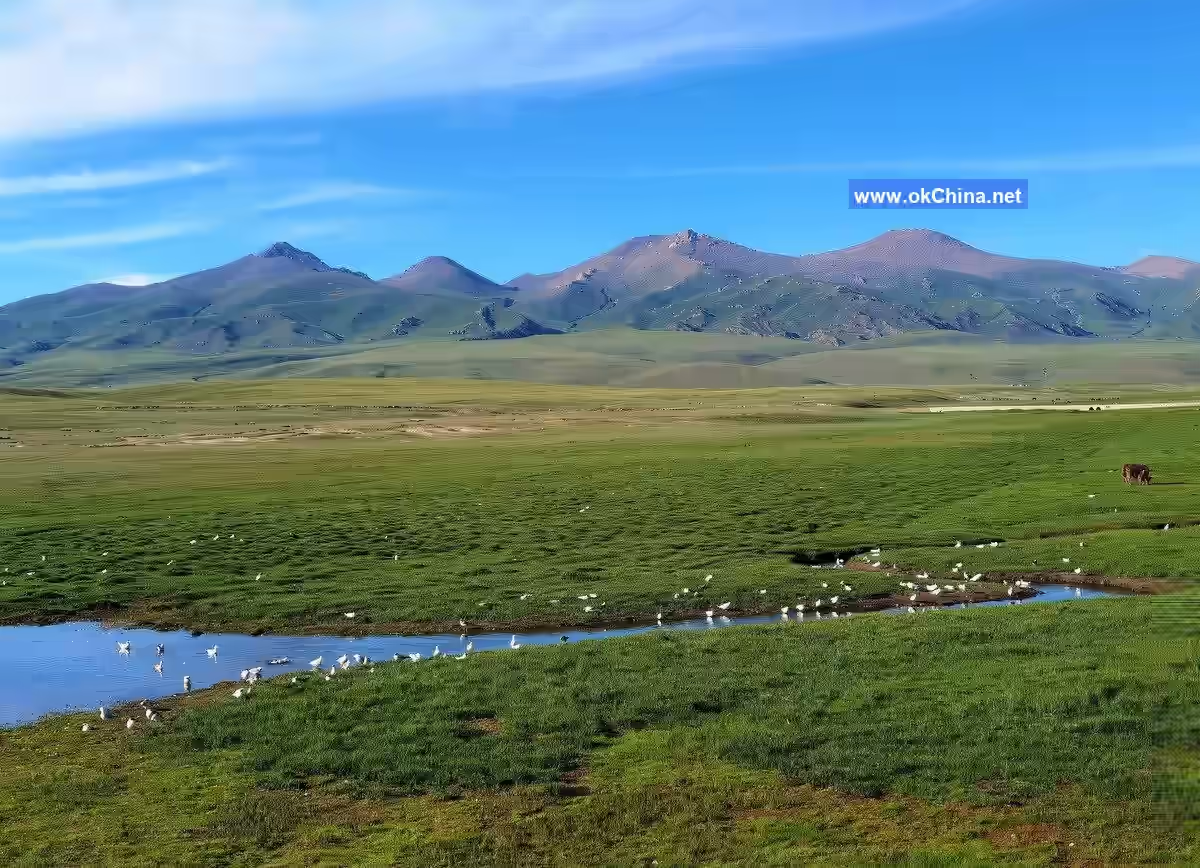
Due to minimal human impact, the vast grasslands of Bayingolin Mongol Autonomous Prefecture Bayinbuluke Scenic Area preserve various rare species from around the world, making it an ideal breeding and habitat for wildlife such as swans. Bayinbuluke Grassland is China's largest swan reserve. The swamp wetlands are home to nearly 7,000 wild swans, representing the southern limit of global wild swan breeding and preserving the world's largest wild swan breeding population. The whooper swan is listed in the IUCN Red List of Threatened Species (2010) and is a key protected wildlife species under the Wildlife Protection Law of the People's Republic of China.
III. Key Scenic Areas
Key Attractions
Swan Homeland
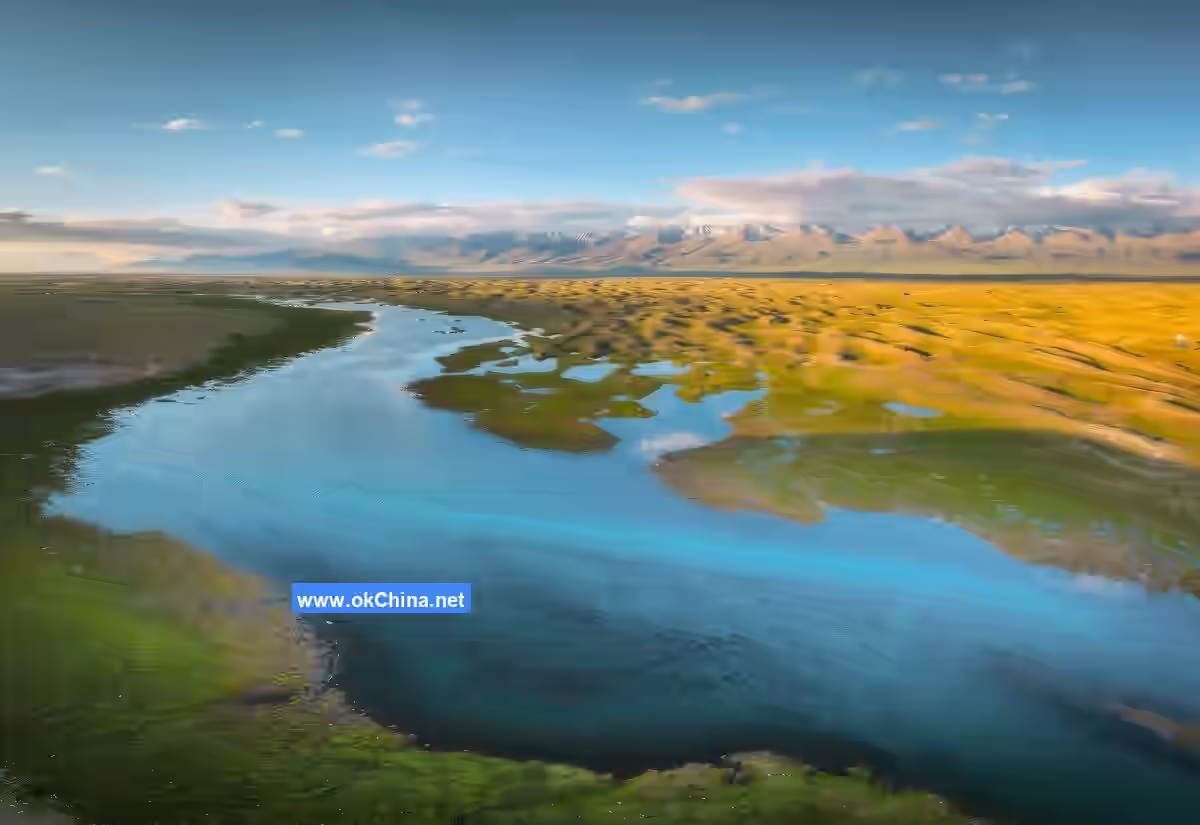
Swan Homeland is not only home to noble and elegant swans but also large flocks of black-headed gulls. In autumn, one can often witness the lively spectacle of hundreds of birds taking flight together. When you step into Swan Homeland, the first thing that catches your eye is the tranquil and expansive water body. The lake water is as clear as a mirror, shimmering with sparkling ripples under the sunlight. The surrounding aquatic plants are lush and sway gracefully in the wind, as if dancing for the swans. The swans glide elegantly on the water's surface, their pure white feathers contrasting beautifully with the azure sky and emerald lake, creating a picturesque scene. Some swans curve their necks and sing towards the sky, their clear calls echoing across the open grassland, as if narrating ancient tales. They sometimes stretch their necks and spread their wings, gliding lightly on the water, creating small ripples; other times, they dip their heads into the water to forage, their agile movements exuding grace and leisure.
Here, you can find not only whooper swans but also other species like greylag geese, living together in harmony. For the convenience of visitors to observe them up close, the scenic area has specially built bird-watching boardwalks and viewing platforms. Visitors can walk slowly along the boardwalk, treading lightly so as not to disturb these beautiful creatures. Standing on the viewing platform, using binoculars to observe the swans' every move—how they preen their feathers, how they play and interact with their companions—one can feel the details of their lives. The grassland scenery around Swan Homeland is equally enchanting. The distant mountains roll continuously, like a natural barrier surrounding this water body. At dawn and dusk, golden sunlight bathes the lake surface and the swans, rendering the entire scene dreamlike, as if one has stepped into a fairy tale world. This is a paradise for photography enthusiasts, where every moment is worth capturing, and every photo can become an eternal memory. Whether adults or children, everyone who visits Swan Homeland is touched by this purity and beauty, their souls thoroughly cleansed, deeply immersed in the wonderful realm of harmonious coexistence between humans and animals, reluctant to leave for a long time.
Baxilik Viewing Platform
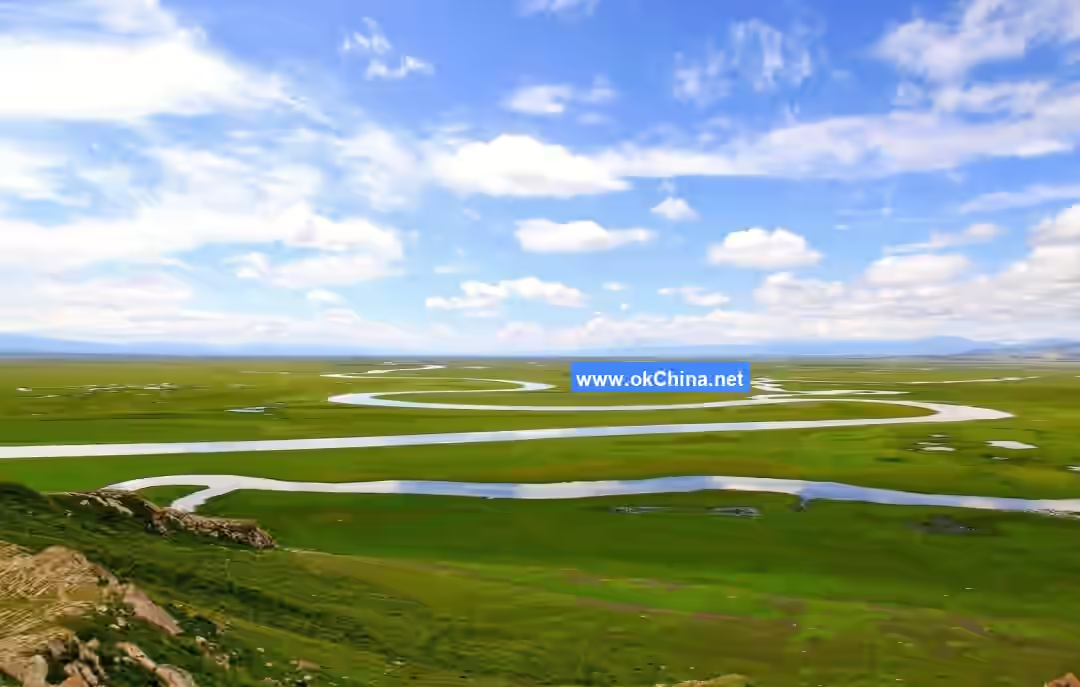
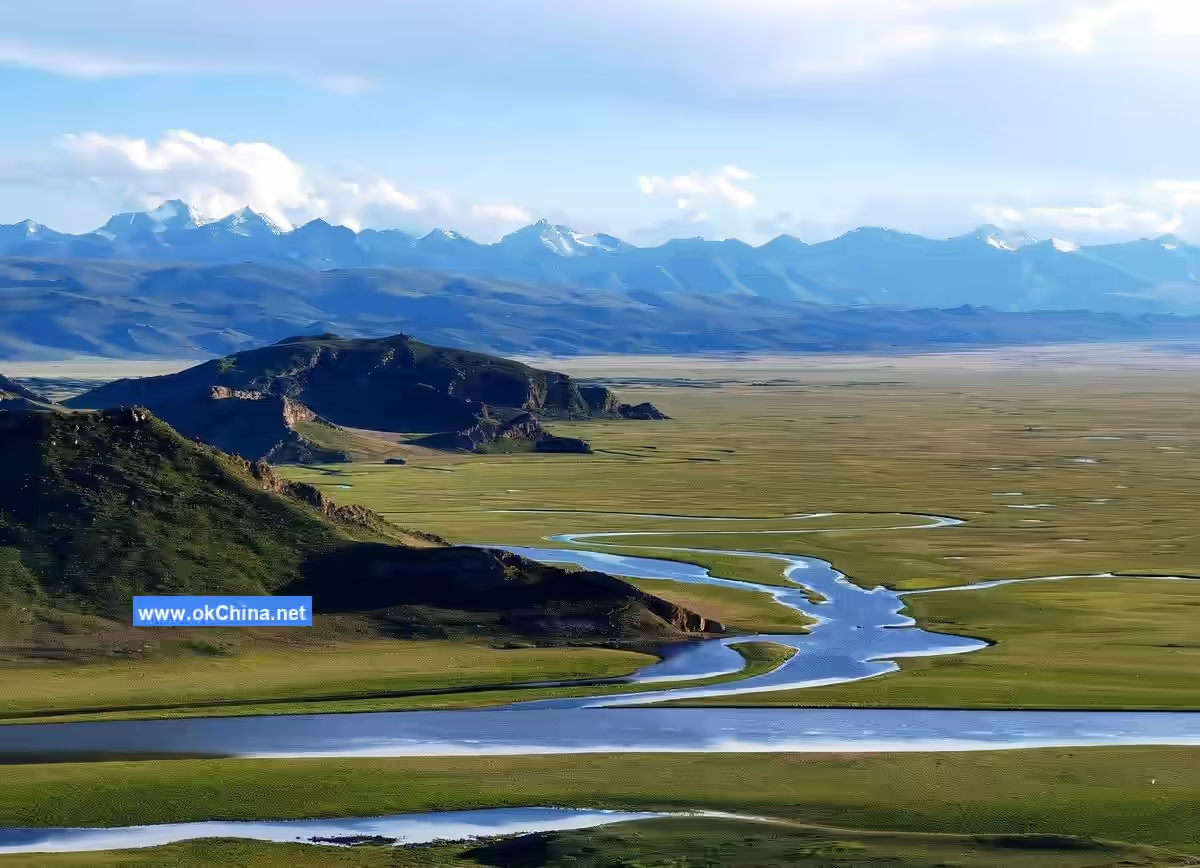
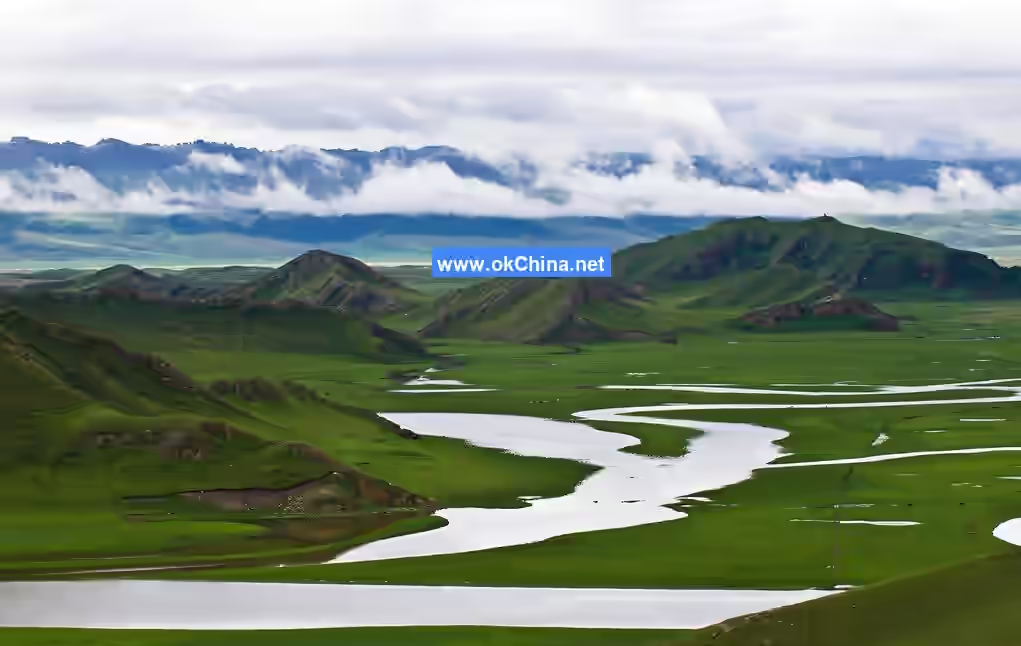
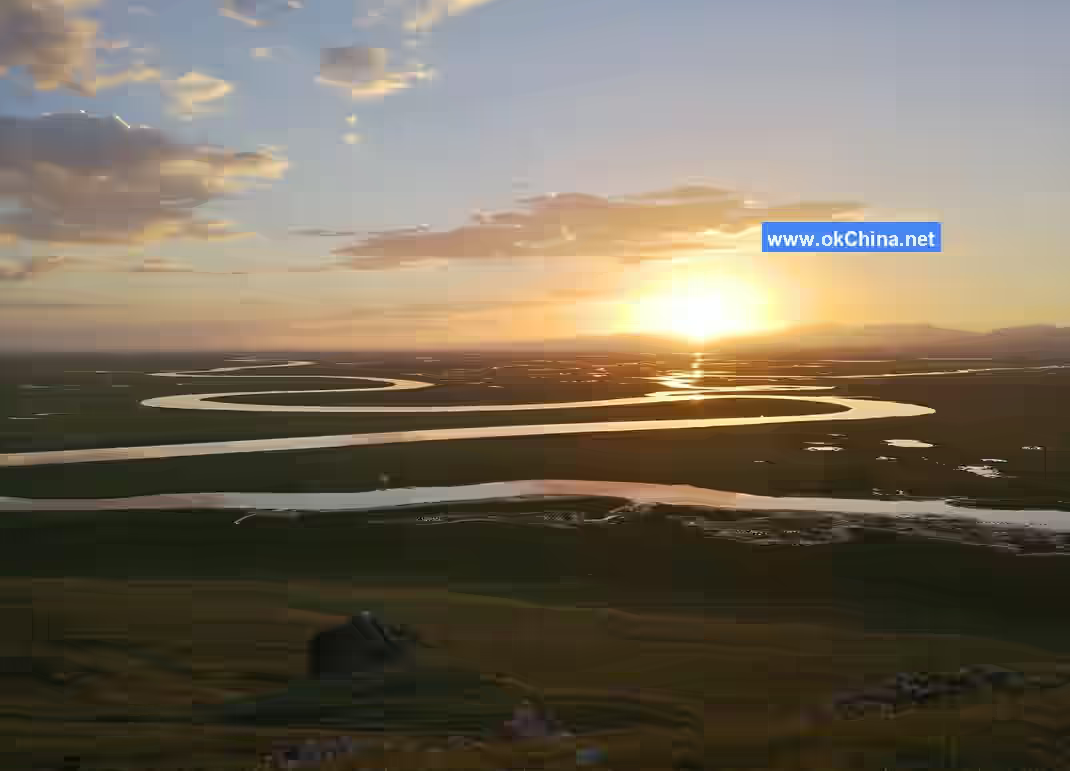
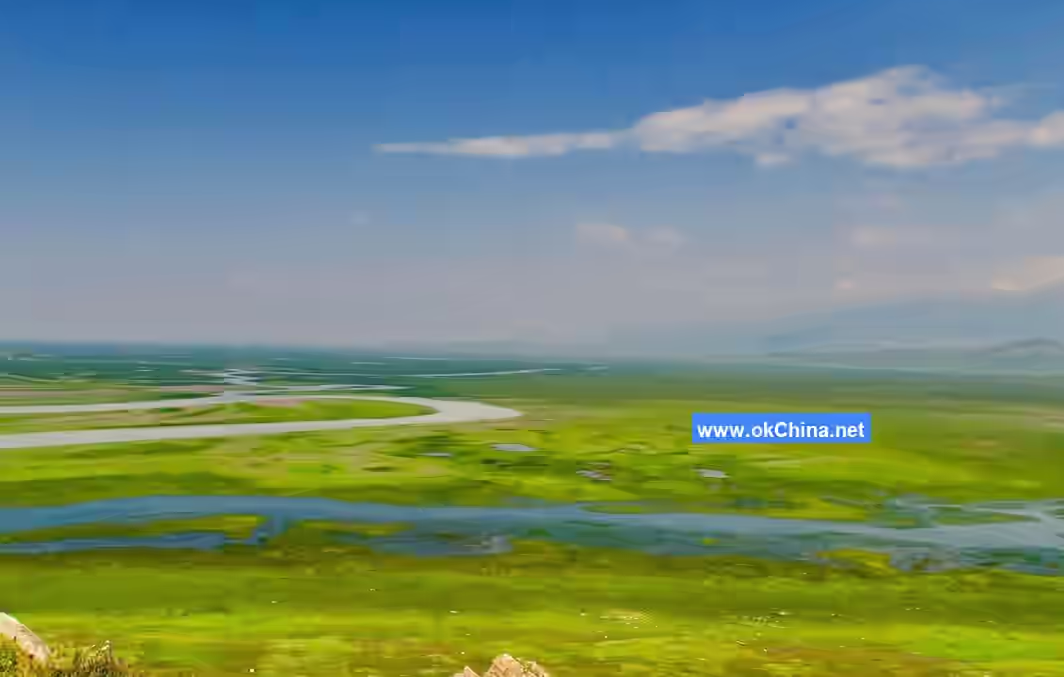
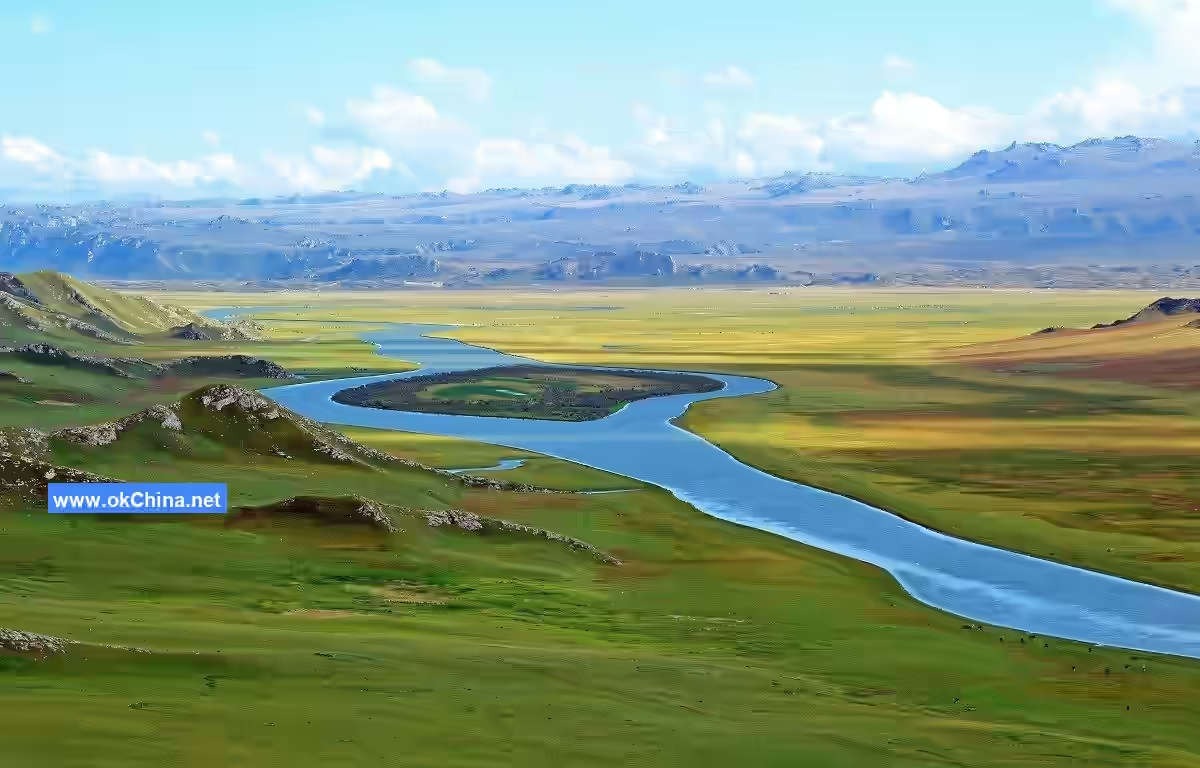
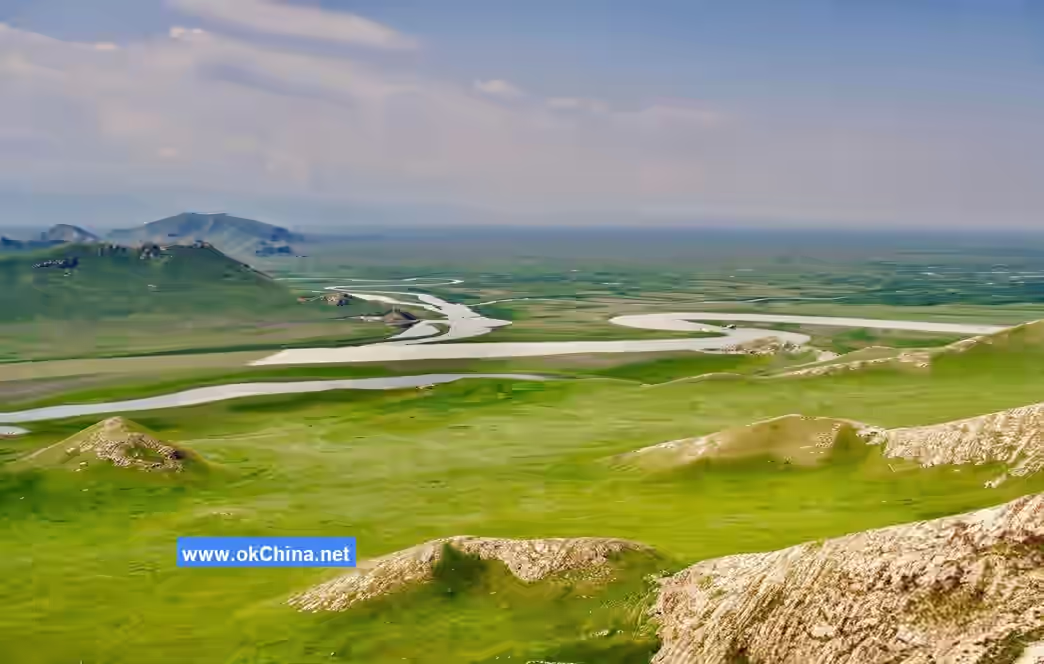
Standing on the Baxilik Viewing Platform, a vast and boundless grassland panorama unfolds before your eyes. Beneath your feet lies the expansive Bayinbuluke Grassland, its verdant greenery like a giant velvet carpet stretching to the horizon, meeting the sapphire-blue sky. On the grassland, herds of cattle and sheep roam leisurely like scattered pearls, grazing and wandering, their figures blending into the grassland to form a vibrant and lively pastoral scene. In the distance, the winding Kaidu River flows freely across the grassland like a silver ribbon. The river water sparkles with enchanting light under the sun, and its bends resemble the earth's fingerprints, recording the traces of time. The famous "Nine Bends and Eighteen Turns" landscape is particularly breathtaking. At sunset, golden twilight bathes the river surface, turning the entire Kaidu River into a golden hue. The meandering river channels divide the twilight into countless segments, shimmering and dreamlike, like a golden dragon coiled upon the grassland—a spectacular sight that makes one marvel at nature's craftsmanship. At this moment, visitors on the viewing platform are awestruck by this magical beauty, eagerly raising their cameras to capture this moment for eternity. Besides the grassland and river, the surrounding mountains also form a magnificent scenic line. The continuous peaks loom faintly amidst clouds and mist, like giants guarding this grassland. The vegetation on the mountains changes color with the seasons—tender green in spring, emerald green in summer, golden yellow in autumn, and silvery white in winter—each season possessing its unique charm. At the Baxilik Viewing Platform, you can feel the grandeur and magnificence of Bayinbuluke and appreciate the majestic power of nature. Whether greeting the first rays of sunlight at dawn or bidding farewell to the setting sun at dusk, every moment here is filled with poetry and romance, making one linger and沉醉 in this magical grassland scenery.
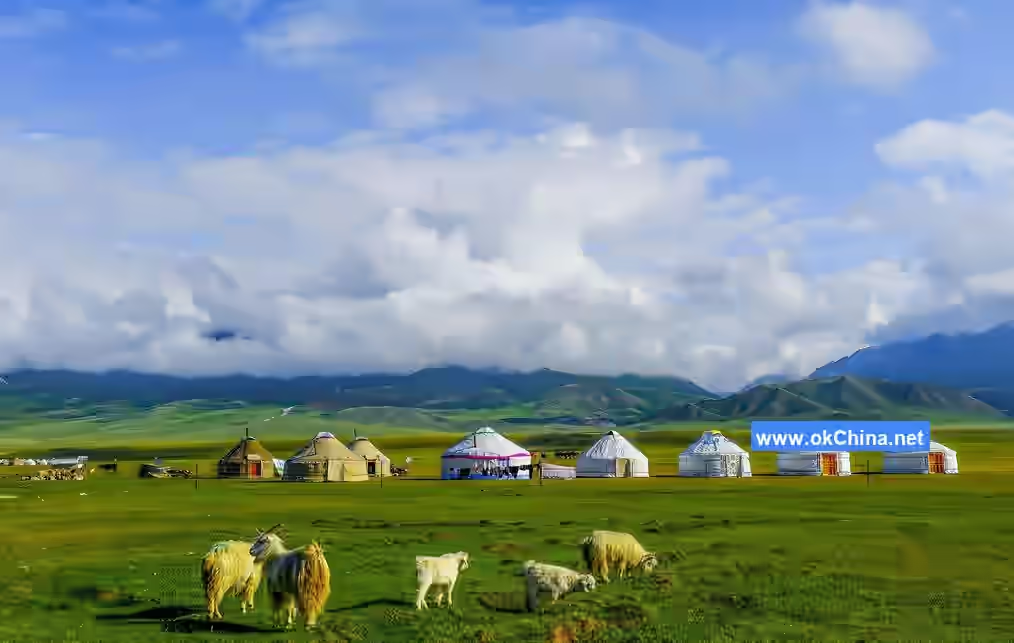
Torgut Folk Culture VillageThe Torgut Folk Culture Village is a large architectural complex rich in Mongolian cultural elements, constructed based on the local Torgut dwellings and various aspects of daily life. Its architectural style is primarily based on circular yurt clusters, showcasing Torgut folk culture, Mongolian grassland tribal customs, and the epic of the Eastern Return. Staying in the folk village allows visitors to participate in Torgut Mongolian sacrificial ceremonies, bride-capturing rituals, and bonfire party interactions, as well as watch the "Three Skills of the Grassland" (horse riding, wrestling, and archery).
Swan Lake
The Swan Lake scenic area, located in the heart of the Bayanbulak Grassland, is Asia's largest and China's only swan nature reserve. It is home to China's largest population of wild swans, with an average altitude of 2,400 meters and a total area of approximately 1,100 square kilometers, consisting of countless winding lakes of various sizes. The wetland natural conditions of the Bayanbulak Grassland are exceptionally favorable, making it an ideal paradise for swans and various other waterfowl to breed and inhabit. Every spring, tens of thousands of rare birds, primarily whooper swans, tundra swans, and mute swans from India, Myanmar, Pakistan, and even as far as the Black Sea, Red Sea, and Mediterranean coastal countries, flock to the Bayanbulak Grassland to rest and breed. When winter arrives, they fly over the Himalayas and head south.
Barun Khuree
Barun Khuree is one of the seven mobile temples carried by the Torgut during their Eastern Return and is the only surviving "mobile temple" to date. The concept of a mobile temple originates from the nomadic lifestyle of grassland peoples—pastures may shift, but faith must remain steadfast. Whether on a horse-drawn cart or inside a yurt, the layout and form of the grassland people's faith lie in the firmness of their hearts. In the new century, as herders' lives have improved, the "mobile temple" has been permanently settled.
Nine Bends and Eighteen Turns
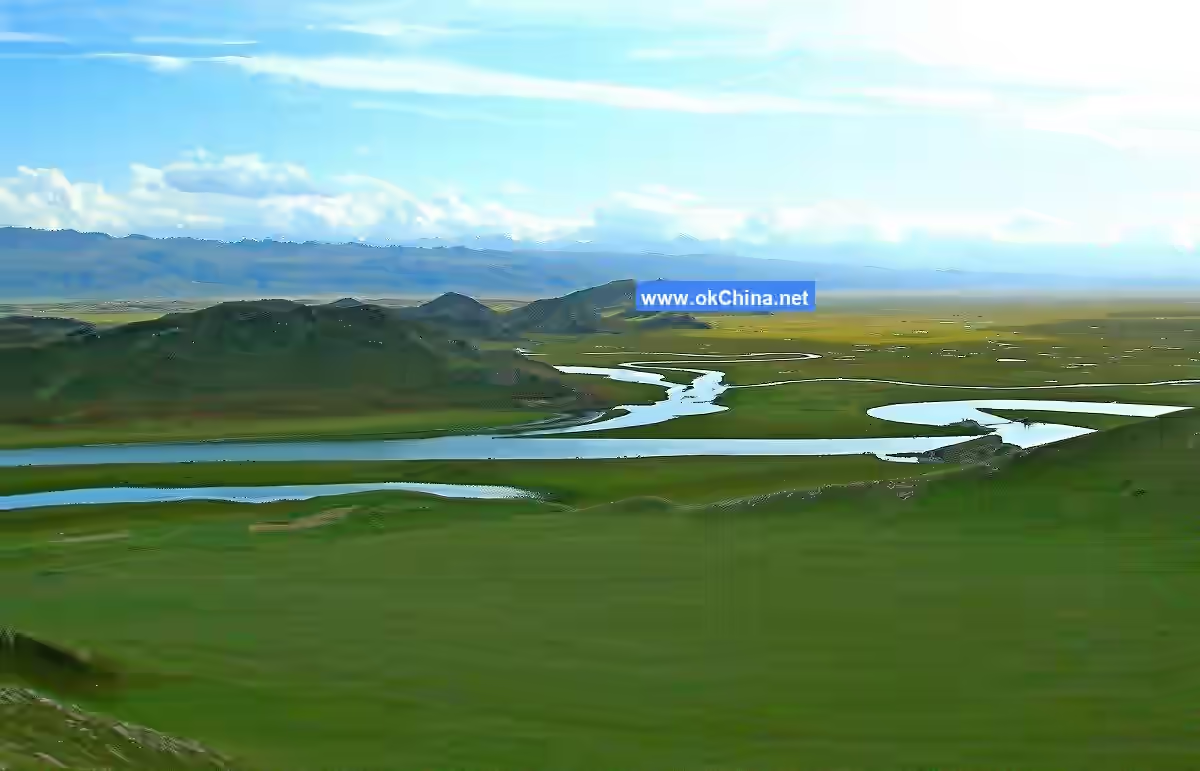
The Bayanbulak scenic area in the Bayingolin Mongol Autonomous Prefecture features 13 springs of various sizes, 7 lakes, and 20 rivers. The Kaidu River, meandering across the grassland, is famously known as the "Nine Bends and Eighteen Turns." In Journey to the West, one of China's Four Great Classical Novels, the Kaidu River is also popularly referred to as the "Tongtian River." Legend has it that the "Scripture-Drying Island," where Tang Sanzang dried his scriptures, is located within Hejing County, adding an air of mystery. The nationally renowned Bayanbulak Swan Lake Nature Reserve is situated in the high mountain basin upstream of this river, while its terminus is Bosten Lake, China's largest inland freshwater lake. The Kaidu River, over 40 meters wide, winds and twists across the vast, flat grassland.
Kuikesu Stone Forest
Named for its location beneath the Kuikesu Daban Pass on the northern slopes of the Narat Mountains in the western Tianshan Mountain range, the stone forest area stands at an altitude of 3,500 meters, stretching 9 kilometers long and 5 kilometers wide, with a relative height of 30 meters. The stone forest resembles a forest but is not one; it is formed from semi-consolidated gravel layers sculpted over time by external forces, resulting in a myriad of bizarre and fantastical shapes. Within the stone forest, there are formations like the "European Castle," solemn and imposing; the "Unsheathed Sword," piercing the sky; and "pedestrians and beasts," either lying down or reclining.
Haoteng Sala Waterfall
Starting from the Bayanbulak Grassland in Xinjiang, riding through the Kuikesu Stone Forest and traveling another 30 to 40 kilometers, one arrives at the deep, mist-shrouded Haoteng Sala Gorge. In this gorge, which is no more than 10 kilometers long and less than half a kilometer wide, the Haoteng Sala Plateau Waterfall, known as the "Snow Mountain Silver Ribbon," cascades down from a cliff with a drop of about 30 meters into a deep pool, splashing silver spray, enveloping the area in mist, and roaring like thunder. The Haoteng Sala Waterfall is at an altitude of 3,200 meters, with a top width of 6-7 meters and a bottom width of 15 meters. The scenery around the waterfall changes with the seasons.
Seasonal Landscapes
Swan Watching
Every March, rare birds such as whooper swans, tundra swans, mute swans, gray cranes, and gulls gradually return from the south to the Bayanbulak Grassland to breed and thrive. Starting from mid to late September each year, the swans in the Bayanbulak Grassland Nature Reserve will migrate south in flocks, heading to southern Xinjiang regions like Korla, as well as Ruoergai in Sichuan and Sanmenxia in Henan, to spend the winter.
Natural Wildflower Sea
From July to September each year, during the rainy season in Bayanbulak, the grassland becomes lush and green after the rains, and wildflowers bloom in full glory. The flower sea on the grassland is vast, but it is not monotonous; each area has its own unique characteristics.
IV. Cultural Resources
Eastern Return Culture
The historical background of the Eastern Return culture lies in the Torgut people being forced to leave Tarbagatai in the early 17th century due to raids from neighboring tribes, migrating to the lower reaches of the Volga River for grazing. Under the brutal rule of Tsarist Russia, in the third year of the Shunzhi reign of the Qing Dynasty (1646 AD), Torgut leader Shukuer Daichin personally returned to Tibet to meet the Fifth Dalai Lama and, in 1655, sent envoys to present tribute to the Qing court. Throughout the subsequent reigns of Kangxi, Yongzheng, and Qianlong, the Torgut never ceased sending tribute missions, receiving care and proper resettlement from the Qing government. In the 26th year of the Qianlong reign of the Qing Dynasty (1761 AD), Ubashi, the great-grandson of Torgut Khan Ayuki, inherited the throne at the age of 19. At a critical moment for his people, he resolutely decided to lead his tribe back to their homeland, completely breaking free from Russian control, and began preparations for this. On January 16, 1771, Ubashi gathered his people and led 170,000 Torgut on the Eastern Return journey. They endured immense hardships along the way, and ultimately, only over 60,000 successfully returned to their homeland. After the Torgut tribe's return, the Qing government allocated them grazing lands, with the Youledusi Grassland in Hejing becoming the center of the returned tribe.
Activities
Nadam Fair
Visiting Bayanbulak from the fourth to the sixth day of the sixth lunar month allows participation in the annual grassland extravaganza, the "Nadam Fair," featuring traditional performances such as horse racing, wrestling, sheep racing, yak racing, ethnic costumes, and folk songs and dances. Additionally, visitors can purchase distinctive ethnic souvenirs at the material exchange fair.
Eastern Return Nadam Art Festival
The fourth day of the sixth lunar month is the traditional festival of the Mongolian Torgut people—the "Tagleng Festival." "Tagleng" refers to the "obo" (sacrificial mound) used by the Torgut Mongols for worship and blessings. The "Tagleng Festival" is thus the festival of obo worship. The Eastern Return Nadam Art Festival originates from the "Tagleng Festival" and opens with the ritual of "obo worship." On that day, on Tagleng Mountain, lamas dressed in kasayas and holding ritual instruments sit outside yurts early in the morning, chanting sutras and worshipping Buddha. Mongolian and Tibetan believers, dressed in splendid attire, walk around the largest obo on the grassland amid incense smoke, chanting sutras, hanging prayer flags, worshipping Buddha and deities, and blessing each other, praying for peace in the mountains and rivers and prosperity for both people and livestock. This is followed by various folk art displays, including horse racing, wrestling, archery, yak racing, camel racing, sheep fighting, goat snatching, and costume performances.
Comments
Post a Comment