Basum Tso
1. Introduction
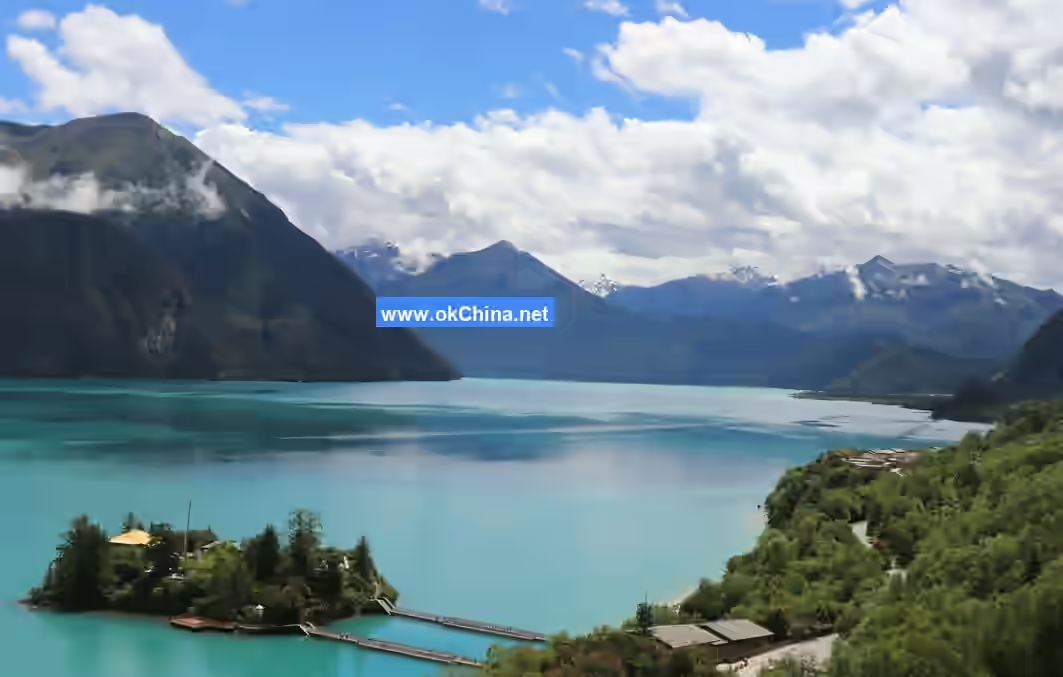
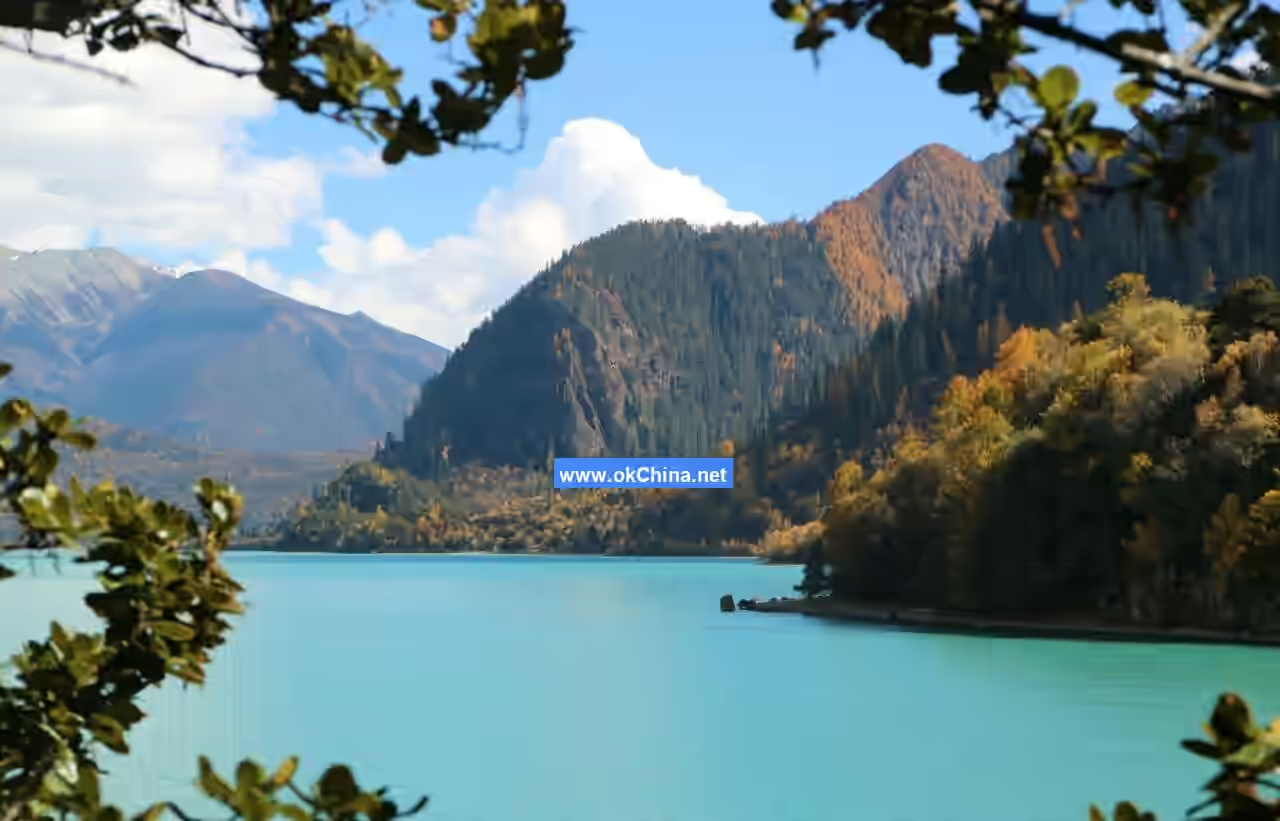
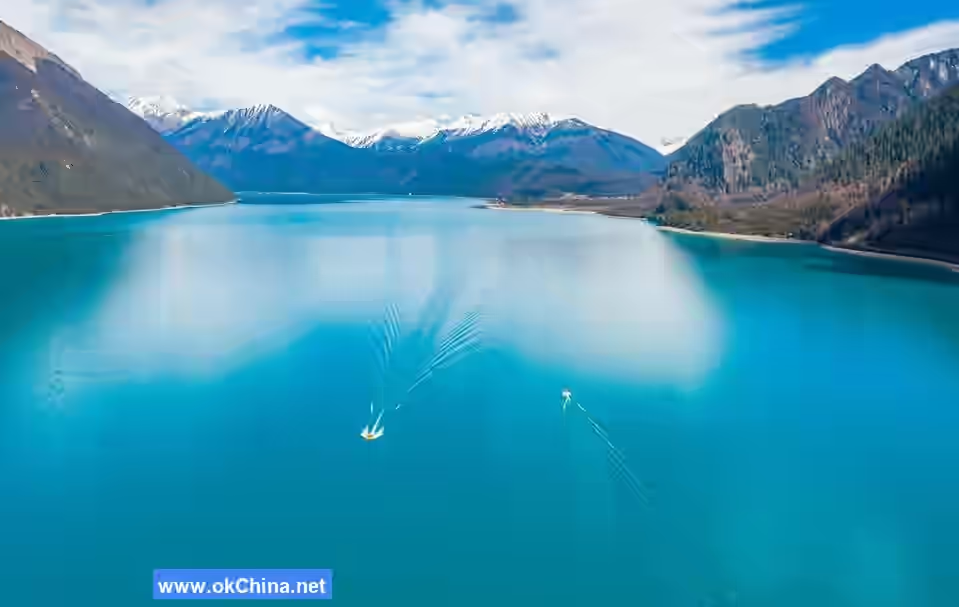
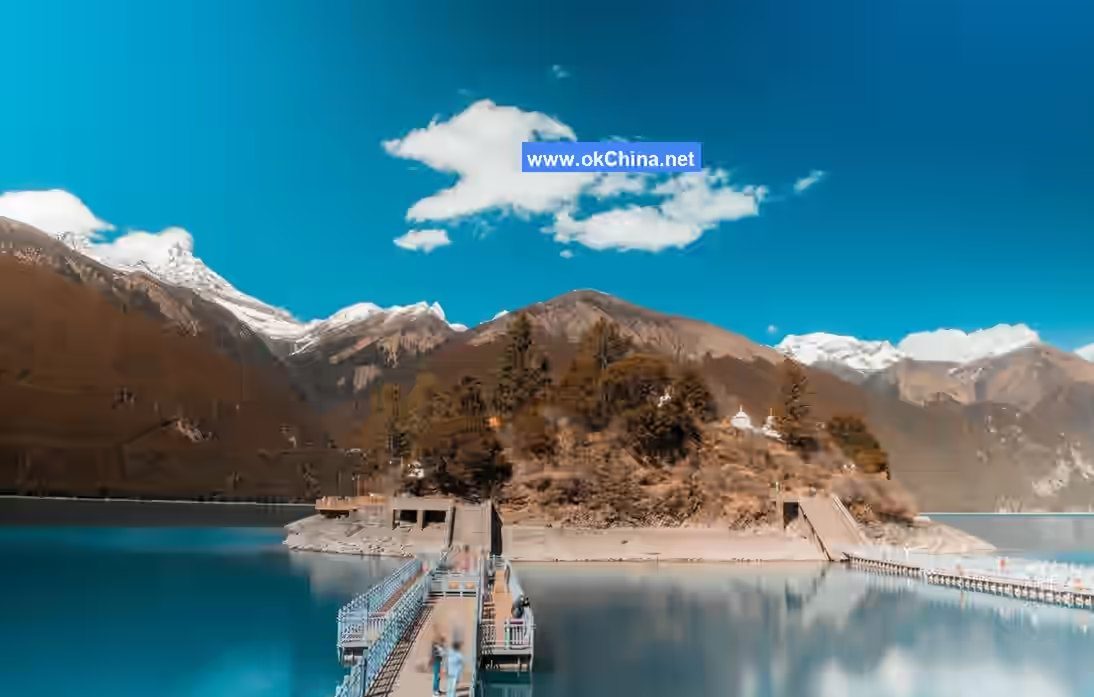
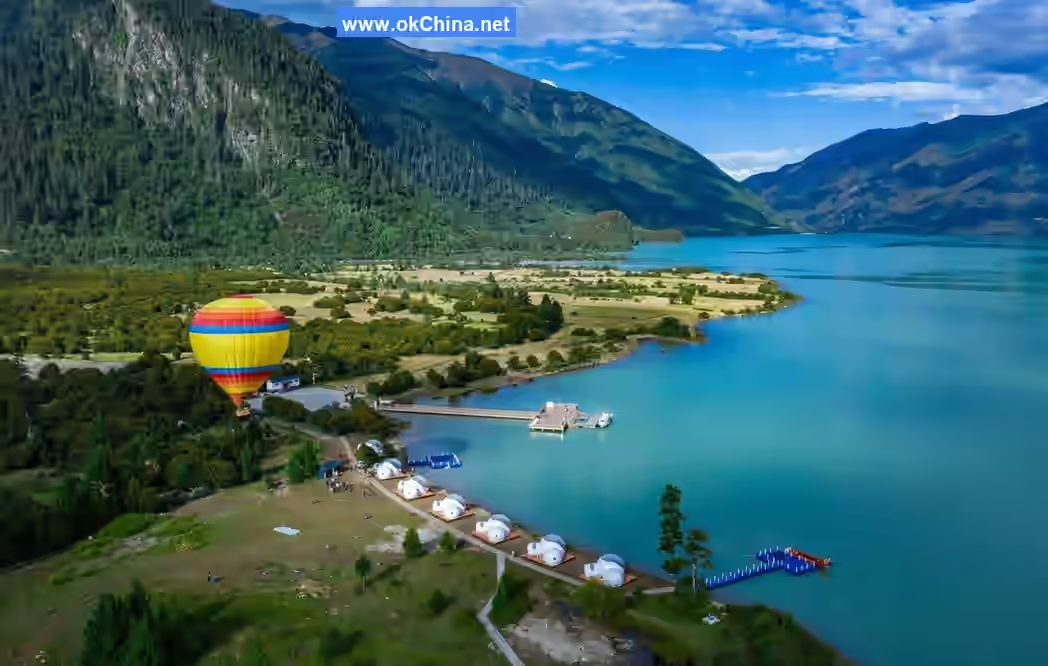
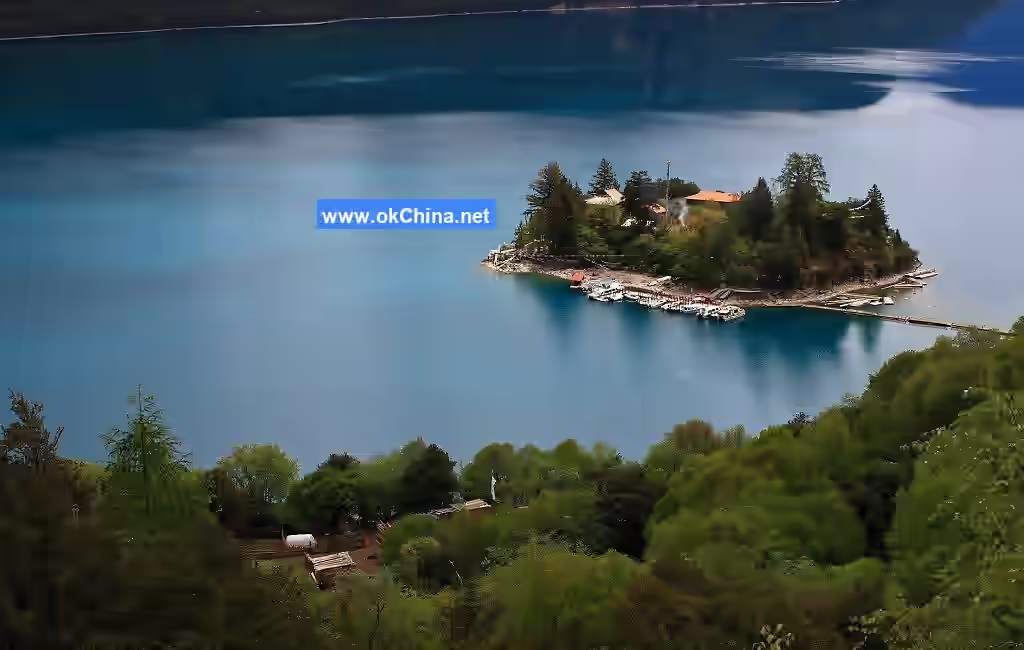
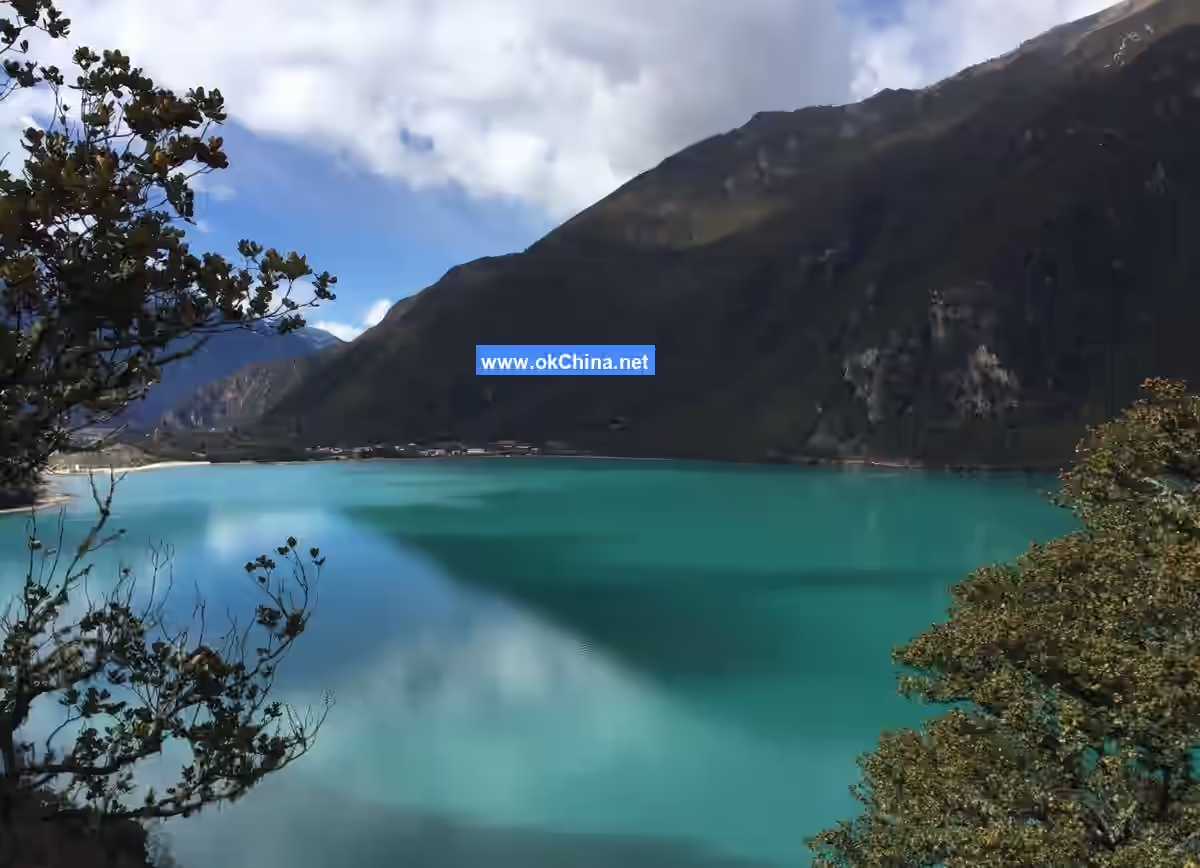
The Basum Tso Scenic Area is located in Gongbo'gyamda County, Nyingchi City, Tibet Autonomous Region, China, and is a famous natural scenic area in eastern Tibet. The core of the scenic area, Basum Tso, also known as Tso Go Lake, means "green water" in Tibetan. It is one of the largest glacial freshwater barrier lakes in eastern Tibet. The lake water does not freeze all year round, making it an open non-freezing lake. The water is clear and azure, surrounded by snow-capped mountains and forests, presenting a magnificent and tranquil landscape at an altitude of about 3,700 meters. It is a famous sacred lake of the Nyingma school (Red Sect) of Tibetan Buddhism. On the island in the center of the lake stands the Tso Dzong Gompa Monastery, which has a long history and is rich in religious and cultural atmosphere.
2. Geographical Features
2.1 Location and Area
Basum Tso is one of the largest glacial freshwater barrier lakes in eastern Tibet. It is situated in a deep gorge in the upper reaches of the Ba River in Gongbo'gyamda County, Nyingchi City, Tibet Autonomous Region, between latitudes 29°59' N to 30°04' N and longitudes 93°53'14" E to 94°01' E. Basum Tso is approximately 120 kilometers from Nyingchi City and about 350 kilometers from Lhasa. The lake is generally long and narrow in shape, divided into eastern and western basins, and the natural landscape of the lake area is relatively well-preserved. The surface area of Basum Tso is about 27 square kilometers, with an elevation of approximately 3,490 meters and a catchment area of 1,209.5 square kilometers.
2.2 Topography
Basum Tso lies in the transitional zone between the Southern Tibet Valley and the high mountain gorges of eastern Tibet. The area features towering peaks, crisscrossing ravines, and deeply incised high mountain valley landforms. The average altitude within the area is around 3,600 meters, with a relative height difference of over 1,200 to 2,000 meters, exhibiting characteristics of high mountain denudation topography.
2.3 Climate
Due to its special geographical location and terrain, influenced by warm currents from the Indian Ocean, the Basum Tso basin has formed a temperate semi-humid plateau monsoon climate, with an average annual rainfall of 646 mm. Compared to most other areas of the Tibetan Plateau, the mild and humid climate, abundant rainfall, continuous mountain ranges, high mountains, and terrain sloping from north to south together create a complex three-dimensional climate characteristic here.
2.4 Vegetation
The Basum Tso lake area is surrounded by snow-capped mountains with perennial snow, featuring dense forests and a wide variety of flora and fauna. Around the lake, vegetation zones range from low-heat valley shrubs to sparse cushion vegetation belts on cold, desolate high mountains. In between, there are successive vertical vegetation belts including evergreen broad-leaved forests, mixed coniferous and broad-leaved forests, spruce-fir forests, alpine willow and rhododendron shrubs, and alpine meadows. A horizontal zonation from southeast to northwest is evident, transitioning from evergreen broad-leaved forests to alpine pine forests, alpine oak forests, subalpine shrubs, and alpine meadows. The forest coverage rate is 80.0%.
2.5 Hydrological Characteristics
Due to the relatively low altitude of the region, the mild climate, and the perennial flow of rivers into the lake, Basum Tso's water does not freeze all year round, making it an open non-freezing lake. Influenced by the warm currents from the Indian Ocean, the area has a temperate semi-humid plateau monsoon climate, with relatively abundant rainfall and pleasant weather compared to other plateau regions. The regional annual precipitation is 600–700 mm, and the average annual temperature is around 6.0°C.
Over two hydrological years, the water temperature in Basum Tso during the warm season is significantly higher than during the cold season, with relatively small variations between the same seasons and similar trends of change. In the warm season, the average water temperature in the Basum Tso lake area, including the inflowing rivers, lake surface, lakeshore, and outlet, is 12.5°C, with a range of 6.6–16.0°C. In the cold season, the average water temperature is 7.0°C, ranging from 3.4–9.5°C. The average warm season water temperature is 44% higher than the average cold season water temperature. In the warm season, the water temperature of the inflowing rivers is lower than that of the lake surface, lakeshore, and outlet. In the cold season, the water temperature of the inflowing rivers is also lower than that of the lake surface, lakeshore, and outlet.
Overall, the pH of the water in the Basum Tso lake area ranges between 7.23 and 8.84, with an average of 8.23, indicating slightly alkaline water. Compared to water samples from the Nyang River, the pH of the Basum Tso lake water is slightly higher.
In the warm season, the pH of the water in the inflowing rivers, lake surface, and outlet of Basum Tso ranges from 7.74 to 8.84, with an average of 8.23. In the cold season, the pH ranges from 7.23 to 8.84, with an average of 8.24. In the warm season, the pH at the outlet is lower than that of the inflowing rivers, lake surface, and lakeshore. In the cold season, the pH at the outlet is lower than that of the inflowing rivers, lake surface, and lakeshore.
2.5.1 Main Water Sources
Basum Tso is replenished by precipitation in the lake area and glacial meltwater. Its main surface glacial meltwater sources are three rivers: the Zhongtsonongba Qu (Qu: Tibetan for river) flowing in from the northeast corner, and the Bailang Qu and Luojie Qu flowing in from the eastern end.
2.5.2 Outflow Channel
Basum Tso is the largest water source for the Ba River, an upstream tributary of the Nyang River, which is one of the five major first-level tributaries of the Yarlung Tsangpo River.
2.6 Formation and Evolution
Basum Tso developed in a U-shaped trough valley formed by the convergence of two ancient glaciers downstream of modern maritime glaciers. It was formed by the blockage of terminal moraines during the maximum glacial period of the Middle Pleistocene.
3. Main Attractions
3.1 Primitive Ecological Garden
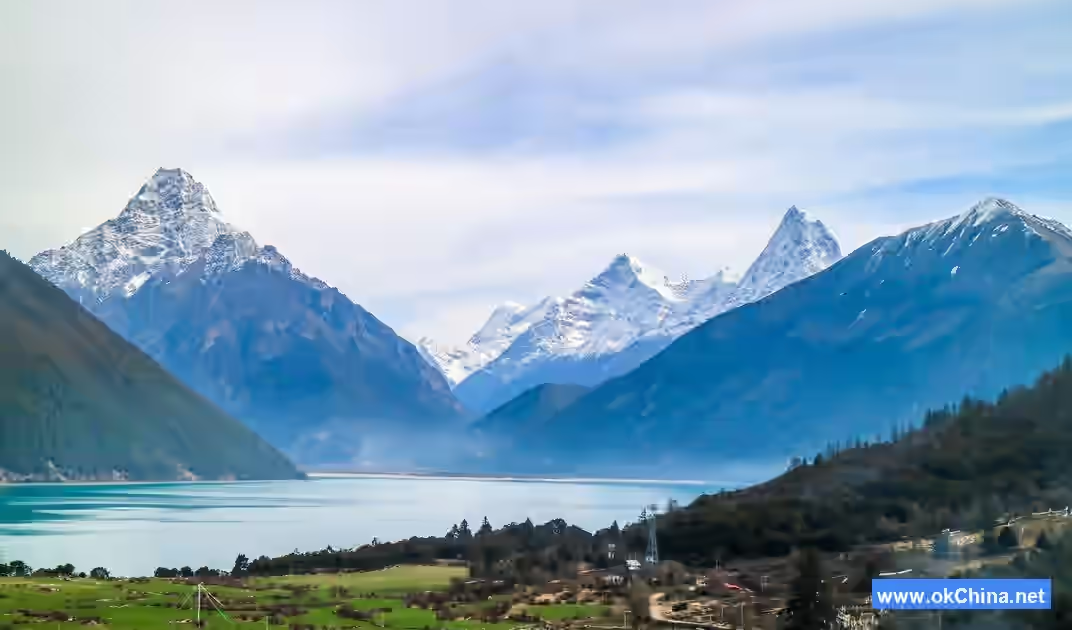
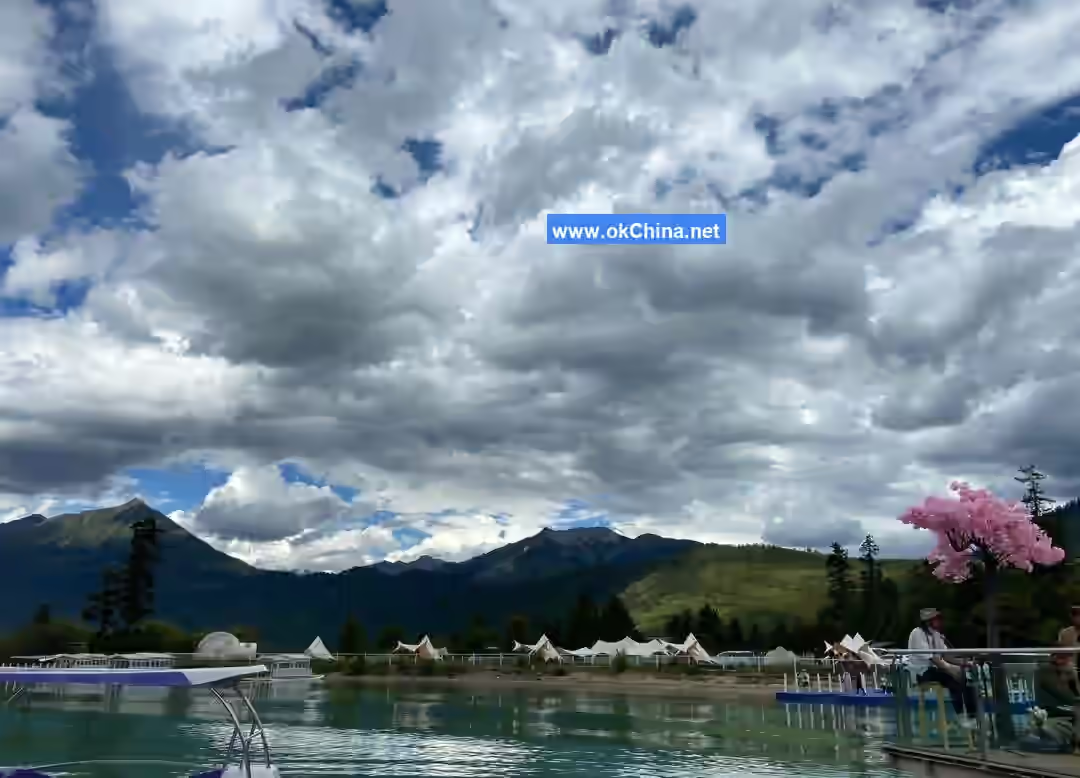
Unlike other sacred lakes in Tibet, Basum Tso (also known as Tso Go Lake, meaning "three rocks, three lakes" in Tibetan) is completely surrounded by lush primeval forests. True to its name, Basum Tso is green—a faint, jade-like, impurity-free green. The water is so clear that you can see schools of fish swimming two or three meters below. Green mountains surround the lake, their peaks capped with perennial snow. The snow-capped mountains by the lake and their reflections on the water's surface intertwine endlessly, creating a spectacular sight! What's most rare is that few people visit here even now, giving it a completely isolated feel.
3.2 Tashi Island
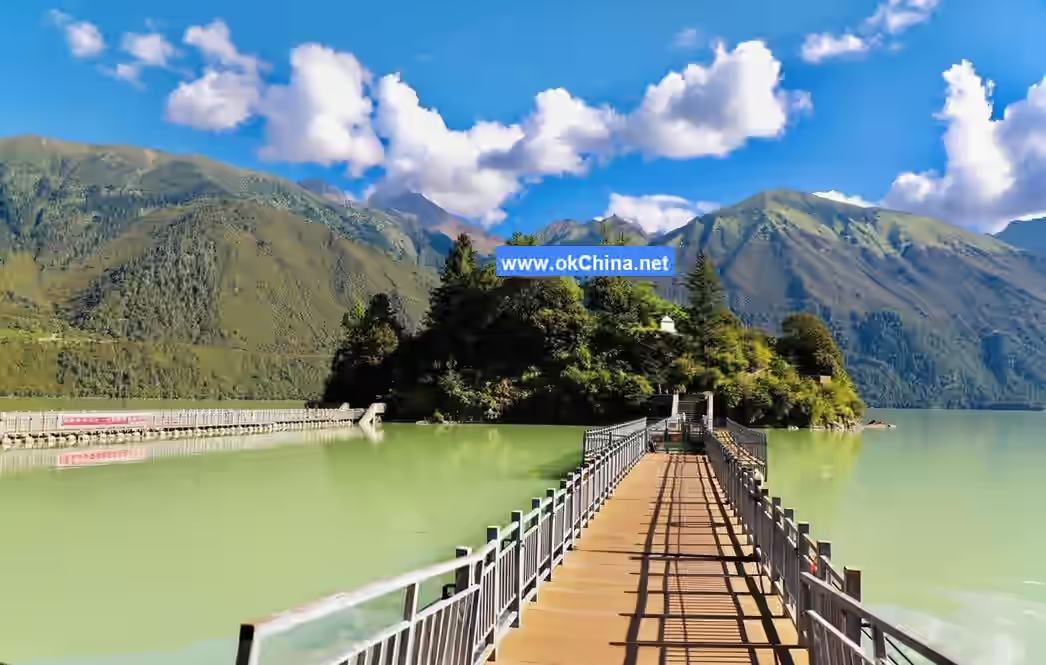
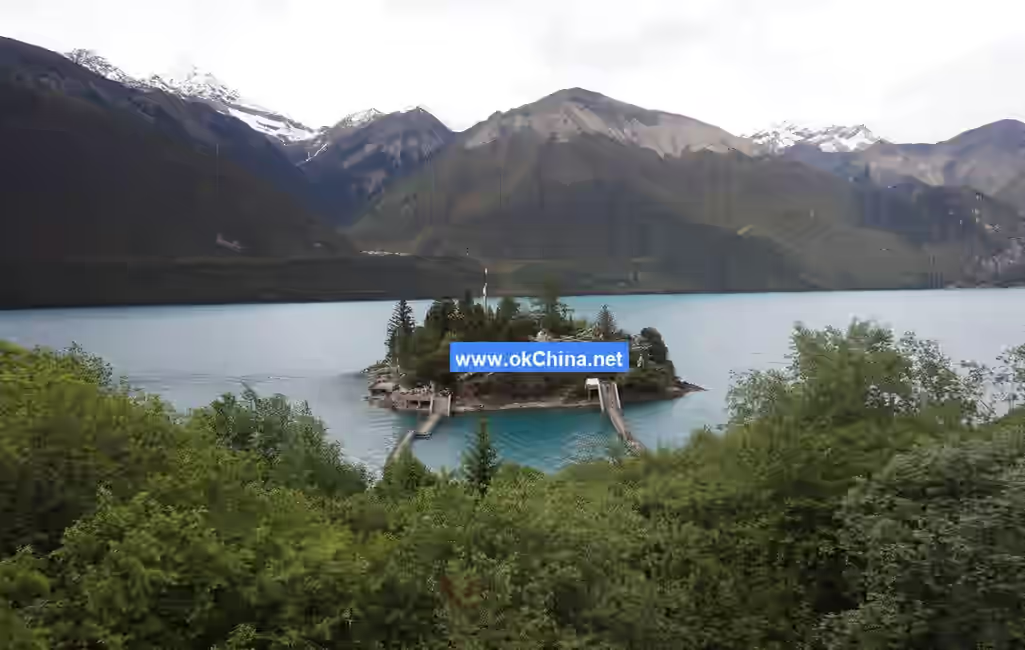
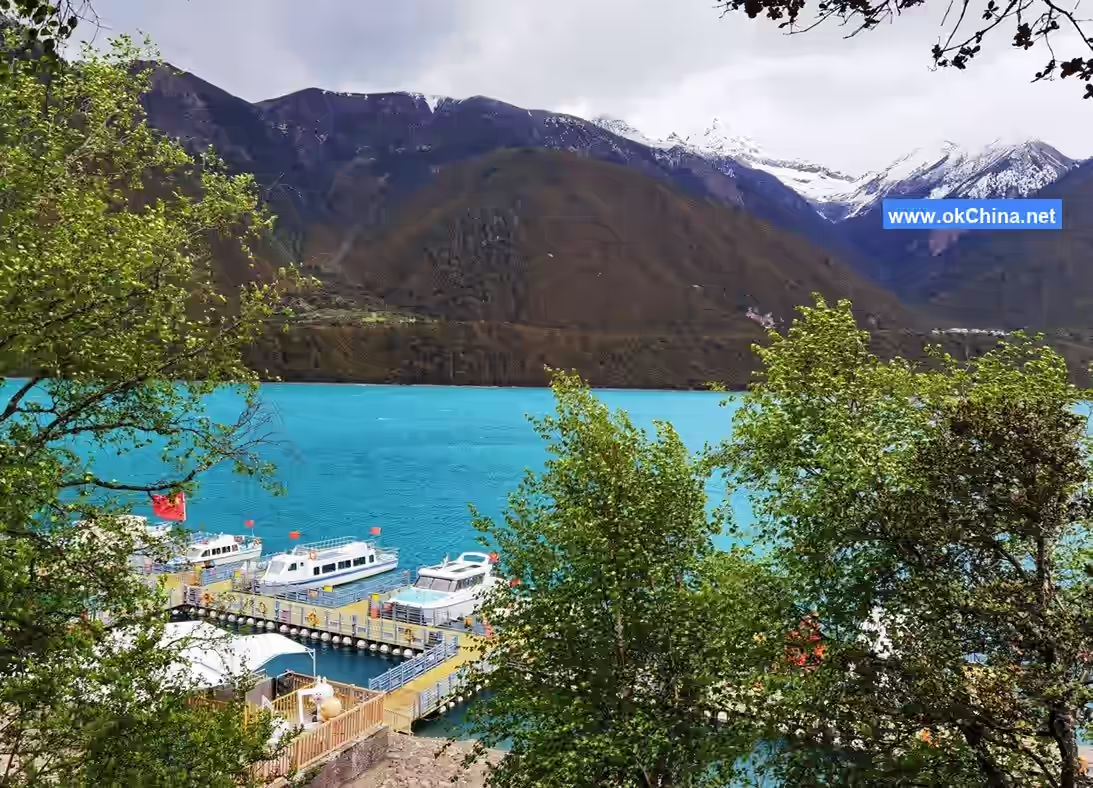
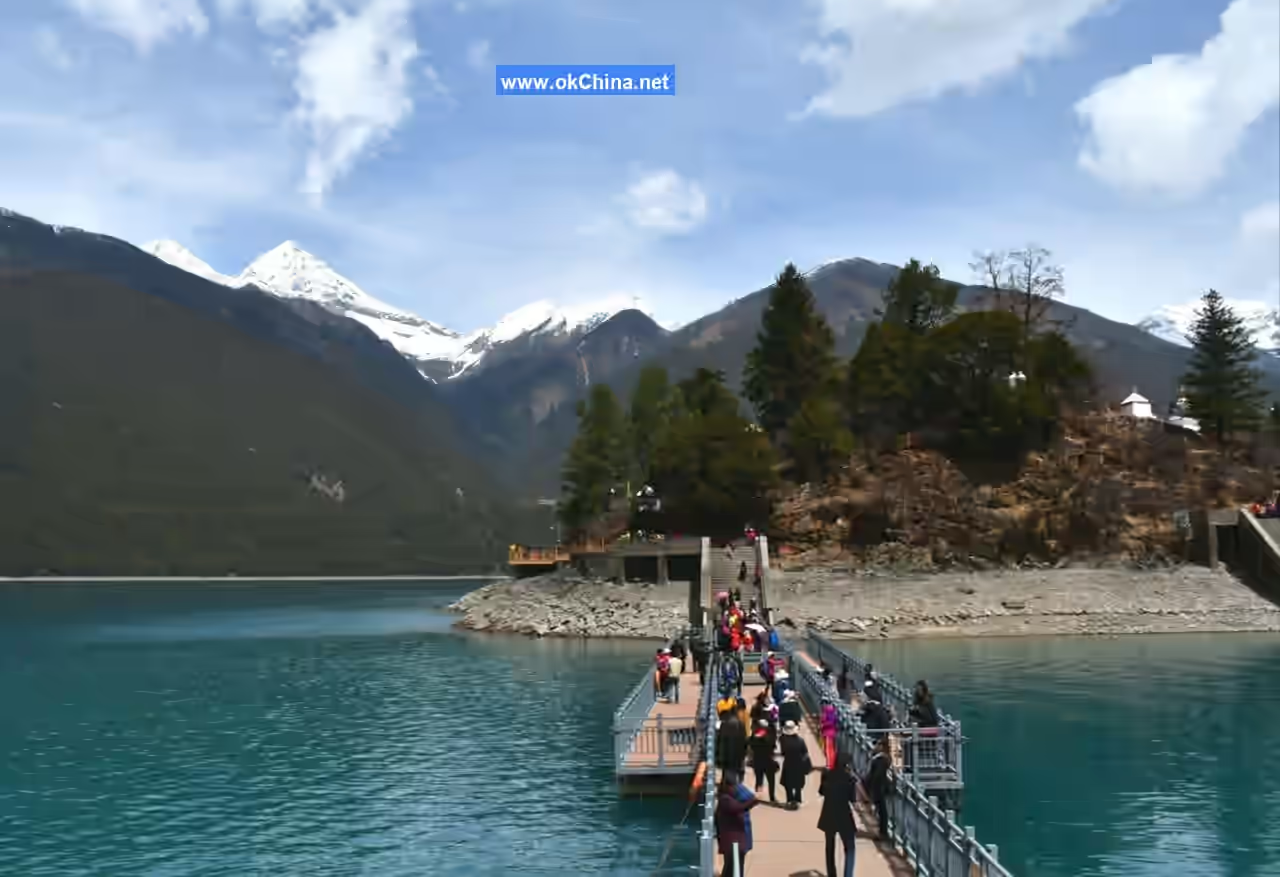
To reach Tashi Island in the center of the lake, one can take a hand-pulled "boat" (a raft made of floating logs, with the ferryman pulling a steel cable stretched across the lake). Prayer flags flutter on Tashi Island. The exquisite Tso Dzong Gompa Monastery (meaning "castle in the lake") belongs to the Nyingma school (Red Sect) of Tibetan Buddhism and venerates Padmasambhava. It has a history of 1,500 years, and the legends associated with the monastery alone are countless. Walking clockwise around the island, one can also see the hoofprints left by the warhorse of King Gesar, sword marks on rocks, a peach tree embracing a pine tree, an old water burial platform, an "alphabet tree" with naturally formed Tibetan letters on its leaves, and the sacred spring where Padmasambhava washed his face... truly, every step holds a wonder.
3.3 Jeba Village
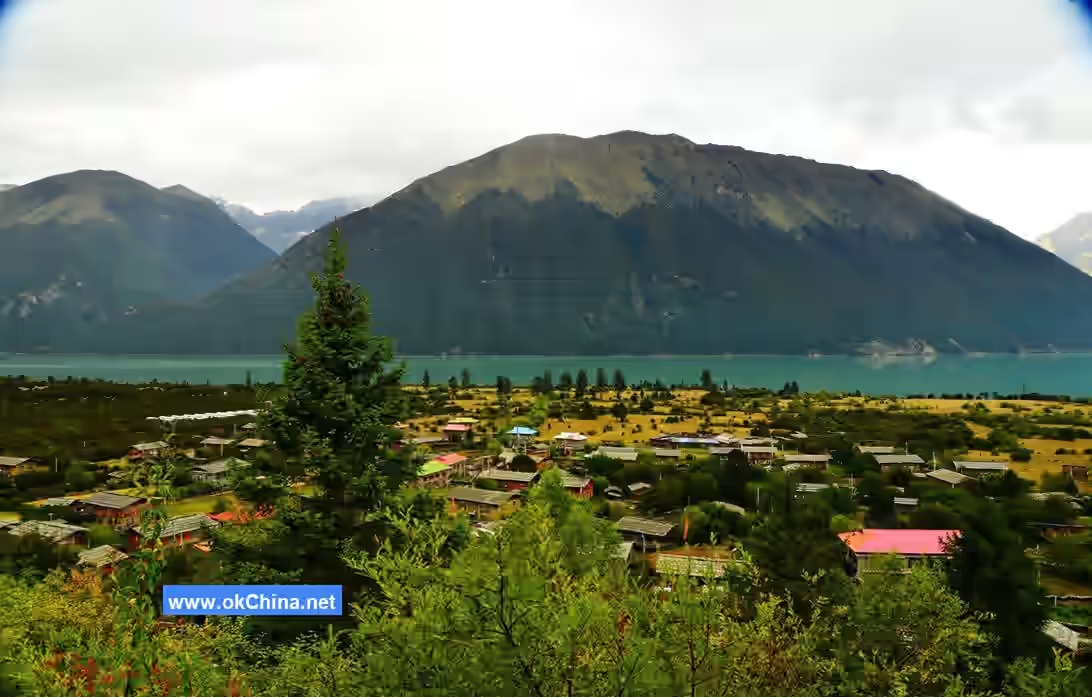
Even if you have been to Lhasa or Mount Everest, you might still be surprised when you reach Nyingchi. The simple, ancient, and pristine human ecology is also a captivating aspect of Basum Tso. The Tibetans living in Gongbo'gyamda County are called "Kongpo people" (meaning "people living in depressions") by people from other Tibetan regions. They have their own clothing, unique architecture, different festivals, and even a language distinct from other Tibetans. Strolling through natural and古朴 villages like Jeba Village, Tsogo Village, and Zhala Village, one can often see the kind smiles of the Kongpo people.
Jeba Village, a Tibetan village with原始 Kongpo customs, has over 80 households and is considered a relatively large village locally. It is said that there are still a few families practicing polyandry or polygyny in the village. Both men and women in the village like to wear "Goshu" (woolen robes) made of pulu and wear black-and-white折围花裹毡帽. Women wear silver chain belts, enjoy wearing jewelry, and often drape a monkey-skin vest over their backs.
If you casually push open the door of any household, you will receive their warm hospitality. Inside the house, there is a fire pit, stone pots, aluminum pots, etc., which can be used for both cooking and heating. The lamp is a hanging高山松, and the firewood is high-quality青冈木, which has熏黑 the roof. Food includes free-range Tibetan香猪, wheat cakes baked on thin石板, matsutake chicken, Ba River fish, and barley flour, accompanied by premium barley wine. Going to the restroom requires some courage, as it is just a wooden hut hanging outside the second floor, suspended in mid-air.
3.4 Snow-capped Mountains
Amidst blooming flowers and green trees, secluded别墅 like private gardens are nestled. Waking up any morning at Basum Tso, if your room faces the mountains, you only need to lift your eyelids to see the snow-capped mountains—a luxurious happiness.
Not far from the shore, some trees stand, sway, and stretch vigorously and resiliently in the water. The garden in the afternoon is quiet, bathed in warm sunshine. Walking along the forest paths feels like being in a paradise.杜鹃花, four to five meters high, red and vibrant like bells, are in full bloom on both sides of the path. If you赶上 the wild strawberry season, pick a few; their honey-like juice浸齿,香溢舌间... You can also spend most of your time发呆: sitting in the restaurant courtyard filled with紫红色鲜花, ordering a pot of milk tea, holding a book, taking a nap in the sun, and轻松度过 an afternoon until the snow-capped mountains before you are ignited by the sunset.
3.5 Lake Center Island
The island is filled with countless legends. On the island in Basum Tso stands the Tso Dzong Gompa Monastery. It is said that the monastery was built over 600 years ago by the Nyingma master Sangye Lingpa. "Tso Dzong" means "castle in the lake." The Tso Dzong Gompa Monastery is a wood-and-stone structure with two floors, housing many Buddha statues. It was initially built in the late Tang Dynasty. Inside the main hall are three large Buddha statues: in the center is Maitreya Buddha, sitting cross-legged on a lotus throne with a beaming smile; on the left is the Thousand-Armed Avalokiteshvara, and on the right are statues of a golden boy and a jade girl.## 4. Historical Culture
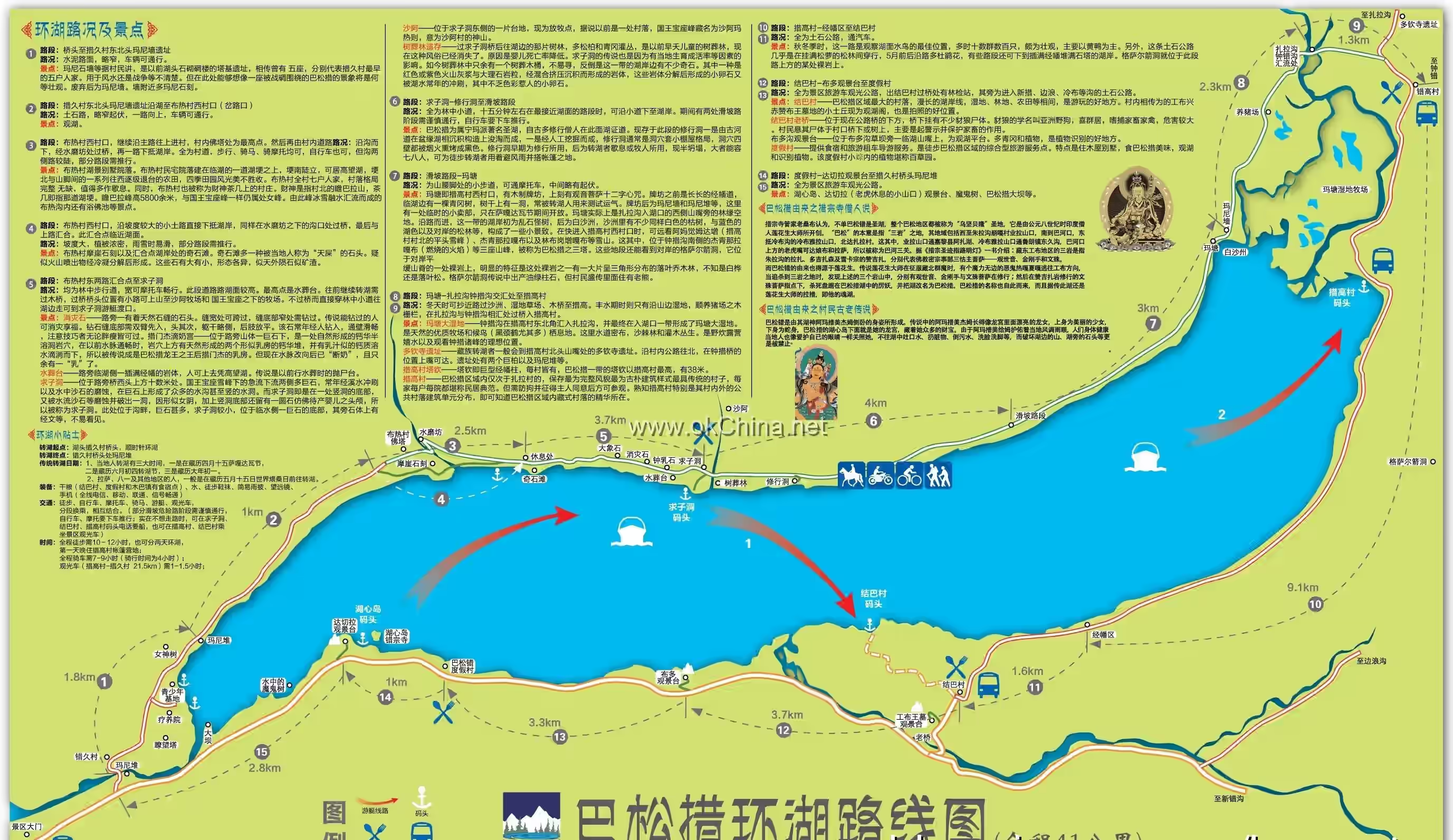
"A thousand twists and turns lead to the first glimpse, as if a fairyland exists in the mortal world." Basong Co is a sacred lake in Tibetan Buddhism, also known as Cuogao Lake. In Tibetan, it means "three cliffs and three lakes." The lake surface is at an altitude of 3,538 meters, with a total length of 15 kilometers and an area of 37.5 square kilometers. The three cliffs refer to the three religiously significant rocky mountains surrounding the lake area: "Zangeizha," the sacred site of Manjushri; "Duojizha," the sacred site of Avalokiteshvara; and "Lazha," the sacred site of Vajrapani. These symbolize compassion, wisdom, and power, forming a metaphorical system in Tibetan Buddhism. The three lakes refer to Basong Co, Zhong Co, and Xin Co, all highly favored by hiking tourists. Every year, Tibetan people come here to "circle the lake" and "circle the mountains" to pray for blessings.
Comments
Post a Comment